How To… Throw a Boomerang

Boomerang (4)

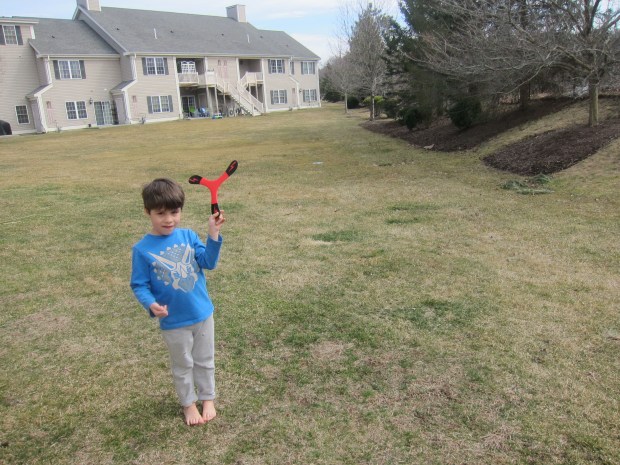
The latest “how to” from Highlights magazine was more of a feature article about a professional boomerang thrower. Travis was so inspired that we picked up a cheap one online and headed outside to try our hand at it!

Carefully, we read the tips. Hold the boomerang vertically with the decorated side facing you, then pinch it between thumb and index finger.

Boomerang (2)

We even took a moment to check that the wind was on our right cheek, not left, since we both throw lefty. Now throw overhand!

Boomerang (3)

Well, it turns out that it’s very hard to throw a boomerang and have it return to you. But we sure had a lot of laughs together, got some mother-son exercise which felt novel and playful (baby sister was painting on the patio, FYI), and had a blast. He loved chasing after it and was so proud when he could catch it, even when we did so more Frisbee-style.

Boomerang (5)

Finish off the fun with some videos from the pros!

Salty Cave Crystals

Salty Cave Crystals (3)

Travis has seen stalactites and stalagmites in cartoons and real life, so he was intrigued when we set out to make our own. You’ll need about a week for this project from start to finish, so it’s also a good lesson in patience!

For set up, add 1/4 cup Epsom salts to each of two paper or plastic cups. Fill with water and stir for 1 minute. There should still be some Epsom salts undissolved in the bottom, making this a supersaturated solution.

Salty Cave Crystals (1)

Add food coloring in your child’s colors of choice. Travis stirred in blue and green.

Salty Cave Crystals (2)

Tie a piece of yarn around two paper clips (or safety pins), and dangle the ends in the cups. Now set the whole contraption some place where it can sit undisturbed with the yarn dangling over an old jar lid between the two cups.

Alas, we didn’t have great results with this. Either something is wrong with Epsom salts in our apartment these days, or we’re making a mistake! But we could see crystals growing lightly along the string.

Salty Cave Crystals (6)

Interestingly, there was a leak in one cup and the best crystals formed around the base. So Travis declared these our stalagmites.

Salty Cave Crystals (8)

As a side note, we could also see the blue food coloring creeping up the yarn: capillary action in action!

Salty Cave Crystals (7)

Ice-Cream Snowballs

Ice Cream Snowballs (7)

The weather hit an unseasonable 75 degrees F today, so we celebrated with homemade ice cream!

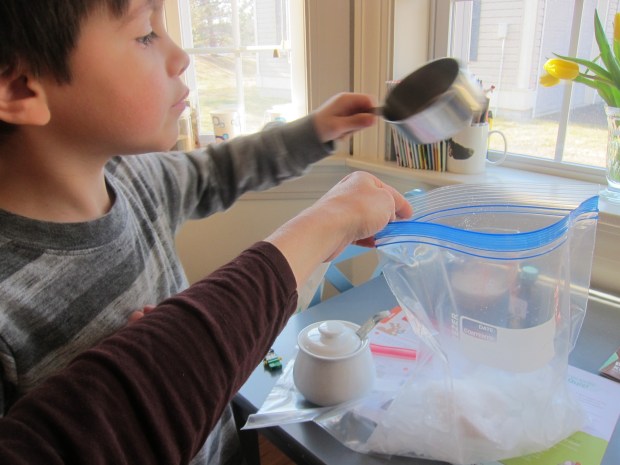
This project was a fantastic (edible!) addendum to Travis’s recent exploration of crystallization. To start, fill a large zip-top plastic bag about halfway with ice. Add 6 tablespoons coarse salt.

Ice Cream Snowballs (1)

In a sandwich-sized zip-top bag, combine 1/2 cup plain non-dairy creamer, 1 tablespoon sugar, and 1/2 teaspoon vanilla extract. Seal tightly.

Ice Cream Snowballs (2)

Place the creamer mixture in the larger bag, making sure it’s covered by the ice cubes. Now shake!

Ice Cream Snowballs (3)

Travis and I took turns, as the recommended shake time was 7 minutes.

Ice Cream Snowballs (4)

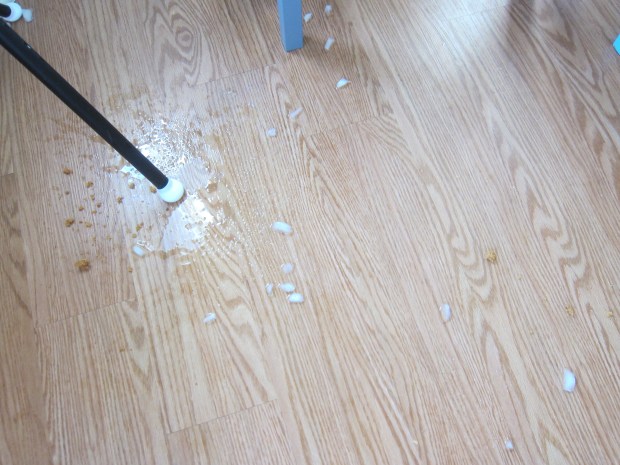
Whoops, a spill at about the 4 minute mark! But we were undaunted and kept going.

Ice Cream Snowballs (5)

At 5 minutes, we declared our ice cream done (and our arms exhausted).

Ice Cream Snowballs (6)

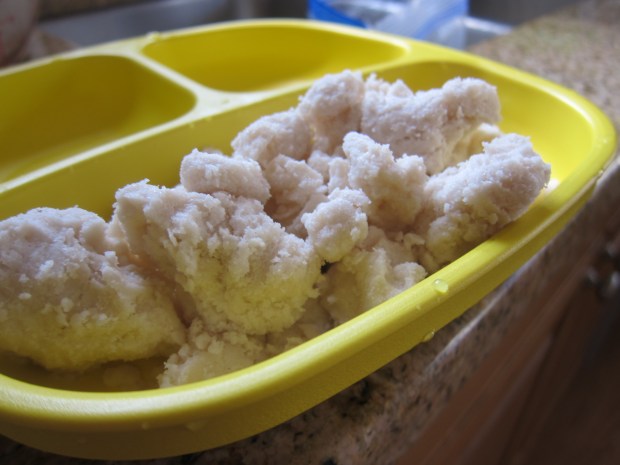
The ice cream turned out amazing! It looked crumbly at first, but after a few minutes it softened up just enough and was just like store-bought ice cream. Rainbow sprinkles were a must of course.

Ice Cream Snowballs (8)

Wow, ice cream on the back patio in March!

Ice Cream Snowballs (9)

What a treat this was for the kids.

Ice Cream Snowballs (10)

Noodle Knowledge

Noodle Knowledge (2)

Travis’s latest Raddish Kids included this cute lesson, a chance to learn more about noodles and pasta – and the difference between them!

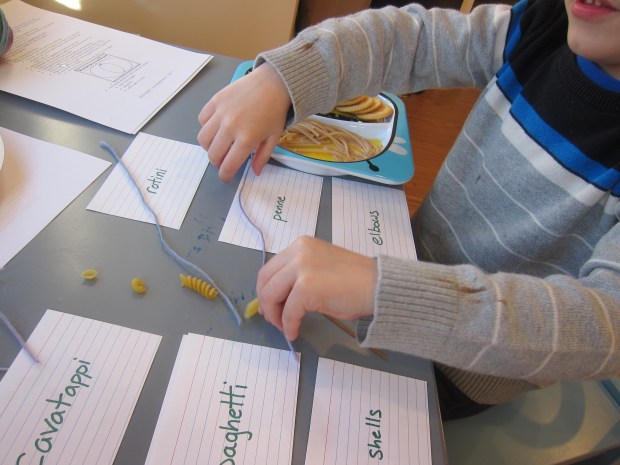
To start things off, I set out a station where he could explore a wide variety of pasta shapes and sizes.  Our array included: rotini, cavatappi, spaghetti, elbow macaroni, small shells, and penne.

Noodle Knowledge (3)

I challenged him to talk about the differences and similarities that he noticed. Some were long (spaghetti), some were short (cavatappi). Some were straight (penne), some were curly (rigatoni), etc.

Noodle Knowledge (8)

This is a fun chance to introduce your kids to the idea of a Venn diagram, showing how categories can overlap. Older kids, especially, might enjoy drawing detailed diagrams, although we kept ours simple.

Noodle Knowledge (7)

Once the exploration was done, we set up a game! Travis’s goal was to match up each pasta shape with its name, using yarn to connect them. This was also great for sight-reading!

Noodle Knowledge (6)

He was so into it that he wanted to snack on cooked spaghetti. This made for the perfect nosh while we watched a few suggested videos that delved deeper into the history of pasta.

Noodle Knowledge (5)

Make sure to check out a world map for a visual of key countries, like China and Italy.

Noodle Knowledge (4)

We had to finish with fun stories, of course. Raddish suggested The Great Pasta Escape by Miranda Paul and Noodle Magic by Roseanne Greenfield Thong, among others.

Noodle Knowledge (1)

I was surprised to see no mention of Strega Nona, the most classic spaghetti story I can think of, so we added that in. Afterwards, both kids wanted to play “Strega Nona” with a magic pot and leftover dry spaghetti, which was perhaps the best part of the whole lesson.

Noodle Knowledge (9)

Melting Race

Melting Race (5)

Here’s a clear way for even kindergartners to learn about how temperature affects states of matter: have a “race” between two toys trapped in ice, and see which one emerges first!

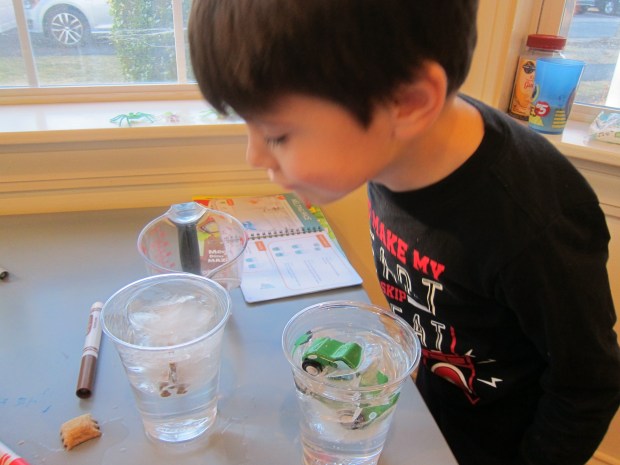
Before heading off to school, Travis selected two toys that fit into paper cups. We filled the cups with water and placed them in the freezer. By the time he got home, the toys were trapped in giant ice cubes. Oh no! Peel off the paper cups, and place the resulting ice blocks in larger plastic cups.

Melting Race (2)

We filled these cups with water, one cold, and one warm (don’t use hot or the race will be over too quickly!). Travis was proudly in charge of pouring the cold water.

Melting Race (3)

He hypothesized that the warm cup would melt the ice faster, and the results were immediately evident. Within a few minutes, the front wheels of the truck were already out of the ice. “It’s coming free!” he exclaimed.

Melting Race (4)

About 15 minutes later, the car was completely free. Meanwhile the poor dinosaur was still in ice for hours, only breaking free at bedtime.

Melting Race (6)

Sticky String

Sticky String (4)

Here’s a simple ice project, but one that has a bit of  a “wow” factor to it!

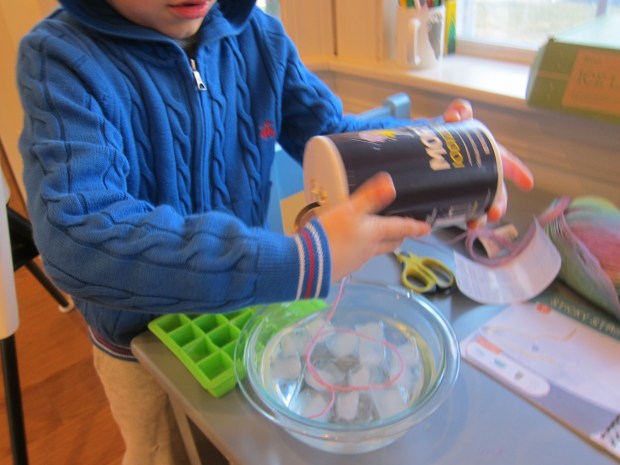
For set up, fill a bowl with water and add ice cubes on top.

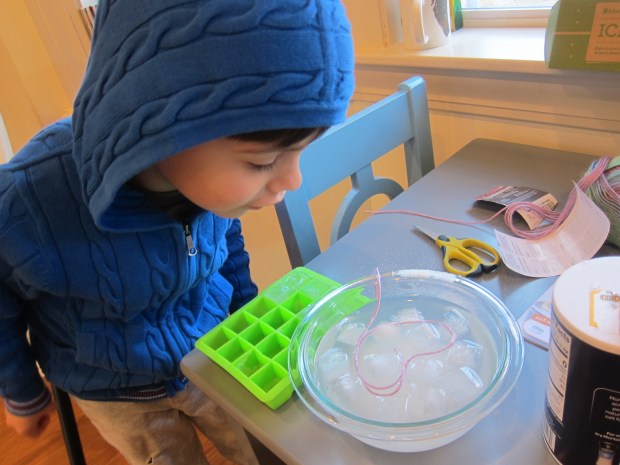
Place a piece of yarn over the ice, making sure it is fully saturated. Travis pretended this was spider silk, and we were testing how strong it was. What an imagination!

Sticky String (1)

Sprinkle the yarn generously with salt. How much do you need to use? Unfortunately, I can’t give you an exact answer, as Travis just dumped in a lot of the container, but I would imagine a tablespoon or two is plenty.

Sticky String (2)

Now wait for 1 minute. He proudly helped count to 60 seconds!

Sticky String (3)

Lift gently on the yarn and watch as the ice cubes rise. I thought the yarn might be strong enough to pick up one cube, but it could even pick up a whole clump. So even mom said “wow!”.

Sticky String (5)


Show Love Around the World

Love World (9)

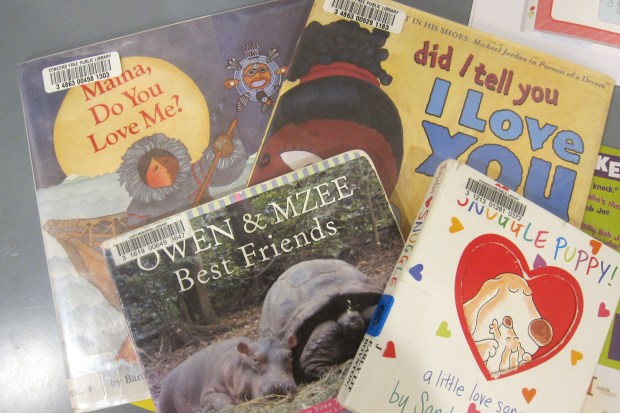
Raddish Kids had a heart-warming lesson this month about different ways that cultures celebrate love, specifically on Valentine’s Day, but also throughout the year. As a kindergartner, Travis is working on learning and showing empathy, so it was a nice lesson to make things concrete. First, we spent a few nights devoting story time to books about love, including:

  • Snuggle Puppy by Sandra Boynton
  • Best Friends (Owen and Mzee) by Isabella and Craig Hatkoff
  • Mama, Do You Love Me? by Barbara M. Joose

Love World (1)

After each one, we discussed the type of love relationship it entailed. Sometimes it was two friends, sometimes a parent and child, and sometimes members of different species! This was a great jumping-off point for talking about what love means, and how we might express love differently towards different people (or animals).

Travis said he shows love to a parent by hugging, but love to a friend by playing.

Love World (2)

Raddish provided lots of links to learn more about other cultures’ love traditions, including silly bits like how to say “love” in Klingon. Some made Travis giggle, like walking barefoot in Slovenia. Overall, though, this section of the lesson was geared towards older children and Travis was too antsy to sit and go through all of the customs.

Instead, we jumped ahead to the project: making up his own love celebration. The provided worksheet helped direct Travis’s thinking, but he gave a lot of silly answers before honing in on a real idea.

Love World (3)

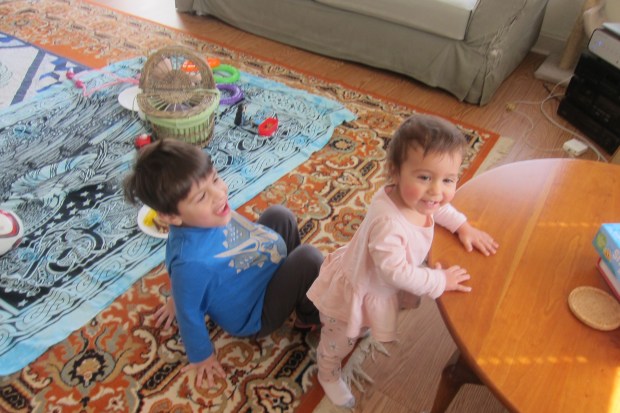
He wanted to celebrate sibling love (aww!) so we ended up combining this with a winter picnic for Veronika.

Love World (5)

I loved watching them play and share the moment together!

Finally, we put together a Love Jar. Decorate any container you like, whether a shoe box or a mason jar or anything in between. Travis drew designs on a mason jar with permanent markers, including hearts and arrows.

Love World (8)

I left out post-it notes by the jar with the idea that he can write down a moment he appreciated or loved each day.

Love World (10)

Reading these out can become a special moment each week! We finished off all the heart-shaped fun with a quick compound word game from Raddish, filling in the blanks on “broken hearts” to complete each word.

Love World (4)

Nature Collage

Nature Collage (9)

This was Travis and Veronika’s first art project together, a really wonderful milestone for siblings.

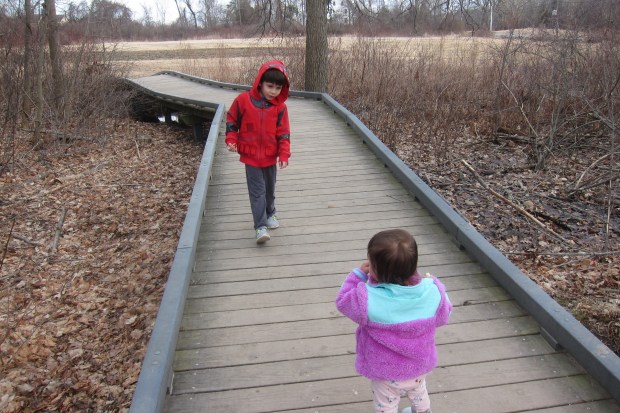
It started with a nature walk! On a gorgeous spring-like day, we took Veronika out to stretch her legs, and although she has come along on nature hikes, this was the first time she walked on her own two feet.

Nature Collage (1)

Travis was a great help along the trail, pointing out the names of objects. “Log!” he told her proudly, and also pointed out grass, acorns, pine cones, sticks, pebbles, and dirt.

Nature Collage (4)

Of course dirt had to be explored.

Nature Collage (3)

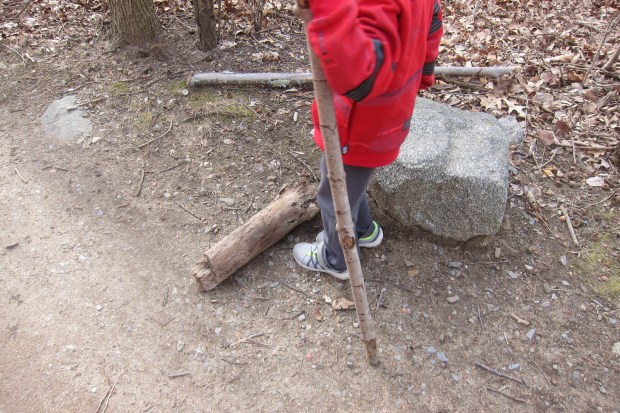
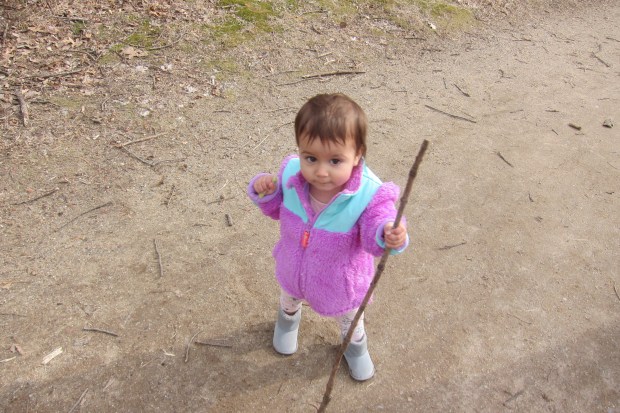
When Veronika saw that big brother had a walking stick, she needed one too!

Nature Collage (2)

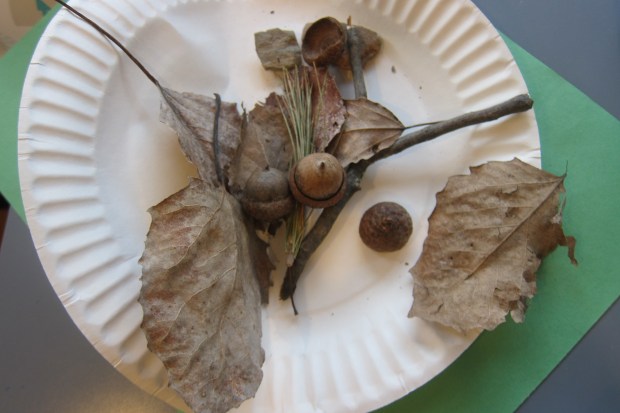
As we hiked, the kids added treasures to a brown paper bag. Because it is late winter, there wasn’t a whole lot of color, but there was beauty to be found in dried brown leaves, curiously-shaped sticks, and bristly pine needles.

Nature Collage (5)

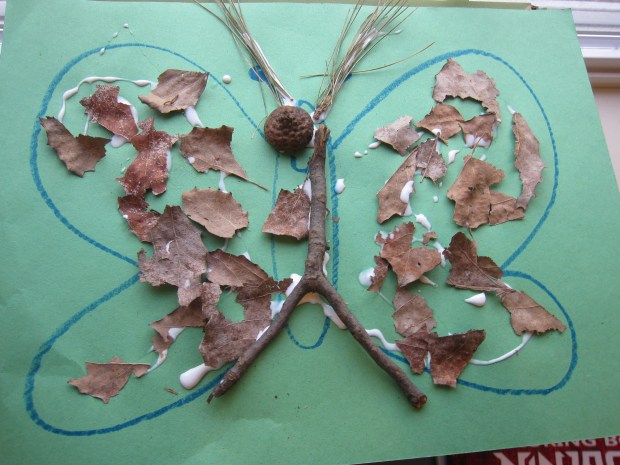
Once home, I asked Travis what shape we should draw on construction paper. He chose a butterfly, but anything else from nature – a flower, a favorite animal – would be fun.

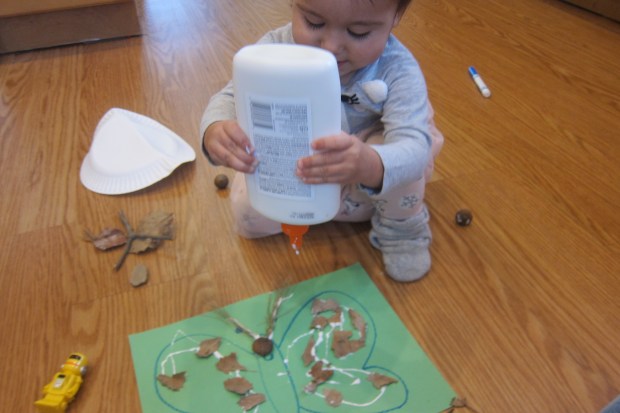
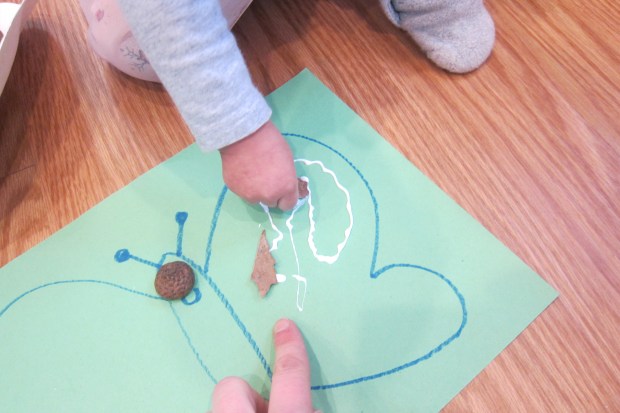
Working together, we dripped on glue and applied bits of our nature finds into a collage. Travis loved using an acorn for a big eye and pine needles for antennae. Veronika loved pressing down pieces of leaf on the wings. Something for everyone!

Nature Collage (6)

She even loved squeezing the glue bottle.

Nature Collage (8)

This project helped shape an absolutely beautiful afternoon, and I hope you find the project equally magical.

Nature Collage (7)

Cupid’s Coasters

Salt Coasters (5)

These salt dough coasters are a fun project and they make a pretty gift. In other words, a fantastic way for kids to say ‘I love you’ to any relatives or friends.

To start, Travis needed to make sure our dough ended up pink, which meant he counted out 8 drops of red food coloring into 3/4 cup water.

Salt Coasters (1)

In a bowl, combine 2 cups flour, 1 cup salt, and the red water; stir to form a dough, and then knead until smooth.

Salt Coasters (2)

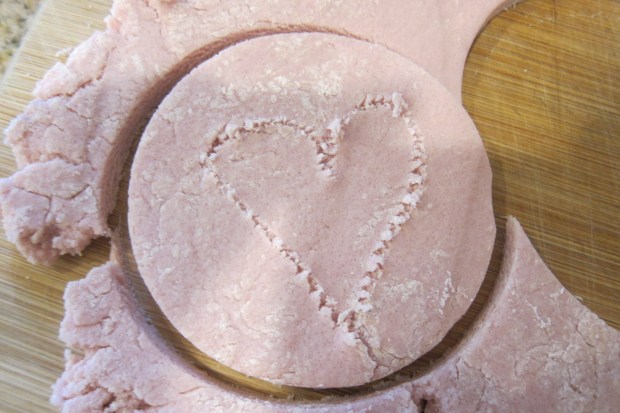
I would use a touch less flour next time, as the dough was quite dry and a little crumbly.  Roll it out until a 1/4-inch thick and use a 4-inch circle cookie cutter to cut out shapes.

Salt Coasters (3)

I showed Travis how to drag a toothpick through the dough to make designs. It was a bit tough for him, but after some frustration, we had circles marker with hearts and arrows (to represent Cupid’s arrow).

Salt Coasters (4)

Bake at 250 degrees F for 2 hours. Let cool completely, then use at home or wrap up for a gift!

Ice Lab Kiwi Crate

Kiwi Ice (3)

Travis’s latest crate from Kiwi Co was perfect to receive in winter, all about ice and snow. Specifically, Kiwi used the theme of ice to talk about crystallization.

First up was an Icy Experiment. Before school, Travis filled the provided ice cube tray so the ice would be ready to go when he returned home. As a side note, this ice cube tray is fantastic! Made from easy to unmold silicone, it makes adorable square blocks of ice.

Kiwi Ice (1)

Fill the two provided plastic cups with water, then add 3 scoops of salt to one cup only. Now add the ice cubes to both cups and let sit for 1 minute – don’t stir!

Kiwi Ice (2)

Travis next added 3 drops of liquid watercolor into each cup. You’ll immediately see that the color stays on top in the cup with salt, and floods to the bottom of the one with no salt.

Kiwi Ice (5)

The write-up in his booklet helped Travis understand that the salt had changed the density of the water, i.e. more stuff was packed into the same space, so the ice water stayed on top of the salt water. I told him about the Dead Sea, and how it has so much salt that even people stay afloat, which got a big whoa.

Kiwi Ice (6)

He drew his results, and then we were on to the next project: Crystal Snowflakes. This was similar to an activity we did at Christmas, making crystals in a suncatcher. Combine 1 scoop of provided Epsom salts and 1 scoop of water in a cup, along with 3 drops of the “clear gel”. (Note: We were curious what this gel was! Kiwi does not say). Stir for 30 seconds with a paintbrush until the Epsom salt dissolves.

Kiwi Ice (8)

Now brush over the three plastic snowflake shapes and let sit until completely dry. It will take over an hour but then you should see crystals appear as the water evaporates and the Epsom is left behind.

Kiwi Ice (9)

Oddly, we didn’t have great results. Still, we used the provided yarn to hang the snowflakes in the window, a pretty winter adornment.

Kiwi Ice (14)

We also attempted Explore magazine’s suggestion for a Crystallization Station. Combine 2 scoops of hot water (not boiling) and 2 scoops of Epsom salts in a plastic cup. Travis added blue food coloring so we’d have colored crystals by the end.

Kiwi Ice (12)

Place in the freezer for 10 minutes, then transfer to the fridge overnight. Again, oddly, we had no crystals in the morning, leaving me to suspect something was amiss with our packet of Epsom salts…

Kiwi Ice (11)

So we then turned to the Ice Experiments booklet in the crate, full of further ice exploration for Travis to test. One activity was an oldie but goodie: salt tunnels.

First, make a new set of ice cubes in the square tray. Travis liked towering them into a pyramid on a plate once frozen!

Salt Tunnel (1)

Sprinkle generously with salt and then drip food coloring on. The areas where the salt has melted the ice will become immediately evident.

Salt Tunnel (2)

Two colors made it even cooler!

Salt Tunnel (4)

Travis loved the way this looked and connected his observations to the barrel of salt outside that keeps us from slipping on frozen sidewalks.

Salt Tunnel (5)

As a final experiment, we played Sink or Float, another oldie but goodie. I filled two cups with warm water and we poured a generous amount of salt into one. Ideally you can add salt little by little until no more will dissolve, but since Travis was a bit impatient, ours was supersaturated with salt still on the bottom.

Sink or Float (2)

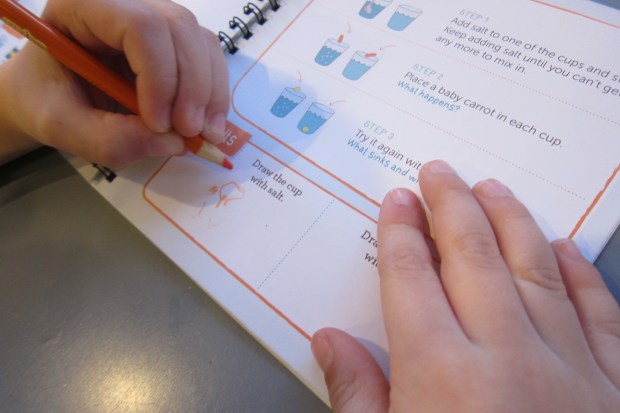
Now drop a piece of baby carrot into each and watch the instantaneous results. Travis loved that one plunked to the bottom and one stayed afloat. He drew the results in the provided “Lab Book,” which made him feel like a real scientist!
Sink or Float (4)

Have fun testing other items, too! Travis tried out Lego figures and marbles.

Sink or Float (3)

Kiwi Co. did not offer suggested reading this time around, but I recommend the following fun books about ice:

  • Ice (Stories Without Words) by Arthur Geisert
  • The Boy Who Invented the Popsicle by Anne Renaud

Kiwi Ice alt