“Fix That Doodle!” Game

Fix Doodle (8)

All you need for this game is paper and markers – that’s it! It literally doesn’t get simpler, but pull out those two things and watch the fun begin.

There are two ways to play, which may depend on your child’s age, or just which they prefer. For the first version, the adult can draw a doodle, and the child turns it into a picture.

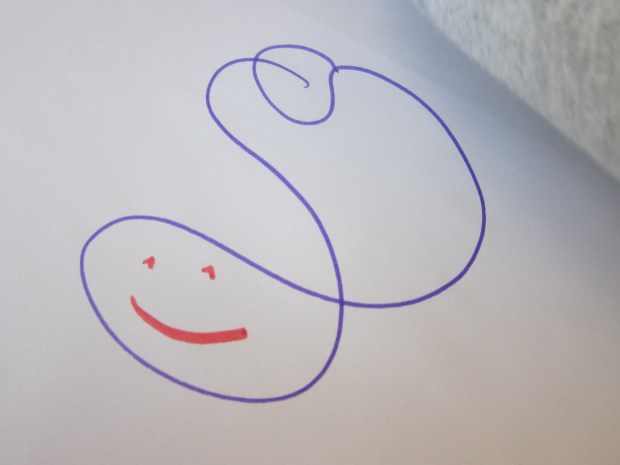
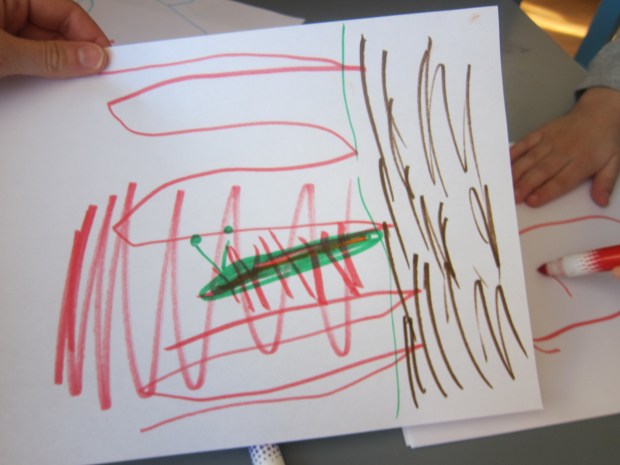
Whops, I thought, after making a first looping doodle for Travis: did I make it too hard?

Fix Doodle (1)

But Travis didn’t miss a beat before drawing a smile and declaring, “This is a snail.”

Fix Doodle (2)

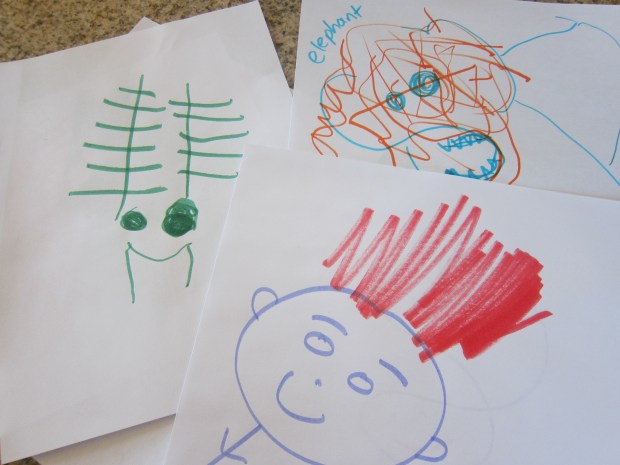
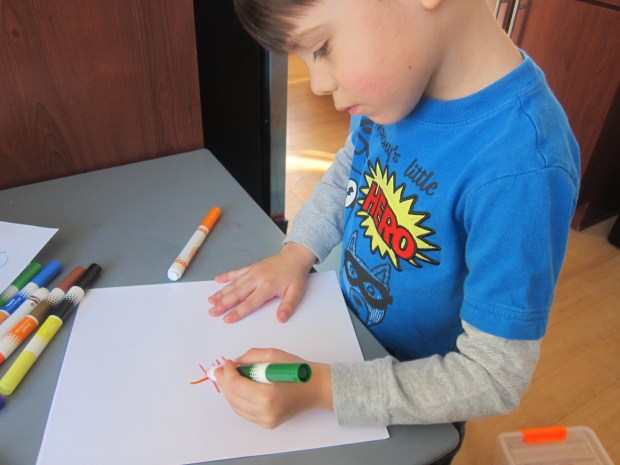
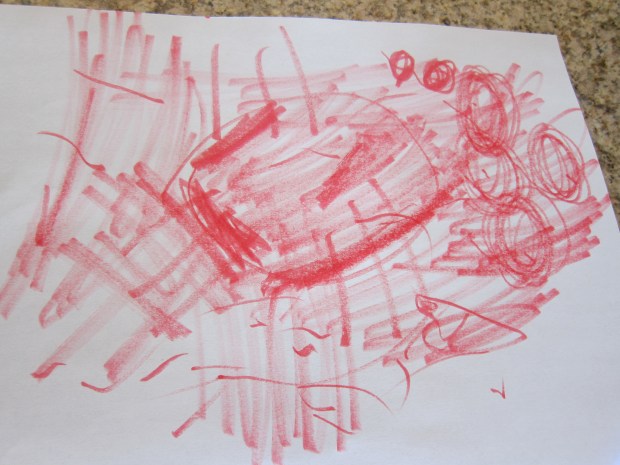
Then he wanted to do the second version: he drew “scribble scrabbles” and asked me to turn them into pictures of something. This red scribble…

Fix Doodle (3)

…became hair on a head!

Fix Doodle (4)

A very detailed silly scribble…

Fix Doodle (5)

…turned into a caterpillar on a tree branch.

Fix Doodle (6)

Pretty soon, he was off and running, not even needing me but just enjoying his own scribbles, including this creature with 6 eyes.

Fix Doodle (7)

This game works equally well on napkins with markers…which makes it perfect for times you’re waiting in a restaurant, or otherwise on the go! In sum, if you have a little time to while away, it’s the ideal activity.

Change the Scenery

Change Scenery (5)

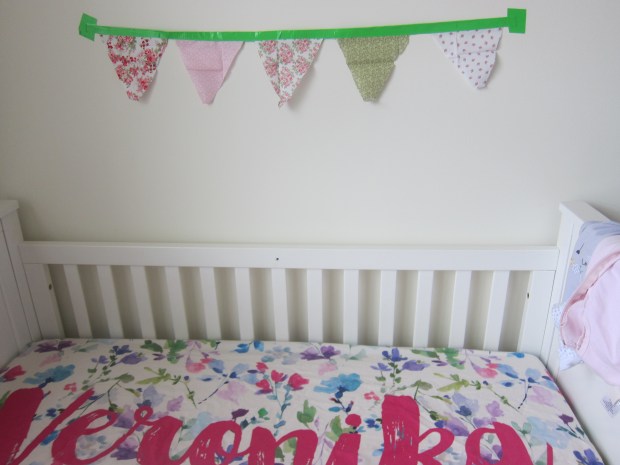
We’ve only decorated Veronika’s nursery with little touches here and there, and I wanted to add a nice change of scenery for her. There are two ways to make this cute bunting – the true way if you can really sew, or my super-quick hack if you have no skill with a needle and thread!

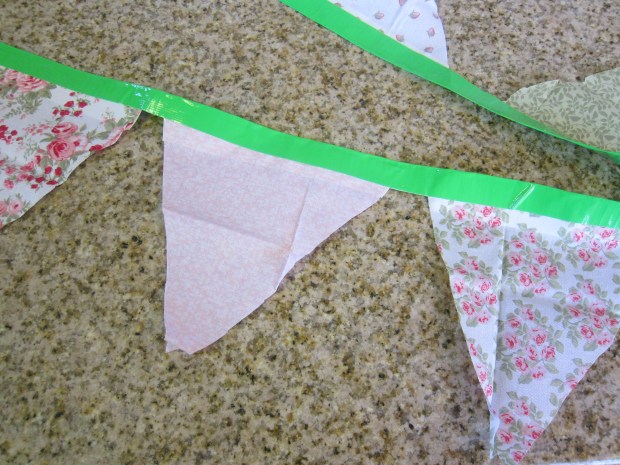
First, I traced a triangle onto paper, and cut out. Use the triangle to cut shapes from different patterned fabrics (available at a craft store).

Change Scenery (1)

What a pretty assortment!

Change Scenery (2)

Lay down a long piece of colored duct tape, and arrange the fabric triangles along the tape, evenly spaced. Fold the tape down to secure them in place, then hang on your baby’s wall or in the nursery windows.

Change Scenery (3)

If you are more skilled – and own a sewing machine! – here are more detailed instructions. Safety pin the paper template onto the fabric, and cut two triangles for each desired pattern. Pin the pieces together inside-out, then use a sewing machine to attach on the long sides. Turn the flags the right way around and trim with pinking shears.

Insert the sewn flags into bias tape. Pin the flags to the tape at 2-inch intervals, and sew together. I’d love to see the results if you do this correctly, so please share in the comments!

Change Scenery (6)


Robot Craft Challenge

Robot Challenge (6).JPG

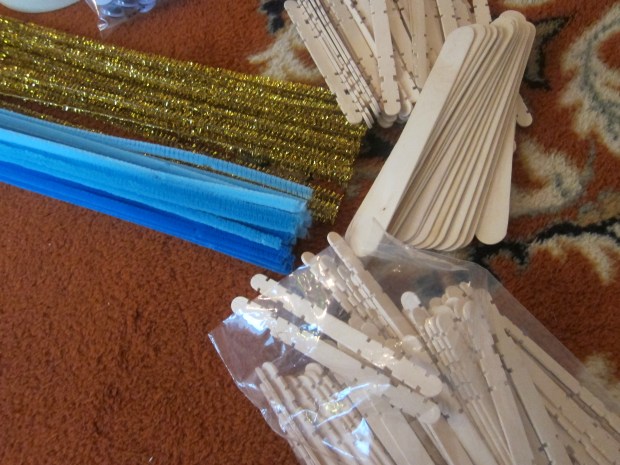
This morning, I challenged Travis’s creativity. Could he make a robot with nothing more than 3 items from our craft bin: craft sticks, pipe cleaners, and googly eyes? He was instantly up for it!

I laid out the materials (we also added tape) and watched him ponder.

Robot Challenge (1)

He very quickly decided a few sticks taped together could be the body. “I can do it!” he insisted, ripping the tape and sticking it on by himself. Then of course we added eyes, which Travis wanted to tape on all by himself.

Robot Challenge (8)

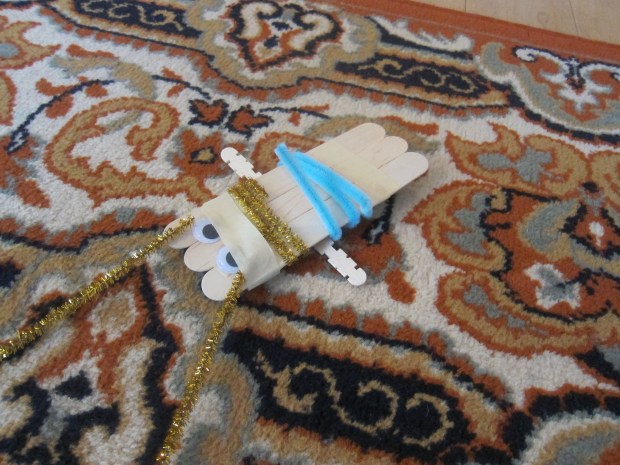
Next up came embellishments. He insisted we use shiny gold chenille sticks, since robots are usually shiny metal.

Robot Challenge (2)

He wanted to add arms, so another craft stick went on crosswise. But then he thought his robot needed wings. Some pipe cleaners twirled around the arm stick did the trick.

Robot Challenge (5)

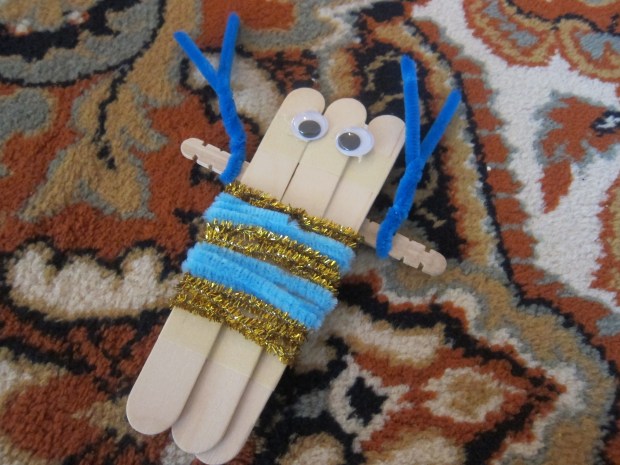
The fun didn’t end there. We used chenille sticks to twist “bodies” and “arms” of more craft sticks together for baby robots.

Robot Challenge (7)

Then, because Travis is obsessed with all things Spiderman and his villains these days, we added 8 chenille stem pieces to another body as “Dr. Octopus.”

Robot Challenge (3)

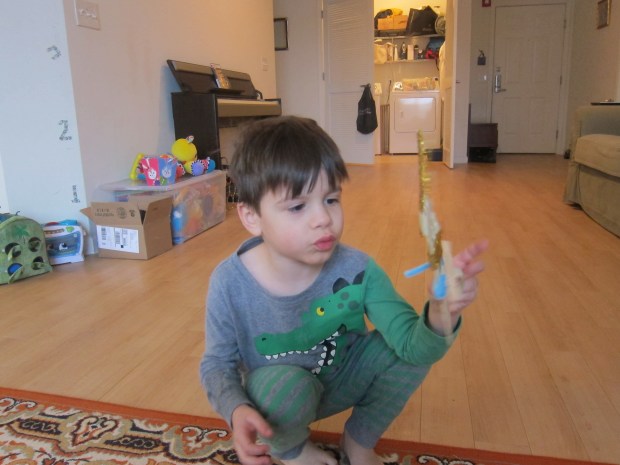
What a great morning of fun we had, using just these three items from the craft bin!

Critter Catchall

Critter Catchall (9).JPG

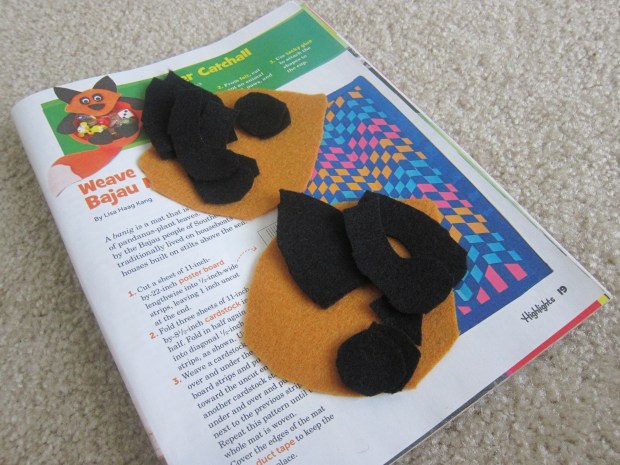
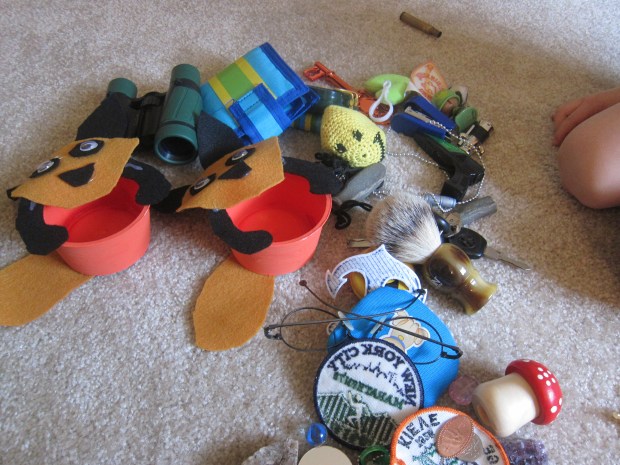
Travis always seems to have dozens of tiny knickknacks lying around: favors from birthday parties, tokens from restaurants or museums we’ve been too, and various other miscellany. We needed a catchall to corral all these items, and this cute critter version from Highlights was perfect. Plus it’s a great way to upcycle an empty yogurt container.

Critter Catchall (2)

We wanted to make a fox, which meant orange paint, but realized we didn’t have any. Thinking quickly, the project turned into a color lesson, with Travis stirring up red and yellow until we had a nice orange.

Critter Catchall (3)

Paint the yogurt cups inside and out, and let dry.

I cut pieces of felt for him to make all our fox parts – faces, tails, eyes, noses, and paws. Older kids can do this themselves, but the shapes were too complicated forr Travis.

Critter Catchall (6)

If you use tacky glue, kids can attach everything on; however, I like to use hot glue to ensure that felt projects stay put, so Travis loved watching!

Once the glue dried, it was time to fill the little fox. Travis spread out all his treasures.

Critter Catchall (7)

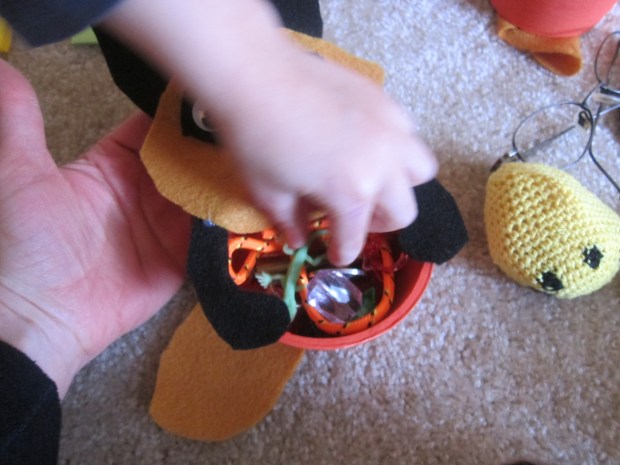
He loved finding the littlest ones that fit best in the fox!

Critter Catchall (8)

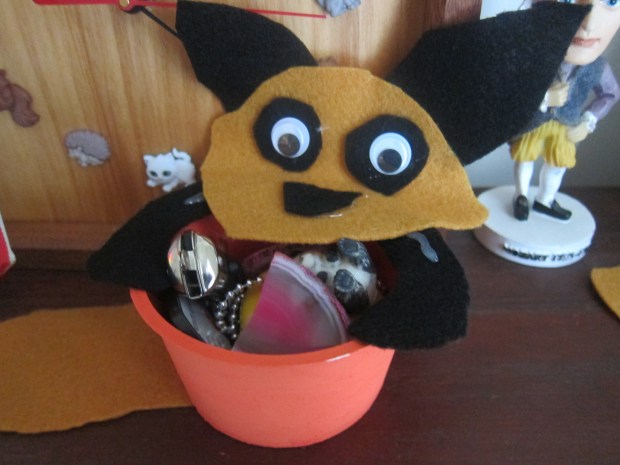
Now everything is in one place, and it looks cute on his shelf to boot.

Critter Catchall (10)

Penny-Eating Monster

Penny Monster (11).JPG

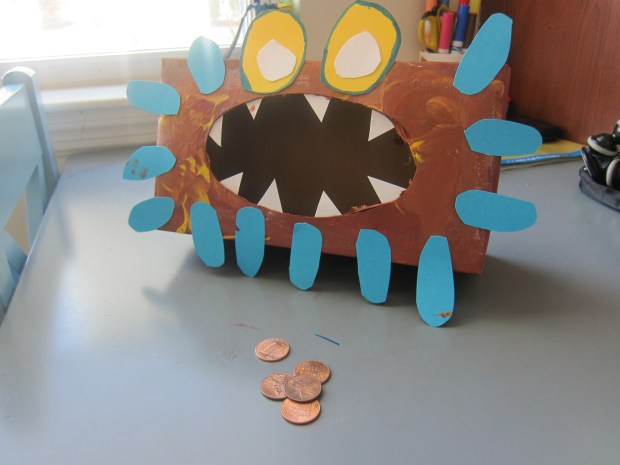
Roar! This terrifying monster craft is a blast to put together, and then the game you can play with it is great for hand/eye coordination.

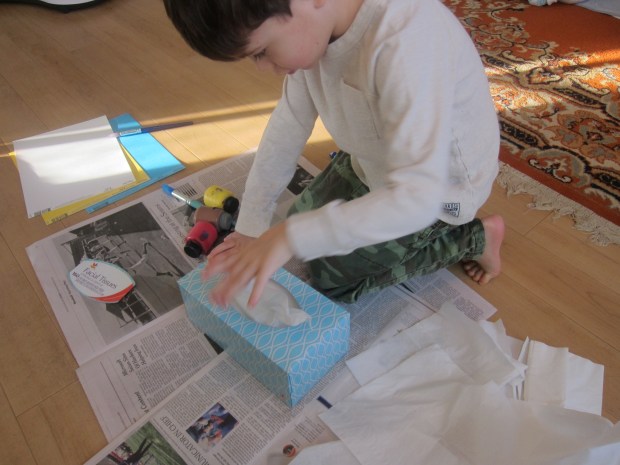
First, we needed a tissue box. Ours had a few tissues left in it, but I let Travis go to town ripping them out (and making them part of a super hero game), so already the craft was a hit.

Penny Monster (1)

Next, he decided what color our monster should be.

Penny Monster (3)

Travis dabbled in silvers and yellows, before declaring it was a wood monster. So mostly brown it was! Let dry.

Penny Monster (4)

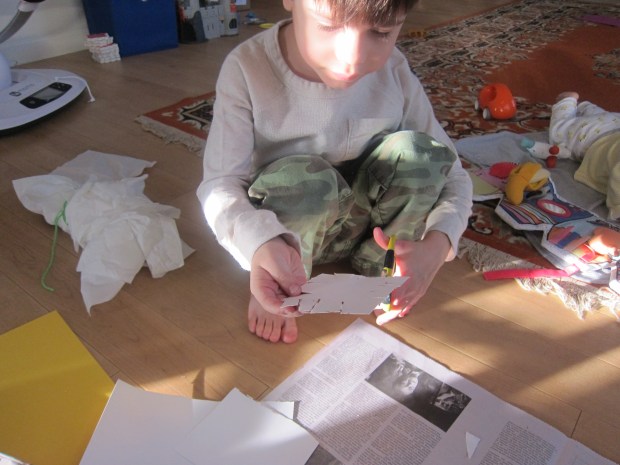
Then it was time to put his scissor skills to the test. He helped cut out triangles for the teeth, while I made shapes for spikes and eyes.

Penny Monster (5)

Glue on all your monster’s decorations.

Penny Monster (7)

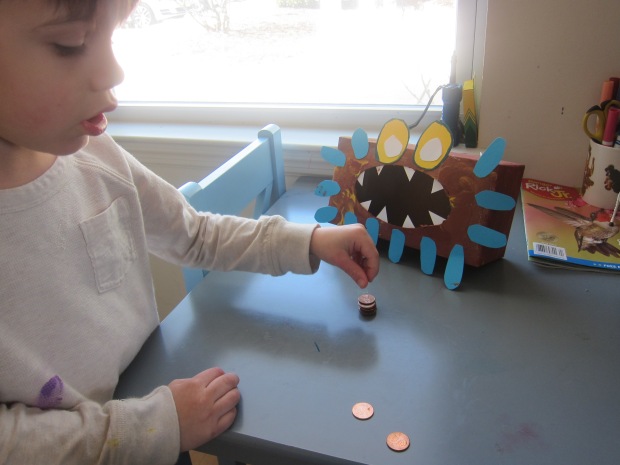
Now gather some pennies, and stand back! Because this monster wants to gobble them up.

Penny Monster (8)

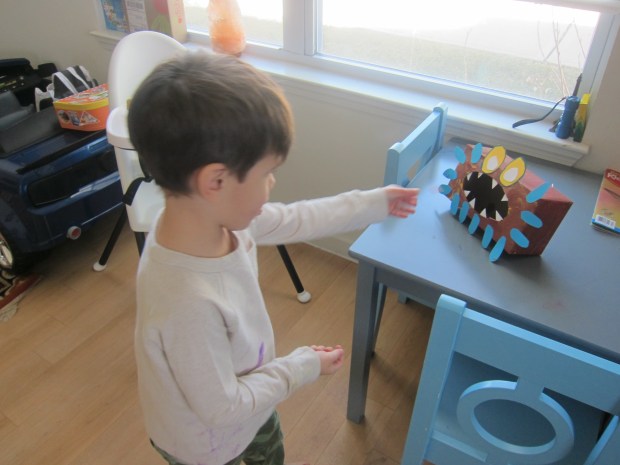
The goal is to work as a team, and toss in as many pennies as you can from a few feet back.

Penny Monster (9)

If more pennies land inside the mouth than outside, you all win!

Penny Monster (12)

Travis loved the game, and we had to fill the monster’s belly and empty it over and over. It was also great for counting practice, since he made sure he and I started with the same number of pennies each time.

Penny Monster (10)

All in all, frightfully good fun.


Extra Large Family Photo Album

Large Album (2)

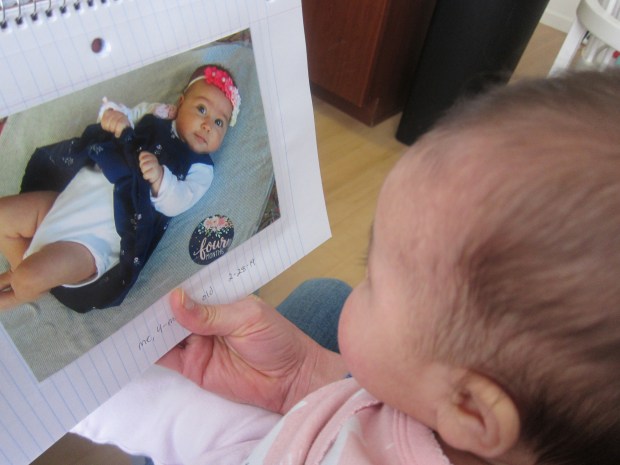
As your child becomes more familiar with faces, not just in the immediate family but of relatives as well, pictures are a big help. That way, family and friends whom baby sees often – but not every day – will become even more recognizable. This can also ease separation anxiety, if he or she is ever left alone with these friends and relatives.

To help, we made an extra big photo album today! This project isn’t fancy; I put the pics in a single=subject spiral notebook like you used to use in school.

Large Album (1)

Note: I would have made the pictures even bigger, except that printing costs go up as photo size goes up. But 5×7 prints seemed to work well, fitting nicely onto the pages of an 8×11 notebook.

I made a quick cover from construction paper, positioning the album in landscape mode.

On each page, affix a picture. I used tape so that no edges would curl up, which I feared would happen over time if I used glue.

Large Album (3)

You can add a caption under each picture, which means this album will do double-duty as your child ages, and wants to go through early memories!

Large Album (4)

Make sure to include lots of familiar faces, family friends, and big moments.

Large Album (5)

And of course, pictures of baby too! Infants love looking at themselves.

Large Album (11)

Veronika seemed fascinated when we flipped through. She wanted to reach out and turn the pages.

Large Album (10)

And seemed very clued in to the faces she was looking at.

Large Album (9)

Travis loved flipping through the album, too. Despite its very unprofessional appearance, we plan to add pictures as the months move forward, and we’re hoping this is an album we’ll treasure for years to come.

Large Album (8)

Baking Soda Ocean Art

Baking Soda Ocean Art (17).JPG

Travis and I made a batch of a neat baking soda dough today! Originally we hoped to craft a few ocean creatures and corals. It turns out Travis also just had a blast playing with the dough in his own way while I did more of the actual sculpting, but that means it was a win-win all around.

To make the dough, combine 1 cup baking soda, 1/2 cup cornstarch, and 3/4 cup water in a bowl. Travis loves whenever we make “potions” like this.

Baking Soda Ocean Art (2)

Microwave for 1 minute, then stir. Microwave for a second minute and then stir; you’ll notice it is starting to thicken around the edges.

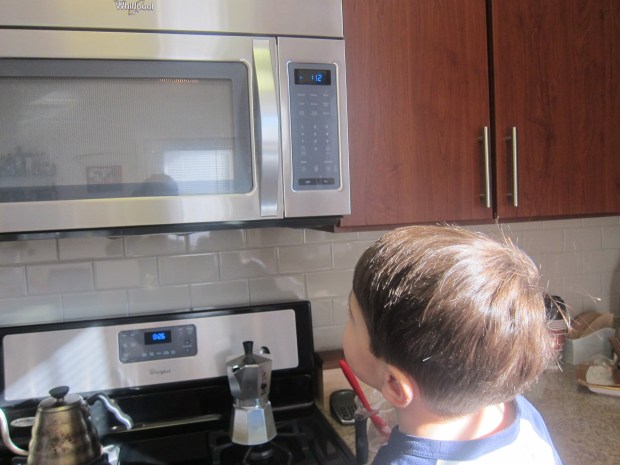
Continue to microwave at 20 second intervals thereafter, until the mixture is thick and creamy like mashed potatoes. Travis was the button presser for this part, as you can see! We needed about 3 or 4 intervals.
Baking Soda Ocean Art (3)

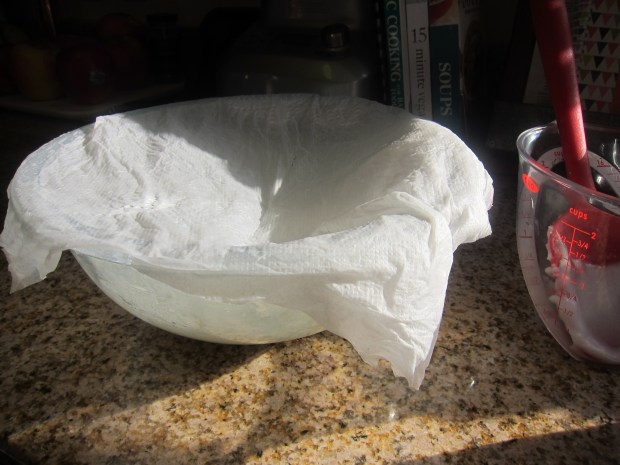
Cover the bowl with a damp paper towel, and let cool.
Baking Soda Ocean Art (4)

(Note: if your child is antsy during this waiting period, put leftover baking soda to good use with a classic volcano).

I tested the dough to make sure it had cooled completely, and found it to be quite sticky. I sprinkled in additional baking soda, and needed quite a lot; I wasn’t measuring, but probably close to 1/4 cup. If your dough is also sticky, add a little baking soda at a time and knead in after each addition. If you find you have the opposite problem (a dough that is too stiff), add a little extra water.

Travis loved the way it felt!

Baking Soda Ocean Art (5)

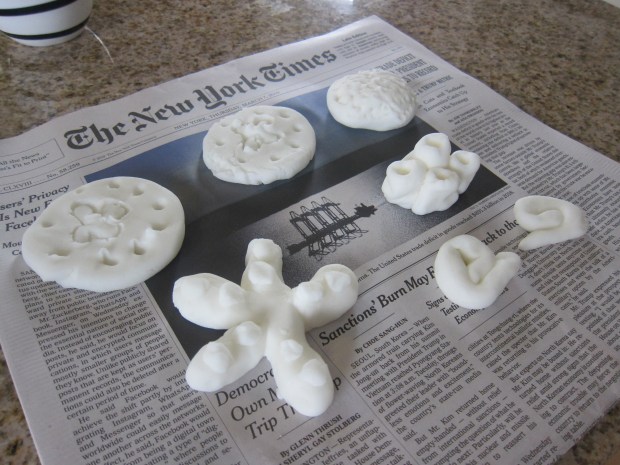
At first he wanted to know how to make sea creatures, especially the starfish: Form 5 teardrop shapes, and attach them together.

Baking Soda Ocean Art (6)

Some extra dots of dough give the starfish bumpy texture.

Baking Soda Ocean Art (8)

Coral was also fun; form a round ball, then add marks with a pencil for texture.

Baking Soda Ocean Art (9)

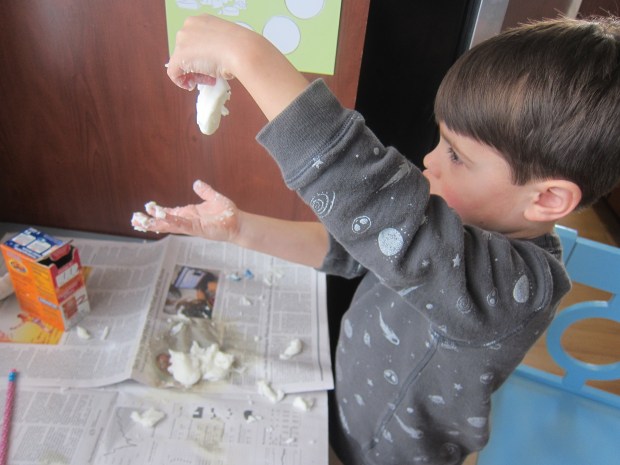
From there, Travis had his own game going, happily getting his hands into the dough over and over again.
Baking Soda Ocean Art (12)

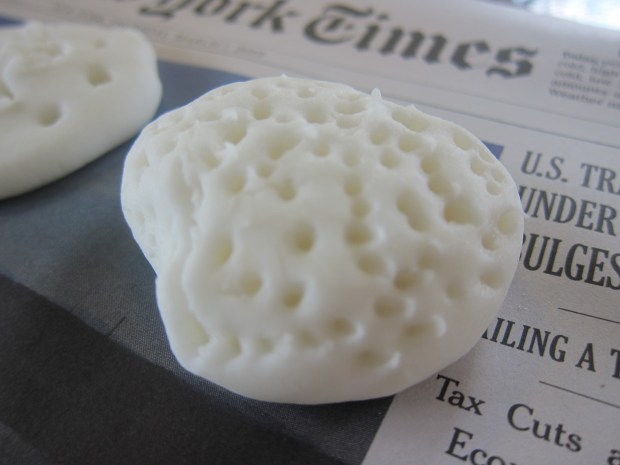
I rounded out our ocean collection with a few more sea creatures. For a sand dollar, roll a ball and then flatten. Draw a flower shape in the center with the tip of a pencil, and add a few holes around the edges.

Tube sponges were the neatest to make: Roll a few log shapes, then attach together, and punch a hole in the center of each with a pencil.

Baking Soda Ocean Art (14)

Finally, we rolled up a few cute sea snails.

Baking Soda Ocean Art (16)

Travis really wanted to play with these right away, which you can do if you bake at 175 degrees F for about 45 minutes. But when he learned that this would mean the dough turning brown, he – maturely! – decided he could wait the day or so you’ll need for the dough to dry completely.
Baking Soda Ocean Art (13)

Definitely worth the wait.

Baking Soda Ocean Art (15)


Shiny Whale

Shiny Whale (5).JPG

Poor Travis had a sick day today, which meant lots of extra snuggles and okay, perhaps a little too much extra-special TV watching. But it’s good to still engage your little one, even when they’re under the weather, with quiet activities like puzzles and coloring. This minimal-effort art project was perfect; it helped distract him for just a bit, and he created something pretty to boot!

First, I traced a whale shape onto cardboard and cut out.
Shiny Whale (1)

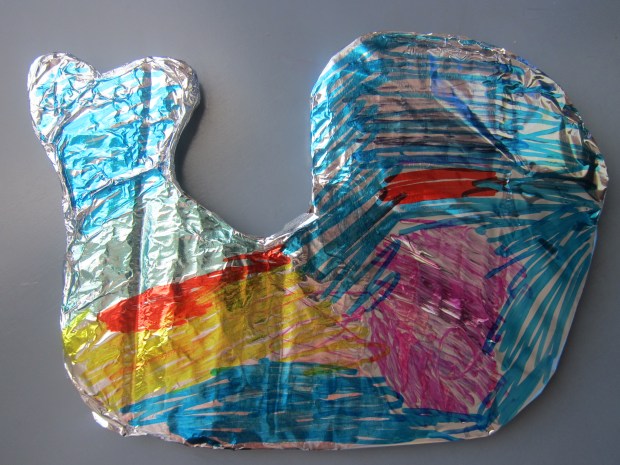
We’ve done several whale projects lately, but this one got to be extra shiny. Wrap the shape in aluminum foil, folding the foil on the backside so the front stays smooth.

Shiny Whale (3)

I gave Travis lots of sharpie markers to decorate his whale, for even shinier effect.

Shiny Whale (7)

As I said, simple but pretty, and a good way to distract your kid from that runny nose or sore throat – at least for a few minutes!

Shiny Whale (6)

Many Mobiles

Mobiles (12).JPG

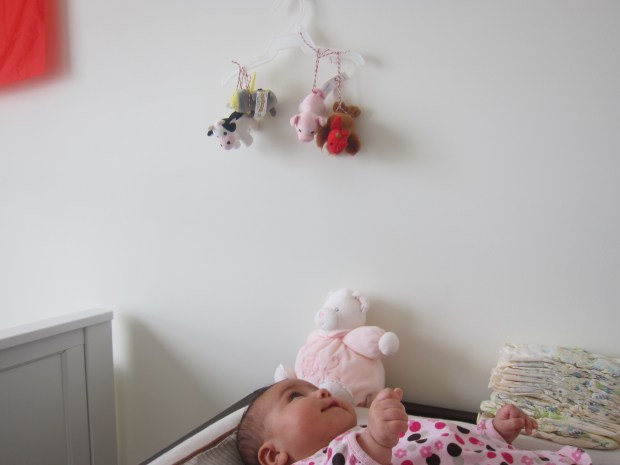
Veronika needed some new mobiles to look at, so I had fun making her a few, very easy and (and very inexpert!) versions this morning. The best thing about these mobiles is that I could craft them at her side while she kicked and played on her playmat.

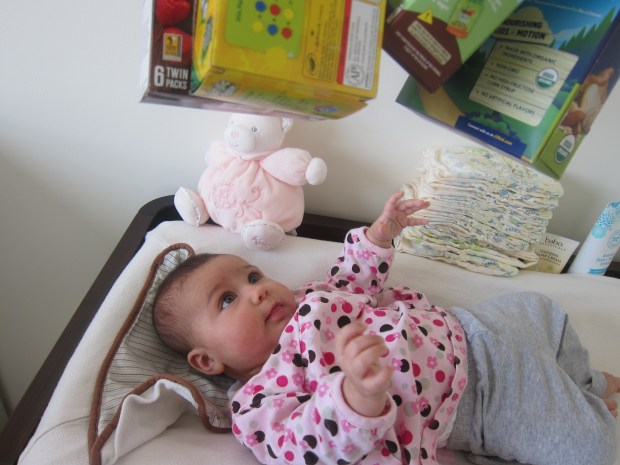
I like using mobiles during diaper time instead of in the crib; Veronika isn’t lying on her back in her crib other than at night, but she sure loves checking out what’s hanging above the diaper table during changes!

For the following four mobiles, I simply suspended the objects from a baby hanger using colorful string. No points for elegance here – but lots of points for delight!

Mobiles (11)

Here are the four variations I made:

The first was easy as pie; simply tie small stuffed animals onto string and loop onto the hanger.

Mobiles (13)

This one had the added bonus of sound, since a few of our animals squeaked or mooed.

Mobiles (4)

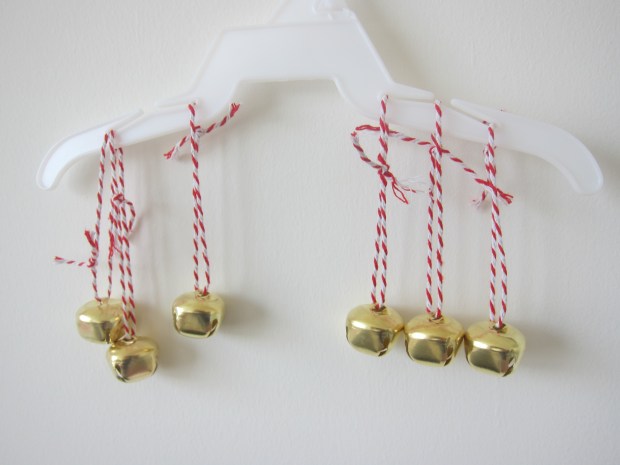
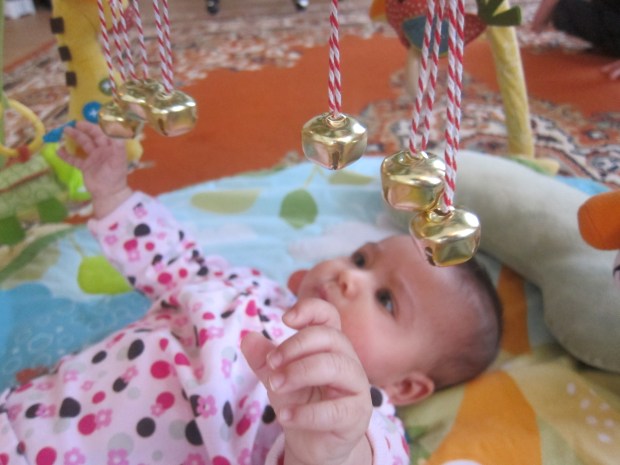
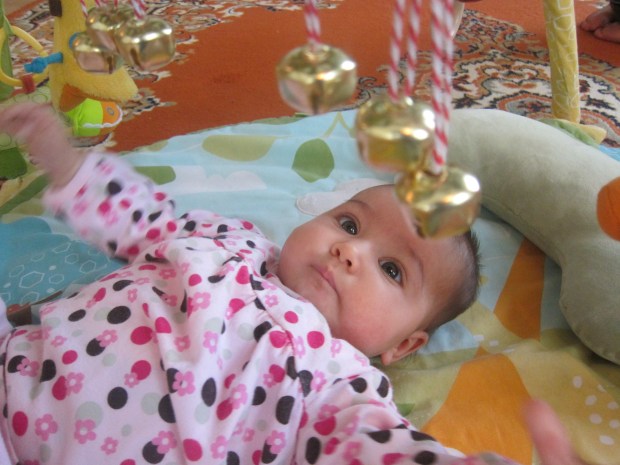
The second was equally easy; I threaded large gold jingle bells onto string, and looped onto the hanger. She absolutely loved running her hands across this one, so I placed it over her playmat later, too.

Mobiles (5)

Just be sure to supervise any play baby does with dangling strings.

Mobiles (6)

For the third, I cut cardboard into various small shapes – circles, triangles etc.

Mobiles (1)

Cover the shapes with aluminum foil. Punch a hole into the cardboard, add string, and loop onto the hanger.

Mobiles (2)

These were so sparkly when sunlight hit them!

Mobiles (3)

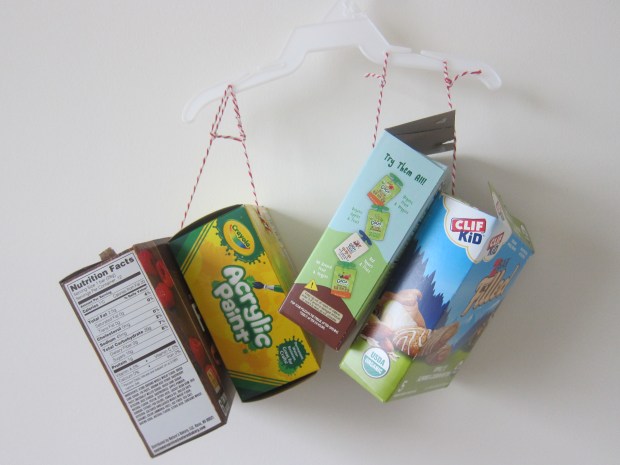
The final mobile was the least elegant of all, but also got big smiles. I stapled string to a few empty food boxes with bright colors, and then looped the string onto the hanger.

Mobiles (7)

These were fun for her to bat at and hear them knock against each other.

Mobiles (8)

In sum, there’s lots of visual delights here! We’re going to keep all these versions on rotation and change up what’s hanging from her mobile hook so she never gets bored.

Mobiles (10)


Textured Painted Fish


Textured Fish (12)

Travis and I haven’t played with clay in some time, so he was really excited when I pulled out a fresh pack of it this morning. Pretty soon, we came up with great under-the-sea fun, and added texture in two unique ways.

Textured Fish (1)

First, we shaped the clay into little fish. Travis needed some help with this, but sort of got the hang of shaping an oval body and pinching the back to form a tail.

Textured Fish (4)

More so, though, he made his own variations on sea creatures, which was just great to watch; he thought this looked like a perfect seahorse!

Textured Fish (3)

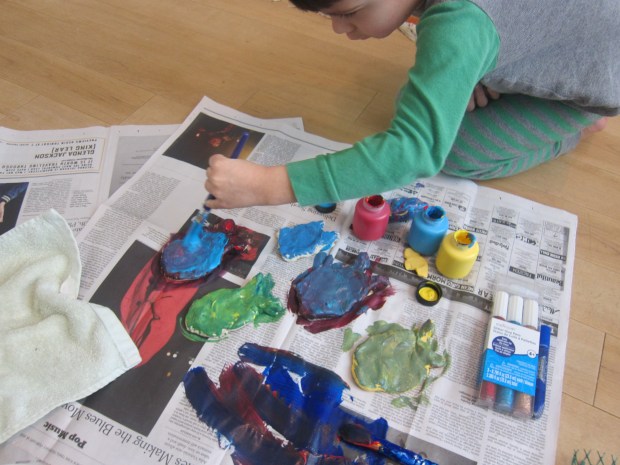
Next we painted the fish, and he loved mixing colors to help them “camouflage.”

Textured Fish (5)

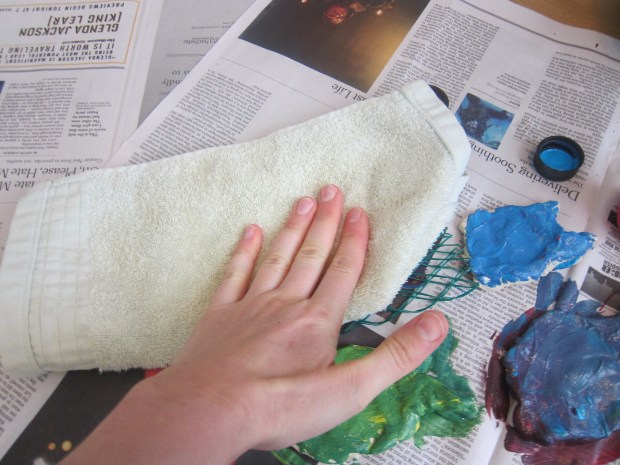
Now for the texture fun. I pulled out a mesh bag, and we placed it on the wet clay. Cover with a rag (to avoid dirty hands!) and press down.

Textured Fish (6)

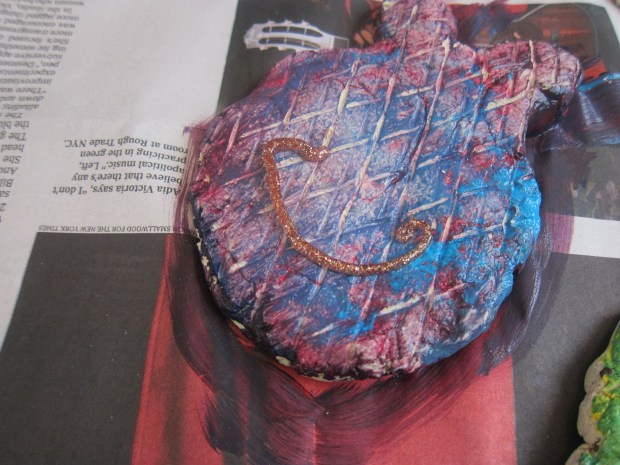
Now our fish had scales!

Textured Fish (7)

Travis loved it! Some glitter paint was the final shimmery touch for the fish, but Travis wasn’t done yet, so added “coral reefs” (which got lots more glittery glue).

Textured Fish (8)

Finally, our fish needed an ocean to swim in. We painted a piece of poster board blue, and added texture in another fun way – by running a comb over it for ocean waves and currants.

Textured Fish (2)

In sum, this was a great art project, with lots of fun elements, new ways to make texture, and opportunity for creativity.

Textured Fish (10)