Nature Soup Sensory Activity

Nature Soup (10)

Here’s a beautiful activity that will engage the senses and fire up the imagination, making it accessible for multiple ages. I told the kids they were going to open a nature restaurant on the back patio and serve up nature soup. Let the excitement begin!

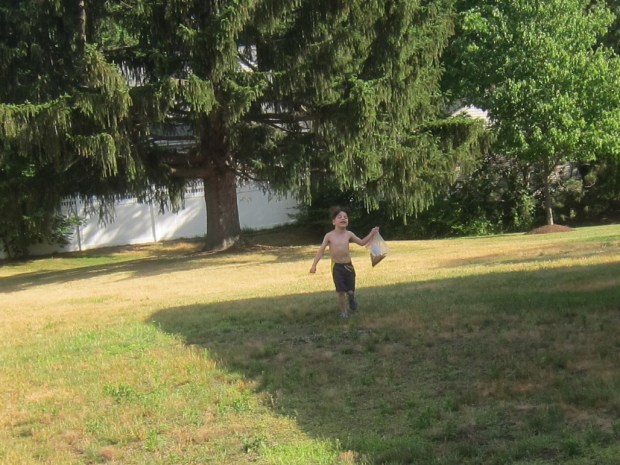
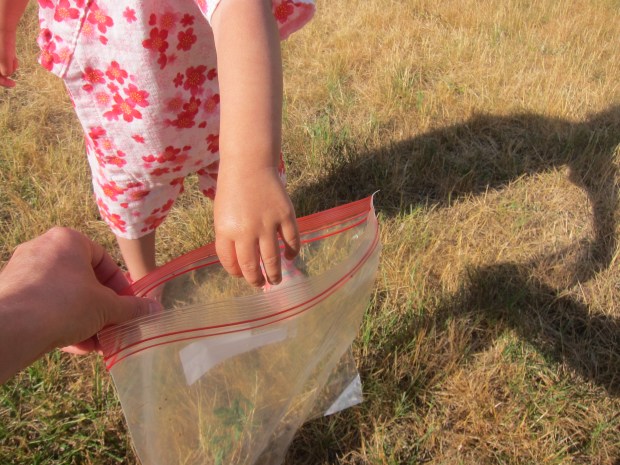
First we needed to gather “ingredients” from all around the yard. I armed the kids with zip-top bags to put in any treasures they found. Veronika loved little flowers and bits of grass, while big brother Travis preferred large finds like pine cones and bark.
Nature Soup (1)

We’re ready!

Nature Soup (2)

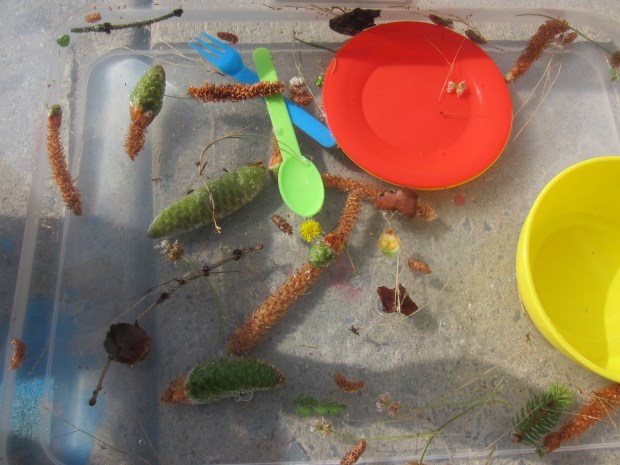
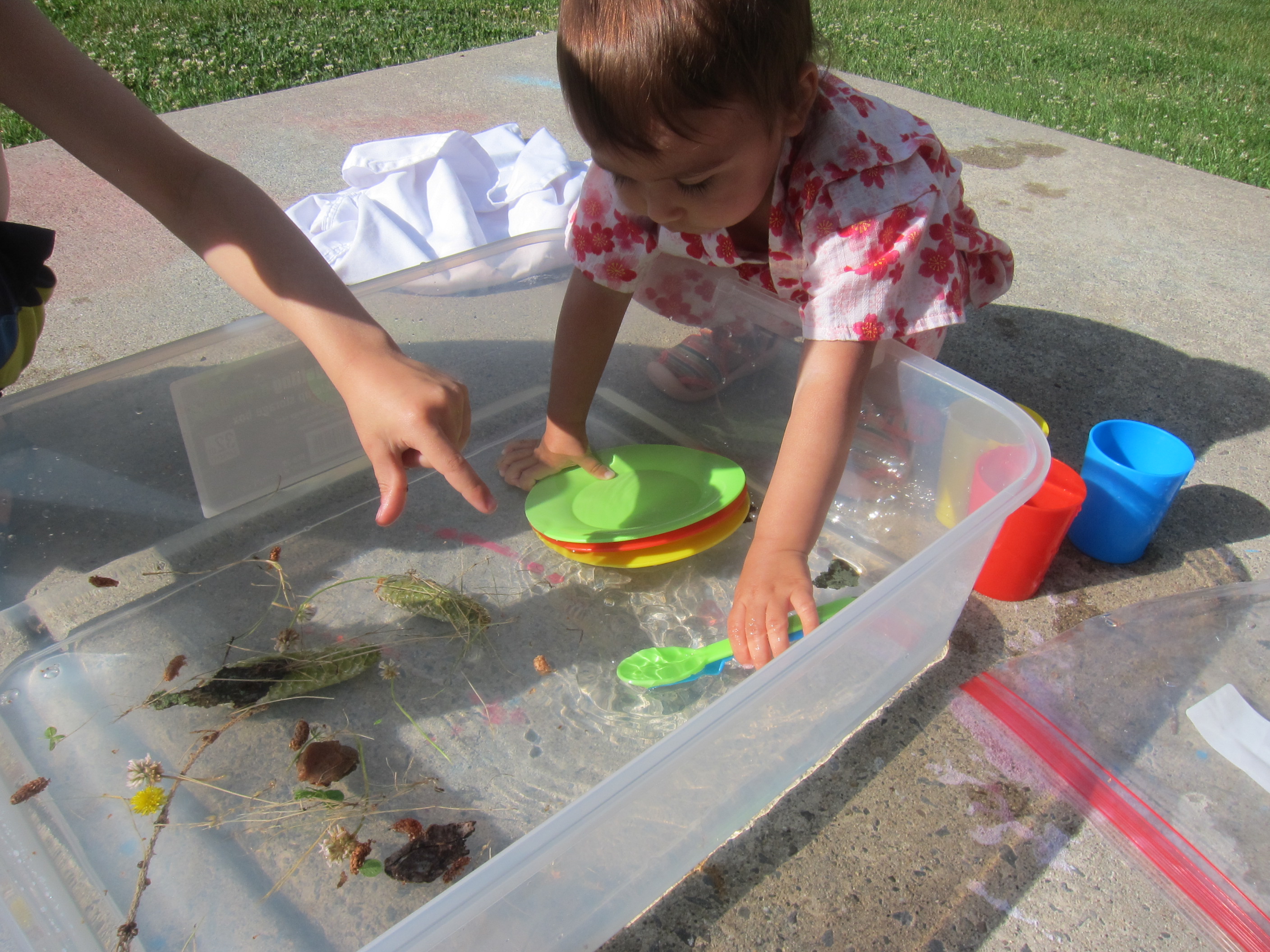
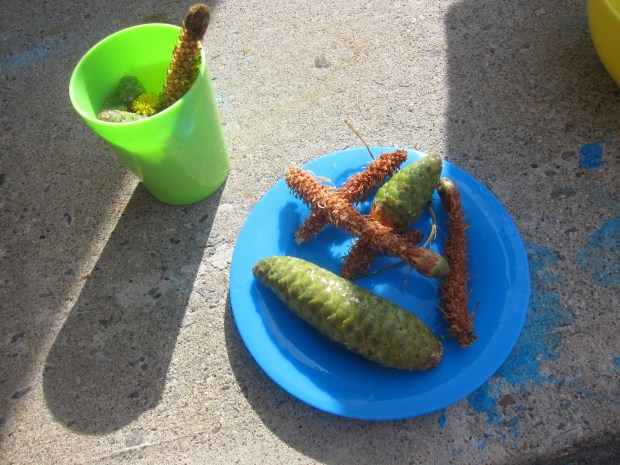
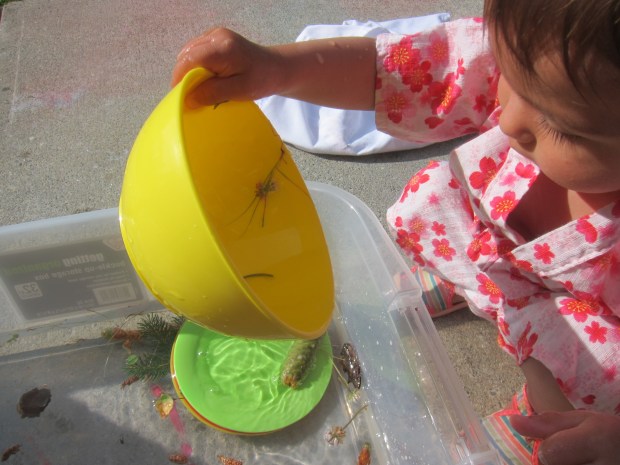
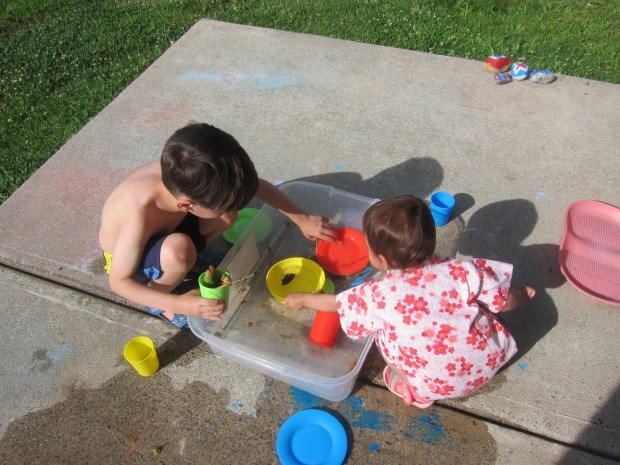
Back on the patio, I had filled a storage bin with a shallow layer of water and added plastic plates, bowls, and spoons. We dumped in all the nature treasures and it was time to cook!

Nature Soup (4)

For Veronika, this was mostly a beautiful sensory experience.
Nature Soup (3)

She loved feeling the cold water and the texture of all the nature items, as well as smelling the sweet pine scents of the pine cones and needles.

Nature Soup (9)

It was great practice for her pouring and scooping skills. She even was scooping up bits of bark with a spoon and transferring to a cup so steadily.

Nature Soup (11)

For Travis, it was much more about imaginative play. He loved making me new “drinks” to try and even provided me with a stick “straw” in each cup.

Nature Soup (5)

He was so proud of his culinary creations!
Nature Soup (7)

Meanwhile Veronika was busily splashing in the water, simultaneously keeping cool and learning.
Nature Soup (8)

I would highly recommend this activity on any warm day.
Nature Soup (12)

Summer Scavenger Hunts

Summer Scavenger (7)

Summer is here and school is out, but there’s still so much to learn on any excursion outdoors. To wit, we headed off on a nature hunt today with a three-part agenda for exploration.

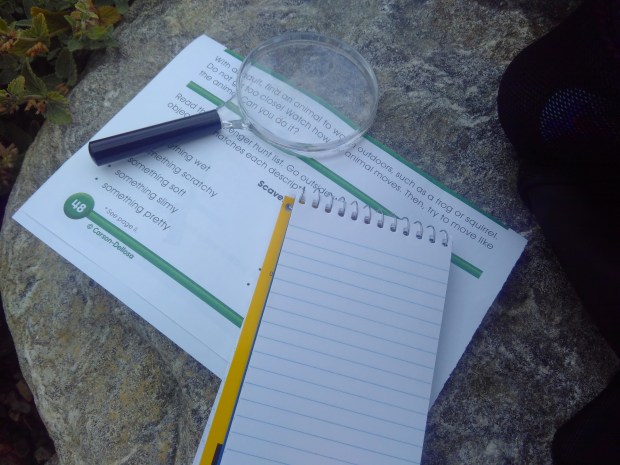
First, I simply announced that we were off to explore: What did Travis hope to find? After some initial thought, he settled on butterflies and bees. To make the hunt exciting, I gave both kids their own little notebook to draw in (though obviously little sister’s drawings would be more of a scribble), a pencil to take notes, and a magnifying glass. It was time to look and discover!

Summer Scavenger (2)

Travis was soon rewarded with a white butterfly, plus lots of bees buzzing among the flowers.

Summer Scavenger (3)

He loved pausing on a bench to draw a flower!

Summer Scavenger (4)

For the second part of the hunt, I gave his search a little more direction with a list of things to find. The categories and his answers were:

  • Something wet: a puddle on a rock
  • Something scratchy: a plant stem
  • Something soft: fern leaves
  • Something slimy: wet lichen on a tree
  • Something pretty: flowers
  • Something dry: tree bark
  • Something from a tree: a leaf on the ground
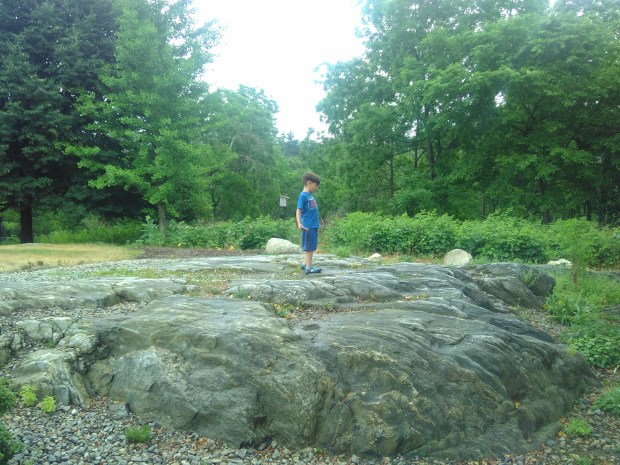
  • Something tall: a rock
  • Something hard: a tree trunk
  • Something blue: a blue jay

He enjoyed the challenge a lot, and pulled out the magnifying glass for most of the items he found.

Summer Scavenger (7)

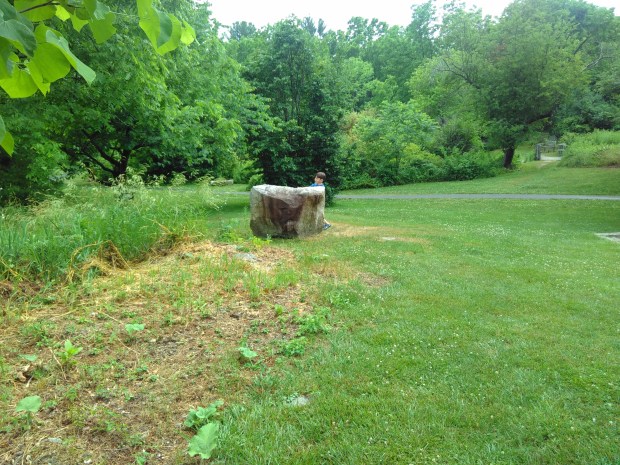
“I see something tall!” he shouted proudly, running to a big rock.

Summer Scavenger (11)

Oddly, the hardest to find was something slimy, though we thought a recent rain storm might have turned up lots of worms.

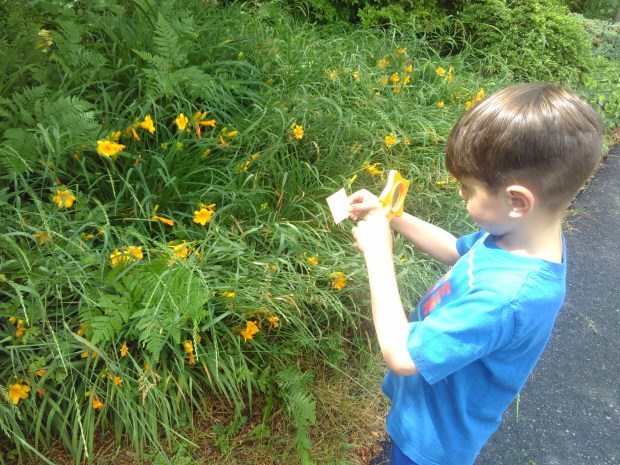
For the final part of the lesson, it was time for a rainbow hunt. I recommend bringing along paint chips (free at hardware stores) for this activity, and working your way through ROYGBIV. Travis very carefully compared his samples to the flowers and other items that he found, rejecting these flowers as not a true yellow for example.

Summer Scavenger (8)

He took it very seriously until each color was checked off the list!

Summer Scavenger (14)

How are you enjoying nature so far this summer? Please share in the comments!

Summer Scavenger (5)

Mud Painting

Mud Painting (5)

Instead of getting your patio or driveway messy with paint that needs to be washed off, stick with nature and paint with… mud instead!

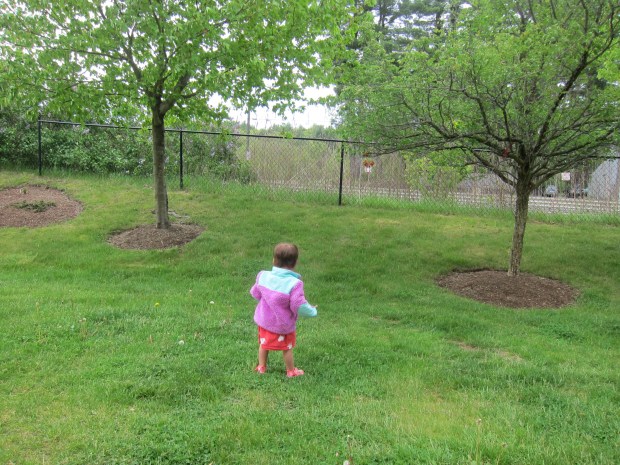
The first thing you’ll need to do for this project is make the mud, which in and of itself was a delight for Veronika. She took my hand and toddled over to the trees with me to scoop some dirt into a bucket.

Mud Painting (2)

Once back on the patio, we added water to the bucket and stirred with a craft stick until the mixture was very muddy. If it gets too thin and watery, just add a little more dirt.

Mud Painting (3)

Then I provided Veronika with paintbrushes and thick paper, treating the mud like it was real paint.

Mud Painting (4)

At first, stirring the mixture in the bucket was such a joy that she focused on that. But then I showed her how to move her paintbrush over the paper, and soon she was happily swirling and dotting with her brown “paint”.

Mud Painting (7)

She eventually discovered she could use the craft sticks to scoop out thicker globs of mud from the bottom of the bucket and smear onto the canvas.

Mud Painting (8)

In fact when I moved one sheet of “painted” paper aside to dry in the sun, she started carrying blobs of dirt over to it to carefully balanced on her craft stick. Clearly the artist wasn’t done!

Mud Painting (9)

This kept her so busy in the sunshine for quite a while. Perfectly dirty and messy fun!

Mud Painting (6)


Animal Home Detective

Animal Homes (8)

For his final nature walk of kindergarten, Travis got to play detective! A detective looking for animal homes, that is.

The assignment was not to look for animals themselves, but for their homes. I encouraged Travis to think of options we might see both high and low, big and small. That meant we peeked in the treetops for bird nests, and down by the roots for places a squirrel or rabbit might call home.

Animal Homes (4)

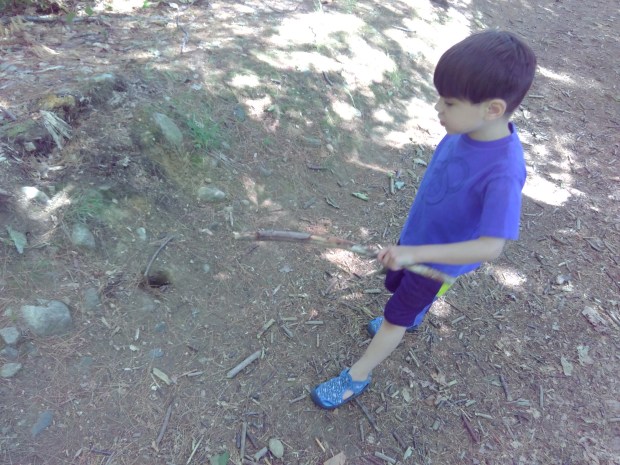
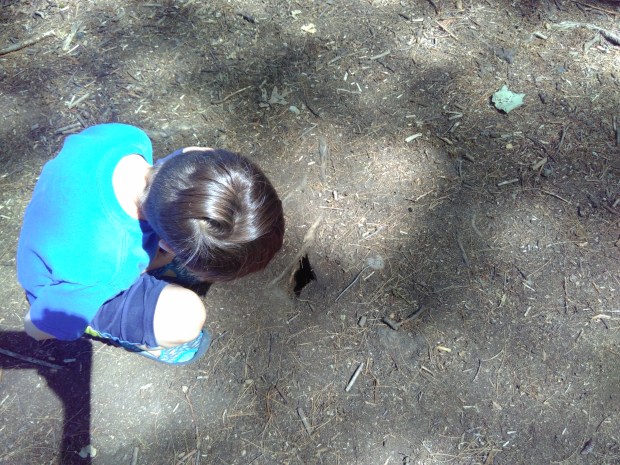
Travis loves finding holes and wondering whether they belonged to a snake or a chipmunk.

Animal Homes (6)

And don’t forget about insects! We found lots of web homes, ant hill homes, and more. Travis was particularly interested today in the vines and leaves, wondering what bugs might call those “home”.

Animal Homes (2)

We paused at one point when we found the perfect rock to sit on and have a snack and draw some of what we’d seen. Travis drew one of the spiderwebs.

Animal Homes (3)

This project is a great way to get kids thinking about why different species have different types of homes, and what each one needs in its particular shelter.

Animal Homes (5)

What animal homes do you spot in your area? Please share in the comments!

Counting Critters

Counting Critters (3)

Here’s a quick science and graphing activity to go with your next nature walk! It put a fresh spin on a route we’ve taken quite frequently in the past few weeks.

Counting Critters (7)

The idea here wasn’t to count the number of each animal we saw, but rather to notice groups and then see which group had the most. I was proud of Travis latching onto this idea, meaning it didn’t matter that we’d seen two butterflies; it mattered that when we saw them they were alone, so in a group of 1.

Counting Critters (4)

What else could we spot? We saw lots of chipmunks, but only ever one at a time.

Counting Critters (6)

We saw dogs out for walks. And spiders, which were always alone.

Counting Critters (5)

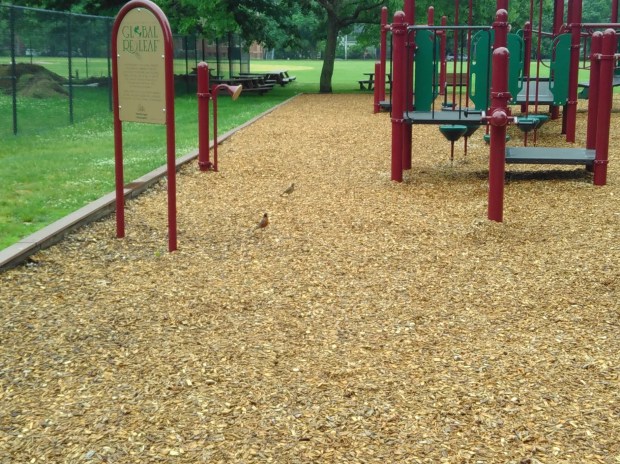
Travis enjoyed the count so much that we continued even once at the playground. Here, we saw lots of birds, and the most we saw in a group was 3.

Counting Critters (2)

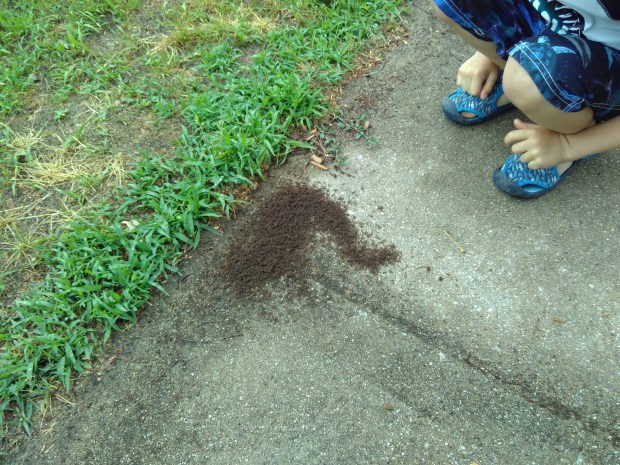
But the winning species? Ants. Travis spotted five together in the woods. We actually then spotted an enormous cloud of ants so big I didn’t bother counting it towards our game; the numbers wouldn’t have fit on our graph paper!

Counting Critters (1)

Once home, I offered to label Travis’s graph, but he wanted to draw the pictures of the animals himself! Then we graphed how many were in each group and could easily see what had the most and what had the least.

Counting Critters (8)

I encouraged him to think about what this said about each species’ behavior. He correctly surmised that ants lived in social groups. Chipmunks and spiders probably lived alone. In sum, this simple activity turned a regular walk into not just a math lesson but a fascinating thought experiment on animal behavior.

Counting Critters (9)

Rolling Down Hills

Rolling Down Hills (2)

What’s childhood without the pure joy of rolling down a hill? Today I introduced Veronika to precisely that!

There’s a small hill just behind our apartment building, just right for the kids to run up and down without being intimidating.

Rolling Down Hills (4)

But today, we lay down on the grass instead! Big brother Travis paved the way, showing Veronika how to roll like a log down.

Rolling Down Hills (3)

She was a bit nervous, and I think the grass prickled her, too, so at first she just lay there without turning. So I got down with her on my belly and we log-rolled together from top to bottom. This produced squeals of delight.

Rolling Down Hills (6)

Pretty soon she was running back up to the top to start again. This activity is so simple, but captures the care-free joy of a childhood summer!

Rolling Down Hills (1)

Bird Watch

Birdwatch (7)

Veronika adores birds right now, whether the tweets she hears on our walks or spotting them out the window. So as a follow-up to a few easy bird feeders we recently made, we thought about birds in a few other ways today.

First up: just listening to their sounds! I put a CD of bird song on Spotify as we sat down together to…

Birdwatch (1)

…read a bird book! She has a great board book about birds, and right now we have to sit and go through it at least twice a day.

Birdwatch (2)

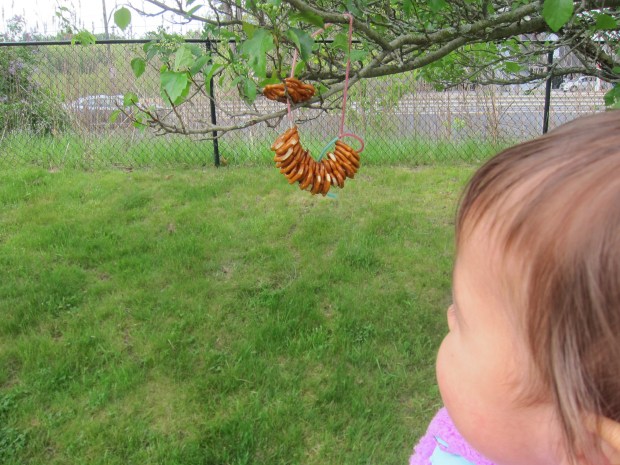
We repeated a favorite bird feeder (pine cones rolled in peanut butter and sunflower seeds), and also made a string of unsalted circle pretzels on yarn. She loved hanging this one from our tree.

Birdwatch (3)

Now when the birds come, we stop to watch through the window!

Birdwatch (6)

A final fun idea is to leave a few pieces of yarn on your back patio. Birds use them this time of year for nests.


Birdwatch (4)

Maybe we’ll even spot a colorful strand on a future walk around the neighborhood.

Letter Hunt

Letter Hunt (2)

This little outdoor challenge was the first of several in Travis’s school workbook: the goal was to find an item in nature corresponding to each letter of his name. What a perfect excuse to get outside for “recess” during home schooling!

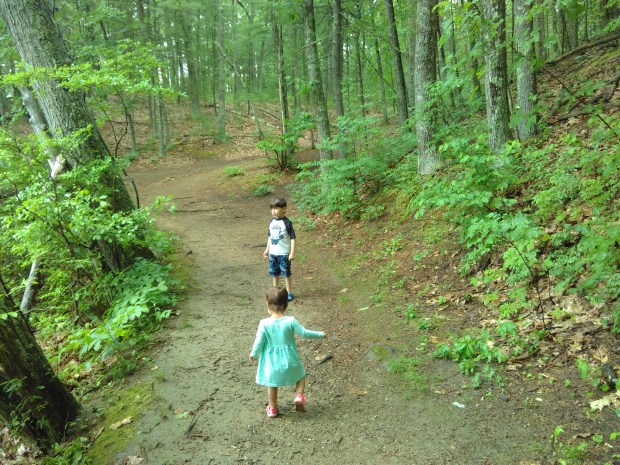
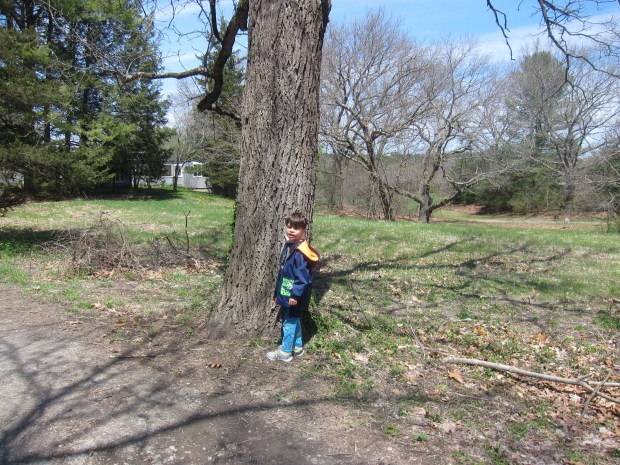
Off we set on a gorgeous local trail and Travis very quickly spotted the first letter he needed: tree for T!

Letter Hunt (1)

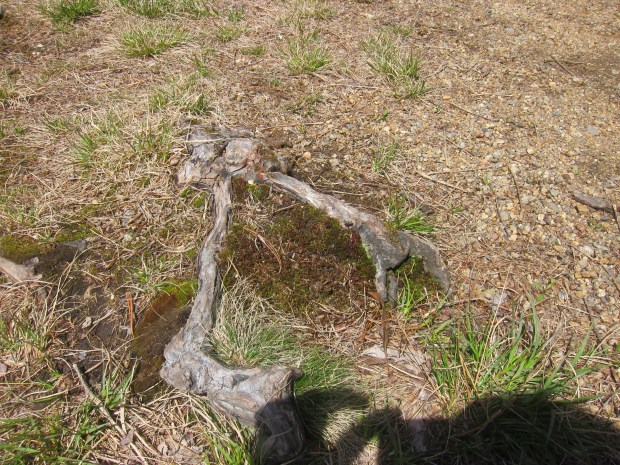
I asked him what letter was next, and so it went. Root was for R (as was rock!):

Letter Hunt (4)

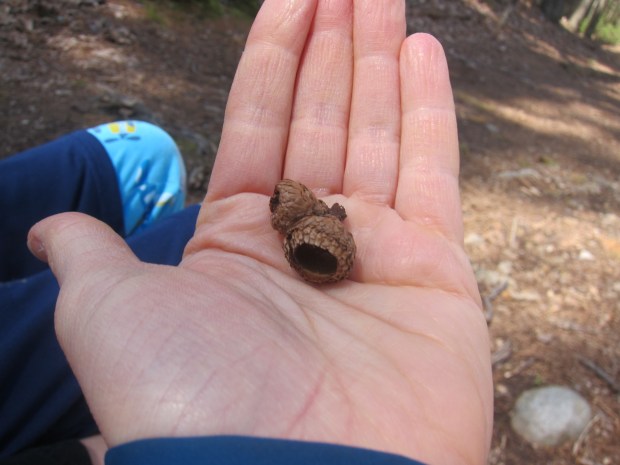
Acorns were for A, vines were for V, insects were for I, and sticks were for S.

Letter Hunt (3)

This game gave simple purpose to our walk. If your child enjoys it, do the name of a sibling or parent, next!

Migration Means Moving

Migration (5)

Spring is in the air, and with it all the migrating animals that might be returning to your area. So it’s the perfect time for a little lesson on migration! This lesson kicked off what will be a series of spring-themed recipes from Raddish Kids in the coming weeks.

The lesson plan from Raddish featured the movement of both animals and people. However, I felt that the topic of children migrating, particularly due to conflict, would be upsetting to Travis. So we focused on the animal aspect of migration, beginning with a few suggested videos. If your child is older, consider sharing an online read of Where Will I Live, by Rosemary McCarney. You can ask your child about times your family has moved, and reasons why people might move, or discuss what makes migration different from a vacation.

Migration (1)

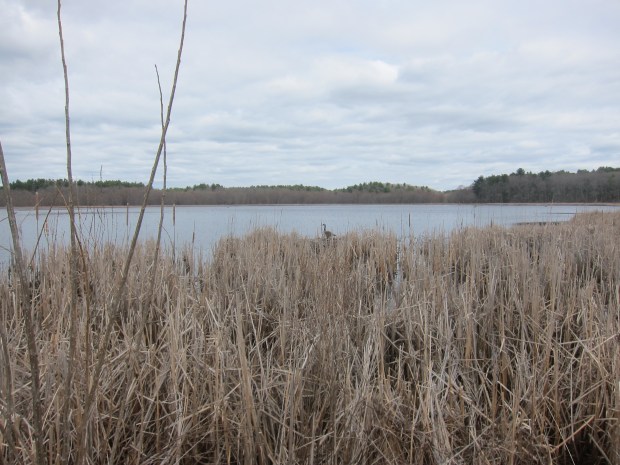
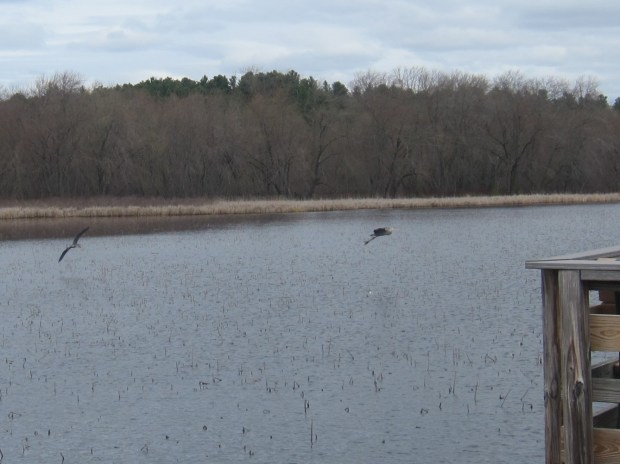
After the intro videos, we set off a nature walk in search of a migrating animal! I thought the best we might luck into was a duck or a goose, so we were legitimately thrilled to spot two great blue herons. Wow!

Migration (3)

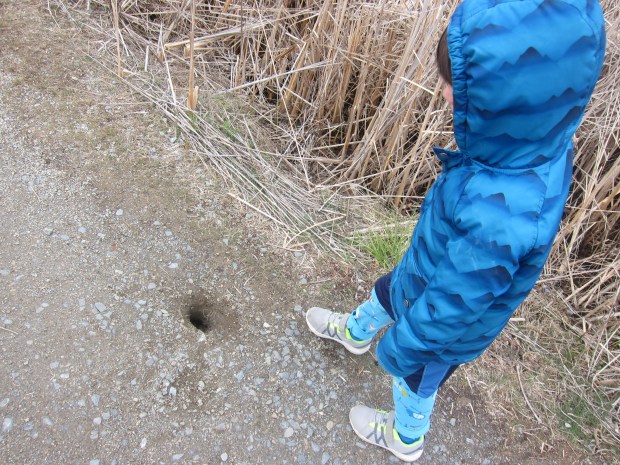
We also spotted what might have been a snake hole, which was a great opportunity to point out the difference between hibernation versus migration as a winter strategy.

Migration (2)

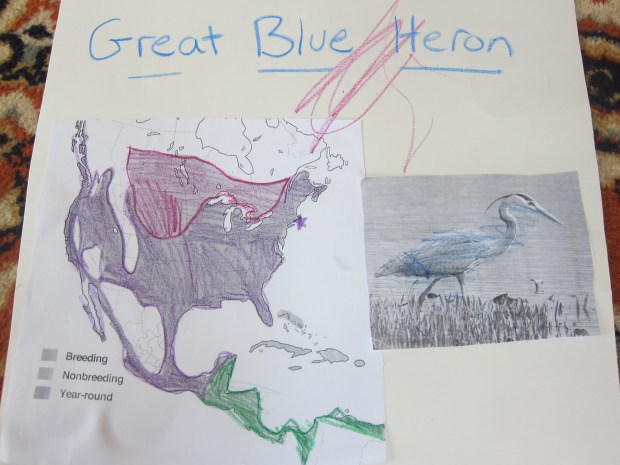
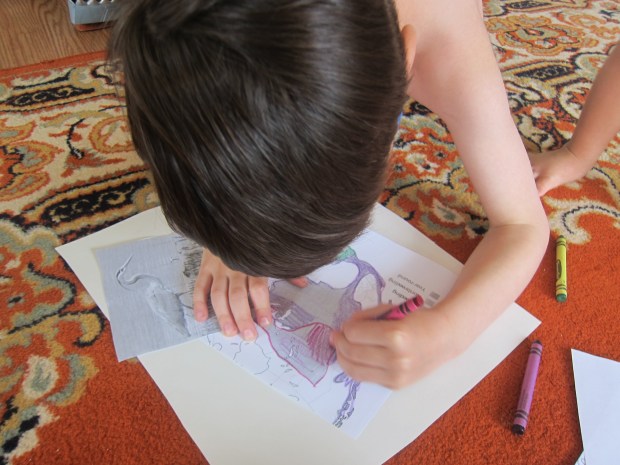
When we got home, it was time for a research project. This kind of project is new and advanced for Travis as a kindergartner, so I helped him pull up a picture of the great blue heron online, as well as a map of its range. He color-coded the map according to their winter, summer, and year-round habitats. We watched a few final videos about the bird to finish the lesson.

Migration (4)

Older kids can again get more detailed. Consider painting aspects of a particular animal’s migration, or posing bigger questions like how the animal finds its way, and how far it goes.

Rock Play

Rock Play (11)

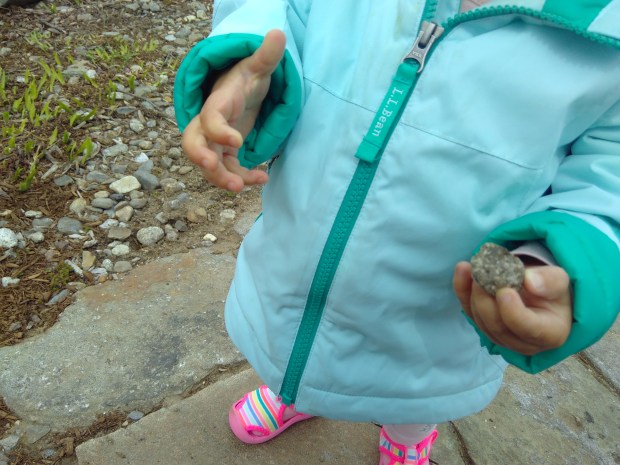
When Travis was little, there was a fire pit in our apartment complex filled with rocks, and he could literally spend hours standing at the edge and playing with them. Sorting them, taking them out, tossing them back in again, finding favorites, you name it. I lament sometimes that Veronika doesn’t have access to the same great game! So today, we brought some rocks inside to play.

After a walk at a nearby garden, we returned home with a big bounty of rocks. Make sure that you choose ones that are too big to be a choking hazard, but not so heavy that they’ll hurt a little toe if dropped.

Rock Play (1)

First we gave our rocks a bath! Veronika loved swirling them in a little tray filled with soapy water, and helping pat them dry.
Rock Play (2)

I then gave her a few buckets that she could transfer them into. She loved taking them in and out.

Rock Play (4)

Next she started to fill her dress-up purse with the rocks…

Rock Play (5)

…and even headed off for a walk with her rocks tucked inside!

Rock Play (7)

For some artsy fun, we then pulled out paints and I showed her how to dab at the rocks with a paintbrush.

Rock Play (8)

This was good fun…

Rock Play (9)

…until she decided it was more fun to paint her hands, of course.

Rock Play (10)

I let the paint on the rocks dry and set them aside for later use, because I know we’re far from done with them. There will be lots more rock play in Veronika’s future!