Dancing Bats and Ghosts

Dancing Ghost (7)

What is it with playground slides and static electricity? Travis was fascinated the other day when he kept picking up a shock each time he went down the slide and then touched the railing on the stairs back up. So we turned it into a teachable moment – minus the shock! – with this little lesson on static electricity at home. You can cut any shape you want into tissue paper, but since it’s Halloween, we had to go with bats and ghosts of course.
Dancing Ghost (1)

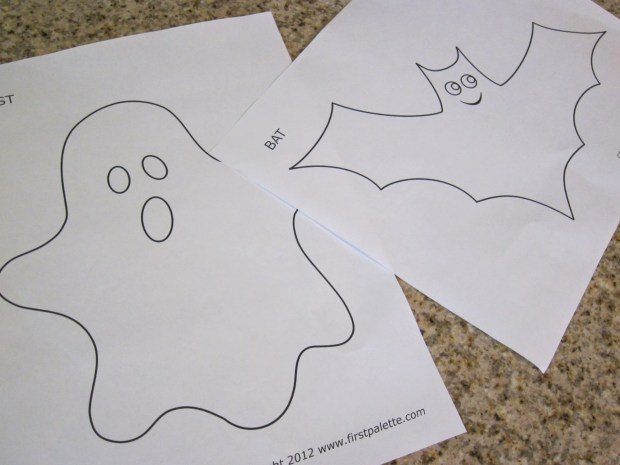
I didn’t trust myself to cut tissue paper free-hand, so downloaded templates of a bat and ghost, and traced onto the paper before cutting out.
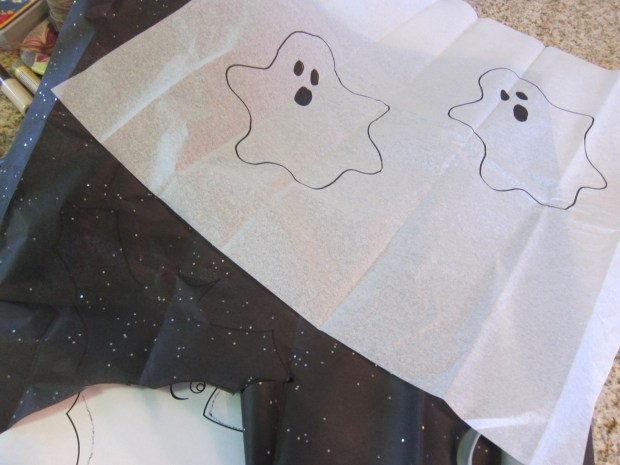
Dancing Ghost (2)

Tape the shapes to a tabletop or similar surface; set aside.
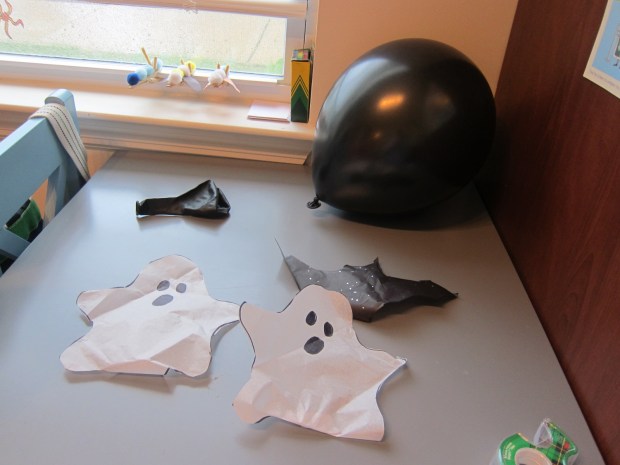
Dancing Ghost (3)

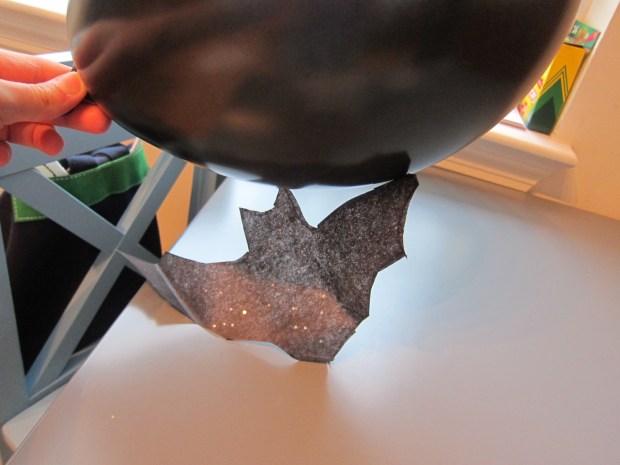
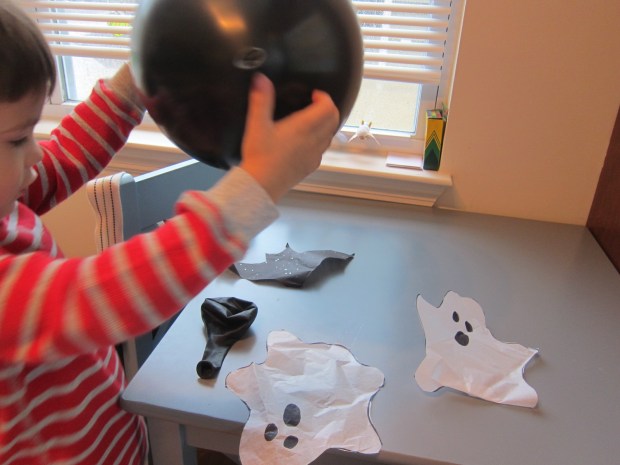
To create the static, blow up a balloon (a spooky black was the perfect shade for today), and rub in your hair (or on a sweater). Hold the balloon over the tissue paper, and the static will make the ghosts and bats lift up and dance!
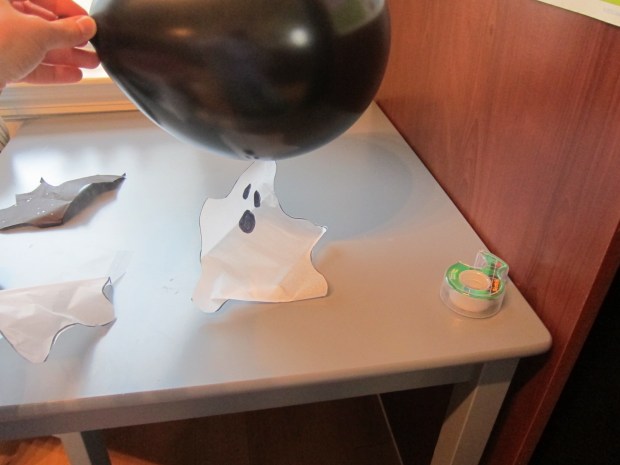
Dancing Ghost (6)

Travis loved every element of this experiment, including making static from his own hair…
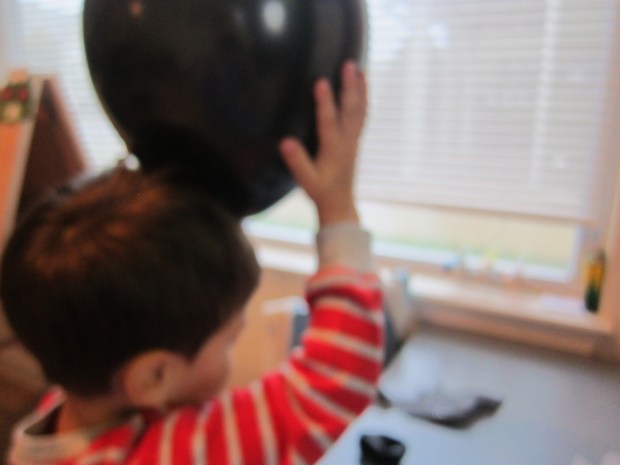
Dancing Ghost (5)

…And seeing if he could make the tissue paper rise up.
Dancing Ghost (4)

Of course you also could just create static and the tissue paper will stick directly to the balloon, but taping our tissue paper spookies to the table turned it into a hokey Halloween jig.

Dancing Ghost (8)

Erupting Apples

Exploding Apples (3)

We pretty much never tire of making baking soda explode with vinegar around here. To add an autumnal spin to the project, this time we erupted “apples” instead of volcanoes!

To make your apple mixture, combine 1 cup baking soda, 1 tablespoon dish detergent and 1 tablespoon water. We had everything ready to go in a bin for outside, since we knew this was going to be a messy one…

Exploding Apples (1)

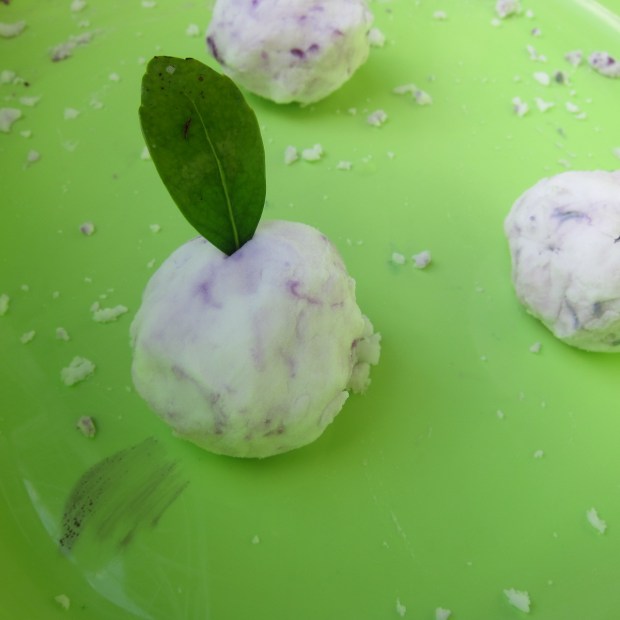
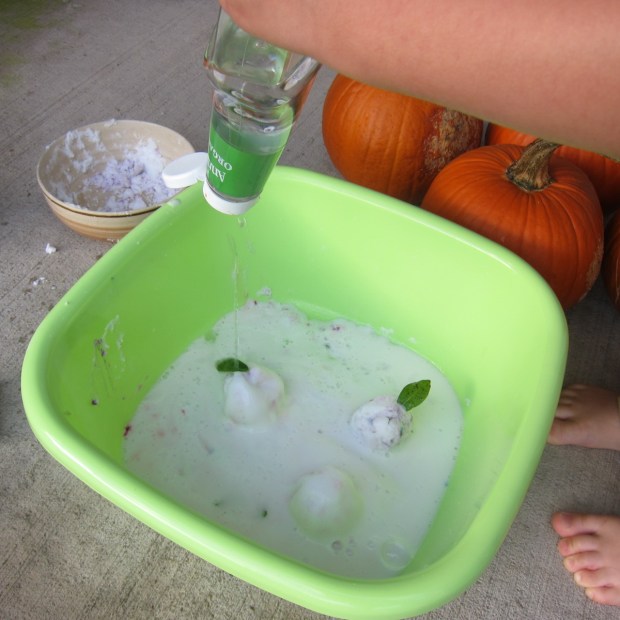
Time to get your hands dirty! Get in there and mush your baking soda mixture around, until you can form it into balls as the apples. We squirted in a little red food coloring, but oddly this made our apples purple, not red! Ah well, a little leaf as the finishing touch made them super cute.

Exploding Apples (2)

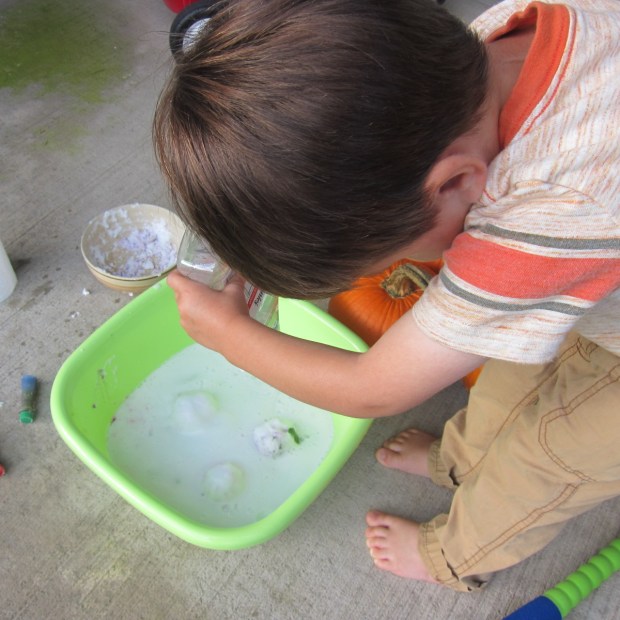
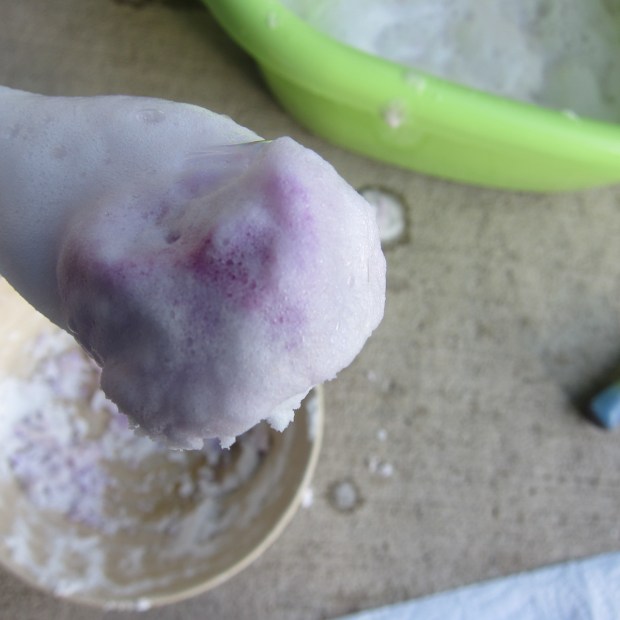
I gave Travis an old ketchup bottle filled with white vinegar, and he went to town squirting onto the apples, delighted by the foamy erupting result.

Exploding Apples (4)

He couldn’t stop there of course; half the fun is stirring around the foamy mixture afterwards. Look, a leftover apple!

Exploding Apples (6)

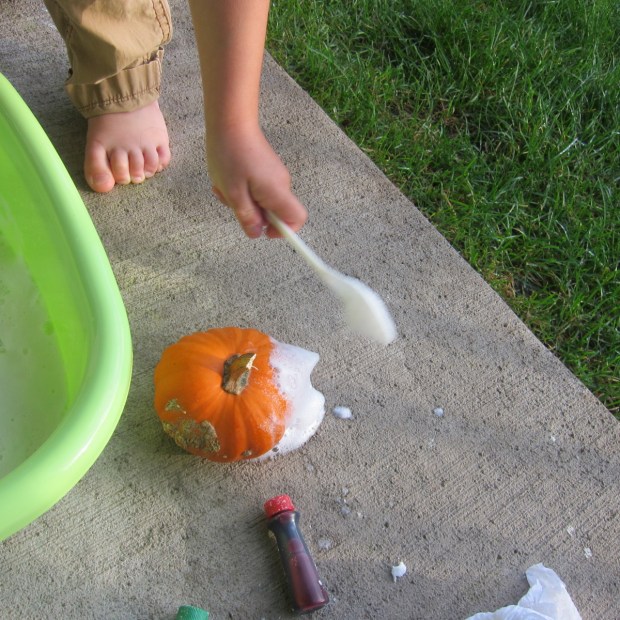
Travis also decided he wanted to cover one of our gourds with the foam – why not, since this added to the fall feel of the project.

Exploding Apples (7)

As always, this activity is the perfect way to blow off energy when your kids just want to get messy!

Exploding Apples (5)

Edible Geode

Geode final

There are kids’ projects that are ho-hum for the adults, and there are kids’ projects where even the grown ups in the room say “Wow!” This project definitely falls into the latter category, a homemade geode rock – that just so happens to be edible too. You’ll need to be patient for this one; t takes about 4 days, start to finish… But nowhere near the hundreds of thousands of years required for a real geode!

To make our own geode, we first needed to form crystals: Make a supersaturated sugar solution by dissolving 3 cups sugar in 1 cup boiling water. Wait until you can’t see any sugar crystals on your spoon, to ensure that the solution is ready.

LP Natural (15)

Fill a bowl half way with flour, then press aluminum foil in to the flour and pour in your sugar solution. Cover with additional foil and let sit for 2 to 3 days – yes 2 to 3 days!

LP Natural (16)

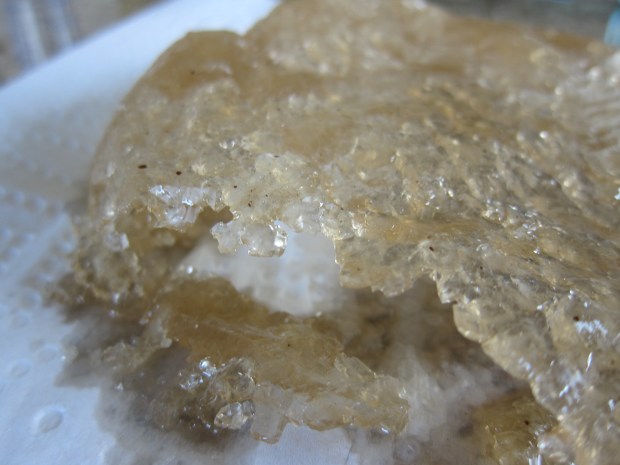
On the third day, I thought we hadn’t been successful, seeing just a few sugar crystals floating on top of the sugar solution. But when we lifted out our foil and poured off the excess sugar solution, we were left with a beautiful geode! We turned this upside down on a paper towel and left it to dry out for another full day.

LP Natural (22)

The “geode” broke into a few smaller pieces as it dried, but even the adults in the room were dazzled by the resulting rock candy. I haven’t eaten this stuff since I was a child at the science museum, and it was very neat to have made it right at home.

LP Natural (24)

Travis happily crunched on the smallest piece, before I stopped him because we weren’t quite done making our rocks look like rocks.

In order to do that, we melted vegan chocolate chips in the microwave at 20 second intervals until melted, about 1 minute total. Brush the melted chocolate over the outside of the rock (leave the jagged “geode” side uncovered.

LP Natural (26)As the finishing touch, we crushed two Newman O cookies and sprinkled on the resulting “dirt.”

LP Natural (27)

That is one beautiful geode!

LP Natural (25)


Vinegar, Baking Soda… and Balloon Eye Droppers

Vinegar Balloons (4)

I used to have pipettes (a.k.a. eye droppers) at home, but can’t find them anywhere these days! Cue this genius idea I spotted on Kiwi Co‘s KiwiCorner app. The perfect way to use up a few balloons we had in our craft box.

This game is pretty much a simplified version of my volcano for toddlers – a big bin of baking soda with vinegar to squirt on top. But the fizzy fun comes from the novelty of squirting out the vinegar through homemade eye droppers.

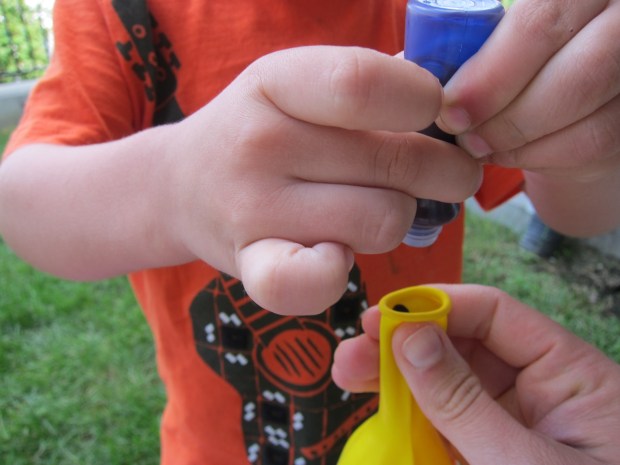
To prepare your eye droppers, fill uninflated balloons with white vinegar. Add a few drops of food coloring to each, so your explosions will be colorful as well.

VInegar Balloons (1)

I knotted off the balloons, after which they look like mini water balloons. Carefully poke a small hole in each (a pin or wooden pick both work fine).

Vinegar Balloons (2)

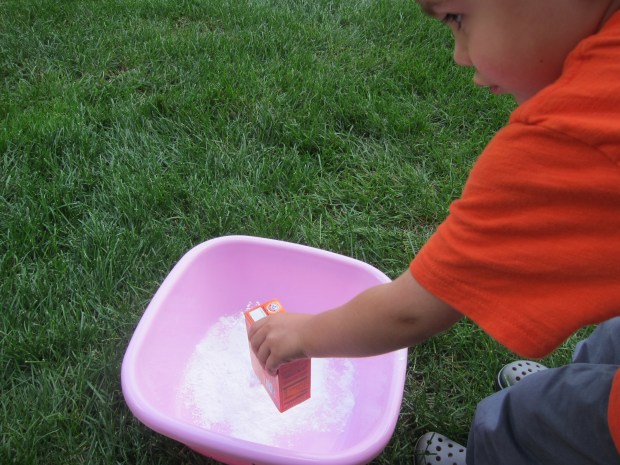
Travis dumped a container of baking soda into a tray, and then we let the fizzling begin!

Vinegar Balloons (3)

After the first few bubbles, he preferred to stir our mixture while I squirted additional vinegar from the “eye droppers.”

VInegar Balloons (5)

Overall, cute and messy fun, and a nice way to improvise when you can’t find real pipettes.

Dancing Salt

Dancing Salt (5).JPG

Did you know that salt likes to dance along to music? Neither did we until we tried this cool experiment! Sound waves might be invisible, but because they create vibrations, the dancing salt allows kids to see sound in action!

You don’t need to dye your salt with food coloring for this experiment, but it will make it easier to see as it moves.

Dancing Salt (1)

Besides, Travis enjoyed smooshing the color into the salt. We placed 3 portions of salt in zip-top plastic bags and added blue, green, and red.

Dancing Salt (2).JPG

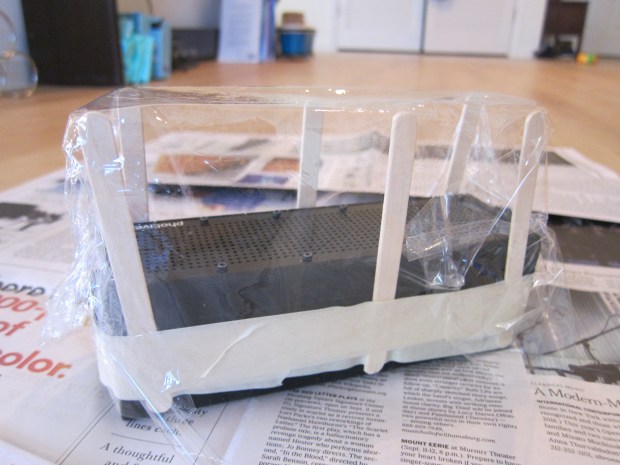
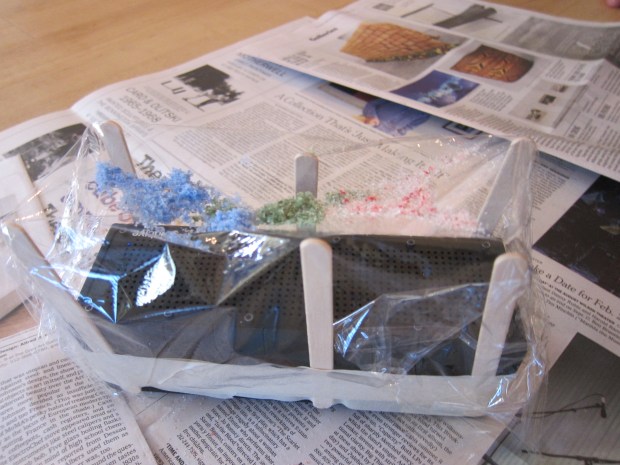
Next you’ll need a bluetooth speaker to make this experiment work. Tape 6 popsicle sticks around the speaker at intervals to create a frame, then top with plastic wrap. Place on a flat surface.

Dancing Salt (3)

Now sprinkle on the salt and watch it shimmy and shake! We found that loading too much salt on the plastic wrap made the action harder to see. Even the amount below was too heavy:

Dancing Salt (4)

So a light sprinkle was the most interesting. Here is our salt grooving to the Beatles – who knew salt had good taste in music?

Definitely a fun one!

Making Moon Craters

Moon Crater (5).JPG

Some games are educational, some games are artistic – but for this one I confess we basically just wanted to take advantage of our new backyard and have some messy fun!

That said, the moon has been on our mind since the eclipse, so I asked Travis if he wanted to see an example of how asteroids and comets made craters on the moon. That was the extent of our “science lesson”, but older kids doing this project might want to look at videos of the moon or research craters a little further.

For our moon surface, I filled a bin with about 2 inches of white flour. A little cocoa powder sprinkled on top added contrast.

Moon Crater (1).JPG

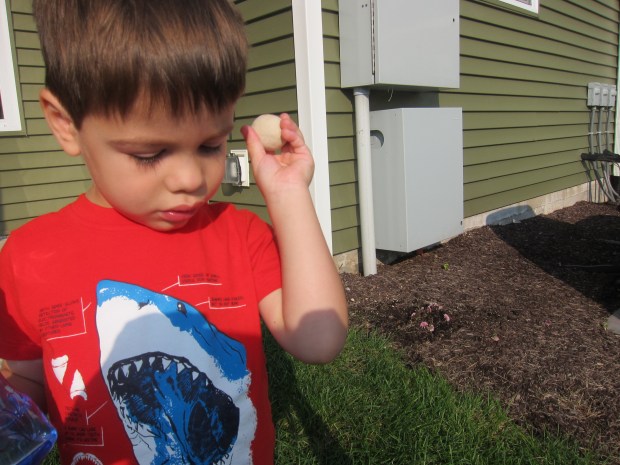
Three “asteroids” of dried clay made the perfect asteroids. Hold them at about chin level, then drop down onto your moon surface.

Moon Crater (6)

There was a very satisfying puff of flour and cocoa with each impact!

Moon Crater (3)

And very neat holes left behind.

Moon Crater (4)

Because this activity was so action-based, here’s a quick video!


Salt Water vs. Fresh Water

Salt v Fresh (5)

With so much time spent at the beach over the summer, the topic of salt water is bound to come up – that big ocean contains so much water, but it’s no good for drinking! Here’s a neat way to explore some of the different properties of salt versus fresh water at home.

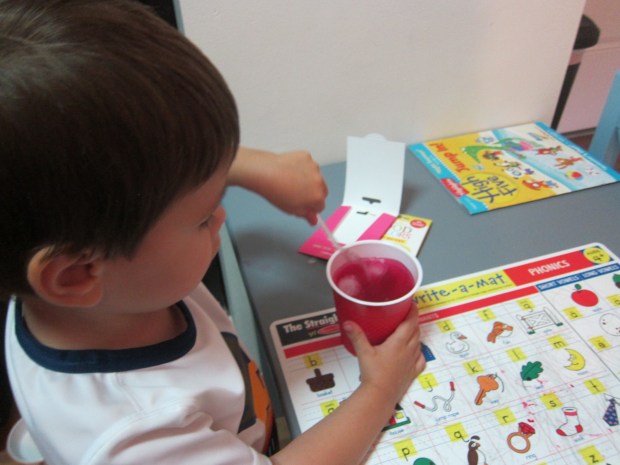
First, pour a generous amount of salt into a cup of water, and stir to dissolve. Pour a second cup full of fresh water.

Salt v Fresh (!)

Next, we added ice cubes to each.

Salt v Fresh (2)

Finally, we mixed up a batch of red food coloring; a dark color is best here, so you can fully see the results.

Salt v Fresh (3)

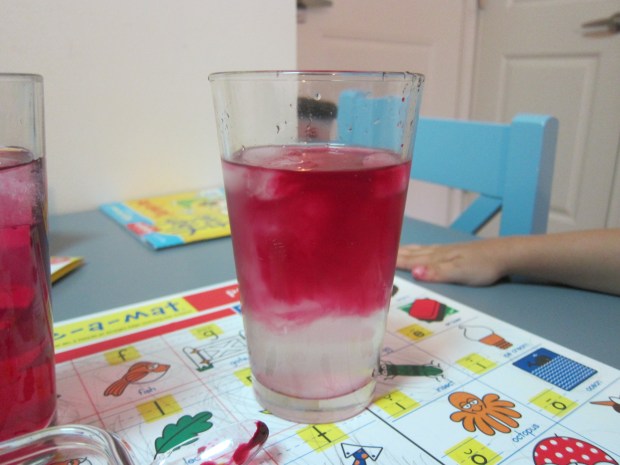
Slowly pour the food coloring into the top of each glass. Your child will see that it sinks in the fresh water, but stays on top of the salt water.

Salt v Fresh (4)

A quick and easy early lesson on density!

Travis had fun playing with leftover colored water and ice cubes for some time, making this activity a big hit.

Salt v Fresh (6)

Galaxy in a Bottle

Galaxy Jar (6)

This project is reminiscent of our Glitter Star Jars, but we liked the results and the making of it even better!

It all began when we found gorgeous pictures of galaxies and star clusters on NASA’s website – so cool to skim through and to teach your child a bit about the cosmos, even if the larger details are lost on a preschooler.

After our picture-gazing was done, we began the real fun – putting together our own glittery universe.

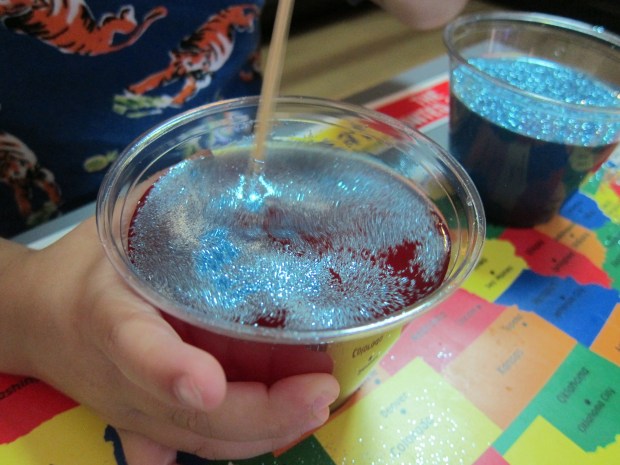
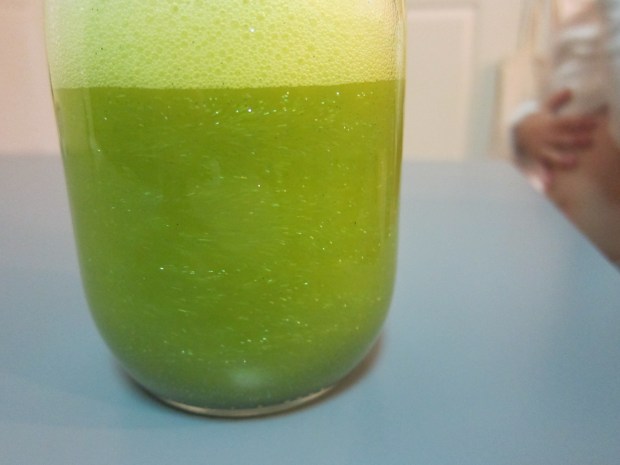
We dyed water with food coloring in two separate cups, one red and one blue.
Galaxy Jar (1)

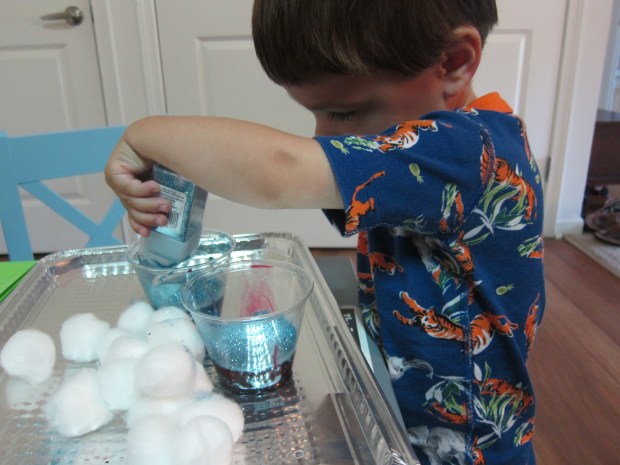
To the red cup, we added a judicious amount of glitter. In the blue cup, we went wild with lots of glitter!

Galaxy Jar (2)

To assemble your universe, tear cotton balls apart slightly, and fill a clear glass or plastic jar.

Galaxy Jar (3)

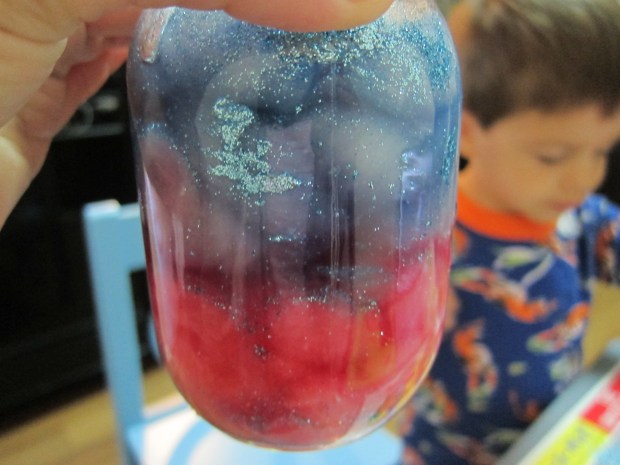
We poured in the red cup, which fully saturated the cotton balls. After adding a second layer of cotton balls, we poured in the blue cup. The two layers stayed perfectly separated, which made for a gorgeous effect!

Galaxy Jar (4)

Travis had so much fun that he soon became a little scientist, concocting universes out of food coloring and glitter for quite some time.

Galaxy Jar (5)

A great start to the morning!

Galaxy Jar (7)

Tornado in a Jar

Tornado Jar (5)

Show your child the whirling power of wind with this tornado-in-a-jar. They are sure to love adding the ingredients and watching the results!

First we needed to put our tornado together. Travis helped pour water into a mason jar until it was about two-thirds of the way full…

Tornado Jar (1)

Then we squeezed in a little dish soap…

Torndao Jar (2)

A few drops of food color…

Tornado Jar (3)

And glitter. (Because of course a tornado needs glitter – but actually this will help make it easier to see the water swirling around).

Tornado Jar (6)

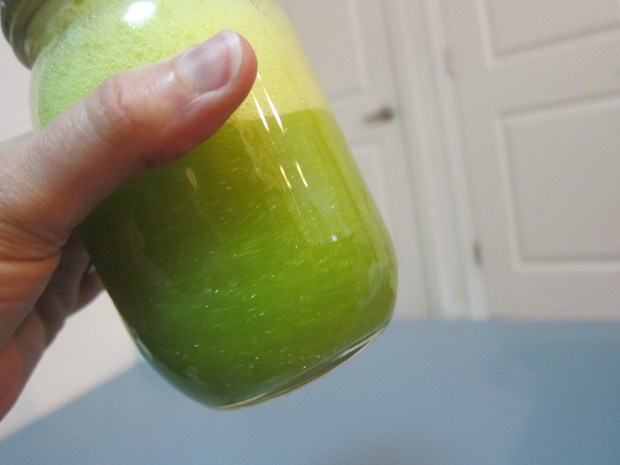
Travis had seen some clips of big tornadoes online, so he had a reference point when we turned our mason jar upside down and spun it a few times to create a tornado effect. Glue on the cap if you’re worried your child will try and open it up to explore the contents of the tornado, of course!

Tornado Jar (4)

Frozen Ice and Sand Comets

Frozen Comet (7)

If your child loves outer space, this game is sure to be a smashing success.

Travis and I talked about how comets are made of ice and dust, and decided to make our own. I froze ice cubes and then crushed the ice in the blender for a more easily workable texture – the crushed ice was a big hit!

Frozen Comet (1)

Then we sprinkled on sand, making a sandy dusty comet-y mix. Travis loved watching the two combine.

Frozen Comet (3)

Once we had a good mix, I packed some into a plastic cup, and we added a little bit of extra water.

Frozen Comet (5)

Place your comets in the freezer until solid.

Now comes the real fun part – take the comet outside and toss it on the ground so you can demonstrate what happens when one collides with a planet!

Frozen Comet (10)