Tissue Paper Eggs

Tissue Paper Eggs (7)

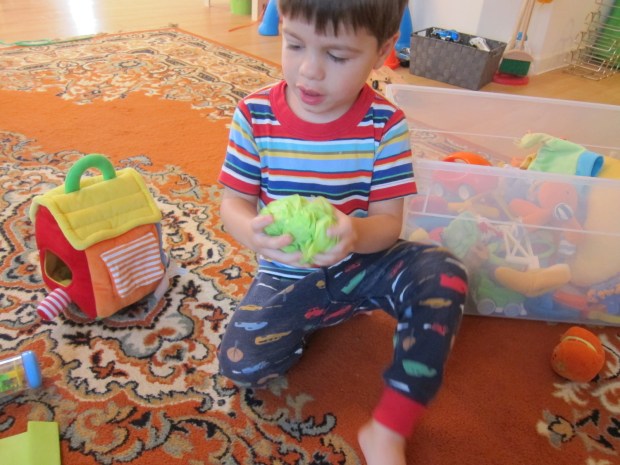
This morning Travis found his old baby toys in a bin, and dove into it with delight. It’s always a laugh to see the way that older kids go back and play with things they used as babies, inevitably in inventive and different ways. He was particularly enamored with an old bird shape-sorting toy, so we decided to make eggs for the birds!

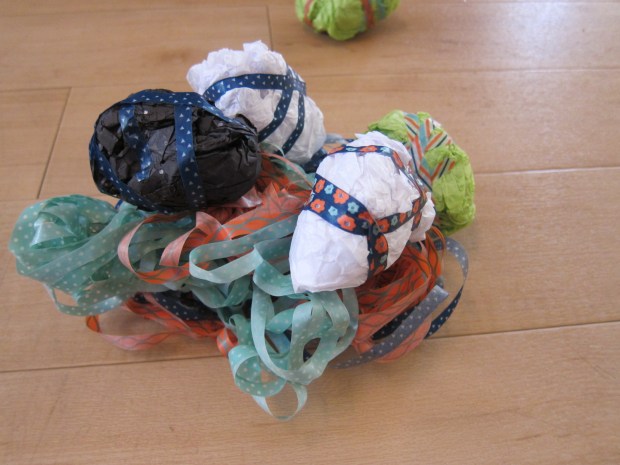
The process was simple and fun – crumple sheets of tissue paper into little balls. Travis went to town with this, and I neatened them up a bit into ovals as he finished each one.

Tissue Paper Eggs (2)

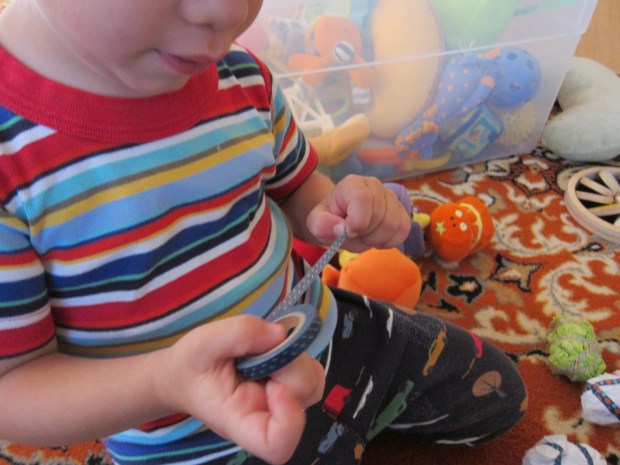
To finish your eggs, wrap with colored tape. Masking tape would work well, but we had decorative washi tape that seemed even better, since it reminded me of the decorative blown eggs I learned to make in elementary school (in pre-vegan days!)

Tissue Paper Eggs (4)

Travis was very deliberate in deciding which tape pattern should wind around which egg, until we had a beautiful assortment.

Tissue Paper Eggs (6)

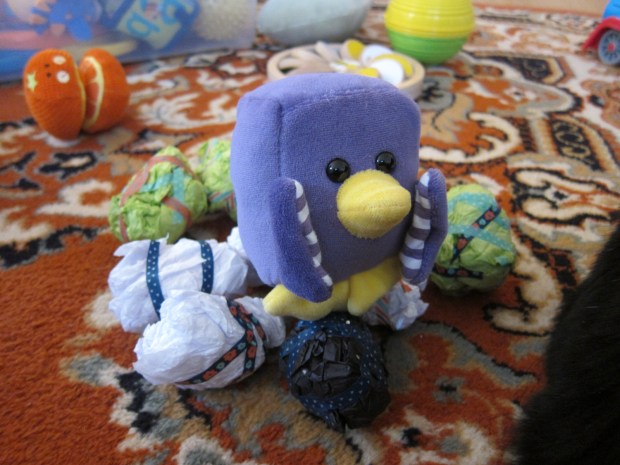
And then the birdies got to sit in their new nest!

Tissue Paper Eggs (5)


Folded Paper Animals

Folded Animals (7)

This rather random activity turned out to be a delight on multiple levels. Your child will learn about animals, exercise their creativity, and enhance their fine motor skills.

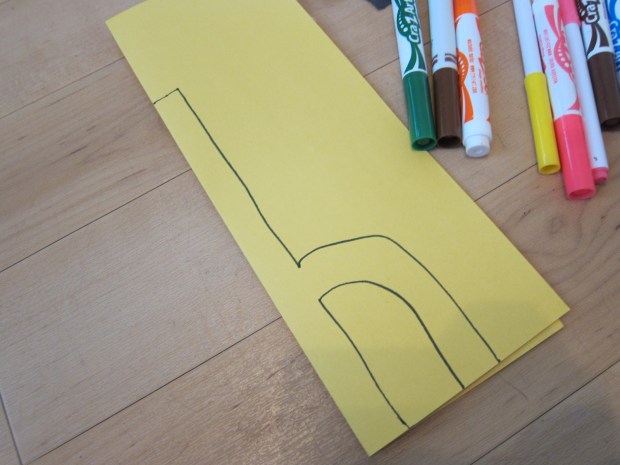
When I asked Travis this morning if he wanted to make safari animals, he eagerly trotted over to see what the project was all about. To make your animals, fold construction paper in half. Draw the outline of an animal in profile, then cut out with scissors and your folded creature will stand on its own two (or four) feet.
Folded Animals (2)

I’m no artist, so I relied heavily on online pictures to get my outlines correct. A giraffe in the shape of an H was the easiest, and one that even kids can try to draw.
Folded Animals (1)

Travis was practically shaking with excitement as I started cutting the giraffe out, and the animal was revealed along the folded line. He decorated the giraffe with brown spots…
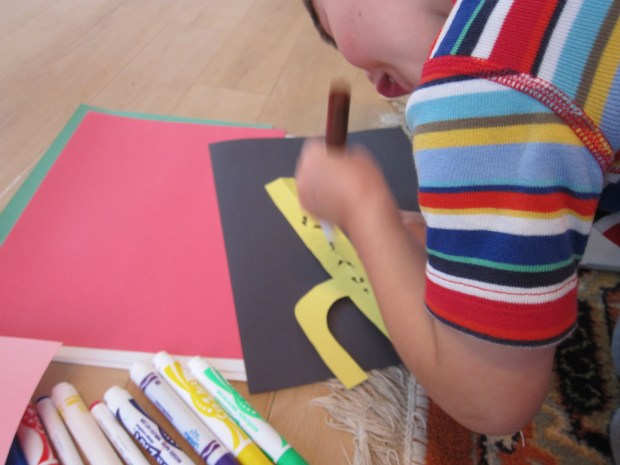
Folded Animals (3)

…And then we added slits at the top to insert little yellow ears.
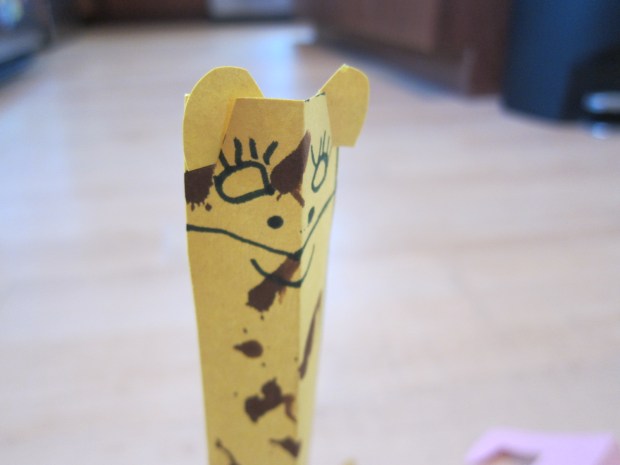
Folded Animals (6)

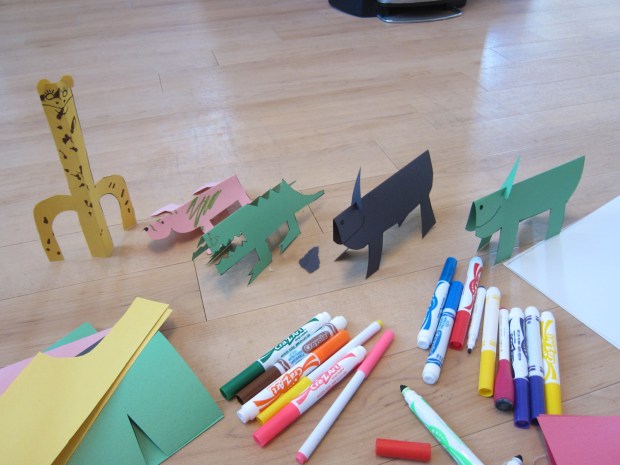
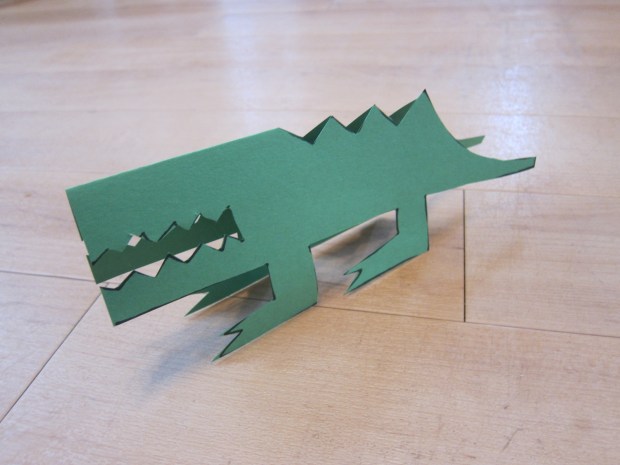
I asked him which animal we should make next, and the only limit was the scope of his imagination! Soon we had a crocodile, a pink polar bear (“Normally they’re white, but let’s make ours pink!” he suggested), a black rhino, and a green rhino. The rhinos are fun because you can add a slit at the top for a horn.

Folded Animals (5)

After that Travis was eager to try his own hand at making animals. I drew him a few outlines and he practiced cutting along a line, something we haven’t done much of.
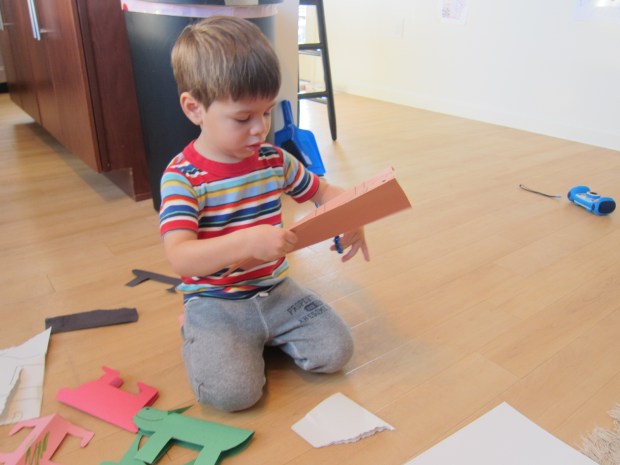
Folded Animals (10)

He asked for a few animals that surprised me – a sheep – and a few that I wasn’t quite able to do – an elephant. I’m really not sure what this red creature below was meant to be, but Travis had fun decorating it!
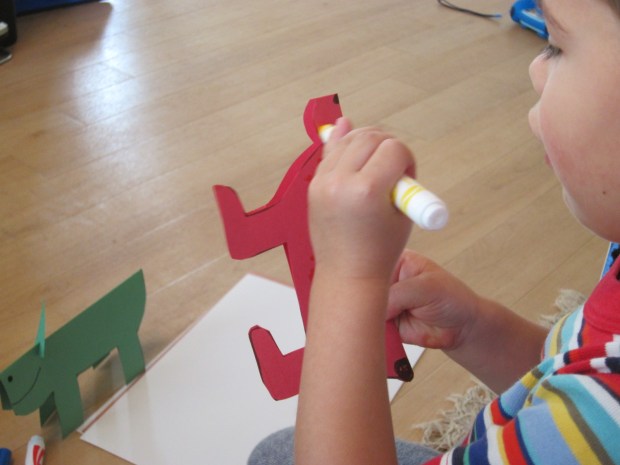
Folded Animals (8)

He had so much fun playing with the animals while I turned to other tasks around the house, narrating games in the background. And then he decided that we should glue all our animals into one big pile. Not exactly what I’d had planned, but a delight to watch his enjoyment.

What animals would you and your little one like to make? Please share in the comments!

Folded Animals (11)

Dancing Bats and Ghosts

Dancing Ghost (7)

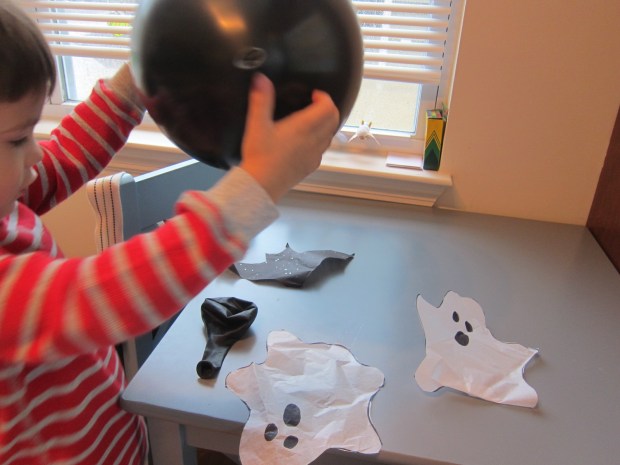
What is it with playground slides and static electricity? Travis was fascinated the other day when he kept picking up a shock each time he went down the slide and then touched the railing on the stairs back up. So we turned it into a teachable moment – minus the shock! – with this little lesson on static electricity at home. You can cut any shape you want into tissue paper, but since it’s Halloween, we had to go with bats and ghosts of course.

Dancing Ghost (1)

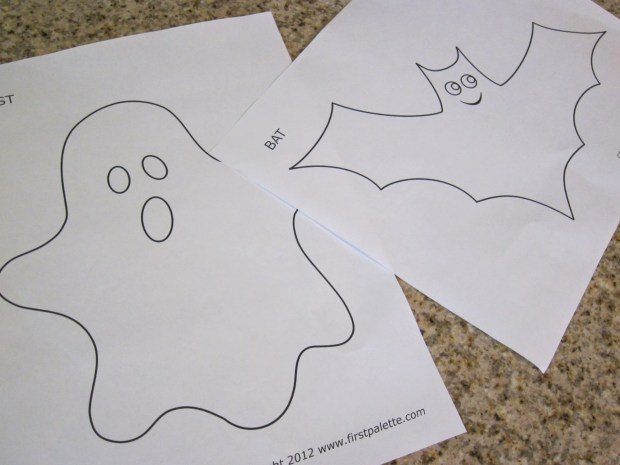
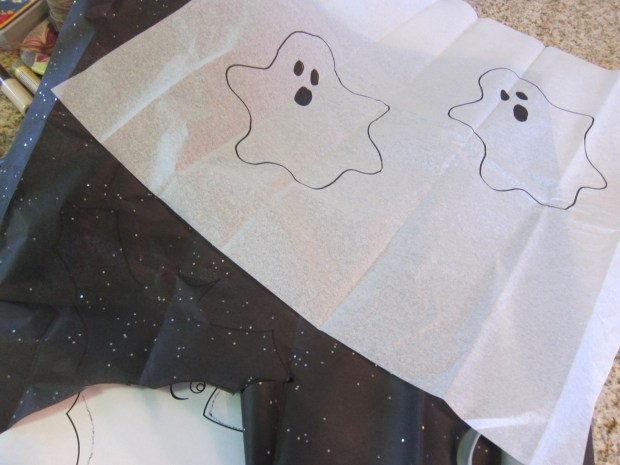
I didn’t trust myself to cut tissue paper free-hand, so downloaded templates of a bat and ghost, and traced onto the paper before cutting out.

Dancing Ghost (2)

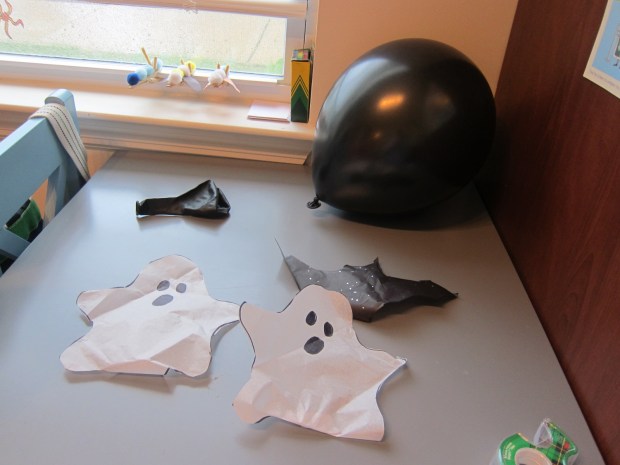
Tape the shapes to a tabletop or similar surface; set aside.

Dancing Ghost (3)

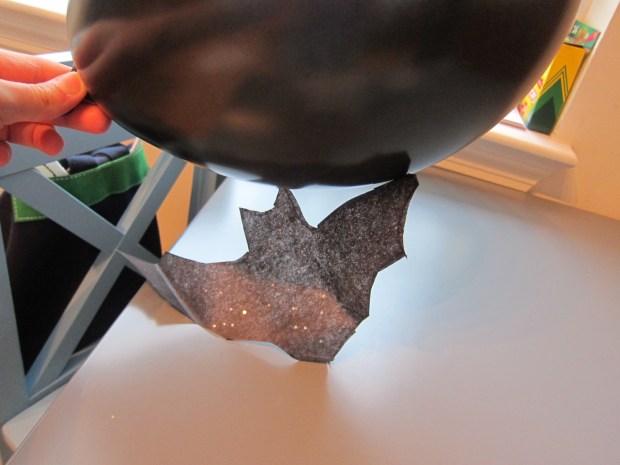
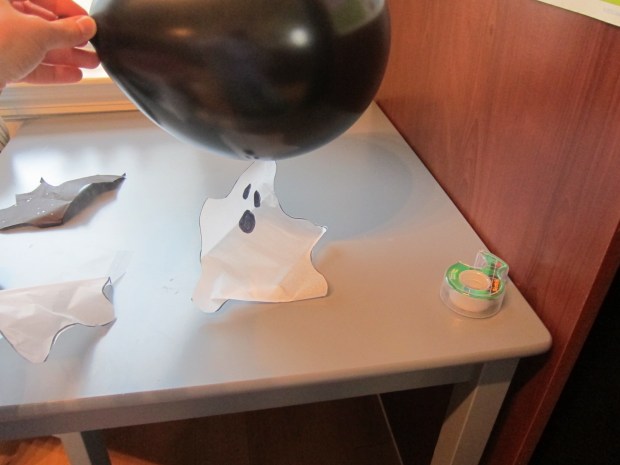
To create the static, blow up a balloon (a spooky black was the perfect shade for today), and rub in your hair (or on a sweater). Hold the balloon over the tissue paper, and the static will make the ghosts and bats lift up and dance!

Dancing Ghost (6)

Travis loved every element of this experiment, including making static from his own hair…

Dancing Ghost (5)

…And seeing if he could make the tissue paper rise up.

Dancing Ghost (4)

Of course you also could just create static and the tissue paper will stick directly to the balloon, but taping our tissue paper spookies to the table turned it into a hokey Halloween jig.

Dancing Ghost (8)

Spooky Expanding Ghost

Spooky Ghost (4)

Your little one will get a kick out of watching the spooky-not-scary ghost puff up in this experiment, a trick made possible with good old vinegar and baking soda. It might not be quite as impressive as flaming ghosts, but is sure to earn a giggle.

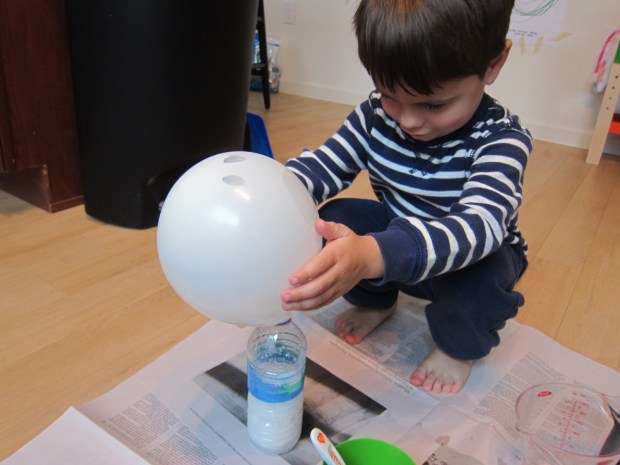
First we gathered our materials, and I drew two ghost eyes and a big ghost mouth on an uninflated white balloon.

Spooky Ghost (1)

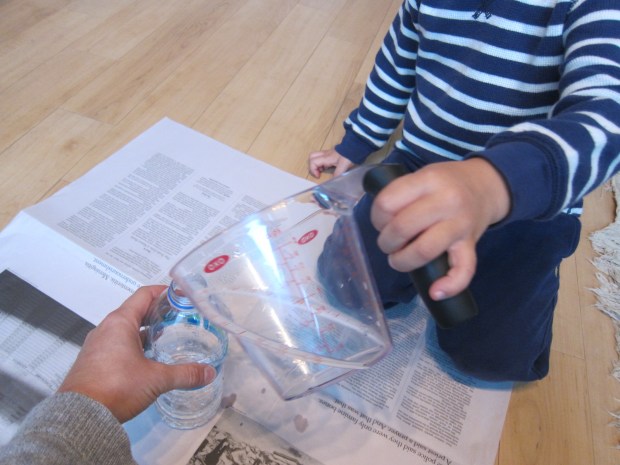
Have your child carefully help add 1/2 cup white vinegar to an empty plastic bottle; set aside.

Spooky Ghost (3)

Next, fill the balloon with 1 tablespoon baking soda. A funnel is your best bet to get the baking soda into the narrow neck of the balloon, but we managed to do so with one adult holding the balloon wide and the other spooning in the baking soda with a baby spoon.

Fit the balloon over the opening of the plastic bottle – don’t let the baking soda fall inside just yet.

When you’re ready, stand the ghost up straight; the baking soda will sprinkle into the vinegar, and the resulting air makes him puff up.

Spooky Ghost (5)

Boo!

Travis loved this so much we went through 3 ghost balloons before the fun was done.

DIY Glow in the Dark Comet

DIY Comet (6)

We added a little light into an otherwise dreary rainy morning with this glow stick project. It’s perfect for any kids interested in outer space, or who are learning what comets are – or just any kid who loves glow sticks of course.

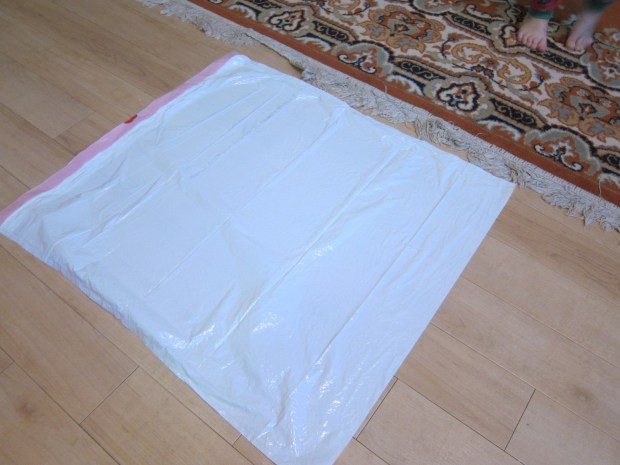
To make our comet, I trimmed the sides, top, and bottom from a trash bag, leaving us with a large sheet of plastic.

DIY Comet (1)

Travis traced around the rim of a bowl with a marker to make the center of our comet – I love how steady his hand has become at tracing!

DIY Comet (2)

To make the tail of the comet, we cut the plastic into strips, cutting from the edges up to the center circle.

DIY Comet (3)

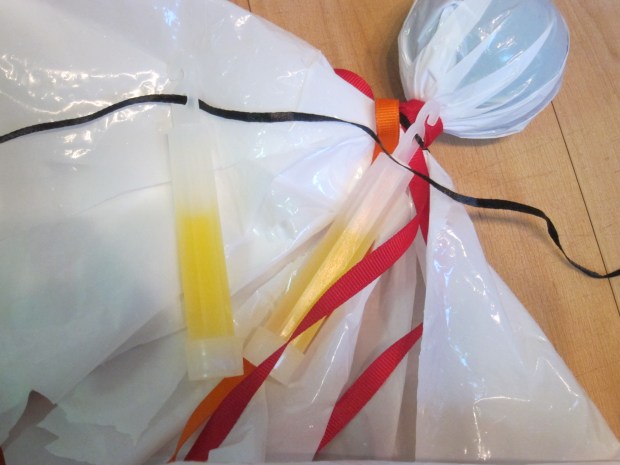
Place a small ball in the center (such as a wiffle ball or tennis ball), and wrap up with the plastic bag; tie with a ribbon to secure. We added extra ribbons in red and orange for fiery comet flair!

DIY Comet (5)

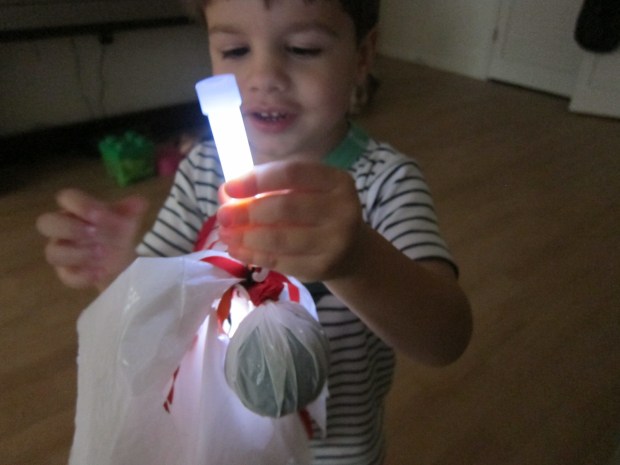
As the finishing touch, we tied on two glow sticks (go ahead and use more than two if you like, but that’s all we had in the house).

We dimmed the lights and Travis dashed around to make the comet fly. If you’re having a sunny day, you’re definitely going to want to save this project for nighttime.

DIY Comet (7)

After a while, Travis decided the comet could also be a flare for mountain recues, so we acted out a few “cliff” rescue scenarios on the couch as well.

DIY Comet (8)

What else could your glowing comet become? We’d love to hear your ideas in the comments!


Ooey Gooey Pumpkin Slime

Pumpkin Slime (6).JPG

True slime enthusiasts and experts will probably cringe at this post, so my apologies in advance! But Travis and I weren’t aiming to make the perfect slime ball, just to have some oopy, goopy, gooey, messy Halloween fun!

We’ve largely skipped the slime craze because I was hesitant to use liquid starch or borax, two ingredients normally called for to pull together a slime solution. Just in time for this Halloween project though, I learned you can use contact lens solution (a buffered saline solution) instead. If you’re looking for a good cruelty-free option, check out Clear Conscience contact solution.

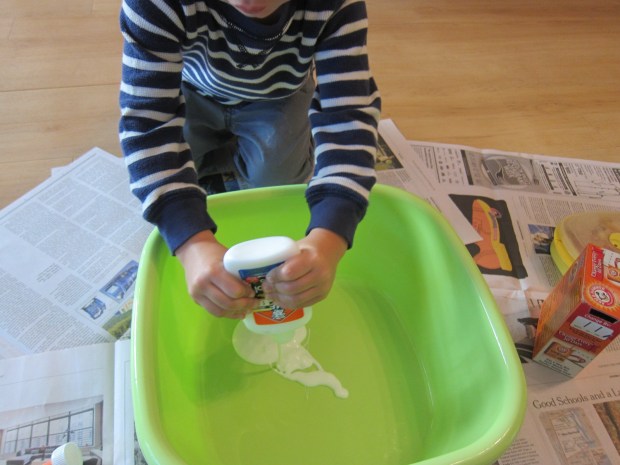
To make the base of the slime, we dumped two small bottles of white glue into a plastic bin. I’m sure there is an exact amount to use, but this seemed to give us about 1/2 cup, which looked about right. Sprinkle your glue with 1/4 teaspoon baking soda and stir.

Pumpkin Slime (1)

Now begin adding the saline solution one spoonful at a time; you’ll see it seize up almost right away. Only a few spoonfuls are necessary.

Pumpkin Slime (2)

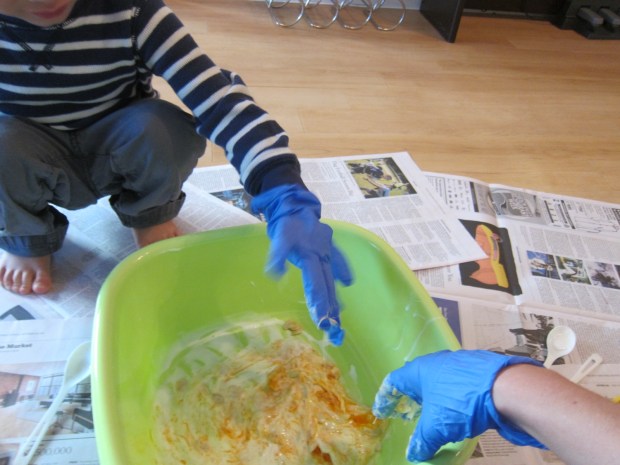
Now came the real goopy part; stir in leftover pumpkin guts and seeds from pumpkin carving!

Travis was hesitant to get his hands in the stuff at first, but wearing a glove helped.

Pumpkin Slime (3)

His favorite part was when we added glitter. We started with a bit of gold, but he soon decided we needed silver and green as well.

Pumpkin Slime (5)

After that he wanted to squeeze in more saline. To our great delight, this really made the mixture seize up, until you could left it cleanly up out of the plastic bin. Then it stretched back out like long snotty spider webs.

Pumpkin Slime (7)Perfect for Halloween, in sum.

Builder’s Special Pumpkin

Builder's Pumpkin (4)

After a few weeks with pumpkins perched on our patio, Travis couldn’t wait any longer… So it was time to turn pumpkins into jack-o-lanterns! We added to the fun with this quirky idea from Parents Magazine.

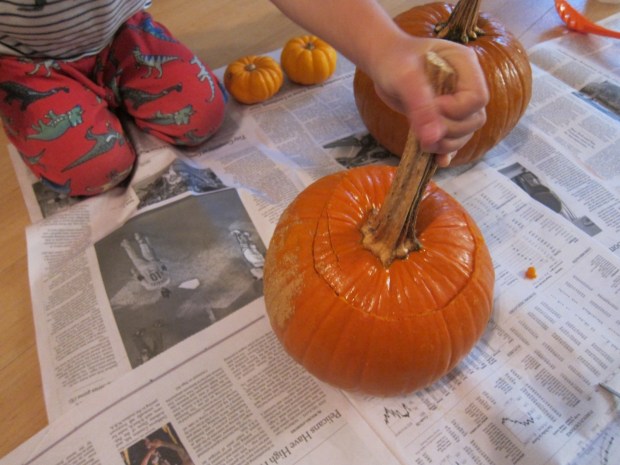
First came all the fun of carving a pumpkin. With a three-year-old, carving is still a grown-up job in our house, but Travis was thrilled to see our pumpkin’s face take shape. And loved the way the lid fit back on top like a puzzle piece!

Builders Pumpkin (1)

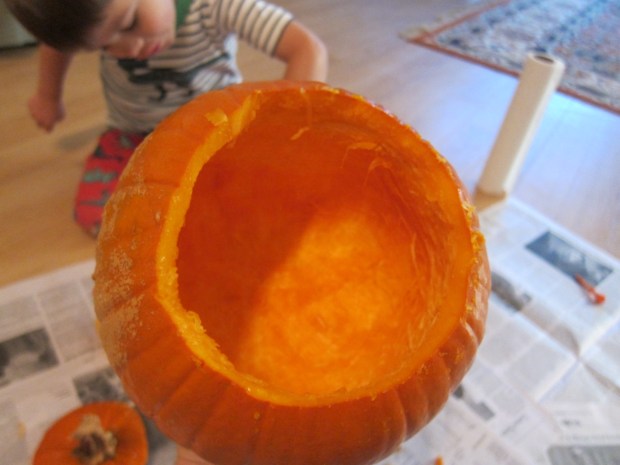
Then came the goopy fun of scooping out all those guts. (Hint: Save your pumpkin guts, I have blog posts coming up with how to continue the excitement…).

Builder's Pumpkin (2)

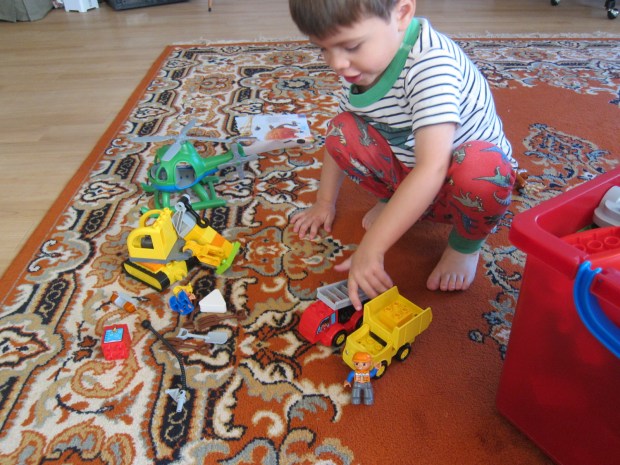
Once the pumpkin was carved, it was time for the finishing touch. Travis and I sorted through his Duplo bins for all the construction-themed pieces.

Builder's Pumpkin (3)

We set up the Duplo figures, tools, and construction vehicles around the jack-o-lantern after inserting a battery-operated tea light inside.

Builder's Pumpmin (3)

Bonus points for adding pumpkin guts into the scoop or your excavator or bed of your dump truck! This project got great giggles, and is perfect for any Duplo or Lego fanatic.

Builder's Pumpkin (5)

Color Hopscotch

Color Hopscotch (5)

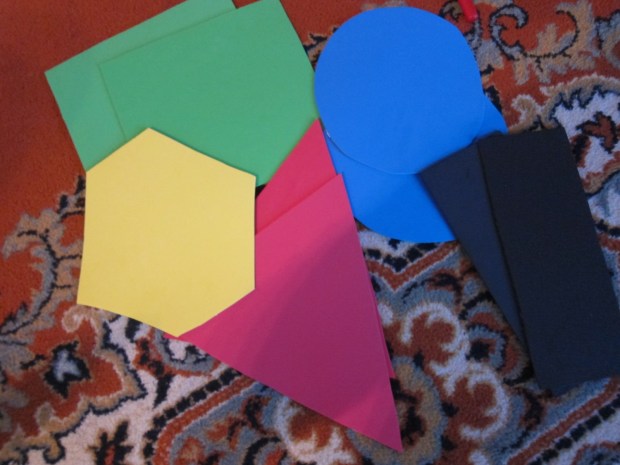
Travis was late to jumping… so all the more reason to celebrate his new accomplishment with this fun game! It had us exercising our brains and our muscles. Instead of leaping from number to number, in this version you’ll be hopping from color to color or shape to shape.

To play, use foam sheets to cut out a variety of shapes. Ideally use two sheets of foam in each color so you wind up with two red triangles, two green squares, two blue circles, etc.

Color Hopscotch (2)

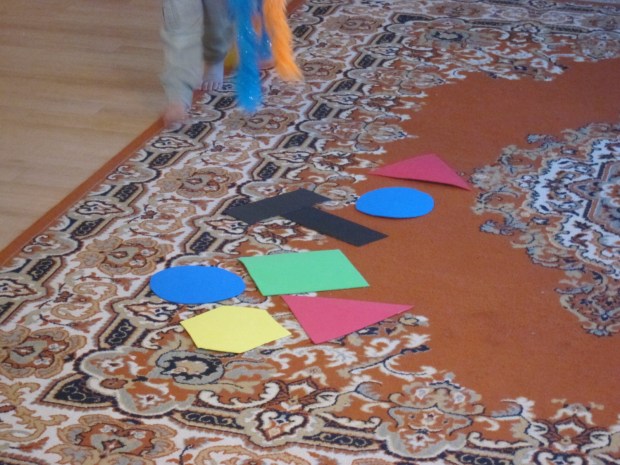
Arrange the shapes in any pattern on the floor, then have fun calling out instructions to leap.

We had fun testing shape combinations, like “Circle, Rectangle, Triangle!”

Color Hopscotch (8)

Or color ones: “Yellow, Black Green!”

Color Hopscotch (3)

Travis also made up silly ways to cross the shapes, such as jumping feet onto one row, then putting your hands down on the second. I loved seeing his creativity with the suggestions.

Color Hopscotch (6)

For bigger kids who are readers, consider making a spinner for the game. Write out different instructions in each space of the spinner, and then perform the motion on the space you spin to.

Color Hopscotch (7)

Blow Your Nose!

Nose Blow (2)

As much as we all hate to think of it, cold and flu season will be upon us all too soon. Before those first stuffed-up sniffles hit your little one, arm them with the knowledge of how to blow their nose. It seems obvious to adults, but how do you explain this motion to a little tyke? With a game, of course!

To start, set out a variety of light objects such as pom poms or wadded up pieces of tissue paper. We’ve played games where we tried to move such objects about by blowing through a straw. This time I challenged Travis to huff through his nose.

It took him a few tries, but soon he got the hang of it!

Nose Blow (1)

If you want to make things more interesting or challenging, try moving the items to a goal line, using nothing but your nose blows. Older kids might enjoy turning this into a race!

Nose Blow (4)

Just be forewarned that your play surface might get a bit… snotty. Have wipes on hand to clean up any mess when you’re done.

Halloween Sensory Bin

Halloween Sensory (3)

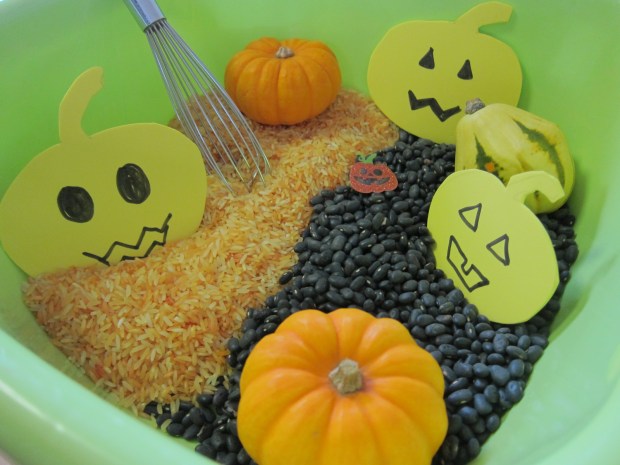
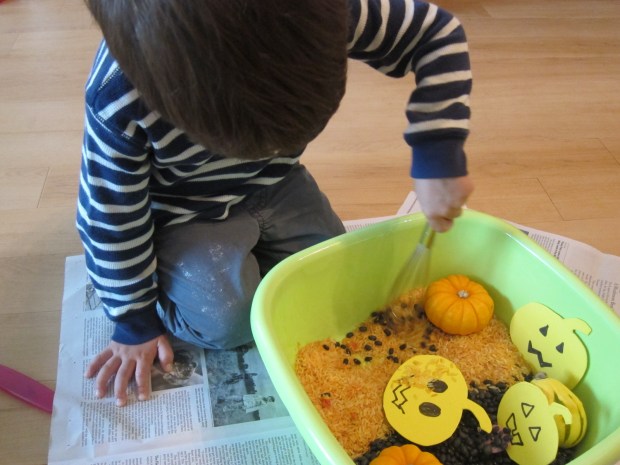
Seasonal sensory bins are always good fun, equally delightful for little tots as they are for preschoolers. This one gets an October twist with an orange and black background, and Halloween goodies tucked inside.

To prepare the rice, place white rice in a zip-top bag and shake with orange food coloring – I achieved a nice orange by mixing the yellow and red from Color Kitchen. Spread on a foil-lined baking sheet and let dry.

Halloween Sensory (1)

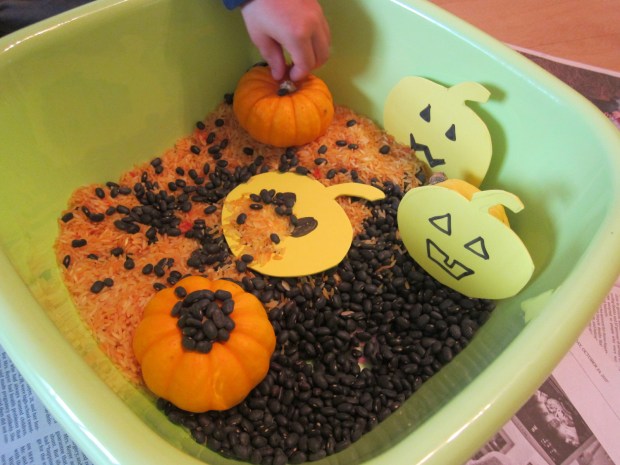
Fill a tub with the orange rice on one half and dried black beans on the other – it’s getting spooky in here!

Halloween Sensory (2)

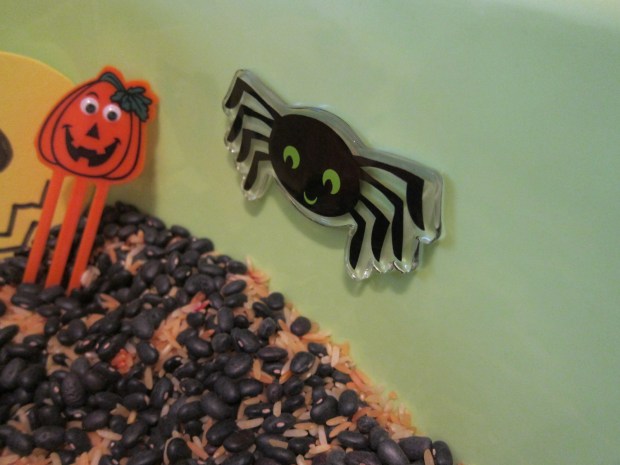
Next I placed a few odds and ends in the bin, like mini pumpkins and gourds, and foam in the shape of jack-o-lanterns. I added a whisk and spatula, then presented the bin to Travis after a morning at school.

Halloween Sensory (4)

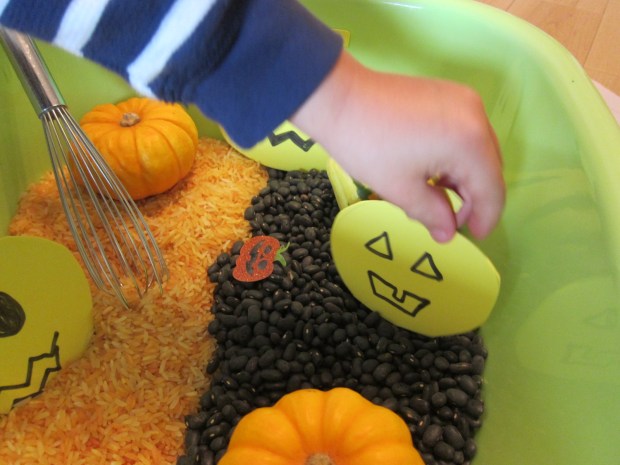
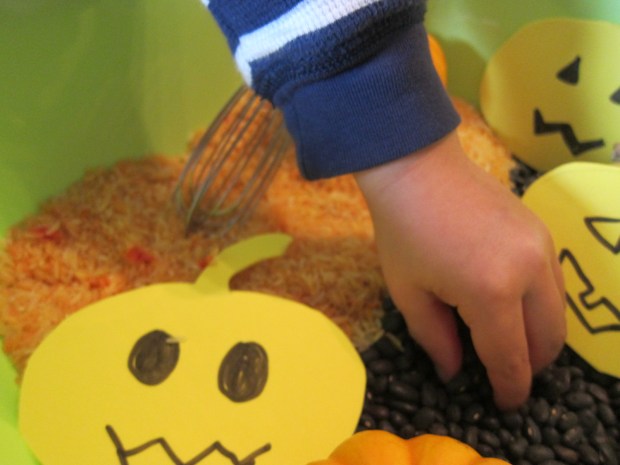
He loved sprinkling the black beans onto the rice for a startling contrast. Pretty soon this was an imaginative game of making pumpkin soup.

Halloween Sensory (7)

The texture of the dried beans was a big hit…

Halloween Sensory (5)

…as was the sound they made when sprinkled on top of the pumpkins, making this bin a delight for auditory senses as well.

Halloween Sensory (10)

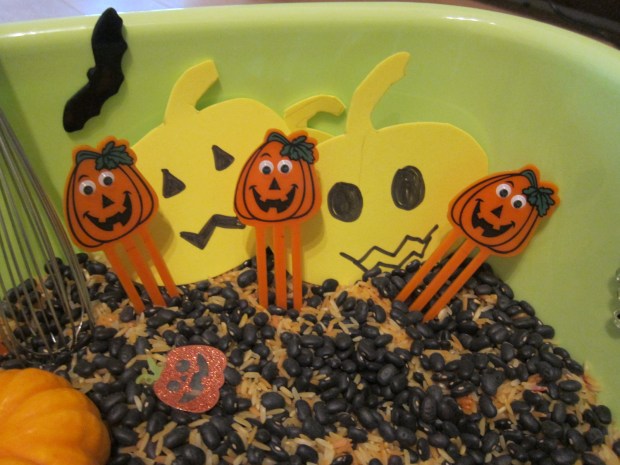
You can keep bins like this around for a couple of days for children to return to. Later, we added some wobbly Halloween stickers and a few more pumpkins to our “patch.”

Halloween Sensory (12)

What else would you add to your Halloween sensory bin? Please share in the comments!
Halloween Sensory (13)