Salty Cave Crystals

Salty Cave Crystals (3)

Travis has seen stalactites and stalagmites in cartoons and real life, so he was intrigued when we set out to make our own. You’ll need about a week for this project from start to finish, so it’s also a good lesson in patience!

For set up, add 1/4 cup Epsom salts to each of two paper or plastic cups. Fill with water and stir for 1 minute. There should still be some Epsom salts undissolved in the bottom, making this a supersaturated solution.

Salty Cave Crystals (1)

Add food coloring in your child’s colors of choice. Travis stirred in blue and green.

Salty Cave Crystals (2)

Tie a piece of yarn around two paper clips (or safety pins), and dangle the ends in the cups. Now set the whole contraption some place where it can sit undisturbed with the yarn dangling over an old jar lid between the two cups.

Alas, we didn’t have great results with this. Either something is wrong with Epsom salts in our apartment these days, or we’re making a mistake! But we could see crystals growing lightly along the string.

Salty Cave Crystals (6)

Interestingly, there was a leak in one cup and the best crystals formed around the base. So Travis declared these our stalagmites.

Salty Cave Crystals (8)

As a side note, we could also see the blue food coloring creeping up the yarn: capillary action in action!

Salty Cave Crystals (7)

Erupting Chocolate Ooblek

Chocolate Ooblek (3)

Today I made Veronika a new version of ooblek. Wanting to make this one stand out from the crowd, not only did this version feature chocolate, but it could explode! And yes this activity is toddler safe.

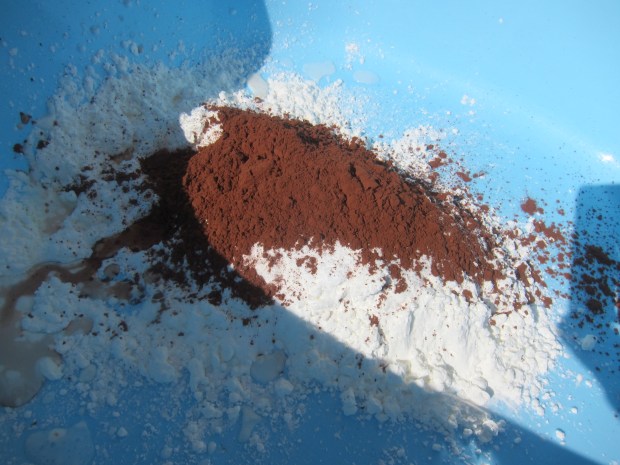
As a reminder ooblek is about 2 parts cornstarch to 1 part water. From there, there are so many ways to fancy it up. Unfortunately I messed up the texture of our ooblek from the get-go because I thought I had a full box of cornstarch in the pantry. It turned out I only had less than 1 cup left, and I’d already poured in over 1 cup of water to a plastic tub. So our mixture was on the watery side, not true ooblek.

But that’s okay, because there was more for Veronika to play with here! First, we sprinkled on cocoa powder in addition to the cornstarch. This was purely for the heavenly smell. Yum!

Chocolate Ooblek (1)

We also added 2 tablespoons baking soda because we wanted our ooblek to erupt. (Note: Be careful, because the baking soda will offset the now-solid-now-liquid property of ooblek, as it will dissolve in the water).

To make the explosions, add white vinegar to squeeze bottles and squirt in a bit at a time. This is great for exercising those little fingers.

Chocolate Ooblek (4)

Veronika almost couldn’t believe it when the first bubbles appeared. I had to help out with lots of the squeezing, but she was transfixed watching the eruptions every time the vinegar hit the baking soda.

Chocolate Ooblek (6)

The resulting bubbles are really neat ones, too, almost like honeycomb, but with a quasi-solid texture. They won’t pop until you pop them!

Chocolate Ooblek (7)

This made for lots of fun poking and prodding. Veronika was a little hesitant to get her hands messy, but adding a spoon helped her get in there.

Chocolate Ooblek (9)

There also was also an added auditory component to the fun, thanks to the hissing sound whenever baking soda mixed with the vinegar.

Chocolate Ooblek (11)

In sum, this project made for one happy girl!

Chocolate Ooblek (10)


Ice-Cream Snowballs

Ice Cream Snowballs (7)

The weather hit an unseasonable 75 degrees F today, so we celebrated with homemade ice cream!

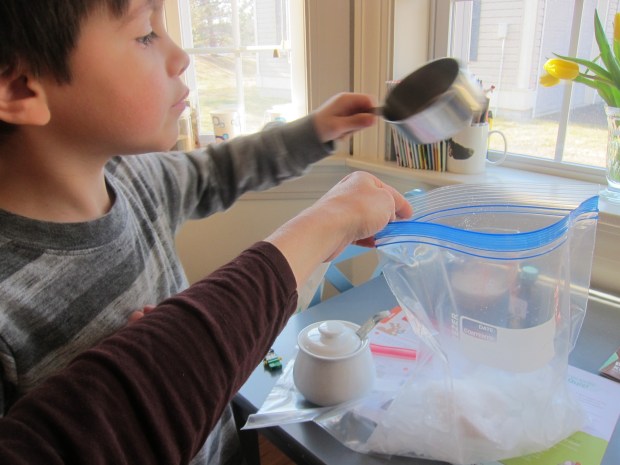
This project was a fantastic (edible!) addendum to Travis’s recent exploration of crystallization. To start, fill a large zip-top plastic bag about halfway with ice. Add 6 tablespoons coarse salt.

Ice Cream Snowballs (1)

In a sandwich-sized zip-top bag, combine 1/2 cup plain non-dairy creamer, 1 tablespoon sugar, and 1/2 teaspoon vanilla extract. Seal tightly.

Ice Cream Snowballs (2)

Place the creamer mixture in the larger bag, making sure it’s covered by the ice cubes. Now shake!

Ice Cream Snowballs (3)

Travis and I took turns, as the recommended shake time was 7 minutes.

Ice Cream Snowballs (4)

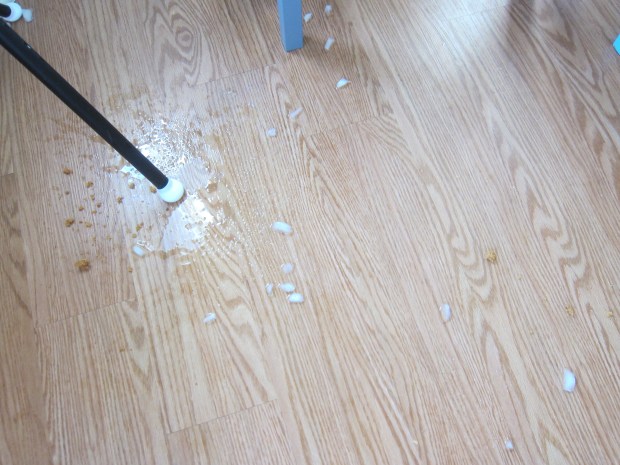
Whoops, a spill at about the 4 minute mark! But we were undaunted and kept going.

Ice Cream Snowballs (5)

At 5 minutes, we declared our ice cream done (and our arms exhausted).

Ice Cream Snowballs (6)

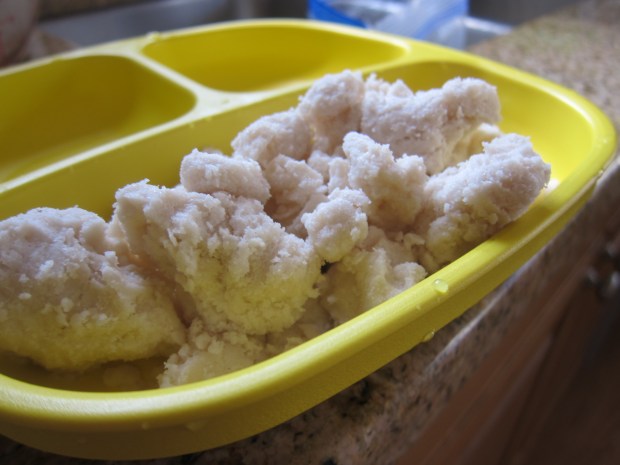
The ice cream turned out amazing! It looked crumbly at first, but after a few minutes it softened up just enough and was just like store-bought ice cream. Rainbow sprinkles were a must of course.

Ice Cream Snowballs (8)

Wow, ice cream on the back patio in March!

Ice Cream Snowballs (9)

What a treat this was for the kids.

Ice Cream Snowballs (10)

Melting Race

Melting Race (5)

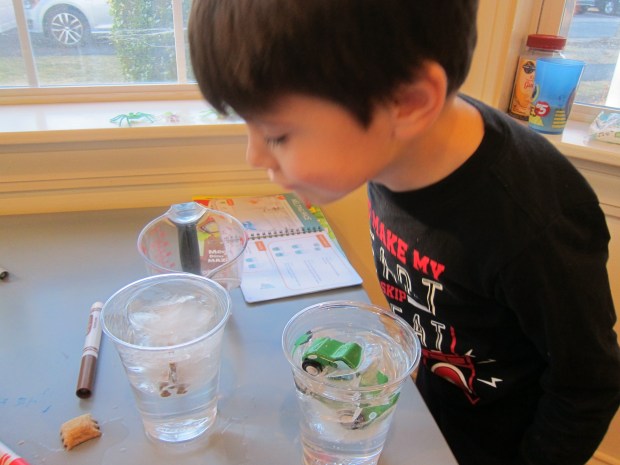
Here’s a clear way for even kindergartners to learn about how temperature affects states of matter: have a “race” between two toys trapped in ice, and see which one emerges first!

Before heading off to school, Travis selected two toys that fit into paper cups. We filled the cups with water and placed them in the freezer. By the time he got home, the toys were trapped in giant ice cubes. Oh no! Peel off the paper cups, and place the resulting ice blocks in larger plastic cups.

Melting Race (2)

We filled these cups with water, one cold, and one warm (don’t use hot or the race will be over too quickly!). Travis was proudly in charge of pouring the cold water.

Melting Race (3)

He hypothesized that the warm cup would melt the ice faster, and the results were immediately evident. Within a few minutes, the front wheels of the truck were already out of the ice. “It’s coming free!” he exclaimed.

Melting Race (4)

About 15 minutes later, the car was completely free. Meanwhile the poor dinosaur was still in ice for hours, only breaking free at bedtime.

Melting Race (6)

Sticky String

Sticky String (4)

Here’s a simple ice project, but one that has a bit of  a “wow” factor to it!

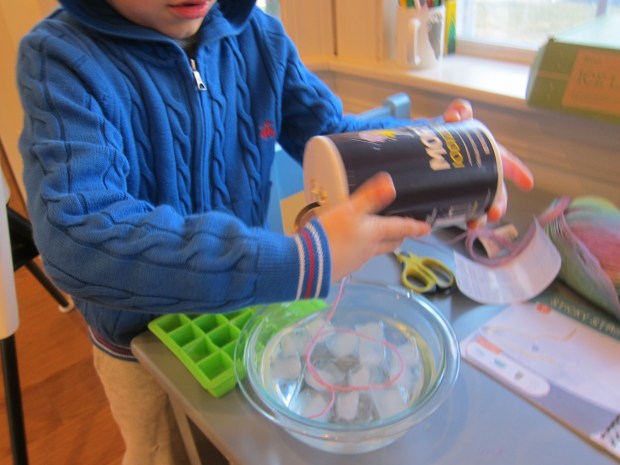
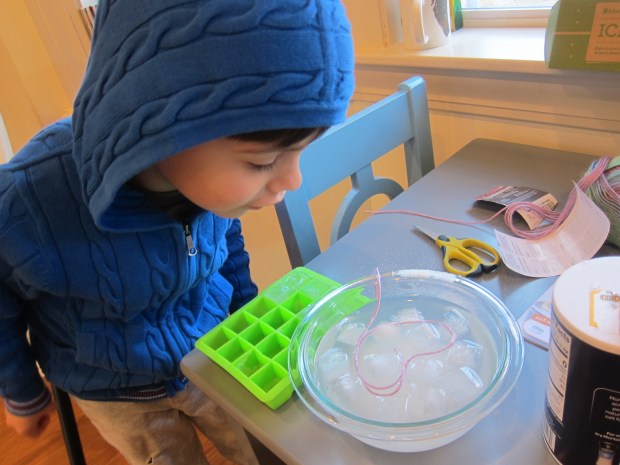
For set up, fill a bowl with water and add ice cubes on top.

Place a piece of yarn over the ice, making sure it is fully saturated. Travis pretended this was spider silk, and we were testing how strong it was. What an imagination!

Sticky String (1)

Sprinkle the yarn generously with salt. How much do you need to use? Unfortunately, I can’t give you an exact answer, as Travis just dumped in a lot of the container, but I would imagine a tablespoon or two is plenty.

Sticky String (2)

Now wait for 1 minute. He proudly helped count to 60 seconds!

Sticky String (3)

Lift gently on the yarn and watch as the ice cubes rise. I thought the yarn might be strong enough to pick up one cube, but it could even pick up a whole clump. So even mom said “wow!”.

Sticky String (5)


Ice Lab Kiwi Crate

Kiwi Ice (3)

Travis’s latest crate from Kiwi Co was perfect to receive in winter, all about ice and snow. Specifically, Kiwi used the theme of ice to talk about crystallization.

First up was an Icy Experiment. Before school, Travis filled the provided ice cube tray so the ice would be ready to go when he returned home. As a side note, this ice cube tray is fantastic! Made from easy to unmold silicone, it makes adorable square blocks of ice.

Kiwi Ice (1)

Fill the two provided plastic cups with water, then add 3 scoops of salt to one cup only. Now add the ice cubes to both cups and let sit for 1 minute – don’t stir!

Kiwi Ice (2)

Travis next added 3 drops of liquid watercolor into each cup. You’ll immediately see that the color stays on top in the cup with salt, and floods to the bottom of the one with no salt.

Kiwi Ice (5)

The write-up in his booklet helped Travis understand that the salt had changed the density of the water, i.e. more stuff was packed into the same space, so the ice water stayed on top of the salt water. I told him about the Dead Sea, and how it has so much salt that even people stay afloat, which got a big whoa.

Kiwi Ice (6)

He drew his results, and then we were on to the next project: Crystal Snowflakes. This was similar to an activity we did at Christmas, making crystals in a suncatcher. Combine 1 scoop of provided Epsom salts and 1 scoop of water in a cup, along with 3 drops of the “clear gel”. (Note: We were curious what this gel was! Kiwi does not say). Stir for 30 seconds with a paintbrush until the Epsom salt dissolves.

Kiwi Ice (8)

Now brush over the three plastic snowflake shapes and let sit until completely dry. It will take over an hour but then you should see crystals appear as the water evaporates and the Epsom is left behind.

Kiwi Ice (9)

Oddly, we didn’t have great results. Still, we used the provided yarn to hang the snowflakes in the window, a pretty winter adornment.

Kiwi Ice (14)

We also attempted Explore magazine’s suggestion for a Crystallization Station. Combine 2 scoops of hot water (not boiling) and 2 scoops of Epsom salts in a plastic cup. Travis added blue food coloring so we’d have colored crystals by the end.

Kiwi Ice (12)

Place in the freezer for 10 minutes, then transfer to the fridge overnight. Again, oddly, we had no crystals in the morning, leaving me to suspect something was amiss with our packet of Epsom salts…

Kiwi Ice (11)

So we then turned to the Ice Experiments booklet in the crate, full of further ice exploration for Travis to test. One activity was an oldie but goodie: salt tunnels.

First, make a new set of ice cubes in the square tray. Travis liked towering them into a pyramid on a plate once frozen!

Salt Tunnel (1)

Sprinkle generously with salt and then drip food coloring on. The areas where the salt has melted the ice will become immediately evident.

Salt Tunnel (2)

Two colors made it even cooler!

Salt Tunnel (4)

Travis loved the way this looked and connected his observations to the barrel of salt outside that keeps us from slipping on frozen sidewalks.

Salt Tunnel (5)

As a final experiment, we played Sink or Float, another oldie but goodie. I filled two cups with warm water and we poured a generous amount of salt into one. Ideally you can add salt little by little until no more will dissolve, but since Travis was a bit impatient, ours was supersaturated with salt still on the bottom.

Sink or Float (2)

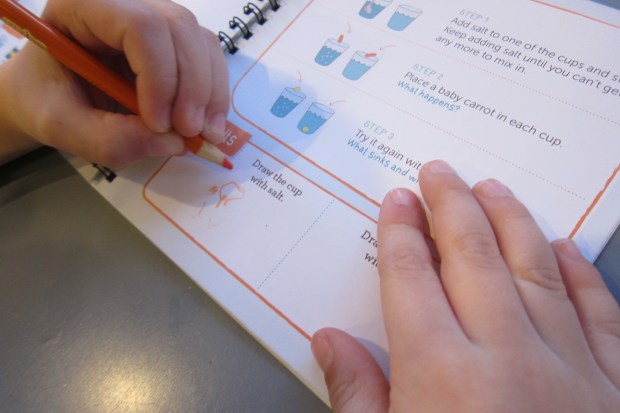
Now drop a piece of baby carrot into each and watch the instantaneous results. Travis loved that one plunked to the bottom and one stayed afloat. He drew the results in the provided “Lab Book,” which made him feel like a real scientist!
Sink or Float (4)

Have fun testing other items, too! Travis tried out Lego figures and marbles.

Sink or Float (3)

Kiwi Co. did not offer suggested reading this time around, but I recommend the following fun books about ice:

  • Ice (Stories Without Words) by Arthur Geisert
  • The Boy Who Invented the Popsicle by Anne Renaud

Kiwi Ice alt

Heavy Bubbles

Heavy Water (3)

This neat experiment with oil and ice is a great way to teach kids about density. If your child has ever noticed how oil and water don’t mix, they’ll love what happens when you try to melt ice in oil.
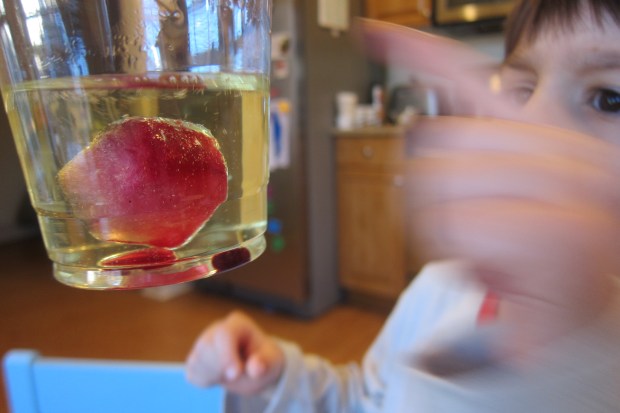
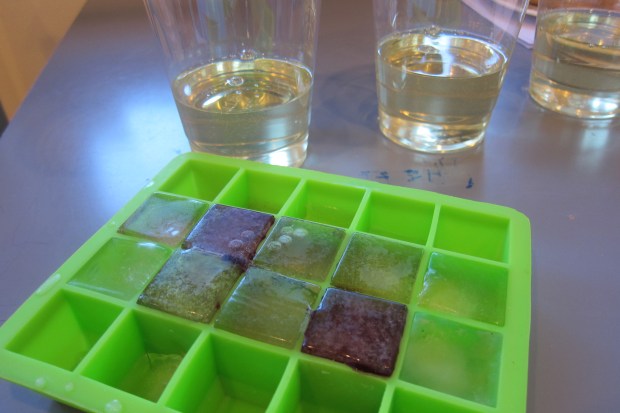
To start, Travis helped fill an ice cube tray. For fun variety in our final results I colored some of the compartments green with food coloring and some red, and left others clear.

Heavy Water (1)

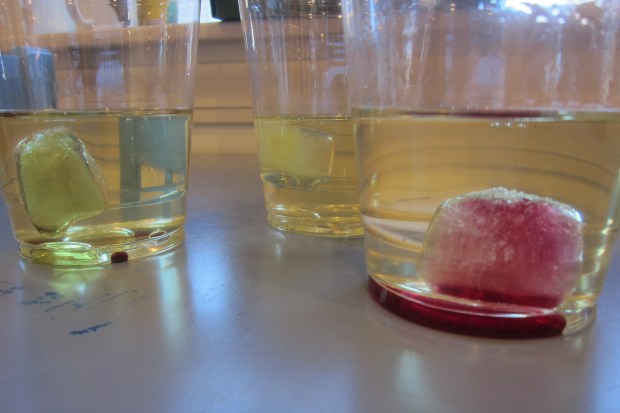
Next we filled three plastic cups with vegetable oil.

Heavy Water (2)

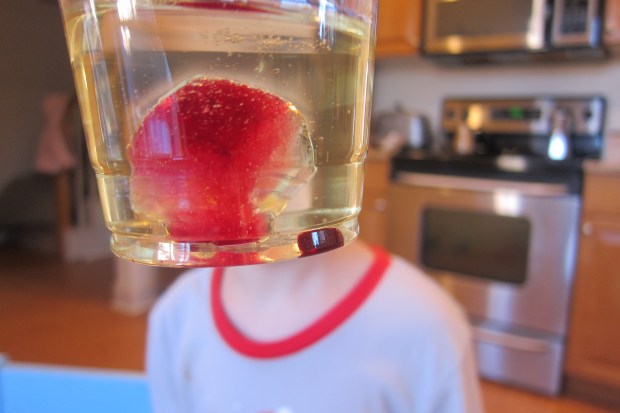
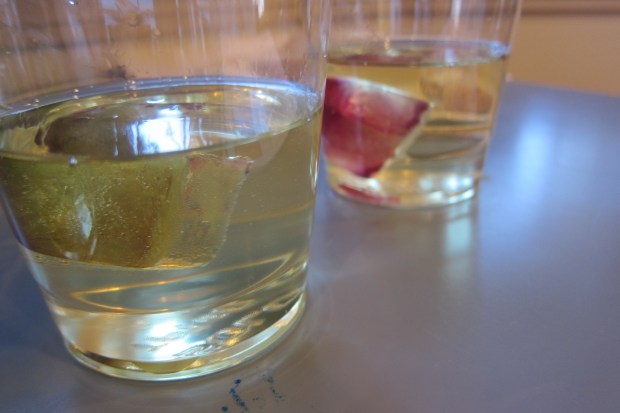
Add an ice cube to each, in your different colors. The ice will start melting off in big blobs. Because water is more dense, those blobs sink down to the bottom of the cup. What fantastic oozy fun to watch!

Heavy Water (4)

I was glad we colored the ice, because the clear ice cube was rather underwhelming to watch, but Travis thought the big globs of green and red were super cool. Quick and easy science, in sum!

Heavy Water (5)

DIY Sundial

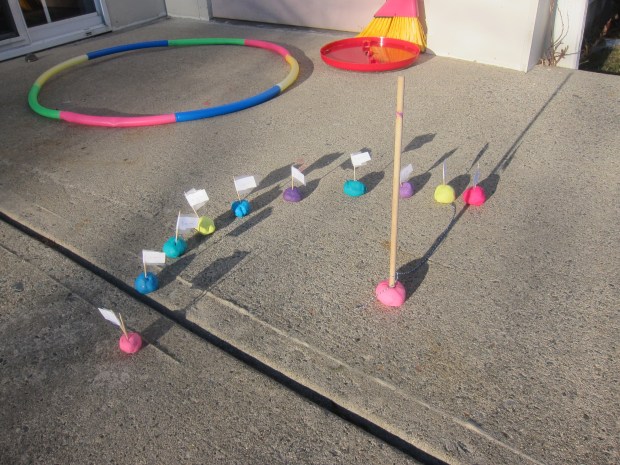
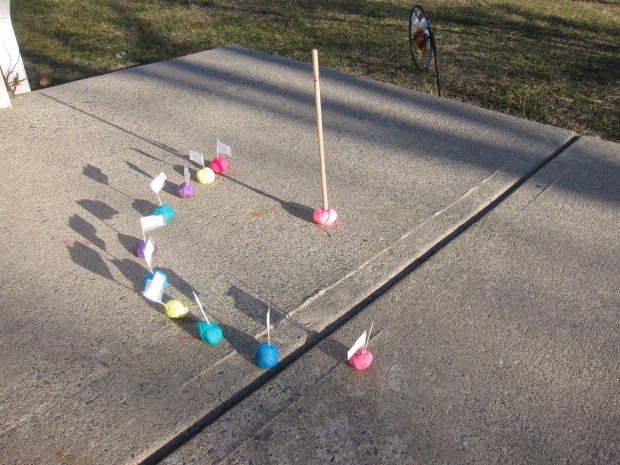
DIY Sundial (7)Of the various ways Travis and I have made a sundial, this was by far easiest for him to keep up with – and the prettiest! Thanks to a vacation day off from school, we were consistent about popping out every hour, too. The secret? Play dough.
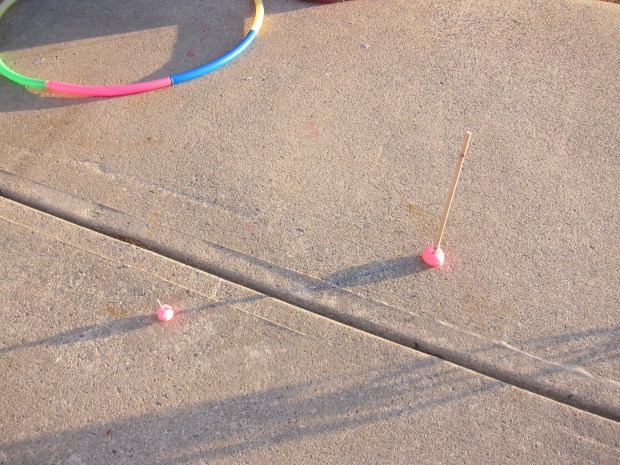
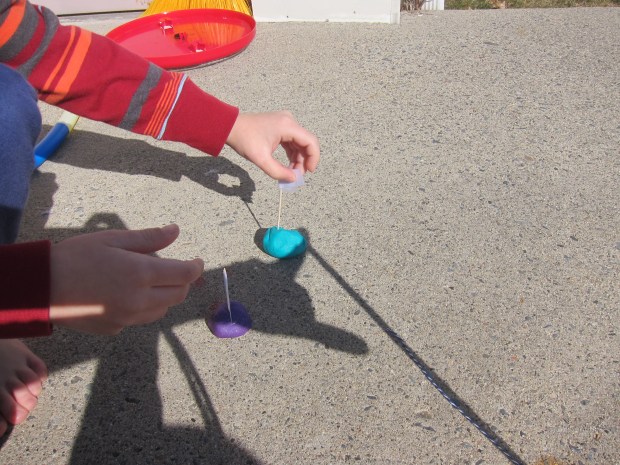
To start, we pushed a wooden dowel in a big blob of play dough. Press the play dough firmly onto an outdoor patio or similar surface. Stretch a line of string for accuracy along the shadow that the dowel casts, and set down a second blob of play dough.

DIY Sundial (2)

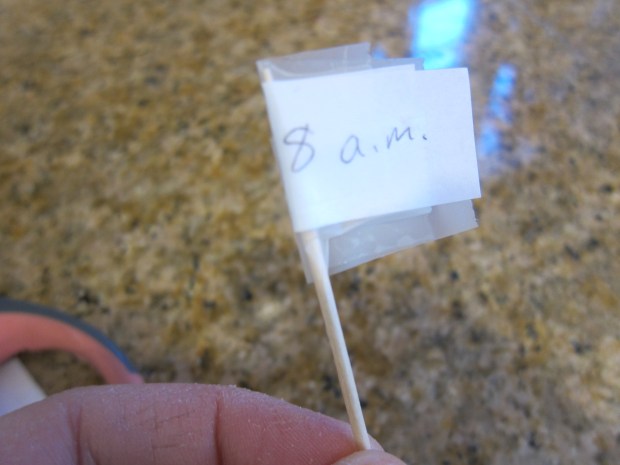
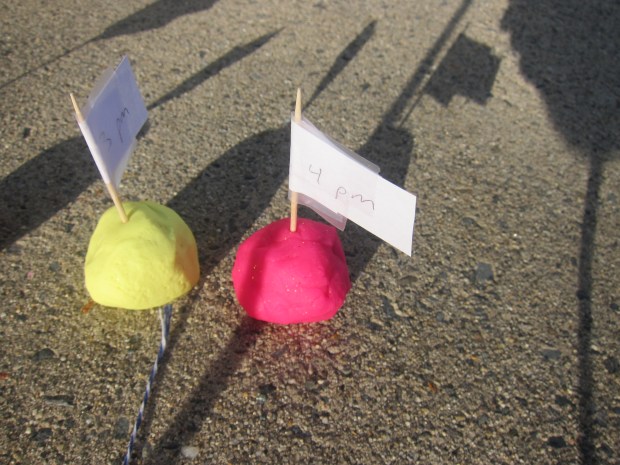
We started at 7 a.m., so marked this off as the first hour: Insert a toothpick, numbered with the time of day. (Note: you can make these “flags” much more elegant than ours, which were just taped-on strips of paper labeled with the hours from 7 to 4 p.m.).

DIY Sundial (3)

Being as accurate as we could, we dashed out around each hour over the course of this sunny day and set down a new blob of play dough and new toothpick flag. The colors looked great as they accumulated over the course of the day!

DIY Sundial (5)

We lost out winter sun after 4, so that was the final point of our clock.

DIY Sundial (8)

But Travis was wowed seeing this visual arc of how the sun had traveled. Definitely the best sundial he’s made yet.

DIY Sundial (6)

Crunch Time Toast

IMG_0045

Travis got to use the toaster for the first time today in this experimental snack project. It was a great edible tie-in to some recent learning about telling time.

The challenge was to toast two bread slices, but for different lengths of time, and then to compare and contrast them. Carefully, Travis popped in the first slice and set the timer for only 2 minutes.

Crunch Time Toast (1)

He was impatient after 1 minute, hence the very un-toasted slice of bread!

Crunch Time Toast (3)

We popped down the second slice and this time set the timer to 5 minutes. Again there was some impatience, so I would say this was a 3 minute slice of toast.

Crunch Time Toast (4)

But he clearly noticed how more time meant a browner slice, as well as crisper. To finish the snack, we added avocado to the top (sliced on the first and mashed on the second). He proudly sprinkled on salt and pepper for this very big-boy snack.

Crunch Time Toast (5)

The verdict was that he liked the toastier toast better!

Crunch Time Toast (2)

Northern Lights Illuminated

Northern Lights (8)

With a few Swedish recipes to prepare from Raddish Kids this month, Travis and I sat down to learn about the Northern Lights, a neat STEAM lesson alongside the Swedish cuisine.

I started be asking him to picture dancing lights in the sky, and he immediately got very silly imagining twirling reds, greens, and blues. But I told him this really exists! An informative website and video helped him visualize and understand the concepts further. Help your child walk away with new vocab, like solar flare and solar wind.

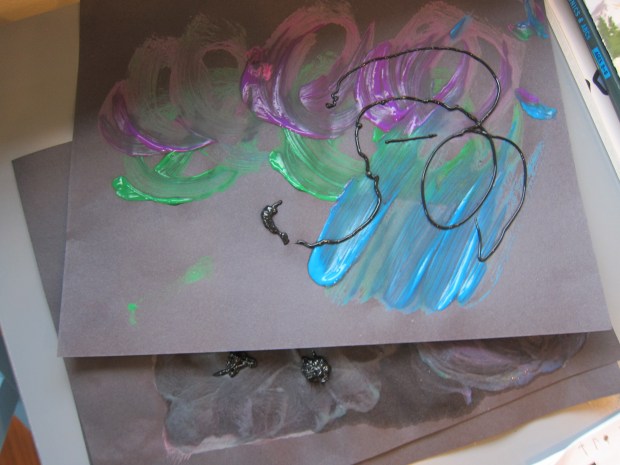
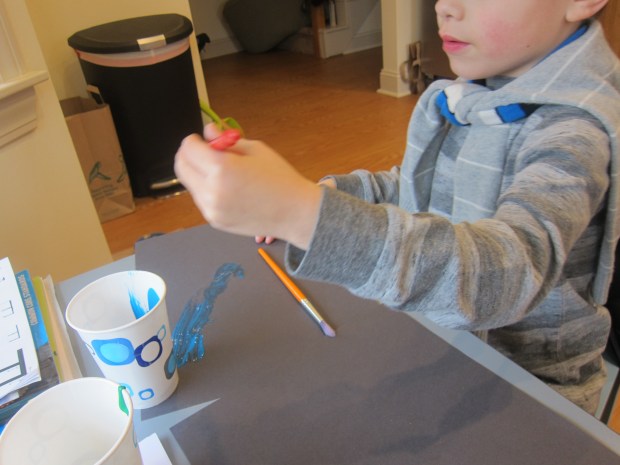
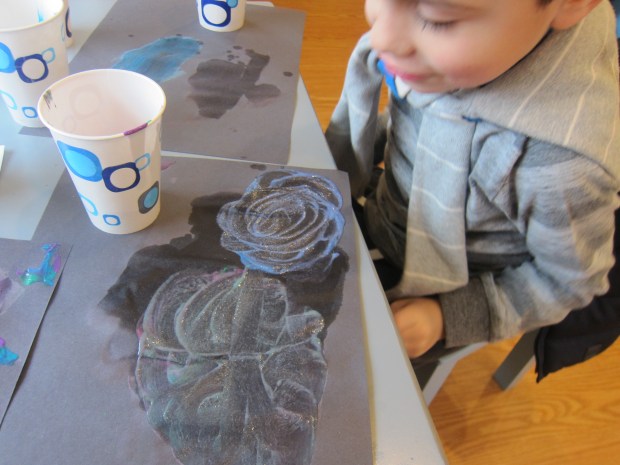
So now it was time to paint the northern lights! Using black construction paper as our background, I invited Travis to craft the lights however he felt inspired. He started with blue paint…

Northern Lights (3)

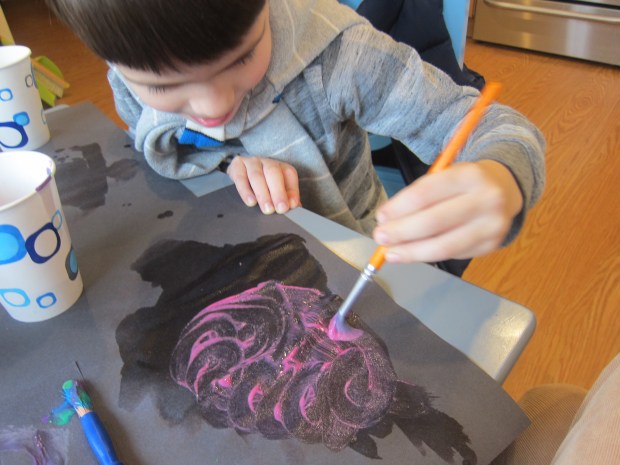
…but soon liked the way that just water looked when swirled on the black page.

Northern Lights (5)

He added in a bit of color, then more water, for a very ethereal effect.

Northern Lights (6)

As we painted, we listened to ambient music from Mannheim Steamroller. Once he finished painting, it was time to dance and be the auroras.

Northern Lights (1)

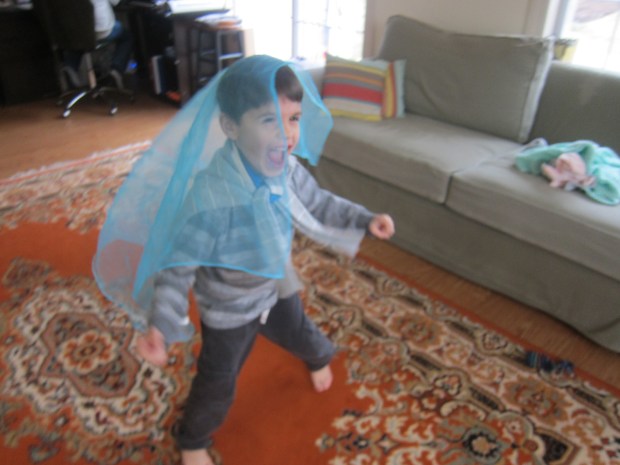
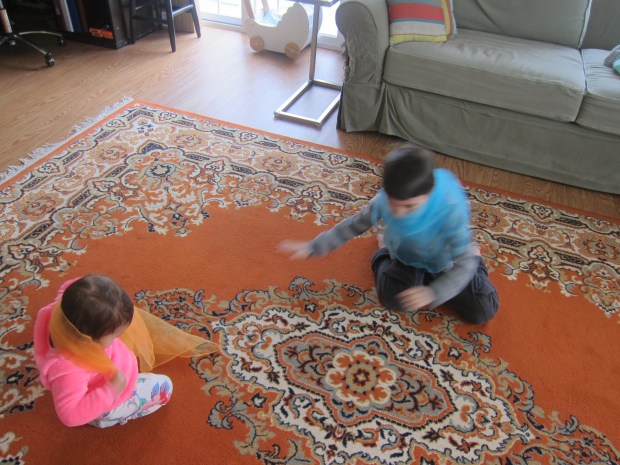
With scarves as props, he got really into his swirly, twirly, silly dance moves. And so did little sister!

Northern Lights (7)

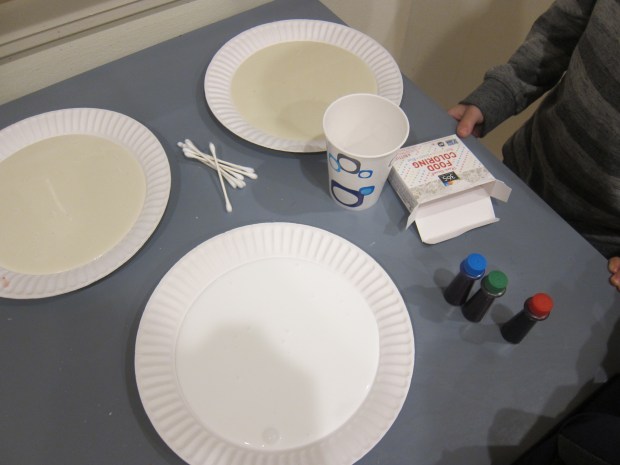
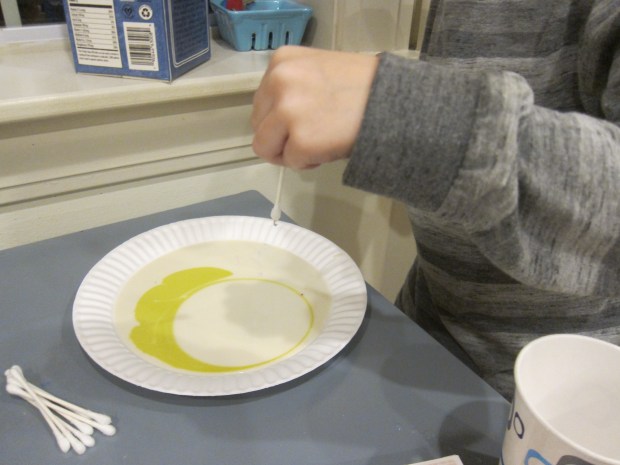
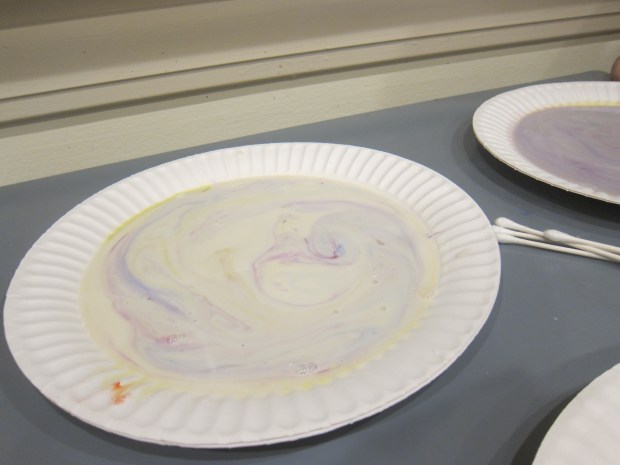
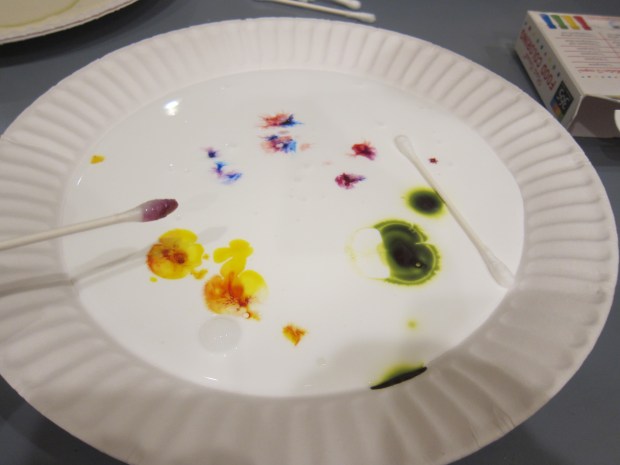
For a final scientific component, we made the “Northern lights” in food coloring and oat milk. Set out paper plates filled with the milk and add a few drops of food coloring to each.

Northern Lights (9)

Dip a q-tip into dish soap, then touch this to the milk. The food coloring will dance and skitter and mix.

Northern Lights (10)

This had a big wow factor. I had hoped for it to be a little bit of a science lesson, thinking there might be a difference between our full fat and low fat oat milks in the fridge, but unfortunately that wasn’t the case.

Northern Lights (12)

For variation, we tried it in glue, too. (Note: You can let a glue version dry for a full week, then pull it off the paper plate and hang as a “suncatcher.”

Northern Lights (11)

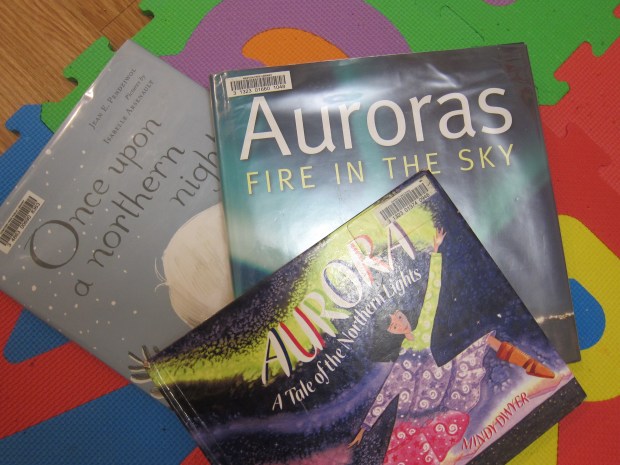
Last up was a little bedtime reading from the library. Check out Once Upon a Northern Night by Jean Pendziwol; Aurora: A Tale of the Northern Lights by Mindy Dwyer, or Auroras: Fire in the Sky by Dan Bortolotti.

Northern Lights alt

I loved that this lesson got Travis to learn, to create, and to get active!