Paper Tube Snake

Paper Tube Snake (8)

We had good fun with a snake straw puppet a few days ago, and soon decided we needed another slithery friend around the house. Travis enjoyed this method of making a snake even more!

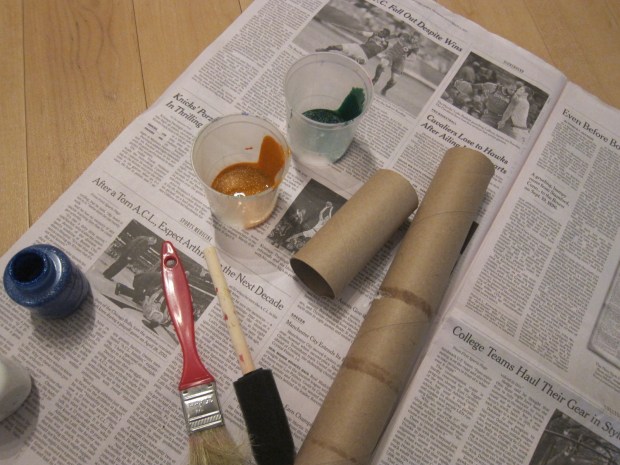
To start, paint cardboard tubes to be the snake’s body. I had one empty paper towel tube and one empty toilet paper tube, which dictated how long our final snake would be. Save lots of tubes and you can make your snake even longer!
Paper Tube Snake (1)

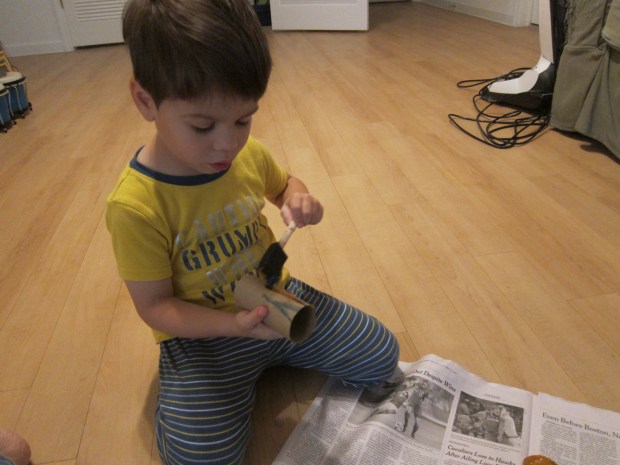
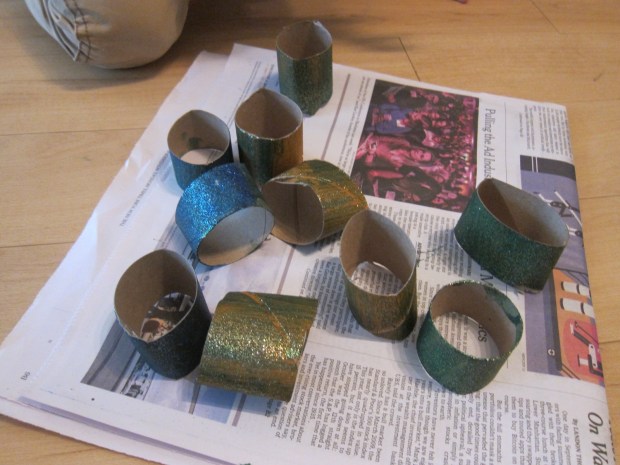
We painted the snake with glitter paint, giving it a very reptilian shimmer, then set it aside to dry.
Paper Tube Snake (2)

Once the paint dries, cut the tubes into pieces (about 3 pieces for a toilet paper roll, and 6 or 7 from a paper towel roll).
Paper Tube Snake (3)

Your child can decorate the snake further by making dots, squiggles, or other designs with more paint or with markers. But Travis decided he liked the glitter plain, and was super excited for the next step because it involved…

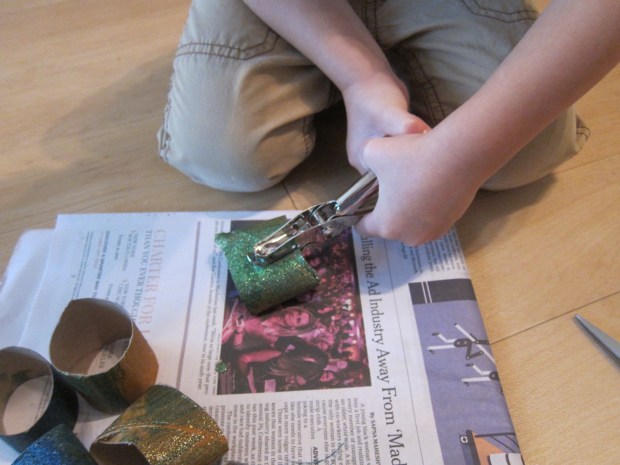
The hole punch! He loves practicing with the hole punch on paper, and was very curious to see if he could punch all the way through cardboard. The verdict is that he needed a little extra oomph from mommy’s hands, but he loved the process of punching two holes into each segment of cardboard.
Paper Tube Snake (4)

Next up was lacing. We used a long red string with an eyelet at the end, making it easier to poke through the holes without fraying, but regular yarn would work too. Travis was so proud of his ability to thread up and down through the holes as we attached our snake segments together, declaring at one point, “I love lacing!”

Paper Tube Snake (5)

Once all of your pieces are threaded on the string, tape the back and front end of the string to the cardboard. We left a little extra string at the front so Travis could tug the snake around the room.

Paper Tube Snake (6)

A little glue helped us add googly eyes and a red felt tongue as the finishing touches.
Paper Tube Snake (10)

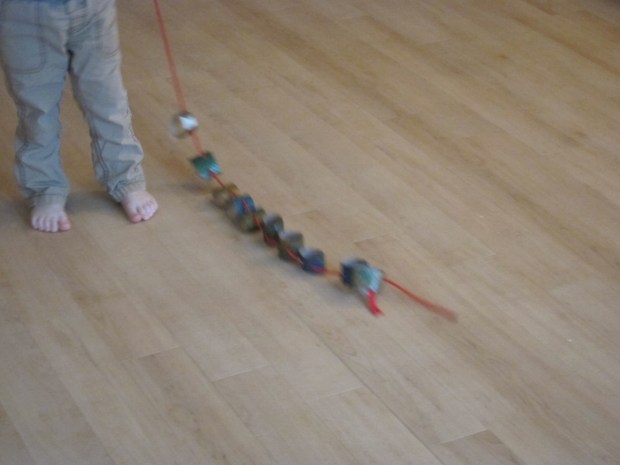
Pardon the blurry picture, but the snake was wiggling too fast once in Travis’s hands for me to capture a clear image – a sure sign of an enjoyable snake!
Pine Cone Bird Feeder

Pinecone Feeder (6)

With daylight savings officially upon us and darker, colder days here to stay, we’re thinking about the winter to come… and in particular, helping out our feathered friends.

On our latest nature walk, we selected three large pinecones for the project. Travis was very curious to see how we would turn them into bird feeders!

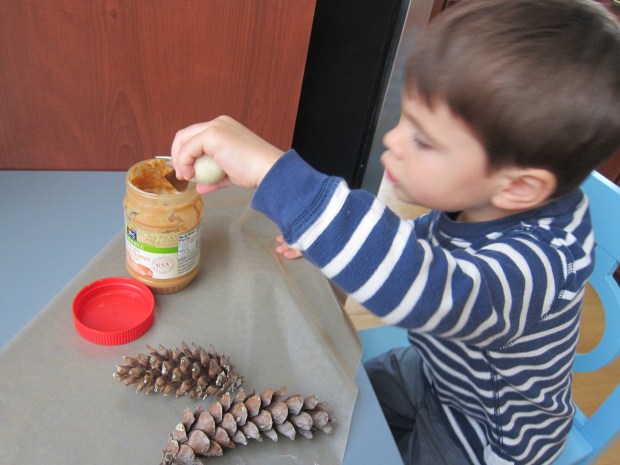
First we needed to smear them with peanut butter, a gooey and fun step.

Pinecone Feeder (1)

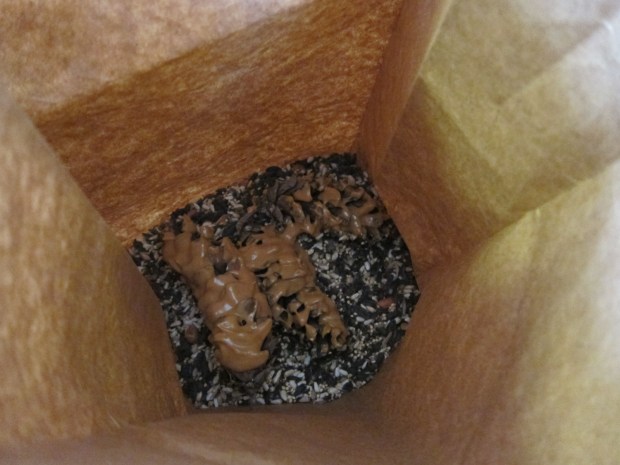
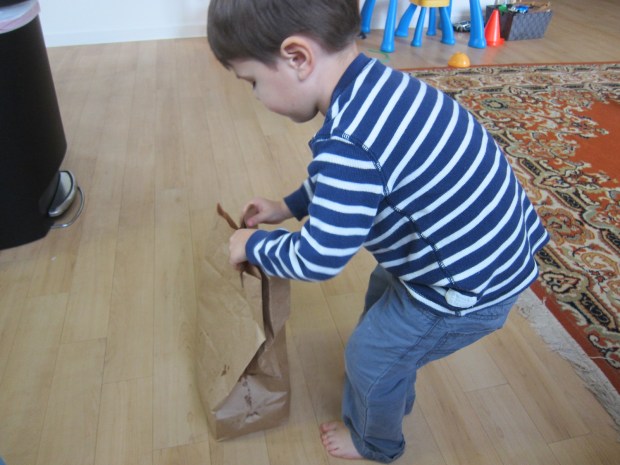
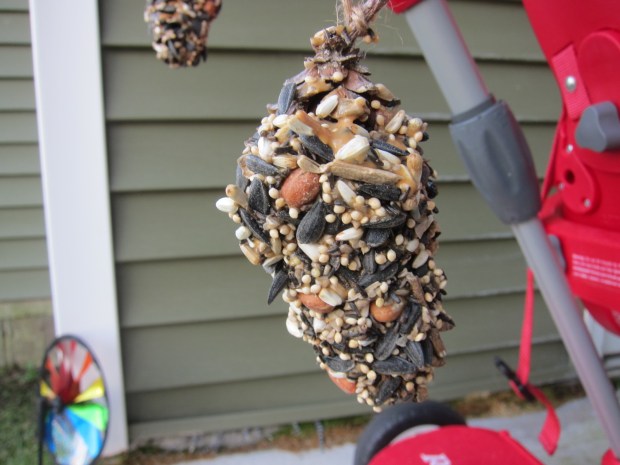
To cover the pine cones with bird seed, we filled the bottom of a paper bag with the seeds, added our pine cones, and then shook the bag.

Pinecone Feeder (2)

The shaking was arguably the best part of the project!

Pinecone Feeder (5)

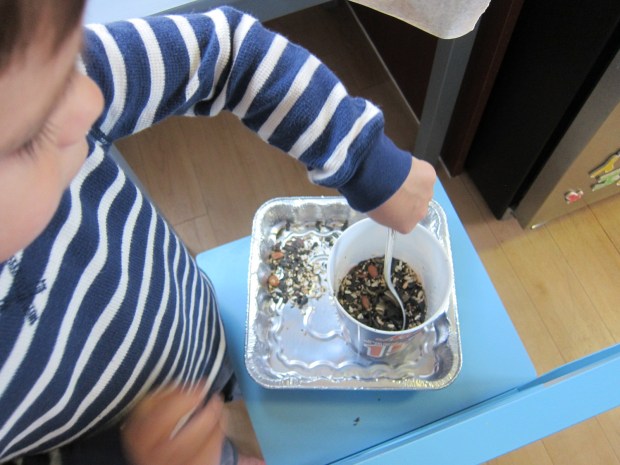
And of course, leftover seeds are fun to play with.

Pinecone Feeder (4)

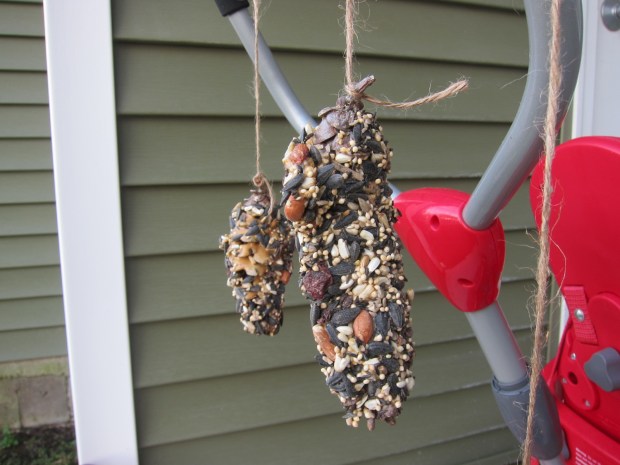
Ideally, we’d have a tree or bush to hang the feeders from, but the best I could do was to hang them from the bicycle handles on our patio. We can’t wait to see if any feathered friends visit for a nibble!
Pinecone Feeder (7)


Zucchini “Pizza”

Zucchini Pizza

These adorable individually-topped zucchini slices make either a great snack or a hearty side dish at dinner time.

Ingredients:

  • 2 zucchini
  • 1/2 cup Kite Hill ricotta
  • 2 tablespoons olive oil
  • 1 teaspoon dried Italian herbs
  • Tomato slices
  1. Cut the zucchini into 3/4-inch thick rounds. Set aside.
  2. In a food processor, combine the ricotta, olive oil, and herbs; blend until combined.
  3. Top each zucchini slice with a heaping teaspoonful of the ricotta mixture. Place a baking sheet lined with parchment paper and bake at 375 degrees F for 10 minutes.
  4. Top with thinly sliced tomato to serve.

Leafy Linens

Leafy Linens (10)

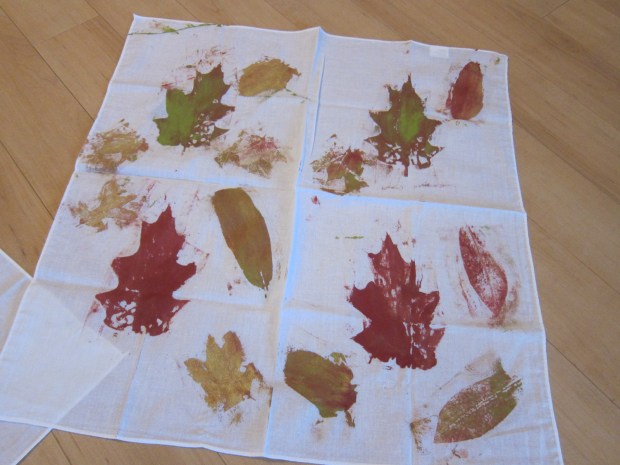
This lovely fall project would make a beautiful decoration for a Thanksgiving table, or a perfect gift for school teachers around the holidays.

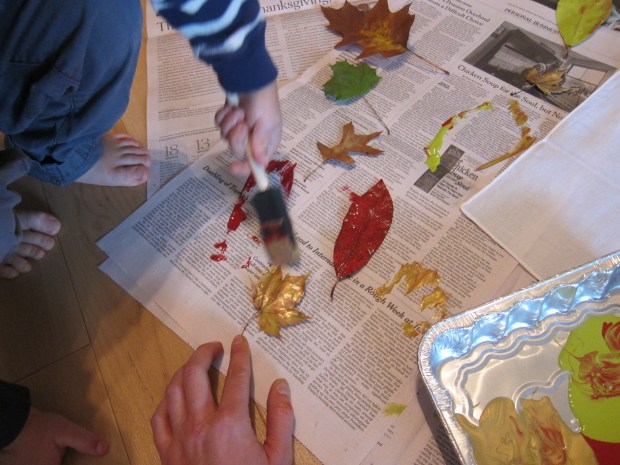
The first step (as with so many of our autumnal projects it seems!) was to bring home a few treasures from a walk in the park. Look for a variety of leaf shapes, ideally flat and still quite fresh and sturdy.

Leafy Linens (2)

Set out the leaves, along with a foam paint brush and fabric paint – don’t use tempera paint here, since the linens will go through the wash. I gave Travis a selection of seasonable colors, such as red, green, and gold. Use neutral-colored napkins if you plan these for a holiday table. We chose to make ours onto white handkerchiefs, which will make great table centerpieces or gifts.

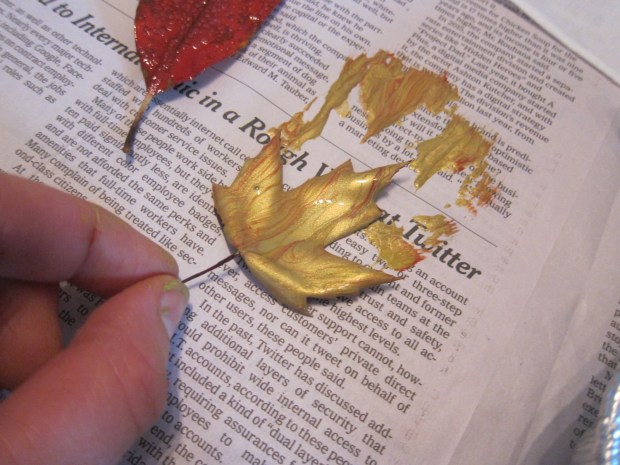
Paint a leaf with a foam paintbrush, ensuring you have a nice, even layer.

Leafy Linens (4)

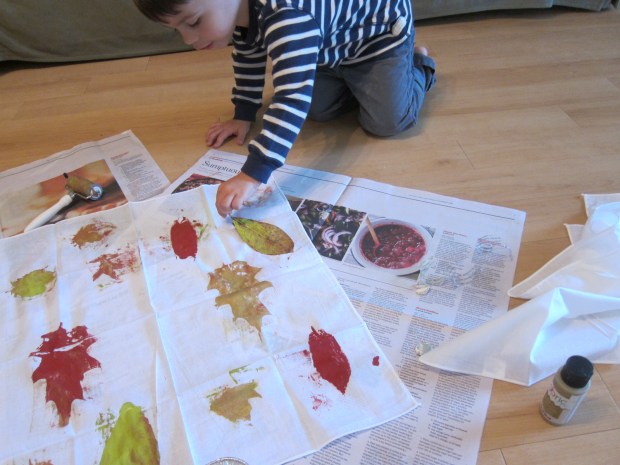
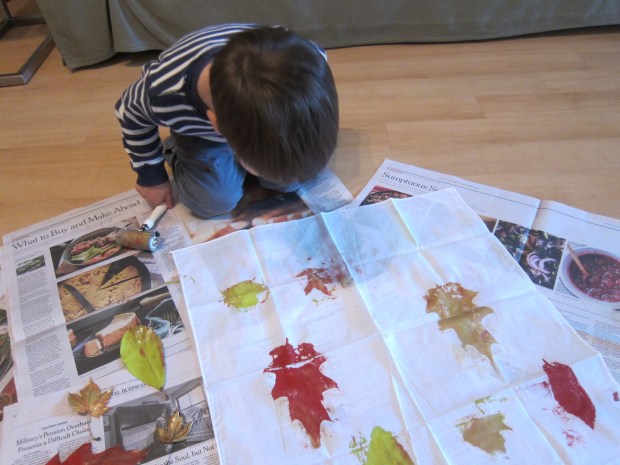
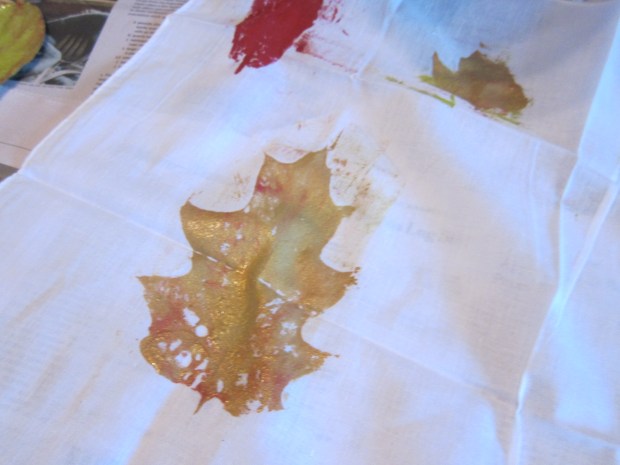
Place the leaf, paint side down, on the fabric, and roll over it with a brayer or old rolling pin. This new tool was Travis’s favorite part of the project, and he eagerly rolled over each leaf.

Leafy Linens (3)

Carefully lift up the leaf for the big reveal – neato!
Leafy Linens (8)

Repeat with different leaf shapes and colors until your fabric is filled.

Leafy Linens (7)

Towards the end, our prints got a bit messy as the brayer itself was coated in paint, so you may want to give yours a wash or two as your work. Travis didn’t mind though, and loved mixing our paint shades.

Leafy Linens (5)

We plan to give these to his preschool teachers as the holidays approach!

Leafy Linens (6)

Tissue Paper Eggs

Tissue Paper Eggs (7)

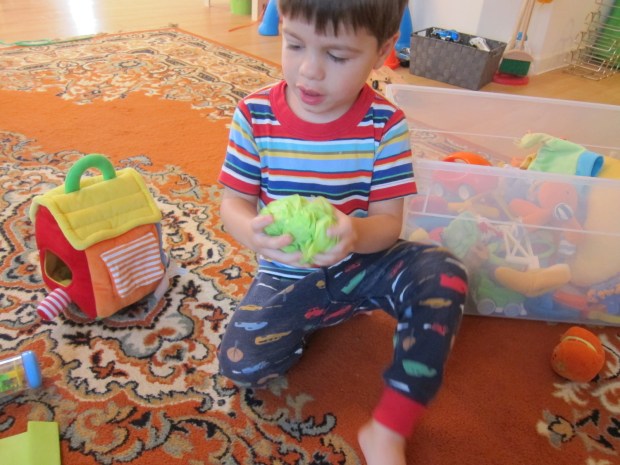
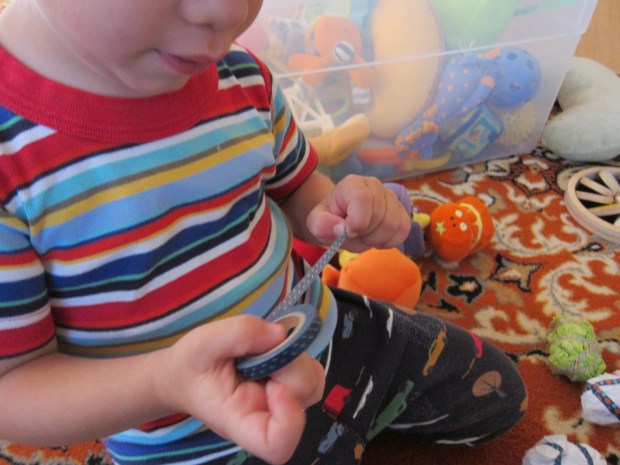
This morning Travis found his old baby toys in a bin, and dove into it with delight. It’s always a laugh to see the way that older kids go back and play with things they used as babies, inevitably in inventive and different ways. He was particularly enamored with an old bird shape-sorting toy, so we decided to make eggs for the birds!

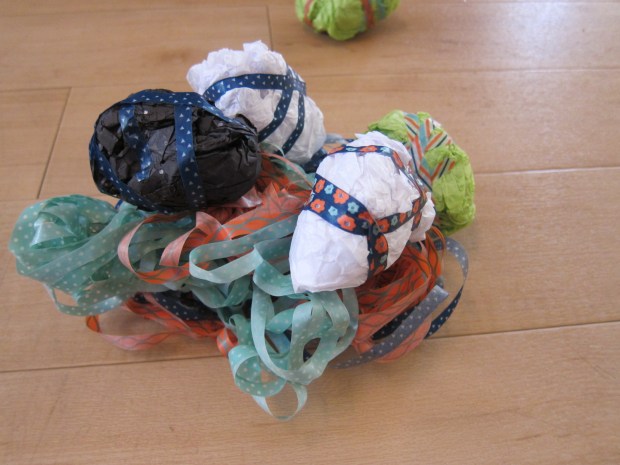
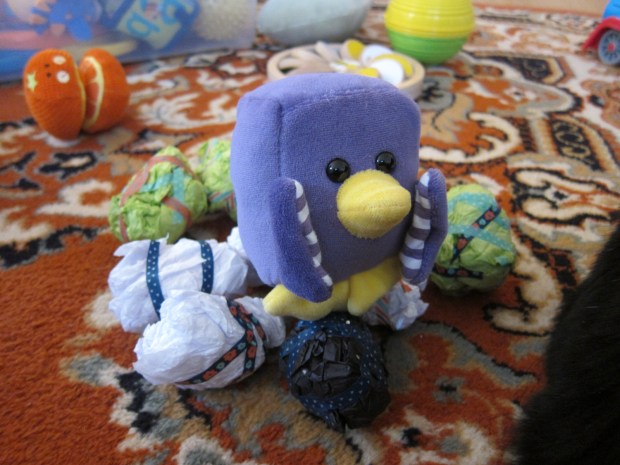
The process was simple and fun – crumple sheets of tissue paper into little balls. Travis went to town with this, and I neatened them up a bit into ovals as he finished each one.

Tissue Paper Eggs (2)

To finish your eggs, wrap with colored tape. Masking tape would work well, but we had decorative washi tape that seemed even better, since it reminded me of the decorative blown eggs I learned to make in elementary school (in pre-vegan days!)

Tissue Paper Eggs (4)

Travis was very deliberate in deciding which tape pattern should wind around which egg, until we had a beautiful assortment.

Tissue Paper Eggs (6)

And then the birdies got to sit in their new nest!

Tissue Paper Eggs (5)


Folded Paper Animals

Folded Animals (7)

This rather random activity turned out to be a delight on multiple levels. Your child will learn about animals, exercise their creativity, and enhance their fine motor skills.

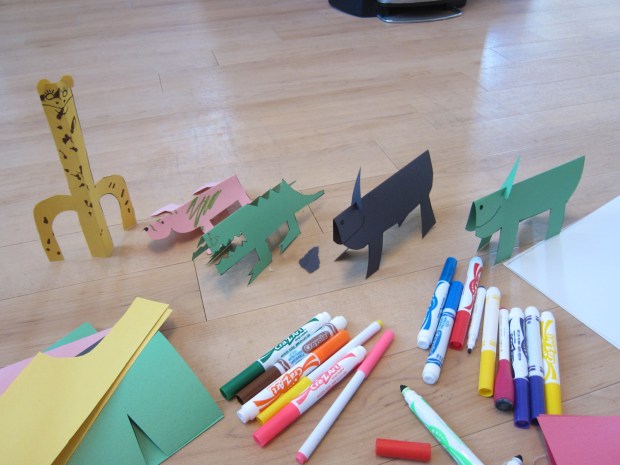
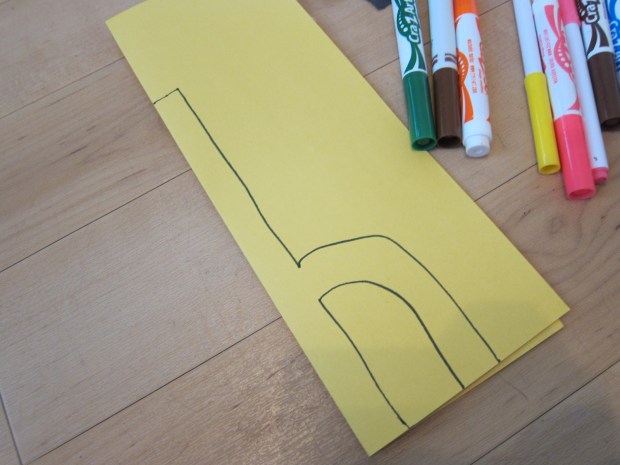
When I asked Travis this morning if he wanted to make safari animals, he eagerly trotted over to see what the project was all about. To make your animals, fold construction paper in half. Draw the outline of an animal in profile, then cut out with scissors and your folded creature will stand on its own two (or four) feet.

Folded Animals (2)

I’m no artist, so I relied heavily on online pictures to get my outlines correct. A giraffe in the shape of an H was the easiest, and one that even kids can try to draw.

Folded Animals (1)

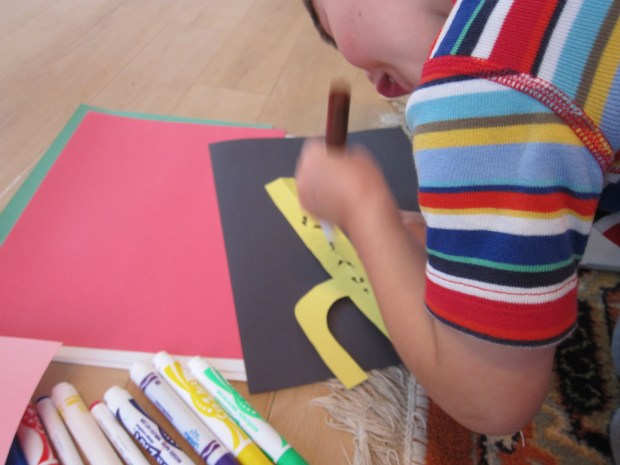
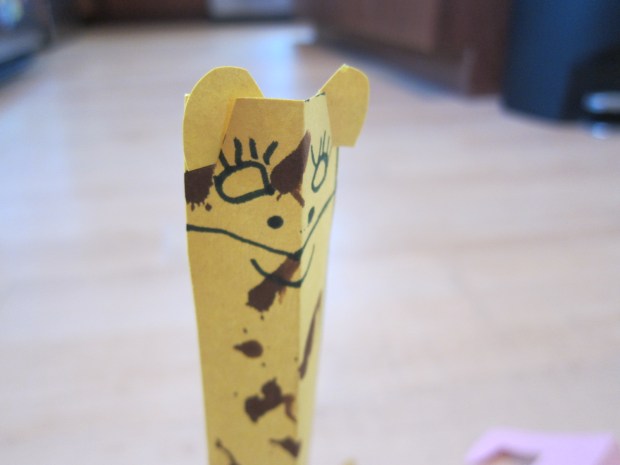
Travis was practically shaking with excitement as I started cutting the giraffe out, and the animal was revealed along the folded line. He decorated the giraffe with brown spots…

Folded Animals (3)

…And then we added slits at the top to insert little yellow ears.

Folded Animals (6)

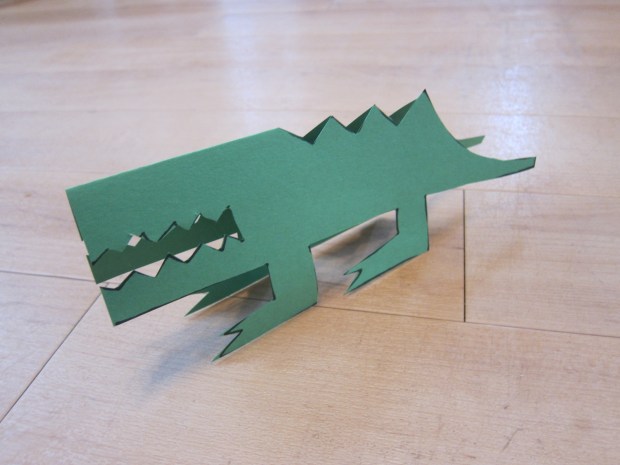
I asked him which animal we should make next, and the only limit was the scope of his imagination! Soon we had a crocodile, a pink polar bear (“Normally they’re white, but let’s make ours pink!” he suggested), a black rhino, and a green rhino. The rhinos are fun because you can add a slit at the top for a horn.

Folded Animals (5)

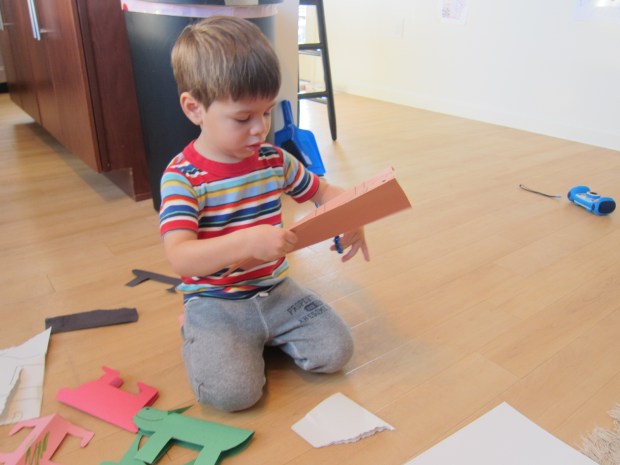
After that Travis was eager to try his own hand at making animals. I drew him a few outlines and he practiced cutting along a line, something we haven’t done much of.

Folded Animals (10)

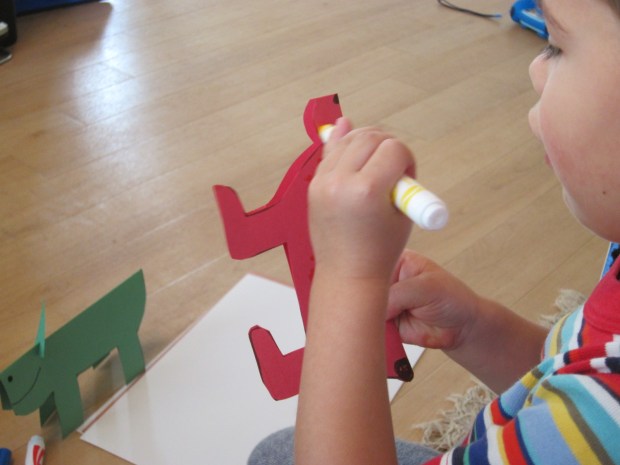
He asked for a few animals that surprised me – a sheep – and a few that I wasn’t quite able to do – an elephant. I’m really not sure what this red creature below was meant to be, but Travis had fun decorating it!

Folded Animals (8)

He had so much fun playing with the animals while I turned to other tasks around the house, narrating games in the background. And then he decided that we should glue all our animals into one big pile. Not exactly what I’d had planned, but a delight to watch his enjoyment.

What animals would you and your little one like to make? Please share in the comments!

Folded Animals (11)

Snake Straw Puppet

Snake Puppet (5)

Puppet play is always fun, and this one holds particular appeal since kids can easily grasp the straws to wiggle and manoeuver their reptile friend. Honestly, the craft felt a little simple and plain after some of the complicated things we’ve been up to lately, but it’s a cinch to make, and fun to play with, so a win-win!

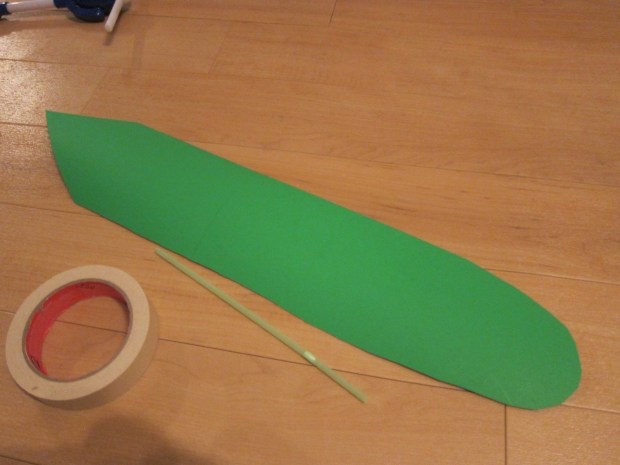
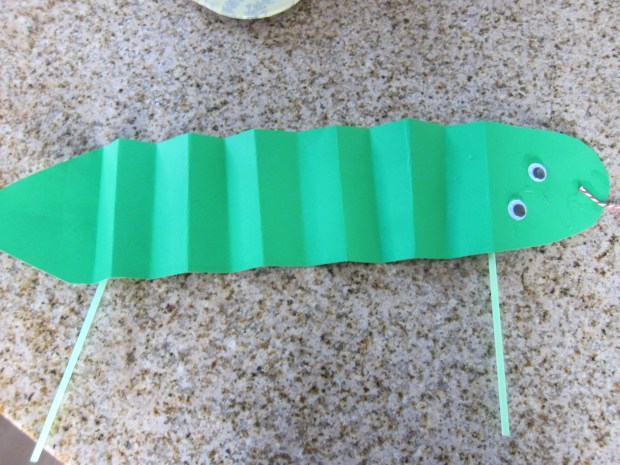
To make the snake, cut a long rectangle from green paper – poster board or cardstock work better than a flimsier material like construction paper, which could tear easily. Adults, trim one end of the paper into a triangle as the snake’s tail, and make the other end rounded for its head.

Snake Puppet (1)

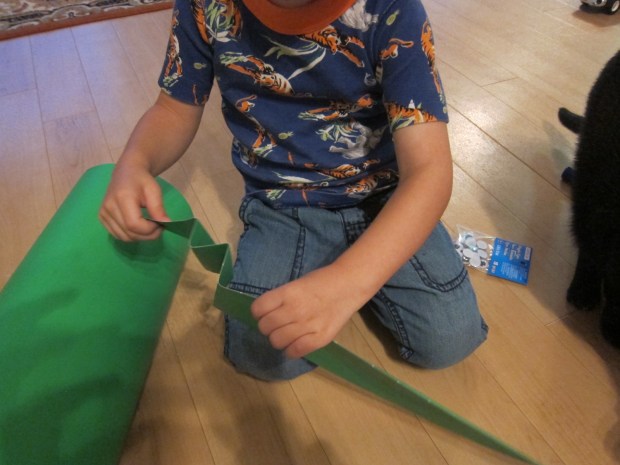
Show your child how to make accordion pleats along the length of the paper. Travis had a bit of a hard time with this, but I gave him a separate piece of paper to practice on while I folded up our snake.

Snake Puppet (2)

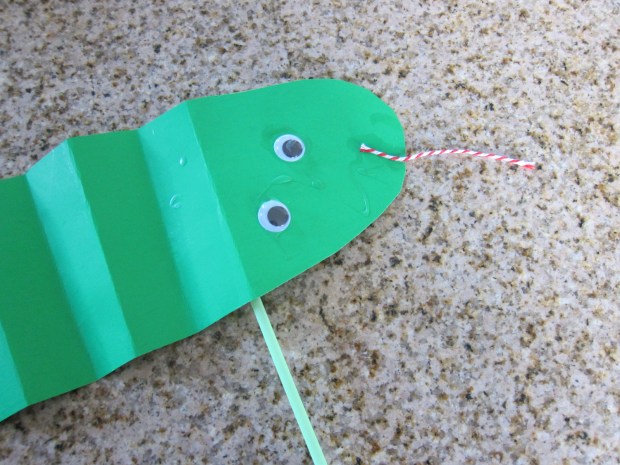
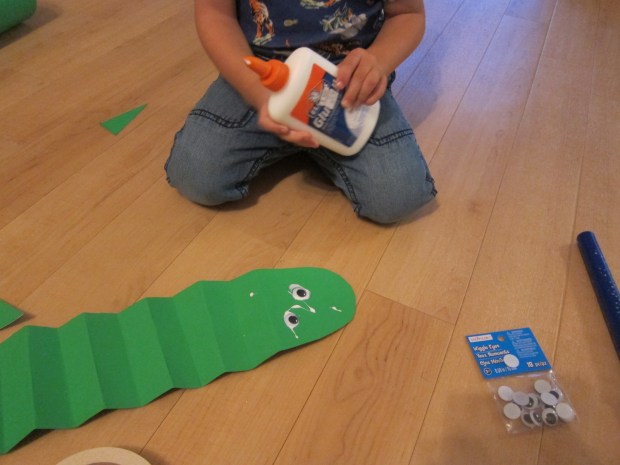
On the contrary though, Travis completely took over when it came to the face, deciding where the glue should go for two googly eyes and a piece of string cut for the tongue. Not bad!

Snake Puppet (3)

Once the glue dries, attach your snake to two straws with masking tape, and slither him around.

Snake Puppet (6)

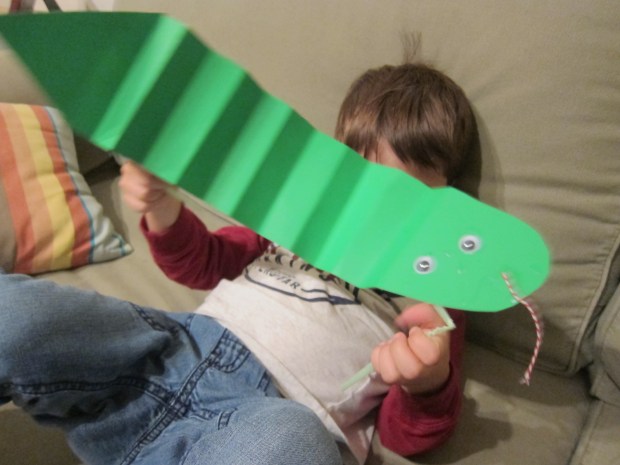
Travis decided it looked more like a crocodile, since the straws almost look like legs. Crocodile or snake, have fun puppet playing!

Snake Puppet alt


Oatmeal Breakfast Pie

Oatmeal Breakfast Pie (1)

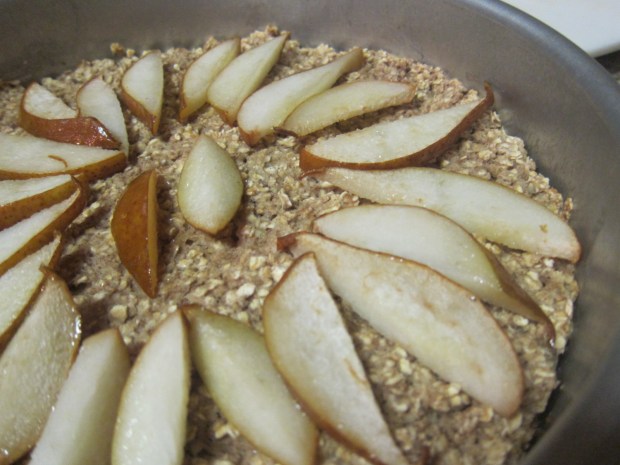
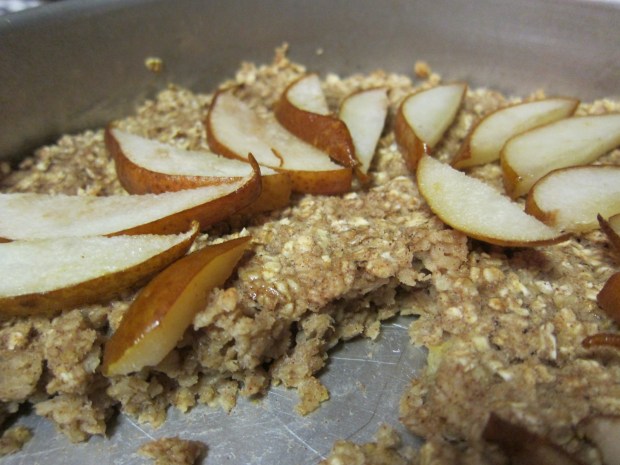
Similar to overnight oatmeal, here’s a recipe you can prepare the night before and it’s ready and waiting in your fridge when everyone is still sleepy and groggy the next morning. I like to top the oatmeal with roasted pears (pop them in the oven at the same time that the oatmeal bakes), but any roasted fruit would be delicious. You can also add a drizzle of maple syrup at serving time!

Ingredients:

  • 2 cups old-fashioned oats
  • 2 tablespoons sugar
  • 1 teaspoon baking powder
  • 1 teaspoon cinnamon
  • 1/2 teaspoon salt
  • 1/2 cup non-dairy milk
  • 1/2 cup plain non-dairy yogurt
  • 1 Ener-G egg
  • 1 mashed ripe banana
  • 1 teaspoon vanilla extract
  • Cooking spray
  1. In a large bowl, combine the oats, sugar, baking powder, cinnamon, and salt; set aside.
  2. In a second bowl, whisk together the milk, yogurt, Ener-G egg, banana, and vanilla. Add the wet ingredients to the dry ingredients, stirring until combined.
  3. Spoon the mixture into a 9-inch round cake pan coated with cooking spray. Bake at 350 degrees for 30 minutes.

Oatmeal Breakfast Pie (2)

Halloween Candy Experiments

Halloween Candy (4)

Well, the initial blood sugar rush of Halloween has subsided and sugar comas have set in, and we have lots of leftover candy. In our vegan household, I divide the candy into three piles: vegan candies to eat and enjoy; non-vegan candies to donate to our military overseas through Operation Gratitude; and non-vegan candies with which to do a little experimenting.

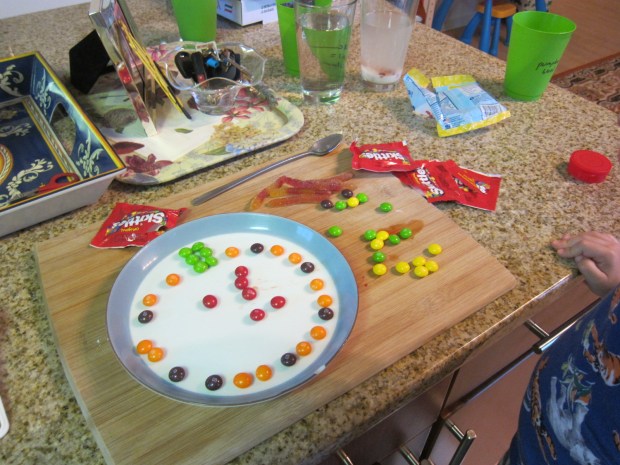
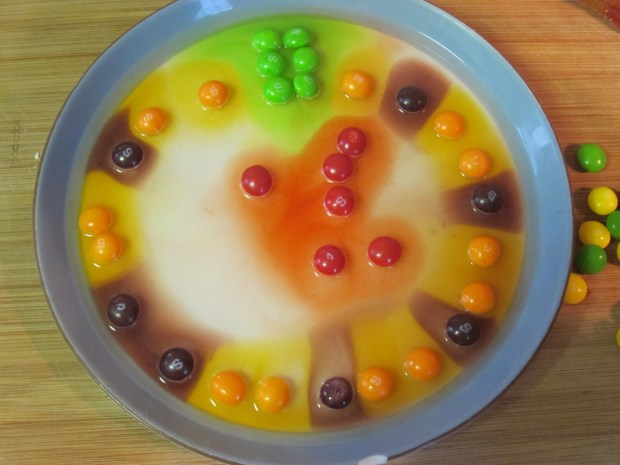
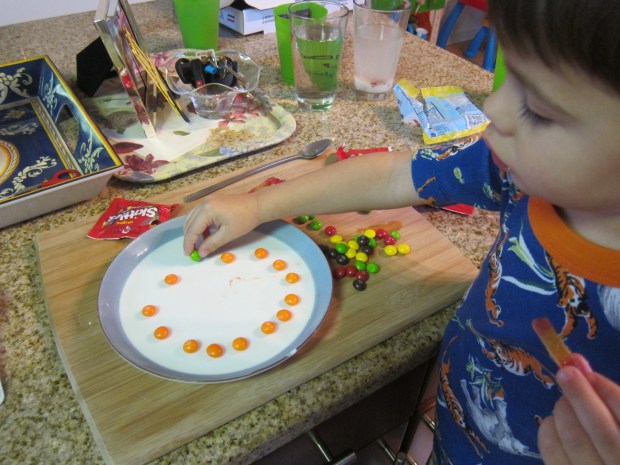
For the first experiment, make a “magical pumpkin” by stripping the color off any hard-shelled candy. Reeses Pieces are ideal, since you’ll have orange and brown galore, but we only had Skittles to work with. First, arrange the candies in the outline of a pumpkin on a plate. We nearly didn’t have enough orange for the outline, but by adding in a little brown and a green stem, we made it work.

Halloween Candy (2)

It was Travis’s idea to add red as the pumpkin’s “guts”!

Halloween Candy (3)

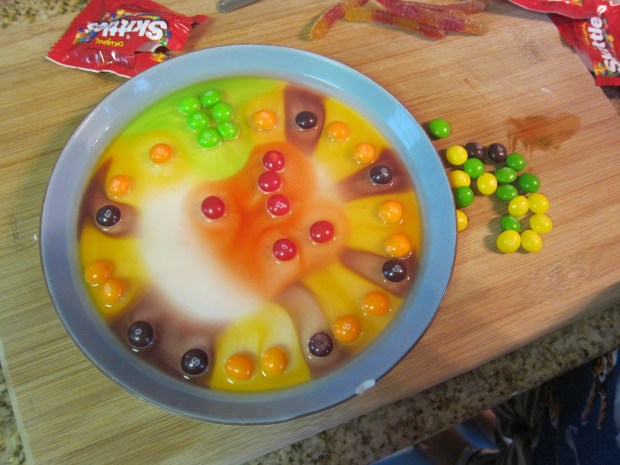
Once you’re outlined your pumpkin, fill the plate with a little hot water; the colors will bleed and fill in your pumpkin almost like watercolors. Sweet and neat!

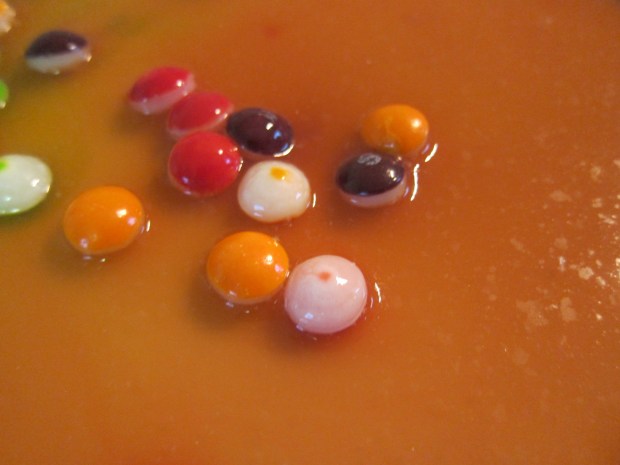
Halloween Candy (5)Travis wanted to stir the candies, which messed up the pumpkin shape, but allowed us to see the white candy left behind.
Halloween Candy (7)

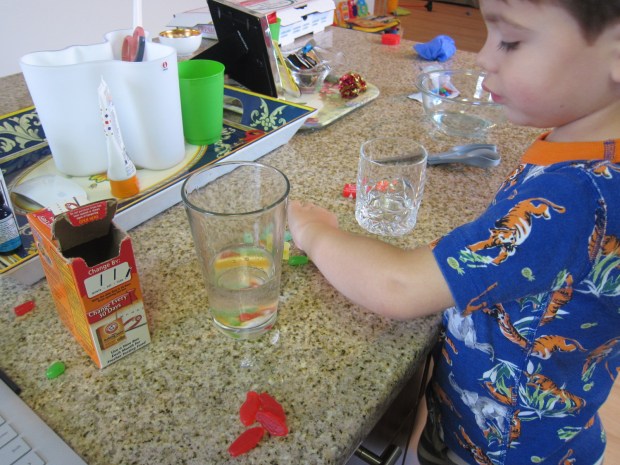
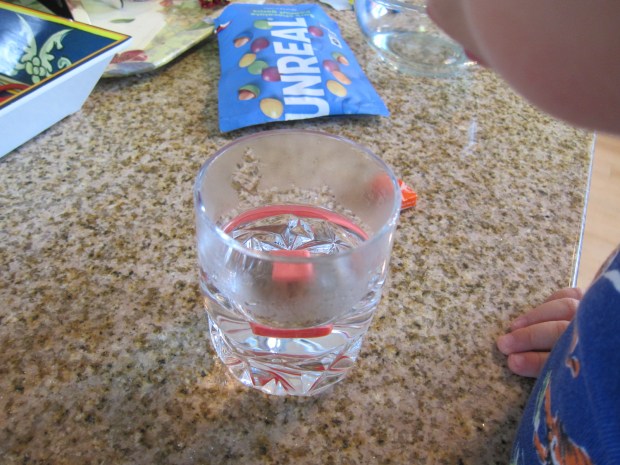
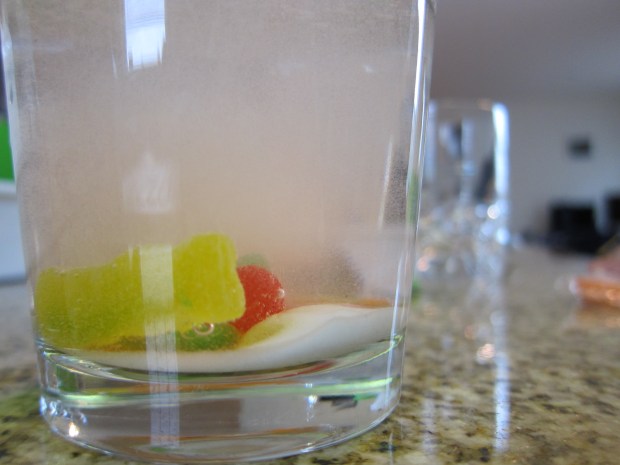
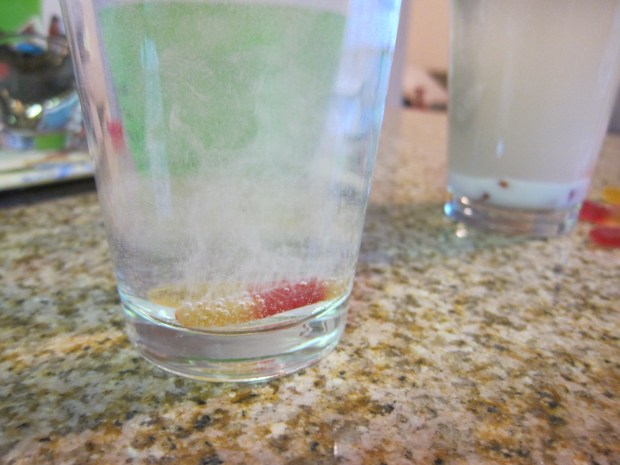
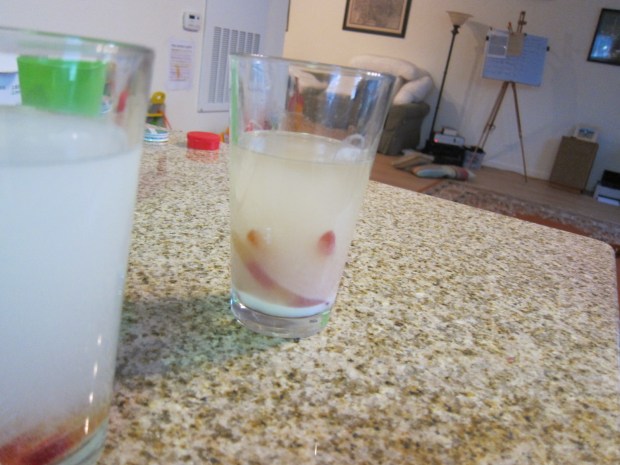
Next we tried to make gummy worms dance, following instructions we’d found online. Cut your gummy worms into small pieces, then fill a cup with 3 tablespoons baking soda and 1/2 cup water. Add the worms and let stand for 15 minutes.

Transfer the worms to a second cup filled with vinegar. You’ll see bubbles appear, and then hopefully the worms will float up and wriggle.

Halloween Candy (8)

Unfortunately, ours did not rise up (perhaps because we used Surf Sweets brand?) – but that didn’t seem to matter. Travis loved the fizzing, and declared this his favorite of all our experiments.

Halloween Candy (10)

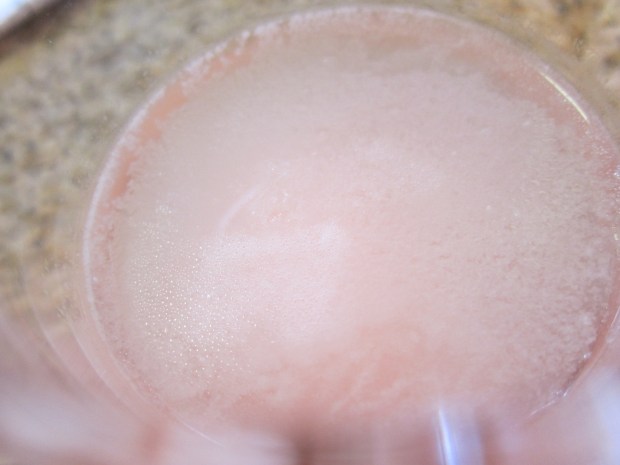
You can also test for any candy for acid with a similar method. Add candy to a cup of water and sprinkle with baking soda; if you notice bubbles, the candy has acid. Mike & Ike’s left our water still, but sour patch kids did the trick!

Halloween Candy (11)

Finally, you can test your candies to see if they contain oil. Dissolve any candy (we used Starbursts) in hot water, and let stand for a few minutes.

Halloween Candy (13)

If there’s oil, you’ll soon see a shiny or waxy layer on top. Yup, Starbursts definitely had oil!

Halloween Candy (15)

Try this with Laffy Taffy, too, or any other chewy candy.

That was the end of our experimentation, and we finished with some more noshing, of course. Travis’s favorite vegan candies to eat by the way? The following make the top of his list:

Twizzlers

Swedish Fish

Surf Sweets gummy worms

Dum Dums

Unreal dark chocolate peanut gems

Glee gum blow pops

Hope your Halloween was equally sweet and full of treats!

Halloween Candy (12)

Indian-Spiced Pumpkin Seeds

Roasted Pumpkin Seeds (5)

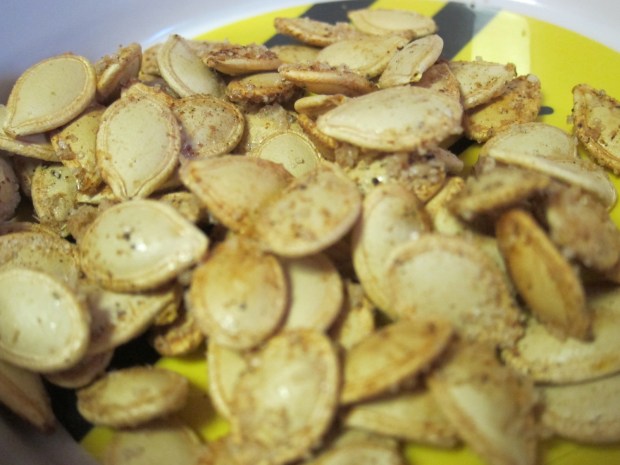
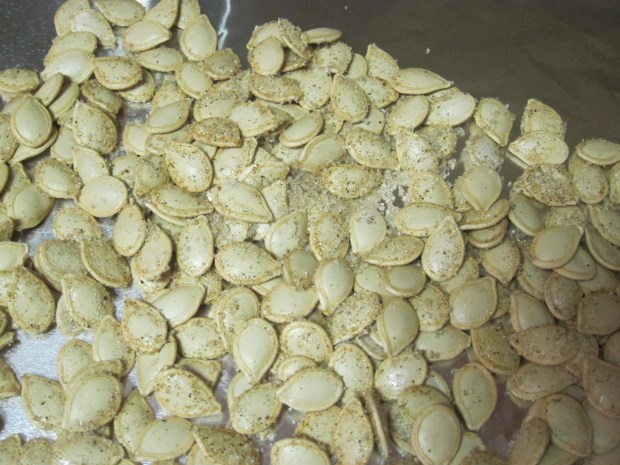
As promised from our pumpkin carving post, we didn’t toss the seeds this year, but saved them instead for roasting! There are so many ways to spice your pumpkin seeds, but this year we gave them an Indian flair (thanks to a recipe from Little Passports) to honor both the American holiday and Travis’s Indian heritage.

Ingredients:

  • Seeds from 1 pumpkin
  • 1 teaspoon sugar
  • 1/4 teaspoon cardamom
  • 1/4 teaspoon ground ginger
  1. Rinse your pumpkin seeds very well, then transfer to paper towels and pat dry.
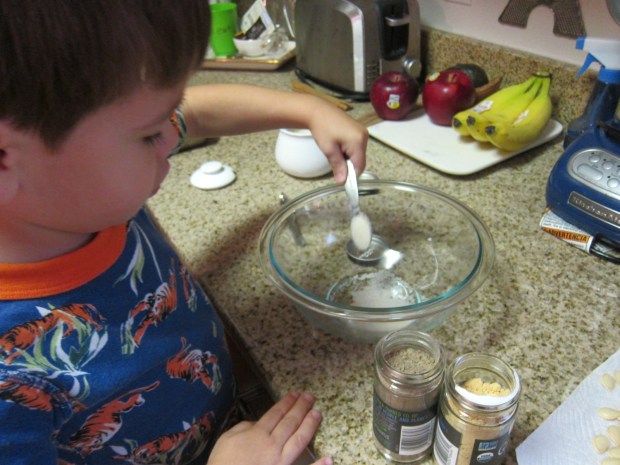
  2. In a bowl, combine the remaining ingredients. Add the pumpkin seeds and stir to coat.
  3. Arrange the pumpkin seeds on a baking sheet lined with foil and bake at 375 degrees F for 15 minutes, until golden brown.

Roasted Pumpkin Seeds (4)

Note: Travis really enjoyed spooning out the sugar, so we ended up with closer to 2 teaspoons sugar in our recipe.

Roasted Pumpkin Seeds (2)

Good thing everyone around here has a sweet tooth!