Sign Your Name

SIgn Name (3)

Learning to read and write your name are key pre-K skills, and ones which I know Travis’s teachers are going to emphasize this year. He has name recognition down, but writing it himself is a bit harder. Before school starts tomorrow (!) we made writing practice fun, working on his name in three different ways.

First, tear two strips of paper – colored construction paper made this more exciting than standard white.

Sign Name (1)

Going one letter at a time, I spelled out Travis’s name, and had him copy each letter after me. This was really useful so I could see which letters came easier (T, v) and which were a bit of a struggle (a, s).

Sign Name (2)

Then we upped the ante with a little bit of sensory play. Squirt out fingerpaints (or shaving cream even!) onto paper or another surface, and make a nice smeared frame that you can write in.

Sign Name (4)

Travis used the handle of a paintbrush to trace each letter this time. He got a bit frustrated since not all of the letters showed up clearly, but here was my example version:

Sign Name (5)

Finally, chalk! This method was his favorite of the three, and once again I wrote each letter first, then had him fill in underneath.

SIgn Name (6)

Not only did this reinforce handwriting, but also the order that the letters of his name go in.

Sign Name (7)

What other fun ways does your preschooler practice writing his or her name? Please share in the comments!

Spin Drum

Spin Drum (8).JPG

This great little craft will have little musicians marching and drumming all over your house. Perfect for a rainy day!

For the body of the drum, we used small papier-mache boxes that I purchased off Amazon, about 4 inches across. Remove the lid, and punch three holes in the box, at 3 o’clock, 6 o’clock, and 9 o’clock.

Spin Drum (1)

This step might be tough for little fingers, so add your own muscle power to the hole puncher. We even enlisted daddy’s help after my hand got tired!

Place a dowel in the bottom hole, then string twine through the side holes, looping it around the dowel in the center as you go.

Spin Drum (2)

Glue the dowel in place – I definitely recommend hot glue for this step.

While the glue briefly dried, Travis was in charge of decorating the lid with markers. He said his design was a mandolin! (Kids can decorate the side of the box, too).

Spin Drum (3)

We hot glued on the decorated lid, and then tied wooden beads to the dangling ends of string, securing them with a double knot.

Spin Drum (5)

Make sure your beads and strings are the right length to hit near the center of the box lid, before you tie off the knot. Our first try was too short, but a second drum was just right.

Spin Drum (4)

Now spin and play!

Spin Drum (6)

My impish boy soon decided his drum worked not only as an instrument but as a “spear”, too, which made for lots of imaginative play. Either way, I loved seeing him have fun!

Baking Crate

Koala Baking (7)

For my boy who loves helping in the kitchen, our latest crate from Koala Crate may have been the favorite of all we’ve received in 2 years of our subscription. A quick warning though: This crate is messy! But in the best way, of course. So grab some newspaper to cover your work surface and get “baking.”

First up, every chef needs a toque, so we decorated the Chef Hat that was project #1.  Squeeze the provided paint pens onto a paper plate, and use the provided foam shapes to decorate.

Koala Baking (2)

Travis had fun dotting the stamps here and there, but I showed him a few of the suggestions in the instructions, too, combining shapes to make ice cream cones, lemons, or apples.

Koala Baking (6)

More fun than the decorating was simply wearing it. Look at that baker’s joy!

Koala Baking (1)

Next up was frosting the Pretend Cake project.

Squeeze out air-dry clay (from adorable little “pastry bags”) onto the provided foam triangles, and spread your frosting with a craft stick.

Koala Baking (3)

Travis loved that this was just like a Daniel Tiger episode he had seen, and frosted all 8 pieces so seriously and carefully. I showed him how to stack them into a layer cake, and then we used the provided punch-out decorations to add berries and candles.

Koala Baking (5)

Another quick note of warning: The toque and cake will both need to dry for several hours, so make sure your children know there will be a waiting period, to avoid disappointment! Travis was so happy once he could finally play.

Koala Baking (8)

Next up was Measuring Fun, a far more technical and mathematical lesson about cooking, with almost endless variations. First, encourage your child to line up the cups by size.

Koala Baking (9)

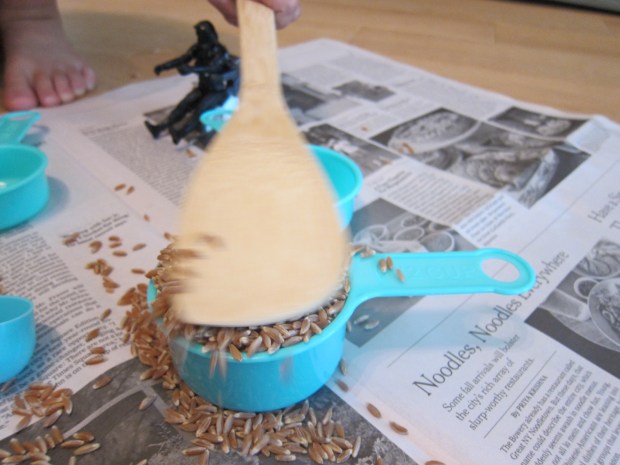
Then try filling the cups (which came in 1/2 cup, 1/3 cup, 1/4 cup and tablespoon denominations) with rice or another dried grain. Travis loved leveling with a spoon!
Koala Baking (10)

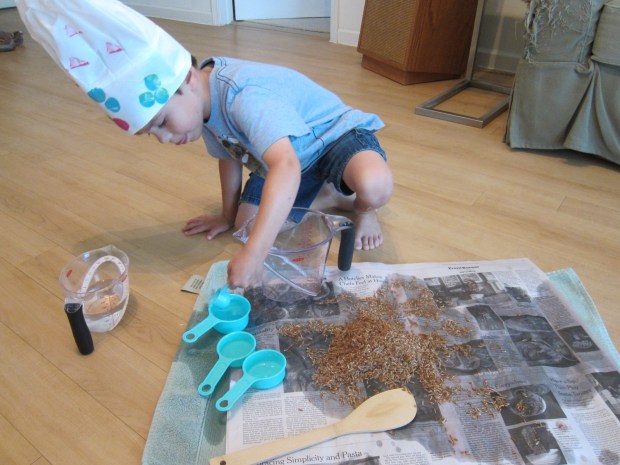
We moved on to a wet ingredient (water). Get down at belly level and see the meniscus.

Koala Baking (12)

Show your child how you need different numbers of each cup to make 1 cup of water – 2 of the 1/2 cup, 3 of the 1/3 cup and so on. And a whopping 16 tablespoons!
Koala Baking (13)

I sort of lost Travis at this point, because he had his own game going, spooning the water into the dried grains and mixing up a “recipe” – a true chef!

There are 3 activity cards that go with the measuring cups, meaning we played for days thereafter. First up was the yellow card, with two color mixing activities: Rainbow Color Mixing and Shades of Colors.

For the former, we squirted our paint pens into three cups of plain water to make red, yellow, and blue, the primary colors.

Koala Baking (14)

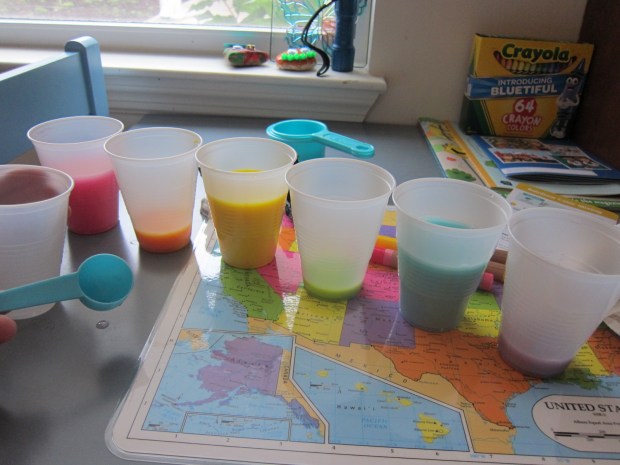
To make the secondary colors, we mixed these primary colors at a 1:1 ratio (using our tablespoon as a guide), and soon had a full rainbow!
Koala Baking (15)

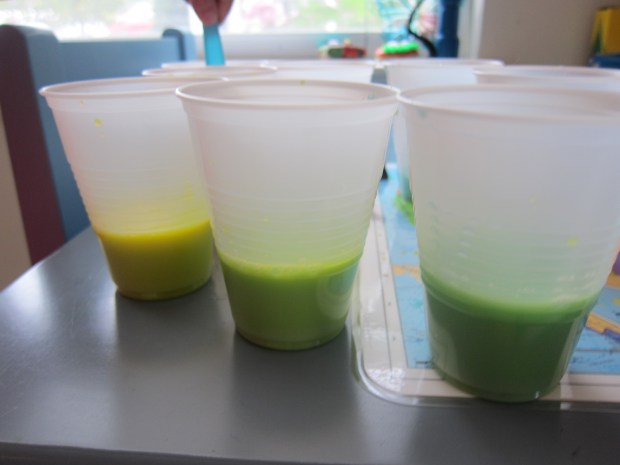
For the latter, we used different ratios of colors to make varying shades. 1 tablespoon of yellow + 8 blue made a very bluish-green, whereas the reverse (1 blue + 8 yellow) made a lime green. Travis loved this, and soon was mixing up oranges, purples and more.
Koala Baking (17)

After lots of playing mixologist, we only had variations of beige and brown.

Koala Baking (21)

While he gleefully poured colors back and forth, we talked about how chefs use this same method – measuring ingredients in varying combinations – to make a recipe.

Koala Baking (19)

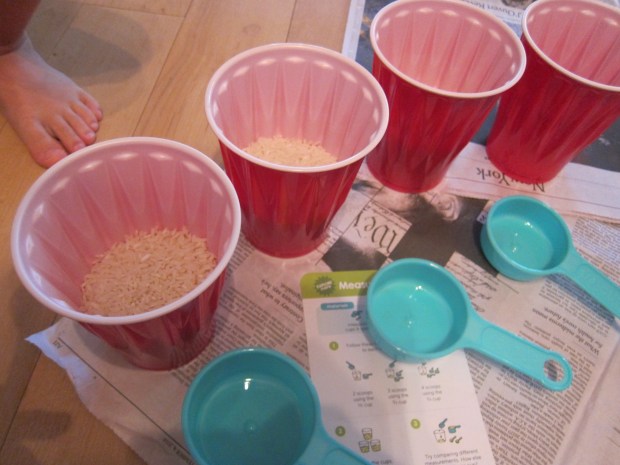
Next up was the green card: Measuring Fractions and Measuring Volume. For the former, line up 3 cups of identical size, and show your child that you can make 1 cup of rice in each by using: two 1/2 cups, three 1/3 cups, four 1/4 cups, or 16 tablespoons.
Koala Baking (23)

A neat trick is to show them that the second (bottom) number on the cup (i.e. the denominator) is the number of times they’ll need to use that cup to make 1 full cup. Travis loved helping count out, especially the full 16!

Koala Baking (22)

Then we played around with volume. I poured 1 cup or rice into each of three containers – a tall cup, a short cup, and a wide bowl. Just like most kids will, Travis guessed that the tall glass had the most rice, a cute first lesson on volume. You can try this with different containers and water, too!

Koala Baking (24)

For a final day of fun, we played with the red card. Now it was time to make recipes, one edible and one not.

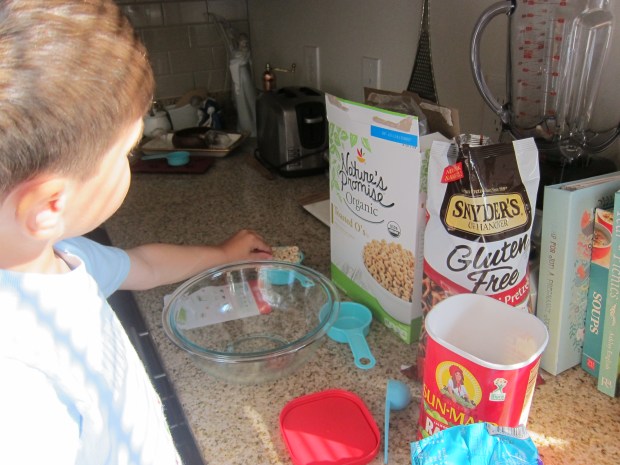
For Trail Mix, use your cups to combine the following: 1/2 cup cereal, 1/3 cup pretzel twists, 3 tablespoons raisins, and 1 tablespoon chocolate chips.
Koala Baking (28)

Yum!

Koala Baking (29)

Then we mixed up Bubble Water. Use the measuring cups to combine 4 cups water (8 of your child’s 1/2 cup), 1/4 cup dish soap, and 2 tablespoons sugar.

Koala Baking (30)

Not only was this fun to mix…

Koala Baking (31)

…but it made for fantastic end-of-summer play outside on our patio, blowing bubbles, popping them in the grass, and catching them.

Koala Baking (32)

What else can you do with your measuring cups? We tried whipped up a fruit salad:

Koala Baking (25)

I encouraged Travis to measure each fruit before he added it to the mix, though truth be told he was more interested in eating the fruit than the measuring lesson.

Koala Baking (26)

If you like, write down the recipe you create on an index card so your little chef can repeat it in the future.

Koala Baking (27)

Whew, that was a lot! Apologies for the long post, but thank you for the fun, Koala Crate!

Koala Baking (33)

BLT Pita Pizzas

BLT Pizza

Quick, easy… and there’s vegan bacon. That makes this the perfect supper after a day back at school!

Ingredients:

  • 4 slices Lightlife bacon
  • 2 (6-inch) whole wheat pitas
  • 1/4 cup pizza sauce
  • 1/2 cup shredded Daiya cheddar
  • 2 cups arugula
  • 2 tablespoons bottled vinaigrette
  • 8 cherry tomatoes, halved
  1. Cook the bacon slices according to package directions; chop and set aside.
  2. Meanwhile, spread about 2 tablespoons pizza sauce over each pita. Top each with about 1/4 cup cheese. Bake at 450 degrees F for 5 to 6 minutes, until the cheese melts.
  3. Toss the arugula with the vinaigrette, and divide evenly among the pizza tops. Top evenly with the tomato halves and chopped bacon.

BLT Pizza alt Continue reading

Farmers’ Market Fun: Homemade Fruit Leather and Apple Chips

Fruit Leather (4)

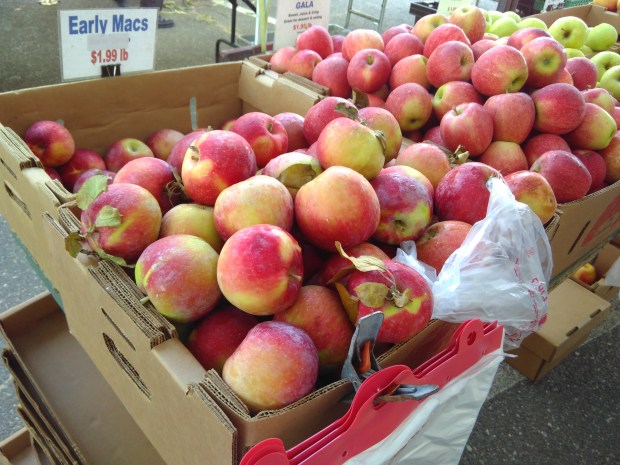
Farmers Markets are fantastic this time of year, featuring the last of the summer fruits (think berries, peaches, and plums) and the first of the fall harvest (apples!). To celebrate the end of summer, we headed to the market on a warm Sunday morning, then brought our bounty home to turn it into delicious fruit leather and other snacks.

Fruit Leather (5)

Bonus: The following recipes are perfect for packing in your kids’ lunch boxes for school.

For our first batch, Travis and I used peaches. He was so proud helping me peel the skin from 4 large peaches (parents, use discretion on whether or not your child needs help with this tool).

LP Jobs (3).JPG

I sliced the peaches and Travis was in charge of transfering them to the blender, so proud to do so!

LP Jobs (4)

We added 2 tablespoons agave nectar and 2 teaspoons lemon juice. It was Travis’s very important job to be the taste tester, and I asked him if it needed either more agave or lemon. Nope, just right!

LP Jobs (5)

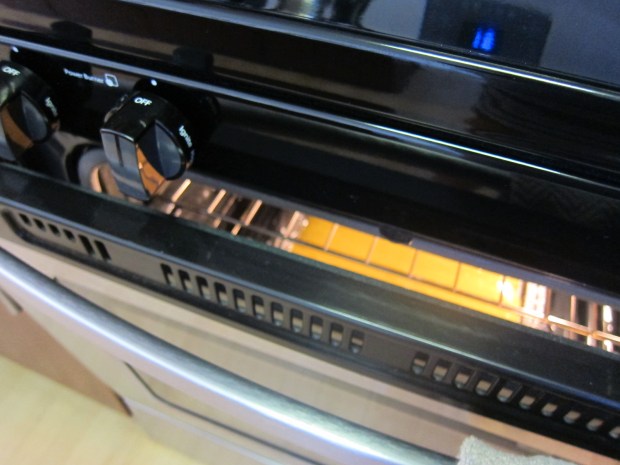
Pour the mixture onto a baking sheet lined with plastic wrap. Bake at 170 degrees F for 4 hours, leaving the door of the oven cracked open just slightly (this step made me slightly nervous, but I guess it can be done!).

Fruit Leather (1)

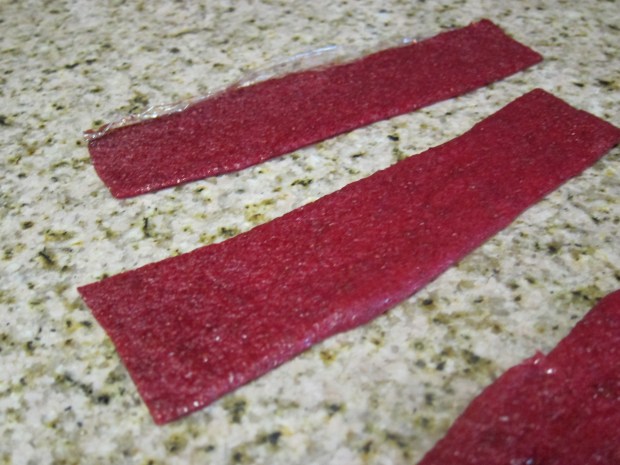
Cut into slices (leave the plastic wrap on for easy backing) and store in an air-tight container.

Fruit Leather (3)

To prepare an apple chip version, we pureed 5 apples (cored but not peeled) with 1/2 cup water until smooth. Note: next time I would use less water.

Apple Chips (1)

Pour into a 13×9-inch baking dish lined with plastic wrap. Again, bake at 170 degrees F for 4 to 5 hours, leaving the door cracked. Because I used too much water, our apples turned out more like another fruit leather, not true apple chips. But still yummy!

Apple Chips (2)

Don’t stop there! Try strawberry fruit leather in late summer, or pear fruit leather as autumn arrives. For the strawberry version, use 4 cups strawberries in place of the peaches. We had to give this one a full 6 hours in the oven!

Fruit Leather alt.JPG

The pear version ended up being our best and favorite! For this one, I used 3 pears and cooked for 4 and 1/2 hours.

Pear Leather (2)

Which Is Heavier?

Weighs More (5)

We loved this idea for an easy, at-home balancing scale from the September issue of High Five magazine. To make it, you’ll just need a few items you likely already have lying around the house. Then the weighing fun begins!

To set up the scale, punch holes in the sides of two plastic cups – one brand in our cupboard was actually too tough to punch, but we managed to get holes in a second brand – phew!

Weighs More (1)

Thread pipe cleaners through the holes, then loop the pipe cleaners onto a hanger with hooks. Place on a door so the cups hang evenly.

Weighs More (2)

Now it was time to play scientist and test out a few combinations. For each pair of the following, I asked Travis which he guessed would be heavier before we actually weighted.

1 stuffed animal vs. 3 toy cars

5 markers vs. 5 crayons

1 toilet paper tube vs. 4 quarters

Weighs More (3)

When a small toilet paper tube didn’t balance the quarters, he suggested trying a longer paper towel tube – a much closer balance!

Weighs More (4)

He loved it so much he was soon running around the house to test combinations. A rock from his collection was by far the heaviest thing, and we had fun trying to guess what might balance it out. A big set of old car keys came closest.

Weighs More (6)

In sum, a great way to introduce balancing scales to your child, without any complicated work involved. Thanks High Five!