Taco Dinner

Taco Dinner (2)

This recipe is perfect for the whole family because it can be adapted to suit everyone’s tastes, from little toddlers to the grown-ups!

Ingredients:

  • 1 pound meatless crumbles (such as Gardein)
  • 1 cup frozen corn
  • 1 tablespoon chili powder
  • 1/4 teaspoon onion powder
  • 1/4 teaspoon garlic powder
  • 1/4 teaspoon oregano
  • 1/2 teaspoon cumin
  • 1/2 teaspoon paprika
  • 1 teaspoon salt
  • 1 cup diced tomatoes
  • 1 cup shredded non-dairy cheddar
  • Hard taco shells
  1. To prepare the filling, heat the meatless crumbles and corn in a skillet coated with cooking spray for 8 to 10 minutes, until the crumbles are lightly browned.
  2. Meanwhile, prepare the taco spice: in a small bowl, stir together the chili powder, onion powder, garlic powder, oregano, cumin, paprika, and salt.
  3. Remove any portion of the filling for family members who don’t want spice (e.g. my kids!). Add the taco spice to the skillet with the rest of the filling.
  4. Warm taco shells according to package directions. Serve with the filling, tomatoes and cheddar shreds.

My 1st grader loves the filling stuffed into taco shells with lots of cheese, but omits the tomato.

Meanwhile I serve a sort of deconstructed version to my toddler with the taco shell broken into “chips”, cheese on the side, and a mixture of crumbles, corn, and tomato on her plate.

Taco Dinner (3)

And the grown-ups get spicy tacos with all the fixings!

Taco Dinner (1)

Water Play

Water Play (3)

We suddenly had a day that was 60 degrees and rainy and felt more like fall than summer. And truth be told, I wasn’t ready for it! What do you do when you suddenly can’t head outside for water play, like you’ve grown accustomed to all summer? Bring the water play in.

I wanted Veronika to play for a while as I worked in the kitchen, so all I did was drag in the baby wading pool from our patio and place it on a towel on the kitchen floor. I added toys from our indoor bath, as opposed to beach toys, which instantly made the pool seem novel. Then it was simply a matter of putting her in a swim diaper and putting her in!

Water Play (1)

She was initially hesitant to sit, until I added slightly warmer water.

Water Play (2)

Once that was taken care of, she was happily scooping and pouring with cups, and enjoying other bathtub favorites like toy frogs and bath books.

Water Play (4)

Next time I think I would add her plastic teapot and teacups, too! This is a great way to pass some time when those rainy days start to feel extra long.

Water Play (5)


People Blocks

People Blocks (2)

Veronika hasn’t shown much interest in her building blocks lately. But you can add novelty to any set of blocks by adding family pictures. Suddenly each block has a name and a face!

I cut up old calendar pictures for this game, but you could also have a set printed cheaply at the drugstore. Cut out faces until they fit on your child’s blocks. I think classic rectangular wooden blocks would have worked best, but the game was fine on our foam blocks.

People Blocks (1)

I attached one relative’s face per block, using clear contact paper to stick them on, while Veronika was napping. She woke up to discover her family!

People Blocks (4)

This game was great for building of course, encouraging her to use the blocks for quite some time.

People Blocks (9)

It was also great for putting names to faces, especially for family members we haven’t seen recently due to coronavirus.

People Blocks (3)

All that aside, there was a definite silly factor. “It’s the daddy block!” she said, stacking the block with her dad’s face. “It’s the Travis block!”

People Blocks (5)

Her favorite was of a baby cousin, and she almost lovingly carried around the block for a while, cradling it and giving it the best spot in her creations.

People Blocks (6)

“Let’s but the baby right here,” she narrated as she played.

People Blocks (7)

This activity was a great way to make an old toy new again. We might have to try it on something other than blocks soon.

People Blocks (8)

Colorful Clothespins

Colorful Clothespins (3)

Toddlers often fixate on a category when they first learn it (animals, body parts, a new song, etc), practicing endlessly. And then just as suddenly, they drop it! I noticed that Veronika doesn’t name her colors often anymore, so thought that a quick review might be fun. A bunch of empty coffee canisters were the exact tool I needed!

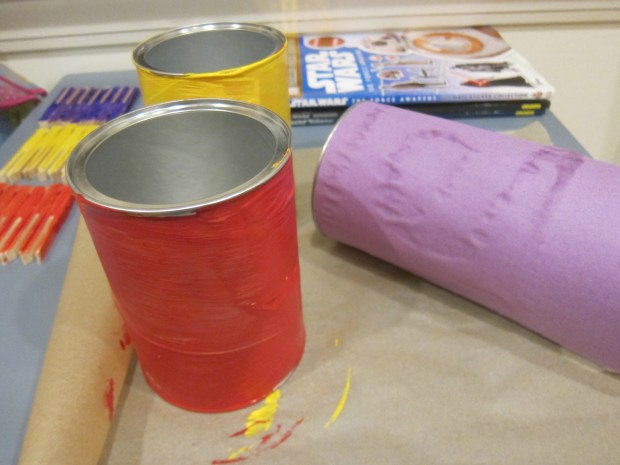
I originally intended to make three sets of coffee can + matching clothespins in the primary colors of red, yellow, and blue. But I had no blue paint or paper! Instead, I painted two cans (red and yellow), and covered the third in purple construction paper. Either method works fine.

Colorful Clothespins (1)

Then use paint or marker to color craft clothespins (i.e. the kind with no spring) in corresponding colors.

Colorful Clothespins (2)

I gave Veronika a whole jumble of the clothespins the next morning, and first she just wanted to play with them for a while.

Colorful Clothespins (4)

Then I asked her, “Where does your purple clothespin go? Purple goes in the purple can!”

Colorful Clothespins (6)

“Purple in purple!” she said with delight. After that, I really didn’t have to guide her on this; she loved matching the clothespins into the can of the same hue.

Colorful Clothespins (7)

Although of course sometimes there was a rogue yellow in the red, for example.

Colorful Clothespins (8)

I left the cans open, with no lids, so she could easily drop in the clothespins. That kept the focus on the color aspect of the game.

Colorful Clothespins (9)

That said, don’t forget that clothespins and coffee cans are also great for practicing precision (dropping through a hole in the lid) or for honing the pincer grip (if you use spring-type clothespins).

Colorful Clothespins (11)

To remind her of this, we did momentarily place the clothespins around the rim of a paper plate, which then became another fun activity all on its own.

Colorful Clothespins (10)

Chopstick Challenge

Chopstick Challenge (8)

After preparing a meal of homemade sushi, Travis was eager to learn how to use chopsticks. I remember learning this same skill as a child, and how tricky it can be! Here were a few fun games (hint: there’s candy involved) that honed his skills.

First up was simply showing him proper form, with the chopstick wedged between thumb and pointer finger. Then I showed him how to place the second chopstick between thumb and forefinger and to use the middle finger on top like a little lever.

Chopstick Challenge (1)

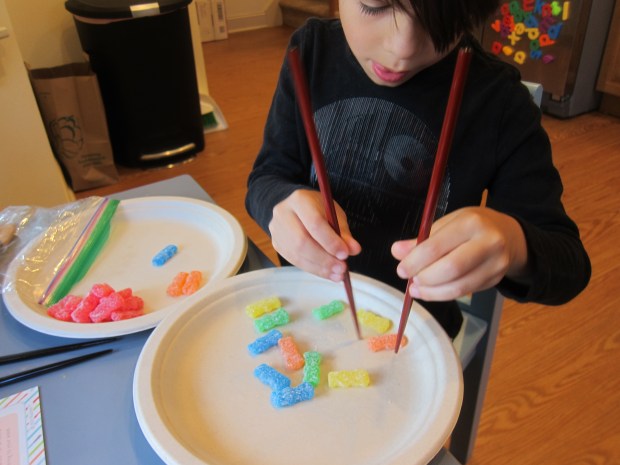
It was tricky, but he was a good sport about it! For the games that followed, he did revert to a typical first-timer move, pinching the items between two chopsticks with one in each hand instead.

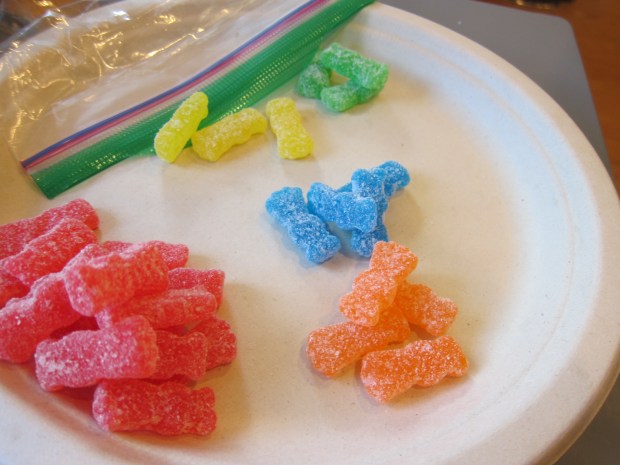
His favorite was Color Sorting because of course we used candy.

Chopstick Challenge (5)

Choose any candy with multiple colors and move them from a jumble into color-sorted piles.

Chopstick Challenge (4)

The reward of course was eating them.

Chopstick Challenge (6)

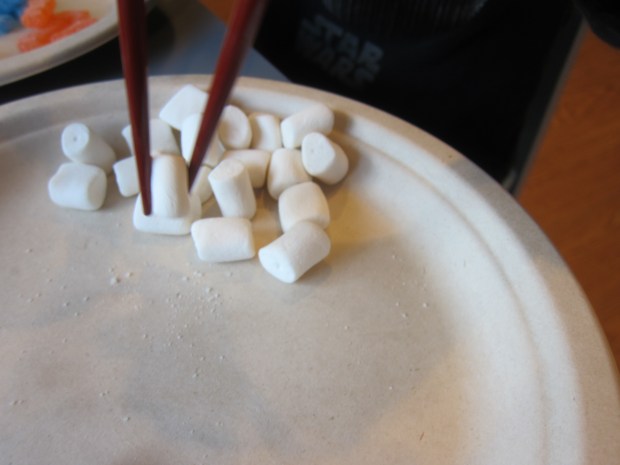
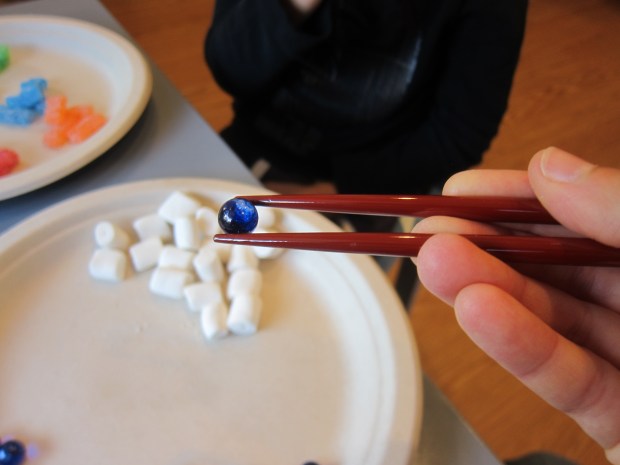
Next up was a Pick-Up Relay. You can play this as a true competition, moving items from a full bowl to an empty one and seeing who’s fastest, but Travis and I worked as a “team”. He tackled the easy item (mini Dandies marshmallows) and I handled the hard one (marbles – tough even for grown-ups!)

Chopstick Challenge (7)

Then we played a Passing Game. Using chopsticks, we passed a rubber band back and forth. Travis loved this one!

Chopstick Challenge (9)

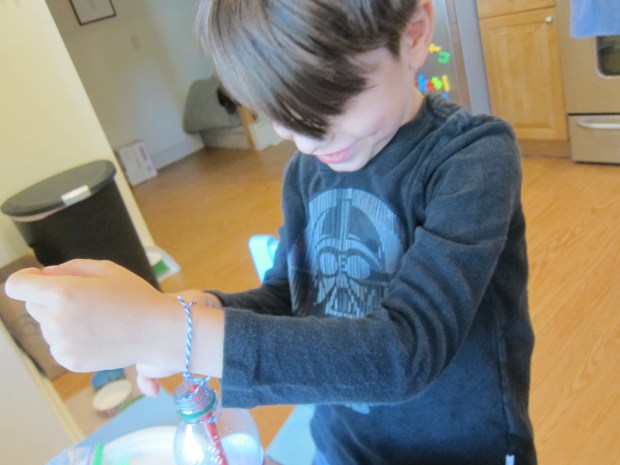
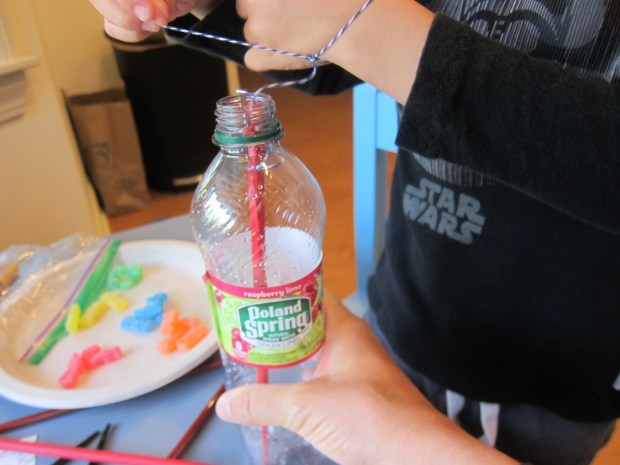
Finally, we played Chopstick in the Hole. Tie a string to a chopstick and then the other end to a player’s wrist.

Chopstick Challenge (11)

The goal was to lower the chopstick into an empty water bottle. There may, in fact, have been some cheating involved.

Chopstick Challenge (10)

But Travis was still so proud!

Chopstick Challenge (12)

Hummus & Mango Sandwich

Hummus Mango Sandwich (1)

You can introduce new flavors in kid-friendly sandwich form with this fun, easy lunch. It’s a great one for school lunchboxes, if you’ll be packing those up again soon!

Ingredients:

  • 2 slices whole wheat bread
  • 1 tablespoon hummus
  • Mango slices
  1. Spread the hummus on one of the bread slices. Top evenly with thin mango slices to taste (you’ll probably want about 1/8 cup per sandwich).
  2. Top with the remaining bread slice, and cut into triangles to serve.

Hummus Mango Sandwich (2)

Fly Swatter Painting

Fly Swatter Painting (5)

This art project is messy, so you’re going to want to take it outside. But I can happily report that it’s worth the effort!

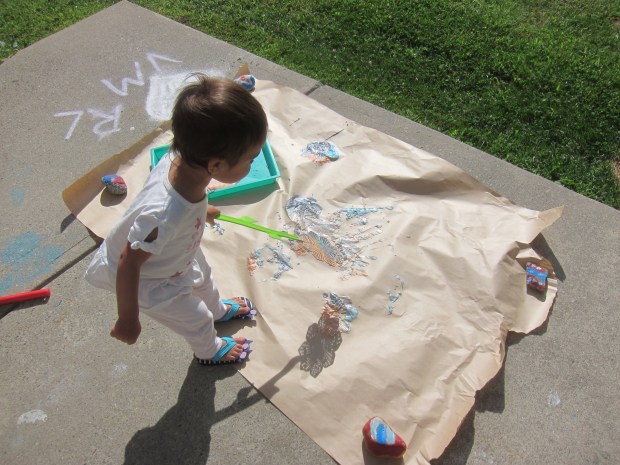
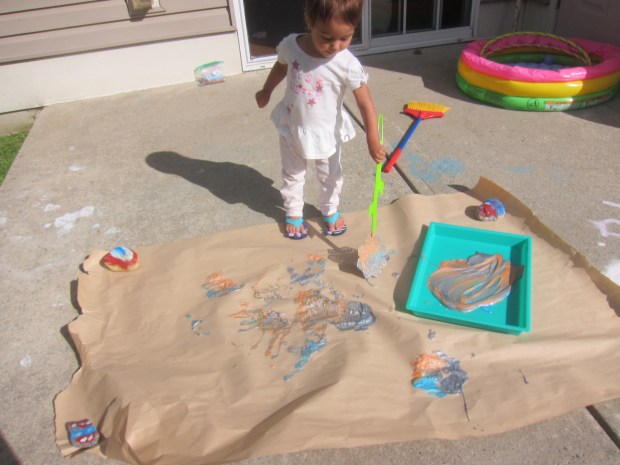
I placed a long sheet of craft paper on our back patio, securing the corners with heavy rocks so it wouldn’t blow away. (As an alternative, you could clip craft paper to a fence or other outdoor surface that is upright).

Then I set out a tray with several different colors of metallic craft paint. You’ll need a nice puddle of paint for this project to work well, so don’t worry if the colors mix together.

Fly Swatter Painting (1)

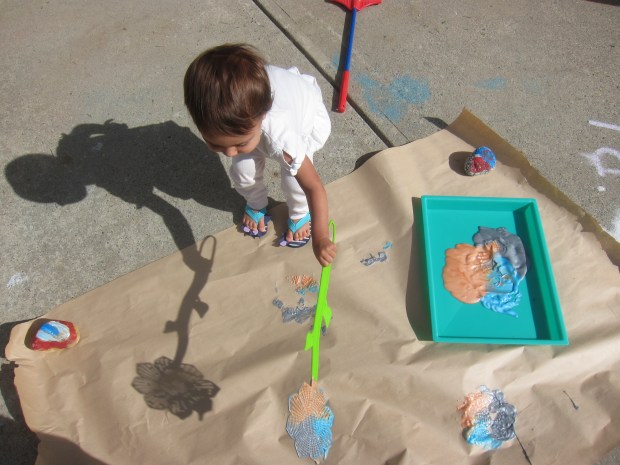
I dipped our fly swatter in the paint, making sure to coat it evenly, then showed Veronika how to say “Whap!” and slap it down hard on the craft paper.

Fly Swatter Painting (4)

Well of course now “Whap!” was the most fun thing in the world to say.

Fly Swatter Painting (2)

Dip and whap, dip and whap, dip and whsp.

Fly Swatter Painting (3)

She loved every bit of this project, both dipping the fly swatter in paint, and seeing the marks she made.

Fly Swatter Painting (6)

She wanted to whack the fly swatter against the rocks, too!

Fly Swatter Painting (8)

Her little feet paraded all around the craft paper, making sure she covered her big canvas.

Fly Swatter Painting (9)

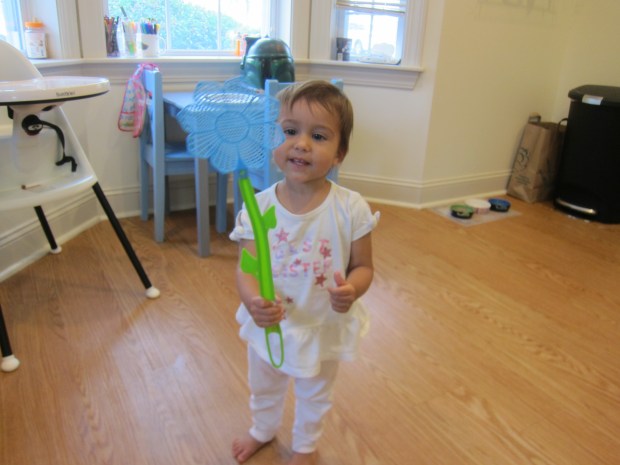
As a bonus, our fly swatter happens to be flower-shaped, so it made beautiful prints!

Fly Swatter Painting (7)

This project likely won’t get you a lasting work of art. But Veronika sure loved the process!

Fly Swatter Painting (10)

Car Wash

Car Wash (6)

This is one of those activities that turned out to be just beautiful. I had originally intended the game for Veronika after a morning trip to have our real car inspected, but big brother Travis was eager to join in, too!

Car Wash (2)

We have a kid-sized Mustang that was perfect for the activity, but truly any kid “vehicle” would work, whether toddler ride-on toys, old tricycles, or bikes! Pull out the buckets, sponges, mild dish soap, and rags, and set your washers to work.

Car Wash (1)

Both kids immediately loved dipping little sponges in the bucket of soapy water and scrubbing gently all over the car.

Car Wash (5)

Travis focused on the exterior…

Car Wash (3)

…while Veronika liked cleaning the seats!

Car Wash (4)

When it was all soaped up, we rinsed with the hose. Then it was time to towel dry.

Car Wash (7)

And then of course we took the car for a spin!

Car Wash (9)

This was watery, soapy, sunshine-y summer magic at its best.

Car Wash (8)

Beachy Creature Feet

Beachy Creature Feet (4)

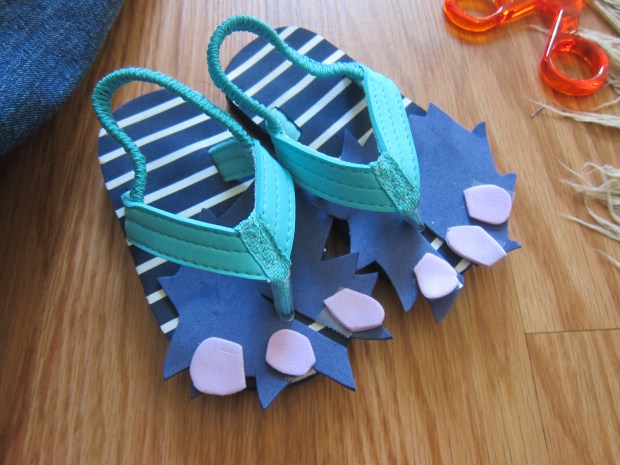
It’s just about the end of summer, which means by next year any current flip-fops are not going to fit your kids’ feet anymore. So here’s a fun way to transform those flippies as the season winds down!

Beachy Creature Feet (1)

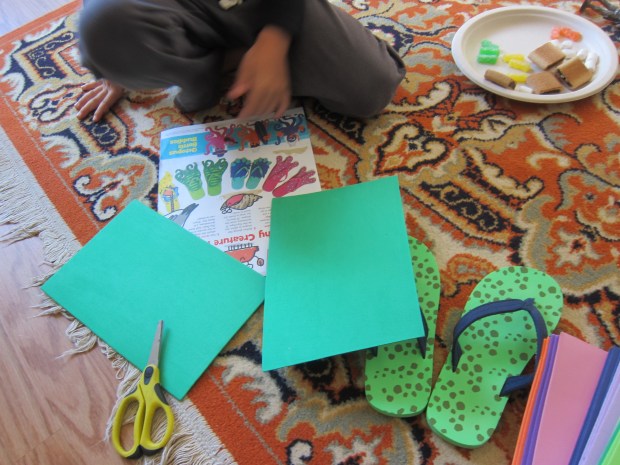
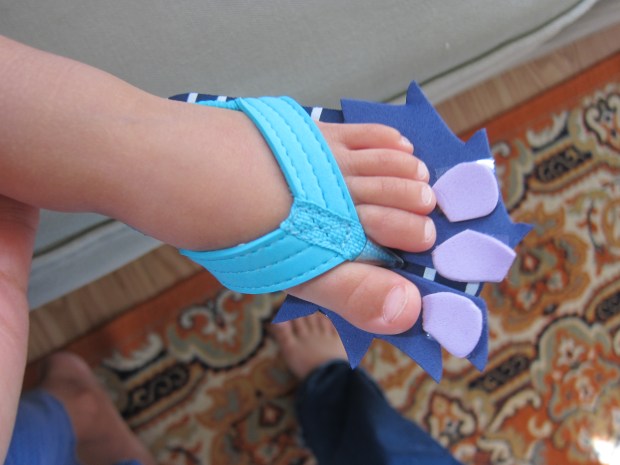
I had each of the kids select which kind of “creature” paws they wanted, care of a few suggestions in Highlights magazine, then helped trace and cut the shapes out on craft foam.

Beachy Creature Feet (2)

If your kids truly won’t be wearing their flip-flops again, you can use tacky glue to adhere the foam, as well as additional foam dots or stripes for decoration. If you want a more temporary version (we still have a few beach days left!) use double-stick tape for a fun, reversible transformation.

Beachy Creature Feet (3)

They loved stomping around as creatures for a little bit!

Beachy Creature Feet (5)

I’d say these were the cutest critters on the beach.

Beachy Creature Feet (6)

The Magic of Mulch

Magic of Mulch (3)

For a final science experiment in his summer workbook, Travis learned a bit about gardening and soil. You’ll need potting soil for this experiment, as well as any “mulch” that your child gathers, either from your yard or on nature walk. Simple dried leaves and pine needles work just fine!

Travis helped measure out potting soil into two small plastic containers, making sure each contained the same amount (we used 3/4 cup soil per container). Add water to make the soil very wet, and again measure to make sure the containers have an equal amount; we used 1/2 cup.

Magic of Mulch (1)

Now cover only one with the mulch you’ve gathered. Travis proudly patted this on.

Magic of Mulch (2)

Place the containers some place sunny and wait 3 days!

After the third day, we headed out to check on our soil, but rain had skewed our results! The idea was that the soil with mulch should remain moister, but instead, both our containers were swamped. Luckily, we had a teachable moment; the soil with no mulch was washed away completely. But the soil under the mulch had been protected! So without intending too, Travis also learned how mulch enhances a garden’s drainage.

Magic of Mulch (4)

He finished the lesson by answering a few workbook questions about the experiment, which was a great chance for inventive spelling.