Imagine

Imagine (1)

The bittersweet moment has come, at 20 months old, that Veronika is ready to wean. Part of me is glad and so proud to see her reach this milestone, but part of me will miss it!

We’re in need, therefore, of a new calm-down bedtime ritual to replace lullabies and breastfeeding. Instead, I’ve started to hug her close as I tell her a story.

Oral stories, rather than simply reading from a page, are a great way to get even young toddlers to imagine and visualize. In fact, we’re enjoying the new ritual so much that my plan is to keep adding to the story nightly. Who knows how long it will go!

Almost anything can be a prompt for an imaginative story like this, but tailor it to your child’s favorite things or activities. Or even use it to address fears that have become apparent in your toddler!

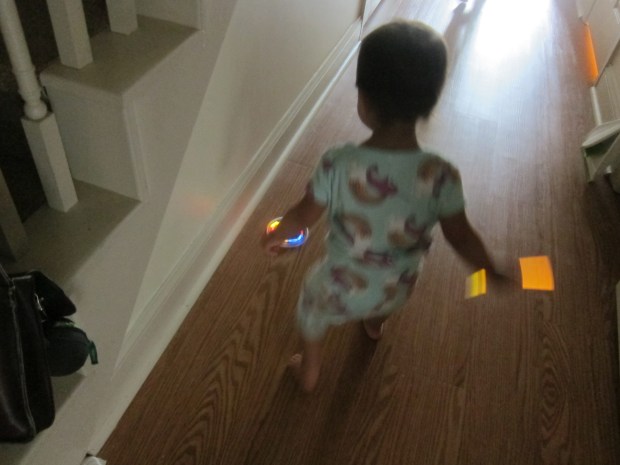
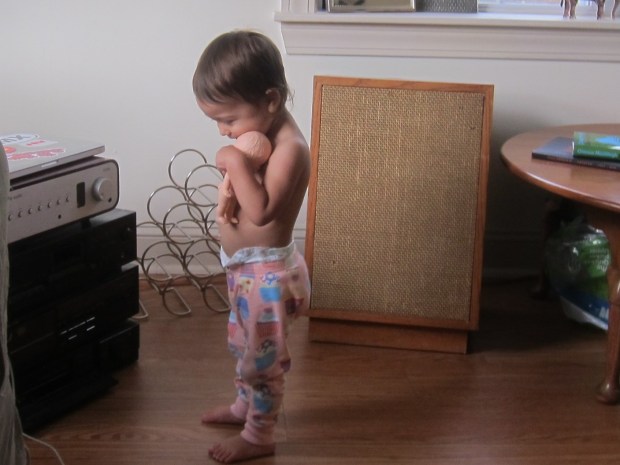
To wit, Veronika’s pajamas made me think of rainbows and unicorns, two of her favorite things.

Imagine (3)

I began to weave a tale about a girl and her best friend (“Sparkly Neigh”), who is so happy that everywhere she goes, rainbows appear. The tale involves swings, ride-on cars, butterflies, adventures, and more.

Imagine (2)

What will your story be about? Please share in the comments!

Glow-Bee

Glow-Bee (5)

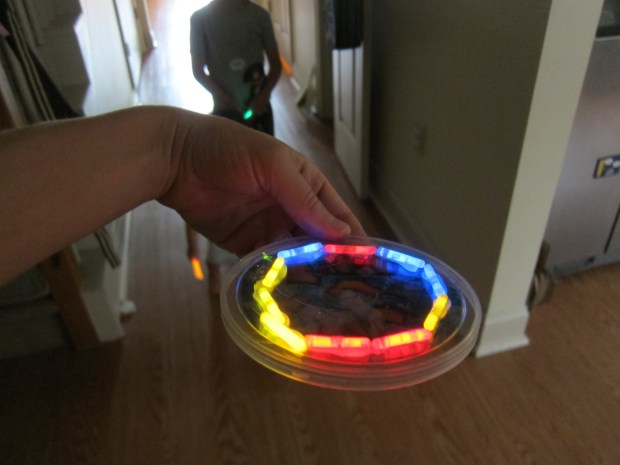
Next time your kids want to toss a disc back and forth, don’t just play Frisbee; play Glow-bee. All you need are a few glow-in-the-dark sticks to take a regular game up a notch.

First, Travis used paint markers to decorate a clear plastic lid. We used one from an empty yogurt container, although a larger lid might have been better.

Glow-Bee (1)

Let the paint dry completely.

Glow-Bee (2)

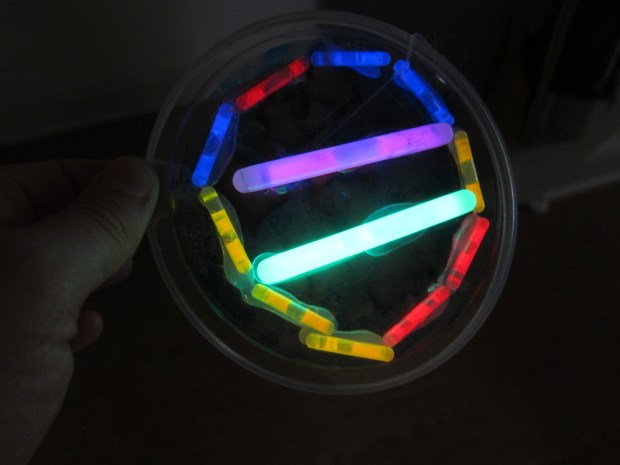
Wait for it to get dark, then add glow sticks! Snap them just before playing, and use hot glue to adhere to the decorated lid.

Glow-Bee (4)

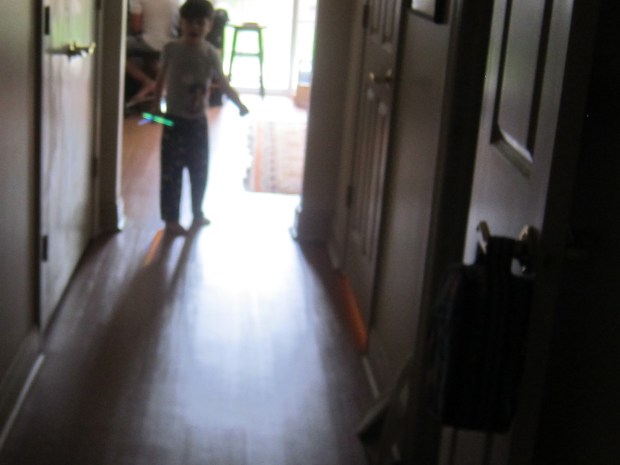
This was so fun to toss, even though it wasn’t pitch black.

Glow-Bee (6)

The streaks of light still made it look like a little comet shooting through the halls.

Glow-Bee (3)

A fun way tire ’em out with a little exercise, right before bed.

Bookmark

Bookmark (4)

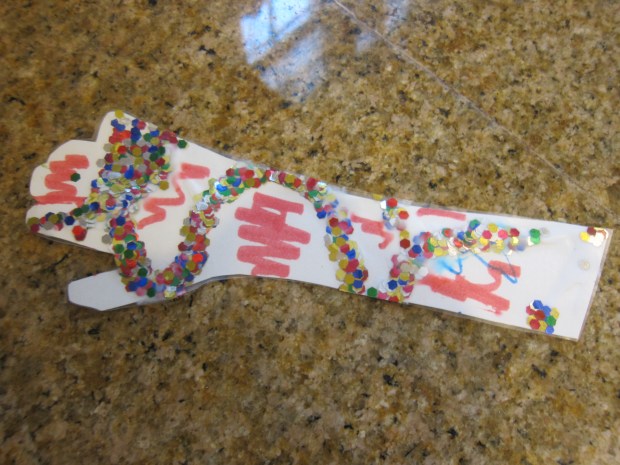
I love crafts that capture the size of my children’s hands or feet at regular intervals, a beautiful way to freeze time, given how fast they grow! I was due for a new craft like this with Veronika, and today I decided to make it a bookmark version!

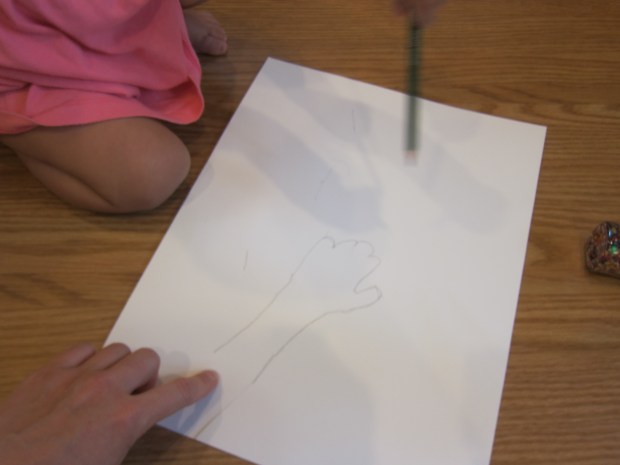
It was admittedly hard to get Veronika to hold still while I traced her hand and forearm on a sheet of poster board. She giggled when the pencil tickled her, or just seemed surprised at the feeling, but I managed to get a fair approximation.

Bookmark (1)

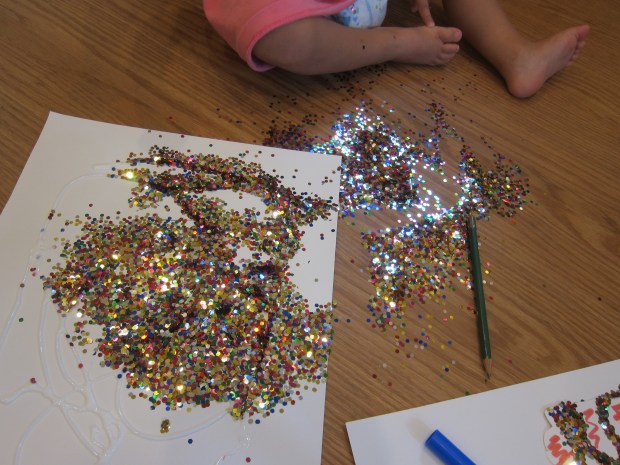
Cut out the shape you’ve traced and let your toddler decorate. I thought Veronika might want to use markers, but she was far more into the glitter bottle I pulled out. Knowing she was likely to dump the whole bottle, I put down wiggly lines of glue on her hand shape and then placed it over a second sheet of poster board to catch the mess. Phew, this mostly contained the glitter dump!

Bookmark (3)

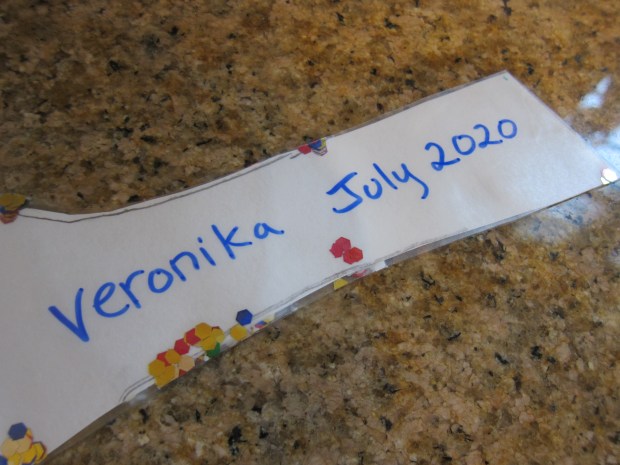
Once decorated, cover your child’s artwork with contact paper, and trim the contact paper to the same shape as the bookmark.

Bookmark (5)

Don’t forget to write the name and date on the back! This is going to make a beautiful memento when I read. I think we’ll even make one or two more to give to grandparents as gifts!

Quinoa Primavera

Quinoa Primavera alt

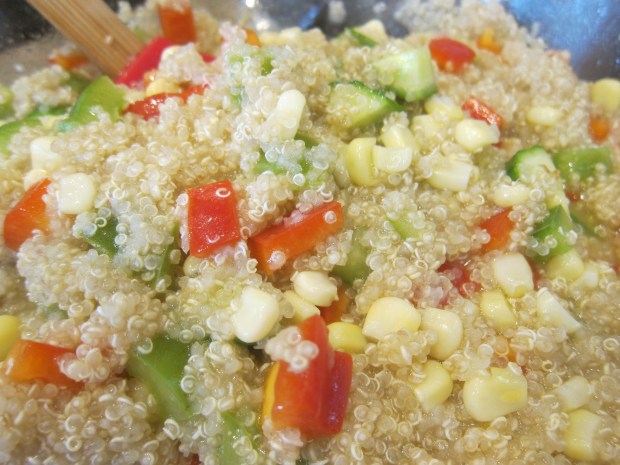
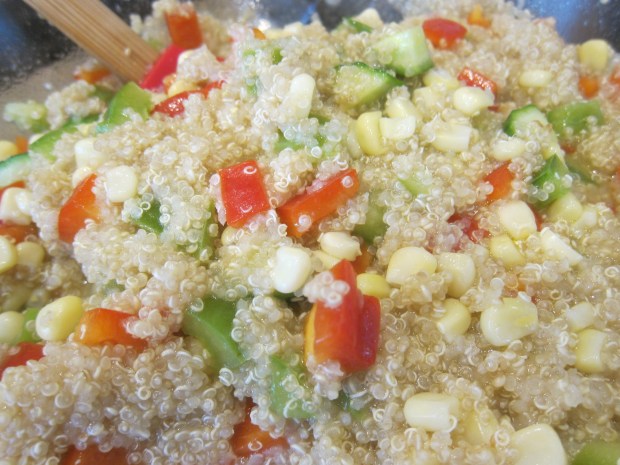
This quinoa dish looks beautiful, thanks to two colors of bell pepper! It’s a great way to introduce quinoa to your kids if they haven’t already tried it.

Ingredients:

  • 1 and 1/2 cups quinoa
  • 3 cups water
  • 1 finely chopped red bell pepper
  • 1 finely chopped green bell pepper
  • 1 finely chopped cucumber
  • 1 lemon
  • 6 tablespoons olive oil
  • 3 tablespoons rice vinegar
  1. Combine the quinoa and water in a saucepan. Bring to a boil over medium heat, then continue to cook for about 15 minutes, or until the liquid is absorbed. Transfer the quinoa to a large bowl.
  2. Add the bell peppers and cucumber. Cut the lemon in half and squeeze the juice over the quinoa mixture. Add the olive oil and vinegar, stirring to combine.

Quinoa Primavera

Doll Washing

Doll Washing (8)

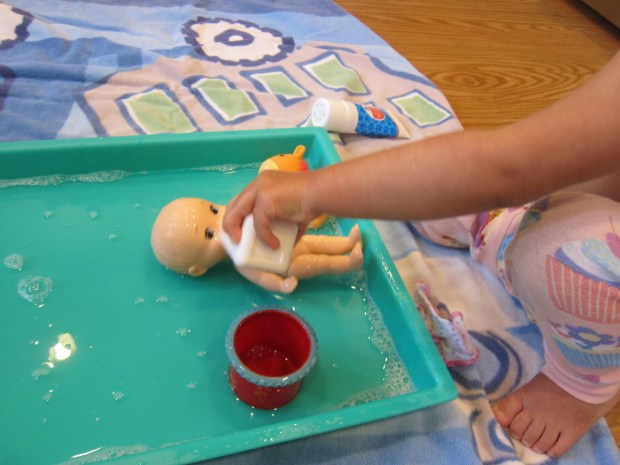
Veronika loves to mother her baby dolls, and frets intensely whenever one gets dirty (a spot of glue, dirt from outside, etc.). So I’ve wanted to give her a chance to wash her dolls in a “bath” for a while now, but all of the ones we own have soft cloth bodies.

When I spotted a tiny all-plastic doll at the toy store, I knew it would be worth the purchase. Sure enough, Veronika wanted to carry”new baby” around all day, and that was before I even trotted out the big surprise. It was New Baby’s bath time!

Doll Washing (1)

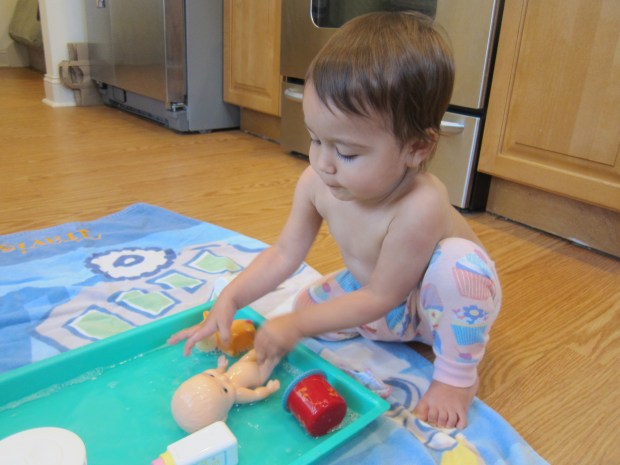
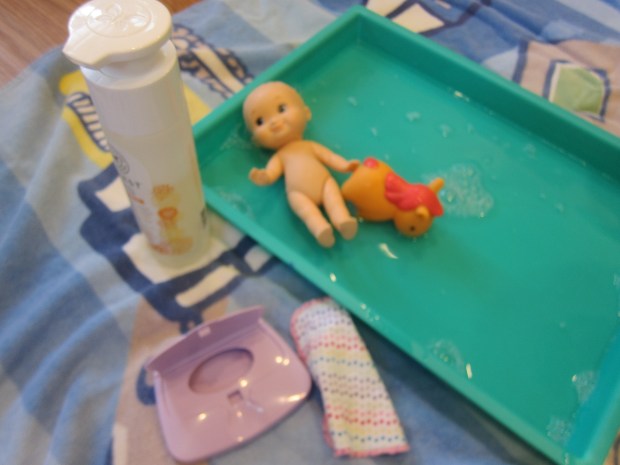
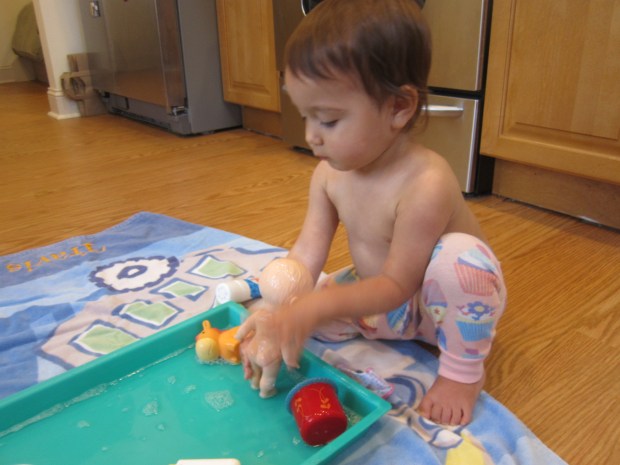
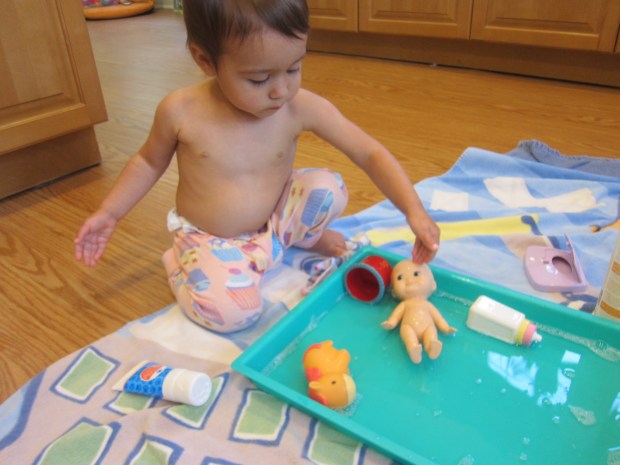
I set out a basin of shallow soapy water (use baby shampoo for a tear-free activity), along with a small cloth, a bath toy, a cup for pouring, and some pretend creams and lotion. (Note: Depending on your toddler’s age, feel free to provide real baby powder or lotions for the game).

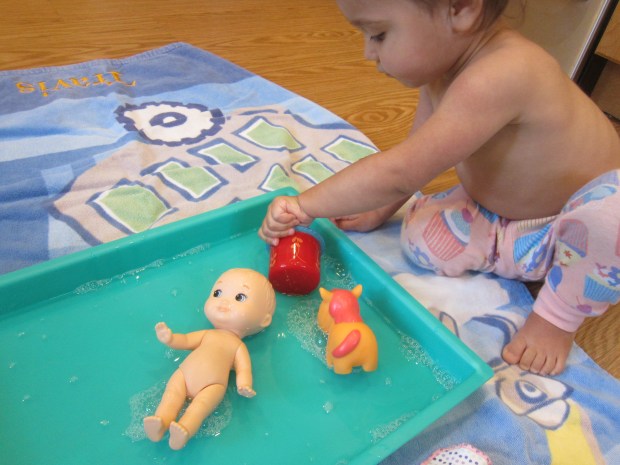
New Baby was ready for her bath! Veronika so lovingly and carefully attended to this task. She scrubbed New Baby with the cloth, poured water over her head (“shampoo!”), made her jump and splash in the water, and more.

Doll Washing (2)

Midway through the bath, New Baby needed a sip of milk, of course!

Doll Washing (7)

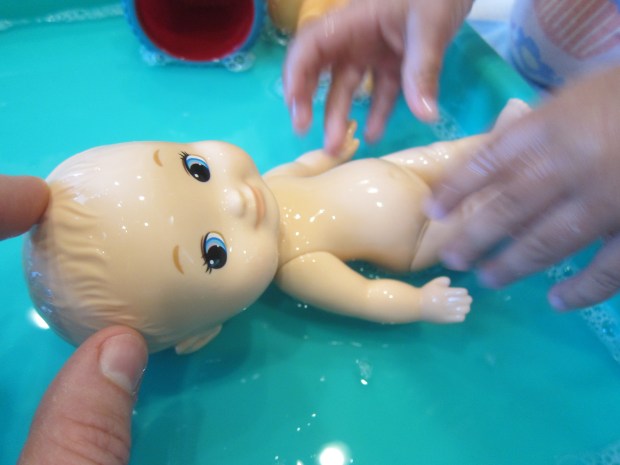
I also used the opportunity to name all of the doll’s body parts, including less common ones like wrists, ankles, and elbows. Mostly, though, I sat back and let Veronika dictate the way that bath time would go.

Doll Washing (5)

Your child can learn so much from this game, whether the above-mentioned body part vocab, the mechanics of washing, and social/emotional learning as well.

Doll Washing (9)

Plus water is fun to splash with!

Doll Washing (10)

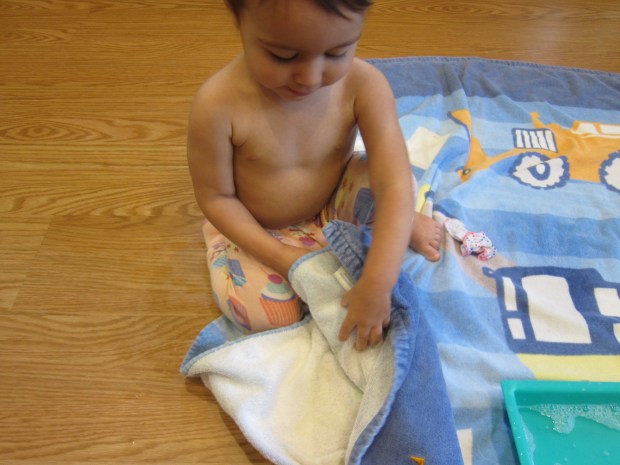
When she seemed about to tire of the game, I declared it was time for the doll to get “warm and dry”, which is exactly what I say to her when she needs to towel off. She was so proud to handle this task.

Doll Washing (12)

Take a look at the hug and snuggle that followed! This is exactly how I carry her to warm up after a bath, and it pretty much made my heart explode.

Doll Washing (14)

Cartography Kiwi Crate


Kiwi Maps alt

Kiwi Co terms this their Treasure Hunt crate, based around a treasure chest and search for pirate booty. The projects are an excellent jumping off point to teach kids all about the science of cartography, a.k.a. map making. Thanks to the treasure chest and gold pieces, this one is sure to appeal to kids of pretty much any age!
Kiwi Maps (4)

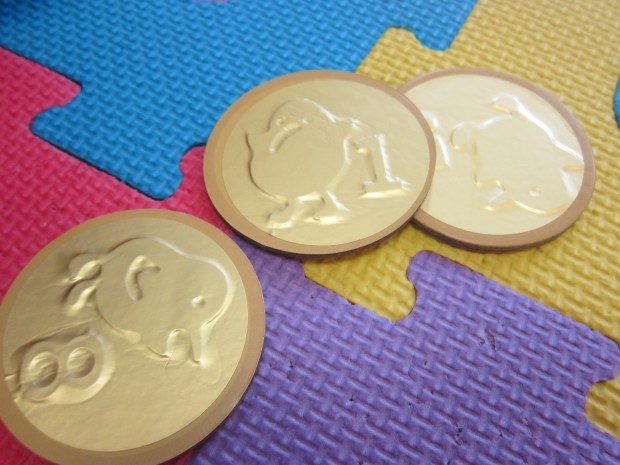
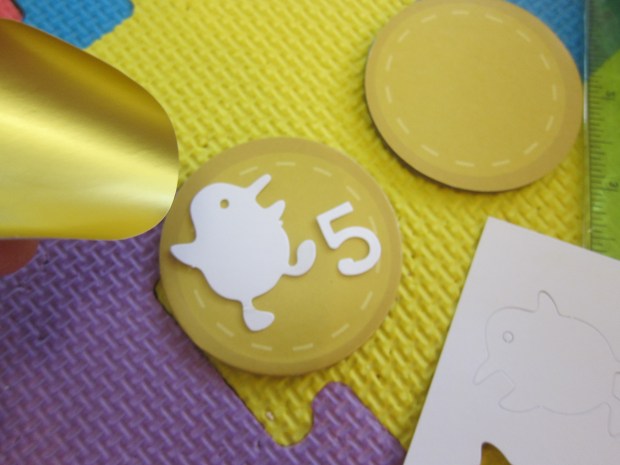
First up was making the treasure, Embossed Coins. Travis pondered very seriously how best to design each of the 3 provided gold coins, popping out templates of Steve the Kiwi and numbers.
Kiwi Maps (1)

He didn’t quite understand how these could become coins until we covered his design with a gold sticker. Press down and – voila! – the design underneath appears!
Kiwi Maps (2)

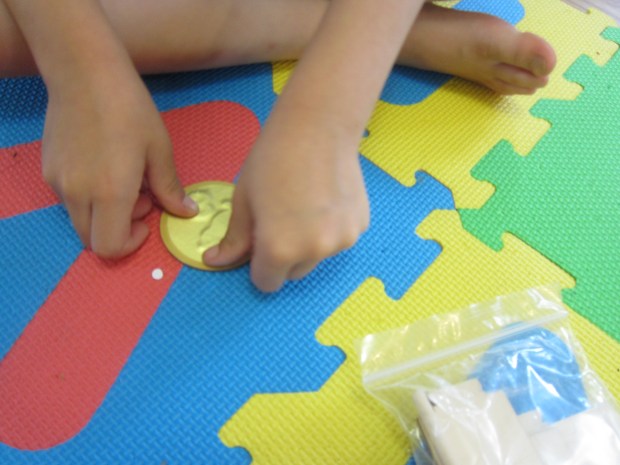
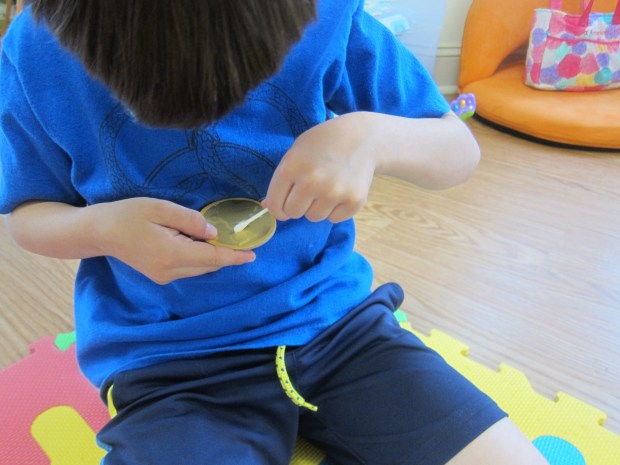
This had definite wow factor, even more so once running over the design with a q-tip for better embossing.
Kiwi Maps (3)

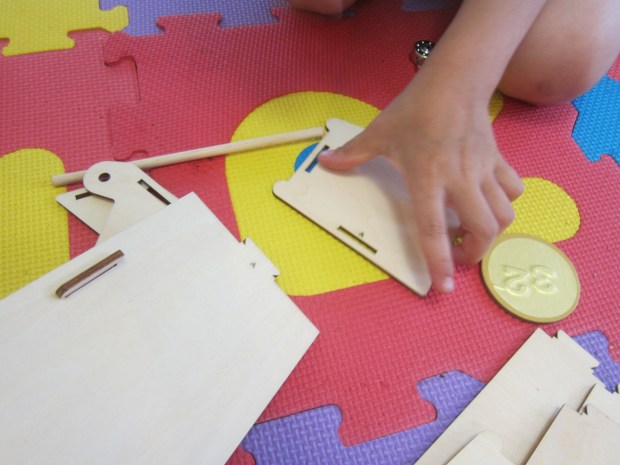
Next, he traded coin minting for carpentry, and put together the Treasure Chest. He was a bit distracted looking ahead (a key! a lock!) but I guided his attention back to building the chest first. This involved slotting together pieces for the base and lid, and lining up letters to make sure each piece was in the right slot. I appreciated how intuitive Kiwi Co made this step!
Kiwi Maps (5)

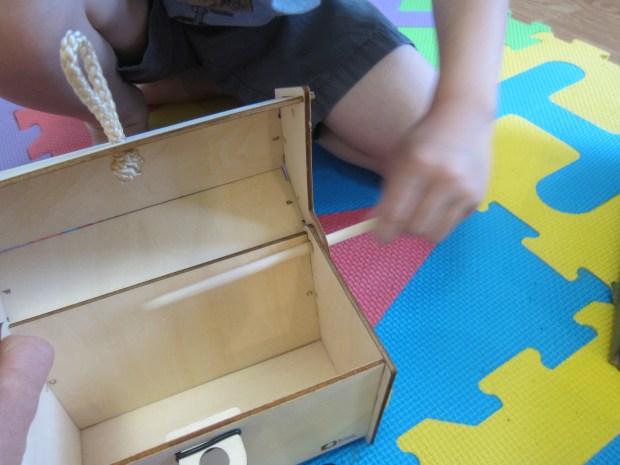
A wooden dowel is then inserted to hold the lid to the base.
Kiwi Maps (7)

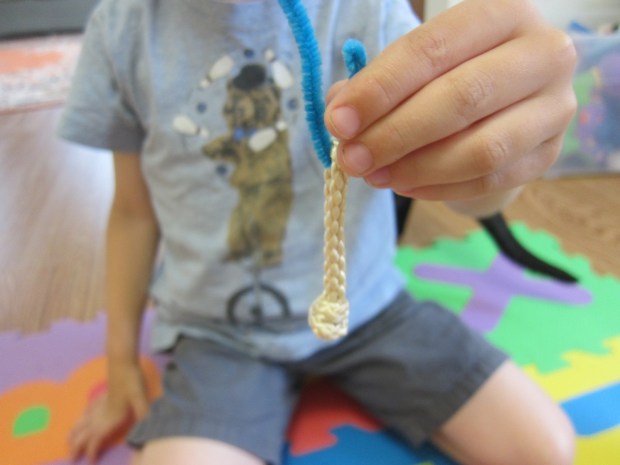
To add a swashbuckling touch, use a pipe cleaner to thread the provided rope through the chest’s latch. Add the silver lock. Travis loved practicing with the key over and over!
Kiwi Maps (6)

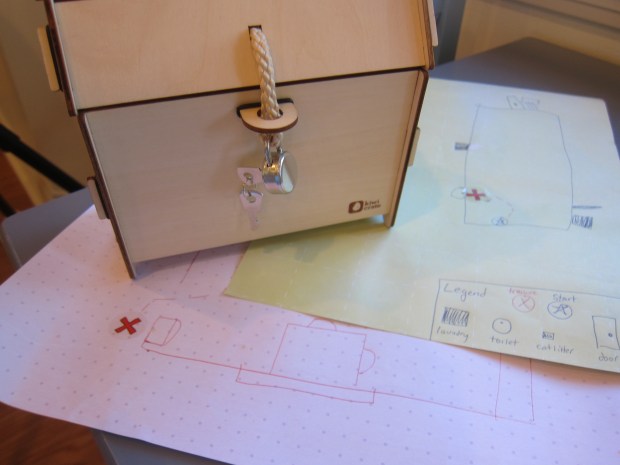
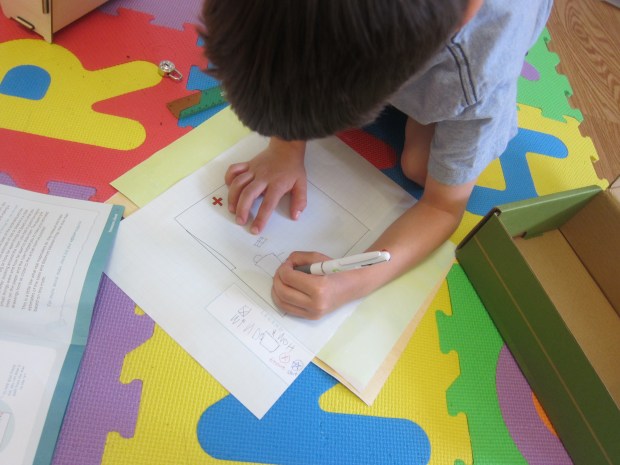
We securely locked away our gold coins and it was time to Make a Treasure Map. This activity was absolutely fantastic for getting Travis to think about how objects look from above. (I had him imagine he was a bird; in what shape would the bird perceive our couch, our coffee table, etc.).
Kiwi Maps (9)

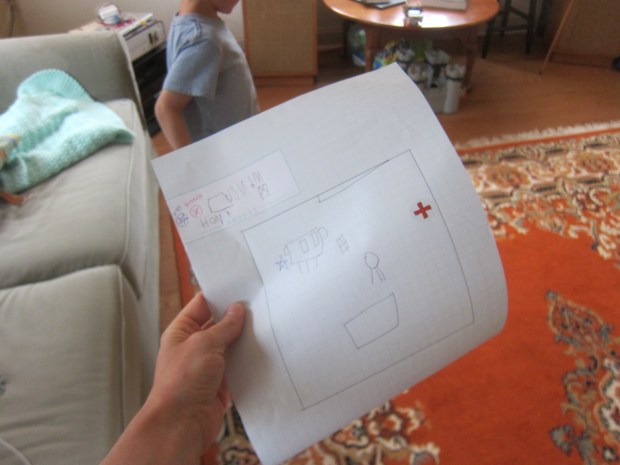
There was a marked difference between his first effort (mapping our living room)…
Kiwi Maps (10)

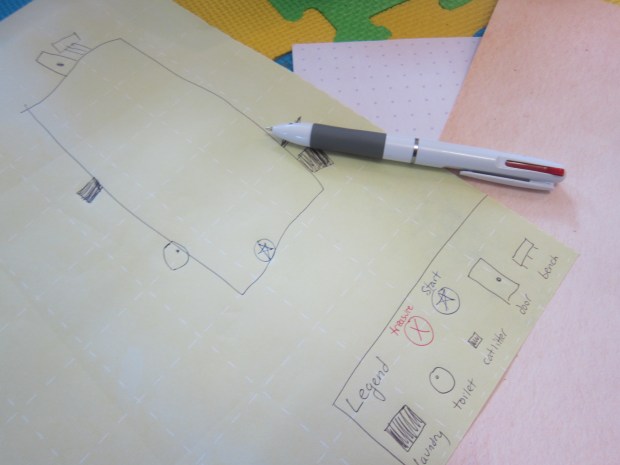
…and his second attempt (mapping the hallway).
Kiwi Maps (11)

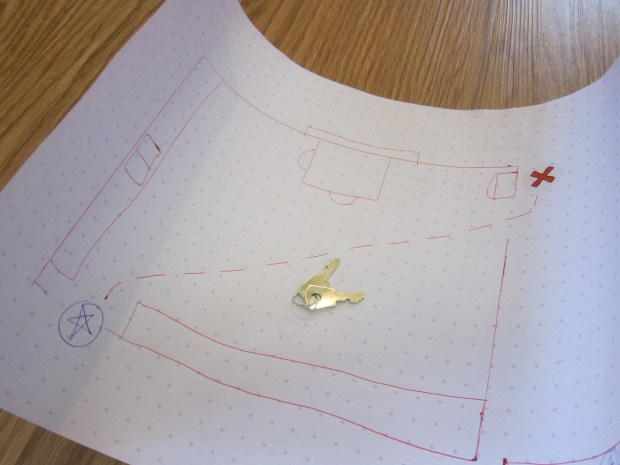
The provided pen is one of those fun ones with 3 colors of ink. We added a red X on each map for the treasure and a blue star for the start. He loved then hiding the treasure chest and sending me on a hunt.
Kiwi Maps (12)

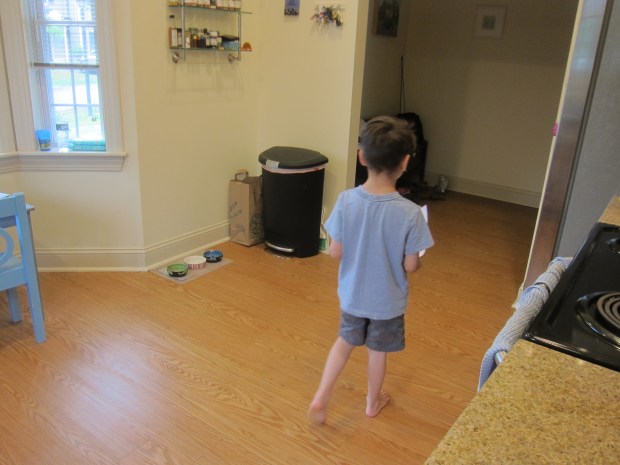
Then we flipped roles; I made a map of the kitchen and he had to puzzle it through.
Kiwi Maps (13)

The booklet had a great explanation for kids about how they’re using math in this activity, everything from transferring 3D objects (solids) into 2D pictures, to the ideas of estimation and measurements.

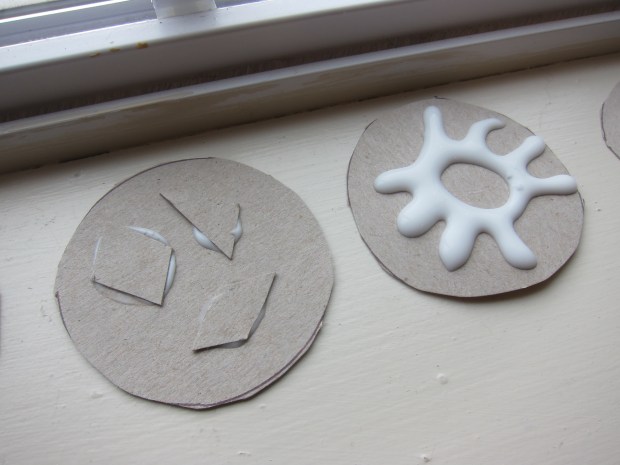
As a bonus, we made Silver Pirate Coins for extra booty. Cut circles from thin cardboard (like a cereal box), then add other pieces of cut cardboard or patterns in glue on top.
Silver Pirate Coins (4)

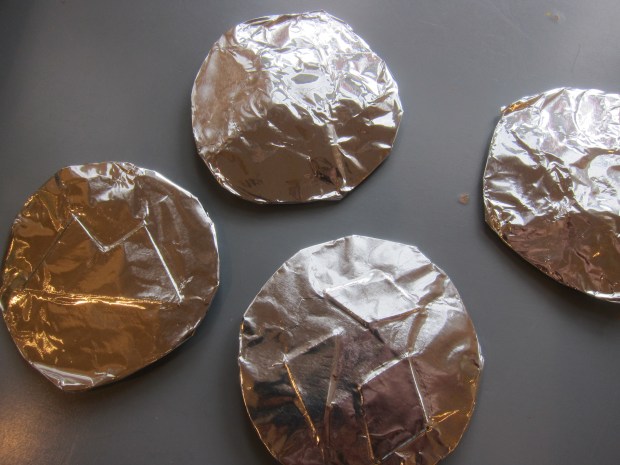
Let dry, then cover with foil and use a q-tip again to make your design stand out. We decided this worked way better on the cut cardboard version rather than the glue version.
Silver Pirate Coins (5)

As always, Explore magazine had loads more information and activities to try, including another map to draw according to a provided legend.

For some fun reading to compliment this crate, check out Mapping & Navigation by Cynthia Light Brown or Small World: Maps and Mapmaking by Karen Romano Young.
Stars and Stripes Sponge Painting

Stars and Stripes Sponge (8)

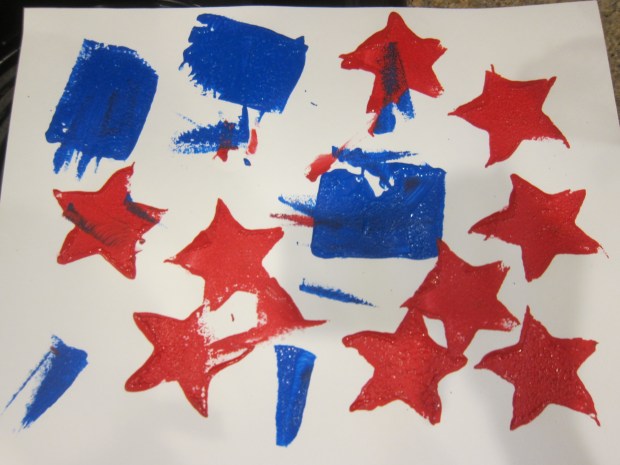
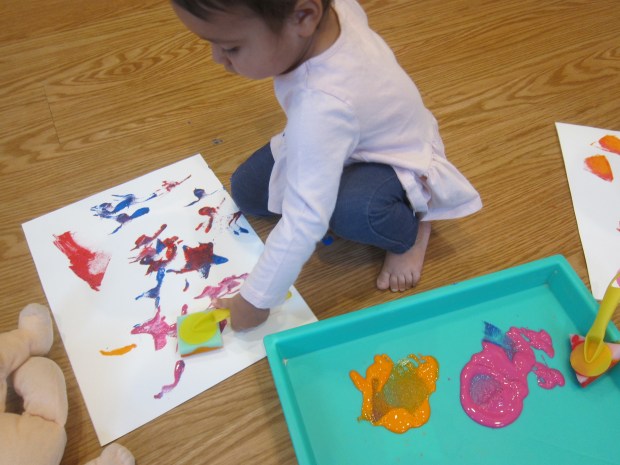
We’re gearing up for the 4th of July, and today Veronika got to make her first patriotic craft! She was too young for crafts last year at Independence Day, but there are so many fun red-white-and-blue projects that she can do now as a toddler.

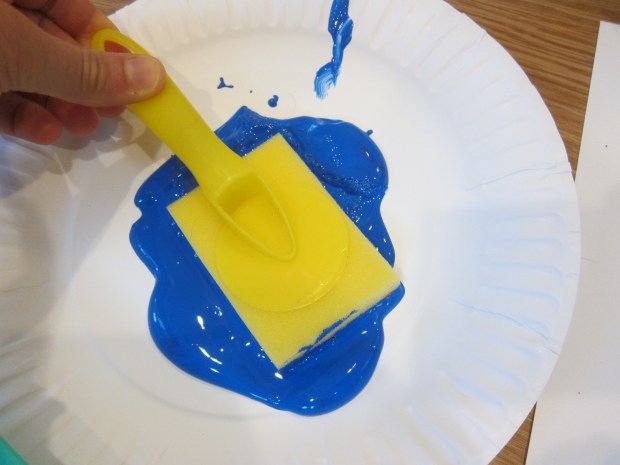
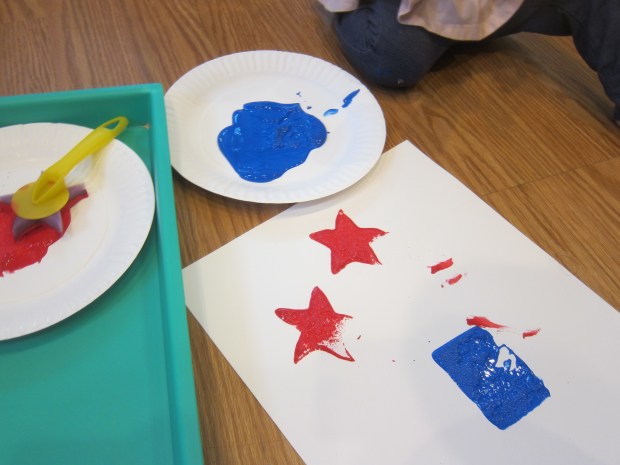
For this one, we needed sponges in the shape of stars and stripes. You can cut these yourself, but I knew my scissor skills aren’t quite that deft when it comes to cutting sponges. Luckily we have a set of shape sponges attached to handles; I used the rectangle for “stripes”, along with the star.

Stars and Stripes Sponge (3)

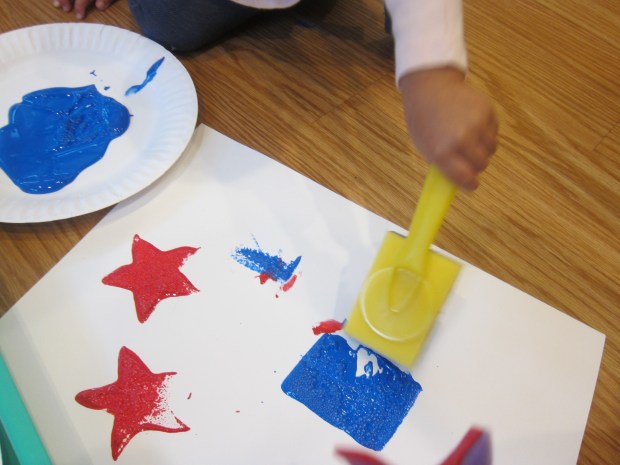
I showed Veronika how to dip each sponge in a plate of paint (use red and blue of course) and then press onto white poster board.

Stars and Stripes Sponge (1)

She very quickly got the hang of it and loved it!

Stars and Stripes Sponge (2)

“Stripes” were far easier for her to accomplish than the star, which needed even pressure along all 5 points, so I helped with those.

Stars and Stripes Sponge (4)

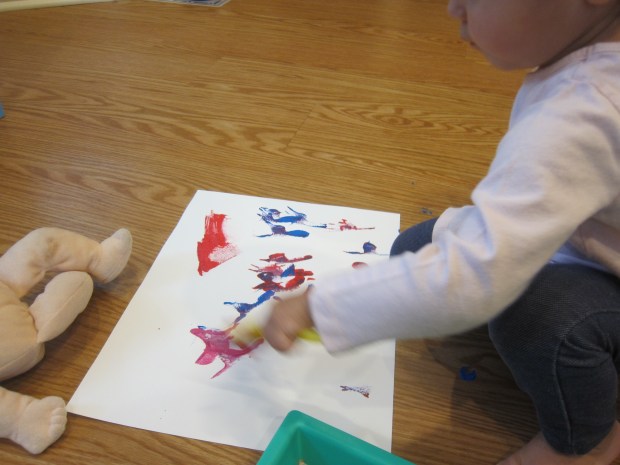
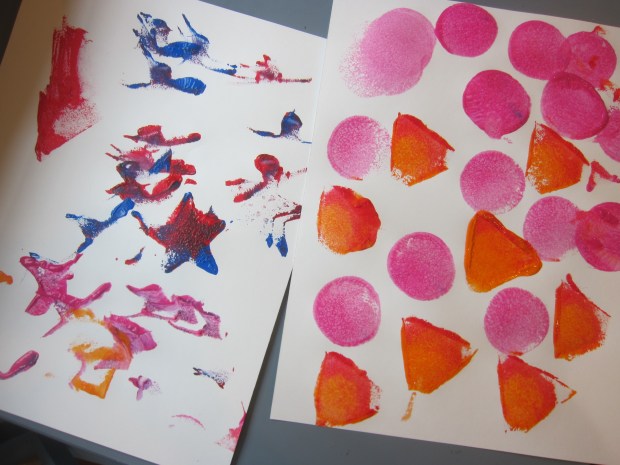
It turned out that big brother Travis wanted to try, too! So after officially making our stars and stripes artwork, we dipped and painted with other shapes for a while. I love seeing the work of an almost-2 and almost-6 year old side-by-side.

Stars and Stripes Sponge (7)

This was a great craft to fill a rainy morning.
Stars and Stripes Sponge (5)

Sticker Art

Sticker Fun (4)

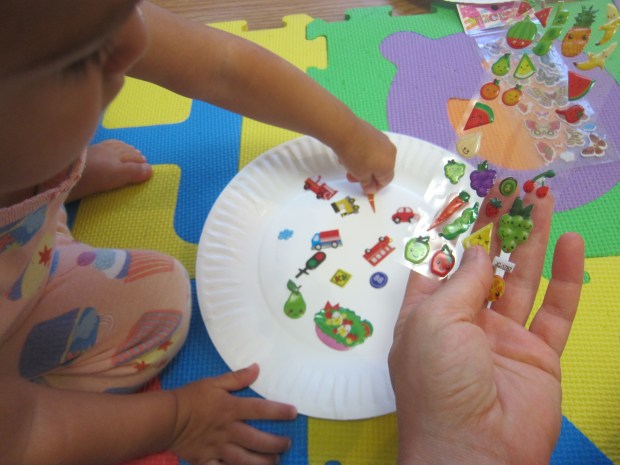
What can’t you do with stickers? They are the ideal material for kids in so many ways, whether on reward charts, for crafts, to make gifts, or more. Sometimes (like, say, a rainy morning) all you need to do is pull out your current sticker collection and let your kids go to town!
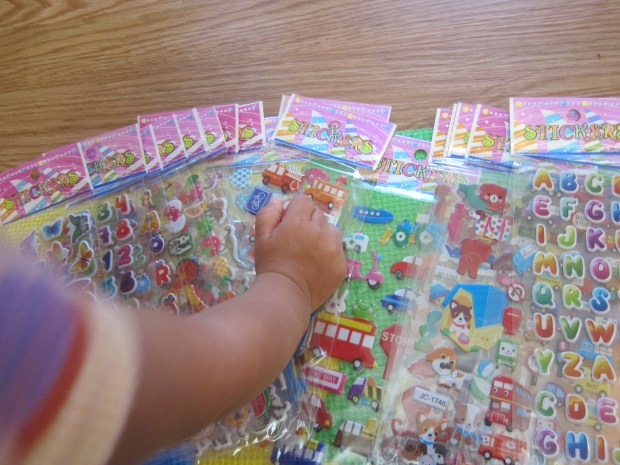
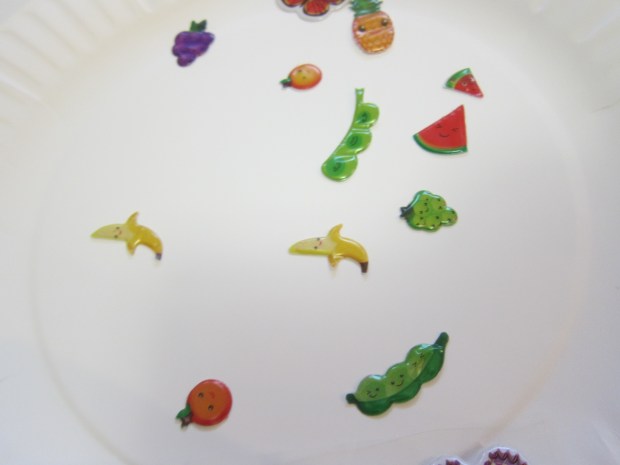
Right now I have loads of puffy stickers since these are easy for Veronika to pull from the sheets with little toddler fingers.

Sticker Fun (1)

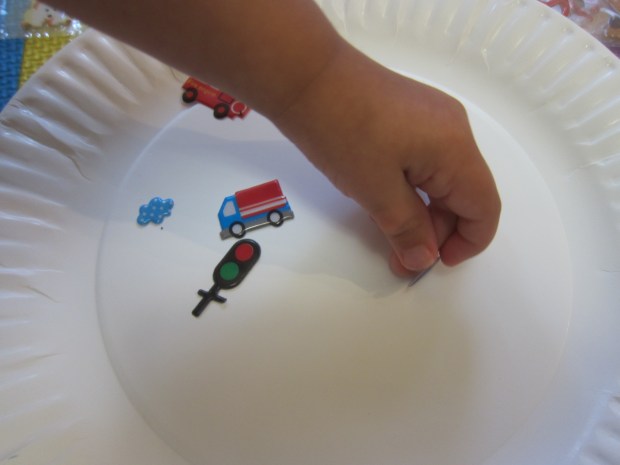
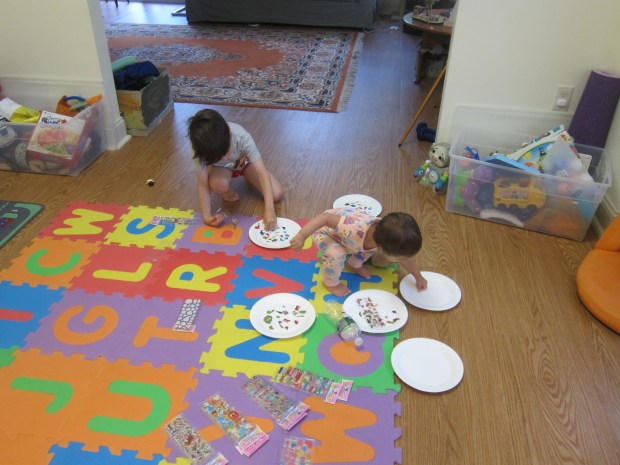
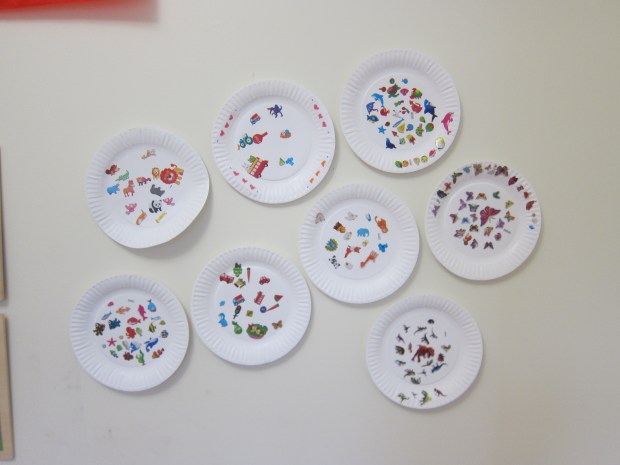
I gave her paper plates as her canvas and she simply set to work. Peel off sticker, stick onto paper plate, repeat. This turned out to be excellent not just for keeping her busy, but also for vocabulary practice, since she wanted to name each sticker as she placed it on. “Bus! Tractor!” and so on.

Sticker Fun (3)

It also was great for the concept of matching since sometimes there were two of a given item in her sticker sheet. “One carrot, two carrot! One banana, two banana!”

Sticker Fun (9)

But mostly she just loved creating “art” with all the bright, colorful stickers. Big brother Travis joined in, too, deliberately creating themes on each of his paper plates.

Sticker Fun (5)

When the kids were done, I taped the plates to the wall for an easy “art gallery”.

Sticker Fun (8)

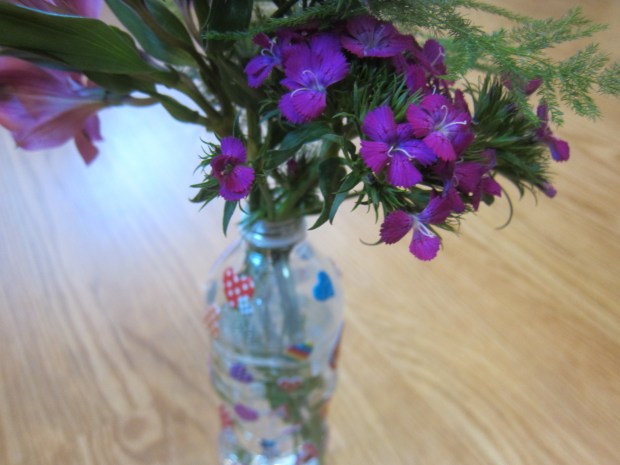
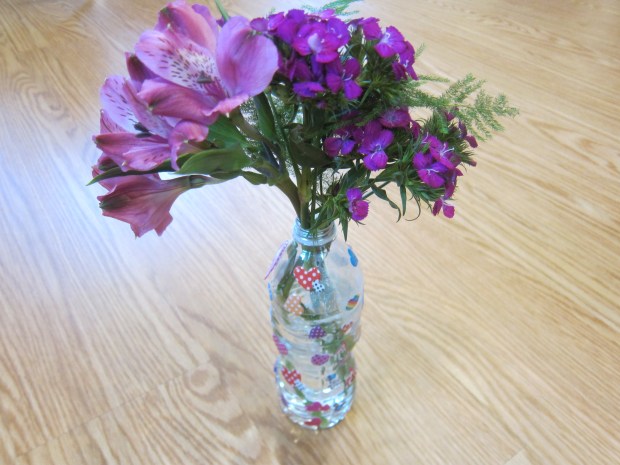
Veronika had also used heart stickers all over an empty water bottle.

Sticker Fun alt

This turned into an impromptu flower vase, and actually looked quite beautiful!

Sticker Fun var

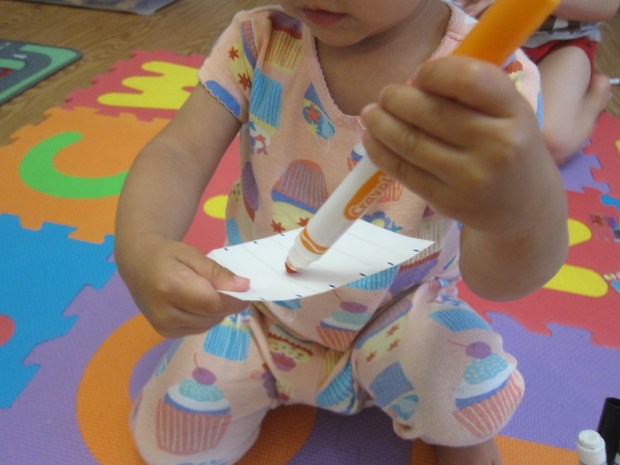
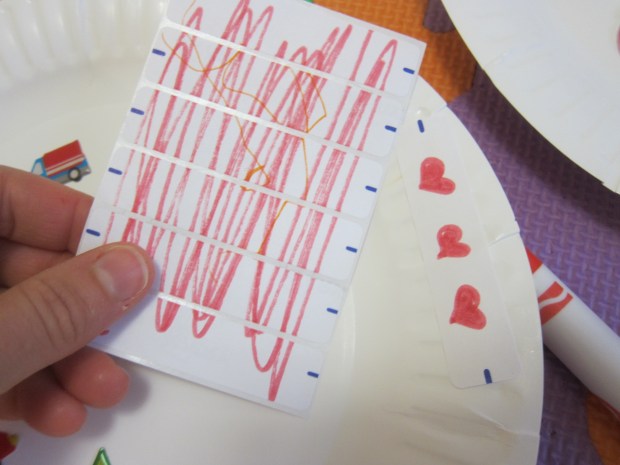
As a final component of the morning’s play, we made DIY stickers on blank office labels. Veronika scribbled on them with marker and then was delighted to realize they could peel and stick just like other stickers.

Sticker Fun (6)

We added a few of these to the paper plates, too.

Sticker Fun (7)

What is your toddler’s favorite sticker craft? Please share in the comments!

Toddler Collage

Toddler Collage (11)

It’s near the end of the month, which means time to empty out odds and ends from the craft bin as we stock up for next month. I knew exactly who would be a willing partner in my clean-out… my toddler!

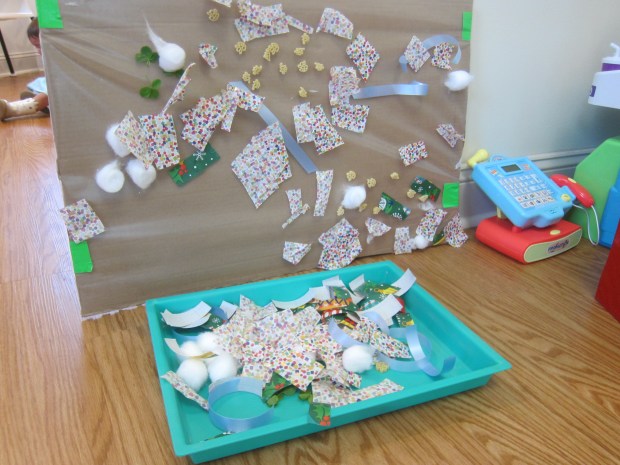
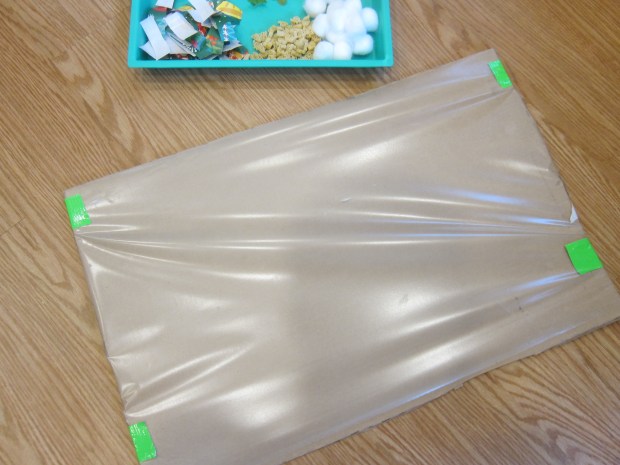
I wanted Veronika to have a large “canvas” to work with for this project, so taped a piece of contact paper, sticky side out, to the largest piece of cardboard I could find in the house. You could also do this on a smaller scale, but whether big or small, the cardboard is nice because it means your toddler can leave the project and come back to it later. The same can’t be said if you tape the contact paper to the floor.

Toddler Collage (2)

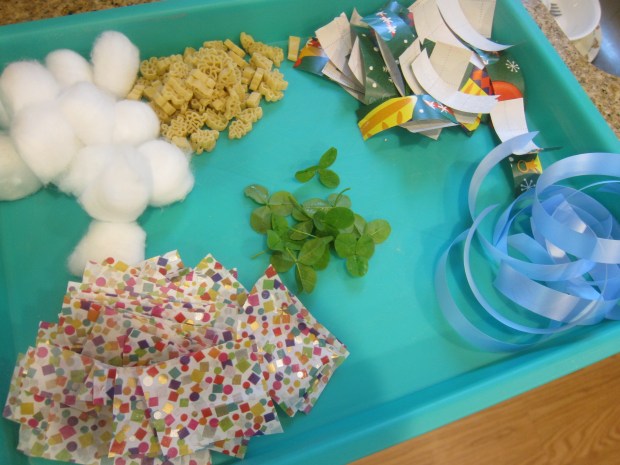
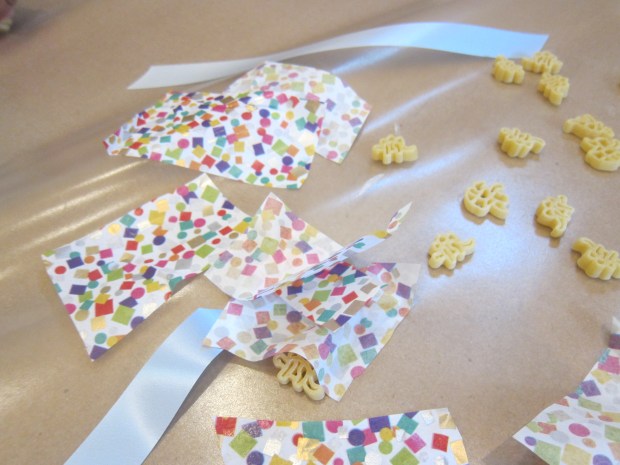
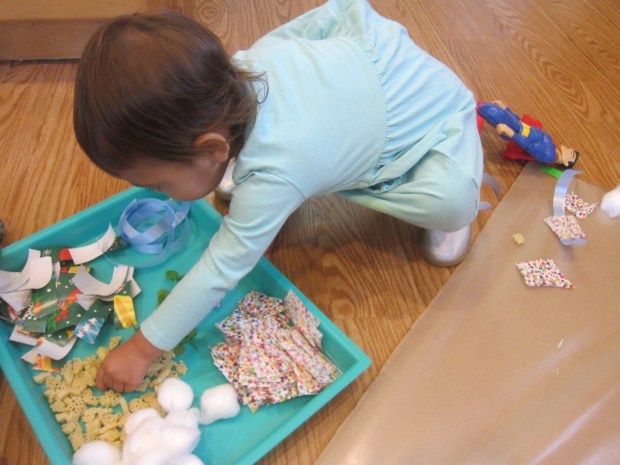
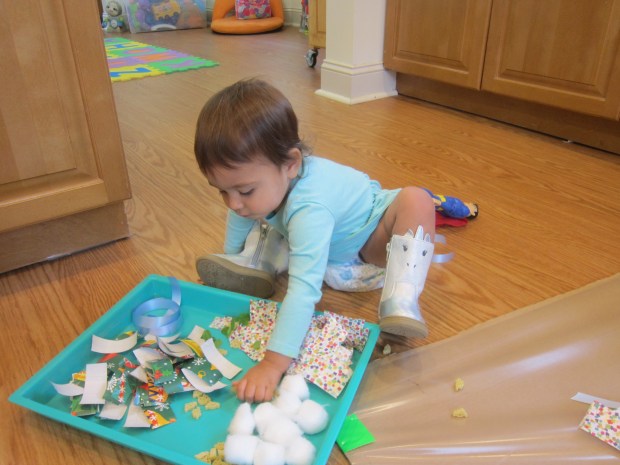
I set out a tray with all the craft bin odds and ends, including: wrapping paper pieces, tissue paper squares, cotton balls, strands of ribbon, plus some clover from outside (flowers would be pretty, too!). I also added uncooked dinosaur-shaped pasta pieces.

Toddler Collage (1)

Veronika immediately needed to investigate all of the components of the tray of course!

Toddler Collage (3)

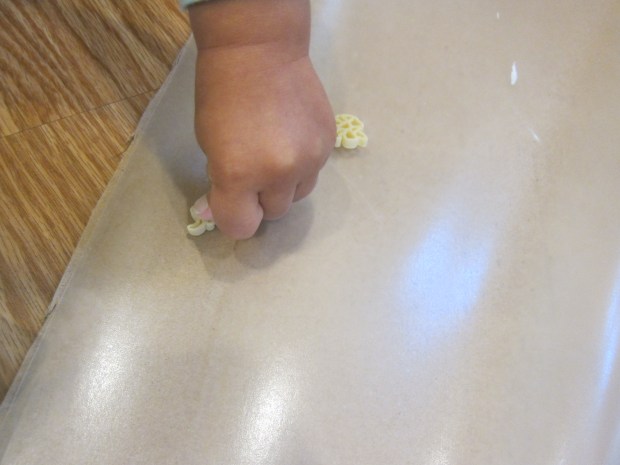
It turned out that the dinosaur pasta was the big hit. She loved sticking it to the contact paper, either by tossing on big handfuls, or by pressing one piece in carefully at a time.

Toddler Collage (6)

The ribbon was also fun, because the ends curled up until she pressed the length of it with her finger to secure it down.

Toddler Collage (10)

She was less interested in the cotton balls and tissue paper than I thought she would be!

Toddler Collage (5)

When she initially tired of the activity, I tucked the cardboard and the tray aside, waiting for her next creative impulse.

Toddler Collage (9)

By the end of the day, we had a masterpiece.

Toddler Collage (12)

Bunnies on a Log

Fish in the River (4)

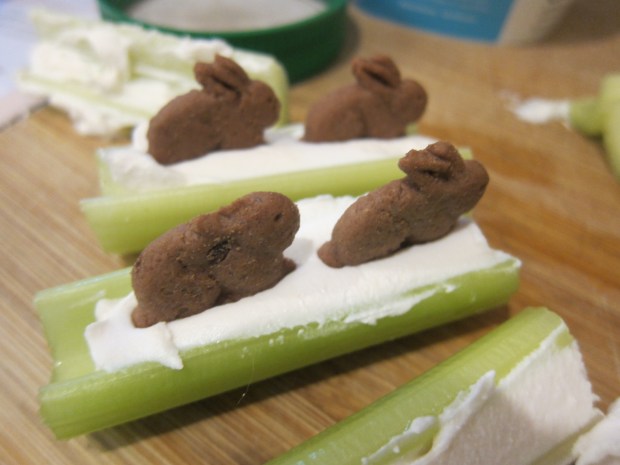
Here’s an adorable twist on classic “ants on a log”. We love watching the bunny who hops outside our window each morning to eat the clover, so today we added hopping bunnies to our celery snacks instead! It’s a great recipe for kids to put together themselves.

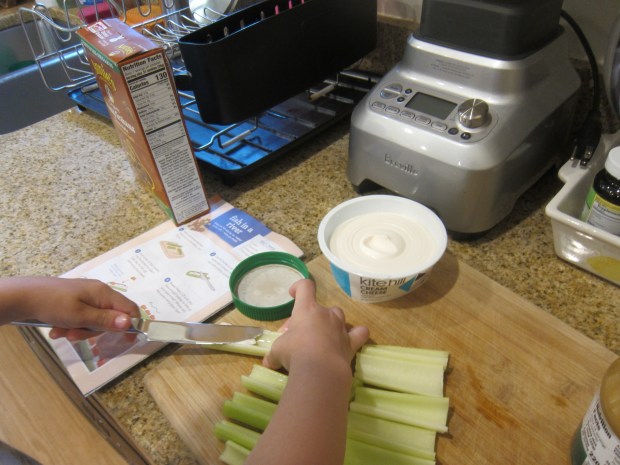
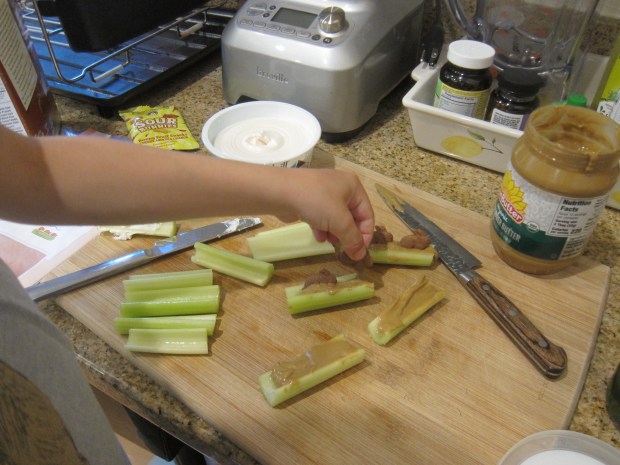
To start, spread either non-dairy cream cheese or sunflower butter onto cut celery sticks. Travis was thrilled that he was allowed to use the knife all by himself!

Fish in the River (1)

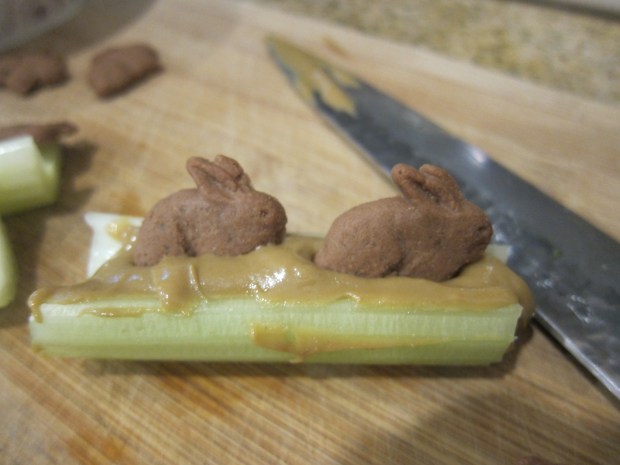
Now add your hopping little bunnies.

Fish in the River (2)

Travis’s verdict was that he liked the cream cheese version better than the sunflower spread. Which will be your kids’ favorite?

Fish in the River (3)

Note: If your family eats dairy, you could put a further spin on this snack by taking it from land to sea: add goldfish crackers in place of the bunnies and you’ll have fish in a river!