Broccoli Cheese Soup

Broccoli Cheese Soup (1)

This cheesy soup is sure to have even picky vegetable eaters spooning up their broccoli!

Ingredients:

  • 1/2 cup Earth Balance butter
  • 7 tablespoons flour
  • 4 cups unsweetened almond milk, divided
  • 2 vegetable bouillon cubes
  • 2 and 1/2 cups shredded Daiya cheddar
  • 2 cups cooked broccoli florets
  1. Melt the butter in a large saucepan over medium heat. Add the flour and whisk until combined. Stir in 2 cups milk and the bouillon, and cook until thick.
  2. Whisk in the remaining 2 cups milk and the cheddar, and continue to cook until the cheese is melty. Stir in the broccoli and let cool slightly before serving.

Broccoli Cheese Soup (2)

For variation, try adding an equal amount of mashed potato…

Potato Cheese Soup

…or corn kernels in place of the broccoli (or in addition to it!).

Corn Cheese Soup

Sun Catcher Sensory Bags

Sun Catcher Sensory (5)

This easy sensory bag doubles as a sun catcher for toddlers… so be sure to play on a sunny day!

My original intent had been to make several of these bags, using different combinations of primary colors in each. But I quickly realized that my one container of hair gel was only going to fill a single large zip-top bag, so one version it was! If you have hair gel in bulk, by all means make several.

Sun Catcher Sensory (1)

I decided to work with blue and yellow. Squirt the hair gel into the bag and then drip in food coloring so that two separate colors are in opposite corners of the bag. I then taped it to our patio door, which catches the morning sunlight beautifully.

Sun Catcher Sensory (8)

Veronika was entranced!

Sun Catcher Sensory (4)

She loved how squishy it was when she poked at it.

Sun Catcher Sensory (3)

She loved how the colors splashed around when she tapped it with her full palm.

Sun Catcher Sensory (6)

She loved the way we could chase bubbles through it with our fingers.

Sun Catcher Sensory (7)

Meanwhile, I loved pointing out the reflections it made on our wall, and how the blue and yellow were combining toward green in the center. Plus I loved watching her sunlit smile as she played.

We left this one up for a few days!


Sun Catcher Sensory (9)

Ice Lab Kiwi Crate

Kiwi Ice (3)

Travis’s latest crate from Kiwi Co was perfect to receive in winter, all about ice and snow. Specifically, Kiwi used the theme of ice to talk about crystallization.

First up was an Icy Experiment. Before school, Travis filled the provided ice cube tray so the ice would be ready to go when he returned home. As a side note, this ice cube tray is fantastic! Made from easy to unmold silicone, it makes adorable square blocks of ice.

Kiwi Ice (1)

Fill the two provided plastic cups with water, then add 3 scoops of salt to one cup only. Now add the ice cubes to both cups and let sit for 1 minute – don’t stir!

Kiwi Ice (2)

Travis next added 3 drops of liquid watercolor into each cup. You’ll immediately see that the color stays on top in the cup with salt, and floods to the bottom of the one with no salt.

Kiwi Ice (5)

The write-up in his booklet helped Travis understand that the salt had changed the density of the water, i.e. more stuff was packed into the same space, so the ice water stayed on top of the salt water. I told him about the Dead Sea, and how it has so much salt that even people stay afloat, which got a big whoa.

Kiwi Ice (6)

He drew his results, and then we were on to the next project: Crystal Snowflakes. This was similar to an activity we did at Christmas, making crystals in a suncatcher. Combine 1 scoop of provided Epsom salts and 1 scoop of water in a cup, along with 3 drops of the “clear gel”. (Note: We were curious what this gel was! Kiwi does not say). Stir for 30 seconds with a paintbrush until the Epsom salt dissolves.

Kiwi Ice (8)

Now brush over the three plastic snowflake shapes and let sit until completely dry. It will take over an hour but then you should see crystals appear as the water evaporates and the Epsom is left behind.

Kiwi Ice (9)

Oddly, we didn’t have great results. Still, we used the provided yarn to hang the snowflakes in the window, a pretty winter adornment.

Kiwi Ice (14)

We also attempted Explore magazine’s suggestion for a Crystallization Station. Combine 2 scoops of hot water (not boiling) and 2 scoops of Epsom salts in a plastic cup. Travis added blue food coloring so we’d have colored crystals by the end.

Kiwi Ice (12)

Place in the freezer for 10 minutes, then transfer to the fridge overnight. Again, oddly, we had no crystals in the morning, leaving me to suspect something was amiss with our packet of Epsom salts…

Kiwi Ice (11)

So we then turned to the Ice Experiments booklet in the crate, full of further ice exploration for Travis to test. One activity was an oldie but goodie: salt tunnels.

First, make a new set of ice cubes in the square tray. Travis liked towering them into a pyramid on a plate once frozen!

Salt Tunnel (1)

Sprinkle generously with salt and then drip food coloring on. The areas where the salt has melted the ice will become immediately evident.

Salt Tunnel (2)

Two colors made it even cooler!

Salt Tunnel (4)

Travis loved the way this looked and connected his observations to the barrel of salt outside that keeps us from slipping on frozen sidewalks.

Salt Tunnel (5)

As a final experiment, we played Sink or Float, another oldie but goodie. I filled two cups with warm water and we poured a generous amount of salt into one. Ideally you can add salt little by little until no more will dissolve, but since Travis was a bit impatient, ours was supersaturated with salt still on the bottom.

Sink or Float (2)

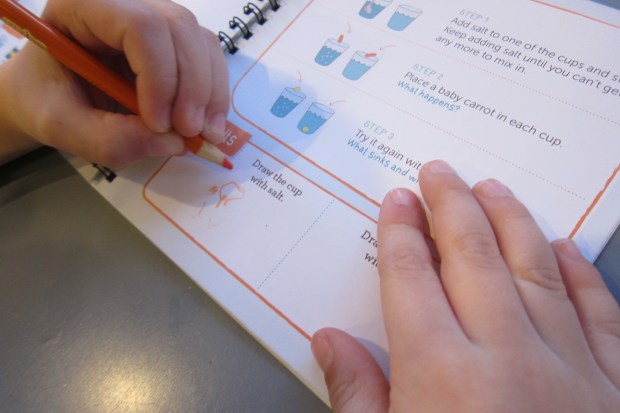
Now drop a piece of baby carrot into each and watch the instantaneous results. Travis loved that one plunked to the bottom and one stayed afloat. He drew the results in the provided “Lab Book,” which made him feel like a real scientist!
Sink or Float (4)

Have fun testing other items, too! Travis tried out Lego figures and marbles.

Sink or Float (3)

Kiwi Co. did not offer suggested reading this time around, but I recommend the following fun books about ice:

  • Ice (Stories Without Words) by Arthur Geisert
  • The Boy Who Invented the Popsicle by Anne Renaud

Kiwi Ice alt

Dirt Balls

Mud Balls (5)
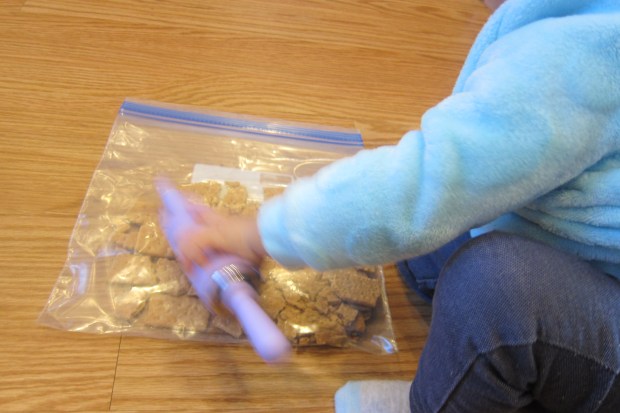
This was my first recipe not just for Veronika, but with Veronika! Yes, even a 16 month old can help in the kitchen, given a simple enough task. In this case, I involved her hands-on during several steps, including crushing graham crackers in a zip-top bag with a rolling pin, rolling sticky balls of dough, and more.
Mud Balls (1)

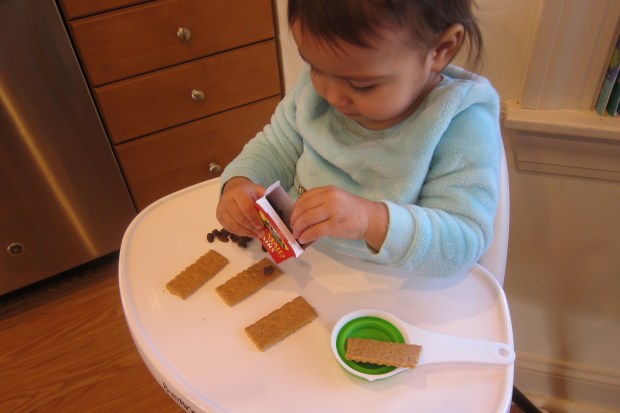
During steps that she couldn’t help with, I sat her in the high chair with a few ingredients to sample. She loved nibbling on graham crackers and putting raisins in and out of a snack-sized box!

Mud Balls (2)

For the actual recipe, you’ll need the following:

  • 1 cup creamy peanut butter
  • 1/4 cup agave nectar
  • 1/2 cup vanilla-flavored vegan protein powder
  • 1/2 cup raisins
  • 1 cup crushed graham cracker crumbs
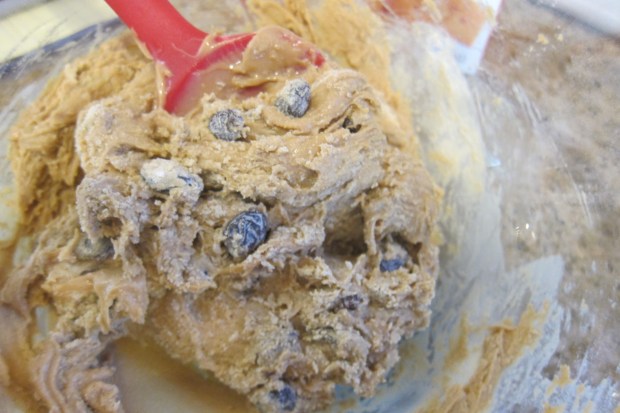
  1. In a large bowl, combine the peanut butter, agave, protein powder, and raisins. Note: If you do eat dairy, you could make this recipe with dry milk powder; however, I like that using protein powder adds an extra nutrient boost to each serving!
  2. Stir in the graham cracker crumbs until you have a workable “dough”; you may need to add a little more or a little less.Mud Balls (3)
  3. Roll the mixture into small balls. Serve immediately, or refrigerate until ready to eat.

Mud Balls (6)

Note: If you want to make “Mud Balls” instead of “Dirt Ball”, you can roll these in a little cocoa powder.

Mud Balls (7)


Tie-Dye Cloth Napkins

Tie Dye Napkin (8)

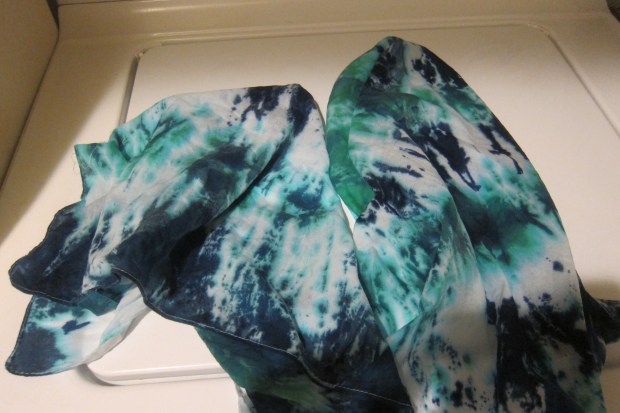
This fun tie-dye project is a nice way to intro the method to kids, smaller than tie-dyeing a full t-shirt. As an added bonus, you can tuck one of the napkins into a child’s lunchbox for a sweet reminder from home while he or she is at school!

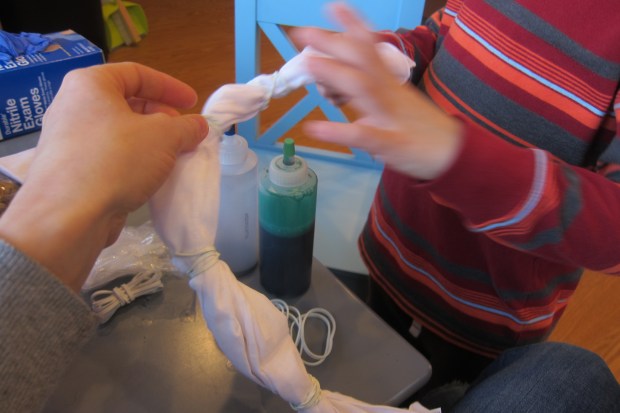
We actually started with blank handkerchiefs from the craft store, not technically napkins. Twist them tightly and secure with elastics at several intervals.

Tie Dye Napkin (1)

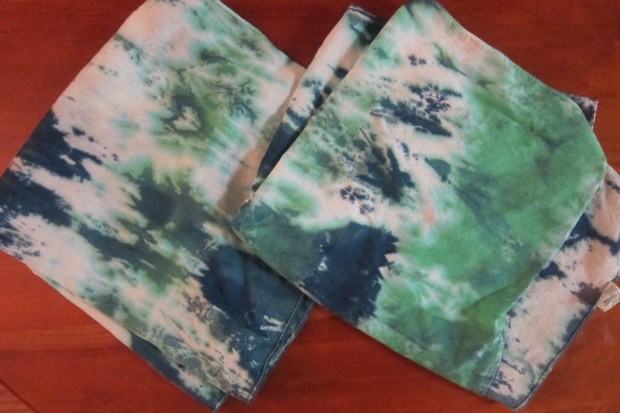
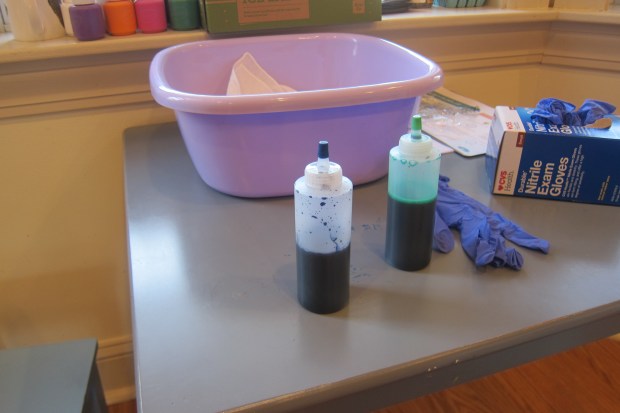
We purchased two bottles of dye that came ready to mix in a squirt bottle, one blue and one green, which made the whole project extremely easy.

Tie Dye Napkin (2)

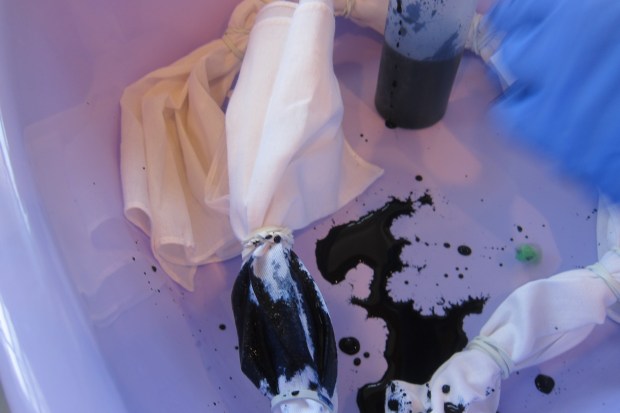
Travis thought it was fun to wear plastic gloves as we mixed the solutions, then dyed sections of the napkin in alternating colors.

Tie Dye Napkin (4)

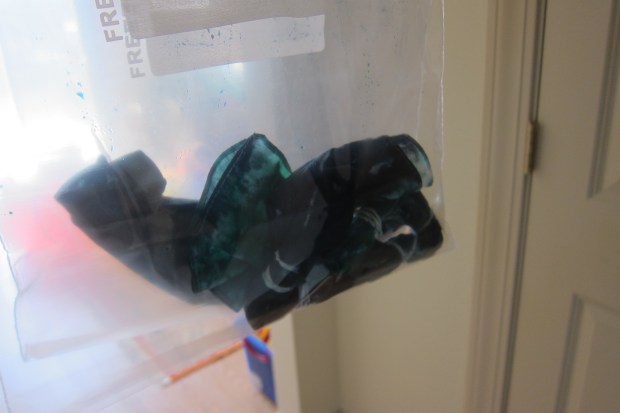
Seal the napkins in a zip-top plastic bag and let dry for 6 to 8 hours.

Tie Dye Napkin (5)

Ring out the extra liquid over a sink, then wash in the laundry machine in cool water.

Tie Dye Napkin (6)

Tumble dry, and repeat if necessary. We thought these came out so pretty!

Tie Dye Napkin (7)

Heavy Bubbles

Heavy Water (3)

This neat experiment with oil and ice is a great way to teach kids about density. If your child has ever noticed how oil and water don’t mix, they’ll love what happens when you try to melt ice in oil.

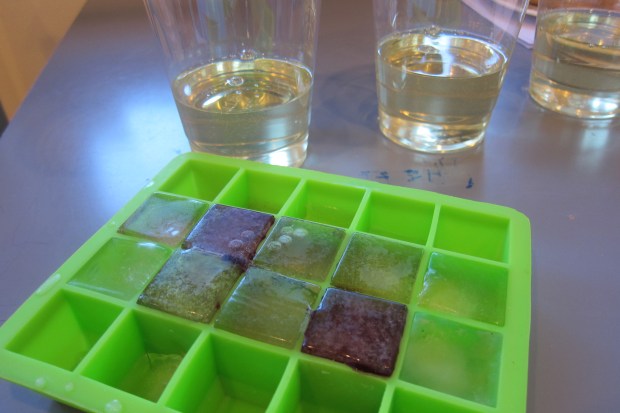
To start, Travis helped fill an ice cube tray. For fun variety in our final results I colored some of the compartments green with food coloring and some red, and left others clear.

Heavy Water (1)

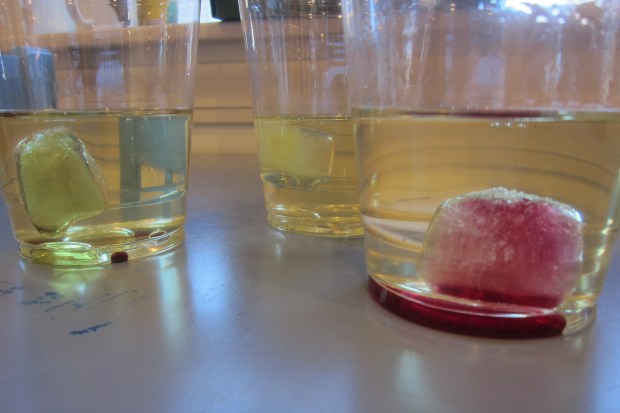
Next we filled three plastic cups with vegetable oil.

Heavy Water (2)

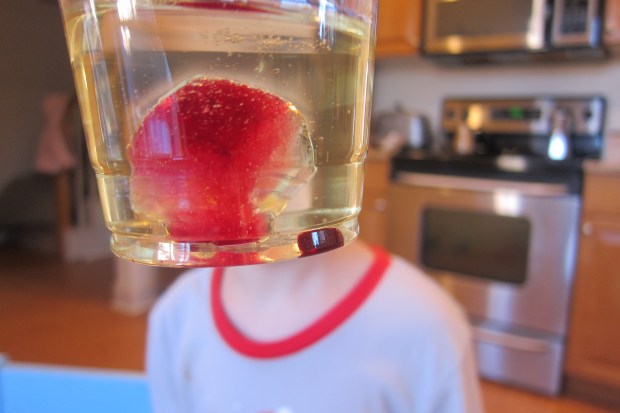
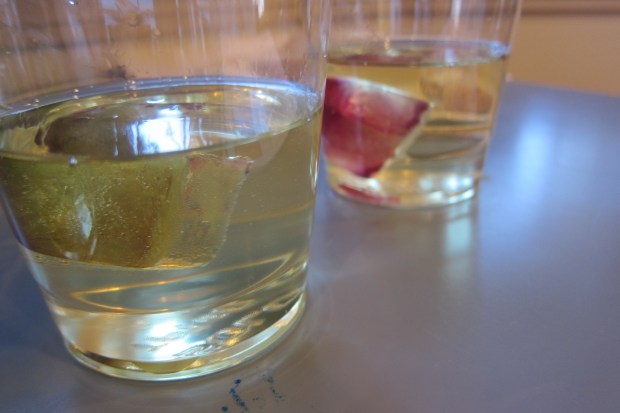
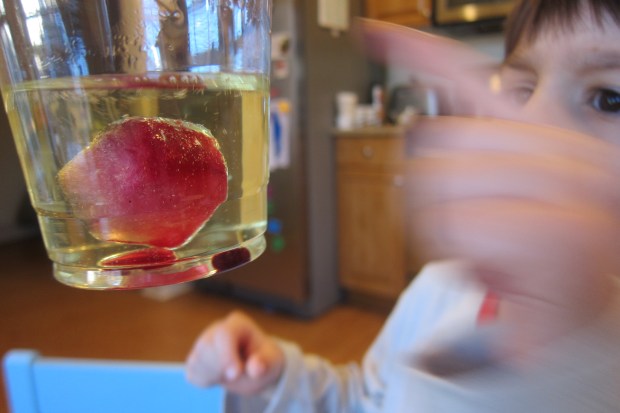
Add an ice cube to each, in your different colors. The ice will start melting off in big blobs. Because water is more dense, those blobs sink down to the bottom of the cup. What fantastic oozy fun to watch!

Heavy Water (4)

I was glad we colored the ice, because the clear ice cube was rather underwhelming to watch, but Travis thought the big globs of green and red were super cool. Quick and easy science, in sum!

Heavy Water (5)

Turn the Beat Around

Turn the Beat (2)

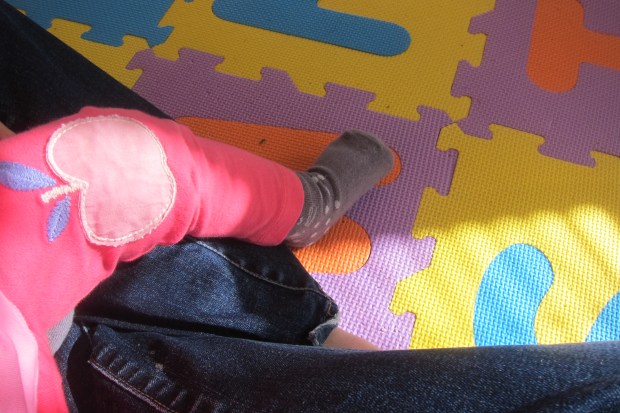
I recently read that recognizing the patterns and rhythms of music can help children with gross motor skills, everything from walking to jumping to dancing. Did this game today actually tip Veronika over the edge into a true walker? I’ll never know for sure, but I think it did the trick!

Veronika has been hesitant to walk, but I noticed a few times that the “stomp feet” verse of If You’re Happy and You Know It had her lifting her feet and almost walking forwards. Today, I was determined to get those feet stomping into a walk.

We started off with the above-mentioned song. Getting your toddler to clap along at this age is great fun, too.

Turn the Beat (4)

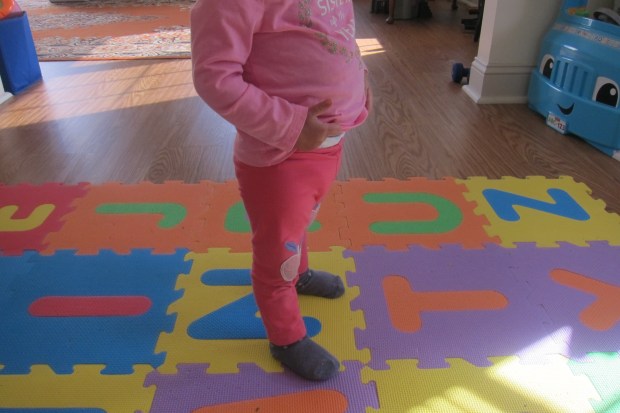
Then it was time to stomp. She gamely stomped her little feet, which she accompanied with a little pat pat to her belly. Still no steps though…

Turn the Beat (3)

After that we danced to a few more favorite songs, each time choosing something with a strong beat. We clapped our hands and wiggled and tapped our toes.

Turn the Beat (1)

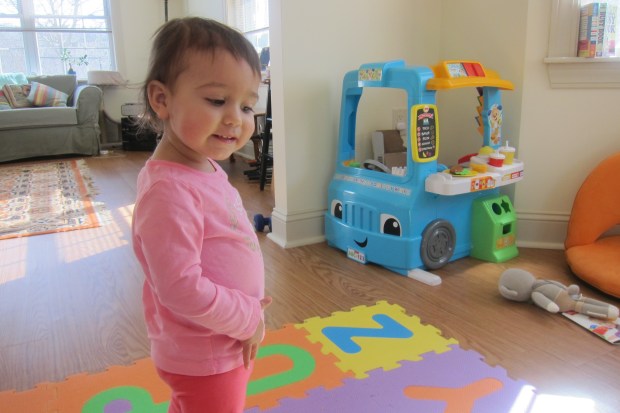
Well wouldn’t you know, a few hours later I turned around and Veronika was walking. She was so proud of herself and spent the rest of the evening doing circuits of our apartment.

So if you have an almost-walker, I’d love to hear if a similar activity also helps with first true steps! Please share in the comments.

Splish, Splash

Splish Splash (2)

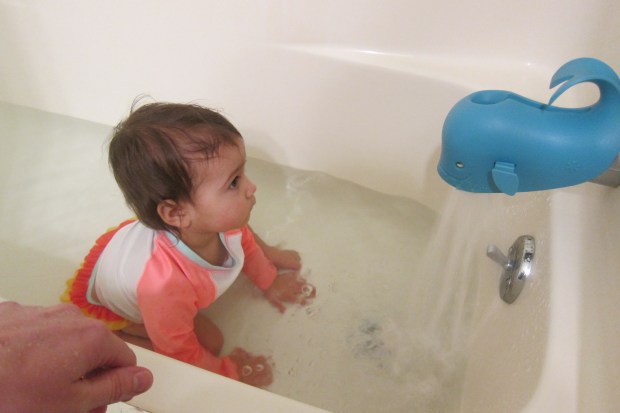
The next time your toddler takes a bath, take a moment to focus not on the feel of the water, but on the sounds that you can make with water. This is a great opportunity for some auditory sensory play.

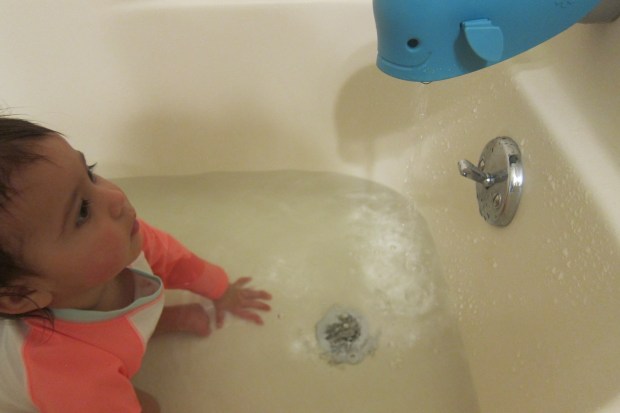
First, I filled the tub with warm water and got Veronika in her bathing suit for a little added element of difference and fun.

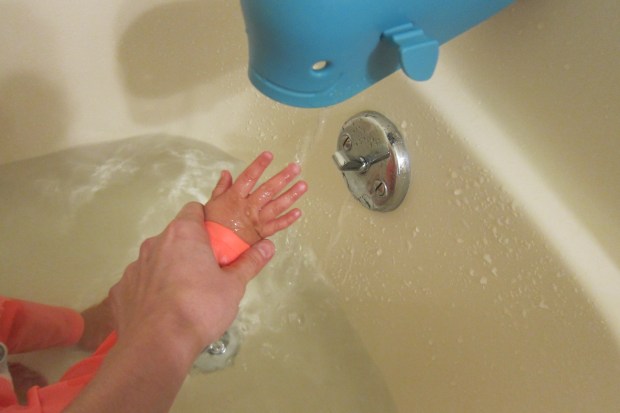
Turn the tap on very lightly and allow just a trickle of water to come out. We listened to the light plip plop sound this made, and Veronika reached curious fingers under the stream.

Splish Splash (1)

I paused before I turned the tap on to a full roar. I thought this might alarm her, but she stared at it, mesmerized. Encourage your child to run a hand under this strong stream, too, as you listen to the roar and whoosh.

Splish Splash (3)

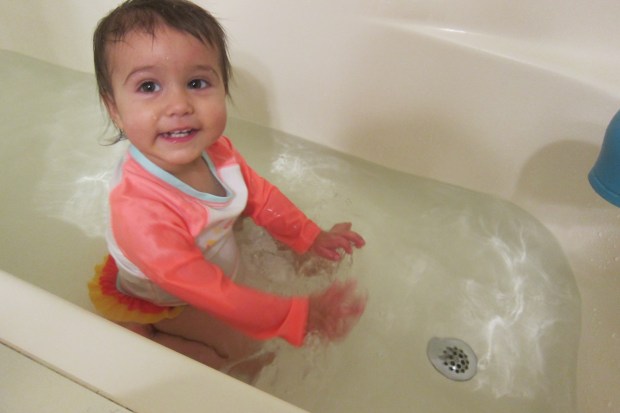
Finally, I turned the tap off and helped her discover other ways we could listen to the water. Tapping the surface made a delightful slapping sound.

Splish Splash (4)

And pouring water from a cup made a lovely splish splash.

Splish Splash (5)

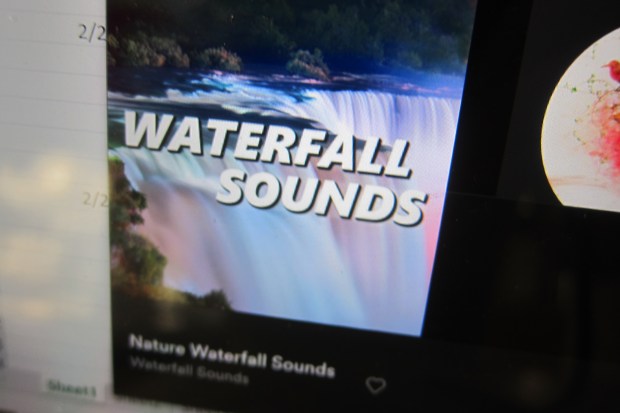
Have fun using lots of onomatopoeia as you play! In sum, this was an auditory delight. If you want to continue the fun outside of the tub, consider playing soothing water sounds on the computer while your child plays.

Splish Splash (6)

Rainbow Rice Sensory Bags

Rainbow Rice (7)

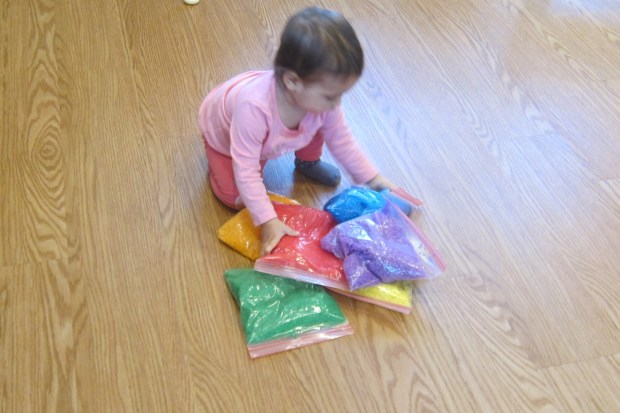
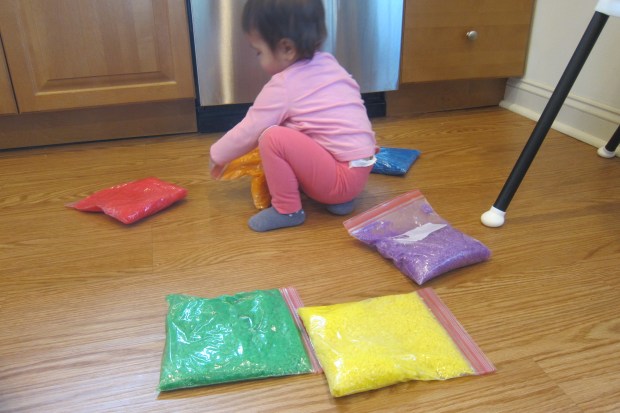
These easy sensory bags kept my toddler busy for ages… and they look so pretty, too!

If you are playing this game with preschoolers, definitely enlist their help when putting the rice bags together since it’s great scooping practice.

Rainbow Rice (1)

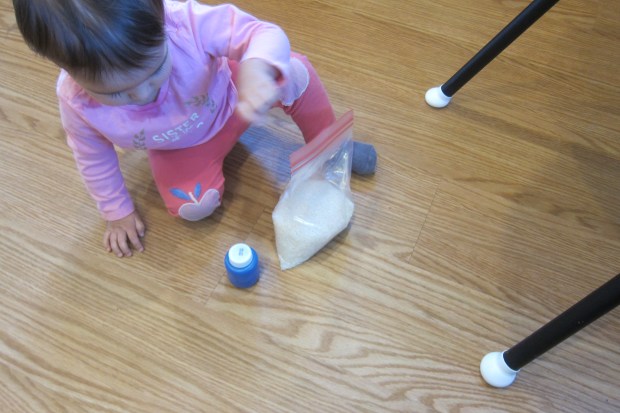
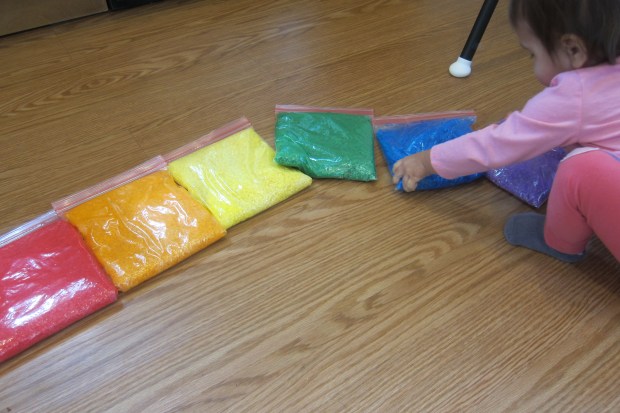
With my 16 month old, though, I did the set-up solo. Here’s my little helper standing by:

Rainbow Rice (3)

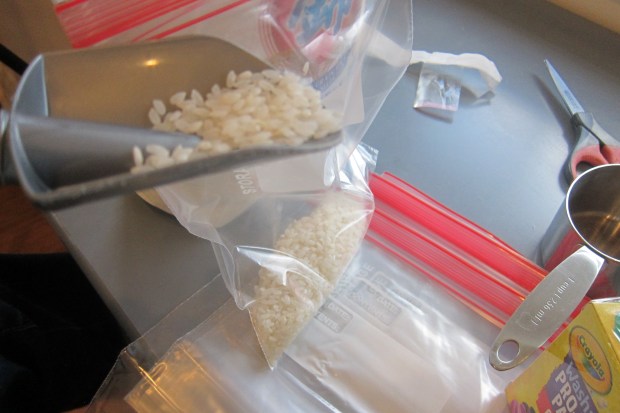
Scoop 2 cups rice into each of 6 sandwich-size zip-top bags. Pour a little paint into each in all the colors of the rainbow, using red, orange, yellow, green, blue, and purple. Seal the bag and shake until the rice is completely covered in the paint.

Rainbow Rice (2)

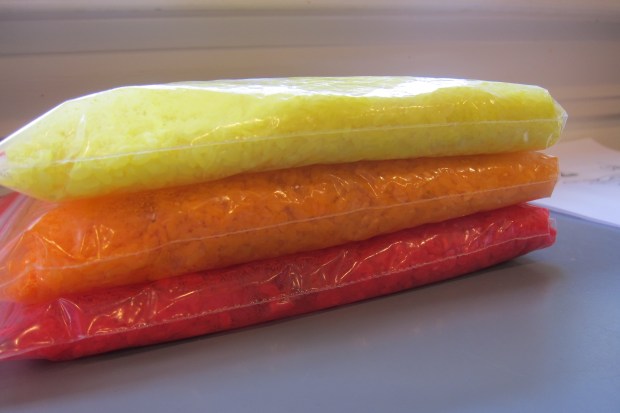
It’s then helpful to open back up and squeeze out as much air as possible before resealing. Now you have a sort of rice “brick” for your child to play with. Repeat for the remaining colors.

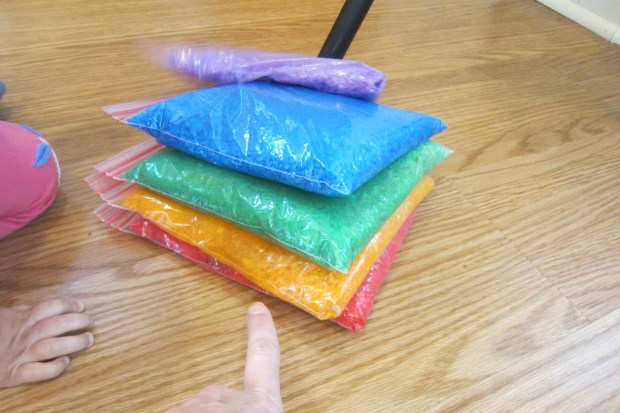
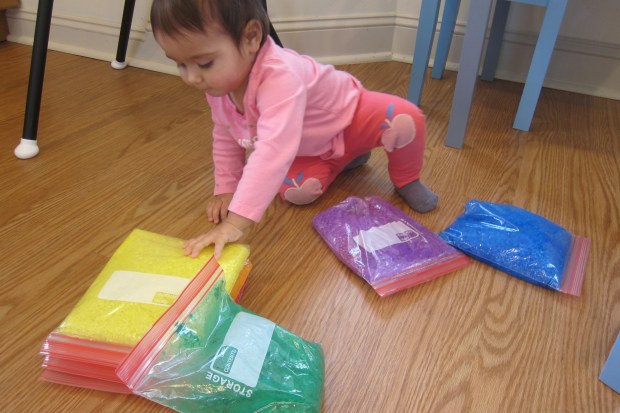
Veronika couldn’t wait to come see what it was all about. She stacked them…

Rainbow Rice (10)

…threw them…

Rainbow Rice (9)

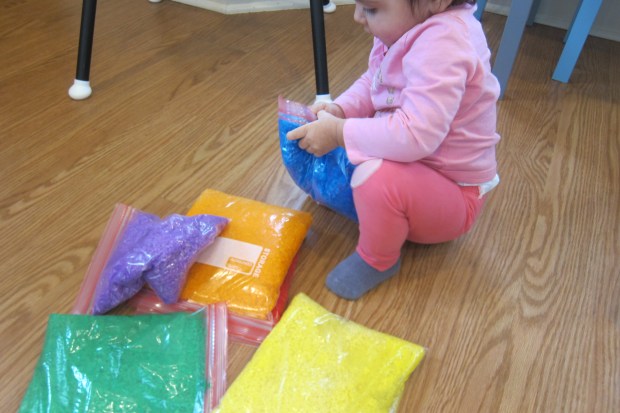
…squeezed them…

Rainbow Rice (5)

…and of course tried to open them up (phew, with no success!). In other words, they kept her very busy. There was lots of talking to herself as she played, so she must have had some game going in her head.

Rainbow Rice (4)

For a little learning, I briefly lined the bags up in rainbow order and took the opportunity to sing The Rainbow Song.

Rainbow Rice (6)

You can also pile them in rainbow order, although don’t expect the pile to stay neat for long with a toddler around!

Easy Scarf Pull Activity

Scarf Pull (3)

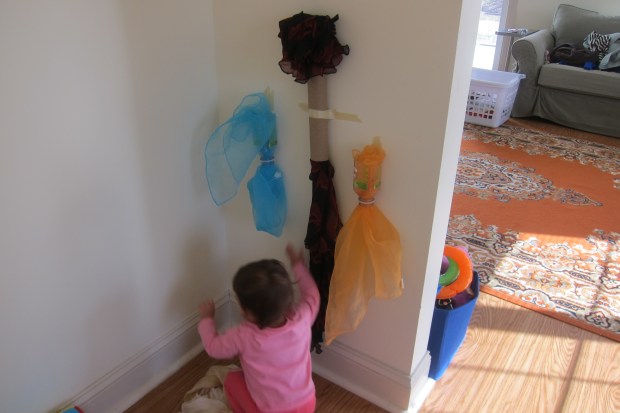
This gross motor skill activity for toddlers is sure to tantalize!

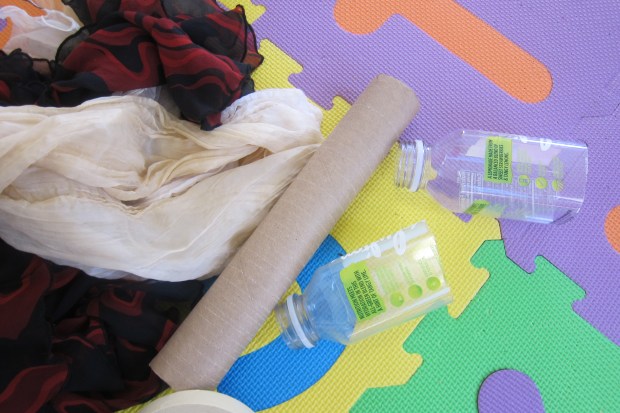
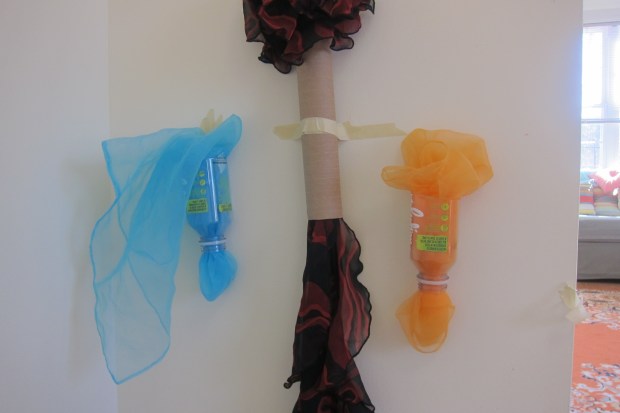
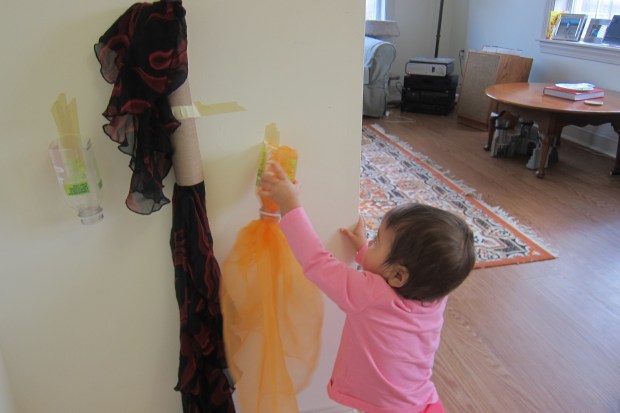
For set up, attach containers to the wall with painter’s tape. These could be empty paper towel tubes or old bottles or really any container through which you can pull a scarf. For the bottles, you’ll need to cut off the closed end first. Make sure to tape over any sharp or jagged edges. I used two empty juice bottles, but water bottles or even an empty gallon jug would work!

Scarf Pull (1)

While Veronika was napping, I secured these to the wall and stuffed a scarf into each with the end dangling out.

Scarf Pull (2)

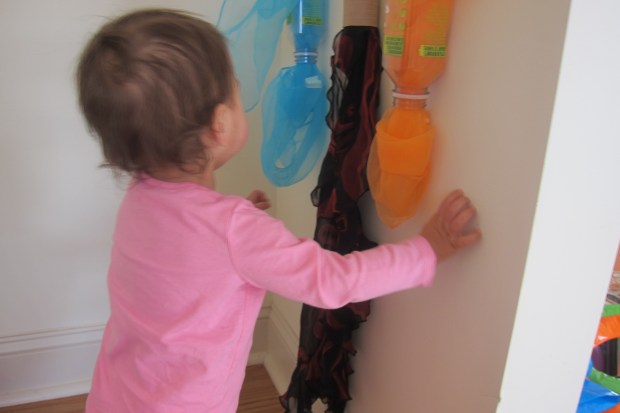
She came wandering over mildly curious. Because she loves draping herself in scarves, I thought she would be so into this.

Scarf Pull (4)

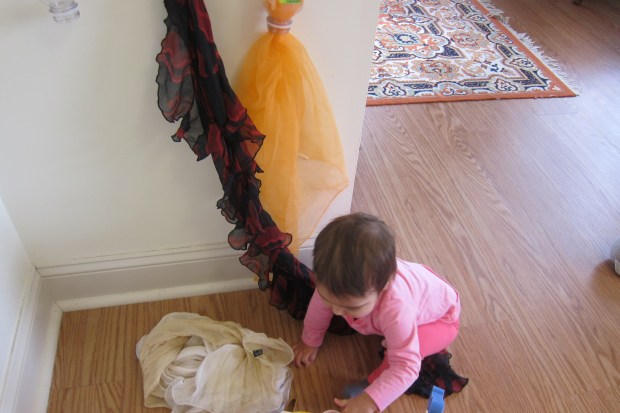
Surprisingly, she really only gave each one a single tug through its tunnel, but then lost interest. She showed a bit more interest about the containers themselves, and how they were stuck to the wall.

Scarf Pull (5)

Well, at least we got in a little gross motor play as she pulled those scarves. Your kids may want to stuff the scarves back into the containers and play this game over and over.

Scarf Pull (6)