Picnic Scene Craft Challenge

Picnic Challenge (6)

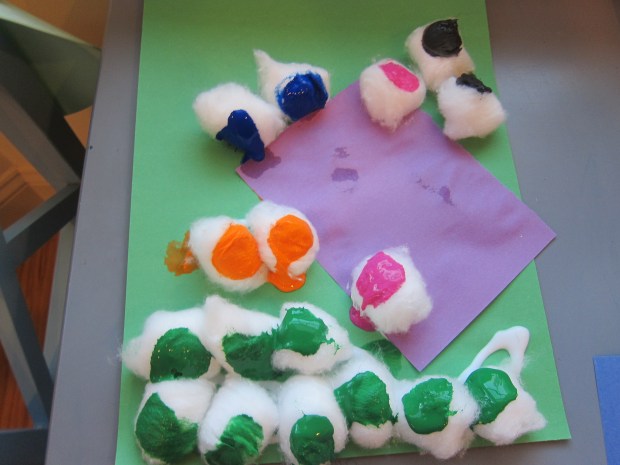
Travis loves the open-ended craft challenge he finds in his Highlights magazine every month, having crafted robots and camping tents in the past, among others. Today, we wanted to make a picnic scene using nothing more than colored paper, cotton balls, and paint.

I loved the little method that Travis came up with. First he needed a paper base, and he chose green grass. We glued down a separate square of colored paper for the blanket.

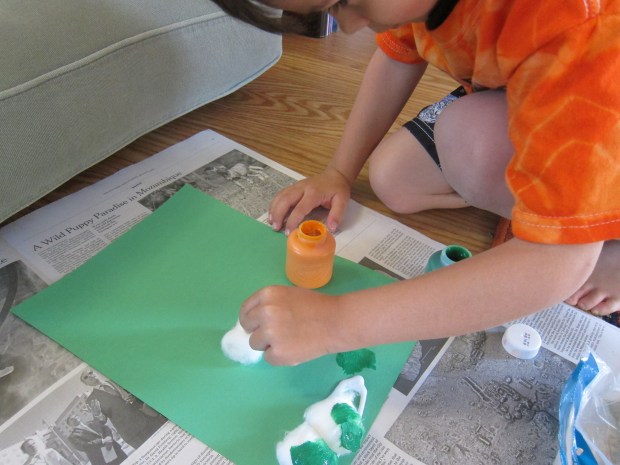
Everything else in the little scene was made of cotton balls, which he dipped into paint and then glued on!

Picnic Challenge (1)

It definitely was a five-year-old’s take on a challenge for kids as big as age 12, but I loved watching his process. There was green cotton ball grass:

Picnic Challenge (3)

Orange cotton ball food:

Picnic Challenge (2)

And pink cotton ball people! He then made some black cotton ball ants.

Picnic Challenge (4)

He loved carefully pouring the paint onto each cotton ball before gluing them down, and enjoyed it so much that he wanted to make a second version. This time his pink person dined on yellow lemonade.

Picnic Challenge (5)

Dropping Objects

Dropping Objects (9).JPG

Impish Veronika has discovered the joy of dropping objects and making mama pick them back up again; this is actually an important skill, both for her motor skills and for object permanence (and for sense of humor!). Whether from the highchair…

Dropping Objects (11)

or from the grocery cart…

Dropping Game (14)

…she is a little imp about it these days.

Dropping Game (13)

You can use baby’s enjoyment of this game to your advantage with at-home dropping games!

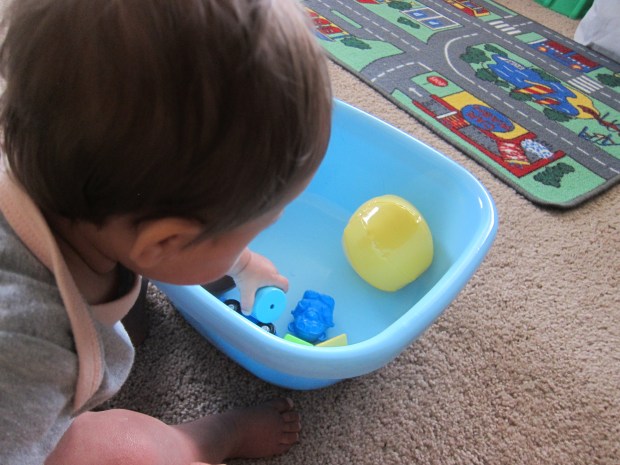
First, I sat with Veronika in front of a bin of toys that needed cleaning up and showed her how to drop one in.

Dropping Objects (6)

Say a cheerful “oopsie!” or “dropsie!” with each toy that lands, to up the entertainment factor.

Dropping Objects (7)

Pretty soon she was cleaning up all her toys without knowing it.

Dropping Objects (8)

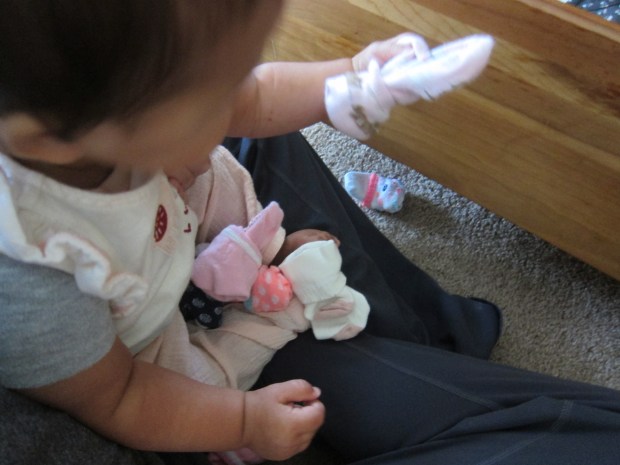
You can also do this game with socks in front of a low dresser drawer.

Dropping Objects (2)

Okay, Veronika isn’t really helping me put away the laundry, but she loved watching me drop in the socks, or trying it herself.

Dropping Objects (3)

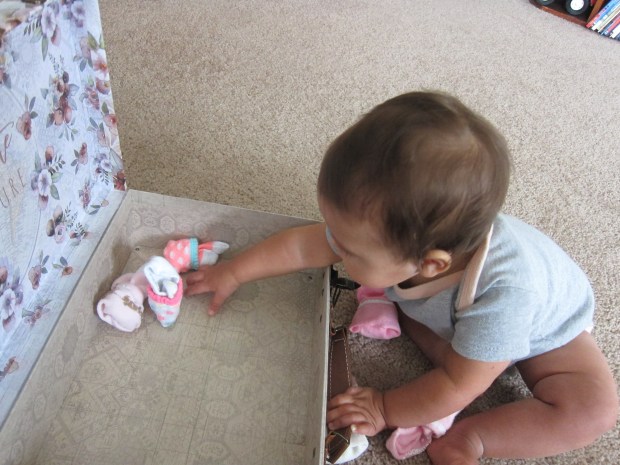
The drawer wasn’t the right height for her to play by herself, so I set her up with an open box to continue the fun.

Dropping Objects (10)

Perhaps if you play this enough, your little one will tire of it and you can end round after round of highchair dropsie.

Dropping Objects (12)

Or maybe not!

Pick Which Bowl

Pick Which Bowl (4).JPG

Here’s a little challenge for your baby if you want to keep him or her entertained the next time they sit in a highchair.

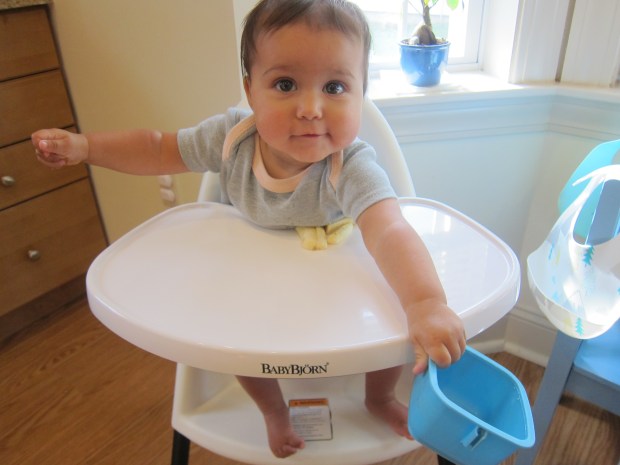
I let Veronika see a few pieces of banana (cut into safe pieces) and placed them on her tray.

Pick Which Bowl (1)

Note: Any other soft fruit would work just as well here, like soft ripe peaches or apricots. Cover the fruit pieces with one bowl and place a second bowl next to it. Ideally, I would have liked my bowls to match but certainly Veronika didn’t seem to mind the mismatch.

Encourage your baby to find the fruit and pick up the bowl it’s hiding under.

Pick Which Bowl (3)

If the fruit was underneath, I made a big show of it and celebrated with a hearty cheer.

Pick Which Bowl (2)

Arguably Veronika was more interested in the bowls themselves than in the fruit she discovered, but it still made for a fun little game as I prepped dinner. It certainly kept her hands busy!

Pick Which Bowl (5)

If your child seems excited about it, play with three bowls to make it more challenging.


Safe to Explore

Safe to Explore (6)

Well, Veronika is a crawler! Her big brother skipped this milestone (which, in fact, doctors don’t refer to as a milestone, since so many kids skip it), so a nine-month-old on the move is new to me! Here are a few baby-proofing tricks I’ve uncovered in just a few days to make sure Veronika can safely explore!

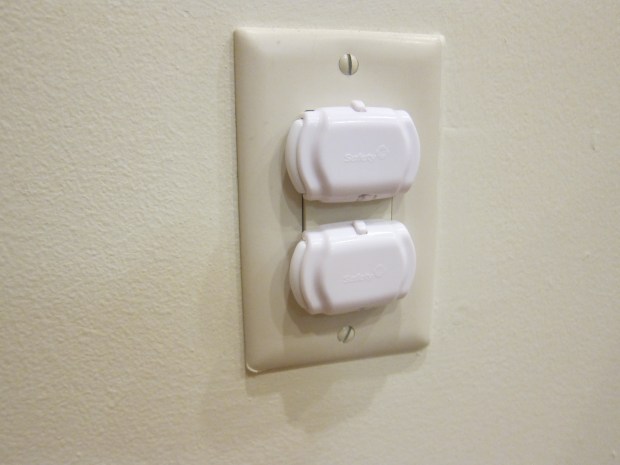
  • Cover all electrical outlets with safety covers. Yes, these might be annoying when I have to remove one to vacuum a room or plug in an appliance, but the alternative is far worse.Safe to Explore (7)
  • Make sure all rugs are slip-proof.
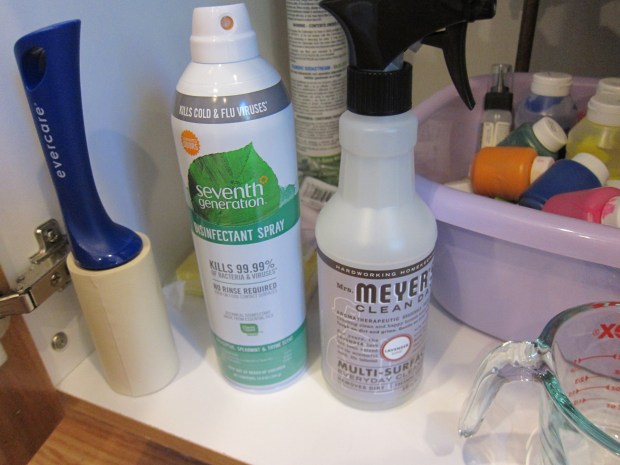
  • Keep medicines or cleaning supplies out of reach or in cabinets with safety locks. I quickly moved our paint bin into a cabinet, too, after Veronika decided it was her favorite thing to head towards in the playroom.
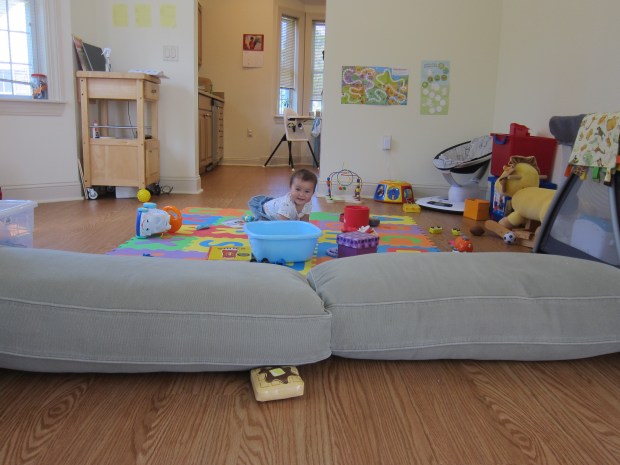
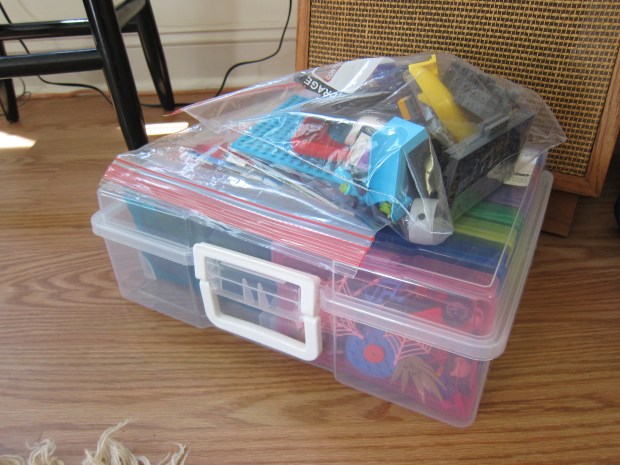
  • Keep all toys small enough to choke on out of reach. Since we don’t have a baby gate large enough to divide the playroom from the living room, big brother helped me create “pillowville.” Safe to Explore (2)Veronika stays on one side with baby-safe toys and all the big boy stuff (Legos, Playmobil) lives on the other side of the divide. Make sure to box up small toys at the end of each day to be safe.Safe to Explore (3)
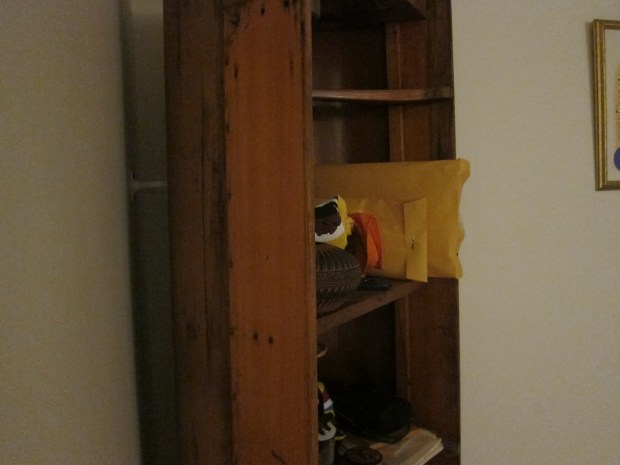
  • Use wall anchors to stabilize furniture that can tip, like bookshelves or stand lamps.Safe to Explore (8)
  • Check for breakable objects that baby can tug down from shelves or windowsills. If need be, remove to an area the baby can’t reach.Safe to Explore (1)
  • Get down low and look at the room from your baby’s vantage point. I hadn’t realized how obvious my computer cord was until at her eye-level. You can use cord-wrapping devices for all the pesky cords that come with modern life, or move those objects to a different room. Safe to Explore (4)Looks like the computer will have to move to another spot!Safe to Explore (5)

As always, it’s a good idea to have standard first-aid items in one place, if not in a kit, and to know infant CPR. Keep emergency numbers like poison control stored in your phone so you’re never looking them up in a panic (that’s 800-222-1222 FYI).

Stay safe, and enjoy the crawling stage!


Ocean Bottle

Ocean Sensory (8)

After a recent bottle sailboat craft with Travis, I had a few small seashells left over – much to small to hand to a nine-month-old who puts everything in her mouth. I knew immediately that I could make her a baby-safe version of big brother’s boat by sealing her shells inside an ocean sensory bottle!

My original intention was to use a bottle for the craft, but the small toy fish I included were too large to fit through the opening. Small Tupperware containers worked in a pinch, and probably were easier for her to handle anyway.

Whatever container you use, fill it about 2/3 full with water. Add small seashells and plastic fish to make an “ocean.”

Ocean Sensory (1)

As Veronika watched, I tinted the water blue with food coloring. This is a magical change for a baby to watch, so make sure he or she doesn’t miss it!

Ocean Sensory (2)

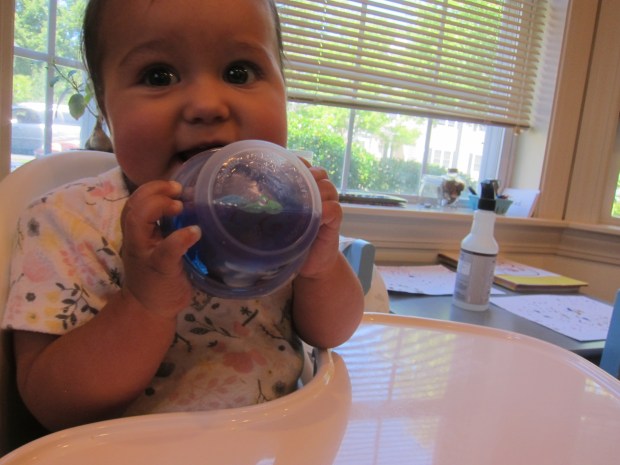
Secure the lid on the bottle or container tightly, and hand over the “ocean”. Veronika loved shaking this and seeing the fish swim.

Ocean Sensory (4)

As well as tasting it of course.

Ocean Sensory (3)

Or turning it upside down.

Ocean Sensory (5)

The taller bottle (with just shells) was a fun way to show her “waves”; I tilted it back and forth and she could watch the shells move about and then settle.

Ocean Sensory (7)

In sum, a fun ocean sensory experience even on a summer day when we can’t get to the beach!

Update: I later added little pieces of tinfoil (twisted to look a bit like “fish”) to the bottle.

Ocean Bottle alt.JPG

She loved watching them swim around.

Ocean Sensory (9)

Paint-Popper Art

Paint Popper (2)

If the kids aren’t in camp and need to get out some crazy summer energy, then this project is for you!

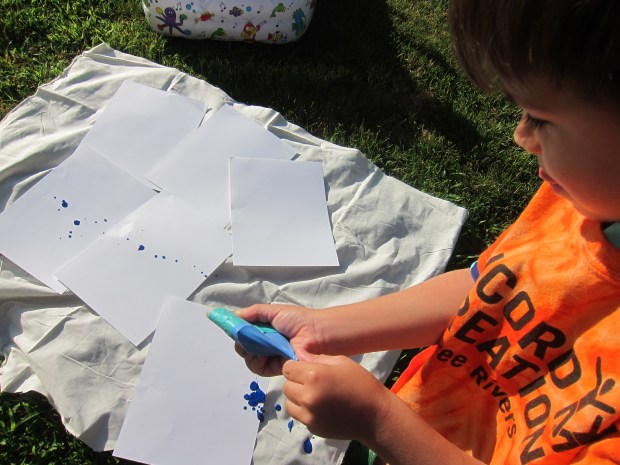
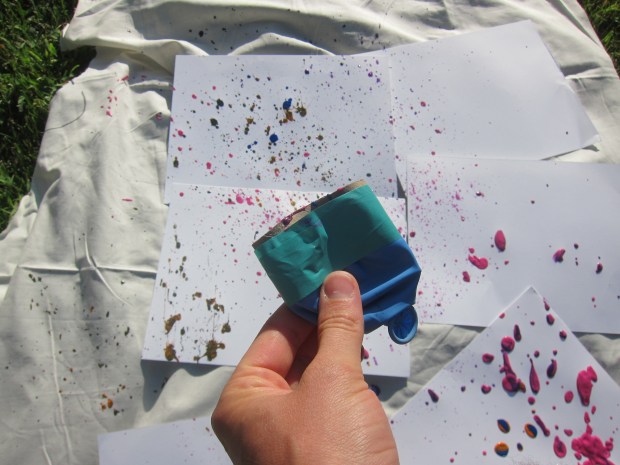
To make the popper, cut an empty toilet paper tube in half. Tie a knot in two balloons, and cut off the tops. Slip one balloon over each half of the empty tube and secure with tape. Bright and colorful tape isn’t necessary, but does add an element of fun.

Paint Popper (1)

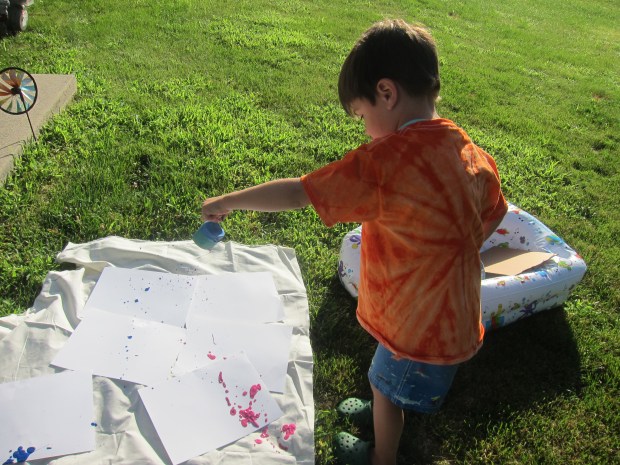
Because we knew we were going to make a mess, Travis and I headed outside for this one. I put an old sheet on the ground and covered it with thick craft paper. We filled each paint popper with a separate color and I showed Travis how to pull back on the knot of the balloon and splash the paint forward.

Paint Popper (3)

Now this was fun!

Paint Popper (4)

He loved selecting which color to use next, and sometimes just dripped the paint out of the popper for big thick blobs on his canvas.

Paint Popper (5)

The one drawback is that the poppers didn’t last long. After a few colors, the tape and balloon came lose and the cardboard roll lost its shape.

Paint Popper (6)

But it was more than enough time for him to produce fantastic splattery art.

Paint Popper (9)

And get some sunshine in the process!

Paint Popper (7)

Butter Art

Butter Sculpture (8).JPG

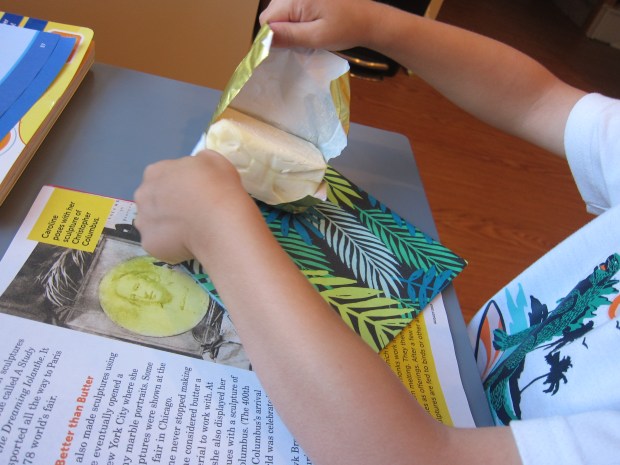
Travis loves butter (our favorite is the original from Earth Balance!), so much so he’s been known to ask for it by the spoonful whenever we make recipes with butter. So when he read an article in his latest Highlights about a butter artist, we had to give sculpting with butter a try.

Butter Sculpture (2)

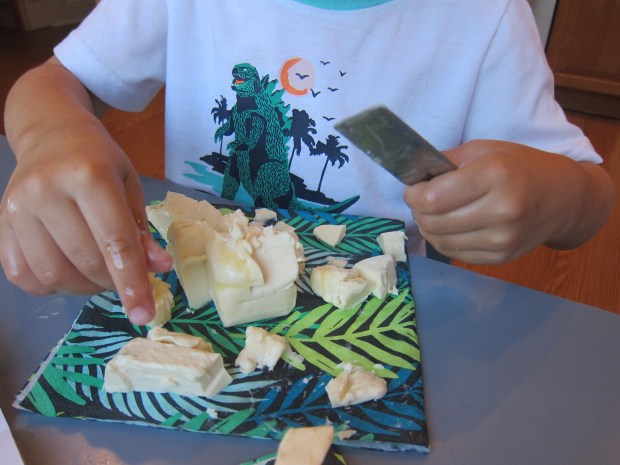
I pulled two sticks of Earth Balance from the fridge (the colder the butter the better) and gave him a dull knife to carve.

Butter Sculpture (1)

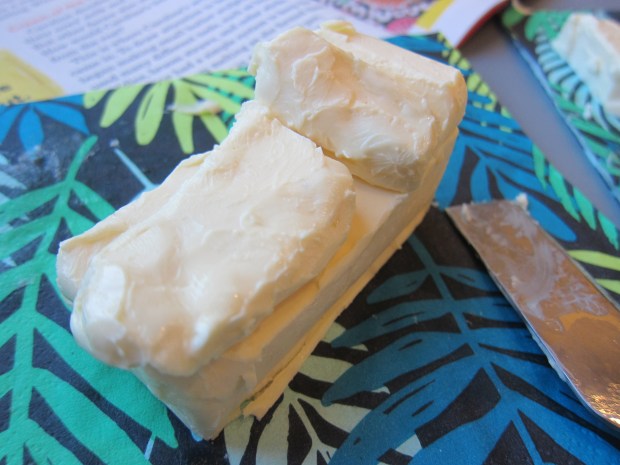
At five years old, Travis didn’t actually make anything recognizable, but that wasn’t the point. First he told me he had sculpted Darth Vader, and then he was at work on a city.

Butter Sculpture (6)

Every once in a while he’d have a nibble of course!

Butter Sculpture (9)

I felt a bit like a kid again as I put my own skills to the test on the second stick of butter. This one was a shoe:


Butter Sculpture (4)

And this one was a bed:

Butter Sculpture (5)

We had such a laugh during this whole activity, washed our hands really well after, and otherwise learned something new about butter and art. In other words, highly recommended!

Stick Letters

Stick Letters (2)

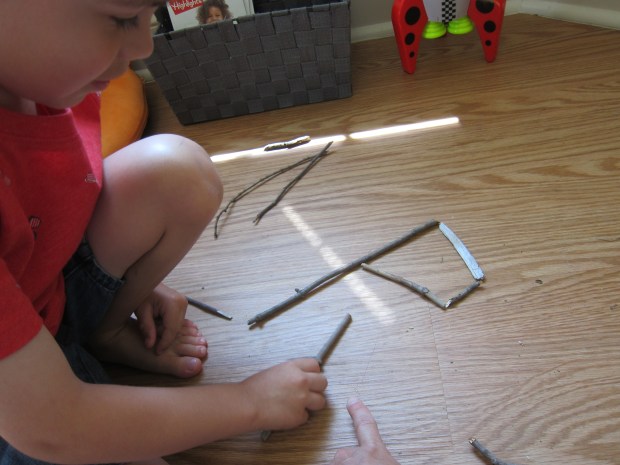
I recently made sure to collect a variety of sticks: some long, some short, some very straight, and some slightly curved. Because I knew Travis and I had stick letters in our future!

The following day, I dumped out the bag of sticks on the floor and told him we’d be going through the alphabet.

Stick Letters (1)

Now, this was a real test for Travis as we prep for kindergarten, because I knew it would require patience to work through all 26 in one sitting, plus he had no guidelines to follow for the letters. I am thrilled to report our summer work is paying off; he was fascinated and focused the whole time.

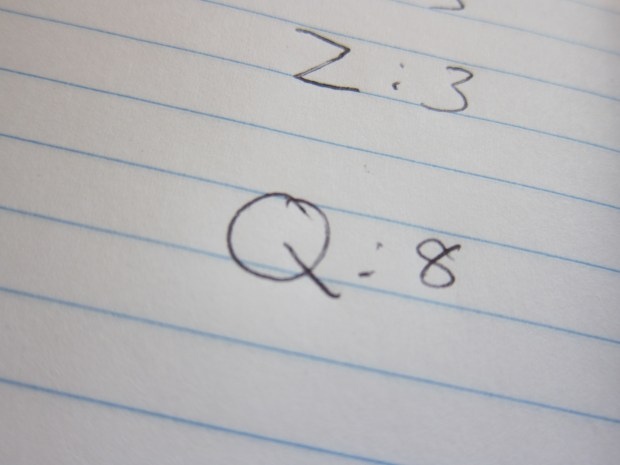
Part of the fascination is that we turned it into a challenge: which letters would take the fewest sticks, and which the most?

He started confidently with 3 sticks for A. But then B really gives him pause; I pointed out that to make curves, we needed more sticks, but they had to be short ones. That meant a total of 6 sticks for B!

Stick Letters (3)

He began working his way through the alphabet and this was a great way for me to notice which ones gave him pause. At first he boldly clustered the lines of E together. I helped him see one went at the middle, one at the top, and one at the bottom.

Stick Letters (11)

M and N were a little tricky. We focused on a vocalizing an “up down up down” pattern to help him get there.

Stick Letters (5)

Could he turn P into an R by adding only 1 stick? He could, no help required!

Stick Letters (6)

Curvy S needed so many sticks.

Stick Letters (7)

But the winner for the most sticks was the curviest – Q, requiring a total of 8.

Stick Letters (10)

Meanwhile, he aced the ones that used only 2 sticks: L, T, and V.

Stick Letters (9)

We loved everything about this activity, from the nature walk to collect the sticks, to the feeling of accomplishment, to the fun of making each letter.

Create a Water Garden for a Budding Gardener

Water Garden (3).JPG

Here’s a beautiful activity for baby’s first “garden”. If you have a true garden, then by all means just head outside with your little one plus a tot-sized watering can, and he or she can help with the watering. Since we have no garden of our own, we had to improvise a little.

Water Garden (1)

First, I filled a child’s watering can and had Veronika help me pour the water over a few flowers and fronds on our patio. She was immediately intrigued both with the water coming from the spout and with the can itself!

Water Garden (2)

Next, I set up a little water garden. It included a few floating blossoms, kale leaves for “reeds” and a plastic duck and frog.

Water Garden (5)

She had so much fun reaching in and splashing about.

Water Garden (4)

In retrospect, I wish I’d used an edible flower like roses so I didn’t have to worry about her putting anything in her mouth.

Water Garden (7)

As a result, I moved the flowers out rather quickly and then didn’t have to worry if the toys or kale made their way up to curious lips.

Water Garden (9)

As you can see in the photos, this activity was so fun that big brother wanted to join in, making it an impromptu water table to cool off.

Water Garden (6)

I loved watching them play together! And much like a picnic breakfast, it’s the perfect early morning outdoor activity before the heat of the day sets in. Here’s to many gardening moments to come with my girl!

Water Garden (8)

Amazing Astronauts

Amazing Astronaut (4).JPG

Travis and I will be cooking up some cosmic cuisine in the days ahead, thanks to his latest Raddish Kids crate. But even before the cooking began, we had to try out the lesson plan on astronauts, one of his favorite topics in the world.

To set the stage, ask your child what it would be like to be an astronaut, and what he or she would most want to do. Travis wants to fly a spaceship to another planet!

We watched a few informative videos from Chris Hadfield (familiar to us from one of Travis’s favorite books, The Darkest Dark). Hadfield, an astronaut from the ISS, has fantastic videos featuring everything from eating dessert in space to sleeping in space.

I read Travis some of the facts about what it takes to become an astronaut at NASA and then it was time to simulate being an astronaut with three cool projects.

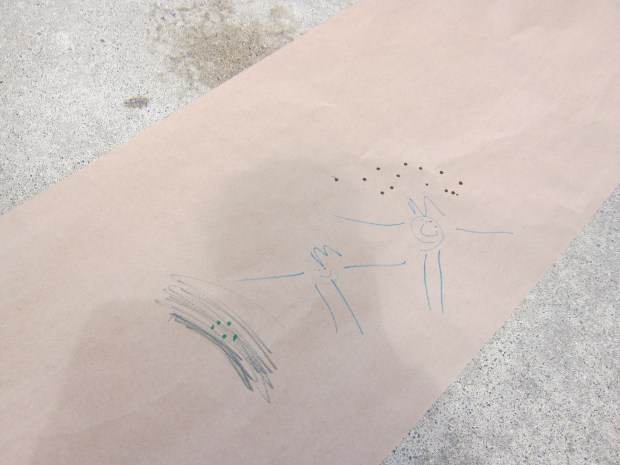
For the first, we made space boots to walk on the moon! Travis drew a “terrain” on a long strip of butcher paper.
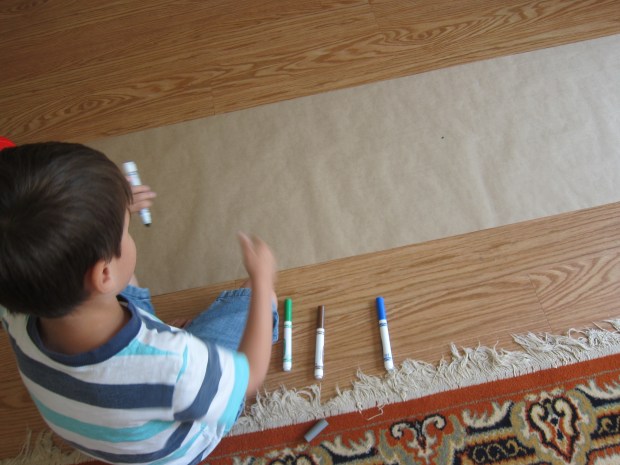
Amazing Astronaut (1)

He drew astronauts and craters, and then we spread the paper outdoors on our patio.
Amazing Astronaut (2)

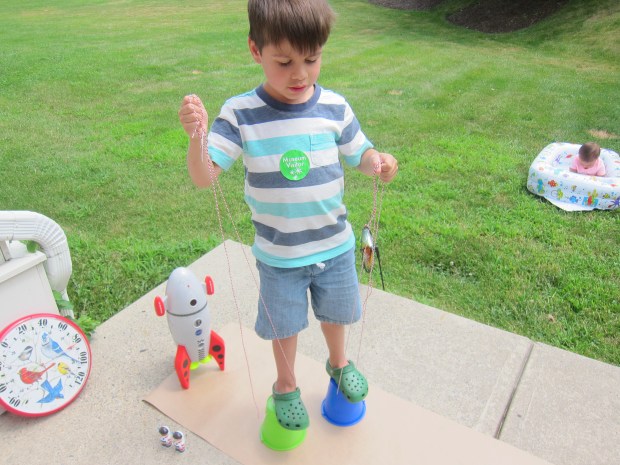
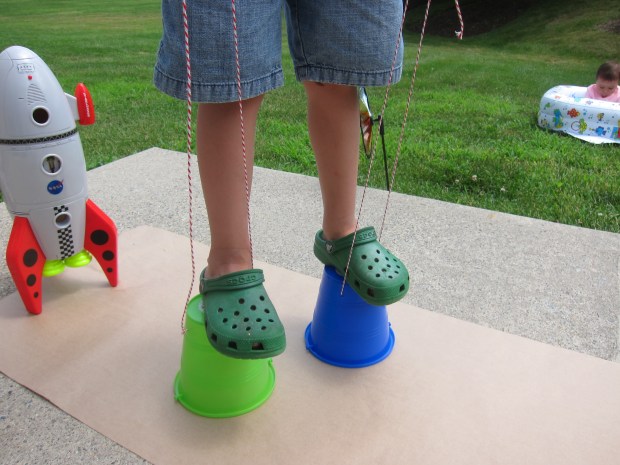
Meanwhile, I made the boots: poke holes in two buckets, and thread rope or twine through. Gather the rope up above the buckets and knot into a loop.
Amazing Astronaut (3)

Very carefully, have your child step up onto the buckets and hold the ropes taut. Travis got the hang of lifting his arms to lift the rope as he took each step.

Amazing Astronaut (5)

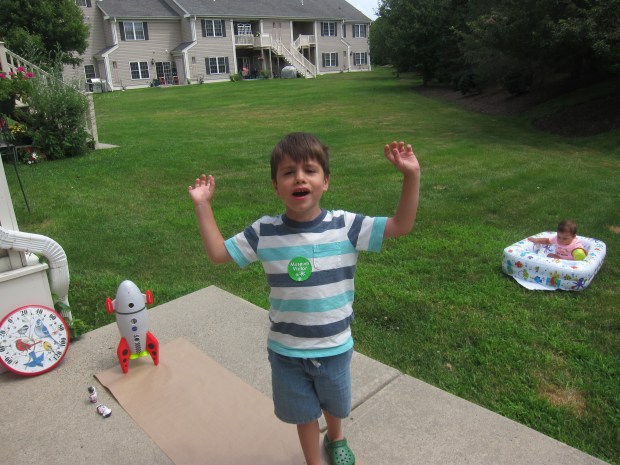
“This is what it felt like for Neil Armstrong to walk on the moon!” he marveled. He gave a proud astronaut cheer at the end of his moon walk.
Amazing Astronaut (6)

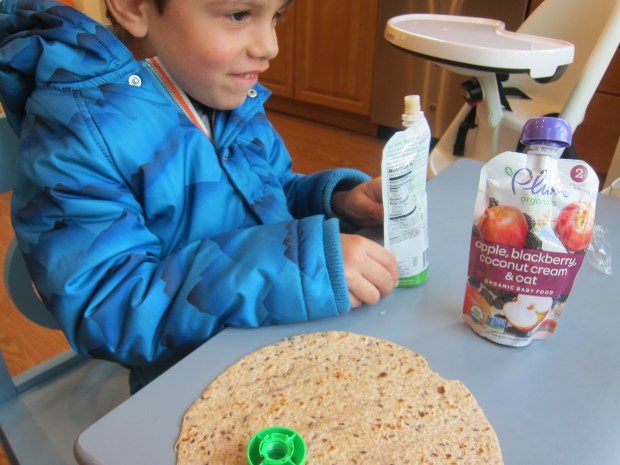
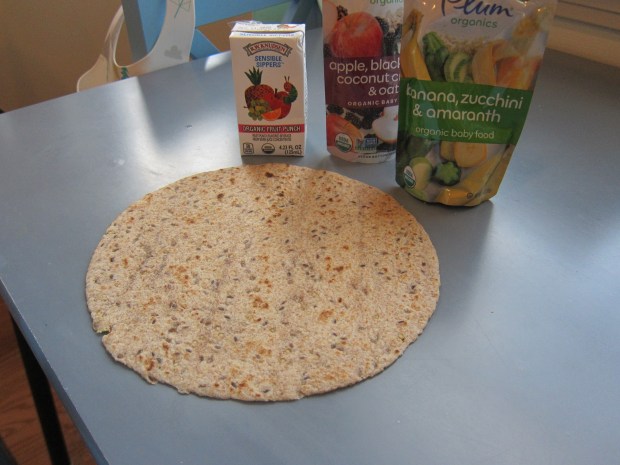
Next up, we created a space meal! Watch Chris Hadfield again, and then set out a menu. Travis had a juice box, one of baby sister’s pouches, and a tortilla!
Amazing Astronaut (7)

For added fun, make sure to suit up first: snow pants make for a big bulky astronaut suit; Travis insisted on adding his jacket, too!

Amazing Astronaut (8)

Dining in space is fun!

Amazing Astronaut (10)

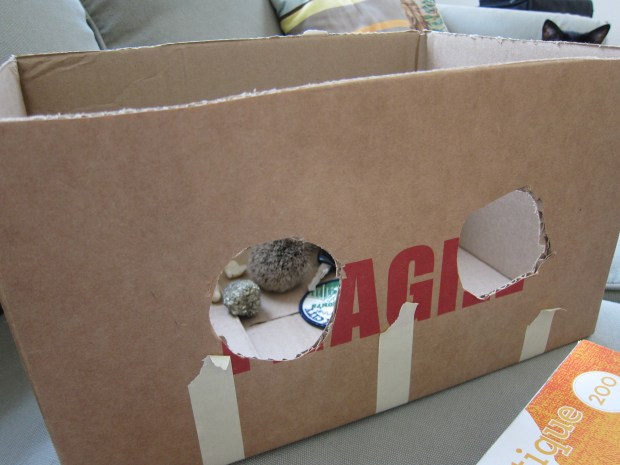
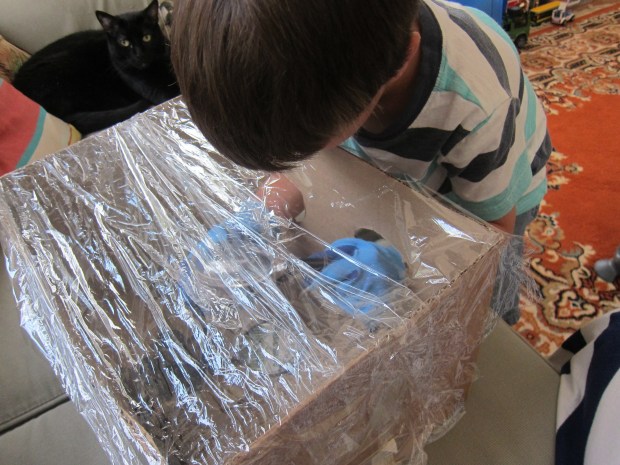
Finally, we made a Glove Box, which is how astronauts study potentially harmful materials. Trim the top pieces from a cardboard box and cut two arm holes in one side.
Amazing Astronaut (11)

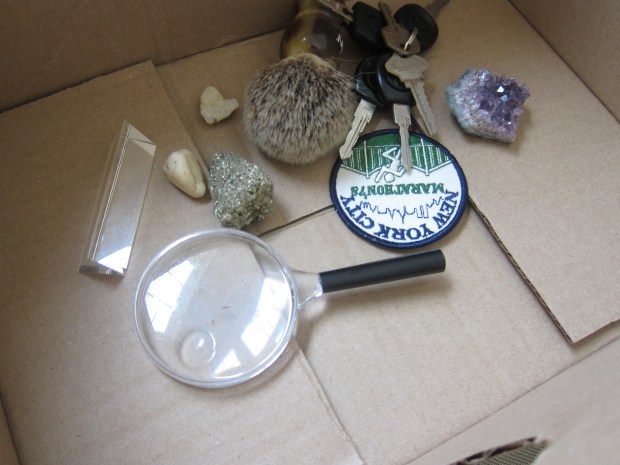
Fill with fun items. Rocks from Travis’s collection made natural “moon rocks” of course, and I added a few other odds and ends.
Amazing Astronaut (12)

Travis slipped on garden gloves (cleaning gloves would work, too). Cover the top with saran wrap, and have your child insert their hands through the holes; now it was like he was manipulating the items from within an astronaut’s glove box!

Amazing Astronaut (13)

He loved peering at the rocks through the magnifying glass.

Amazing Astronaut (14)

For added authenticity, you can duct tape the wrists of the gloves to the holes, but we skipped that step. What fun to be an astronaut for the day!
Amazing Astronaut (15)