Avocado Fries

avocado fries (1)

Whoa – one bite of these “fries” and you may never eat a potato french fry ever again. My son loved avocado as a toddler, then sadly dismissed it in nursery school. Now he gobbles it up again thanks to this recipe!

Ingredients:

  • 2 ripe avocados
  • 1/4 cup flour
  • 2 Ener-G eggs
  • 1 cup crushed tortilla chips
  • 1/2 cup plain non-dairy yogurt
  • 2 tablespoons agave nectar
  1. Peel the avocados, and remove the pits. Spoon the flesh from the skin, and cut into wedges.
  2. Place the flour in one bowl, the Ener-G eggs in a second, and the tortilla crumbs in a third. (Note: To crush the tortilla chips, use a rolling pin over them in a sealed zip-top bag).
  3. Dip the avocado wedges in each bowl, starting with the flour, then the eggs, then the crumbs. Transfer to a baking sheet lined with foil.
  4. Bake at 425 degrees F for 10 minutes.
  5. For a quick dipping sauce, whisk together the yogurt and agave.

avocado fries (2)

Starry Night Constellations


starry night (4)

Our star-themed fun continues, here in the dark days of winter. January is a great time of year to talk with little ones about stars, because the sky gets dark so early; in the summer, it’s still light when Travis goes to bed, and he hardly ever gets a chance to star gaze!

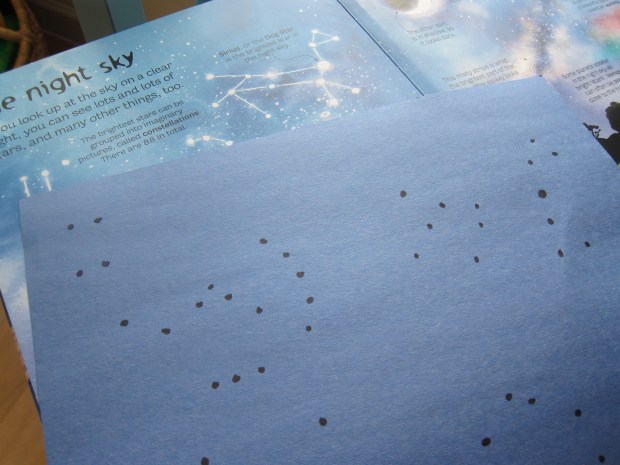
Tonight, we had flashlight fun with some of our now-familiar constellation forms. Ahead of time, I used permanent marker to make a dot for each star on construction paper, making the shapes of favorites like Orion, Canis Major, the Big Dipper, and the Southern Cross.

starry night (1)

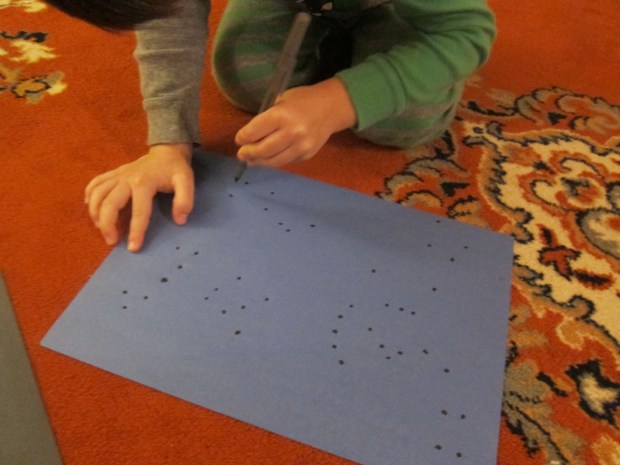
Now it was up to Travis to punch out the holes, using a pen (or a sharp pencil would work).

starry night (2)

I was quite impressed with how exact he managed to be, puncturing the paper only where I’d made dots. He loved the challenge!

starry night (3)

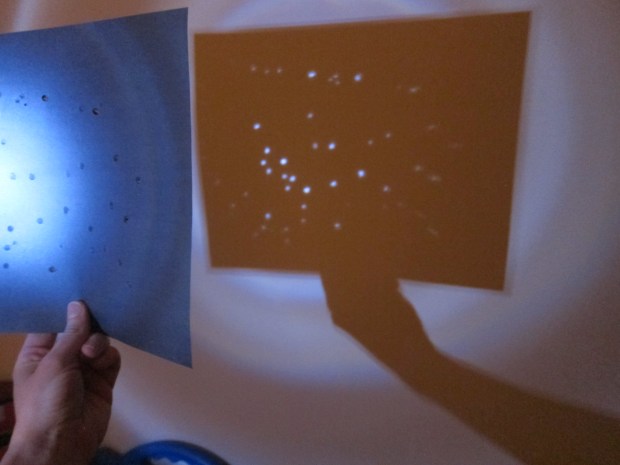
Now stand in a dark room, and shine a flashlight through the holes onto the wall. Voila, you’ll see the starry sky suspended before you! Travis loved being the one to hold the flashlight, and line up the beam so a particular constellation appeared.

starry night (5)

Indeed, he loved it so much he had to punch holes all over a second sheet of paper. Now it looked like the Milky Way was flooding our wall with stars!

starry night (8)


No-Cook Overnight Oatmeal

no-cook oats (5)

Let’s face it – mornings are crazy, amiright? High Five magazine must know it, because Travis’s January issue featured a great recipe that kids can help make the night before. Shake up these no-cook oats, and they’re ready to go for breakfast!

Ingredients:

  • 1/4 cup rolled oats
  • 1/4 cup plain non-dairy yogurt
  • 1/4 cup non-dairy milk (we used coconut)
  • 1 teaspoon agave nectar
  • 1/4 teaspoon ground cinnamon
  • Handful of dried apricots or raisins
  1. Combine all of the ingredients in a jar with a tightly-fitting lid.no-cook oats (2)
  2. Seal the jar and shake – kids will love this step!no-cook oats (3)
  3. Refrigerate for at least 8 hours, or overnight.

no-cook oats (4)

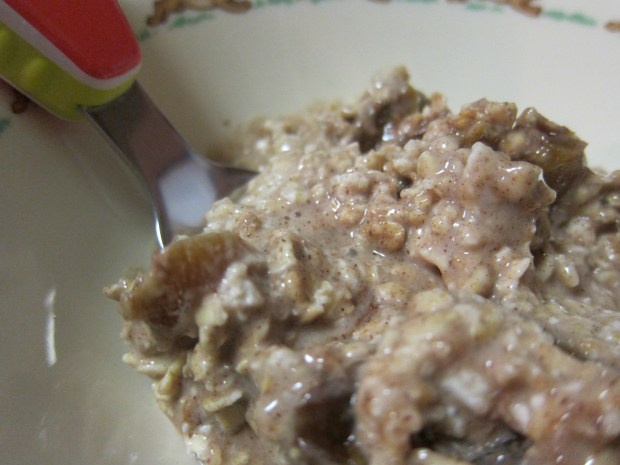
In the morning, simply uncap the jar and voila – breakfast is served. You can serve cold like muesli, or warm it briefly in the microwave.


Color Vision

color vision (1)

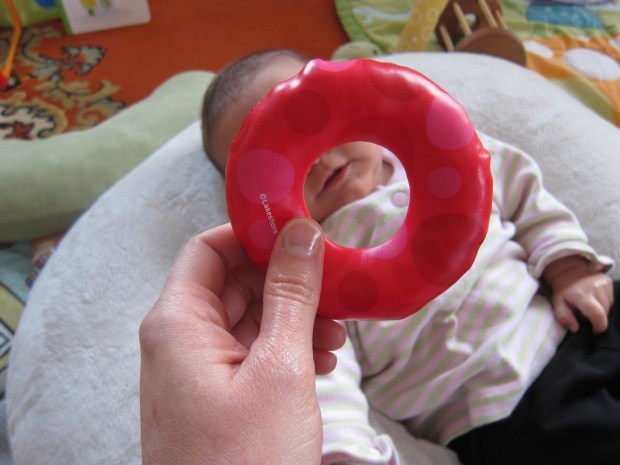
It’s never too early to introduce colors to your infant! Because your two-month-old’s eyes are now able to distinguish between shades, make sure to include a wide variety of colors in his or her toys. Today, I emphasized color each time she was on her playmat.

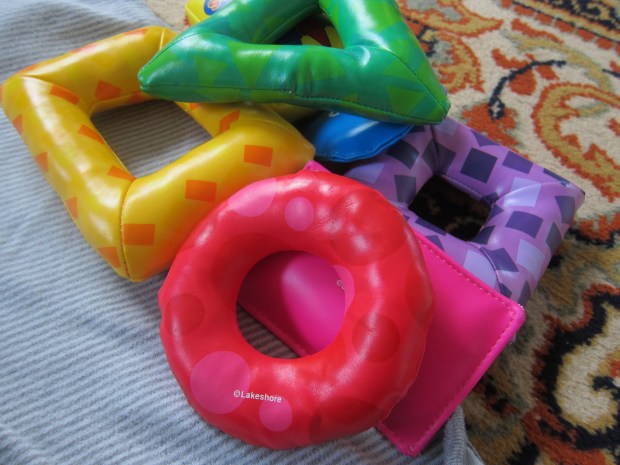
We have a set of shape toys that are in easy, bold colors, and they were perfect for this game (as opposed to multi-colored toys). I named each color in turn as I held it up to Veronika, and encouraged her to reach out.

color vision (2)

Some she wanted to grab onto.

color vision (3)

Purple and blue got big smiles – maybe those will be her favorite colors down the line!

color vision (4)

Then I set up all the colors in front of her for tummy time, so she could look at the rainbow.

color vision (5)

We played later in the day with musical instruments, and I showed her a few that were in bold, solid colors, like red rhythm sticks…

color vision (6)

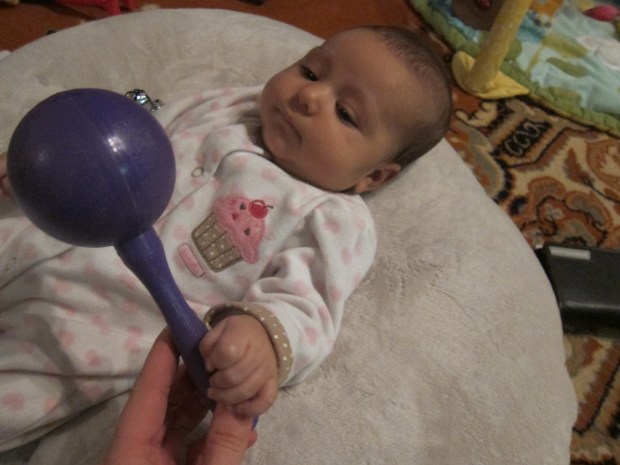
… and purple maracas. What a great way to start introducing a rainbow-hued world.

color vision (7)

Faces & Emotions Cricket Crate

Cricket Faces (20).JPG

This week, Veronika and I cracked open the last of the newborn three-pack from Kiwi Co., originally termed Cricket Crate, and now having shifted to Tadpole Crate. The theme of this last box was faces and emotions, and the keepsake was just what we needed – a new tummy time prop!

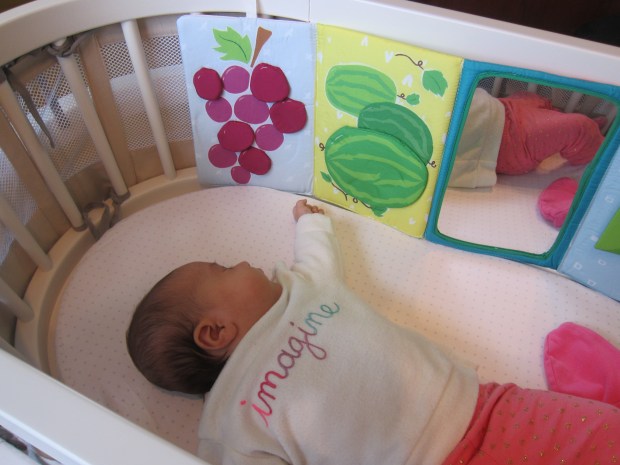
The tummy time mirror folds out in four panels on two sides, for eight visual panels total. You can lift the flaps and explore on each, where silly fruits wear different facial expressions.

cricket faces (2)

These are great for starting the conversation with your wee one about emotions – hey there, silly blueberry! Hello happy banana!

cricket faces (6)

Oh look, a sad cherry. I giggled and so did she!

cricket faces (5)

Next, we experimented with four different ways to position the mirror:

Hanging in her bassinet (Note: this is great when I need to entertain her as I cook dinner!);
cricket faces (11)

Upright for when she lies on her back;

cricket faces (3)

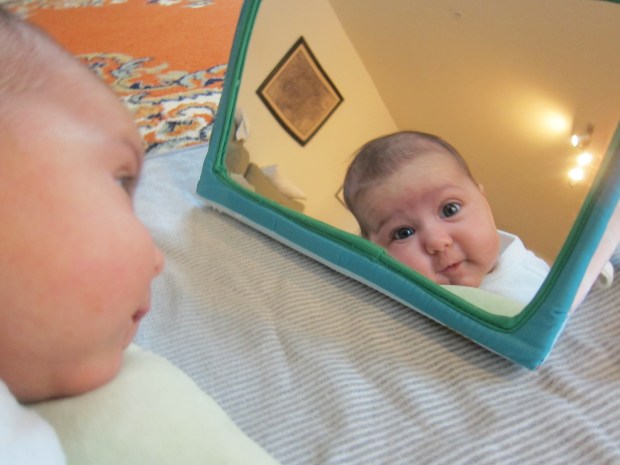
Folded into a triangle for tummy time;
cricket faces (9)

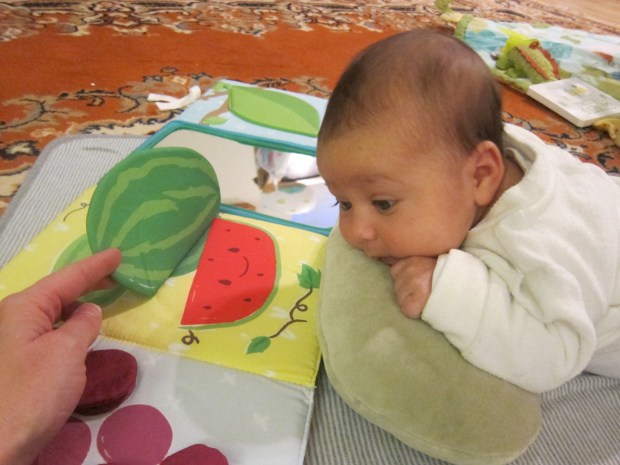
And lying on the floor for tummy time. This last she isn’t quite ready for yet, but it definitely encouraged head lifts.
cricket faces (12)

Don’t stop there! The Wonder magazine had lots of suggestions for games. First, we played ‘Look BothWays’; I used it as a way to encourage her to turn her head to the right, since she favors the left. By putting the panels on the other side, she turned her head and strengthened the muscles on that side.

cricket faces (4)

Next we played ‘Name That Facial Feature,’ similar to the game we play when she touches my face. This time, I touched the mirror, then the corresponding part on her face, naming each feature as I went.

cricket faces (7)

Lots of wonder in her eyes!

cricket faces (8)

It’s also great for helping your child learn their own name. Your baby won’t realize that the reflection is them – not until much closer to one year old – but this was a chance to say ‘Veronika,’ and point first at the mirror, then to her body. I taped a photo of her to one of the mirror panels to reinforce the notion.

cricket faces (15)

Next we played ‘Emotional Me’; I made silly faces into the mirror, naming each emotion. To further this idea, I lay down next to her on the blanket (she looked so surprised finding us face-to-face!), and held up my phone in selfie mode. She was instantly captivated – who was that baby staring back? We went through emotions – happy, surprised, sad – and you could see her trying to copy each. Take some adorable pics while you’re at it!

Cricket Faces (17).JPG

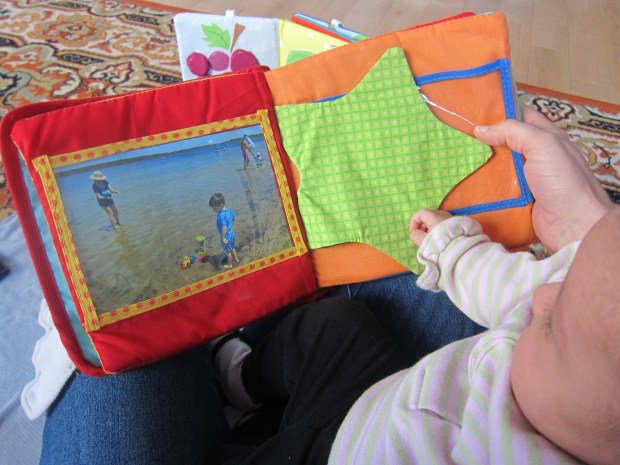
Another great way to talk about faces and people is to go through photo albums with your child. Veronika loves the one I have with crinkly textures and soft pages, full of family pics.
cricket faces (16)

Or you can even look at strangers; babies will take any faces they can get. We flipped through a magazine together, and I pointed out what each person was feeling, or if they were old or young.

Finally, start to actually engage your little one in “conversation.” Ask a question or make a comment then… Wait! Give your baby time to respond, and they will start to pick up on the rhythm of how a real conversation goes. I was rewarded with lots of little “ah ooh” and “ah geh” responses, and she seemed to happy to be “talking” with me just like she sees big brother do!

cricket faces (18)

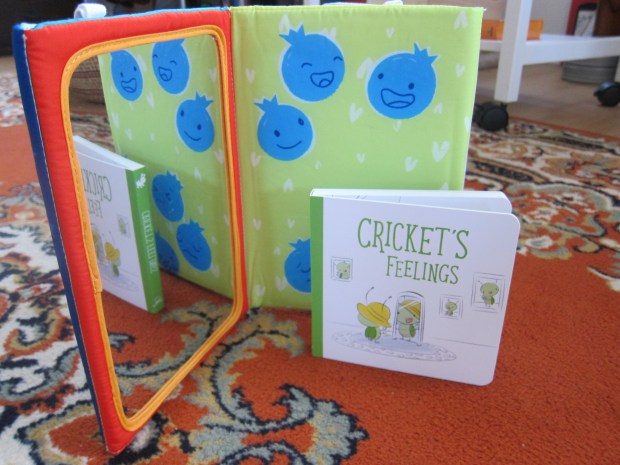
The book this month concentrated on emotions too, aptly titled Cricket’s Feelings. Don’t be afraid of getting overly dramatic as you read each page in this book – happy, scared, excited etc. You might feel silly, but Veronika was wide-eyed!

cricket faces (14)

We also read:

Baby Faces by Margaret Miller

Huggy Kissy by Leslie Patricelli

Happy Hipp, Angry Duck by Sandra Boynton

Little Gorilla by Ruth Bornstein

Gideon & Otto by Oliver Dunrea

and From Head to Toe, by Eric Carle

Cricket Faces alt.JPG

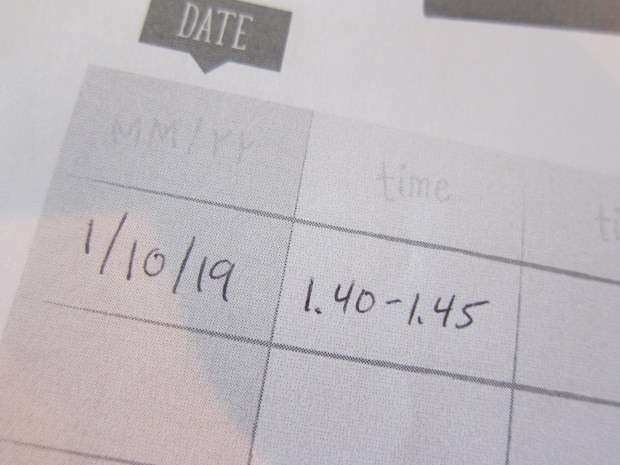
The website bonus this month was a downloadable Tummy Time tracker. This sheet was definitely a reminder for a mom like me who never makes enough time for it.
cricket faces (10)

Now it’s on my counter and jogs my memory every time I walk into the kitchen. As mentioned, this was our final Cricket Crate – eager to delve into Tadpole next, once the series is fully up and running!

Sock Play

sock play (1)

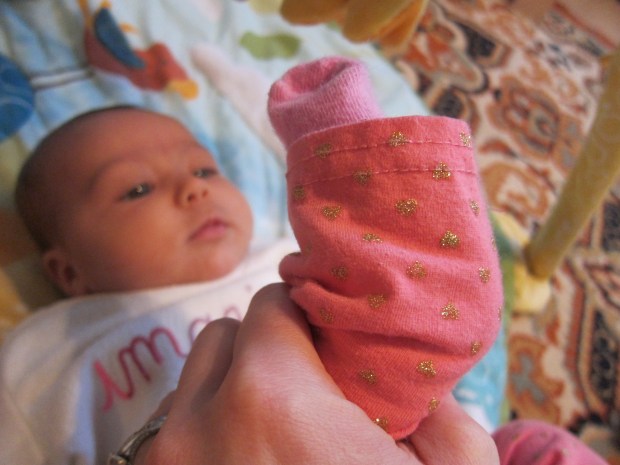
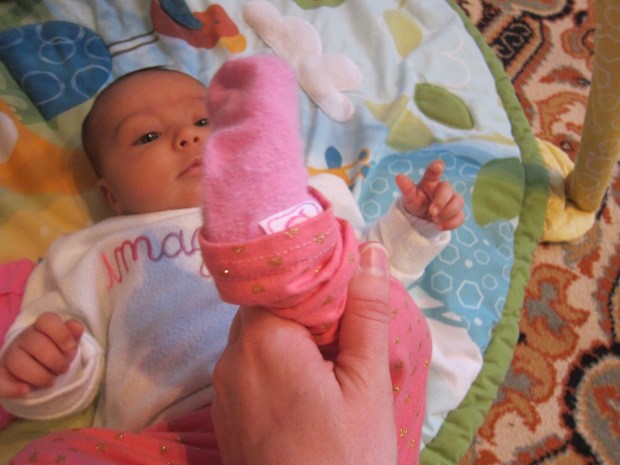
At about this age (10 weeks old or so), babies start to discover their… feet! One way to direct attention to those adorable little tootsies is to put on a pair of brightly-colored socks, and help your little one find his or her feet.

I bent Veronika’s legs up, and happily crowed, “Pink socks!” She instantly was fascinated.

sock play (2)

Babies love to reach for their toes, hence why they are so prone to pulling the socks right off and losing them! This time, I wanted her to do so. I loosened the sock slightly, and then it was just a matter of time before Veronika had a grip and… a bare foot!

sock play (3)

Who knew socks made such great toys?

sock play (4)

Fresh Water, Salt Water

fresh water (4)

This activity from Travis’s January issue of High Five magazine provided a nice dose of STEM learning, alongside the usual monthly craft. We’ve done a similar experiment before, but liked the set-up for this version!

Fill 2 large clear glasses with 1 and 1/2 cups warm water each.

fresh water (1)

Add 1/3 cup salt to one cup, and stir until dissolved.

fresh water (2)

The instructions said to tint the other cup blue with food coloring so you can tell them apart. Because the salty cup is cloudy, this step isn’t really necessary, but blue water is cool, so why not!

Now add the same object to each of the two cups, and observe any differences. We tried the magazine’s suggestions of aluminum foil balls, which floated to the top in both versions.

Next we tested plastic dinosaurs. Both sank. Hmm, no difference!

fresh water (5)

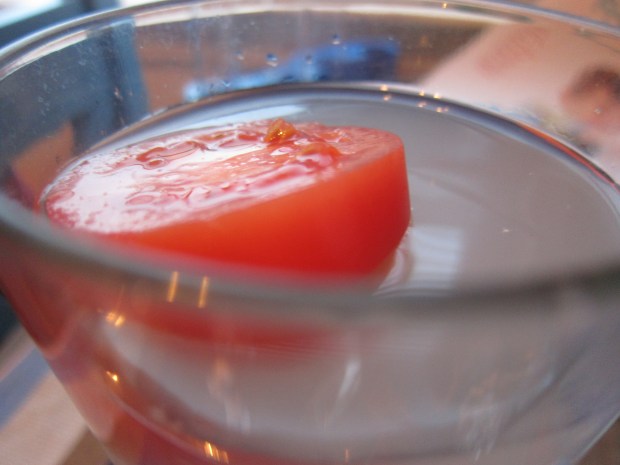
Finally, when we tried tomato slices, the tomato in the salt water seemed to pop above the surface with more buoyancy.

fresh water (6)

But why hadn’t the others been different? We added more salt to the salty cup, liberally pouring in and stirring. After two more tries, we had a crayon that floated!

fresh water (7)

The crayon in the opposite cup, down at the bottom, helped illustrate buoyancy best for Travis.

fresh water (8)

Overall, he loved the set-up and scientific nature of the project, plus adored pouring the salt. Great for budding scientists.

Touching Faces

touching sensation (2)

Veronika is reaching out to her toys all the time now, and I love watching every time she does so on her playmat. But even better is when she reaches out to me!

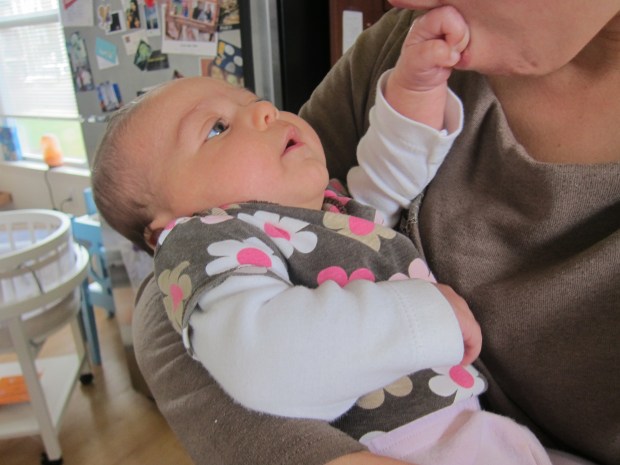
A few days ago, she reached up for the first time to touch my face, a look of wonder in her eyes. I was happy to let her hand explore. Now we take a few minutes each day for this beautiful exercise.

touching sensation (1)

As she touches each feature, I’ll then move her hand to the same feature on her own face. “Mommy’s cheek, Veronika’s cheek,” I’ll say. You can repeat this phrase for the chin, nose, forehead, etc. Eyebrows are fun because they’re furry!

touching sensation (3)

Now this is the very best kind of face time!

Flashlight Show

flashlight show (2)

Your two-month-old is still developing his or her eyesight, and still loves sharp contrast. A great way to play up this factor is to shine a flashlight after dark! This is a cozy game to play at bedtime, or as you wind down for the evening.

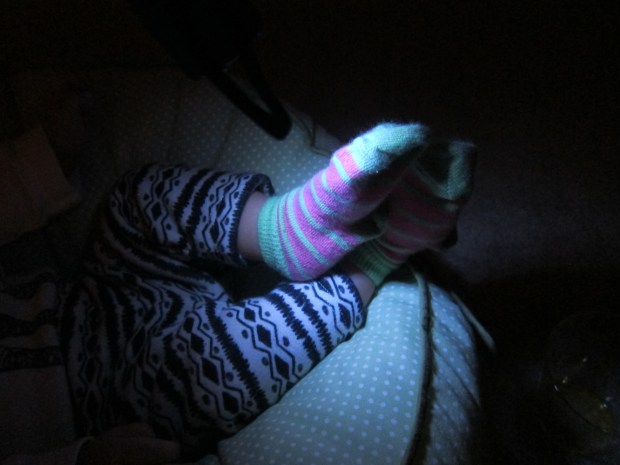
I sat with Veronika in her room, turned out the light, and started by shining a flashlight on different parts of her body. Those adorable feet…

flashlight show (1)

…and hands.

flashlight show (4)

Next I shined the light on various toys or objects around the room, naming them as I did so. This makes the game great not just for strengthening eyesight, but also for language development.

flashlight show (3)

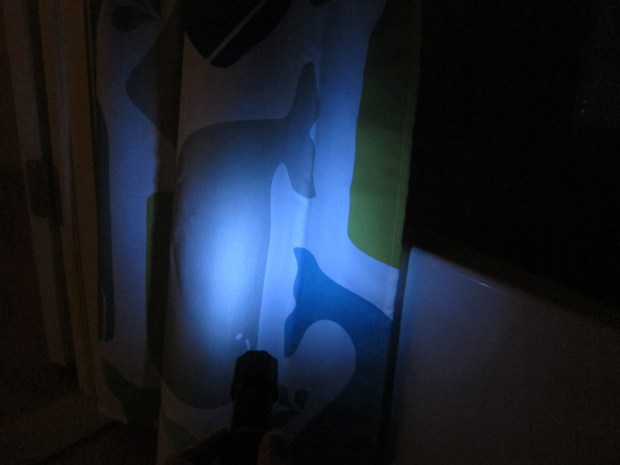
Because big brother Travis loves to take the occasional bath-by-flashlight, we extended the game to bathtime. Lots of great vocab in here, including the shower curtain…

flashlight show (5)

…and the little whale who protects our spout.

flashlight show (6)

You can also play this game while your baby lies in the crib, and shine the flashlight through a toy or other object held up against the wall. You’ll get great shadows – what a show!

Jellyfish Lantern

jellyfish lantern (8)

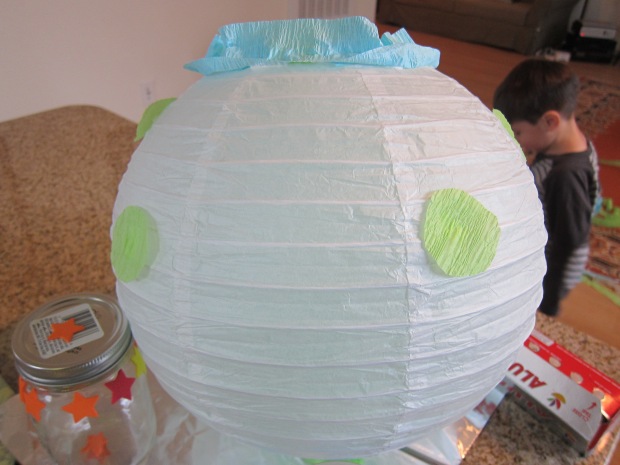
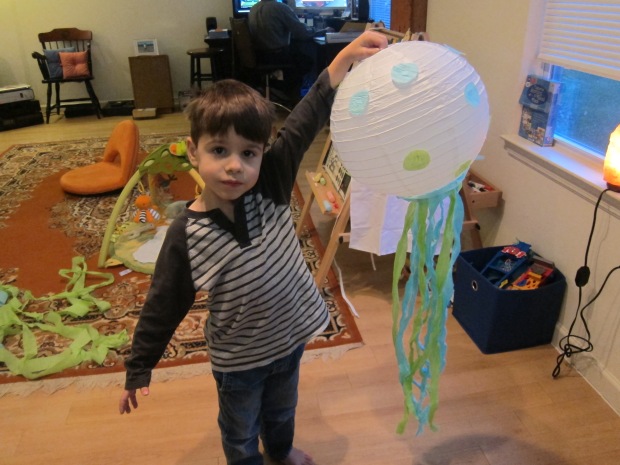
It’s getting hard to impress Travis with crafts these days; let’s be honest, we’ve done a lot of them! It seemed like time for new materials – hence this awesome paper lantern jellyfish. It is by far the coolest jellyfish we’ve made together, and we’ve done a few in the past.

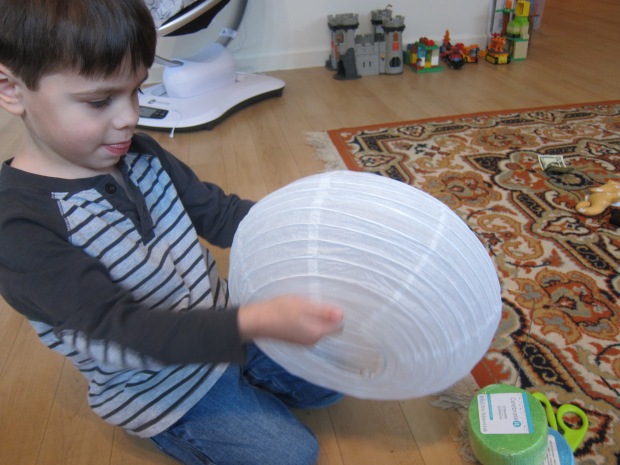
Travis remembered seeing paper lanterns from a summer festival back in August, and was so excited when I announced I had one for our craft. He needed to play with it first, of course!

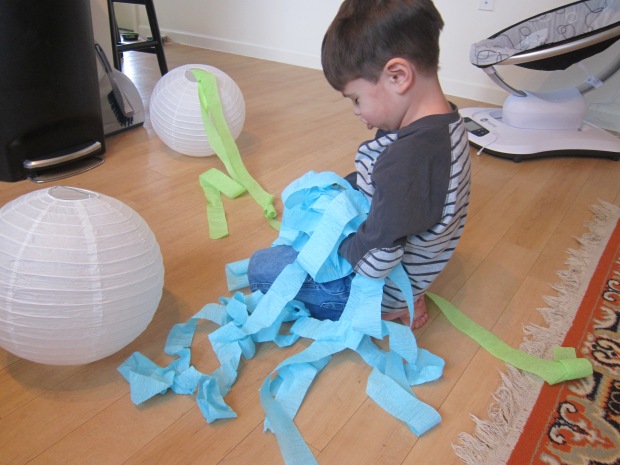
jellyfish lantern (1)Next we needed crepe paper for the tentacles… It wasn’t long before we had crepe paper madness in the house, too!
jellyfish lantern (2)

I was happy to see him have so much fun, while I made sure to save enough pieces of equal length to be the tentacles.

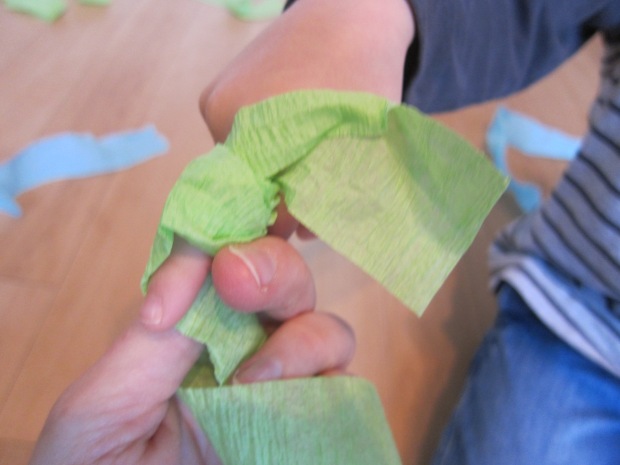
Next I showed him how we could change the look of the crepe paper by wrapping around a finger. This gave the tentacles great texture!

jellyfish lantern (3)

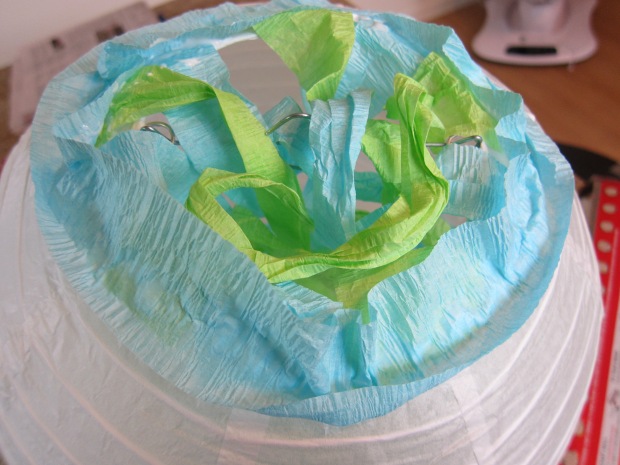
Glue the tentacles around the bottom rim of the lantern. Add a final piece of crepe paper in a circle around the rim, to hide all the edges. Let dry.

jellyfish lantern (4)

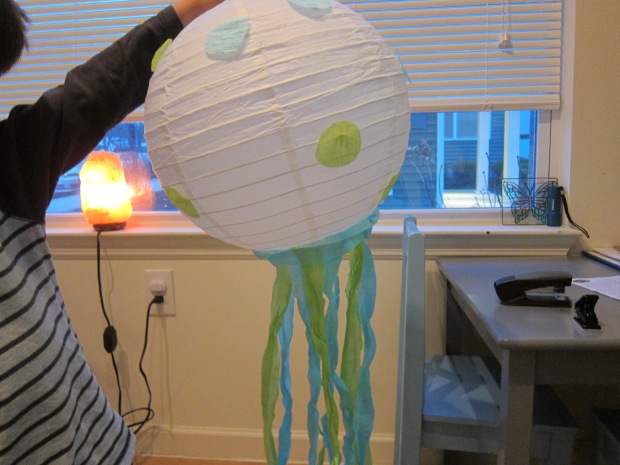
We also cut a few circles from additional crepe paper to be spots on the jellyfish. So pretty!

jellyfish lantern (5)

Travis couldn’t wait for it to dry, after which the jellyfish was instantly a prop in his games.

jellyfish lantern (7)

Once he lets go, we’ll hang it from the ceiling for a beautiful ocean corner of his bedroom.

jellyfish lantern (6)