Birdseed Indoor Sandbox

Birdseed Sandbox ($)

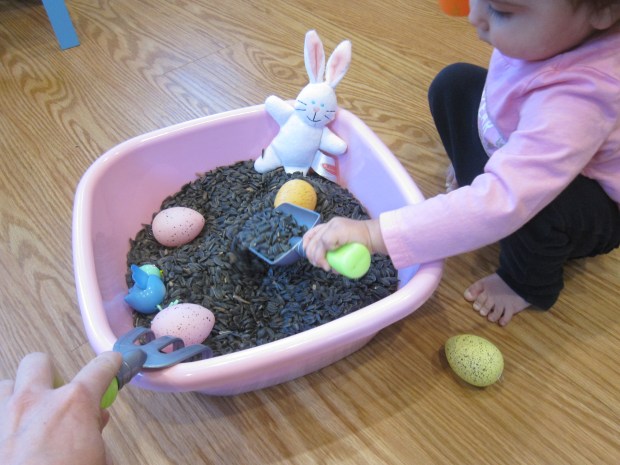
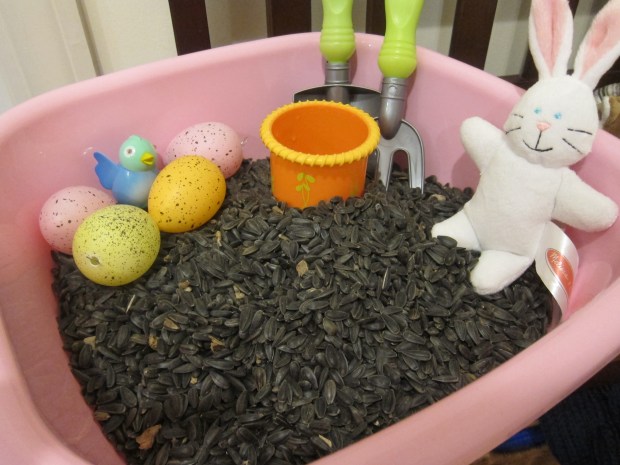
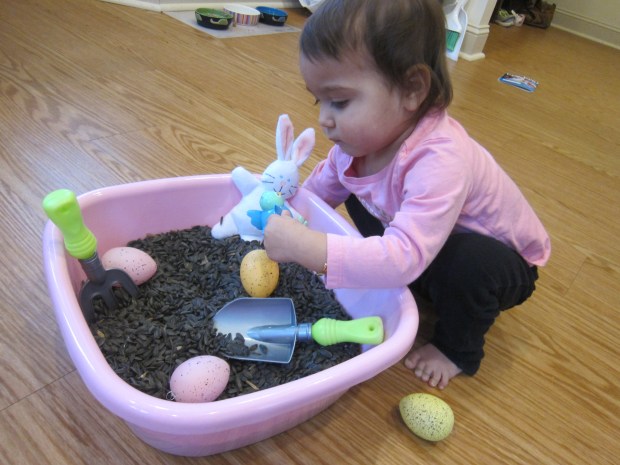
I was looking for a good material for an indoor sandbox this morning, and remembered we had a bulk bag of birdseed. What perfect timing for the first day of spring! For a touch of spring whimsy, I added little speckled Easter eggs, a wind-up bird toy, child-sized gardening tools, and a “flower pot”.
Birdseed Sandbox (1)

Of course Veronika might not have picked up on these details, but she sure loved coming over to explore!

Birdseed Sandbox (2)

First she tested out the birdseed with a lot of scooping and pouring, enjoying both the spade and the cup.

Birdseed Sandbox (3)

The little bird had her momentarily intrigued.
Birdseed Sandbox (5)

Then while big brother was doing his home school lessons nearby, this happened:

Birdseed Sandbox (6)

But that’s okay! The birdseed sweeps up like a dream, and she was so delighted at her own antics.
Doll Bed

Doll Bed (7)

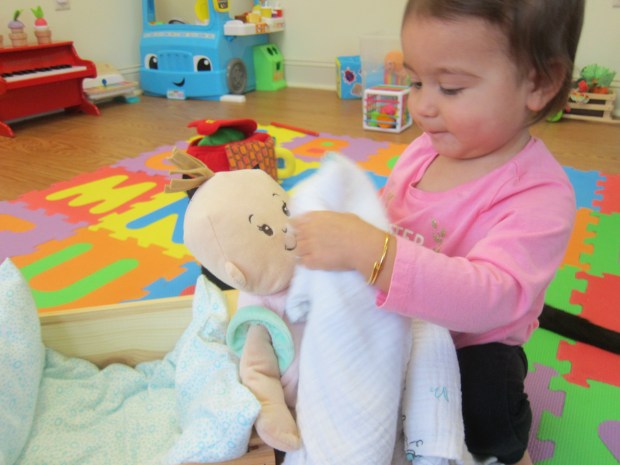
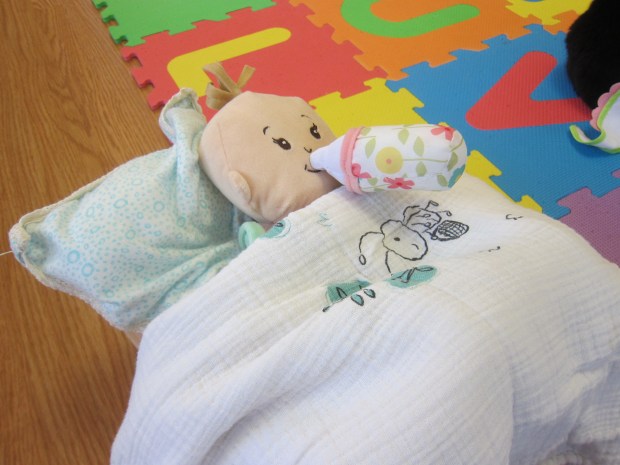
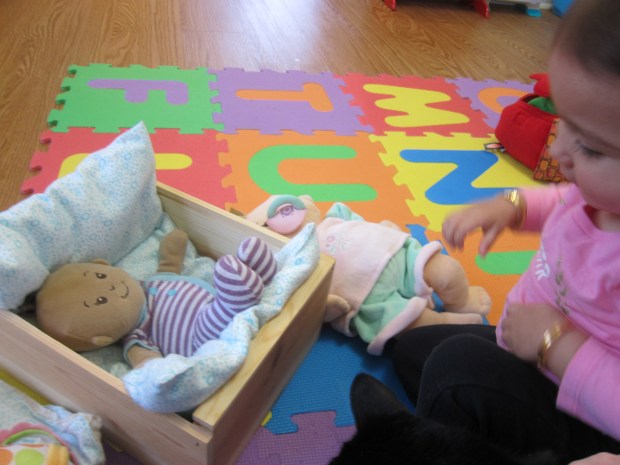
Veronika adores her two soft dolls (both named “Baby”), and I find myself marveling at the way she mothers them. She loves to give them hugs, pretend to feed them, arrange them in her car seat, and more. So today I made a little bed for her to tuck them in! Doll furniture can be expensive, but all you need for a doll-sized bed is an old box, whether a shoe box or something sturdier (I used a wooden one).

We added a pillow and Veronika’s very own baby blanket from the hospital!

Doll Bed (1)

I showed her how to tuck Baby in for the night, and she loved it. She proudly said “sleep sack” as she layered the blanket on top.

Doll Bed (3)

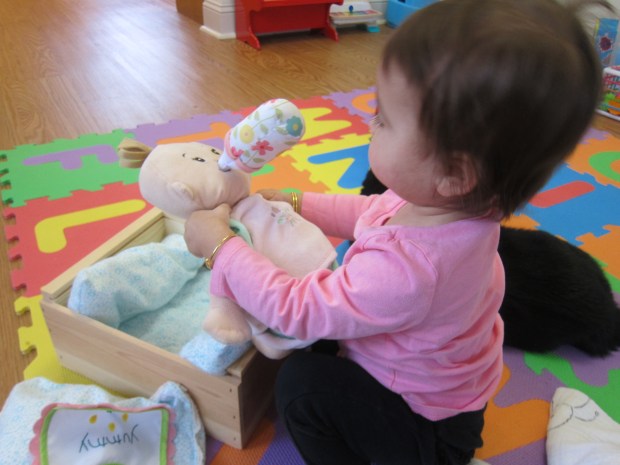
Of course baby needed a sip of milk before bed.

Doll Bed (5)

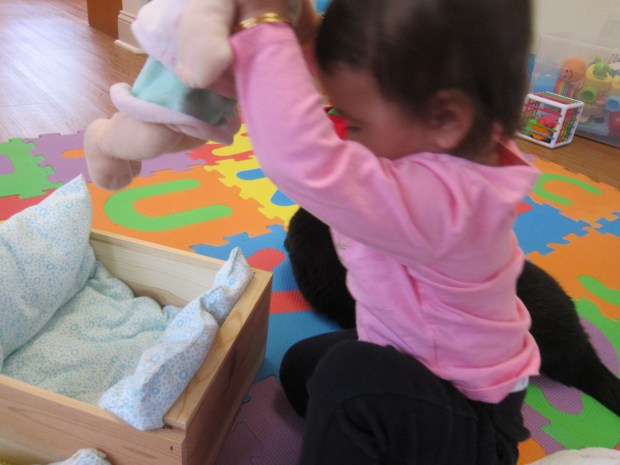
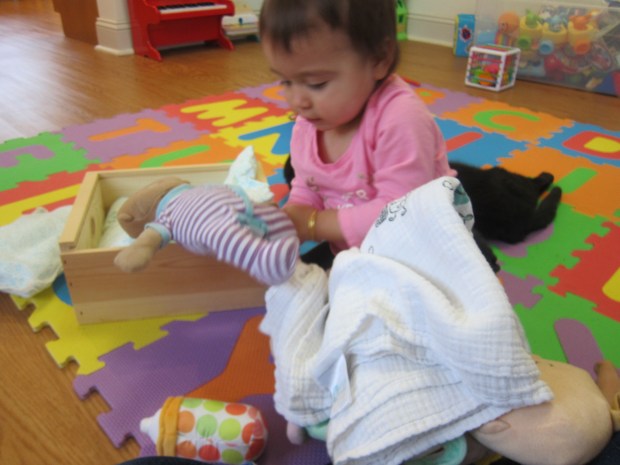
She spent quite a while taking both dolls in and out of the bed, rearranging them just so, and clearly taking a lot of pride in her caregiver role.

Doll Bed (4)

This was such a sweet game to start her day.

Doll Bed (6)

Friends and Family Map

Friends and Family (4)

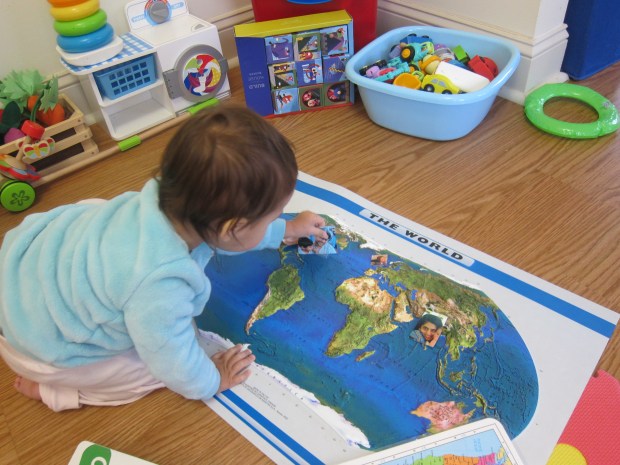
Here’s an activity I’ve meant to do with Veronika for some time, and now with the era of COVID-19 upon us I was propelled into action. For babies who might not get to see relatives in person very often, it’s helpful to have a visual depiction to go with names (Grammy! Papa!) as well as of where people live.

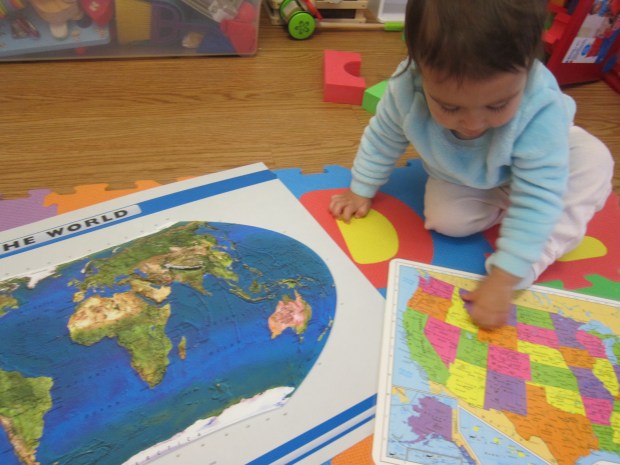
I used two maps for the game, one a world map and one a close-up of the United States.
Friends and Family (1)

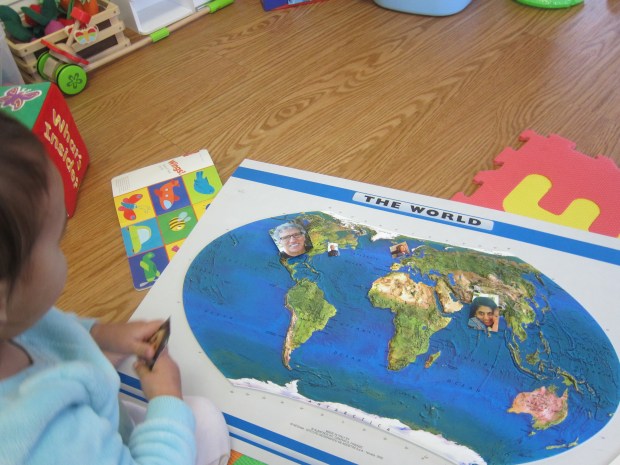
Print out pictures of family members, and then cut the faces into small squares; tape these down to the map. She loved looking through all the photos as we worked, proudly saying the names of grandparents and aunts and uncles.

Friends and Family (2)

Of course Veronika is too young to fully understand geography, but it was a fun way to introduce the names of different states as we positioned all the photos.

Then we moved up to the world-sized map to look at relatives who live abroad, and also the places where her ancestors come from, like England and India.

Friends and Family (3

Hang this on the wall and refer to it often!

Remember What We Did Today?

Remember Did (4)

This little game is a great way to teach even the youngest kids about a storytelling arc, specifically the notion of a beginning, middle, and end. Since Veronika is rapidly acquiring language, it seemed like the right time to work with her on storytelling, even as big brother does his ELA lessons!

I sat down with her just before bed holding some of the items we’d use throughout our play.  A toy puzzle helped further provide visual cues. “First, we woke up,” I said, pointing to the woman rising for the day in her bed.

Remember Did (5)

“Then we had a tea party!” I reminded her. She came over to inspect the cups and play with them again.

Remember Did (2)

“Then you painted with water,” I reminded her, using the paint brush as a cue. Now she could test out a few brush strokes on the tea tray.

Remember Did (3)

You can hit upon other events in the day, too, like car rides or nap times. Or focus on one particular moment in the day, like a stroll in the park, and discuss any beginnings, middles, or ends. Again, visual cues help!

Remember Did (1)

“Finally, we’ll brush our teeth and go to sleep,” I told her. No matter how mundane the events of your day seem, it can be very helpful for a child to hear things in sequence like this. Consider making it a nightly practice!

Water Painting

Water Paint (5)

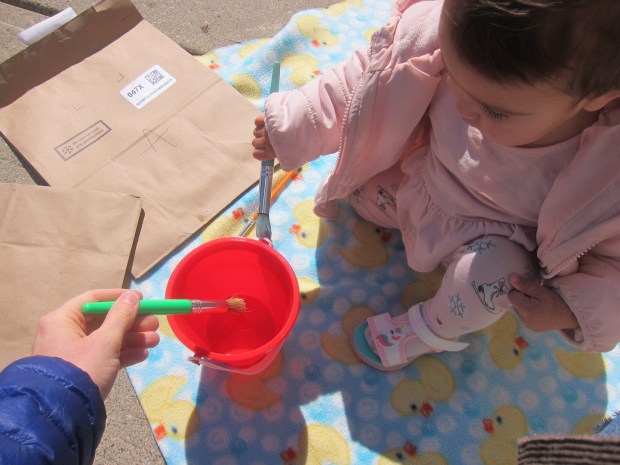
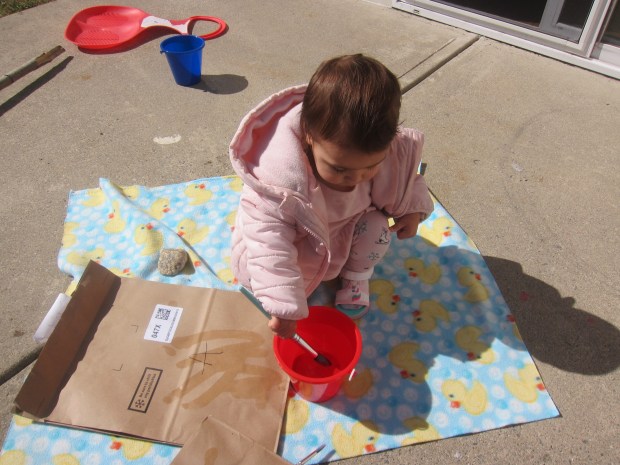
With sunshine on our back patio, Veronika had some water fun outside today after a morning cooped up for home schooling! This was the perfect game to occupy her during big brother’s “recess”.

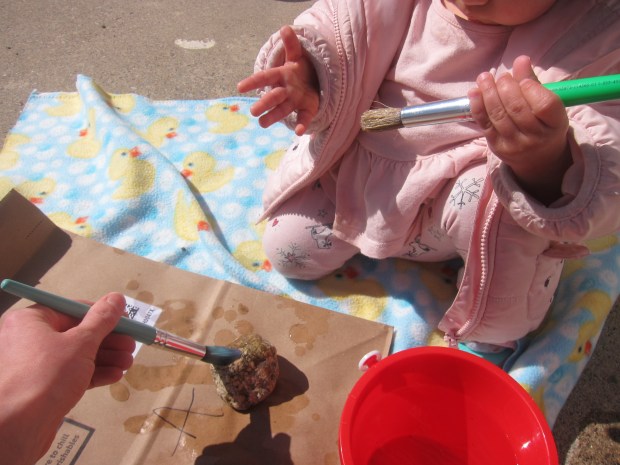
I sat Veronika down on a soft blanket and presented her with a bucket full of water, paint brushes, and brown paper bags. The bags were to be her canvas, and my little artist went to work!

Water Paint (1)

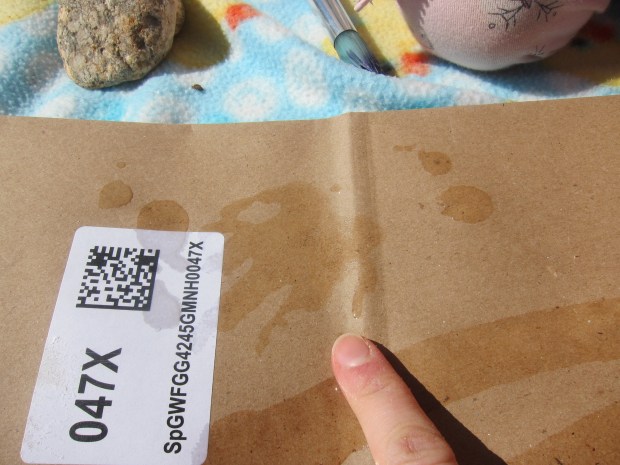
She was fascinated watching her “paint” appear on the brown bags, instantly making dark marks, even though she also knew this was just water.

Water Paint (2)

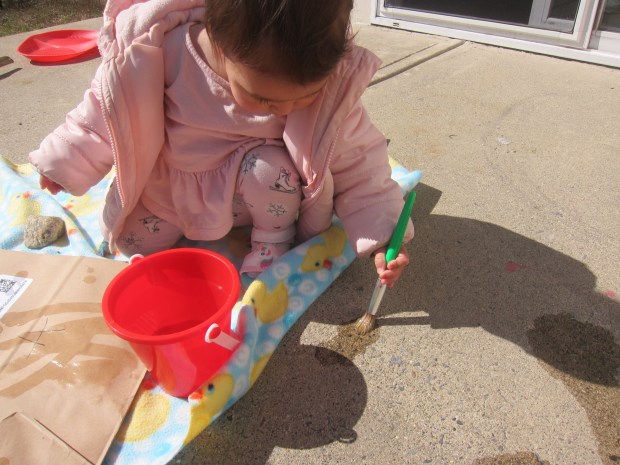
We tested out the way the water made everything darker, whether the patio next to her…

Water Paint (3)

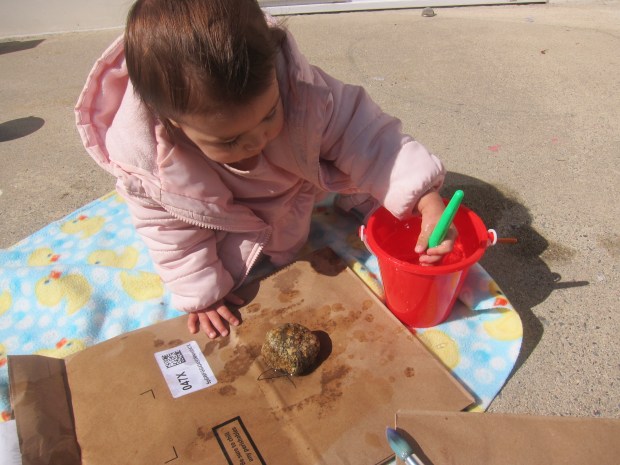
…or a rock from the yard. The rock was particularly fascinating, and she loved “painting” it for quite some time.

Water Paint (6)

I showed her that she could get her hand wet and make prints on the bags.

Water Painting (9)

After which she wanted to paint water on her hand for a while!

Water Paint (4)

She also loved watching big droplets of water drip from the brush if she held it up in the air. These made fun runnels of water over the brown paper bags.

Water Paint (7)

At one point we made a big puddle on the patio, and watched how quickly the sun turned the color to normal again. You can have fun doing this with shapes and letters for your little one, too; it’s the original invisible ink!

Water Paint (8)

Chances are your big kids might want to join in on this one, too.

Tea for Two

Tea for Two (1)

Toddlers love learning to pour and there’s no better place for it than in the bathtub. That way, you literally have no spills to clean up!

I decided to make it extra fun for Veronika by turning a pouring lesson into a tea party game. A low stool made a perfect table, and I filled the tub with a little warm water and got her in her bathing suit.

Set the table with a tea set of course! We added a pot, plates, and two cups, along with a few toy “cookies”.

Tea for Two (2)

She was so happy to be a guest! First I filled our cups with the “tea” and pretended to take a sip, which just made her grin.

Tea for Two (5)

Then it was her turn! She loved being in charge of the tea pot…

Tea for Two (3)

…and also loved using one of the cups to scoop up hot water and fill the other cup.

Tea for Two (7)

We got silly and filled the “cookies” with water two, and experimented with taking the lid on and off the pot.

Tea for Two (6)

She probably could have stayed in here playing this game for hours, but the water got cold!

Tea for Two (4)

Getting Dressed

Getting Dressed (5)

This cute activity is a hands-on way to build your toddler’s clothing vocabulary. Veronika’s earliest words were clothing items (“socks!”), and whenever we come in from outside, she runs through the litany of things to remove: “Coat, hat, mittens…” So I knew she would love this interactive version of getting dressed.

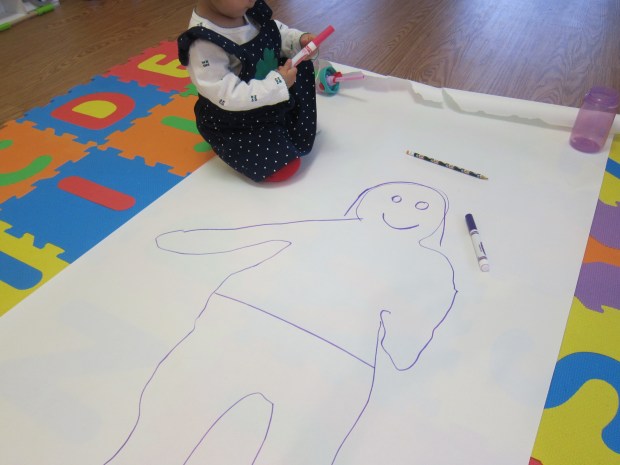
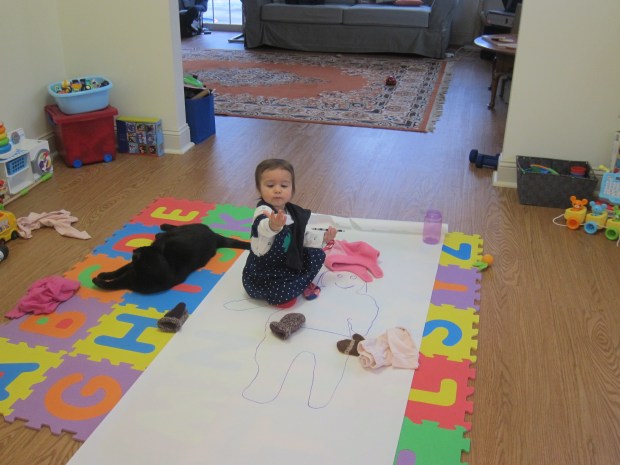
First, I laid her down on a big sheet of craft paper and traced her outline (which turned out a bit wiggly; she’s a toddler after all!).

Getting Dressed (1)

Then I filled in the basic outline of a person.

Getting Dressed (2)

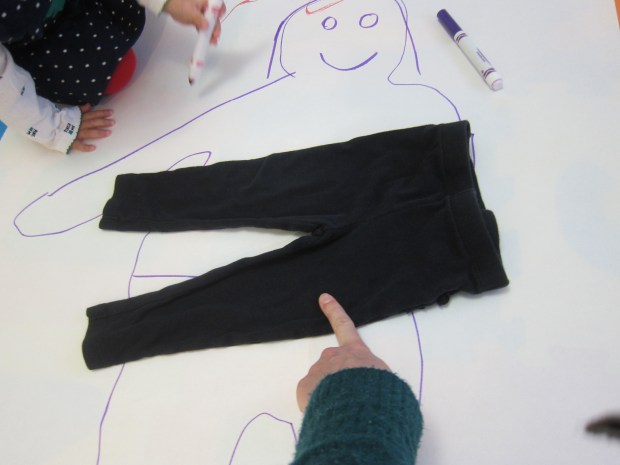
I had brought down several articles of her clothing and took turns lying these near the person we’d drawn. “What are these called?” I asked. “Pants!” she responded. Then I positioned the item where they should go on the body.

Getting Dressed (3)

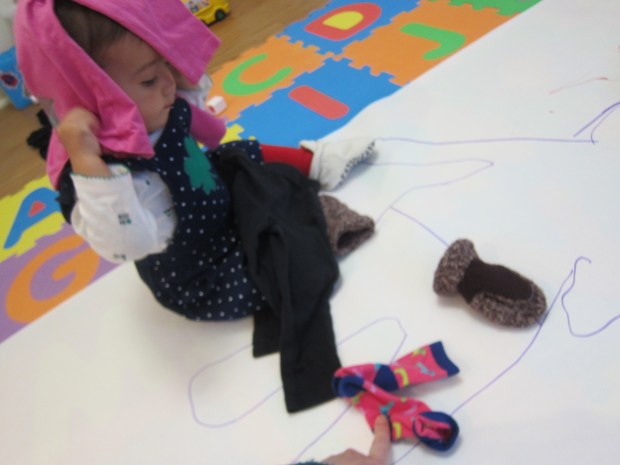
Shirt, hat, socks, and mittens soon followed.

Getting Dressed (4)

Of course your toddler won’t always leave things in the “right” place, but Veronika sure loved playing with all the clothing.

Getting Dressed (6)

A great way to keep a little sibling busy!

Getting Dressed (7)

Little Performer

Little Performer (2)

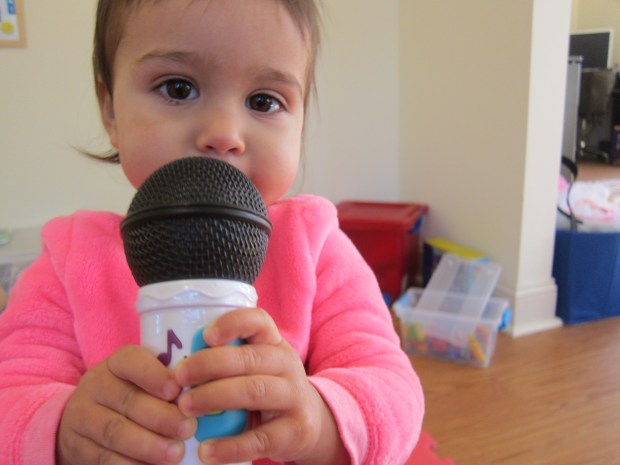
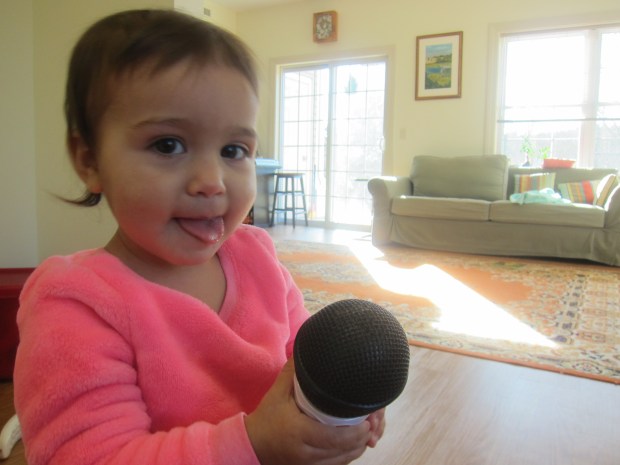
When my eldest was little, the instructor in his baby music class always encouraged the kids to echo syllables into a toy microphone, as in “ba ba ba” or “la la la”. Inevitably it took forever to go around the circle, and inevitably the kids clammed up when it was their turn, rendering the whole thing a big waste of time.

But the activity is not without its merits; the idea is to encourage mimicking, work on learning favorite sounds (like animal noises), and building the muscles needed for language development. I had a hunch that the privacy of the home would be a better spot for this activity, so today, Veronika was the star of the show!

I made a big deal of it to set the scene, of course. “Announcing, today’s performer, Miss Veronika!” She looked so pleased with the microphone in her hand.

Little Performer (3)

I started out with syllables. “Ba ba ba,” I said. She did it right back!

“Ma ma ma.” She echoed me again! I knew she was really in to it when she went three for three, using “la la la” on the third round.

Little Performer (1)

Then we got into animal sounds. Here’s quick clip including a “meow” for one of her favorite animals.

I stepped away for a quick chore, and returned a few minutes later to find her humming into the microphone.

Surely it will be no time at all before she’s belting out tunes into the mic. A little performer indeed!

Little Performer (4)

Big Swings

Big Swings (5)

Veronika got a little indoor batting practice this morning with a toddler version of T-ball!

For set up, you’ll first need to tie a length of ribbon to any child-sized ball. I liked using her sensory balls with holes in them, since the ribbon looped through easily, but you could also just tape ribbon to a solid ball.

Big Swings (1)

Now tape the other end of the ribbon above an open doorway. Make sure to use lots of tape so these are secure. Veronika reached up immediately, quite intrigued.

Big Swings (2)

I handed her a wooden spoon and showed her how to bat at the balls. She was a quick study!

Big Swings (3)

Whether using her hands or the spoon, it delighted her to see the balls make big swings back and forth.

Big Swings (4)

She also loved walking through the dangling balls.

Big Swings (6)

Or holding on to one as she spun and twirled and walked back and forth.

Big Swings (7)

An alternate title for this post could very well have been “How to entertain your toddler while homeschooling a big sibling”, ha. It kept her so busy while big brother tackled his morning Spanish and English Language Arts!

I Spy

I Spy (4)

“I spy” is such a classic children’s game that it’s easy to overlook it. But don’t! And yes, you can play it even with children who are just beginning to speak.

Here are a few ways Veronika and I already play the game, at sixteen months old. First, I use pages of her Hello magazines as “I spy” prompts. “I spy a duck,” I might say simply, and ask her to point to the duck on the page. The magazine’s “Find It” page is particularly great for this activity.

I Spy (3)

It’s a nice way to reiterate vocabulary she already possesses. She sometimes signs the word proudly, or sometimes says it orally back. “I spy a fish!”

I Spy (5)

It’s also a great way to build on existing vocabulary, so I might instead say, “I spy something fast and red. The red car!” This is closer to the classic version you can play with older children (“I spy something red…”) and helps add colors, adjectives, and nouns into her repertoire.

I Spy (1)

Then we take the game along in the car. If she has an issue of Hello open on her lap, I’ll make a mental note of what’s on the page. As we drive, I can say, “I spy a tree.” She’ll look up with a smile when she spots it.

I spy (7)

We also talk about what’s out the windows, though this can be harder for a toddler to grasp with so many items whizzing by. But big siblings will love jumping in on the game. Travis gave Veronika helpful clues like, “I spy an animal that’s furry and says woof,” just as we drove by a dog. What will she spy next? So many possibilities!

I Spy (6)