Submarine Sandwich

Submarine Sandwich (3)

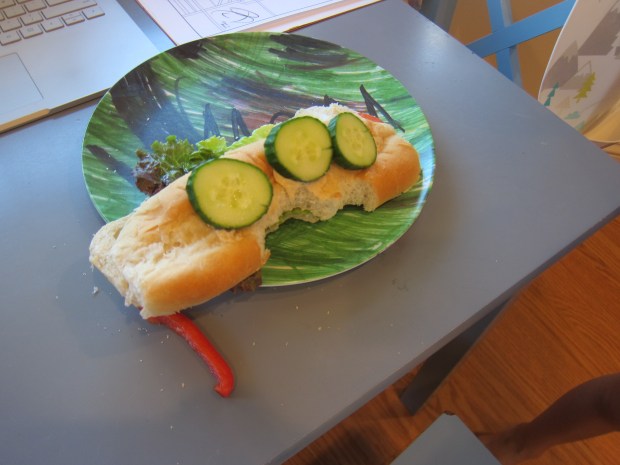
After recently learning about submarines, Travis has a whole new appreciation for why we call it a “submarine” sandwich now. We put together this fun lunch to play up the name.

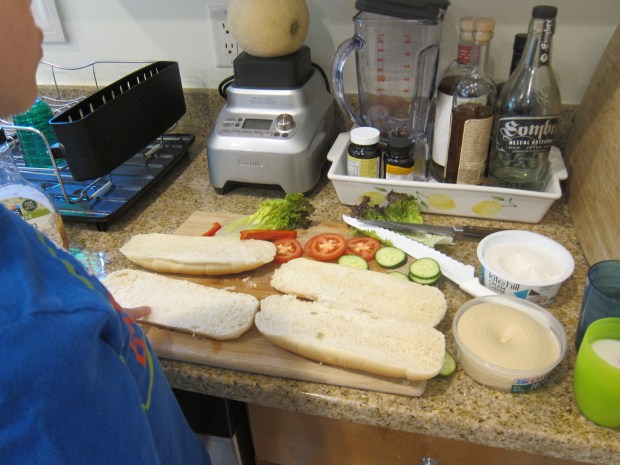
To start, slice a long bread roll in half. Spread with your child’s filling of choice. We made one version with hummus and one with non-dairy cream cheese!

Submarine Sandwich (1)

Add other toppings (Travis chose lettuce and tomato) then top with the other half of the bun.

Submarine Sandwich (2)

We added a strip of red bell pepper as the “periscope” sticking out from the top, then used additional hummus or cream cheese as “glue” to stick on cucumber circles for “portholes”.

Submarine Sandwich (4)

Of course the lunch inspired some imaginative play; Travis loved pretending he was a giant squid attacking the boat as he ate, of course!

Submarine Sandwich (5)

Shopping Green

Green Grocery (1)

To go along with copious plant-based recipes from Raddish Kids this month, one lesson plan was about not just eating green but shopping green. Unfortunately, some of the suggestions are impossible under current coronavirus regulations. But the gist of the lesson wasn’t lost on Travis, even with a little improvisation.

This actually was a two-part lesson, spaced a week apart, and we began after my weekly foray to the grocery store last Sunday.

Green Grocery (2)

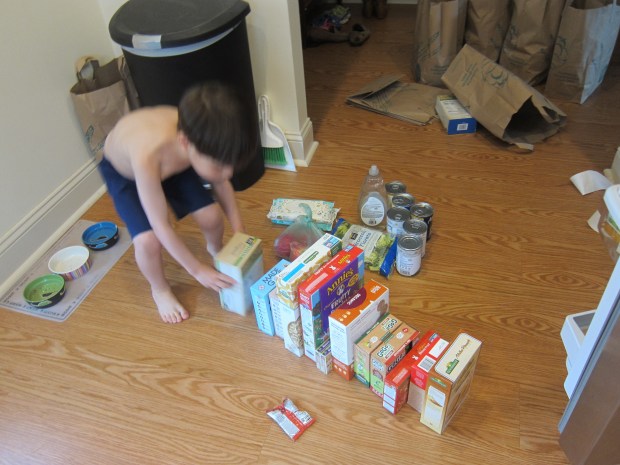
Travis helped me unload the bags so we could look at how much waste we were generating. We laid out all the boxes, metal cans, and plastic bags full of fruits and vegetables. Travis helped tally up the total in a chart, including 21 boxes (!), 8 plastic bags of produce, and 7 metal cans.

I also had purchased some items with the intent of showing him how we could improve. Which did he think was better for the planet: a single-serve peanut butter pouch or the whole jar?

Green Grocery (7)

Bottled water (which we normally never buy!) or the filter in our fridge? Individually wrapped snack bars or a bag of chips? Fruit that came in its own wrapper (a watermelon rind!) versus pre-packaged and chopped? I could see his eyes widen with realization a few times as we talked through all this.

Green Grocery (4)

The following week, it was time to see if we’d improved! Travis’s hypothesis was that our cost would have gone down, too.

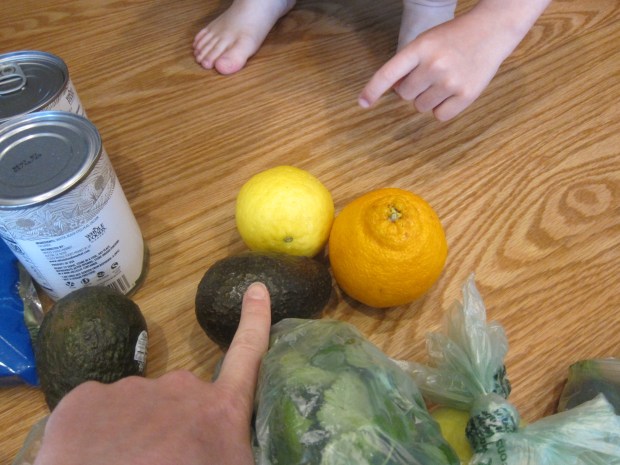
Again we lined up all the groceries and tallied on our chart. The biggest difference was in the number of boxes: only 5! We’d also purchased way less produce in plastic bags, choosing items deliberately in their own “packaging” like bananas, oranges, and avocados.

Green Grocery (3)

Of course, as mentioned, there are certain things we just can’t do right now, like bring reusable shopping bags, buying from the bulk section, or bringing along our own glass jars.

Green Grocery (8)

But we’re newly motivated moving forward! As a finale to the lesson, he watched an online read of Michael Recycle by Ellie Bethel.

Engineer with Water

Engineer Legos (6)

Children’s museums are closed for coronavirus, so today we recreated one of Travis’s favorite exhibits here at home! The museum version involves a large base where kids can dam water with Duplo pieces. We recreated that on a smaller scale with Legos!

Ideally you’ll need one of the large Lego baseplates for this project. Technically it would work on any small Lego base, too, but your results will be in miniature.

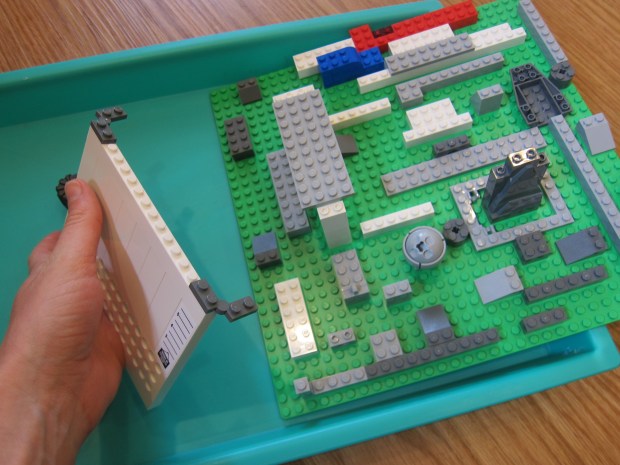
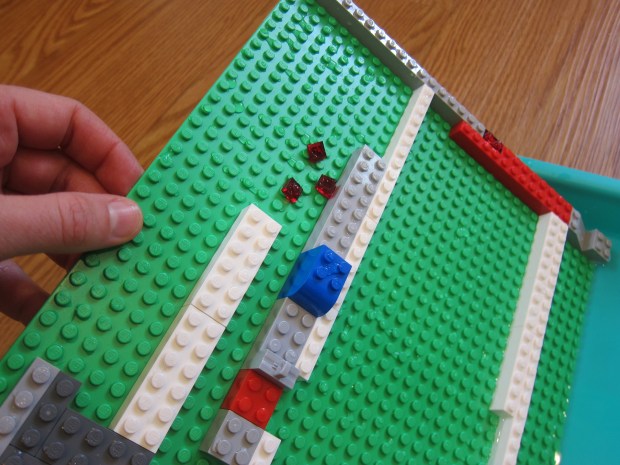
First we built a high wall of interlocking bricks so our baseplate could stand upright. Attach this to your Lego base with any Lego hinges.

Engineer Legos (3)

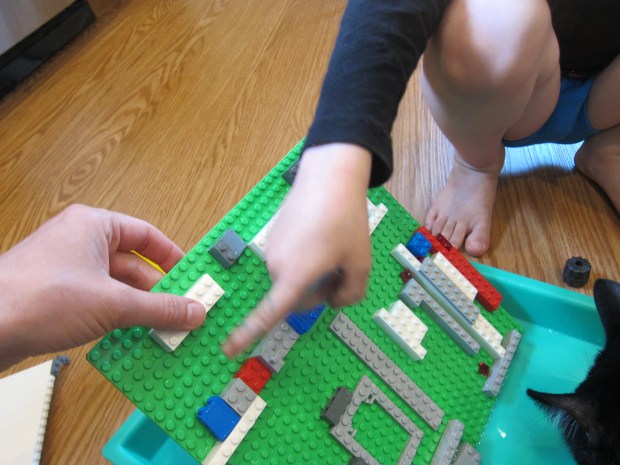
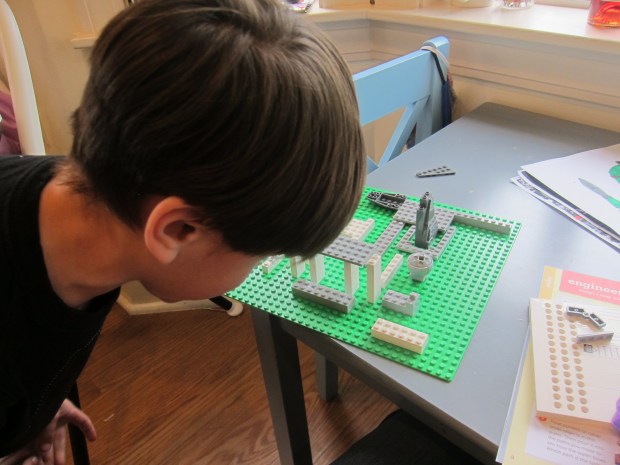
Next Travis began adding paths for the water. On the first round, I gave him no guidance and he designed a very complicated set of Legos that were vertical and horizontal and all over the place. He thought he was being tricky leaving tall openings.

Engineer Legos (2)

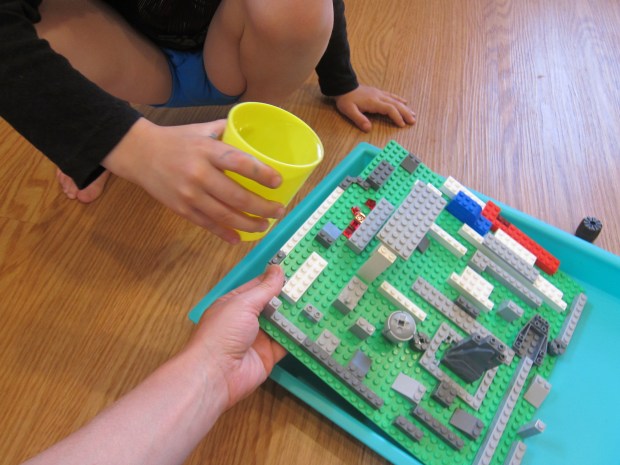
We set the whole apparatus in a shallow tray and poured in a cup of water. Of course it pretty much ran straight down over everything.

Engineer Legos (4)

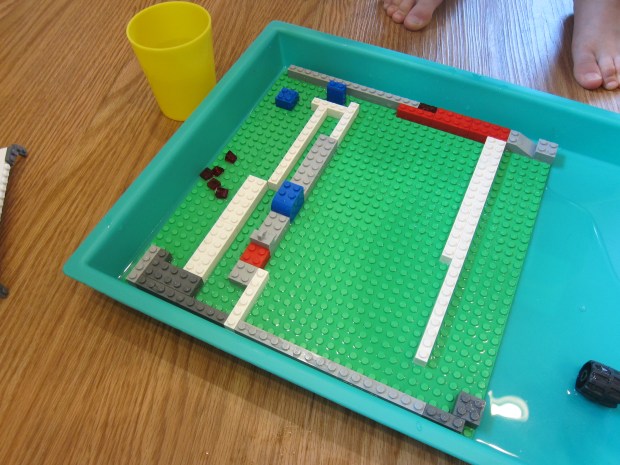
After we poured, he realized that he needed to be much more deliberate in his placement. We removed any vertical Legos except those on the very edges, and soon had horizontal walls. He loved the idea that we were “tricking” the water.

Engineer Legos (7)

To visualize our results, we added small red Lego pieces that could run through this “maze”. You could also use glitter or any other tiny object for this part. Now he could really see the flow of water. Check it out!

Then he wanted to try blocking the water entirely. It sort of worked, although his walls  needed to be higher to truly block any flow.

Engineer Legos (8)

There are so many ways to play with variations on this, and your child will be engineering all the while!

Engineer Legos (6)

National Pick Strawberries Day

Pick Your Own Strawberries (3)

I love learning of random “national holidays” like this one and tailoring the kids’ activities to them. This year, unfortunately, we couldn’t pick our own strawberries to mark May 20. Still, even amending our outing for social distancing made the afternoon special and exciting.

First we headed to a local farm stand that is selling “curbside” with an honor system from their porch!

Pick Your Own Strawberries (1)

This was a fantastic opportunity just for the kids to view the fields, smell fresh herbs in pots, and have an understanding of where food comes from.

Pick Your Own Strawberries (2)

Could we actually pick our own strawberries? Not today, but I picked up a case of strawberries from the market, and it tricked Travis! “Someone picked these today!” he said proudly.

When we got home, Travis so carefully helped rinse the strawberries (and fresh basil we bought to go with them!)

Pick Your Own Strawberries (4)

The snack that followed was a strawberry love fest. Ok, so we didn’t actually pick them, but we sure celebrated them today.

Pick Your Own Strawberries (5)

Under the Sea Lunch

Under the Sea Lunch (3)

Travis has been learning a lot about the ocean recently, both the creatures that live deep down, and the ways that humans can explore under the water. So it felt only appropriate to continue the fun with our food!

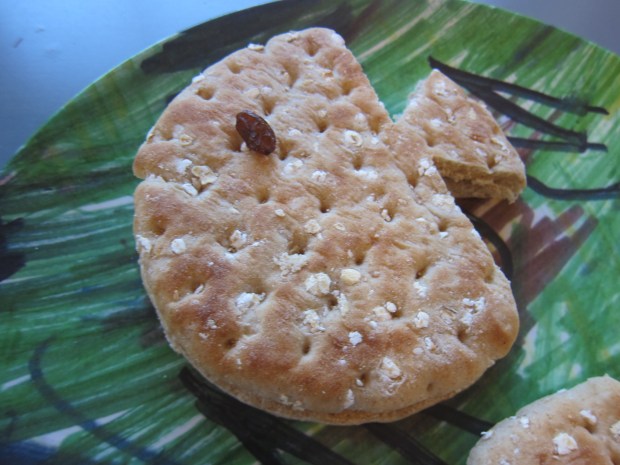
For a “fish” sandwich, trim a pita or similar flatbread by making two triangle cut-outs on one side. Now your fish has a tail.

Under the Sea Lunch (1)

You can use just about anything for the filling! We filled one “fish” with tofu salad and another with cheese slices.

Under the Sea Lunch (2)

Add raisins for eyes.

On the side, I served a little ocean floor scene. Almond butter (or peanut butter) was the sand, lightly-steamed celery sticks become waving seaweed, and we added a few vegan Swedish fish to populate our ocean.

Under the Sea Lunch (5)

You could even add homemade goldfish crackers for the fish! I’m happy to report that lunch went swimmingly.

Under the Sea Lunch (6)


Submarine

Submarine (6)

This project is slightly tricky, but if done correctly the propeller will really spin and push your bottle “submarine” forward around a bath or basin of water. Full disclosure: ours didn’t quite work, but the principle was there! Meanwhile Travis learned a bit about how submarines really float or sink.

To make the submarine, start with a small empty water bottle. Poke a hole in the bottom with a push pin. Straighten a paper clip and insert in the hole, but then you’ll need to re-bend the tip of the paper clip from the inside. This was tricky, and I managed to push it down with a pencil.

Submarine (2)

Now draw a propeller shape with 4 blades on the top of a yogurt container (or similar container). Cut out, then poke a hole in the center with the push pin. Poke a hole in the center of the bottle’s cap, too.

Submarine (3)

Insert a second paper clip into the cap so that the loop will be inside the bottle once the cap is screwed on. Loop an elastic around this hook and the paper clip on the bottom of the bottle. Poke the cap’s paper clip through the propeller as well, and then bend the end of it to hold everything in place.

Submarine (4)

To weight the bottle properly on top, glue two pennies to the ends of a craft stick. Secure this to the bottle with a rubber band.

Submarine (5)

We were ready to give it a try! Wind up the rubber band by spinning the propeller around; ideally it will unspin once you let go in a basin of water. Unfortunately, ours didn’t behave quite as we hoped!

Submarine (7)

What we were able to experiment with, however, was the real way that submarines dive and emerge. Tanks fill with water to make the submarine heavier and it sinks; when those tanks are pumped out, the submarine rises again. Travis experimented with filling our bottle and then dumping the water out, to see these differences.

Submarine (8)

And then of course it just becomes a fun water toy! In sum, a great little STEM experiment.

Shape Search

Shape Search (4)

Chances are you’re looking for ways to keep outdoor excursions new and interesting during this period of social distancing. One easy way is to turn a walk into a shape search.

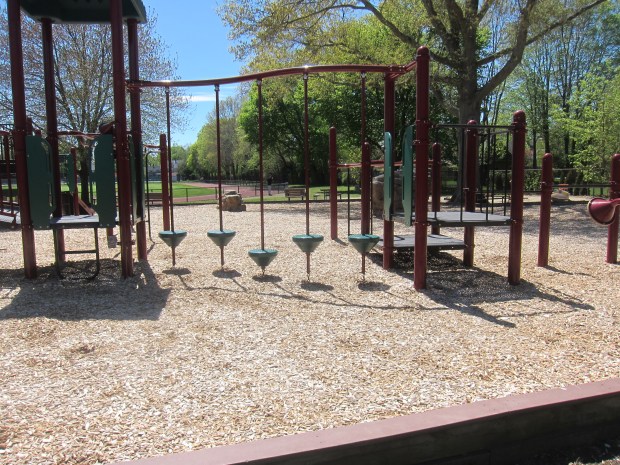
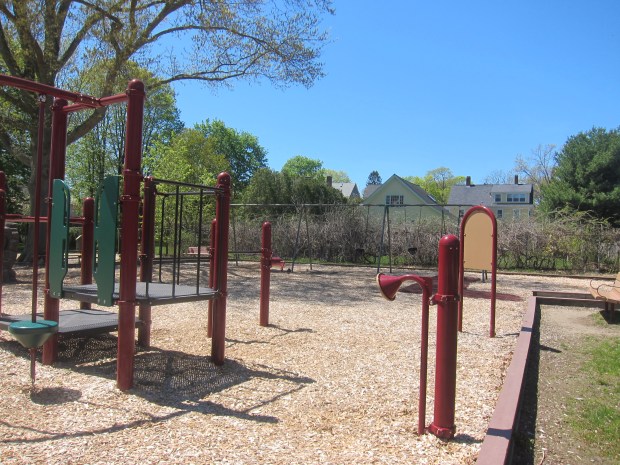
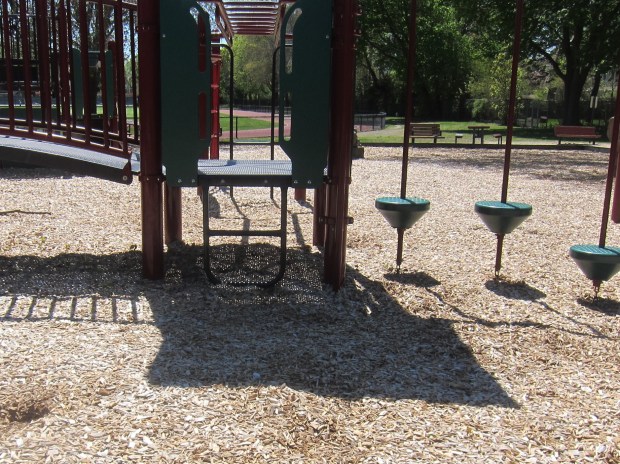
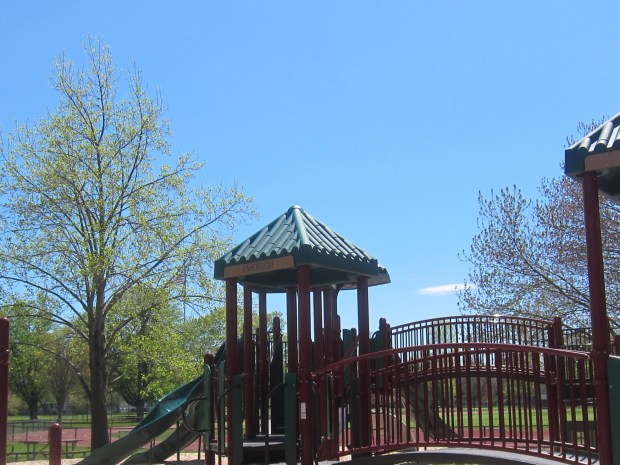
For this activity, we headed to the park. Though the playground remains off limits for play, we could at least look at it! I challenged Travis to search for simple shapes first: squares, triangles, and circles.

He found examples that ranged from the big (the circle on the ground)…

Shape Search (1)

…to the small (circles incorporated into the play structure).

Shape Search (5)

Triangles formed the roofs, and squares were in the platforms and rungs of the ladder.

Shape Search (3)

Though I hadn’t intended to ask about 3-D shapes, he started to notice those, too. “Mom I see a cone!” he exclaimed. We even stopped by the diamond shapes of a fence on the way back to the car.

Shape Search (6)

How are you keeping walks different and educational? Please share in the comments!

Shape Search (2)

Firefly Craft

Firefly Craft (3)

Here’s a cute little firefly your kids can put together, and it really glows! Bonus points: it’s simple as can be to make.

Fold a piece of black construction paper in half, and draw a shape that looks like the head and body of a firefly as seen from the side. I copied a template from Highlights magazine, not quite trusting my artistic skills.

Firefly Craft (1)

Cut out, then use scraps of black paper to add legs. We also cut a small circle from yellow construction paper as the eye, and two yellow antennae.

Firefly Craft (2)

Glue the eye, antennae, and legs on with a glue stick. Now tape a yellow glow stick just under the tail, and watch him flicker!

Firefly Craft (4)

Travis liked the craft so much that we made a quick bee, too!

Firefly Craft (5)

Spring Poetry

Spring Poetry (3)

With all the spring produce bursting out of our recipes lately, today Travis and I used the season as inspiration for poetry! This fun lesson from Raddish Kids is a great excuse to get outside in spring weather, not to mention a nice addition to your lesson plan if you’re home schooling.

So off we headed to the park, taking along a notebook and pencils!

Spring Poetry (1)

We ran around first, and once we paused back on our blanket I asked Travis to reflect on what he’d noticed as he played. Bees, and grass, and wind, he replied.

Next I had him close his eyes to focus on sounds. He particularly noticed birds chirping.
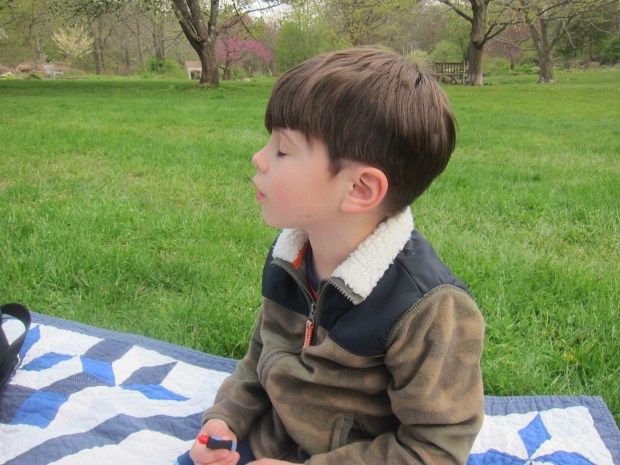
Spring Poetry (2)

Once he opened his eyes, I asked him to point out the signs of spring he could see. Flowers, green, and white, were his answers.

Working together, it was now time to write poetry! Older students can compose their own poems, but the goal here is for an adult to guide a younger student through shared writing. I relied on the words he’d used in the exercise above, but guided him through various poetry formats.

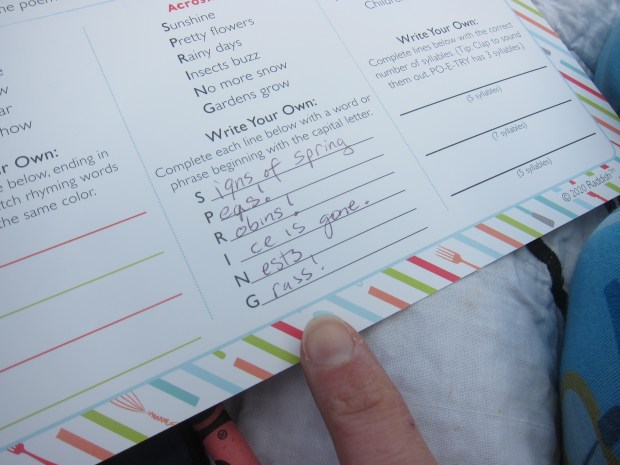
First up was an acrostic. After reading Raddish’s explanation of the form, Travis and I composed the following:

Signs of spring

Peas!

Robins!

Ice is gone.

Nests,

Grass!

We then composed a few lines of rhyming poetry about spring, as well as a haiku. It was helpful for him to clap along, to understand the 5 syllable-7 syllable-5 syllable format.

Spring Poetry (4)

His haiku was:

Flowers are pretty.

Flowers are so beautiful.

But the bees scare me.

Next up was a diamente – new even to me! – a poem that makes a diamond shape through the progression of: noun, adjective, verb, noun, verb, adjective, noun. We composed the following:

Spring Poetry (6)

I then took his words from our initial brainstorming and showed him how to write concrete poetry i.e. a poem in the shape of what it talks about. Here’s a spring flower!

Spring Poetry (5)

All in all, this lesson made for a nice rumination on spring, plus gave us a welcome pause in the sunshine.

Shadow Tag

Shadow Tag (2)

As an outdoor adventure addition to Travis’s summer workbook, we headed outside today to play shadow tag. The day had been variably sunny and cloudy, but we got a beautiful burst of sunshine in which to play!
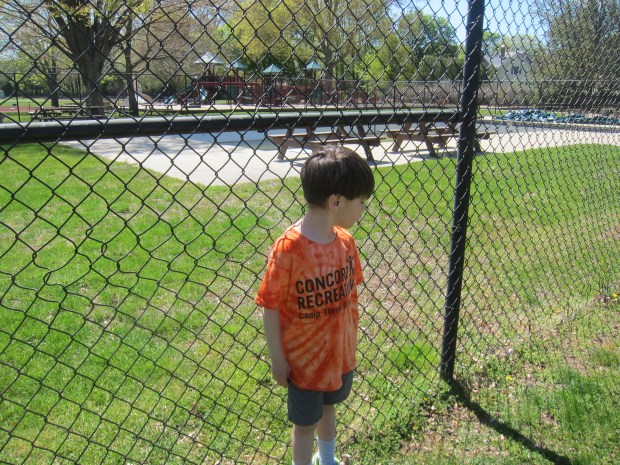
I explained the rules to Travis very briefly. Whoever was It had to tag the other person… not by touching their body, but by stomping in their shadow.

Shadow Tag (1)

After that, just run! Needless to say, Travis giggled and loved it. We played just after noon when shadows were short, making the game particularly tricky. I challenged him to think about why it would have been easier to play early in the morning or late in the day and he guessed correctly: longer shadows!

Shadow Tag (3)

We recruited baby sister to play, too. This was a great way to get some sunshine and movement in.

Shadow Tag (4)