More or All Done?

Introduce Question (1)

If you’re going to introduce one question for your baby at nine months old, this one is it: do you want more, or are you all done? First, by asking Veronika if she wants more of something or if she’s all done, it gives her a sense of agency. She can’t say the words yet, but she realizes that by her actions – pushing something away, grabbing for more of it – I’m listening to her. When you use the words, tilt your head and make your voice rise up at the end.

“More” and “all done” are also easy signs to learn, both for parents and babies (and siblings!). “More” is made by taping fingers together.

Introduce Question (6).JPG

“All done” is putting the hands up and shaking them, as if shaking something away. So today at meal time, I made sure to ask Veronika – do you want more or are you all done?

Introduce Question (3)

Hmm, she’s thinking about it. Pause and see if your baby vocalizes, or perhaps even starts to sign back.

Introduce Question (2)

More this time!

Introduce Question (4)

The same question applies when we play with toys or if we’re hanging out some place and I’m curious if she’s had enough or wants more more more. She is just starting to do a hand wave that I think might be her first attempt at “all done.”

Would you like more of that pouch, Veronika?

Introduce Question (5)

All done!

Introduce Question (7)

Teddy Bear’s Picnic

Teddy Tea Party (8).JPG

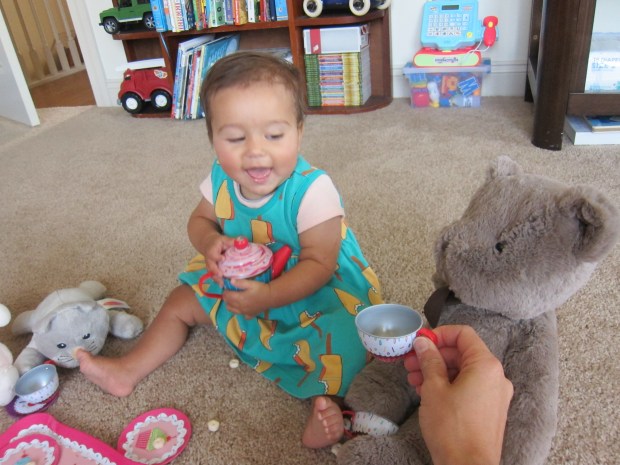
As a follow-up to yesterday’s real (breakfast!) picnic, today Veronika and I moved the play inside with some teddy bears (and other stuffed friends).

I’ve often tried to follow a gender-neutral parenting method, and Travis and I have had our share of tea parties (sometimes with cars as guests). But I have to admit, I’m excited for moments of being a “girl mom” and imagining many tea parties with Veronika to come. Today was our first!

Teddy Tea Party (4)

Nine months old is definitely not too young to introduce imaginative play; in fact, it’s perfect timing! Your baby won’t “get” it yet, but will love imitating your motions, and the concepts will start to sink in.

First, I just laid out the tea set. Veronika was intrigued…

Teddy Tea Party (1)

I set out a cup and plate for each guest at the party. Hmm, who were these new friends?

Teddy Tea Party (2)

Then I made made a big show of pouring tea for each guest, and making sure everyone had a sip.

Teddy Tea Party (3)

Now Veronika loved it!

Teddy Tea Party (7)

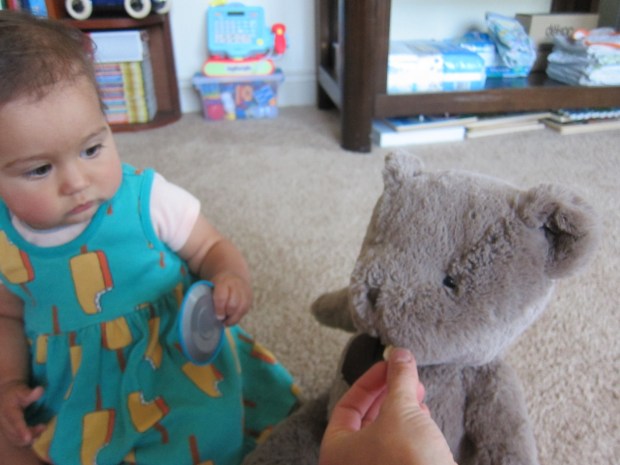
Then everyone got yummy real snacks.

Teddy Tea Party (5)

(Although sometimes plates are even yummier).

Teddy Tea Party (6)
She was so happy with the whole interaction, and kept playing even after I walked away.

Teddy Tea Party (10)


Moving Objects

Moving Objects (1)

Ladies and gentlemen, we’re on the move around here! And by that I mean first and foremost that I have a crawler. Not only is Veronika fascinated by things that move, but now she herself is on the go!

But I also realized the other day that Veronika was making a motion of vrooming a car along her mat. How quickly babies pick up on things! The timing makes sense; at this age, babies are fascinated by anything that shows cause and effect, and moving objects are the perfect example. You can cater to that fascination with moving toys.

First, I set her up with a bunch of toy cars, and simply let her vroom.

Moving Objects (7)

This is a fun time to introduce types of cars (firetrucks, school buses) even thought that’s a bit beyond comprehension.

Moving Objects (6)

Another great toy to show this movable cause-and-effect is a bead maze. Veronika has shown interest and expertise at these from a young age, and loves moving the beads over…

Moving Objects (2)

…up…

Moving Objects (4)

…and just twisting them in place.

Moving Objects (3)

So if you’re looking for a way to pass the day with your nine-month-old, get moving!

Make a Seesaw for a Teddy Bear

Seesaw for Teddy (3)

At nine months old, your baby is old enough to understand silly fun and games, and probably loves stuffed animal pals, too. This game puts that all together!

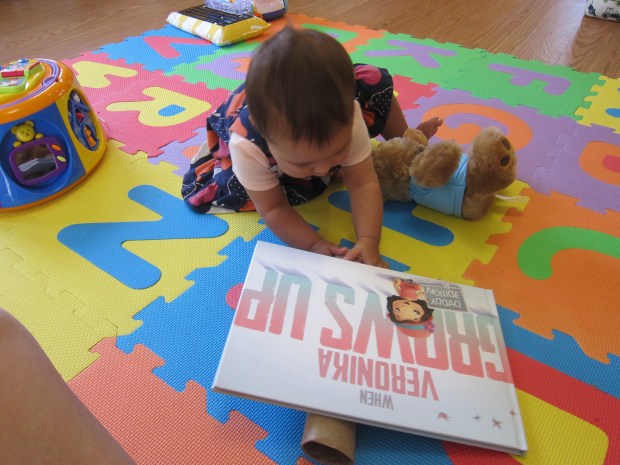
Using one of her favorite bears, I set up a “seesaw” for teddy. Place a long rectangular book over an empty paper towel tube as a fulcrum and place teddy on one side.

Seesaw for Teddy (1)

Press down on the book sharply so that – whee! – Teddy flies through the air.

Seesaw for Teddy (5)

Veronika was delighted with the game in so many ways. Mostly she just wanted to grab for all the materials; a book, and bear, and a paper towel tube were equally delightful to her.

Seesaw for Teddy (4)

But I also helped her rock the book up and down on the tube, and made a big show of it every time teddy flew through the air or just toppled backwards. This is a simple way to get lots of giggles.

Seesaw for Teddy (2)

Following the bear’s movements is great for eye tracking development, too.

Seesaw for Teddy (6)

Y and Z!

Ziti Z (4).JPG

Travis’s 3-D models for the last two letters of the alphabet were so simple I decided to combine them into one post. First he traced the penultimate and final letter, and then made the following.

Upper case Y from three crayons:

Y and Z (3)

Lower case y from two socks; make sure to use 1 long and 1 short:

Y and Z (2)

Note: This was the first time he really noticed you need three strokes to form Y but only two to make y.

IMG_0005.JPG

Upper case Z from three strips of paper; be sure to fold or cut all three so they are the same size:

Ziti Z (1)

This was definitely good practice to think about Z spatially, with no line to trace. He had to think hard about which direction the zigs and zags should go.

Ziti Z (2)

Finally, lower case z from pasta… ziti of course!

Ziti Z (3)

Again, he thought carefully about the directions of each line, and was finally able to line up the ziti pieces correctly. Someone is feeling just about kindergarten ready!

Vegetable Custard

Vegetable Custard (2).JPG

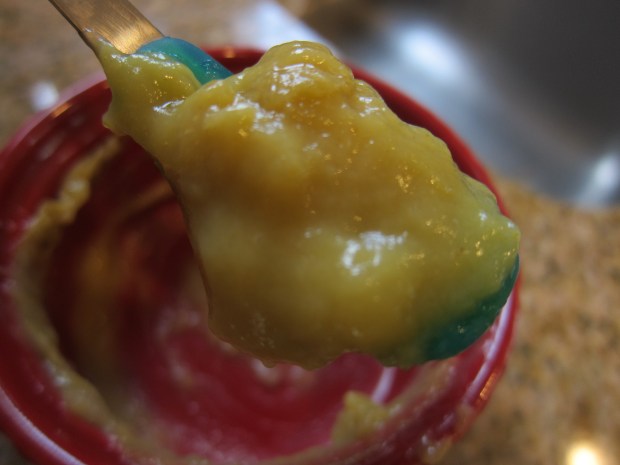
This elegant little custard dish is a yummy way to introduce a milk other than breastmilk to your baby, if you’re closing in on weaning. I prepared it with almond milk for Veronika; other non-dairy options include soy, hemp, rice, coconut, or oat. There are pluses and minuses to all of them, so find the one that’s best for your family and baby!

Ingredients:

  • 2 Ener-G eggs
  • 1/4 cup pureed orange vegetables (such as pumpkin, carrot, or sweet potato)
  • 1/4 cup non-dairy milk
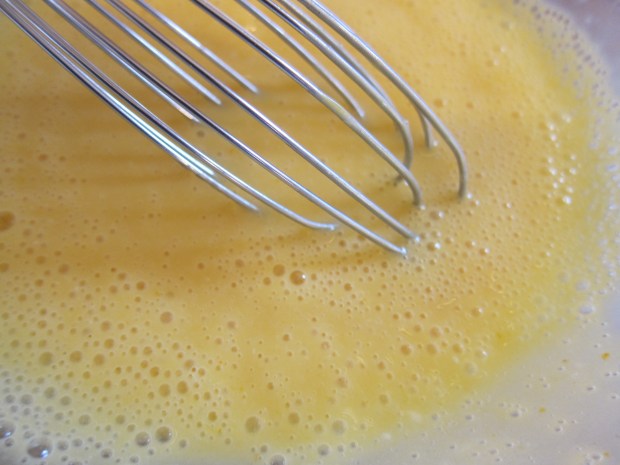
  1. Whisk together the ingredients in a bowl. Divide evenly among 2 custard cups.
  2. Place the custard cups in a baking dish and fill with 1 inch water. Bake at 375 degrees F for 30 minutes.

Vegetable Custard (1)

These puff up in the oven almost like a souffle, although they will deflate as they cool. The custard is thick and won’t slide off a spoon, which makes it great for babies who want to use their fingers or their own utensil.

Vegetable Custard alt

X X-ing

X Xing (3).JPG

Travis traced X today (we’re so near the end of the alphabet!) and then crossed (x’d) two items to make big X and little x.

For the first, he stood up tall and crossed his arms. No x-ing here!

X X-ing.JPG

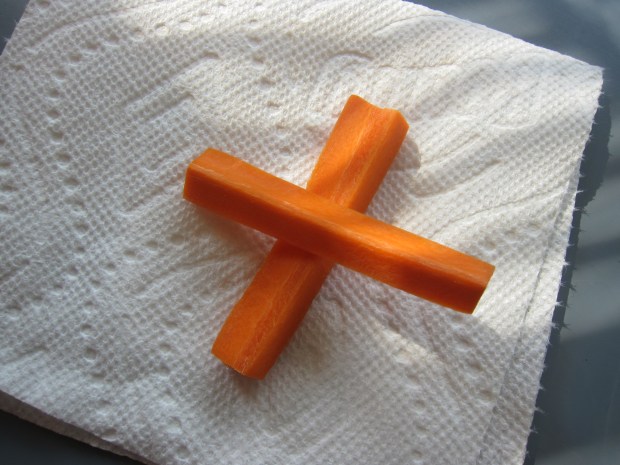
Next, I gave him two carrot sticks (stix?) and he crossed them into a little x.

X Xing (2)

Short and sweet today!

Baby Led Weaning: 8 Months

Tofu Papaya (2)

A month ago, I posted some of the foods my little baby-led-weaner had enjoyed over a few weeks. Here are some new favorites as she hits her 9 month birthday!

Peach Slices with Oatmeal

Cut a very soft peach into slices. Dip into prepared iron-fortified infant oatmeal and serve!

Peaches with Oatmeal

Avocado and Black Beans

Combine 2 tablespoons mashed avocado for every 2 tablespoons mashed canned black beans.
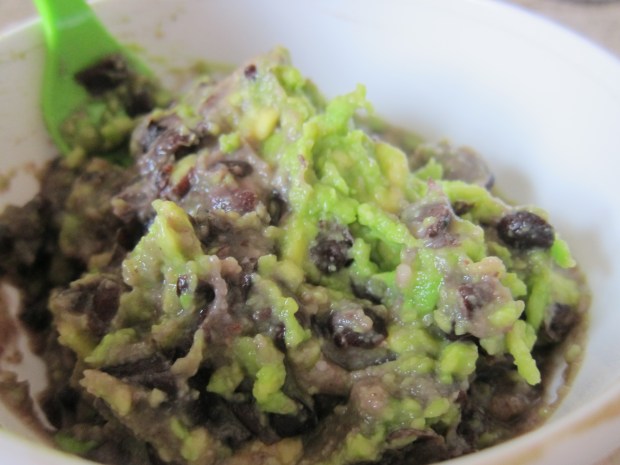
Avocado Black Bean.JPG

Lentils

Combine 1 cup lentils and 2 and 1/2 cups water in a saucepan. Bring to a boil; reduce heat and simmer, covered, for 45 minutes. (Note: This is, hands-down, Veronika’s favorite food. She eats them by the fistful, which makes a spectacular mess, but I’m so glad she loves them!).

Lentils

Kasha

Bring 2 cups water and 1 tablespoon olive oil to a boil. Add 1 cup kasha. Cover, reduce heat, and simmer for about 20 minutes, until very tender. Cool before serving.

kasha

Note: You can also stir in 2 tablespoons peach puree and 2 tablespoons pear puree for every 2 tablespoons kasha, if the grain alone is too dry for your baby.

Kasha Peach Pear

Roasted Apples and Carrots

Peel 1 apple and 1 carrot, and cut into 2-inch sticks. Arrange on a baking dish coated with cooking spray; cover and cook at 350 degrees F for 40 minutes, until tender.
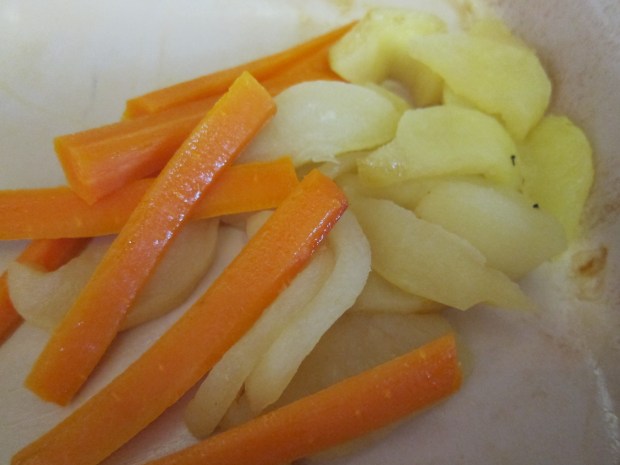
Roasted Apple Carrot

Two-Potato Boil

Peel and cube 1 russet potato and 1 sweet potato. Cover with water and boil for 20 minutes, until very tender. Drizzle with 1 teaspoon canola oil. You can serve these as cubes on the tray, or mash them up slightly with your fingers before placing on baby’s plate.
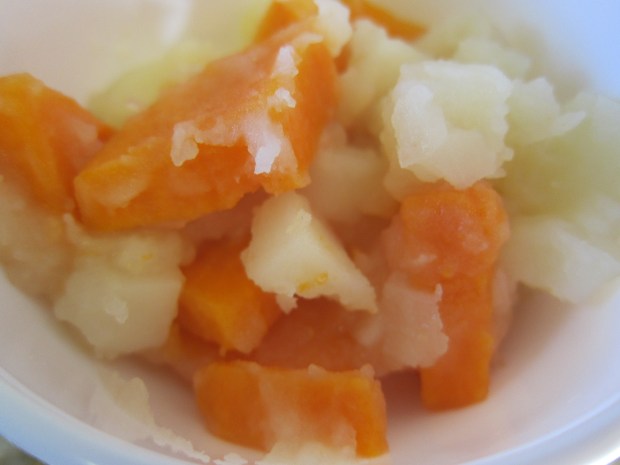
Two-Potato Mash

Tofu, Papaya, and Nutmeg

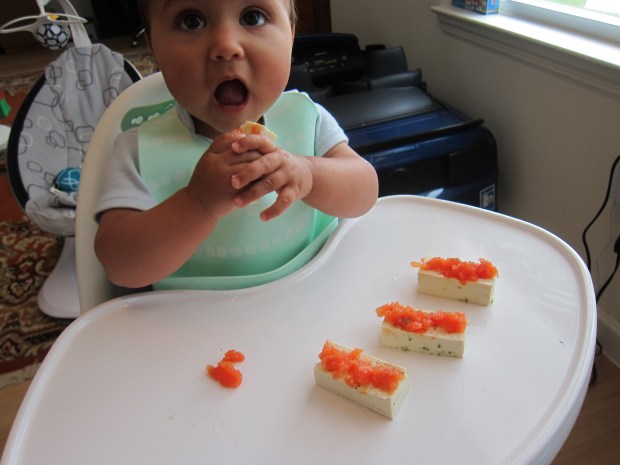
This particular recipe felt like Veronika’s first gourmet meal! Slice 2 ounces firm tofu into strips, and top each with a dollop of mashed papaya.
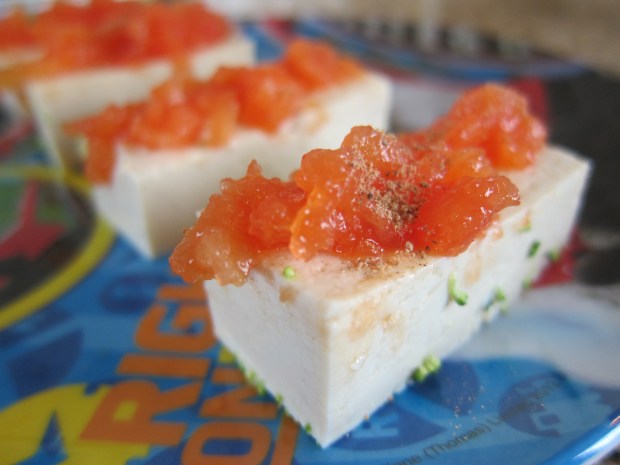
Tofu Papaya (1)

Sprinkle with a pinch of nutmeg.

Peach Raspberry Mash

Place 2 tablespoons thawed or fresh raspberries in a bowl and mash slightly. Spoon in 2 tablespoons peach puree.
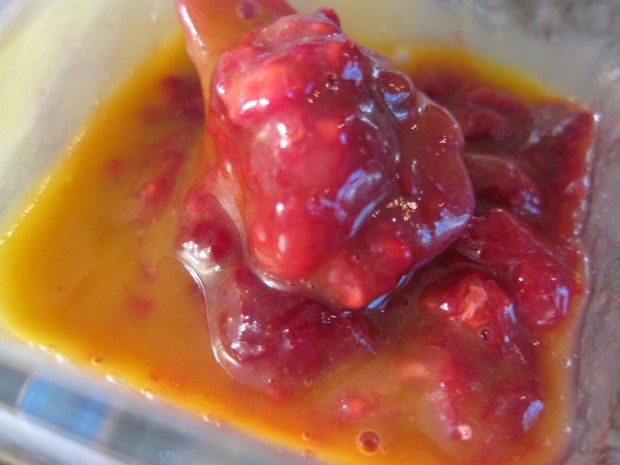
Peach Raspberry.JPG

Orzo and Sweet Peas

Cook 1/4 cup orzo pasta according to package directions; drain and rinse under cool water. For every 2 tablespoons orzo, stir in about 2 tablespoons pea puree.
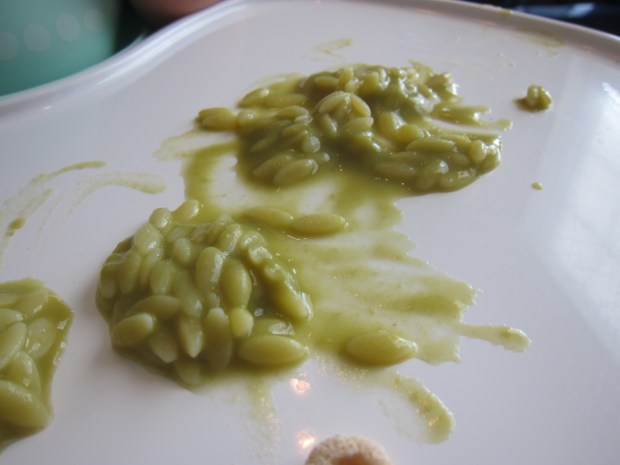
Orzo Peas

Peaches and Quinoa

Stir 1 tablespoon peach puree into every 1 tablespoon cooked quinoa for a break from an oatmeal breakfast rut!

Peach Quinoa.JPG

Split Peas

In a saucepan, combine 2 cups water and 1 cup split peas. Bring to a boil; cover, reduce heat and simmer for 40 minutes, until very tender. Add water when reheating if the peas have thickened.

Split Peas.JPG

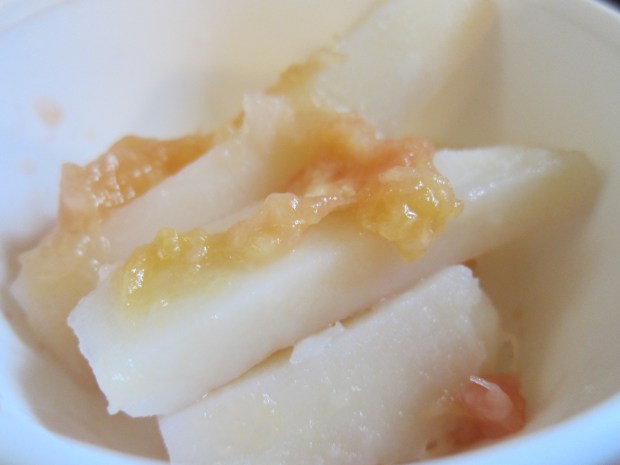
Potato and Plum Mash

Peel 1 russet potato and cut into matchsticks. Cover with water in a saucepan and bring to a boil.

Add 1 peeled and chopped fresh plum. Continue to cook for 10 to 20 minutes, until the potato is very tender. The plum will completely break down and infuse the potato with sweet, fruity flavor.
Potato Pear (1)

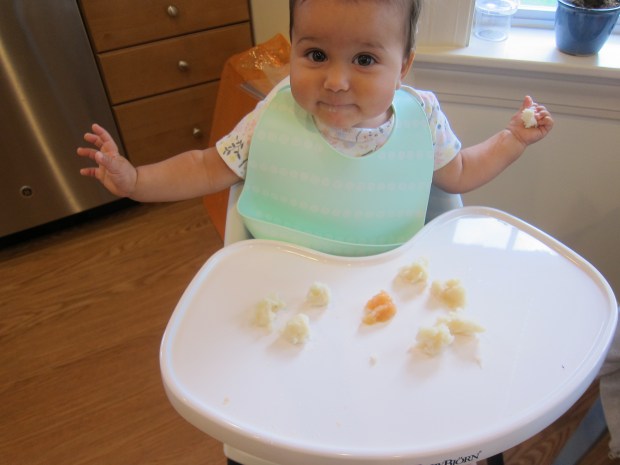
There are two ways you can serve this; either with the potato sticks as a finger food, or mashed up a bit on the tray for your baby to eat by the handful. Veronika prefers the latter!
Potato Pear (2).JPG

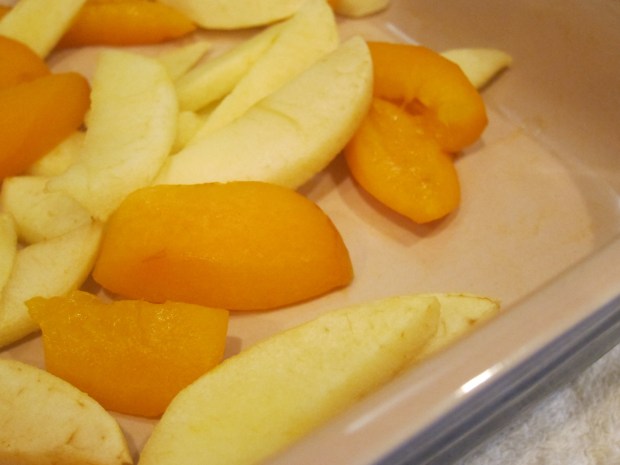
Baked Apricots and Apples

This one is great for breakfast. Peel and thinly slice 1 apple; bake at 350 degrees F for 20 minutes. With about 5 minutes left, add 2 peeled and thinly sliced apricots.
Apricot Apple.JPG

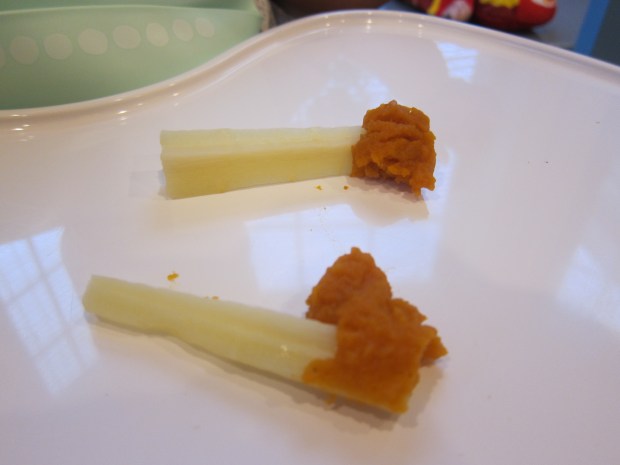
Parsnip Sticks with Pumpkin

Peel 2 parsnips and cut into thin strips. Cover with water and bring to a boil; continue to cook for 10 minutes, until tender.

Dip into canned pumpkin puree to serve.
Parsnip Pumpkin

Tofu with Cherries and Rice

This one makes a rounded-out little meal!

Tofu with Cherries (1).JPG

Cut firm tofu into matchstick pieces your baby can pick up. Cook brown rice according to package directions. Meanwhile, bake fresh cherries at 350 degrees F for about 10 minutes, until tender.

Tofu with Cherries (2)

Serve all three components on the tray; alternatively, puree the cherries and dip the tofu pieces into this cherry sauce.

Island Breakfast Cereal

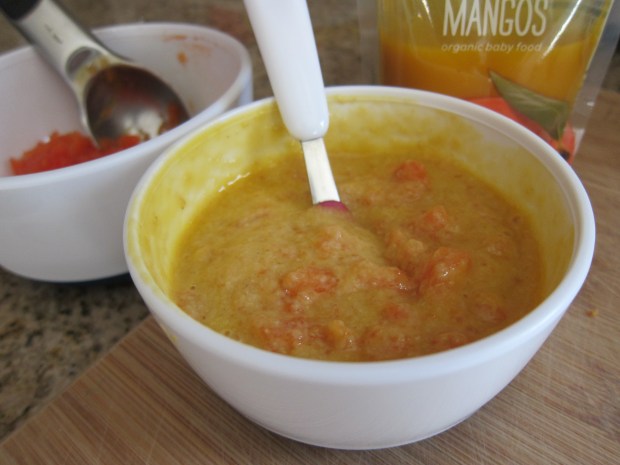
In a bowl, stir together 2 tablespoons prepared infant barley cereal, 2 tablespoons mashed papaya, and 2 tablespoons mango puree.
Island Breakfast

Papaya and Banana Mash

Stir together 2 tablespoons mashed papaya and 2 tablespoons mashed banana.

Papaya Banana Mash

Spinach and Potato Puree

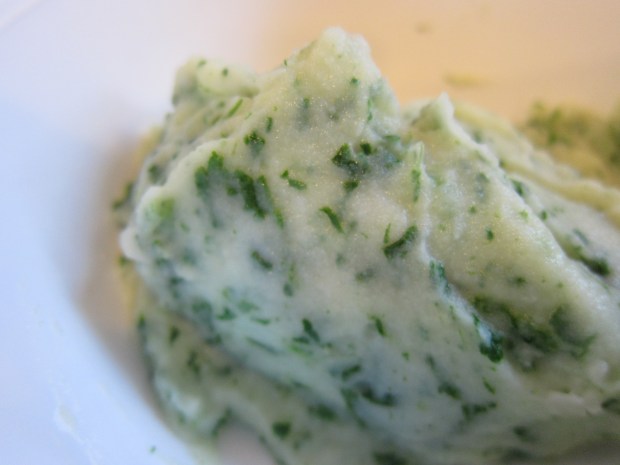
Bake 1 peeled russet potato until tender (or microwave for about 5 minutes) and mash until smooth. Meanwhile, cook 1 cup fresh spinach in boiling water for about 2 minutes. Transfer the potato and spinach to a food processor and process until smooth.
Spinach Potato Puree

One last note about eating at this age: it’s all still mostly practice, so don’t worry if it seems like more is winding up on the floor or smeared on your baby’s thighs than in his or her mouth!

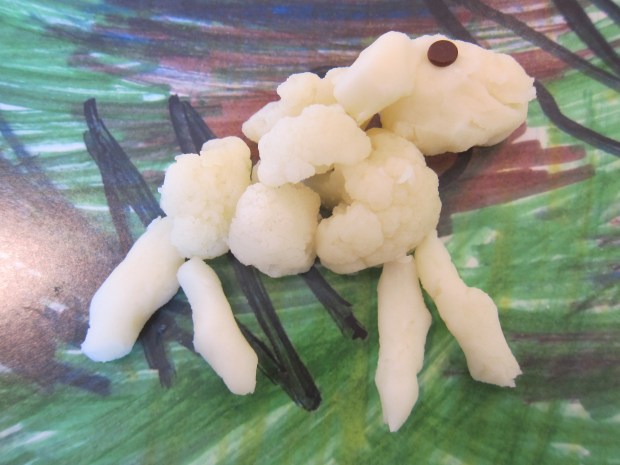
Also, don’t give up if a food is rejected at first. Research shows that it can take up to 20 tries before a baby will enjoy a food. Have fun and be playful: to wit, by making cauliflower and mashed potato sheep on baby’s tray before letting the messy fun begin.
20 Times Try Out.JPG

Either way, the above “recipes” give lots of room to touch, taste, smell, mash about, and learn to enjoy.

Bottle Sailboat

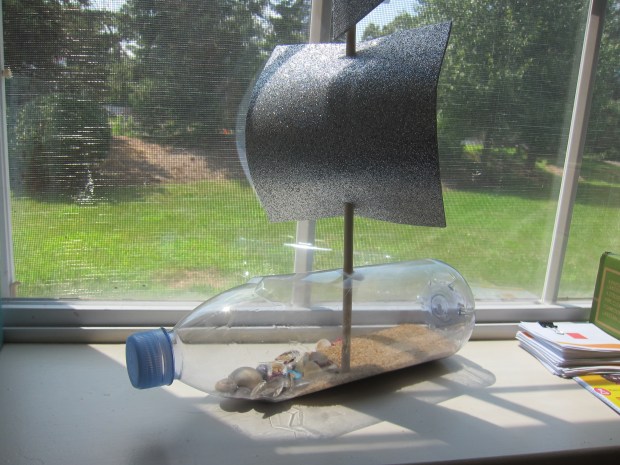
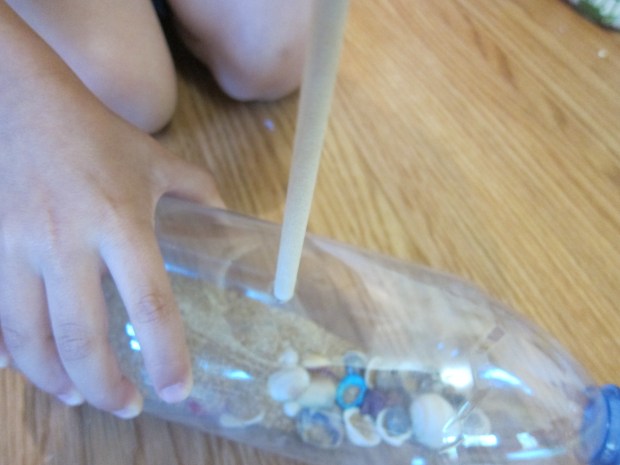
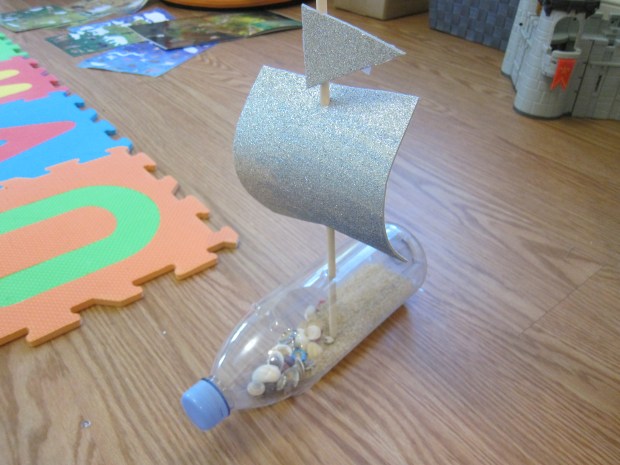
Bottle Sailboat (6)Although not nearly as expert or astonishing as a model ship in a bottle, this craft is a cute riff on the idea, and a version that kids can make all by themselves!

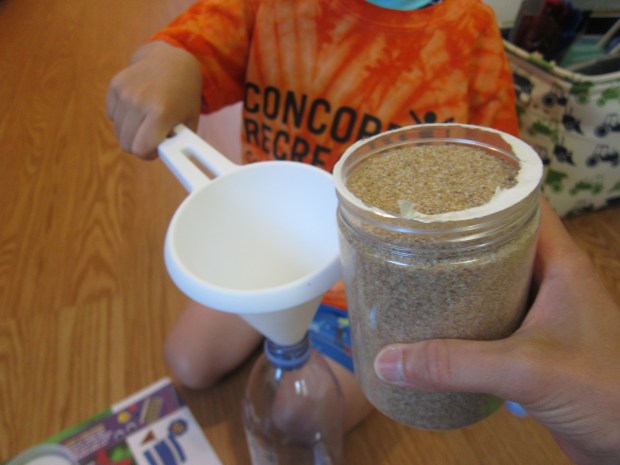
Remove any labels from a plastic water bottle and insert a funnel into the opening. Pour in about 1/2 cup sand; you can use some you’ve saved from the beach, or buy it at the craft store. Travis loved being the very important funnel holder while I poured.
Bottle Sailboat (1)

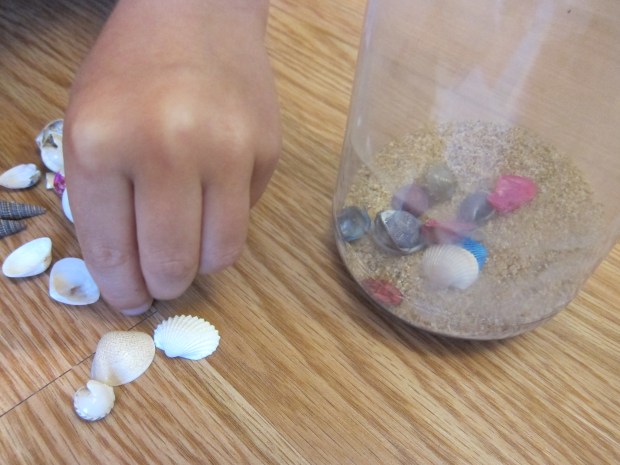
Sprinkle in a few small sea shells; again, these can either be ones you’ve collected, or store-bought in a pinch. Replace the cap on the bottle.

Bottle Sailboat (2)

To make a sail, pinch the bottle slightly to cut a slit in the center. Insert a wooden dowel and secure with glue.

Bottle Sailboat (3)

Cut out a square from craft foam for a sail, and a triangle from the foam for a flag. Because we used sparkly craft foam, Travis didn’t add much decoration. Your kids may want to decorate their flags with markers or stickers.

Bottle Sailboat (4)

Punch two holes in the “sail” and insert onto the dowel mast. Tape on the flag.

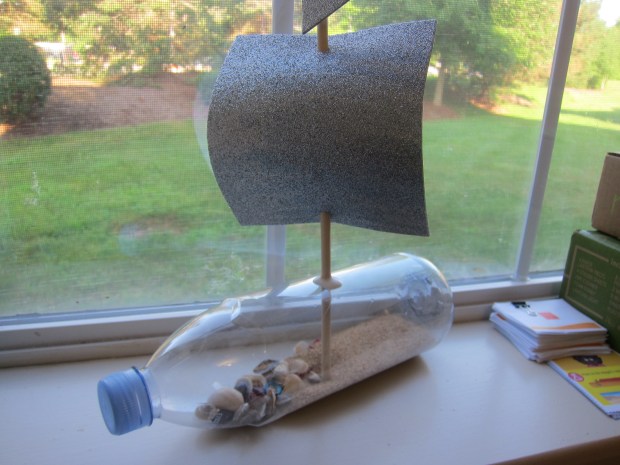
And now set sail! Although the bottle will really float in the tub or a pool, we thought it was prettier just to look at.

Bottle Sailboat (5)

Bugs vs. Birds

Bugs v Birds (3).JPG

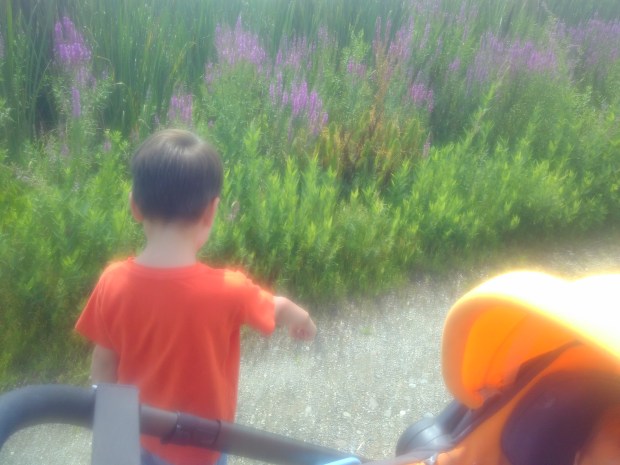
To slip some subtle math and science into your child’s next summer nature walk, turn it into a tally hunt for bugs and birds. I told Travis we’d be counting both, and asked him whether he thought he would find more birds or bugs. He quickly replied birds, but then thought about it for a moment; we passed a bunch of flowers, already teeming with five bees. “Bugs!” he guessed.

Bugs v Birds (8)

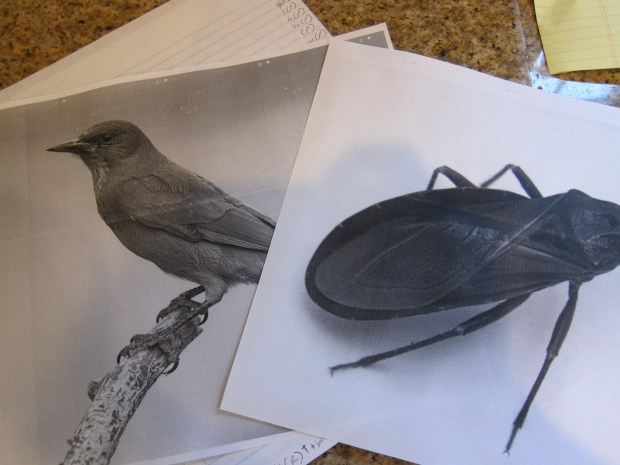
To prepare a little scientific notebook, print out a picture of a bug and a bird, and tape or glue down to notebook paper. Now you can tally as you walk.

Bugs v Birds (1)

This will also be a great lesson on tallying and making marks in groupings of 5 (good for skip-counting!).

Bugs v Birds (5)

As we walked, Travis sometimes forgot to count, since there was so much else to see. Eventually we decided he would look out for bugs, and I was in charge of birds.

Bugs v Birds (6)

It quickly became apparent that bugs were far more abundant…so much so we eventually stopped our tally at around 35. Although hard to see, the picture above shows two beautiful dragonflies perched on a limb.

In short, this game is a great way to get your little one noticing nature on a closer scale, as well as to think about the differing populations of species within an area.