Bath-time Fun!

Bathtub Fun (3)

Two months ago, I posted about Veronika’s switch to the big girl tub (well, big baby tub anyway). Now that she’s able to sit up for short spells on her own, we can make bathtime even more fun! As always, never leave your baby unattended in the tub, even for a moment, and keep a supporting hand on a baby even once they’re able to sit; everything is slipperier in the water!

One great new toy we have is a puppet washcloth. You can find these adorable washcloths with animal heads just about anywhere (ours is from Target), and they make bathtime truly entertaining. Veronika’s little fox likes giving kisses to toes and knees and tummies!

Bathtub Fun (2)

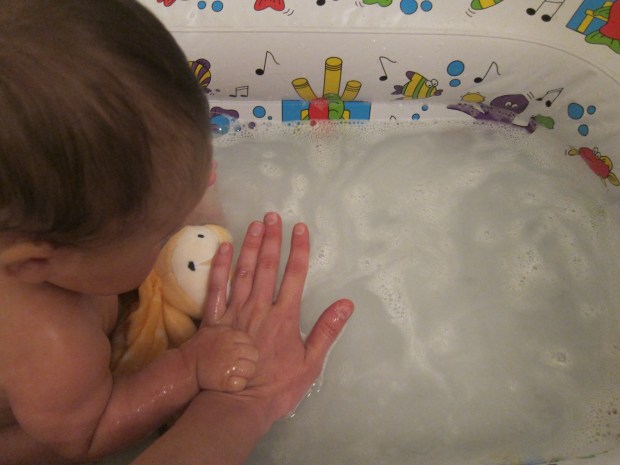
She also loves to pat at the bubbles in the water.

Bathtub Fun (5)

I pat my hand in the bubbles to add to the fun. You can do this rhythmically along to a song or nursery rhyme. Row Row Row Your Boat is a go-to in our tub.

Bathtub Fun (4)

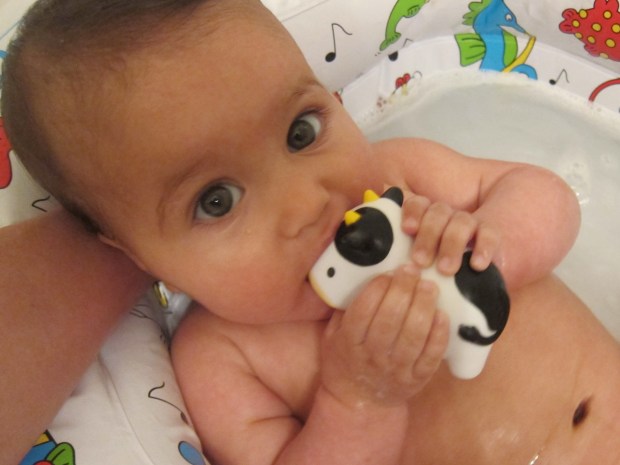
And as always, she has her plastic tub toys to play with; she’s getting much more dexterous at holding them even with slippery hands.

Bathtub Fun (7)

At this age, I recommend skipping any fancy battery-operated toys. As long as its plastic and watertight, it can join baby in the water.

Bathtub Fun (8)

Happy bathing!

Bathtub Fun (6)

Shadow Show

Shadow Show (2)

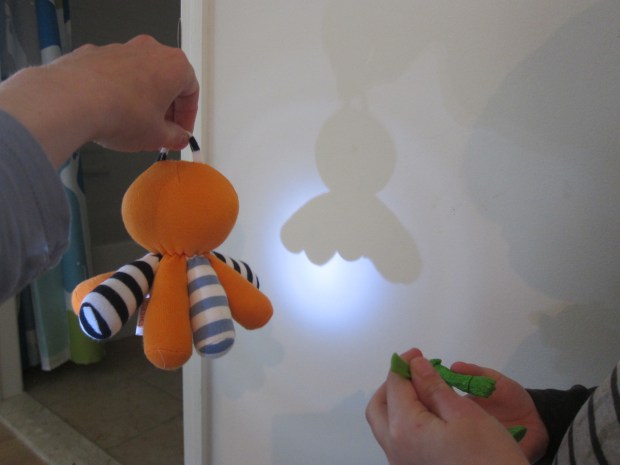
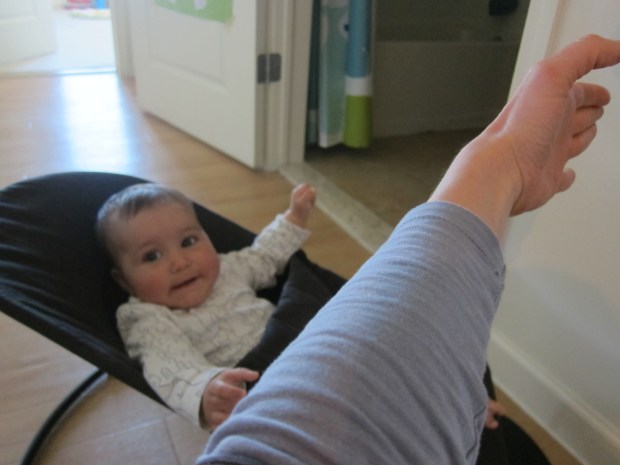
I haven’t used a flashlight during play with Veronika since she was quite little, and today I wanted to put on a little show for her. To be honest, she was more into my hands than their shadowed counterpart on the wall, but either way, she was entertained!

Shadow Show (1)

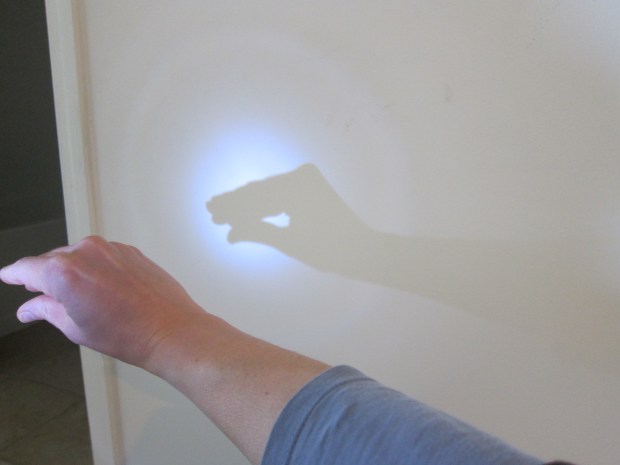
Set your child someplace dim, and shine a flashlight on one wall. First, I gave a simple wave to introduce her to the idea of shadows.

Shadow Show (8)

Next, try making animal shapes! A butterfly was fun.

Shadow Show (4)

And this was something like a barking dog.

Shadow Show (5)

For each shape, you can act out a story, if your little one is captivated.

We then thought it would be fun to show her the shadow of certain toys. Big brother Travis loved helping with this part!

Shadow Show (7)

So although she wasn’t as into the shadows as the whole process, Veronika sure enjoyed our show.

Shadow Show (6)


Vegan Easter Eggs, Three Ways

Vegan Egg Dye (11).JPG

Every Easter since Travis was little, I’ve wanted to dye eggs, but didn’t manage to find plastic or wooden ones in time for the holiday. This year, I was prepared! Today, Travis and I tested out three neat methods of dyeing plastic Easter eggs. Did other people know these plastic ones from Paas exist? What a find!

Vegan Egg Dye (1)

To be honest, none of the following three methods worked that great on the plastic – it was more about the process and the fun than the result. The colors and tricks may work better on real egg shells, if your family is not vegan.

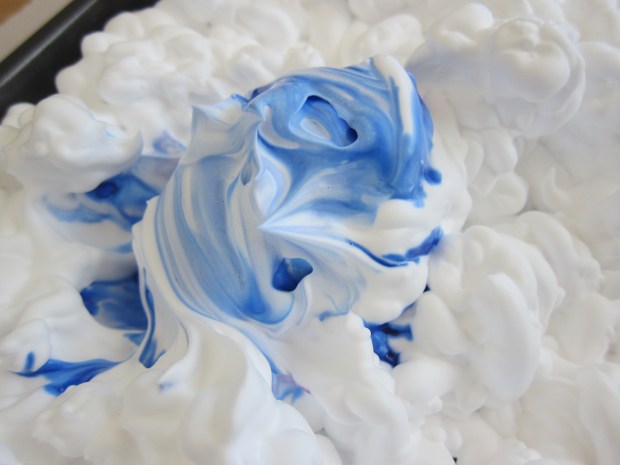
First up was a Marble Finish version. Fill a baking sheet with a generous layer of shaving cream.

Vegan Egg Dye (2)

Add drops of food coloring at 4 separate intervals. Swirl the color slightly into the shaving cream.

Vegan Egg Dye (3)

Now add 1 egg to each color, rolling around slightly.

Vegan Egg Dye (4)

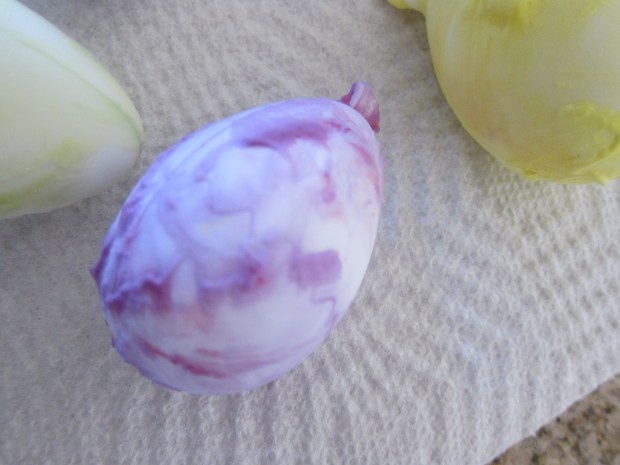
Let sit for 10 minutes. Wipe off the excess shaving cream, and you should see a neat marbled color effect.

Vegan Egg Dye (5)

Of all the methods we tested, this one worked best!

Vegan Egg Dye (10)

While the eggs sat in the shaving cream, we set up the second attempt: Soap Star eggs.

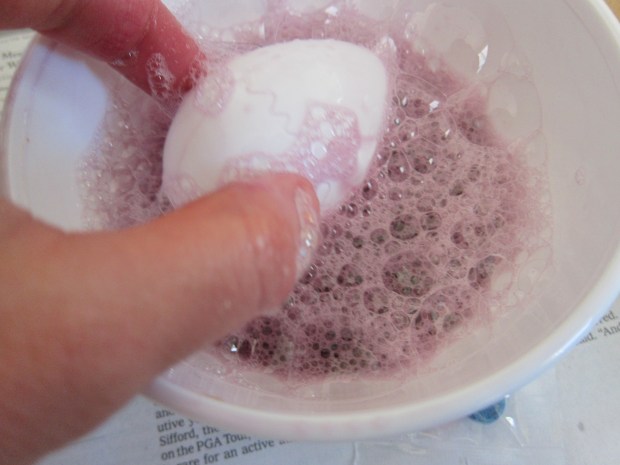
Fill a small bowl with 2 tablespoons dish soap, 1 teaspoon water, and 10 drops of food coloring. Use a straw to blow bubbles in the solution (they will be big bubbles), then stir quickly until you have smaller bubbles.

Vegan Egg Dye (6)

Dip an egg into the bubbly water, then let set until the bubbles dry.

Vegan Egg Dye (7)

Finally, we made Bubble Fun prints! Draw with sharpie marker (or use an ink pad) on bubble wrap.

Vegan Egg Dye (8)

Wrap around an egg while the ink is still wet, and press firmly. You’ll have dot marks left behind.

Vegan Egg Dye (9)

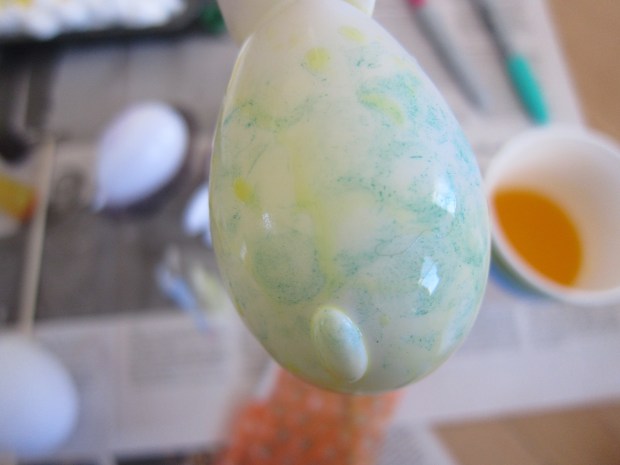
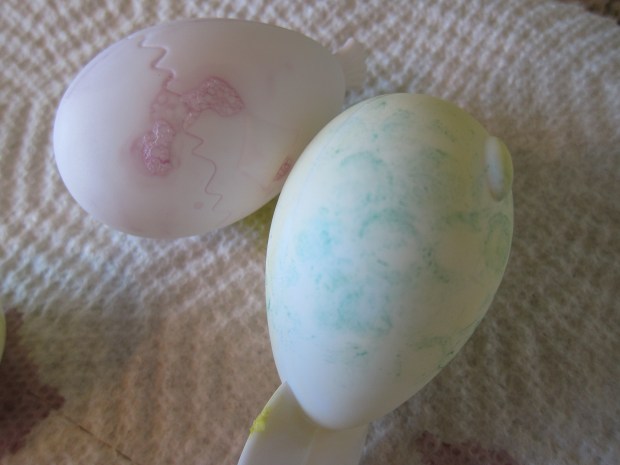
As mentioned, all of our results were faint, but I was so glad my little vegan got to join in the Easter egg fun!

Vegan Egg Dye (12)

Sheet Pan Sausage and Tots

Sheet Pan Sausage

I love any meal you can make on only one pan, and this one makes dinner especially exciting, since it’s a breakfast-for-dinner kind of treat, too! You can use vegan breakfast sausage links (such as Field Roast) for the recipe, but I like using the sausage patties from Hilary’s. If using the former, use 6 to 8 links, instead of 4 patties.

Ingredients:

  • 2 cups frozen potato tots
  • 4 vegan breakfast sausage patties
  • 1 red bell pepper, sliced
  • 2 tablespoons olive oil
  • Black pepper to taste (optional)
  1. Arrange all of the ingredients on a baking sheet, tossing to coat in the olive oil. Bake at 425 degrees F for 25 minutes, stirring about halfway through.
  2. If desired, sprinkle with black pepper for serving.

Tickly Toes

Tickly Toes (2).JPG

Ok, spring has only just begun, but today I tantalized Veronika with a hint of the summer to come… With sand, that is! No matter what time of year you play this game, sand is a fantastic tactile and sensory play ingredient.

Since you don’t want sand anywhere near a baby’s hands or mouth, this is strictly a foot game for a five month old.

I poured some sand into a shallow baking tray, and sat with Veronika on my lap. I dipped her toes into the sand for a little feel. She seemed intrigued, although also confused.

Tickly Toes (1)

Swirl baby’s toes around or press gently into the sand. You can also pick up a little handful of sand and trickle it down over the toes – this will both feel good and look exciting!

Tickly Toes (3)

Once she tired of her toes in the sand, I took some time to pour sand from a cup for her, so she could further enjoy watching the sand sparkle. It won’t be long before this girl is at the beach!

Tickly Toes (4)

Art of the Color Wheel

Color Wheel (9)

A gray day seemed like the perfect chance to bring color inside. To combat all the dark rain clouds, Travis and I explored different ways we could make a color wheel. This project was part lesson, part craft – and all fun!

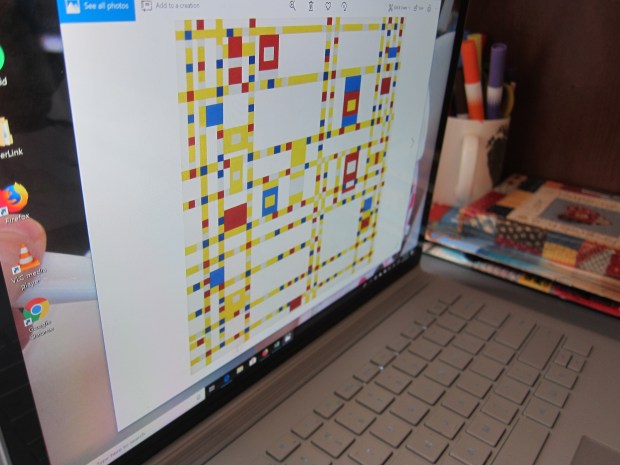
First, we did a quick review: I showed him paintings that use yellow, red, and blue as the dominant colors, including Piet Mondrian’s Broadway Boogie Woogie and Mark Rothko’s Untitled (Yellow, Red, and Blue).

Color Wheel (1)

Take the time to ask your child what he or she thinks the pictures are about, or how they make him or her feel. He told me Rothko’s made him “happy happy sad.” When I asked him to explain, he said the red and yellow were happy, but the blue was sad. Then remind your child these are the three primary colors.

Color Wheel (2)

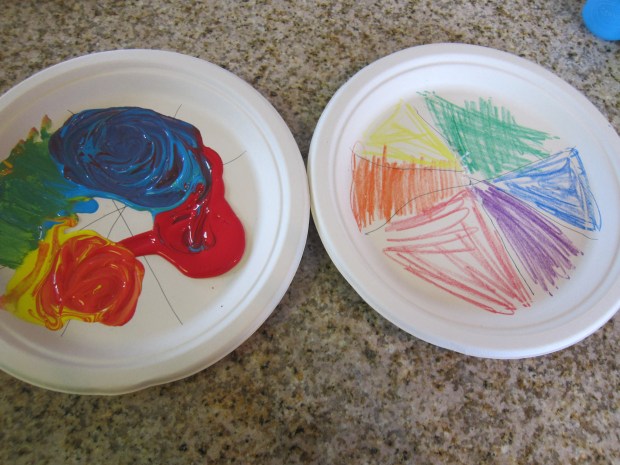
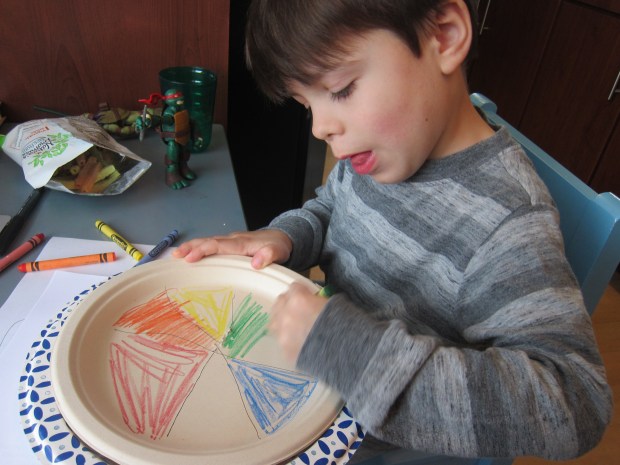
Now it was time to make color wheels! We started with the most basic version using crayons. I filled in yellow, red, and blue on a paper plate divided into 6 portions. His job was to figure out which secondary color went where.

Color Wheel (3)

The next version was a little messier. We made three blobs of paint in the primary colors, and he used a paintbrush to drag these together. Soon we had a color wheel!

Color Wheel (4)

I encouraged him to make a version with hand prints, but he didn’t want to get that messy. Using my hand and fingerpaint, I  showed him an example, pressing together yellow and blue prints. Your kids might want to have goopy fun with this and make a full handprint color wheel!

Color Wheel (6)

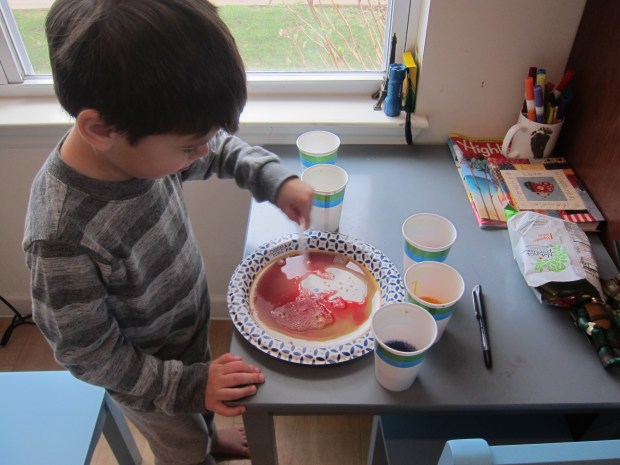
Finally, it was water mixing time! We filled three cups with water, and added our primary colors (now in the familiar red, yellow, and blue) with food coloring.

Color Wheel (7)

Use a pipette (which means you’re sneaking in fine motor skills, too!) to make a few drops of each color on a plate. Then mix and match to form the secondary colors.

Color Wheel (8)

Travis enjoyed this version the most, and soon was experimenting with making a big plate of brown.

Color Wheel (10)

All of this was prompted by a Raddish Kids lesson, so we also watched some of the recommended videos to further our exploration. There’s lots more you can do to go further in depth with older kids: check out fine art books at the library, or head to a gallery for a primary and secondary color scavenger hunt!

Jack-in-the-Box

Jack in Box (3)

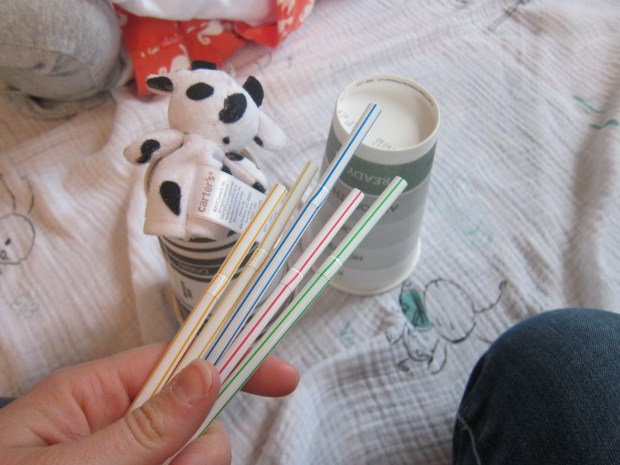
Here’s a cute and easy jack-in-the box that you can make for your infant. It’s a little less startling than the kind you buy where a wind-up figure pops out, making it a good intro to the toy. And you only need a few pantry items to make it!

Poke a hole in the bottom of a Styrofoam cup with a pencil.

Jack in Box (1)

Push a straw through the hole, and attach a small   to the other end of the straw (I just taped one on).

Jack in Box (2)

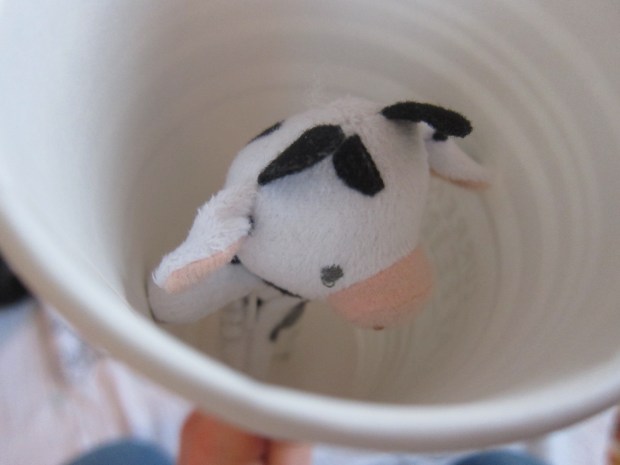
Hold the straw so the puppet is hidden in the cup, then… Peek-a-boo!

Jack in Box (4)

Here’s a cute rhyme you can say before the big reveal:

Jack in the box, still as a mouse,

Deep down inside your little dark house.

Jack in the box, resting so still.

Will you come out? Yes, I will!

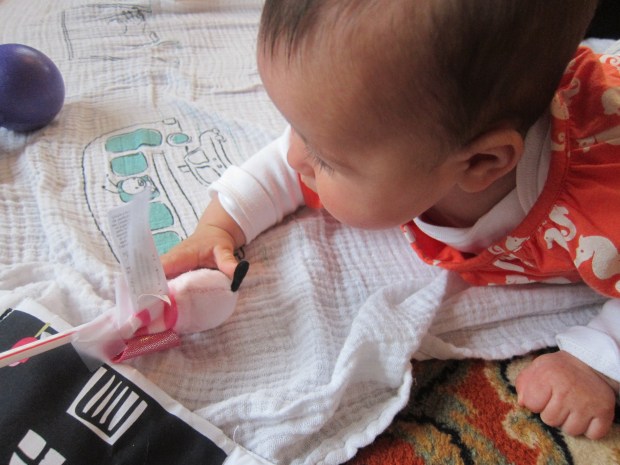
Lots of giggles and delight for this one.

Jack in Box (7)

Big siblings will probably want to take a turn doing the popping, too.

Jack in Box (6)

Yes and No

Yes and No (2)

I once knew a couple who were trying to raise their daughter without using the word “no,” the thinking being that toddlers start spitting this word back at us parents all too soon. I remember thinking this was brilliant; yet at the same time, there are moments when “no” is a very important word, especially when it comes to dangers a baby needs to learn. In fact, when my son was little I referred to outlets simply as “nope-ity nopes” for the first two years of his life!

So it is important for a baby to learn yes and no, and it’s good to start early. Today, I made a point of saying yes to all the good things Veronika did, and firmly saying no to the actions that were a little naughty. Of course, nothing she did today was terrible, usually just silly, but it’s good to set the precedent for when the real nos come along.

Whenever you say the word, you can also sign it. A fist “nodding” means yes, and your pointer pinching to your thumb means no. So, playing with toys always gets a yes.

Yes and No (4)

As does sharing with big brother.

Yes and No (5)

No, Veronika, you can’t eat big brother’s book!

Yes and No (6)

Yes, Veronika, play with your own soft book.

Yes and No (7)

No, Veronika, you can’t steal mommy’s list at the grocery store (and yes, she wants to eat this).

Yes and No (10)

Yes, Veronika, those are better toys to play with while in the cart.

Yes and No (9)

You can further highlight the difference between the two words by smiling for a yes, and frowning for a now. I definitely have an impish girl on my hands already, because she loves throwing her package of diapers off the diaper table. No, no, no sweet girl.

Yes and No (1)

But a hug from mommy or a nap on my tummy always gets a yes.

Yes and No (8)

Early Explorers Art

LP Art (28)

Travis’s latest package from Early Explorers was, in a word, fantastic. Based on art around the world, this month’s kit was so full of ways to craft, create, explore, and learn. As always, he was excited about the usual finds like stickers for his map, flash cards, the activity booklet, and a new tag for his suitcase.

LP Art (4)

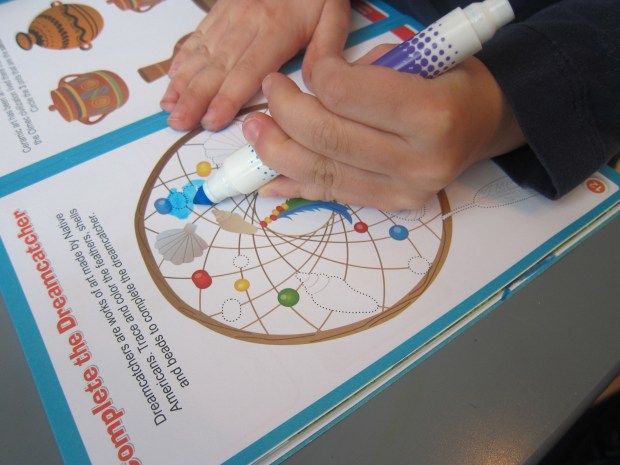
He especially loved coloring in images of Australian rock paintings and filling in the shapes on a Native American dream catcher.
LP Art (5)

Art Craft:

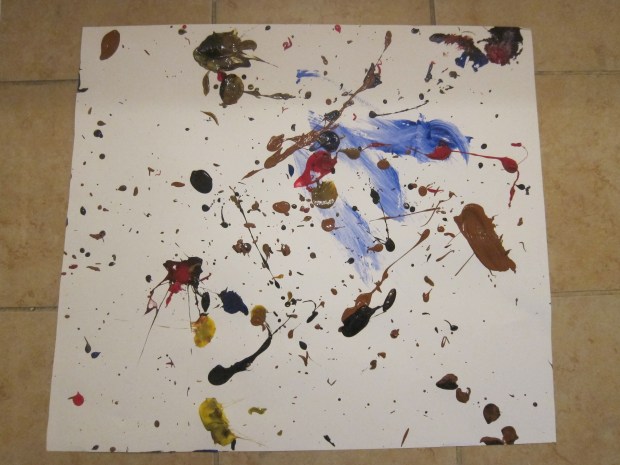
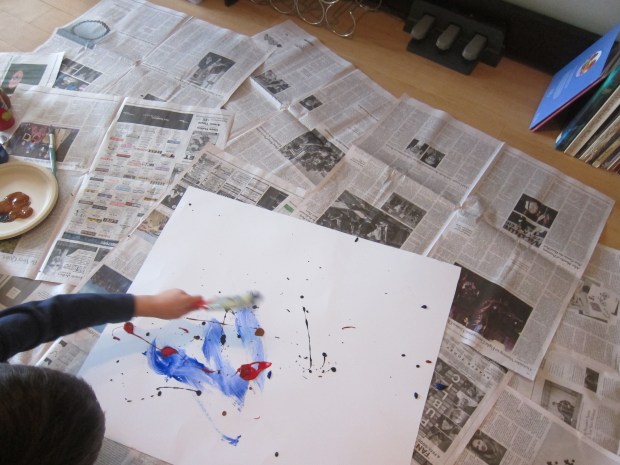
We couldn’t wait to try the booklet’s first activity: Paint Like Pollock. Wow did this make a splash, pun intended, of course. At first Travis seemed skeptical when he saw that I’d layered nearly the entire living room floor with newspapers. But when I told him we’d be splattering paint, he was intrigued.

LP Art (6)

Lay a large piece of poster board in the center of your newspapers, and set out plates with at least 2 or 3 colors of paint. A wide paintbrush will work best. Dip the brush in one color, and show your child how to flick their wrist so the paint splatters.
LP Art (8)

After a moment of smearing paint on normally, Travis understood, and was delighted. “Again!” he insisted, dipping in another color. We tried a few Pollock-esque tricks, like flicking the paint in a circle, seeing what happened if we flicked with more or less paint on the brush, and moving around the canvas.

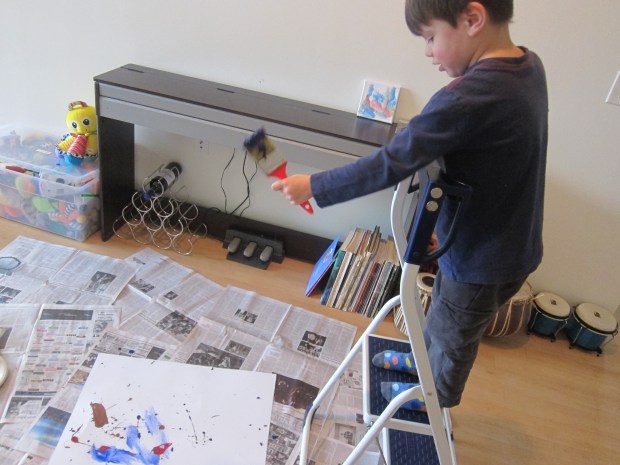
The most fun though was getting up high!
LP Art (9)

Travis climbed our step ladder, and I handed him the paint brush. Splat! He did almost the entire painting from up here.

LP Art (10)

Messy but so worth it!

LP Art (11)

Art Science:

For wont of an actual “science” this month, I’m using this section for the suggested sculpture project. I simply set Travis loose with a bunch of air-dry clay, a few sculpting tools, and his imagination. Soon we were etching baleen onto clay whales.

LP Art (13)

Then: “Look mom, a three-legged turtle!” he declared, leaving this present for me on our counter.

LP Art (14)

Art Keepsake:

This was actually what we did first, since Travis couldn’t wait to find out what his present was from “Max and Mia”. The included canvas, mini watercolor palette, and mini paintbrush did not disappoint. Instantly he became my little Monet, painting in the three landmarks depicted on the canvas.

LP Art (1)

He loved learning a few new color combos to mix, like blue + brown = black. When the canvas was finished, he didn’t stop there.

LP Art (2)

He immediately painted another picture which he decided was a gift for a friend, and a third which became a map. I loved that he was off and running with art, no doubt exactly the kind of play Early Explorers hopes to inspire with their kits.

Art Field Trip:

Head to your nearest museum or art gallery, of course. This doesn’t need to be anywhere big or fancy, but do challenge your child to find their three favorite pieces in the museum.

We were just in time for an exhibit featuring the best of local youth art, mostly by 11th and 12th graders. Travis enjoyed seeking out the one that had won first prize.

LP Art final.jpg

And we couldn’t believe this one was done with yarn!

LP Art var

Art Further Activities:

Unlike last month’s topic on food, which felt a touch one-note, this topic lent itself easily to so many activities! First, we did an imitation of French “pointillism.” After looking at paintings by Seurat, we set out to make dot pictures. Inflate a balloon just slightly, and set out a paper plate with a few colors of paint.

LP Art (16)

Dip the balloon in the paint, then dab on the paper. I showed Travis how to make small dots by pressing the balloon on lightly, but he liked pressing hard for big dots. A very cool result! If you don’t have balloons, you could always just illustrate pointillism with some dot markers.

LP Art (18)

Next, we became photographers! I set Travis loose with the instant camera, and challenged him to find interesting scenes or to get right up close to patterns in the apartment, like those on the carpet or fabrics.

LP Art (21)

Then we glued them all down in a collage!

LP Art (22)

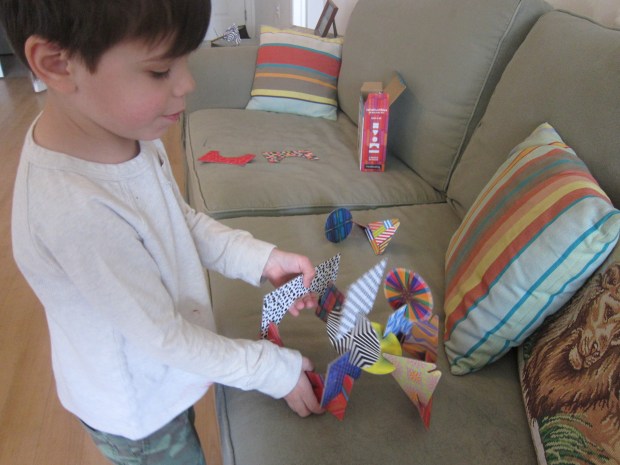
Next up, he played with the art Constructibles set from Little Passport’s online shop.

LP Art (17)

Travis immediately began slotting them together (each is based upon a specific textile pattern, for those interested in the designs), and soon he was building detailed creations.
LP Art (20)

These could be buildings, animals, sculptures – whatever your child thinks they are!

You can expand the fun with research online. We followed a link from Little Passport’s blog to the Google Art Project. I was so impressed when Travis immediately recognized a painting from a magnet on our fridge!

LP Art (25)

This is a great way to learn in depth about a specific artwork, theme, or artist.

LP Art (26)

The library had ample offerings on art to further our learning, almost too many. We particularly liked the projects in a book about Impressionism.

LP Art (29)

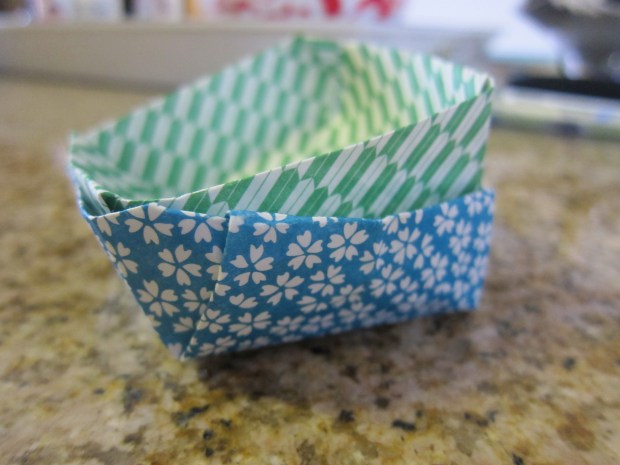
Surprisingly, the booklet said nothing about origami, which surely merits a place in any discussion of art around the world. So we thought we’d round out the lesson with some origami fun, and this origami easter basket from the blog was timely and cute.
LP Art (27)

The Wheels on the Bus

Wheels on Bus (5)

Veronika and I had a bus-themed day today, threading the vehicle through our play and activities in just about every way! A theme-day like this can be a fantastic way to fill the time with your infant.

Babies love buses; somehow that’s just a thing. Maybe it’s because they’re so big and yellow, or the excitement of seeing big kids get on and off, or just the fact that they all hear ‘Wheels on the Bus’ from a young age. But babies love buses.

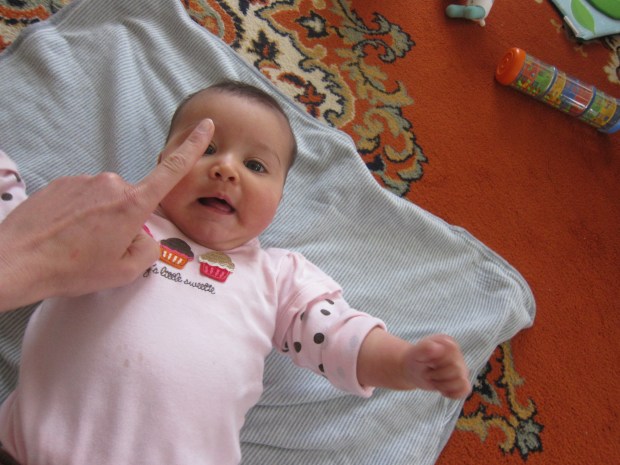
Veronika and I started with the song. I love the way the verses lend themselves so naturally to motions with baby’s body. To wit, I swish Veronika from the hips down for the wipers…

Wheels on Bus (2)

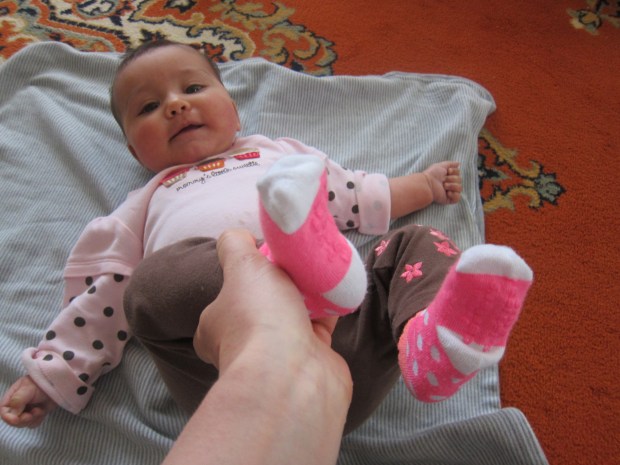
…or pedal her legs round and round…

Wheels on Bus (1)

…or beep her nose for the horn.

Wheels on Bus (3).JPG

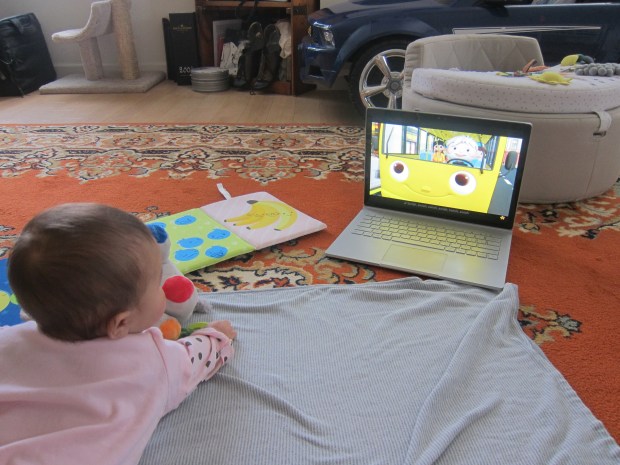
You can also show your baby a cute clip of the song, like Little Baby Bum’s version.

Wheels on Bus (4)

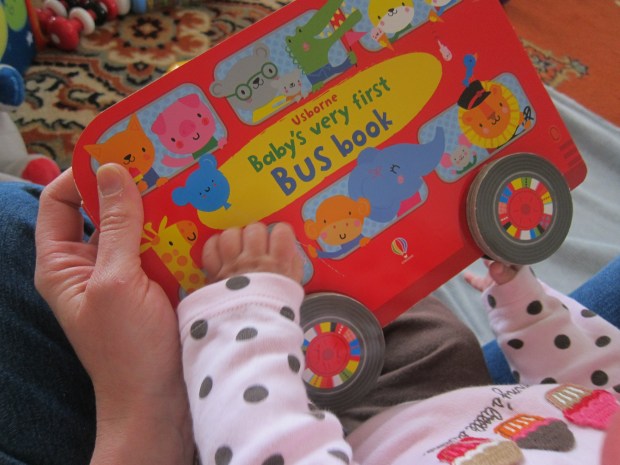
Then, we spent some time with bus-themed play. We read a book about buses (Usborne’s clever Baby’s Very First Bus Book has wheels that your little one can spin!) and played with a plastic bus toy; she couldn’t get enough of scooting it around during tummy time.

Wheels on Bus (6)

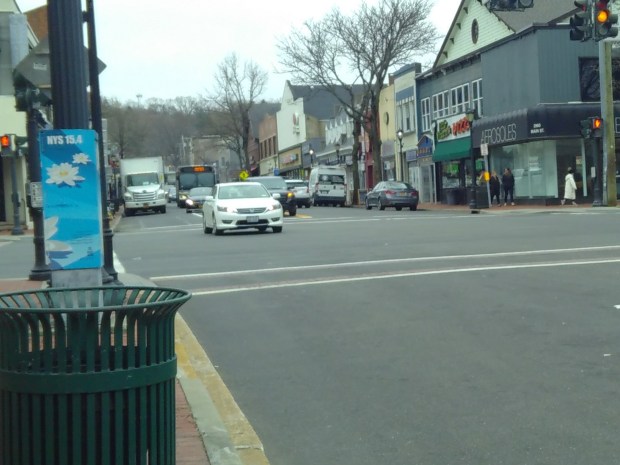
How did we cap it all off? With a ride on a real bus, of course! I selected an easy route downtown where I could park the car, take the bus only a stop or two, and make it back to the car on a little walk. You could also pick a round-trip destination on a bus if there’s a place you and your baby need to visit.

She seemed very intrigued as we waited at the bus stop. Here comes our bus, right on time!

Wheels on Bus (7)

Then she looked around wide-eyed during our ride! As the bus bounced along, I sang ‘Wheels on the Bus’ quietly into her ear.

Wheels on Bus (8)

In sum, a bus-y day!