Winter Flower Garden

Winter Garden (6)

Snow is always a bit less fun after that initial fluffy white turns to muck and slush outside. Here’s one beautiful way to bring the snow play indoors and prolong the fun!

The first step is to scoop some relatively fresh snow onto a tray and bring it inside. Next, simply set out the snow along with mini flower pots and a few flowers. (Note: You can use fake ones or real but we chose the latter to add a hint of future spring to a frigid day!).

Winter Garden (3)

The kids loved filling the little pots and making pretty arrangements.

Winter Garden (5)

There’s the added tactile element of playing with cold snow in a cozy indoor room.

Winter Garden (4)

In fact, the kids thought the little flower pots were so cute that they continued playing with flowers and pots long after our indoor snow had melted!

Winter Garden (8)

Flower Power

Just in time to fill a homemade flower vase for Mother’s Day, today Veronika made cupcake-liner flowers!

You’ll want to use green straws as the stems to start, but since I couldn’t find green ones at the store, a quick coat of green paint did the trick! We left the stems to dry and turned our attention to the flower petals.

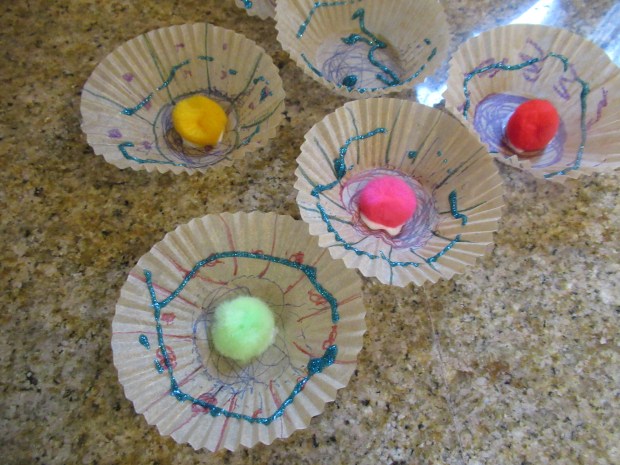
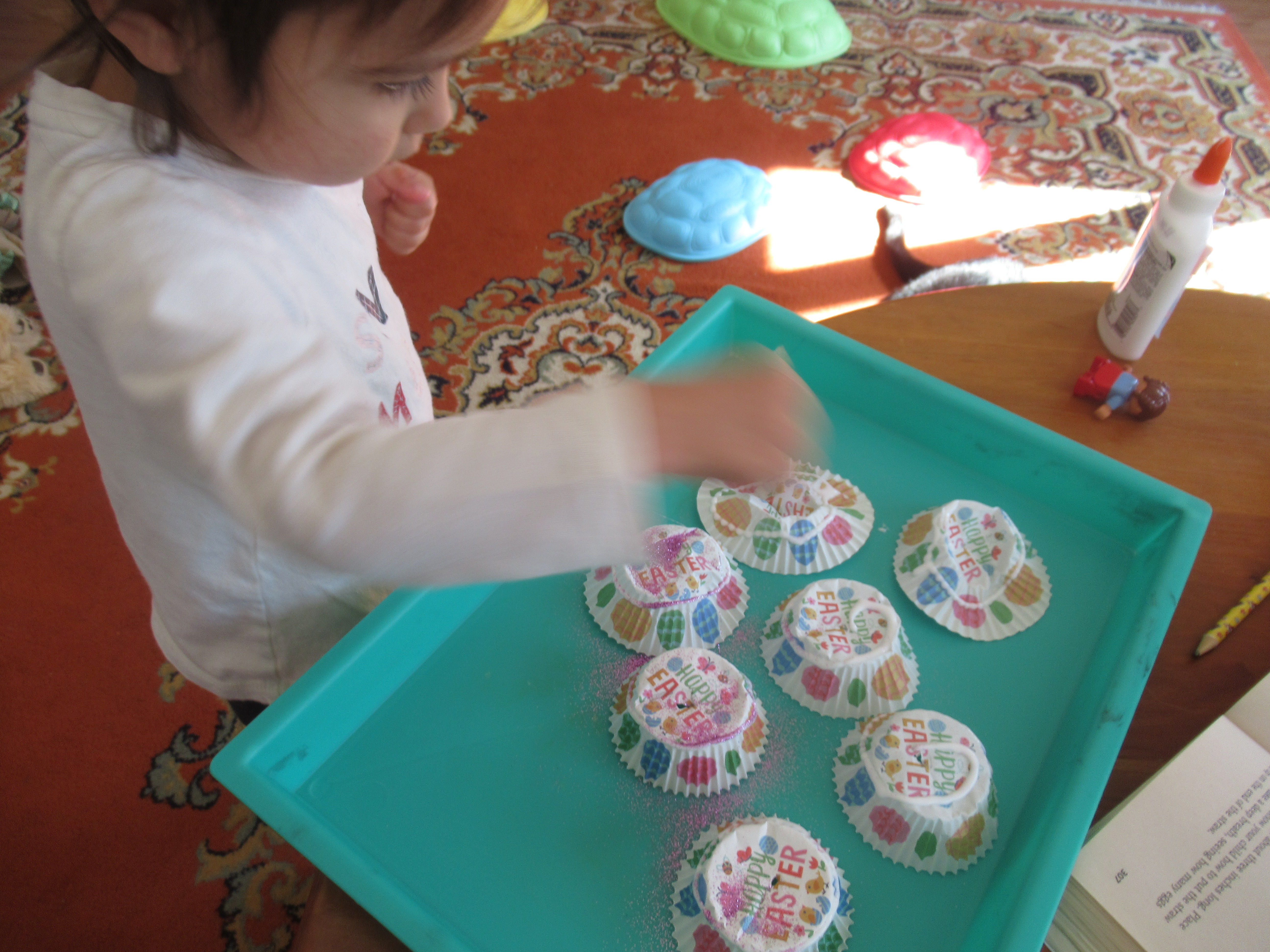
If you have brightly colored or patterned cupcake liners, those would look beautiful just the way they are. I only had standard cupcake liners, so we decided to add a little flair. Veronika loved that she was allowed to use permanent marker for this step, making swirls and dots all over.

Of course then they needed a few squirts of glitter glue! Finally, we put a dot of glue in the center of each cupcake liner and added a pom pom.

Flatten the end of each green straw slightly, and apply a drop of glue. Press onto the back of the cupcake liner and let dry. (Note: you can also use tape for this step if your little one is impatient).

Set into a vase and the flowers are ready to present to a special someone this Mother’s Day!

In fact, I might just keep these around the house since there’s no shame in orchestrating your own Mother’s Day gift!

Spring Flower Bouquet

Veronika loved pretend flower play to greet the spring a few days ago. Today, she got to craft her own flowers instead! As with the previous project, this is a great way to invite spring into your house as you wait for real flowers to be in full bloom.

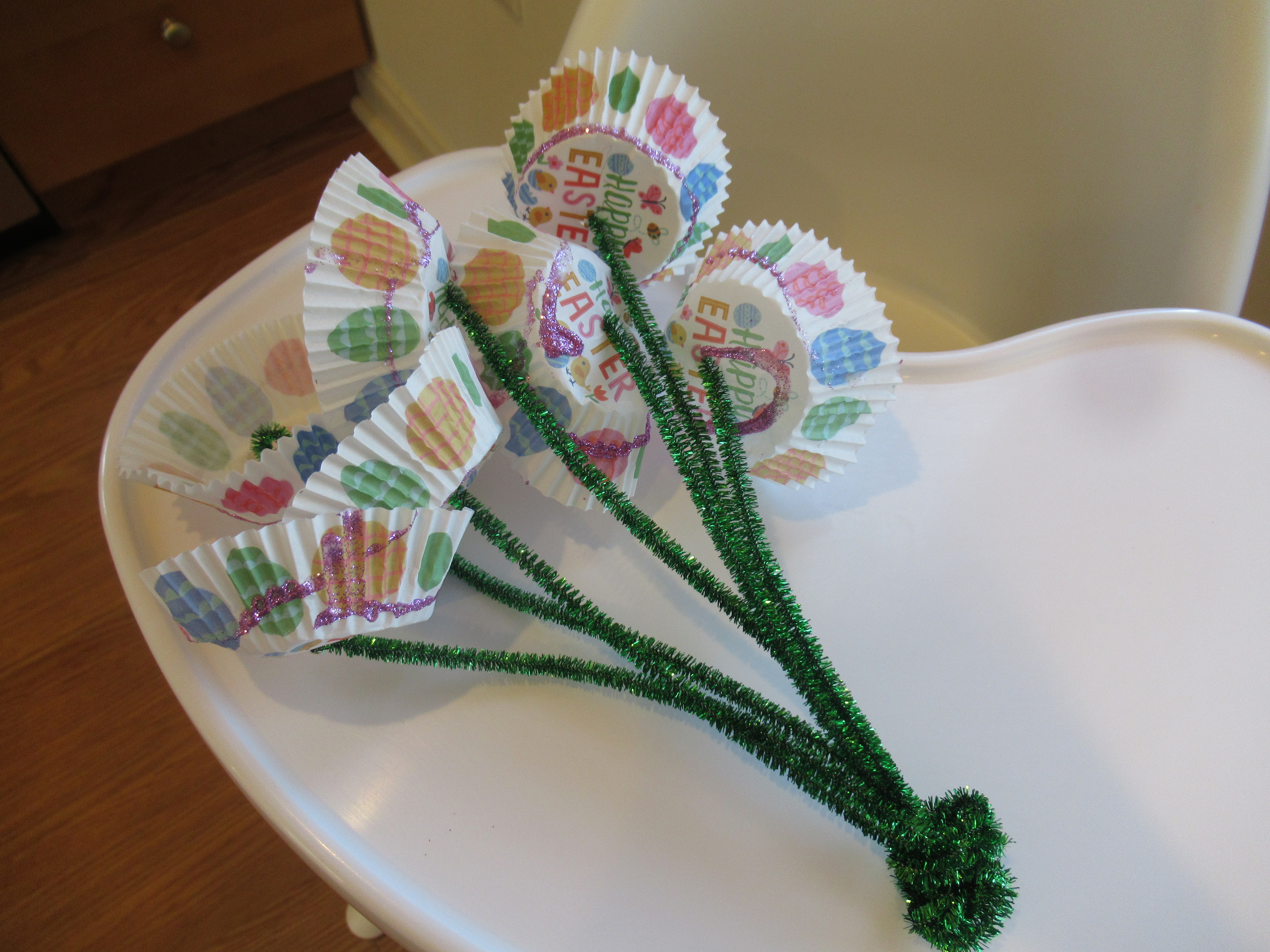
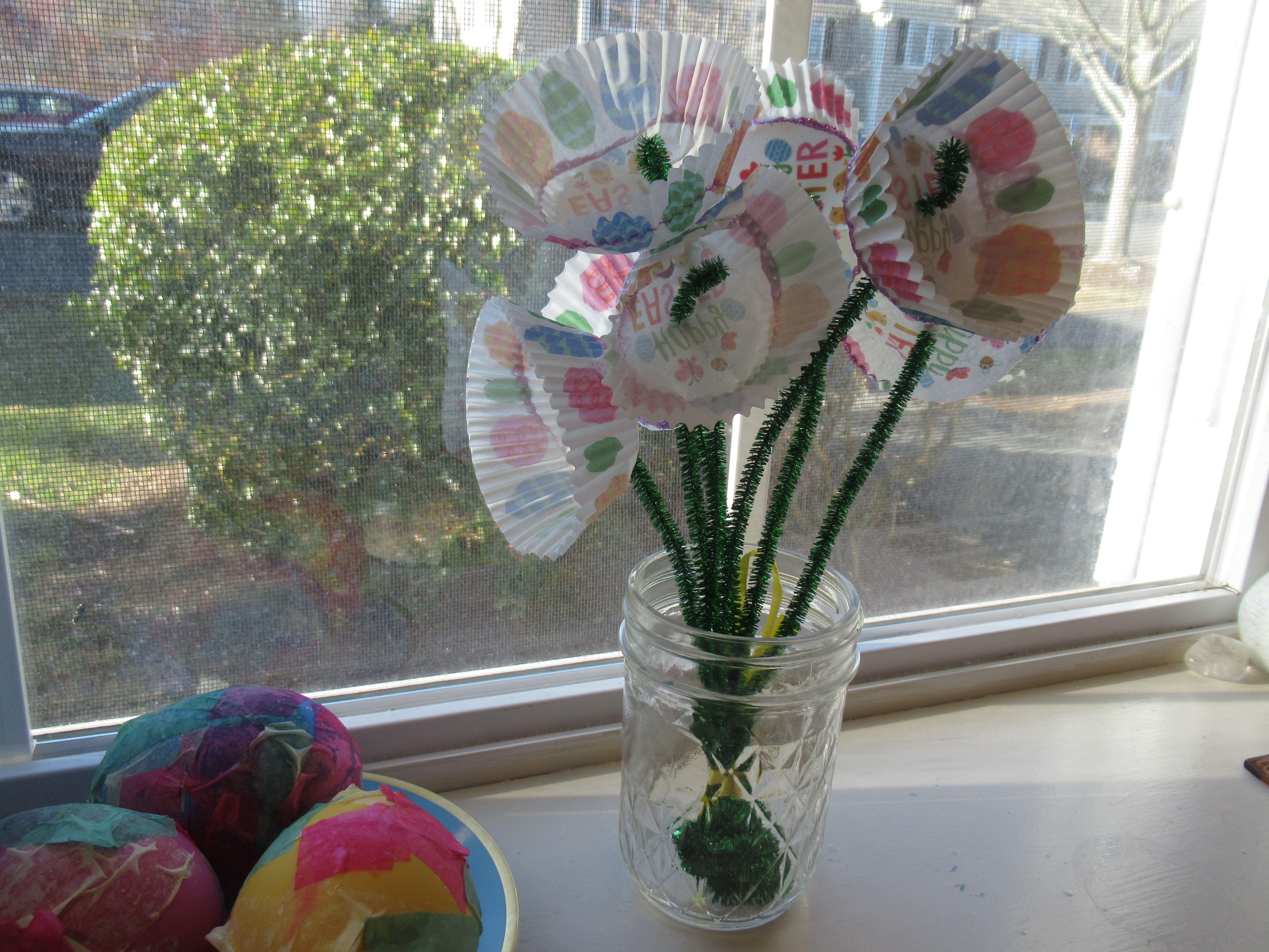
And all you need is pretty cupcake liners and pipe cleaners! Pastel shades like pink or lavender would be great for “blossoms”, but I happened to have Easter-themed cupcake liners. That meant our final product will work well as an “Easter Bouquet”, too, to set as a table centerpiece.

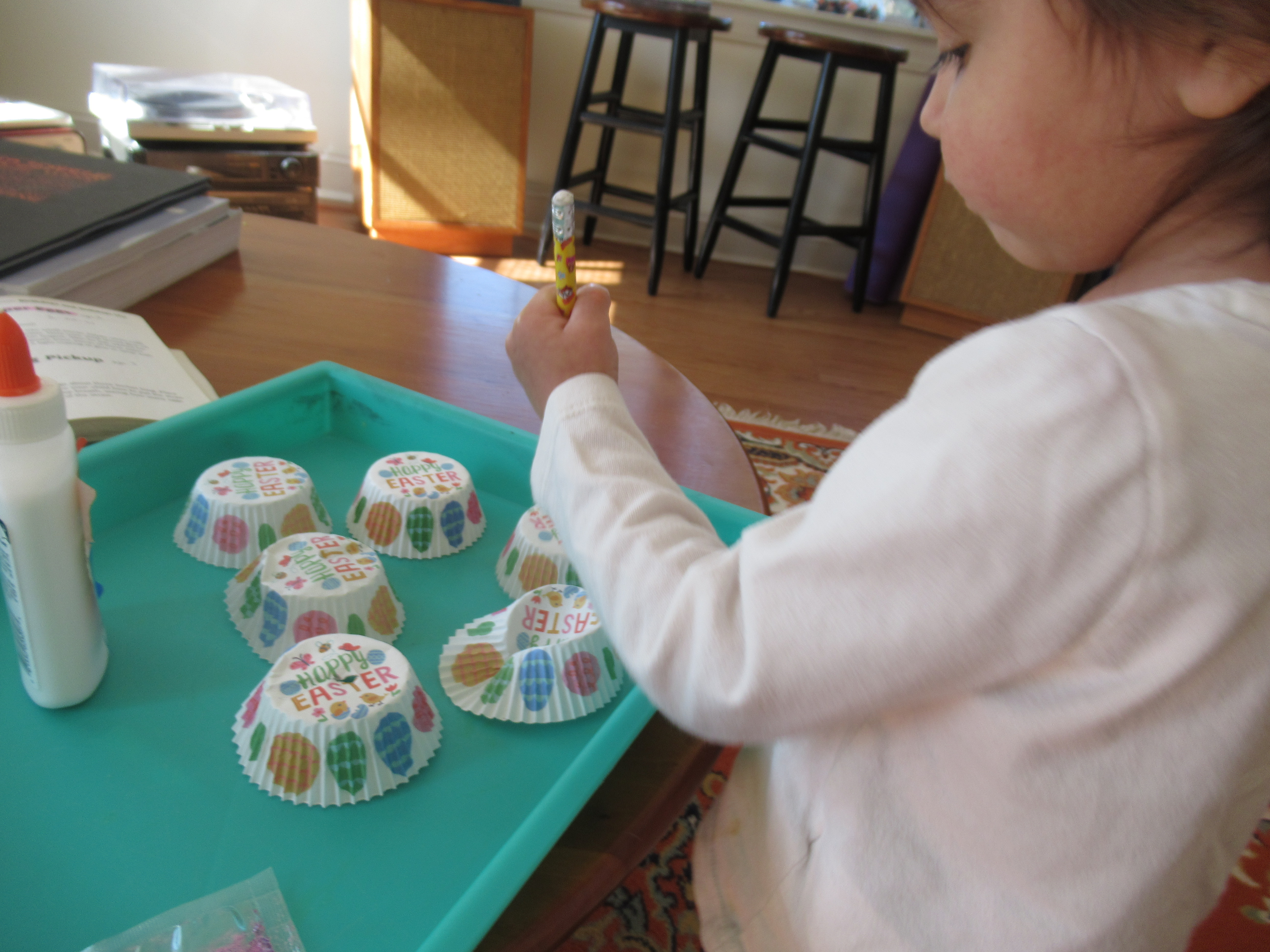
To make each flower, poke a hole in the center of each cupcake liner with a pencil. Insert a green pipe cleaner and bend slightly to secure it in place.

If you want to make your flowers sparkly, squirt a little white glue on them first and liberally sprinkle on glitter. Veronika chose purple for this step, which was definitely her favorite part!

Once the glue dried, we gathered the flowers together into a bouquet, twisting the pipe cleaner stems together and securing with a yellow ribbon.


Spring Flower Pretend Play

Spring Flower Pretend (6)

Spring has sprung, the grass is ris,

I wonder where the flowers is.

This has always been one of my favorite lines of poetry, and it always rings so true. Today, we welcome spring, but the flowers are still several weeks away! To fill the interim, Veronika played with fake flowers in two ways today.

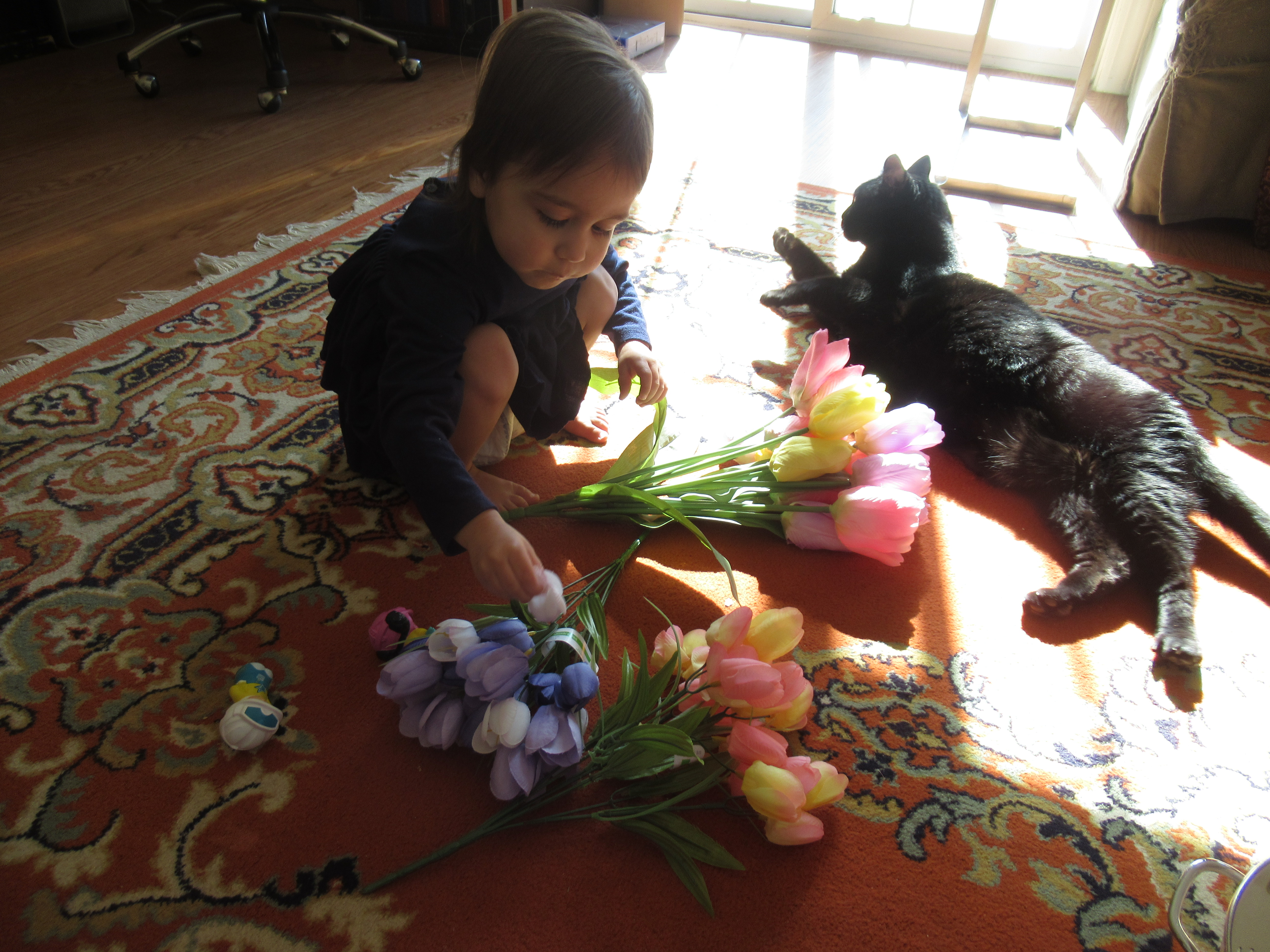
I had purchased bunches of fake flowers on sale at the craft store and then used a wire cutter to snip them into individual segments instead of big bouquets.

Spring Flower Pretend (1)

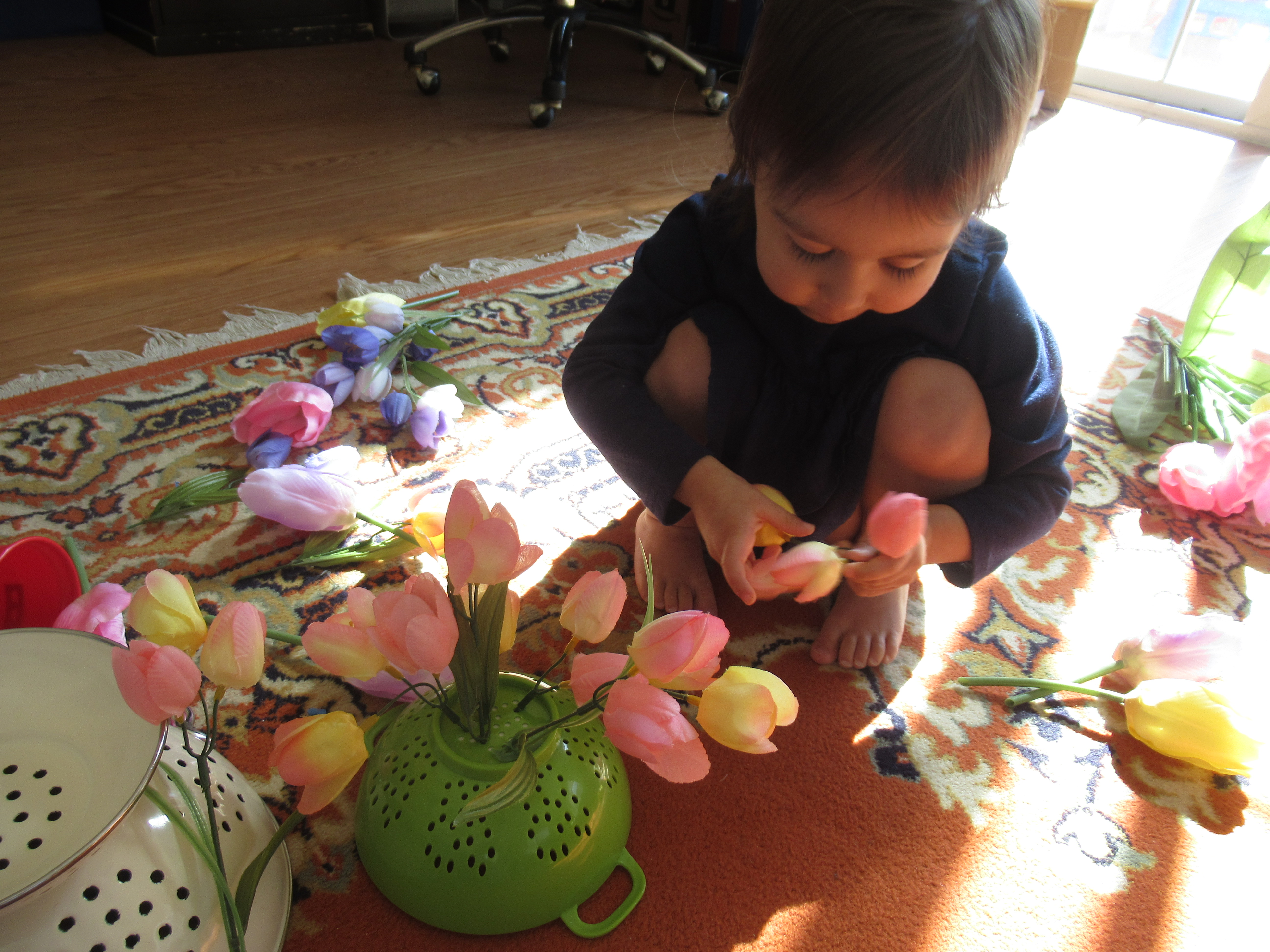
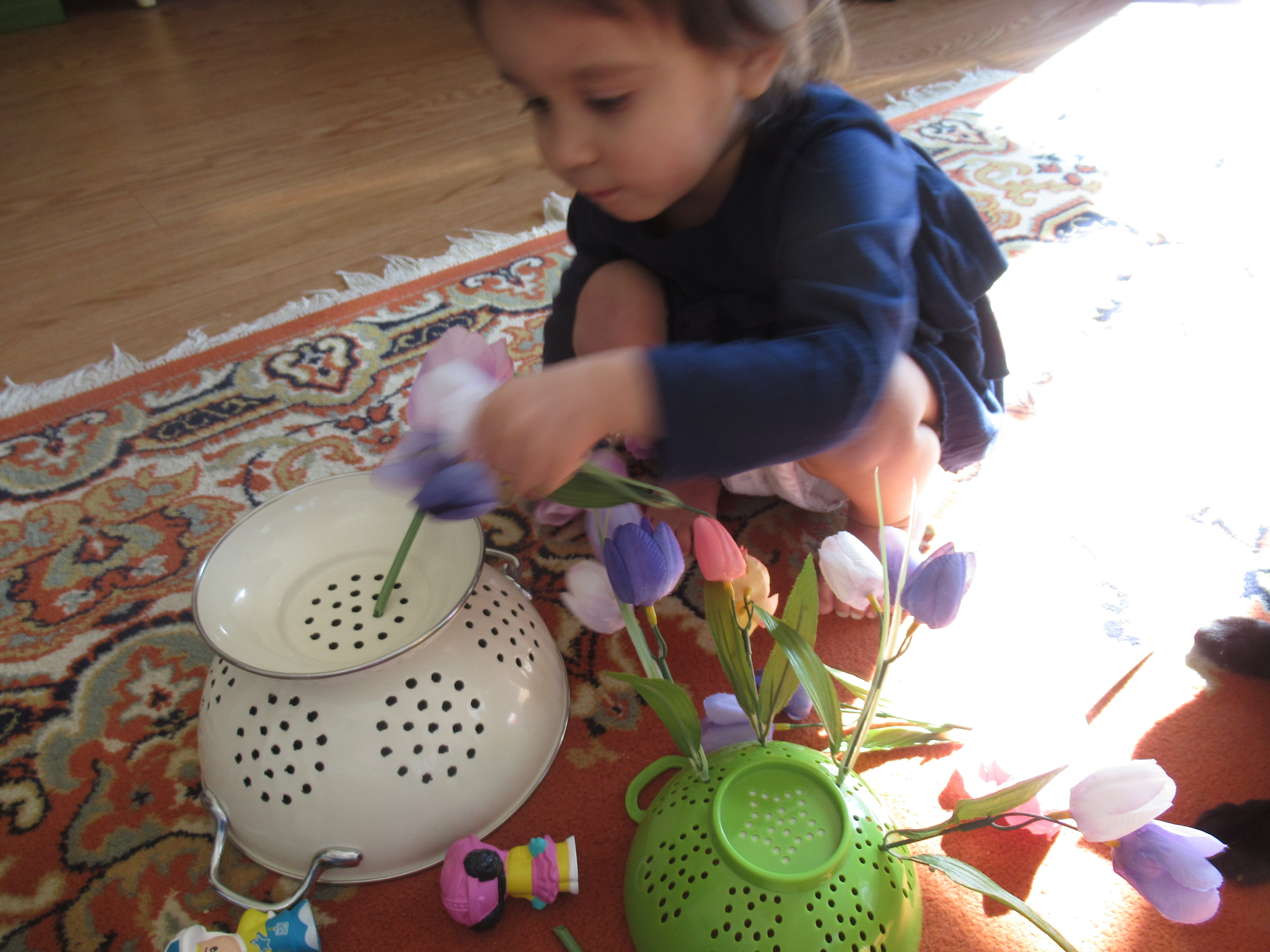
First, Veronika got to be a florist! Plastic cups and colanders were perfect for toddler-safe vases and making “arrangements”.

Spring Flower Pretend (3)

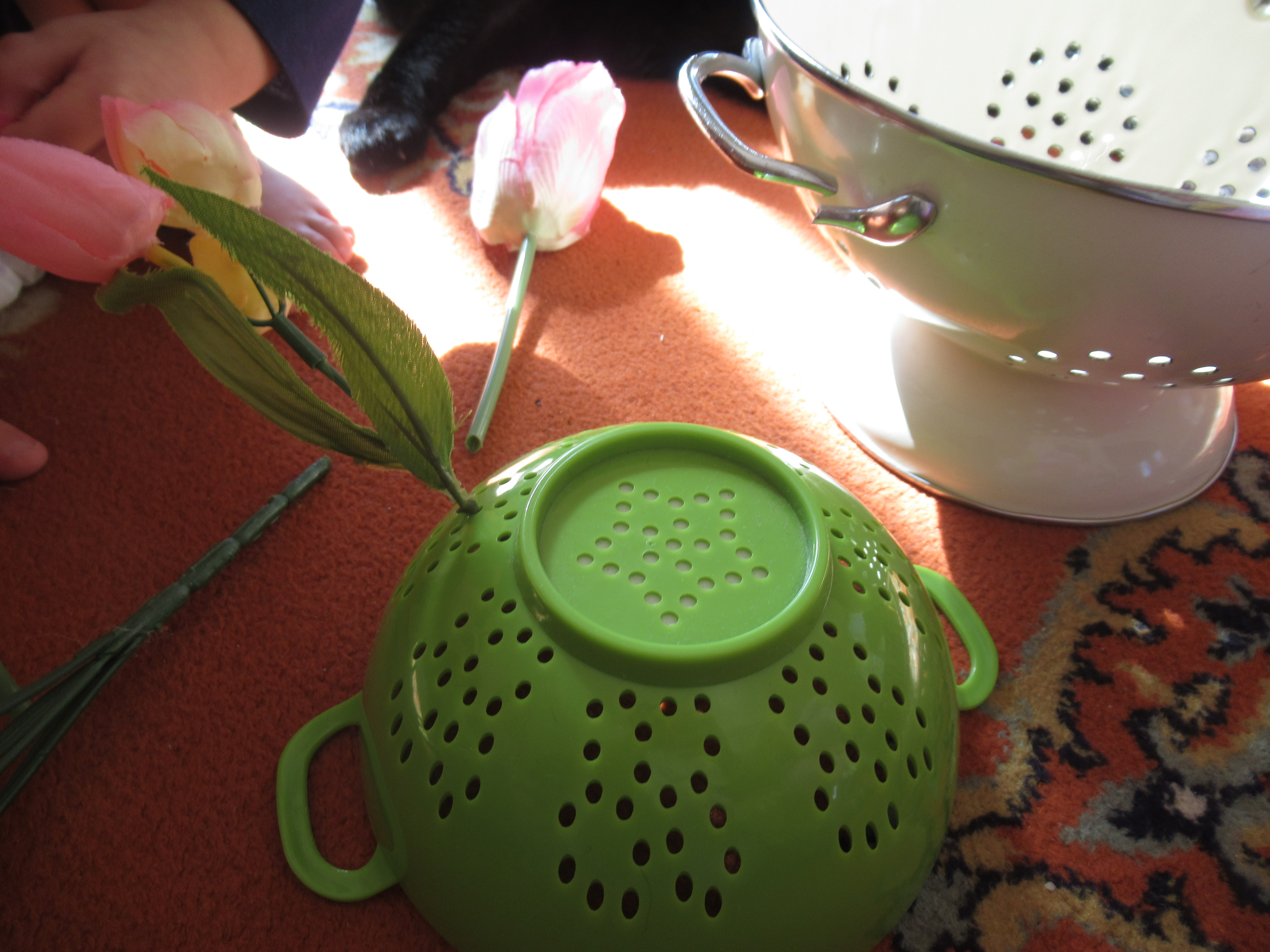
The colander is great because your little one will need to poke the stems down into the holes, which is excellent for fine motor skills.

Spring Flower Pretend (2)

She also loved just holding the flowers, peeling back the layers of petals to peer inside and talk about the colors of each, including great vocab like “lavender” and “peach”.

Spring Flower Pretend (4)

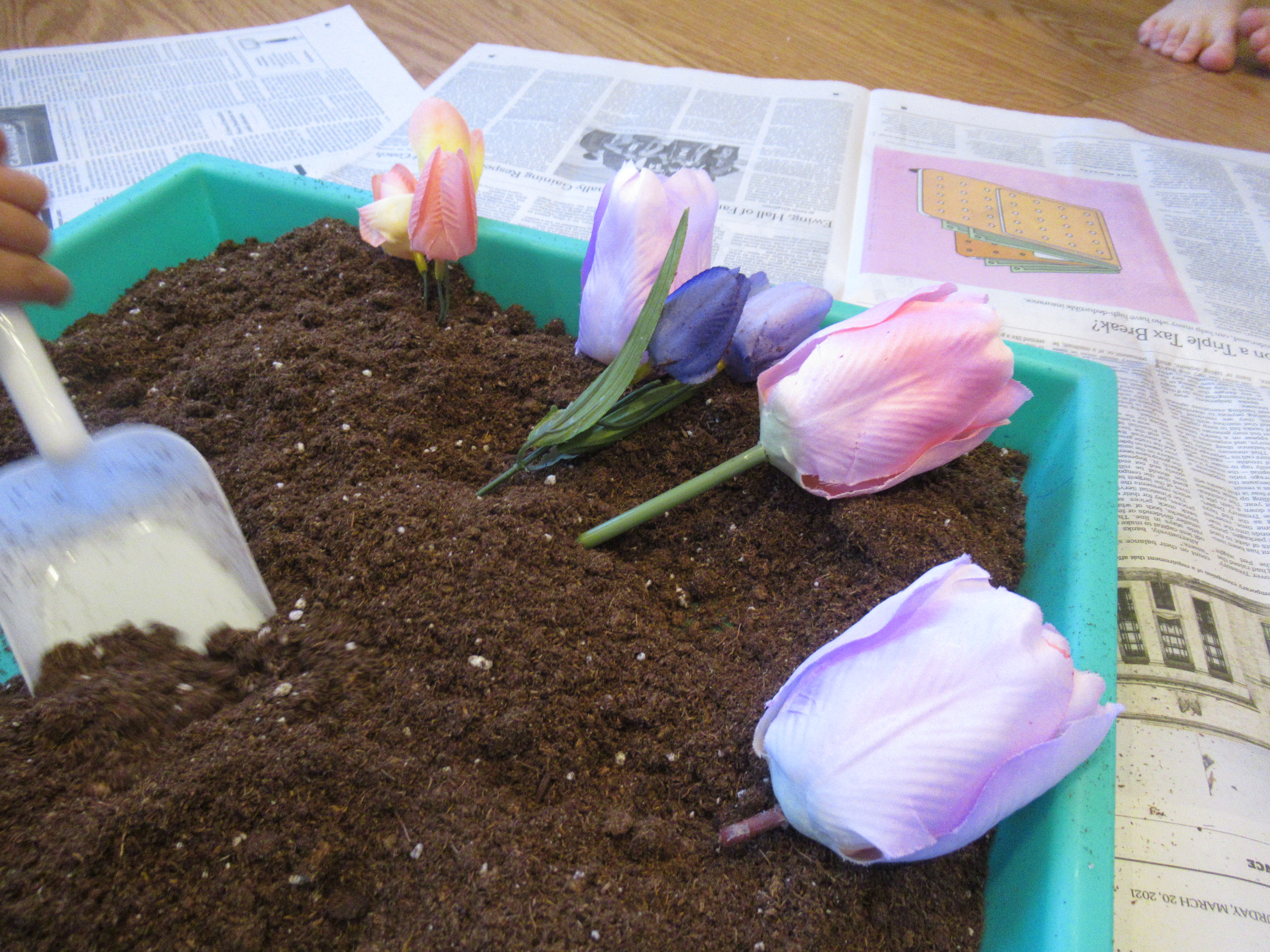
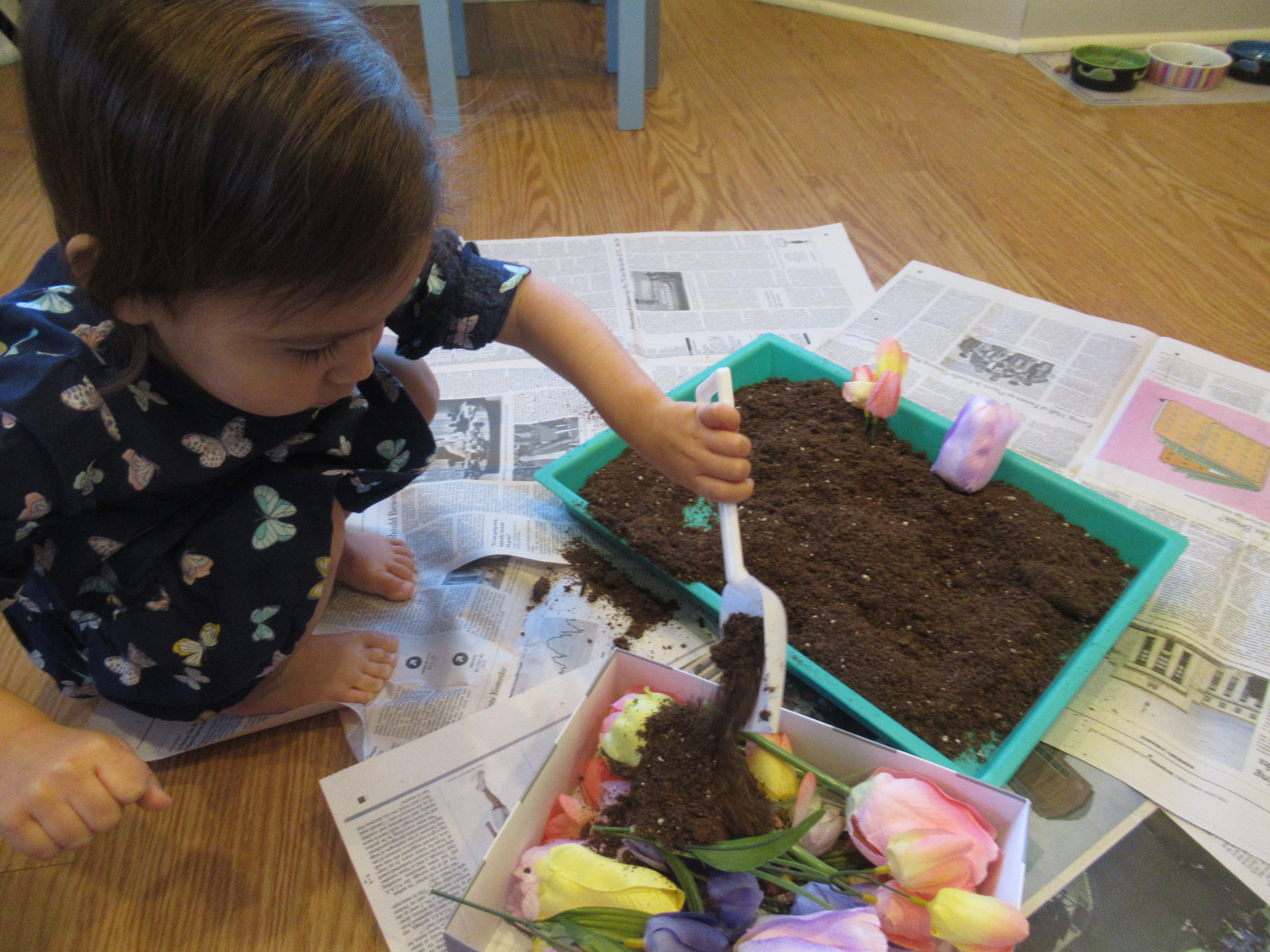
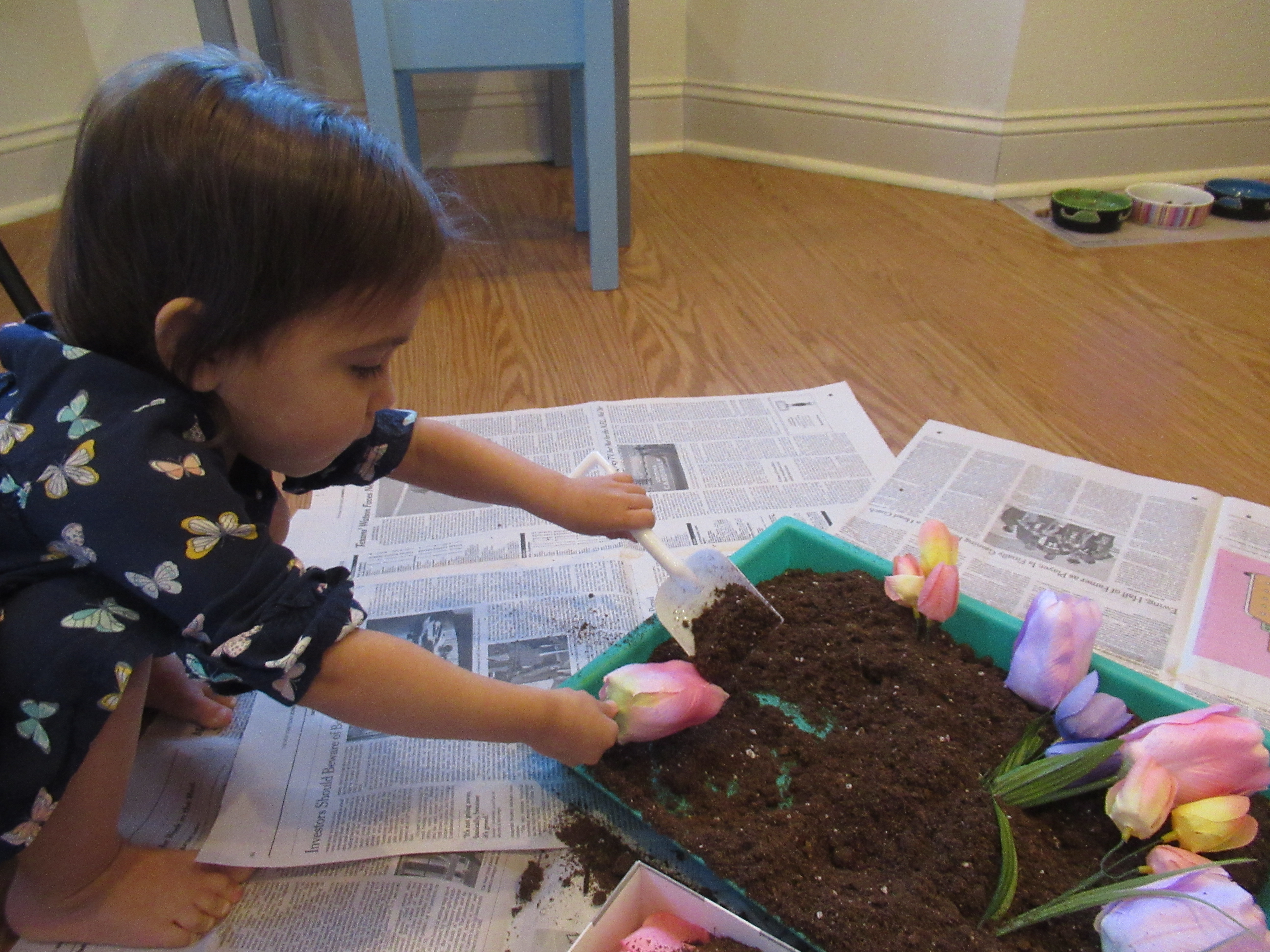
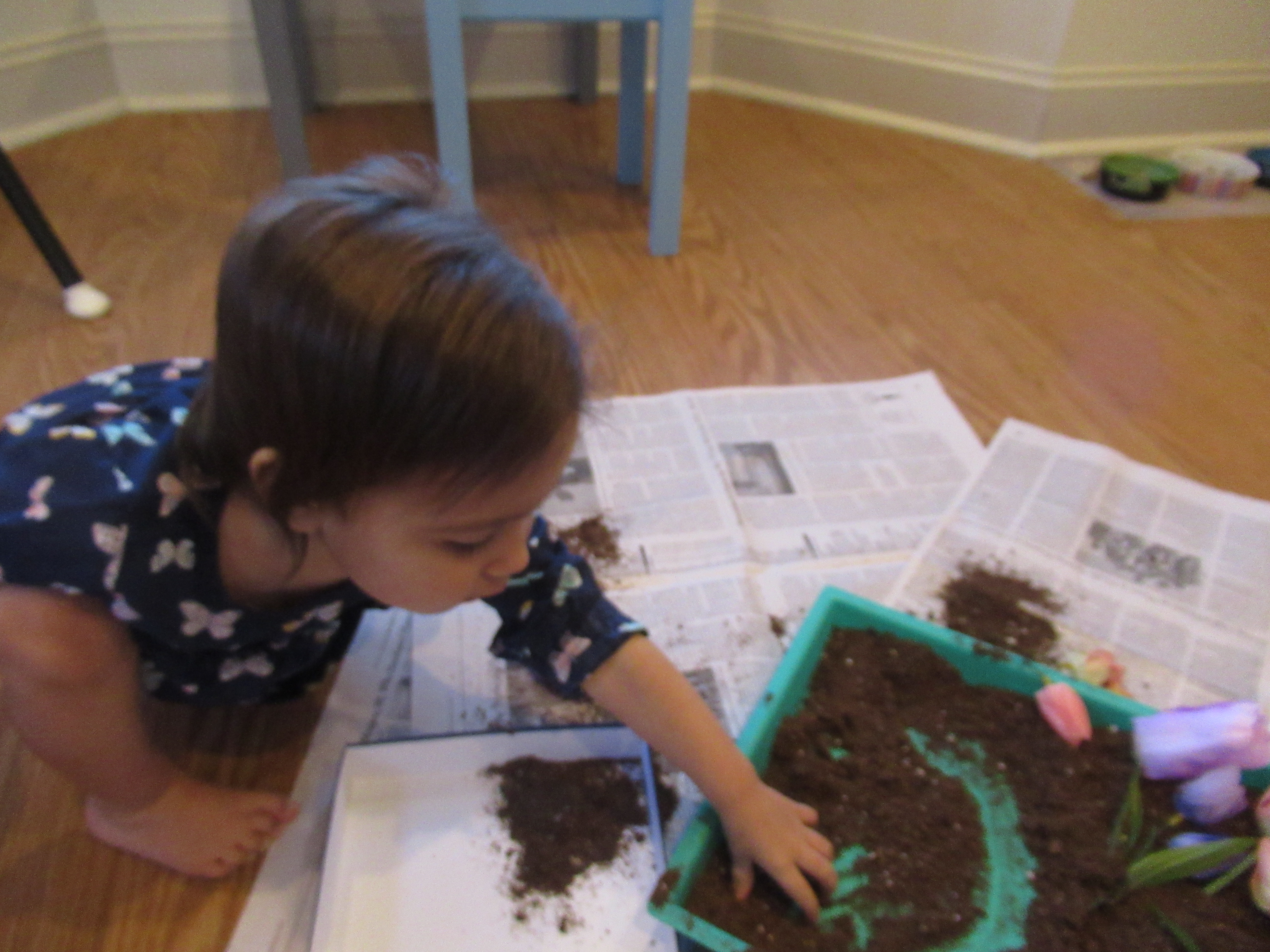
When this game was done, we made things even more realistic… with a potting soil sandbox! Potting soil makes a great alternative to sand as an indoor sandbox. I poured some into a tray with the pretend flowers on the side. Make sure you cover the floor underneath with newspaper!

Potting Soil Sandbox (4)

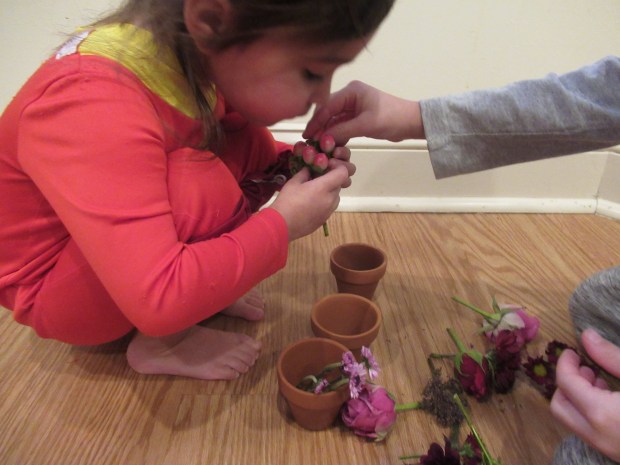
Veronika trotted over to help “plant” the flowers.

Potting Soil Sandbox (2)

She also loved scooping dirt between two containers, using a beach shovel as her gardening spade.

Potting Soil Sandbox (5)

Or picking up bandfuls to see how the dirt felt, and then letting it sprinkle down.

Potting Soil Sandbox (6)

Overall, what beautiful flower play to tide us over for a few more weeks!

Spring Flower Pretend (7)

Chalk Color Matching Game

Outdoor Color Match (3)

Here’s an activity that’s a bit like a paint chip rainbow nature hunt, but tailored more to fit a toddler’s age and abilities.

On a gorgeous garden walk today, I directed Veronika’s attention to lots of different colored flowers. (“Look, reds! “Can you see the blue flower?”). I didn’t specifically ask her to collect any one color, but I carefully made sure we had at least one item from each color of the rainbow by the end of our walk.

Outdoor Color Match (1)

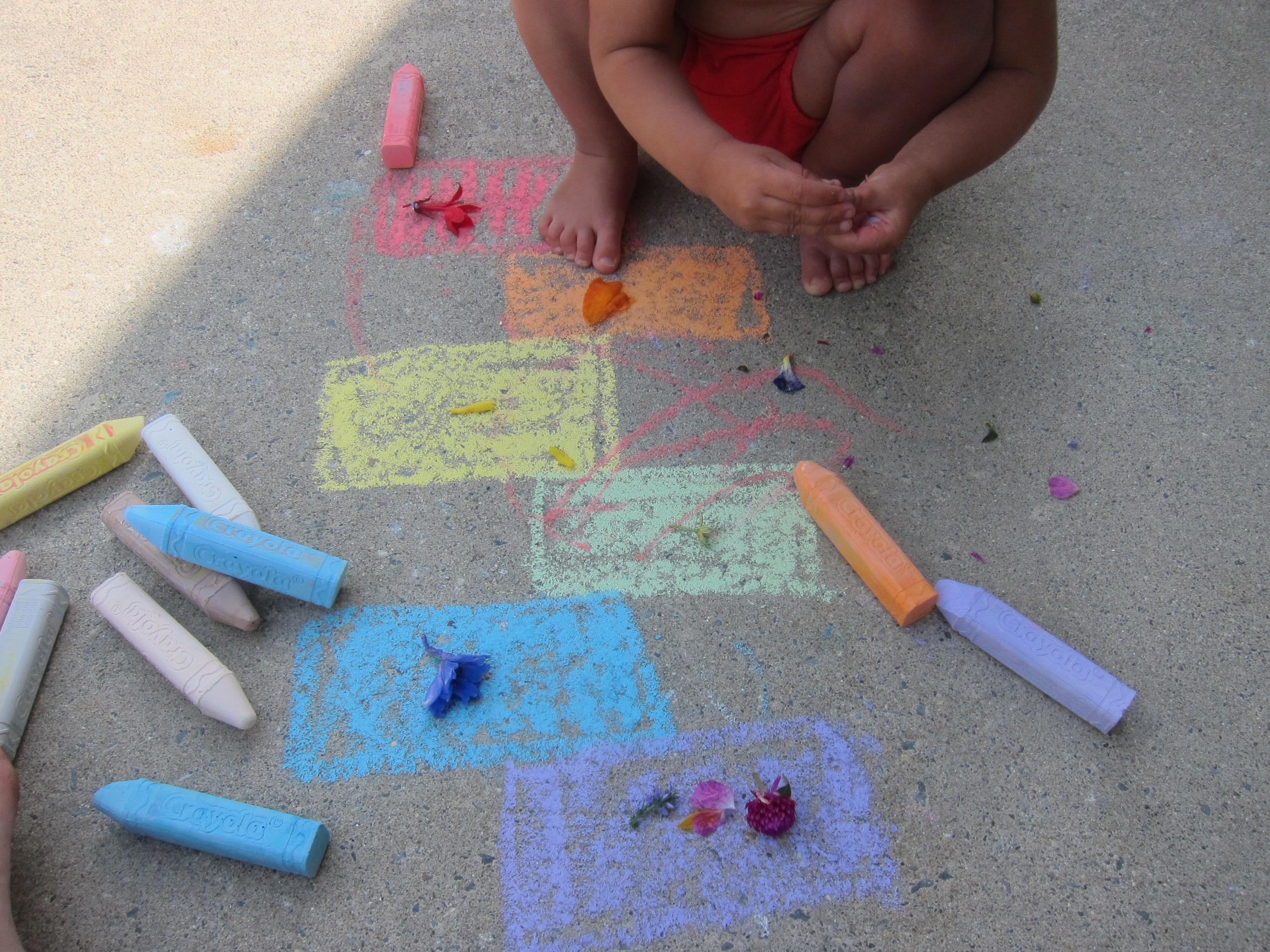
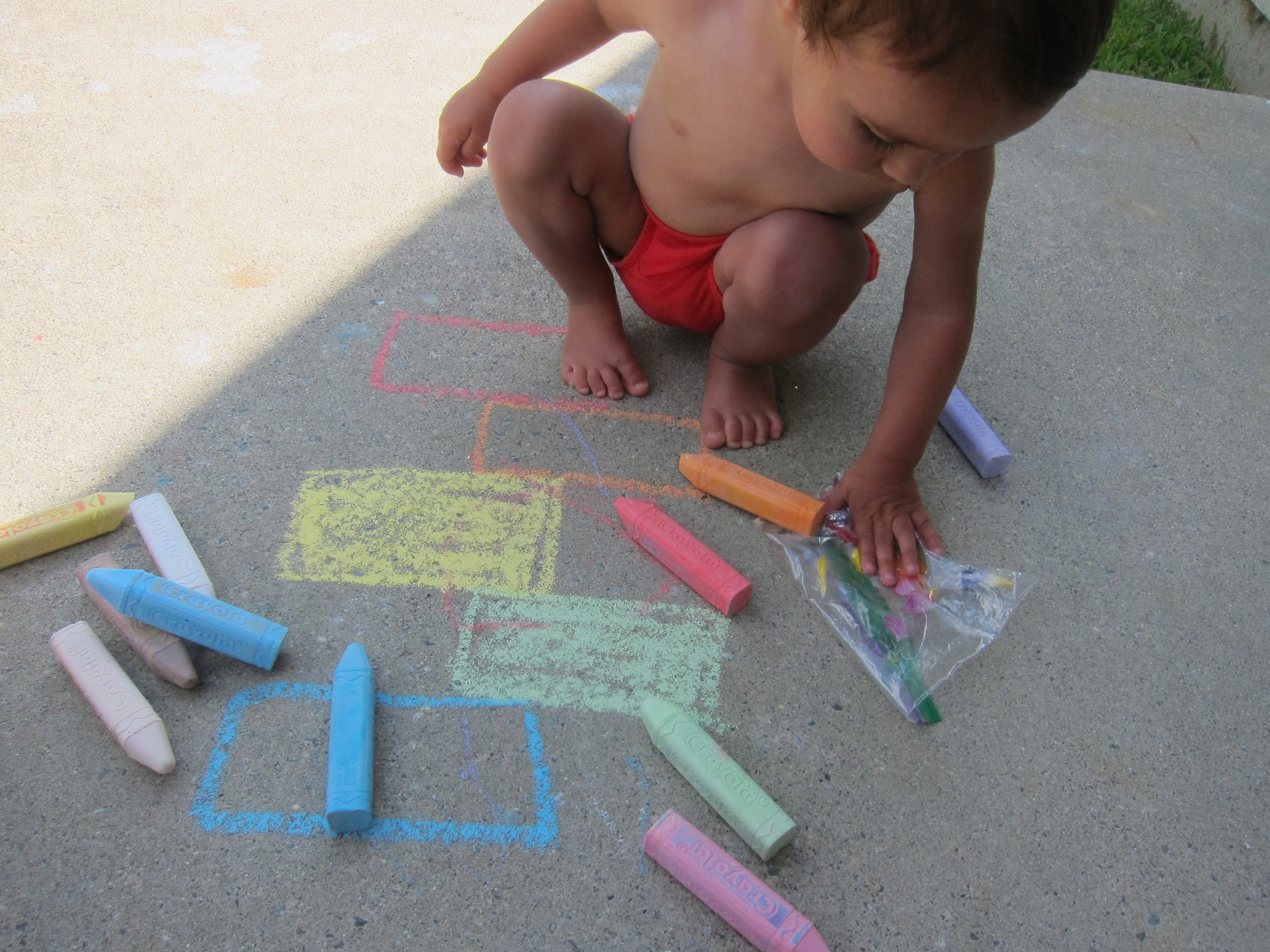
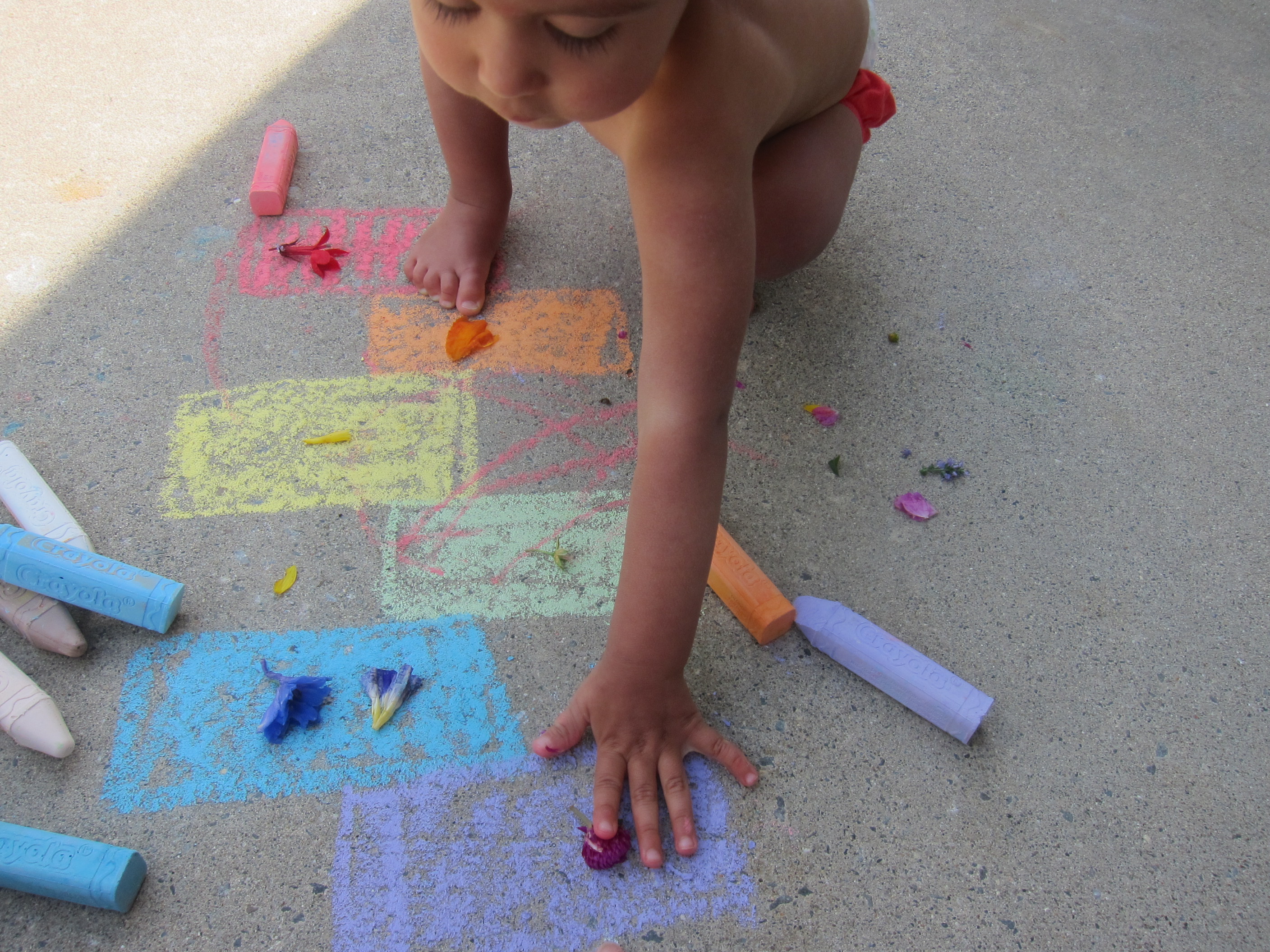
Once home, I sketched out a chalk rainbow on our back patio. As soon as I said, “Red…” she began to sing a rainbow song, going through all the colors!

Outdoor Color Match (6)

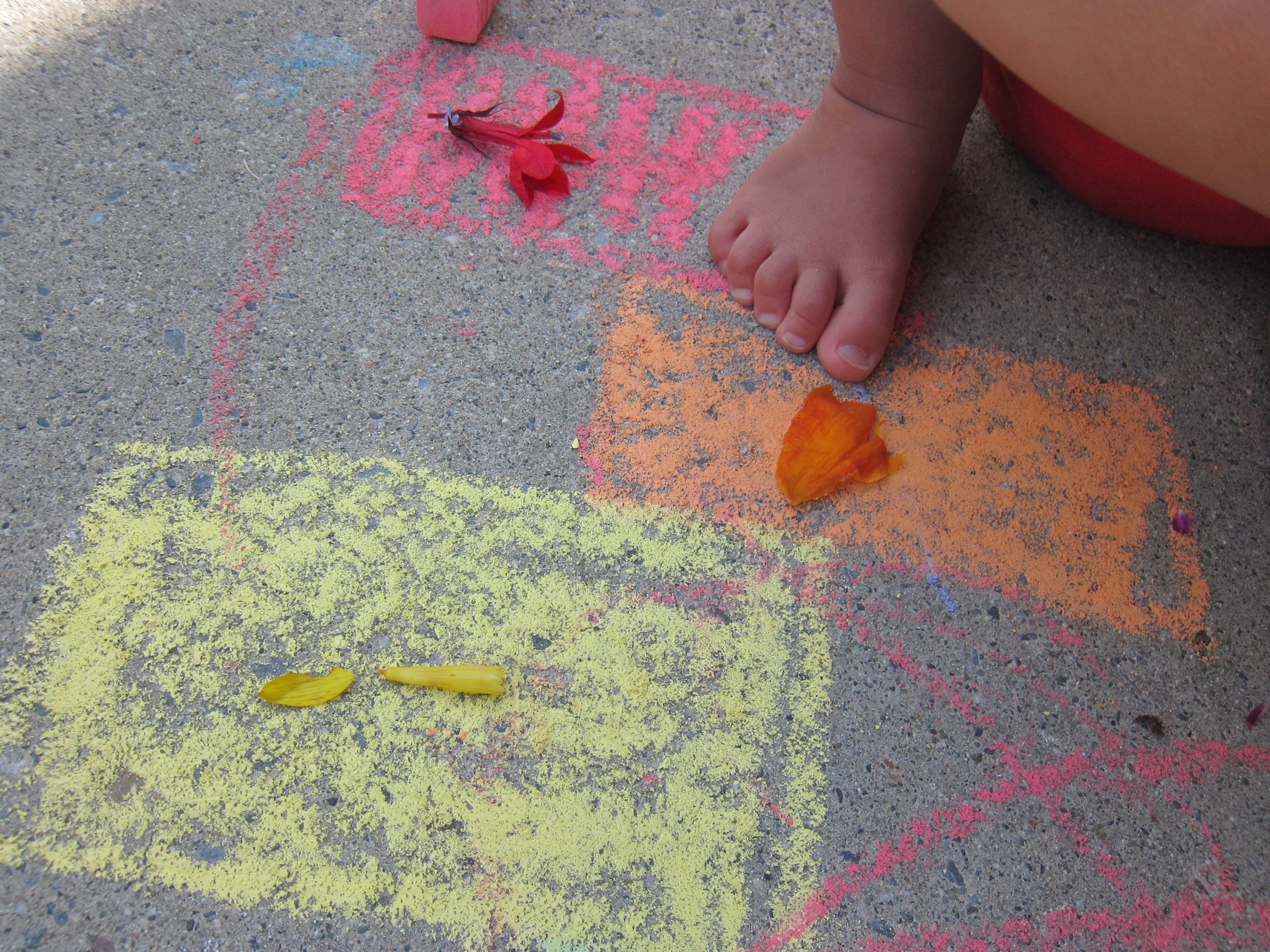
We then laid out our treasures from the garden. I placed red flowers on the red rectangle, orange on the orange, and so on.

Outdoor Color Match (4)

Soon she was helping!

Outdoor Color Match (2)

The flowers didn’t stay in one spot for long, since she wanted to pluck the leaves or rub them between her fingers. But I loved that she turned the color play into sensory play, too!

Outdoor Color Match (7)

Older toddlers can go even further with the game. Talk about shapes, or sort your colored items by a different attribute. I’d love to hear how the game goes for you in the comments!

Spring Flowers Craft

Spring Flowers (7)

These sweet handmade flowers make the perfect bouquet for Mother’s Day, whether to give to a mom or grandma in person, or to share over Zoom!

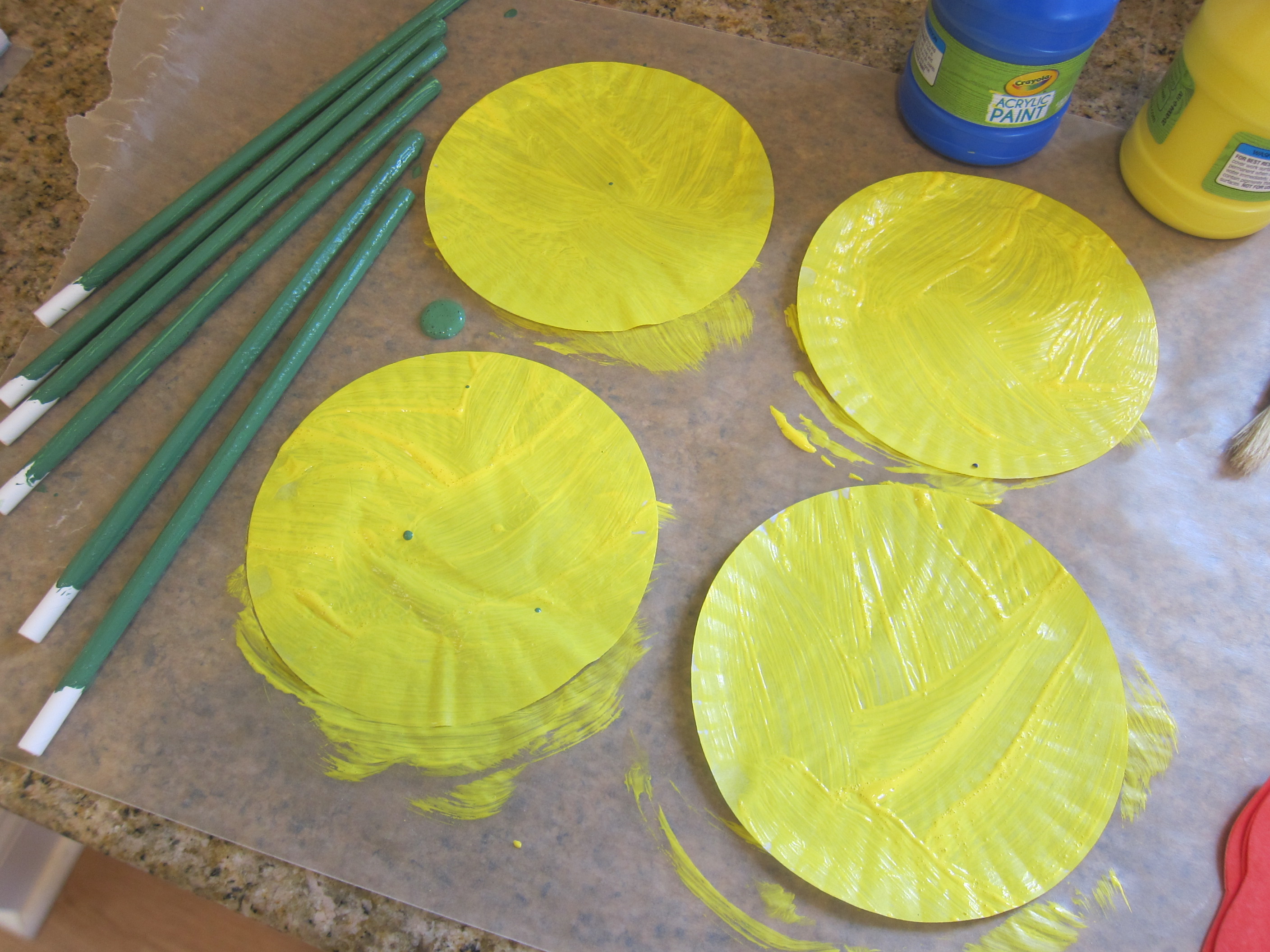
Ideally, we would have used green straws as flower stems, but because we’re a bit limited on craft supplies (thanks coronavirus), we settled for painting white straws green. I also painted white cupcake liners yellow.

Spring Flowers (1)

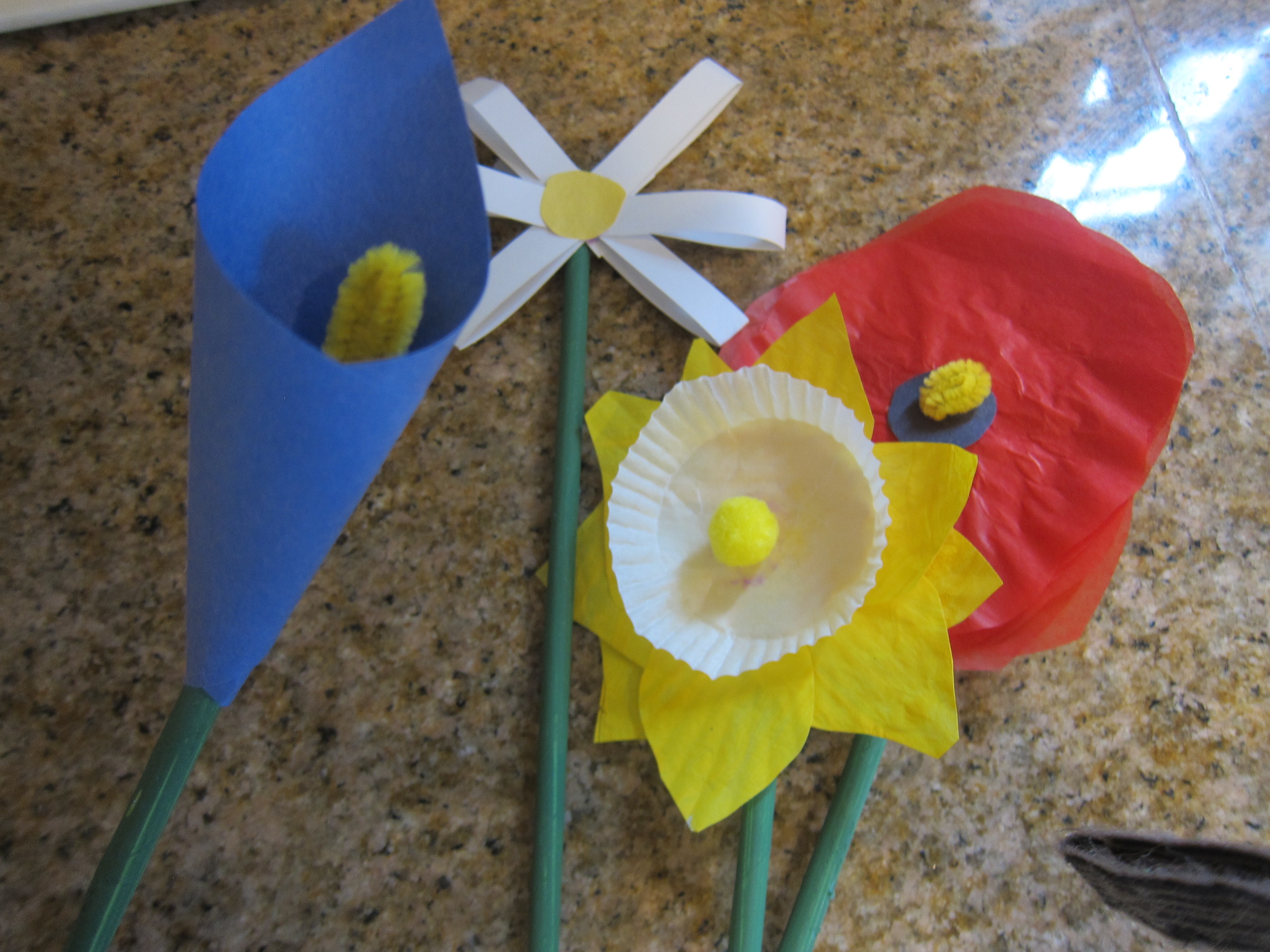
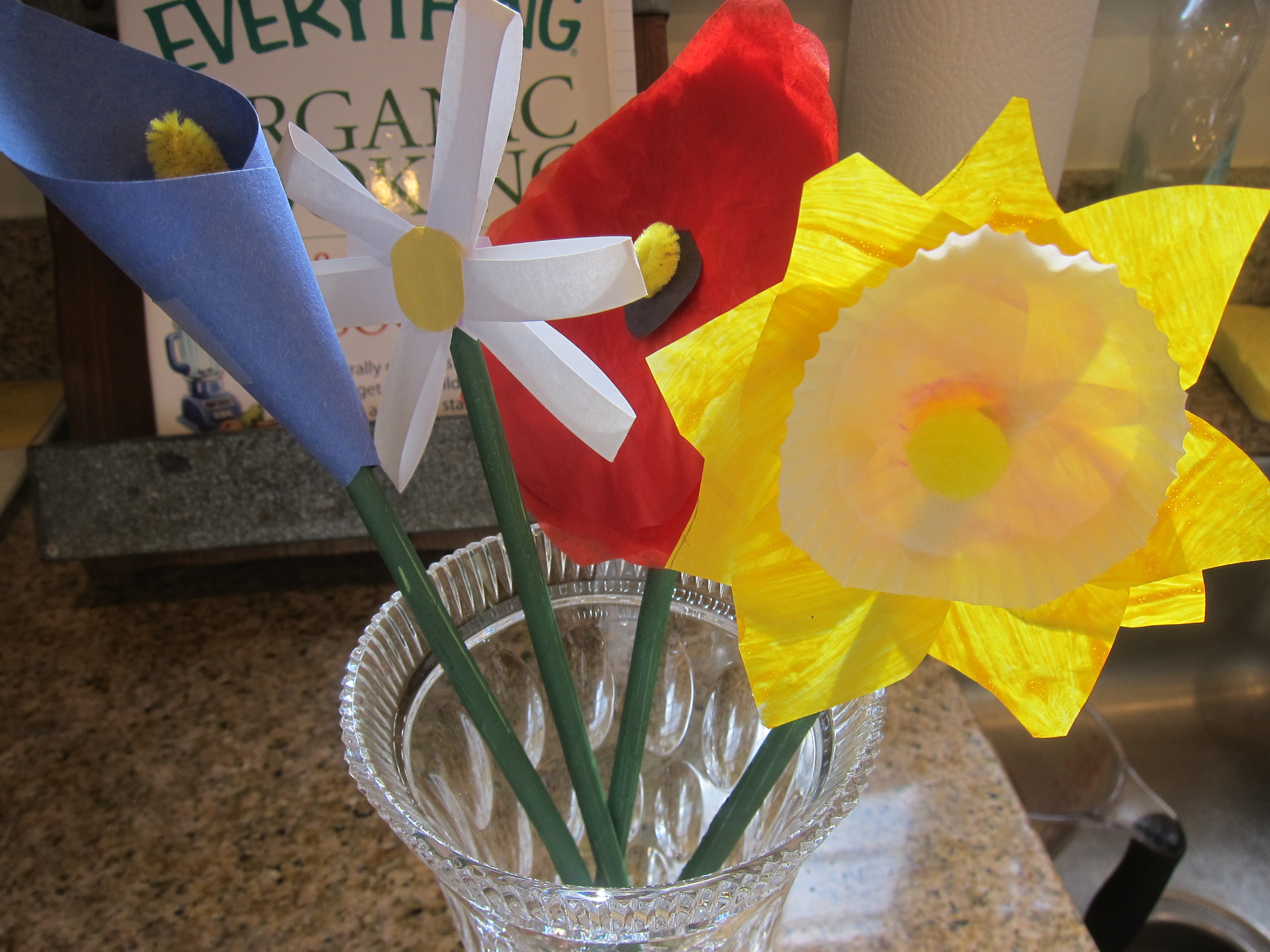
Once the paint dried, we were ready to assemble our flowers! Travis helped make four kinds:

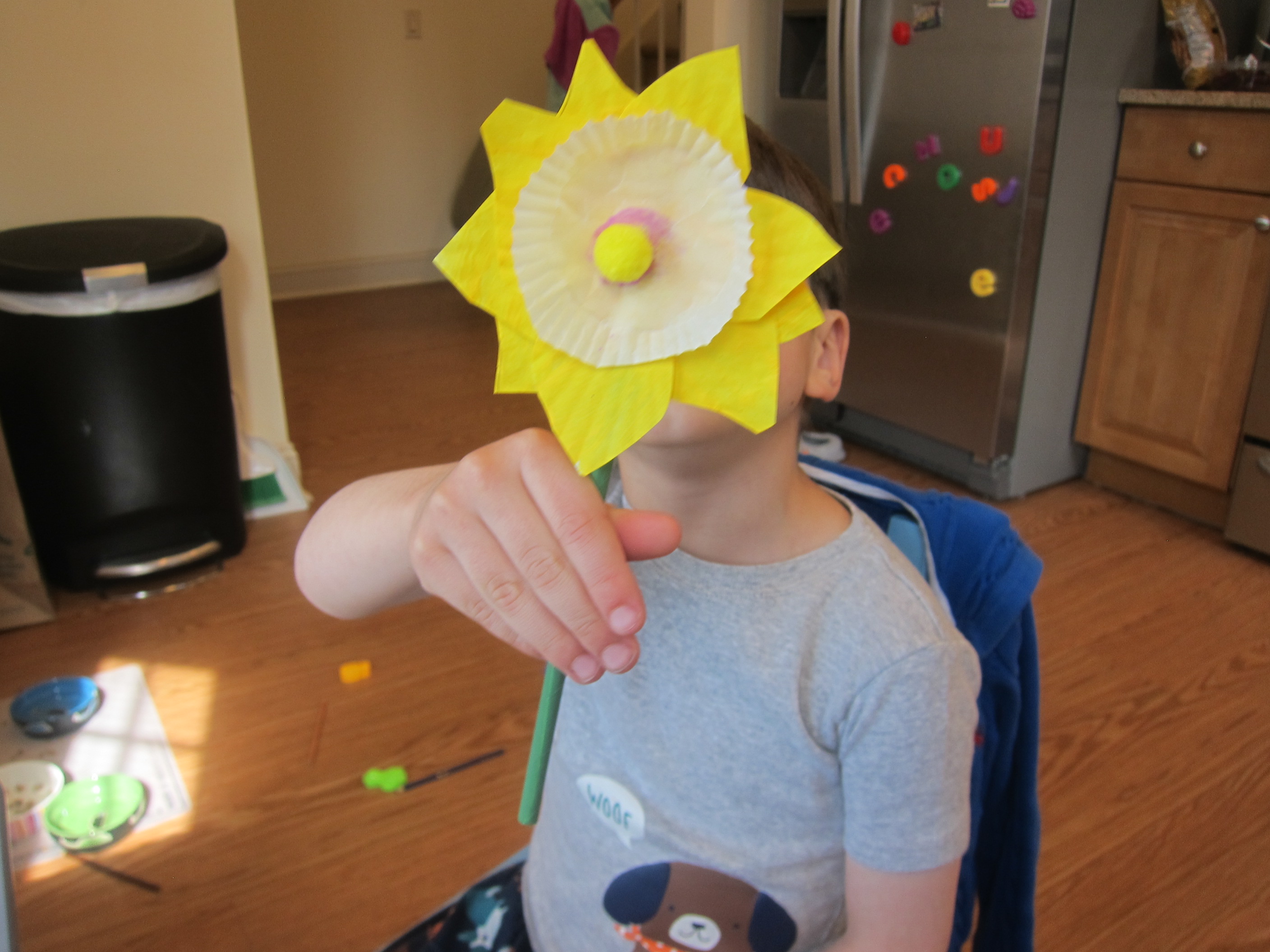
Daffodil: Trace a three-pointed petal shape on each of 3 yellow cupcake liners. Align them so they make a 9-pointed circle and glue together. Trim a fourth (white) cupcake liner down, and glue into the center. Glue a small yellow pom pom in the middle, then tape to a green straw as the stem.

Spring Flowers (4)

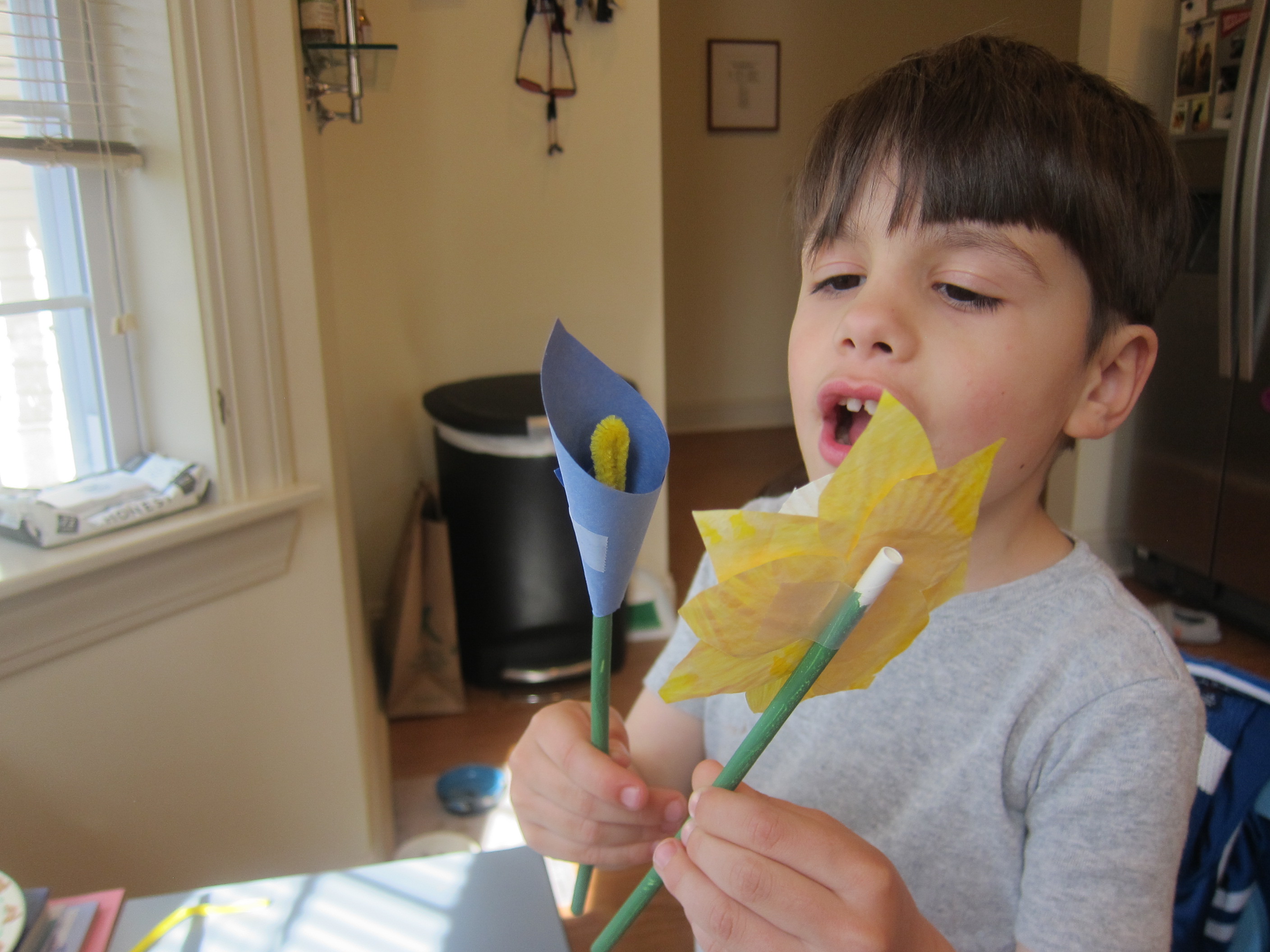
Calla Lily: Cut blue construction paper into an equilateral triangle. Tape a green straw so that it points up at one of the triangle corners. Wrap the other sides of the triangle tightly around the straw, and tape into place. Fold a yellow pipe cleaner in half, and insert down through the “flower” into the straw.

Spring Flowers (5)

Daisy: Cut three strips out of white construction paper. Glue each in half to form loops, then glue the loops one atop another.

Spring Flowers (3)

Cut a circle from yellow construction paper and glue in the center. Tape to a green straw for a stem.

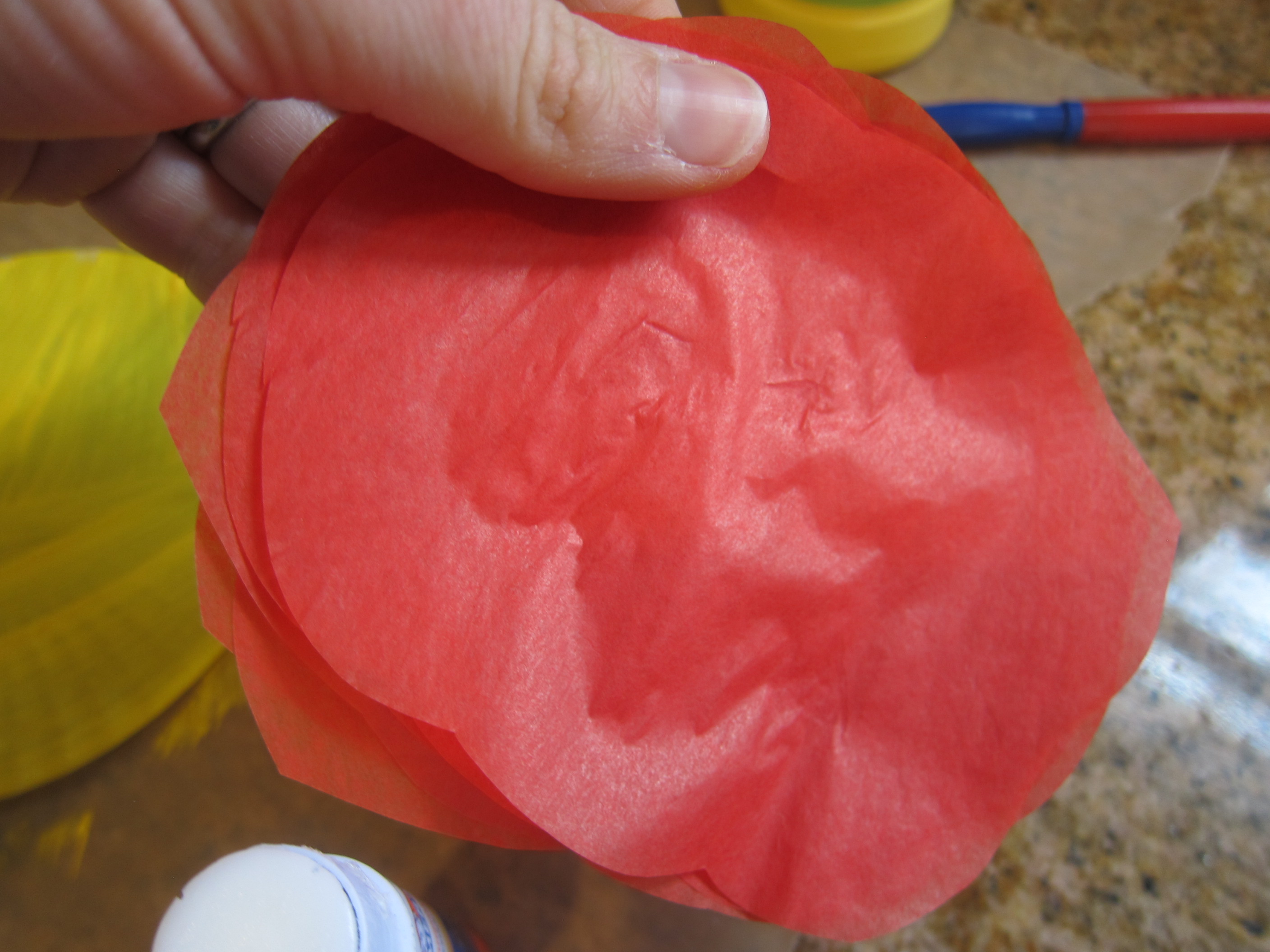
Poppy: Cut six circles from red tissue paper, then trim around the edges to resemble the petals of a flower. Glue the pieces one atop another.

Spring Flowers (2)

Cut a circle from black construction paper and glue in the center of the tissue paper. Poke the end of a yellow pipe cleaner through the black circle and then all the way through the tissue paper layers; thread the pipe cleaner down into a green straw.

Spring Flowers (6)

Gift your flowers to someone special. Happy Mother’s Day!

Spring Flowers (8)

Fruity Cereal Activities

Rainbow Cereal Sensory (5)

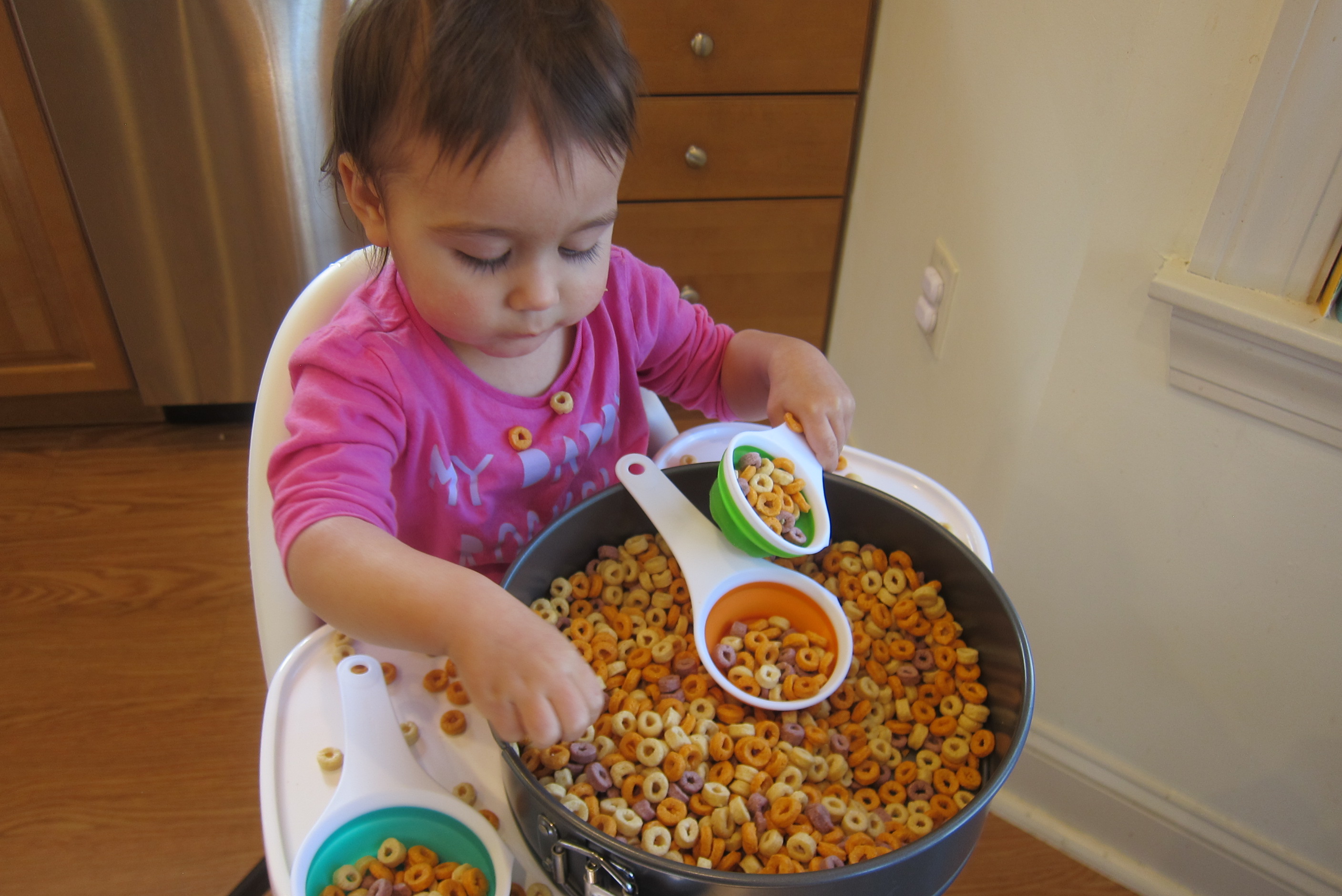
A favorite snack around here is the Rainbow O’s cereal from Cascadian Farm. So today Veronika played with the cereal in three different activities! You could also do any of these activities with Fruit Loops or Fruity Cheerios, but I like the all natural ingredients in the Rainbow O’s.

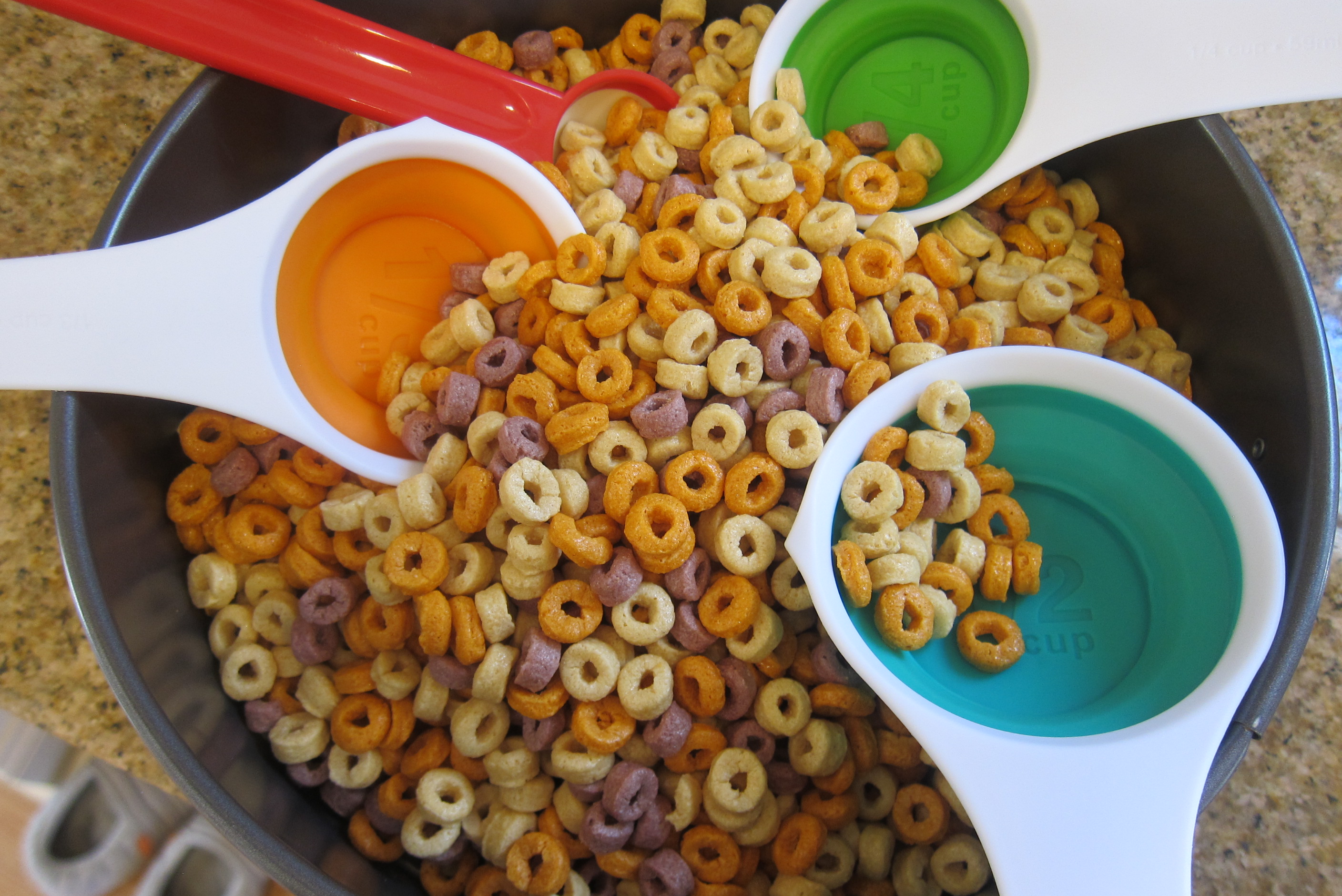
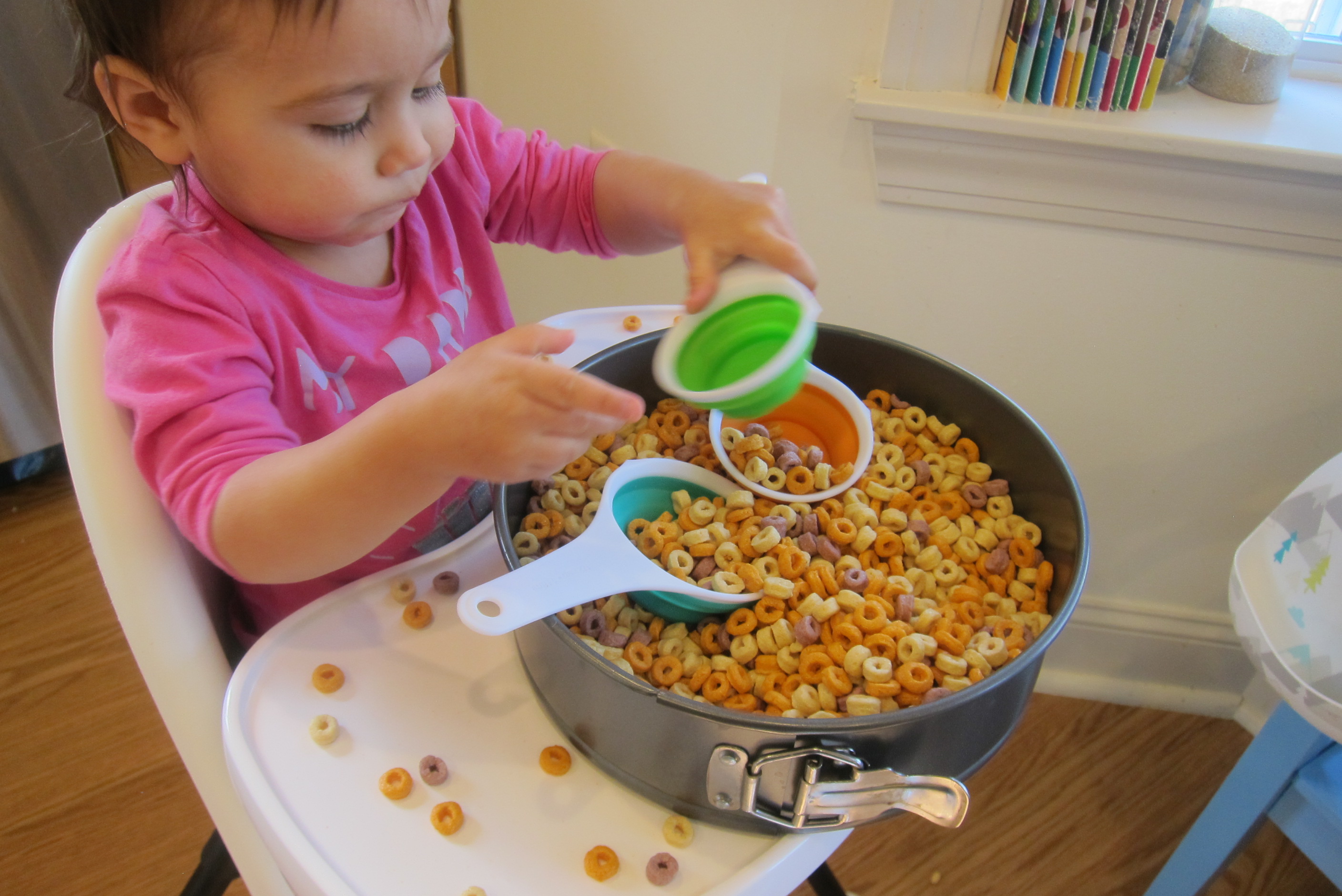
First up was a simple sensory tub. I filled a round cake pan with some of the cereal and added brightly colored measuring cups for scooping.

Rainbow Cereal Sensory (1)

Veronika was a lot more interested in tasting and snacking at first…

Rainbow Cereal Sensory (2)

…but eventually scooping was fun, too.

Rainbow Cereal Sensory (4)

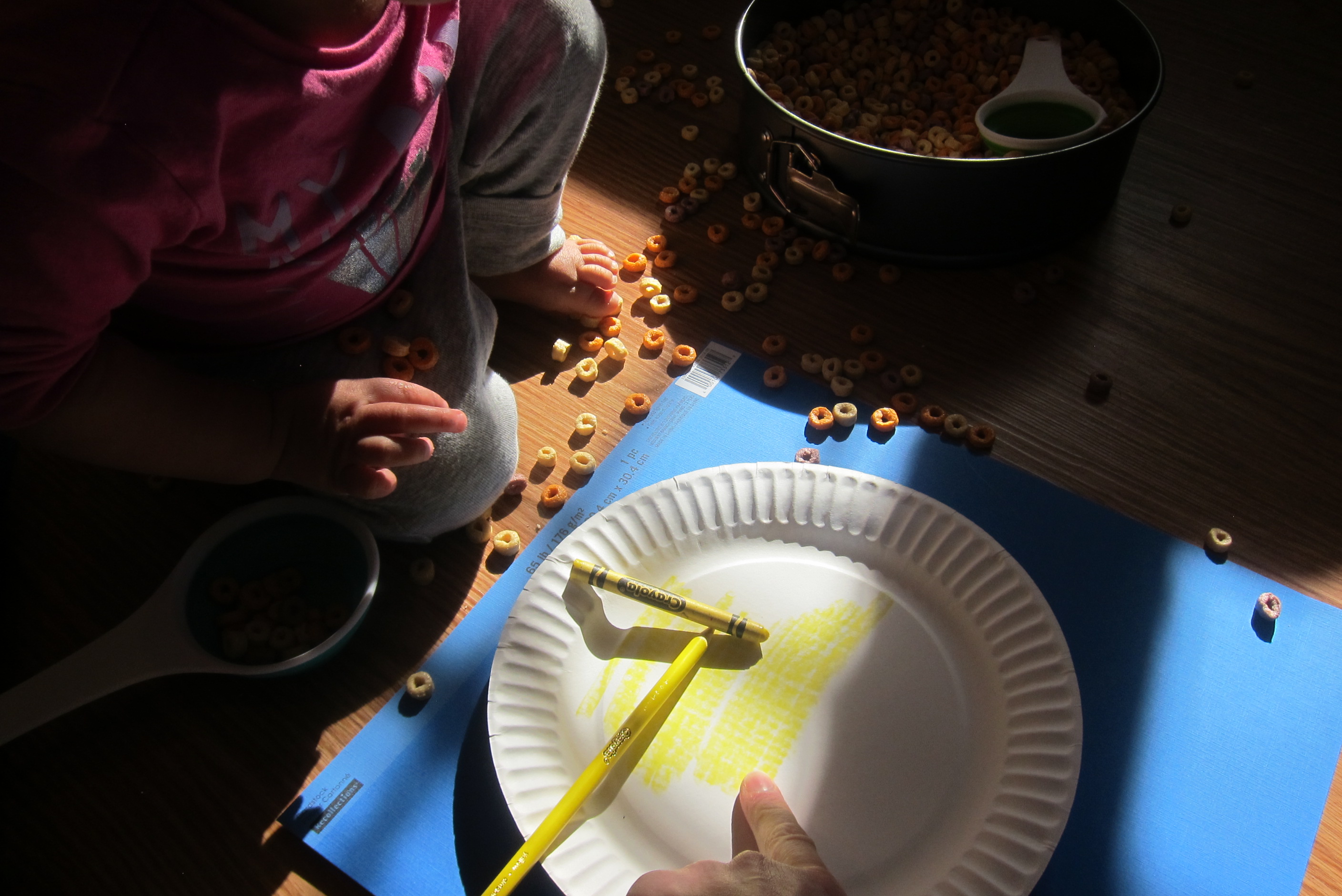
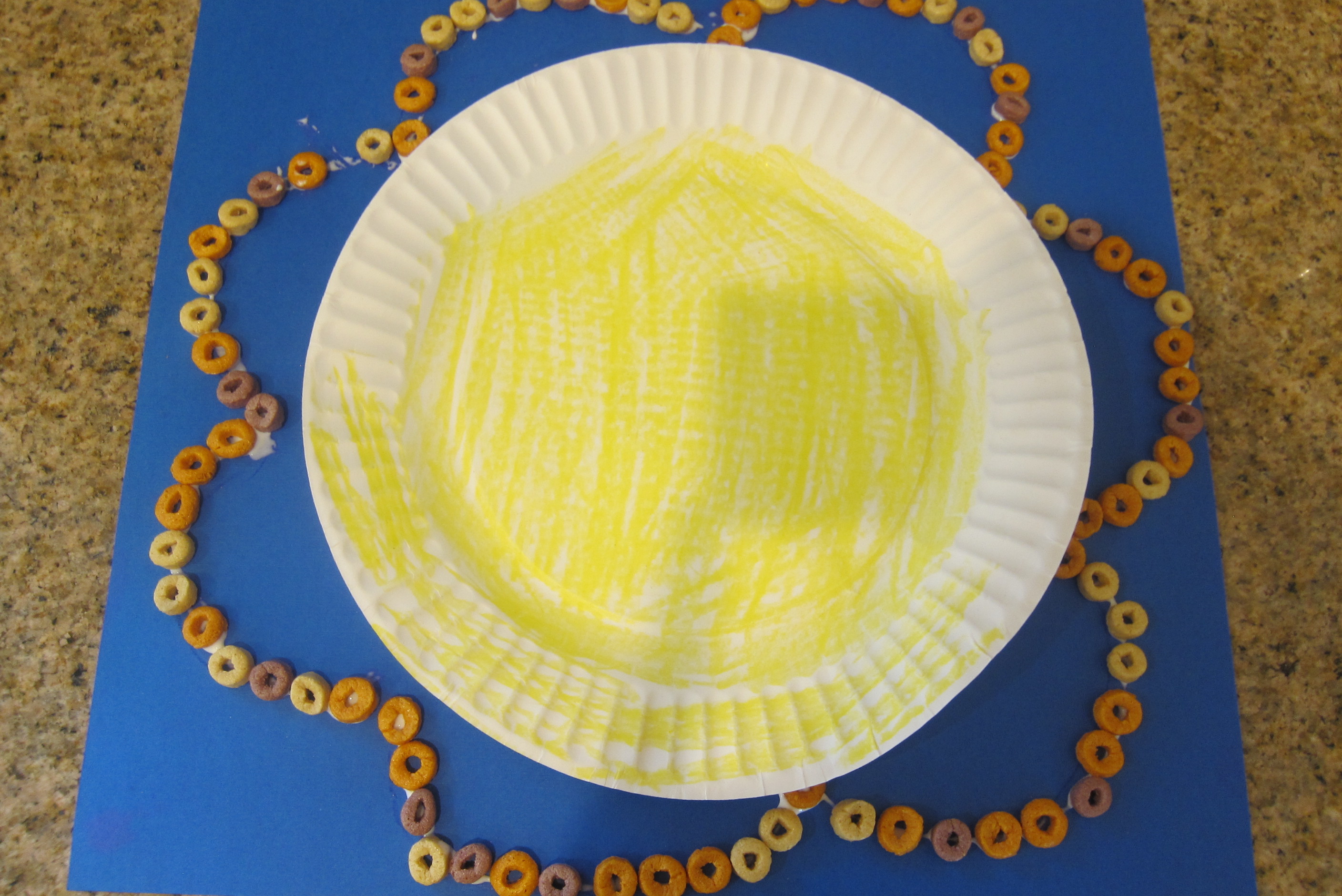
Next up, we made some art! I had her scribble on a yellow plate with crayon to make the center of a flower.

Rainbow Cereal Sensory (6)

I glued the plate onto blue cardstock and outlined petal shapes around it. Drip glue over the petal lines, and then cover the glue with the cereal. If your child is in preschool, he or she can definitely help with this step, which will be great for exercising little fingers. Veronika, on the other hand, was quite alarmed to learn she was not allowed to eat the cereal that had glue on it, so much so she burst into tears! So this might have been a little ambitious with a toddler.

Rainbow Cereal Sensory (7)

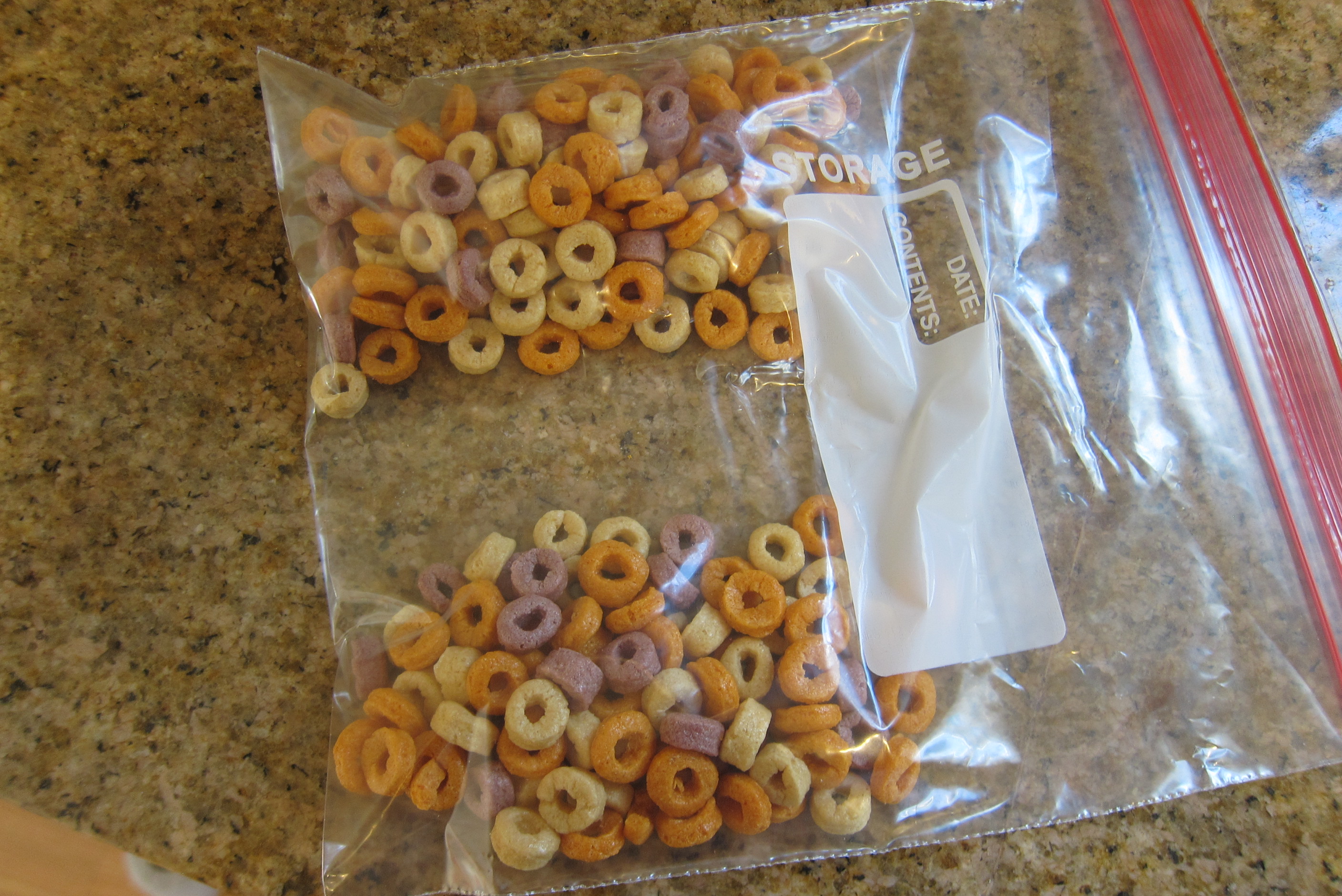
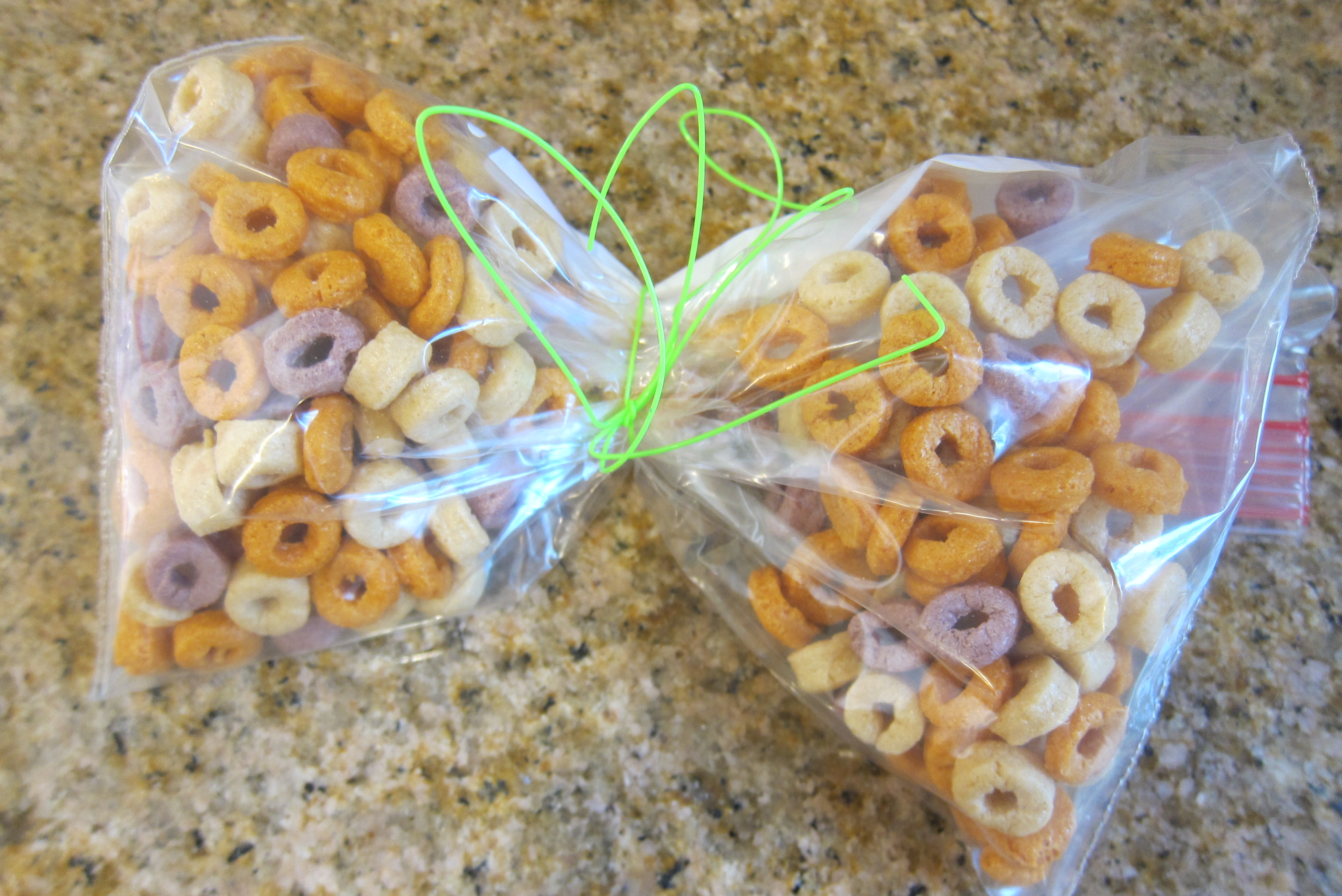
Finally, it was time to take some cereal on the go! With visions of spring dancing in our heads, I turned her snack bag into a butterfly: Fill a zip-top bag with some of the cereal, then seal and divide in two with a finger.

Rainbow Cereal Sensory (8)

Secure with a craft lace.

Rainbow Cereal Sensory (9)

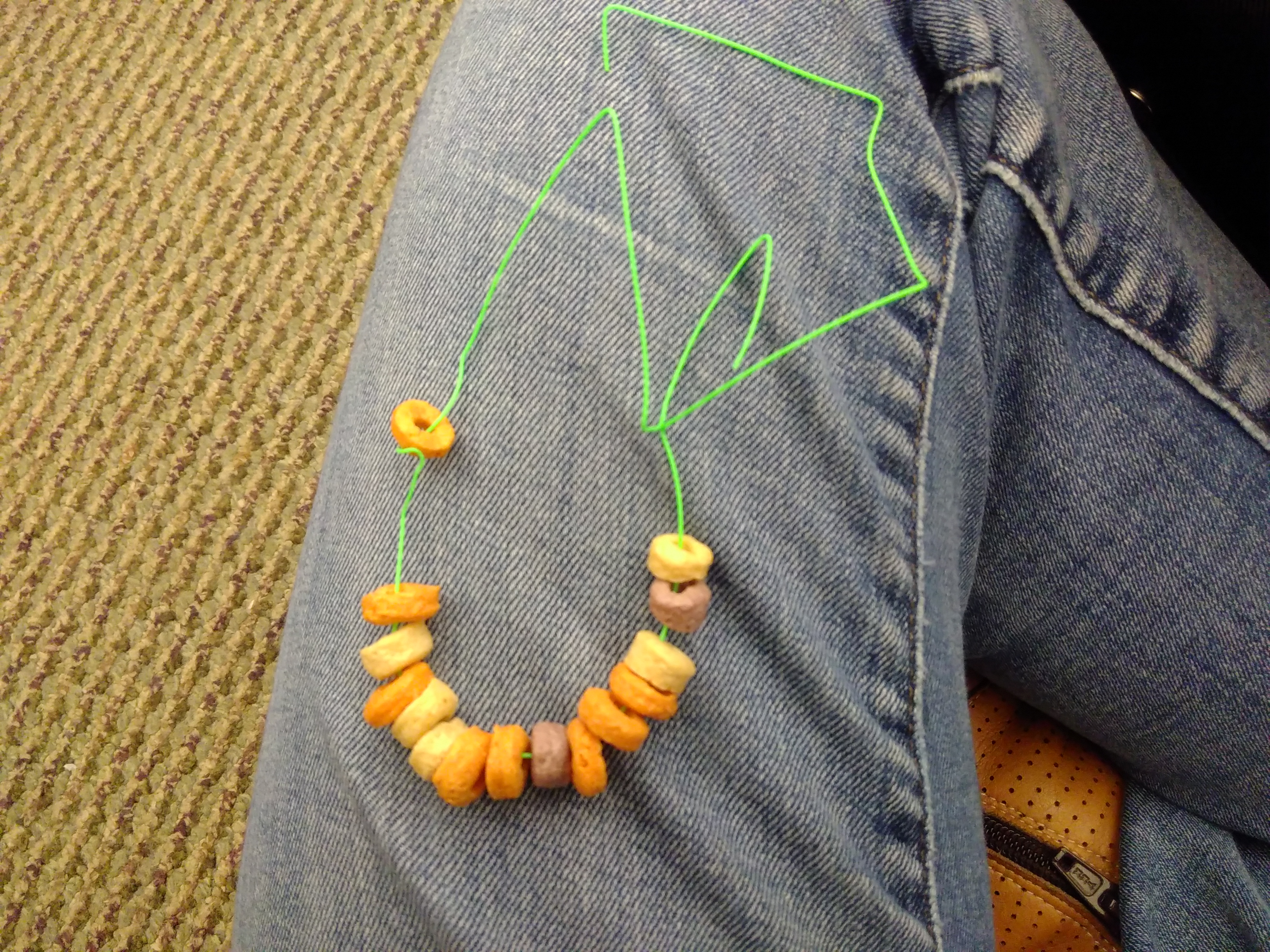
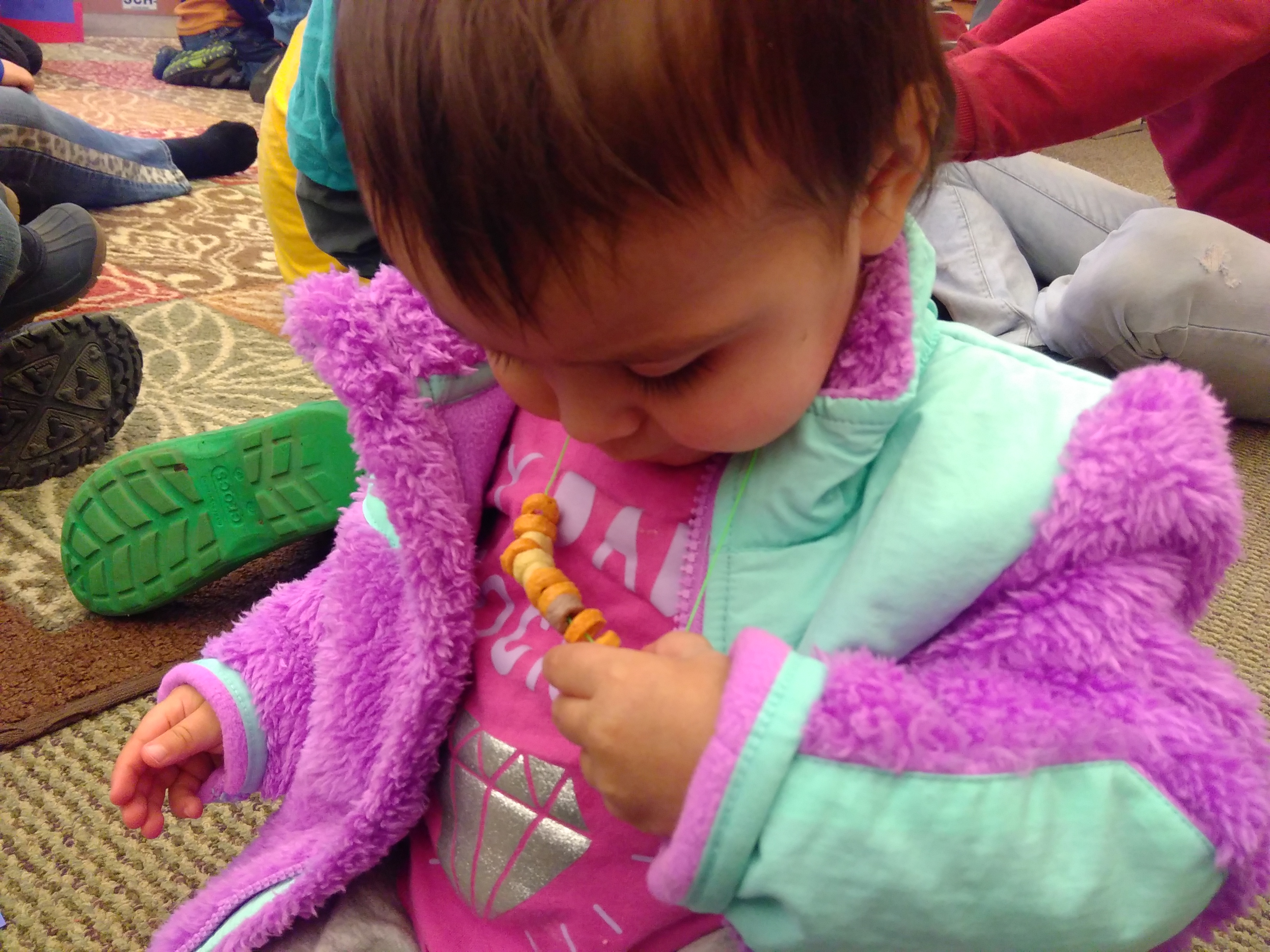
When you reach your destination, make a necklace! Undo the craft lace and thread some of the cereal onto it, then secure about your child’s neck loosely.

Fruity Necklace (1)

Now a bite is literally at hand the moment the urge to snack hits.

Fruity Necklace (2)

Capillary Snack-tion Straw

Snack Straw (5).JPG

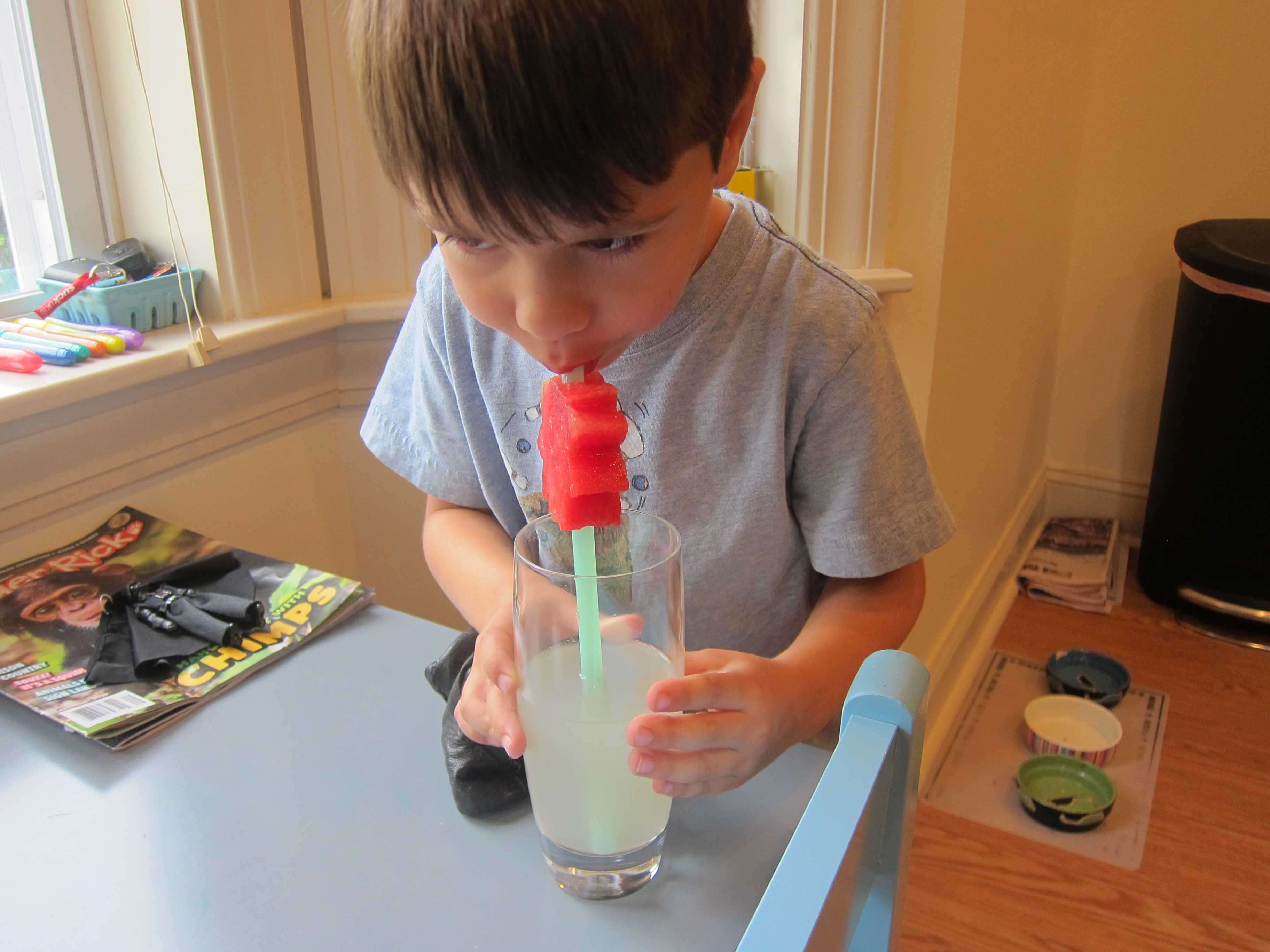
This straw has some serious action! After learning about how trees and plants drink their nutrients up from the soil in his latest Kiwi Crate, Travis discovered he too can sip in defiance of gravity: by slurping through a straw.

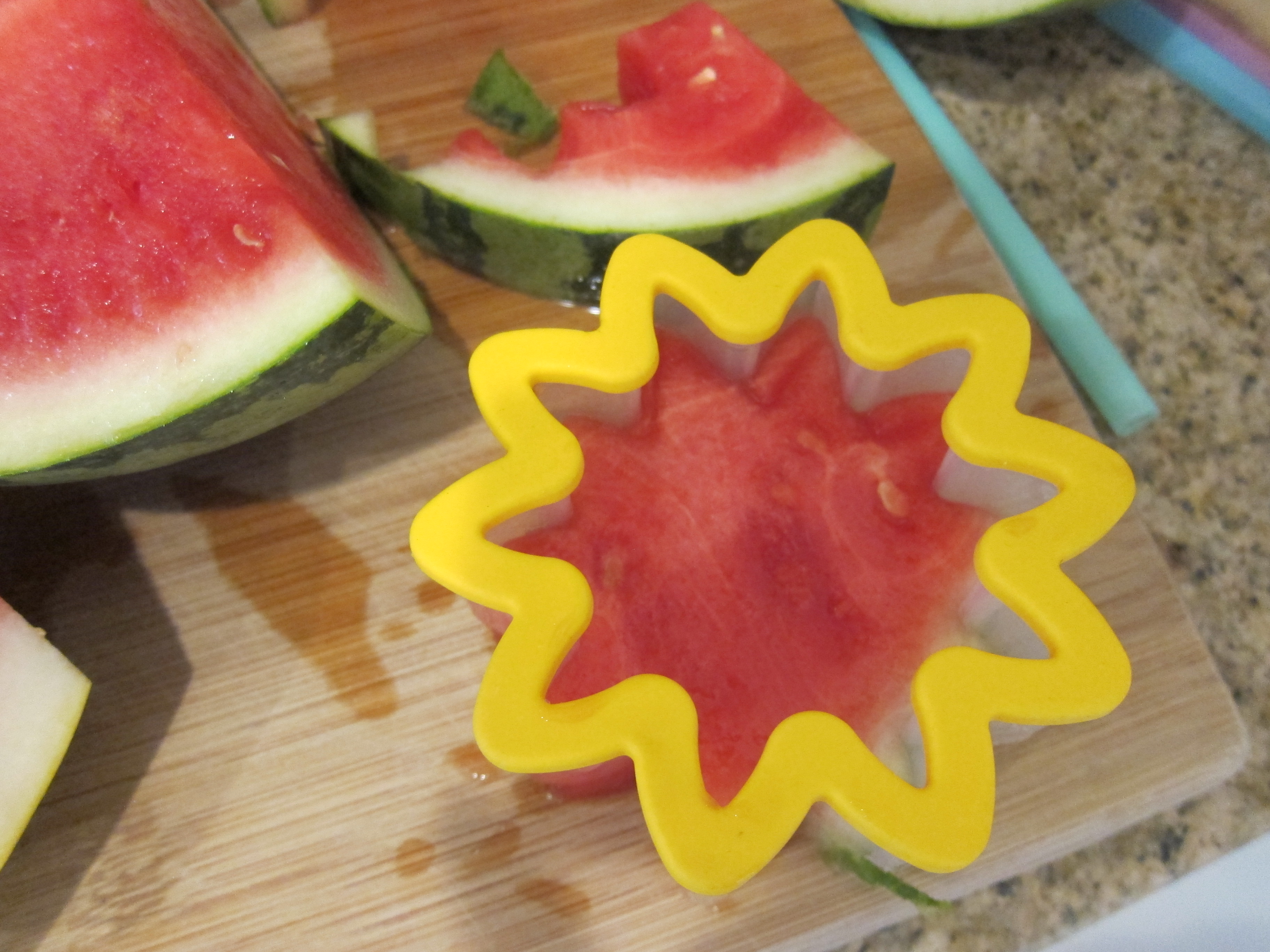
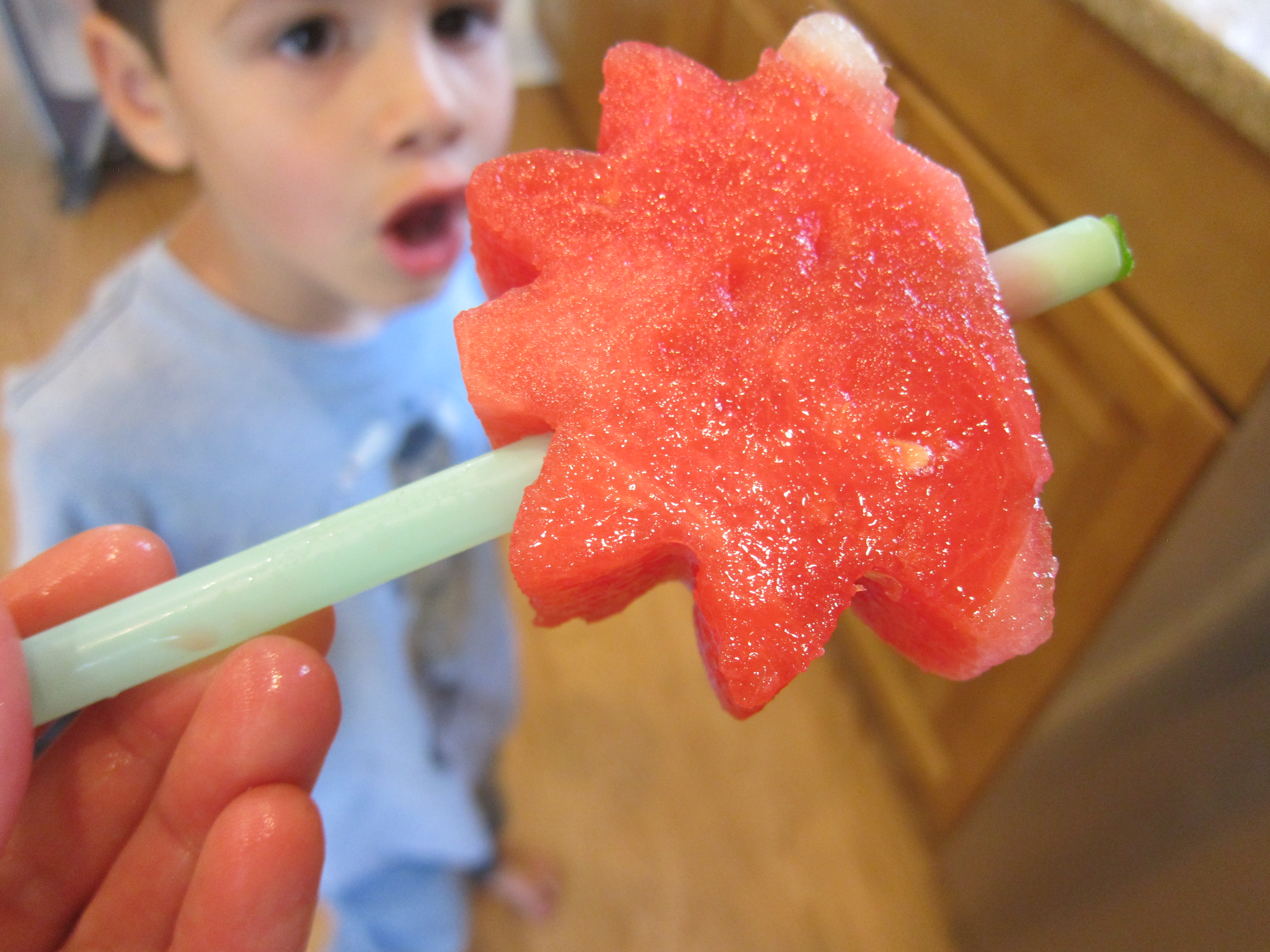
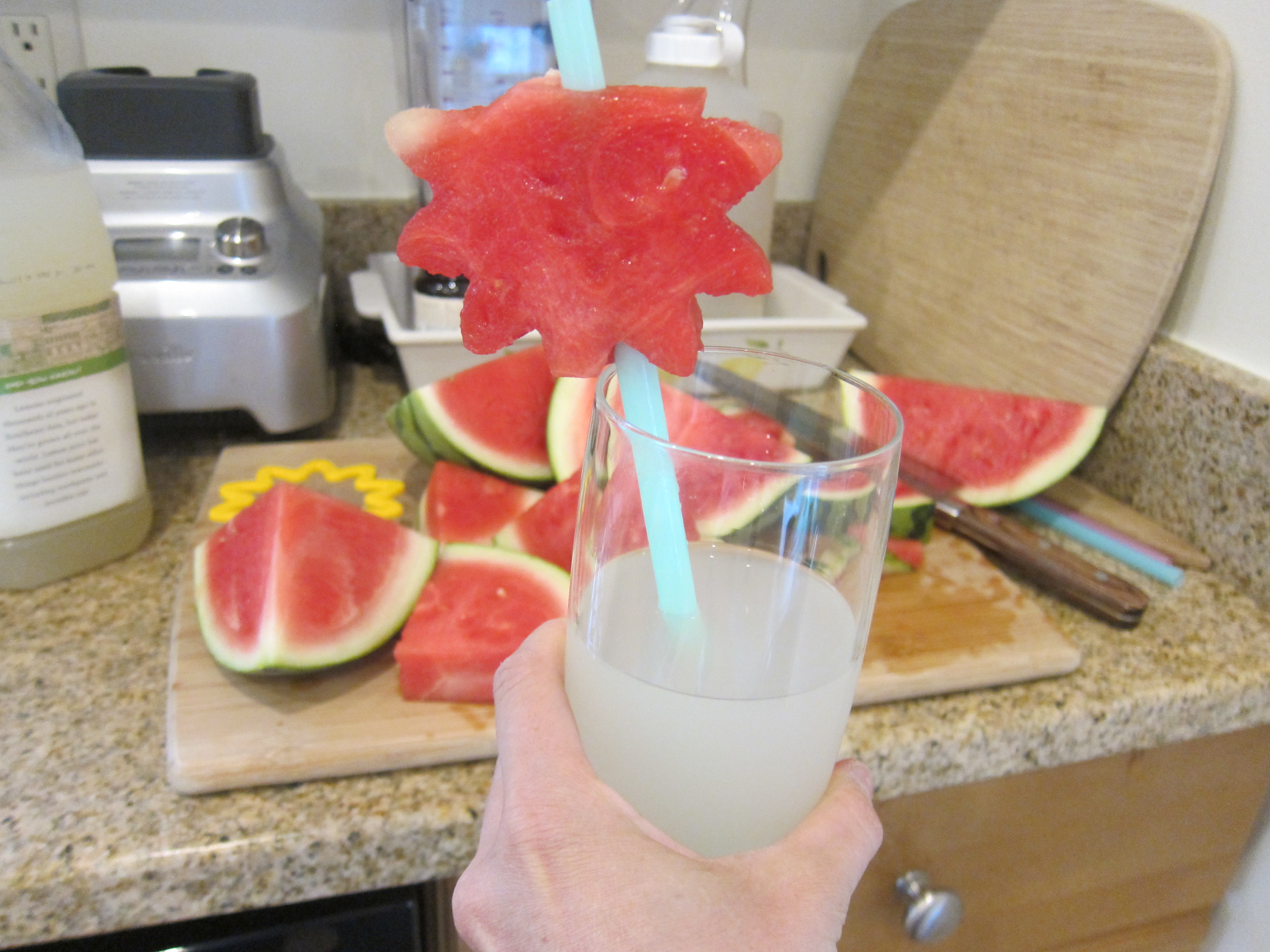
Cut a watermelon into thick slices. Use a flower-shaped cookie cutter to make a flower shape from the watermelon. Insert the “flower” onto a thick straw “stem”.

Snack Straw (1)

Give a quick blow into the straw to expel the watermelon piece inside. This earned a “whoa!” from Travis.

Snack Straw (2)

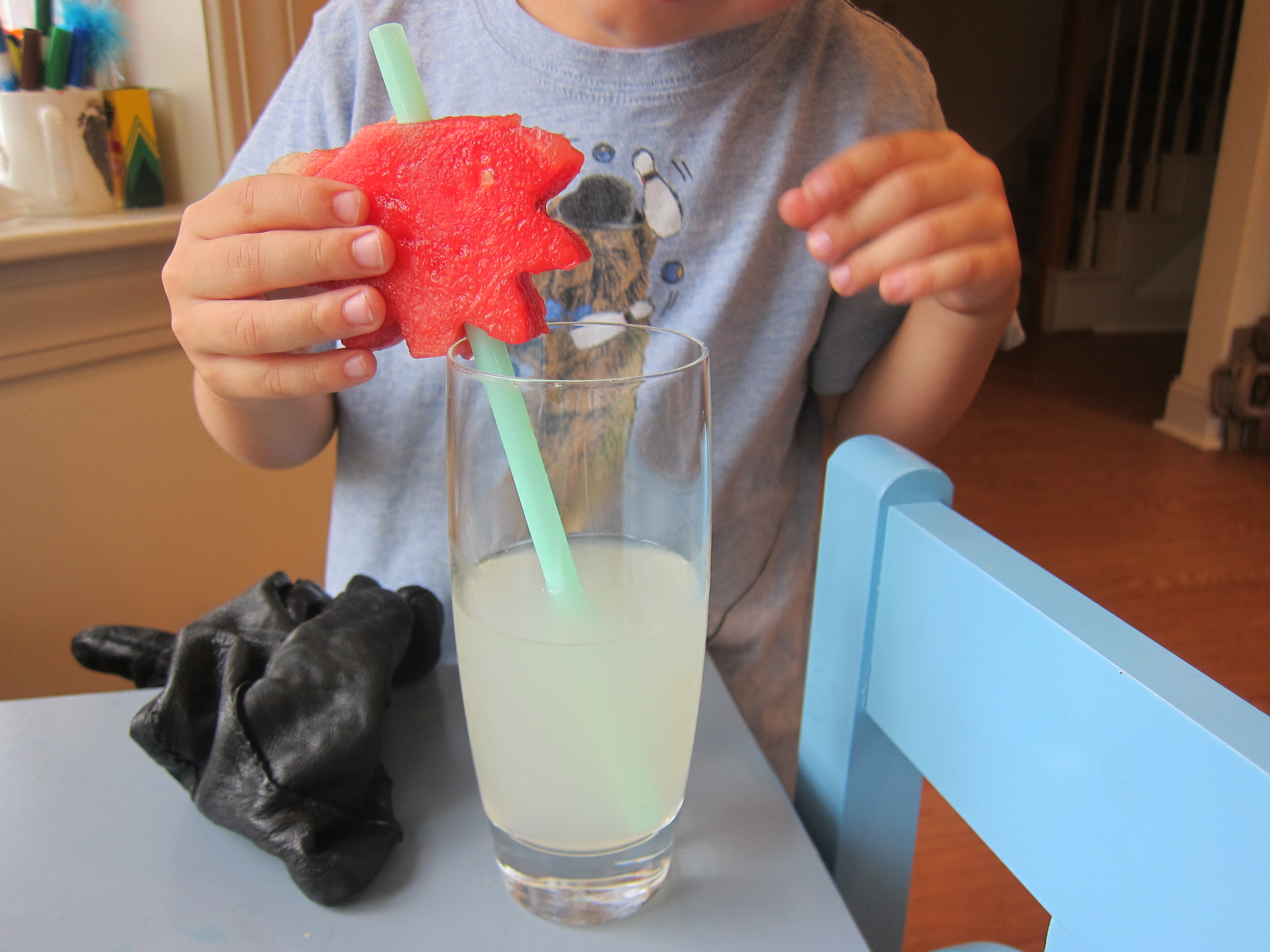
We filled a glass with lemonade – any drink will do, but lemonade is a favorite around here – and then tested it out.

Snack Straw (4)

Travis provided the power for his flower’s “roots”. What a delicious way to soak up nutrients! When the drink is finished, you can eat your “flower” of course.

Snack Straw (3)

Science of Trees Kiwi Crate

Kiwi Trees (1)

Travis’s crate from Kiwi Co. this month was about the way trees and plants take nutrients from the roots upwards, in seeming defiance of gravity. Travis loved every element of this “capillary action” crate… and for good reason!

First, we needed to see capillary action in, well, action, with Capillary Action Art. Using the provided double-sided tape dots and clear slides, Travis attached on three string stems and 3 coffee filter paper flowers.
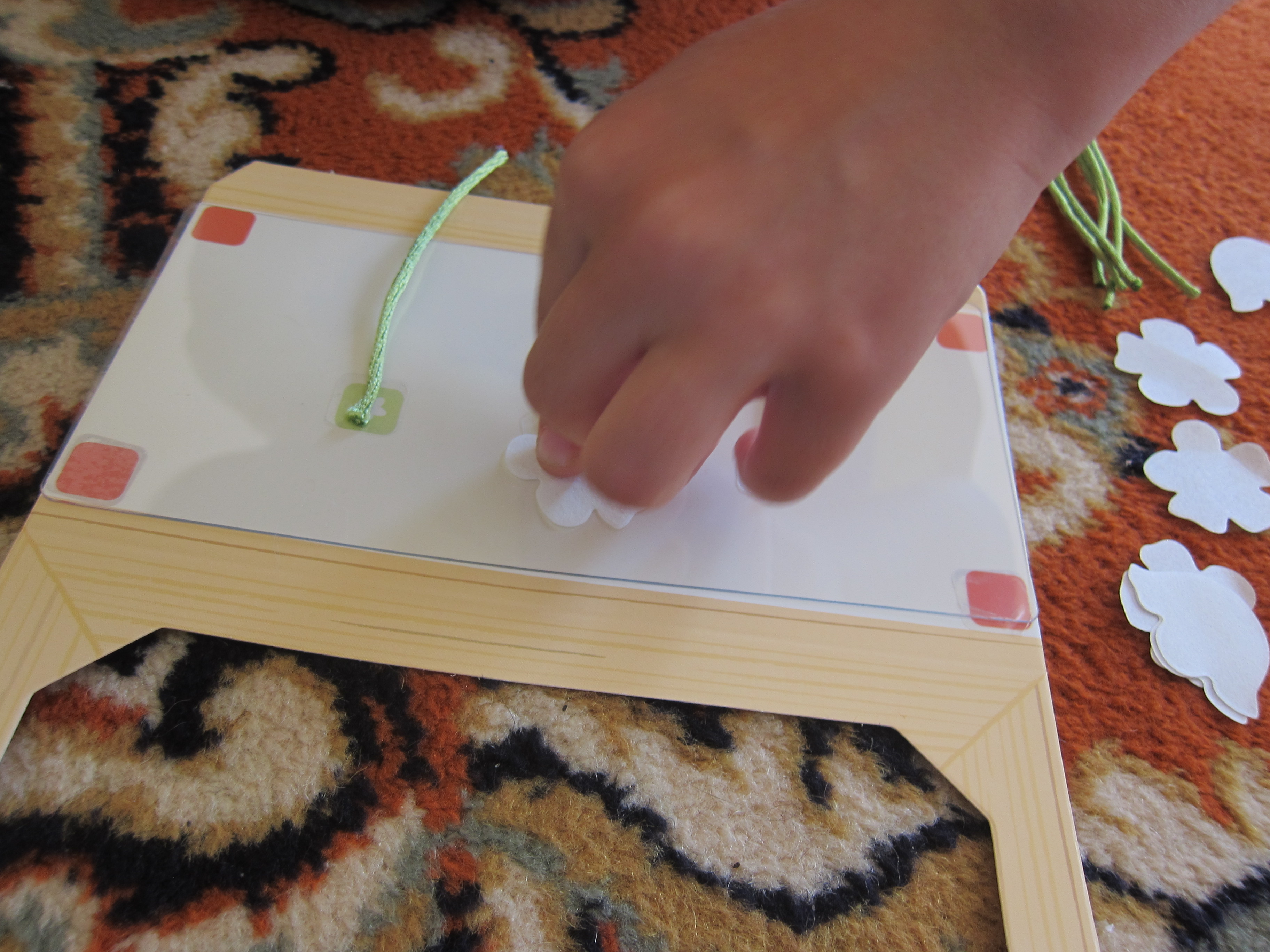
Kiwi Trees (8)

He added the provided binder clips on either side of the slide’s bottom, and two additional clips to hold everything in place. Clever: now the blender clips meant the slide could stand upright over the provided paint tin.

Kiwi Trees (9)

He dripped liquid watercolors into three of the compartments. There was red and yellow watercolor, and his booklet suggested combining them in the third compartment to make orange.
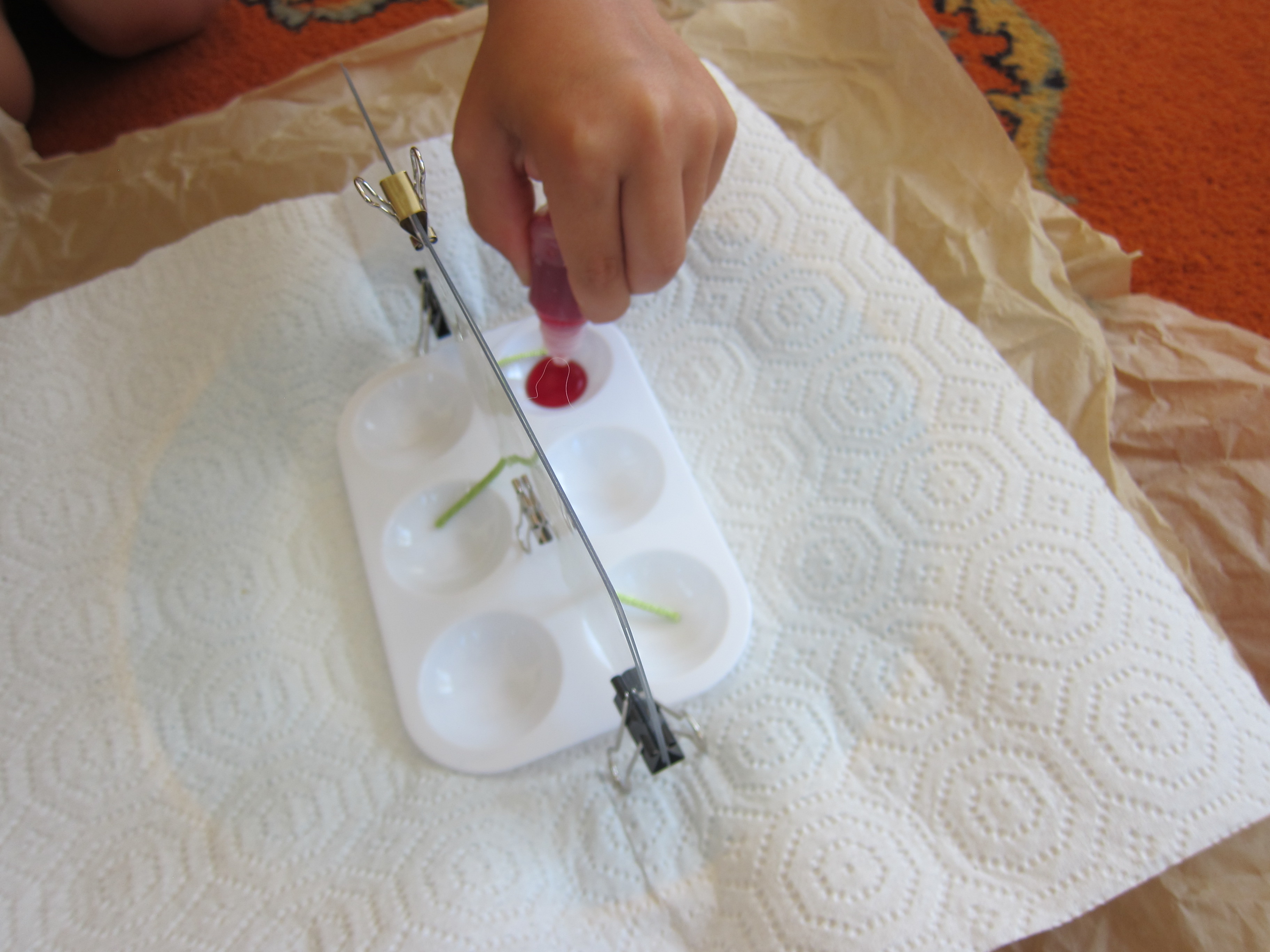
Kiwi Trees (10)

Almost instantly, the color was bleeding up the stems.
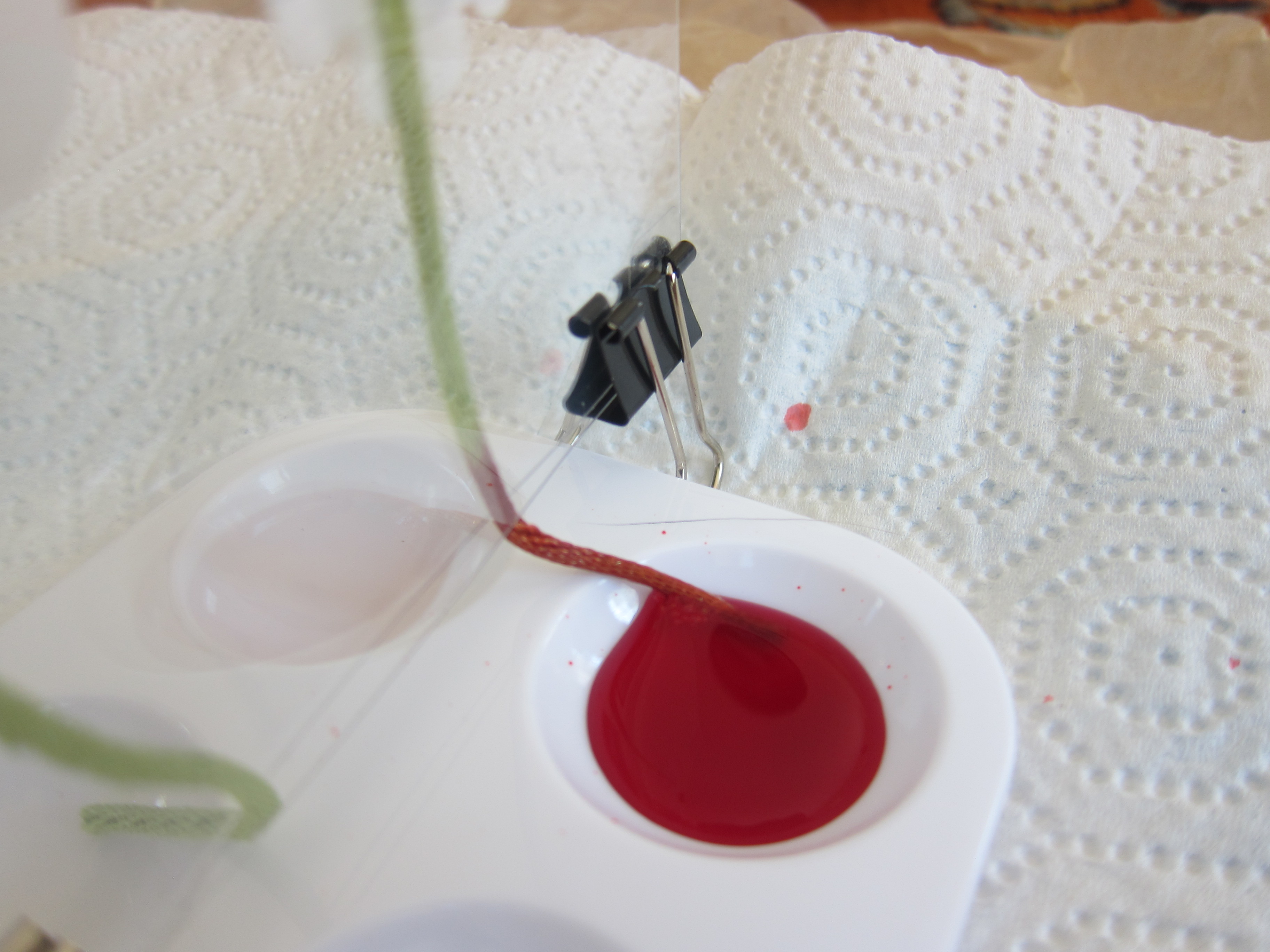
Kiwi Trees (11)

Travis was practically shaking with amazement as he watched this, especially because of how fast it happened.
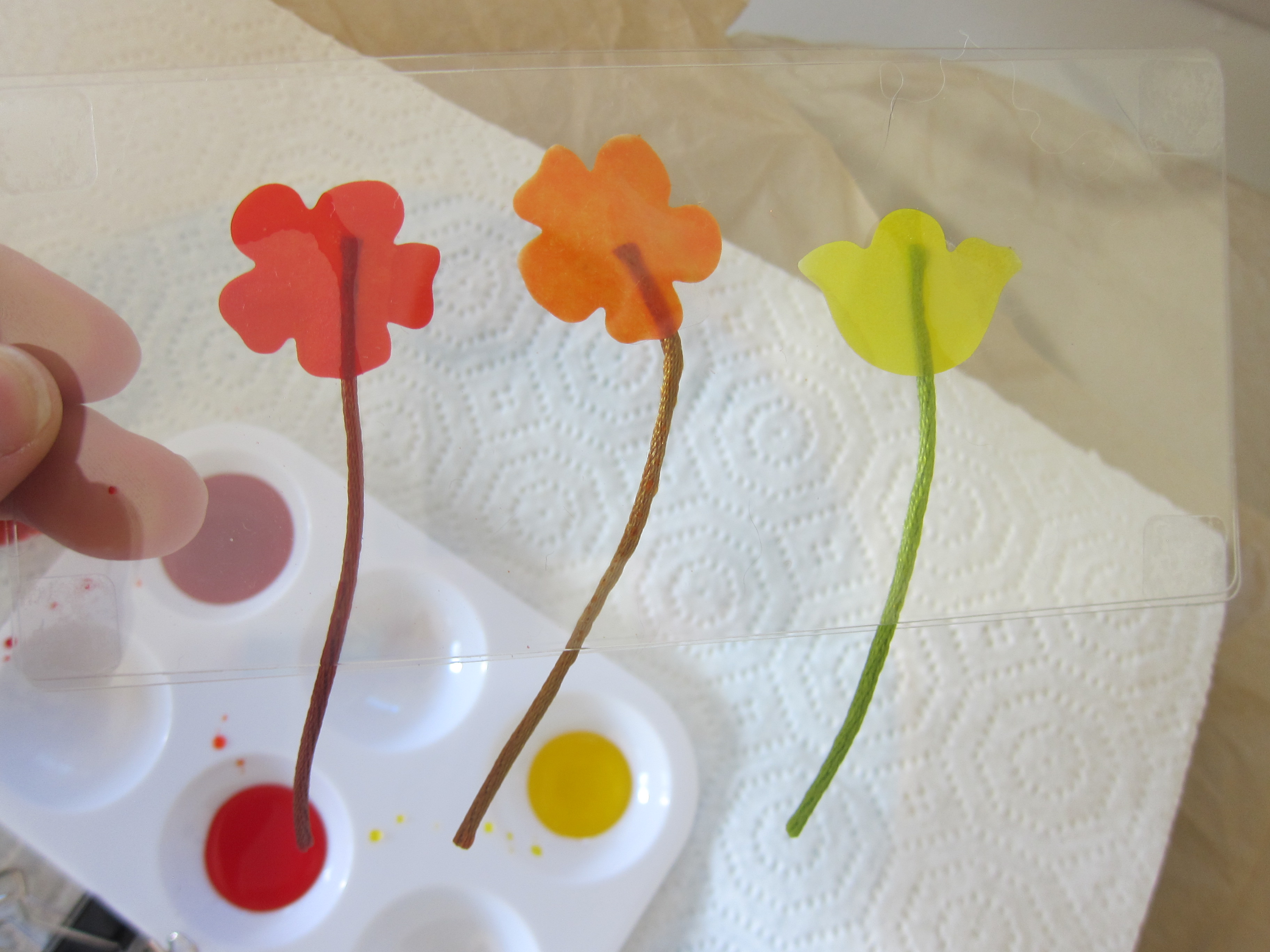
Kiwi Trees (4)

When it reached the tissue “flowers,” he was ecstatic.

Kiwi Trees (3)

Kiwi must have known this would be a big hit; there are enough materials to do the project twice. Needless to say, we repeated it instantly.

As a nice finishing touch, you can use additional double-sided tape dots to place the slides into a cardboard frame, and save your artwork. Talk about STEAM!
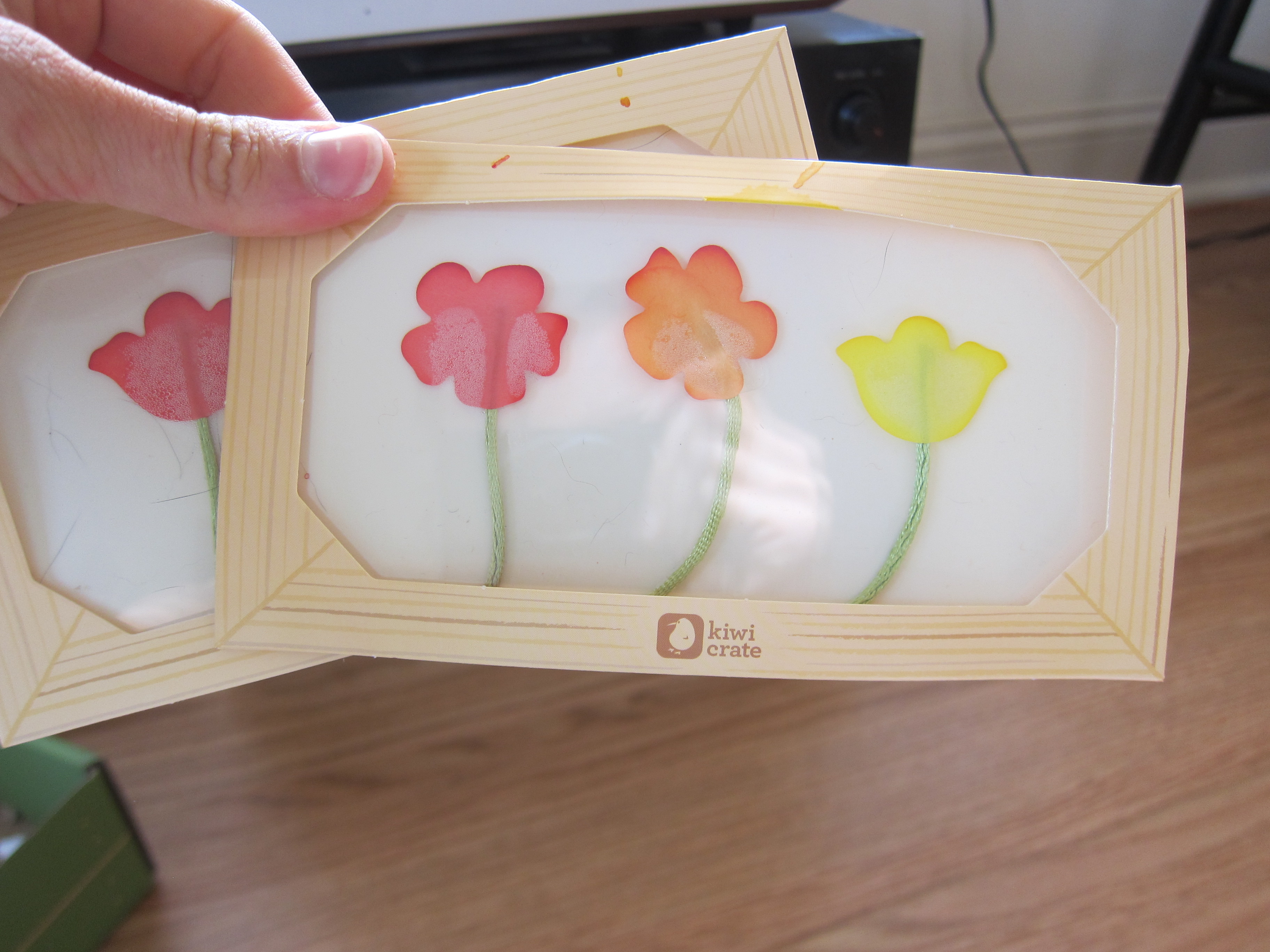
Kiwi Trees (15)

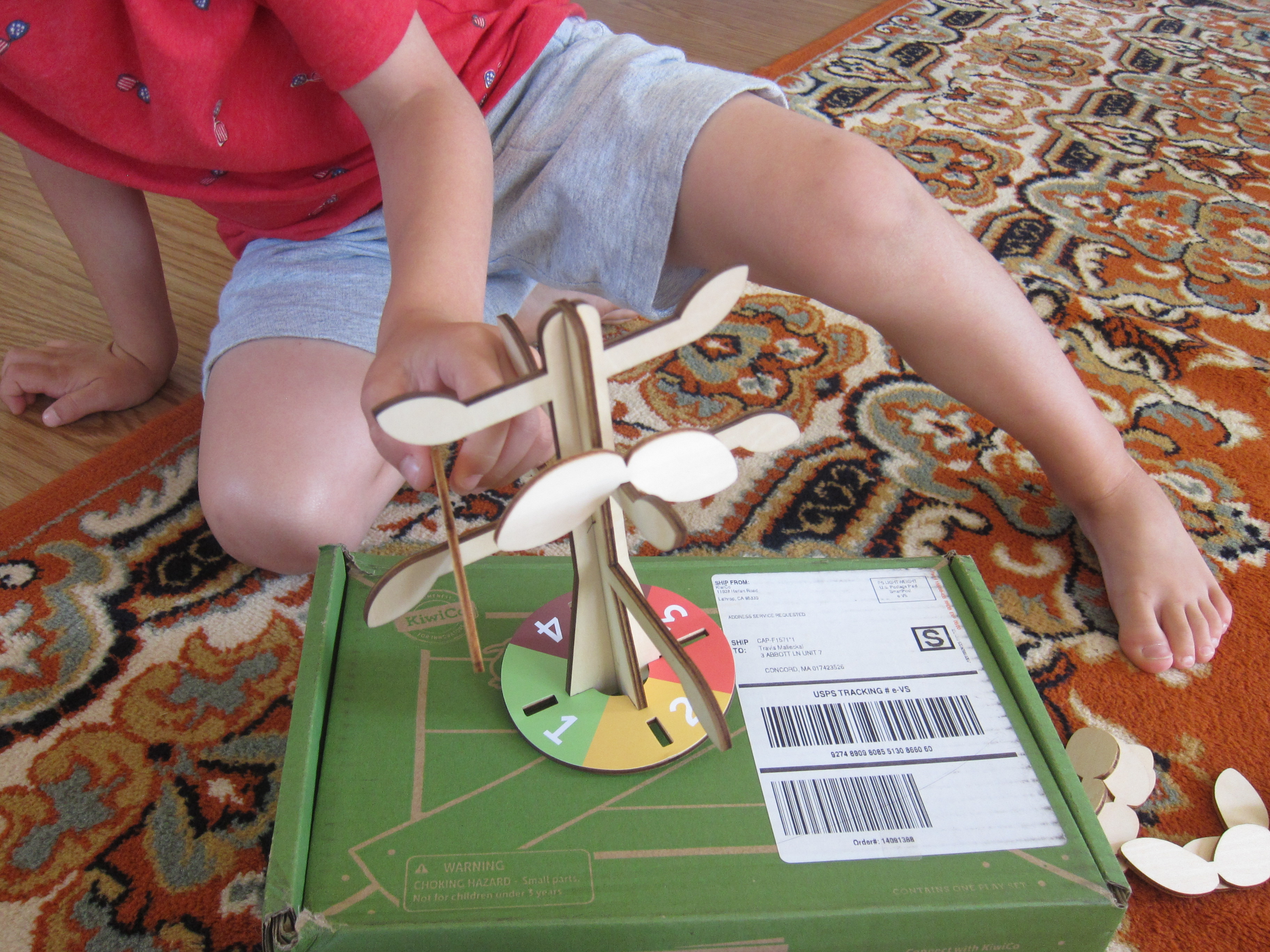
The second activity was to Build a Balancing Tree. This required slotting together two wooden pieces as the trunk, and inserting that into a wooden base.
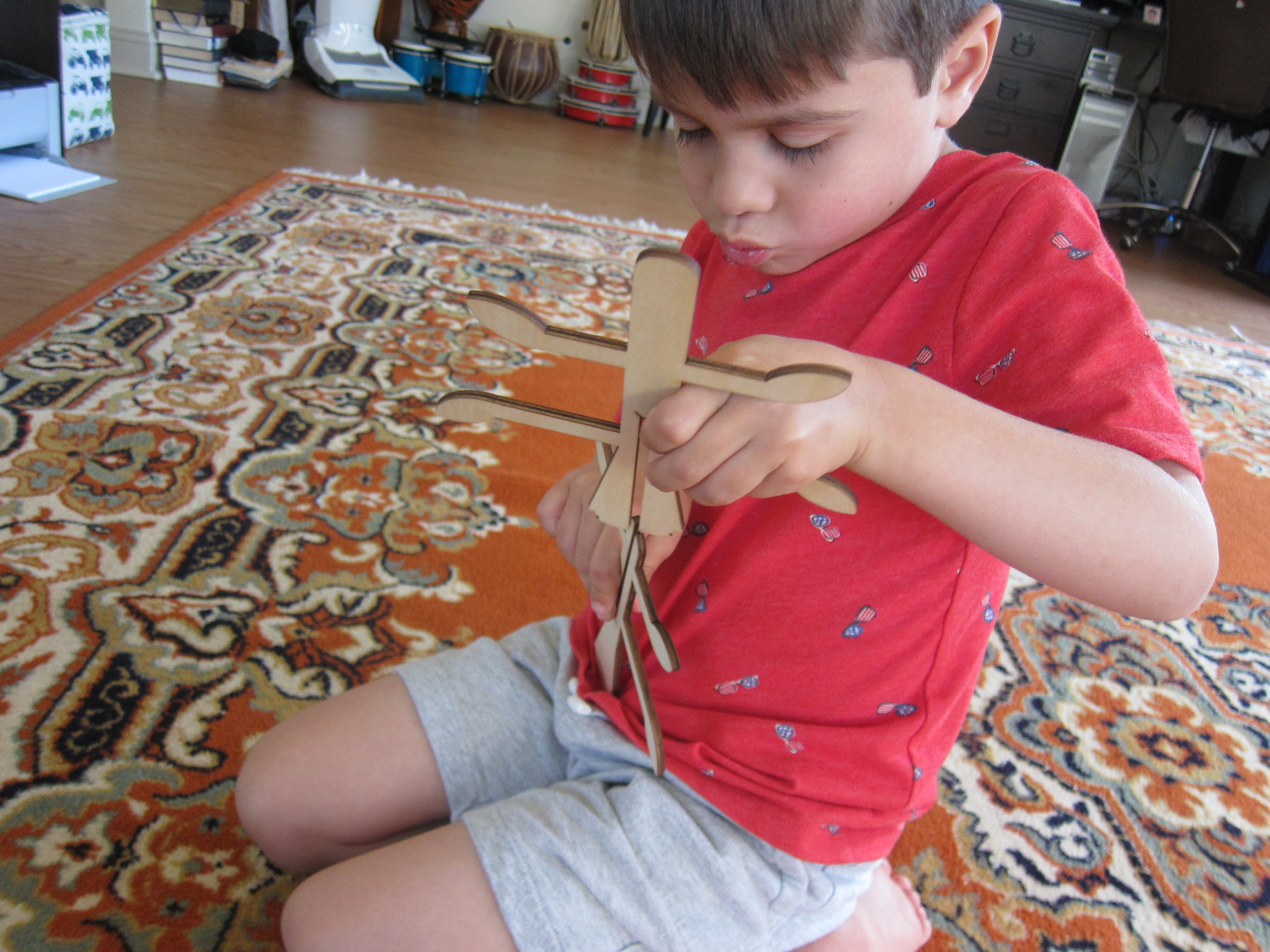
Kiwi Trees (23)

Wood leaves and roots allow your little engineer to tip the tree one way or another.
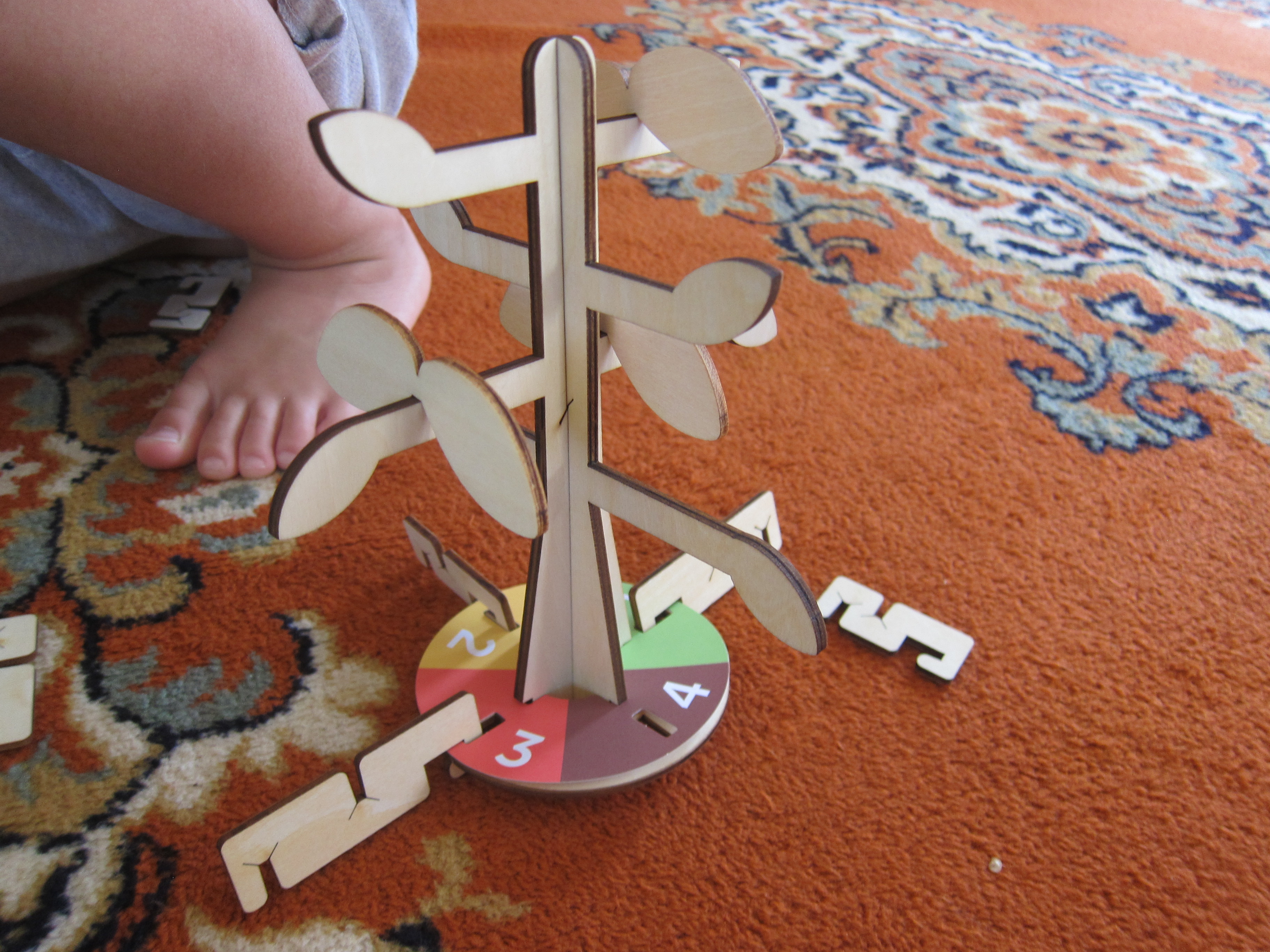
Kiwi Trees (18)

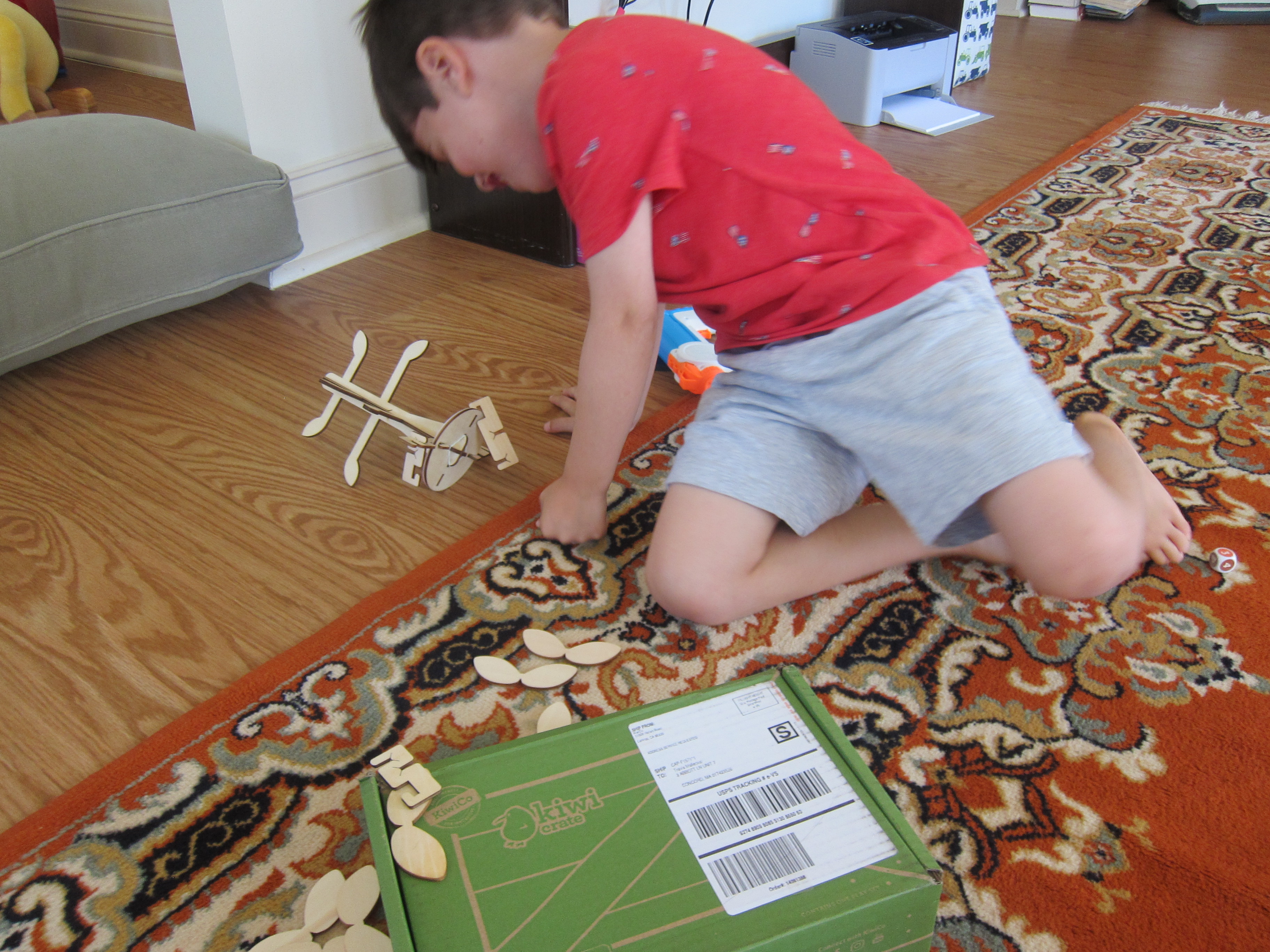
At first, Travis seemed disappointed. But then we put the tree to the test in a Tilting Tree Game. Roll the dice to add leaves or roots to one of the four quadrants… but if you roll the (!) symbol, there’s a natural disaster! This can be a tornado (blowing on the tree), earthquake (shaking the box it sits on), or forest fire (removing the leaves from certain colored sections).
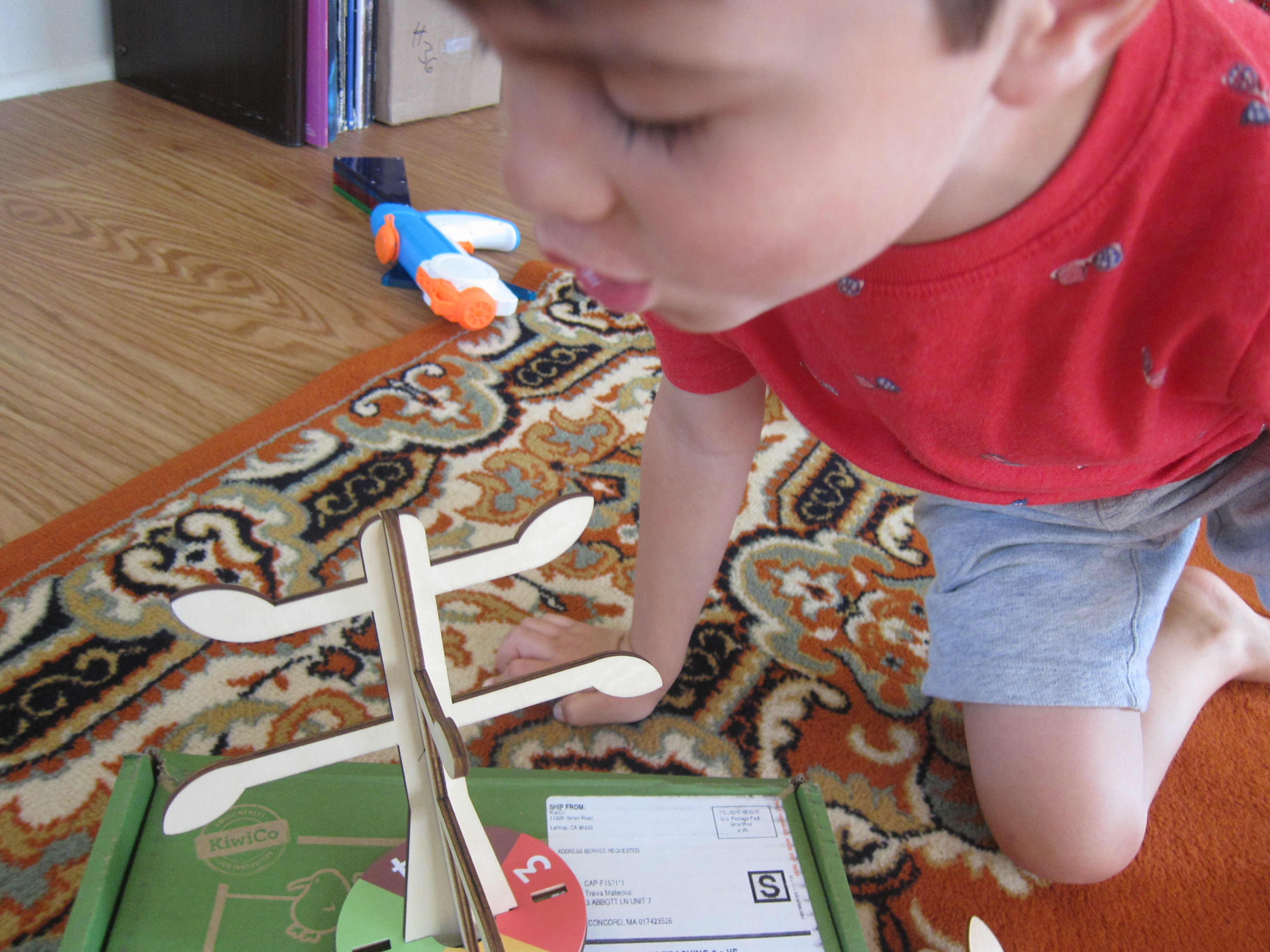
Kiwi Trees (19)

Travis cackled every time we thought our tree was nearly complete but then disaster struck.
Kiwi Trees (20)

Okay, so this isn’t perhaps the nicest way to teach kids about natural disasters, but it sure had him thinking about the stability that a tree’s roots provide, and was a ton of fun.
Kiwi Trees (22)

We concluded with two additional activities from the booklet. First, you can demonstrate the most mundane capillary action of all with a paper towel. Pretend to spill a little water or juice on the table (Travis thought it was quite funny that mom made a mess on purpose) and then quickly place a paper towel over it. The fibers act just like the root system of a plant!

Kiwi Trees (6)

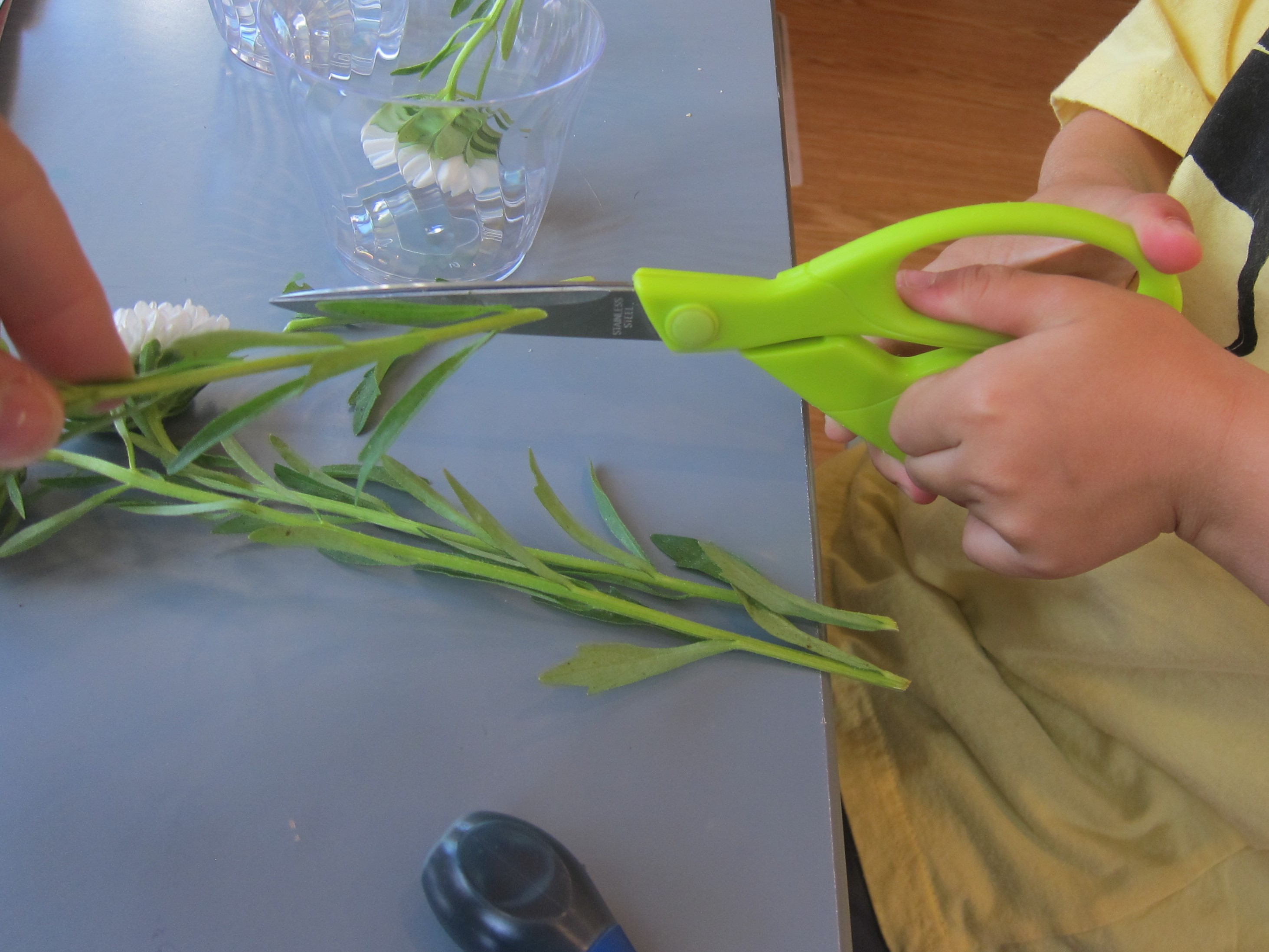
Next, we repeated a classic flower-dyeing experiment, but with a slight twist. Use any white flowers for the game, such as carnations or roses. Trim the stems at an angle, then carefully slit the stems down the middle.
Kiwi Trees (12)

Fill two cups with lukewarm water and add 20 drops food coloring (in different colors) to each cup.

Kiwi Trees (13)

Arrange two flowers so that the halved stems dangle one into each cup. I found it useful to use a paper clip to hold them in place, so the flowers didn’t tip.

Within just an hour or two, we could already see a pretty tint… on each half of the flower!

Kiwi Trees (16)

By morning, the colors were vibrant and split evenly down the middle, a fantastic visual of capillary action.

Kiwi Trees (17)

We finished with two fun suggested reads: The Tree Lady by H. Joseph Hopkins and Tell Me Tree by Gail Gibbons. In sum, we loved this crate!
Flowers for the Fourth

Flowers for 4th (7).JPG

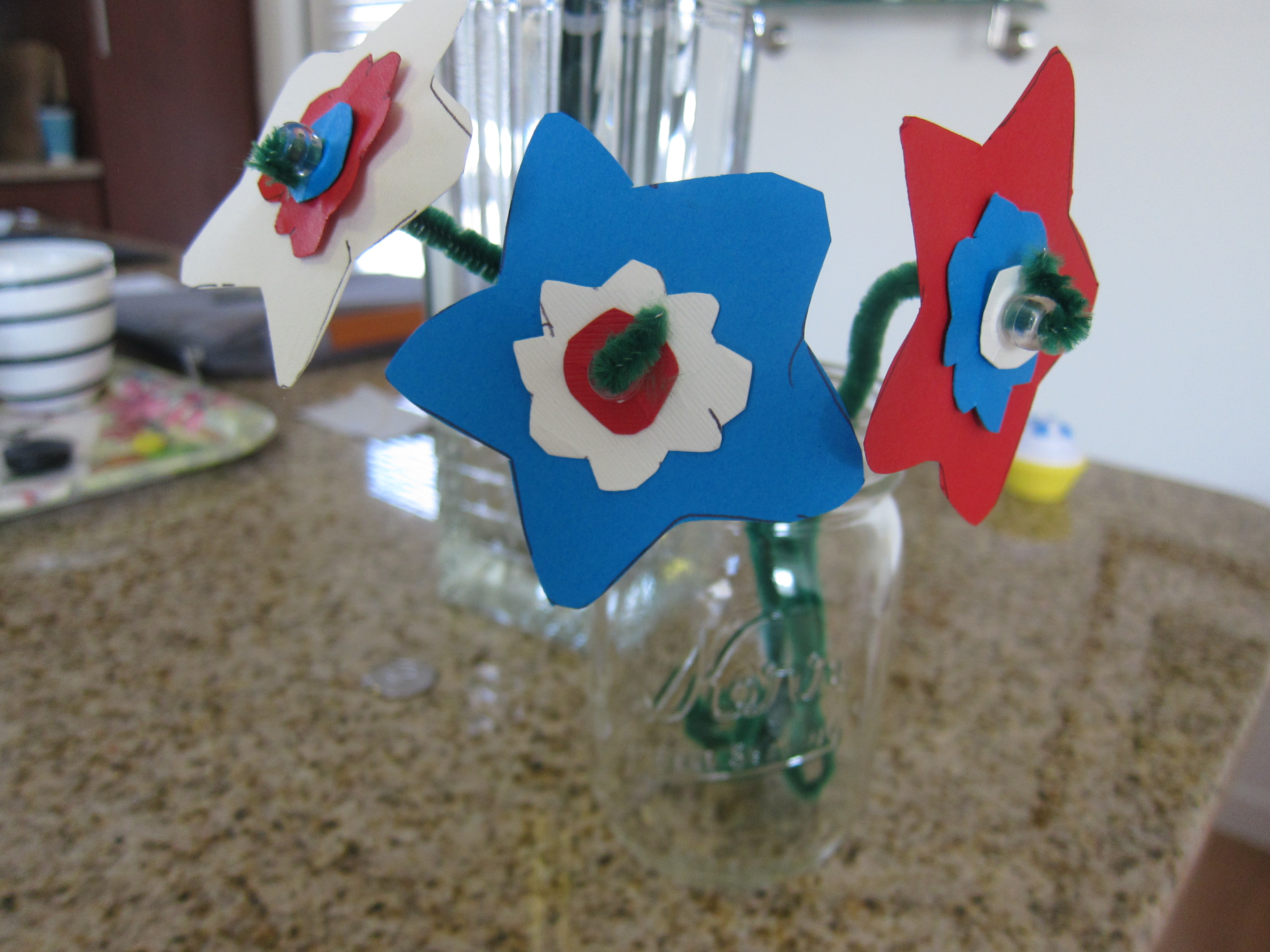
Travis checked out the crafts in his July issue of Highlights just in time for the Fourth of July, with these suggested fun flowers; they make the perfect centerpiece at any picnic table or backyard barbecue or pool party for the holiday! Make as many or as few as your little crafters have patience for.

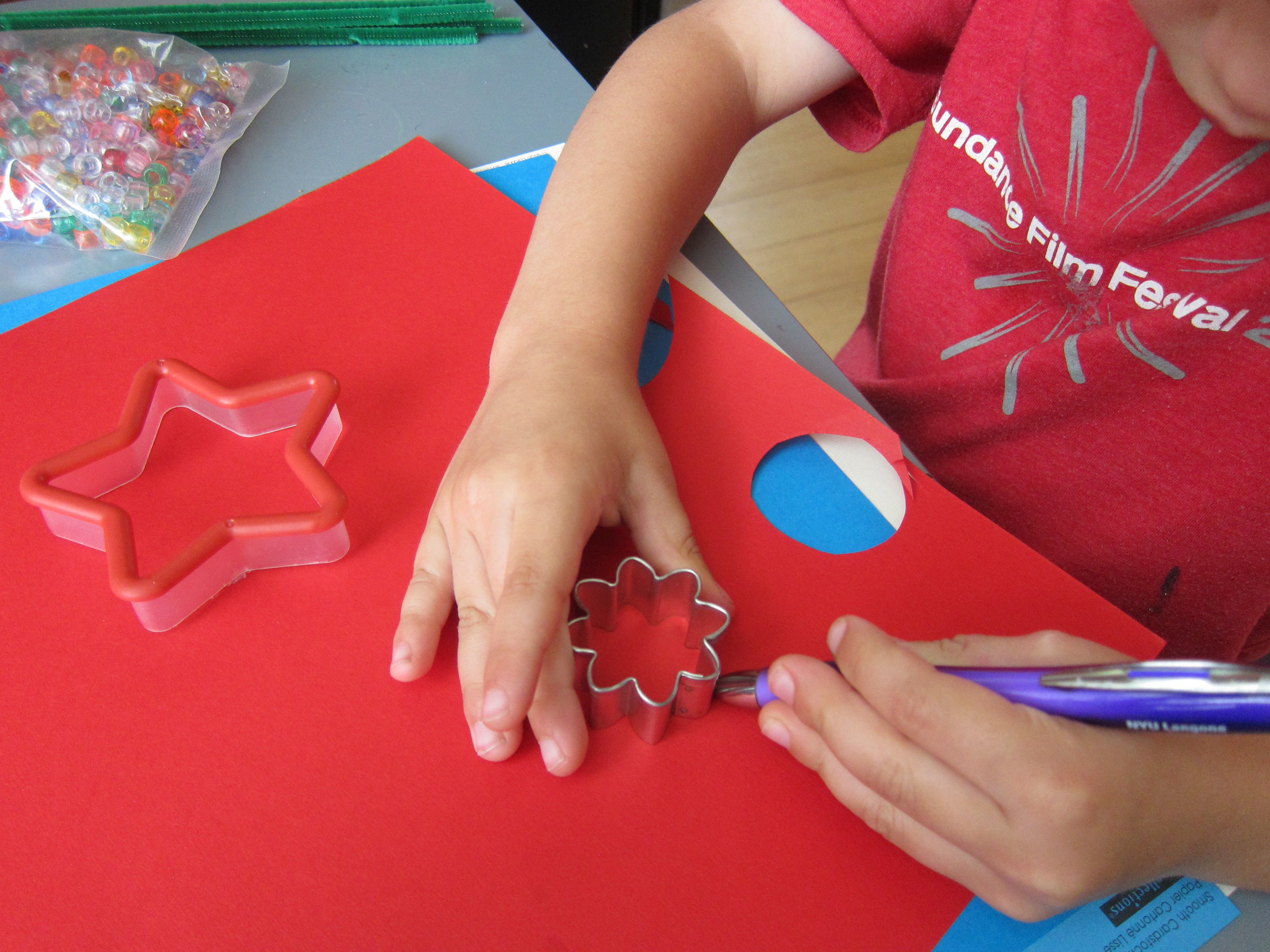
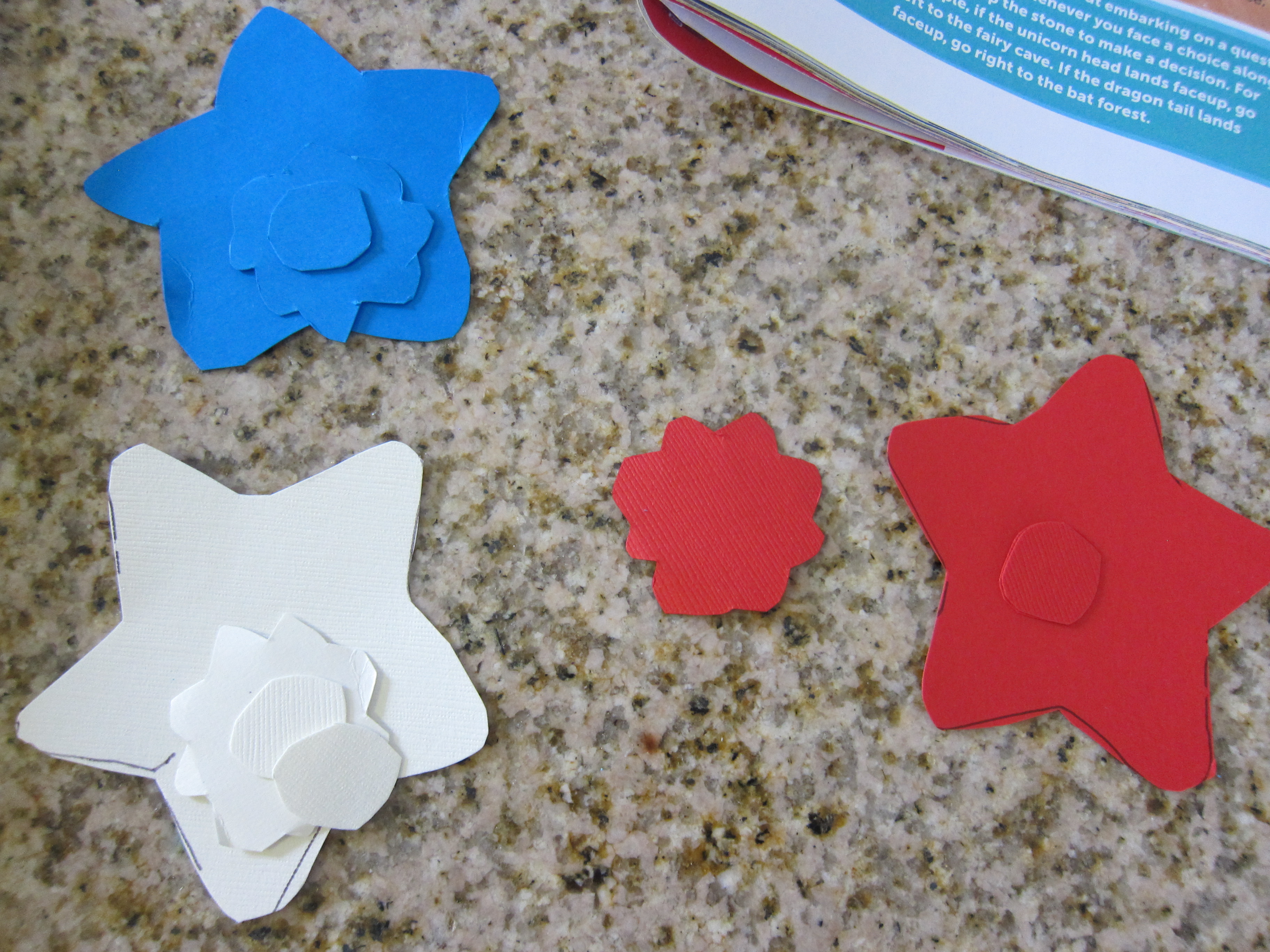
For each flower, cut out a small circle, a medium flower or star shape, and a large star shape from cardstock in red, white and blue. We traced cookie cutters, but feel free to free-hand these!
Flowers for 4th (1)

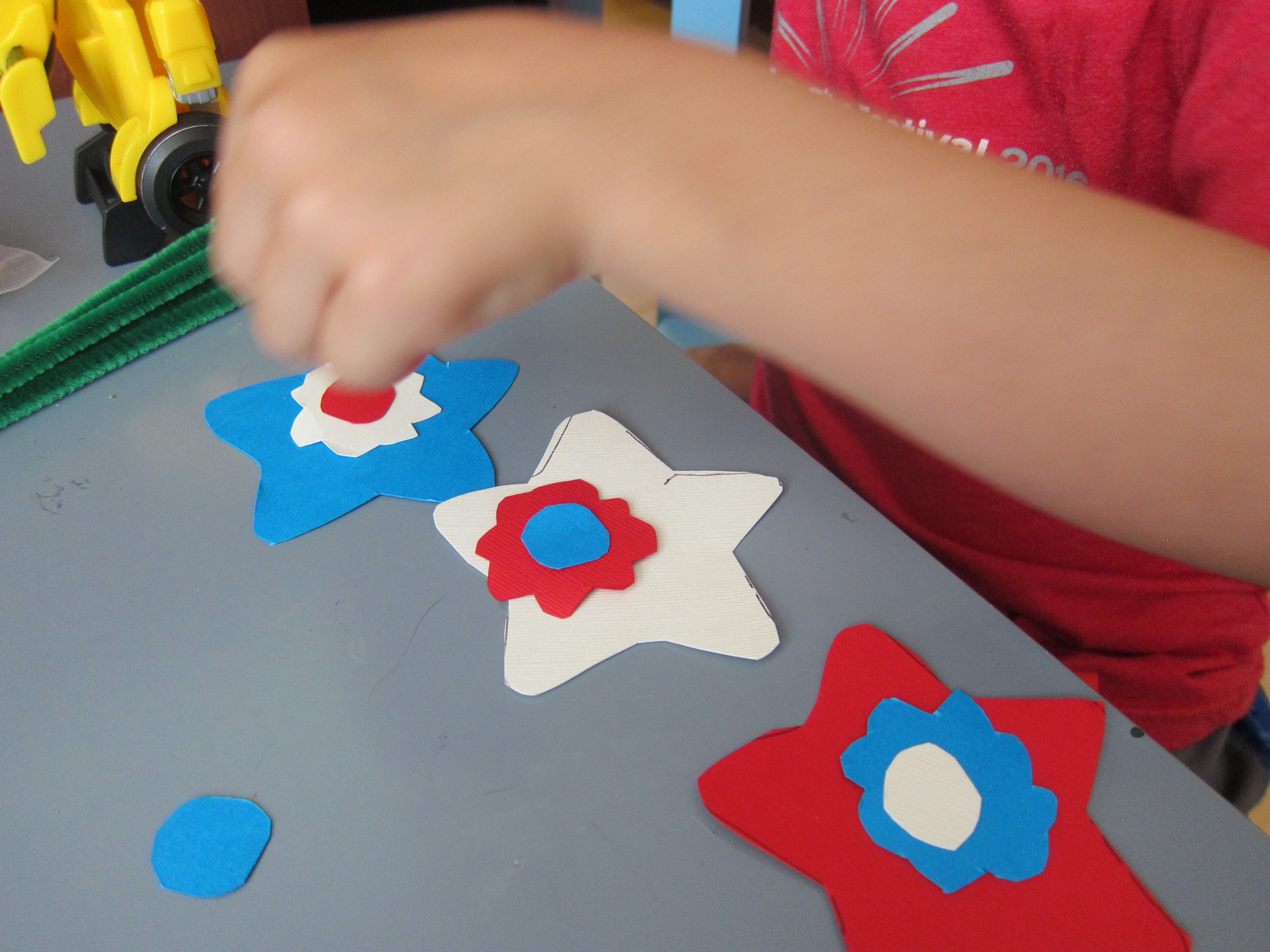
The trick for assembly is to alternate the colors of the flag.

Flowers for 4th (2)

I challenged Travis to layer our flowers so each contained all three colors, no repeats. He liked this step best!
Flowers for 4th (4)

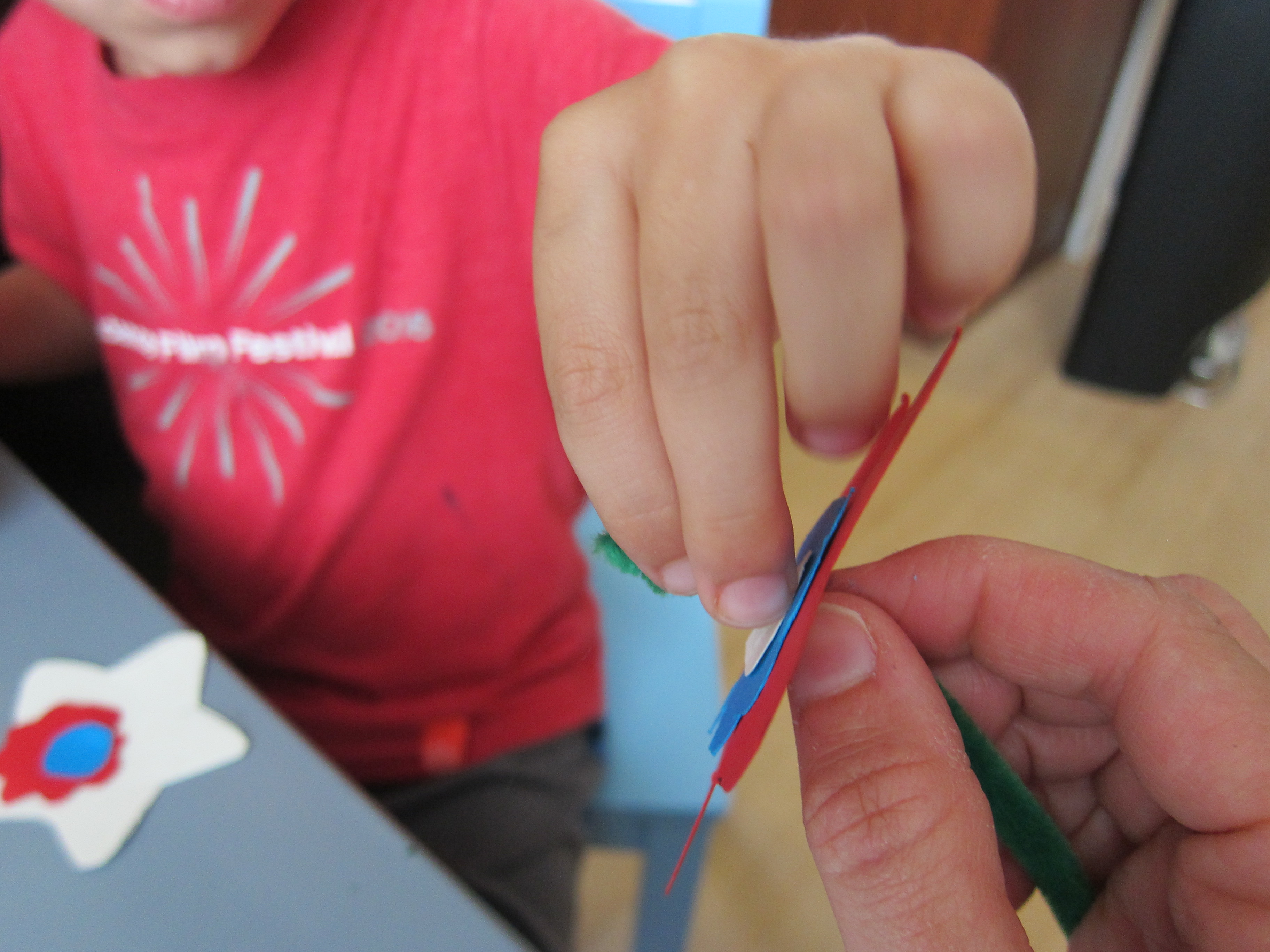
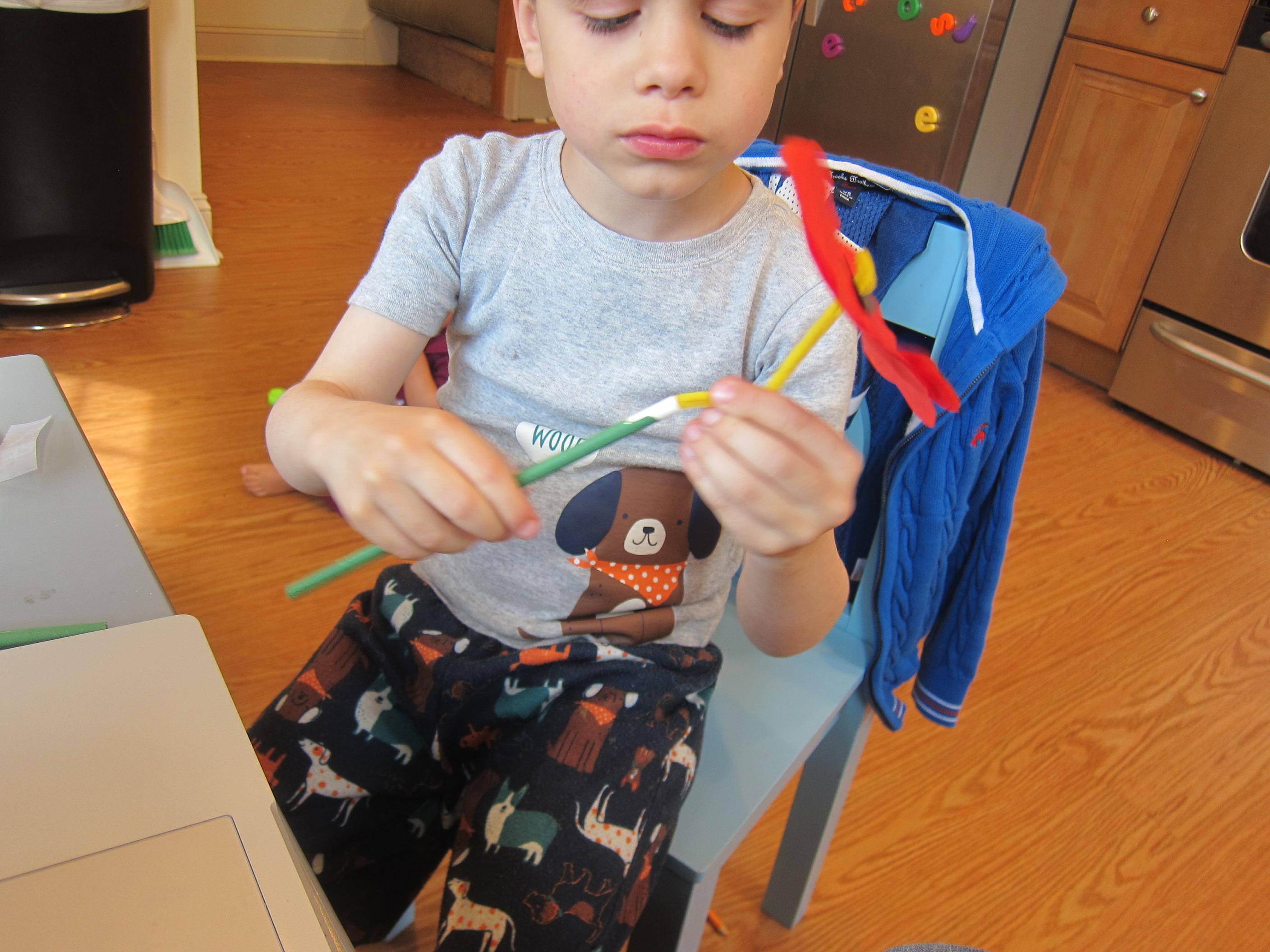
Poke a hole through the cardstock. This step was a touch tricky; a pin worked best to pierce the thick paper but it made a very tiny hole. We carefully threaded a green pipe cleaner through and added a clear pony bead at the end. Wrap the pipe cleaner around the bead to seal.

Flowers for 4th (5)

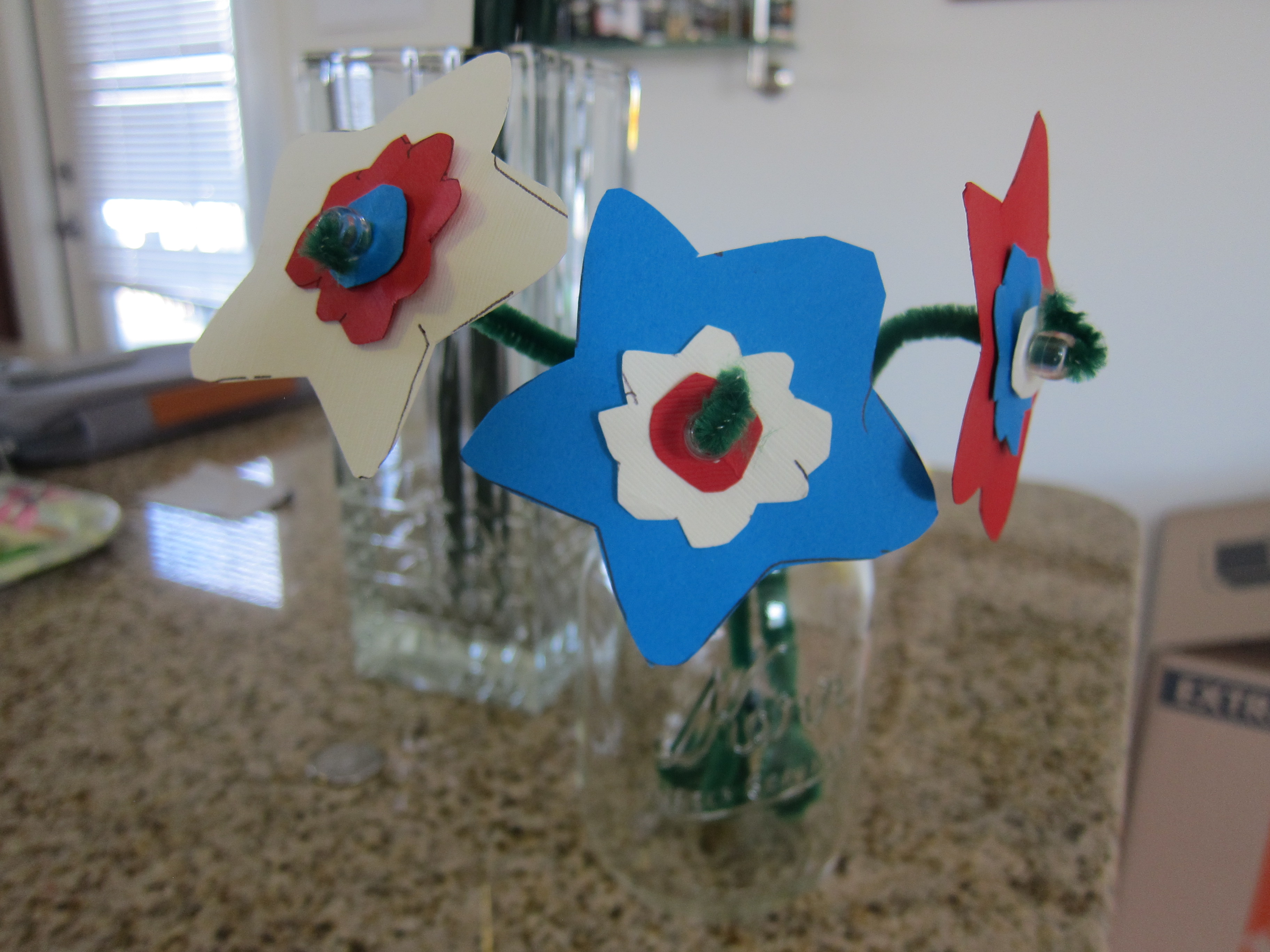
Arrange your “flowers” in a mason jar for a patriotic presentation!

Flowers for 4th (6)