Milk Swirl Experiment

Milk Swirl Experiment (4)

Here’s a neat STEM experiment that Travis tried once before (aiming to imitate the look of the Northern Lights), but this time we were more focused on the science of surface tension and why the experiment works as it does.

I can’t vouch for every type of non-dairy milk on the market, but the activity works great with oat milk.

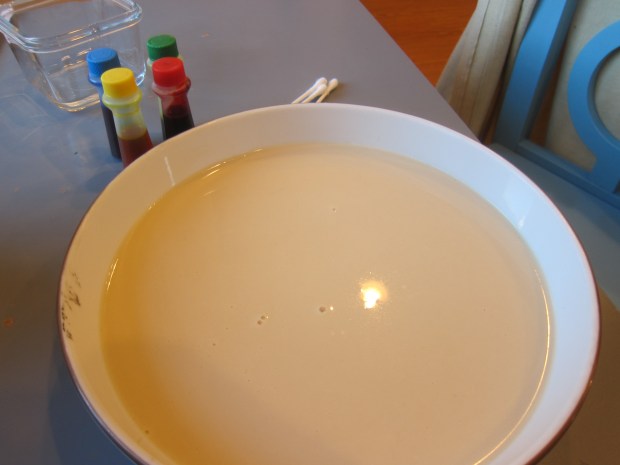
To start, simply pour a layer of your milk into a shallow bowl. Add drops of food coloring near the center (just one or two drops of each), close together so they are nearly touching.

Milk Swirl Experiment (1)

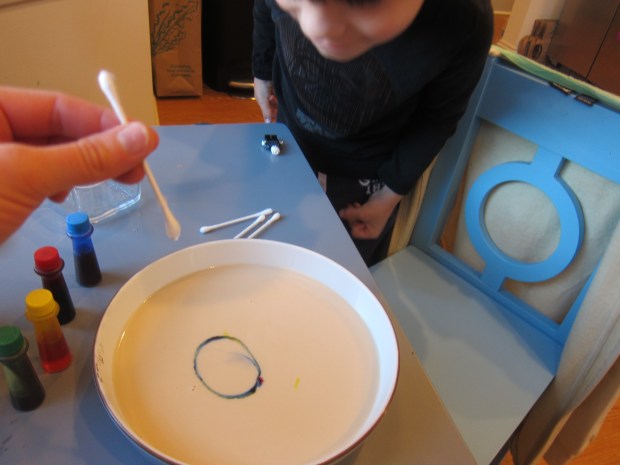
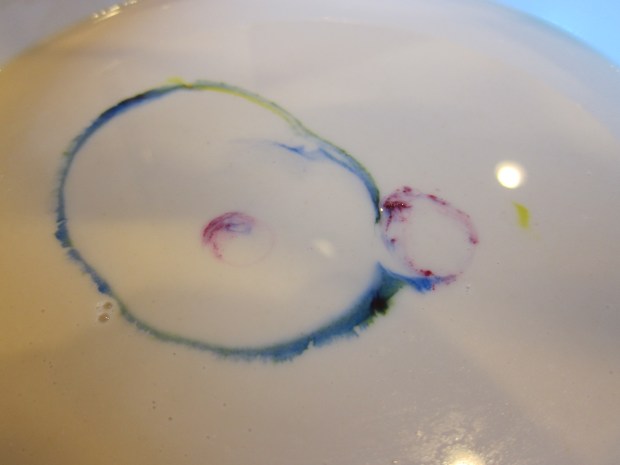
Now dip a q-tip swab in a bit of liquid dish soap. Touch lightly to the food coloring…

Milk Swirl Experiment (3)

…and watch the colors skitter away! There is definite wow factor to this one. Here’s a quick clip of our second round (because of course we needed to test it out more than once!).

Travis and I talked about what’s really happening here after all the swirly fun was done: The soap has both a hydrophilic (water-loving) end and a hydrophobic (water-fearing) end. The latter grabs onto the fat in the milk, which means all the milk molecules start to get pulled apart and the colors go skittering along with them.

All that science aside, it’s just so fun to watch! If you use a different type of non-dairy milk, please share your results in the comments!

Making Snow

Making Snow (7)

With a snowstorm outside, Travis and I tested how many ways we could make snow inside today. The answer was four, if you count cartoon snowflakes in a movie as the final way!

First, we got a little scientific and tested two homemade mixtures to see which made better snow.

In the first bin, we combined 1 cup baking soda with 1 cup shaving cream. This mixture looked a lot like snow, and had a nice chill to the touch, but didn’t clump together well.

Making Snow (2)

In the second bin, we combined 2 and 1/2 cups baking soda with 1/2 cup conditioner. This mixture turned out to be fantastic! We could shape it into snow balls and build little snowmen.

Making Snow (3)

And as you can see, it led to lots of joyful messy play.

Making Snow (4)

Once the mess was cleaned up, we turned to paper snowflakes. Fold a white square of paper into a triangle, then fold over itself again into a smaller triangle. Now fold this triangle up into thirds. A helpful visual on these instructions can be found here.

Making Snow (5)

Begin using scissors to snip any which way, just not cutting all the way through this folded triangle. The thick paper was tough for Travis to cut, so I helped him out and we ended up with beautiful snowflakes.

Making Snow (6)

They looked fantastic against our snowy window!

Making Snow (10)

Finally, we watched snowflakes on the TV screen. The The Snowy Day movie is a well-done extension of the classic book by the same name. It inspired us to think of all the ways we’ll play in real snow tomorrow.  In the meantime, we’ll be here eating snowball cookies!

Paper Circuit Menorah

Paper Circuit Menorrah (7)

Travis has been wanting to do this activity since we made other circuit crafts earlier this year, but it felt only right to wait on this one until Hanukkah.

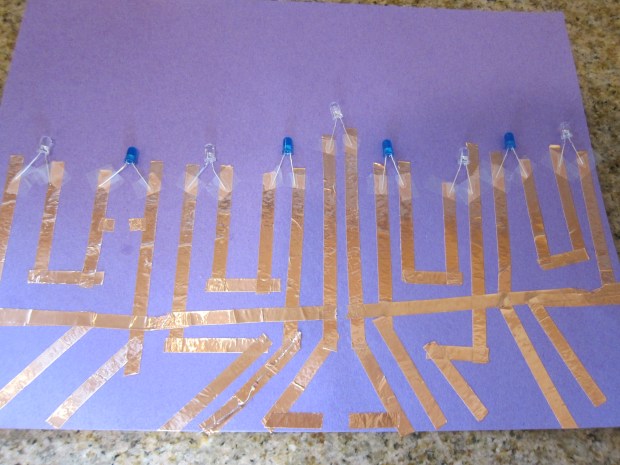
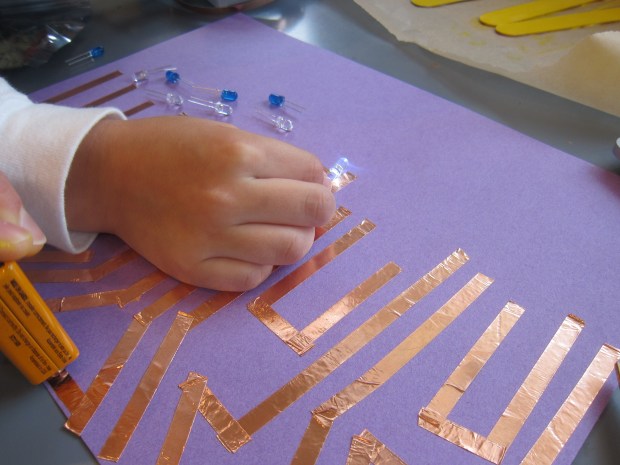
First, you’ll need to map out a menorah shape with copper tape. I simply copied from an online example freehand, so you’ll notice my spacing wasn’t always right.

Paper Circuit Menorrah (2)

If you’re going to be more exact, you’ll definitely want a ruler. You’ll also need to make sure that the gap between any two vertical tape lines isn’t wider than the width of a 9V battery. Meanwhile, Travis was fascinated with the thin copper tape, and couldn’t believe it was a metal!

Paper Circuit Menorrah (1)

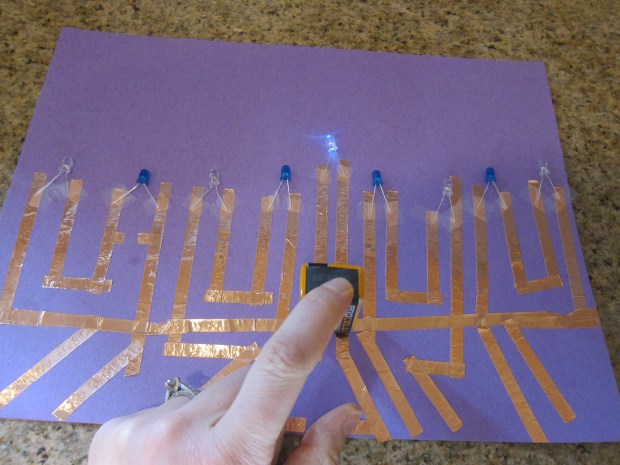
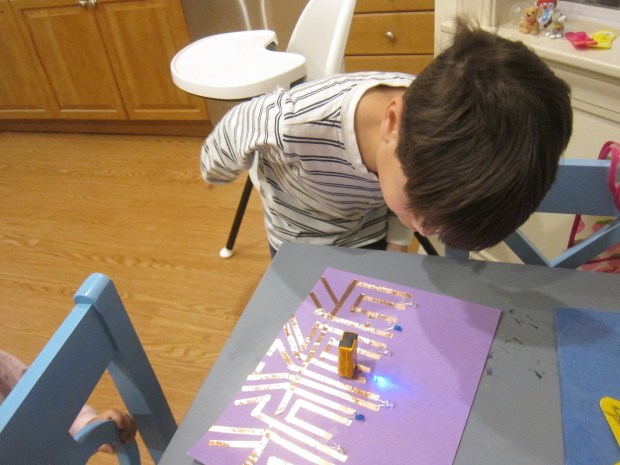
Once the tape was all laid out, I taped an LED light in the top center as the shamash candle. Hold a 9V battery over the two halves of the copper tape below this, and it will turn on!

Paper Circuit Menorrah (6)

Tape 8 additional LED lights over the other points of the menorah. We alternated white and blue, for an appropriately holiday-themed effect.

Paper CIrcuit Menorrah (8)

If you want to rig this up so that you can actually light a new LED each night, you’ll need five 9V batteries.

Paper Circuit Menorrah (3)

You’ll also need extra strips of copper tape to interrupt the circuit in 4 places, and then attach them on the second night of each interval. We didn’t make things that complicated, nor did we use the suggested ohm resisters, but Travis just loved marveling at how he could light each “candle”.

Paper CIrcuit Menorrah (10)

We moved the 9V battery around to light each LED in turn. He especially loved the blue ones!

Dancing Puppets

Dancing Puppet (8)

After engineering puppets for his latest Kiwi Crate, Travis had fun making this super-simple version from supplies we had around the house.

Dancing Puppet (1)

To start, all he needed was an empty toilet paper tube. Punch two holes near the top; they’ll look almost like eyes at this point, but aren’t for that purpose.

Dancing Puppet (2)

For the arms, cut two strips of construction paper that are the same length as the tube. Punch two holes near one end of each strip, and attach a paper clip to the other end.

Line up the bottom hole of each arm with the holes in the tube; insert a brad, and fasten. Loop string through the top hole of each arm, and secure at the top with a knot.

Dancing Puppet (4)

Now all Travis had to do was pull down on the string to make the arms rise!

Dancing Puppet (5)

This made a funny, wobbly puppet, and Travis knew exactly how he wanted to decorate the face: as a “Shadowtrooper” from Star Wars.

Dancing Puppet (7)

No wonder he chose black paper for the arms! Your kids can have fun making a whole bunch of these simple puppets and decorating any way they choose.

Dancing Puppet (6)

Puppet Engineering Kiwi Crate

Kiwi Puppets (4)

Puppets are the perfect STEAM-style blend of engineering (simple machines, gravity) and art (decoration), which means it was the perfect subject matter for Travis’s latest crate from Kiwi Co.

The crate featured two types of puppets, and first up was to Make a Marionette. Travis helped assemble the control bar by attaching two wooden sticks with a rubber band.

Kiwi Puppets (1)

The puppet’s body is a piece of cloth, and we threaded wood beads onto each corner through pipe cleaners. The pipe cleaners are then left at the top corners to become the strings for the arms. This was a wise choice on the part of Kiwi Crate, as there was no risk of strings tangling and frustrating your child! A final wooden bead and pipe cleaner go on for the head, and the pipe cleaners then loop onto the control bar.

Kiwi Puppets (2)

There are foam headpieces and stickers in the kit to make three different animals: a lion, a rabbit, and a bear. Travis chose the lion first. Roar!

Kiwi Puppets (5)

It was nice that these pieces are interchangeable so your little puppeteer can vary the plot of the story. Next up was Talking Puppets, which were completely different to put together. Travis first decorated two paper templates, the bird template with feather stickers and the crocodile template with scale stickers.

Kiwi Puppets (8)

We assembled the handles, which are made of three wooden frame pieces per puppet attached to a strip of paper with a brad. The middle piece slides up and down, allowing the puppet’s “mouth” to open and close. Travis added on his decorated bird and alligator bodies with the provided Velcro strips and then the puppets were ready to go!

Kiwi Puppets (9)

After all that, the puppets needed a stage, so it was time to make a quick Puppet Theater. Kiwi is great about suggesting ways to upcycle the crate itself, and that’s exactly what was going on here. Cut a rectangle from the lid of the crate (or a similarly-sized shoebox) with scissors. Poke the pointy end of a pencil into each side of the box and then tape the eraser end up into the top corners, so the box is now propped open.

Kiwi Puppets (14)

If your kids are feeling artsy, have them decorate the crate with markers or other craft supplies. I suggested we make a Puppet Theater marquee sign, but Travis skipped ahead into having the puppets put on a show.

Kiwi Puppets (16)

It was time for imagination to take over after all that scientific engineering!

Kiwi Puppets (15)

To finish the fun, Travis checked out this kit’s Explore booklet, including mazes, more about the science of how puppets move, and cultural facts about puppets from around the world.

Kiwi Puppets (12)

We also read Balloons over Broadway (all about the invention of the puppets in the Macy’s Thanksgiving Day parade), and 10-Minute Puppets by Noel MacNeal.

Kiwi Puppets alt

Ice Skating Rink

Ice Skating Rink (5)

This special holiday crate from Kiwi Co. is a fantastic way to fit in a STEM activity this holiday season, whether you’re currently home-schooling, or school has gone remote once more, or you just have extra hours to fill indoors now that cold afternoons are here!

To start, Travis screwed the provided table leg pegs into bolts so that the wooden base of the skating rink stands sturdily just above the ground.

Ice Skating Rink (1)

That quickly, it was time for wires and batteries… The good stuff! Travis loved helping insert batteries into the provided case and attaching to the bottom of the table base with sticky foam. The provided motor sticks on next, and he then helped connect the wires: red to red and black to black.

Ice Skating Rink (2)

Turn the table over and add the center gear on the peg above the motor. Additional gears then slot in between this central one and the outer frame.

Ice Skating Rink (3)

The hardest part of the whole project, oddly, was the background decorations that came next. The provided snowy backdrop and trees are supposed to fit into slits in the felt, but it’s very hard to get them to stay put. This is a minor quibble, since the decor is cute but not necessary for the rink to work.

Ice Skating Rink (4)

So we moved on to the real excitement! The “skaters” are tiny felt figures (gingerbread men, penguins, and snowmen) who each slot into a metal nut. These are placed on the plastic that covers the gears, which each have magnets. So once kids switch the motor on, the gears begin to spin and the magnets on the gears are attracted to the metal of the the nuts, making those little felt figures skate around.

Ice Skating Rink (6)

Truth be told, the contraption is very temperamental and the felt figures easily snap out of their metal nut. Likewise, the magnets come off of the gears very easily, so we had to do lots of fixing and problem solving in between rounds of having the motor on. But here’s an adorable clip of the rink in motion!

I loved the way Travis quickly learned to troubleshoot these glitches. He had his head bent over the skating rink along with little sister Veronika, both of them delighting as they watched the figures snap onto the magnets to skate, then laughing at how quickly everything tumbled apart, then fixing it and starting all over.

Ice Skating Rink (7)

In sum, a great STEM project. Plus, the booklet had in-depth explanations about why ice is slippery and about precisely how the gears and magnets work to make the contraption move.

Ice Skating Rink alt

Flurry in a Hurry

Flurry in a Hurry (4)

If your kids are like mine, then they are so excited for snow this winter. To help them wait it out, make a snowstorm in a jar instead!

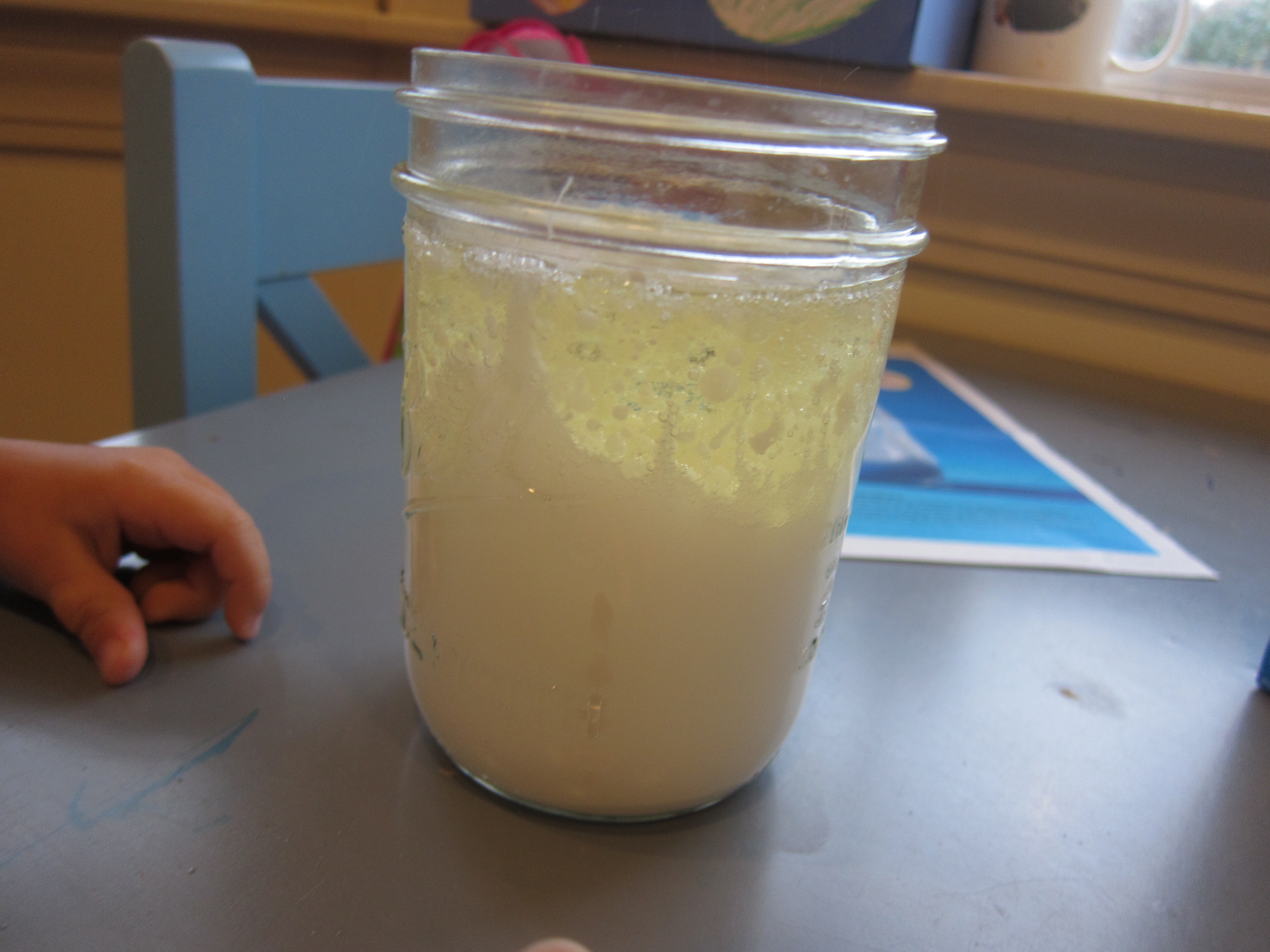
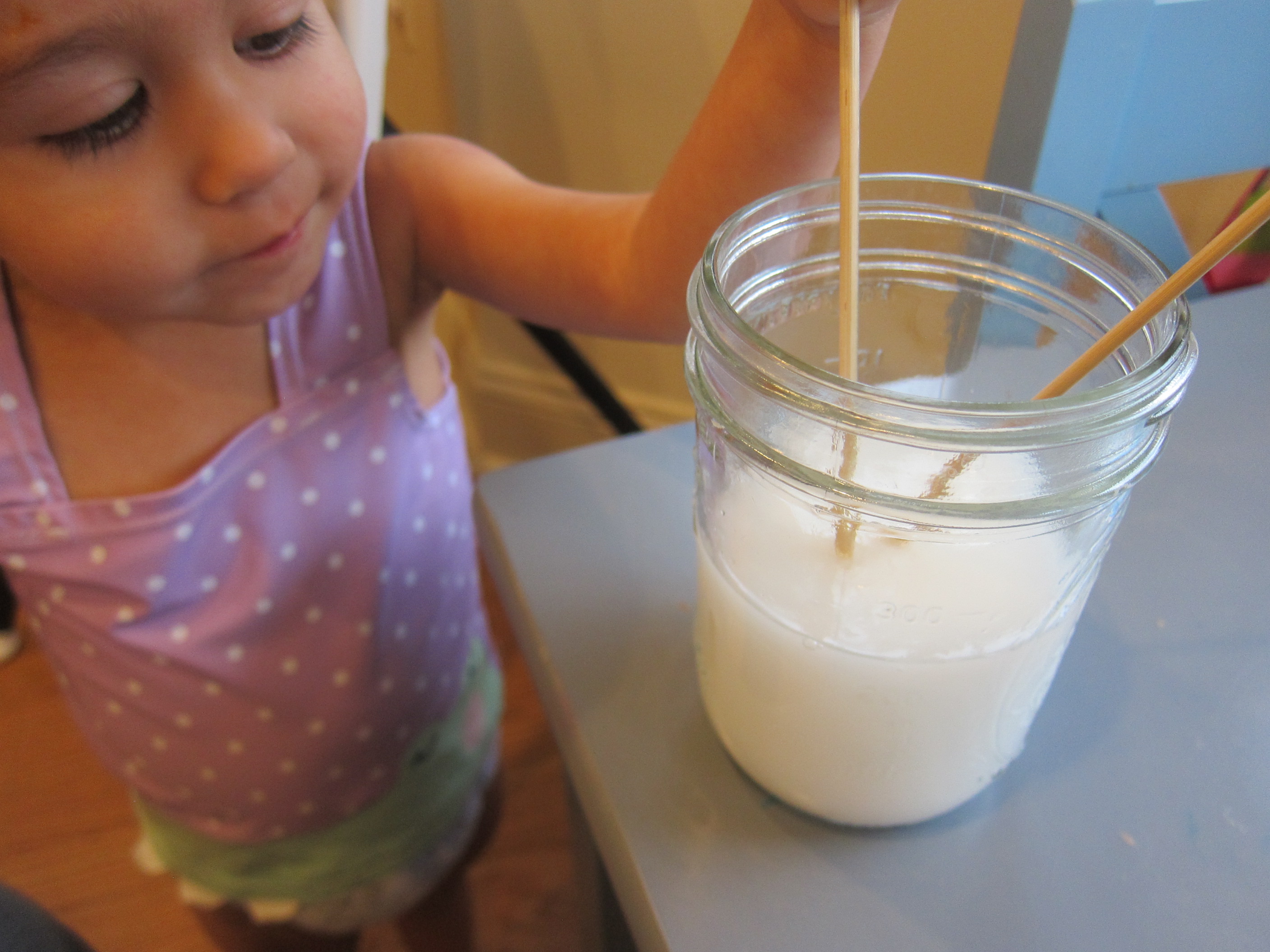
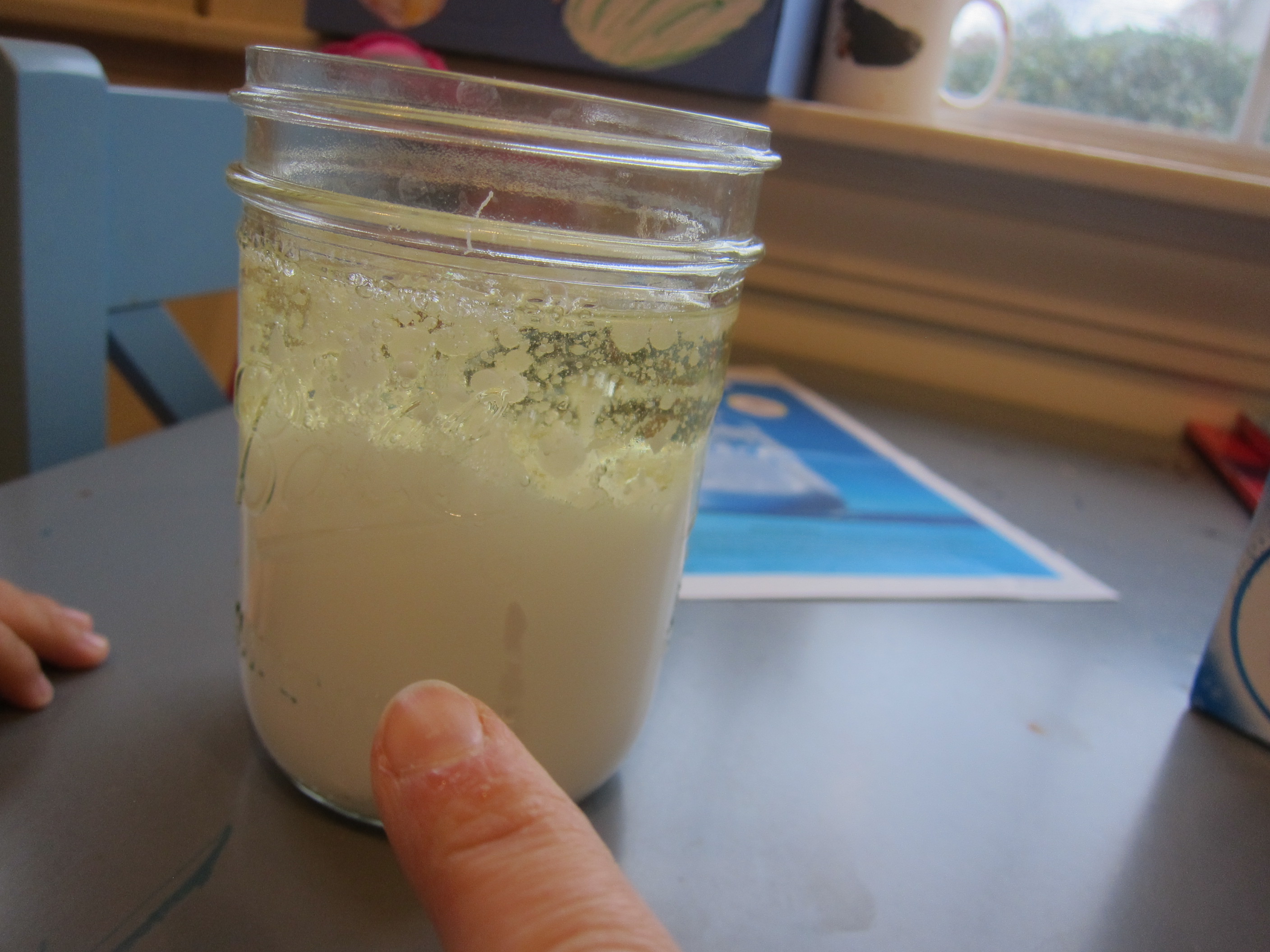
This is one of those classic experiments that never grows old. Simply stir together 1 teaspoon white paint and 1 cup water in the bottom of a mason jar. Fill nearly the rest of the way with baby oil.
Flurry in a Hurry (1)

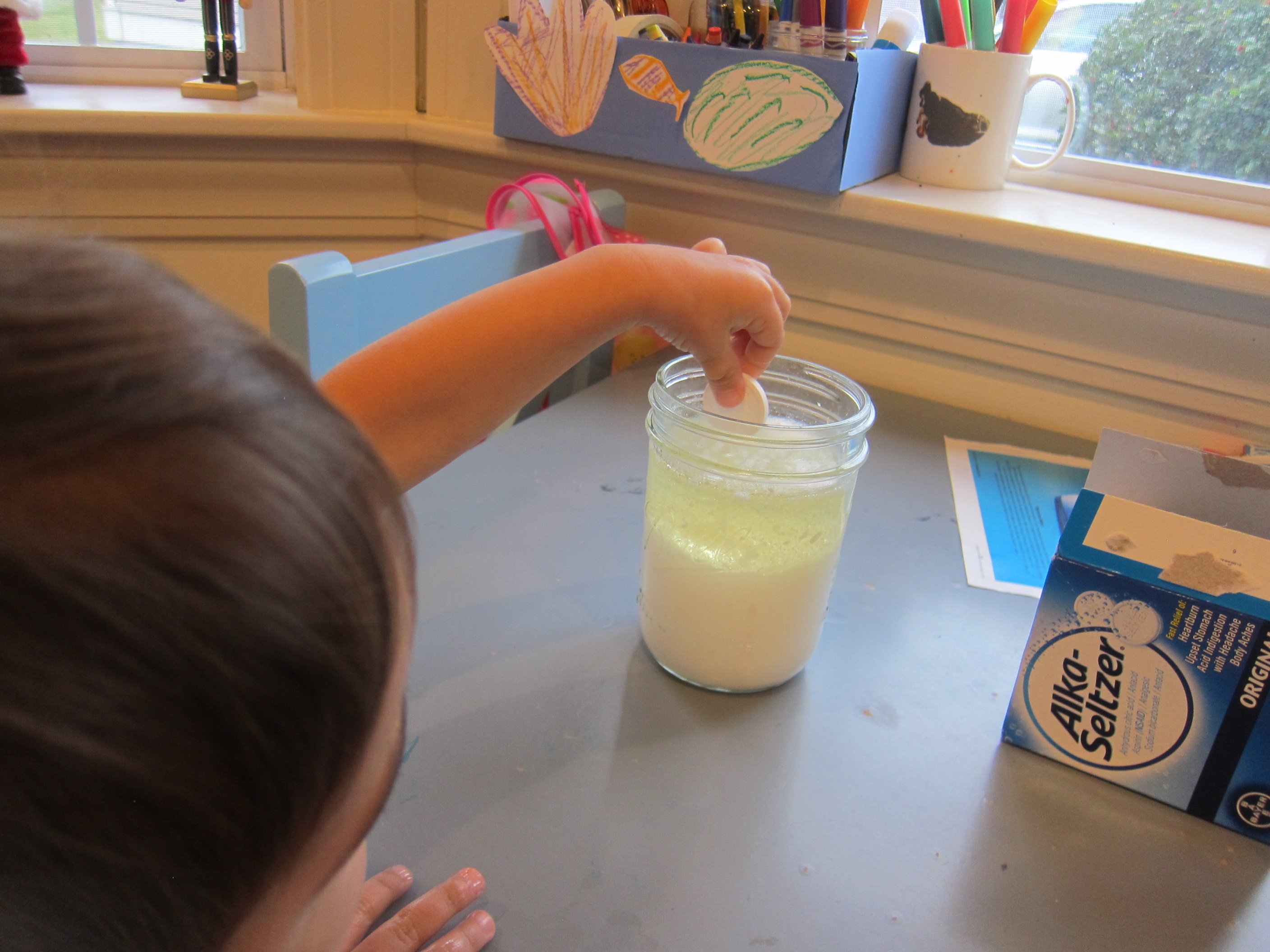
Now drop in Alka-Seltzer tablets, one at a time. Veronika loved plopping these in!
Flurry in a Hurry (5)

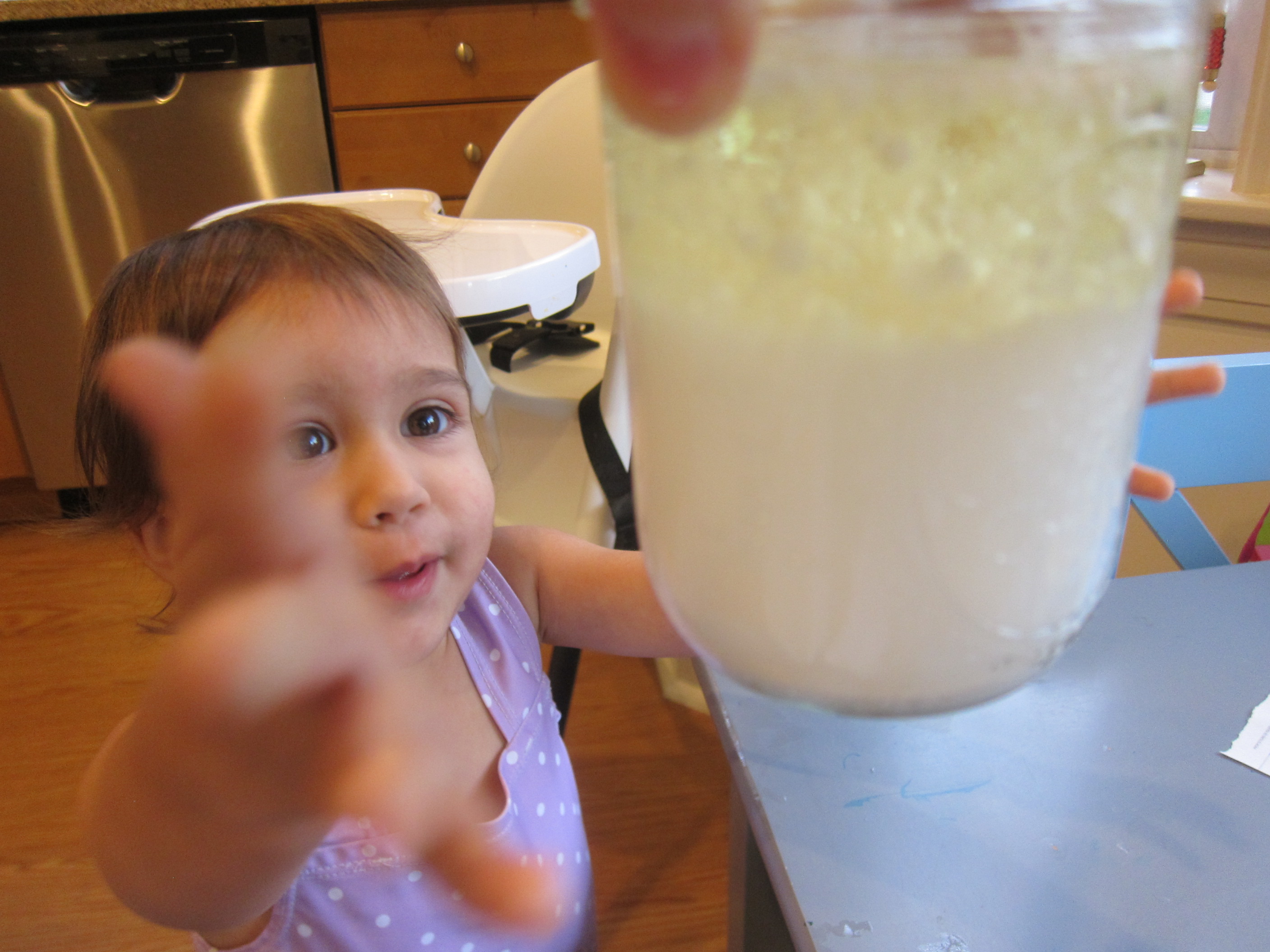
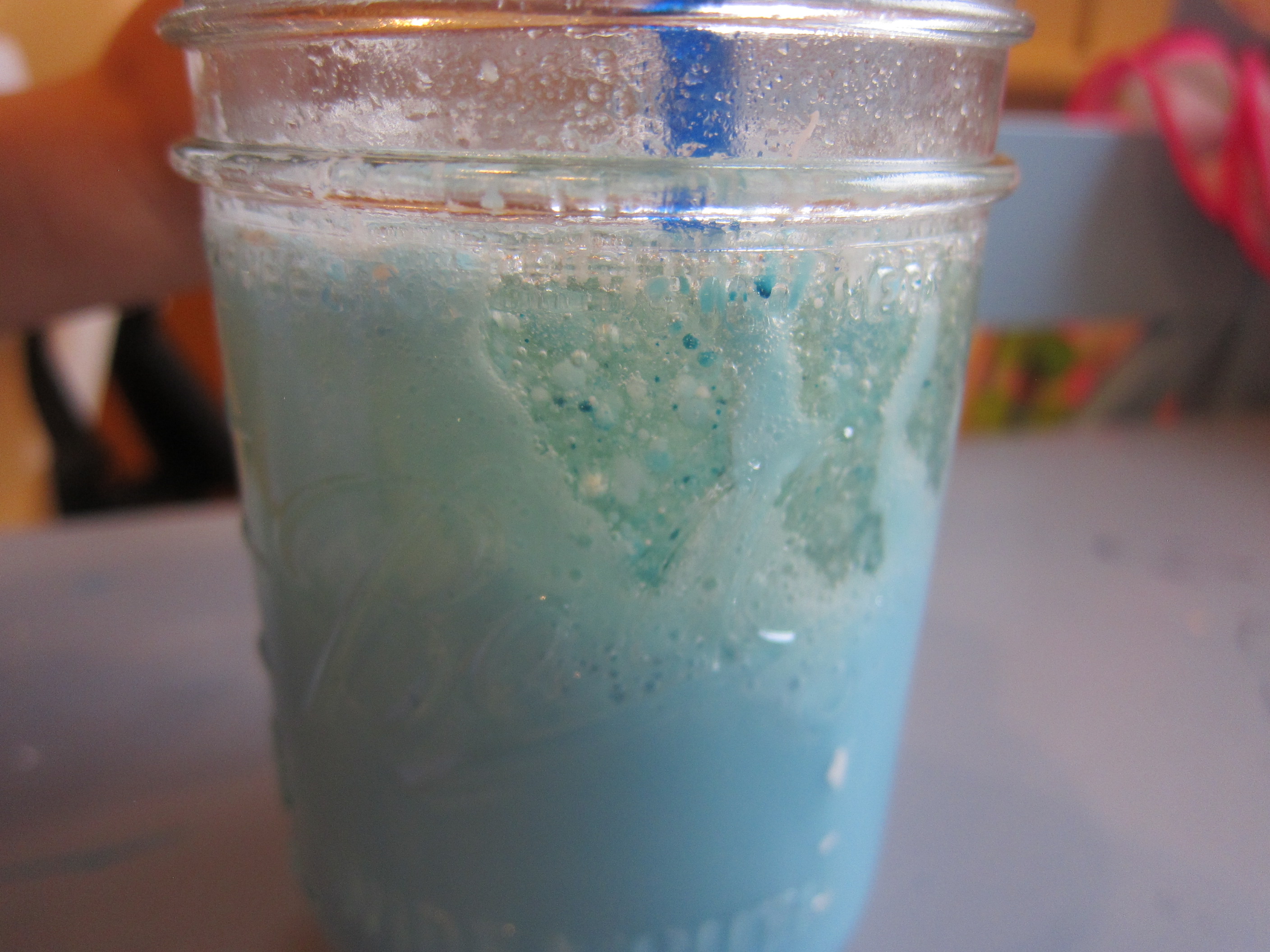
The resulting bubbles will immediately make the white paint rise up and then down again, a little snowstorm in miniature.

Flurry in a Hurry (3)

If we added two tablets in at once, it was more like a blizzard!

Flurry in a Hurry (2)

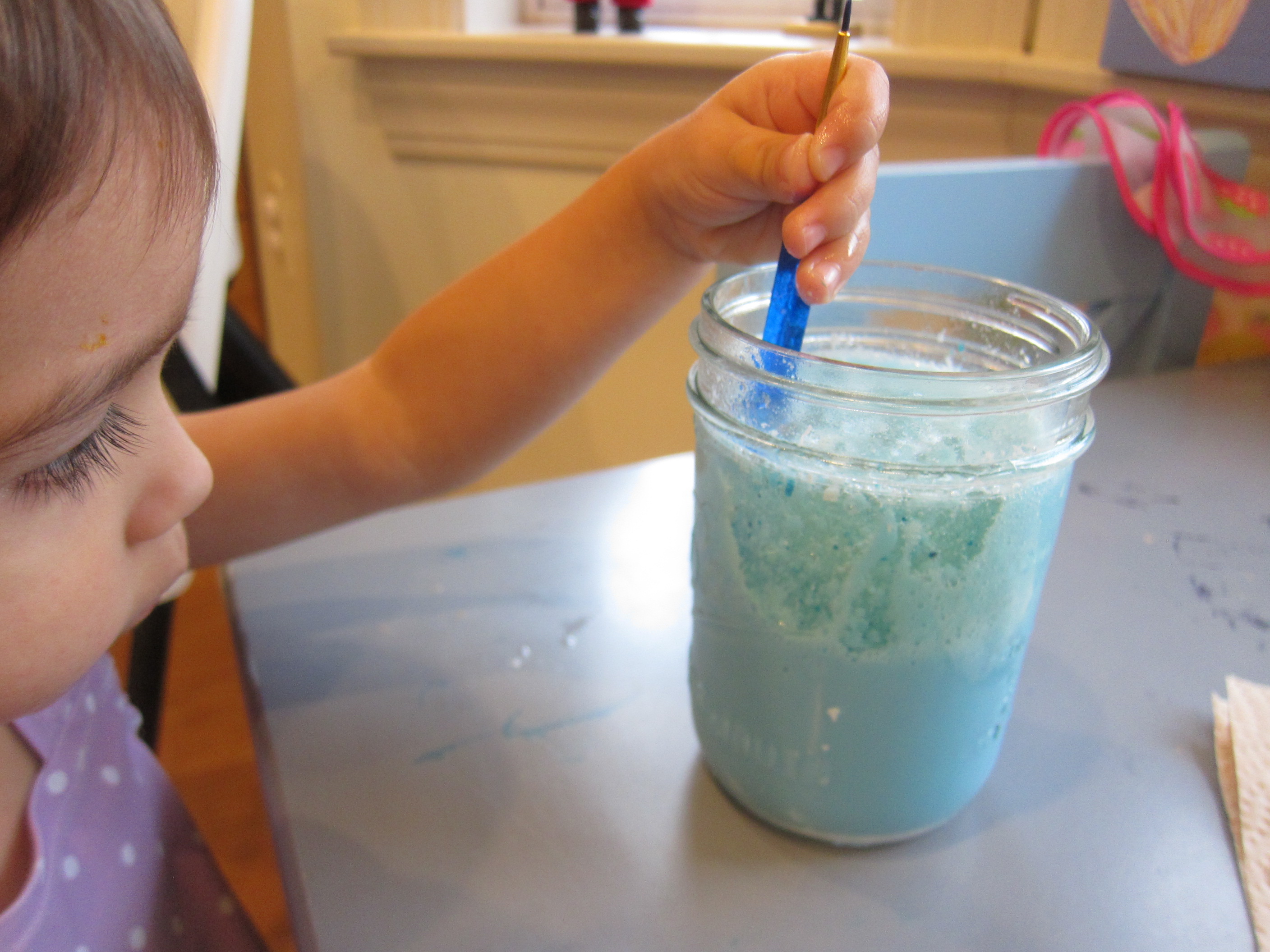
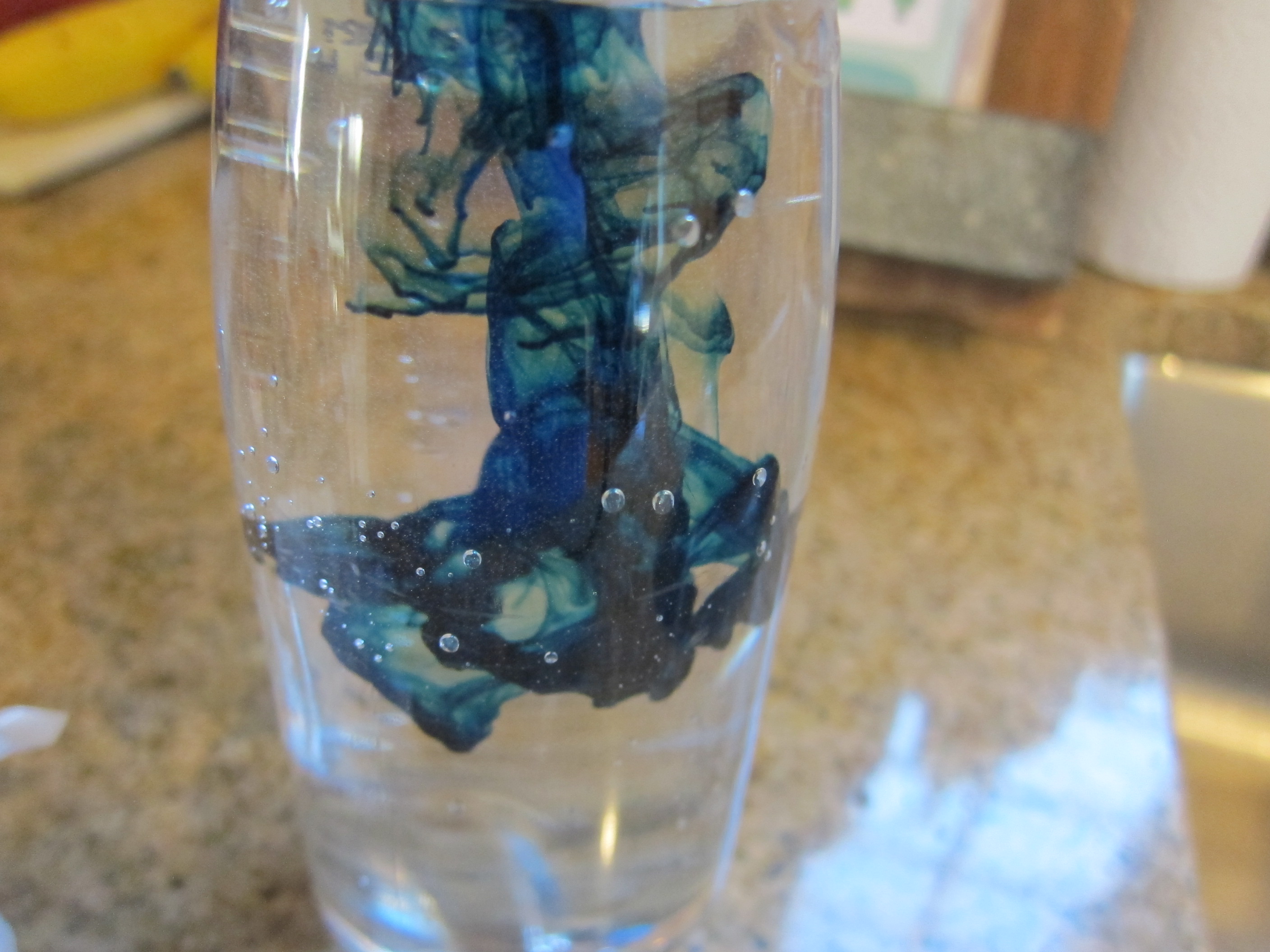
After watching for a little while, we decided it would look even prettier in blue stormy skies, so added a few drops of blue food coloring.

Flurry in a Hurry (6)

It was a little harder to see the white paint as “snowflakes”, now, but Veronika was equally delighted watching this stormy sky.

Flurry in a Hurry (8)

We went through six Alka-Seltzer tablets before she tired of it!

Make Your Own Diving Fish

Diving Fish (2)

This quick STEM project was intended as an extension of recent coral reef play for Travis, but it turned out that little sister Veronika loved it even more! There’s nothing like a good reaction of baking soda and vinegar to bring smiles in the morning.

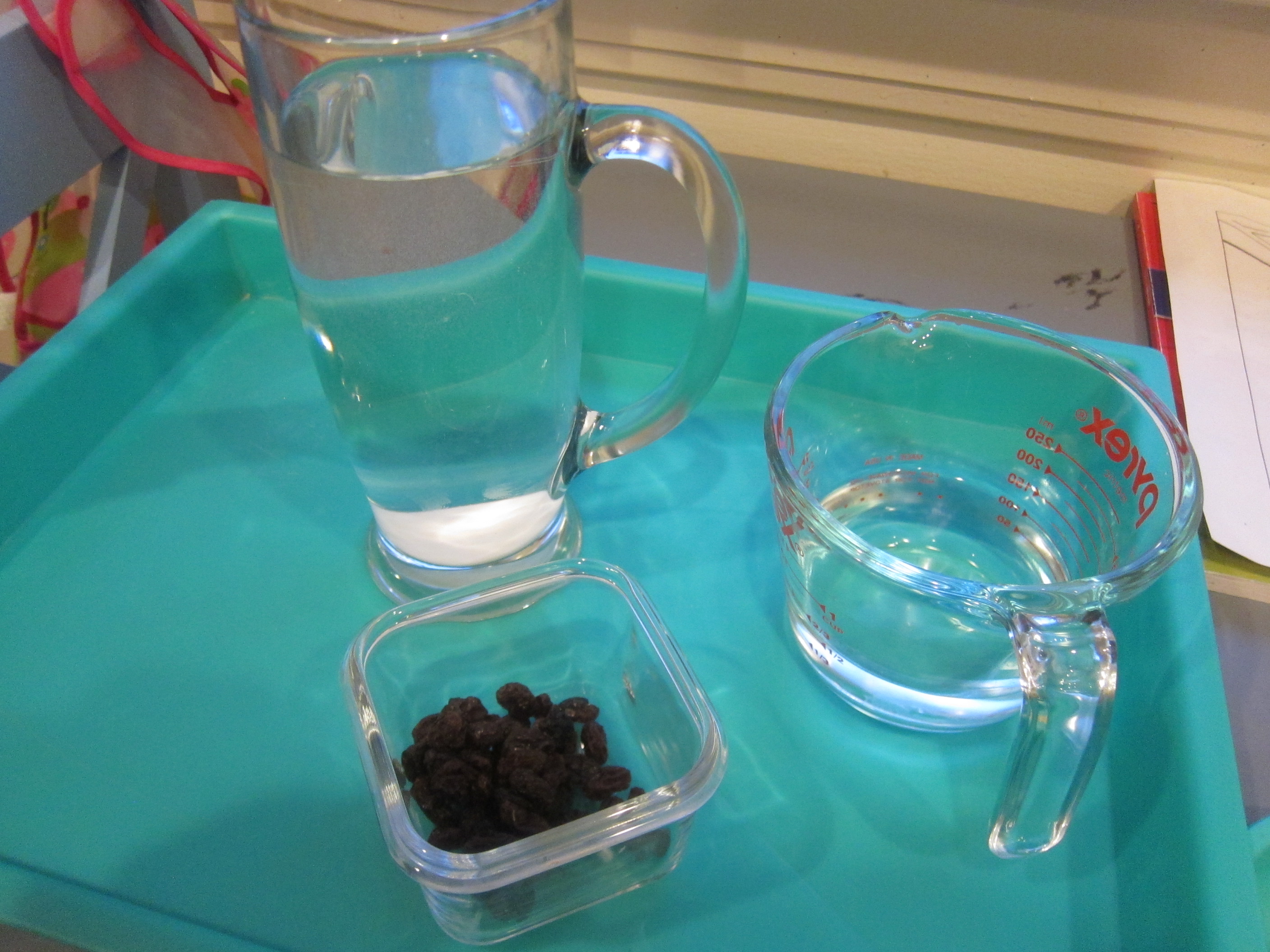
Fill a tall clear container with 2 cups water. Make sure there is still room at the top of the container to add more liquid (e.g. a flower vase might work better than a drinking glass, unless you have very tall ones).

Diving Fish (1)

Add 1 tablespoon baking soda to the glass and then pour in 1/2 cup vinegar.

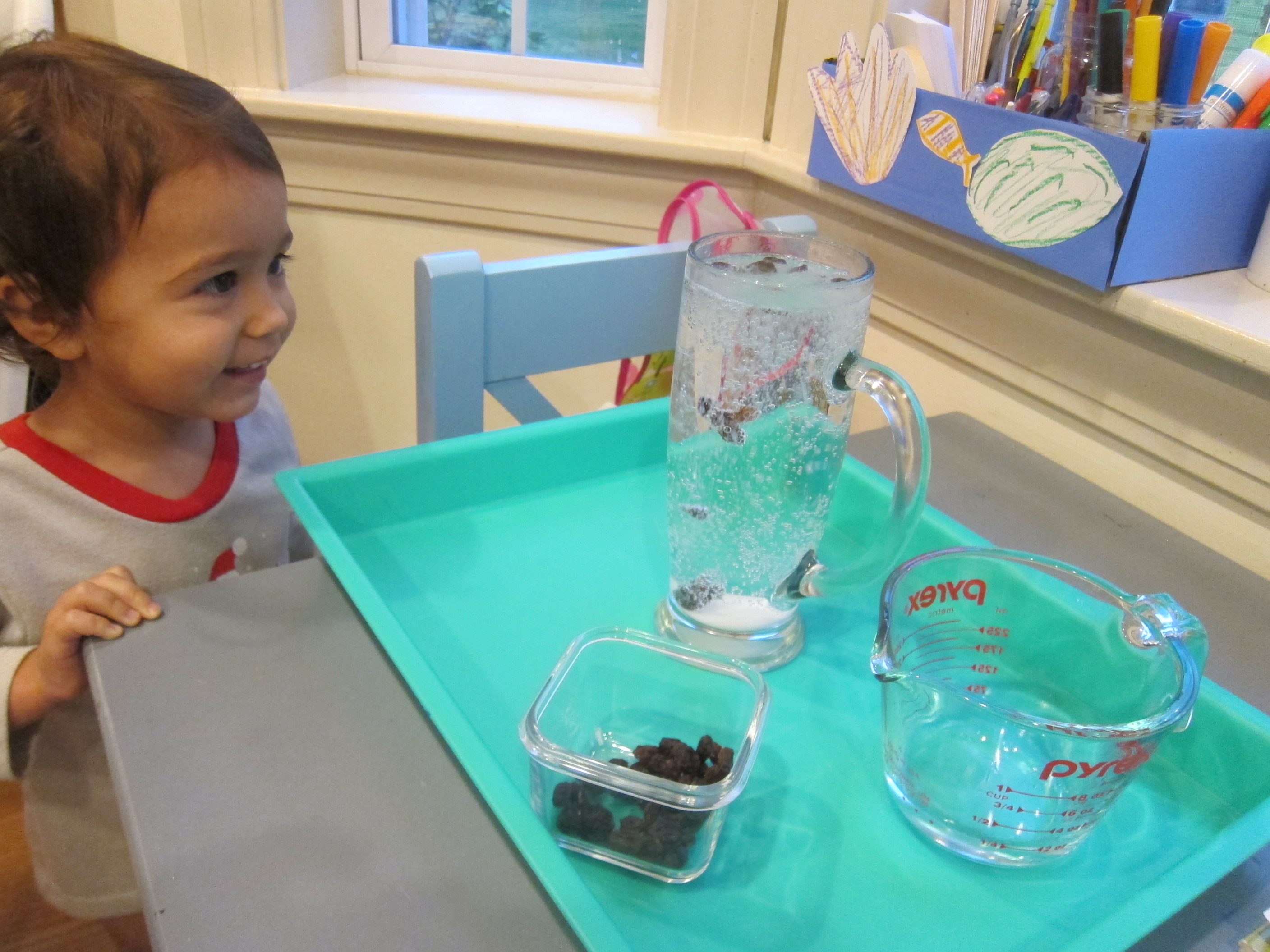
Working quickly, start adding “fish”. These can be just about anything light and small from the kitchen. We used raisins, but dried beans or rice would work, too!

“They’re swimming!” Veronika exclaimed with delight. We added the vinegar in increments, so each time our little fish would be set swimming anew.

The magical work of producing carbon dioxide!

Coral Reef Kiwi Crate

Kiwi Coral Reef (9)

Travis kit from Kiwi Co this month was all about Coral Reefs. The focus was primarily on the science of a coral reef’s ecosystem, with a little bit of art and engineering (ratchets!) thrown in for good measure.

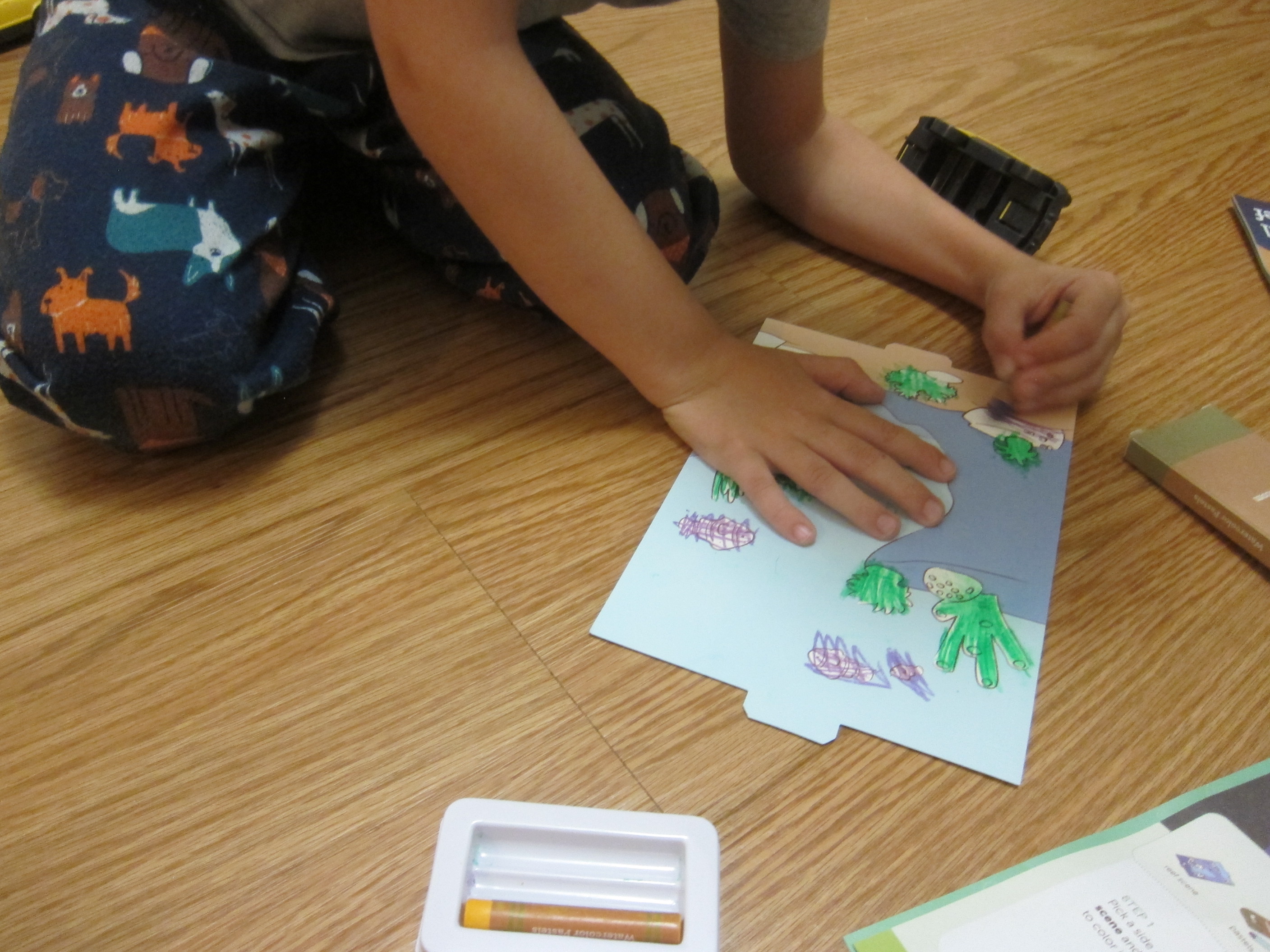
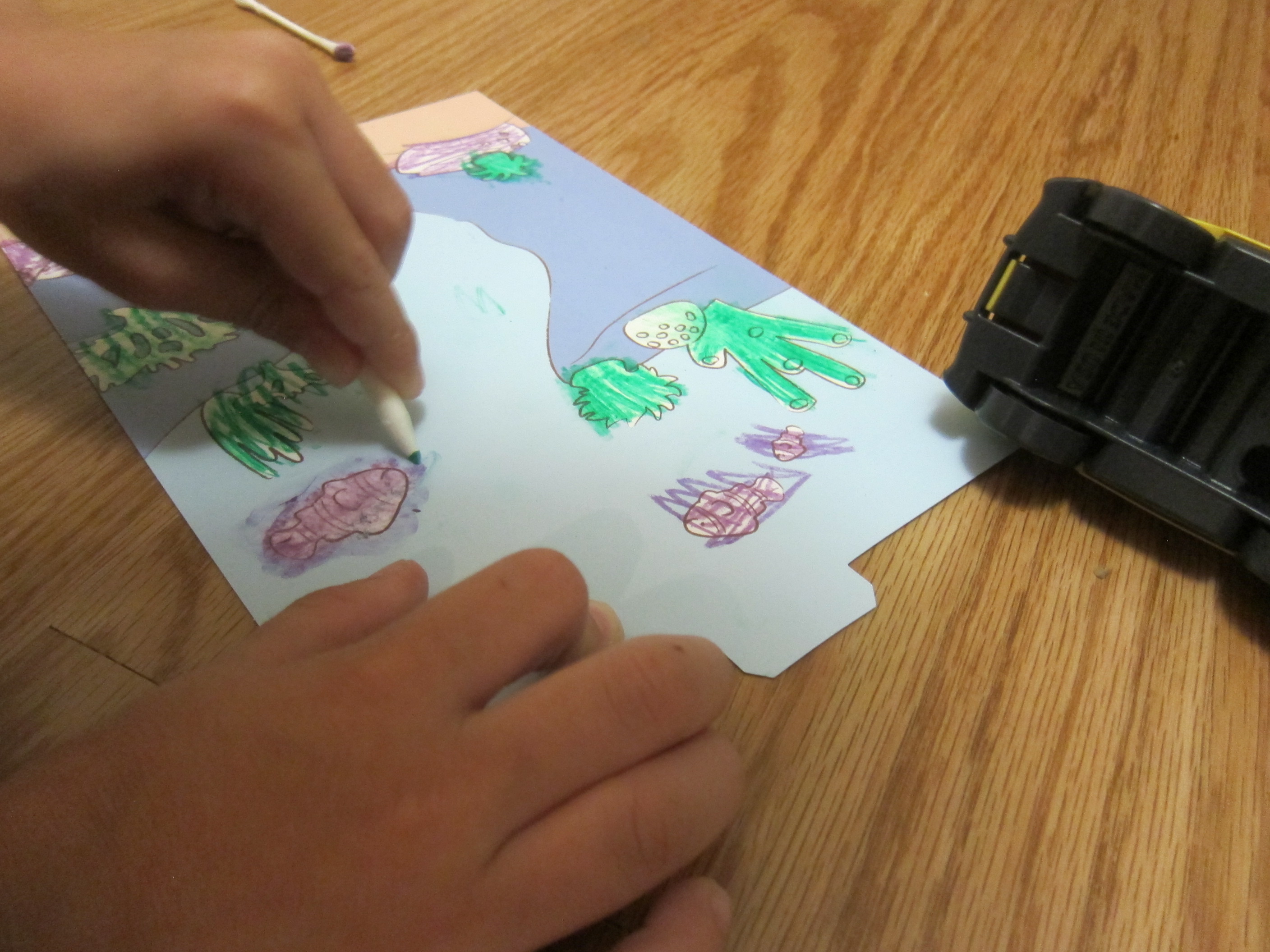
First up was the art component: to color in a Reef Scene.

Kiwi Coral Reef (1)

Travis loved the pastels that came with the kit for this step. There was also a blending stick to mix colors or make scratch-art, so kids can really have fun with this step if they’re feeling artsy.

Kiwi Coral Reef (3)

Next up he needed to Assemble the Jellyfish. The pastels are used again, this time to color the tentacles of the provided jellyfish shapes. Fold down these tabs of paper, then add strings as additional tentacles for wonderfully wavy creatures.

Kiwi Coral Reef (5)

A plastic cap (which looks like the top of an Easter egg) sits on top as the jellyfish’s bell. Thread a pipe cleaner through the holes in the plastic head and twist to make a loop. Wiggle eyes completed each wiggly fellow.

Kiwi Coral Reef (6)

Finally, it was time Build the Race Frame. Kids add a disc and ratchet to each of two bolts, which then screw into a spool on either side of the wooden race frame.

Kiwi Coral Reef (7)

When we came to the next step, it turned out we were missing the long strings to thread through the spool and onto the pipe cleaner loop of each jellyfish. Luckily this was an easy material to replace, and I grabbed twine from the craft bin.

Travis then attached the handles (pieces of wood which will hitch onto the teeth of the jagged ratchet). As we raced our jellyfish, we learned that whether you push or pull on a ratchet, it will always turn in only one direction; the left side grabs when you push, and the right side grabs when you pull . Once Travis got the hang of it, he loved having jellyfish races with me!

Kiwi Coral Reef (8)

For some final fun, Travis read facts in Explore magazine, solved a brain coral maze, and then made a quick Pet Jellyfish:

Cut a circle from a plastic bag and gather the center of the plastic to form a head; tie loosely with string. Snip the edges of the circle to make the tentacles.

Pet Jellyfish (2)

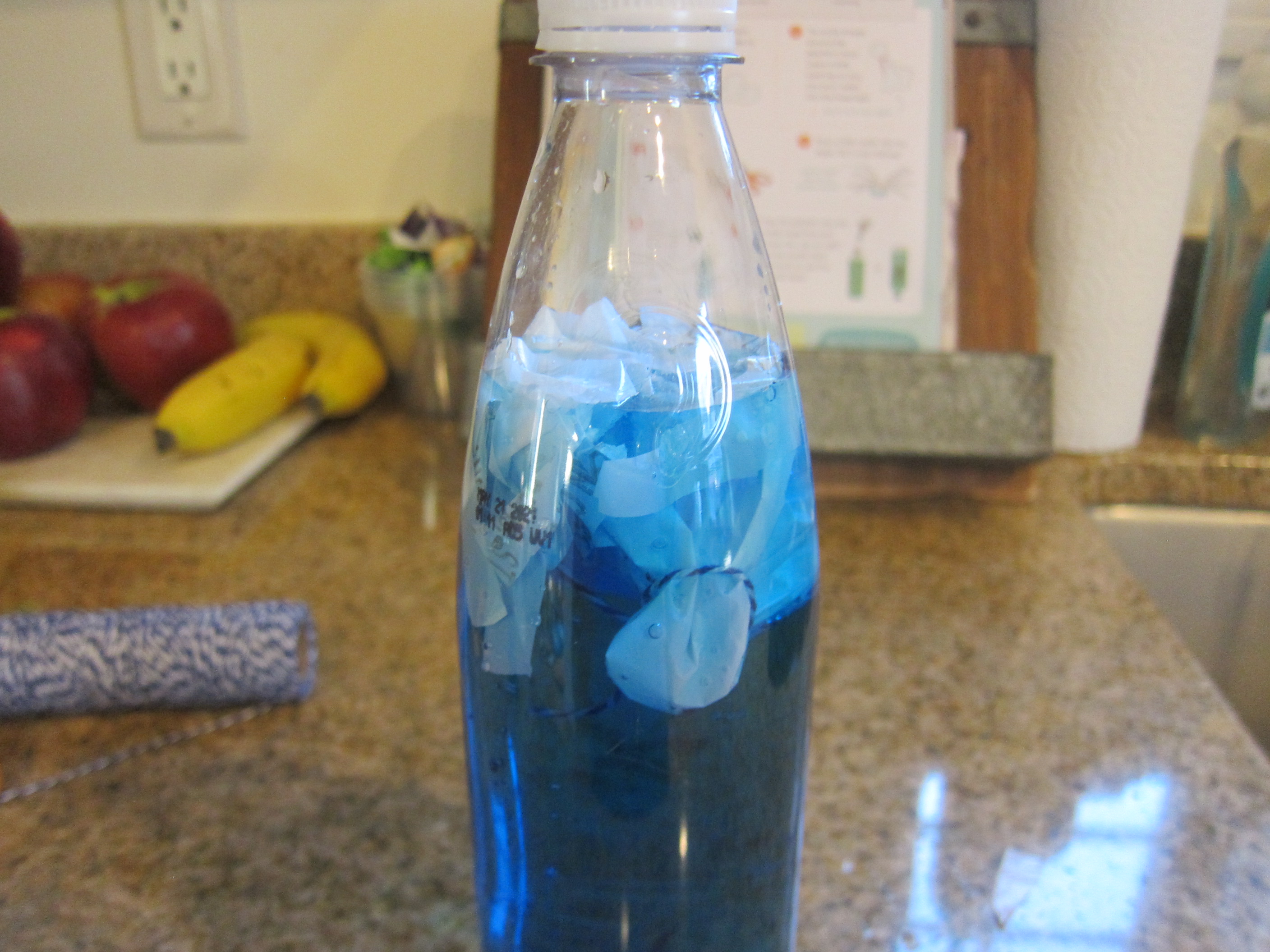
Fill a clear plastic water bottle with water and add a few drops of food coloring to turn it into a blue ocean.

Now fill the jellyfish’s head about halfway with water; you need enough room for an air bubble to form as well. Insert into the bottle and tilt it back and forth to watch your new “pet” swim.

Pet Jellyfish (3)

This didn’t work perfectly for us, but the kids liked the wavy tentacles in the bottle!

Pet Jellyfish (4)

Butterfly Migration Map

Butterfly Migration (1)

As a final component of Travis’s Raddish Kids about the Day of the Dead in Mexico, he learned about the connection between the festival and the annual arrival of monarch butterflies. This made for a neat lesson on a day off from school.

We started with a read-aloud of Uncle Monarch and the Day of the Dead, helping Travis understand how the festival and butterflies were linked.

Butterfly Migration (2)

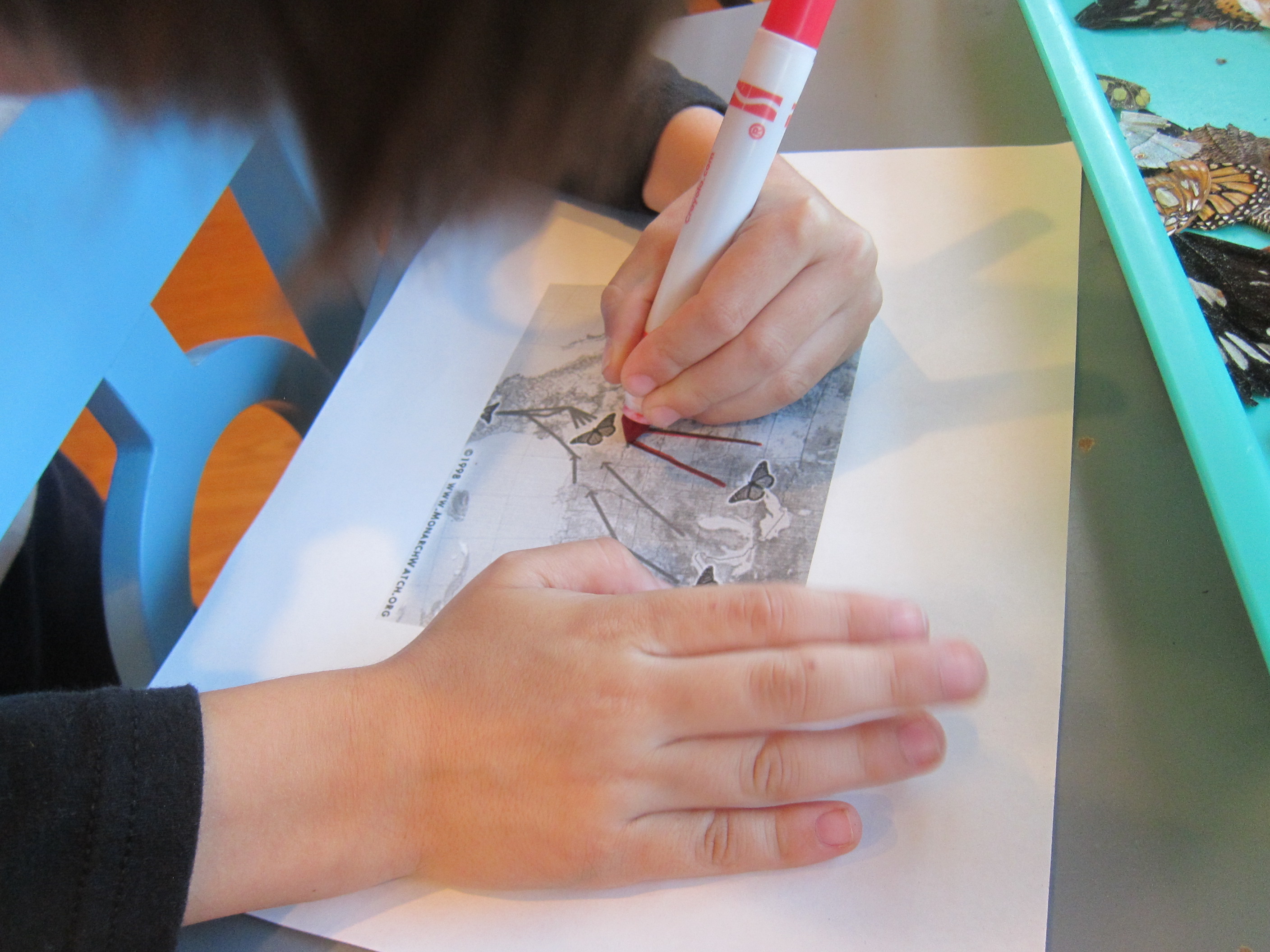
We then printed a map of the migration paths and Travis drew red arrows for the different flight routes. Older children can draw their own map showing the United States and Mexico, rather than simply coloring a template from online. You might also consider watching a nature show or Wild Kratt’s episode on the monarch migration to help kids appreciate the dangers undertaken on the journey!

Butterfly Migration (5)

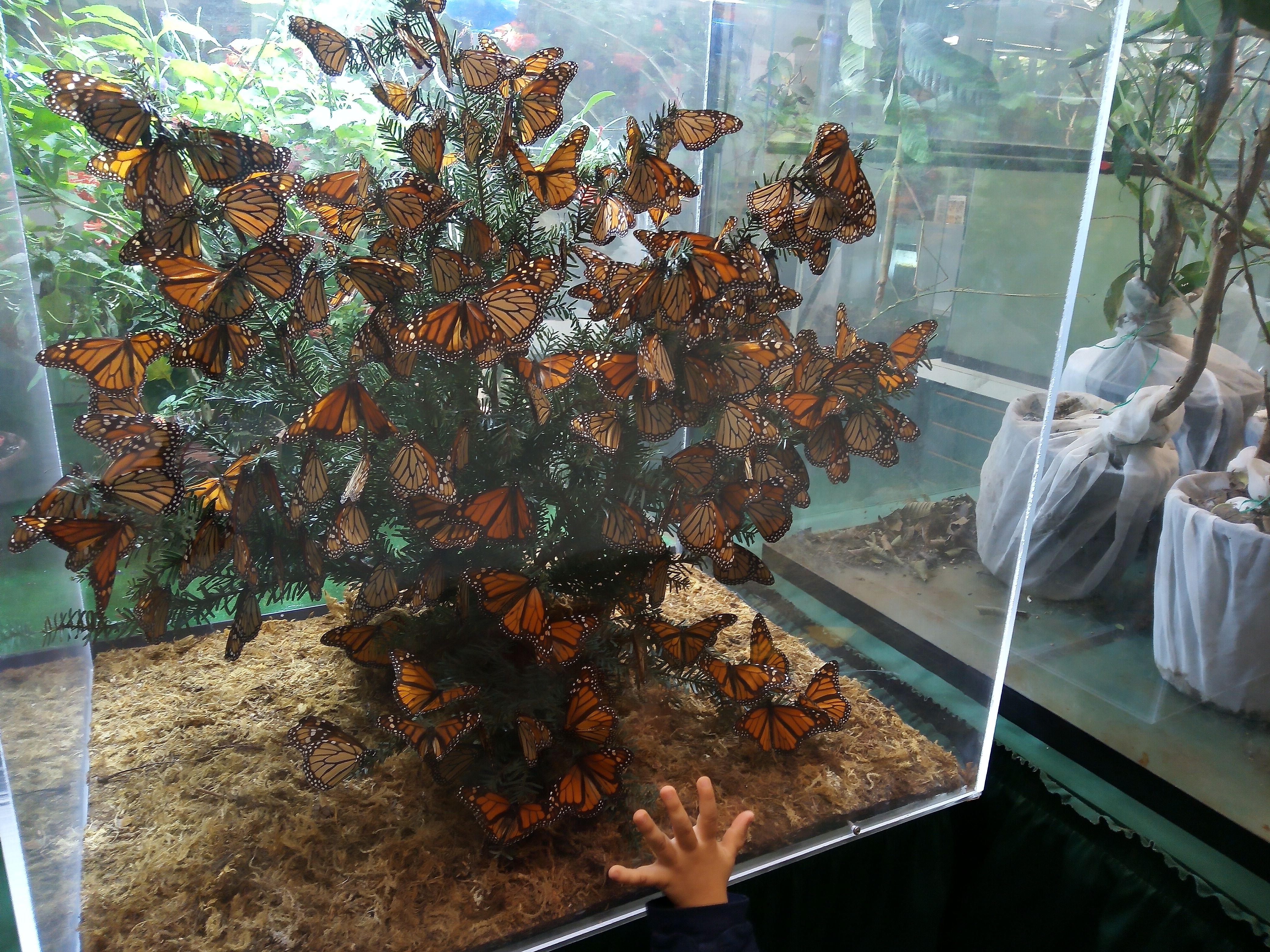
Of course there was no better way to explain the migration than to make it hands-on. We’re lucky enough to live not far from a butterfly garden, so we took a special trip!

butterflies (2)

The kids marveled as they watched the delicate wings of the butterflies, or paused to see them sip nectar from flowers and soft fruit.

butterflies (8)

Travis’s favorite was whenever a butterfly landed on him!

butterflies (9)

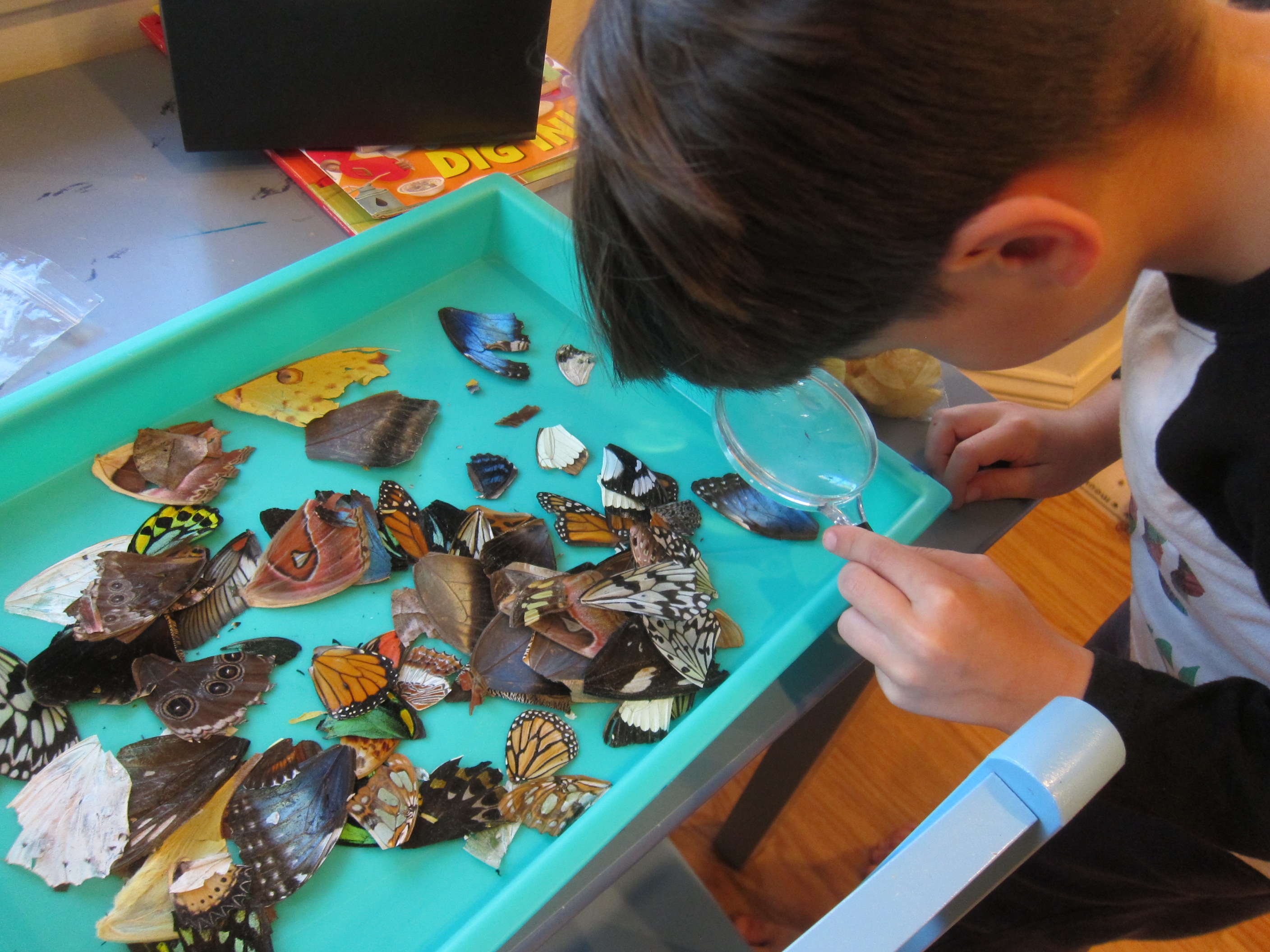
He even brought wings home from the gift shop for further exploration  under the magnifying glass!

Butterfly Migration (3)

Now he could really appreciate what it meant for this delicate wings to fly 3,000 miles.