What Can Be a Hat?

What Can Be a Hat (5)

Veronika currently loves a little story from Hello magazine about babies wearing various hats, some that really are hats and some things that simply can be a hat (think baskets, buckets, or even old shoe boxes). That prompted this silly game as I was prepping dinner and needed to keep the kids briefly occupied.

What could they find in the kitchen that could be a hat? Pretty soon, the kids were modeling strainers…

What Can Be a Hat (6)

…and colanders!

What Can Be a Hat (3)

Travis loved that the colander was like a warrior’s helmet.

What Can Be a Hat (4)

Veronika loved looking stylish with the strainer at a jaunty angle! This led them to dig through the dress-up box for other favorite hats and head pieces. All of which meant, everyone was soon laughing and had stopped asking when dinner would be ready.

What Can Be a Hat (1)

What else in the kitchen could be a hat? Please share what your kids come up with in the comments!

Magnetic Puzzles

Magnet Puzzles (5)

Here’s a clever way to combine puzzle play with magnet play. It’s the perfect activity to engage any kid who loves to play with magnets at the fridge!

For the first round of the game, I took an old jigsaw puzzle and adhered a square of magnetic tape to the back of each piece. You could also set this up with regular magnets, but you’ll need to use hot glue to attach the magnets to each piece.

Magnet Puzzles (1)

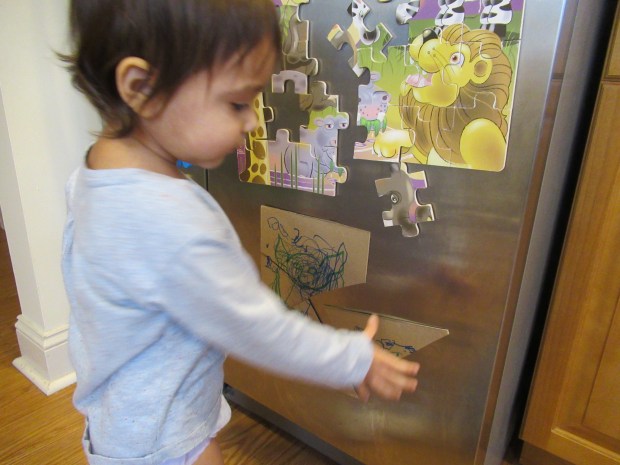
Arrange on the fridge and let your little puzzlers go at it!

Magnet Puzzles (4)

It was readily apparent, though, that the jigsaw puzzle was much too complicated for Veronika, even though she liked moving the pieces around, so I quickly thought of an alternative that was more toddler-friendly.

Magnet Puzzles (2)

I encouraged the kids to draw their own puzzle on pieces of cardboard from a leftover cereal box. They both had fun drawing current favorite characters. Your kids can get quite creative with this part of the craft, using paint, stickers, glitter, or more!

Magnet Puzzles (3)

When the drawings were done, I cut each picture into 4 pieces, then added strips of magnetic tape to the back.

Magnet Puzzles (7)

Veronika loved that she could slot these puzzles together much more easily than interlocking jigsaw pieces.

Magnet Puzzles (8)

Puzzle solved!

Magnet Puzzles (9)

Crayon Slide

Crayon Slide (7)

It’s raining and it’s pouring… and we really miss the playground! So this morning, I surprised the kids by bringing our toddler slide in from the back patio, dried it off, and had it waiting for them after breakfast.

Crayon Slide (1)

My original intent was to turn this into a craft, too. I taped a long sheet of butcher paper onto the slide, and set out some crayons. The idea is that kids can hold a crayon as they slide down, in one hand or both, and leave a wiggly trail behind.

Crayon Slide (2)

It turned out that neither kid liked drawing on the descent. I tried taping together a bundle of crayons, thinking this might make it easier, but still they didn’t love the process.

Crayon Slide (3)

Instead, Travis and Veronika invented their own version of the game: they would slid down the slide, then scribble on the paper at the bottom, then race around to go again.

Crayon Slide (6)

I was so proud of their turn-taking!

Crayon Slide (8)

We had surrounded the slide with pillows to avoid any mishaps when falling, which meant the game turned into tumbling around on pillows, too. What a great way to bring an outdoor playground in!

Crayon Slide (4)

Eat Your Letters

Letter Sandwiches (2)

Veronika is fascinated with letters now, adding daily to the list of those she recognizes, and she loves pointing them out to me. “Letter C!” she said in the grocery store yesterday, spotting one on a sign. To reinforce her interest, I picked up a few grocery items with letters right on them!

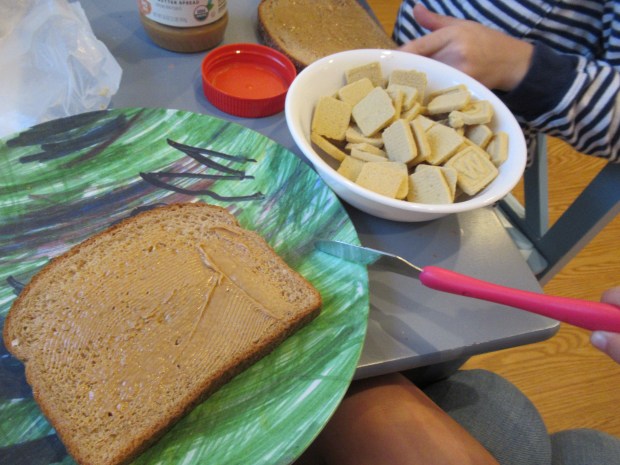
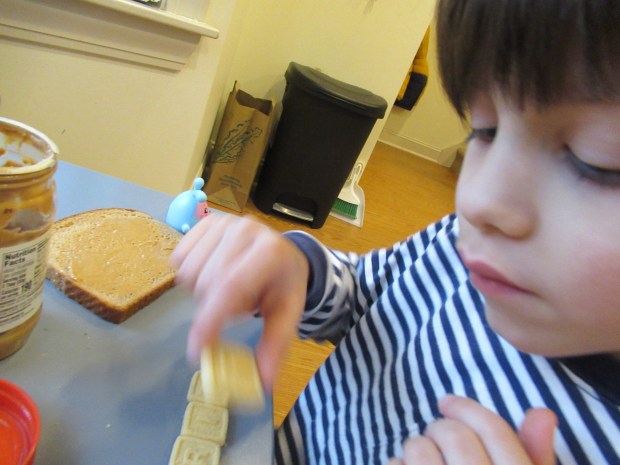
My original plan was to buy Alpha-Bits cereal but couldn’t find it at the store. Instead, I purchased letter cookies from Earth’s Best, and letter-shaped pasta from Banza. For the cookies, I first spread peanut butter on toast slices to make them sticky, which turned them into little “easels”. I showed Veronika how to sort through the letters and spelled out simple words for her (love, cat), along with her name.

Letter Sandwiches (1)

I also held up one cookie at a time and asked what letter she saw. She knew some new ones from the last time I quizzed her, including H and D now!

Letter Sandwiches (5)

Big brother Travis quickly wanted to join in, eager to spell his name. We ran into a snag only because the kids were snacking, too, which meant we were soon missing letters we needed!

Letter Sandwiches (3)

After that, I dumped out the letter pasta onto a tray for Veronika to further explore. This was more like sensory play, but also great for learning. I again held up one letter at a time and asked her which it was.

Letter Sandwiches (6)

It turned out the pasta only came in five letter shapes, so we briefly sorted them, too. “Another S!” she said proudly, adding it to the pile.

Letter Sandwiches (7)

If you do find Alpha-Bits cereal, go ahead and arrange them on those peanut-butter bread slices, then finish up the activity by eating your open-faced sandwich!

Fizzing Colors!

Fizzing Colors (7)

This variation on classic baking soda-and-vinegar eruptions had a beautiful artistic side to it, worked fine motor skills for my toddler (thanks to eye droppers), and came with a heaping dose of imagination (for my 6-year-old). Needless to say, big kid and little kid alike were enraptured until we’d gone through – yes – an entire box of baking soda and bottle of white vinegar.

Technically you don’t need to use that much. Fill a tray or pie pan with about 1 cup baking soda, or more if desired, then add drops of food coloring at intervals. The more you space out and vary the colors, the prettier the result!

Fizzing Colors (1)

I then handed each kid a cup of white vinegar and a pipette and showed them how to squirt directly onto the dots of color.

Fizzing Colors (3)

Of course fizzy reactions occur immediately, and the more your kids fill in the tray, the more it starts to look like a work of art.

Fizzing Colors (9)

Then Travis wanted to trap a few Lego toys in the bubbles. Here’s where the imagination came into play, with a big game going on in his head!

Fizzing Colors (6)

At this point, we dropped caution to the wind and started adding lots more of everything. First we squirted in additional drops of food coloring. Then, the kids started pouring in the vinegar straight from the cups.

Fizzing Colors (10)

Their glee was so evident, and I loved watching them tackle the project together, seeing how many fizzy explosions they could make at once.

Fizzing Colors (8)

Needless to say, it was a bubbly fizzy wonderland.

Fizzing Colors (13)

This activity was so simple, but a delight for all ages.

Fizzing Colors (5)

English Muffins with Cinnamon Butter

English Muffin Cinnamon Butter (1)

This cinnamon-laced vegan spread works great on just about any breakfast bread (toast, waffles, pancakes), but we especially love it on toasted English muffins!

Ingredients:

  • 1/2 cup Earth Balance butter, softened
  • 1/3 cup agave nectar
  • 1/4 teaspoon cinnamon
  • English muffins
  1. In the bowl of a stand mixer, beat together the Earth Balance butter and agave nectar until well combined. Add the cinnamon and beat to incorporate.
  2. Meanwhile, toast the English muffins (or other bread of choice), and spread with the desired amount of cinnamon butter. The butter keeps well in a glass container in the fridge, ready to be used for breakfast all week long!

English Muffin Cinnamon Butter (2)

Indoor Dinner Picnic

Picnic Dinner (2)

If the winter weather or the lack of safe indoor restaurant options has your family feeling a little down, here’s the perfect hack: conjure up sunny summer weather and have an indoor dinner picnic!

You can go all out with this or keep it simple or anywhere in between. The key elements are a good meal, a picnic blanket on the floor, and a little bit of novelty.

To wit, I set out our favorite summer picnic blanket in the living room and told the kids we’d be eating a picnic dinner on the floor. The excitement was immediate! For props, we pulled out the picnic blanket (even though we didn’t technically pack dinner up in it), and also pulled out a few toys that would normally be played outside in a meadow (think soccer bolls, wiffle bats, or jump ropes). Your kids can even play a few of these sports before dinner, if there’s room!

Picnic Dinner (1)

We set out a build-your-own-baked potato dinner spread that the kids could mix and match, and set a movie on in the background, and everyone forgot for a moment that the weather outside was frightful!

Picnic Dinner (3)

Looking for other ways to mix up dinner during the long winter? Consider breakfast for dinner, eating while the family plays a new game, dining on finger foods only, or preparing a top-your-own-pizza night! What would you serve at your picnic dinner? Please share in the comments!

Story-Starter Maze

Story Maze (3)

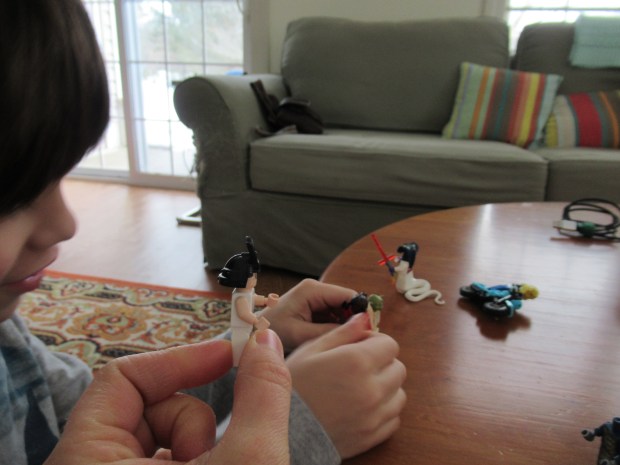
Travis loves to play with his Lego minifigures, but let’s face it; after a long cold quarantined winter, he’s in a bit of a story rut. If your child is similarly lamenting a lack of new ideas for the same old toys, try this story-starter maze idea!

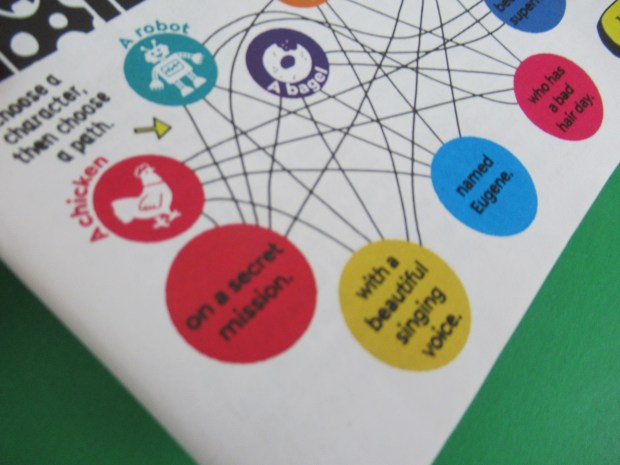
We spotted the idea in Highlights magazine, where threads led from starting characters (a chicken! a bagel!) to ideas (“becomes a super hero,” etc.) The idea is that if kids mix and match the threads (the magazine version had 5 characters and 5 plot lines), then over 25 stories appear.

Story Maze (1)

Travis immediately wanted to make his own version. We came up with 4 starting characters and printed out pictures of each to glue at the top of a large piece of poster board.

Story Maze (2)

Next, he came up with 4 plot twists, and we drew lines connecting his starting characters to each idea. I was proud of his inventiveness, for example making a “pyramid” one of the starting characters. Encourage your kids to get equally silly; the main character can definitely be a thing, and not a person! Now he had 16 directions in which his Lego game could go. Little sister Veronika wanted to help connect all the dots, too!

Story Maze (4)

The poster board perfect for adding ideas as they came to him throughout the afternoon, marking off additional branching plot points and connecting it all in a big spidery maze.

Story Maze (7)

So the next time Travis tells me he’s not sure what story to act out, I need only point him in the direction of the story maze poster hanging on the wall!

Story Maze (8)

Banana Marshmallow Slime

Banana Marshmallow Slime (6)

I’ve long known that Jell-O is not vegan, so we don’t bring it into our kitchen for projects. But believe it or not, the company’s pudding contains no gelatin! I was so glad to learn the fact since it meant we could put together this amazing edible slime from Crafts4Toddlers. The banana smell is fantastic, the texture is so fun, and it will no doubt lead to lots of slime play in the kitchen.

To start, combine 1/2 cup cornstarch and 1/4 cup banana pudding mix in a bowl. Add 1/3 cup warm water, stirring to combine, then add an additional 1/2 cup cornstarch, mixing with your hands. Note: I found I needed to add just a touch more water, too, or the mixture was too crumbly. Once you can squeeze it enough to come together, you have banana slime!

Banana Marshmallow Slime (1)

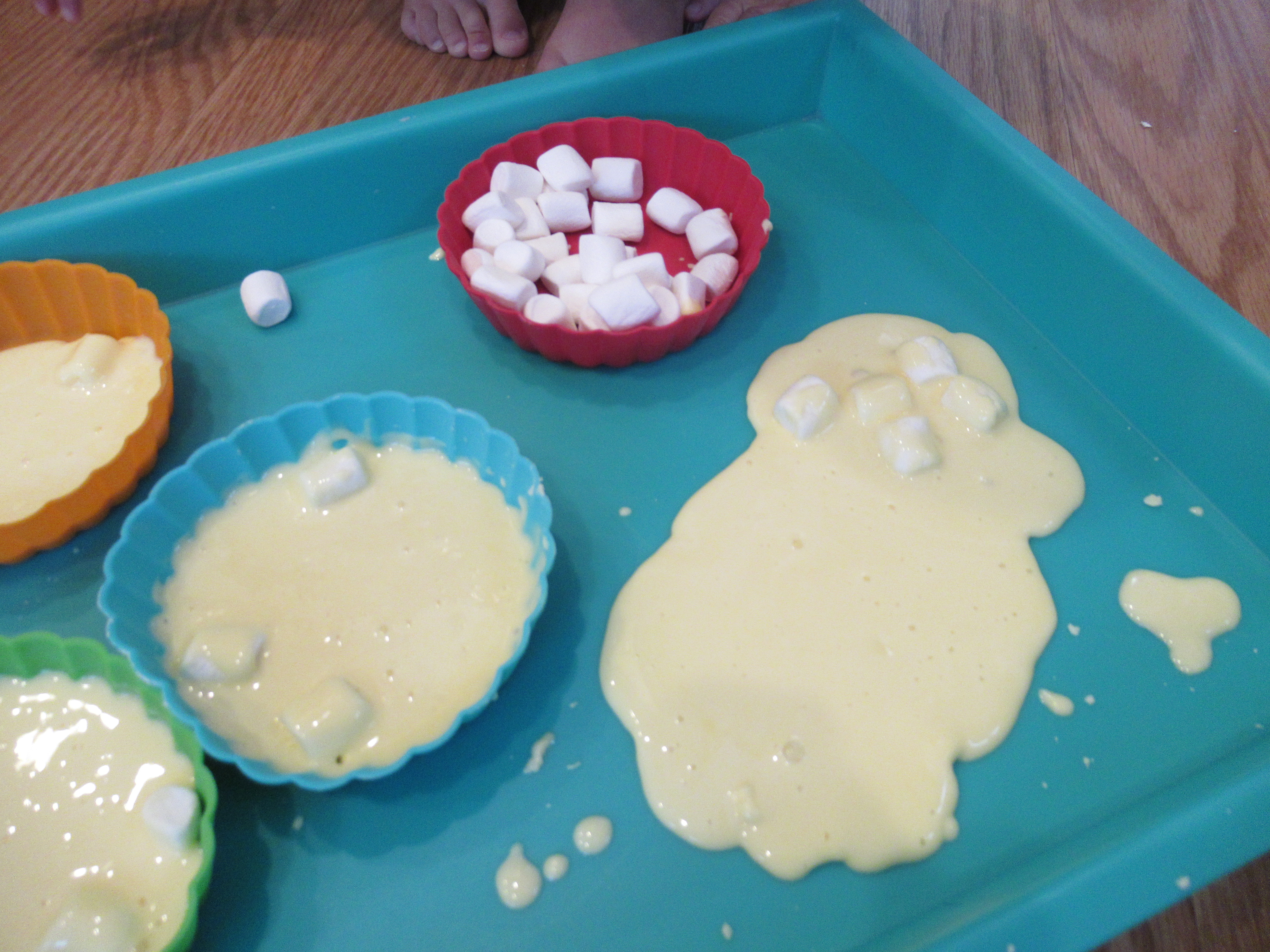
For a final touch, stir in a few mini Dandies marshmallows. I then set the slime down in a tray, along with little cups and spoons, and a few extra mini marshmallows. These double not only as an extra sweet treat to nibble on, but also a fun element to add into the slime as your toddler plays.

Interestingly, our mixture was almost like ooblek, going back and forth between solid and liquid states depending whether we squeezed it…
Banana Marshmallow Slime (2)

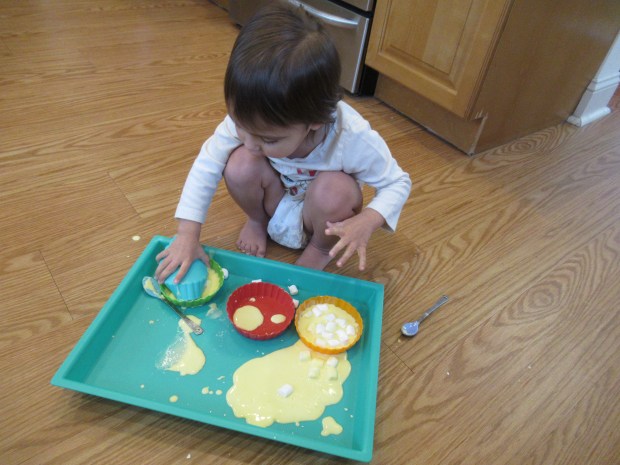
…or let it ooze down into containers. Crafts4Toddlers appears to have a mixture that was closer to playdough, so fool around with water-to-cornstarch ratio and see where yours ends up! Meanwhile, Veronika adored the stuff and loved spooning it up…

Banana Marshmallow Slime (4)

…and then watching it dribble back down.

Banana Marshmallow Slime (3)

She kept quite busy pouring it from container to container.

Banana Marshmallow Slime (7)

The marshmallows were great because she could press them into the slime, leaving an indent, then lift up and watch the indent quickly close back up again.

Banana Marshmallow Slime (5)

Inevitably, she wanted a nibble. She looked so confused after trying the slime, which no doubt tasted strongly of cornstarch, but a marshmallow quickly solved the yucky problem!
Banana Marshmallow Slime (8)

Sorting Blocks as a Graph

Block Graph (3)

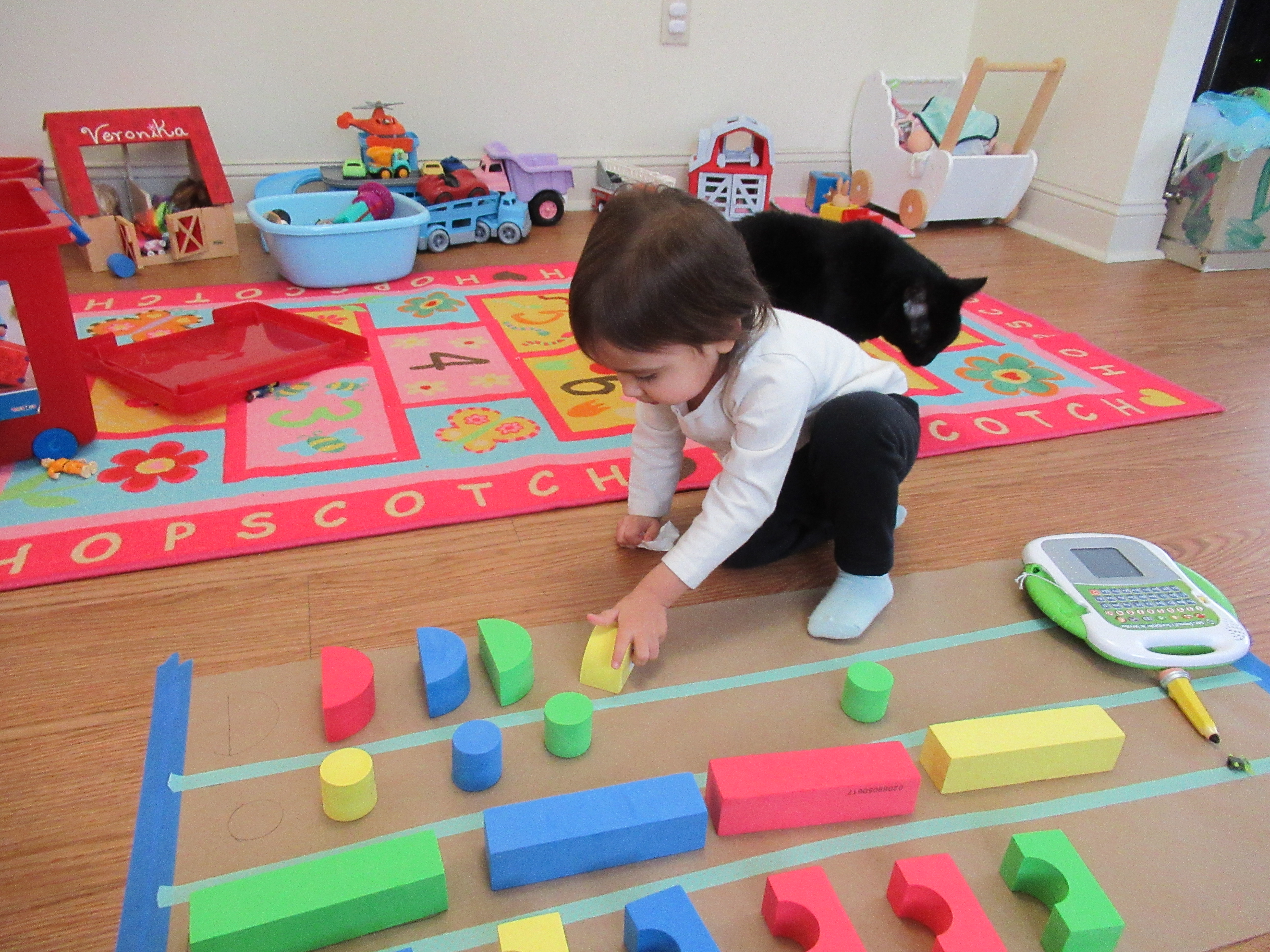
Veronika made her first graph today! Okay, so there was lots of mommy help involved, but large building blocks and a large sheet of butcher paper make this particular graph quite toddler-friendly.

First, I taped down a long piece of paper to the floor with painter’s tape, then marked off 4 columns using washi tape. At the bottom of the graph, I traced 4 of her block shapes. I chose ones that are newer to her (archways, semi-circles) now that she’s mastered early ones like triangles and squares. And of course you can include more than 4 categories if you’re doing this activity with a preschooler.

Block Graph (1)

Now it was up to Veronika to place each block in the right column. “Where does the semicircle go?” I could prompt her. “With the semicircles!” she chimed in. It wasn’t an activity that she was motivated to complete on her own, but if I asked a leading question for a block, she knew where to put it.

Block Graph (2)

Then we flipped over the paper and repeated the activity, but this time making a graph by color!

Block Graph (5)

This version was even easier for her to complete. “It goes with the yellow,” she might say, picking up a yellow block and adding it to the yellow column.

Block Graph (6)

Did she entirely understand that we were making a mathematical graph to compare the amount of blocks by shape or color? Not yet, of course, but it was a great early intro to sorting and graphing. The large visual at the end was neat to see.

Block Graph (4)

After that I challenged her to stack her blocks by shape, too. Preschoolers can get really creative with this part, perhaps attempting a tower all out of triangles, or all out of semicircles.

Block Graph (8)

One thing is for sure: this was yet another great way to get novel play out of our blocks!

Block Graph (9)