Highchair Fun

Highchair Fun (9)

Babies and toddlers love to play “dropsie” off a high chair tray, and this game lets them do that to their heart’s content!

Highchair Fun (1)

Choose a light-weight, favorite toy (around here that’s Daniel Tiger figures!) and tie a piece of yarn securely to one end of the toy. Tape the other end of the yarn to the high chair tray. I used lots of tape, knowing Veronika might be tempted to rip it up, or throw the toys so strongly the tape came loose.

Highchair Fun (2)

Then it was just a matter of sitting her down and demonstrating!

Highchair Fun (3)

She giggled when the toys dropped, and eagerly looked over her tray: where did they go?

Highchair Fun (7)

You can make the dropping silly and not scary by adding sing-song words like, “Uh oh trouble!” or “Dropsie!”

Highchair Fun (5)

I then showed her how she could pull on the yarn to retrieve a toy back all by herself. This took a few tries, but she started to get the hang of it.

Highchair Fun (6)

Now it was her turn to impishly dangle the toys off.

Highchair Fun (8)

As you can probably guess, this is a great way to occupy a toddler when dinner is almost ready.

Highchair Fun (10)

Where’s Teddy?

Where's Teddy (4)

This cute version of hide-and-seek will have your toddler busily chasing strings on the way to find a favorite toy!

For set-up, tie a string around a teddy bear’s leg (or another stuffed animal), and hide the animal somewhere in the house. Be sure to leave the yarn or string dangling where your toddler can easily spot it.

Where's Teddy (1)

The favorite bear around here is little British teddy that Veronika calls “Paddington”. “Where’s Paddington?” I asked her, signing “where” in baby sign language.

Where's Teddy (6)

She immediately started towards the stairs, since normally “Paddie” is up in her crib. I redirected her by tugging on the string.

Where's Teddy (3)

It was a little hard for her to wrap her head around the game on the first round. We followed the string together until we found “Paddie” behind a pillow.

Where's Teddy (5)

Next I hid him in a drawer, and this time she understood a bit better about how to follow the string.

Where's Teddy (7)

As with any game that involves string, be sure to supervise closely during play.

Living Room Maze

Living Room Maze (5)

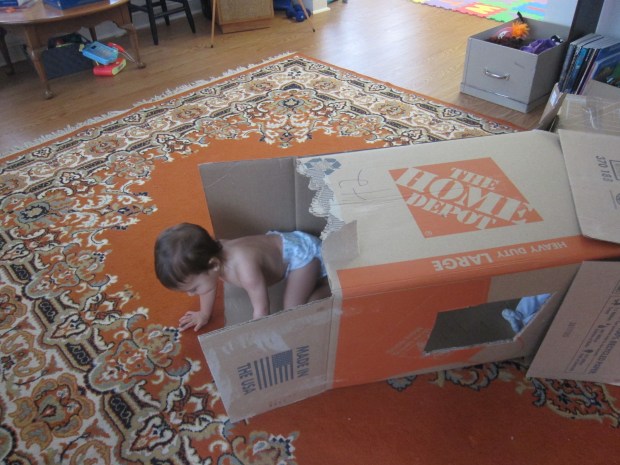
This activity is a great way to entertain a toddler on a rainy morning, not to mention it makes use of leftover boxes! You’ll need large enough boxes that your child can crawl upright through them.

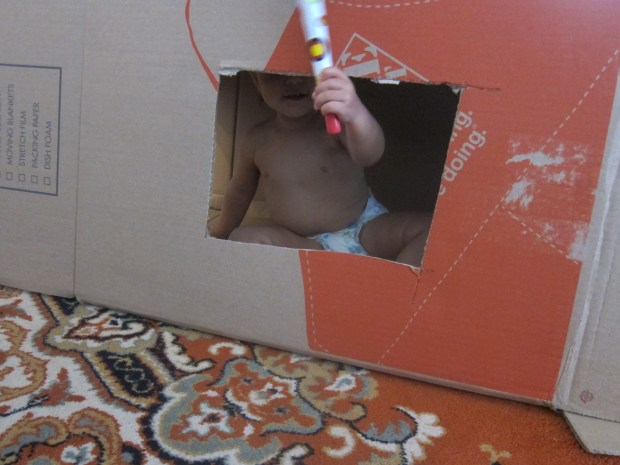
In the past, we’ve decorated boxes to be more like a house or even a castle. The purpose this time wasn’t so artistic, but more about letting Veronika explore spatially. I attached two boxes together to make a big tunnel, and cut two windows so she could poke her head out.

Living Room Maze (2)

There was also a third box branching off to the side to make it a “maze”.

Living Room Maze (7)

Well of course she was eager to explore! The windows were great fun for peekaboo.

Living Room Maze (8)

She crawled back and forth, and in and out, and through and around. I used all of these spatial words as she played.

Living Room Maze (9)

She also delighted in bringing toys inside with her.

Living Room Maze (6)

Eventually big brother wanted in on the action, and he was just the right height for popping through the sun roof!

Living Room Maze (10)

I loved watching the kids turn it into a cozy nook for reading. In sum, this kept us busy all morning!

Living Room Maze (11)


Five Little Mice

Five Little Mice (2)

Subtraction games during Travis’s home schooling reminded me how important counting rhymes are for toddlers, too, an early intro to addition and subtraction long before they fully grasp the concepts. Here are the words to a fun one to try:

Five little mice went out to play,

Gathering crumbs along the way.

Out came pussy cat, sleek and fat.

Four little mice went scampering back.

Repeat until there is one mouse left, then add this twist at the end:

Out came pussy cat, sleek and very fat.

The mouse ran away, what do you think about that! 

Five Little Mice (4)

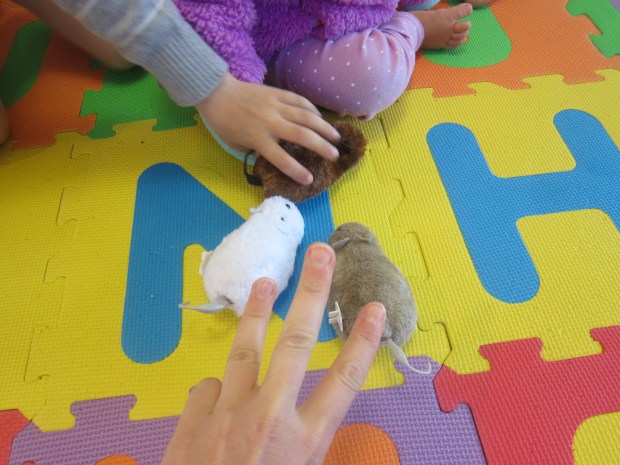
We have a few mouse toys in the house, so today I acted the story out for her in addition to speaking the words. You can add a kitty cat stuffed animal, too! If you don’t have props on hand, walk your fingers out for the scampering mice, using the appropriate number of fingers in each verse.

Five Little Mice (1)

Then make big whisker shapes with your fingers when pretending to be the fat cat.

With or without props, this is a fun finger play!

Five Little Mice (5)

Fishy Beanbag

Fishy Beanbag (4)

This little craft is great fun for a toddler to play with, and simple to make with items you likely have at home.

Fishy Beanbag (1)

Start with an old sock and fill it about three-quarters of the way with dried beans. Twist the end to make a tail, and secure with yarn or string.

Fishy Beanbag (2)

I drew on eyes, fins, and scales with a fabric marker; if you want to get a little craftier, cut out pieces of felt for these details. To make the fish mouth, poke the fabric in slightly where a mouth would be and use hot glue to secure.

Fishy Beanbag (3)

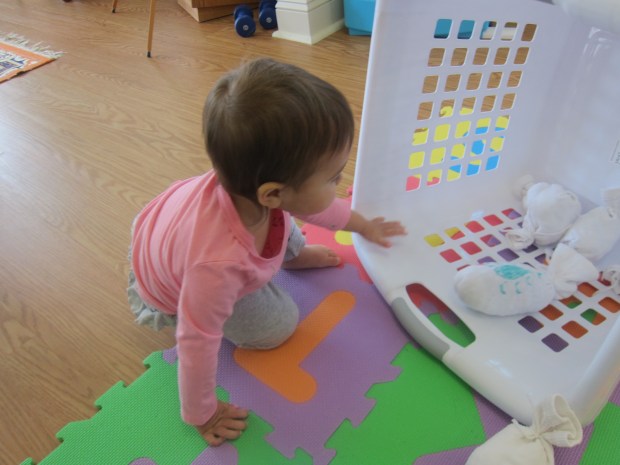
I wriggled the fish up to Veronika, and she was delighted! She loved how heavy it was, and began “swimming” it around the room. I actually wouldn’t make it quite so heavy next time, or we could have played catch with it and worked on her catching skills!

Fishy Beanbag (5)

I next showed her how to toss the fish into the laundry basket “ocean”. This was good fun but we quickly realized we needed more fish.

Fishy Beanbag (8)

Since I didn’t want to use up all the extra socks in the house, I simply balled one inside the other and knotted string at the end for a quick version, minus the decorations.

Fishy Beanbag (10)

Now she had a school of fish to play with!

Fishy Beanbag (13)

Froot Loop Sand

Froot Loop Sand (10)

This project is a fun way to use up a box of any rainbow colored o-shaped cereal, whether brand name Froot Loops or an organic version.

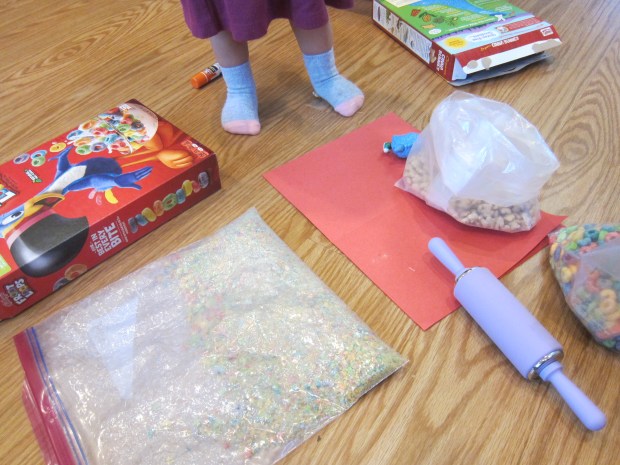
To start, you’ll need to crush the cereal until very fine, which is half the fun/ Yes you can do this step in a food processor, but I wanted Veronika to get hands-on with it.

Froot Loop Sand (1)

I placed a big batch of the cereal in a large zip-top bag and had her help roll over it (or just whack it at!) with a rolling pin. I helped her out because the finer the “sand” the better the project turns out.

Froot Loop Sand (2)

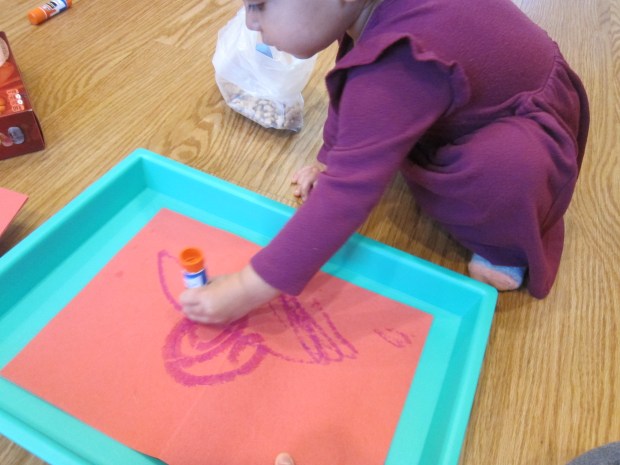
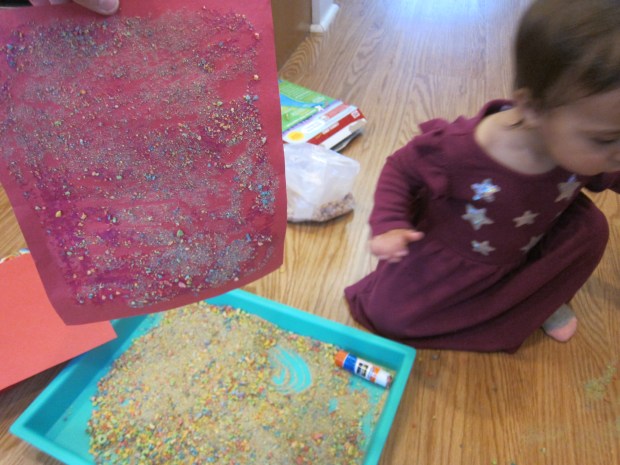
Next I gave her a glue stick and showed her how to rub all over a piece of construction paper, which she loved!

Froot Loop Sand (3)

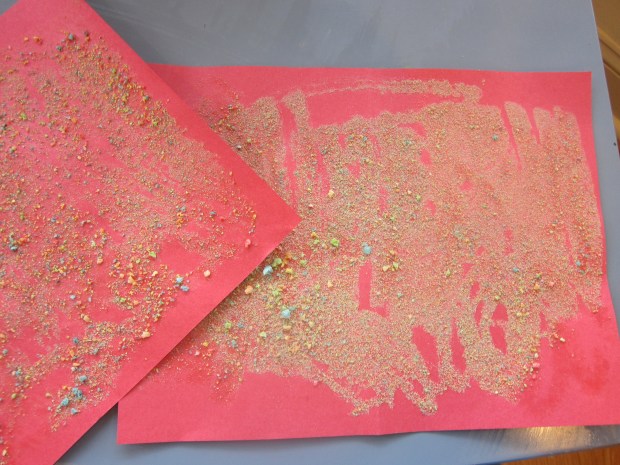
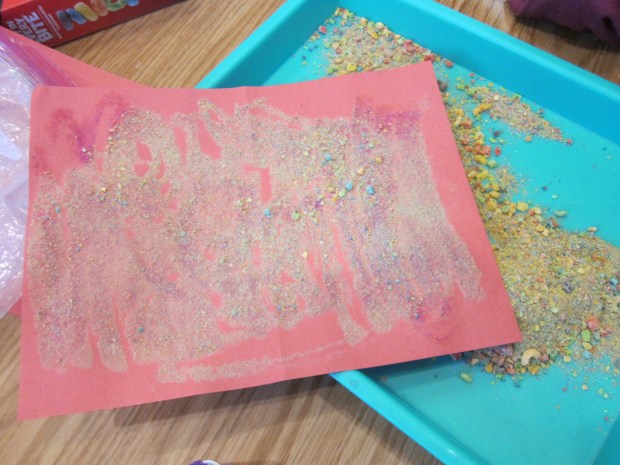
Once the paper is really sticky, pour the cereal sand on top. Shake off any excess over a tray, then let dry.

Froot Loop Sand (5)

The colors really do look so pretty! We tried this a second time by pressing a gluey piece of paper down over the cereal sand instead, once it was all in the tray. This didn’t work quite as well, but was a nice variation.

Froot Loop Sand (7)

Of course Veronika was busy with leftover “sand” and a few utensils for quite some time!

Froot Loop Sand (6)

In sum, a great toddler art project.

Froot Loop Sand (8)

Toddler Nature Walk

Nature Walk (3)

This game can grow with your child. Initially, it’s a fun way to teach the name of nature objects. Later, it can become a guessing game or a sorting game, once your toddler firmly has a few of nature words under his or her belt.

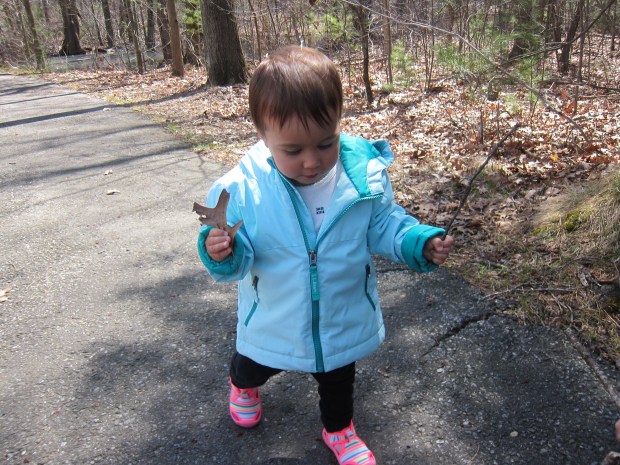
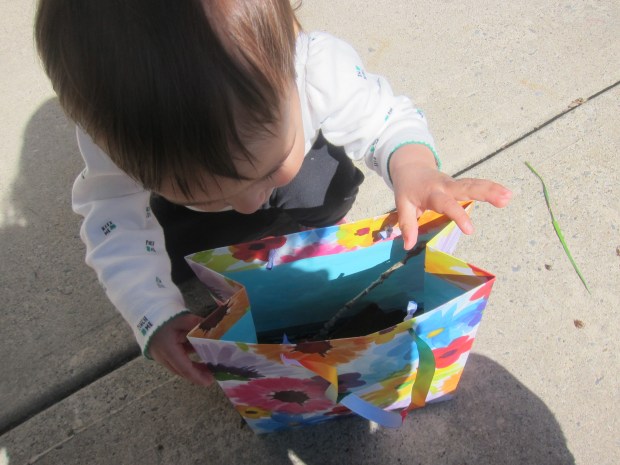
For the easiest variation on a nature walk today, I asked Veronika to pick up treasures and fill a paper bag we’d brought along. Of course she didn’t entirely understand, but she certainly loved bringing me sticks and dropping them in!

Nature Walk (1)

I rounded out the collection with other items we spotted, like leaves, tall grasses, pine needles, acorns, and seed pods.

Nature Walk (4)

Once we were home, we took our treasures to the back patio. For older kids, have them reach into the bag and guess what they are feeling; you can even use a blindfold, if your child wants to! At seventeen months old, it was easier to dump the bag out in front of Veronika and hand her one item at a time.

“Leaf,” I could say, for example. She is a parrot these days, and loved practicing new words right back to me, as we then discussed the color or texture.

Nature Walk (5)

When I gave her grass, she immediately grabbed it…

Nature Walk (6)

…and ran to return it to the grass just off our patio, an amazing insight to her little brain!

Nature Walk (7)

There was definitely some new vocab here, including words like “acorn” and “bark”. I sorted our items into piles so she could better understand each new word.

Nature Walk (8)

In sum, we got a nice pause in the spring sunshine, and a little lesson all in one!

Nature Walk (9)

Musical Chalk

Musical Chalk (5)

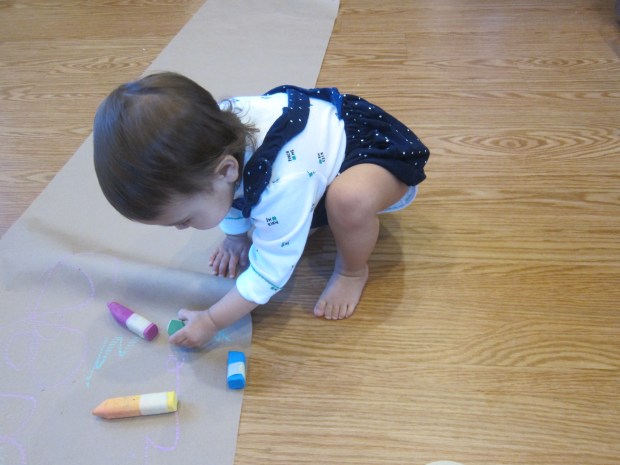
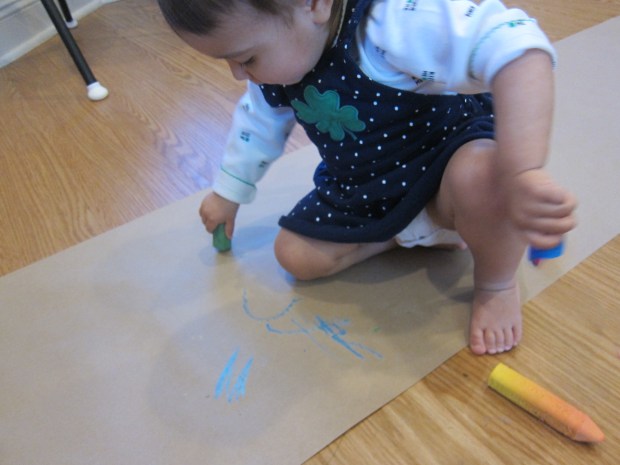
This game is the toddler version of a musical art project I recently did with big brother Travis. This time, I sat Veronika down with a long piece of craft paper on the kitchen floor… the bigger the better! I gave her pieces of chalk and turned on some upbeat music in the background.

Musical Chalk (2)

Then I invited Veronika to make the chalk “dance”. I showed her how to draw big loops and swirls to the happy music. Obviously toddlers will be too young to vocalize how a song makes them feel, but babies have an intuitive understanding of rhythm and will likely take on the tone of whatever is playing.

Musical Chalk (3)

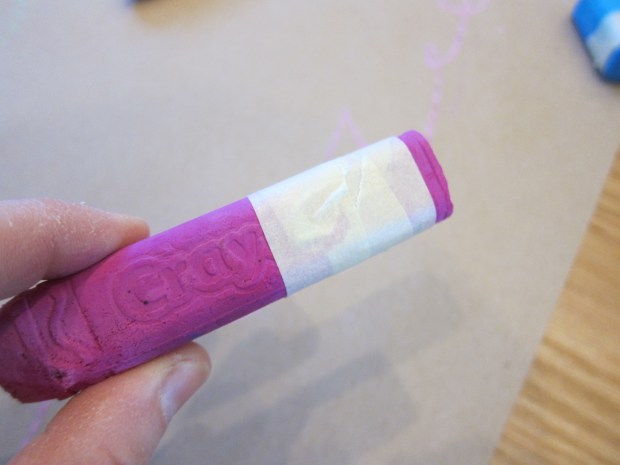
To make chalk less messy on little hands, try wrapping one end in masking tape. This definitely increased the amount of time she was happy to play with it.

Musical Chalk (4)

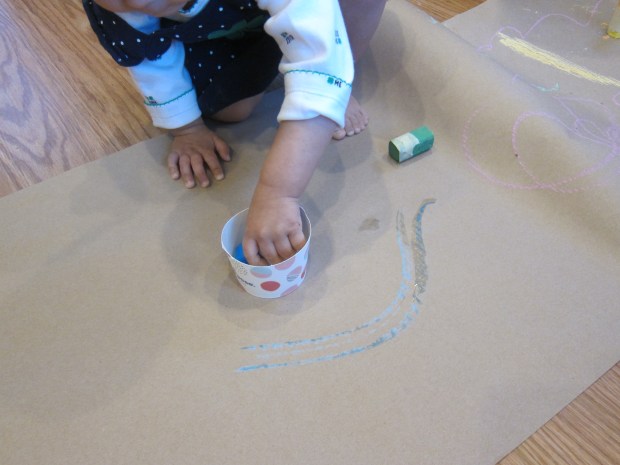
I set out a little dish of water about halfway through her play. Dipping chalk in water makes for bolder, smudgier colors, and she loved the way this looked.

Musical Chalk (6)

Of course don’t be surprised if your little dish of water gets upended, which is just fine, too.

Musical Chalk (7)

The music kept playing in the background, sometimes faster, sometimes slower. Did she alter her strokes because of it? It was hard to say, but the game was a great intro to emotional learning, while we made messy art in the meantime!

Pom Pom Squeeze Water Play

Pom Pom Squeeze (10)

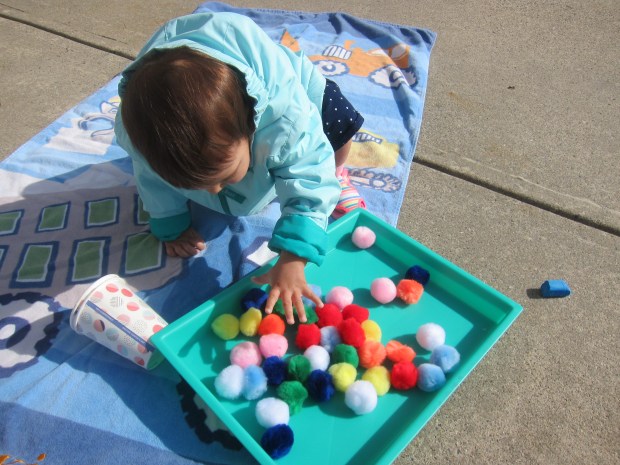
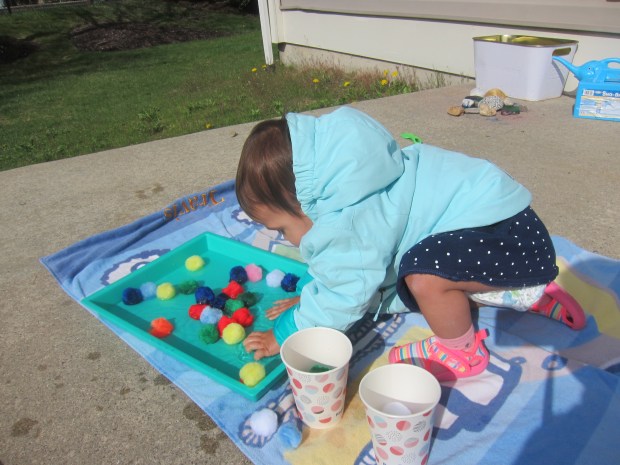
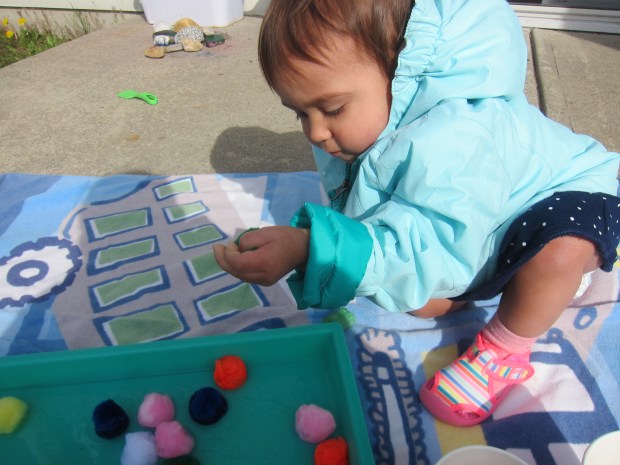
Here was the perfect game to play on the patio with Veronika while big brother had “recess” today. It not only involves great sensory elements, but also builds fine motor skills from squeezing.

I first laid down a towel, both for comfort and to absorb any spilled water as we played, then I set out a shallow tray filled with pom poms. Because Veronika still puts small objects in her mouth at times, I used only large ones. Use a variety of pom pom sizes for older toddlers!

Pom Pom Squeeze (1)

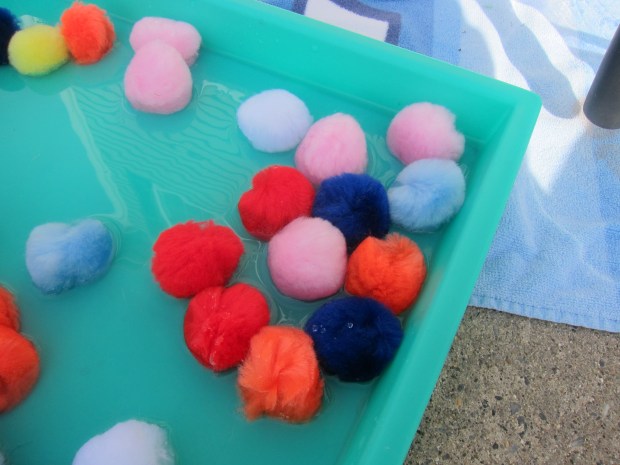
First I just let her play with the dry fluffy pom poms, because she loves them. Then I filled the tray with a little warm water (use cold water if it’s a hot day!). The pom poms will almost immediately become saturated.

Pom Pom Squeeze (2)

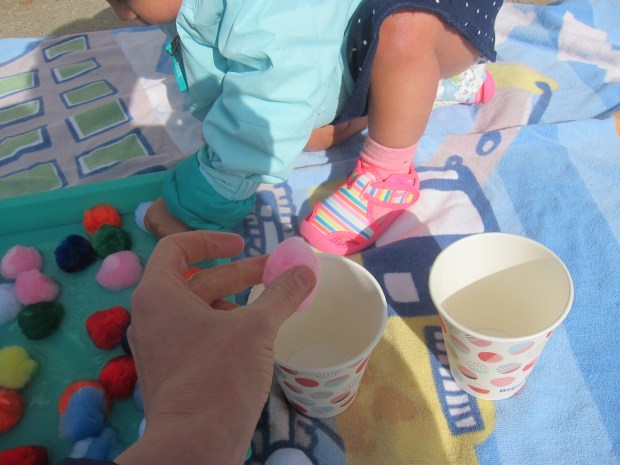
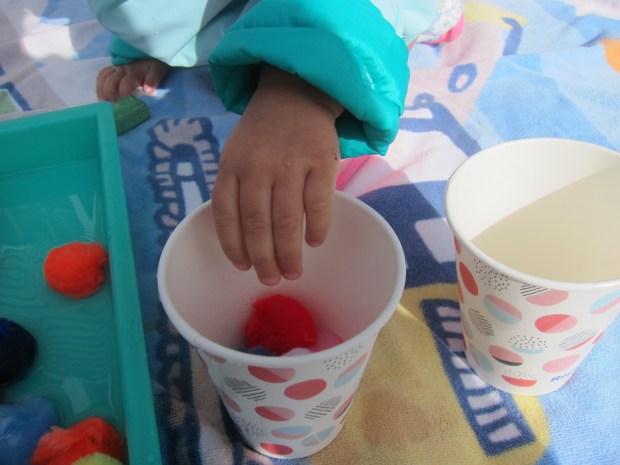
I pointed out to her that they felt differently now, and then I showed her how to squeeze out the pom poms over a cup.

Pom Pom Squeeze (3)

“Squeeze!” I said, and she echoed me and clenched her fists around a few of them.

Pom Pom Squeeze (4)

She also of course loved splashing her hands in the warm water.

Pom Pom Squeeze (8)

She sometimes squeezed the pom poms over the cup, and sometimes just tossed them in.

Pom Pom Squeeze (6)

Older toddlers and preschoolers will really enjoy the challenge of squeezing out water until the cup is filled to the brim! It turns out pom poms can hold a lot of water.

Pom Pom Squeeze (7)

Then there’s the fun of pouring the water back out of the cup and starting over.

Pom Pom Squeeze (5)

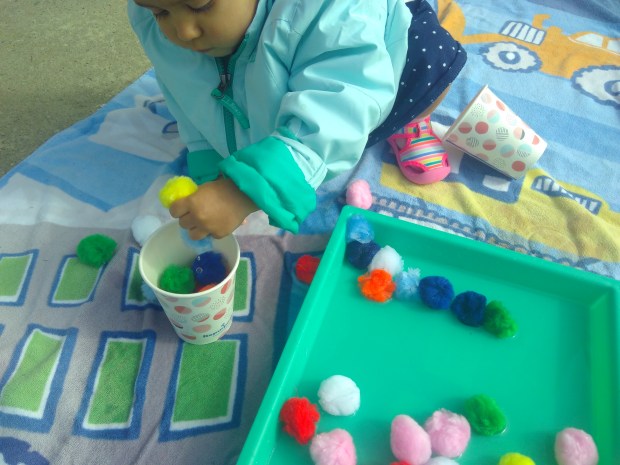
Or the fun of transferring pom poms from one cup to another.


Pom Pom Squeeze (11)

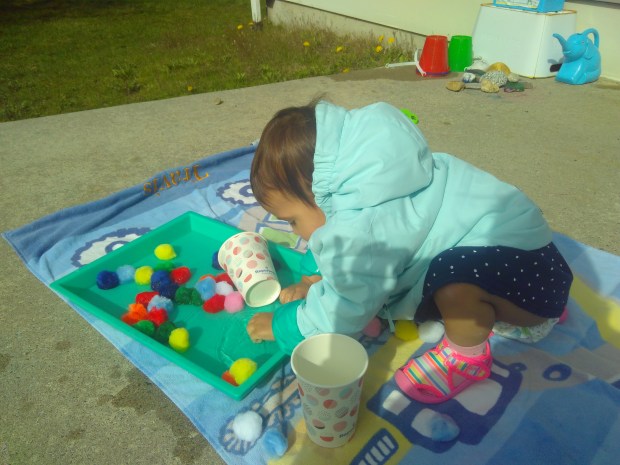
Or just swishing all those pom poms around in the shallow tray endlessly. In sum, this one is sure to keep your toddler busy!

Pom Pom Squeeze (9)


Walk and Find

Walk and FInd (4)

Here’s just a quick game I played with Veronika this morning, as we work on building her language skills and following directions.

For the former skill, I hid a series of toys under pillows, and then used directional words “Where is your toy?” “Who is under the pillow?” to direct her along.

Walk and FInd (2)

She very quickly solved the mystery!

Walk and FInd (3)

The latter goal was to help her follow directions when specifically asked to do something. I placed toys on a series of chairs in the hope that she’d move in order from chair to chair to couch, picking up a toy as a prize each step along the way. She followed directions quite well!

Walk and FInd (5)

As a side note, this is a great game to play if your child is in the early stages of walking but still needs to “land” against something after a few steps. Have him or her go from chair to chair (or other similar landing spot), with the toys for encouragement.

Walk and Find (6)