Migration Means Moving

Migration (5)

Spring is in the air, and with it all the migrating animals that might be returning to your area. So it’s the perfect time for a little lesson on migration! This lesson kicked off what will be a series of spring-themed recipes from Raddish Kids in the coming weeks.

The lesson plan from Raddish featured the movement of both animals and people. However, I felt that the topic of children migrating, particularly due to conflict, would be upsetting to Travis. So we focused on the animal aspect of migration, beginning with a few suggested videos. If your child is older, consider sharing an online read of Where Will I Live, by Rosemary McCarney. You can ask your child about times your family has moved, and reasons why people might move, or discuss what makes migration different from a vacation.

Migration (1)

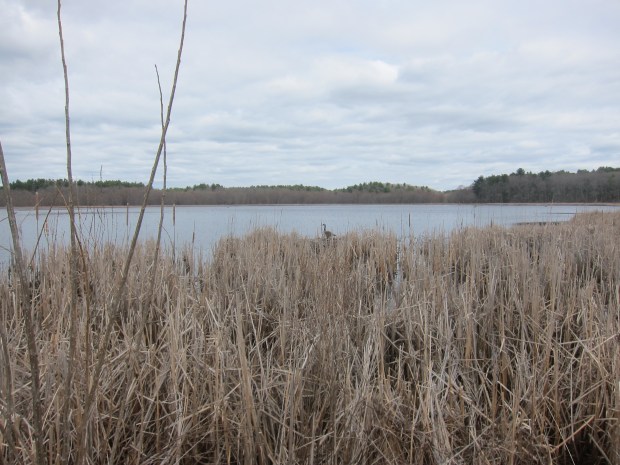
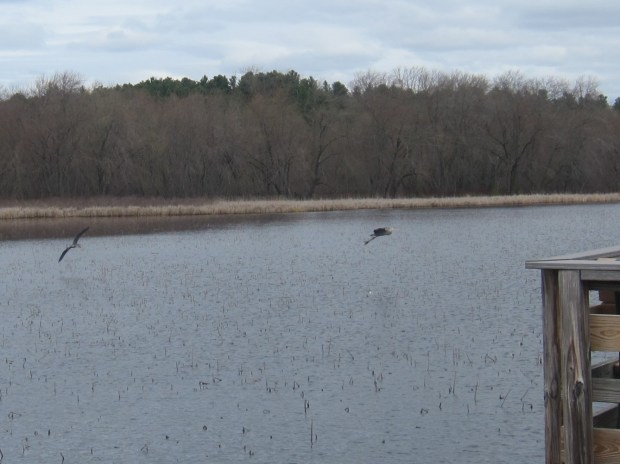
After the intro videos, we set off a nature walk in search of a migrating animal! I thought the best we might luck into was a duck or a goose, so we were legitimately thrilled to spot two great blue herons. Wow!

Migration (3)

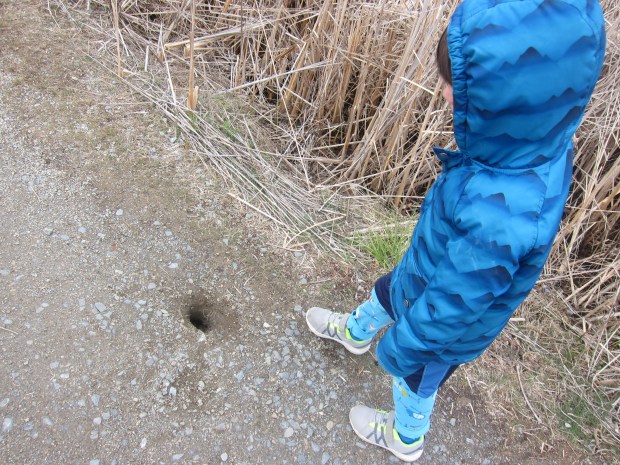
We also spotted what might have been a snake hole, which was a great opportunity to point out the difference between hibernation versus migration as a winter strategy.

Migration (2)

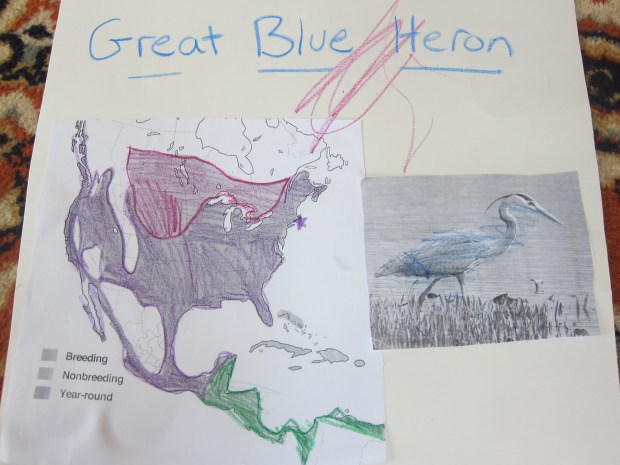
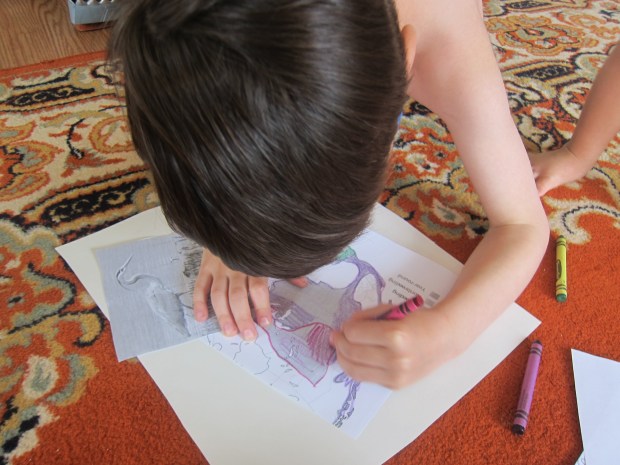
When we got home, it was time for a research project. This kind of project is new and advanced for Travis as a kindergartner, so I helped him pull up a picture of the great blue heron online, as well as a map of its range. He color-coded the map according to their winter, summer, and year-round habitats. We watched a few final videos about the bird to finish the lesson.

Migration (4)

Older kids can again get more detailed. Consider painting aspects of a particular animal’s migration, or posing bigger questions like how the animal finds its way, and how far it goes.

Power-Up Pancakes

Power Up Pancake (4)

For a kid who recently learned all about circuits and electricity, getting to use an appliance for his own snack today was a big thrill. Add to the electric fun of this recipe by decorating it with a “light bulb”!

First, we needed to reheat a pancake. I showed Travis how to slot it into the toaster, and then carefully press down the button. Of course in doing so he completed a circuit!

Power Up Pancake (1)

To top the pancake, slice the sides from a pear. I asked Travis which one looked most like a light bulb to him, and we used orange marmalade to “glue” his selection on to the pancake. (Alternatively, use apricot jam or any other “light” colored jelly).

Power Up Pancake (2)

Slivered almonds made the perfect decoration for shining light along the sides and bottom of the bulb.

Power Up Pancake (3)

Creepy-Crawly Pranks

Creepy Crawly Prank (1)

Travis got silly today tricking other members of the family with a few buggy pranks! This was a nice change of pace from home school work, and it felt good to make him laugh.

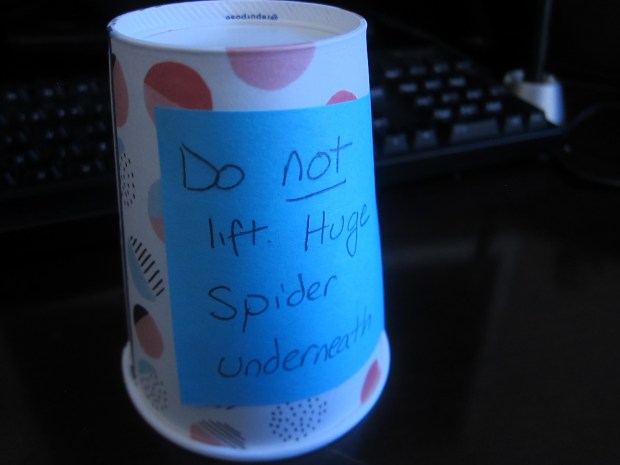
For the first prank, we simply placed an empty paper cup on daddy’s desk with this note: Do not lift. Huge spider underneath.

Creepy Crawly Prank (4)

Of course there was no spider; it was just about the anticipation. But Travis cackled with delight when his dad opened it up to find nothing creepy waiting beneath.

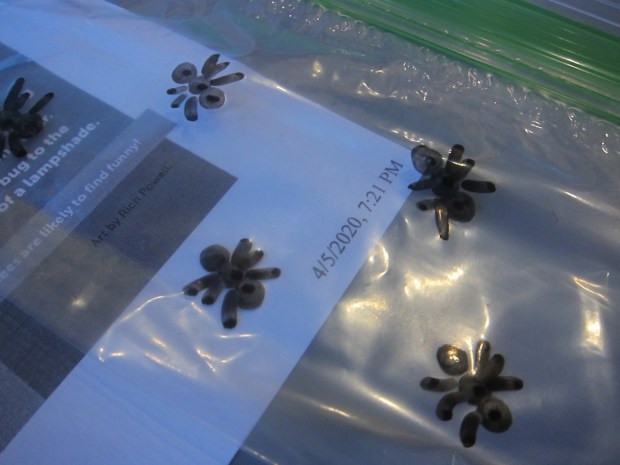
Then we made a buggy snack! Draw little ants (or other bugs) with a black sharpie on a plastic snack bag.

Creepy Crawly Prank (#)

Fill with food and leave out where the recipient can find ants having a picnic.

Creepy Crawly Prank (6)

The third prank was the best one by far: a giant bug shape that Travis colored in. I cut out the shape and we taped it to the inside of a lamp.

Creepy Crawly Prank (2)

When the lamp turns on, your prank victim will see the large bug shadow. This one definitely got a yelp of surprise! All in all, Travis loved making everyone laugh with these pranks.

Creepy Crawly Prank (5)

Does your child have a favorite prank? Please share in the comments!

Drip Pots

Drip Pots (7)

We had two teeny tiny terracotta pots here in the house, and Earth Day prompted me to think of a use for them: they’re the perfect size to grow a few windowsill herbs! Although we don’t have a garden, I loved the idea of showing Travis how we can be responsible for our own food (seasoning at least). You could use this paint method on any size clay pot, though, and plant flowers or succulents instead.

The night before, we painted the pots with a few coats of white acrylic paint and left them to dry overnight.

Drip Pots (1)

In the morning, Travis helped mix up red and blue acrylic paints with a little water. You want the mixture to look like glue.

Drip Pots (2)

Turn the pots upside down and place on a work surface. I showed Travis how to dip a brush in the paint and then hold near the rim of the pot. Let the paint drip down in rivulets. It took him a moment to get the hang of it, but then he loved this new painting method!

Drip Pots (4)

Let dry completely, then add a coat of clear sealer, if desired.

Drip Pots (5)

Then just add your planting and enjoy the greenery!


Drip Pot alt

Nature Earth Craft Challenge

Nature Earth Challenge (6)

Tomorrow is Earth Day, and although we can’t celebrate with others this year, Travis and I talked today about ways we can help the Earth as a family. This month’s craft challenge from Highlights magazine – to create an Earth with items from nature – was the perfect end to the lesson!

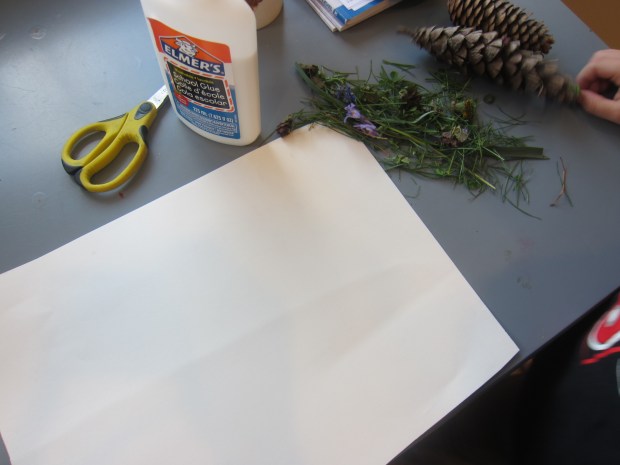
First we needed to head outside and gather materials. I challenged Travis to think of what colors the Earth needed: blue and green of course! We looked for tall green grasses and little blue wildflowers (which were hard to find), and came home with our treasures.

Nature Earth Challenge (1)

Travis actually loved the fact that we had more green than blue. He decided our planet was more grass than water, and had so much fun with it.

Nature Earth Challenge (2)

We made a big circle of glue on poster board, and then he was able to sprinkle down handfuls of the grass, or press the blue flowers in more carefully in other parts.

Nature Earth Challenge (4)

As he worked, we read about ways to “step up for Earth” as a family.

Nature Earth Challenge (3)

Our new family goals include: saving water by having the kids bathe together, not separately; and to save on paper towels by buying reusable cloths.

Nature Earth Challenge (5)

Happy Earth Day to all! There are silver linings even in this Covid-19 era.


Nature Earth Challenge (7)

Circuit Workout

Circuit Exercise (3)

Travis needed to get his wiggles out today, so I knew he needed a game that would get him moving. This was a fun suggestion from Kiwi Co., where instead of building a battery circuit, your kid gets to be the the electricity zipping around the “wires”.

To set up a life-sized electrical circuit, choose a round object to be a light bulb and a rectangular object to be the battery. Make a rectangle on the floor from painter’s tape to connect them, being sure to leave a little gap along the top.

Circuit Exercise (1)

For the switch, we used a book. When the book is open, the circuit is complete. But if it’s closed… Oh no, the electricity can’t zip through!

Circuit Exercise (2)

Travis laughed at this little role-play. He started out at the “battery” and ran to the “switch” book.

Circuit Exercise (4)

Finding it open meant hopping across, running a circle around the light bulb, and then dashing back to the battery.

Circuit Exercise (5)

If the book was closed, he had to freeze. Keep playing until you’ve worn out your kid-sized battery of course!

Little Passports: Egypt

LP Egypt (17)

Once again Little Passports saved the day here during Covid-19 home school. At a moment when Travis balked against assigned lessons this week, the latest package from “Sam and Sofia” proved far more interesting.

LP Egypt (7)

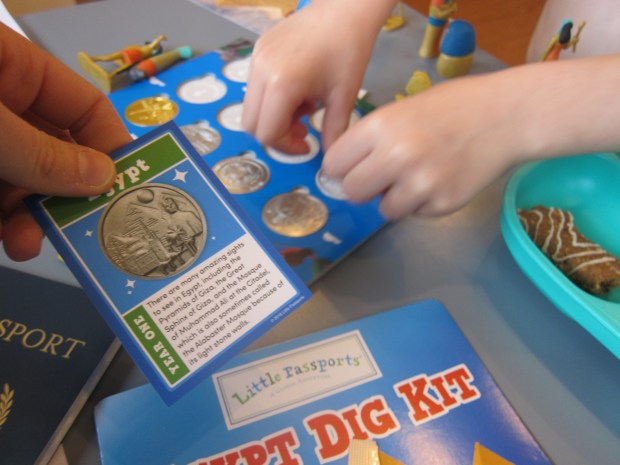
As always, he started off by putting the latest country coin in with his collection, and we added Egypt’s flag to his passport.
LP Egypt (2)

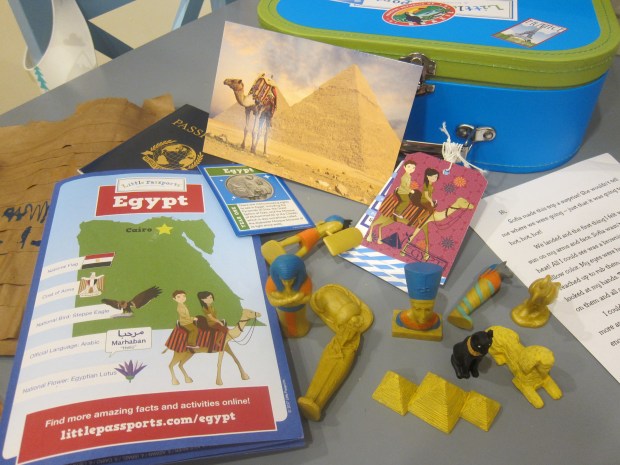
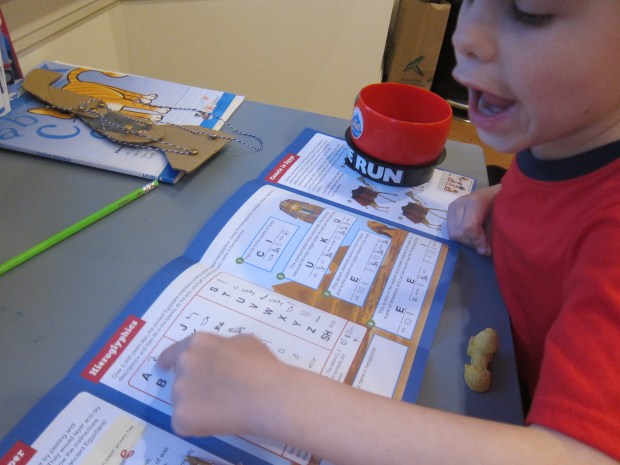
The booklet this month was fantastic for a kindergartner; I was so proud of (and amazed at!) his speed with a hieroglyph decoding activity. There was also a spot-the-difference page about camels, a geographic word scramble, and neat information on ancient headdresses. I would rate this booklet much more approachable for a five-year-old than the one from France.
LP Egypt (6)

Souvenir:

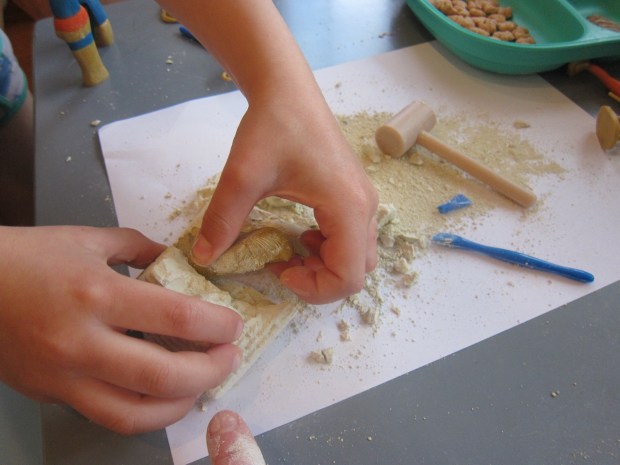
This month’s gift was an Excavation Kit and Travis needed to start digging the moment he saw it.

LP Egypt (3)

We chipped and chiseled and cleared the dust until he’d uncovered a little mummy figure. Travis was ecstatic and played with it all afternoon.
LP Egypt (4)

Further Activities:

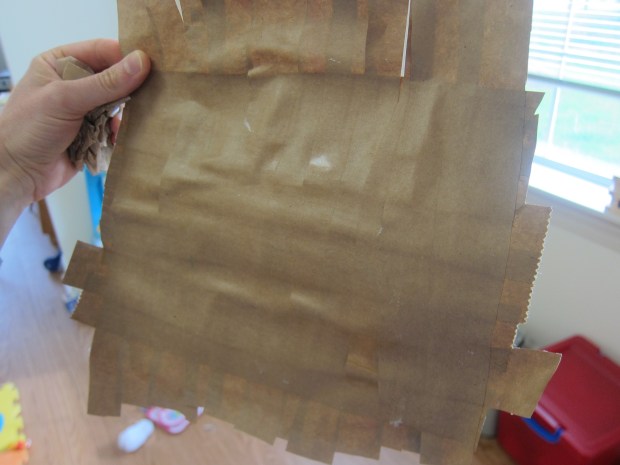
After checking out extras online like photos, Arabic phrases, and silly jokes, we started in on a few additional activities. First up was making “papyrus paper”, much as the Egyptians used to overlap stalks of papyrus plant. This one was a little messy so lay down one or two sheets of wax paper to cover your surface. In a cup, mix together equal parts white glue and water (about 1/4 cup each) and stir with a craft stick.

LP Egypt (12)

Cut a brown paper shopping bag into strips that are about 8 inches long. Begin laying these down on the wax paper, brushing over each with the glue. (Alternatively, you can dip each strip in the glue mixture and then smooth it down, but this sounded too messy to Travis). Let dry completely.
LP Egypt (15)

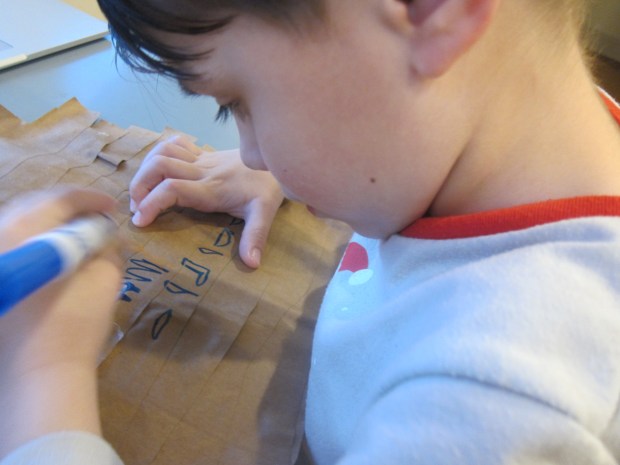
It will lift off the wax paper once dry, and does indeed have a neat feel and texture. Travis practiced writing his hieroglyphs!
LP Egypt (16)

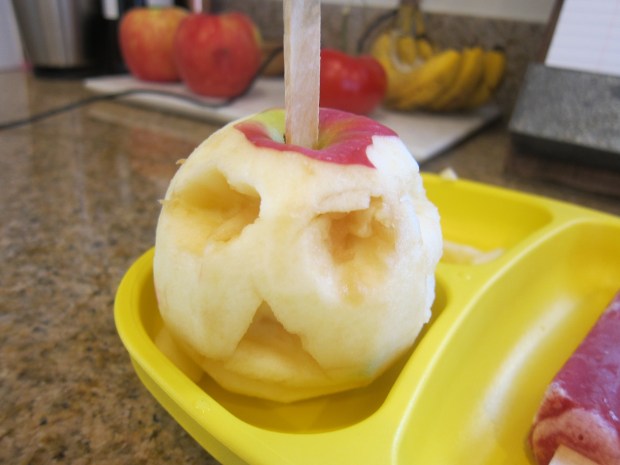
Next up, we mummified an apple! This will definitely appeal to kids interested in the mummy aspect of Egyptian history. Pour 1 and 1/2 cups baking soda and 3/4 cup salt into a large zip-top bag. Peel an apple and carve into a desired mummy face. We tried to make the lines of King Tut’s headpiece along the sides, although admittedly with limited art skills.
LP Egypt (10)

Insert a Popsicle stick into the apple and submerge in the baking soda mixture. Now let it stand for one week – or even two! I’ll update this post once our mummification is complete.

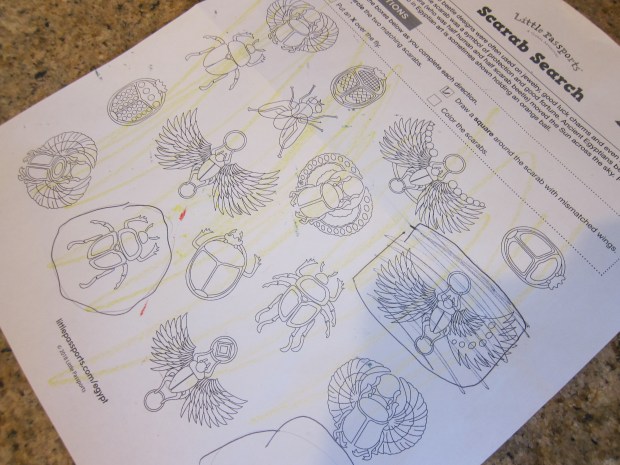
There were a few other suggestions online, although Travis was only mildly interested in a scarab beetle coloring page and coloring in the Egyptian flag.
LP Egypt (14)

I did, however, purchase the optional add-on of Egyptian mini-figures and these were a huge hit! The tube included fun toys of King Tut, Nefertiti, the Sphinx, and more.

Recipe:

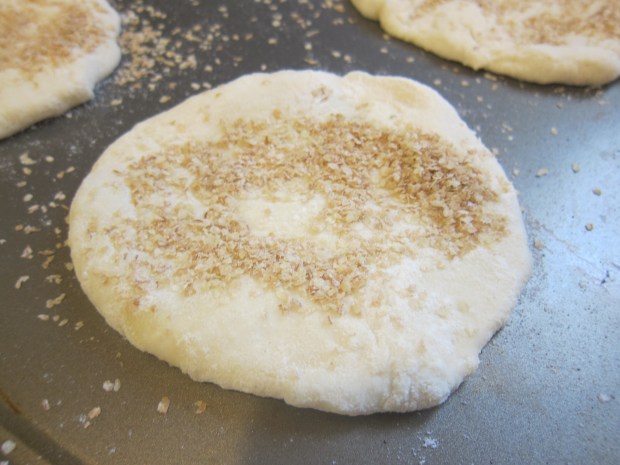
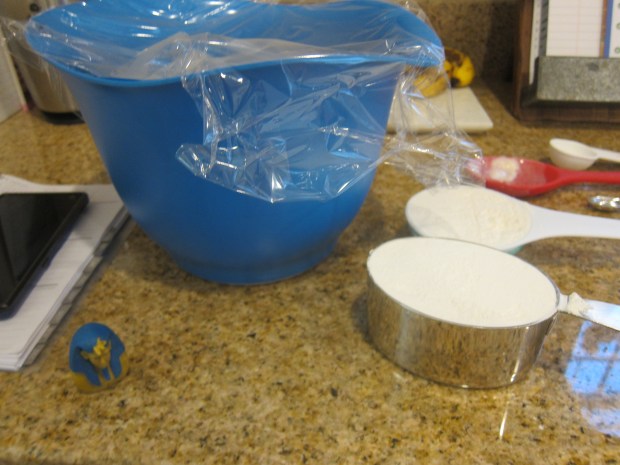
We finished the voyage with a recipe for the popular Egyptian flatbread called aish baladi, similar to pita bread. The recipe was too complicated for Travis; he helped with the initial few steps, but then I was left to finish the project. Tastewise, it was a huge hit! Travis enjoyed it plain, but you can dip it in hummus, too, or stuff it with a filling. King Tut watched us bake, of course:
Aish Baladi (2)

Ingredients:

  • 1 and 1/2 teaspoons instant yeast
  • 1 and 1/4 cups warm water
  • 2 and 1/2 cups flour
  • 1/2 teaspoons salt
  • 1 tablespoon canola oil
  • 1/4 cup wheat germ
  1. Combine the yeast and warm water in a large bowl, whisking until the yeast is dissolved. Add 1 cup flour to the mixture. Cover the bowl with plastic wrap and let rest for 20 minutes or so.
  2. Uncover the dough and mix in the salt, oil, and remaining flour. Transfer to a lightly floured surface and knead the dough, then place in a bowl and let rise for 1 hour.
  3. Divide the dough into 8 portions, and roll each into about a 5-inch circle. Place on a baking sheet and sprinkle with some of the wheat germ. Repeat with the remaining dough portions. Cover and let rise for about 30 minutes, while the oven preheats.Aish Baladi (3)
  4. Bake at 500 degrees F for 7 minutes.

Aish Baladi (4)

Update: The apple mummy came out so neat! One week later it had shriveled and shrunk, but felt smooth and soft like a dried apple. There was no rotten smell or aspect to it, which was quite cool.

Apple Mummy

What a neat way to see a “mummy”!
Muscle Machine

Muscle Machine (5)

For a little STEM to our home school day, I showed Travis a demonstration of how muscles work in opposing pairs. This craft was also a great way to upcycle his latest Kiwi Crate box. Here’s Travis flexing his muscles to get started!

Muscle Machine (1)

To start, we printed out a printable with shapes of the shoulder, upper arm, and forearm. Place the paper shapes on cardboard and use push pins to mark anywhere that circles are shown. Remove the push pins and cut out the cardboard. Widen each push pin hole with a brad.

Muscle Machine (2)

Use double-sided tape to attach the bicep and tricep muscle shapes to the upper arm. Insert two brads about half way in the two outside holes (these will act more like bobbins; alternatively, you can use real bobbins if you have them). Push a third brad through the middle hole, inserting it fully, and attach to the shoulder piece.

Muscle Machine (3)

Insert two brads into the outer two holes of the forearm. Cut two pieces of string 18 inches long and knot around these two lowest brads. Add a center brad on the forearm to attach it securely to the middle arm. You now have something roughly like this:

Muscle Machine (4)

Loop the top string clockwise over the brads that align with the bicep.

Loop the lower string clockwise around the brads that align with the tricep. Pulling the strings can now allow the arm to flex upwards or downwards, depending which you pull.

Muscle Machine (6)

For added stability, you can zip-tie the whole apparatus to an empty plastic bottle, but we skipped this step and pulled it more like a marionette’s strings. Have fun having your child see which other muscles move in pairs, like bending a wrist up or down, or bending back and forth at the waist.

LED Magnets

LED Magnets (6)

Okay, this is likely the last time Travis and I will play with LED lights and batteries for a while, but we’ve had lots of fun with them this month. Of all our light-up projects, this was the simplest. But by now Travis is an expert!

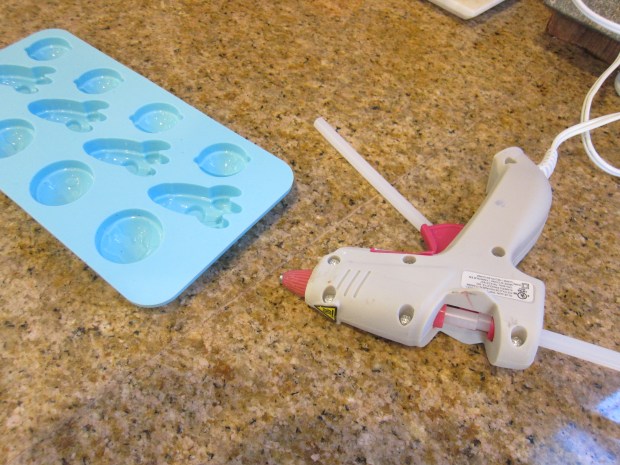
To start, we needed to make magnets using a silicone mold and hot glue. We have a mold in fun rocket and planet shapes that was perfect.

LED Magnets (1)

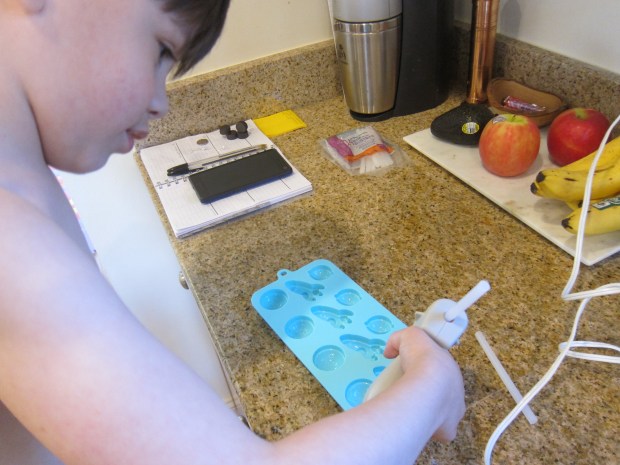
Because it required squirting a lot of hot glue into a relatively wide receptacle, this was the first time I let Travis use the gun solo. He was so proud! You’ll likely go through three or four glue sticks to fill a couple of molds.

LED Magnets (2)

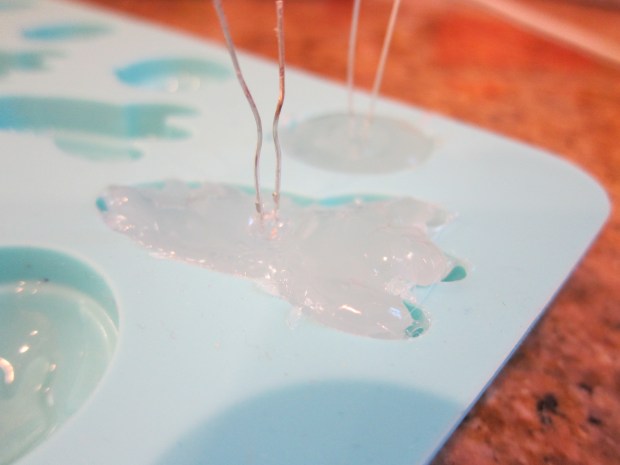
Let the glue cool slightly, but before it’s completely set, push an LED light in. Make sure the wires are still sticking out.

LED Magnets (3)

Glue the positive (longer) leg of the LED to a circular magnet. Attach a 3V battery to the magnet with small pieces of tape so that it touches this positive leg, and then tape the other (negative) leg of the LED to the negative side of the battery.

LED Magnets (4)

Perhaps you can use these magnets to hang up any home school work!

LED Magnets (6)

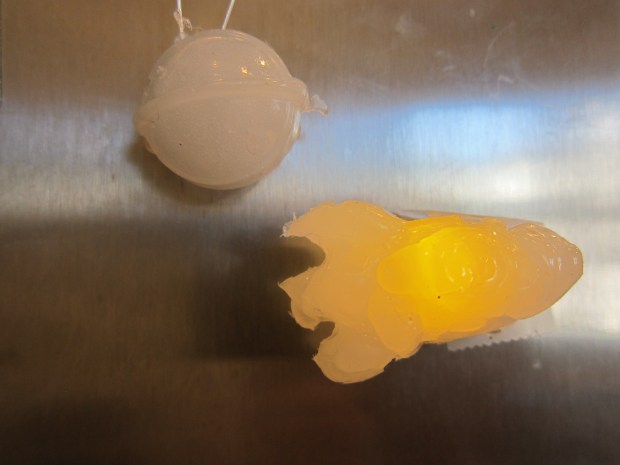
Here’s our planet in action:

Little Passports: France

LP France (13)

I’ve never been so glad to have a Little Passports subscription as I am now, perfect during this era of home schooling. Travis’s latest package took him to France. The booklet felt a little too advanced this time, reminding me that Travis is on the youngest end of the age spectrum for World Edition. The maze was hard (even for mommy!) and activities like being an art critic and following a landmark hunt involved lots of reading that was too advanced.

LP France (11)

Still, he enjoyed the extras on the web like seeing vibrant pictures of monuments and landscapes in France, learning a few French words, and selecting his favorite French dessert. And he proudly added the flag to his passport and the “push pin” to his map.

LP France (3)

Souvenir:

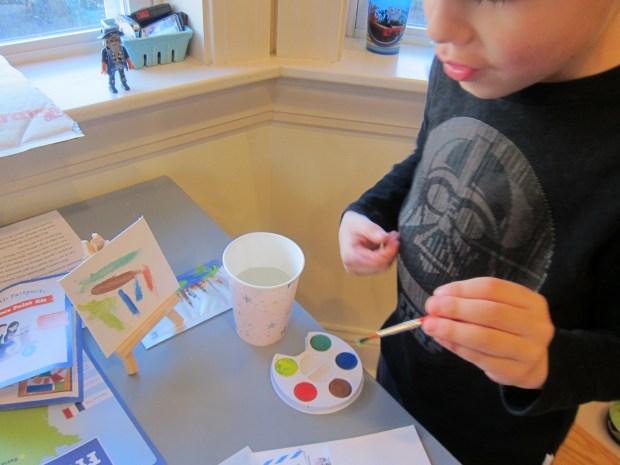
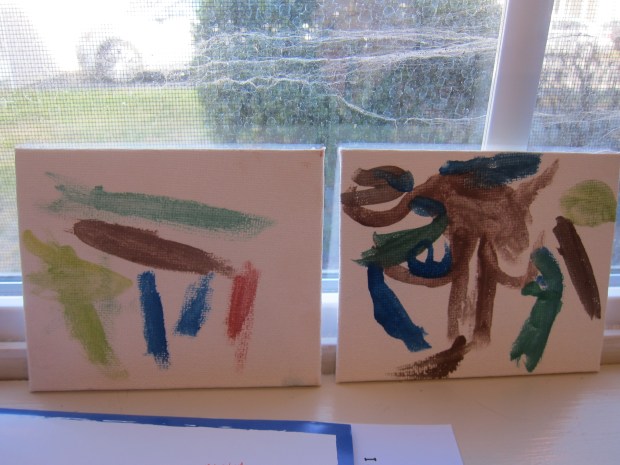
The mini easel and watercolor palette, complete with two tiny canvases, was a huge hit!

LP France (1)

Travis was immediately making masterpieces after we looked at a few examples from Monet and Matisse for inspiration. He even corrected me, pointing out that one of his canvases was meant to be viewed horizontally and the other vertically.

LP France (2)

Activities:

We opened this package on April 1 which turned out to be perfect because one activity was to color in a fish for the “poisson d’avril“.

LP France (5)

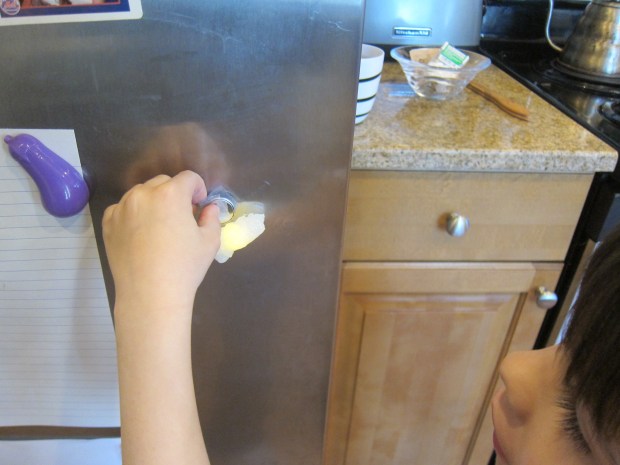
This French variation on April Fool’s Day is to tape the fish to the back of a friend or family member and declare that person the “Fish of April!” Travis got a big kick out of doing this to daddy.

LP France (6)

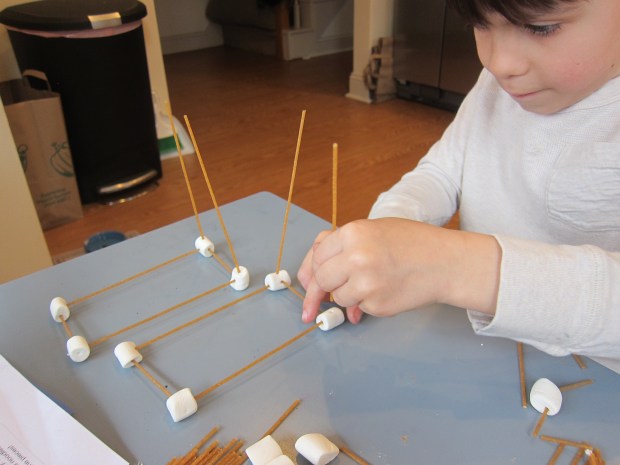
Next up was making an Eiffel Tower out of Dandies marshmallows and dry spaghetti!

LP France (7)

This was STEM at its best: thinking spatially about how to engineer the tower; using shapes (rectangles, triangles); dividing spaghetti pieces into halves or quarters; and of course eating marshmallows along the way for sticky fingers and lots of laughs.

LP France (8)

Look how it turned out!

LP France (9)

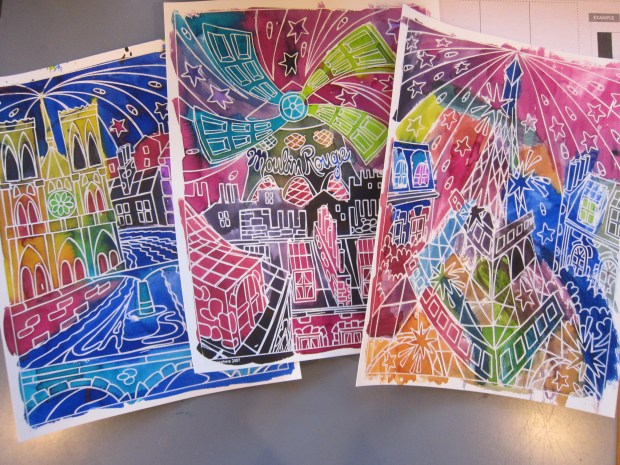
I had also purchased the optional add-on, an Aquarellum Parisian Painting Kit. This included 9 watercolors and three scenes of Paris on absorbent paper. Travis loved that he could use the provided eye dropper to mix colors.

LP France (10)

The scenes turned out beautiful. My petite artiste!

LP France (12)

Finally, we colored in the French flag to add to our garland.

Recipe:

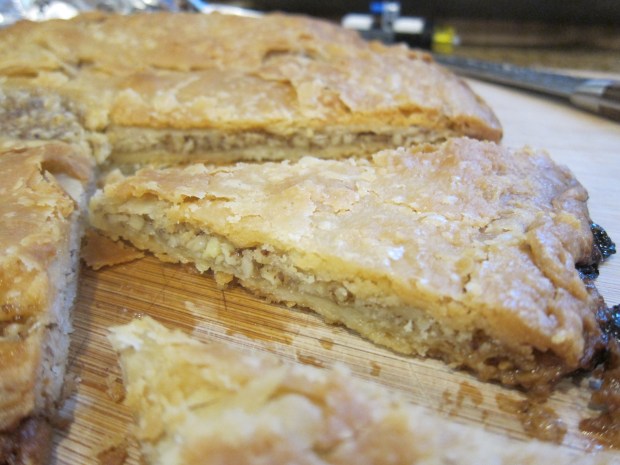
Of course we weren’t done until we’d taken our culinary voyage. This time we turned our kitchen into a French bakery, plus learned a little cultural background for the galette des rois (Kings Cake).

Galette des Rois (3)

We had to improvise a little, since the recipe called for puff pastry which is hard to find vegan. We used store-bought pie crusts instead, which means our cake didn’t puff up like a traditional version, but it sure still came out yummy!

Ingredients:

  • 1/2 cup sugar
  • 1/2 cup ground almonds
  • 1 teaspoon almond extract
  • 1/2 cup Earth Balance butter, softened
  • 1 tablespoon ground flaxseed
  • 3 tablespoons water
  • 2 (9-inch) pie crusts
  • 1 tablespoon melted Earth Balance butter
  1. To prepare the filling, mix together the sugar, almonds, almond extract, and 1/2 cup butter.
  2. Whisk the flaxseed into the water to make 1 flax egg. Add to the sugar mixture and stir until mixed. Chill in the fridge.
  3. Meanwhile, turn one dough circle out onto a baking sheet lined with foil. Spread the chilled filling evenly over the dough, leaving a 1-inch border.
  4. Top with the remaining dough circle, pressing the edges of the dough to seal. Brush with the melted butter. Bake at 450 degrees F for 15 minutes, then reduce heat to 350 degrees F and bake an additional 20 minutes.

Galette des Rois (4)

Note: If your kids want to, hide a dried bean inside in keeping with the French tradition of this cake around Epiphany.

Galette des Rois (1)

Whoever finds the bean or a toy figurine in their slice is the king for the day and gets good luck! Skip that step if you are worried about choking hazards.

Galette des Rois (2)