Early Explorers Insects


LP Insects (18).JPG

Our latest Early Explorers package from “Max and Mia” was all about bugs – sure to be a hit with my insect-loving boy! He didn’t waste any time finding out where some strange bugs (Goliath beetles! Army ants!) live on our world map, and dove into the booklet’s activities like matching, coloring, and patterns.

LP Insects (4)

Insects Craft:

Again, there was no craft in this months booklet, so we followed a suggestion from the blog. We’ve actually made clothespin bugs before, but back then Travis wasn’t very into it and the critters ended up being more mom creations… This time, his imagination had free reign!

LP Insects (12)

For a little lesson with the art, you can point out the three parts of an insect’s body – head, thorax, and abdomen. “Ideally” each clothespin bug can have three parts glued on to replicate this, whether from buttons, gems, pom poms, or other craft supplies.

LP Insects (14)

But Travis was so eager just to create that I more enjoyed watching him make fanciful bugs. He was very proud of the buttons and beads he selected, and insisted we also make a spider (technically not an insect) with pipe cleaner legs.

LP Insects (15)

Insects Science:

For a bug science activity, we also took a cue from the blog: a scavenger hunt using a template from Little Passport’s website.

LP Insects (6)

This was a great chance to find regular outdoorsy items like dandelions…

LP Insects (7)

… but most especially to use our new keepsake (more on that below).

LP insects (8)

Travis was so proud finding little bugs with wings and especially this worm, which he coaxed right in.

LP Insects (5)

The walk was also a great lesson on letting things from nature go, so they can stay in their habitat once you’re done observing.

LP Insects (11)

Insects Keepsake:

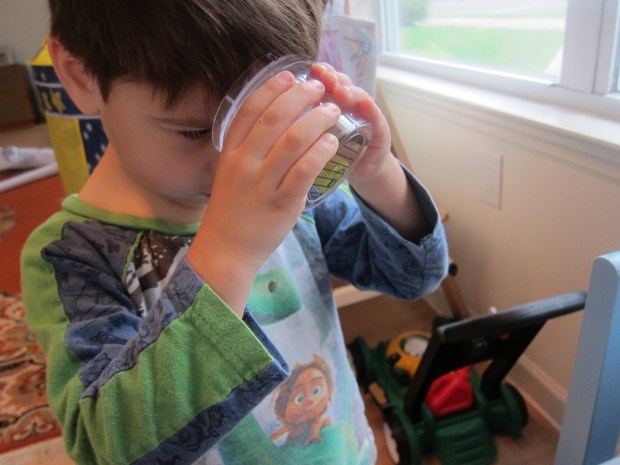
As you can see from our scavenger hunt, the bug catcher/observer that came with the kit was a huge hit! In addition to bugs, try finding items around the house you can put in and magnify.
LP insects (2)

Insects Field Trip:

Chances are that even if you don’t have a dedicated bug museum near you, there’s a children’s museum or science museum with a bug section. I knew of several that we’d been to, some recently, so instead I detoured us to a children’s museum we hadn’t visited since Travis was a baby.

LP Insects (19)

We searched for this blue beetle in his terrarium in the science room, and saw models of some neat favorites, like the Hercules beetle!

LP Insects (20)

Insects Further Activities:

Rather obviously, we had to use our keepsake to catch and observe bugs. In addition, we tried out the following suggestions from our booklet.

Draw pictures of your favorite bugs (or for younger kids, fill in coloring pages):

LP Insects (1)

Another nice fine motor activity was tracing the letters of the alphabet – each one for an insect that started with that letter – in the booklet.

LP Insects (17)

We headed to the library as another component of our unit. Because we already have a lot of great bug books at home (Usborne Books’ Early Beginners Bugs, the Big Book of Bugs by Yuvel Zommer, and The Grouchy Ladybug by Eric Carle, to name a few), we thought it would be more informative to check out a documentary. Travis loved Bugs (narrated by Dame Judi Dench!) on insects from the Amazon rainforest, fascinating for kids and adults alike.

LP Insects (16)

Finally, we talked about all the bugs we’d caught, read about, and discussed, and which was our favorite. Travis decided upon the scorpion.
 

Pesto Perfection

Pesto recipes alt

My son loves pesto so much he’s been known to eat it straight out of the jar by the spoonful. When I can get him to stop licking the spoon, pesto also makes it easy to upgrade a few kid favorites! Below are two of our favorite ways to take standard meals from everyday to gourmet. For jarred pesto, we love the dairy-free option from Meditalia.

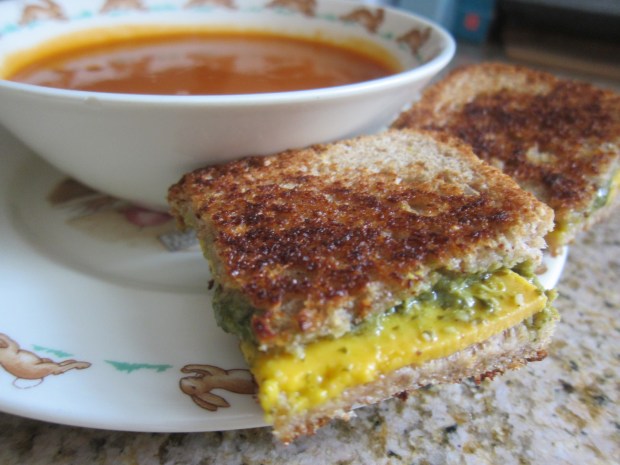
Pesto Grilled Cheese:

Drizzle 1 tablespoon olive oil evenly over two slices of whole wheat or multigrain bread, spreading to the edges. Turn over and spread the other sides of the bread with 1 tablespoon pesto (homemade or jarred). Top with 1 or 2 slices of Daiya cheddar, and sandwich between the bread. Cook for about 3 minutes on each side over medium heat, until browned. Best served with a bowl of tomato soup!

Pesto Ravioli:

Instead of tomato sauce, we recently subbed in pesto over tofu-filled ravioli for a preschooler-approved dinner. For an extra gourmet touch, squeeze on a little lemon juice as well.

Pesto recipes


Confetti Heart Art


Confetti Heart (8).JPG

The heart-shaped sentiment of love in this artwork makes it perfect as a card or gift to a loved one. And kids will love making it, since it involves quite a few novel steps!

I told Travis that the first thing we needed for our craft today was lots of confetti, and he eagerly grabbed a pair of safety scissors and begin snipping construction paper alongside me. You’ll need the pieces to be quite tiny for the heart to come out right, so adults and bigger kids can make sure all the pieces are small enough. Note Travis’s look of concentration!

Confetti Heart (1)

Next we put all the confetti in a brown paper lunch bag, closed it tight, and shook it up for all the colors to mix. Set the confetti aside.

Draw a heart on one piece of paper (or use a heart-shaped stencil) and tape down to a second piece of paper. I recommend a sturdy background like watercolor paper.

Confetti Heart (2)

Next, have kids smear glue all around the heart – it doesn’t matter if a little gets on the heart cut-out as well, since you’ll be lifting that off shortly.

Confetti Heart (3)

Now it’s time for an explosion! Blow into the bag a few times to inflate it, then hold over the gluey paper and have your kids smack it with both hands for a pop. Blurry photo!

Confetti Heart (4)

Travis was thrilled to see the confetti flutter down.

Confetti Heart (5)

Clean-up was half of the fun for this one!

Confetti Heart (6)

Once the glue dries, peel off the heart shape, and you’ll have a beautiful confetti-outlined heart left in the center.

Confetti Heart (7)

Green Time: Go to the Park

Go to Park (3)

Sometimes the simplest moments with our kids can be the most beautiful, and this “Green Time” suggestion from our May issue of Ranger Rick Jr. was a reminder in just that!

The task? Simply to go to the park. This might sound like something you do with your kids anyway, but this time we made things different.

I deliberately chose a park without any facilities – no playground, no swings, nothing built up. Instead, we showed up with a blanket to sit on and only a few other goodies.

Go to Park (6)

Based on Ranger Rick’s suggestions, we brought along Travis’s tricycle to ride through the grass:

Go to Park (1)

A kite for flying:

Go to Park (2)

And a mitt and soft balls to practice playing catch.

Go to Park (7)

Nothing makes the afternoon better than an iced tea snack with mama. And reading a few Ranger Rick Jr. stories of course.

Go to Park (4)

We easily spent an hour in this park, just the two of us (and a new ladybug friend!).

Go to Park (8)

What’s your favorite (non-playground) park activity with your kids? Please share in the comments!

Wooden Spoon Garden Stakes

Garden Stakes (4)

Several weeks back, we got ambitious and planted a shoebox vegetable garden. I had little hope that our garden would yield real results, without deeper soil to transplant into, but that hasn’t stopped Travis from loving the vegetable stalks and leaves that managed to sprout!

We started to forgot what was what, so decided to make these cute garden stakes to label the veggies. If you have a real vegetable garden, make as many as you need to label all your plants!

I encouraged Travis to think about what each veggie really looked like, so he proudly painted up and down with orange for carrots:

Garden Stakes (1)

And with green for zucchini.

Garden Stakes (6)

On the other side of each spoon, I painted a slightly more recognizable version of each veggie. We had no red paint, or I would have added tomatoes as well.

Garden Stakes (3)

Travis very proudly planted the stakes in our small “garden”, which we continue to water. As always, it’s great to teach kids where their food comes from!

Garden Stakes (5)


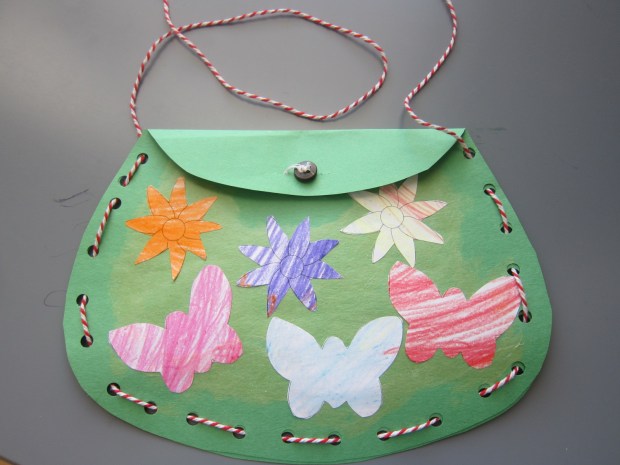
Mother’s Day Pocketbook

Pocketbook (9).JPG

Travis’s nursery school is hosting a Mother’s Day tea for the moms next week… and he couldn’t wait to make me this pocketbook to carry to it, once he spied in his latest Ranger Rick Jr.!

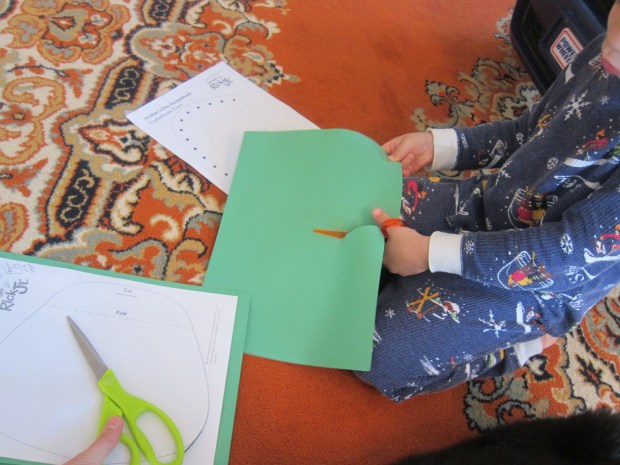
First we printed out the pocketbook template from online. Cutting it exactly was a bit too much for Travis, but I cut the shape from construction paper while he snipped out another “pocketbook” for fun.

Pocketbook (1)

Next we punched holes all around the edges.

Pocketbook (2)

To lace it up, use either yarn or string. Because I worried our string might fray, I created an “aglet” for Travis by taping around the end.

Pocketbook (3)

This was definitely his favorite part! He loved lacing up and down with our long piece of string until he’d completed every hole.

Pocketbook (4)

Next up was coloring the decorations, also available for print from the template.

Pocketbook (5)

Travis enjoyed selecting colors, like a light blue butterfly since I love blue.

Pocketbook (6)

I cut out the shapes and we glued them to the front of the purse.

Pocketbook (7)

As the final step, thread a 2 inch piece of string through a button, and slip through the slit in the back pocketbook template; secure with tape.

Pocketbook (8)

Now it will secure the purse shut through the slit in the front pocketbook template. I’ll have to pack it with a tea bag or two for the Mother’s Day tea. Travis was so proud to make me this, and I couldn’t be prouder to carry it!

ABC Quesadillas

Quesadilla (6)

Quesadilla are a great way to involve kids with cooking and feeling like they have real control over the ingredients, as in this easy recipe from High Five magazine. Made to order, these A(vocado), B(acon or bean) and C(heese) quesadillas are sure to please!

First, Travis helped spray 4 small flour tortillas with cooking spray, and place on a baking sheet.

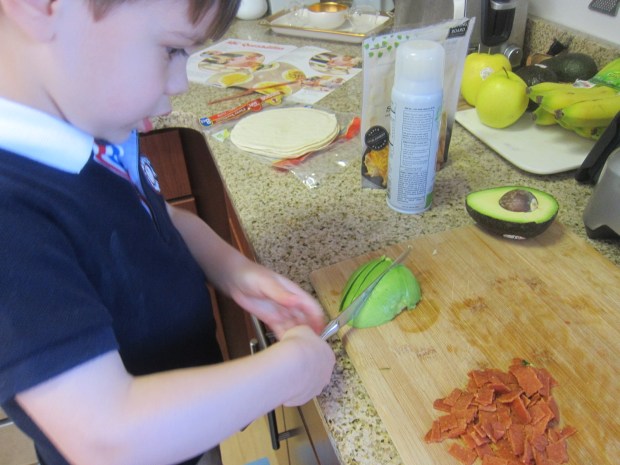
Next up was slicing an avocado (adults: pit and peel it ahead of time). A blunt butter knife will go right through the soft avocado flesh, making this an easy first slice for kids.

Quesadilla (2)

To assemble the quesadillas, Travis sprinkled on his own Daiya cheddar:

Quesadilla (3)

Then we topped them with the avocado slices and either black beans:

Quesadilla (4)

Or vegan bacon (which I had cooked and chopped ahead of time).

Quesadilla (5)

Yum: extra bacon!

Quesadilla (1)

Top each one with a second tortilla, pressing down slightly. Bake at 400 degrees F for 10 minutes and cut into quarters to serve.

Quesadilla (7)


Textured Paint Collage

Texture Paint (11)

This easy painting method is a neat way to add textures to your child’s next art creation… and all you need to do so is an old cereal box!

Cut portions of the cereal box so they are like combs that can be raked across a painting; I made Travis two version, one with boxy points and one more pointed like shark’s teeth.

Texture Paint (1)

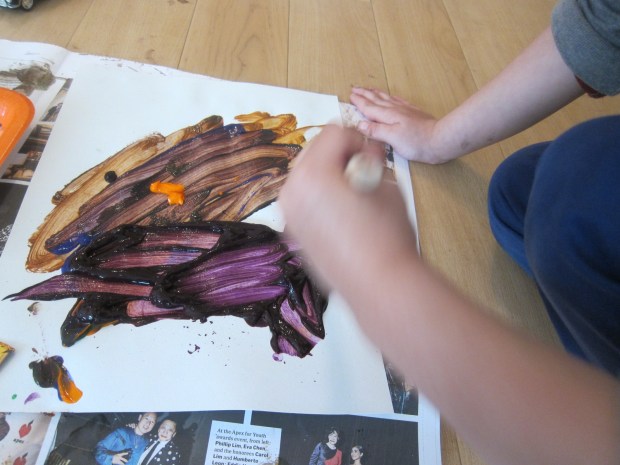
But first we needed to make artwork with really thick paint! Travis was delighted when I told him the thicker the better for this particular project.

Texture Paint (7)

Once he’d covered the surface of his paper, he tried out the combs to see what kinds of lines or designs they made.

Texture Paint (5)

At not quite four years old, Travis’s artwork is still very abstract. Big kids can be more purposeful in their painting – think of textures like the bark of a tree, the waves of the ocean, blades of grass etc. I made a picture with an ocean, sun, and sky for Travis as an example, as well as some abstract shapes.

Texture Paint (6)

He filled two pages with color and shapes, which we left to dry overnight.

Texture Paint (8)

The next morning, we cut one picture into smaller pieces and used a glue stick to add them to the intact picture – this added still more texture to the final product!

Texture Paint (10)

Cotton Cherry Blossom Painting

Cherry Blossom (7)

We had a little fun exploring different tools that we could paint with about a week ago, and that turned into the idea for this quick springtime craft. Soft items like cotton balls or pom poms are perfect for making the delicate flowers of a cherry blossom tree!

To start, I drew the outline of tree trunks for me and Travis, with plenty of branches to fill in. Big kids will probably like to draw their own trunk!

Cherry Blossom (1)

Attach a clothespin to each cotton ball, and set out a big dish of pink paint – exciting!

Cherry Blossom (3)

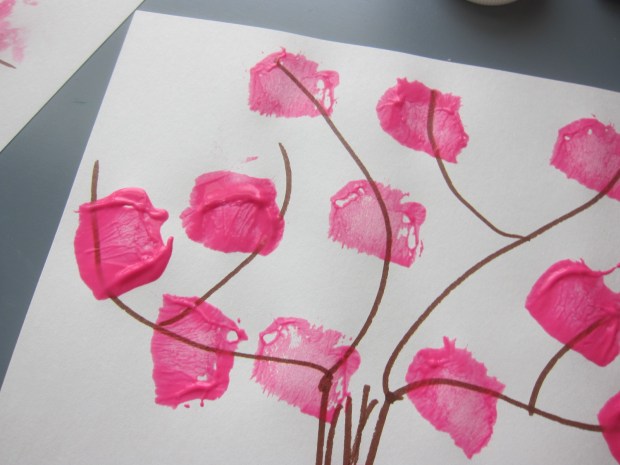
I showed Travis how to dip in the cotton ball and then press and lift off the paper to recreate these pretty springtime blooms.

Cherry Blossom (2)

His was a bit more smeared, but he still liked the mechanics of the craft.

Cherry Blossom (4)

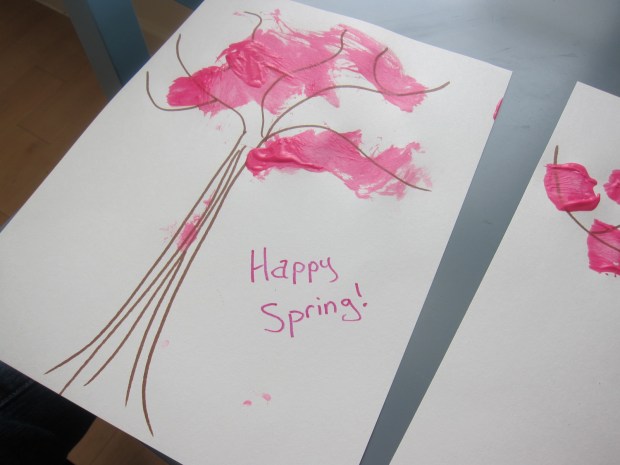
We ended up with two pretty cherry blossom trees, one by Travis and one by mama. Big kids may wind up with something closer to this:

Cherry Blossom (6)

We’ll have to cap things off with a visit to see the cherry blossom trees in the neighborhood!

“Watercolor” Art

Art Straw (5)

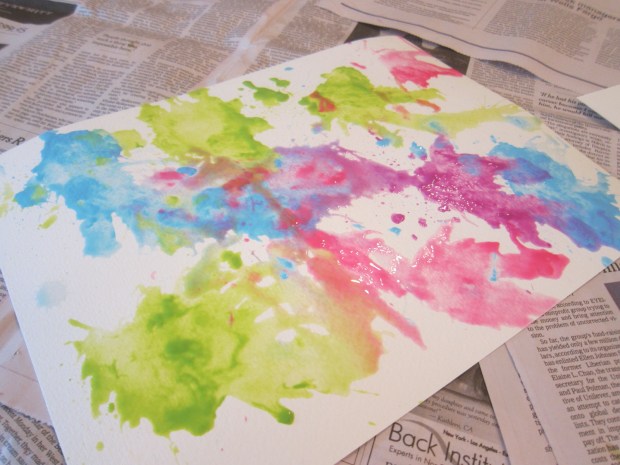
We revisited two old art ideas today – both of them imitating watercolor painting without use of actual watercolors! – when Travis stumbled across something by accident. We were playing with his magnet set in water (yes, magnets work in water!) and he decided he wanted to dip his markers in as well.

Art Straw (7)

I pulled out watercolor paper for him, and he loved the way that the wet marker tips looked smeary on the paper – just like watercolor paints. This was an activity I first did with him as a two year old – so long ago this blog didn’t exist! Quite fun to revisit with him at an older age.

Art Straw (6)

It reminded me of a time we turned regular paint into something closer to “watercolors.” This was back in the fall, so our final product was Halloween “monsters”. This time we chose pretty spring pastels.

Mix your tempera paint with a little water, and you have a nice thin consistency that will work for this project.

Art Straw (3)

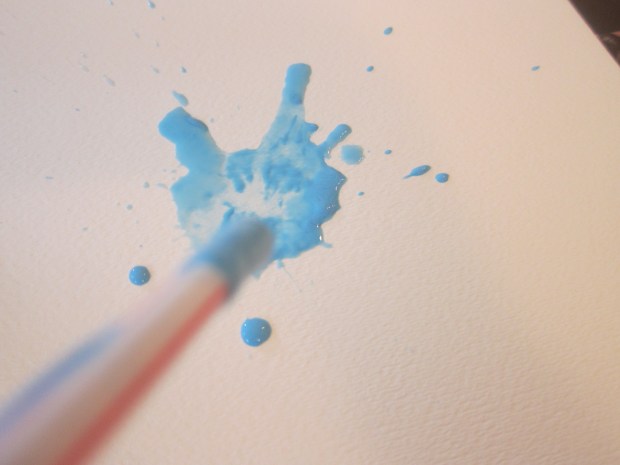
Place a straw in each color; put your finger on top of the straw to create a vacuum, then drip onto watercolor paper.

Art Straw (1)

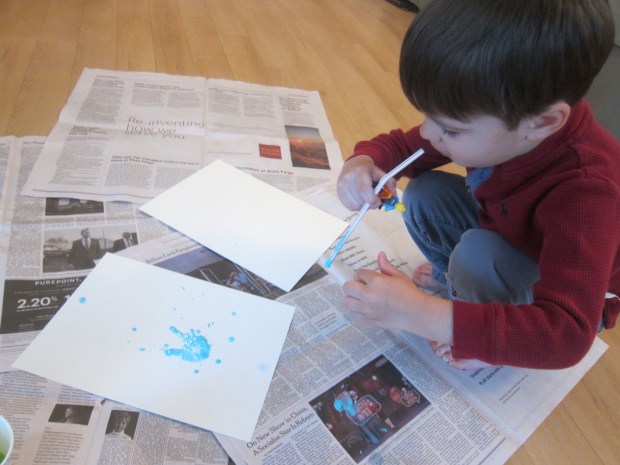
Blow into the straw (make sure your children are old enough to blow out, not suck in!), and the paint will spread in beautiful patterns all over the paper.

Art Straw (2)

Travis tired of the straw quickly, but loved telling me which color to put where until we had a beautiful spring picture.

Art Straw (4)

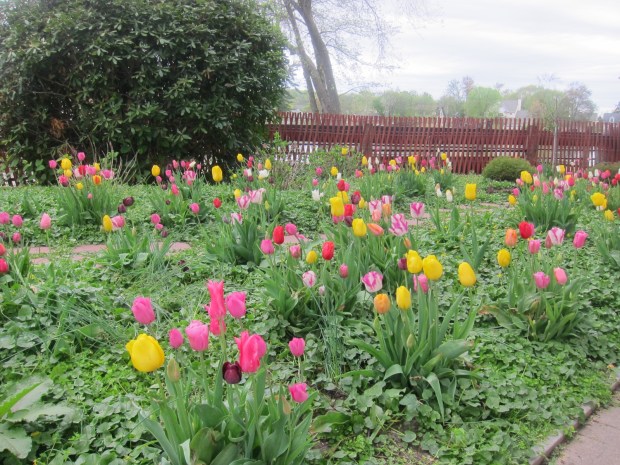
We decided it looked like the tulips we’d seen in the park that day!

tulip (1)