Zucchini Muffins

Zucchini in Muffins (2)

We’ve had carrots in our cookies and sweet potatoes in our pie, so next up in our garden tour of dessert was zucchini baked into muffins! If you prefer, use 1 flaxseed “egg” in place of the Ener-G eggs below.

Ingredients:

  • 2 cups cake flour
  • 1/2 cup sugar
  • 1/2 cup brown sugar
  • 1 teaspoon baking soda
  • 1 teaspoon baking powder
  • 1 teaspoon cinnamon
  • 1/4 teaspoon nutmeg
  • 1/4 teaspoon salt
  • 1 cup grated zucchini
  • 1/2 cup olive oil
  • 1/4 cup plain almond milk
  • 1 tablespoon apple cider vinegar
  • 2 teaspoons vanilla extract
  • 2 Ener-G eggs
  1. In a bowl, stir together the flour, sugar, brown sugar, baking soda, baking powder, cinnamon, nutmeg, and salt. Set aside.
  2. Stir in the zucchini, then add the olive oil, almond milk, vinegar, vanilla, and Ener-G eggs. The batter will be thick.
  3. Divide evenly among 12 muffin cups coated with cooking spray. Bake at 350 degrees F for 35 minutes. Cool completely on a wire rack.

Zucchini in Muffins (1)

Baked Agave Fishless Filets

Agave Fish (3)

Gardein makes a wonderfully flaky, just-fishy-enough fishless filet that has been a nice intro to fish for my two little vegans. This homemade sauce adds just a touch of sweetness, and makes frozen food feel gourmet!

Ingredients:

  • 3 tablespoons agave nectar
  • 1 and 1/2 tablespoons vegan mayonnaise
  • 1 and 1/2 tablespoons Dijon mustard
  • 1 teaspoon fresh-squeezed lemon juice
  • 8 Gardein fishless filets
  1. In a small bowl, whisk together the agave, mayonnaise, mustard, and lemon juice; set aside.
  2. Arrange the fish in a baking dish and drizzle with the sauce. Bake at 425 degrees F for 20 minutes, turning over halfway through.

Agave Fish (1)


Plant a Seed

Plant a Seed (8)

Although toddlers won’t grasp the idea of a plant life cycle yet, or how a single seed can grow into a full plant, toddlers do love the components of gardening, namely: water, dirt, and seeds. So today Veronika “planted” her first seed, partly as a sensory experience, and partly for a little science.

Plant a Seed (1)

First I set out a little cup of dried beans for her to play with, simply to explore. She loved transferring these back and forth between two cups.

Plant a Seed (2)

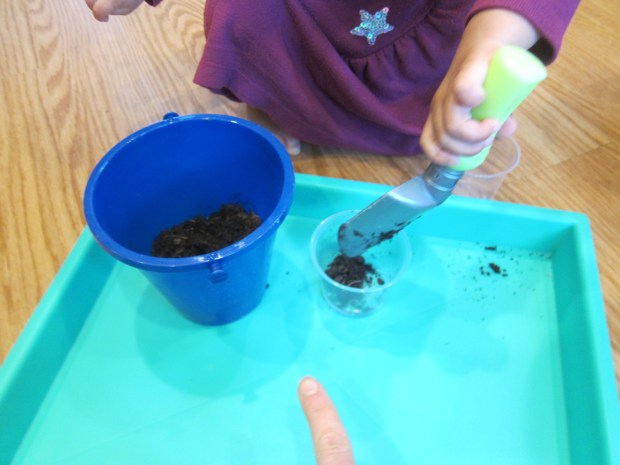
Using a little dirt from the yard outside, we began scooping dirt into one of the cups.

Plant a Seed (4)

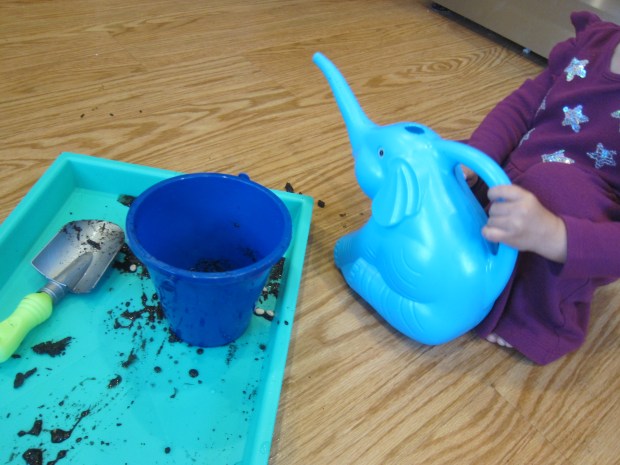
I filled our watering can with just a little water so she could make the dirt damp but not soaked. Of course I knew this would turn into lots of play scooping dirt and pouring water, and that’s exactly what happened. But that was half the fun! A little bug even hitchhiked its way in with the dirt, and she loved watching it on the tray.

Plant a Seed (7)

Before she could tire of the game, I showed Veronika how to sprinkle a few of her bean seeds into the dirt, and press them in gently.

Plant a Seed (5)

We gave them a little extra water as a finishing touch.

Plant a Seed (6)

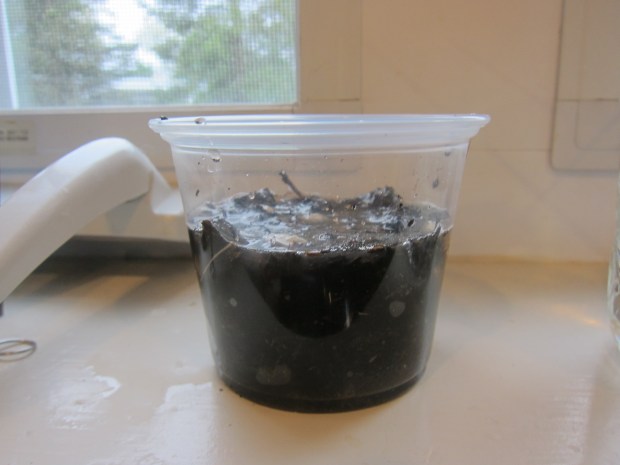
I don’t expect these to really sprout, since we didn’t germinate them properly). But the cup is in a sunny spot on our windowsill, and Veronika looks at it proudly! Either way, the whole process is a fantastic intro to gardening.

Note: If you want to include a little art, use a paper cup instead of a plastic one and have your toddler draw on it first. Or you could even decorate a proper clay pot!

Bird Busy Box

Busy Box Turkeys (5)

If you’re not familiar with “busy boxes”, the idea is to fill a small craft bin with just a few supplies, from which a toddler can keep occupied solo for a time. Veronika was a bit too young for this particular box to be a true busy box, but we did have fun with it together! The bird theme felt just right for springtime.

As prep, I glued wiggle eyes to several small Styrofoam balls, then placed them in a bin along with the following: little pieces of pipe cleaner and feathers.

Busy Box Turkeys (1)

I showed Veronika how to poke a piece of pipe cleaner into each face as a beak.

Busy Box Turkeys (3)

Then the feathers can be inserted any which way to complete your birds! Older toddlers could take it from here as a busy box, but Veronika needed help with the mechanics of poking in the sharp point of the feather. “Yellow bird!” she said with delight to one that featured predominantly yellow feathers.

Busy Box Turkeys (4)

We mixed and matched colors, and then started experimenting with the placement of the feathers. If they stuck upright, the birds looked like turkeys. (In fact, you could consider this as a busy box around Thanksgiving and design all the birds with upright feathers!).

Busy Box Turkeys (9)

If the feathers trailed towards the back, the birds looked like peacocks.

Busy Box Turkeys (11)

Out to the side and they looked like little song birds or eagles.

Busy Box Turkeys (10)

Big brother Travis was the one who came up with the idea of adding additional pipe cleaner pieces to be feet.

Busy Box Turkeys (8)

Soon we were fluttering and tweeting our birds through the air.

Busy Box Turkeys (6)

These brought such a big smile to her face!

Busy Box Turkeys (12)

So a fantastic craft, whether as a true busy box to entertain your toddler solo or to engage in together.

Busy Box Turkeys (7)

Match My Picture

Match My Picture (3)

Here’s a fun game for your toddler that feels simply like playing, but will also boost cognitive skills. It’s easiest to play if you have a set of something (for example, we used Veronika’s toy tool set). But you could also play with random toys, so long as you have a picture of each (whether from the original packaging, or a picture from a catalog).

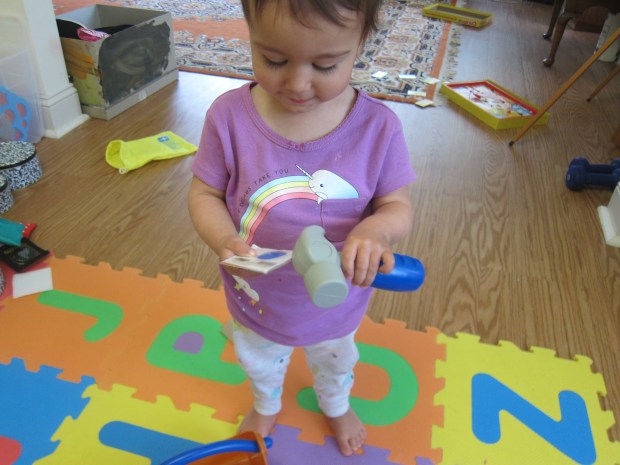
I purposely cut the images of her toy tools from the original box, which made things easy. Then, I simply set out the tools and the pictures, and challenged her to find each one in turn.

Match My Picture (1)

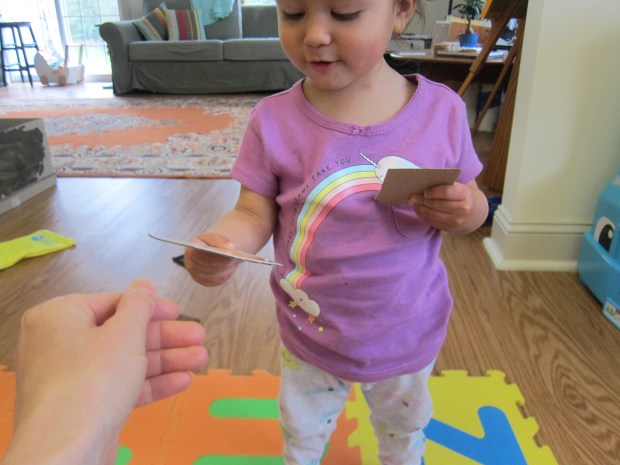
She looked so delighted realizing that each cardboard picture corresponded to one of her tools. She would trot over, grab the real thing, and then look from one to the other almost with wonder.

Match My Picture (2)

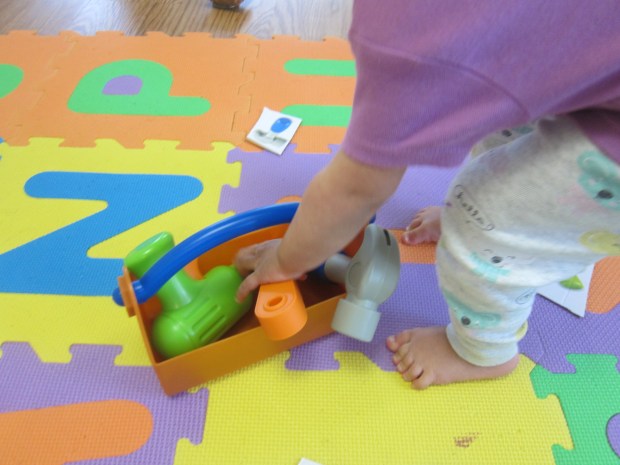
This was great for clean-up, too. As we found each item, she placed it back in the toolbox!

Match My Picture (5)

You could also turn the game into a hunt by hiding some of the toys, then handing your toddler the picture as a clue. Or your toddler might be the one who wants to hide the items, and you go seeking! 

Match My Picture (4)

This is definitely a game we’ll repeat and play in various ways.

Jumbo DIY Cardboard Puzzle

Giant Puzzle (6)

This easy project can be your toddler’s first jigsaw puzzle! With just two pieces, it introduces the notion of interlocking pieces, and your child can proudly solve it all alone.

To start, I cut a cardboard box into pieces and saved the two largest sides. I drew an outline of a simple picture on each, choosing two of Veronika’s favorite things: a butterfly and a heart.

Giant Puzzle (1)

I invited her to help me color them in! Now the process of making the puzzle was just as fun as the final play. She loved talking about colors as we used crayons side by side.

Giant Puzzle (2)

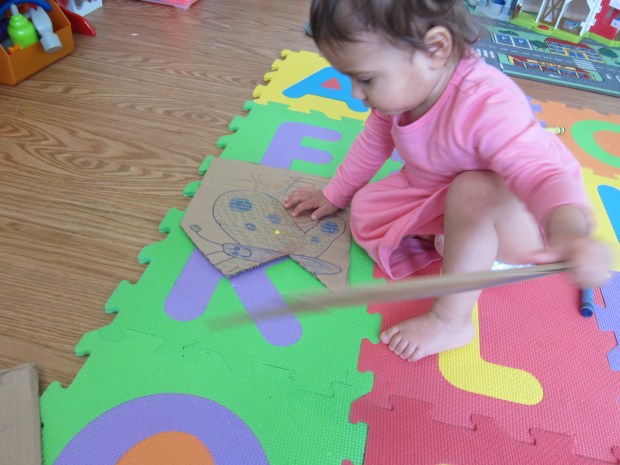
Then I cut a big zig-zag shape down each of our two drawings. Voila: We had two-piece puzzles!

Giant Puzzle (3)

“What happened to butterfly?” I asked her, coaxing her to realize the cardboard was now in two parts. I showed her how to slide the two pieces of cardboard together again.

Giant Puzzle (4)

She echoed my words, and busily began moving the cardboard pieces apart and then back together again.

Giant Puzzle (5)

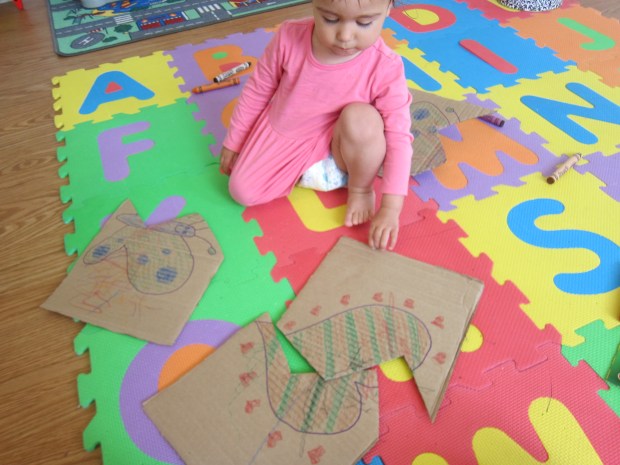
It hadn’t occurred to me, but because we made two puzzles, she did some mixing and matching as well. She was confused when the heart wasn’t the other half of the butterfly until I helped her solve it.

IMG_0039

I loved that I could really see her brain at work here!

Giant Puzzle (8)

In sum, this is a fantastic first jigsaw puzzle, and so easy to make.

Giant Puzzle (7)

Fabric Free Play

Fabric Free Play (4)

Veronika is legitimately obsessed with stars, so when I found a swatch of star-print fabric in my craft bin, I knew I had to let her play with it. It prompted the idea to let her play with lots of fabric scraps, and this turned into great sensory and solo play!

Fabric Free Play (9)

First, I showed her how to simply pile the fabric scraps in and out of a small box. She needed no further demonstration, and loved moving the scraps in, out, into smaller boxes, back to bigger boxes… You name it!

Fabric Free Play (12)

Inevitably, your toddler will probably let the fabric rain down like confetti!

Fabric Free Play (6)

She then had a game going in her head with the big star-print piece, pretending it was her bed.

Fabric Free Play (5)

For some learning fun, point out any different colors and patterns you might have. I showed her the difference between big dots and little dots. Or between polka dots and stripes.

Fabric Free Play (14)

You can help your child sort them by color or pattern, too. Finally, you can turn this into movement and music play! I took the longest strips of fabric and tied them to a jingle bell ring from our music bin.

Fabric Free Play (8)

She loved shaking this in the air.

Fabric Free Play (16)

Later in the day, I turned to find her busy with the fabric swatches again. So busy in fact that I had time to bake a cake!

Fabric Free Play (13)

So before you toss any fabric scraps, don’t forget that they make a fantastic toddler toy.

Fabric Free Play (11)

Swirly Pound Cake

Swirly Pound Cake (3)

This cake is true to its name, with a full cup (pound) of vegan butter, but it’s well worth the indulgence. Consider this your family’s social distancing reward of the week!

Ingredients:

  • 1 and 1/3 cups cake flour
  • 2 teaspoons baking powder
  • 1/4 teaspoon salt
  • 1 cup Earth Balance butter, softened
  • 1/2 cup sugar
  • 2 teaspoons vanilla extract
  • 2 Ener-G eggs
  • 3/4 cup sweetened condensed coconut milk
  • 1 tablespoon cocoa powder
  • 2 tablespoons hot water
  1. To prepare the batter, mix the flour, baking powder, and salt in a large bowl. Set aside.
  2. In the bowl of a stand mixer, beat the butter, sugar, and vanilla until creamy. Add the Ener-G eggs and beat until combined.
  3. Add the flour and condensed milk, beating just until combined.
  4. In a small bowl, whisk together the cocoa powder and hot water. Spoon 1 cup batter into a clean bowl and add the cocoa mixture, whisking until combined.
  5. Alternate adding the vanilla and chocolate batters to a greased 9×5-inch loaf pan, beginning and ending with the vanilla. Use the tip of a knife to swirl through a few times for a marbled effect.
  6. Bake at 350 degrees F for 60 minutes; a wooden pick inserted in the center should come out clean. Transfer to a wire rack and cool completely.

Swirly Pound Cake (1)


Food-Coloring Fingerpaint

Food Color Fingerpaint (9)

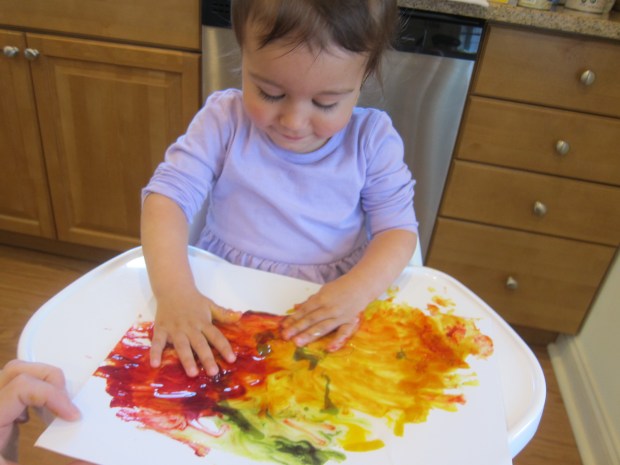
Go figure! I’ve been trying method after method to encourage Veronika to keep her fingers out of the paint, but when I tested out this neat idea that actually encourages finger painting, she wanted to use a brush! Luckily she did switch to hands eventually, and I was glad she did. This is goopy glorious toddler art at its best.

Food Color Fingerpaint (7)

To start, I set a thick piece of white paper on her highchair tray and drizzled on a little corn syrup. Squirt a few different colors of food coloring into the corn syrup blobs; the colors will instantly run and bleed in a beautiful way!

Food Color Fingerpaint (2)

Veronika began cautiously dabbing at this with a paint brush. She was so intrigued as she lifted up a drop of colored syrup, then transferred her brush over to another section of paper to press down.

Food Color Fingerpaint (3)

I love watching when she concentrates on art this way.

Food Color Fingerpaint (4)

Well, eventually it was up to me to get my hands dirty first! I showed her how she could rub a finger through the mixture, swirling the color and corn syrup together for a glossy paint-like effect.

Food Color Fingerpaint (6)

At last! The fingers went into the finger paint.

Food Color Fingerpaint (8)

“Goopy!” she squealed with delight. “Squishy!” This girl is not afraid to get her hands dirty. She loved smearing it, rubbing sticky hands together, and watching the colors mix.

Food Color FIngerpaint (12)

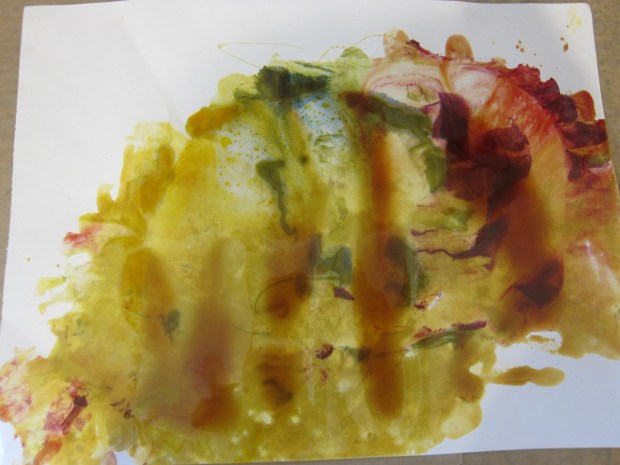
The painting looks quite shiny and pretty once the corn syrup dries! Definitely one to display.

Duplo Printing

Duplo Printing (11)

This novel painting method is an easy way to mix up art projects with a toddler. It’s also an ideal introduction to the process of “stamping”, since Duplo fit perfectly in those toddler-sized hands.

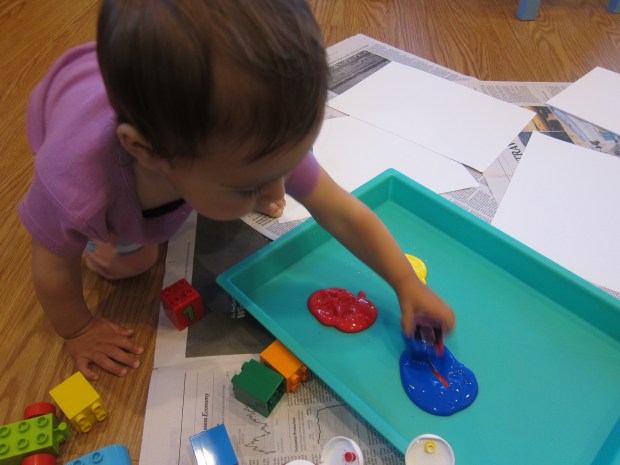
I squirted a few blobs of paint into a shallow tray, and set out some of Veronika’s Duplo pieces, along with sheets of thick white paper. I showed her how to dip the Duplo into the paint (ideally with the bumps down) and press on to the paper.

Duplo Printing (7)

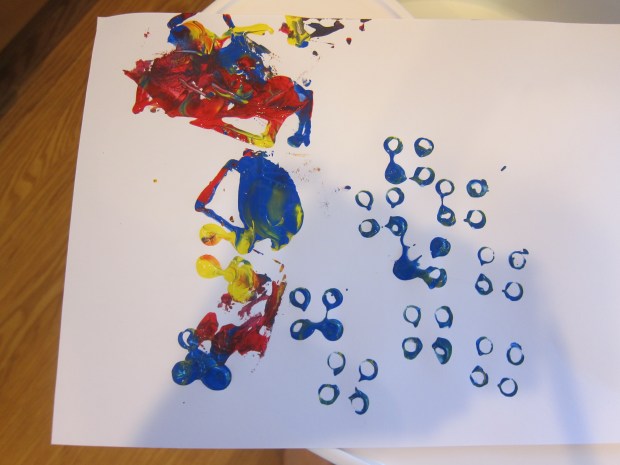
The first mark will probably come out splotchy but as you continue to dot, the bumps become clearer. “Bump bump bump!” she said with excitement.

Duplo Printing (8)

She grabbed for a piece, and – not surprisingly – didn’t quite get the bumps in the paint on her first try, so I assisted a little bit.

Duplo Printing (5)

Instead, her prints tended to be of the sides, bottoms, or edges of the Duplo pieces, but this gave nice variety to our pages. She looked so proud of herself, and at the process of making this art!

Duplo Printing (10)

Meanwhile, I continued to dot the bumpy side of Duplo pieces more clearly around her work, to show her the effect. A full length “train” piece gave nice variety.

Duplo Printing (3)

You can let the paint colors overlap for subtle color mixing, or just let your toddler run wild with the project.

Duplo Printing (1)

One note of caution: Be sure to wash the paint off soon after ending the project, especially if your child will be upset at favorite Duplo pieces being soiled.

Duplo Printing (9)

We knew we were done when she dipped in her hands, not the Duplo pieces!