Football Fever

Football Fever (5).JPG

Travis might not care much about his dad’s team yet, but Sunday football is a tradition in this house, and this mini version makes it exciting for even the littlest fans.

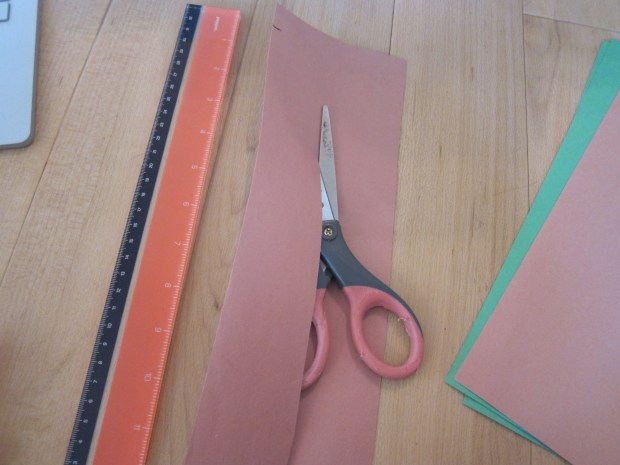
To make our footballs, I cut brown construction into strips that were 2 inches x 11 inches.

Football Fever (1)

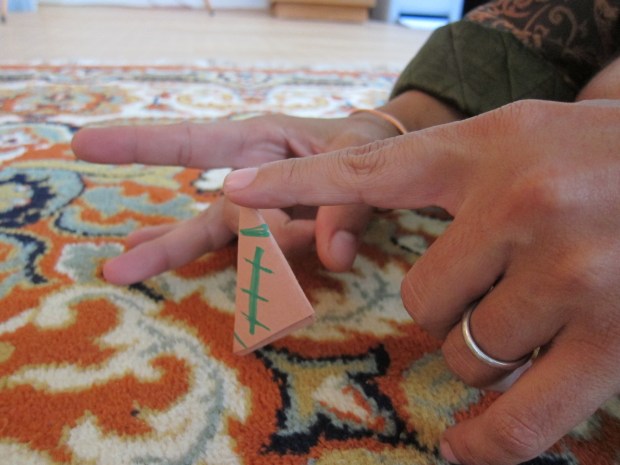
Starting at one end, fold up in a triangle, and repeat until you reach the end of the strip, tucking in the last bit of paper; glue to seal. Let dry and then decorate like a football with marker.

Football Fever (2)

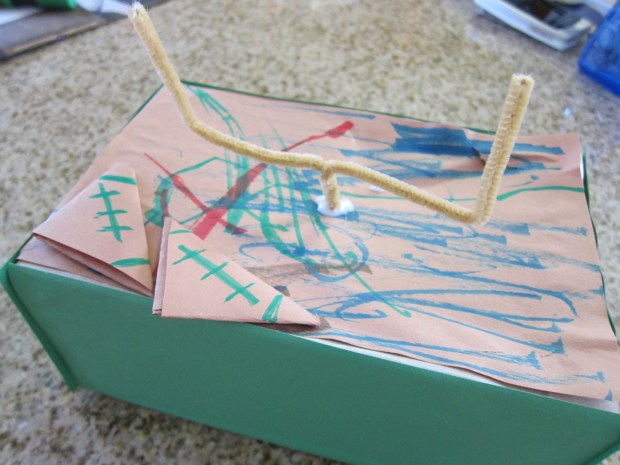
To prepare the field, we covered an empty snack box with construction paper. Before sealing off the box completely, add a few pebbles inside to weight it down.

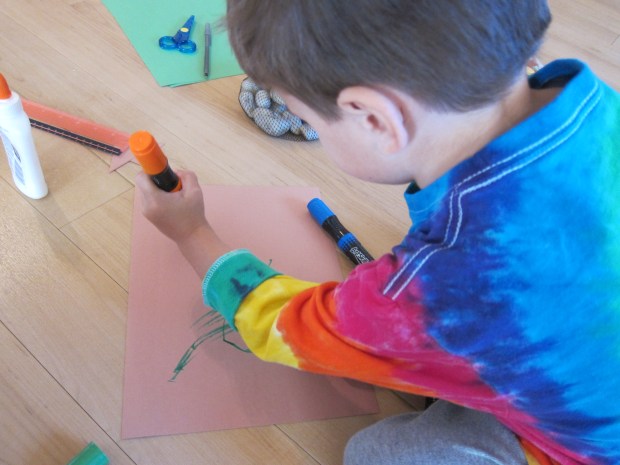
Travis had fun scribbling a decoration for the top of the box; older kids can make it look like a real end zone!

Football Fever (3)

To make the goal post, fold a pipe cleaner in half, twist the bottom a few times. Bend the top ends to look like a goal post. Poke a hole in the top of the box and insert the pipe cleaner. I added a drop of glue to keep it more firmly in place.

Football Fever (7)

Now “kick” your footballs into the end zone for a field goal! Little kids can have fun tossing about the paper footballs, even if they can’t reach the goal. The game is also great for talking about shapes.

Football Fever (6)


Early Explorers Ocean

LP Oceans.JPG

Anyone who has followed along on our Koala Crate adventures knows that I love subscription boxes. We’ve just begun a new subscription, now that Travis is old enough to try out Little Passport’s Little Explorers set, aimed at ages 3 to 5. And of course I have to document our adventures!

Little Explorers presents a theme about our planet/geography each month to kids with “materials that encourage creativity through play.” Unlike Koala Crate, which supplies all your materials, Little Explorers is more of a guide, which took a little getting used to. We’ve discovered, though, that this leaves lots of room for exploration – appropriate for a company that is all about, well, travel and exploration!

LP Oceans (1)

Each month comes with a luggage tag to affix to your child’s suitcase, stickers for a wall map, an activity booklet, a postcard, a game or keepsake, and lots of suggestions for further learning. The activity booklet has been fantastic for things like simple mazes, matching games, dot-to-dots, colors etc., all great preschool activities. Our map stickers this month had us talking about icebergs, orca whales, penguins, lobsters, and more!

Ocean Craft:

The suggested craft this month was for a homemade jellyfish. We’ve tried to make this creature a few times before but the instructions from Little Passports are by far the best I’ve come across. First we needed to paint a paper plate. Travis chose green and pink for his jellyfish.

LP Oceans (3)

After the paint dried, we glued on 15 yarn “tentacles.”

LP Oceans (6)

Travis had fun with leftover yarn pretending to be a wiggly jiggly creature while we waited for the glue to set.

LP Oceans (5)

I added tape across the tentacles for extra reinforcement. We glued on two googly eyes as the final touch, and then it was time swim around him around. Travis insisted that the jellyfish have a smile.

LP Oceans (14)

You can also make handprint jellyfish! Travis didn’t want to get his hands messy, but loved watching me create the wriggly creatures by dipping my hand in paint – palm-shaped bodies, and little finger tentacles.

LP Oceans (15)

Perhaps you could make handprint anemone this way as well. These crafts later prompted us to do some jellyfish research online – did you know sea nettle jellyfish grow from the size of a grain of rice to over sixteen feet long?!

Ocean Science:

Next up was some ocean science. Travis and I have examined the way salt makes objects float before, but I have to confess that Little Passport’s suggestion worked even better. Though I normally wouldn’t advocate any activity involving eggs, my non-vegan husband had some in the fridge and I suppose you could say we “upcycled” them for this game.

LP Oceans (7)

Pour ¾ cup water into each of 2 clear glasses. Add an egg to the first glass and you’ll see it sink immediately. Now stir ¼ cup salt into the second glass – Travis marveled at how cloudy it looked.

LP Oceans (8)

We added the second egg and – boink! – it floated back to the top! A very clear illustration of how salt makes objects more buoyant.

LP Oceans (9)

Ocean Keepsake:

The provided game in our package this month was not a hit: a “fishing” game with wooden animals to catch on a rod. The trick of getting the rod into the circle of each animal was very hard for Travis, who mostly just got frustrated. A magnet would have been much easier for little hands! This is one he’ll have to grow into.

LP Oceans

Ocean Field Trip:

On the activity booklet’s suggestion, we headed to our nearest aquarium. Using our Ocean flashcards from “Max and Mia” (Little Explorer’s guides), we hunted out a few things in particular: the coral reef exhibit;

LP Oceans (16)

penguins;

LP Oceans (18)

and a humpback whale. (This last was a fountain statue of a whale; I do not recommend visiting aquariums that house large cetaceans).

Ocean Further Activities:

We added a visit to our local library and found a neat series with one volume for each of the world’s 5 oceans. The subject material was a bit advanced for Travis, but he liked looking at the pictures of sea animals around the world.

LP Oceans (20)

Older kids can have fun drawing their favorite ocean animals. Since Travis’s artwork is still a bit, er, abstract, I printed out a page for him to color instead.

LP Oceans (19)

We hit up a local beach to look for shells on a pretty walk. We even found a horseshoe crab!

LP Oceans (23)

A perfect end-of-summer pause.

LP Oceans (21)

This then prompted us to research seashells and coral online. We made discoveries both interesting and silly. In the interesting category, did you know that 9 out of 10 shells open up to the right? So shells tend to be “right-handed” just like people. This was a neat factoid for my little lefty. In the silly category, we discovered a beach in Australia with whole shells instead of sand – in a pile that runs 32 feet deep! To this Travis loved looking at the pictures and saying, “Ouch!”

In sum, tons of fun and learning was sparked by our first installment of Little Explorers. What else can you think of to learn and play and do with regards to the ocean? Please share in the comments!

LP Oceans (22)


Dancing Salt

Dancing Salt (5).JPG

Did you know that salt likes to dance along to music? Neither did we until we tried this cool experiment! Sound waves might be invisible, but because they create vibrations, the dancing salt allows kids to see sound in action!

You don’t need to dye your salt with food coloring for this experiment, but it will make it easier to see as it moves.

Dancing Salt (1)

Besides, Travis enjoyed smooshing the color into the salt. We placed 3 portions of salt in zip-top plastic bags and added blue, green, and red.

Dancing Salt (2).JPG

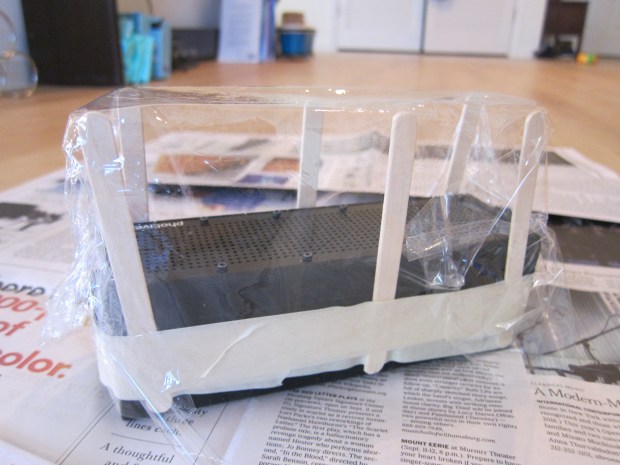
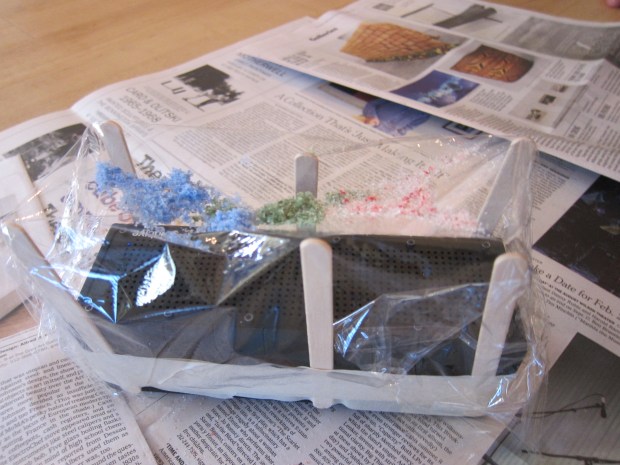
Next you’ll need a bluetooth speaker to make this experiment work. Tape 6 popsicle sticks around the speaker at intervals to create a frame, then top with plastic wrap. Place on a flat surface.

Dancing Salt (3)

Now sprinkle on the salt and watch it shimmy and shake! We found that loading too much salt on the plastic wrap made the action harder to see. Even the amount below was too heavy:

Dancing Salt (4)

So a light sprinkle was the most interesting. Here is our salt grooving to the Beatles – who knew salt had good taste in music?

Definitely a fun one!

Clay Charms

Clay Charms (10).JPG

With a big batch of clay in the house, we decided to shape some into charm necklaces – they’ll make the perfect gift for the upcoming September birthdays of several relatives!

You can shape your charms in one of two ways. First we tried a butter knife to cut out simple squares or rectangles. This was definitely Travis’s preferred method.

Clay Charms (2)

Alternatively, you can use cookie cutters to fashion your charms into circles.

Clay Charms (3)

We found a bunch of old buttons in our craft box, which made perfect imprints into the clay, like flowers or hearts.

Clay Charms (5)

Once you’re happy with your designs, let the clay set. If you have oven-dry clay, bake according to package instructions. Ours was air-dry clay, so we left it out overnight. While the clay is still soft, poke a hole through each with a toothpick or wooden skewer so you can string it onto a thread later on.

The next day it was time to paint! Watercolor works very well on clay, but you could also use acrylic paint.

Clay Charms (6)

After a swipe or two with a paintbrush, Travis decided it would be much more fun to do watercolors by hand. I laughed and decided why not! The results were surprisingly beautiful.

Clay Charms (7)

Let the charms dry again, then thread twine through the hole in each charm. Voila! A charm necklace.

Clay Charms (9)

Salt Shaker Noise Maker

Salt Shaker (9).JPG

After an evening out at a kids’ music concert, Travis began the next day making believe he was a drummer in the band – at 6.30 in the morning. Needless to say, this didn’t go over well with a sleeping daddy… and likely the neighbors as well!

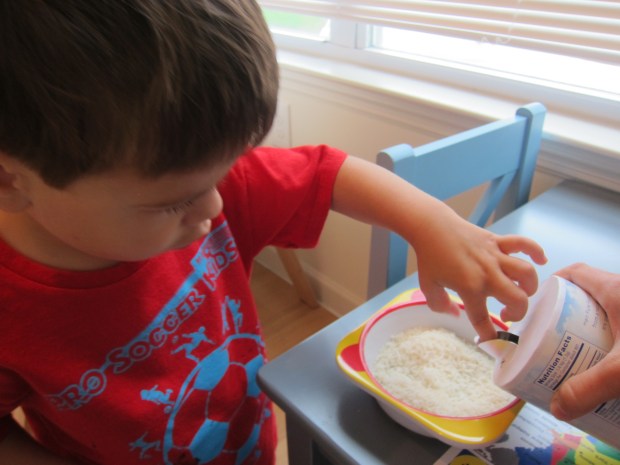
The solution? Throw together an instrument for your child that is (slightly) quiet! I was lucky enough to have an empty salt shaker on hand, and some dried rice as well. If you don’t have dried rice, dried beans or even unpopped popcorn kernels would work well.

Salt Shaker (2)

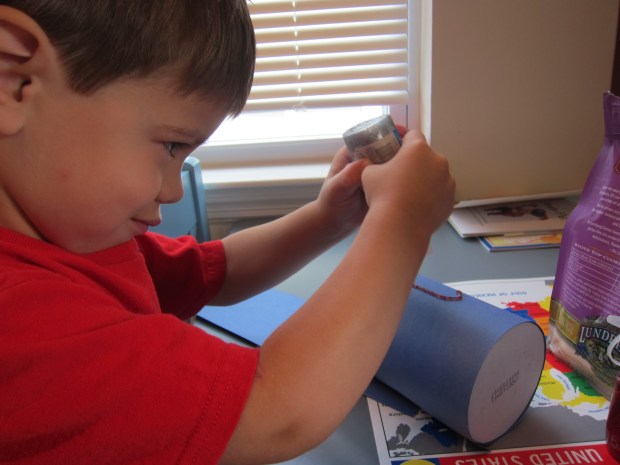
Travis enjoyed the challenge of fitting the rice into the salt shaker, little by little. Once we decided it made just the right shake-a-shake-a-shake-a sound, I taped down the spout of the container to prevent spillage.

Salt Shaker (1)

Travis gave it a few shakes without waiting for any decoration at all!

Salt Shaker (3)

For a simple decoration, cover with colored construction paper and then adorn with markers or glitter paint.

Salt Shaker (4)

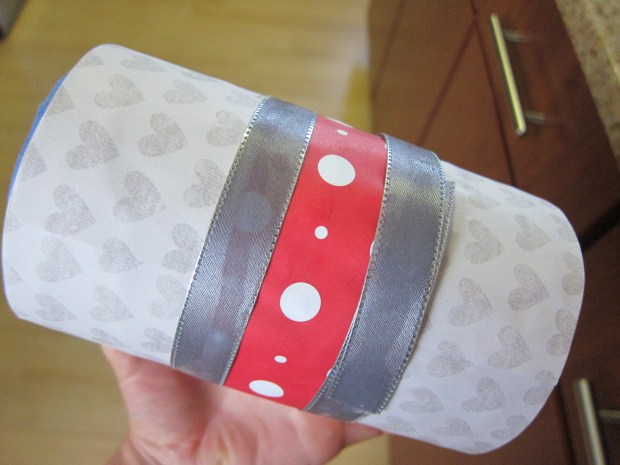
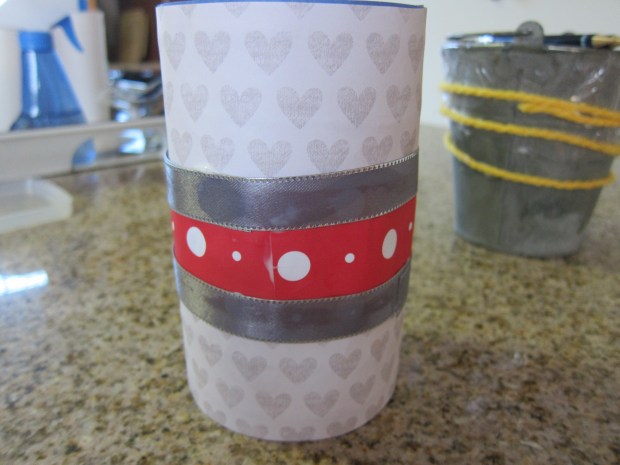
For something a little more elegant, we tried one covered in scrapbook paper and ribbon.

Salt Shaker (8)

This is a great instrument for all – fun for the kids, and sanity-saving for the adults!


Stomp with Dino Feet

Stomp Dino (6)

What’s more fun for a preschool tot than stomping around the house? Stomping around with dinosaur feet of course! Get out some sillies with this cute idea from High Five magazine.

To start, adults will need to trace a dinosaur foot shape on a large piece of craft foam. I really have no idea what a dinosaur footprint looks like, but a three-toed creature seemed to fit the bill!

Stomp Dino (1)

Cut an X into the foam with scissors near the ankle of each foot – this is how your child will wear the dino feet.

Stomp Dino (2)

Travis loves practicing with kid-safe scissors, so although cutting the dino foot was beyond his skill, he helped me snip out a few triangles that we would need later on. “Dinosaurs need lots of triangles!” he told me very seriously.

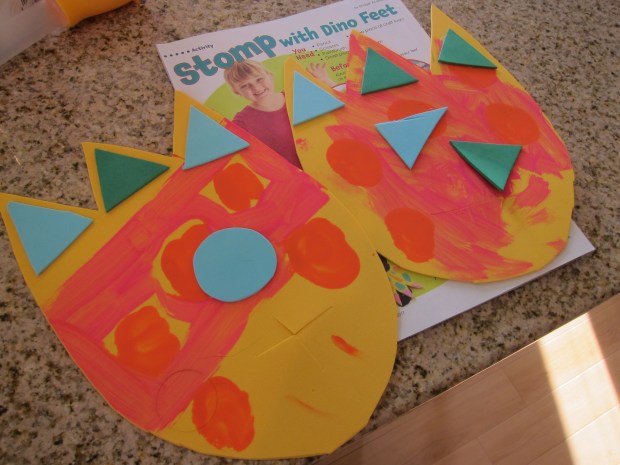
First though, we had to paint our dino feet! Travis smeared on some pink, and I added a few orange dots for contrast.

Stomp Dino (3)

Let the paint dry, then add the final adornment with the smaller pieces of foam you cut out.

Stomp Dino (5)

And now it’s time to stomp!

Stomp Dino (7)

Phoneme Week 8: NT

NT week (9)

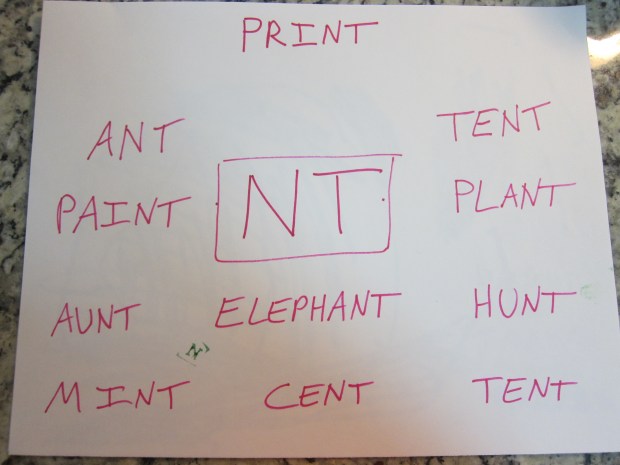
We’re still moving slowly through our phoneme pairs (my original iNTent to spend two weeks on each phoneme was ambitious, at best!), but I’ve decided it’s nice to have a poster with a specific letter pair up on the wall for closer to a month. Travis truly gets used to the sight of each pair and can identify the sound. Start off your lesson by tracing N and T (we like Usborne’s wipe-clean alphabet cards), and then dive iNTo the rest of these ideas.

NT week (4)

Phonics Book of the Week: We kicked things off with a read of Underpants for Ants, before realizing – whoops! – we already read this one for ND week. It doesn’t feature NT words other than paNTs and aNTs, but how could we not enjoy such a silly story a second time around?

Guiding Theme: PriNT

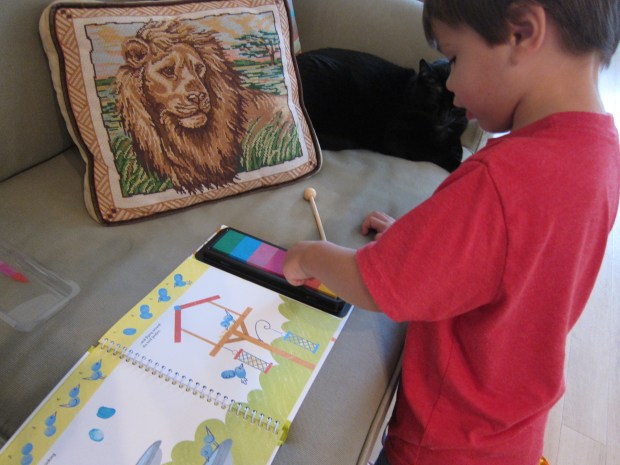
Don’t get hung up on one definition of this word; think of its multiple uses (the printed word, prints you make on paper, the printing press, printing as in handwriting), and play around. If you’re lucky enough to live near a newspaper printing plant that gives tours, by all means go! We started out simply by testing all the different ways we could print Travis’s name on paper, including felt-tip pens, crayons, pencils, and alphabet stamps.

NT week (2)

We Read:

We Made:

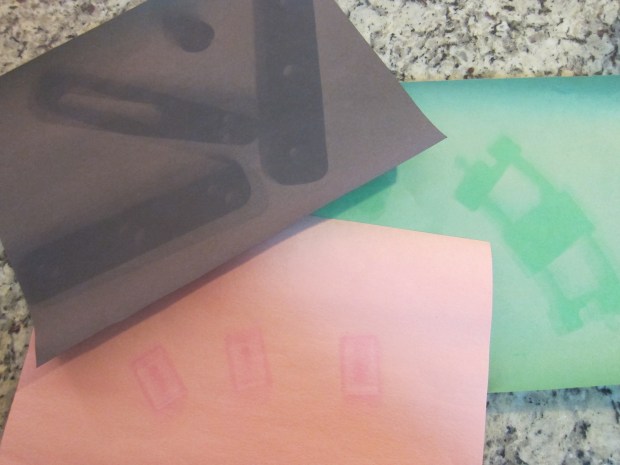
  • Sun Prints. Although an activity we’ve done before, Travis is nearly a year older and sun prints were infinitely cooler this time. We gathered colored paper and a variety of objects, such as toy tools and Duplo, then left them to sit in the sun for a few hours.Sun Prints (6)We were most curious to see how the bugs would come out – was the sun strong enough? Sun Prints (4)Travis loved lifting the toys for each reveal.Sun Prints (3)
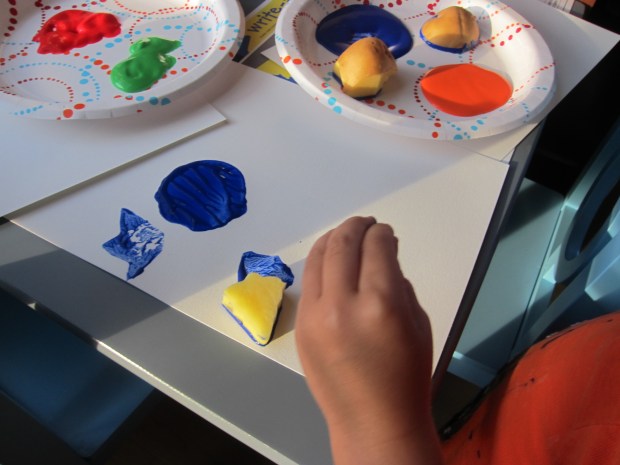
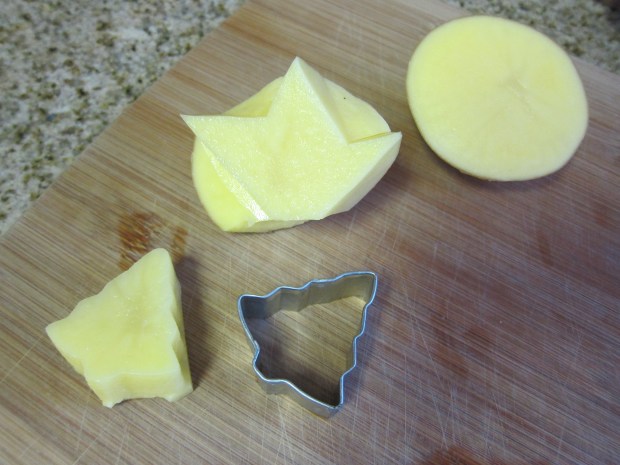
  • Potato Prints. Cut potatoes in half (I find that Yukon golds or red potatoes work better for small hands than large russets). Potato Prints (3)Either whittle a shape using a knife, or press out a shape with a cookie cutter. Potato Prints (4)Present your child with trays of different colored paiNTs, then dip and priNT away!Potato Prints (2)
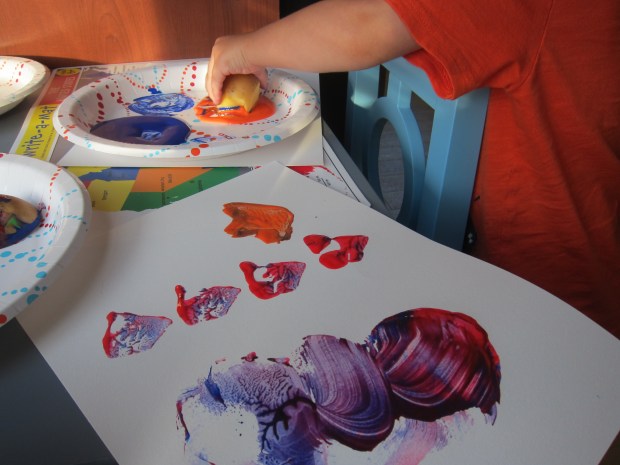
  • String Roller Prints String Print (7)
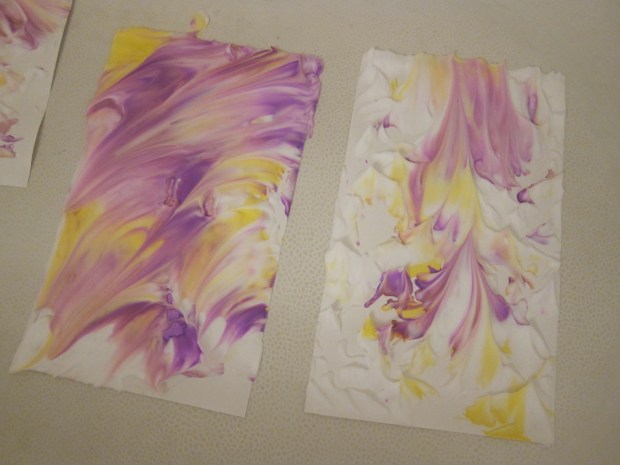
  • Shaving Cream Prints Shaving Print (7)
  • Flower Prints Flower Prints (6)

We learned:

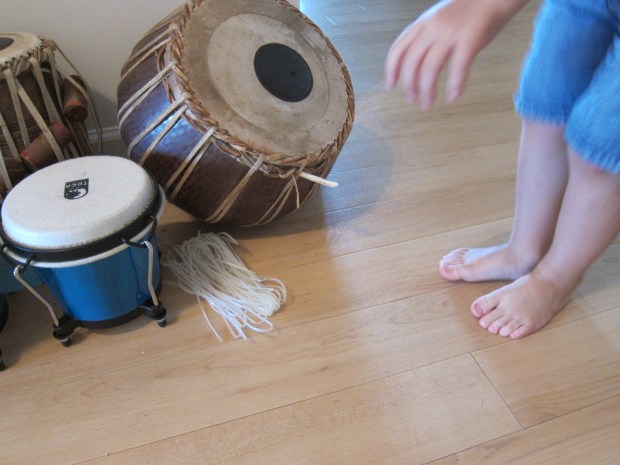
  • For science of the week, we focused on elephaNTs. First, I staged a huNT for the foods these big tall animals eat – fruits and peanuts placed up high… NT science (3)…and “hay” and “grass” (uncooked noodles) hidden down low. NT science (2)Travis loved cracking open whole-shell peanuts! NT science (4)We finished with an informative read of Usborne’s Beginner non-fiction book on Elephants, including mind-boggling facts about how much they weigh.
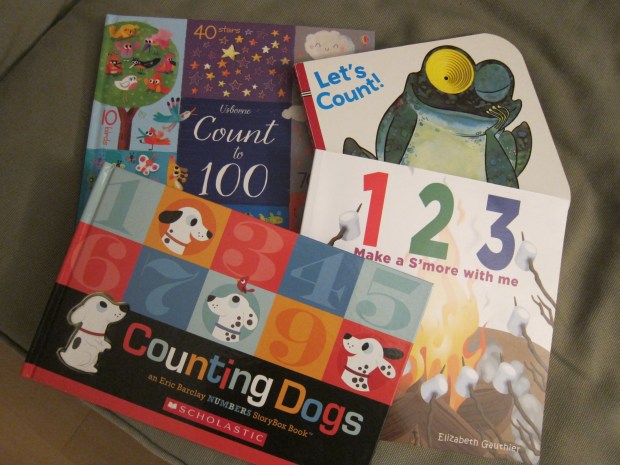
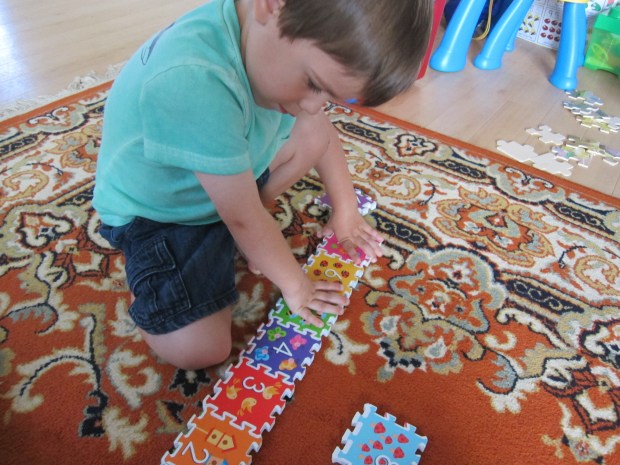
  • For math of the week, I simply pulled out all our couNTing books. 1, 2, 3 Make a S’more with Me by Elizabeth Gauthier lined up perfectly with another NT word (teNT). We also enjoyed Counting Dogs by Eric Barclay, Let’s Count from Sterling Children’s, and Usborne’s Count to 100. NT week (20)These are all great books for having your child count along on each page.NT week (21)
We Ate:

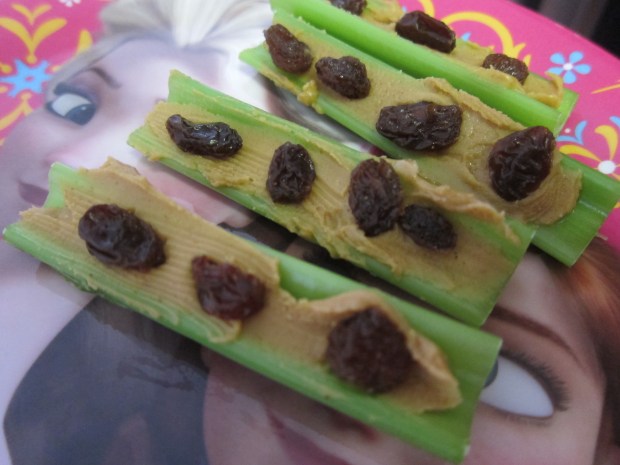
  • aNTs on a log NT week (26)

Other Words of the Week:

  • Ant: Well, I guess I can consider it appropriate timing that we had real ant visitors waiting for us in our new home! I much prefer my ants virtual though, and we had fun listening to an old favorite – The Ants go Marching.NT week (3)We read up on ants in National Geographic’s slim volume for beginner readers, and then we hiked like ants in our new backyard. Ant Trail (2)Finally – for super-cool mom points – we headed to an ant hill well away from home, sprinkled sugar on the ground, and watched the ants go to town. NT week (11)
  • Aunt: Thanks to timely visits from relatives, Travis got to see several aunts during our NT lessons, which was a nice prompt to discuss all the aunties in the family. One nice idea is to make a family tree and highlight the aunts this time.
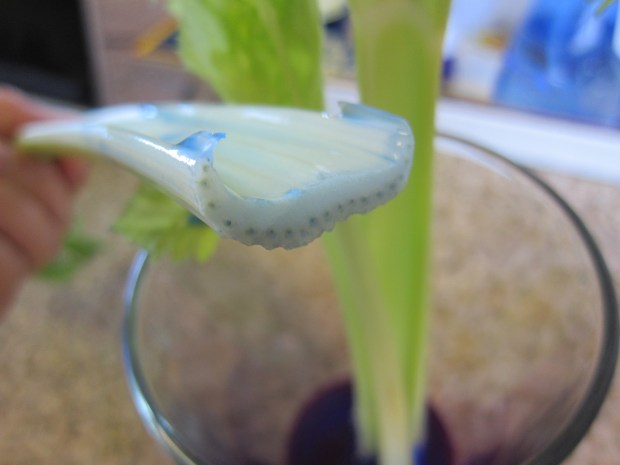
  • Plant: First we read Planting a Rainbow by Lois Ehlert, then we made plantable paper, which we’re still waiting to see bloom! We also had fun performing simple science with plants. A stalk of celery in a jar of blue-tinted water let us easily see how water creeps up a plant stalk. NT week (29)Next we covered a potted plant with a paper bag and observed it four hours later, shaking the bag a little. Water had condensed on the inside of the bag, allowing Travis to see how some water evaporates off a plant!NT week (30)
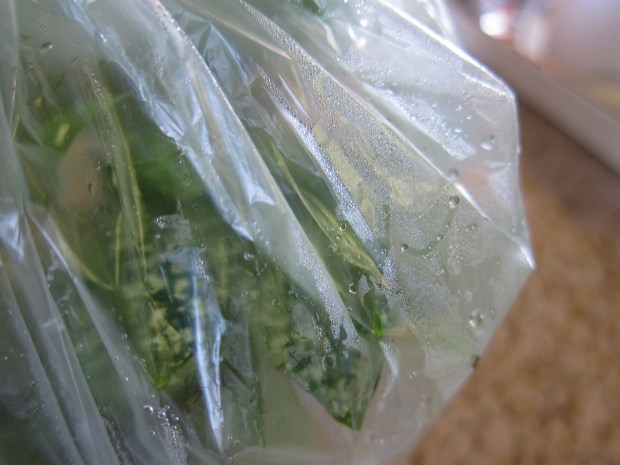
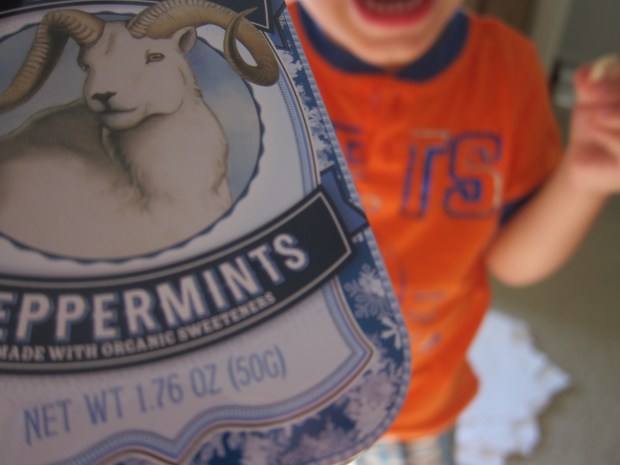
  • Mint: Aside from peppermint sticks at Christmas, Travis isn’t used to this flavor. Have a taste test and introduce your child to fresh mint leaves compared to a mint candy, and see which they prefer!NT week (8)
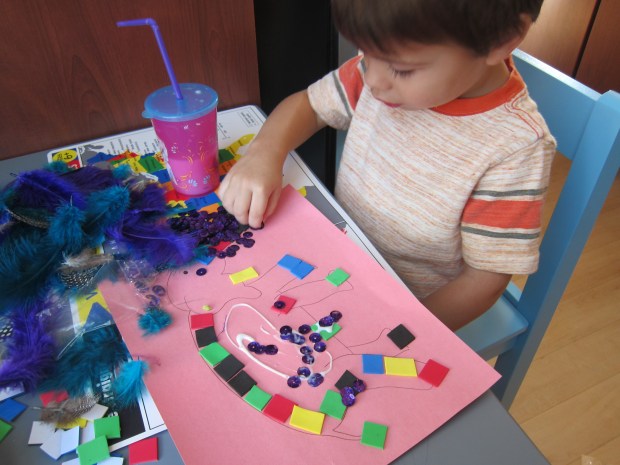
  • Elephant: In addition to our science on elephants, we needed a little art! My intent was for Travis to make a mosaic elephant using foam squares as the “tiles.” (Buy the kind with the sticky backing and you won’t even need glue). I drew an elephant shape free-hand on construction paper, but Travis quickly tired of the task with the foam squares. Mosaic Elephant (4).JPGAs a result, our elephant turned out more spangled and feathered than mosaicked. Either way, it was quite beautiful. Mosaic Elephant (5)For a final dose of fun, we listened to the Elephant Song and did our best to shake down the jungle.NT science (5)
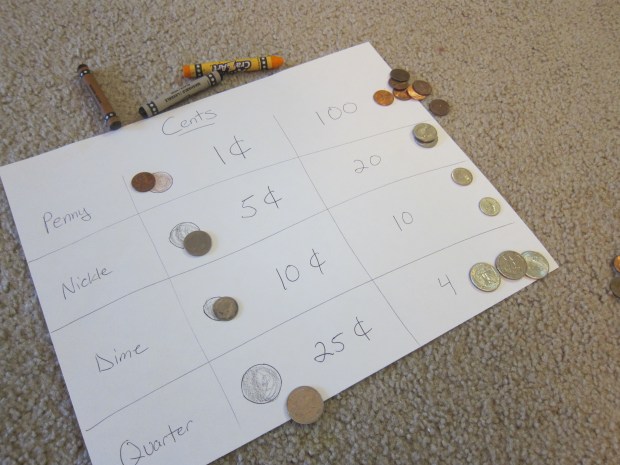
  • Cent: We played with the coins in Travis’s piggy bank, which always leads to inventive games of shop keeper or grocery store, and is a great way to gently introduce cent denominations.NT week (5)For older kids, you can also make a basic chart of the different coins and their values, and turn it into a matching game.NT week (6)
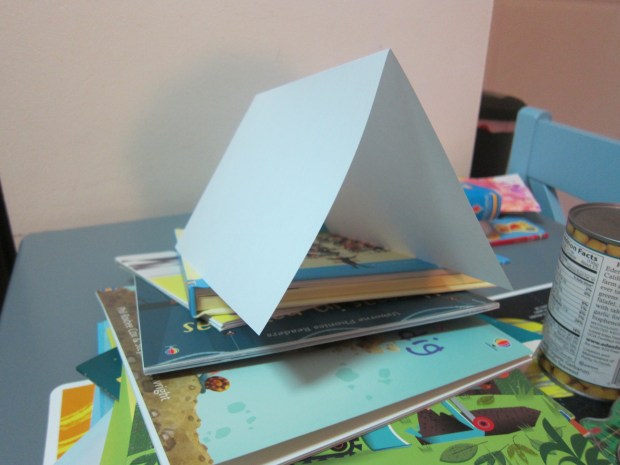
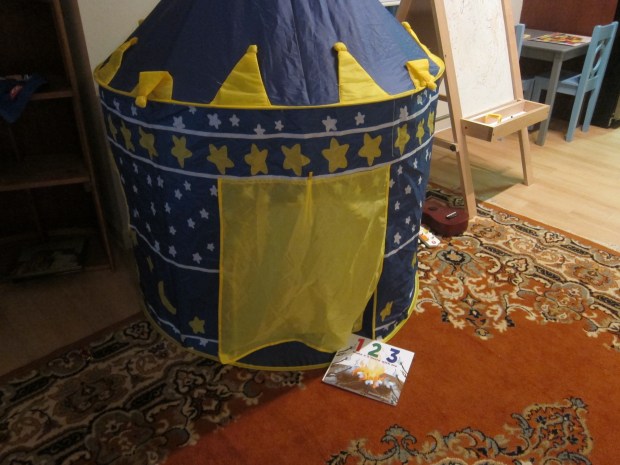
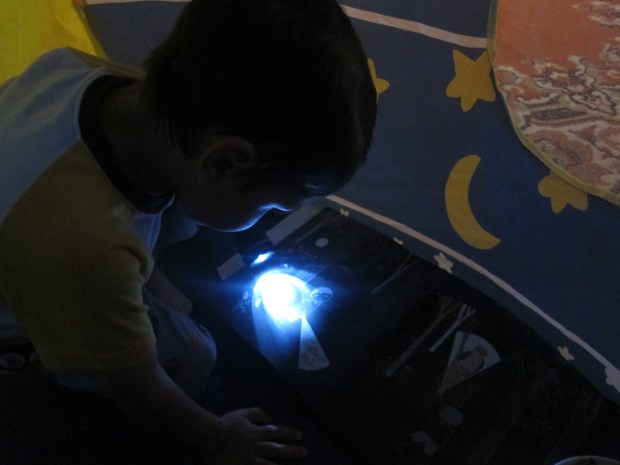
  • Tent: This word gave us the biggest laugh of the unit – we tested the strength of paper by comparing a paper tent to a paper cylinder. Strong Paper (9)Then we set up his play tent for many a game. NT week (15)Perfect for storytime throughout the weeks that NT was on our wall. NT week (19)Finally, a field trip to a local state park let Travis see real camping tents set up for the first time!NT week (14)
  • Hunt: Be sure to stage a treasure hunt before your NT unit is over. I drew pictures of furniture (with negligible skill, ha) and rolled each up like a map. NT week (12)Place a small toy in each spot, along with the map clue for the next prize! NT week (13)You can also go on a rainbow hunt in any garden. Rainbow Hunt (2).JPGSimply bring along a bucket of paint chips and see if you can match up all the colors of the rainbow on a pretty walk.
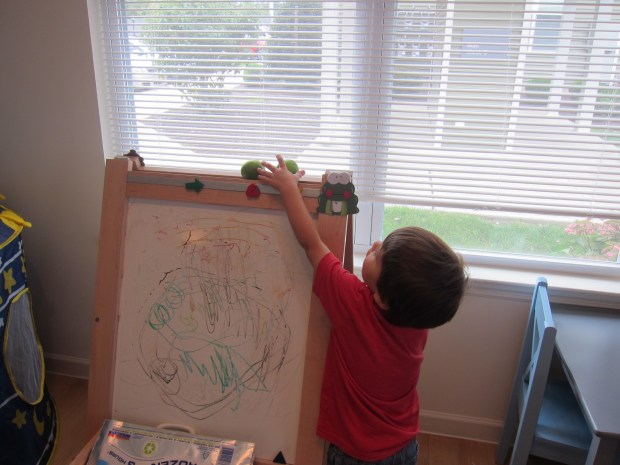
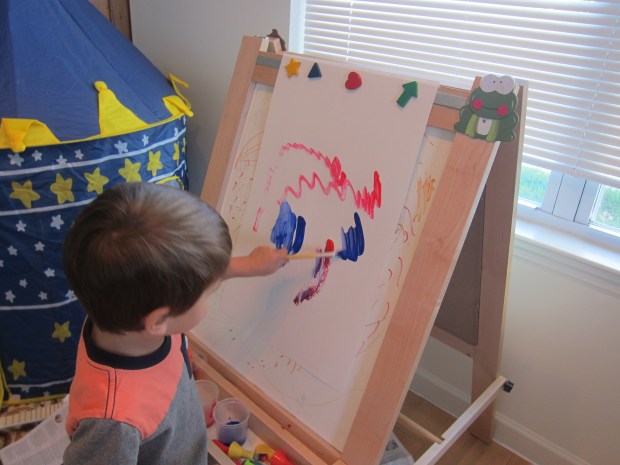
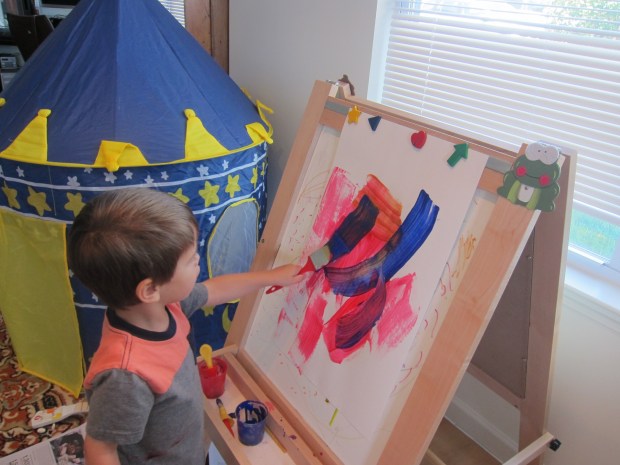
  • Paint: No doubt you already do enough ordinary painting with your child, so make it novel this week. Need inspiration? First paint with a balloon.Balloon Paint (3)Then try painting over salt!Salt Painting (7)Of course, you can’t go wrong painting at a regular easel; Travis said this picture was of dragon’s teeth. NT week (17)And he had fun exploring the thickness of different brushes.NT week (18)
Flower Prints

Flower Prints (6)

As summer draws to a close, I’m working through a bucket list of warm weather projects before we move on to fall and autumnal activities! This fun idea from Barefoot Books Kids’ Garden kit lets you bring flowers indoors as a keepsake that will last all winter!

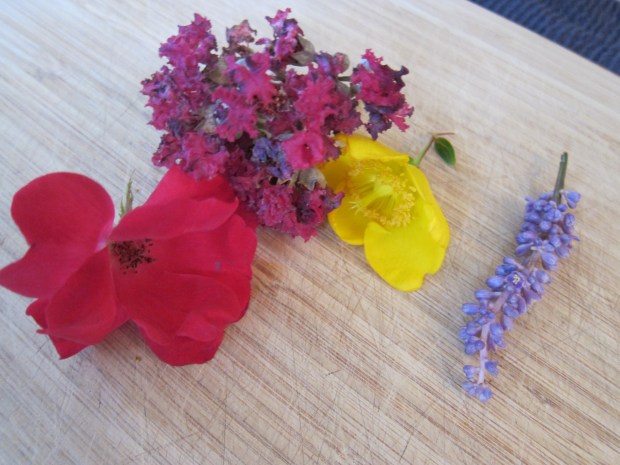
The first step of course was to gather our flowers. If you don’t have your own garden, find any pretty blossoms on a stroll through your neighborhood or a local park. Flowers that lie flat will work best, but we picked a variety just to test the results.

Flower Prints (1)

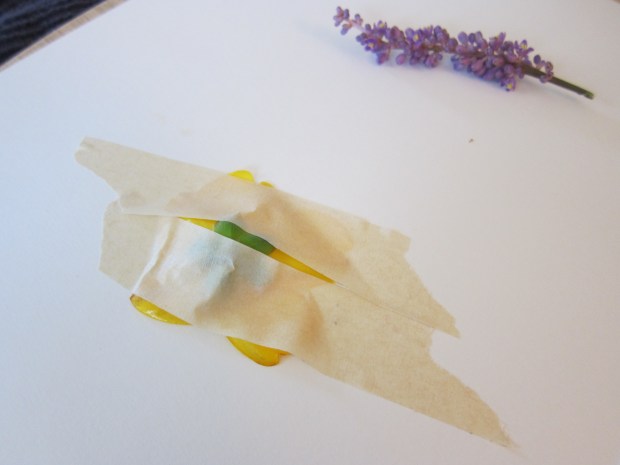
Travis was very intrigued by the set up when we returned home. On the floor, place an old dish towel for traction, followed by a cutting board and then watercolor paper.  Place your flowers, petals down, on the watercolor paper after removing as much of the stems and leaves as possible. Finally, cover your petals with painter’s tape, being sure to cover the flower completely, but trying not to let pieces of tape overlap.

Flower Prints (2)

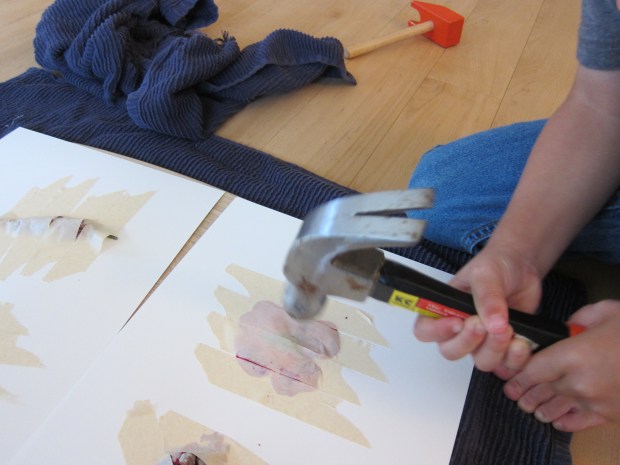
And now for the fun part! Although adults will need to do most of the hammering, Travis got to take a few swings at the flowers under careful supervision.

Flower Prints (3)

He then played along with his toy hammer while I finished the real work. You may want to peel back your painters tape a few times to make sure the color of the flower has transferred over to the paper, before removing the tape completely.

Flower Prints (5)

Peeling off the tape was great fun, too, of course.

Flower Prints (4)

Once the hammering was complete, Travis lost interest fairly quickly, but I loved the old-fashioned Victorian feel to the result. In a whimsical nod to the method by which we had obtained our prints, I “framed” them in additional painter’s tape in Travis’s room – a beautiful reminder of the fleeting beauty of summer’s blooms!

Flower Prints (7)

Color Mixing

Color Mixing (5)

I’ve recently discovered the all-natural, all vegetable-based food coloring from Watkins, which I am loving for their consistency and ease of use (no mixing required, as is the case with many natural pigments).

To have fun with the colors, we pulled out this simple game – it’s also a great way to discuss primary (yellow, red, blue) versus secondary (green, purple, orange) colors.

First we mixed our colors in 4 clear cups, one each of red, yellow, green, and blue. Add a pipette or spoon to each. Either one is good fine-motor skills practice.

Color Mixing (1)

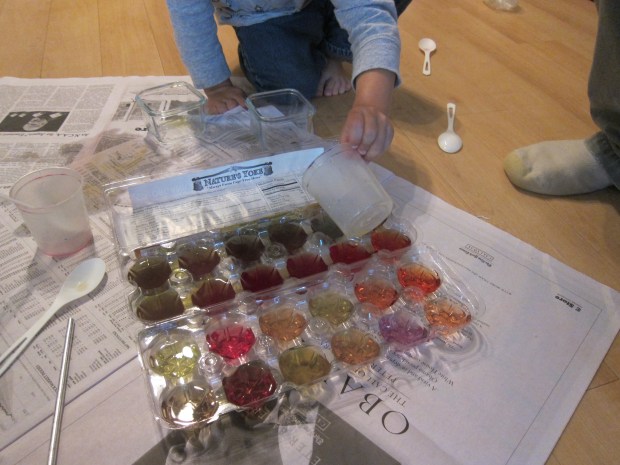
We used an upcycled egg carton for the color mixing, giving ample opportunity to make new colors in the multiple compartments of this one container. Place a little clear water in each compartment, then begin adding your colors and see what happens.

Color Mixing (2)

I thought Travis might consider the game a little old-hat (we did something similar back in the spring) but he was so into his creations.

Color Mixing (7)

Watching purple and orange form were big hits.

Color Mixing (6)

He also was very interested in how he could make brown (which he says is his favorite color!), and intrigued when I said he could create it just by mixing all the colors together.

Color Mixing (4)

An easy and fun diversion for a rainy afternoon.