Rainbow Kebabs

Rainbow Kebabs (3)

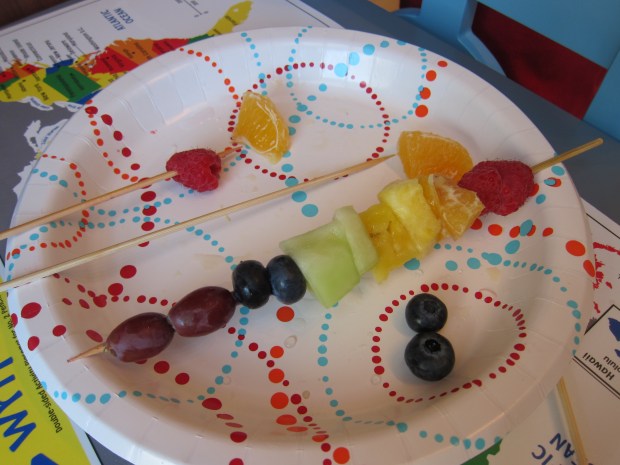
As fun as it is to draw the rainbow or craft with the rainbow, it’s even more fun to eat it! Make these simple kebabs for a healthy and educational snack.

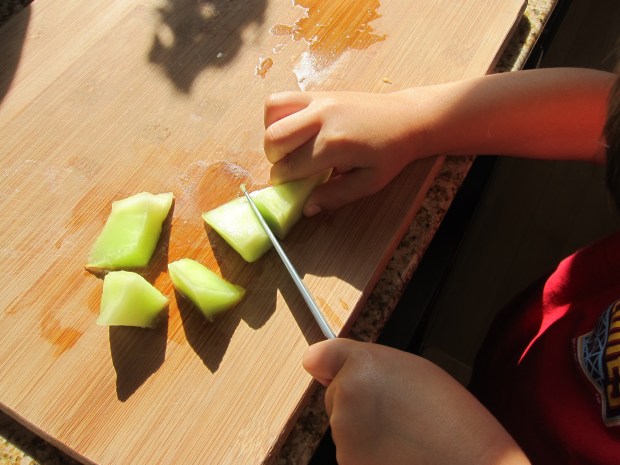
Start off with some fine-motor skills practice by letting your child use a kid-friendly knife on some of the larger fruit pieces, like pineapple and melon. Smaller items (blueberries, grapes), don’t need to be cut.

Rainbow Kebabs (1)

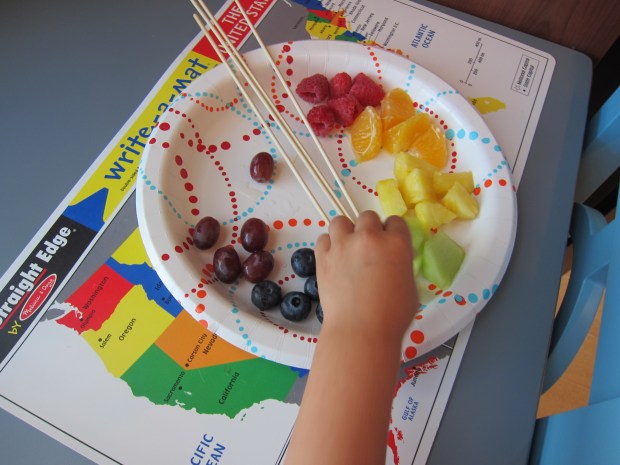
Now assemble all of your fruits on a plate, making sure you have something in every color of the rainbow. Suggestions are as follows:

Red: strawberries, raspberries

Orange: oranges

Yellow: pineapple

Green: kiwi, honeydew

Blue: blueberries

Purple: grapes

Encourage your child to thread the fruits onto their skewer in rainbow order. Travis was so busy stealing nibbles of fruit that he let me assemble most of them, though! He was most excited by the pineapple, which I don’t buy very often: “I want a yellow one!”

Rainbow Kebabs (2)

If you want to add whimsy to your skewers, consider a marshmallow “cloud” or two!

Overall, this snack ranks high for being both healthy and fun.

Rainbow Kebabs (4)


Plantable Paper

Plantable Paper (9).JPG

There’s a little bit of magic to this craft, the idea that flowers can sprout from paper. It’s a multi-day project, but you only need a little time each day to make the magic bloom.

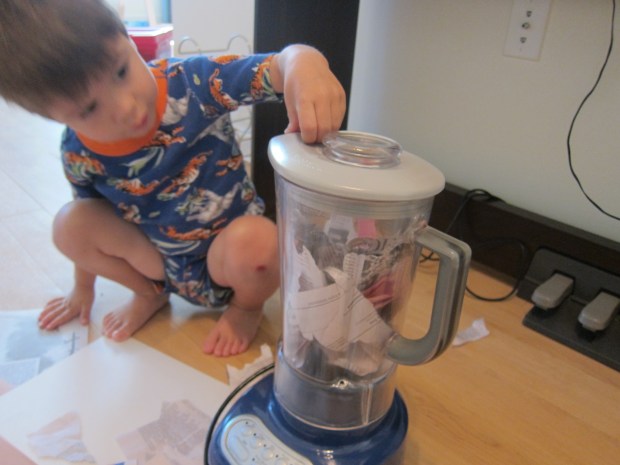
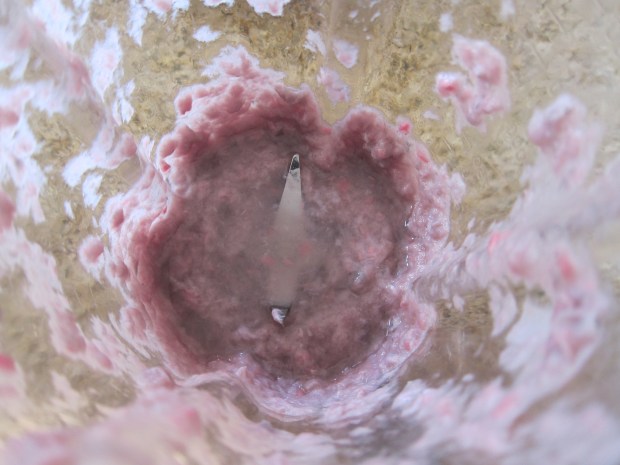
The instructions I had found online for making the paper mush were a bit vague, but worked just fine, so here’s all you do: Fill a blender about halfway with torn newspaper and scrap paper (we used pink construction paper scraps, which gave our final product a nice pink hue). Cover the paper mixture with hot water, then process until you have a mush. Travis loved the novelty of paper in a blender instead of food!

Plantable Paper (1)

Caution: Make sure to remove the center piece of your blender’s lid and cover with a paper towel while blending so steam can escape, otherwise you’ll end up with hot water splatters. Let the mixture stand for about 15 minutes.

Plantable Paper (2)

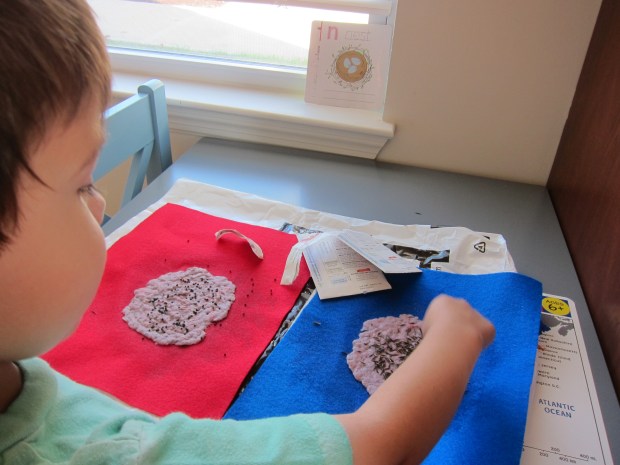
The next step is messy, so cover your work surface (I used a large shopping bag). Place two pieces of felt on top of the bag. Scoop the mush onto the felt, and have your child help you smoosh it into a very thin layer.

Plantable Paper (3)

Then it was time to sprinkle on our flower seeds! We had two very different kinds – cosmos which looked almost like large cumin seeds, and larkspur, which looked more like hard black poppy seeds. I don’t do much gardening, so examining the seeds was fun for Travis and me both!

Plantable Paper (4)

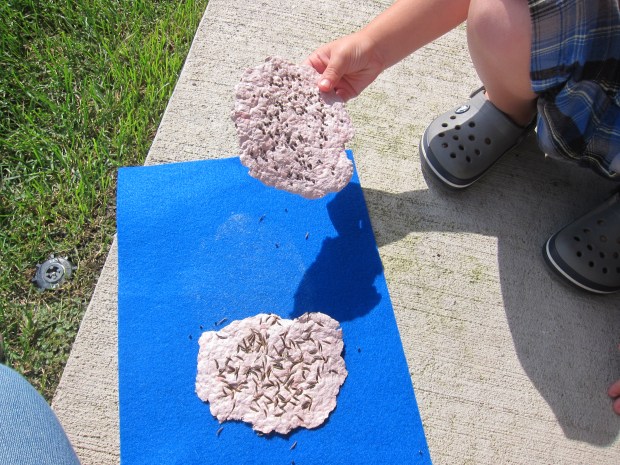
Leave the mixture to dry on the felt. After the first day, I carefully flipped each piece over, then left them to dry some more. By now I could consolidate onto one piece of felt.

After two days, the mushy paper will be completely dry. Remove it from the felt and cut into shapes if desired – hearts felt just right!

Plantable Paper (8)

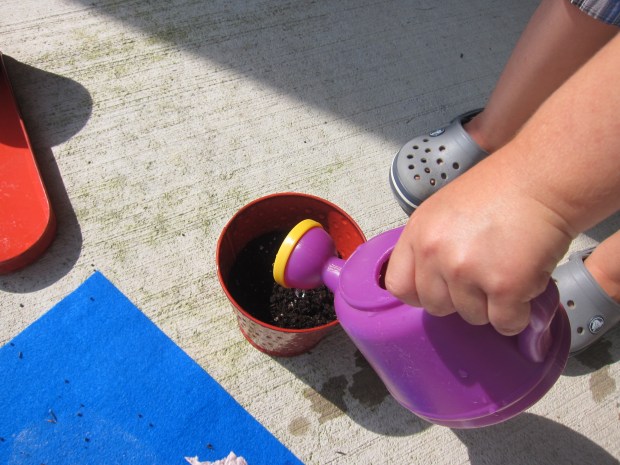
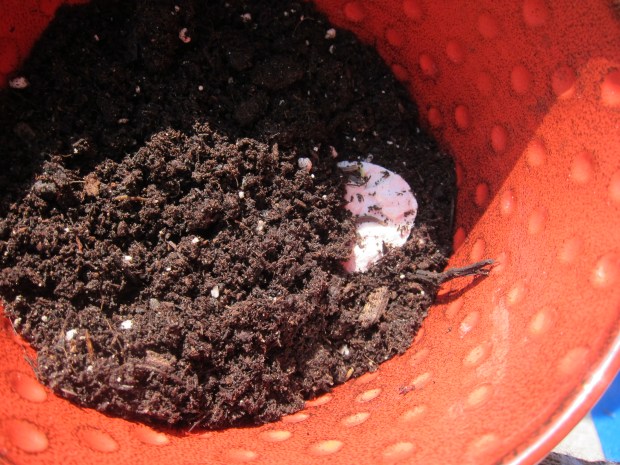
We headed outside with pots and soil, and planted our paper. Travis loved watering them!

Plantable Paper (12)

Now we just need to sit back and wait for the flowers to grow.

Plantable Paper (11)

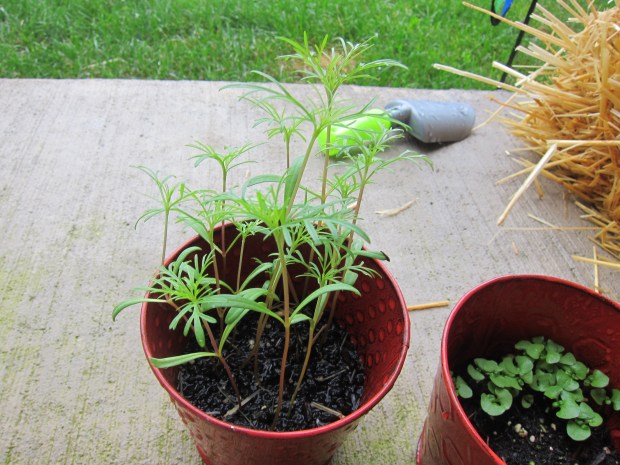
Update: It worked! Here are some beautiful shoots at day 5.

Plantable Paper (12)

Here is the growth after a couple of weeks:

Plantable Paper alt.JPG


Orzo Pasta Salad with Tofu

Orzo Pasta Salad

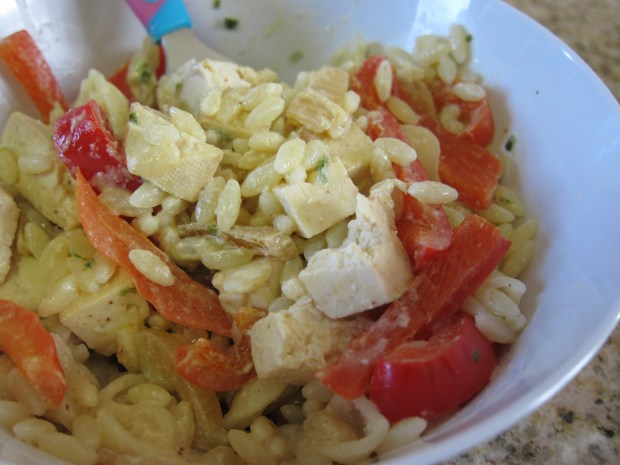
Here’s an alternative way to serve the tofu and bell pepper mixture I featured a few nights ago in a fajita recipe! For the cheese, I like to use Miyoko’s Kitchen double cream chive.

Ingredients:

  • 2 tablespoons olive oil, divided
  • 1 medium yellow onion, thinly sliced
  • 1/2 teaspoon cumin
  • 1/2 teaspoon chili powder
  • 2 red bell peppers, thinly sliced
  • 1 (14-ounce) package firm tofu, cubed
  • 1/2 lime
  • Orzo pasta
  • Vegan soft cheese
  1. Heat 1 tablespoon olive oil in a large skillet over medium-high heat. Add the onion, cumin, and chili powder; saute for 5 minutes. Add the bell pepper and saute for an additional 6 minutes, until the peppers are soft; transfer the mixture to a bowl.
  2. Heat the remaining tablespoon oil in the pan. Add the tofu and juice from half a lime. Cook for a final 6 minutes.
  3. Meanwhile, cook orzo pasta according to package directions: for every 1 cup of cooked orzo, top with 1 cup of the tofu mixture, and stir in 1 to 2 ounces of the vegan cheese to taste. Leave the cheese in chunks or stir until it melts to make a creamy, cheesy sauce.

Orzo Pasta Salad (2)

Music Crate

koala music (15).JPG

I was thrilled when I spotted our latest Koala Crate – a music-themed kit awaited us! Music is Travis’s favorite thing in the world, so I knew this one was sure to be a hit.

As always with Koala Crate, you can recreate most of the crafts below after a trip to your local craft store.

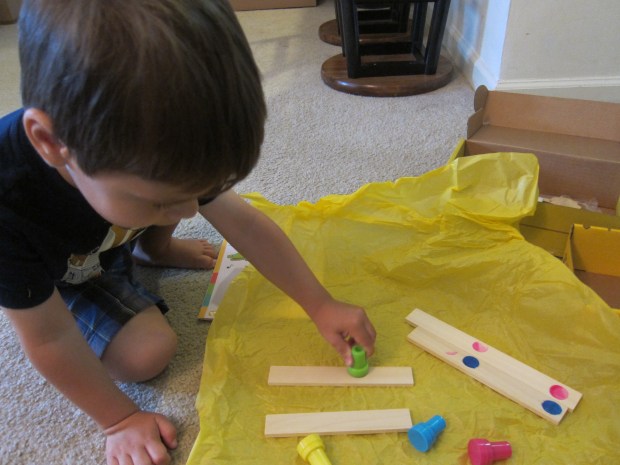
The first project was a make-it-yourself xylophone, made from a cardboard box, elastics, and wooden slats. There were some interesting learning components to explore as we put together the xylophone; for example, first he had to arrange the wooden pieces from longest to shortest.

koala music (1)

Each wooden slat then needed to receive a color-coded dot from the provided dot stamps, which would become its “note.” This was a bit of a hard concept for a three-year-old, who simply wanted to dot his stamps all over the wooden pieces any which way. So it became a good lesson in restraint!
koala music (2)

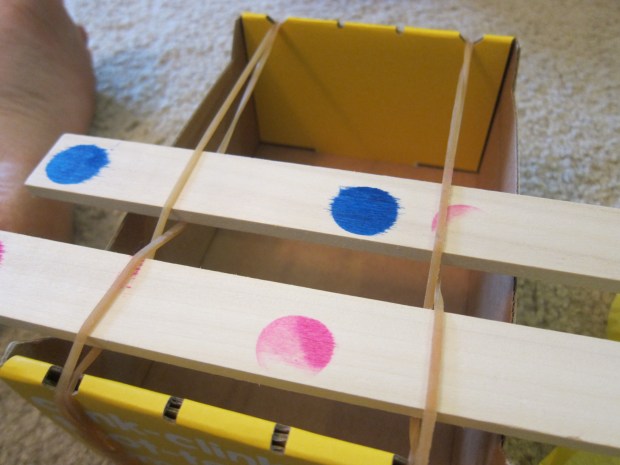
Threading the four xylophone pieces through the rubber bands required grown up hands, but Travis loved the end result.
koala music (3)

“You sing and I play!” he instructed me, and was off and running with games pretending to be a music teacher. I was pleased with the sound, very similar to a marimba or other African wooden xylophone.

koala music (4)

Now it was time to compose our own song with the provided “musical composition” sheets. By filling in each circle on the sheet with a dot stamp, kids can play a tune in order on their xylophone. All this was a bit beyond Travis’s interest – he simply had fun composing a “song” that was nearly all blue…

koala music (7)

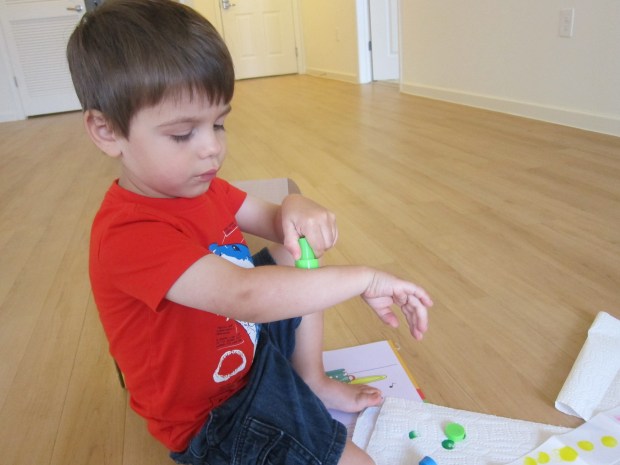
And testing out how the stamps looked on his arm…
koala music (6)

Luckily the kit came with two blank sheets, so I made one with a pattern Travis would later be able to play.

koala music (8)

In a neat twist, you can also remove the four wooden slats any time, reposition the elastics, and turn this toy into a “guitar.”

koala music (26)

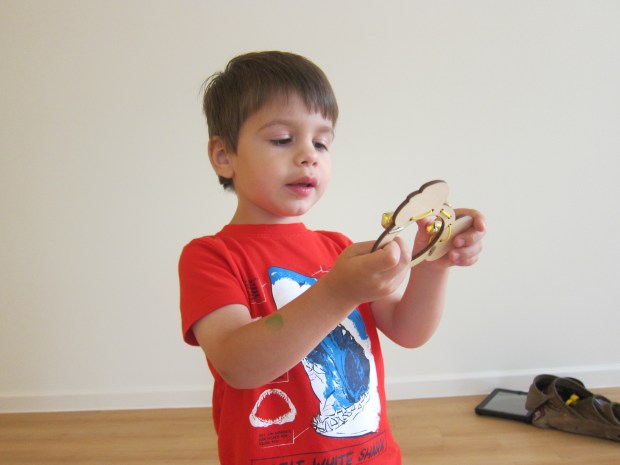
Next up was a homemade tambourine. The kit came with a cardboard (koala-shaped, very cute) tambourine base, bells, and elastic thread. Travis easily did his best threading yet as we pulled the elastic through a hole, added a bell, then looped back down again.

koala music (10)

This one was quick and easy, and enjoyable to shake along to a beat.
koala music (11)

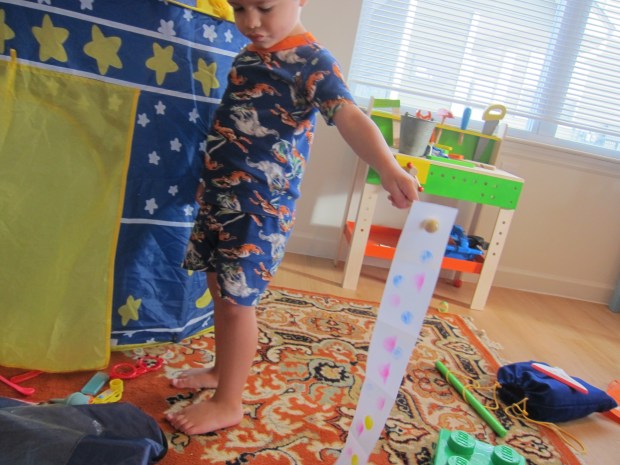
The final project gave Travis a chance to go wild with the dot stamps as he’d hoped to do on the wooden xylophone pieces. Simply dot all over the provided ribbon fabric, then let dry.

koala music (5)

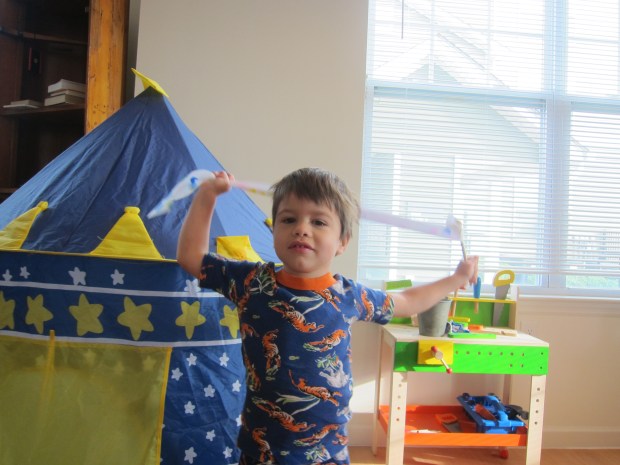
Once the stamps were dry, I looped the ribbon onto a wooden mallet and it was now a musical prop to wave around.
koala music (12)

We had fun exploring tempo (fast and slow), wiggling the ribbon like a snake, holding it overhead like a rainbow, and more.
koala music (13)

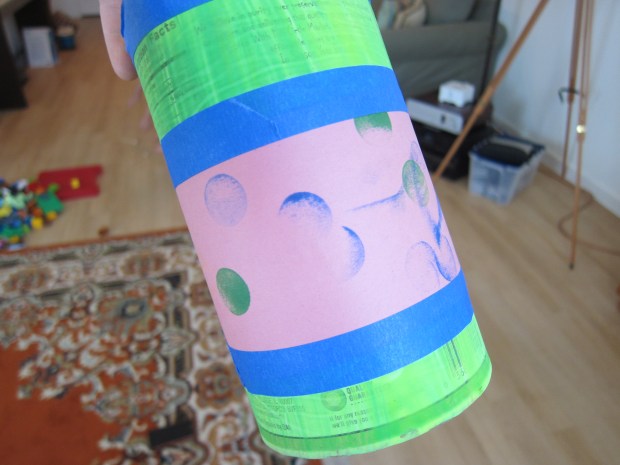
We couldn’t stop there, of course. The kit came with a suggestion for one final DIY instrument – a drum upcycled from a soup can! We decided to make two sizes of drums, so painted both the soup can and an empty oatmeal container.

koala music (19)

Once the paint dries, snip the narrow necks from balloons, and stretch the wide part of a balloon over each container as the drum skin. Secure the balloon with masking tape. We covered a piece of construction paper with the dot stamps and added that to the middle of our drums as decoration.
koala music (24)

Now it was time for a drum circle!

koala music (22)

Or a drum stack?

koala music (25)

Needless to say, a huge hit – pun intended!

koala music (21)

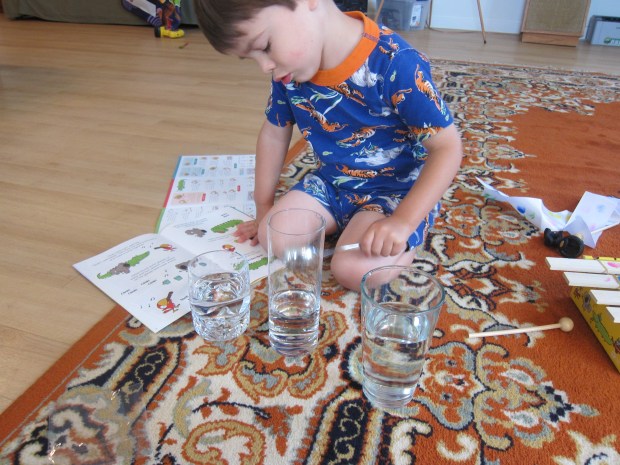
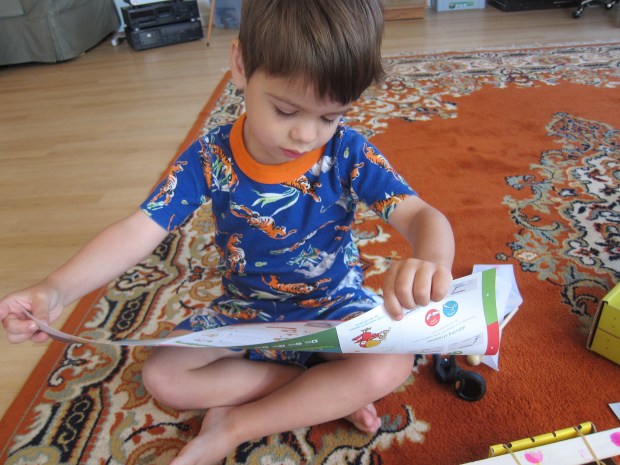
As a final note, it’s fun to watch Travis’s brain grow with this subscription. This was the first month in which he was interested in the games in our Imagine magazine, following along maze trails with his finger and more. One storyline in the magazine even prompted us to test a water glass xylophone!
koala music (16)

I love watching this boy grow, and love the ways in which Koala helps us do it!
Koala music (14)


Rainbow Shape Mobile

Rainbow Mobile (9)

Travis has been a big helper decorating our new home, and this project was a fantastic way to continue recent projects where we talked about exact rainbow order. It’s also a great review of shapes before he steps into pre-k in a few weeks!

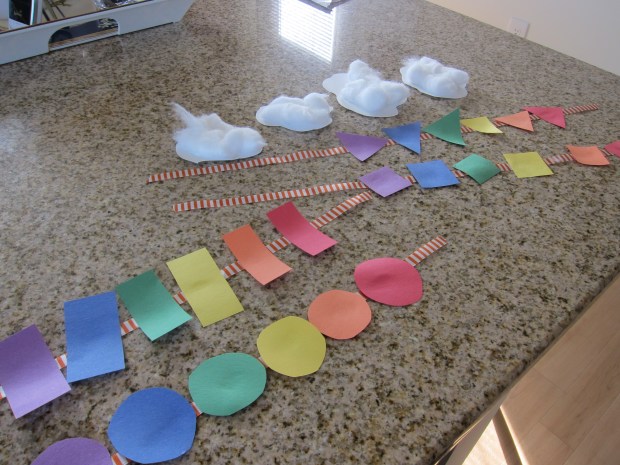
Sorry grown-ups, but this one’s a little labor-intensive on your part at the front end. Using construction paper in all the colors of the rainbow, I cut out a square, rectangle, triangle, and circle from each.

Rainbow Mobile (1)

While I was busy cutting, Travis got in some practice with safety scissors:

Rainbow Mobile (2)

Your child might also like to try tracing or drawing shapes of his or her own as you work.

Once the shapes were ready, we needed to sort! Travis has been very into sorting lately, so loved helping separate the pieces into four piles by shape.

Rainbow Mobile (3)

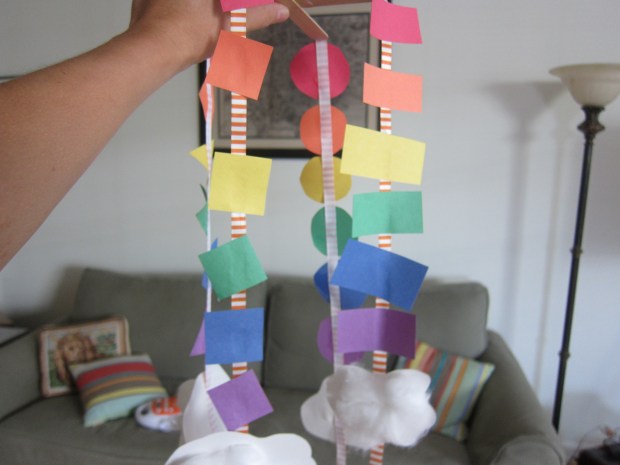
For each group, we snipped a long ribbon and then glued the pieces on in rainbow order, singing the order of the colors as we went: “Red, Orange, Yellow, Green, Blue, Purple, Makes a Rainbow.” (My apologies to indigo and violet).

Rainbow Mobile (4)

When we had finished with the rectangles, Travis excitedly asked, “Are we going to do another one??” He chose triangles next, and so on until all our shapes were glued.

Rainbow Mobile (5)

This project was gorgeous even while drying on the counter!

Rainbow Mobile (8)

While the shapes dried, we made the finishing touch – white cloud shapes with puffy cotton balls glued on. We added these below the purple shapes on our ribbons.

Rainbow Mobile (6)

To assemble your mobile, glue two jumbo craft sticks together at the middle. Note: You can have your child color on the craft sticks with marker if they’d like to, but since this part of the mobile will hang up on the ceiling, it’s not necessary.

Rainbow Mobile (7)

Glue one strand of shapes onto each of the four craft stick ends, then use a length of yarn or ribbon to suspend your mobile.

Rainbow Mobile (10)

You’ll have a rainbow to cheer you every day in your home, whether you’ve just moved in or have been there for years!

Rainbow Mobile (11)


Eclipse Viewing

Eclipse (8)

Apologies that I did not post this blog before today’s amazing eclipse – but tuck this post away for a mere 7 years from now, when the next total eclipse comes to the U.S. Not a terribly long wait…

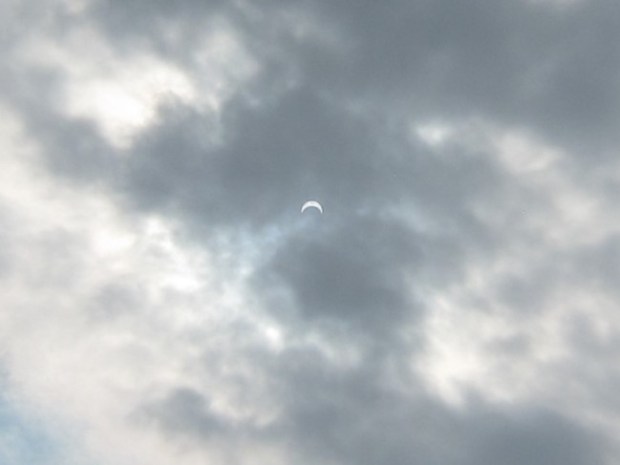
We made sure we were out there today for the viewing, even though we were in an area with a 71% eclipse. We came equipped with two homemade viewing techniques.

The first is very simple to put together, tho the results weren’t fantastic. Cut a square in one piece of cardstock, and cover the square with aluminum foil. Prick a hole in the foil with a pin, then project onto a second piece of white cardstock. Here’s the sun with the fun just getting started!

Eclipse (1)The box pinhole projector we made was much more effective, though a bit more labor intensive. Cut two holes into one short side of a shoebox or cereal box. Cover one hole with foil; leave the other hole open (this is what you’ll peer into). Prick the foil with a needle or toothpick.

Eclipse (6)

Stand with your back to the sun and peer in – you’ll see the eclipse projected onto the inside wall of the box. The effect will be clearer if you line that side of the box with white paper, although this step isn’t necessary. In fact, we could see the shadows of the clouds on the inside of our box.

Of course, nothing compared to the look we got through the special viewing glasses of some friendly neighbors (who managed to buy theirs before every place under the (eclipsed!) sun sold out).

Eclipse (10)

Needless to say, we’ll be watching again on April 8, 2024.

Eclipse (9)

Hiking on an Ant Trail

Ant Trail (2)

This adorable idea came to us from Barefoot Books’ Kids’ Garden kit. All you need is a 3-foot length of string, magnifying glasses and your imagination to have a magical moment.

Our new home has a patch of grass – a novelty after years with a balcony that overlooked a dumpster – so when I asked Travis if he wanted to pretend to be an ant outside just after breakfast, the answer was an enthusiastic yes!

Ant Trail (1)

I cut a length of string about three feet long and we placed it in the grass with a few loops and coils. Using our magnifying glasses as we walked, we went inch by careful inch to try and see the world from an ant’s point of view.

Ant Trail (3)

Some of our best finds were little roots of a bush:

Ant Trail (9)

Tiny plants popping up from the soil:

Ant Trail (6)

and dew drops sparkling on a spiderweb.

Ant Trail (8)

It was fantastically fun to slow down and move so carefully, especially in this fast-paced world of ours.

Ant Trail (7)

Do your child and yourself a favor and try this game soon!

Ant Trail (5)

Rainbow Coloring

Rainbow Crayons (2)

We’ve always loved rainbows around here, but now Travis is really starting to latch on to the idea that there is a rainbow order, instead of a random array of beautiful colors. This easy crayon trick will help your child remember which order the colors are in!

Ready for how easy the set up is? Adults: Use masking tape to make 2 batches of crayons – one red/orange/yellow and the second green/blue/purple.

Rainbow Coloring (1)

That’s all there is to it! Now use the red batch on top and the green batch on the bottom to make a beautiful arced rainbow.

Rainbow Crayons (4)

Travis loved the novelty of the crayons, which are also simply great for drawing pretty pictures and squiggles.

Rainbow Crayons (3)

Balloon Painting

Balloon Paint (5)

When plain old paints and paintbrushes have grown a bit stale, look no further than this novel project! This time around, a balloon itself is your “brush.”

To start, blow up balloons just slightly (you want your little one’s hand to be able to grab on).

I set Travis up with the balloons and several colors of paint on a well-covered surface. You can stick to a color palate (we used various shades of green), or go wild with vibrant primary colors or any shade in between.

Balloon Paint (1)

It was neat to see the different effects we could produce with the balloon as our brush, whether making big blobs by pressing or streaks from rolling.

Balloon Paint (3)

The marks almost looked feathery at times, very neat!

Balloon Paint (6)

In complete honesty, Travis decided he didn’t like the activity much, since the balloon got his hand very messy with paint. His favorite part though was looking at the dried painting afterward, and discussing how we had made it!

Balloon Paint (4)For kids who do love making a mess (and being a mess), this is sure to be a huge hit.

Balloon Paint (7)

Phoneme Week 7: FR

FR week a

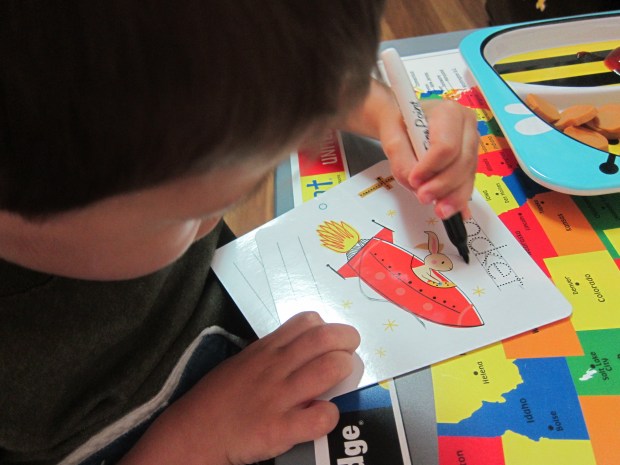
As with the SH phoneme, summer has us moving slow, meaning we spent about a month working our way through fun FR words and activities rather than a week. Travis latched on right away to the rather odd “fruh” sound, telling me that frog has a fruh, but tree doesn’t! I love seeing him grasp the concept of phonemes. We traced our F and R Alphabet Wipe-Clean Cards and then embarked on some learning fun.

FR week (8)

Phonics Book of the Week: Frog on a Log. This silly phonics book actually doesn’t have a single other FR word aside from the frog in the title (it rhymes many -og words instead), but FRog is repeated throughout, making it a quick sight word for Travis. And how could we pick any other book, since frogs were our main theme? Read on!

Guiding Theme: FRog

To jump right in to the frog main theme, I taught Travis how to play leap frog. We also pulled out rubber frog bath toys, who joined in bathtime for nearly 2 weeks before he tired of them!

FR week (3)

We listened:

We Made:

  • A Paper Plate FrogPaper Plate Frog (9)
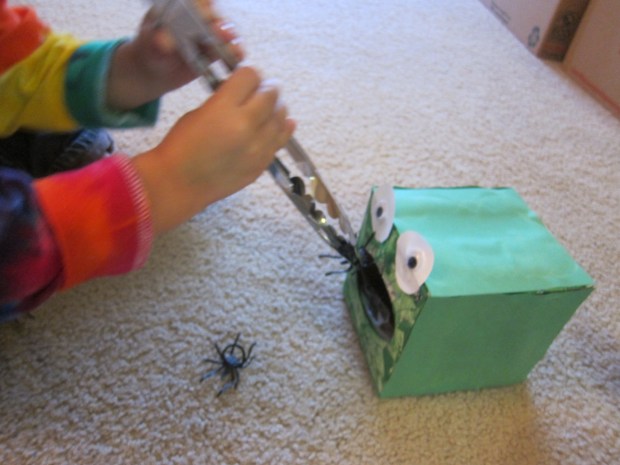
  • A Feed the Frog. Travis loved first painting a tissue box green, but when this didn’t make it quite great enough, we added green construction paper with glue the next morning. Feed Frog (3)Glued-on googly eyes complete your little frog. Then have fun feeding your frog plastic insects or spiders. Feed Frog (5).JPGTongs make the game great for fine motor skills.Feed Frog (2)
  • Also check out old frog games of ours, including a DIY Frog Pond and Frog Rock.

We Learned:

  • Usborne’s Beginner non-fiction book on Tadpoles and Frogs was the perfect reader for our science of the week on a frog’s life cycle. If you’re ambitious, you might consider buying a grow-a-frog kit!
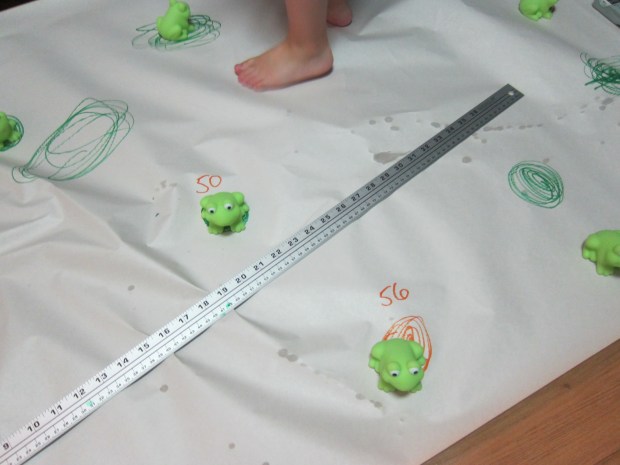
  • For math of the week, we had fun measuring the leaps of frogs! We pulled out a large sheet of butcher paper and took turns leaping (i.e. throwing) the frogs. FR math (2)We marked a lily pad wherever one landed, and then used a ruler to see how many inches each frog had jumped. Travis had so much fun that he was busy drawing lily pads and tossing frogs long after the activity was officially “over.”FR math (3)

We Visited:

  • A local nature preserve was the perfect place to look for frogs. We spotted this big fellow outside…Audobon (1).JPG …as well as some in their rehabilitation room. Spotting tadpoles helped reinforce what we’d learn in our science of the week about the frog life cycle. Meanwhile, we soaked up plenty of FResh air while we were there.FR week (7)

We Ate:

Other Words of the Week:

  • Frame: We pulled out the chalkboard paint and had a blast painting a simple wooden frame. This craft would make a fantastic gift. Perhaps for a FRiend?Chalkboard Frame (6)
  • Fraction: Make fraction plates! Keep it simple for a preschooler, but you can also talk about fractions as you divide food all week – pizza slices into eighths, for example, or a sandwich in half.Plate Fractions (5)
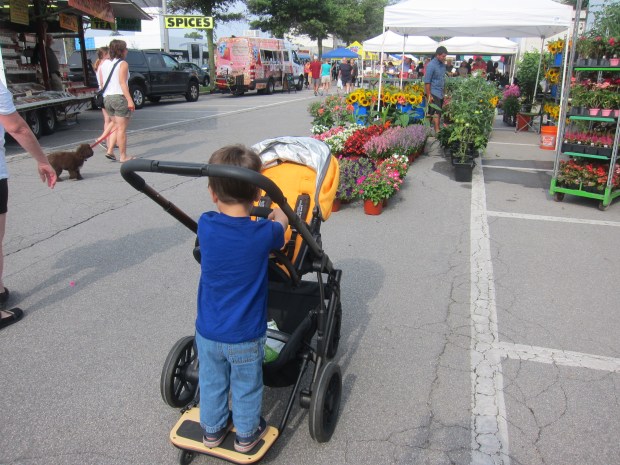
  • Free: This was my personal favorite word of the unit, since it led us to come up with ways to have free (or nearly-so) fun. Examples from our summer bucket list of free enjoyment included: a car wash;car wash (1).JPG browsing a farmers market;FR week (19).JPG blowing bubbles;FR week (11) taking an inch hike (look for things that are one inch or less, surprisingly harder than you’d think!);FR week (22) having a shaving cream throw-down (free if you steal Daddy’s canister);FR week (26) and a picnic in a park.FR week (28)
  • Freeze: A perfect word for a hot summer month. First we simply FRoze a tray of ice cubes – and then had fun thawing it! FR week (17)You can also play a good old-fashioned game of freeze dance.
  • Fresh: We had fun exploring the properties of fresh vs. salt water. This is also the perfect chance to introduce kids to the wonders of fresh homemade bread – fresh pretzels were the perfect yummy example. Then – perhaps the most magical moment of our FR unit – we picked fresh berries at a local farm!FR week (18)
  • Friend: Here’s the perfect chance to talk about the meaning of the word friend, since preschoolers are beginning to form early bonds and playing together instead of parallel play. One cute book to read is That’s What Friends are For by Florence Parry Heide. So have a playdate this week, and while you’re at it, sing the silly song Be Kind to Your Web-Footed Friends.
  • Frown: We took advantage of homemade playdough to make frowny faces. I added FReckles too! Making faces, whether in playdough, clay, or marker is a great vocab builder for expressions, emotions, and facial features.FR week (31)
  • Frost: Even though it was wildly out of season, Travis loved watching clips of Frosty the Snowman. FR week (24)Then we made homemade frost on our windows!