Chock-Full of Blocks

Chock-Ful of Blocks (3)

Here’s a fun spin on block play if your toddler is growing tired of simply building towers up and knocking them down.

I gave Veronika a small box and challenged her to fill the bottom of it completely with blocks so that none of the bottom showed. She didn’t understand at first, but I modeled the behavior and she soon joined in the fun.

Chock-Ful of Blocks (1)

She did also try to build up a little once our bottom was covered!

Chock-Ful of Blocks (2)

The box was quite small so we decided that we needed a bigger space to work with. Mark out a square or rectangle on your floor with painter’s tape and show your toddler how to fill that space with the blocks.

Chock-Ful of Blocks (4)

This was a great way for Veronika to see how some shapes fit together to form others, too! Two triangles made squares in some of our corners, and two squares could make a rectangle. Obviously she needed a lot of my help for this activity, but it was a fun project to tackle together.

Chock-Ful of Blocks (5)

As a bonus, she also loved the clean-up, throwing all the blocks back into the bin one-by-one until the tape square was empty once more.

Dancing Turkeys

Dancing Turkey (10)

If you’re starting to get in the mood for all things turkey in advance of Thanksgiving, these silly turkey puppets will kick things off on a lighthearted note.

To make the turkeys was quite complicated, and truth be told ours looked a  bit more like a chicken since I had white yarn, not brown, for the steps that follow.

For the body, wrap a ping-pong ball or golf ball in double-sided tape and then wrap with yarn. Tuck the final strand under to secure.

Dancing Turkey (1)

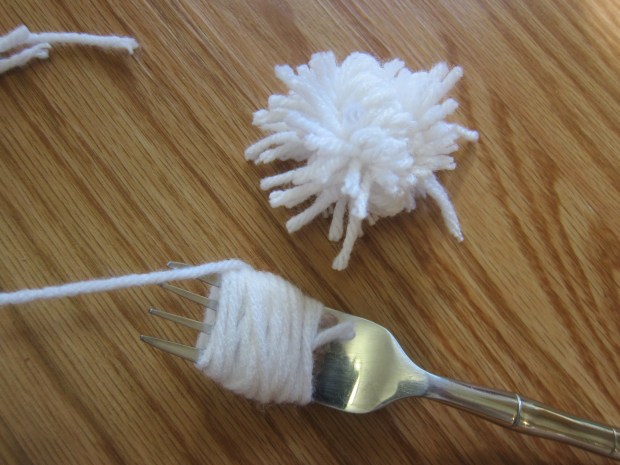
Next, you’ll need to make three pompoms, two for feet and one for the turkey’s head. For an easy at-home pompom, wind yarn around the tines of a fork, then tie a string tightly around the middle in the other direction. Slip off the fork and snip the loops to make pompom fringe. Make sure to leave one long strand on each pompom foot.

Dancing Turkey (2)

Cut a beak from felt and hot glue onto the head pompom, along with 2 wiggle eyes.

Dancing Turkey (3)

Now put it all together! I hot glued a length of craft boa onto the back of the body, then curved a half-length of pipe cleaner into an S shape. Hot glue the top of the S to the head, and curve the bottom of the S around the body, securing with a little extra hot glue.

Dancing Turkey (5)

Tie the long strands from each pompom foot onto the body. Finally, hot glue feathers along the boa in back for the turkey’s tail feathers.

Now to make it dance! Cross two Popsicle or craft sticks into an X and secure with yarn around the middle.

Dancing Turkey (6)

Cut three lengths of stretchy jewelry cord; you’ll need two 12-inch pieces and one 6-inch piece. Tie the long ones to the legs, and the short one to the head, and then secure them all to the Popsicle sticks.

Dancing Turkey (8)

Break out the Thanksgiving tunes and make it dance! We loved kicking off this holiday in celebration of these beautiful birds.

Dancing Turkey (9)

Puzzle Pursuit

Puzzle Pursuit (5)

Here’s a fun way not just to do puzzles with a toddler, but to make finding the pieces a part of the puzzle, too!

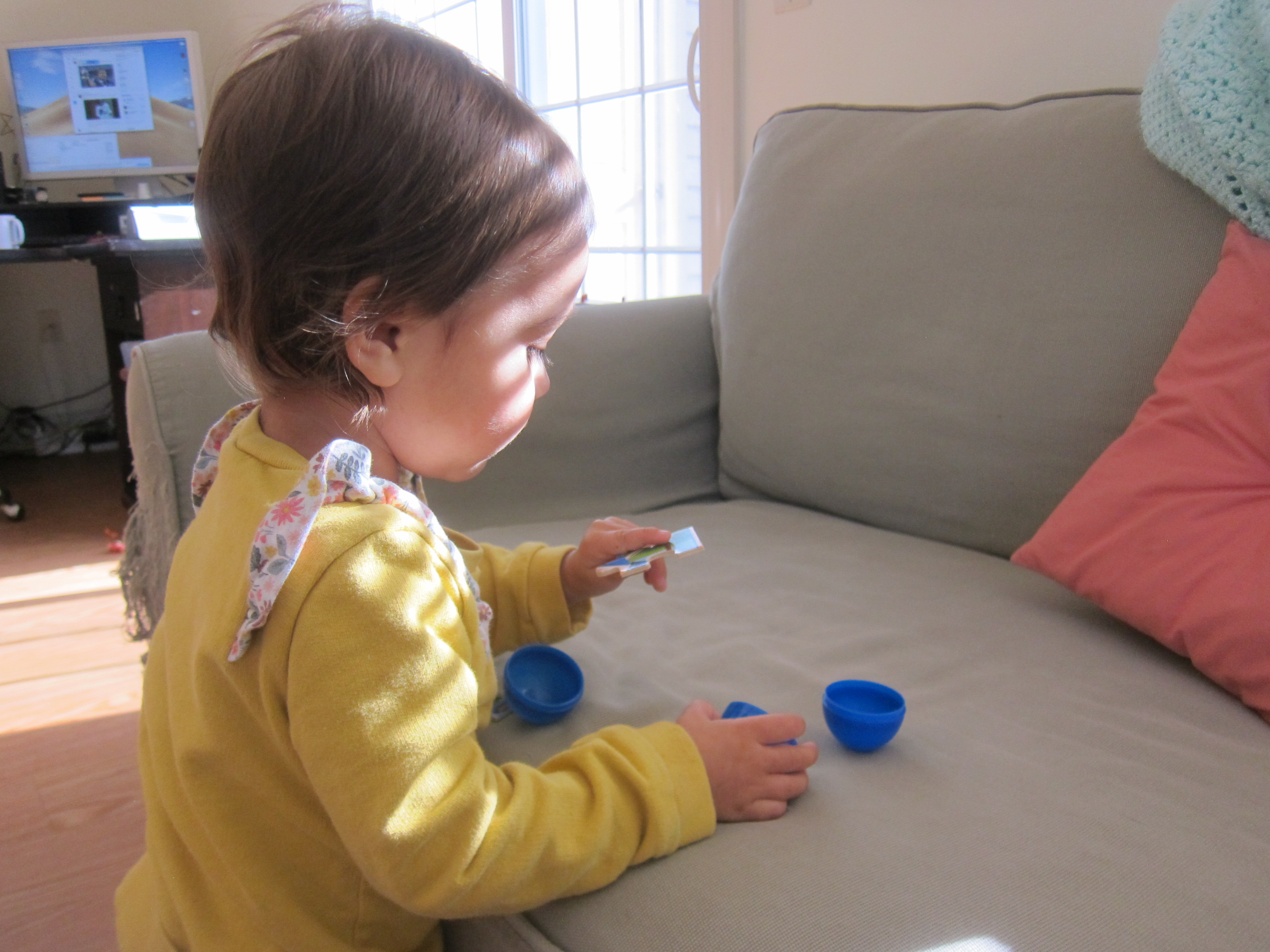
Veronika and I played around with this idea in two ways. For the first, I wanted puzzle pieces that were small enough to fit inside of plastic Easter eggs (well, they almost fit), leaving them slightly open and in very obvious hiding spots. I was hiding them for a two-year-old after all!

Puzzle Pursuit (2)

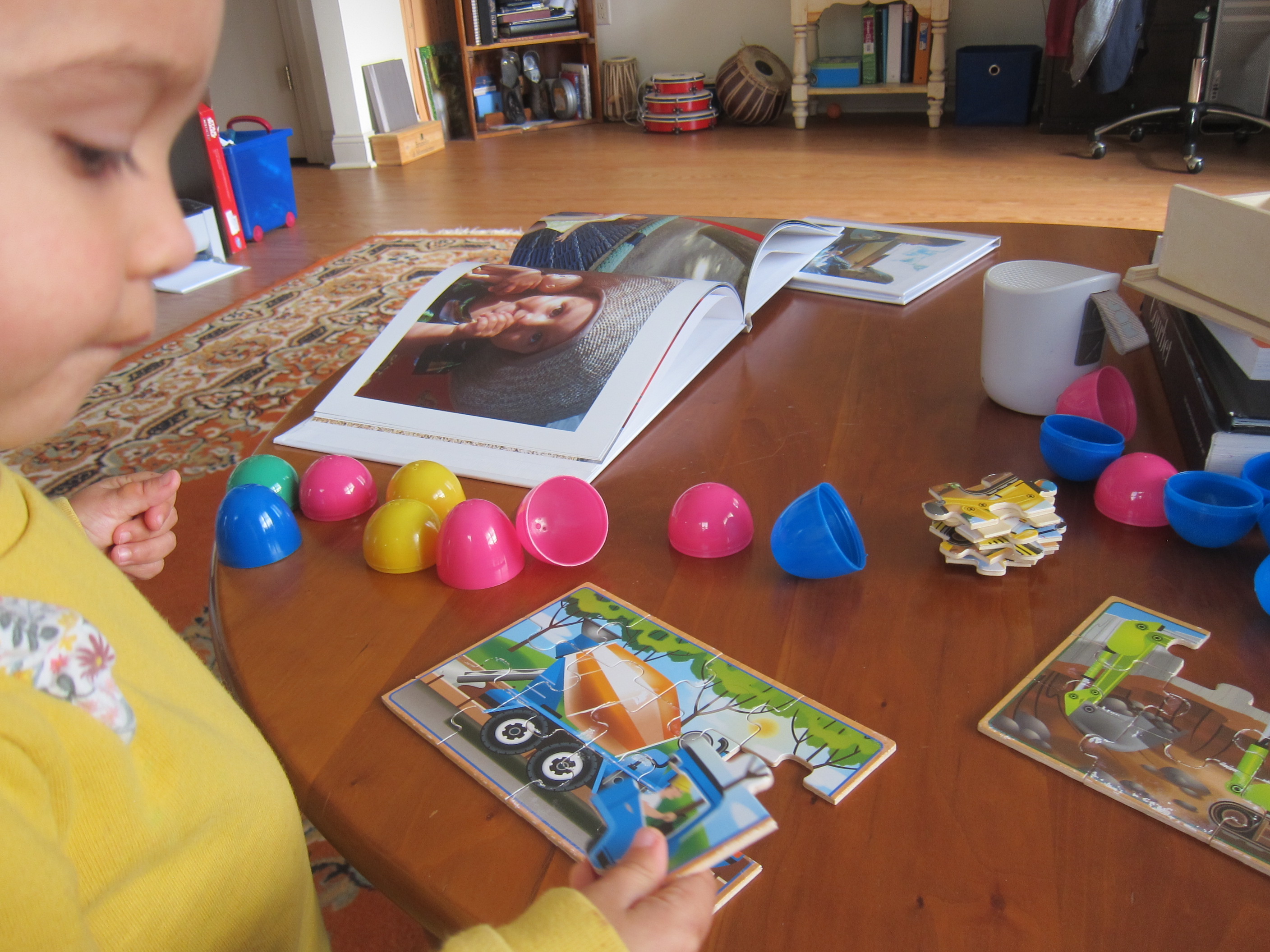
I laid a few of the puzzle pieces out on the coffee table to capture Veronika’s interest, but then told her, “Oh no! Where are the rest of the pieces?”

Puzzle Pursuit (3)

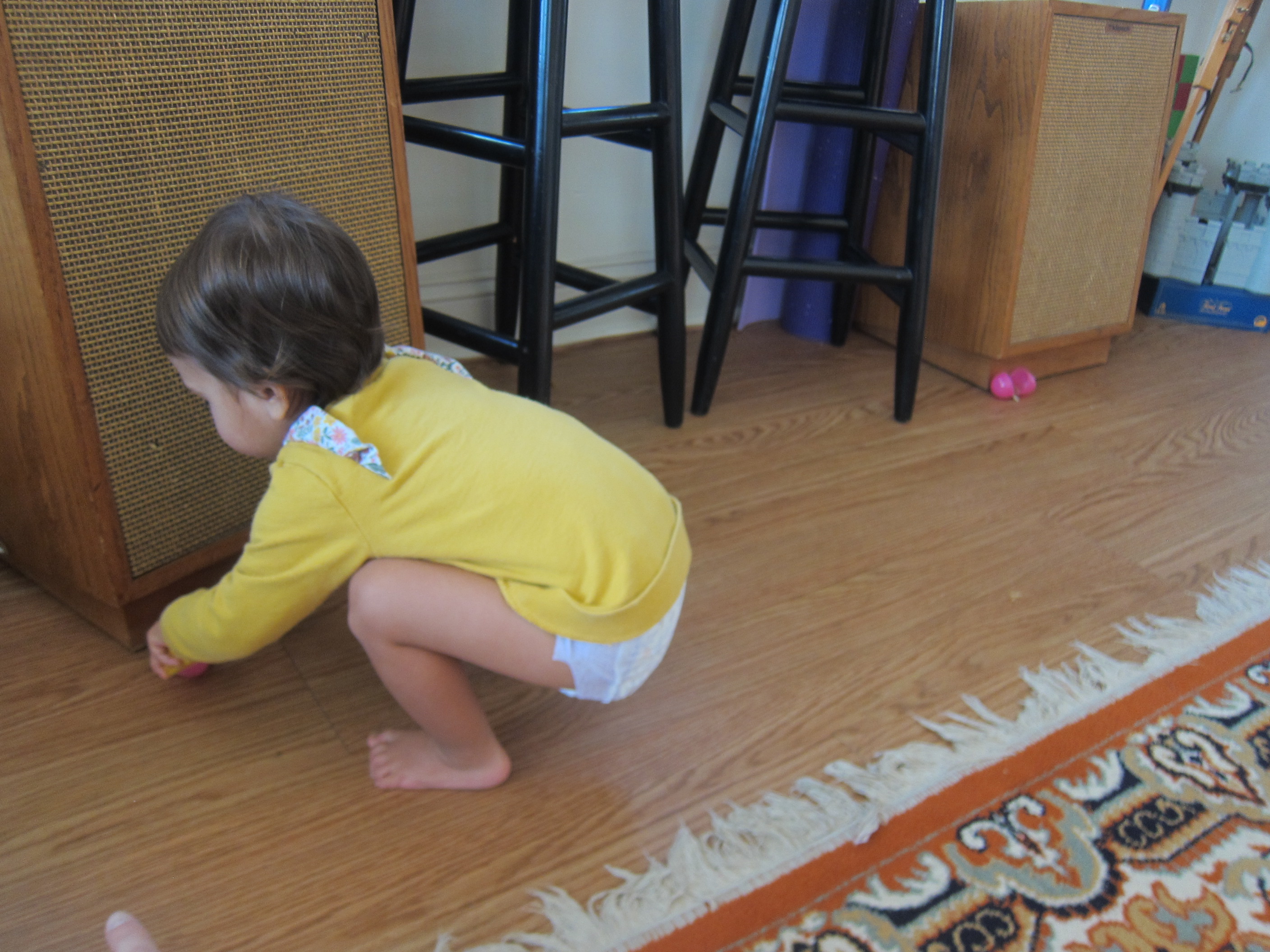
The bright plastic egg colors caught her eye, and she was soon trotting off to bring the pieces over.

Puzzle Pursuit (6)

A jigsaw puzzle is beyond her abilities, but she loved watching the images of favorite trucks come together.

Puzzle Pursuit (7)

She even slotted in the final few pieces!

Puzzle Pursuit (8)

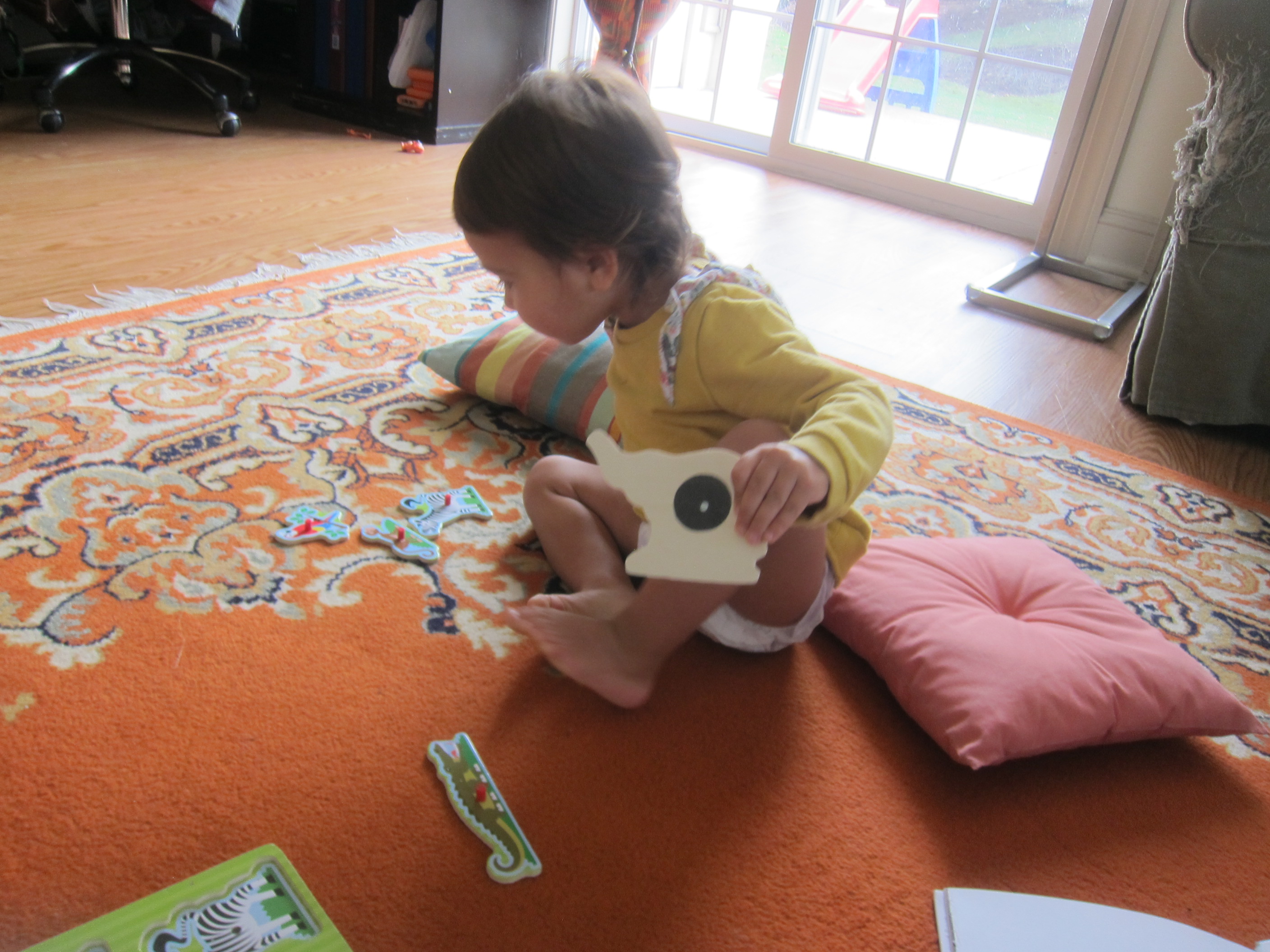
For the second version of the game, I used a chunky toddler puzzle that she can solve all by herself. Once more I hid the pieces, although “hiding” was again a relative term, really just scattering the pieces under nearby pillows.

Puzzle Pursuit (10)

She was so delighted when she spotted them and immediately knew how to fit each animal over its image on the puzzle board.

Puzzle Pursuit (11)

Hmm, she was missing three pieces. Was anything hiding under the scarf?

Puzzle Pursuit (12)

Ta da!

Puzzle Pursuit (13)

I loved watching her brain do double the puzzling in this fun activity.

Dry Leaf Collage

Dry Leaf Collage (7)

This is not the craft to make when the leaves are at their peak vibrant hues of orange and red early in the fall. This is the craft for late in the fall, when the leaves are dry and brown, and yet you’ll show your toddler beauty even in this underappreciated nature material!

Veronika and I came home with a bag full of just such leaves, and first we explored them on her sensory tray. She loved picking them up and letting them float down.

Dry Leaf Collage (1)

I next showed her how to rip the leaves into tiny pieces. The dry crinkly November leaves are perfect for this because each rip produces a satisfying sound.

Dry Leaf Collage (5)

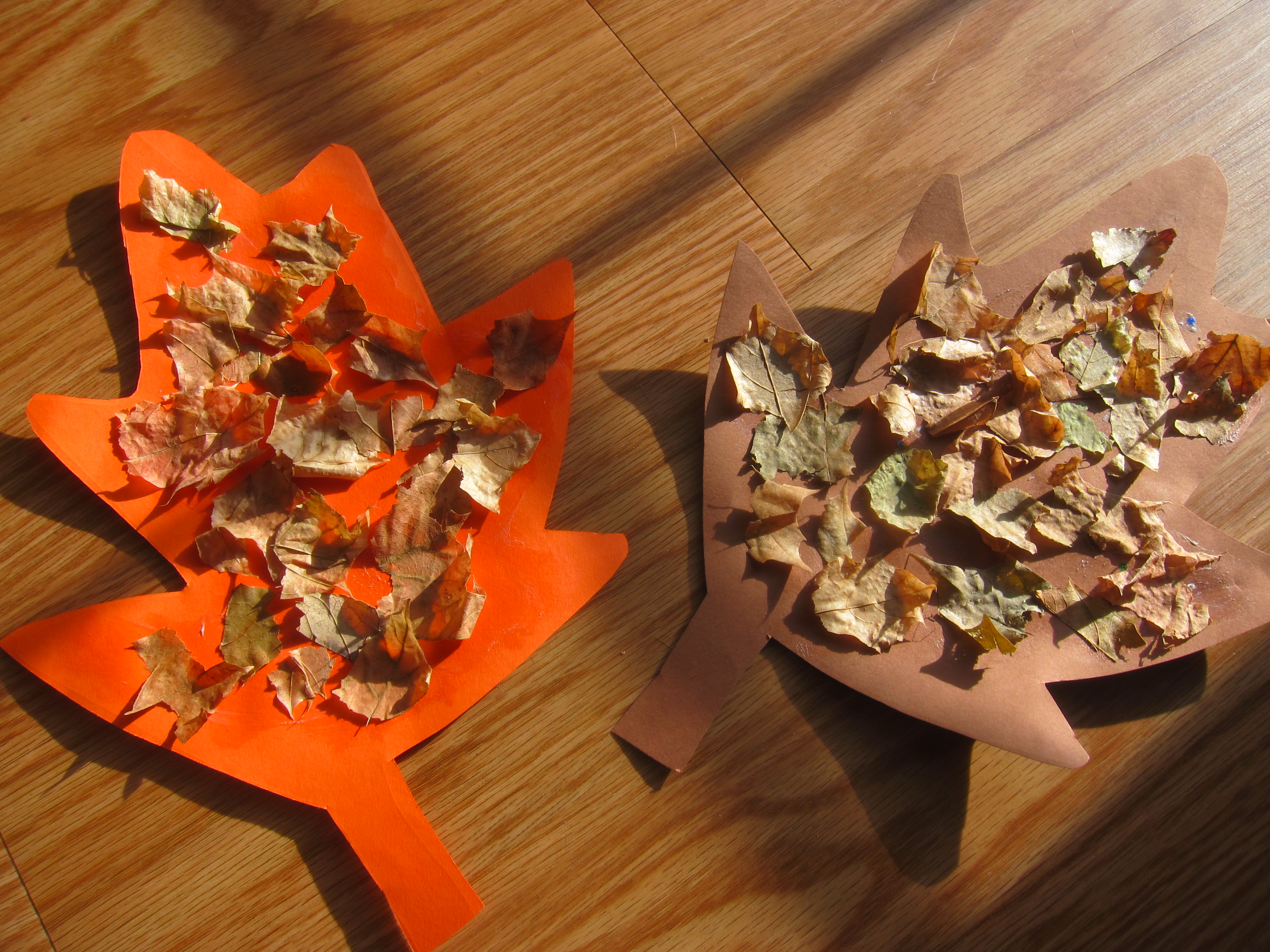
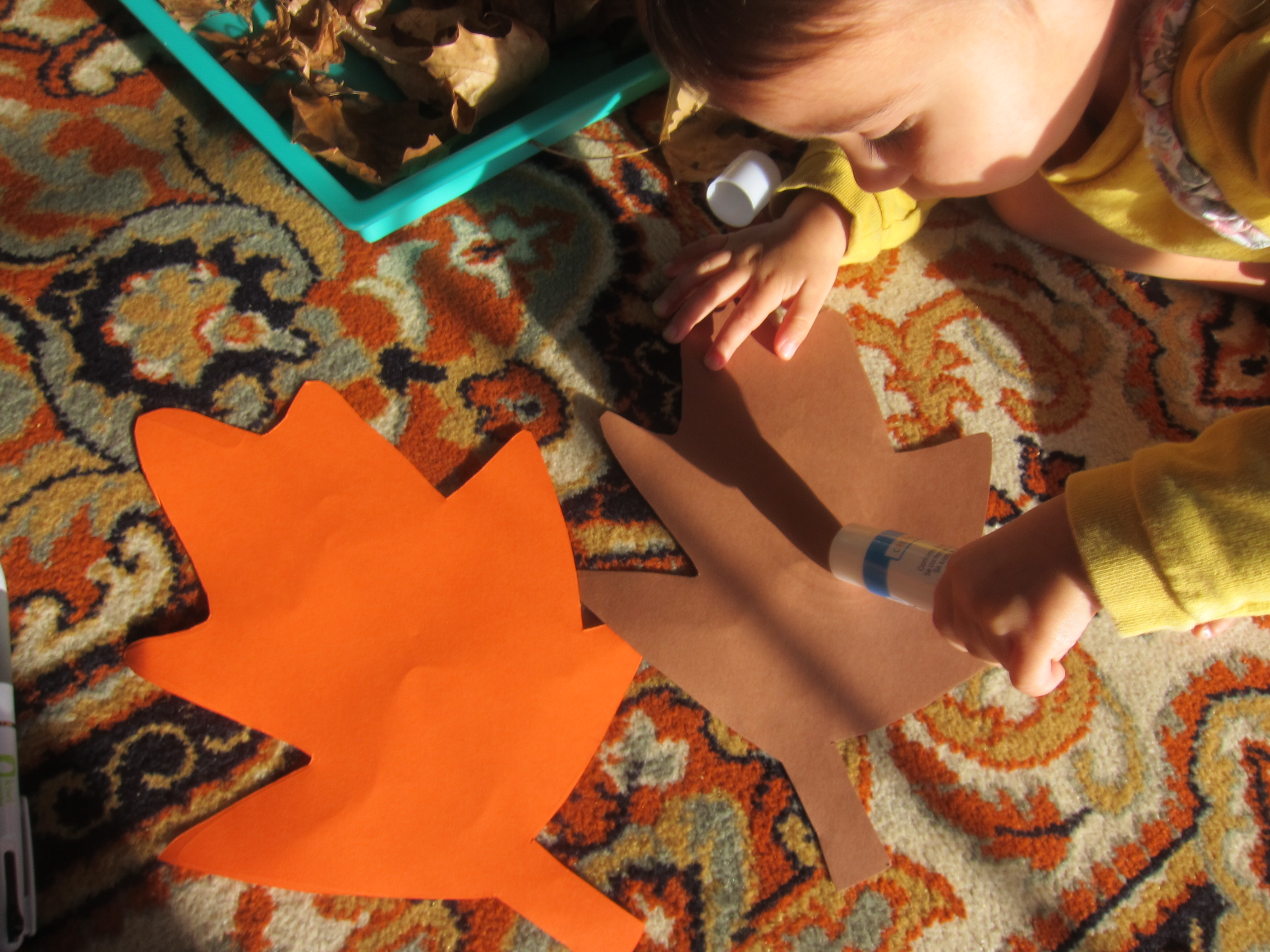
As she tore them up, I traced two leaf shapes on construction paper and cut them out. Any fall color would make a nice background here, and we used brown and orange.

Dry Leaf Collage (3)

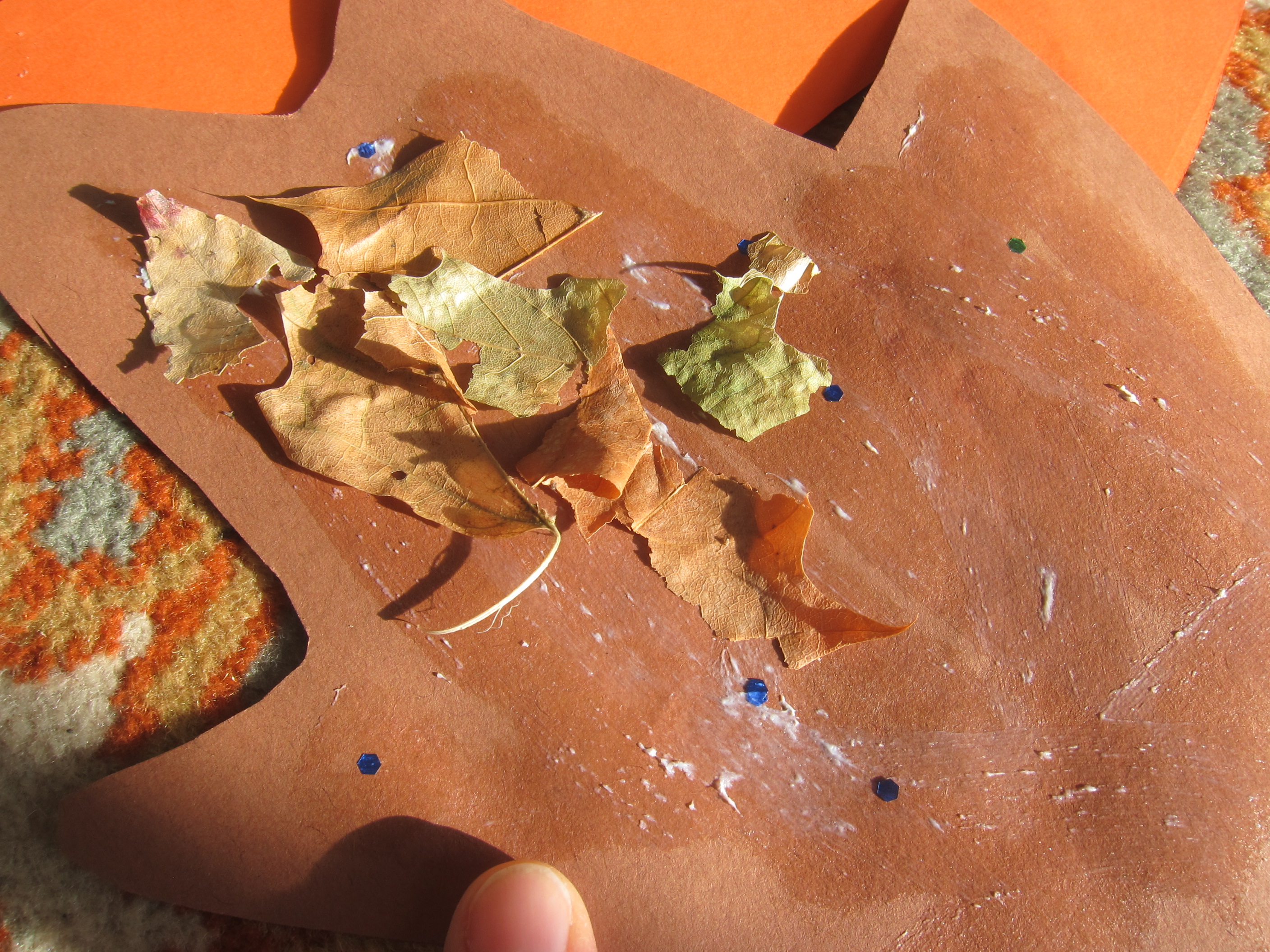
Rub glue sticks all over the leaf shapes, and then press down your leaf “confetti”.

Dry Leaf Collage (6)

As a bonus, these make a beautiful Thanksgiving decoration if you punch a hole near the top, thread with yarn, and suspend in a window.

Dry Leaf Collage (9)

Popcorn Reef

Popcorn Reef (2)

If your kids like to play with their food, permission is granted with this fun food-art-meets-snack.

To start, pop 4 cups plain popcorn; set aside in a large bowl.

Meanwhile, melt 1 tablespoon Earth Balance butter in the microwave. Add 1 and 1/2 cups mini marshmallows (such as Dandies) to the bowl. Microwave for 1 minute until the marshmallows are melting, and whisk to combine.

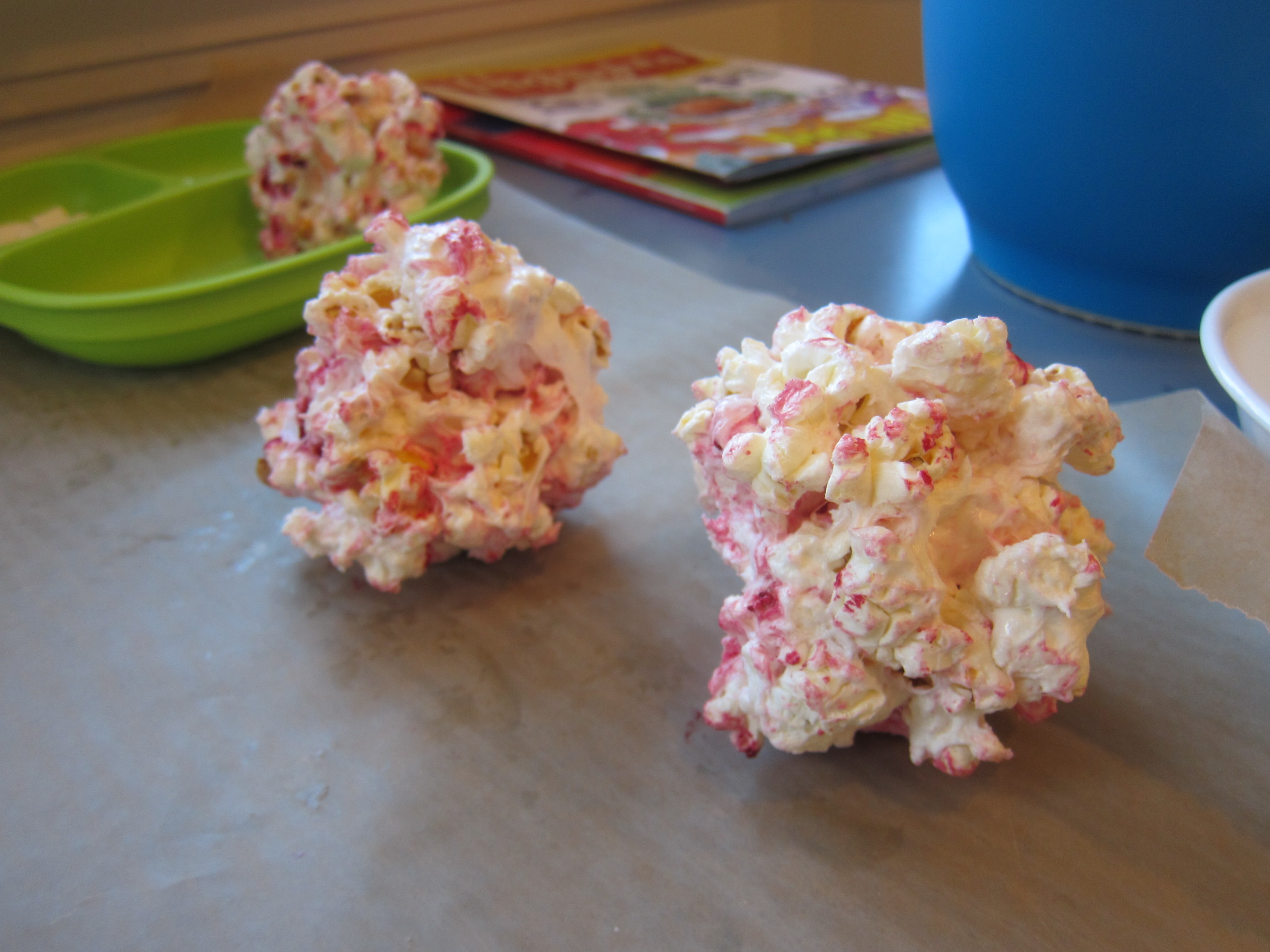
Pour the marshmallow mixture over the plain popcorn. Add a few drops of food coloring for pink coral! Once the mixture cools enough to handle, turn out onto wax paper and shape into mini coral reefs. We had some big blobs that looked a bit like brain coral, and some that was more like branched coral!

Popcorn Reef (1)

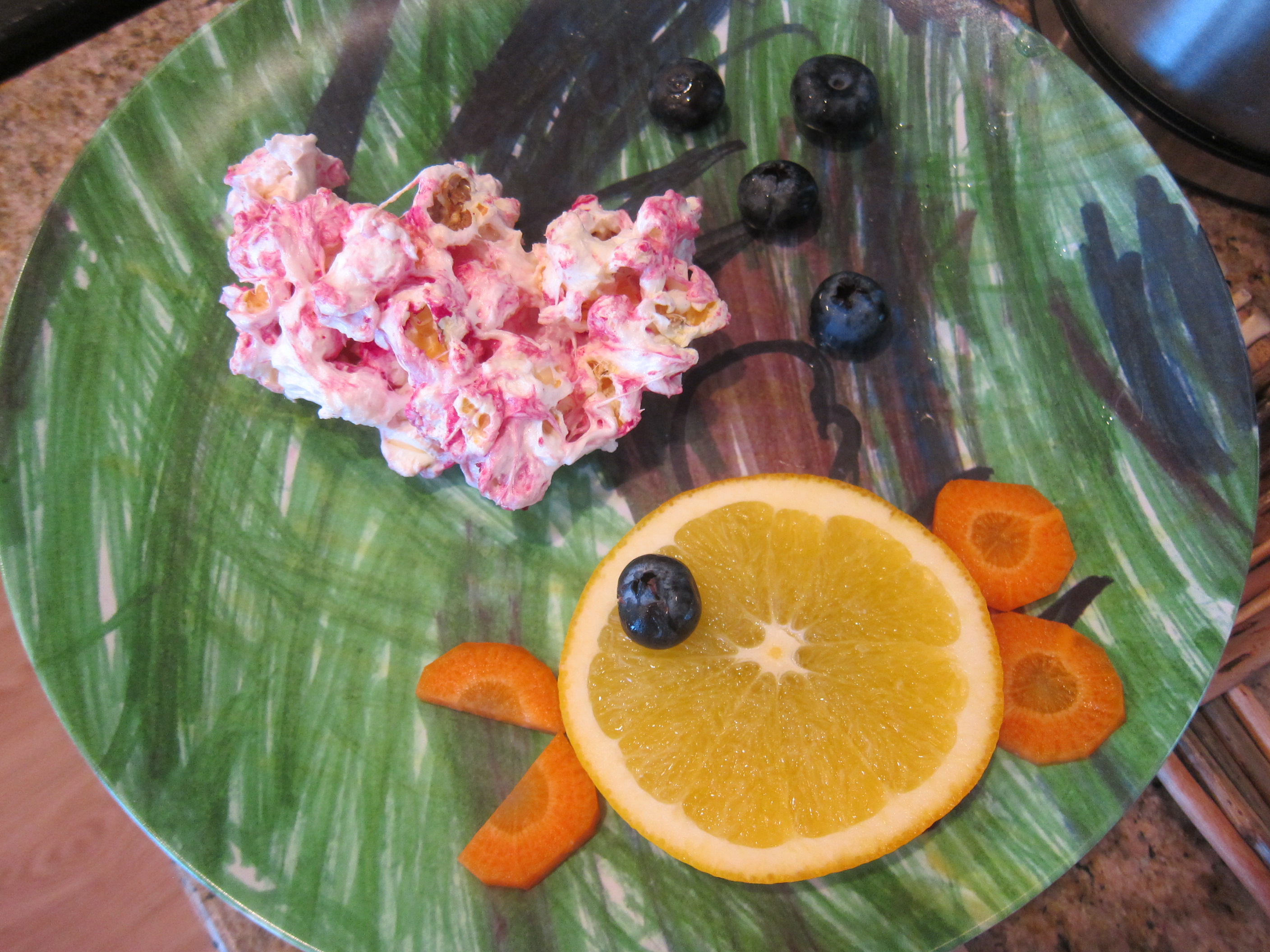
For fish, place an orange slice on each plate. Add slices of carrot for tail fins and a mouth, and blueberries for the fish’s eye (plus a few extra bubbles!).

Orange Beets

Orange Beets

If beets are a new veggie for your kids, familiar oranges and apples help make them not so scary in this recipe. Pre-cooked beets are a life-saver for busy nights!

Ingredients:

  • 1 (8-ounce) package pre-cooked beets
  • 1 (11-ounc) drained can mandarin oranges
  • 1 apple, thinly sliced
  • 1/4 cup canola oil
  • 3 tablespoons orange juice
  • 1 tablespoon fresh-squeezed lemon juice
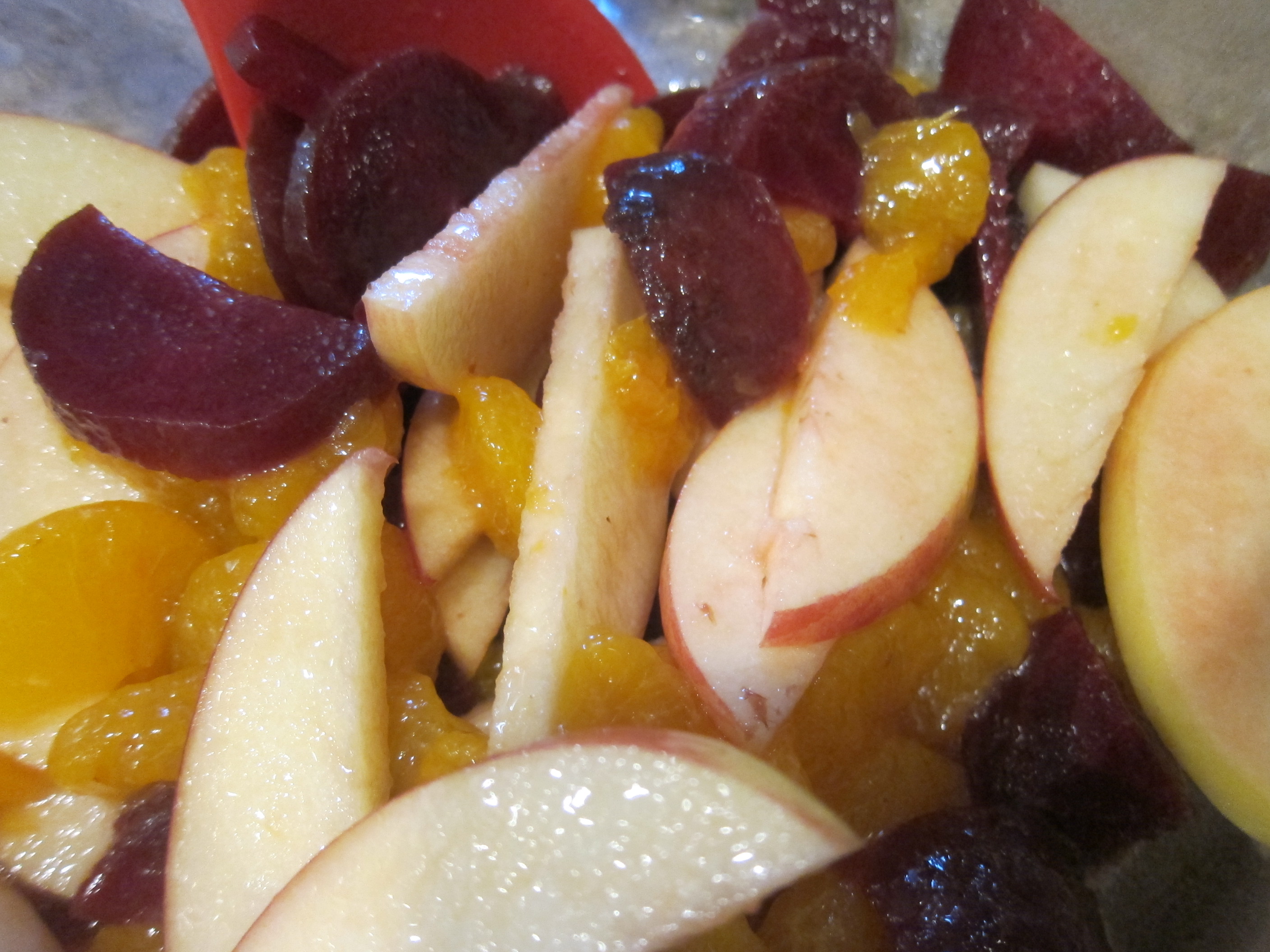
  1. Thinly slice the beets and combine in a bowl with the oranges and apple slices.
  2. In a small bowl, whisk together the canola oil, orange juice, and lemon juice. Drizzle over the beet mixture, stirring to coat.
  3. Chill until ready to serve.

Solve with Me Panda Crate

Panda Solve final

Veronika’s latest Panda Crate, Solve with Me, was easily her favorite yet. With an emphasis on shapes, puzzles, and problem-solving for kids (aged about 18 months and up), here’s what she received.

One: Peg Puzzle

First up was a classic shape puzzle, with a square peg for squares, triangle peg for triangles, and so on. To start I simply laid out all the pieces and she had to figure out what went where.

Panda Solve (1)

As soon as I asked, “Can you put the triangle on the triangle?” she had the idea. The puzzle is also great for colors (“How about the blue square next?”) and for counting, since it ranged from 1 circle to 3 squares.

Panda Solve (4)

Two: Lacing Beads

This was the best child’s lacing toy I’ve ever seen. The “needle” is actually made of stiff felt, but pokes easily through the wooden beads. Peek-a-boo, pull it through!

Panda Solve (5)

She loved that she could master this lacing all by herself. She also loved when I showed her a pattern (early math!): square, semi circle, triangle, repeat!

Panda Solve (6)

The thread and needle also come with two giant buttons, so you can even teach your older toddler how to make a crisscross. Parent bonus: you can store the beads right on the lace.

Panda Solve (14)

Three: Squishy Shapes

These giant shapes were Veronika’s favorite of the lot, first of all because they were just so squishy and big, like stuffed animal friends in geometric form!

Panda Solve (9)

We laid them down and first used them for gross motor skills. Give your toddler instructions like “Hop to the triangle!” or “Run to the square!” and watch him or her happily comply.

Panda Solve (12)

She had a blast with this game. Then I held her hands and helped her “trace” each shape with her feet, almost like mini balance beams.

Panda Solve (10)

Toddlers can also trace a finger along the inside of each shape, which has immediate tactile rewards and larger learning benefit for pen control later on.

Panda Solve (11)

Finally, we sorted the other items from the crate onto them, which was great for helping her categorize shapes.

Panda Solve (13)

Four: Beanbag Shapes

These classic beanbags, one each for triangle, circle, and square, extended the squishy shape play. Firstly, each one nests perfectly on the inside cut-out of the corresponding squishy shape.

Panda Solve (15)

“Let’s the put the triangle here!” Veronika proudly said, and narrated this play solo to herself for a while. Don’t forget to point out size comparisons, like how the beanbag makes a little circle and the squishy shape makes a big one.

Panda Solve (16)

Second, we played hide and seek! I tucked a beanbag under its corresponding squishy shape and she proudly found it each time.

Panda Solve (19)

Finally, it was gross motor skills time! Move the squishy shapes back a few steps and take aim with the beanbags. Veronika also adored this part, and we’ll work up to throwing from further away.

Panda Solve (17)

Five: Board Book

As with past crates, I was disappointed in the caliber of the book. There was so much more that could be done for a shape-themed book, starting with having the book come in a fun shape. Still, Wonder magazine suggested using this book for a shape hunt.

Panda Solve (22)

You can extend this idea to your child’s favorite books from home. Veronika spotted diamonds, triangles, and more in one of her go-to books!

Panda Solve (23)

In Wonder magazine, parents can read more about the benefits of letting your toddler puzzle solo, as well as tricks for when those little brains get frustrated.

We did a final activity of a Shape Scavenger Hunt in two ways. First, I drew shapes on 4 index cards in big bold colors.

Go On a Shape Hunt (2)

Time for Veronika to pick a card! As we went through each one, we made a pile of items in that shape on the floor.

Go On a Shape Hunt (4)

Rectangle was the only one not included in the crate, so I could see her brain working extra hard when it came to finding items in that shape.

Go On a Shape Hunt (5)

As a variation, I then traced several shapes onto white paper, this time including heart and star for some outliers.

Go On a Shape Hunt (6)

You can head off around the house and find one item for each shape. Or, use the paper more like a shadow-matching puzzle and have your toddler fill it in with 3-D versions of each shape.

Go On a Shape Hunt (8)

Since music always aids in learning, we sang a shape song to the tune of The Farmer in the Dell:

A circle’s like a ball,

A circle’s like a ball.

Round and round,

It never stop.

A circle’s like a ball.

Make up verses for every other shape your toddler knows, too!

Finally, it was storytime. We had fun checking the following three out at the library:

  • Shapes, by John Reiss
  • Curious Baby Everyday Shapes Puzzle Book, by H.A. Rey
  • Sweet Shapes by Juana Medina Rosas

Water Bottle Fish Mobile

Water Bottle Fish Mobile (7)

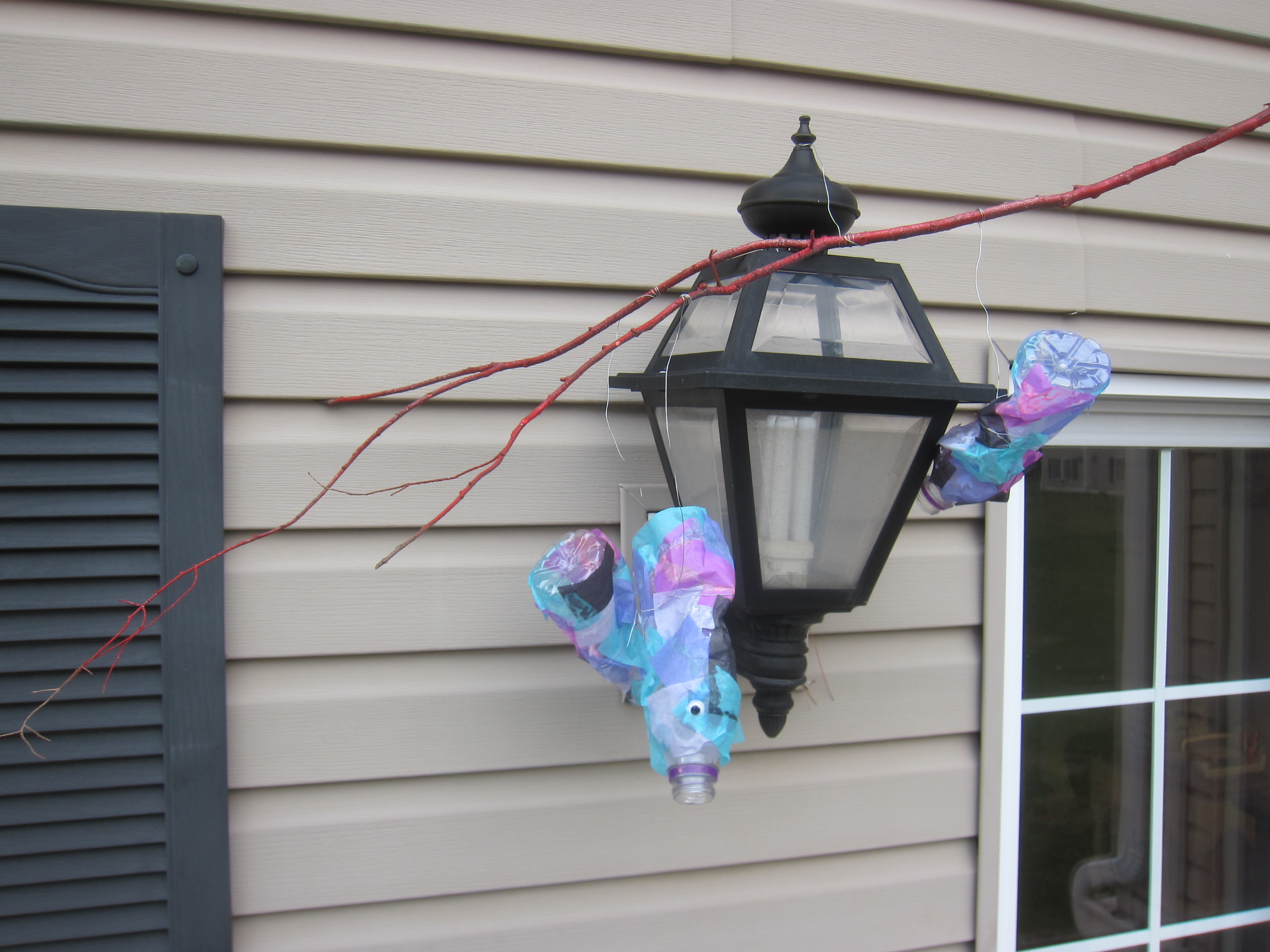
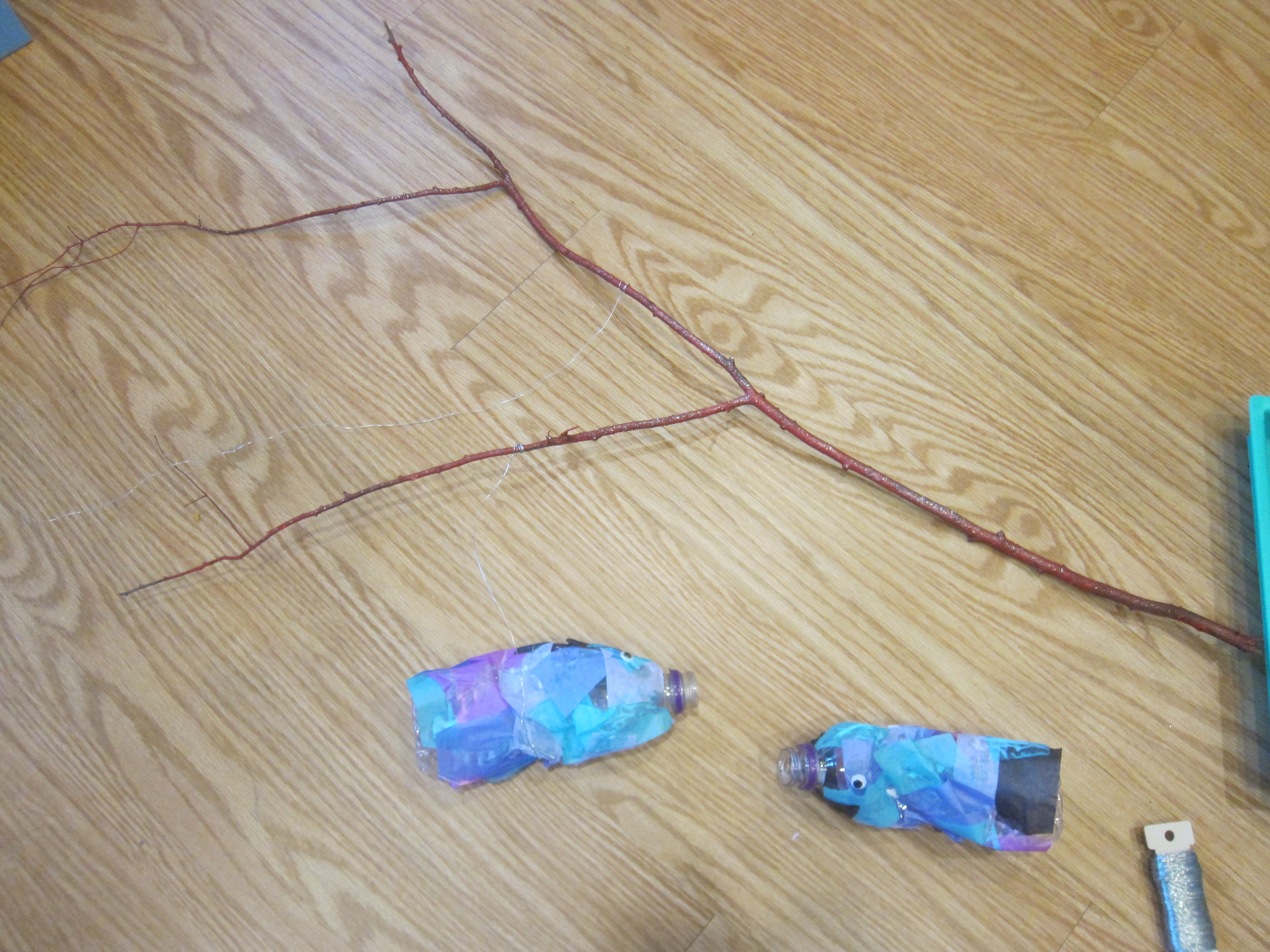
We brought home a neat stick from a recent nature hike that was just begging to be incorporated into a mobile of some kind. Plastic bottles soon turned into little fish (to continue our recent theme of under the sea) to round out the project.
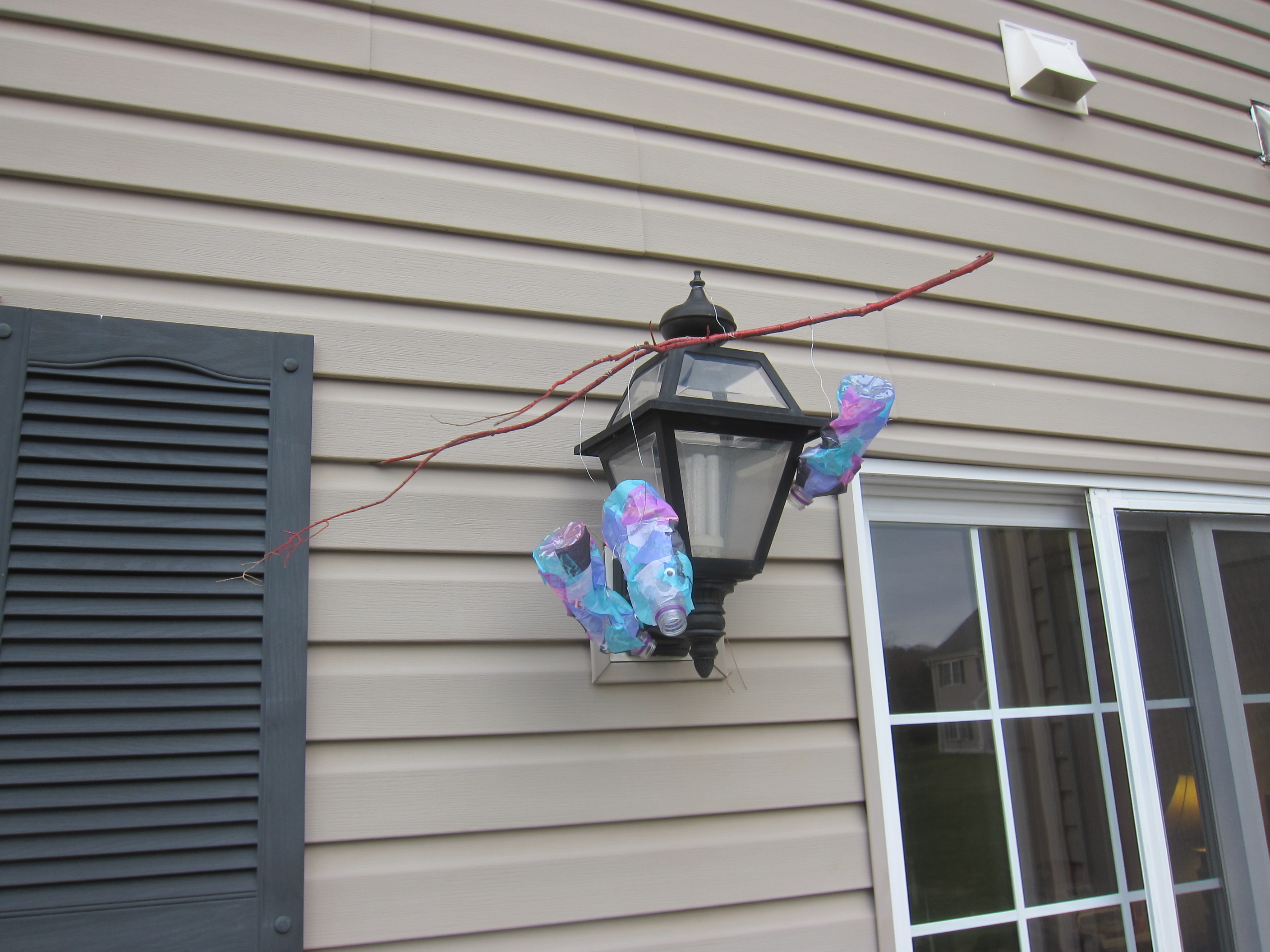
First we wanted to spray paint the branch, so I set it outside on newspaper and applied two coats of red and sparkly silver. This gave it such a a neat magical forest look.

Water Bottle Fish Mobile (3)

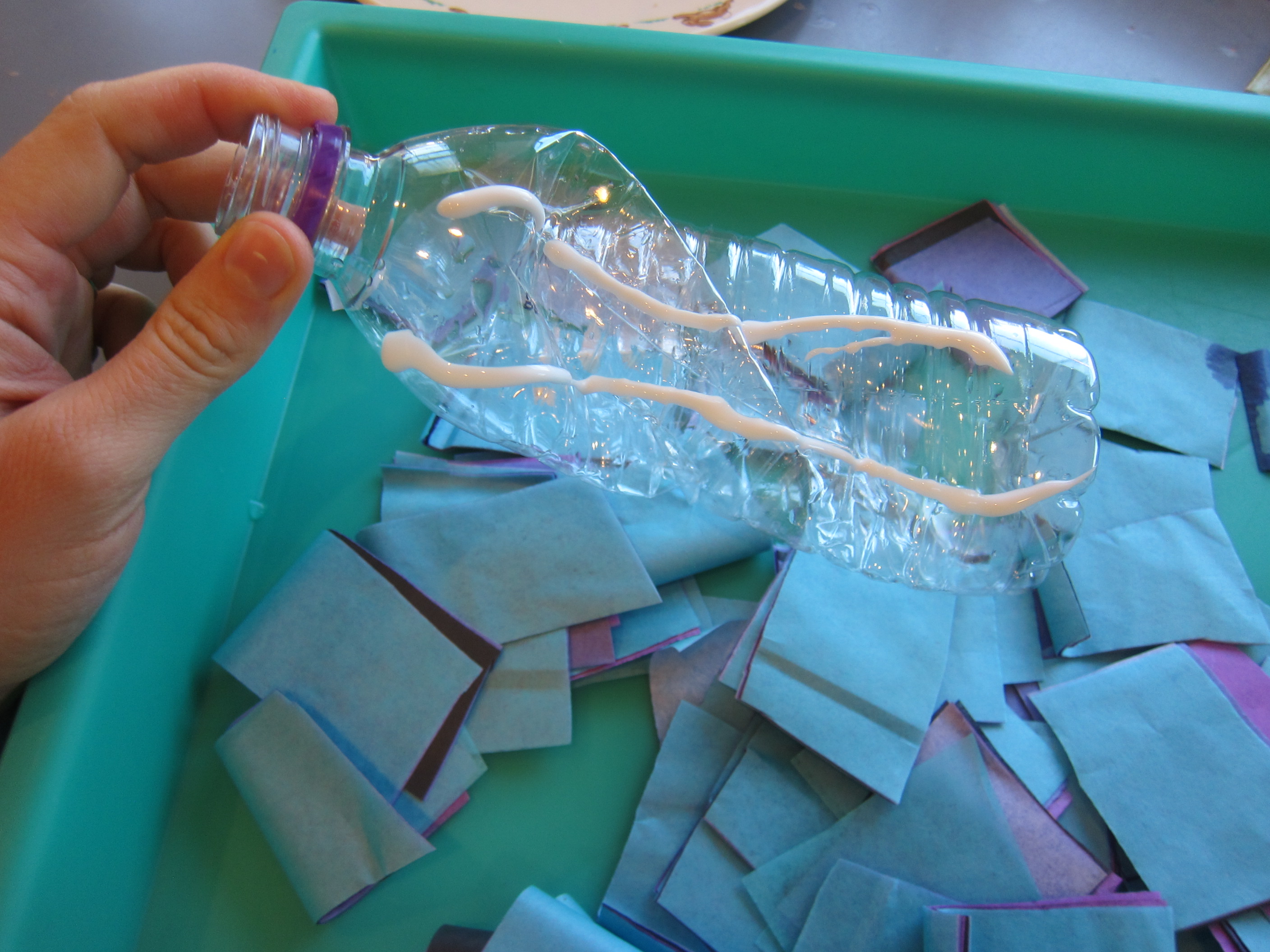
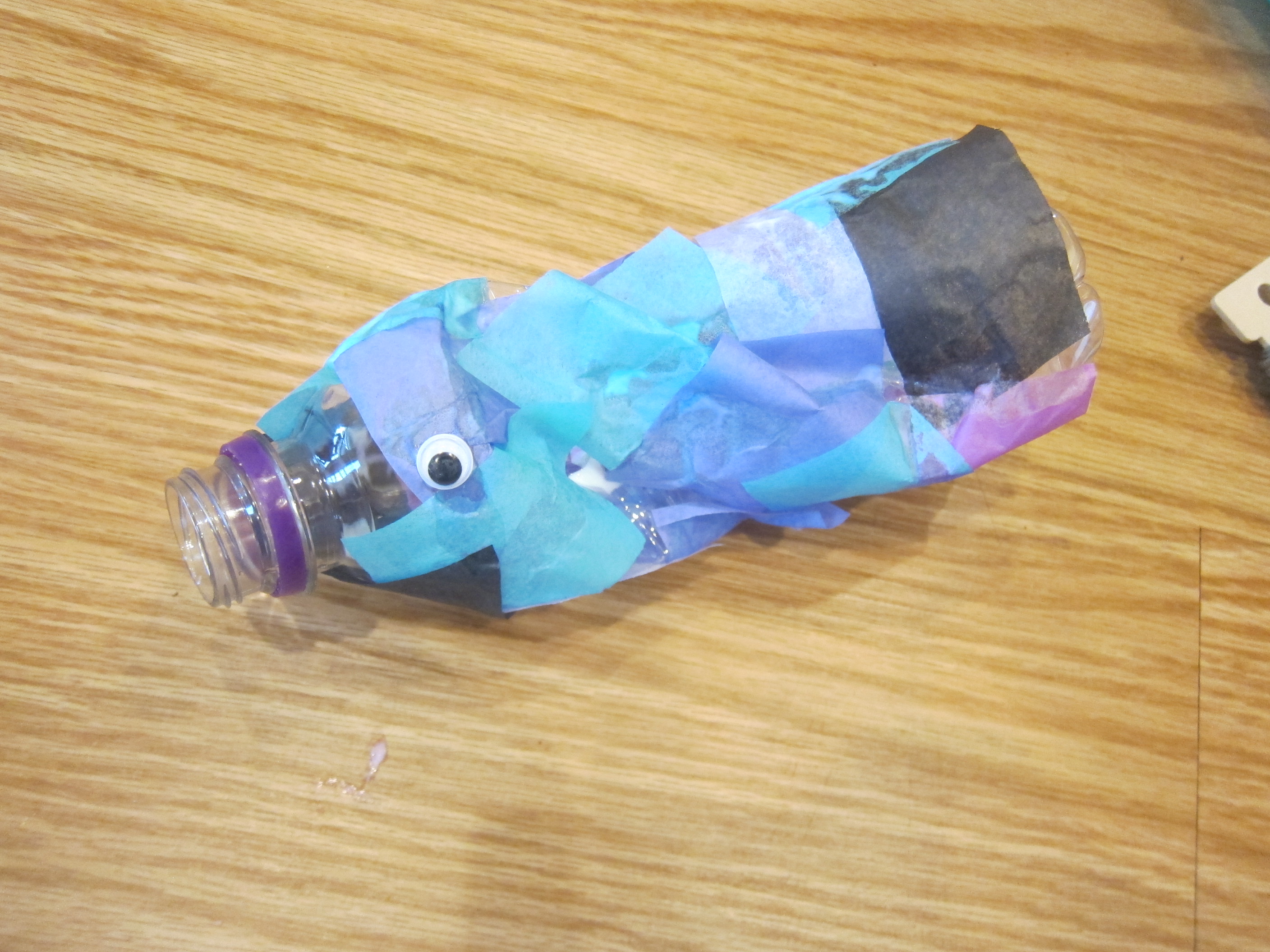
We had empty water bottles in the recycle bin, so we twisted each slightly near one end to make fish “tails”. Now decorate all over your fish with glue and tissue paper. Finally, glue wiggle eyes to each fish and then let dry completely.

Water Bottle Fish Mobile (1)

Note: If we were to repeat the project, I would water down the glue and paint it over the squares of tissue paper, to more securely affix them to each water bottle.

Water Bottle Fish Mobile (4)

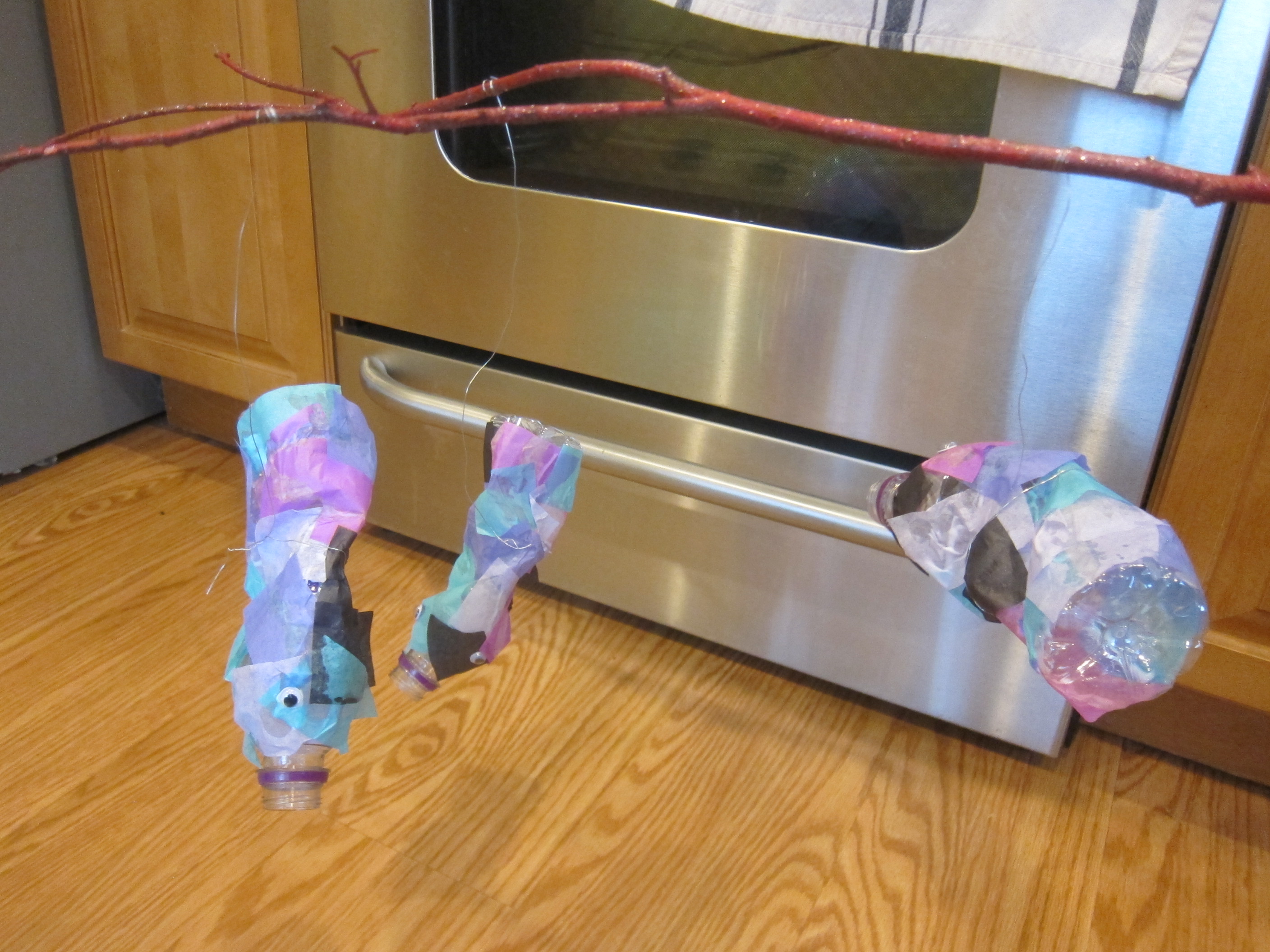
To suspend the fish from your branch, you can use fishing line and a needle if your crafting skills are more advanced than mine. Instead, I simply used floral wire, twisting the wire around the branch at intervals and then around the middle of each “fish”.

Water Bottle Fish Mobile (5)

Suspend with additional fishing line or floral wire any place outdoors. The fish theme makes this a nice reminder of summer days, since now our forest branch looked almost like driftwood!

Water Bottle Fish Mobile (6)

Sunscreen Paint

Sunscreen Paint (3)

If you’re feeling nostalgic for summer, the smell of this paint will instantly bring you back to warmer days, at least for a moment. Meanwhile toddlers will love the sensory play involved in this craft.

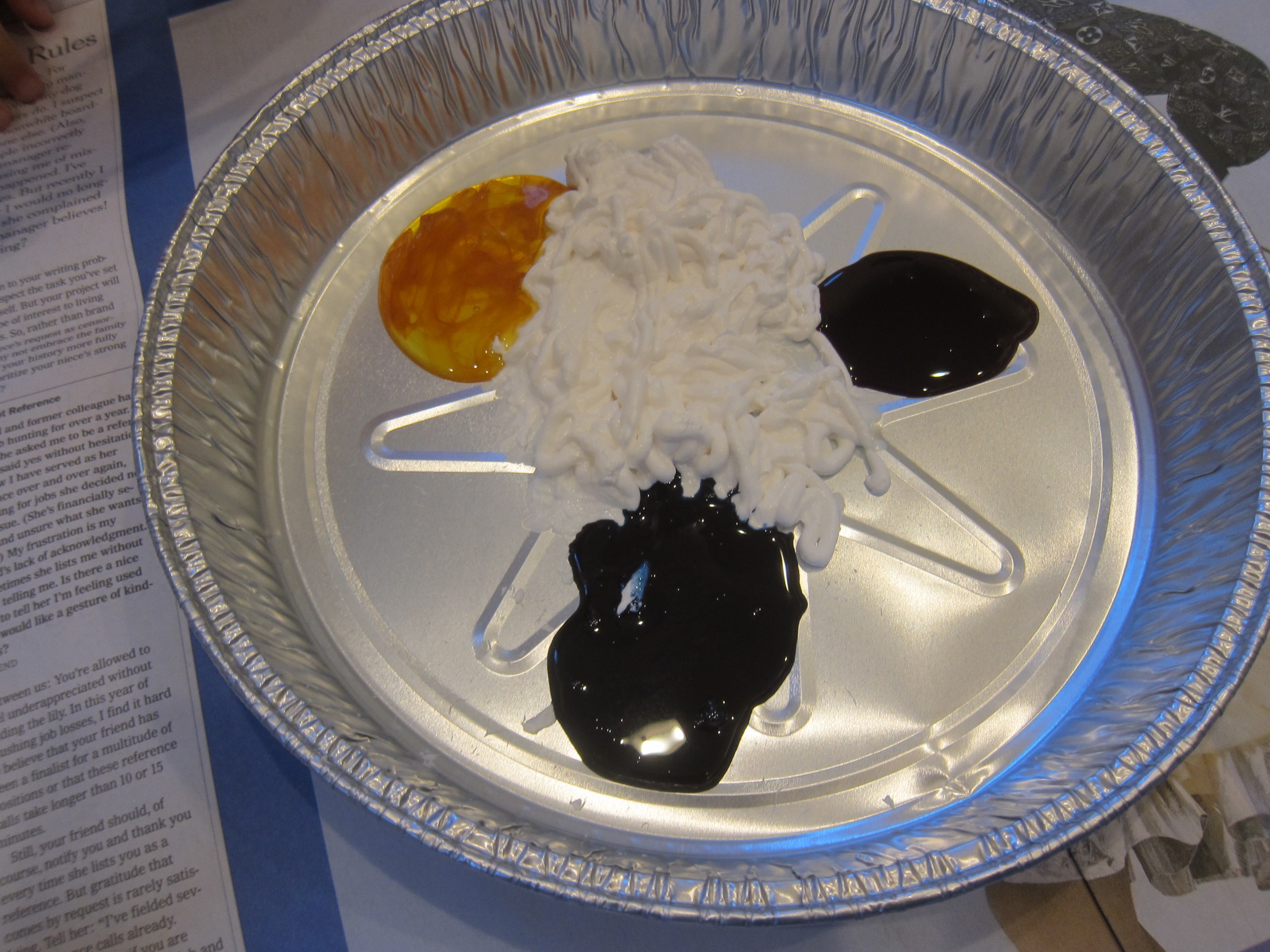
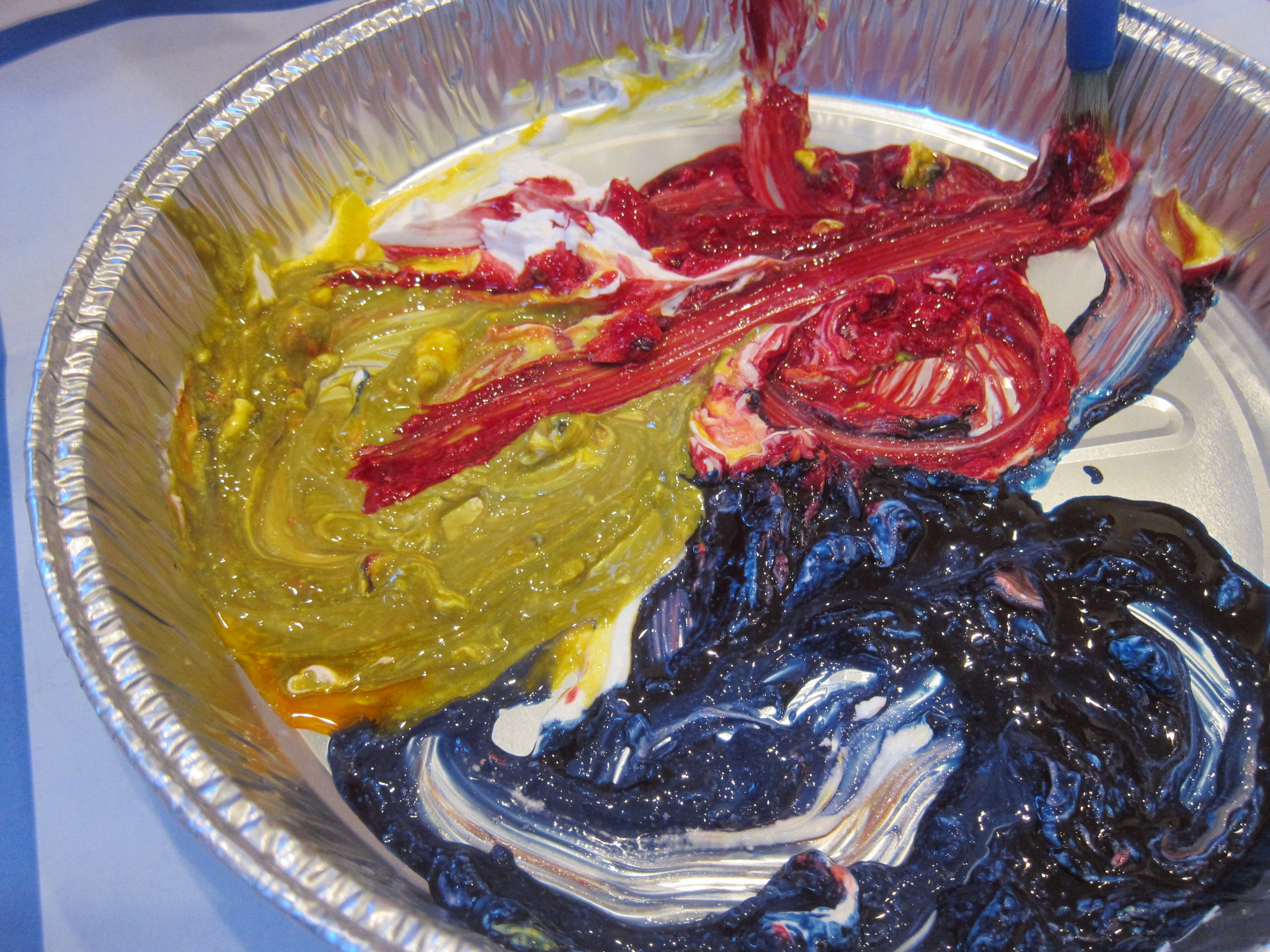
I squirted a tube of old sunscreen into a foil pan, and added three dollops of food coloring around the sides, one each for yellow, blue, and red.

Sunscreen Paint (1)

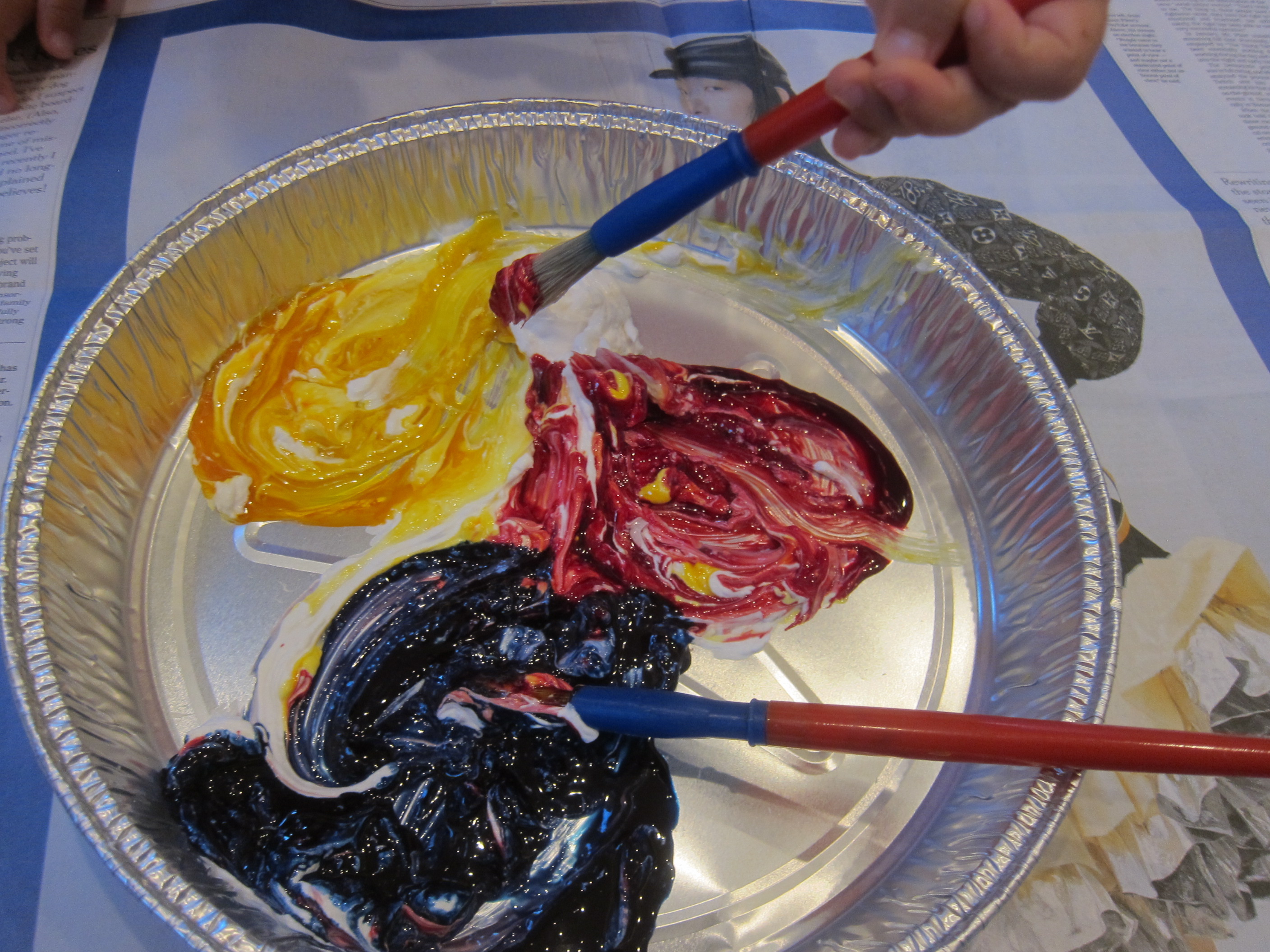
I handed over paintbrushes and it was time for Veronika to mix it all up. She loved this activity! To start, she was so into the color aspect, seeing what happened when she swirled each color individually into the lotion…

Sunscreen Paint (2)

…and then what happened when they started to mix.

Sunscreen Paint (4)

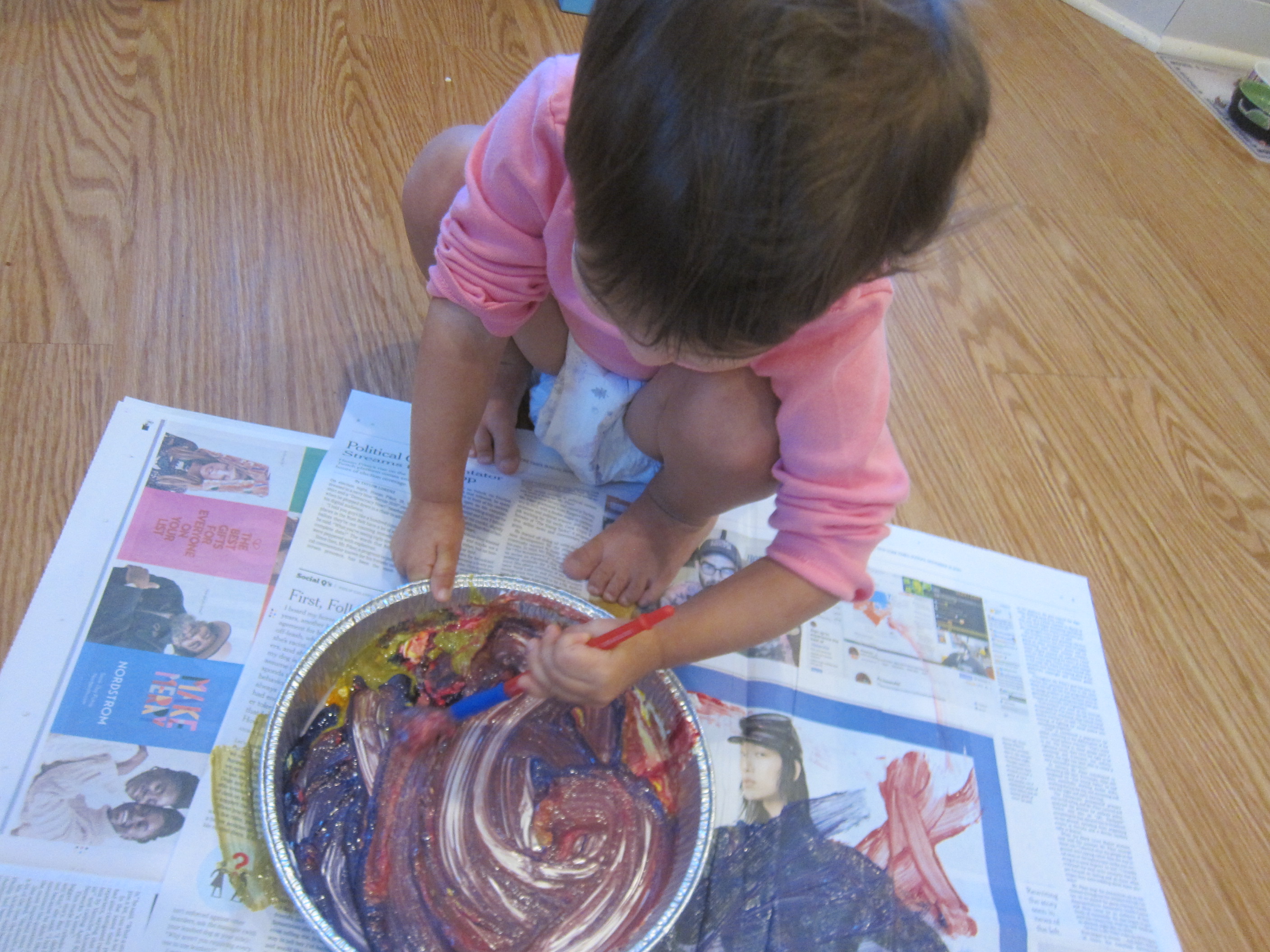
Truth be told, the mixture did turn a muddy purple-brown, but that didn’t stop her. “It’s beautiful!” she said as she stirred it all around with a paintbrush.

Sunscreen Paint (5)

She didn’t actually do much painting, although I had laid newsprint underneath as a canvas in case she wanted to try a few swirls.

Sunscreen Paint (6)

And the best part about this “paint” is that it won’t matter a bit if your toddler decides to paint him or herself instead of paper. There’s nothing wrong with a little extra sunscreen!


Puzzling Plates

Puzzling Plates (5)

These easy one-piece puzzles are great for toddlers who are just beginning to fit pieces together.

Start by covering the center of paper plates with any easy-to-identify picture. If you have large photo prints of friends and family, those would work great. In a pinch, I cut pictures out of magazines that depicted familiar items (a house, a cat, vegetables) and glued them on.

Puzzling Plates (1)

Cut one “wedge” from each puzzle pie and scramble them. Now see if your toddler can tell which wedge goes where!

Puzzling Plates (2)

The hardest part for Veronika, more so than matching a piece to its correct puzzle, was making sure the wedge was oriented in the right direction when she slotted it back into the pie.

Puzzling Plates (3)

But once she got the hang of it, she aced the game.

Puzzling Plates (6)

You can make this activity harder as your child gets older simply by cutting multiple wedges from each puzzle pie!

Puzzling Plates (4)