Ball in Balloon

Ball in Balloon (3)

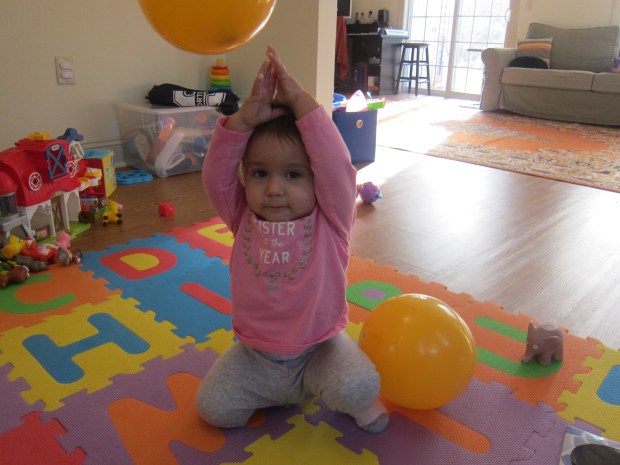
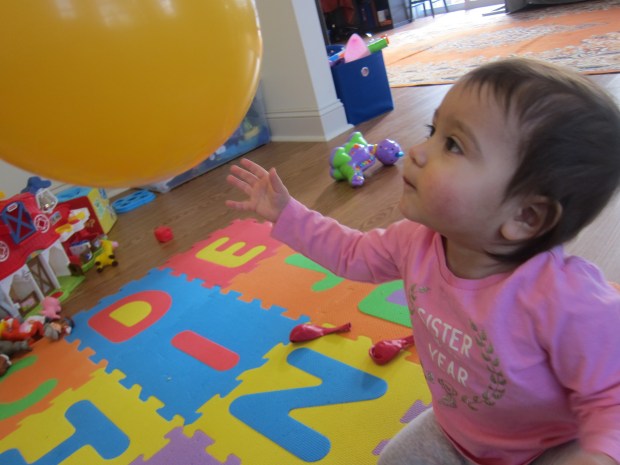
Take your toddler’s balloon play to the next level with one single addition: rubber golf balls! These small bouncy balls will make the balloons move in unexepected ways, delighting your little one with a new surprise at each moment.

First, I showed Veronika the two materials we needed. I stretched out the balloon necks dramatically (which will help the balls fit inside) and bounced the balls a few times, in order to set up the playful moment.
Ball in Balloon (1)

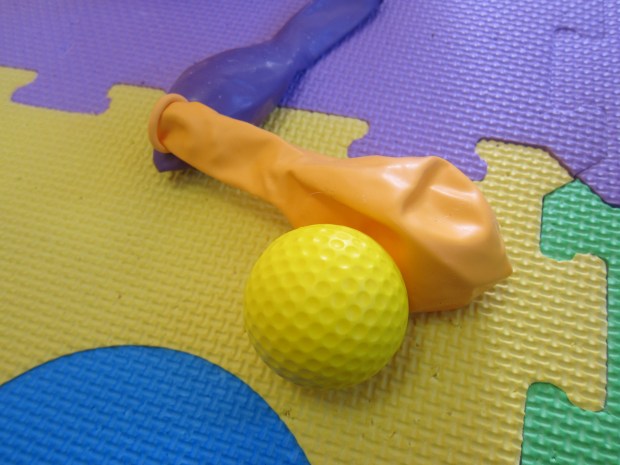
Next, I inserted one ball into each balloon.
Ball in Balloon (2)

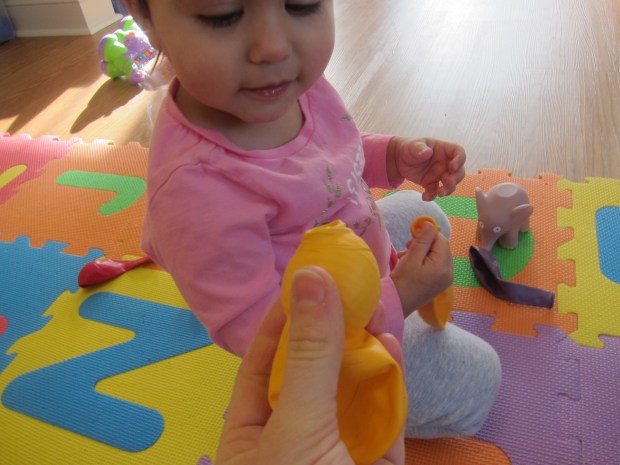
See-through balloons might have had a better effect so she could actually see them rolling around inside, but opaque balloons were still enjoyable! First I shook it, so Veronika could hear the ball inside.
Ball in Balloon (7)

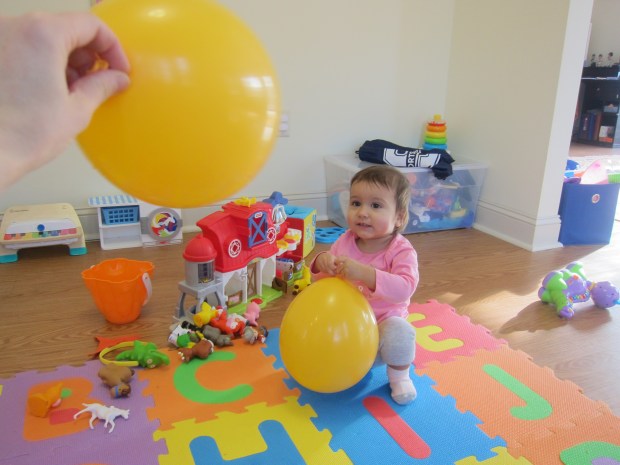
Then I tossed it forward. Instead of floating gently as she might have expected, it wibble-wobbled back and forth and came to the ground quickly.

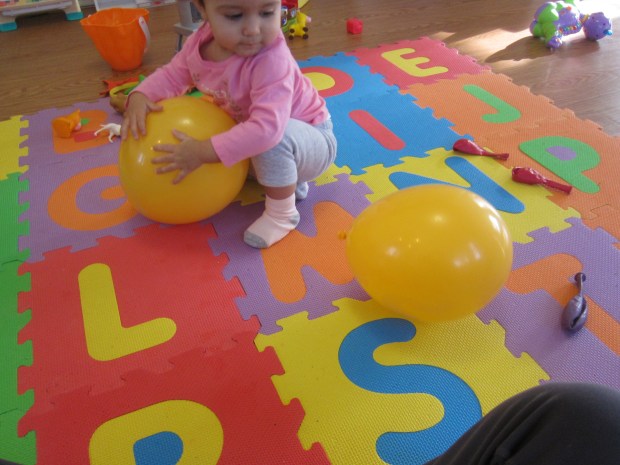
She needed to hug them…
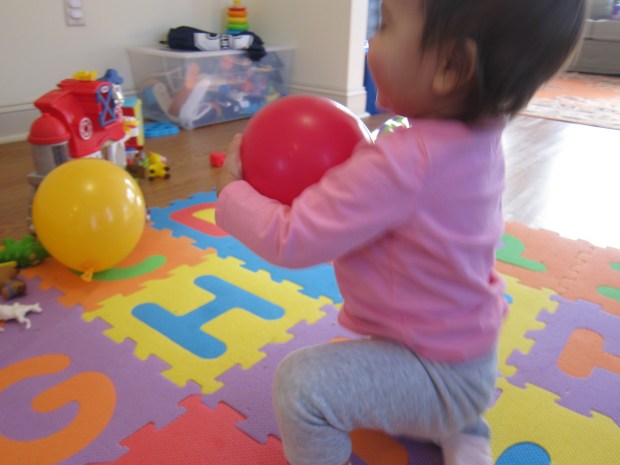
Ball in Balloon (8)

…bounce them…

Ball in Balloon (6)

…chase them…

Ball in Balloon (5)

… and hold them by the tied-off knot to shake them. What a great morning of balloon fun!
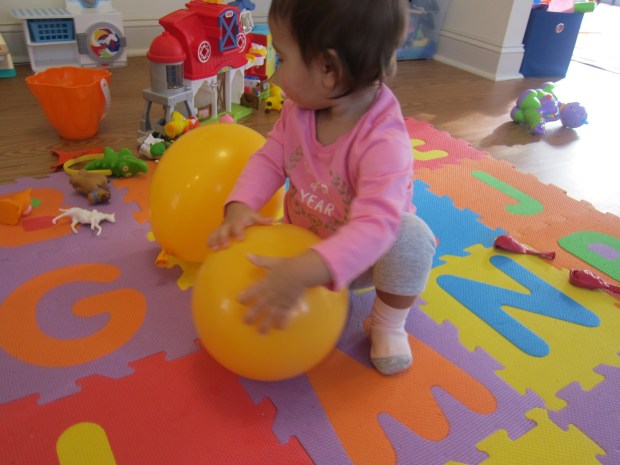
Ball in Balloon (4)

Mix ‘n’ Squish Heart Sensory Bags

Mix n Squish Heart (2)

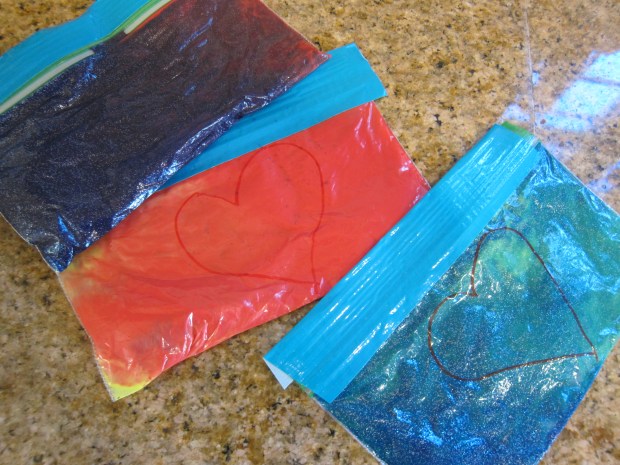
Here’s a Valentine’s heart activity that even the youngest toddlers can enjoy without making a mess These hearts get “painted” inside a zip-top bagQ

There’s a little color mixing lesson thrown in, too, and although toddlers won’t yet grasp the difference between primary and secondary colors, kids are never too young to marvel at how yellow and blue make green, red and blue make purple etc.

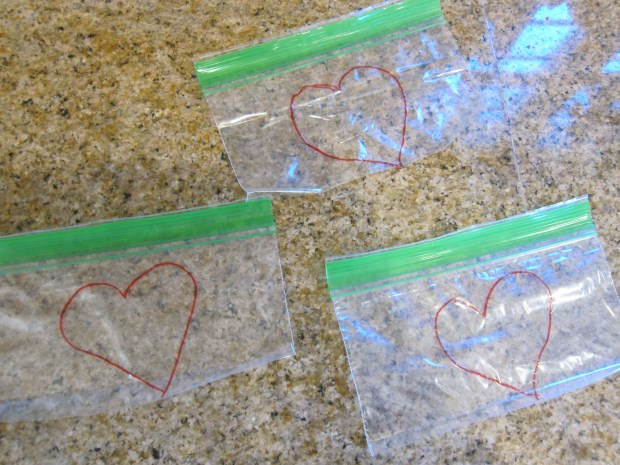
I drew a heart with sharpie on each of three snack-sized zip-top bags. These were the perfect size for little hands, although you could make a large version in gallon-sized zip-top bags.

Mix n Squish Heart (1)

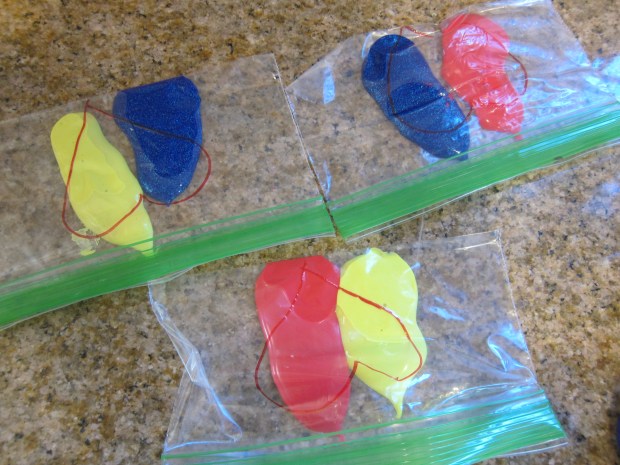
Carefully squeeze two primary colors of paint into each heart. We had one each of the follow:

  • red + yellow
  • yellow+ blue
  • blue + red

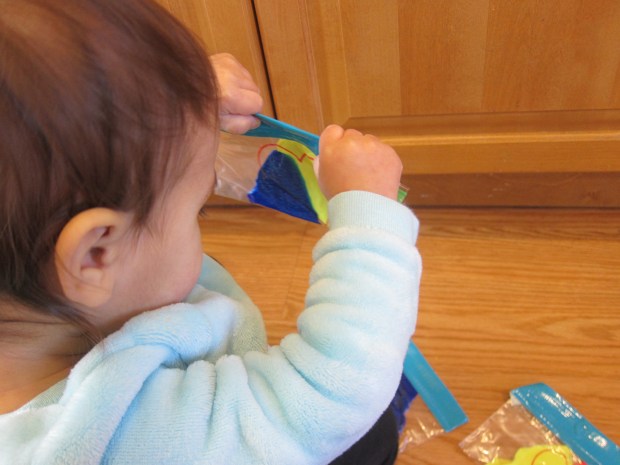
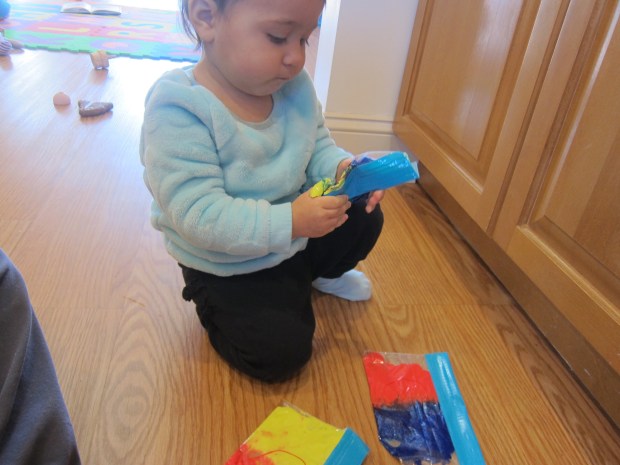
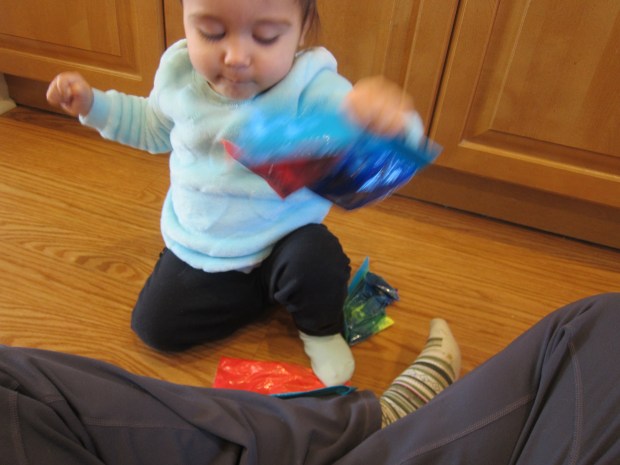
Aim to line these up so that each color fills half the heart. Now it was up to Veronika! She immediately loved squishing the bags in her hands.

Mix n Squish Heart (3)

She most likely didn’t notice the “hearts” she was filling in, but she clearly delighted in the texture and colors.

Mix n Squish Heart (5)

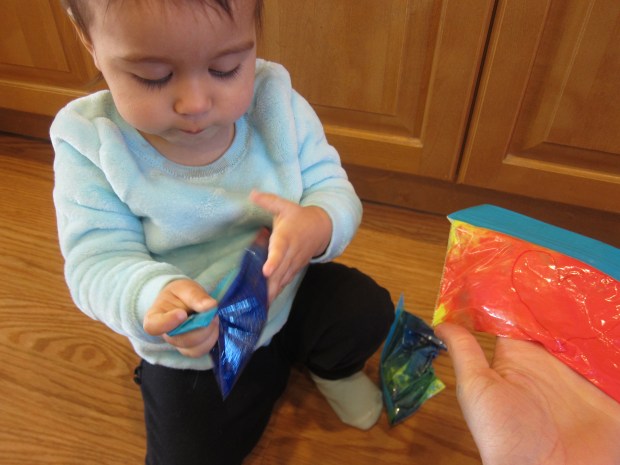
When she tired of the beautiful green she made, it was time to make purple!

Mix n Squish Heart (7)

The red and yellow squished together and resulted in a pretty peach for her to see.

Mix n Squish Heart (9)

In sum, it’s safe to say that Veronika loved this little Valentine’s Day activity.

Mix n Squish Heart (10)

Blowing Games

Blowing Games (8)

Teaching your child to blow helps strengthen the lips and tongue which in turn helps with language and speech. Although Veronika was on the young side for the activities we did today, it was nice to lay a foundation for these oral-motor skills.

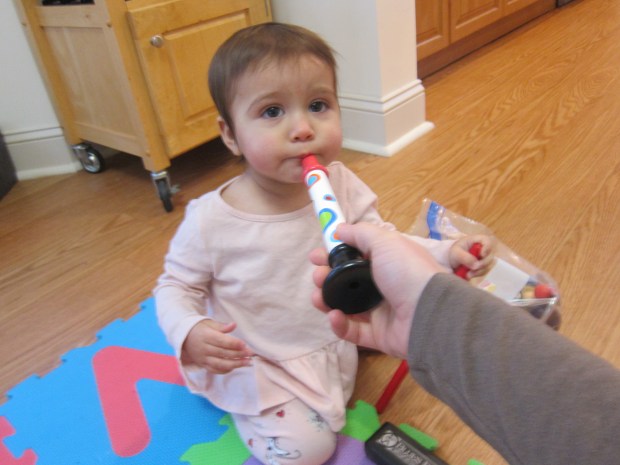
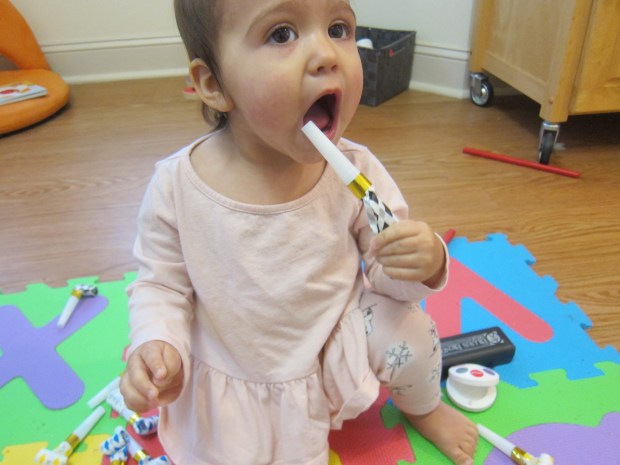
First, I used a toy horn to give a few short toot toots! The immediate response was giggles of course.

Blowing Games (1)

Then it was her turn to try. She lifted the horn to her mouth, and although she couldn’t produce a sound, she gave a little puff of air. She was definitely trying!

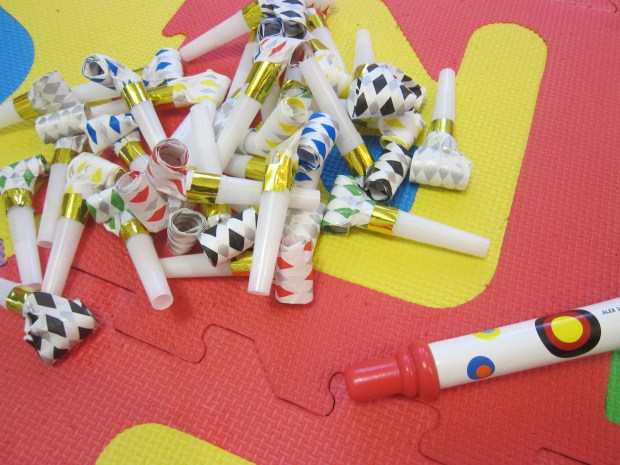
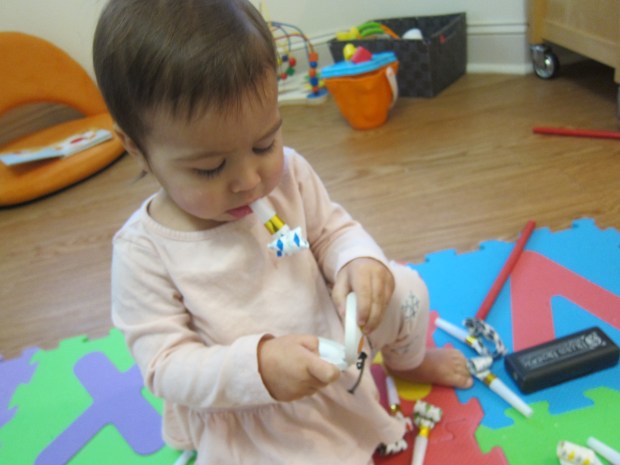
Next up: party blowers! Leftover ones from birthday parties make for fantastic blowing practice.

Blowing Games (2)

I showed her to make one pop open, a delight both visually and audibly. Again, there were lots of little huffs of imitation.

Blowing Games (5)

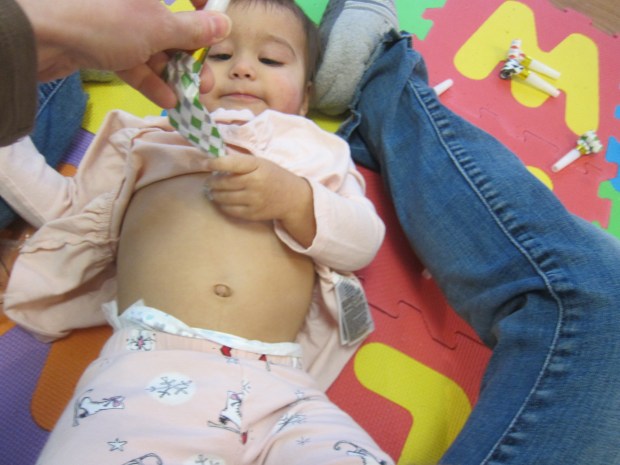
Get silly and blow one against your toddler’s tummy for some ticklish fun.

Blowing Games (4)

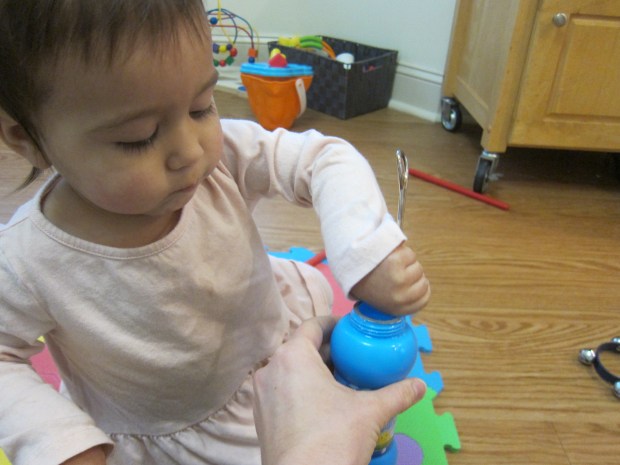
Of course the most classic game of all to teach blowing is just to pull out the bubbles. Instead of blowing them yourself, encourage your toddler to dip the wand and then huff.

Blowing Games (7)

At fifteen months Veronika isn’t quite there yet, but these blowing games were all about exploration.

Blowing Games (6)

When did your child learn to blow a horn or party blower? Please share in the comments!

Drum Time

Drum Time (7)

We had a rainy day today, which made it the perfect moment for an impromptu drum session with Veronika!

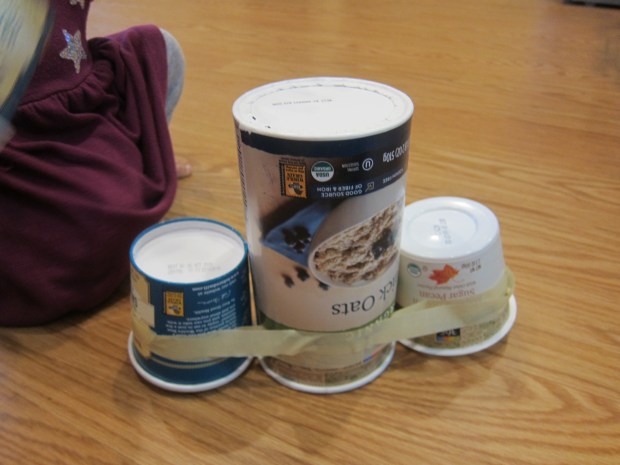
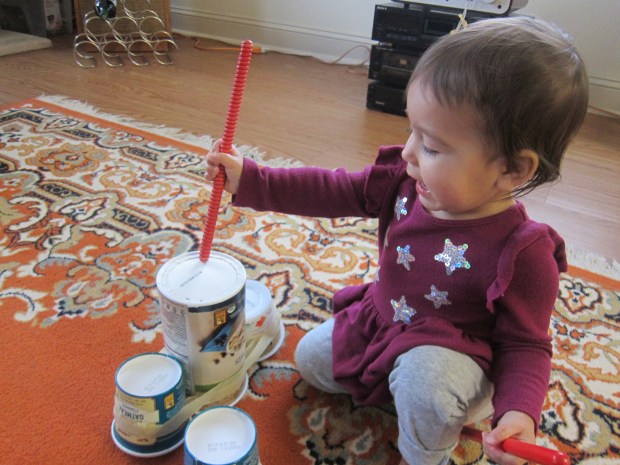
I had three different sized oatmeal containers in the recycle bin, including a full-sized oatmeal canister and two smaller servings of instant oatmeal. So first I made her a set of bongo drums! If you don’t have different sized oatmeal containers, use three that are all the same but cut them to different heights. Use masking tape to secure them together, and voila!

Drum Time (1)

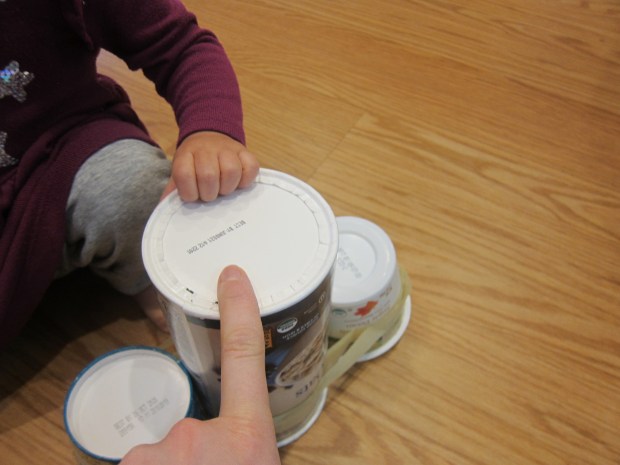
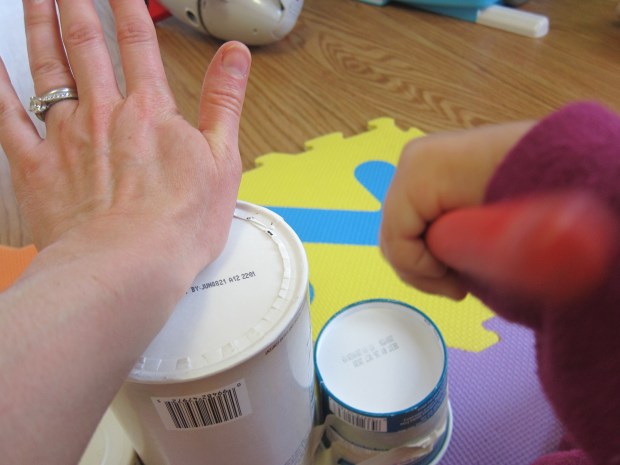
A wooden spoon and a few rhythm sticks were all we needed to start drumming. I also showed her the different ways we could drum with just our hands. We explored with our fingertips, our palms, our knuckles, and more.

Drum Time (2)

This was great for letting her explore all the different ways we can use our hands and fingers.

Drum Time (5)

But she liked the sticks best, and soon was giving lots of proud taps.

Drum Time (3)

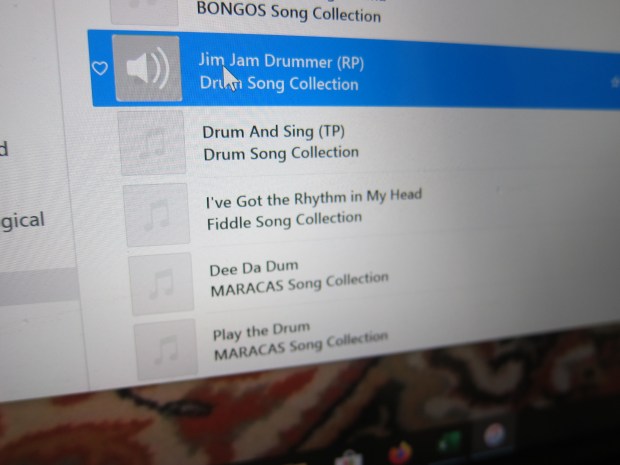
We added a soundtrack of favorite songs (heavy on drum beats of course), and started up a jam session.

Drum Time (4)

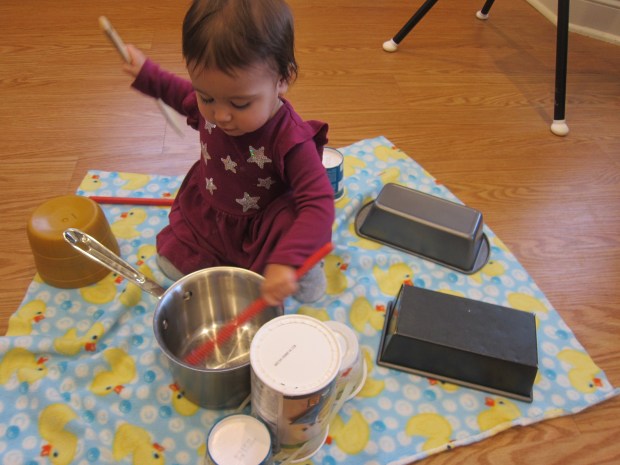
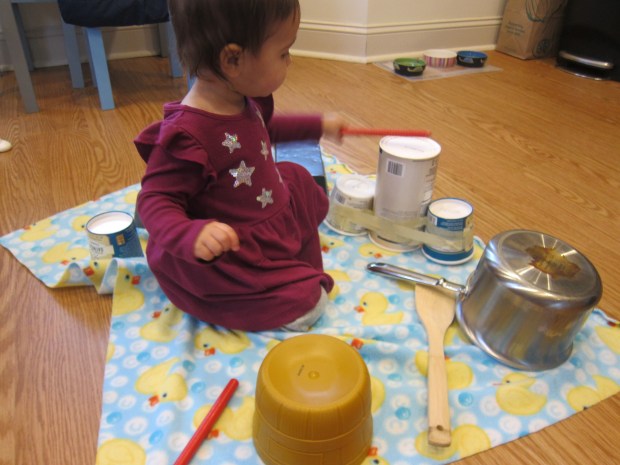
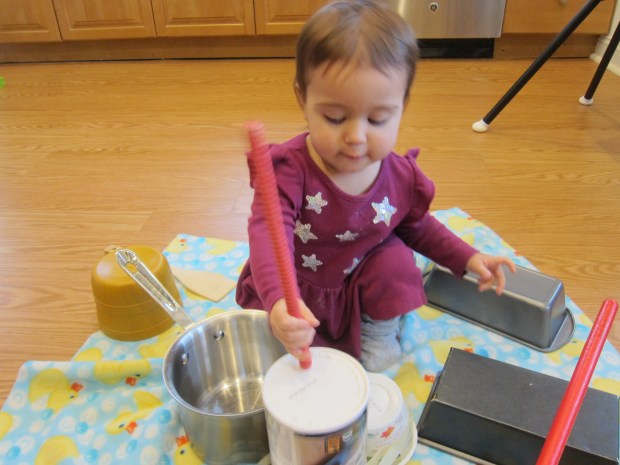
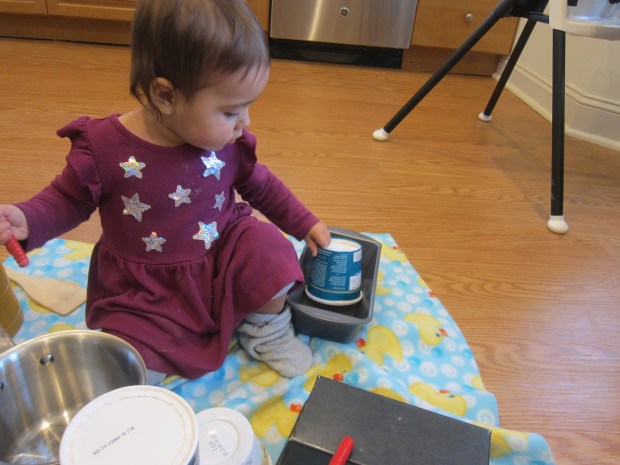
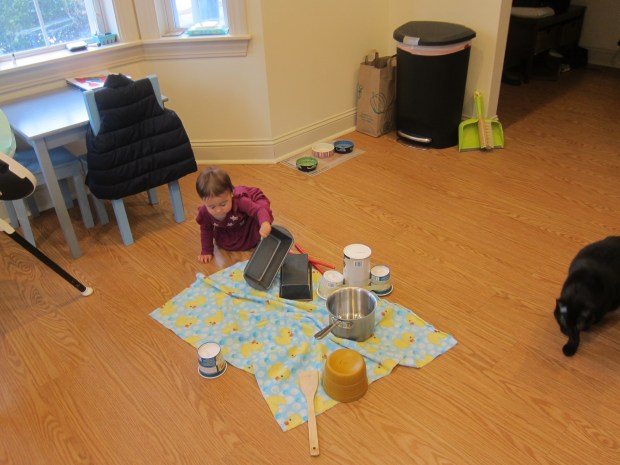
Later in the day, I set up her up with a “drum circle” of bowl and pot drums. On a soft blanket, I arranged a sauce pot, a few loaf pans, a plastic bowl, and another empty oatmeal container. I sat her in the center with her mallets and put the music back on.

Drum Time (6)

Let the drumming begin!

Drum Time (8)

Don’t worry if your toddler drums in unconventional ways. Veronika enjoyed turning the vessels right side up so she could swirl the rhythm sticks around the inside, which made a fun clanging sound.

Drum Time (7)

She also loved piling the “drums” one inside the other, turning it into a stacking game and drum session all in one.

Drum Time (9)

When she discovered that the loaf pan made a spectacularly loud clang on the wooden floor, this had to be repeated several times.

Drum Time (10)

I didn’t reprimand her, since it’s not drum play until it gets a little loud! In sum, this was a fun way to explore volume, dynamics, rhythm, and so much more.

Where Is Your Nose?

Where is Nose (4)

When Veronika was still a baby, I introduced body parts through fun games, sometimes focusing on one body part for a whole day, but not expecting her yet to know what was what!

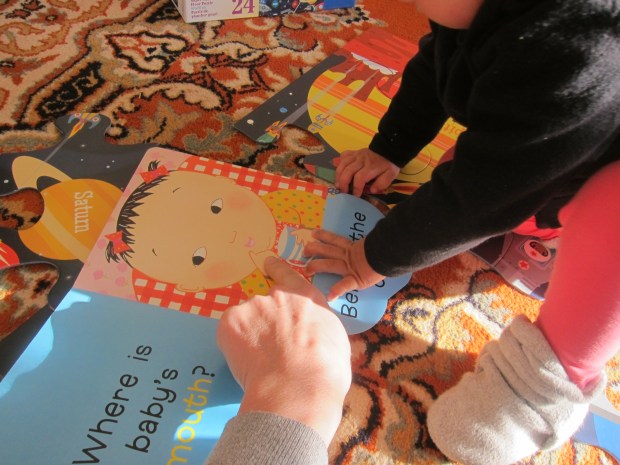
Here’s an update on that game now that she’s a toddler; today we made it more of a ‘Simon Says’. For each body part, I would first point to the one on my body. “Here are my fingers,” I said, wiggling them. Then I posed the question: “Where are your fingers?”

Where is Nose (1)

Over the course of the game, she proudly wiggled her fingers, pointed out her own toes and knees, touched her shoulders, and tapped her head, following my lead each time.

Where is Nose (2)

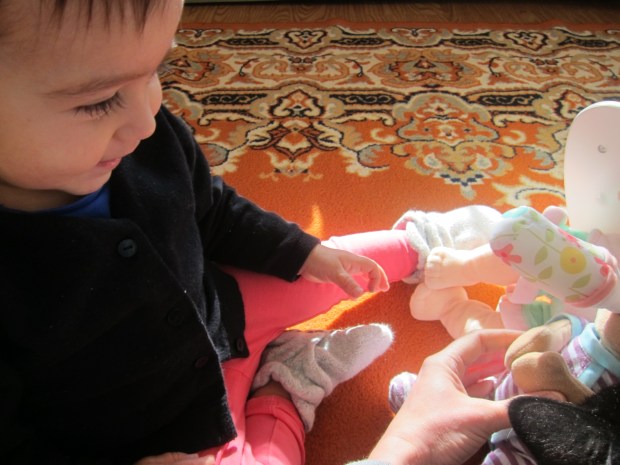
Her favorite body part is her belly. “Where is your belly? I asked. She loves to share it, and then she needed to see mine!

Where is Nose (6)

You can reinforce the game with any book that focuses on body parts.

Where is Nose (4)

Although she’s young for it, we read through Head to Toe by Eric Carle, with an action to accompany each body part. She loved seeing Baby act it out!

Where is Nose (9)

It was a delight to see how many of these words she now knows, recognizes, and says.

Soap Crayons and Bath Paint

Soap Crayons Bath Paint (4)

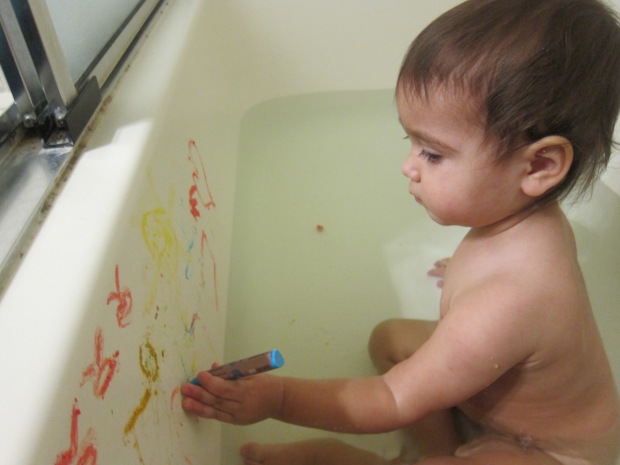
Some baths are for getting clean, but sometimes a bath is meant for playing! To wit, this afternoon I treated Veronika to an extra long bath just so she could enjoy some arts and crafts in the tub.

The bath is a perfect place for your toddler to experiment with art. What’s easier than a mess that can literally be washed down the drain?

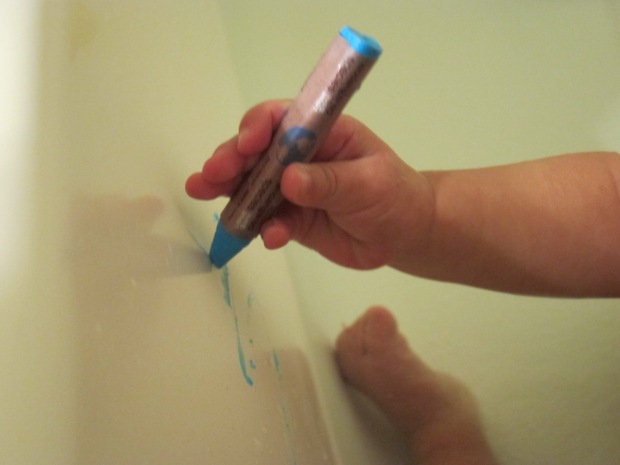
We started out with soap crayons. You can make your own, but I skipped the labor of love and instead purchased a set from Sud Smart Bath Toys.

Soap Crayons Bath Paint (2)

Unfortunately they snapped into small pieces easily, but that didn’t deter Veronika from having a blast.

Soap Crayons Bath Paint (3)

Imagine her delight that she could scribble everywhere without being reprimanded!

Soap Crayons Bath Paint (5)

I made lots of squiggles and swirls for her, too, since you have to press hard with these crayons and her efforts didn’t always produce much color. Since we’re working on her budding vocabulary and object recognition, I drew simple shapes that she knows the word for, like the sun and birds.

Next up, we swapped out the crayons for paint! For an easy bath paint, look no further than the medicine cabinet: foamy shaving cream.

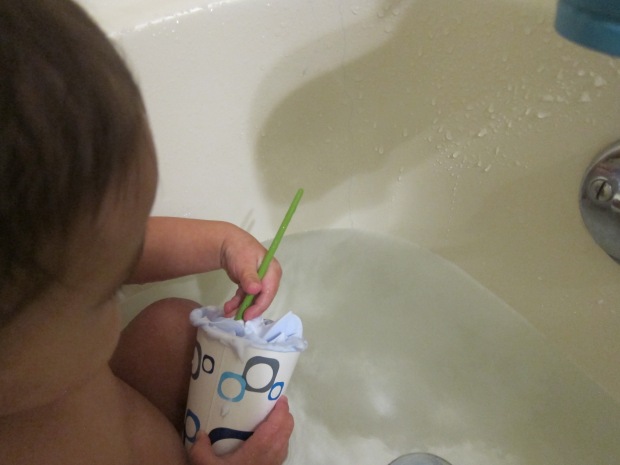
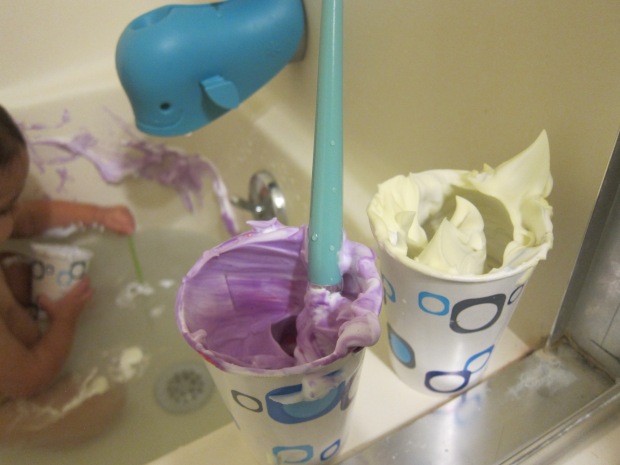
I squirted a generous amount of shaving cream into each of three cups and added a few drops of natural food coloring to each, resulting in pretty pastel colors. Insert a paintbrush into each color.

Shaving Cream Paint (1)

As with a recent edible paint, Veronika first just loved plunging the paintbrush up and down in the mixture.

Shaving Cream Paint (2)

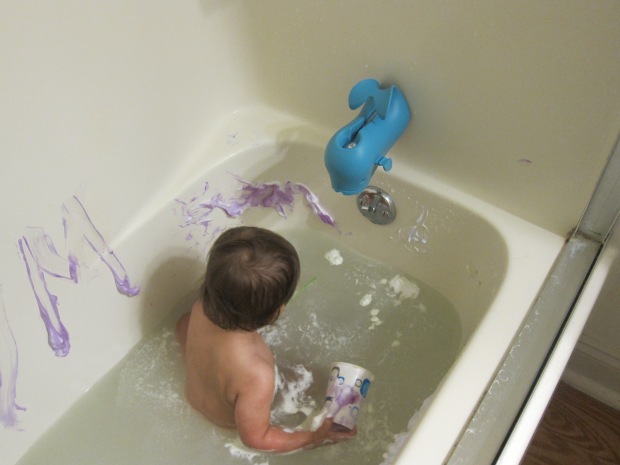
Once I showed her how to smear it on the tub walls, she was game!

Shaving Cream Paint (6)

I also lathered some on one wall in a thick canvas, hoping she would run the paintbrush through.

Shaving Cream Paint (5)

She was more into the fact that she could paint it on her hands, though. Look mommy!

Shaving Cream Paint (4)

Throw in a little education if you want, writing letters (your child’s initials are always fun) or shapes. And when it’s done, just rinse it down the drain.

Shaving Cream Paint (3)

Homemade Bath Shapes

Simple Bath 2 (2)

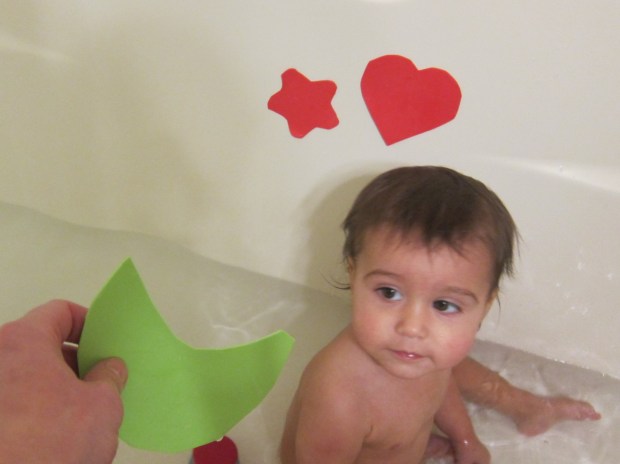
Here’s a fun variation on foam sheers in the tub that Veronika has enjoyed lately at bath time.

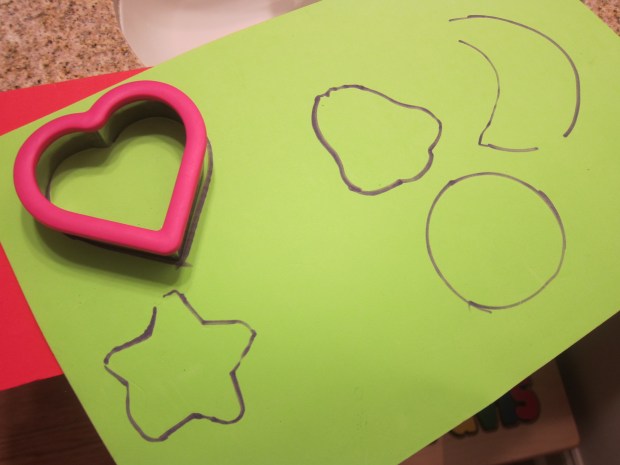
This time, I used cookie cutters to trace shapes that are becoming identifiable to her, including stars, moons, basic shapes like circles, and a few fun ones like bells.

Simple Bath 2 (1)

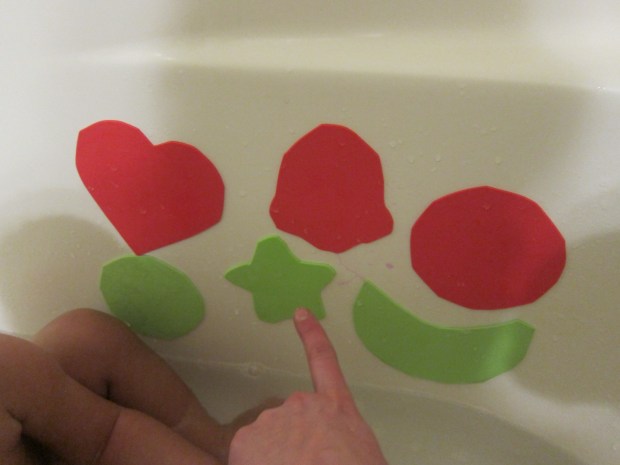
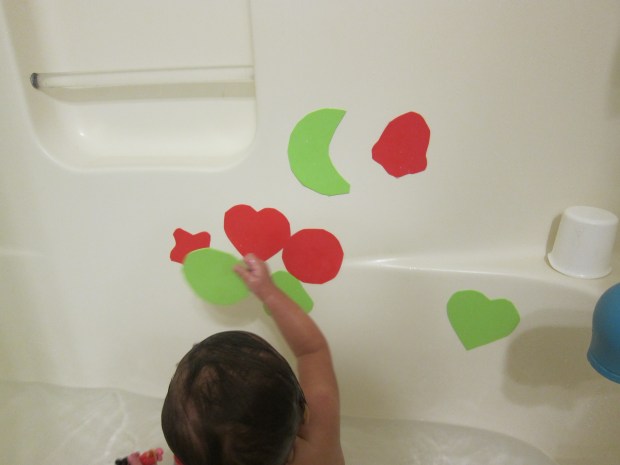
I cut them out and then lined them up on the bathtub walls so she could see how they stuck right to the tub. She loved taking them off and on again.

Simple Bath 2 (5)

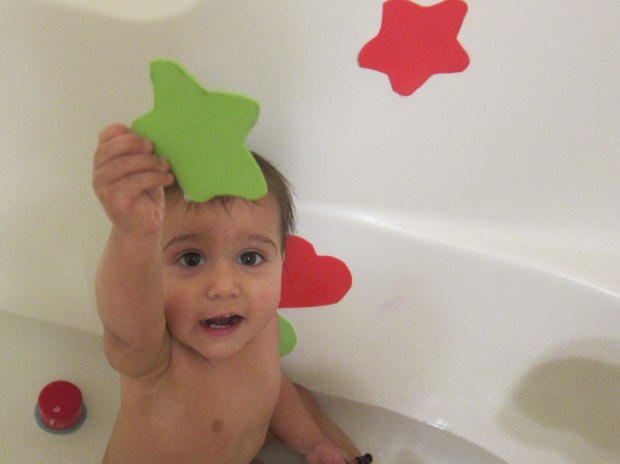
The star was a fast favorite. With no prompting, she held it up high every time I sang the “up above the world so high” line of Twinkle, Twinkle!

Simple Bath 2 (3)

The moon likewise received big smiles when I recited a favorite poem about the moon.

Simple Bath 2 (4)

This was a great way to combine tub fun with object recognition as your toddler begins adding more and more words to his or her vocabulary.

Kitchen Boxes

Play Kitchen (1)

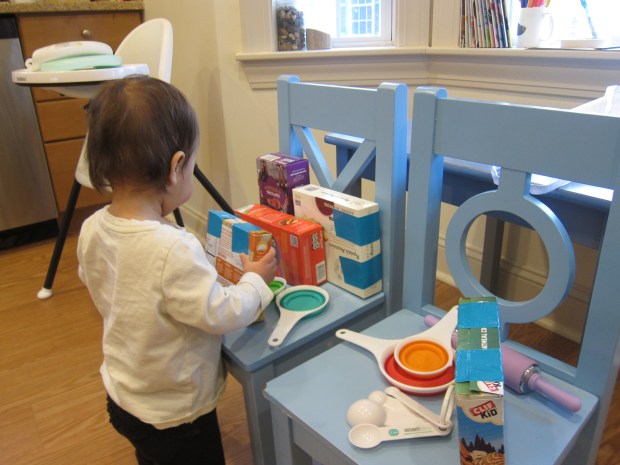
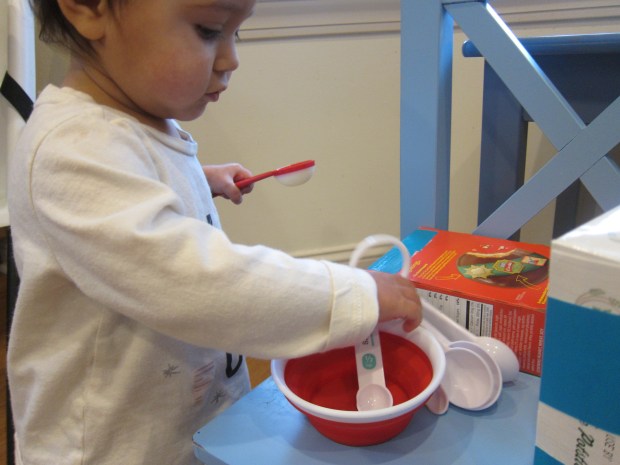
Toddlers love to be your helpers, which can be adorable, but which also sometimes places them squarely under foot and in the way… like when you’re cooking in the kitchen! Encourage their eager need to be involved by setting up a play kitchen right alongside yours.

There’s no need to buy a fancy store-bought kitchen; chances are you have everything you need right at home for this game.

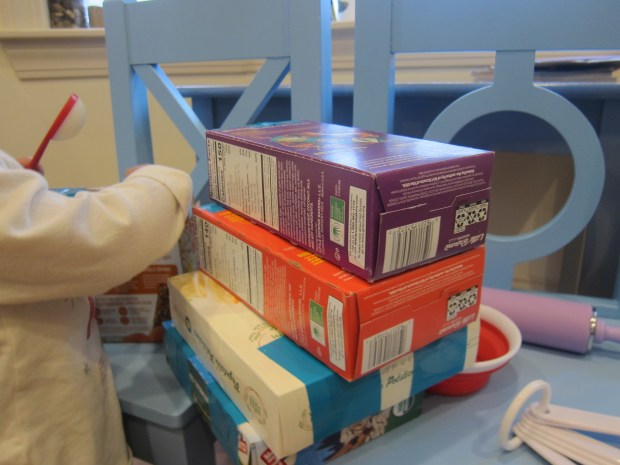
I saved up empty snack boxes over the course of a week and taped them shut to be Veronika’s pantry staples and “groceries”. (Note: The youngest toddlers might be happy just with these boxes and nothing else! They make great towers).

Play Kitchen (2)

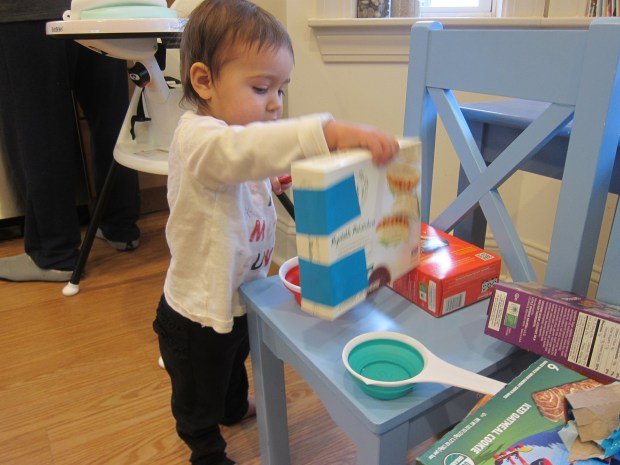
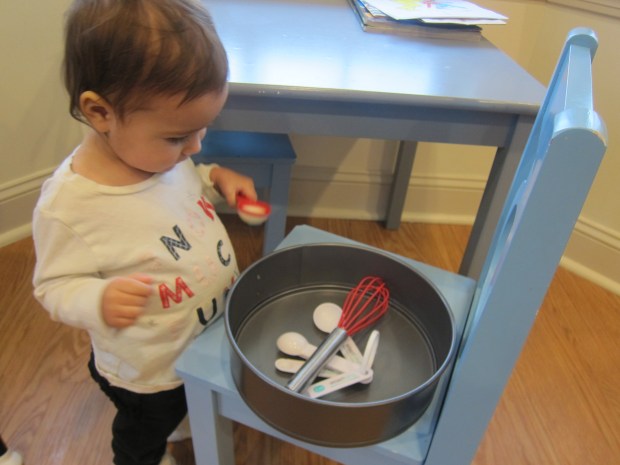
Then I set up two toddler chairs side by side as her kitchen counter. Use empty large boxes if you don’t have chairs that are the right height. Her kitchen was soon outfitted with brightly colored measuring cups, a set of measuring spoons we use just for play, and other accessories like whisks and rolling pins.

Play Kitchen (3)

Soon she was very busy “cooking”!

Play Kitchen (4)

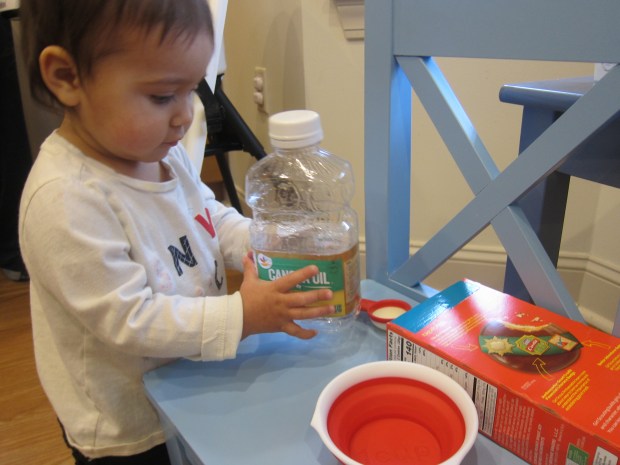
Veronika was in luck today because I finished up a bottle of vegetable oil making my recipe. This was quickly added to her kitchen. Build up a similar stock for your little one over time, adding old aprons, dish cloths, empty bottles, spare utensils, and more.

Play Kitchen (7)

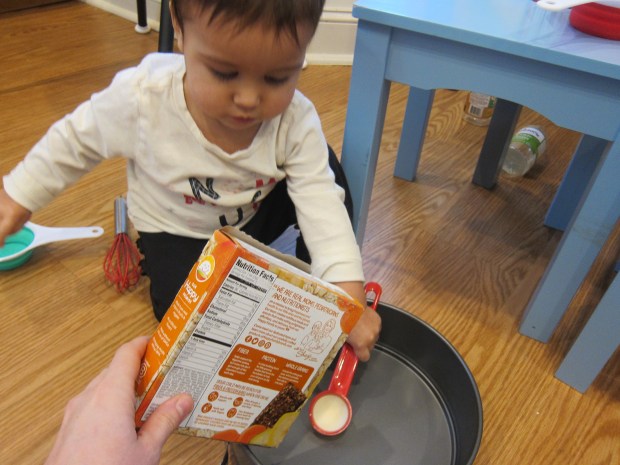
As I filled muffin tins with real batter, I gave her an old cake pan to “bake” her recipe in.

Play Kitchen (10)

She was so busy and happy by my side playing this game, and never in the way!

Play Kitchen (11)

Homemade Paper Balls

Homemade Balls (7)

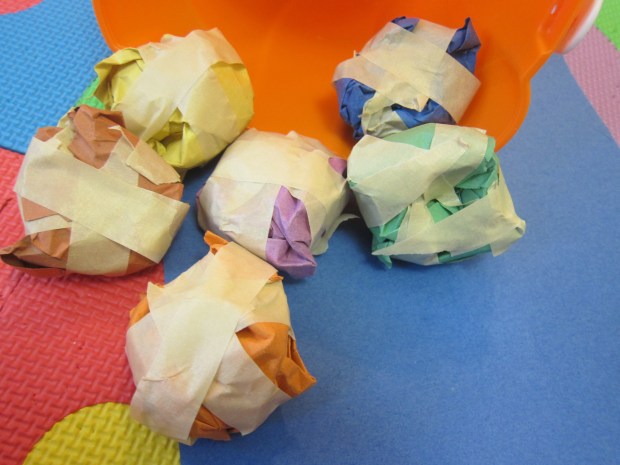
Toddlers love crinkling paper. Toddlers love tape. So if you make these easy paper balls with only those two materials, your little one will thank you!

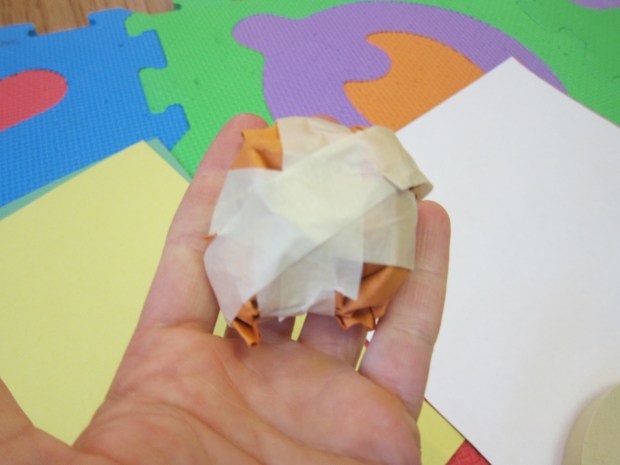
Half the fun is in the making, starting with crumpling paper up tightly. Ready, set crumple!

Homemade Balls (6)

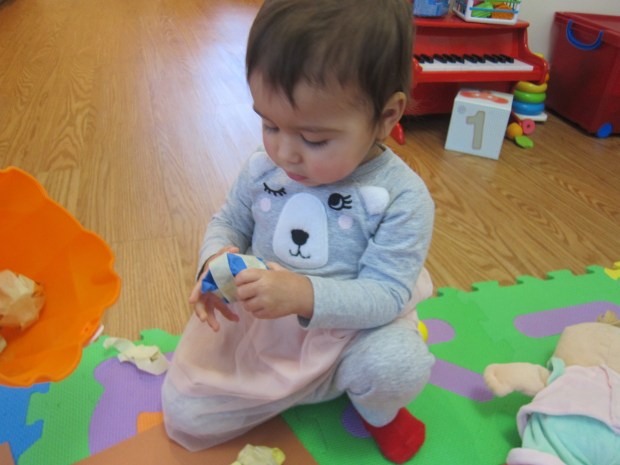
Once we had some nice wads of paper, I wound around them with masking tape. The more pieces of tape you use, the more these will truly resemble round balls.

Homemade Balls (1)

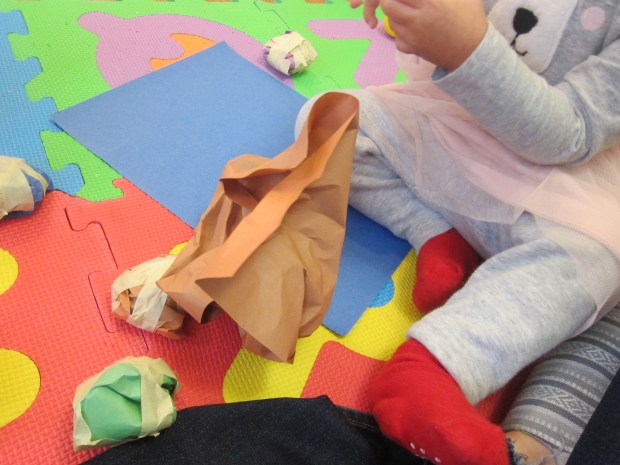
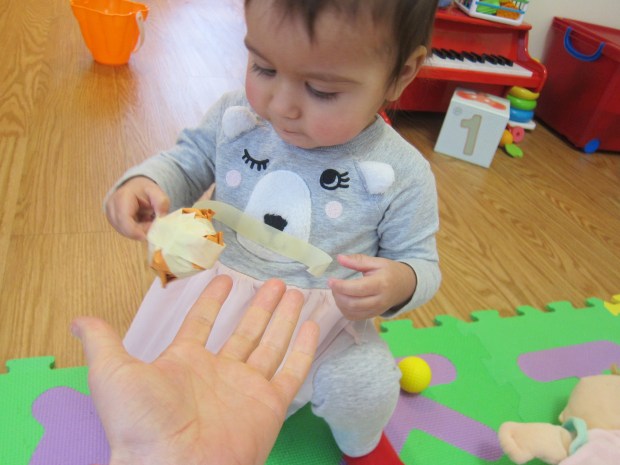
We used construction paper for bright colors (and color learning!), but plain white paper works just as well. Veronika always asks for “sticker” whenever I pull out the tape, so it was hard to say which she liked more: just playing with the sticky pieces, or helping to tape up the balls!

Homemade Balls (2)

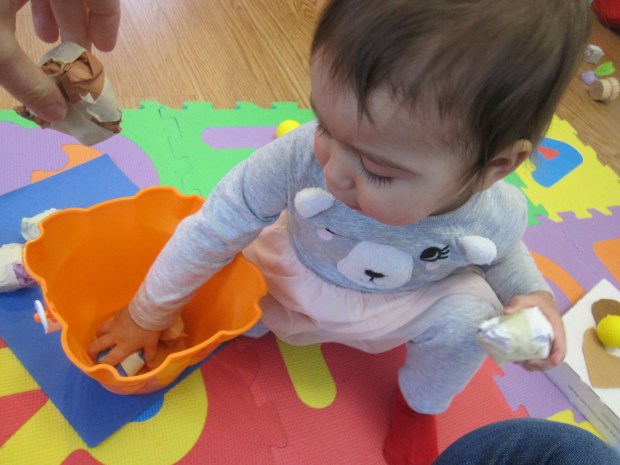
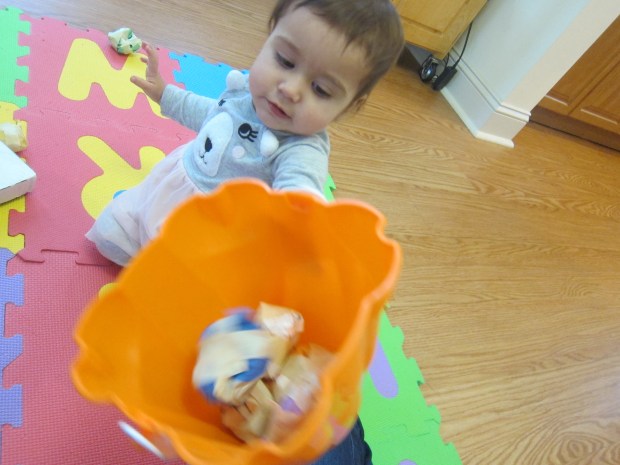
Now it was time to play! We started out simply tossing them into a bucket.

Homemade Balls (8)

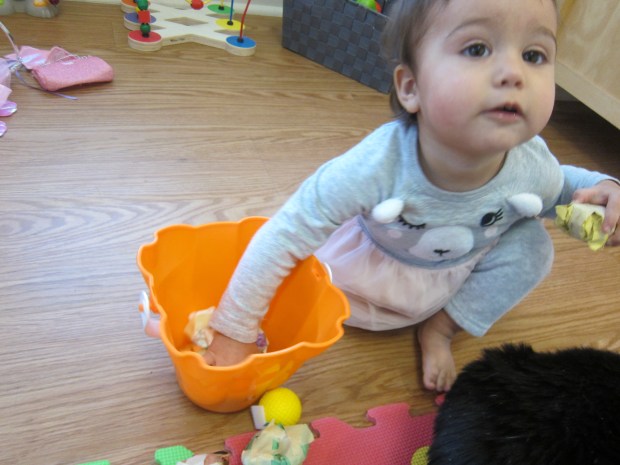
Then of course comes the opportunity to dump out!

Homemade Balls (9)

Veronika soon was inventing her own ways to play with them, whether scooting after them along the floor or – her favorite – making them fall from our heads with a big “achoo!”

Homemade Balls (10)

Play pass with the balls, kick them around the house (if your toddler is at this stage of gross motor development), or just sit back and see how your child plays with them. I promise these will not disappoint.

Homemade Balls (4)


Hit the Target

Hit the Target (6)

With a little set-up in advance, this is an easy game to help fill a dreary winter day indoors!

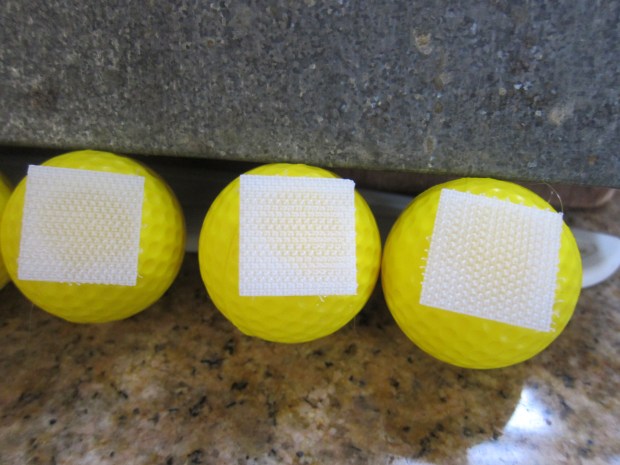
While Veronika was napping, I used a hot glue gun to affix Velcro squares (the scratchy side) to several soft golf balls.

Hit the Target (1)

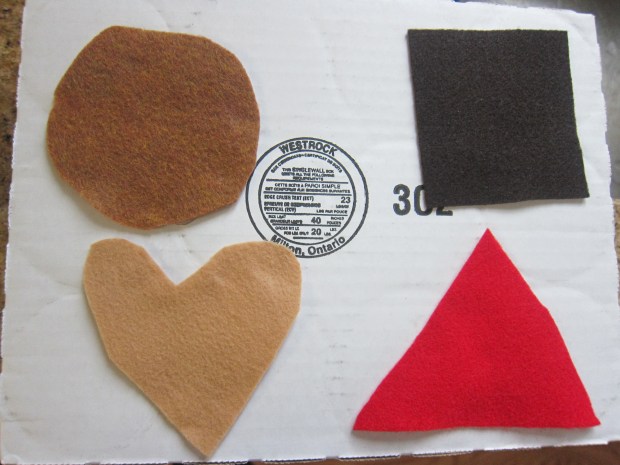
Next, I cut a few simple shapes from felt, like circles, hearts, and triangles. If you’re feeling more ambitious, cut teddy bears or other animal shapes, too! I then used hot glue to attach these to a recycled piece of cardboard.

Hit the Target (2)

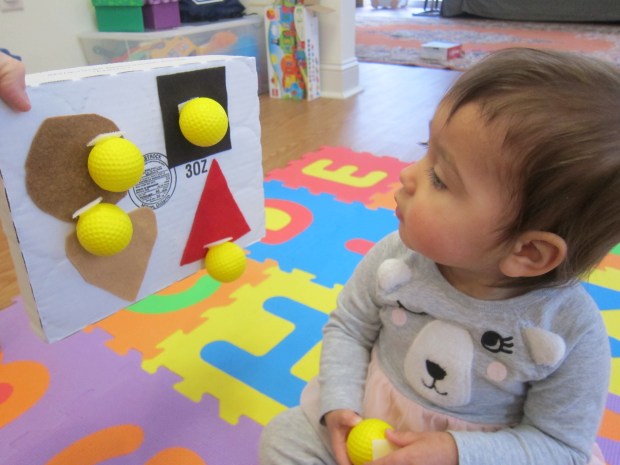
When she woke up, I showed her how to toss the balls towards the felt, at which point they stick! She was fascinated.

Hit the Target (5)

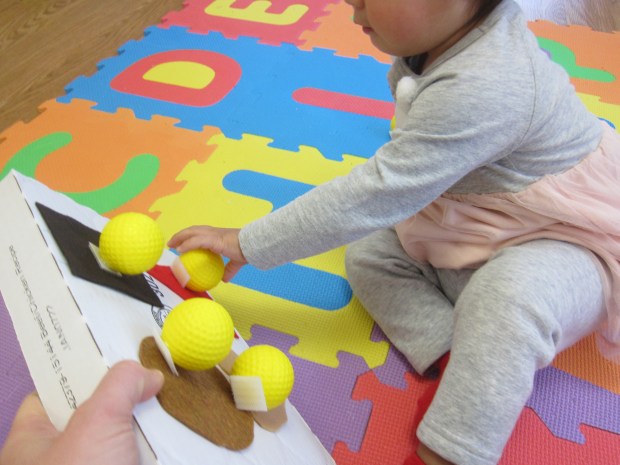
It was hard for her to get the concept of putting the balls on herself, preferring to hold the golf balls instead of releasing her grip.

Hit the Target (3)

But she did like pulling them off the Velcro, no doubt intrigued by the tug of resistance.

Hit the Target (4)

I’m going to keep this game around since it’s one that will grow with her. The felt shapes provide a little early learning, and she’ll be able to approach the game differently as her tossing skills improve.