Juice-Pouch Stomp Rocket

Juice Rocket (5).JPG

Don’t toss that juice pouch from your child’s next snack time. With just a few embellishments, your kid will have him- or herself their very own rocket launcher!

First, make sure the juice pouch is completely empty and rinse any juice from the straw. Reinsert the straw into the pouch; this is your launcher.

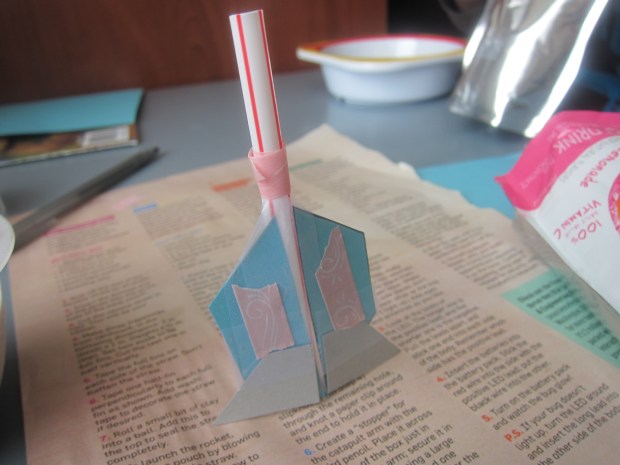
Cut a regular straw in half; discard half and keep the rest as your rocket.

Trace 3 trapezoids onto colored paper – littlest kids might need help with this one. The shapes should measure 3 inches on the bottom, 1 inch on the sides and 3/4-inch on the top. Cut out, and cut one of them in half vertically, leaving the other two full.

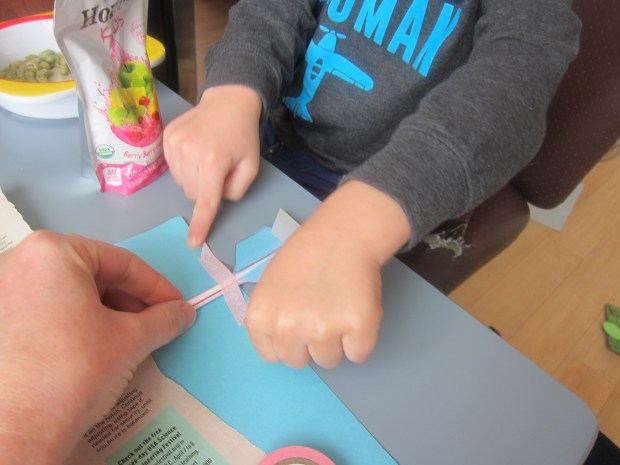
Tape the 2 full trapezoids to each side of the straw as the rocket fins. Add the half pieces of trapezoid at the bottom with more tape.

Juice Rocket (2)

Travis decided that he wanted to add a few strips of washi tape as embellishment, too.

Juice Rocket (1)

Seal the end of the straw with a little ball of clay. Now your rocket is ready to soar!

Blow into the straw of the juice pouch to make sure it is full of air.

Juice Rocket (3)

Slide the “rocket” onto the straw of the juice pouch. Now stomp (or press) on the pouch and watch your rocket soar!

Juice Rocket (4)

You can teach your little scientist that this project works thanks to compressed air from the pouch, otherwise known as pneumatics!


Early Explorers Habitats

LP Habitats (24).JPG

This month’s offering from our Early Explorers subscription was quite different than past kits. The booklet features many preschool readiness activities – mazes, matching, counting – but no suggested crafts or projects. As a result, we supplemented from Little Passport’s blog to add some additional fun.

LP Habitats (5)

The booklet featured great information, though, introducing children to habitats such as mountains, deserts, forests, and more. Travis loved the usual finds like the flashlight page and affixing his sticker on his luggage.

LP Habitats (4)

Habitats Art:

First up, we needed a craft! Papier-mâché mountains were perfect for the habitat theme – and so neat that they merited their own blog post!

LP Habitats (13)

The craft turned into a great way to supplement the info in Travis’s booklet about animals that live in the Himalayas and other mountain ranges.

Habitat Science:

We also snagged the perfect science project off Little Passport’s blog – a rainforest in a jar! To recreate this warm, humid environment (one canopy tree can produce 200 gallons of water in a year!), we first added about 1/2 cup potting soil to a large mason jar, then filled with 1/4 cup water. I rather zealously added a little extra water, which may have been a mistake.

Rainforest Jar (1)

Next we rubbed flower seeds with sandpaper to break them up slightly, then added to the jar.

Rainforest Jar (3)

We also added some moss (I bought the moss at the craft store; I hate to disturb moss from nature).

Rainforest Jar (4)

Seal the jar and set it some place sunny.

Rainforest Jar (5)

Within a day or so you’ll see the condensation on the inside of the jar – neat! Keep a record of any changes you see, and make a note of how long it takes for your flowers to bud.

Rainforest Jar (6)

Habitats Keepsake:

This month’s keepsake was an instant hit, and I think the highest quality one we’ve received: a sticker book with four different habitats and reusable animal stickers to go in each setting.

LP Habitats (3)

As far as reusable stickers go, these are the best I’ve ever come across! Thick and durable, easy to peel off, and they match right back up on the sheets they came from when you’re done with play. Travis loved how floppy the stickers were!

LP Habitats (1)

He had to put every animal in a home before he tired of the game.

Habitats Field Trip:

We decided to get as close to a tropical rainforest as we could here in the northeast – by visiting a butterfly exhibit! The humid room lives up to the name, and the butterflies are truly amazing, perching on fresh fruit…

butterflies (6)

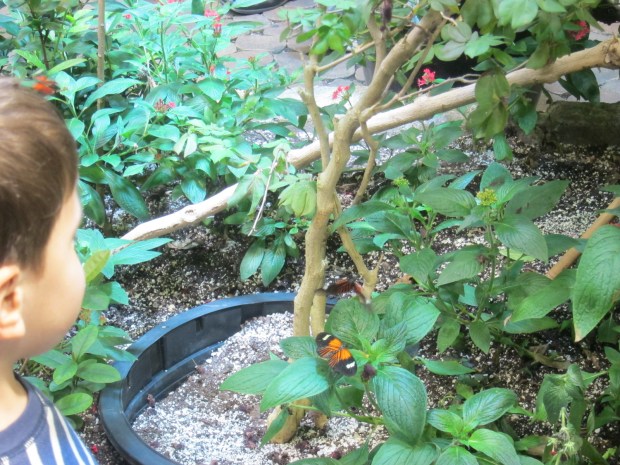
hovering on leaves right before you….

butterflies (7)

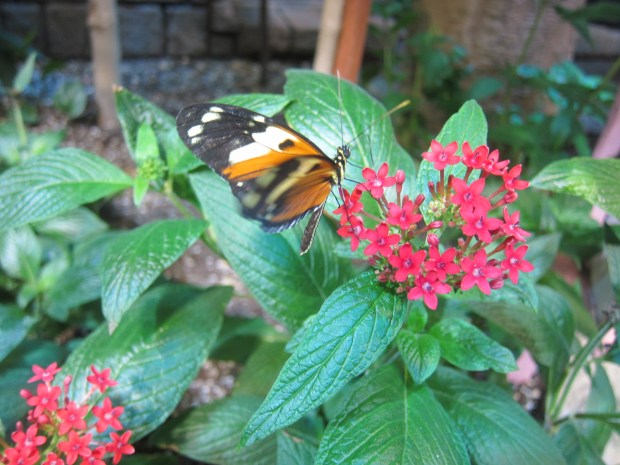
and staying still enough to marvel at their curled tongues.

butterflies (2)

Habitats Further Activities:

Further activity suggestions this month really were about sitting down, talking and thinking together. I worried I might lose a preschooler’s attention, but Travis was quite engaged. First, we made a list of possible habitats, and he did great remembering – arctic, mountains, rainforests, etc.

LP Habitats (19)

I asked which was his favorite animal and he surprised me with polar bears, so we watched some online clips for kids about polar bears and their arctic habitat.

LP Habitats (20)

He also said that this is where he’d like to live, and to be a polar bear. (Brr!)

Since Travis’s drawing is still a little, well, abstract, I also set out coloring book pages of various animals and habitats that he could color.

LP Habitats (23)

Finally, we headed off to research and check out our local habitat. We take lots of nature walks anyway, so to capture what’s truly unique about our area, we went to where forest gives way immediately to the shore of Long Island Sound.

LP Habitats (26)

The only animals we saw on this cold snowy morning though were geese!

LP Habitats (27)

Phoneme Week 12: Soft G


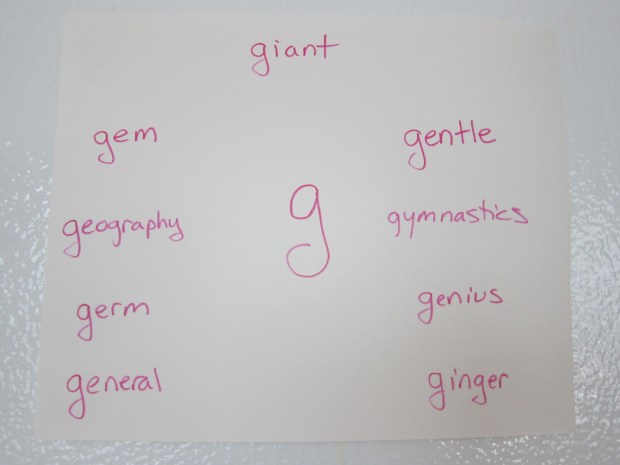
Phoneme G.JPG

Folks, I’ll admit it: this is the last phoneme we’re going to focus on. Travis understands phonemes solidly by now, and we simply don’t have time to concentrate so hard on one letter pair for a week or more. Instead, we’re going to delve into Usborne’s Starting to Read Pack, which will string together the knowledge Travis has gained on our phoneme journey.

So without much ado, here is a brief rundown of what we did for the soft g sound. As with soft c, we focused just on this specific letter sound, not a letter pair.

Words of the Week:

  • Giant: We started off with a read of Jack and the Beanstalk. Although “giant” isn’t in the title, Travis helped read the word every time it appeared in the text. Next we traced ourselves into giants! Phoneme G (1)Lie down flat on a piece of butcher paper or craft paper and trace your outlines. Phoneme G (2)We made one mommy and one Travis. Then we filled in our clothes and expressions – I was so proud of the face Travis drew on by himself. Our giants hung on the wall for the next couple of weeks. Fee fi fo fum!Phoneme G (5)We also made objects look giant with forced perspective photos; played with a giant alphabet mat; made giant Olympic medals; and used our bodies as giant playing pieces in a life-sized board game.Perspective Photo (2)
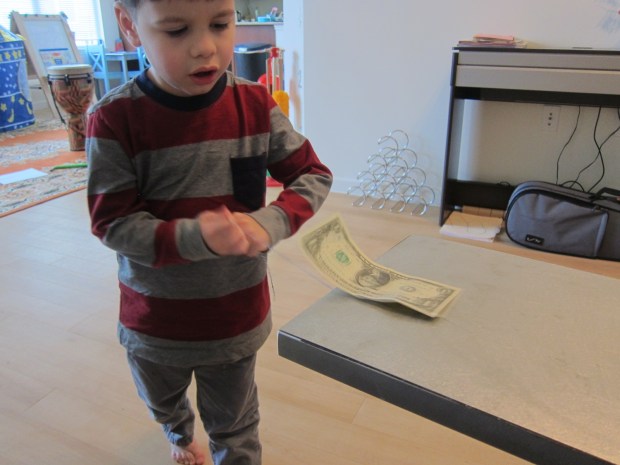
  • Gentle: Okay, this was a bit of a stretch, but I emphasized the word gentle while we were pulling gently on our moving dollar trick. We then also talked about other times you need to be gentle, and Travis helped make a great list: petting the cat, rubbing someone else’s arm or cheek, etc.Moving Dollar (2)
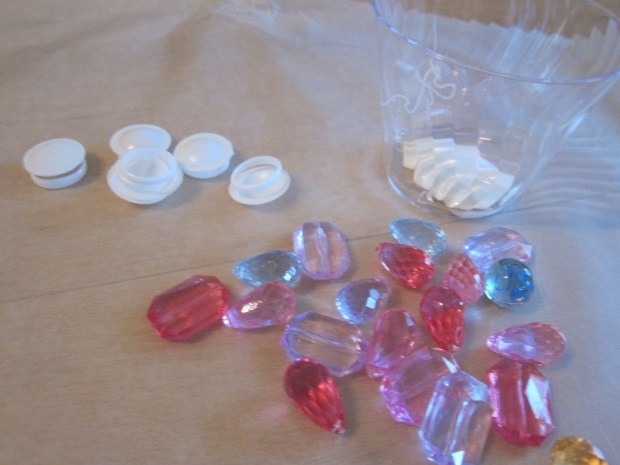
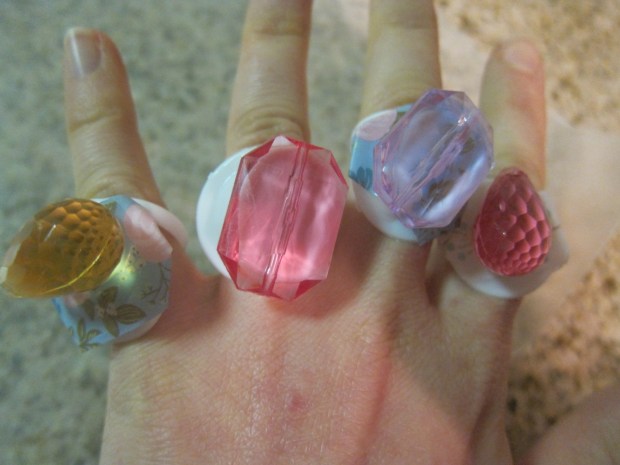
  • Gem: We made gem-studded felt crowns and then needed something to do with all the leftover gems! For creative upcycling, we saved the caps from gallons of almond milk, then used tacky glue to adhere the sparkly gems and make milk cap rings. Milk Cap Rings (1)Mommy even tried the rings on for size!Milk Cap Rings (6)
  • Geography: Our Usborne encyclopedia offers a great early lesson on geography. Travis loves hearing the names of different countries and continents.Phoneme G (7)
  • Genius: We covered this word in two books. First up: Big Words for Little Geniuses by Susan and James Patterson. Although not in the title, Travis also helped spot the word genius in a book about Albert Einstein.Phoneme G (6)
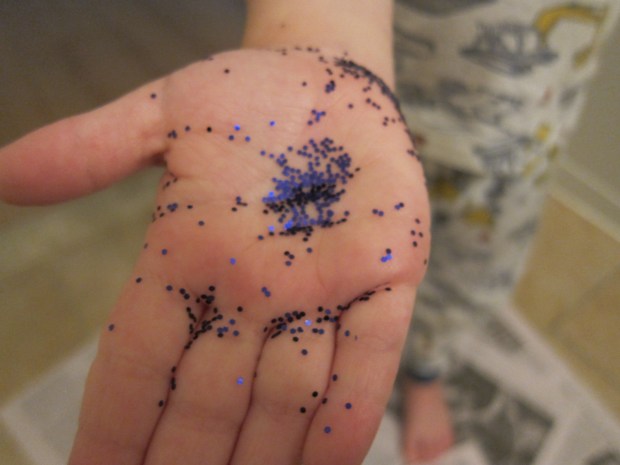
  • Germs: We recycled a fantastic old game that never grows old, and provides a visual of how quickly germs spread. Simply sprinkle your child’s hand with glitter. Phoneme G (8)Then shake hands and – oh no! – now mommy or daddy has germs too. This game is sure to elicit giggles, as well as teaching a good lesson.Phoneme G (9)
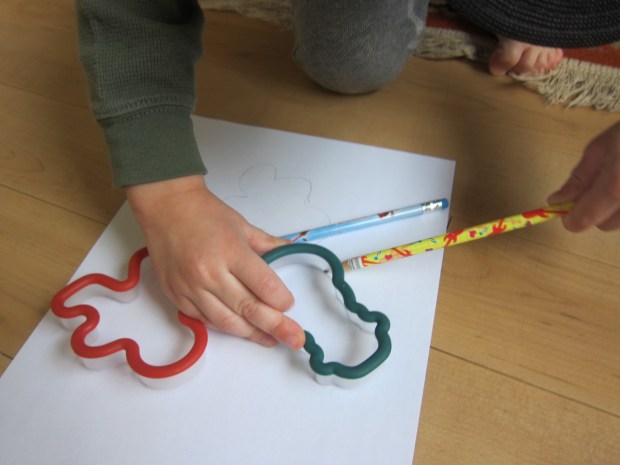
  • Ginger: First, we got out our cookie cutters to trace, placing emphasis on the gingerbread man shape. (This is – by the way – a fantastic, two-ingredient activity for any time: Set out a basket of cookie cutters and let your little one trace them, then decorate with faces or any other way they’d like). Cookie Cutter Trace (1)For our purposes, we focused on Mr. Gingerbread. Travis tried tracing, and I also made an outline for him to fill in. Cookie Cutter Trace (2)Then we had fun with our sense of smell adding ginger to oatmeal for breakfast!Phoneme G (11) We also read Gingerbread Christmas by Jan Brett.
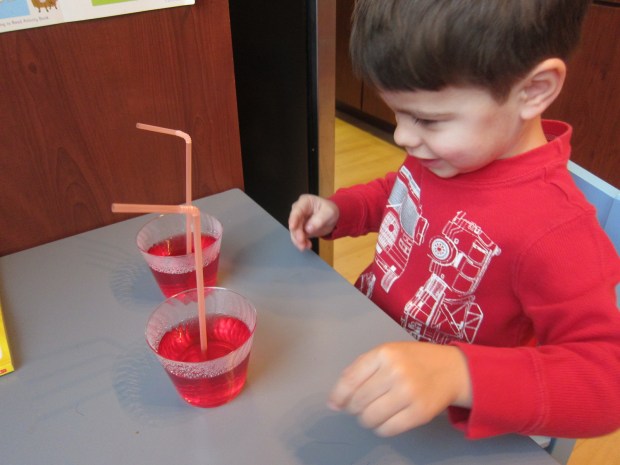
  • Gelatin: We don’t use the real thing in this household of course, but vegan gel desserts were great for games. First we made homemade stickers. Next up: surprise juice cups and fun with homemade marshmallows, both made possible thanks to “gelatin.”Surprise Juice (4)


Early Explorers World Celebrations


LP Celebrations (24).JPG

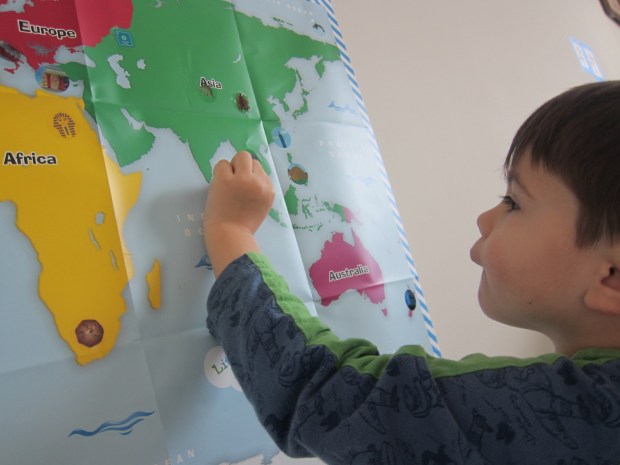
February was a great month to receive our World Celebrations kit from “Max and Mia” at Little Passports, since we could focus on a few big current events like Valentine’s Day and Lunar New Year. Meanwhile we learned lots about celebrations that occur throughout the year. Travis knows by now to expect stickers in his kit, and eagerly finds the spot for them on his map…
LP Celebrations (2)

….and loves each month’s flashlight adventures.

LP Celebrations (4)

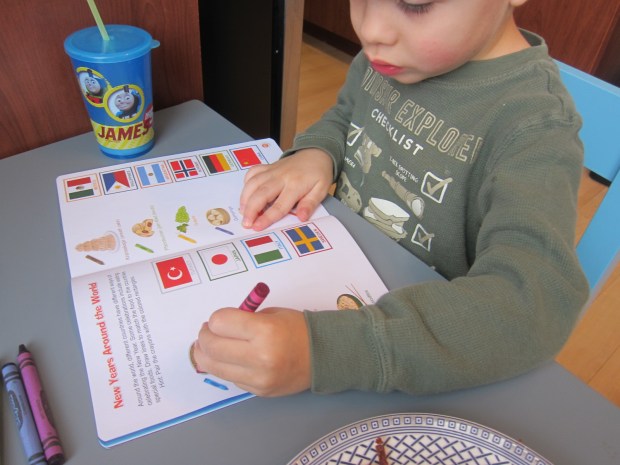
As always, there were great preschool-appropriate activities and information in our booklet. We especially liked matching up New Years’ foods around the world with the right flag!
LP Celebrations (26)

Celebrations Craft:

Straight away, we put together the sweet little craft suggestion to teach about Dia de los Muertos: paper marigolds. Although not the right time of year, there’s never a wrong time to think about past loved ones. As we worked, we talked about how each flower was for a relative who wouldn’t be coming back. It turned into an unexpectedly beautiful way to teach Travis about a few of his ancestors.

To make the flowers, cut tissue paper into rectangles that are 8 inches long (they should be about 6 inches across). Travis loved helping with the ruler for this bit. Ideally you’ll have orange tissue paper, but yellow worked as variety so we could make more blooms.

LP Celebrations (8)

Layer 4 sheets of tissue paper together, and fold up accordion-style.

LP Celebrations (9)

Next, twist a green pipe cleaner securely around the center, pointing the “stem” downwards.

LP Celebrations (10)

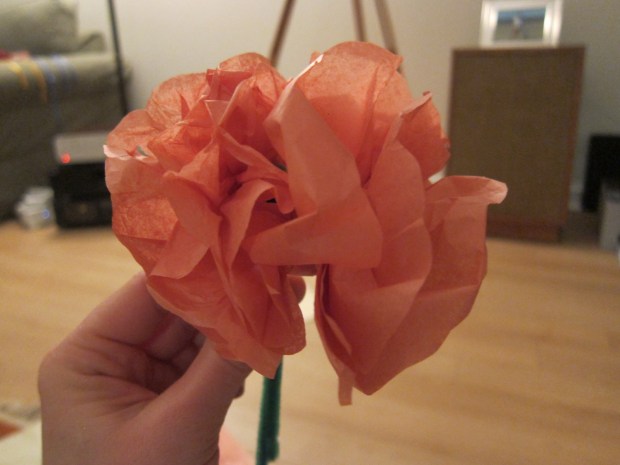
To make the blossoms, round the edges of the tissue paper slightly with scissors, then fan out and carefully lift up each of the four layers.

LP Celebrations (15)

What a beautiful marigold!

LP Celebrations (11)

We kept going until we had a whole bouquet.

LP Celebrations (16)

Celebrations Science:

It’s a bit of a stretch to call the other booklet activity science, but cooking is a bit of chemistry after all. We made potato latkes, and as we cooked we talked a little bit about Hanukkah. Travis loved this recipe because he got to help with two very grown-up kitchen tools: the peeler and the grater.

First, peel a potato.

Latke (1)

Adults, cut an onion into quarters and remove the peel.

Latke (2)

Grate the potato and 1/4 of the onion, and place the grated veggies in a bowl; reserve the remaining onion for another use.

Latke (4)

Add 2 Ener-G eggs, a dash of salt, and a dash of black pepper to the bowl, stirring to combine.

Latke (3)

Heat a layer of canola oil in a large skillet over medium-high heat. Reduce the heat to medium and add the potato mixture in spoonfuls. Fry for 5 minutes, then turn over and cook an additional 3 to 4 minutes on the other side, until browned. Transfer to a plate to cool.

Latke (7)

Serve with applesauce. Travis was thrilled with our concoction. “I’ve been waiting for latkes!” he declared; it was priceless to see his excitement over something he hadn’t known existed prior to twenty minutes earlier.

Latke (9)

Celebrations Keepsake:

I appreciated how interactive this month’s keepsake was: crowns to color in with descriptions of the five different holidays depicted: Bastille Day, Lunar New Year, Diwali, Dia de los Muertos, and birthdays.

LP Celebrations (5)

One small gripe: we found that the provided colored pencils didn’t give very saturated color, and eventually just used crayons from home.

LP Celebrations (6)

Celebrations Field Trip:

I was so pleased we had this kit in February because it made the obvious field trip an outing to a Chinese New Year festival.

Chinese (4)

Travis couldn’t get enough of the lion dance (we fed one a red envelope with green money inside for luck in the coming year) and the taiko drumming.

Chinese (6)

Celebrations Further Activities:

As always, we couldn’t stop there, and took the kit up on the suggestions in the back of the booklet.

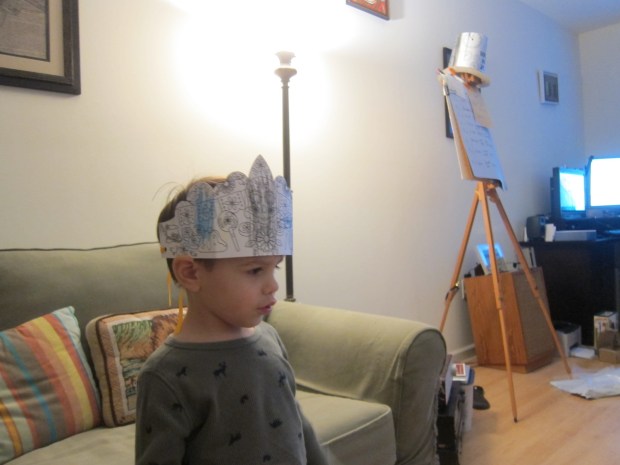
First, we finished coloring in our keepsake crowns and dubbed it a family celebration. Hmm, what holiday could we mark on a random Tuesday? Thanks to the arrival of Girl Scout cookies in the mail, we dubbed it Girl Scout Cookie Day!
LP Celebrations (18)

Everyone in the family colored a crown, grown-ups included.

LP Celebrations (20)

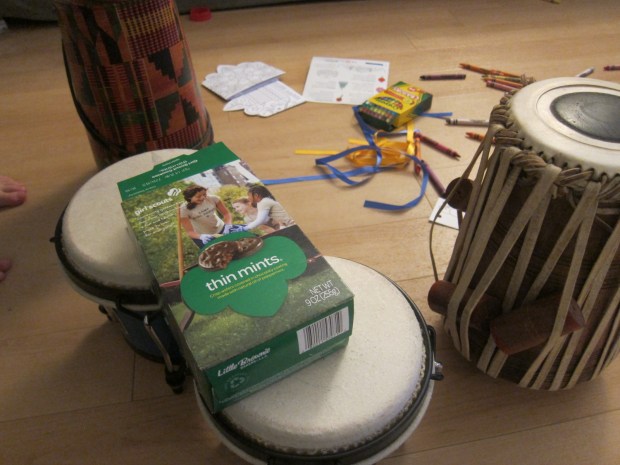
And then we dined on cookies. Yup, Thin Mints are vegan.
LP Celebrations (19)

And because we love music, we incorporated aspects of Panafest and turned it into a drumming and cookie-eating festival. Now we can celebrate Girl Scout Cookie Day as our special family day every year. What family holiday will you come up with?

LP Celebrations (22)

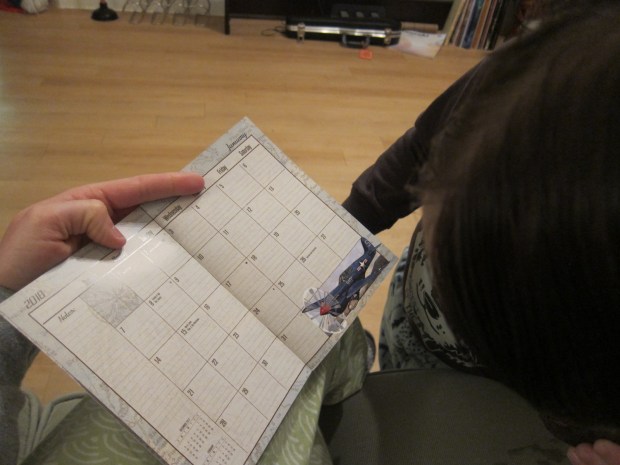
The booklet also suggested flipping through a calendar to learn more about world holidays. This proved a bit underwhelming for Travis, since he can’t read the words yet, and the names of the celebrations don’t mean much to him.
LP Celebrations (25)

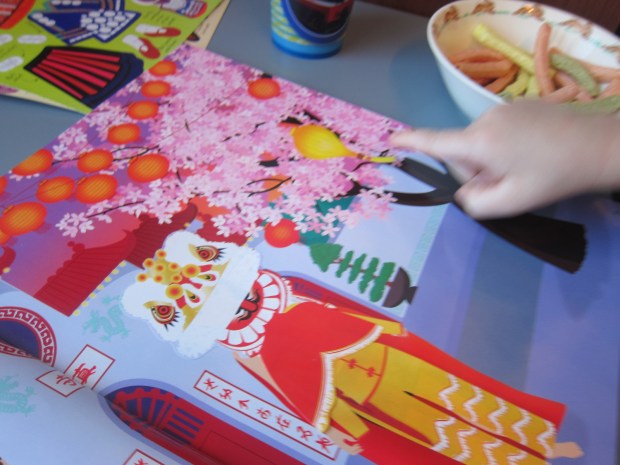
So we supplemented with the Sticker Dolly Dressing Costumes Around the World from Usborne. Now he could learn a bit about some of the holidays in our calendar, and had a beautiful visual of the traditional clothes to match!
LP Celebrations (23)

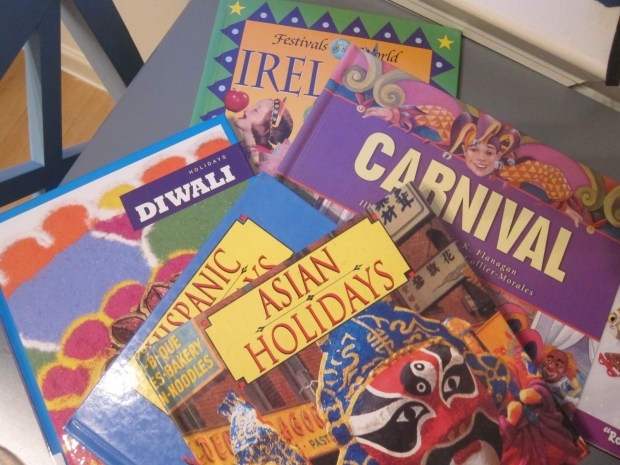
We were having so much fun that we kept up the exploration by heading to the library, selecting books on Diwali, Carnival, Irish festivals, and more.
LP Celebrations (27)

A few weren’t in books so we continued the exploration online, including Waitangi Day, which we happened to look up on the exact day it’s celebrated!

Finally, we checked out Little Passport’s blog for a few fun holiday crafts. We considered making these lanterns for the annual Pingxi Lantern Festival in Taiwan, which will happen on March 2 this year.

Pingxi (2)

It was a bit too complicated a craft for Travis, other than dabbing some paint on wax paper, so I ended up making the lantern (see full instructions here).

Pingxi (5)

We loved the glowing final product once a battery-operated tealight was inside!
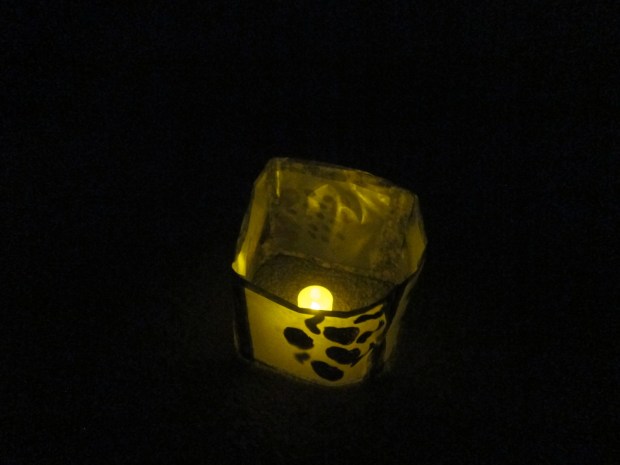
Pingxi (6)

Finally, just in time for Valentine’s, we tried out this traditional game from Denmark: write a Valentine’s poem or limerick, then send it to someone as a gaekkebrev, a “joking letter.”

LP Celebrations (29)

Instead of signing your name, make one dot for each letter of your name (I guided Travis’s hand for this to make sure we didn’t have too few or too many dots).

LP Celebrations (30)

Mail it off and see if your Valentine guesses who you are! If they do, you owe them an egg at Easter, so we’re stocking up on vegan chocolate eggs now.

How Much Water Is in Snow?

Water in Snow (4)

Here’s a super-simple experiment for the next time it snows. It combines a whole host of scientific ideas, from talking about liquid vs. frozen states of matter to making a hypothesis.

First, we needed to fill a clear glass jar with snow. For the best results, make sure to tamp the snow down so your jar is truly filled all the way.

Water in Snow (1)

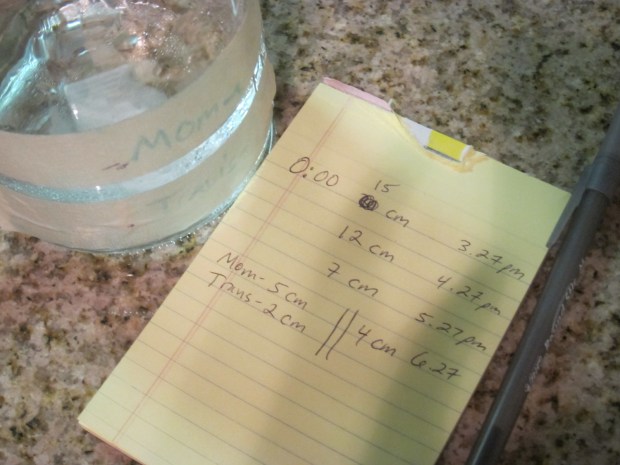
We took the jar inside and measured the snow (15 cm) and made guesses as to how much water would be left once it melted, keeping in mind past lessons on how ice takes up more space than water.

Water in Snow (2)

Travis guessed really low, at 2 cm! I chose 5 cm to keep things interesting. I tried marking our guesses directly on the jar, but since it was still a little wet, we found that masking tape worked better.

Water in Snow (3)

Next we needed to be scientific and record our results. We took measurements at one hour intervals over the next three hours with the following results:

3.27 pm – 15 cm

4.27 pm – 12 cm

5.27 pm – 7 cm

6.27 pm – 4 cm – all water!

Water in Snow (5)

It was neat to see that it took a full 3 hours, as well. Next time, we’d make hypotheses about the timing as well, and record that at the start.

Phoneme 11: Soft C

C Phoneme (20)

After a bit of holiday hiatus, we’re back with a new phoneme, this time not a letter pair but the soft C sound as in cinnamon. We focused on just a handful of words, with lots of enjoyable games and crafts in the process. I also put much more emphasis on reviewing flash cards of our theme words this time around. Travis isn’t reading yet, but he could sight read most of the words by the end of our unit, and is learning to sound out a word that’s placed in front of him. So without further ado…

Words of the Week:

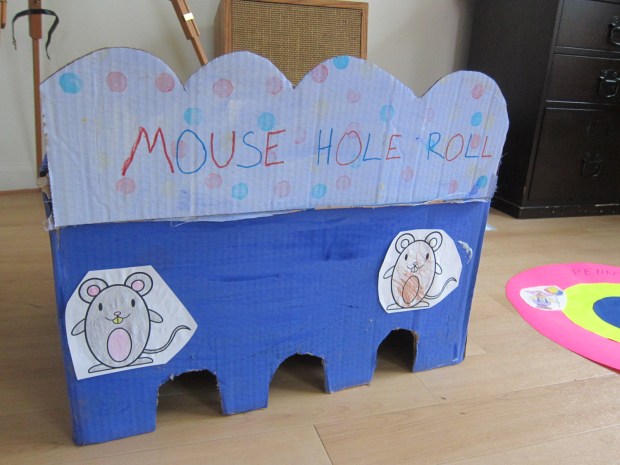
  • Circus: We kicked things off by staging a grand old circus of course! Stuffed animal friends walked a high wire act and did acrobatic flips into a ring. C phoneme (5)Then we made two circus games, a mouse hole roll and a penny toss. Mouse Hole (8)It’s too bad the circus wasn’t in town, or we would have taken in a show as our field trip. As always, we love circuses that feature human performers, not animals.
  • Circle: You can tailor this word to your child’s age and ability. Little ones just learning their shapes will benefit from a hunt for circular items around the house. That idea is a bit old hat for Travis, so we turned it into a “pirate treasure hunt” for circles. When I phrased it that way, he raced around with glee! C Phoneme (13)My intention was to gather items we could put in a pile, but he spotted some I wouldn’t have thought of, including the knobs on the dresser and other circular furniture or decorations. C Phoneme (12)Once we’d finished, he exuberantly asked for a triangle treasure hunt – why not? For fine motor skills, trace some of the circle objects you found.C phoneme (14)
  • Cinderella: This was a new story for Travis, so we read a version of the fairy tale, and watched the movie as well. It was a fun opportunity to introduce Travis to a classic!C phoneme (4)
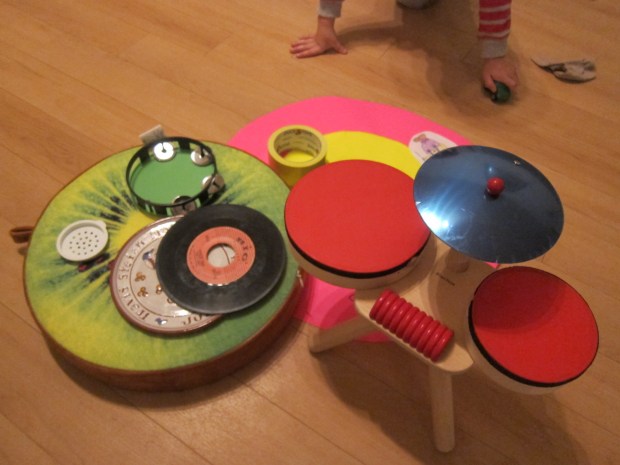
  • Cymbals: We have a miniature drum set with a cymbal attached, and Travis loved learning to do rimshots and bashing out favorite songs. C Phoneme (8)We also scooped up a pair of tiny hand cymbals from the toy store, perfect for smashing together. Conveniently, the cymbals are circles too!
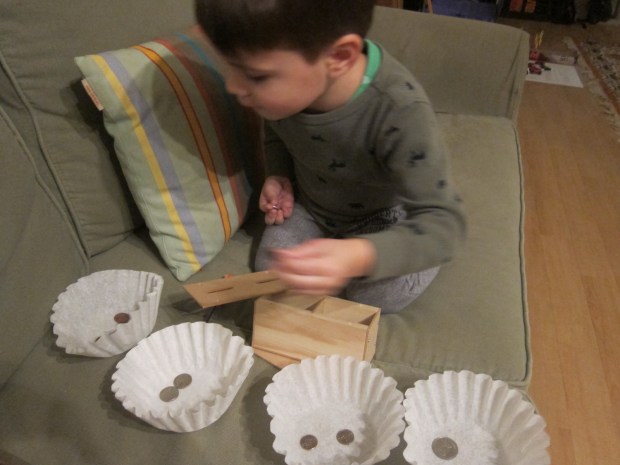
  • Cent: I always like when our alphabet or phoneme play brings us back to coins, since Travis learns more about the idea of money at each interval. To play with our cents, we cracked open his piggy bank and talked about the four denominations of cents in U.S. currency, and then sorted them out into pennies, nickels, dimes, and quarters. C Phoneme (17)He then turned it into a game of store, telling me in cents how much each item cost. A great little math and currency lesson.
  • Centipede: It wasn’t the right time of year to seek out these little critters outside, but we read about their hundred (or 30, or 300) legs in several books, such as The Big Book of Bugs by Yuval Zommer and Usborne’s Beginners Non-Fiction Bugs book.C Phoneme (19)
  • Ceiling: What better way to remember to look up and pay attention to the ceiling than to adorn it with glow-in-the-dark constellations?Constellation Cards (9)
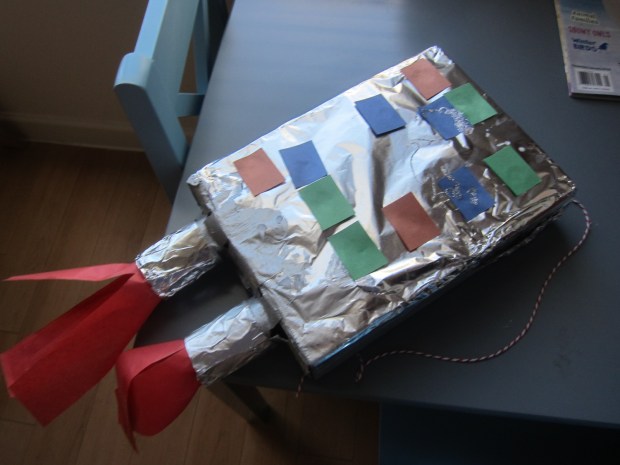
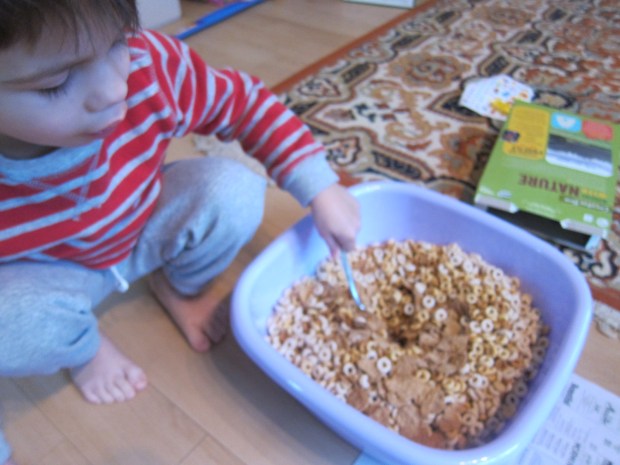
  • Cereal: Don’t stop at just eating the stuff – we had a whole cereal-themed afternoon one cold day! First, we tested out magnetic cereal. The instructions in the game said we’d need a cereal with a high iron content (100% RDA or more). This concept sounded completely bizarre since our cereals from the health food store tend to be about 4 to 10% daily iron. Well sure enough, cereal from the regular grocery store went as high as 100% iron, so I thought it would be fun to show Travis the difference. Magnetic Cereal (1)Unfortunately the game didn’t work for us: even using our strongest magnet wand, the high iron cereal didn’t budge! Magnetic Cereal (3)I would be very curious what cereal the online testers had used. Ah well, leftover cereal made for a great sensory bin. Magnetic Cereal (4)Then we used the boxes for cereal race tracks and recycled jet packs.Jet Pack (11)
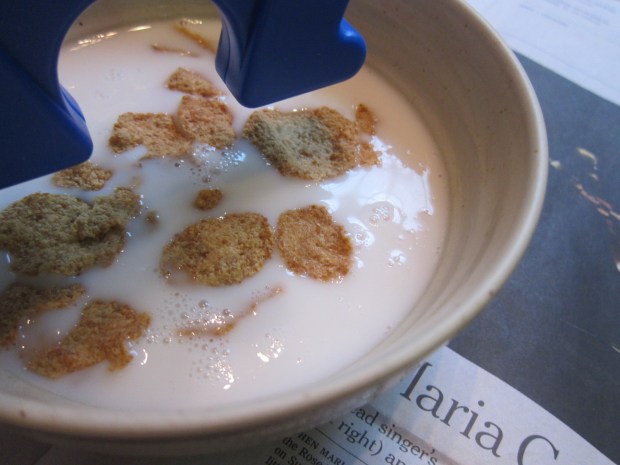
  • City: We started off building a city with skyscrapers from Travis’s blocks. C Phoneme (10)Later we decided that our city needed a parking lot for all the cars – which turned into a letter match parking lot activity that was a huge hit. Parking Lot (11)If you’re able, follow up with a field trip to a real city, whichever is closest to you!C Phoneme alt.JPG

Celebrating the International Kite Festival

Kite Fest (4).JPG

I love introducing Travis to international holidays and festivals, and this cute idea popped up in Little Passport’s blog to mark the International Kite Festival or Uttarayan. Celebrated January 14 and 15 in Gujarat, India, we joined in the fun with a quick homemade kite. This project wasn’t anywhere near as involved as the plastic bag kite we crafted some time back (nor did it truly fly), but it was great fun to flutter about!

To make the kite, cross two wooden skewers into an x and tie at the center with string.

Kite Fest (1)

Cut a long piece of string, and wrap around the tip of one skewer. Stretch to the next tip and wrap. Continue until you’ve stretched and wrapped around all four tips, creating a square frame.

Kite Fest (2)

Cut a square from tissue paper slightly larger than your frame. Fold the edges of the tissue paper over the frame and secure with tape.

Kite Fest (3)

For the tail, add a long piece of string and tie on additional strips of tissue paper for bows.

As mentioned, the kite didn’t fly so great (it has no spool of string to launch it, for one thing!), but Travis loved running with it behind him and having it flutter all over the apartment.

Kite Fest (6)

We watched a video about the celebration so Travis could further appreciate what we were making. Add in some friendly insect kites we had at home, and we had a nice little indoor Uttarayan of our own.

Kite Fest (5)

One additional note: If you are anywhere near an actual celebration of the kite festival, please avoid using kites where the strings have been treated with glass (a common practice). This can cause serious injury to birds who fly into the strings. Have a happy and humane Uttarayan!

Sponge-Print Wrapping Paper

Sponge Wrapping Paper (8).JPG

Enlist the kids help with gift wrapping this year… not just to wrap up the presents, but to make the wrapping paper first. Not only will they enjoy making this easy DIY gift wrap, but they’ll be so proud when they see gifts presented to loved ones in the paper that they made.

To start, cut sponges into shapes and glue onto old jar lids – the sponge should be cut until about the same size as or smaller than the lid. Simple shapes like triangles and squares are easiest, but get fancy if you’re handy with a paring knife!

Sponge Wrapping Paper (1)

I spread out a leftover roll of craft paper, and Travis immediately set to dipping his sponge stamps into paint…

Sponge Wrapping Paper (5)

…and dotting all over the paper. He liked making “patterns” as he worked.

Sponge Wrapping Paper (4)

Sometimes he spaced the stamps far apart, and sometimes he liked clustering them, so we ended up with a final product that was decidedly his creation.

Sponge Wrapping Paper (7)

We also had fun swirling together blue and white paint to make a light blue.

Sponge Wrapping Paper (9)

Once the paint is completely dry, it’s gift wrapping time!

Sponge Wrapping Paper (10)

What fun wrapping ideas have you used this holiday season? Please share in the comments!

Phoneme Week 10: IR

IR Phoneme (7)

As with the AY phoneme, we’re now doing a much-simplified version of our original plan to explore letter pairs. We’ve had the IR poster up on our wall for nearly two months now (!), giving Travis ample time to enjoy with how the two letters together say “errrrr!” Here’s some fun we had along the way.

Words of the Week:

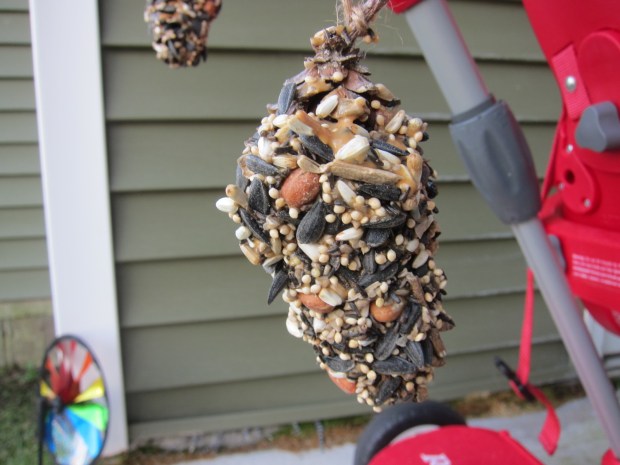
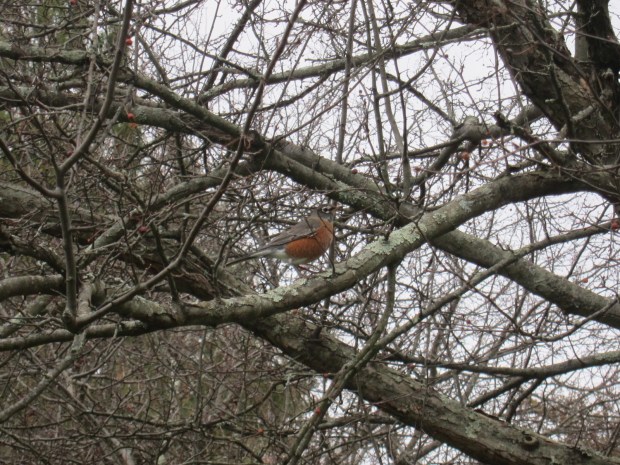
  • Birds: This was loosely our “theme” for the unit, so we made bird feeders from pine cones and old milk containersPinecone Feeder (6)and enjoyed quirky games like a bird beak buffet. Bird Buffet (8)In addition, we made sure to head out bird watching one afternoon! IR Phoneme (4)We also started a collection of Audubon bird friends. IR Phoneme (8)And of course checked out library books on the subject.IR Phoneme (5)
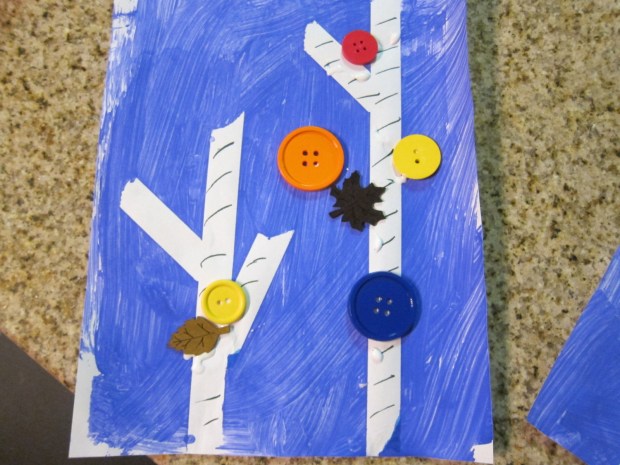
  • Birch: Believe it or not, I found a craft to go with this word – birch tree tape resist pictures! Fall nature walks resulted in the chance to see the striking smooth bark of these trees up close and in person.BIrch Tree (6)
  • First: Find a toy – old baby ones are good to pull out for this purpose – that stacks or nests, and count them “first,” “second,” and “third,” instead of one, two, three. Since it was the holiday season, we also sang ‘The First Noel.’IR Phoneme (1)
  • Skirt/Shirt: For these two clothing words, we made a batch of craft stick doll, wearing a variety of fashions!
  • Birth: Like many toddlers and preschoolers, Travis is developing a fascination with babies. It’s a good time to introduce the concept of birth in an age-appropriate way. Check your library for cute books on the topic.IR Phoneme (6)
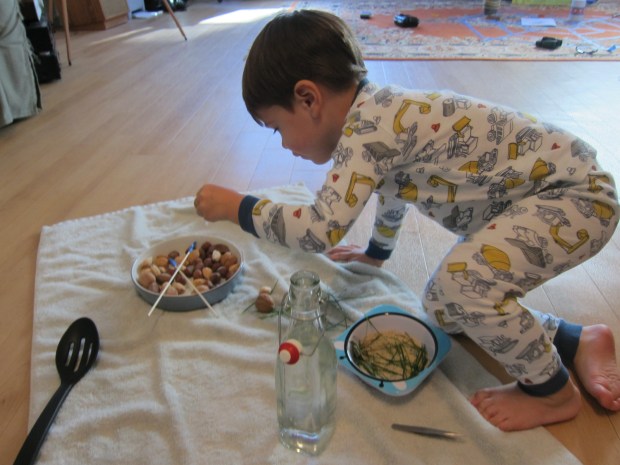
  • Stir: This word got us into the kitchen of course! First we did some real stirring to make a pie together. Then it was time for something even more fun: magic potion spoons, where stirring unlocked a secret color ingredient. “Mom, can I still stir?” Travis asked while we played the game, wanting to do it over and over again.
  • Virtue: Hmm, this was a hard word to teach to a three year old, so we tested out the old adage that “patience is a virtue” … By waiting for a batch of cookies of course!
  • Dirt: To end our IR fun, we brought a big bag of dirt inside (well, potting soil), and created a dirty mud pie kitchen.

Chances are we won’t get to the next phoneme until well into the New Year, so stay tuned!

Mud Pie Kitchen

Mud Kitchen (2)

In an ideal world, we would have done this activity outdoors in beautiful summer weather; it’s the kind of activity that can keep your kids happily occupied while you garden or do other outdoor chores. But if a kid needs dirt in the winter, then you bring the dirt inside!

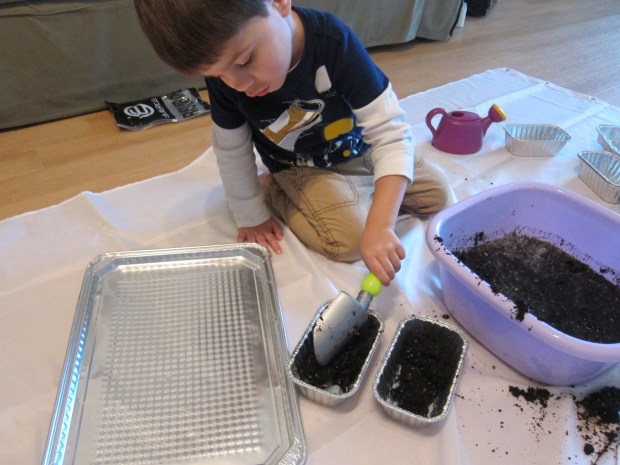
To set up our “kitchen”, I spread an old shower curtain liner on the floor to contain any mess. I then set up a variety of kitchen items. We used disposable foil pans, but you can also use items from a flea market or thrift store. Add in spatulas, spoons, ladles, or other kitchen utensils.

Mud Kitchen (1)

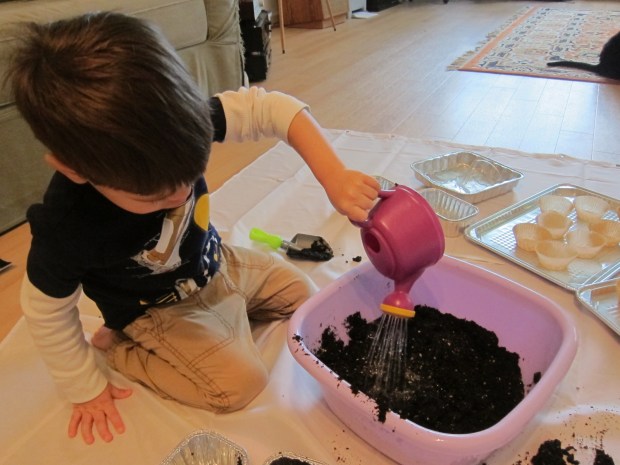
If it’s summer, simply scoop up dirt from your yard and get to work! Here in the winter, we used a leftover bag of potting soil. Travis loved adding water, until we had a nice muddy consistency.

Mud Kitchen (6)

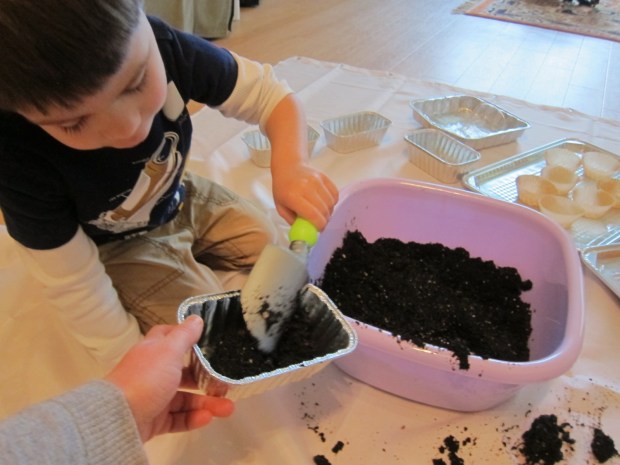
Then it was time to make mud loaf cakes!

Mud Kitchen (5)

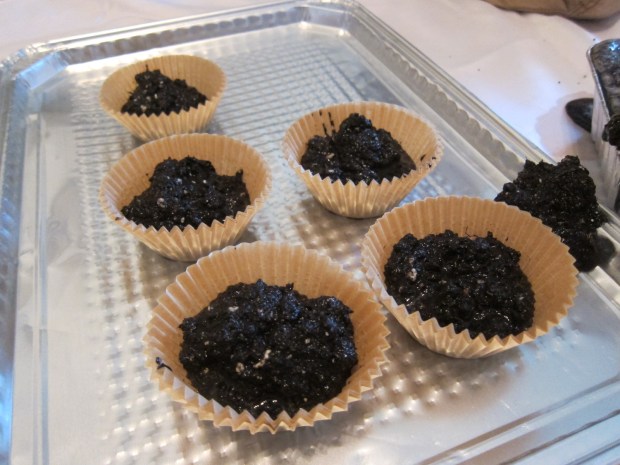
Cupcake liners were a whimsical touch, so we baked a batch of mud muffins.

Mud Kitchen (8)

Travis kept up an imaginative narrative as he played; here is a cake inside of an “oven.”

Mud Kitchen (9)

When he was done, I simply folded the old shower curtain over the muddy pots and pans and put everything into a trash bag – easy as mud pie!

Mud Kitchen (7)