Sock Puppets

Sock Puppets (4)

Stuck inside on a rainy day? Then it’s time to make silly sock puppets!
Sock Puppets (5)

We always seem to have extra pairs of socks (no thanks to indoor playrooms that require them even in flip flop weather!), so we simply grabbed a pair and set to work.
Sock Puppets (1)

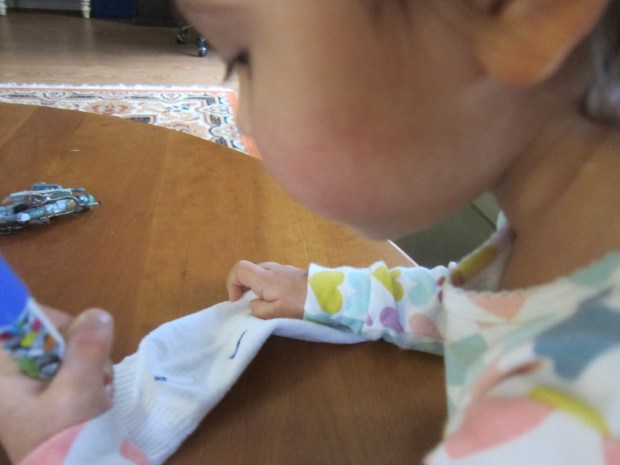
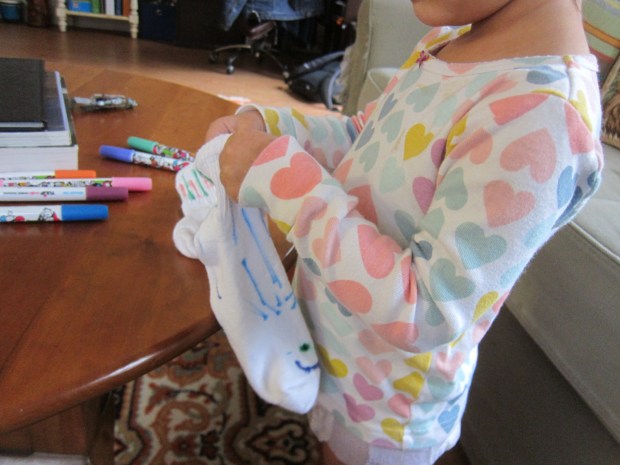
First up was adding facial features with fabric markers. I folded the toe of the sock down toward the heel so Veronika could visualize where the head would be, but mostly she just scribbled any which way.

The fabric markers were a little frustrating for her, too, since they tend to catch in the fabric, but I assured her that any markings at all looked great!
Sock Puppets (2)

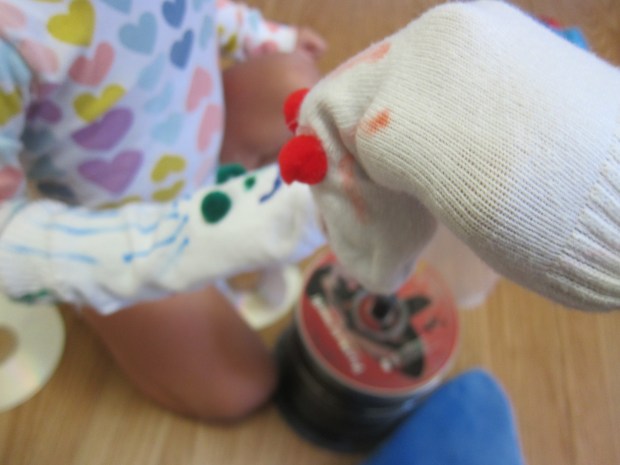
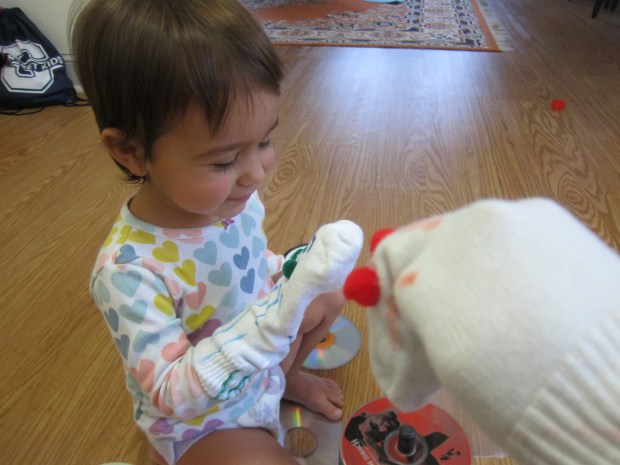
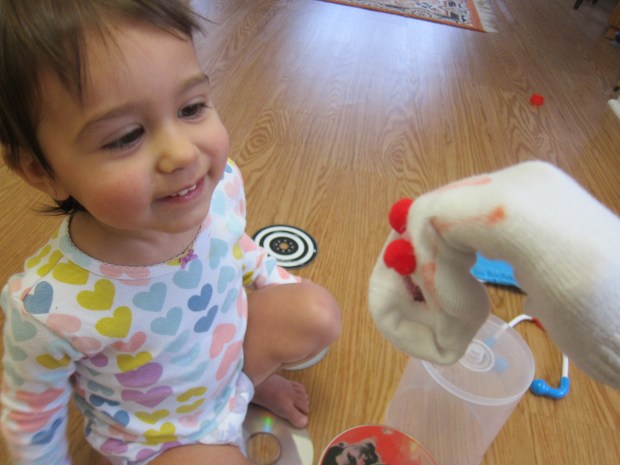
Once we had decorated the bodies, I also used hot glue to add pom pom eyes. Time to slip on those socks and put on a show! Veronika giggled just seeing the sock on her hand or my own.
Sock Puppets (3)

She laughed even harder once the socks “talked to her”.
Sock Puppets (6)

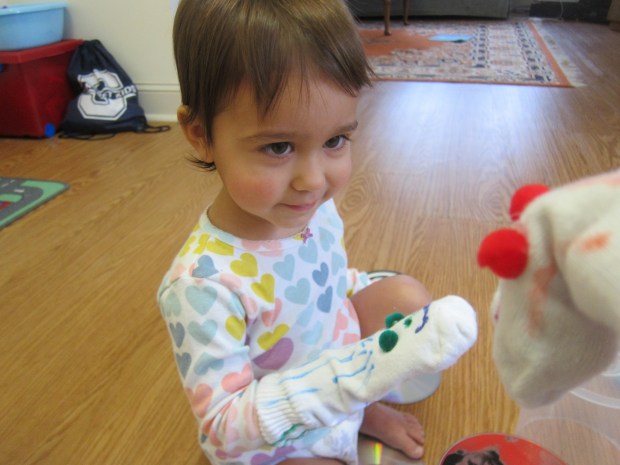
And it turns out that sock puppets like to go on toes, too!

Sock Puppets (8)

Interrupt Rule

Interrupt Rule (3)

Life is full of Zoom meetings these days, but it occurred to me that this is an opportunity to teach Veronika a few rules about interrupting, and make a little lemonade out of all these virtual lemons!

Yes, even a two year old can learn how to politely ask for your attention. We have two methods now for when Veronika needs me, whether during a Zoom, a random phone call, or just while I’m making dinner!

The first trick is to teach your child the sign for “wait”: Hold up the hands and wiggle the fingers. Interestingly, this is one of the only signs Veronika ever latched onto, and she has used it long past when she dropped all the others. So when she needs my attention, I say, “Show me your wiggle waiting.” And she wiggles her fingers and waits!

Interrupt Rule (1)

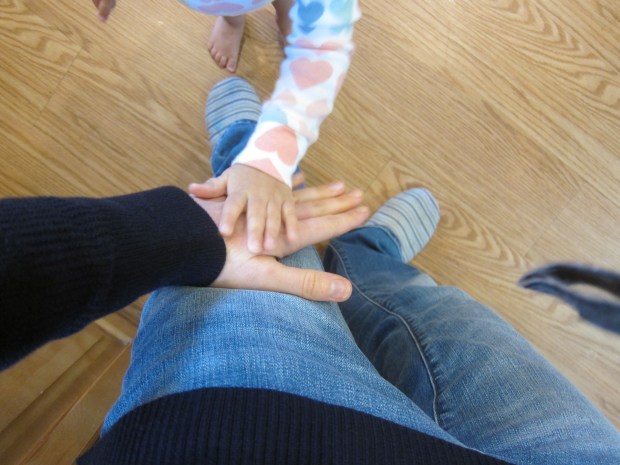
Our second method is newer, but seems to be working! I’m teaching her to touch my leg, instead of yelling out for me. Then, I put my hand back on hers to acknowledge that I know she needs me.

Interrupt Rule (4)

The key to making this a success? Don’t make your toddler wait for long! Yes, Zoom participants are usually understanding if you turn aside a moment for your child.

Shaving Cream Marbling

Shaving Cream Marbling (7)

I made shaving cream prints with Travis when he was in preschool, and it was meant as an art project (one that resulted in lovely bookmarks!). For Veronika at age two, this same activity was definitely more about the process and the sensory play. I love when I’m able to tailor big kid activities to my toddler in this way.

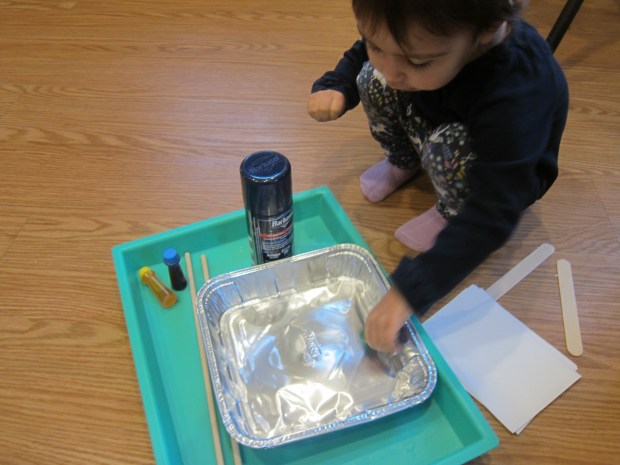
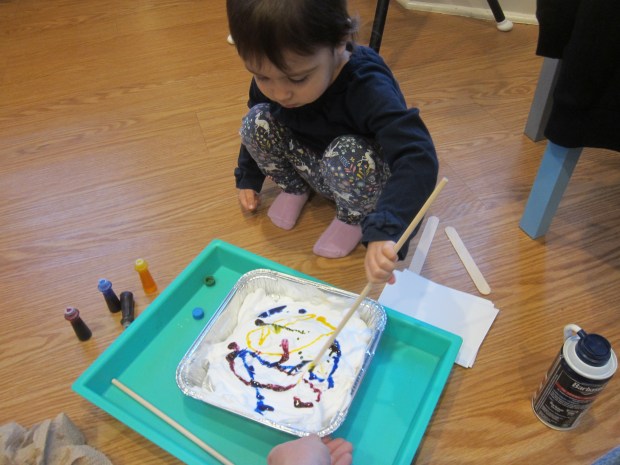
To start, we squirted a thick layer of shaving cream into a disposable foil tray. In turn, I placed this inside a second craft tray, because the activity is definitely messy.

Shaving Cream Marbling (1)

Next, we added lots of drops of natural food coloring. You can also use liquid watercolors, but I like the food coloring with a toddler because it doesn’t stain.

Shaving Cream Marbling (2)

I showed Veronika how to swirl the colors through the shaving cream with a dowel. The dowel is great because it’s long enough that you’ll minimize any mess on your toddler’s fingers!

Shaving Cream Marbling (3)

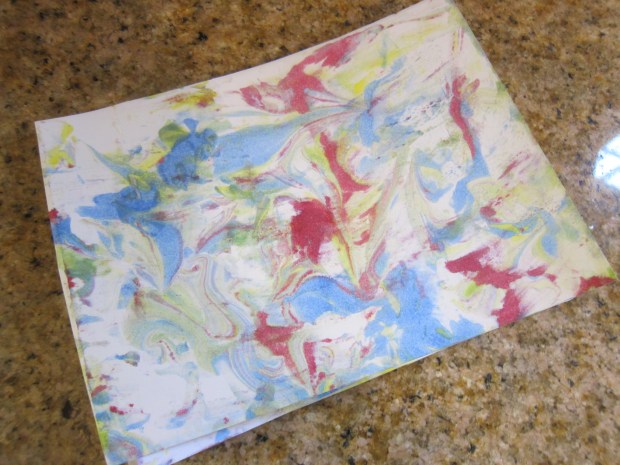
Next, we pressed a piece of watercolor paper over the shaving cream, patting down on it lightly. Veronika loved the patting! Lift up and reveal the pretty marbled colors.

Shaving Cream Marbling (5)

Finally, we needed to scrape off the excess shaving cream, and the edge of a jumbo craft stick works great for this. Repeat as many times as desired!

Shaving Cream Marbling (6)

We ended up with four lovely prints that we can turn into art, but Veronika was still busy with all the materials. We squirted in a second layer of shaving cream, then added lots more food coloring, and did lots more stirring, scooping, and playing for quite a while.

Shaving Cream Marbling (4)

Roasted Carrots and Grapes

Roasted Carrots and Grapes

Roasting fruits and veggies together makes for a surprising flavor combo that’s sure to delight little taste buds!

Ingredients:

  • 1 (10-ounce) package baby carrots
  • 3 cups red grapes, quartered
  • 1 pear, sliced
  • 1 tablespoon Earth Balance butter
  • 1/4 teaspoon cinnamon
  • 1 tablespoon agave nectar
  1. Steam the carrots in the microwave for 3 minutes; let cool, then slice into thirds.
  2. Combine the carrots in a bowl with the grapes and pears; set aside.
  3. Meanwhile, heat the butter in the microwave for about 20 seconds, until melted. Stir in the cinnamon and agave nectar. Pour the butter mixture over the carrot mixture, tossing to coat.
  4. Spoon the mixture onto a baking sheet lined with foil. Bake at 450 degrees F for 15 minutes.

We served these alongside a simple lentil and rice curry!

Spoon Puppets

Spoon Puppets (7)

I had a few old wooden spoons that never get used for cooking anymore, so today the kids turned them into puppets!

First, I invited everyone over for painting, trotting out a few bright neon colors of tempera paint for the occasion. Veronika chose a neon orange and purple, and Travis gravitated right to the neon green.

Spoon Puppets (1)

I loved watching the kids paint side-by-side!

Spoon Puppets (2)

Let dry completely. Now it was time to give our spoons a little personality! I set out a variety of odds and ends from the craft bin and let the kids pick what they wanted. Travis wanted wiggle eyes and a little outfit to turn his green spoon into Baby Yoda. Veronika liked buttons and pipe cleaners!

Spoon Puppets (6)

Your kids can glue on all their crafty bits with white glue, if desired. Since my kids wanted to play with the puppets right away, I used hot glue to make quick work of it.

Spoon Puppets (9)

These were so cute for acting out little stories! Veronika named hers Mr. Tricky, and carried him around almost the entire rest of the day.

Spoon Puppets (8)

Condensed Milk Edible Finger Paint

Condensed Milk Paint (6)

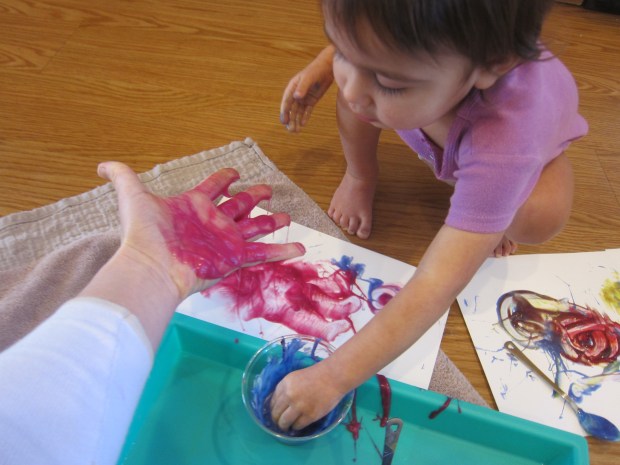
I love finding new ways to make edible finger paint for toddlers, and this version couldn’t be easier. Just crack open a can of condensed milk, add food coloring, and your little artist is ready to paint! For a vegan version, try the sweetened condensed coconut milk from Nature’s Charm.

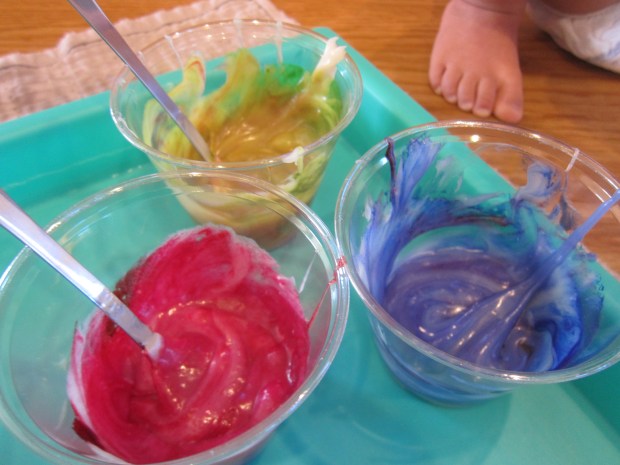
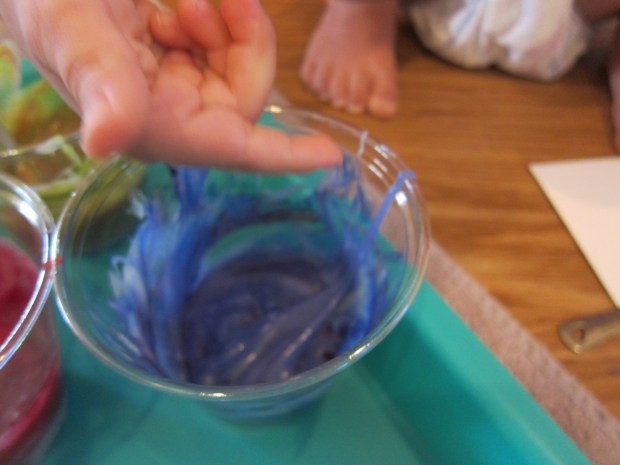
I spooned a little bit into each of three plastic cups and put a small toy spoon in each cup. Veronika loves these little spoons, so she was excited to help stir a few drops of food coloring into each one. We used green, blue, and red.

Condensed Milk Paint (2)

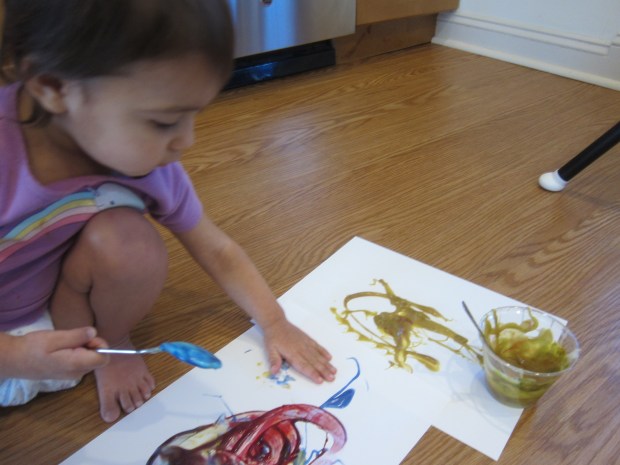
Since she already had the spoon in hand, she first used this as her tool to dribble or rub the paint over thick watercolor paper. But I encouraged her to use her hands, and so she curiously dipped in a finger.

Condensed Milk Paint (3)

Then she was brave enough to do some smearing! The condensed coconut milk is very thick and creamy, much more so than regular slippery finger paint, so it was a great new sensory experience for her.

Condensed Milk Paint (7)

She’s been very into Blue’s Clues lately, and discovered that if she pressed her hand down, she left a paw print “clue” just like Blue can!

Condensed Milk Paint (4)

She requested I leave a paw print, too. There’s nothing like playing with your toddler to embrace your inner child and get a little goopy!

Condensed Milk Paint (8)

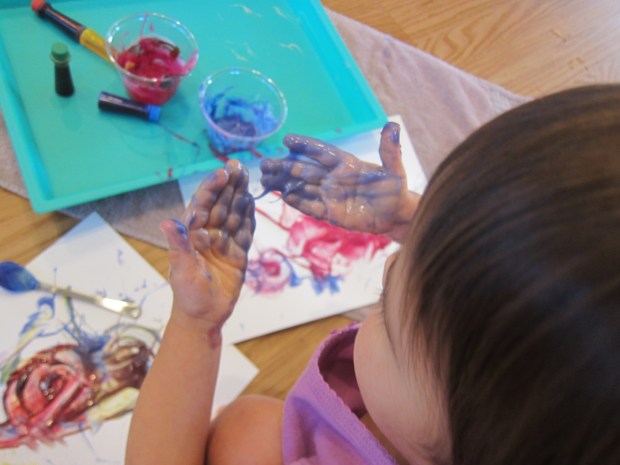
In fact, Veronika then loved rubbing the paint all over her hands and smooshing her palms together. Needless to say, once her masterpieces of finger paint were finished, we ended with a good hand washing.

Condensed Milk Paint (9)

Interestingly, she never tasted this one, but it was nice to know she could have, had she wanted to.

Nuts and Bolts

Nuts and Bolts (6)

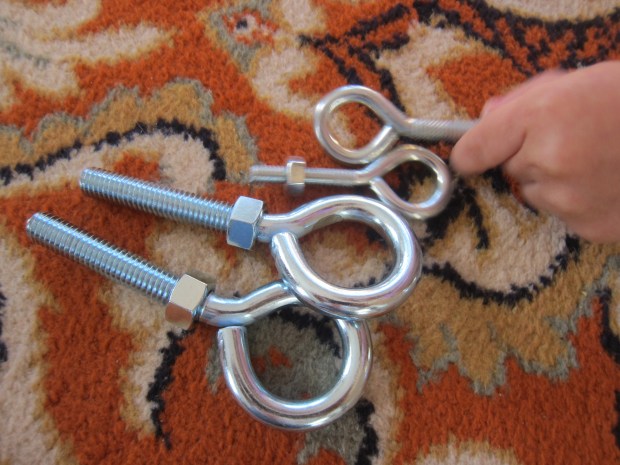
When Travis was in preschool, he had a whole “tool shop” apparatus of screws that pointed up through a wooden board, onto which he could attach all manner of washers, bolts, twist tops, plastic caps, and more. It was fun, but it was also complicated! For pure toddler fun, try this much easier variation to keep little hands busy, using only a few different sizes of nuts and bolts.

This is definitely an activity for older toddlers who are past the stage of putting objects in their mouth. And even so, be sure to supervise play closely.

I gave Veronika several nuts and bolts in two sizes, first just setting them down for her to explore with all her senses. I pointed out the size comparison to her, and we sorted them by big and little.

Nuts and Bolts (1)

Next, I showed her how to twist the little nuts down the ridges of the bolts.

Nuts and Bolts (4)

She quite quickly loved screwing these off and on. At first she thought she could simply push on the nuts, so it was a good lesson in perseverance when she realized that twisting was necessary.

Nuts and Bolts (3)

This mess-free game is great exercise for little fingers, and sure to keep mischievous hands busy!

Nuts and Bolts (2)

Winter Bowling

Ice Bowling (2)

Every season seems to have its own perfect variation on bowling, whether giant inflatable unicorns in the summer, haunted bowling in the fall, and now ice bowling in the winter!

For pins, fill water bottles about 3/4 of the way with water and let stand outside overnight to freeze (or place in your freezer if the temperature in your region doesn’t dip that low). Make sure to leave some room in the bottles for the ice to expand.

For balls, fill water balloons with water and freeze overnight. In the morning, slip off the rubber and you have perfect ice spheres to bowl with. The little balls of ice absolutely delighted both kids, so much so I worried they would just play with those and ignore the bowling completely!

Ice Bowling (1)

Eventually Travis loved taking tosses and rolls at our ice “pins” and seeing how many he could get with one shot.

Ice Bowling (4)

There’s an extra catch that makes this version of bowling harder; if you throw your ice ball too hard, it might shatter!

Ice Bowling (5)

Come to think of it, that fact probably added to Travis’s fun.

Ice Bowling (6)

Veronika didn’t seem to be a huge fan of the ice bowling, so I took her inside for a warmer and more toddler-friendly version. We emptied the ice from the bottles and simply rolled a nice big bouncy ball at empty ones.

Bowled Over (1)

For a toddler, persistence is key! I showed her how to reset the pins and try again after each roll.

Bowled Over (2)

We also lined up the bottles in different formations to make the game more interesting.

Bowled Over (5)

And sometimes, she preferred just to sit and play with the bottle pins, which was all part of the fun!

Bowled Over (4)

What’s your winter spin on bowling? Please share in the comments!

Bowled Over (3)

Rubber Band Activity

Rubber Band Activity (13)

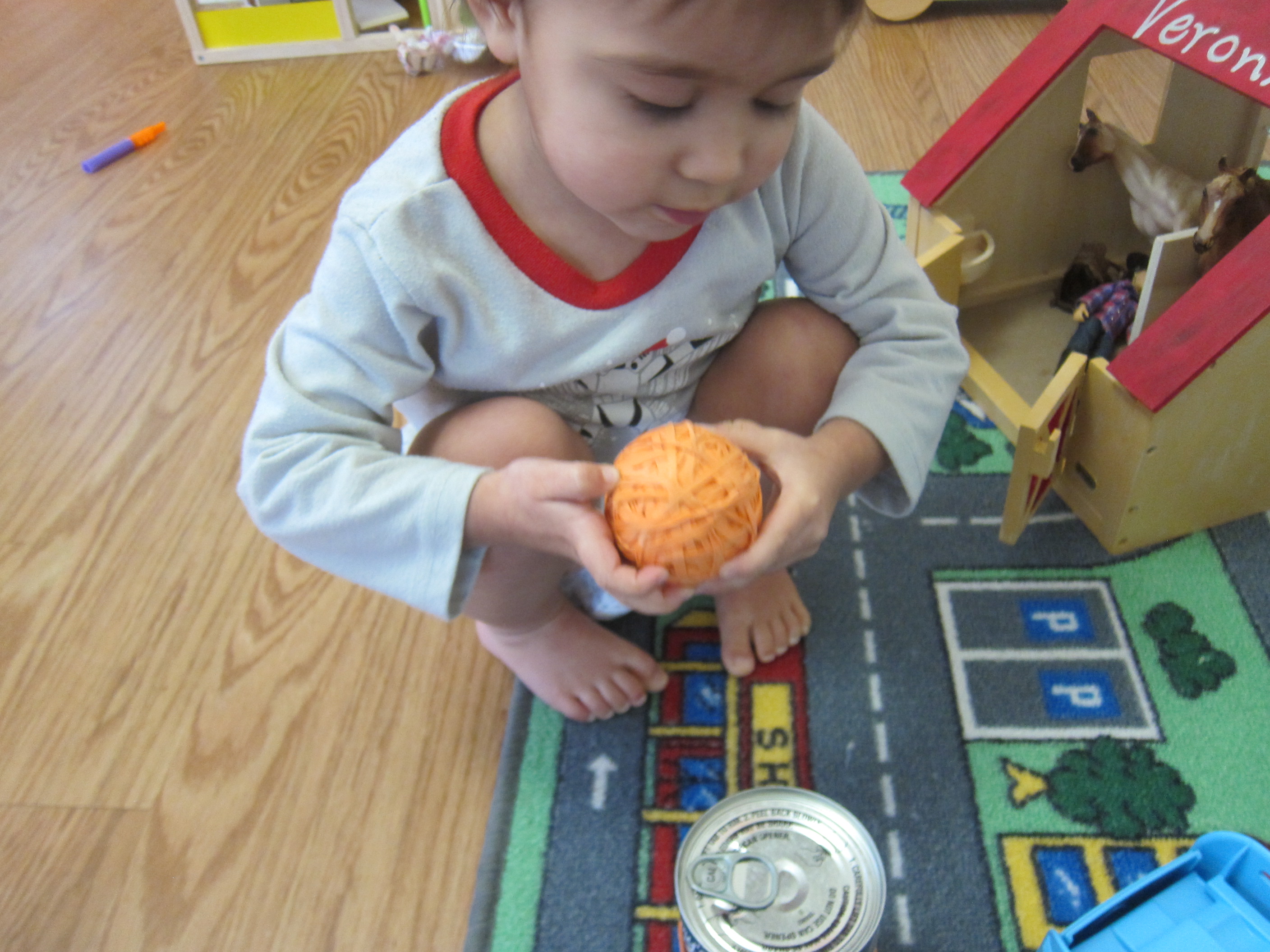
I spotted this gem of a hand-strengthening and boredom-busting activity over at Hands on As We Grow ages ago and finally decided to see if Veronika was up for it. The activity couldn’t be simpler; you just need lots of rubber bands and a can from the pantry and you’re ready to go.

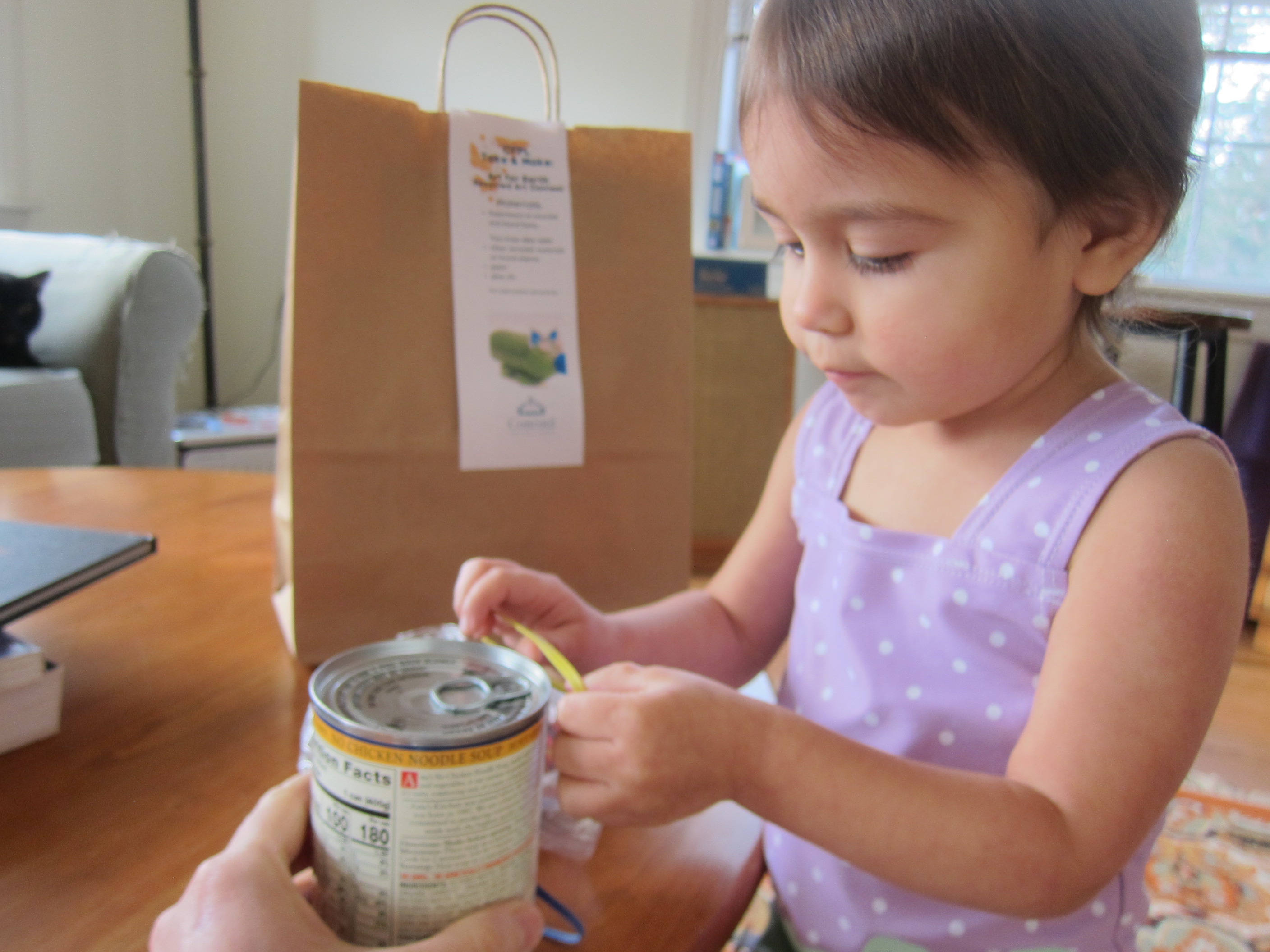
We have a rubber band ball that is an endless source of fascination for the kids, so Veronika was thrilled when I showed her how to peel a rubber band off of it.

Rubber Band Activity (3)

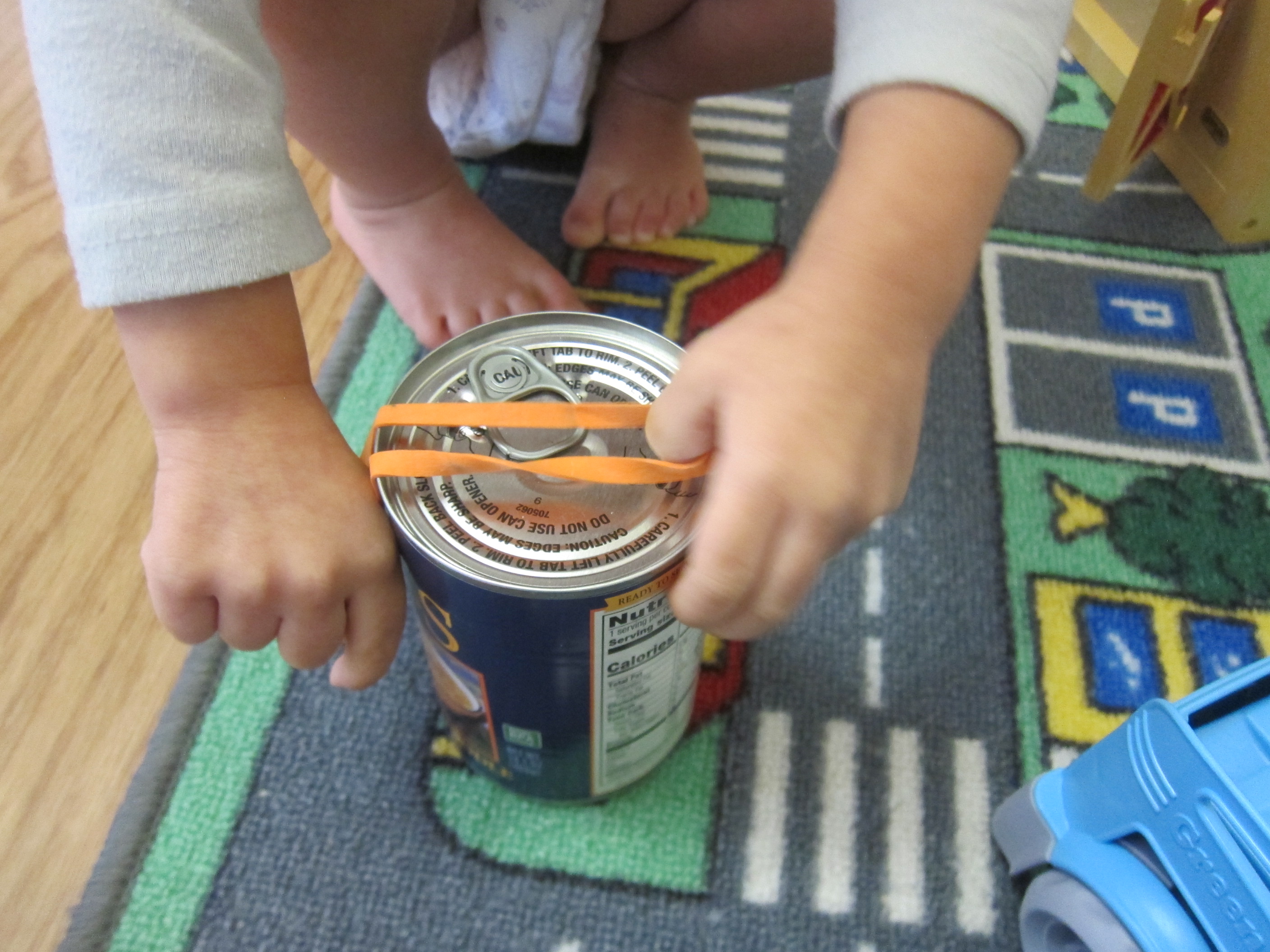
I challenged her to get one rubber band onto the can. At first she simply stretched it wide, but quickly realized it wasn’t going to get around the full circle of the cylinder like that.

Rubber Band Activity (1)

She’s still young, so she needed my help to loop the rubber band over one side of the can. But from there she could pull it across and over the other side.

Rubber Band Activity (5)

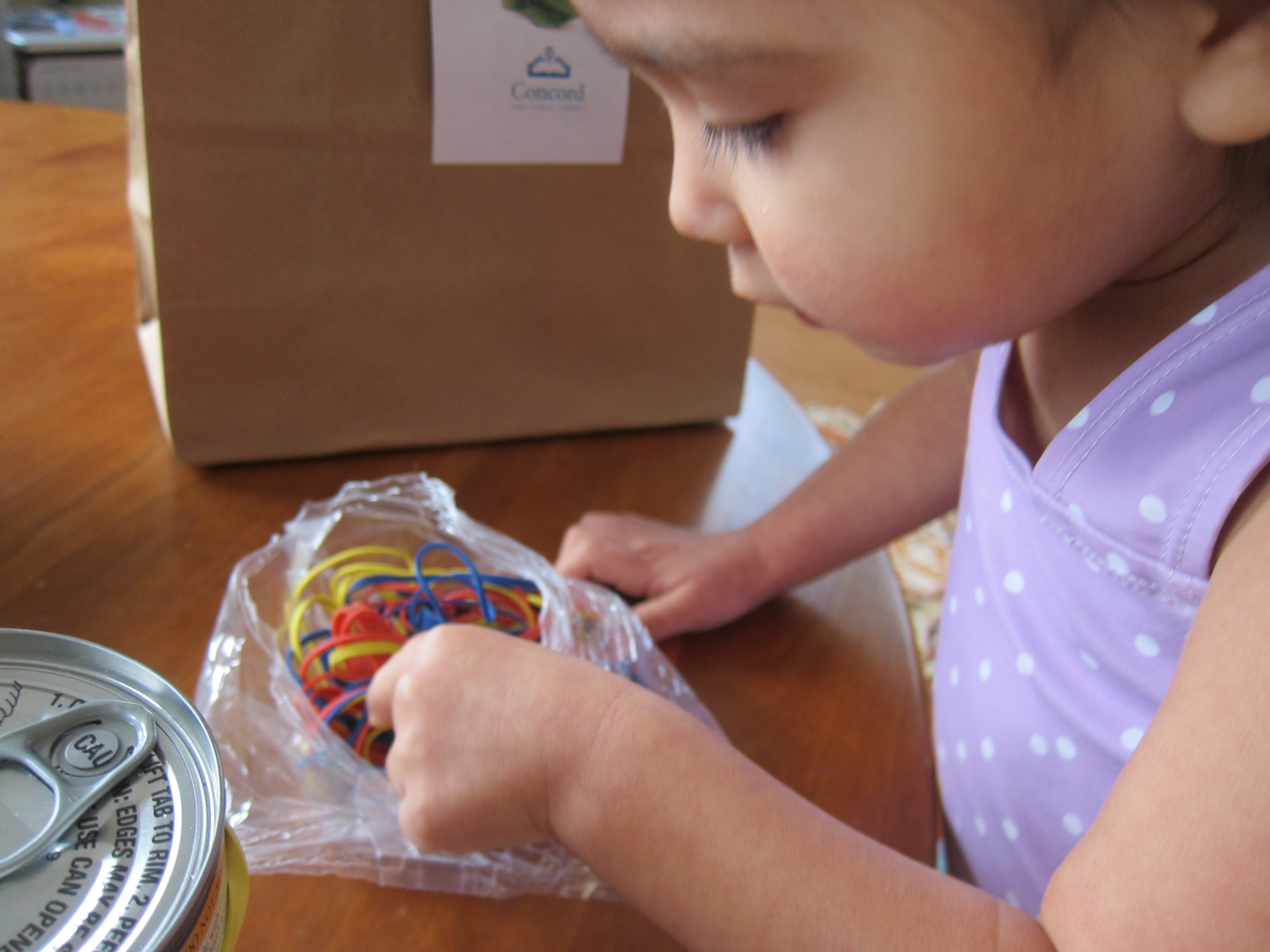
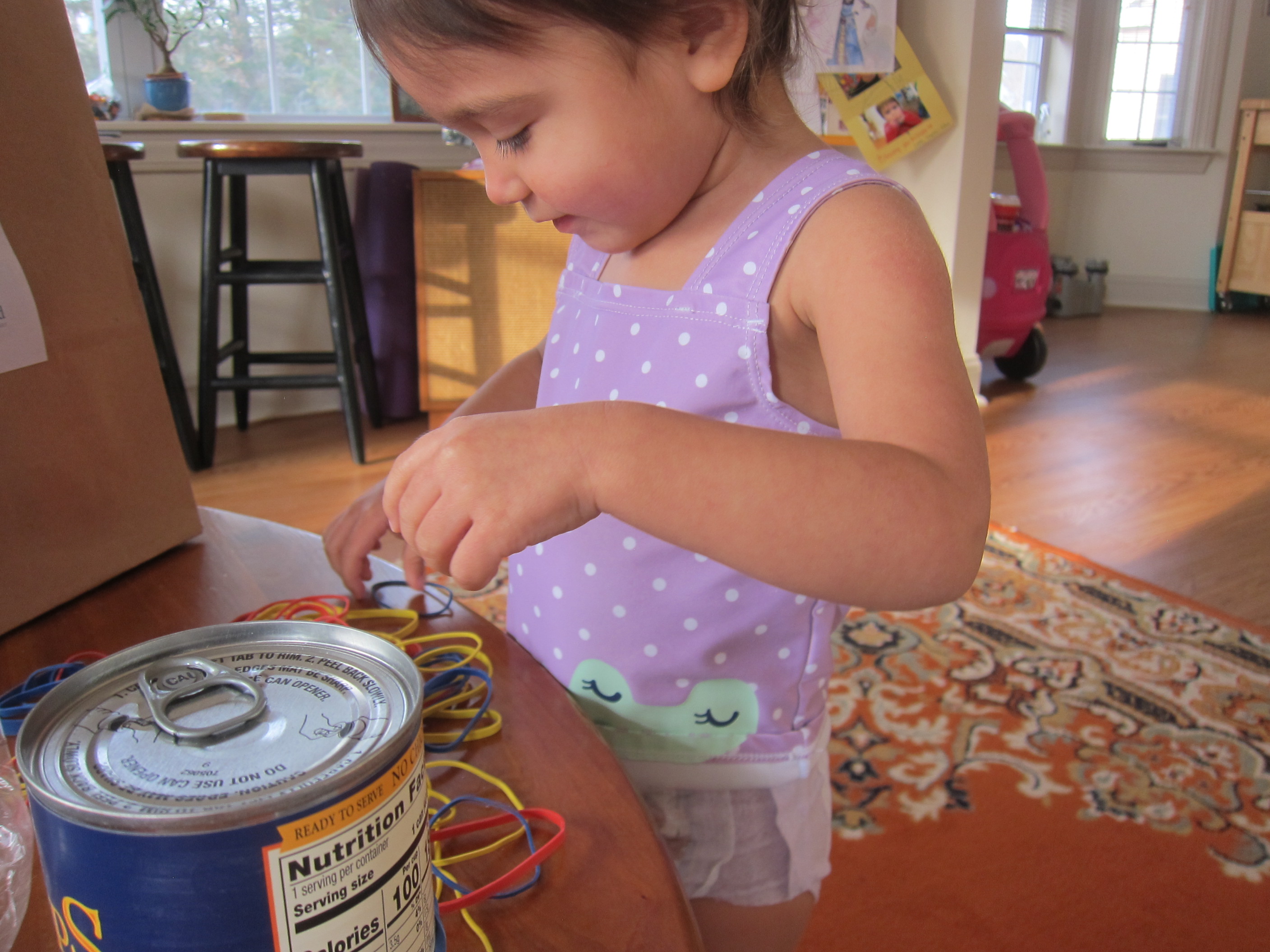
She had fun on our first round using only orange rubber bands, but enjoyed it even more when I pulled out a pack of multi-colored ones. She loved selecting which color to put on next (blue was the favorite today).

Rubber Band Activity (12)

Your kids might want to be really neat and careful as they go about this task; make patterns with different colors; or just pull on as many as they can in an allotted amount of time. Older kids could even make it into a race or a competition.

Rubber Band Activity (10)

Veronika was too young for all that, but when I challenged her to see how many rubber bands she could get on the can, she came up with her own method: Sprinkling them on top! Now that’s thinking outside the box.

Rubber Band Activity (16)

This is sure to be an activity we return to again and again as she gets older.

Rubber Band Activity (14)

Water Flow Experiment in a Bag

Water Bag Experiment (7)

This experiment was a bit of a repeat from a recent Kiwi Crate on surface tension, but so cool it was worth a re-do with materials from home. The “wow” factor of it wasn’t lost the second time around!

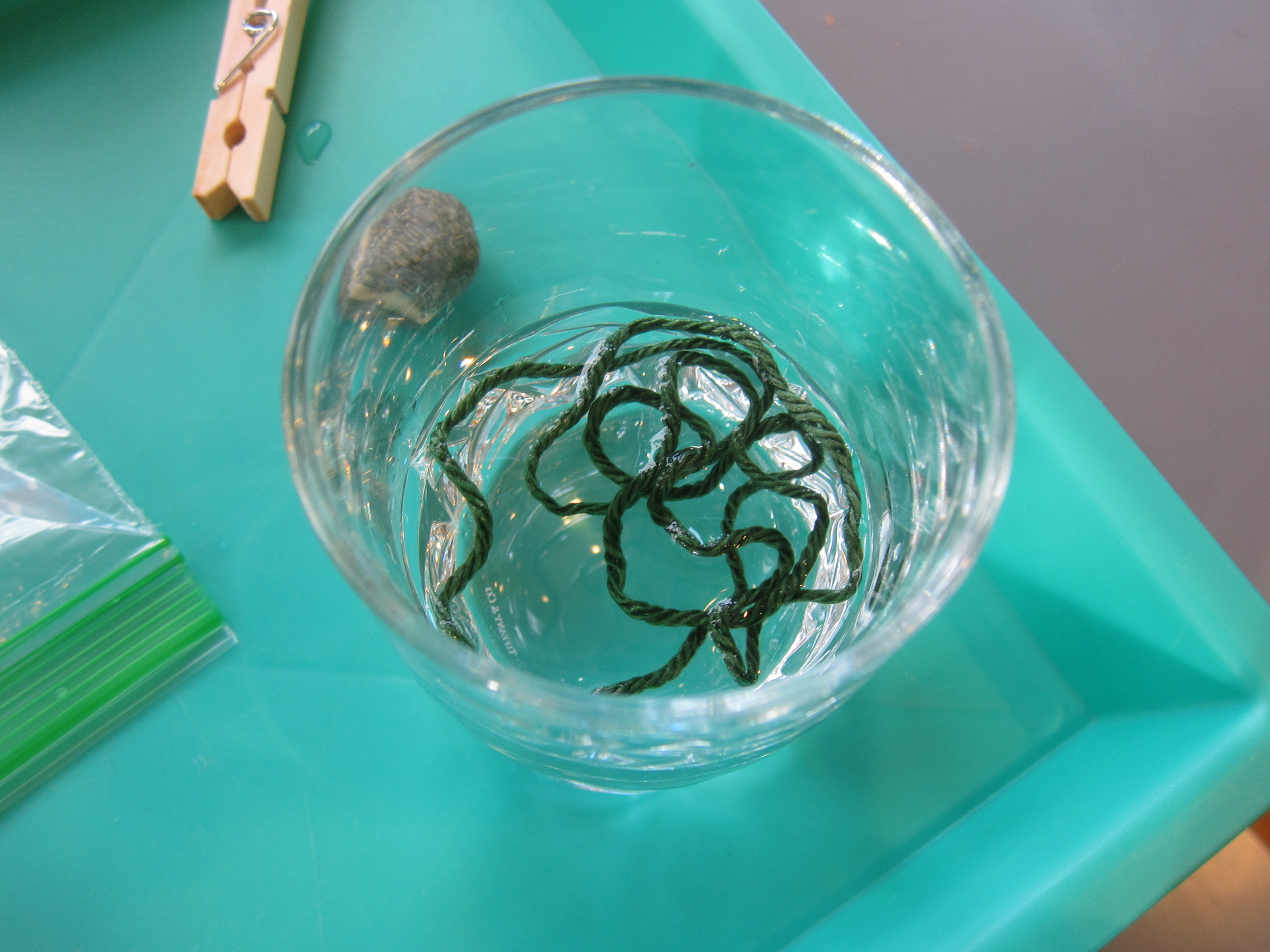
First, soak a length of yarn in a cup of water for about 2 minutes, until completely saturated.

Water Bag Experiment (1)

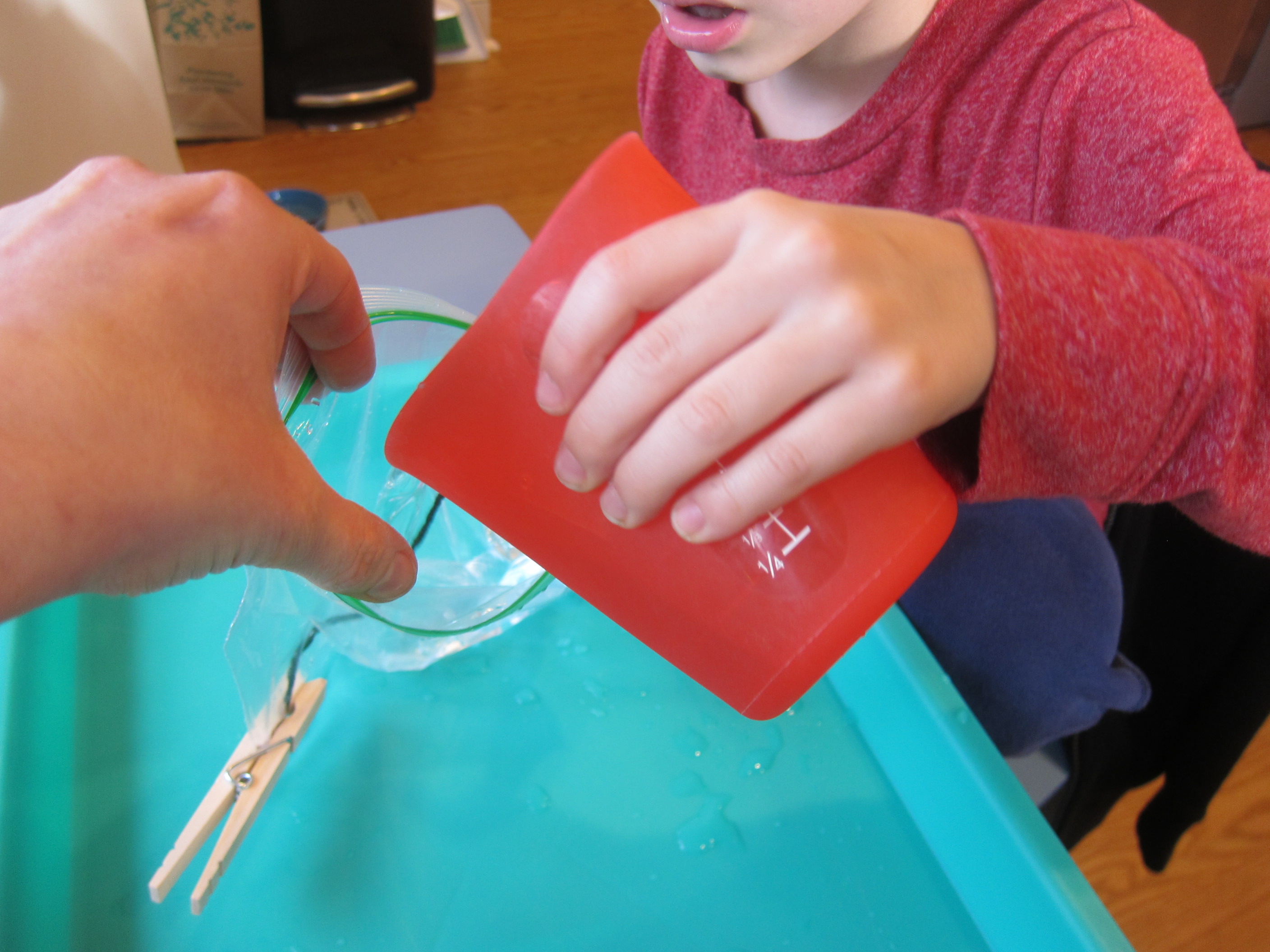
Insert one end of the yarn into a sandwich-sized zip-top bag and use a clothespin to pinch the yarn securely in place in the bottom left corner.

Water Bag Experiment (2)

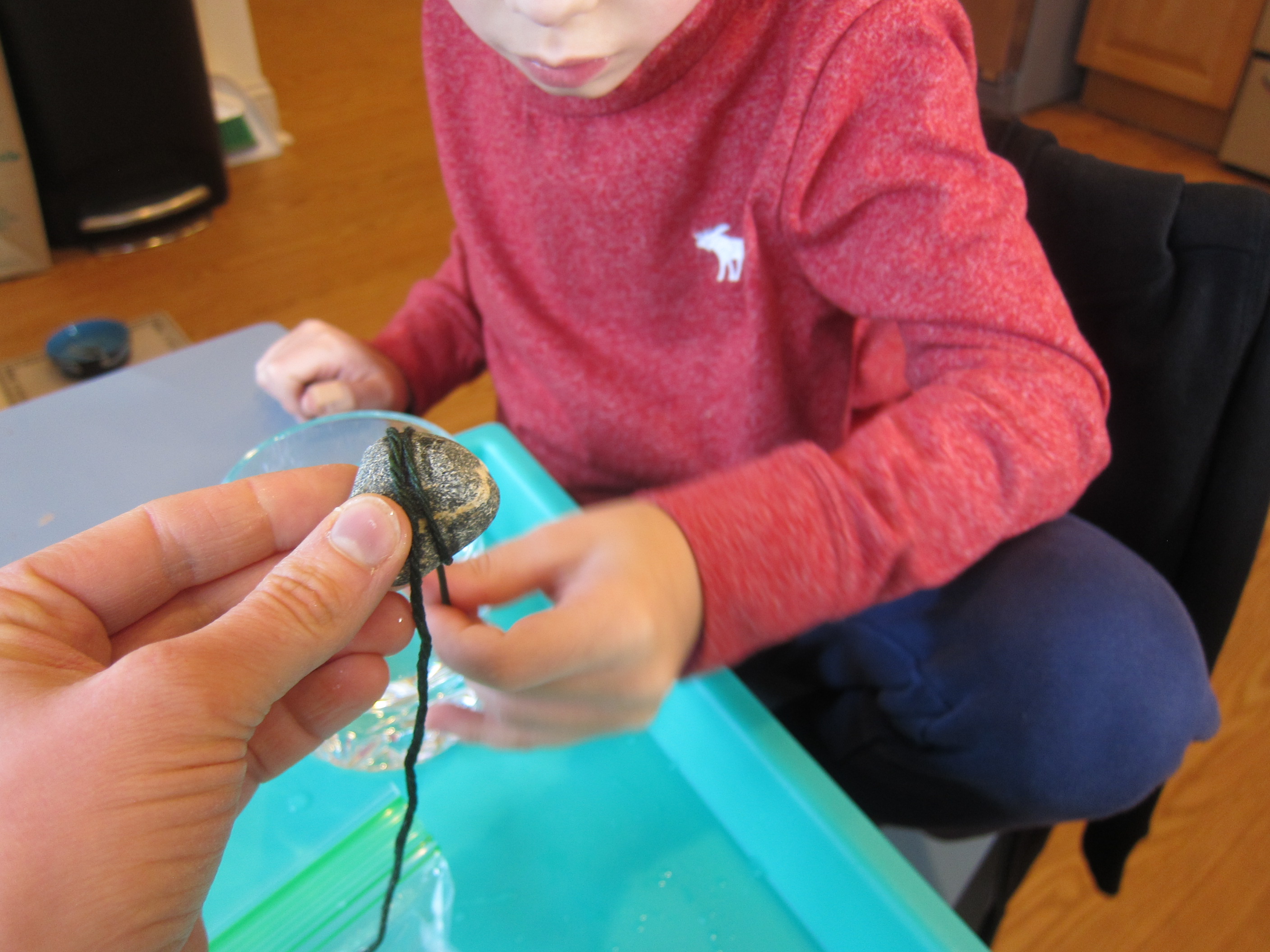
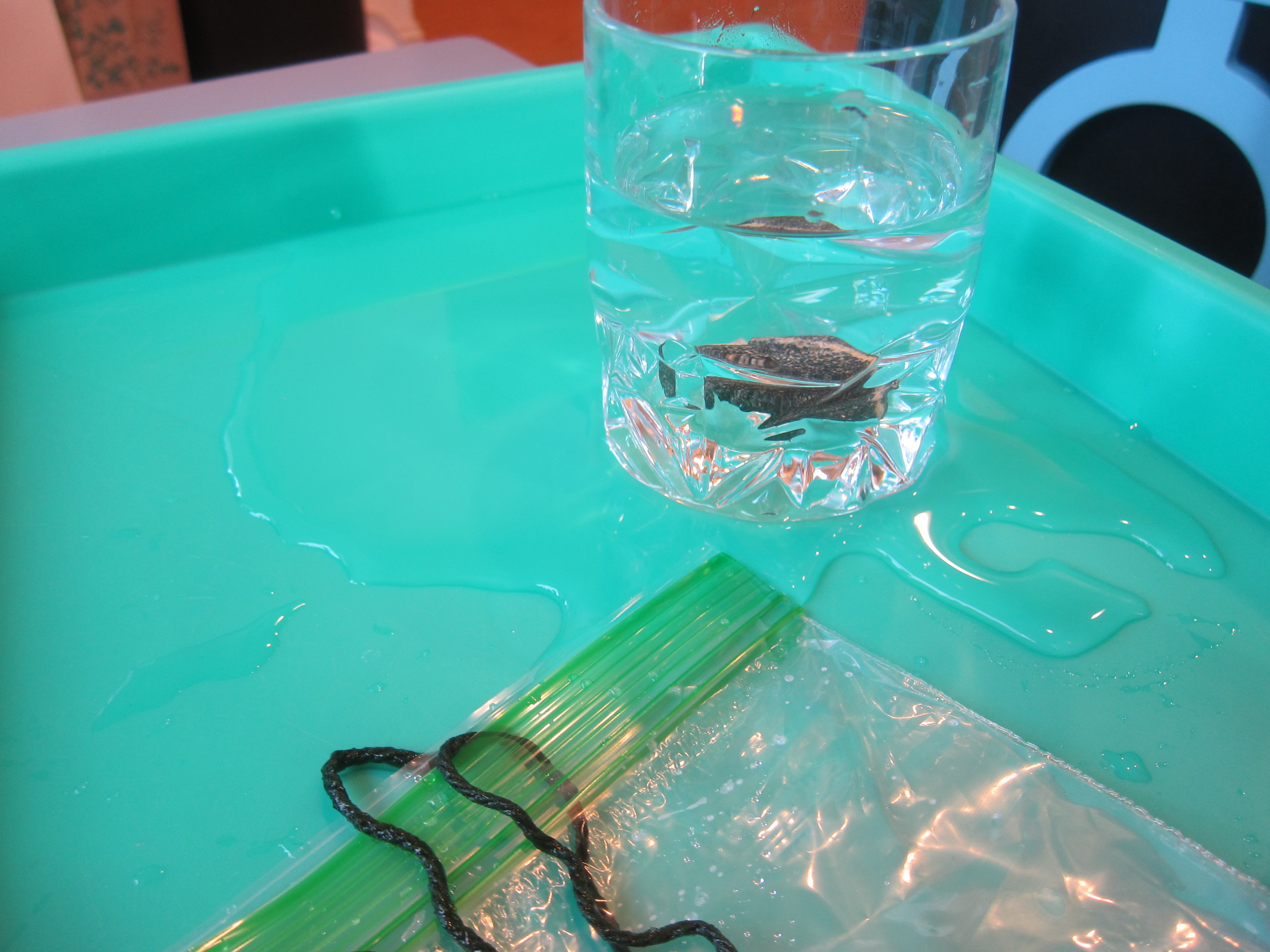
Wrap the opposite end of the yarn around a small rock and place the rock in a glass over a tray (to catch any spills…just in case!).

Water Bag Experiment (3)

Fill the plastic baggie with a little water.

Water Bag Experiment (4)

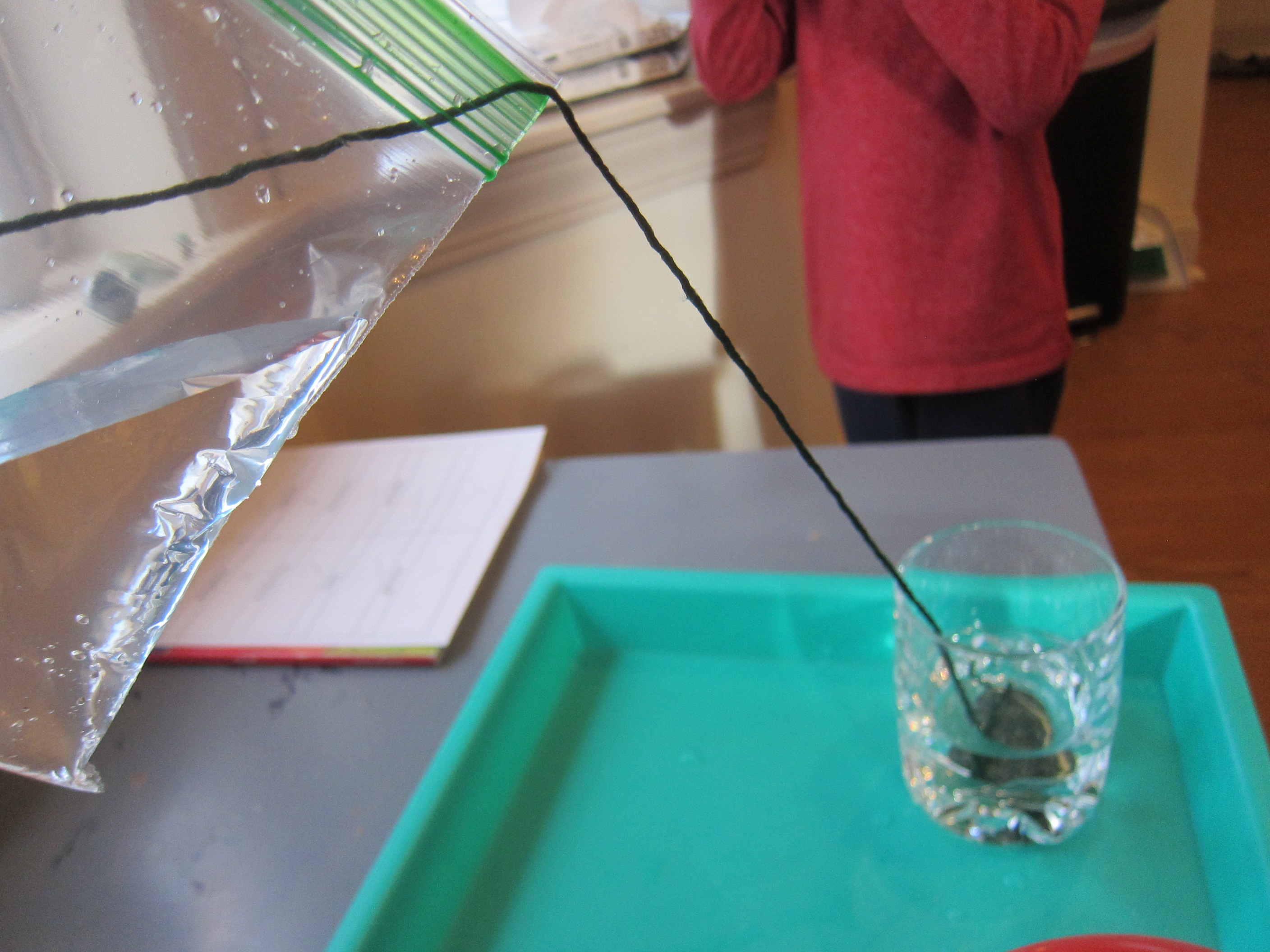
Now tilt and begin pouring!

Water Bag Experiment (5)

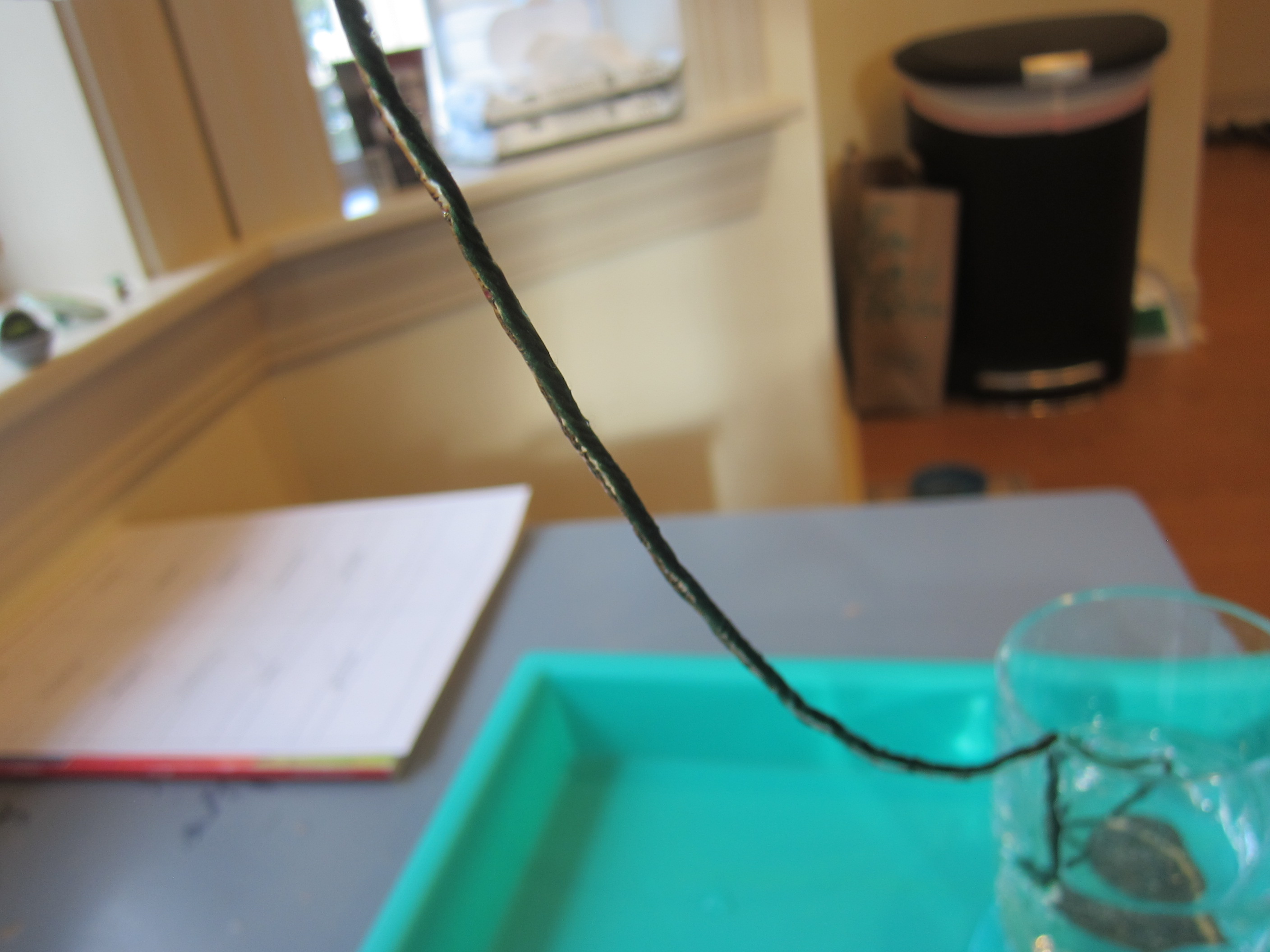
Thanks to surface tension, the water flows directly along the wet yarn into the cup, as long as you keep the yarn taut. Ours wasn’t always exact, so we were glad we had the tray underneath to catch a few inevitable spills. But for the most part we got the experiment to work great.

Water Bag Experiment (8)

This homemade version of the Kiwi Crate suggestion was definitely worth it a second time around.

Water Bag Experiment (6)