Medieval Crate

Koala medieval (15).JPG

I pretty much peed my pants when I saw our latest theme from Koala Crate – the Medieval crate! I was a huge medieval dork as a kid (and, well, still am), and couldn’t wait to share with Travis the projects and ideas about the Middle Ages.

One note in general: I’ve noticed that Koala is getting more… complex, both in terms of theme and the materials we receive each month. I’m not sure if the kits grow more sophisticated as your subscription goes on, or if this is an attempt by Koala to stay competitive in the expanding world of kids’ subscriptions boxes. This isn’t a value judgment, just an observation that our projects feel a little needlessly complicated. Still, you should be able to mostly replicate the ideas below with items from a craft store, if so inclined!

Because we’ve recently been in love with dragon stories and lore (Dragon’s Love Tacos!), it was natural to start with the Dragon Wagon project. We needed to first apply provided tissue paper circles as dragon scales to the sticky sides of a cardboard box.

Koala medieval (1)

Whoops, just in time we realized there were shiny stickers too, and made room for those.

Koala medieval (12)

My favorite part of this crate was the dexterity Travis showed. He largely took over adding 2 wooden dowels to be the axles, then adding 4 wooden wheels and a foam circle to hold the wheels in place.
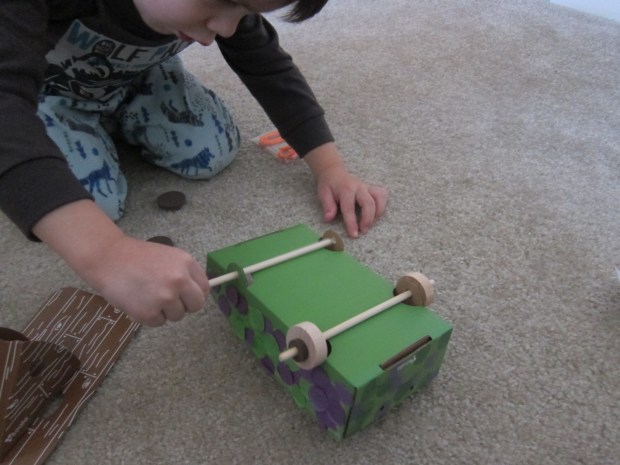
Koala medieval (2)

Next he threaded through the provided orange rope, to pull the wagon along.
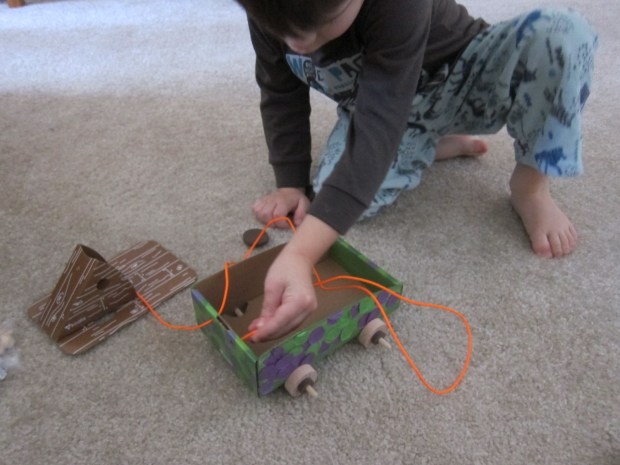
Koala medieval (3)

We hadn’t even added the dragon and already the Middle Ages were a huge hit with my boy!

Koala medieval (4)

To add the dragon, we adhered four thin streamers of orange tissue paper to the sticky strip on a cardboard dragon head. Koala set this up very neatly so that if you huff through the open mouth, the “flames” wave.

Koala medieval (6)

Slide the dragon head into the provided slot on the wagon and your project is complete.

Koala medieval (7)

I read to Travis a bit about catapults in the Imagine magazine, after which he couldn’t want to set up the Catapult craft. Again, he insisted on doing a lot of the dexterous work solo. Slip a foam circle onto a clothespin, slot the clothespin into the hole on the cardboard catapult base, and secure it with a second foam circle.
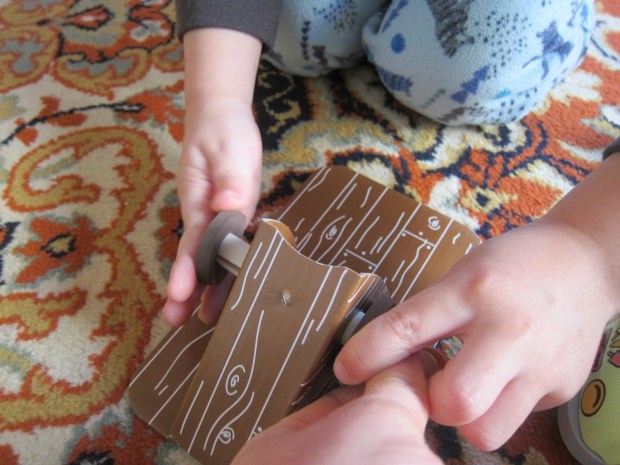
Koala medieval (8)

We added sticky-back foam to one end of a craft stick, and adhered the catapult dish (a small plastic circle) to the other end. The catapult then slots into the clothespin and is secured with an elastic.
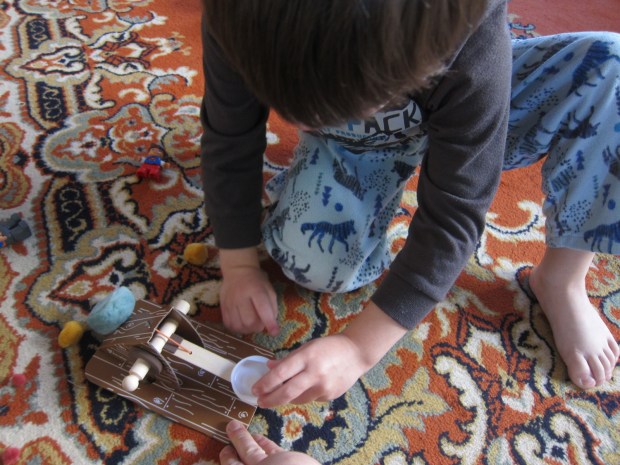
Koala medieval (10)

Now it was time to load up our cannonballs (er, pom poms), provided in fun, rock-like colors and various sizes. Launch!
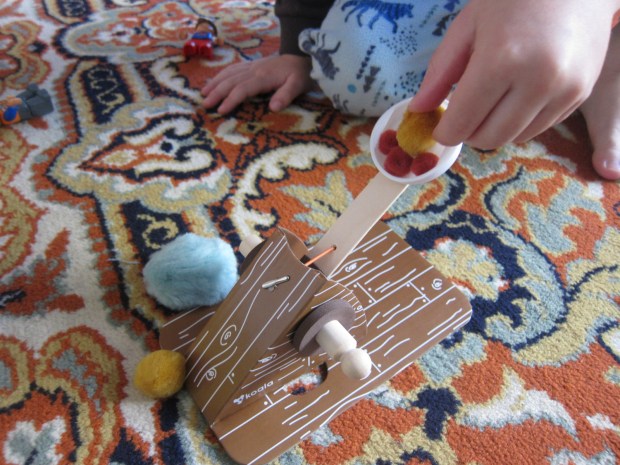
Koala medieval (11)

For a little math in the process, set up a ruler and see how far your pom poms go. It was fun to guess which size “rock” would go furthest.

Koala medieval (18)

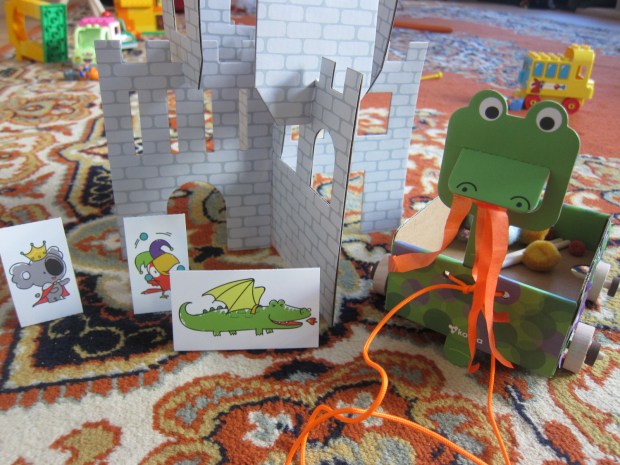
Well now we needed a target, so we didn’t waste any time before turning to the final craft, the Medieval Castle. This was simply pieces of cardboard which slotted together. Travis was a bit frustrated (the slots were tight), so I finished up the castle and folded the provided cardboard characters for him.
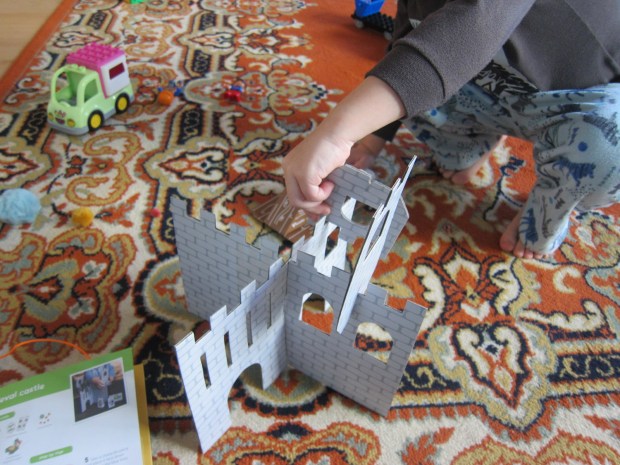
Koala medieval (14)

Here’s where the crate scored big points with mama on the imagination scale! Your child can have so much fun with the characters moving about in the castle, laying siege to one another, and avoiding the fire-breathing dragon.
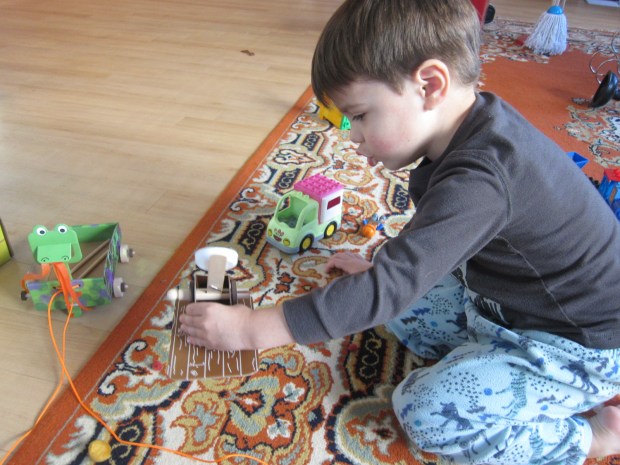
Kolala medieval (13)

Did I mention I’m a nut about the Middle Ages?
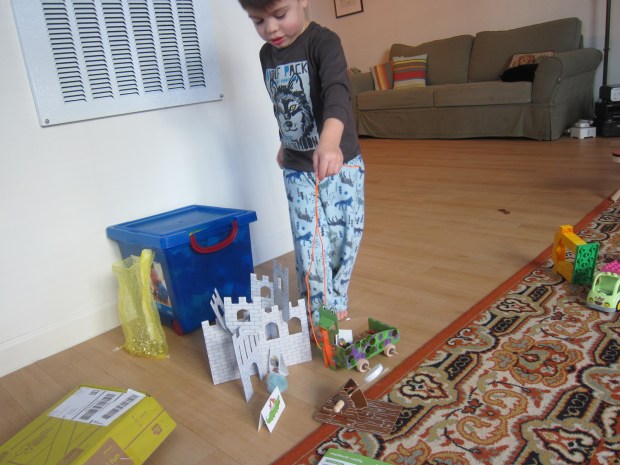
Koala medieval (17)

To continue the interactive play, we made Travis his own crown to be king of the castle, with an easy DIY pipe cleaner crown.

Pipe Cleaner Crown (8).JPG

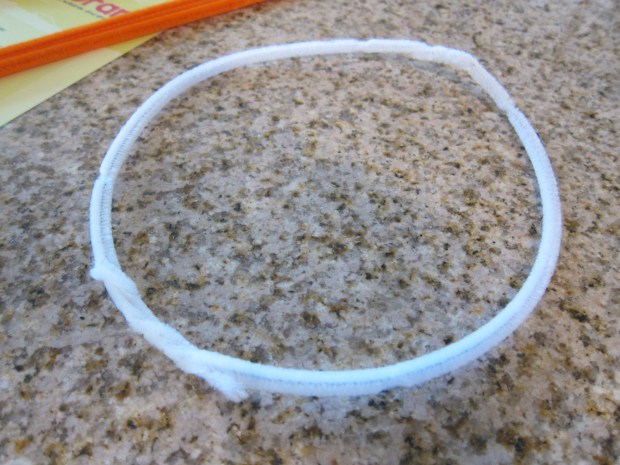
Twist two pipe cleaners together to be the base – you may need three pipe cleaners, depending on the circumference of your child’s head.
Pipe Cleaner Crown (1)

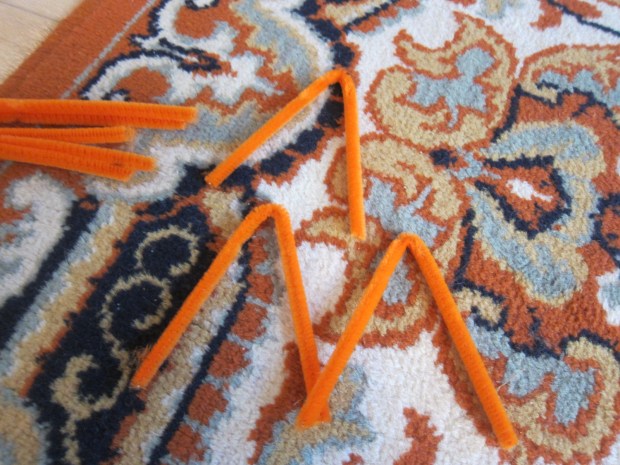
Cut 5 or 6 more pipe cleaners in half to be the points of your crown, and bend each into a triangle.
Pipe Cleaner Crown (2)

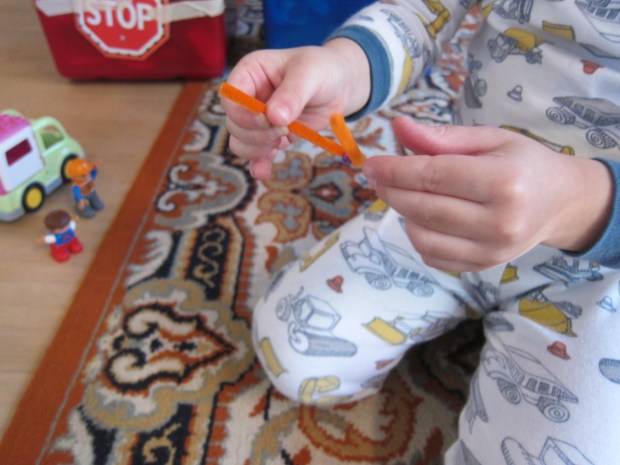
Travis and I devised a little assembly line – he threaded a shiny bead on to the point of each triangle…
Pipe Cleaner Crown (3)

…after which I twisted the ends around our base. Be sure no wire points will poke into your child’s head.

Pipe Cleaner Crown (4)

A proud king!

Pipe Cleaner Crown (6)

Thanks for medieval fun, Koala Crate!

Sailor’s Hard Tack

Hard Tack (4)

A recent trip to a maritime museum gave Travis the chance to play in a pretend galley kitchen.

whaling (4)

We returned home with a recipe for hard tack, the hard-as-a-rock cracker that was a staple on many sea voyages. We couldn’t wait to try making it!

Hard Tack (1)

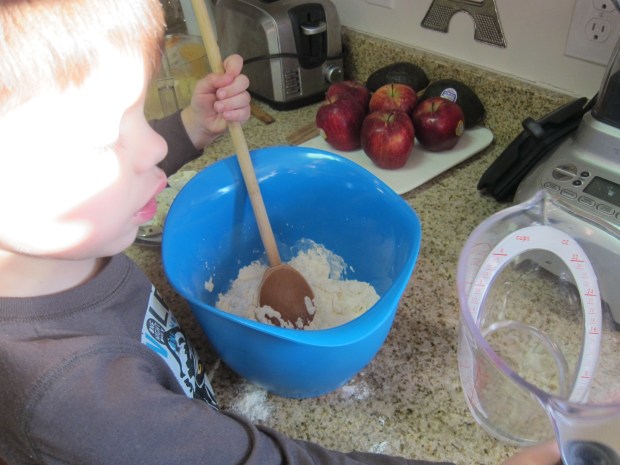
First scoop 2 cups flour into a bowl. Add 1/2 teaspoon salt.

Hard Tack (2)

Begin adding water, about 1/4 cup at a time, until you have a workable dough. Our recipe was vague, so I did a bit of research online to see how much we’d need. 1 cup of water made our dough a little too sticky, so we added an extra 1/4 cup of flour. Knead the dough about ten times, then roll out into a rectangle and score into squares on a baking sheet.

Hard Tack (3)

Prick the squares with a fork, and bake at 375 degrees F for 30 minutes. Turn over and bake an additional 30 minutes.

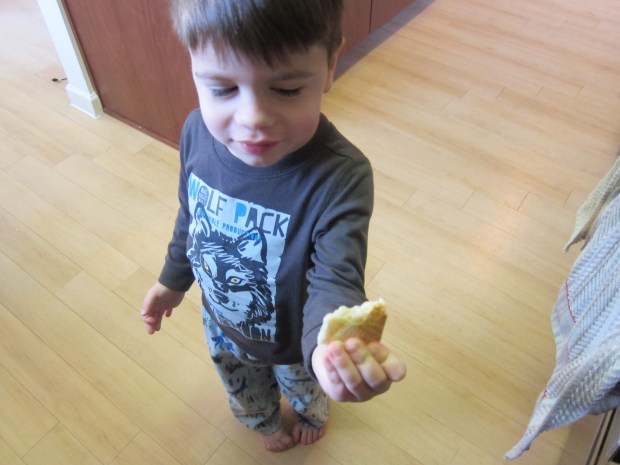
I recommend letting your little sailors test the hard tack now. It won’t break their teeth yet, and they’ll get a sense of what it was like!

Hard Tack (5)

Travis pretended he was not just any seafarer, but a pirate of course. H-arrgh-d Tack, it became!

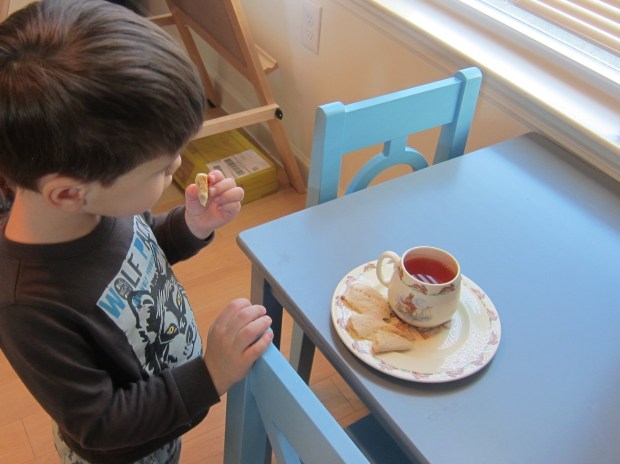
For true hard tack, leave it out on the counter for a couple of days until really really hard. To serve, you’ll need to dip in water, non-dairy milk of your choice, or tea (Travis loves a cup of caffeine-free rooibos).

Hard Tack (6)

Ahoy mateys!

Hard Tack (7)

Snow Storm in a Jar

Snowstorm Jar (4)

We’re always up for a glittery and bubbly project, and this one seemed well worth a try; I’ve seen this one popping up (pun intended!) all over the internet lately. The secret to creating a blizzard inside is a simple little Alka-Seltzer tablet.

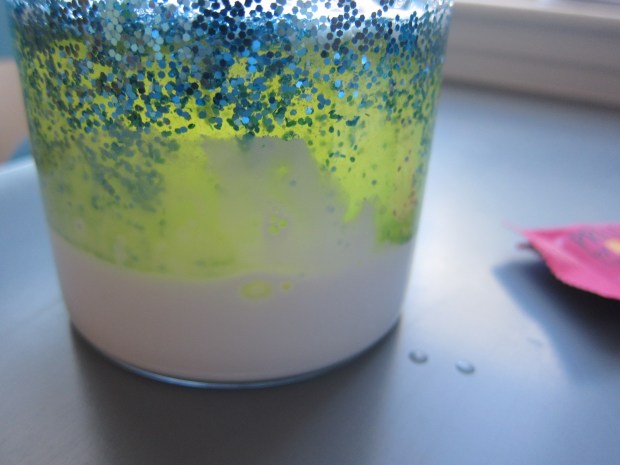
First, we needed to mix together 1/4 cup water with enough white paint to make a nice, saturated color. Pour this mixture into the bottom of a glass jar.

Snowstorm Jar (1)

Fill the jar with 1 cup baby oil – the oil will sit on top of the water, which is precisely what makes this experiment work, the fact that water and oil won’t mix.

Snowstorm Jar (2)

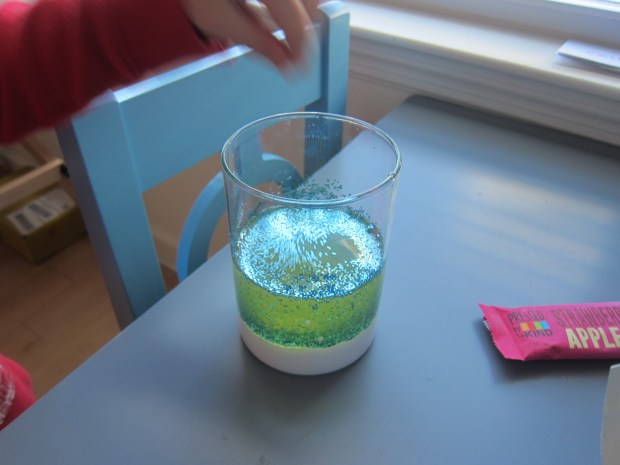
Next we added glitter. Ideally, we would have used white glitter to be snowflakes, but our storm had blue glitter. Travis dumped in a whole lot more than I intended before I could stop him, oh well!

Snowstorm Jar (3)

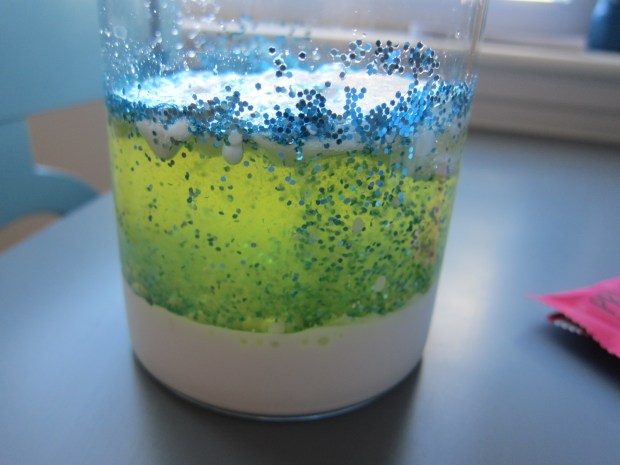
To make the storm happen, simply drop in an Alka-Seltzer tablet. The tablet will create pressure upwards, which makes the water rise, but then the oil pushes it back down again. The carbon dioxide generated by the tablet and the water also keeps things nice and bubbly.

Snowstorm Jar (6)

And your child gets to watch beautiful snowflakes and snowdrifts while learning that little bit of science!

Snowstorm Jar (5)

A moving project like this demanded a quick video, so enjoy!


Phoneme 11: Soft C

C Phoneme (20)

After a bit of holiday hiatus, we’re back with a new phoneme, this time not a letter pair but the soft C sound as in cinnamon. We focused on just a handful of words, with lots of enjoyable games and crafts in the process. I also put much more emphasis on reviewing flash cards of our theme words this time around. Travis isn’t reading yet, but he could sight read most of the words by the end of our unit, and is learning to sound out a word that’s placed in front of him. So without further ado…

Words of the Week:

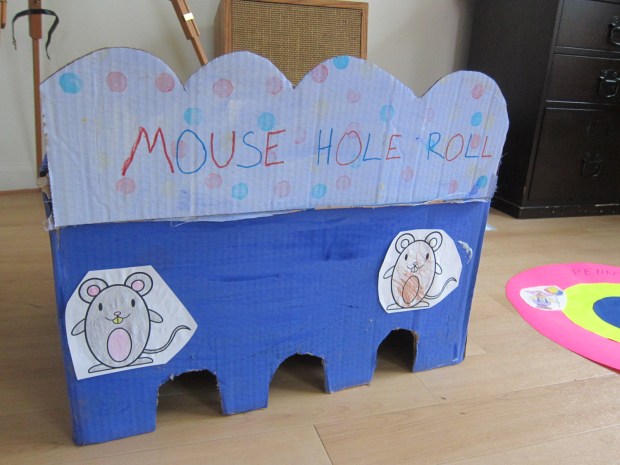
  • Circus: We kicked things off by staging a grand old circus of course! Stuffed animal friends walked a high wire act and did acrobatic flips into a ring. C phoneme (5)Then we made two circus games, a mouse hole roll and a penny toss. Mouse Hole (8)It’s too bad the circus wasn’t in town, or we would have taken in a show as our field trip. As always, we love circuses that feature human performers, not animals.
  • Circle: You can tailor this word to your child’s age and ability. Little ones just learning their shapes will benefit from a hunt for circular items around the house. That idea is a bit old hat for Travis, so we turned it into a “pirate treasure hunt” for circles. When I phrased it that way, he raced around with glee! C Phoneme (13)My intention was to gather items we could put in a pile, but he spotted some I wouldn’t have thought of, including the knobs on the dresser and other circular furniture or decorations. C Phoneme (12)Once we’d finished, he exuberantly asked for a triangle treasure hunt – why not? For fine motor skills, trace some of the circle objects you found.C phoneme (14)
  • Cinderella: This was a new story for Travis, so we read a version of the fairy tale, and watched the movie as well. It was a fun opportunity to introduce Travis to a classic!C phoneme (4)
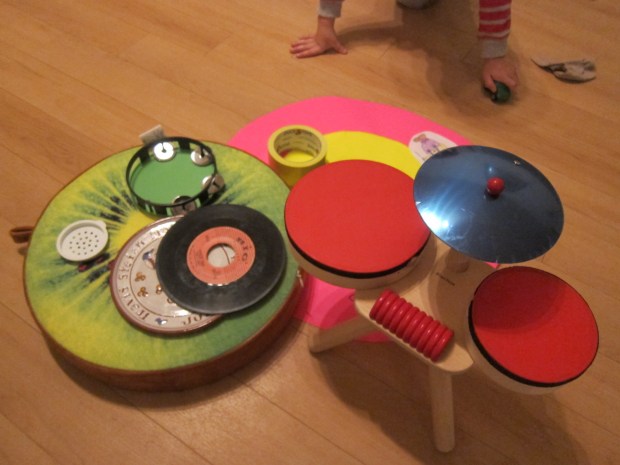
  • Cymbals: We have a miniature drum set with a cymbal attached, and Travis loved learning to do rimshots and bashing out favorite songs. C Phoneme (8)We also scooped up a pair of tiny hand cymbals from the toy store, perfect for smashing together. Conveniently, the cymbals are circles too!
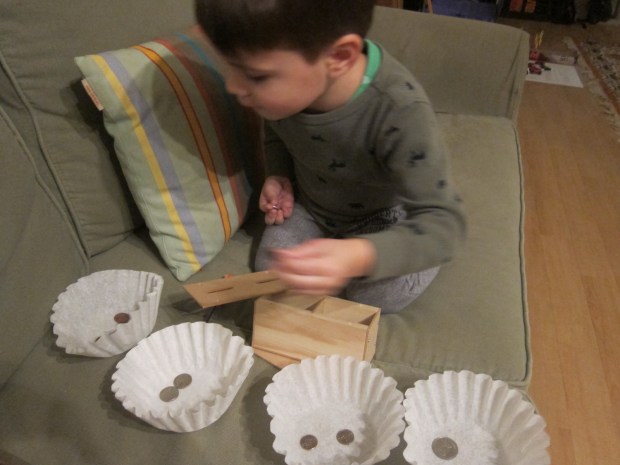
  • Cent: I always like when our alphabet or phoneme play brings us back to coins, since Travis learns more about the idea of money at each interval. To play with our cents, we cracked open his piggy bank and talked about the four denominations of cents in U.S. currency, and then sorted them out into pennies, nickels, dimes, and quarters. C Phoneme (17)He then turned it into a game of store, telling me in cents how much each item cost. A great little math and currency lesson.
  • Centipede: It wasn’t the right time of year to seek out these little critters outside, but we read about their hundred (or 30, or 300) legs in several books, such as The Big Book of Bugs by Yuval Zommer and Usborne’s Beginners Non-Fiction Bugs book.C Phoneme (19)
  • Ceiling: What better way to remember to look up and pay attention to the ceiling than to adorn it with glow-in-the-dark constellations?Constellation Cards (9)
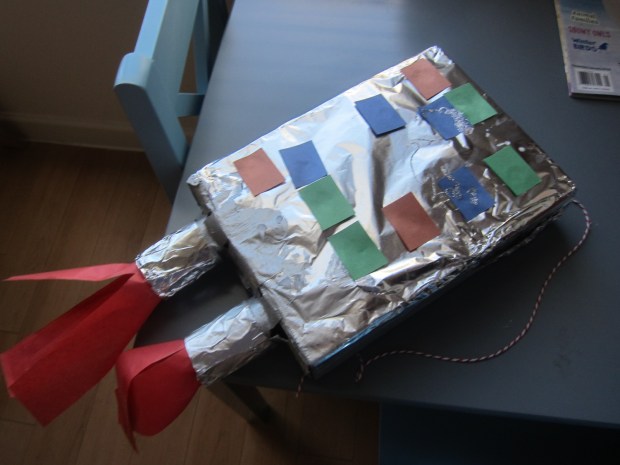
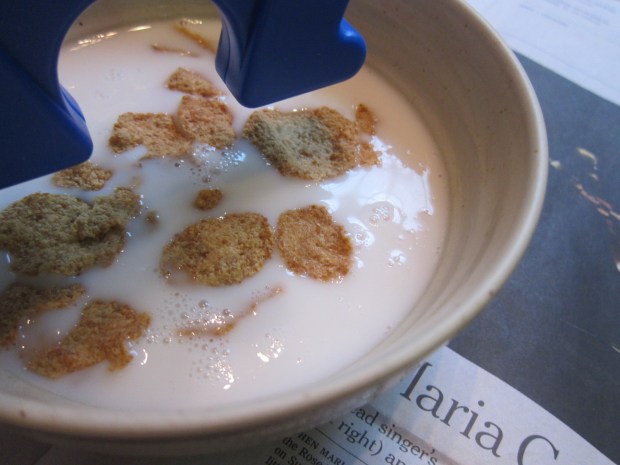
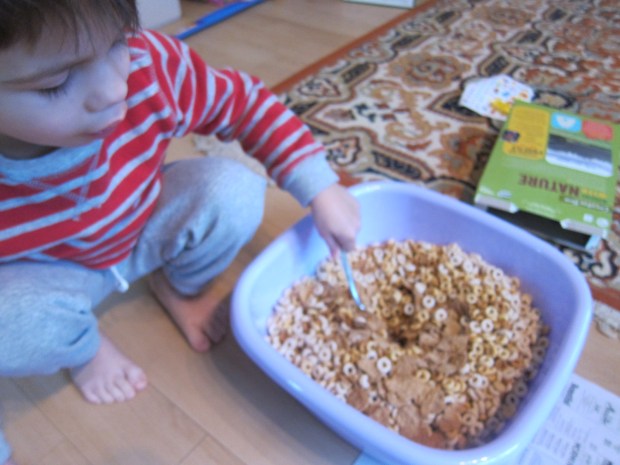
  • Cereal: Don’t stop at just eating the stuff – we had a whole cereal-themed afternoon one cold day! First, we tested out magnetic cereal. The instructions in the game said we’d need a cereal with a high iron content (100% RDA or more). This concept sounded completely bizarre since our cereals from the health food store tend to be about 4 to 10% daily iron. Well sure enough, cereal from the regular grocery store went as high as 100% iron, so I thought it would be fun to show Travis the difference. Magnetic Cereal (1)Unfortunately the game didn’t work for us: even using our strongest magnet wand, the high iron cereal didn’t budge! Magnetic Cereal (3)I would be very curious what cereal the online testers had used. Ah well, leftover cereal made for a great sensory bin. Magnetic Cereal (4)Then we used the boxes for cereal race tracks and recycled jet packs.Jet Pack (11)
  • City: We started off building a city with skyscrapers from Travis’s blocks. C Phoneme (10)Later we decided that our city needed a parking lot for all the cars – which turned into a letter match parking lot activity that was a huge hit. Parking Lot (11)If you’re able, follow up with a field trip to a real city, whichever is closest to you!C Phoneme alt.JPG

Chocolate Mousse Dip

Mousse Dip (1)

A dessert dip where tahini and tofu dress up in chocolate? Yes, please!

Ingredients:

  • 1/2 cup tahini
  • 1 cup non-dairy chocolate chips
  • 1 cup silken tofu
  • 2 tablespoons agave nectar
  • 1/8 teaspoon salt
  1. Combine the tahini and chocolate chips in a large glass bowl. Microwave for 30 seconds. Stir, then return to the microwave for an additional 30 seconds. Stir until the chocolate is melted.
  2. Combine the tahini mixture in a blender with the tofu, agave, and salt; process until smooth.
  3. Garnish with additional chocolate chips, if desired, for a pretty touch.

You can serve this dip with fruit, or even animal crackers for dipping. My preschooler occasionally likes it just by the spoonful!

Mousse Dip (2)

Note: The dip will solidify if refrigerated. You can make it creamier again with a quick 10 second re-heat in the microwave.

Hot Chocolate Science

Hot Chocolate (7)

Well now here’s a tasty way to bring some science into your winter afternoon. Or to add a sweet twist to your science. Whichever way you spin it to your kids, who can possibly protest a science experiment that ends a cup of hot chocolate?

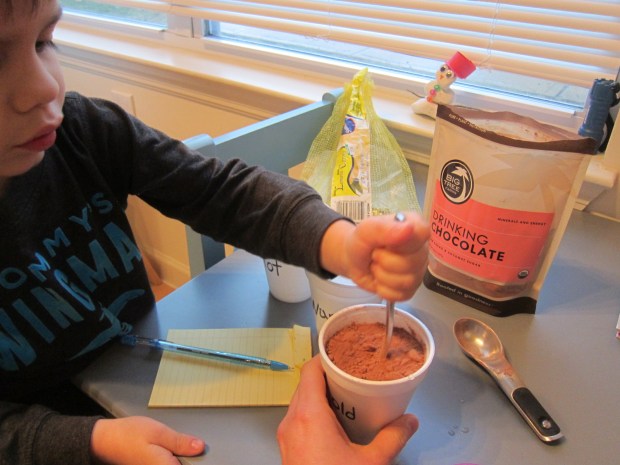
I started out by posing a hypothetical to Travis. If we made him hot cocoa for a snack, which would dissolve fastest: cocoa in a cup of cold water, one of medium (room temperature) water, or one with hot water. He picked hot (great!), so I guessed cold to play devil’s advocate. Now it was time to test our hypotheses.

Set out three heat-proof cups and fill each with 6 ounces of water.

Hot Chocolate (2)

Travis proudly helped fill the first two cups. Use caution when pouring the hot water, a step best left to grownups.

Hot Chocolate (1)

We then added 1 tablespoon of hot cocoa mix to each cup, one at a time, starting with the cold water. We tried to be scientific by timing our results with a handy stopwatch, although I confess our scientific method was spotty.

Hot Chocolate (4)

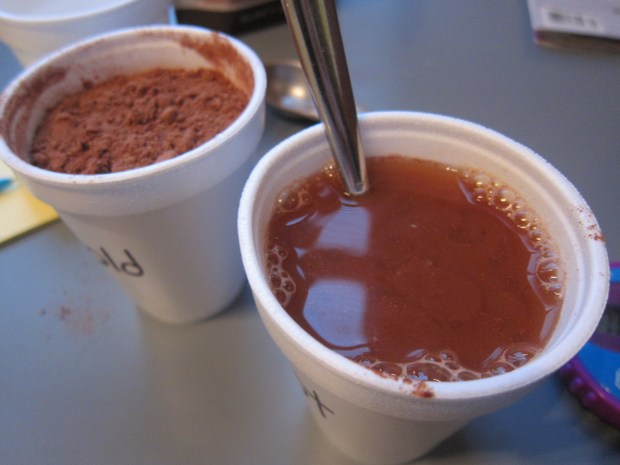
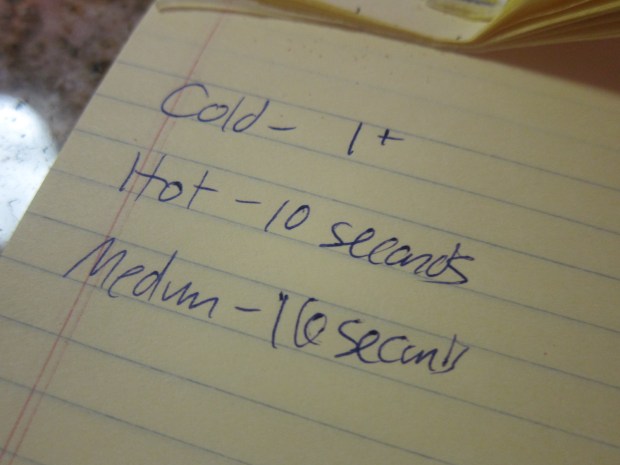
The chocolate in the cold water didn’t go anywhere, remaining powdery and clumpy even after lots of stirring. Truth be told, we have no idea how long it would have taken to dissolve, but far past our attention span on the stopwatch.

Hot Chocolate (5)

The hot water dissolved the cocoa in 10 seconds flat – a neat comparison that grabbed Travis’s attention.

Hot Chocolate (6)

Results for our medium water were a little fuzzy because it was probably hotter than it should have been. I had hoped to have water exactly at room temperature, but it was warm from sitting in the tea kettle. So that only took about 16 seconds to dissolve.

Hot Chocolate (8)

Either way, Travis got to enjoy a cup of cocoa at the end (from the hot cup, of course), and picked up a little science about how heat breaks apart molecules along the way.

Green Time: Evergreen Trees

Pine Tree alt

We’re still enjoying our first edition of Travis’s subscription to Ranger Rick Jr., which has already been the inspiration for scrapbooking, animal crafts, and more! There appears to be a recurring monthly feature called Green Time, encouraging play or activities outdoors. Me being me, my plan moving forward is to highlight these adventures on the blog!

January’s suggestion to get outside was to get to know an evergreen tree, an up-close-and-personal exploration of these verdant trees. Travis and I took advantage of mild temps (for January) and headed off to the park. When I told him we’d be getting to know a pine tree, Travis asked which one was going to be our friend!

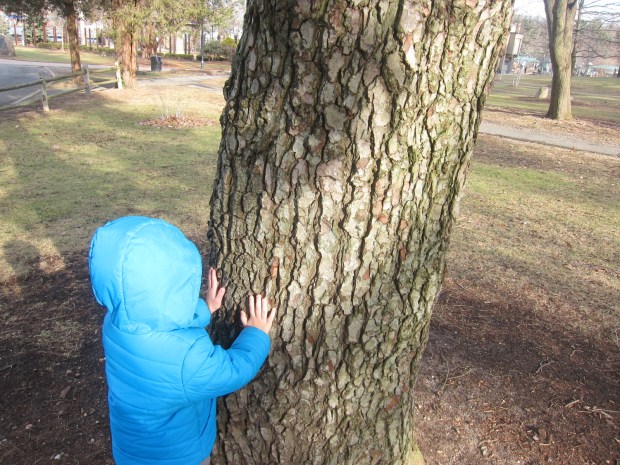
Soon enough we’d spotted it, a majestic pine. We listened for sounds, although it was hard to distinguish much nature with cars nearby and plane traffic overhead. But we did get to use our sense of touch on the tree bark…

pine tree (1)

Sense of smell on the needles…

pine tree (2)

And simply got to know our friend. Travis was dusting him off here with an extra pine needle.

pine tree (7)

Needles and pinecones were easy to spot. It wasn’t the right time of year, unfortunately, to see insects or bird’s nests.

pine tree (4)

But we loved this burl on the trunk!

pine tree (6)

Thanks for getting us outside, Ranger Rick!

Veggie-Packed Mac ‘n’ Cheese

veggie mac (4)

For kids who won’t eat their vegetables, mac and cheese is the perfect venue to slip in a little extra veggie goodness while they are none the wiser. Here’s my super-speedy version, starting with your favorite store-bought mac ‘n’ cheese mix.

Ingredients:

  • 1 package vegan macaroni and cheese
  • 1 large sweet potato
  1. Prepare the mac and cheese according to package directions; set aside.
  2. Meanwhile, peel and cube the sweet potato, and cook in boiling water for 20 minutes, or until very tender.
  3. Transfer the sweet potato to a blender, along with a little of the cooking liquid; process until smooth.
  4. Stir 1/2 cup sweet potato puree into the mac and cheese; reserve the remaining sweet potato for another use. (Note: The puree is perfect for babies, if you’re feeding kids of multiple ages!).

From here, the varieties are almost endless. You could also use the same amount of butternut squash puree, cauliflower puree:

veggie mac - cauli.JPG

or carrot puree:

Veggie mac (3)

Sometimes I also leave the veggies a little chunkier, as with the carrot version shown here.

veggie mac (2)


Rock Snowman

Rock Snowman (6)

A recent burst of warm(ish) weather got us outside over the weekend, and my little collector is always eager to bring home treasures from our walks. In fact, I always carry a zip-top plastic bag with me when we outside just for this purpose!

Rock Snowman (3)

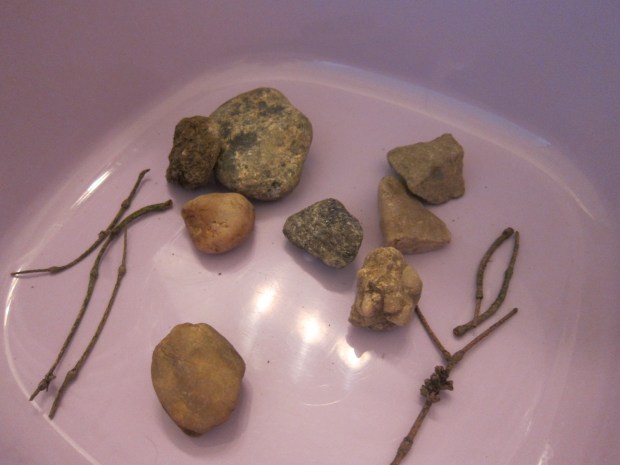
Today we returned him with a variety of rocks and sticks, so thought we could build little winter snowmen.

Rock Snowman (1)

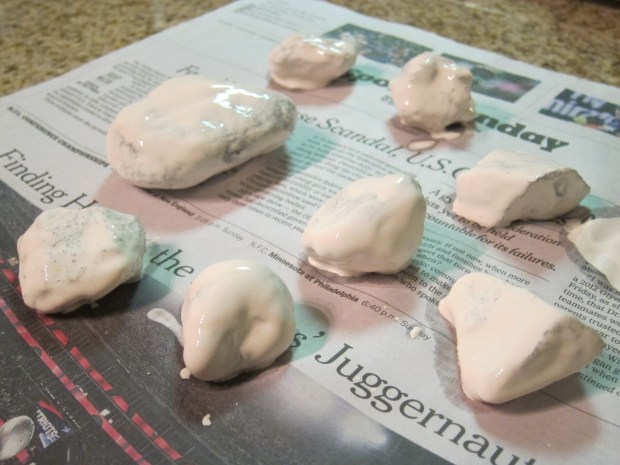
First the rocks needed a good coat of white paint, and we left them to dry overnight.

Rock Snowman (2)

When we settled in to build our snowmen, it turned out we really only had one rock large enough to be the base, which meant only one snowperson could be built. The rest of the rocks ended up as little “snowballs.”

Rock Snowman (5)

I put together the snowman for Travis with hot glue – three rocks glued together, two little sticks for the arms, and buttons and googly eyes hot glued on.

The finishing touch was a little top hat I simply made from construction paper.

Rock Snowman (7)

Don’t have rocks on hand to make a snowman? Check out our shredded paper or glowing bottle versions instead!

Cheesy Cauliflower Soup

Cauliflower Soup

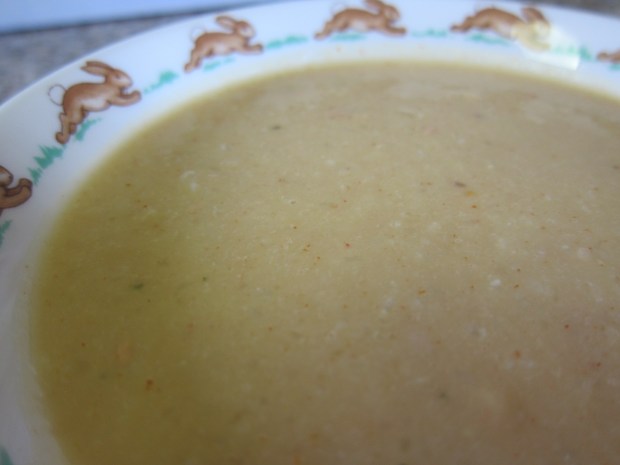
This soup has so many hidden good-for-you ingredients it’s like a gold mine! I simply use plain white cauliflower, but feel free to get fancy and use an orange variety if you want a more vibrant color to the soup. To suit my preschooler’s taste, a mixture of half water and half veggie broth keeps the soup from being too salty. Use 4 cups broth instead if you prefer.

Ingredients:

  • 2 tablespoons olive oil
  • 1 chopped yellow onion
  • 2 minced garlic cloves
  • 1 head cauliflower, chopped
  • 2 cups vegetable broth
  • 2 cups water
  • 1 teaspoon smoked paprika
  • 1 (15-ounce) rinsed and drained can navy beans
  • 6 tablespoons nutritional yeast
  • 1 tablespoon tahini
  1. Heat the olive oil in a large saucepan over medium heat. Add the onion and garlic; cook for 5 minutes, until the onion is translucent. Add the cauliflower, stirring well, then the broth, water, smoked paprika, and beans.
  2. Bring to a boil. Cover, reduce heat to low, and simmer for 15 minutes.
  3. Remove from heat and stir in the nutritional yeast and tahini. Working in batches, transfer the soup to a blender and process until smooth. Return to the saucepan to heat through before serving.

Add croutons for serving, if desired!