Chicken Littles

Chicken Littles (5)

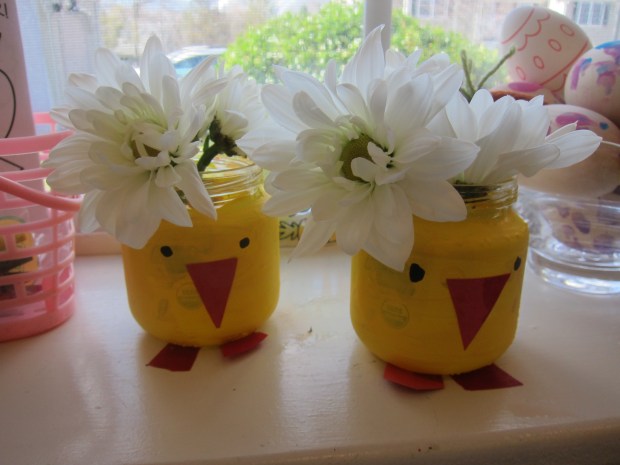
Here’s an adorable craft for your Easter table, even if your gathering is smaller than usual this year due to social distancing. Kids can get involved with several steps, including painting, cutting out shapes for the face, or helping arrange the flowers.

To start, paint empty baby food jars with several coats of yellow acrylic paint. Let dry completely.

Chicken Littles (1)

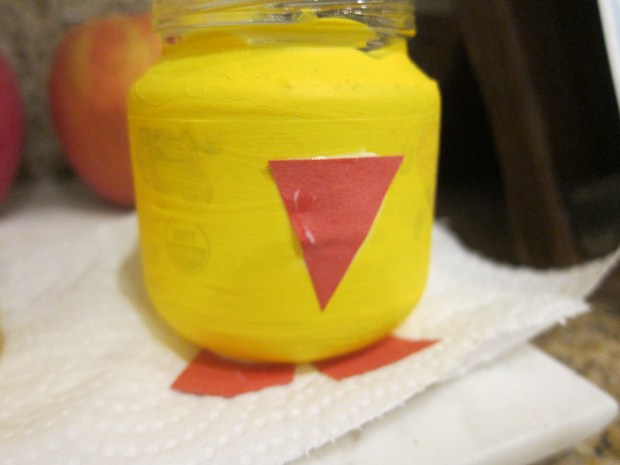
Cut out triangles for beaks and wedges for feet, whether from felt or construction paper. I would have preferred felt, but paper worked in a pinch!

Chicken Littles (2)

Use a black sharpie to add eyes.

Chicken Littles (3)

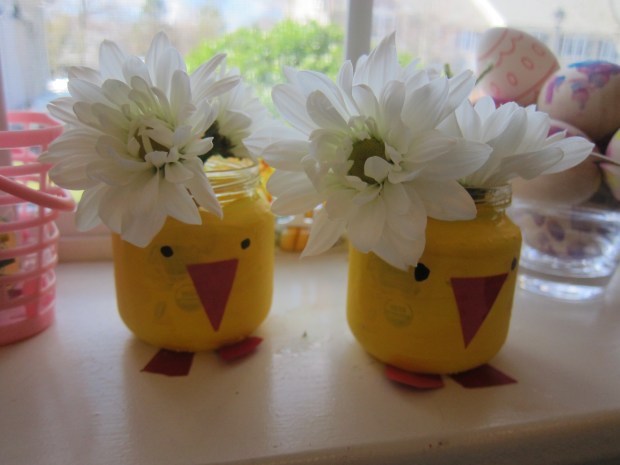
Now your chicks just need feathers in their caps, care of little white flowers, of course! These turned out so cute.Chicken Littles (4)

Kindergarten Home School Week 4: Friday

Home School 20 a

TGIF! Travis started the day strong, ended it not so strong, but heck now it’s the weekend!

9-10: ELA. After watching a read-through of the artsy picture book When Pigasso Met Mootisse, we discussed what the problem was in the story, and then the solution. Travis really enjoyed drawing it out! We were on such a roll that he did a letter page in his workbook and a few minutes of Lexia. Baby sister was busy with craft sticks, meanwhile!

Home School 20 b

10-10.30: Math. This subject got us moving today! After writing the numbers 10 through 19, we talked about how all teens are made up of 10 + X more.

Home School 20 c

Reinforce the idea with exercise. We put the numbers in a hat and had to do 10 jumps + X other exercises depending on what number we selected. Travis loved making me do side planks and jumping jacks, and found it especially funny if I drew the number 19.

Home School 20 d

10.30-11: Snack/free play (windy and rainy again, darn).

11-11.30: Social Studies. I tried to sneak in the day’s video on different types of homes, which was wildly unsuccessful. He threw a fit when I asked him to draw our neighborhood.

Home School 20 f

Good thing we had a…

11.30-12: Zoom session with his class! Technology has proved so helpful in keeping classmates connected. They all sang their morning circle time songs together.

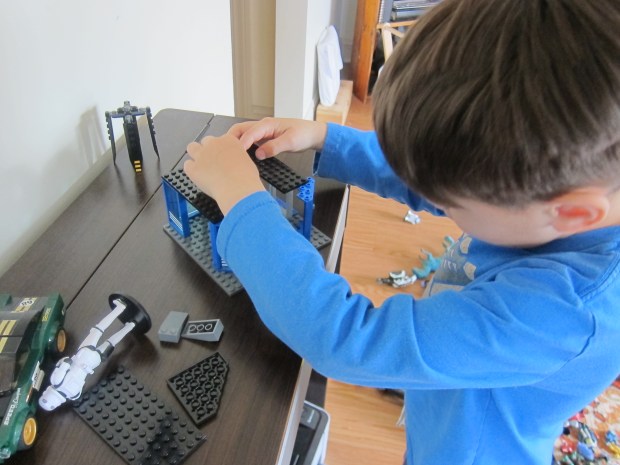
12-1 – Lunch/free play. Because he couldn’t get outside, I challenged Travis to build a Lego house. Challenge accepted!

Home School 20 e

1-1.30: Art. I tried get Travis to sit for the day’s special, with the assignment to draw what he saw outside his window. Another temper tantrum. I got him happy going off-book and making goblets instead. Then we called it a day!

Little sister had an online music class at 2, and it felt nice to devote the time to her. We all really need some fresh air and we’re looking forward to a sunny weekend. How did your week of home school turn out? Please share in the comments!

Passover Goblet

Passover Goblet (6)

Passover began yesterday, and although we don’t celebrate the holiday, we have friends and family who do. Travis enjoyed learning a bit about the holiday and making these goblets, which are traditionally placed on the Seder table to symbolize hope. The message of hope certainly felt appropriate in this Covid-19 era in which we suddenly live! You’ll need plastic goblets for the craft, which you can find at craft stores or party stores.

Passover Goblet (1)

Dab tacky glue over only half of a plastic goblet, to avoid getting fingers messy, and wind colorful yarn around that half. Let dry, then repeat with the bottom half of the goblet.

Passover Goblet (2)

We left the stems free of yarn, but you can cover completely, if desired.

Passover Goblet (3)

Once dry, we added a few pom poms for a final flourish!

Passover Goblet (5)

You could also add name tags for the prophets Miriam and Elijah, if truly celebrating a Seder this week. Travis loved the way these looked, and was so enamored of the goblets that he made sure the family drank water all day from leftover ones.


Fine Motor Activity: Craft Sticks + Plastic Bottle

Fine Motor Bottle (4)

I recently used up a bottle of non-dairy creamer with a lid that easily opens and closes, revealing a small opening inside. I knew this lid was going to be perfect for Veronika as soon as the bottle was empty, and boy was it ever!

Fine Motor Bottle (5)

Rinse out any similar bottle and let dry completely, then give to your toddler along with colored craft sticks. Veronika immediately began transferring sticks into the bottle. She experimented with dropping in one at a time…

Fine Motor Bottle (3)

…or seeing if she could fit in a whole handful!

Fine Motor Bottle (8)

Of course dumping it out was great fun.

Fine Motor Bottle (6)

As was shaking it for a maraca-like sound when it was filled.

Fine Motor Bottle (9)

This easily became a color lesson, too. I sorted the sticks into piles for her as she busily filled the bottle. “Purple!” she tends to say when she sees any color right now, so I emphasized the names of some of the others.

Fine Motor Bottle (7)

Even better than that hands-on moment with her, though, was the fact that she could return to this game all morning. She’d pop in a few sticks, dump out a few more, then be on her way, only to return again a little while later.

Fine Motor Bottle (10)

Marker Painting or Drawing

Marker Painting (6)

We run through markers pretty quickly around here, and normally Travis’s school has a great recycling program for dried-up ones. But with school closed, I found a new use for those dried-up markers today: toddler paint brushes!

Marker Painting (3)

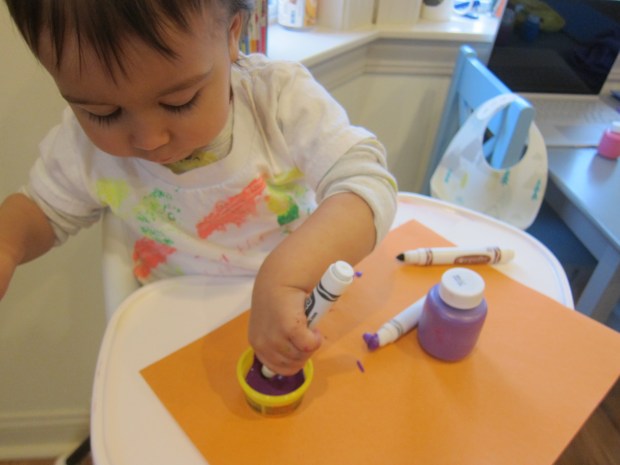
I simply set out paints for Veronika (using old play dough jars as paint pots), and showed her how to dip the tip of the marker in the paint. It then becomes a brush!

Marker Painting (1)

These work best as “dot marker” paints. If you have enough paint on the tip, you can get more of a smeary line, but Veronika was quite content to dot dot dot.

Marker Painting (7)

She worked so carefully, dabbing first in the paint and then on her “canvas”.

Marker Painting (6)

I also squirted some paint onto her paper so she could run a marker through it for thicker lines.

Marker Painting (5)

She eventually decided it was fun to smear all the lines together with her hands. Here’s her final masterpiece:

Marker Painting (8)

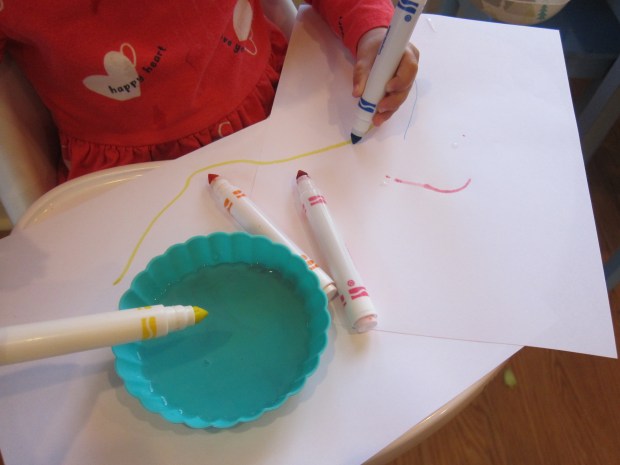
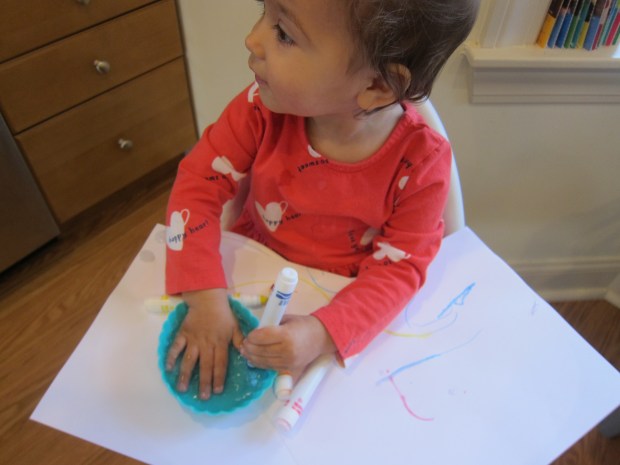
As an alternative method, turn the dried-up markers into “watercolors”. For this version, I placed a shallow dish of water on Veronika’s high chair tray, along with white paper and a few markers with very little ink left.

Marker Drawing (1)

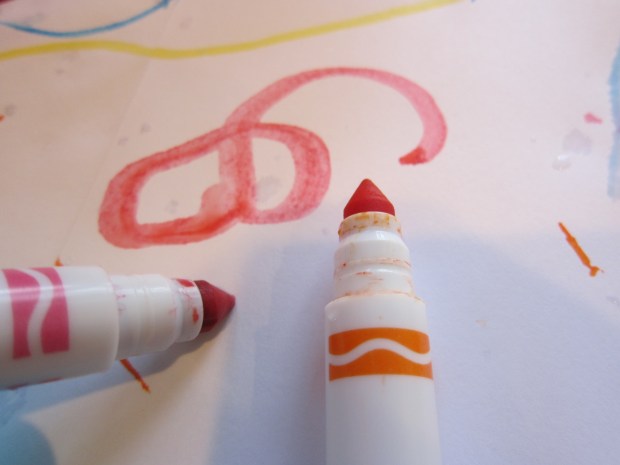
As you dip in the water, the colors become vibrant once more, with a pretty, swirly effect very similar to watercolor paints.

Marker Drawing (4)

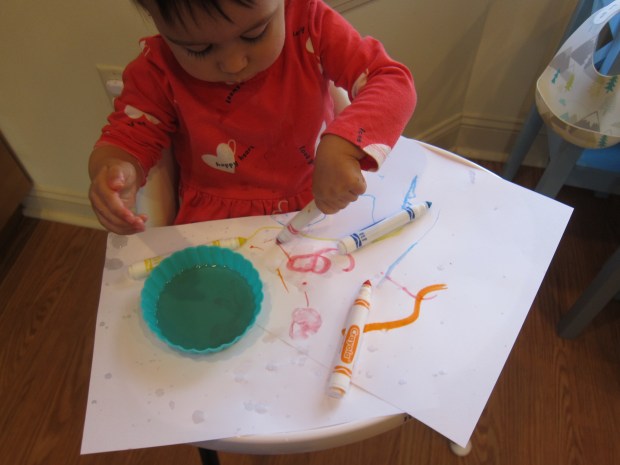
Veronika again loved the process of dipping…

Marker Drawing (5)

…and painting.

Marker Drawing (6)

She also discovered the little dish was wonderful for splashing her hands in, and tried to make some watery handprints on the paper.

Marker Drawing (3)

Next time I would use thicker watercolor paper for this activity, but in a pinch, regular printer paper was fine. She dumped a little of the water right out onto the paper, which really made the colors blend and swirl!

Marker Drawing (8)

You’ll know the game is done once the tip of the marker turns white, and then it’s time to recycle.

Marker Drawing (7)

Kindergarten Home School Week 4: Thursday

Home School 19 k

It was a busy one! And honestly, I’m finding that the busier a home school day is, the better, in that it keeps us all from going stir-crazy. Please note that when I delineate the day by hours, we’re not spending a full hour on each subject. Rather, it’s generally closer to 20 minutes per topic; then Travis fits in some free play, or zones out for a bit, and I can do a few chores around the house or change a diaper or whatever it is that needs doing in life before we move on to the next block of time. I’ve found it helpful to think of the day in these hour chunks, though, and I hope it’s helpful to other novice Covid-19 home school parents, too!

9-10: ELA. We started out with a sight-word poem, and Travis was so proud circling or underlining all his sight words. Then we acted it out, lots of jumping and clapping and smiles!

Home School 19 a

Next up was a lesson on syllables: We clapped out words and circled the correct number of syllables for each.

Home School 19 b

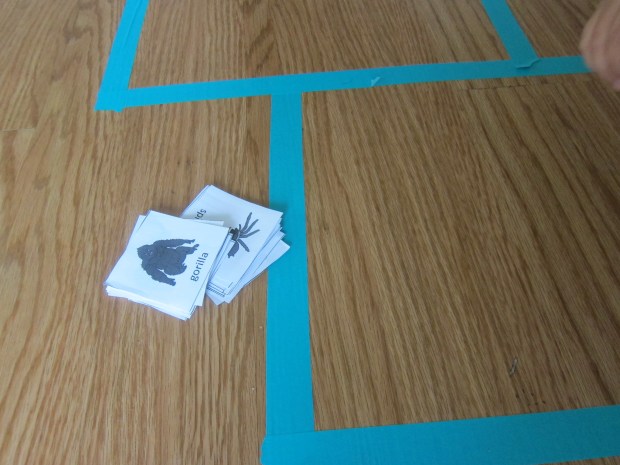
To make it interactive, play syllable hopscotch! Make a board on your floor with masking tape (or outside with chalk if it’s sunny), up to 4 levels high.

Home School 19 c

Draw cards from a pile and jump the proper number of spaces. This was fun for a few rounds, and then of course the kids had more fun pulling up all the tape.

Home School 19 d

10-10.30: Math. With the assignment to sort a toy by color, Travis chose Magnatiles and was avidly interested to see which color “won”. Then we colored in a graph with the results.

Home School 19 e

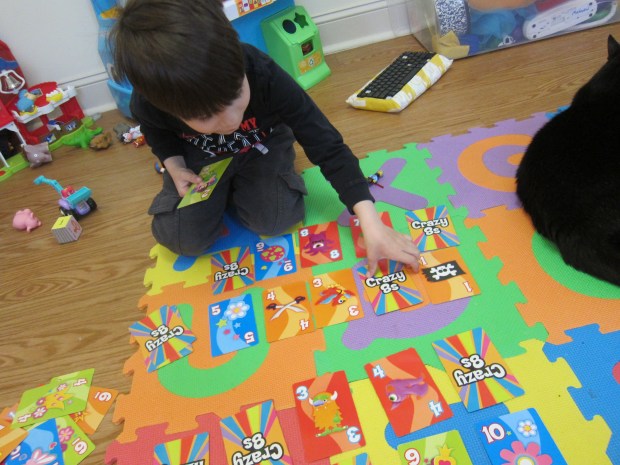
We then played a round of a card game called Garbage, which teaches kids to recognize where a number fits in on a line from 1 to 10. “Mom, this is really fun!” he said. So a win!

Home School 19 h

10.30-11: Snack/free play (indoors due to rain).

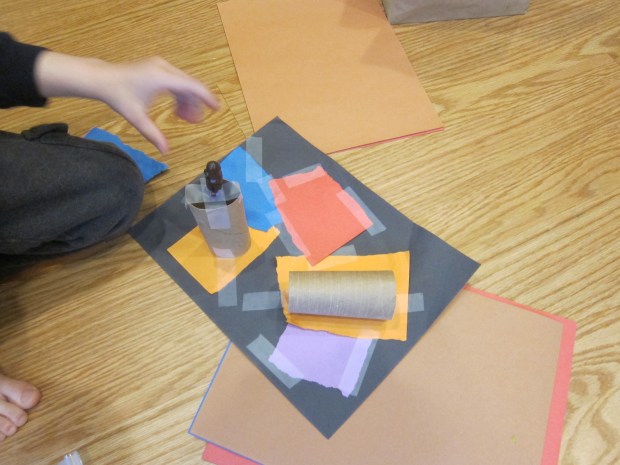
11-11.30: Science. After watching a video on how to make a collage, Travis made one with our recyclables. He was initially fussy but then confessed he doesn’t like collages because of messy glue. So we used tape, and he got so into it!

Home School 19 g

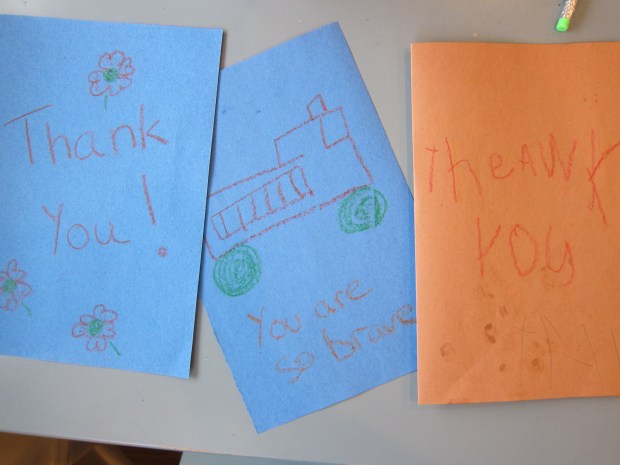
11.30-12: Social studies. We made a thank you card for First Responders in our area as part of his school’s initiative. I was proud to teach him about local heroes in this moment.

Home School 19 i

12-1: Lunch/free play.

1-1.30: Spanish. His teacher’s suggestions had us laughing and moving today, including a game of “Simon dice” (Simon Says), to learn Spanish verbs. He sang me his Spanish days-of-the-week song and hunted for three objects in the house that that were “azul.”

1.30-2: Music. By the time we got around to his Thursday special, Travis was tired and grumpy and didn’t like that class felt “different” online. Basically I let the teacher’s class stream in the background while he played.

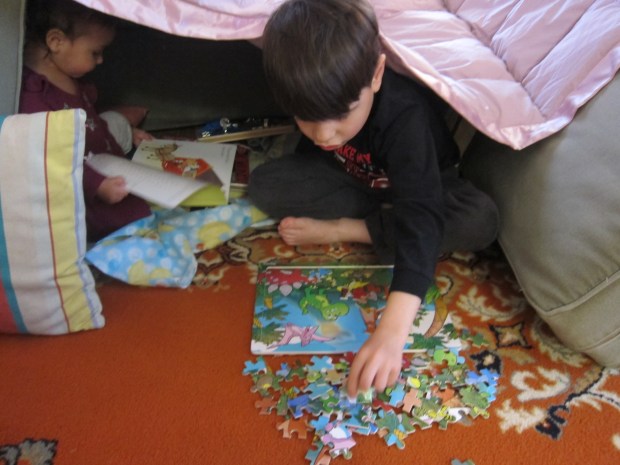
2-3: We finished on a high note with an indoor fort!

Home School 19 l

This was the perfect place for puzzles, quiet “reading”, and just being silly with baby sister. Hopefully the weather is nice enough for a walk, tomorrow, because we all need it.

Easy Easter Eggs

Easy Easter Egg (7)

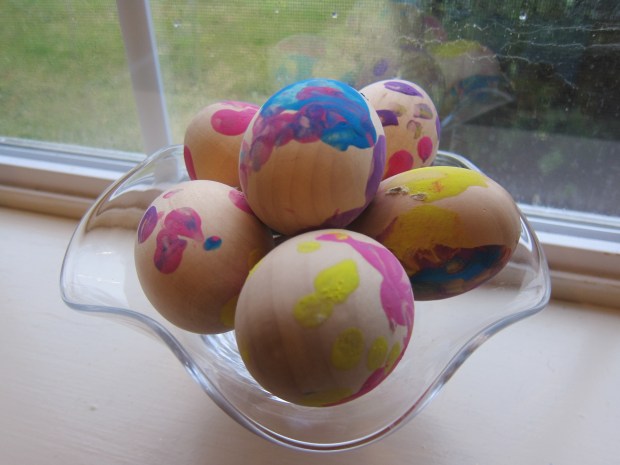
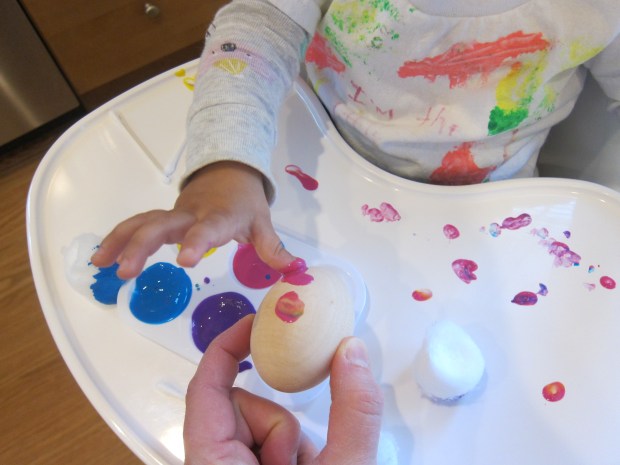
For Veronika’s final contribution to Easter decorations this year, I gave her wooden eggs to paint instead of egg-shaped paper. To set up, simply squirt pastel colors into a paint tray, then give your toddler q-tips and cotton balls to paint with rather than a regular paint brush!

Easy Easter Egg (1)

Of the two, Veronika definitely preferred the q-tips. She loved delicately dipping them into the paint and then dotting onto the egg. The little spots she produced seemed to fascinate her!

Easy Easter Egg (3)

I showed her how to dip a cotton ball in the paint, too, and press it against an egg for a larger smear, but she wasn’t as interested.

Easy Easter Egg (2)

She did, though, discover that she could dip a little fingertip into the paint and make a similar dot against the eggs. She so carefully repeated this several times, smearing the paint lightly.

Easy Easter Egg (5)

I didn’t help her out with the paint at all, aside from rotating the eggs. The resulting speckled and spotted eggs were decidedly her project, and she looked so proud.

Easy Easter Egg (4)

They looked so pretty gathered together in a glass bowl for a little Easter centerpiece!

Easy Easter Egg (6)

Light-Up Heart Flower

Light Up Flower (7)

After lots of experiments with circuits, not only does Travis have a good understanding of how they work, but mommy does, too! In all honesty, this was a project I put together for Travis to make home school pencils feel special, rather than one he learned from. Many of the steps were simply too advanced for a kindergartner’s dexterity. But consider it as a STEM project if you have kids aged 9 and up!

First, wrap a pencil in green tape for a flower stem. I did this against a light green pencil, giving it a nice two-tone look.

Light Up Flower (5)

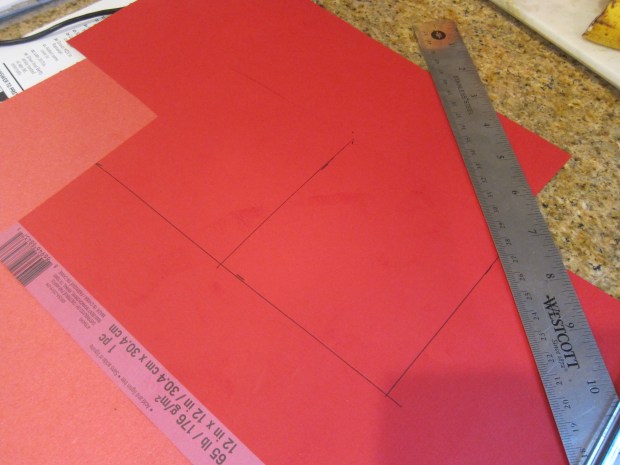
To make petals, cut two squares of red cardstock that are 4×4 inches, and one square that is 3×3 inches.

Light Up Flower (1)

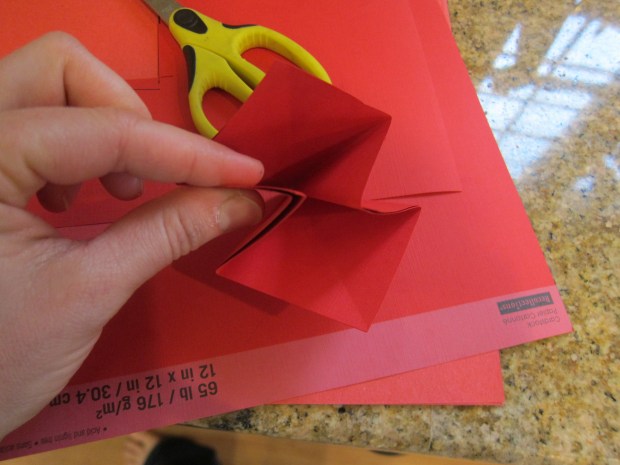
Fold the squares in half first vertically and then horizontally. Then fold diagonally in both directions. You can now tent up the piece of paper so it forms a smaller square.

Light Up Flower (2)

Draw a heart such that the bottom of it comes to the center fold.

Light Up Flower (4)

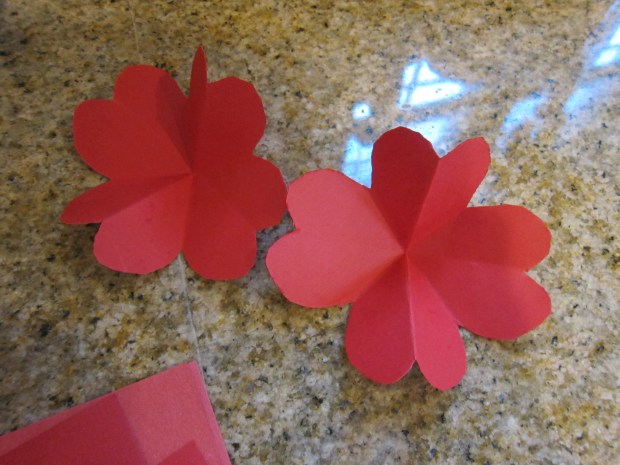
Cut out along the heart shape, and when you open the paper up, you’ll have 4 hearts! Repeat with the other pieces of cardstock.

Light Up Flower (3)

Punch a hole in the center of each of these “petals” using the sharp tip of a pencil or pen, and set aside. To put the flower together, glue an LED light to the pencil’s eraser end.

Light Up Flower (6)

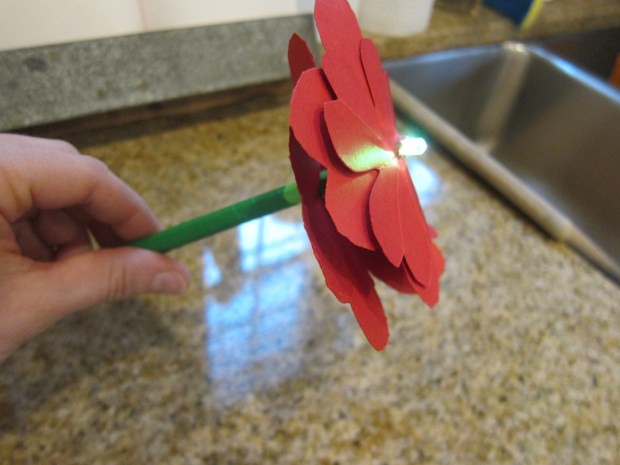
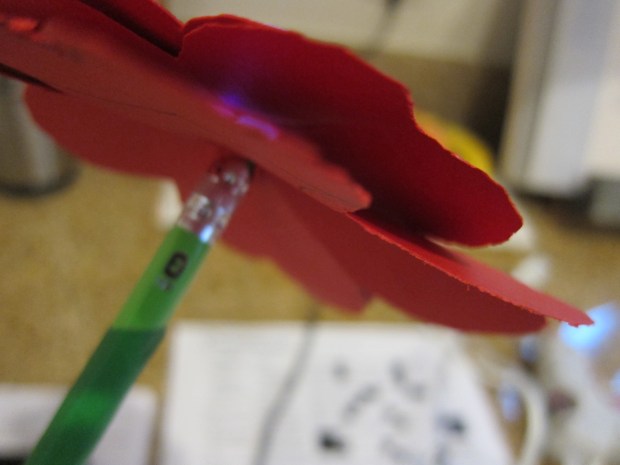
Slip one large petal over the light, followed by the smaller petal, and use hot glue to secure in place. Tape a 3V battery underneath the large petal. Make sure that the negative side of the battery lines up with the negative end of the LED light, and the positive with the positive. (Hint: the positive leg is the longer one). Secure one of these connections with tape, but leave the other loose.

Light Up Flower (8)

Now push the final cardstock petal up from the lead end of the pencil. When it presses the other leg of the LED light against the battery, the circuit is complete!

You can secure this bottom piece of cardstock in place with a rubber band, if desired. Hopefully this makes all of Travis’s writing projects more exciting in the home school weeks ahead!

Explore with Me Panda Crate

Panda Explore (21)

As with her past Panda crates, Veronika is a little old for the items that arrived this month from Kiwi Co., but they could also be tailored to fit her age. This month’s topic – making sense of the spatial world around us – included fun toys and innovative game ideas. I would recommend this crate for babies 8 months and up.

One: Fabric Tissues

These black and white tissues featured fun patterns, slightly different on each one. They didn’t make any crinkly noise, which I expected, but had a nice thickness that makes them more durable than regular Kleenex.

Panda Explore (8)

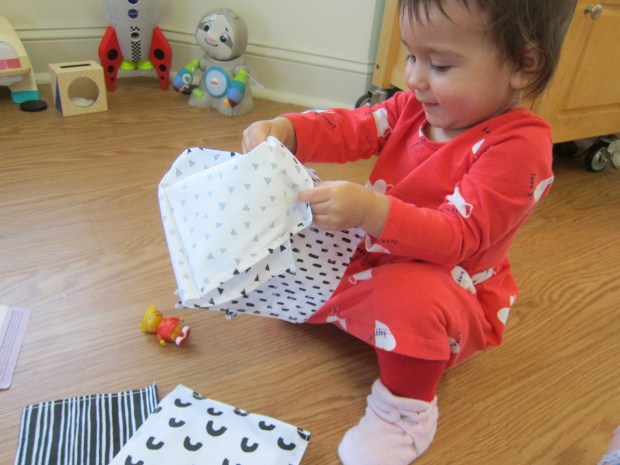
In addition to just being fun to play with, Panda intends them to help with the idea of object permanence. Although old hat for my seventeen-month-old, the concept never grows stale! We hid her favorite toy and she was so pleased when she uncovered it.

Panda Explore (7)

You can also stack the tissues, and encourage your child to lift one and reveal the one beneath.
Panda Explore (9)

In this way, they can also be used in conjunction with…

Two: Tissue Box

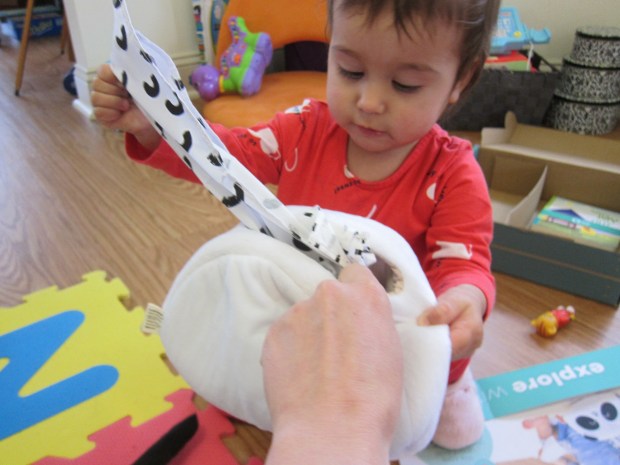
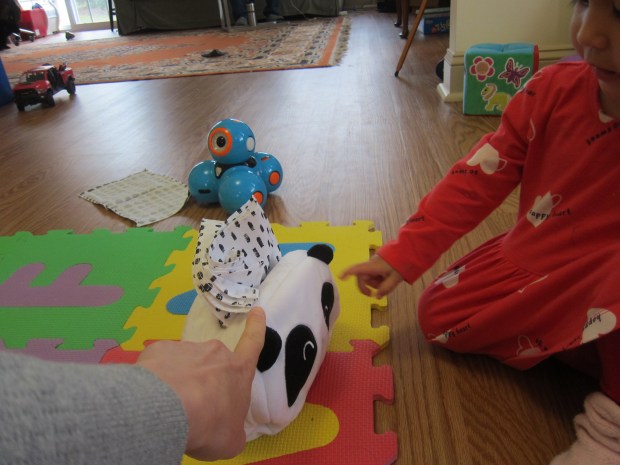
This soft “tissue box” comes in the shape of Poppy Panda, and has nice heft to it thanks to a bean bag-like filling in the bottom. You can use the box to hide any object, like a toy car, but it’s really meant for the fabric tissues.

Panda Explore (10)

Layer these in such a way that when you pull one, the next pops up.
Panda Explore (12)

Veronika recently played this game with real tissues, so I appreciated that now we can do it without the waste of paper! It’s also a great object for self-directed play since you can leave the box out with the tissues dangling tantalizingly.
Panda Explore (11)

Three: Bead Maze

Panda’s version of this classic toy had a few fun twists. We could talk about the colors and shapes of the beads and you canuse directional words related to the little Poppy Panda at the base.

Panda Explore (3)

“The beads are above panda,” I said to her, or, “Panda is below the beads.” Since Veronika is older, I challenged her to follow directions too, like moving the yellow bead from one side to the other.

Four: Coin Box Puzzle

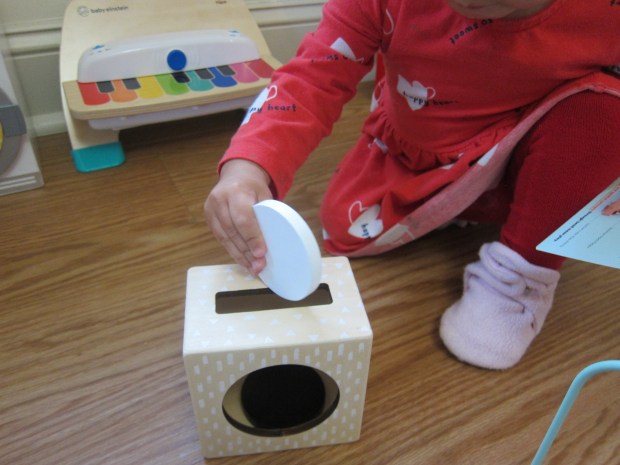
This item was the biggest hit in the crate. Veronika loved fitting the “coin” circles into the box, both through the large opening on top and the smaller slit on the side, which took a few tries.
Panda Explore (2)

Then I challenged her to get the coins out. Dump! The toy is also good for counting out up to four, as the coins go in the box.

Panda Explore (6)

Five: Board Book

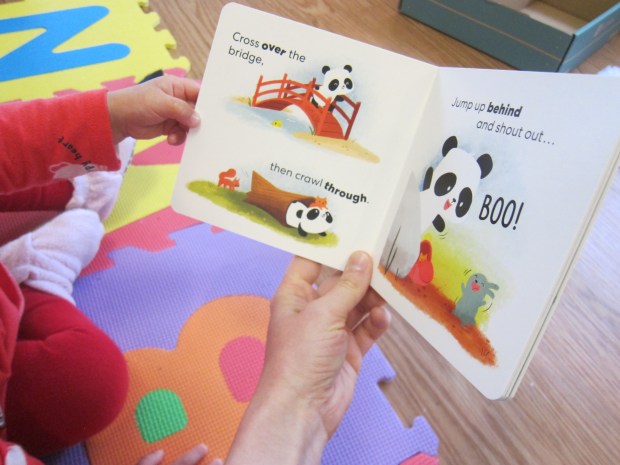
The board book this month featured cute illustrations and was all about directional words (up, down, around, over). It would have been nice if the book included cut-outs and grooves to trace or flaps to lift; as it was, there was nothing really novel about the book for Veronika.
Panda Explore (13)

Wonder Magazine contained stage-by-stage developmental advice, and reminded us of past games we’ve played having to do with body awareness, spatial language, textures and spatial objects. There was a useful article about making safe spaces for little crawlers and walkers, including the idea to rotate toys and game ideas like a Tupperware drawer.

The online singalong for this crate was to Itsy Bitsy Spider, featuring lots of spatial words of course!

Beyond the Crate suggestions included those we’ve already done, like What’s In the Bag?

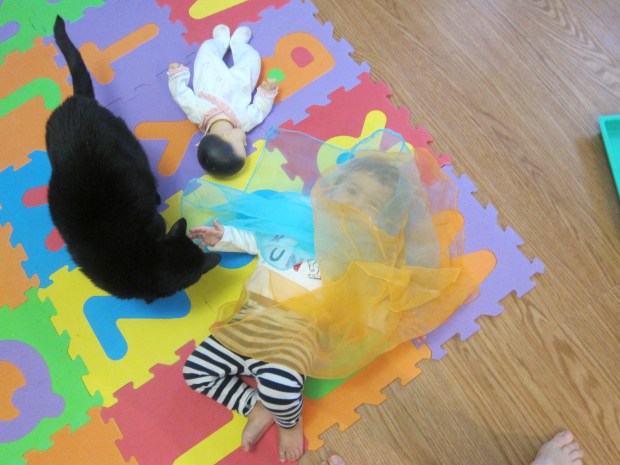
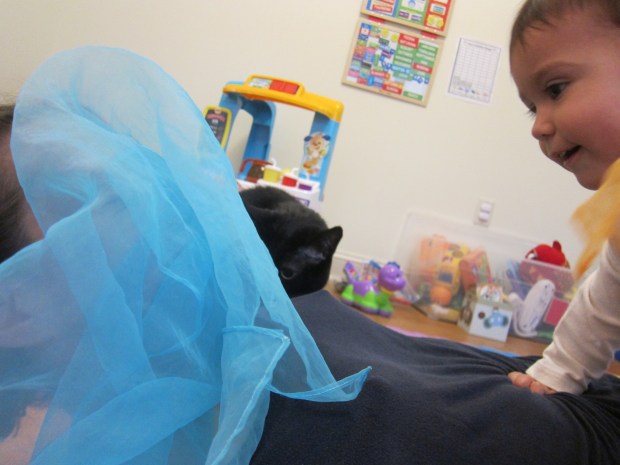
Of course we had to play peek-a-boo, but with a twist: a Peek-a-Boo Parachute! I lay Veronika down and let a scarf fall onto her head gently. Where’s Veronika?
Panda Explore (14)

Peek-a-boo!

Panda Explore (16)

She giggle giggle giggled for this version, and then needed to cover me…
Panda Explore (18)

…and her Baby!

Panda Explore (19)

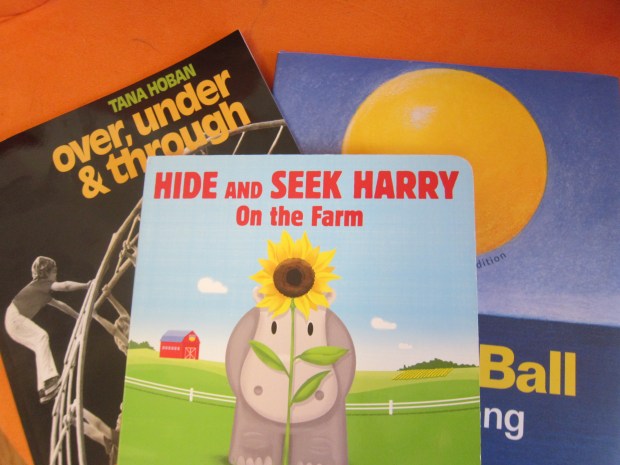
For books, we read:

  • Over, Under & Through, by Tana Hoban
  • Yellow Ball, by Molly Bang
  • Hide and Seek Harry: On the Farm, by Kenny Harrison
Panda Explore (20)

Kindergarten Home School Week 4: Wednesday

Home School 18 c

Hurrah for a successful day. Between innovative assignments and an interest in the topics, Travis did great today. There was also ample room for toddler activities, whether getting little sister busy with socks or pausing for a toddler gym video class.

9-9.30: ELA. Today Travis made words with his feet! Write out a few words (consonant-vowel-consonant) with a separate letter per sheet of paper, and arrange them on the floor. I wrote out: pig, wig, cat, mat, hat, van, and can. Now Travis had to spell the words by stomping on them! This was very silly of course, and the kids both loved crumpling up the paper when we were done.

Home School 18 a

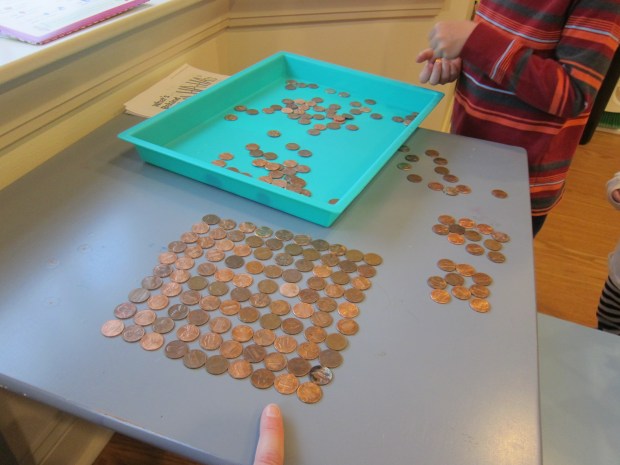
9.30-10: Math. Today was about estimating and counting to 100. First Travis pulled a handful from a pile of pennies. I asked Travis to estimate how many he had, which he struggled with for a moment before coming up with 10. It was really 11! He pulled a second handful and I asked if it felt like more or less. He said less and estimated 5, for a correct answer of 8.

Home School 18 b

We then grouped the pennies into 10s, which let us skip count to 100. For a little exercise, we counted by 1s to 100, alongside a movement video.

10-10.30: Travis did Lexia for 20 minutes while baby sister had a “gym” class.

10.30-11: Free play/snack. Too rainy for outdoor recess!

11-12: Science. We watched a video of a sunflower book, after which he cut out the steps in the life cycle of a a sunflower. First he ordered them, then glued them down in a booklet and colored them in, thinking about the realistic colors of dirt, sky, flower petals etc. We even sent a video of it to his teacher!

Home School 18 d

Travis also colored in our state bird (the chickadee) for Draw a Bird Day – yes that’s a thing!

National Draw Bird

12-1: Lunch/free play.

1-1.30: Library. There was a rhyming activity online for what would have been his special today, and we watched our town librarian read a story video. Travis rounded out the half hour with a few games from PBS Kids online.

2-3: We tacked on our own extra-curricular: cooking! This counted as music, too, since we didn’t just make blueberry bars, we made blues-berry bars.

It was too rainy to get outside, so we got out our wiggles with a Go Noodle dance. We capped off the day with puzzles (48 pieces, a first for Travis!).