Yummy Bones

yummy bones (6)

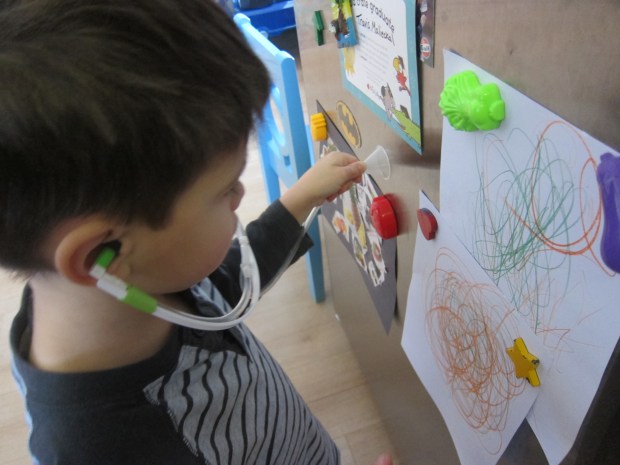
After a fantastic time with his first Kiwi Crate, Travis enjoyed playing doctor again to make… edible bones!

The recipe from his Kiwi Explore magazine was very loose, with no precise measurements. So let your surgeon work with the ingredients to his or her taste.

First, you’ll need a tube of breadstick dough. This can be hard to find pre-made and vegan, so I purchased a roll of pizza dough. If you have breadstick dough, check the heating and baking instructions on the package.

yummt bones (1)

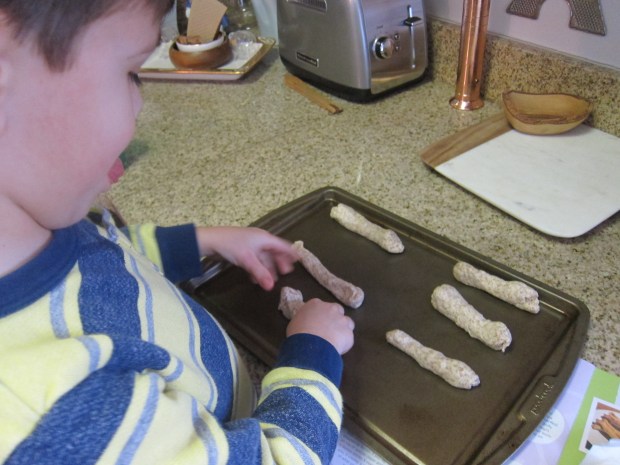
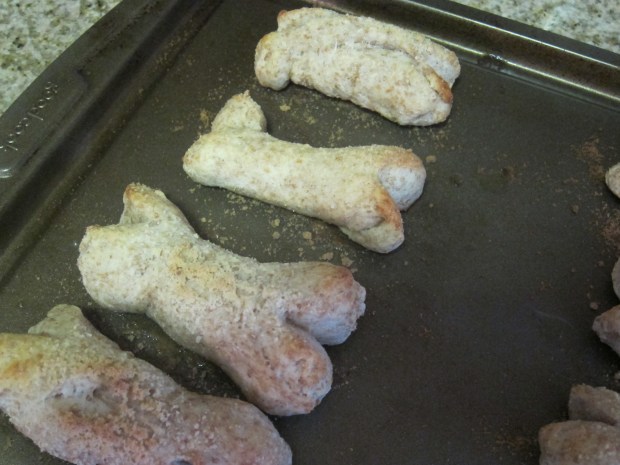
For our dough, we first rolled into “bones” (the same way that you roll clay or playdough into snakes).  Travis loved deciding what was a leg bone, an arm bone etc. Squeeze the middle, so the ends are slightly thicker.

yummy bones (2)

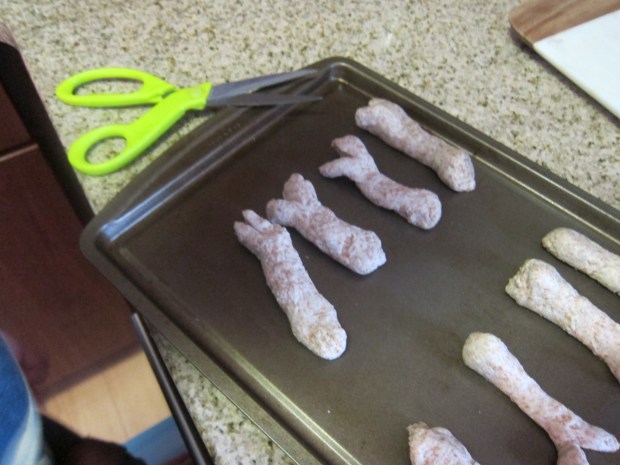
Use kitchen shears to snip the ends of each snake, dividing them outward into a bone shape. Travis was so proud to do this step, with a little grown-up help.

yummy bones (3)

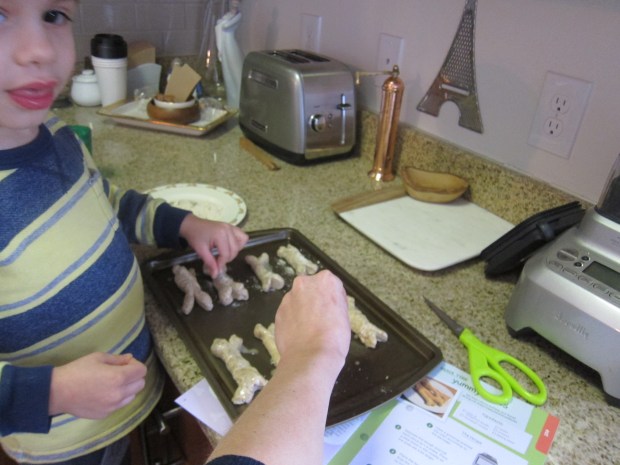
Now brush with a little melted butter (we used Earth Balance) and sprinkle with a little vegan Parmesan (we used Go Veggie).

yummy bones (4)

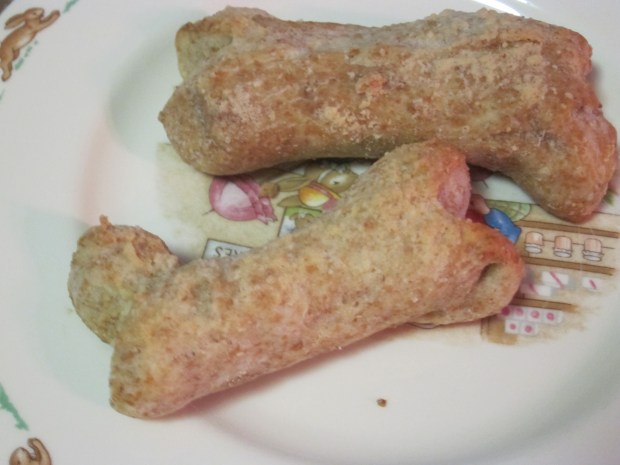
After 12 minutes at 425 degrees F, these bones were ready to eat!

yummy bones (5)

They’re great plain, or we discovered we also liked them dipped in marinara sauce.


My Body & Me Kiwi Crate

kiwi body (28)

Travis is officially a Koala Crate graduate! I loved that there was even a certificate in the first Kiwi Crate he received, moving him up to this kit intended for ages 5 to 8. We can’t wait to start blogging his journey.

kiwi body (1)

At four and a half, Travis is on the young side for Kiwi, but I knew he was ready – he’s been bored of his final few Koalas, either unimpressed or not challenged by the crate’s topics. His glee for this first Kiwi box spoke for itself!

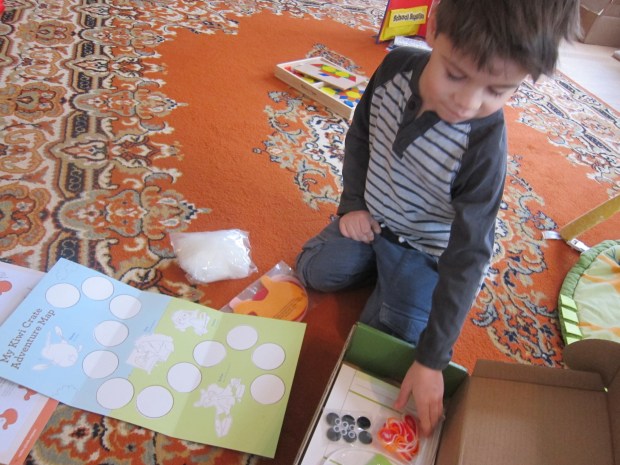
We opened it up to find a kit all about the body and anatomy – big topics for my big boy – and the projects did not disappoint.
kiwi body (2)

He couldn’t wait to get started on the first activity: Make Plush Organs. “Is this what my brain looks like?” he asked, pulling out the pink felt shapes. I explained it was the right shape, yes, and he wanted to know what the lines represented which got us talking about the folds of the brain, the brain’s functions, and more. Exciting stuff! There was also a felt template for a heart and a stomach.

kiwi body (3)

To make the organs, we’d need to lace them together. The lacing holes are much smaller and closer together than in a Koala kit, but to my great delight, my boy not only was able to do it with hardly any assistance, but stuck with it through all three organs.

As we laced, we pretended he was a surgeon. “Is this really what surgeons do?” he asked, and I pointed out the very real similarities: patching up people’s organs, and stitching them up at the end.

When you have only about 4 or 5 holes left in each organ, take time to stuff in the provided roving. I asked Travis to divide our pile of roving into three roughly equal piles at the outset, so he’d know he had a enough. A good quick math lesson.

kiwi body (4)

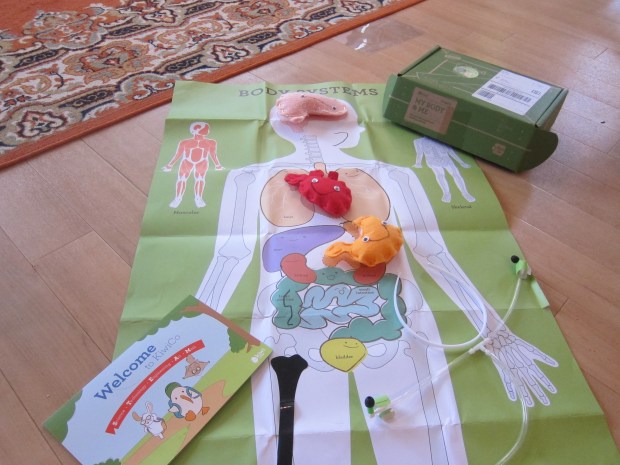
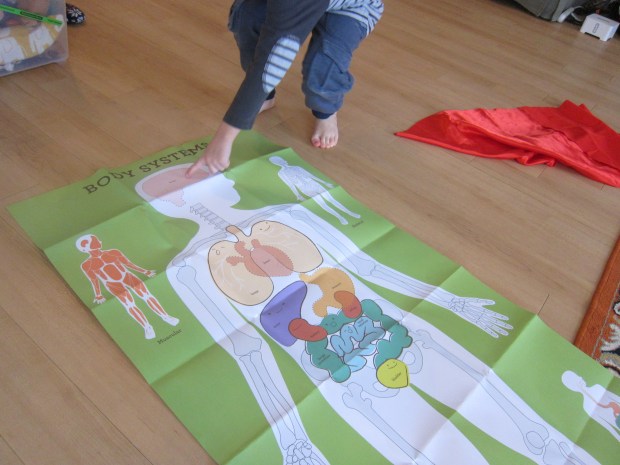
Now we unfolded the huge anatomy poster that came with the kit – whoa!

kiwi body (13)

There was an outlined space for each organ we’d made. Velcro dots adhered them to the poster, for easy removal at any time.
kiwi body (5)

We also added smiles and stick-on googly eyes.

kiwi body (6)

I let Travis decide where the smile and eyes should go on each, ceding the project to him more completely than I ever did with Koala.

kiwi body (12)

Now on to the next project: Create X-Rays.

The kit contained a clear sheet that could go over any bone on the anatomy poster, oto which your child sticks reusable bone stickers.

kiwi body (7)

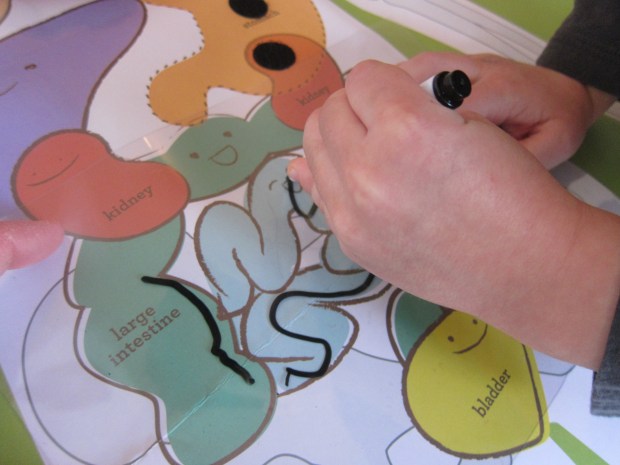
None of these line up with the bones exactly, but any extra space can be filled in with a provided erasable marker. This of course leaves your child free to make “breaks” in the bones.

kiwi body (8)

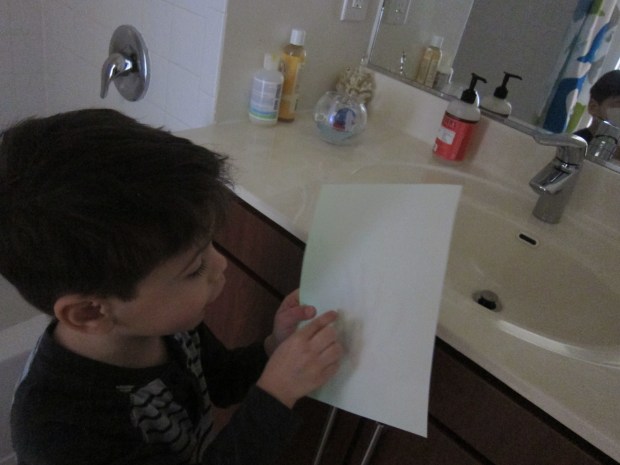
To make the x-ray come through, place the sticker-covered sheet over specially-provided glow paper. Make sure the clear sheet goes on the rough side of the paper. Now place it in a sunny spot or directly under a lamp with the bones on top. Within 5 minutes, you’ll have a faint x-ray that shows up in a dark room.
kiwi body (10)

Travis was thrilled, setting up multiple x-rays and proudly giving his doctor’s diagnosis to each.

An indication that this kit really is for bigger kids: there were many tiny metatarsal stickers for doing an x-ray of the hand, but Travis was undaunted, and needed just a bit of mommy help.

kiwi body (9)

We had fun designing breaks, as well as using the clear sheet over other organs on our anatomy poster for tracing. And of course your child can draw any picture they like on the sheet, which erases in a pinch.
kiwi body (11)

Finally, we experimented with other items on the sheet. Note: this is just like making sun prints, but much faster; I’m quite curious to know what is in the special glow paper!  We used buttons, a key, and toys for neat shadows.

kiwi body (23)

Finally it was time to Build a Stethoscope:

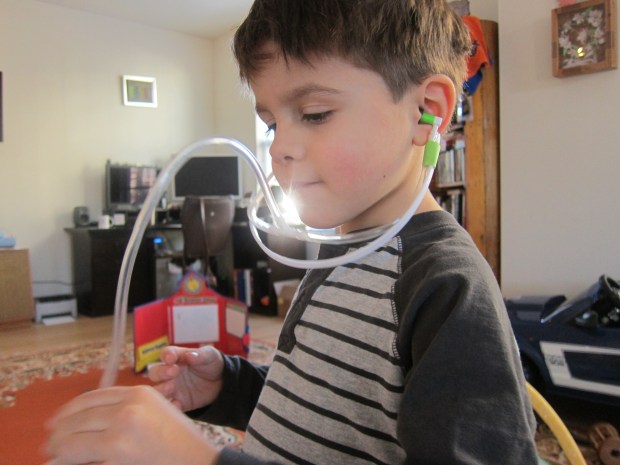
This project involved a lot of fine fingerwork, using three plastic tubes (two short, one long), T and L connectors (I had him look at these and tell me why they were named thus!), a funnel, and soft earbuds.

kiwi body (15)

I helped Travis push the tubes onto the connectors in the proper order, then we slipped on the ear buds.

kiwi body (14)

Now it was time to check our heart beats!

kiwi body (16)

Travis looked so happy when he could hear his own.
kiwi body (17)

Then we tried it out in funny places around the apartment like the air vent…
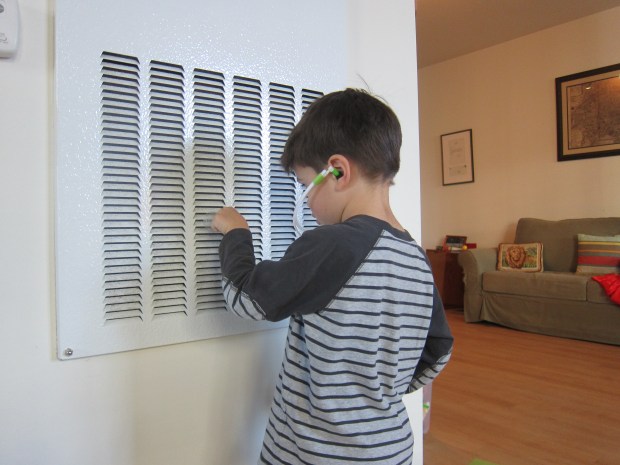
kiwi body (18)

…and the fridge.

kiwi body (19)

Travis was frustrated when he couldn’t really hear my heartbeat, but he did love giving mock check ups. Kids will love that they can dry-ease the exam card after each “patient.” You can also get silly and use the stethoscope to listen to a tummy after a snack, and catch any stomach grumbles.

Koala came with an Imagine magazine, and now with Kiwi we have Explore magazine. It was fun to have a whole new format to check out together, with new characters in the stories.

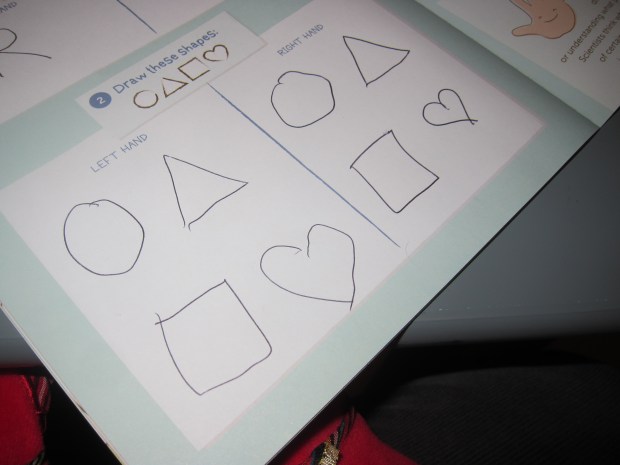
We read the magazine together, and I helped Travis with its explanation of handedness. I challenged Travis to write and draw with both hands.
kiwi body (25)

He was a bit frustrated, so I showed him my own left versus right handwriting in the booklet, and he practiced on a tablet.

kiwi body (26)

Turns out he has a dominant eye, too, which the booklet explains is really a thing!

Overall, we loved this kit. We’ll be checking out the two suggested reading books: My Amazing Body by Ruth Martin and Parts by Ted Arnold. Can’t wait for the next crate to arrive!
 

Baking Powder vs. Baking Soda

baking powder (9)

Today Travis and I made potions!

The impetus for this little experiment came from Raddish Kid’s lesson plan attached to our Hot Cocoa Cupcakes. Kids can delve further into the world of leaveners and what makes baked goods rise. I knew some of the science was too advanced for Travis, but I culled out bits of the lesson that were appropriate to a preschooler.

baking powder (1)

First, I set out a dish of baking soda and baking powder, and invited Travis to explore them. We ran through the five senses: touch, taste, smell, sight, and sound. Could we hear the powders? We giggled at that, then moved on to the others.

baking powder (2)

He noticed that the baking soda was smoother and finer than the baking powder, although they felt similar. He declined the offer to taste, but in this case, it’s perfectly safe to do so!

A quick science lesson followed: baking soda is basically ground up rock, and it’s a base, which means it needs an acid to react.

Baking powder contains a base and two acids, and it will react in a recipe two times. Travis liked this idea, and that it means fluffier pancakes or cupcakes.

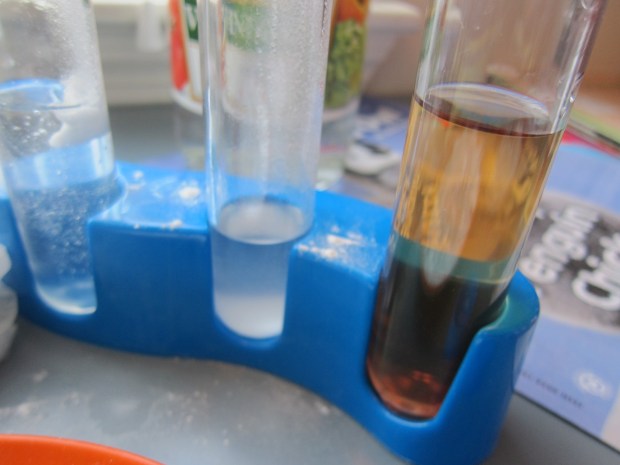
To start out experiment, I put out two test tubes of water. We added baking soda to one and baking powder to the other. Aha, only the baking powder reacted, so water was not an acid!

baking powder (3)

Now we tested each in four other liquids: vinegar, liquid soap, rubbing alcohol, and juice. The baking soda only reacted in the vinegar and juice – we found our two acids!

baking powder (5)

Baking powder, on the other hand, reacted in everything. That said, none of baking powder’s reactions were quite as spectacular as the classic baking soda/vinegar pairing.

baking powder (7)

Travis’s favorite? Baking soda in the vinegar of course; we had to do that a few times. The juice was quite fun too, bubbling up wildly to the top of the test tube.

baking powder (8)

In sum,this is a neat way for your kids to understand why baked goods are rising in the oven; you can really see that bubbling and rising action at work.

baking powder (6)

Another oldie but goodie? Show your kids that you can blow up a balloon with yeast! This is something Travis and I did when exploring the letter Y, back when he was only 2 years old, but it never grows old!

Changing World

changing world (1)

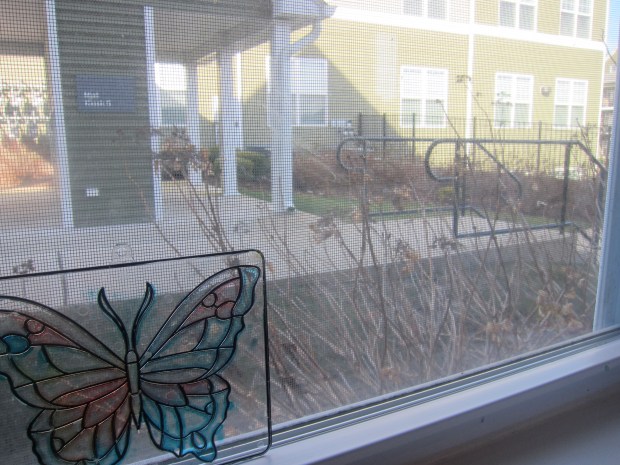
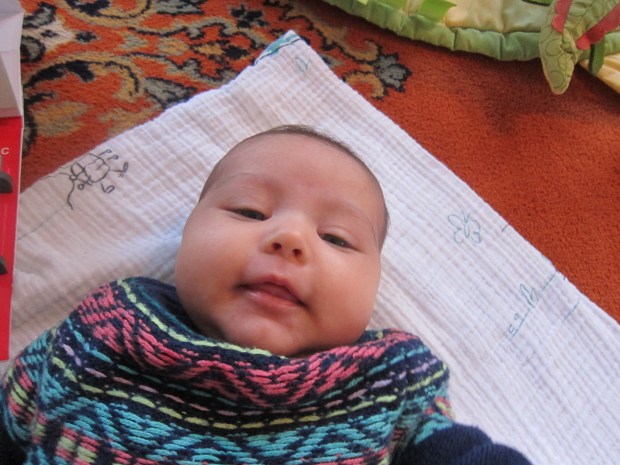
Your baby’s world is changing constantly at two months old – there are so many things to discover each day! – and at the same time, the world around us is constantly changing, too, even in little ways. One great way to let your little one observe the world going by is to sit near a window together.

I propped Veronika on my knee and we started the game at home. I narrated to her what I could see that was stationary: the sky, the trees. But even more interesting was when someone went by: neighbors walking dogs, people getting mail, a delivery truck driving along. These seemingly mundane moments will be big events in the movie outside the window! Even the wind swaying the bushes.

changing world (2)

To extend the game, we headed to a local book store and took a seat by the cafe window. Once again, I could point out the world to Veronika: people strolling sidewalks, cars driving past, parked cars, the sunshine on the buildings.

changing world (3)

Don’t be afraid to narrate out loud! The more you say, the more language your baby will absorb.

changing world (4)

Calm Big Sibling Jealousy

curb jealousy (1)

I’m two and a half months into life with two, so it was time to take stock: how was the big sibling faring when it came to jealousy?

Taking my cue from a fantastic post at Hands on As we Grow, I assessed myself on a list of five tips to curb jealousy. Here’s my run down of what’s worked well for us:

First: Use of a feeding time activity basket. This was a huge hit when Veronika was first home from the hospital, instantly making Travis feel special. But quite honestly, Travis lost interest quickly. He’s old enough to play his own games (and she is a “snacker”, nursing for very short periods, which helps!). But if your child needs direction and you have a baby who nurses in marathon sessions, I highly recommend this fix.

Second: Wear a baby carrier. I honestly didn’t babywear much with Travis, but I’ve found it to be a life-saver with baby #2. When we grocery shop, Travis can help scan all the items and feel like we’re having one-on-one time, as Veronika snoozes away oblivious in the carrier. I even chaperoned for Travis’s school field trip – he felt so special to have his mom there, and people hardly noticed the little baby sleeping away in the carrier!

Third: Use a baby monitor. This is useful in a couple of ways. First, Travis just loves the technology, and can be the big helper moving the camera with the arrow buttons. It also means I don’t have to tell him to be quiet as often, if she is napping in another room instead of the middle of the living room!

curb jealousy (2)

Fourth: Involve big siblings in taking care of the baby. This can be everything from snuggling up for a story, or getting them a toy, or helping at diaper changes. Travis loves handing over a burp cloth whenever I need one, and he’s an expert at rearranging her blanket in the back seat of the car if it rides up.

curb jealousy (3)

Finally, for siblings who still nap, Hands On recommends scheduling naps at different times. I couldn’t agree more, as one-on-one time is key! But Travis has dropped his nap, so my self-appointed task was to make sure I made time for him during Veronika’s nap. Naptime for her is when I get in there with Travis: playing, doing a craft, or exploring something together – something you have to be a big kid to do, no babies allowed!

In sum, all five of these are useful tips, and thanks to Hands On for the original post!


Glow in the Dark Flower

glow flower (7)

Get ready: There is some serious wow factor to this project. You will need a few special supplies for it, including a black light, which you can purchase from sellers like Amazon, as well as a highlighter pen you don’t mind sacrificing (hint: you’re going to cut it open). But armed with those items, kids will adore this project!

First, I showed Travis the black light, and how it works. Keep exposure to a minimum, because as a reminder, black lights use UV rays.

glow flower (1)

Next, we filled a clear vase with water, and set aside a few white flowers from a bouquet we’d purchased.

I showed Travis how the highlighter pen would look in the black light. He couldn’t believe the way the yellow streaks glowed!

glow flower (6)

We returned to regular light, where I very carefully cut open the highlighter crosswise using a sharp knife; any box cutter should work; just go slowly and carefully.

Inside will be a strip of fibers that contain the highlighter ink. This was so neat to see!

glow flower (3)

We added the fibers to our vase of water, where the highlighter color seeped down.

glow flower (4)

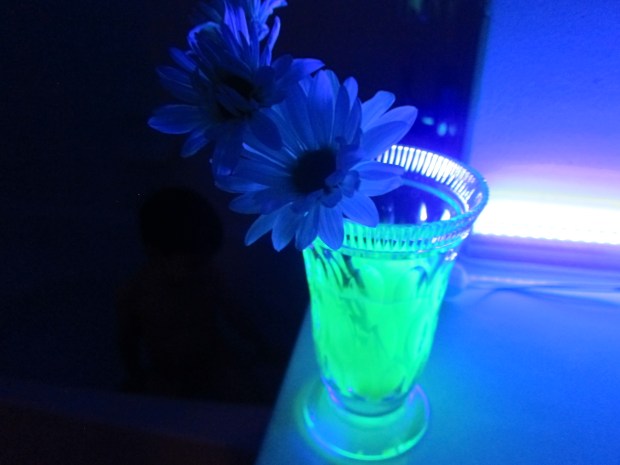
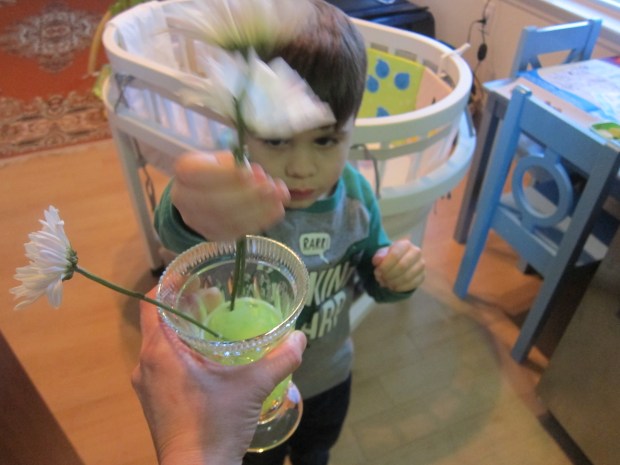
Travis very seriously added our flowers. Now we had to wait, but were rewarded with glowing flowers a few hours later!

glow flower (5)

Glowing Fishbowl

Glowing Fishbowl (5).JPG

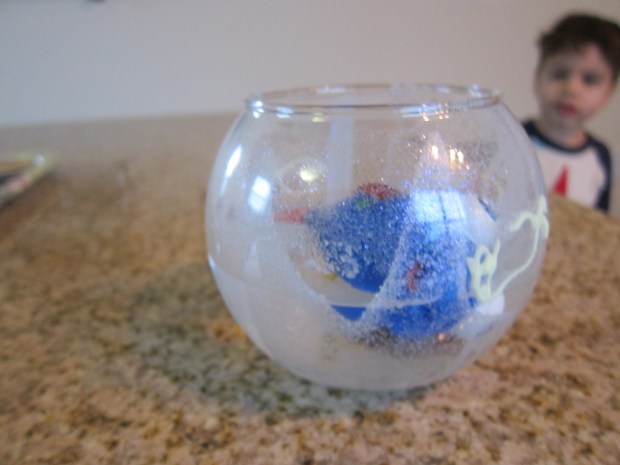
Although I don’t advocate keeping real fish as pets (it’s a sad existence to travel around and around a bowl for years on end), fake fish can make adorable companions! On a recent trip to a local fish hatchery, Travis picked up a plastic fish and turtle. We thought it would be cute to make them a little habitat to stay in. What’s better than a fishbowl home? A glowing fishbowl home!

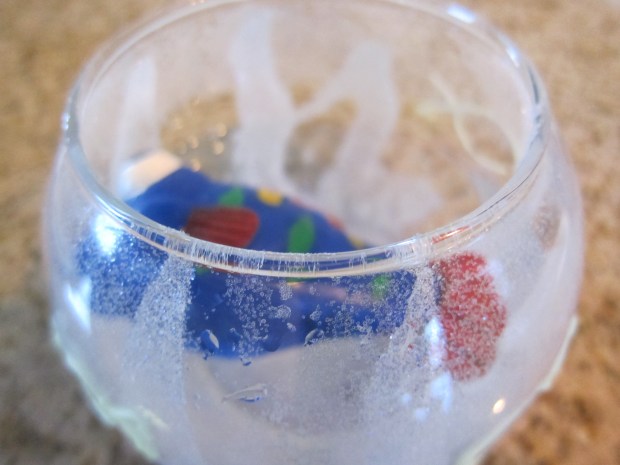
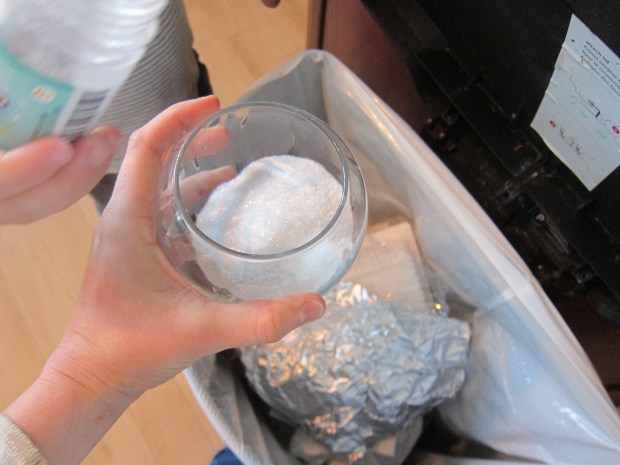
First we squirted glue into the insides of the a clear glass bowl with a wide mouth, intending to make lines that looked like seaweed. Our glue was very runny, so didn’t work as well as we hoped, but we still then managed to dump in a whole can of glow-in-the-dark glitter and swirl the bowl until it coated the “seaweed.”

glowing fishbowl (2)

Definitely do this step over a trash can!

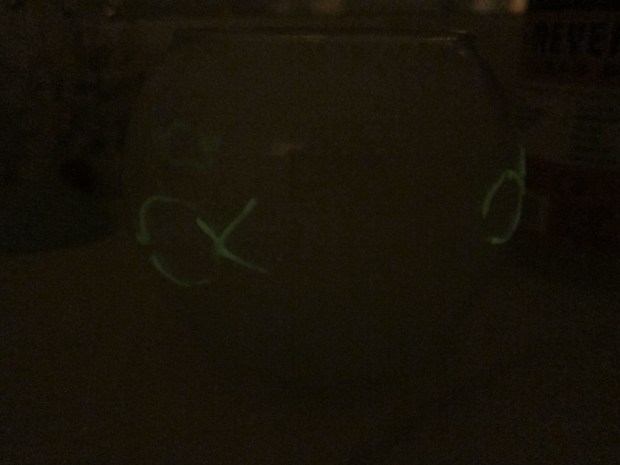
I then piped on a few fish with additional glow-in-the-dark paint and we set it aside to dry.

The glitter, disappointingly, didn’t show up as glowy as we hoped, but the fish were cute glowing in the dark.

glowing fishbowl (3)

Once we filled the bowl with water, it was the perfect home for our fish and turtle.

glowing fishbowl (4)

Name Drop

name drop (4)

Infants are exposed to thousands of words every day, but one of the very first words your infant will learn to distinguish is his or her name. Help the process along with this cute activity!

Today – and most days! – make it a point of saying your child’s name as you do each thing throughout the day, instead of “you.” So: “Veronika is getting a diaper change,” “Veronika is playing on her play mat.” You might even get big smiles for your efforts!

name drop (3)

To be even more playful, switch up the lyrics of songs to include your child’s name. This is something I’ve always done with lullabies, for both my chlidren, but today we had fun using a musical chime toy to sing “Oh Veronika” instead of “Oh Suzanna,” as well as “Rock-a-Bye Veronika,” Veronika Had a Little Lamb” and other favorites.

name drop (2)
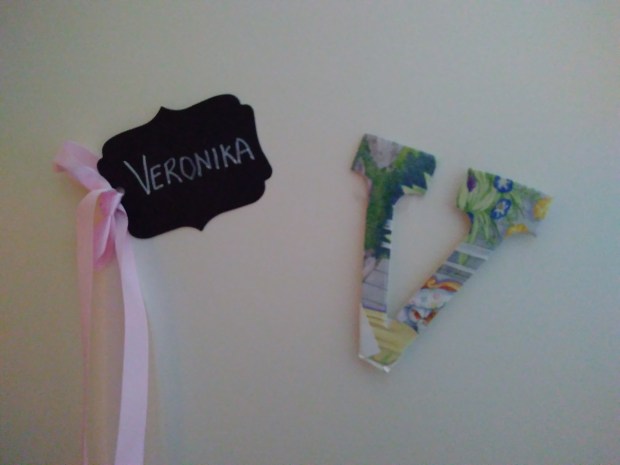
And it helps to have her name written in various places around the house, too. It’s a long way off, but eventually your little one will sightread their name as a first step toward reading.

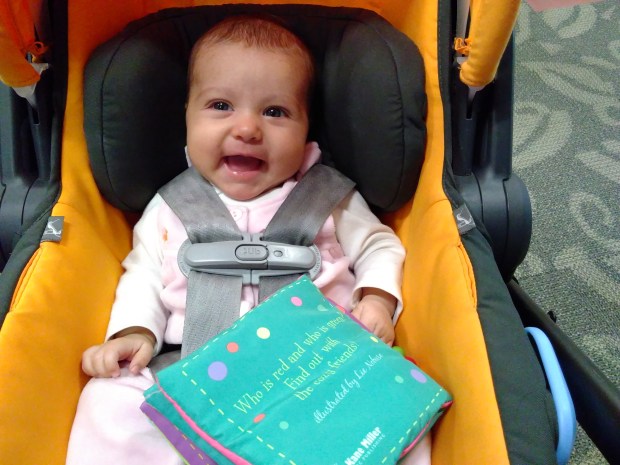
How else are we talking with Veronika these days? Happy conversations back and forth! She’s really starting to “chat” up a storm, and I don’t want to ignore these attempts at language. As mentioned in my review of Cricket Crate’s Faces kit, when a baby “oohs,” “ah gehs” and “mmms” at you, she’s trying out words.

name drop (5)

We’ve been having a lot of happy back and forths; it turns out Veronika is a very opinionated little lady!

Eat the Rainbow

raddish rainbow (8)

This lesson was an extension of the Cozy Minestrone soup Travis and I made at the beginning of the month from Raddish Kids. I didn’t do the lesson directly in conjunction with the recipe, as I wanted Travis to focus on the food and fun of cooking. But it made for a couple of cute projects over the course of a week, after the fact! If you prefer, you can do this lesson first, and cook Cozy Minestrone after.

First, Travis and I sat down to name all the colors of the rainbow. For each, I produced a square of matching construction paper. Next I told him we’d brainstorm fruits and veggies for each color. We set a timer for 30 seconds for each; Travis was in charge of the timer and loved this part!

raddish rainbow (1)

At the end, we had a few items for most colors…

raddish rainbow (2)

…but tons on the green. Clearly green “won” and we talked about why this might be.

raddish rainbow (3)

Now we looked at an infographic describing what gives each fruit or veggie its color, and what that corresponded to in terms of health.

raddish rainbow (7)

Kids can also watch a fun description of phytonutrients. Finally, we had a printout from Raddish, that we can refer back to later.

Next, we went through a grocery flier and looked for fruits and veggies.

raddish rainbow (4)

We pasted these into a collage that went up on a the fridge – a great visual reminder of foods we aim to eat each week!

raddish rainbow (5)

Finally, I asked Travis to think of what colors he’d eaten that day. Orange for papayas, green for cucumbers, etc. We kept a running tally, and kept it up over the course of a week. At the end, we could see that the blues and purples were most lacking in his diet, but he scored quite well elsewhere!

raddish rainbow (6)

Overall, this lesson was a great intro to nutrients for a preschooler. The lesson plan includes tons more detail for big kids, so do be sure to check out Raddish for yourself!

Glowing Planets

Glowing Planets (6).JPG

One of the bonuses about winter’s early sunsets is that even little kids are awake to see the stars and planets. Travis and I talked recently about what it is that makes planets glow; they don’t make their own light the same way stars do, of course, but they do reflect the light of the Sun and thus give off a glow – sometimes the brightest one in the sky!

We came in to make our own glowing planets, thanks to a few simple materials.

glowing planets (1)

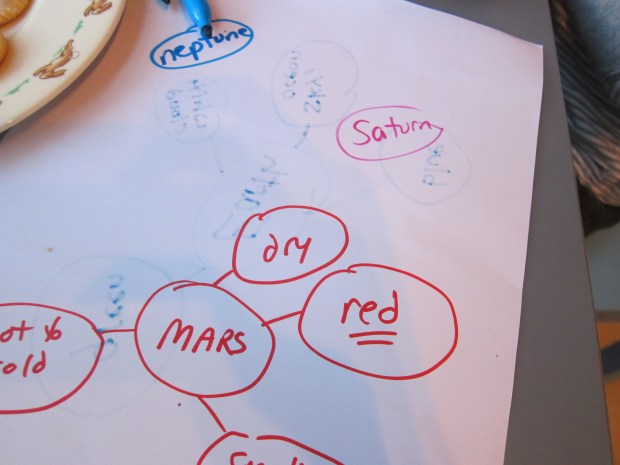
First, I asked which planets Travis wanted to make, and for each, we brainstormed a little diagram of what he knew about it. Earth, for example, would appear blue and green from space, and has oceans and continents.

glowing planets (2)

Saturn was made of gases, has rings, and is colder than Earth.

glowing planets (4)

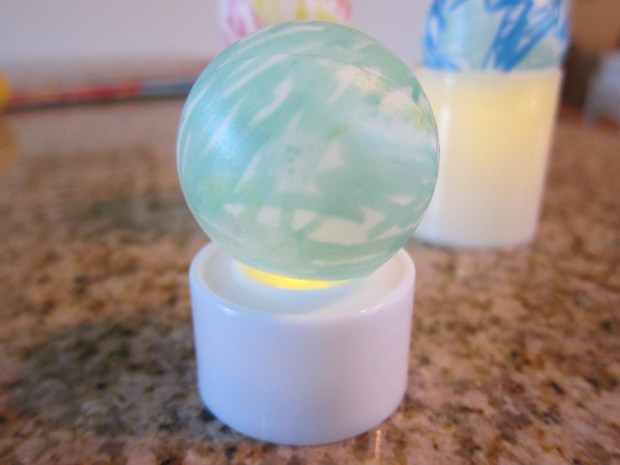
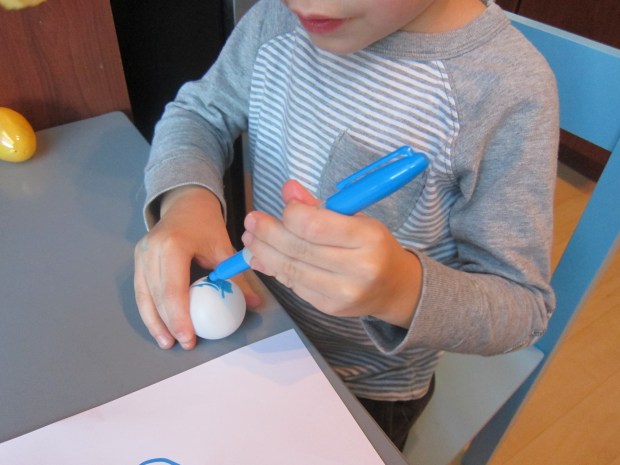
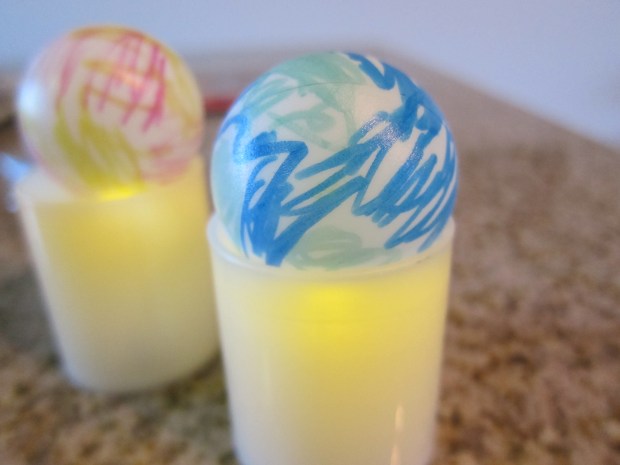
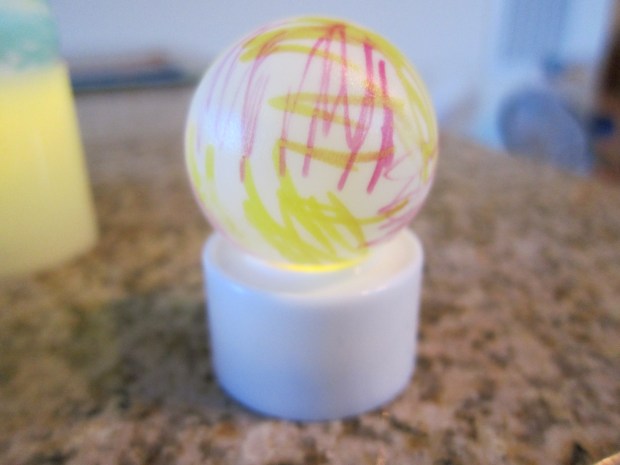
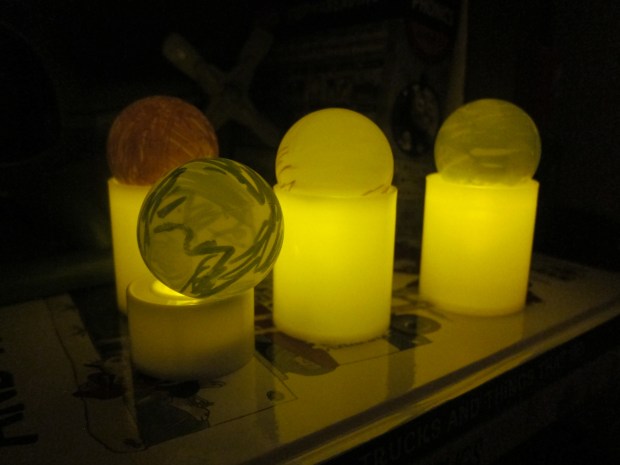
We finished out diagrams for Earth, Mars, Saturn, and Neptune (the four that Travis picked) and colored four golf balls accordingly. Travis loved making Mars bright red! Use permanent marker for the best results.

glowing planets (3)

Now make a slit in the bottom of each ball with an X-acto knife (grown-up step), and place over the flame of a tea light.

glowing planets (5)

We found that small tea lights worked better than tall ones, even though we had more of the latter.

glowing planets (8)

Now your planets glow just like the ones in the sky! These were especially fun in the bedroom at night.

glowing planets (9)