Floating Fish

Floating Fish (4)

This little balloon project is a fun way to teach kids about buoyancy, and more specifically about how fish can swim in the water without either floating to the top or sinking to the bottom. As a bonus, it starts out as science and ends as a bath toy!

To set up, first insert a marble into each of three uninflated balloons. You’ll have to open the neck of the balloon wide to do this, which can be a bit tricky.

Floating Fish (1)

Using a funnel, fill one balloon with 1/3 cup vegetable oil. Fill the second ballon with 1/3 cup water. Blow up the final balloon with air until it’s roughly the same size as the balloons with liquid.

Floating Fish (2)

You can add fishy faces or fins with permanent marker, if desired! Next, fill a craft bin with water, and set your fish loose. Travis’s hypothesis was that the oil-filled “fish” would be the one to neither sink nor float, and he was so proud to be correct!

Floating Fish (3)

As you can probably guess, the water + marble sinks to the bottom. The oil + marble manages to be midway in the water, just like a fish swimming. The air + marble floats on top…not where a fish wants to be!

Floating Fish (5)

Once the science was done, we brought the fish upstairs at bath time, where they made for extra fun!

Little Passports: Australia

LP Australia (29)

Strangely, I feel as though Travis’s packages from Little Passports are arriving closer together than one month apart… but during home school, we’re not complaining! Travis couldn’t wait to read “Sam and Sofia’s” letter and do all the usual activities: a sticker for his passport, a pin on his map, a coin for his chart, and a tag on his suitcase.

LP Australia (2)

The booklet had a fun coloring activity about a coral reef, color-coded in such a way that my kindergartner could easily follow along.

LP Australia (3)

The word find, on the other hand, was tough even for this mama! Online featured great extras; Travis particularly enjoyed the photos and clips of Australian music. Australian phrases like “rug up” and “ankle biter” got quite a laugh.

Souvenir:

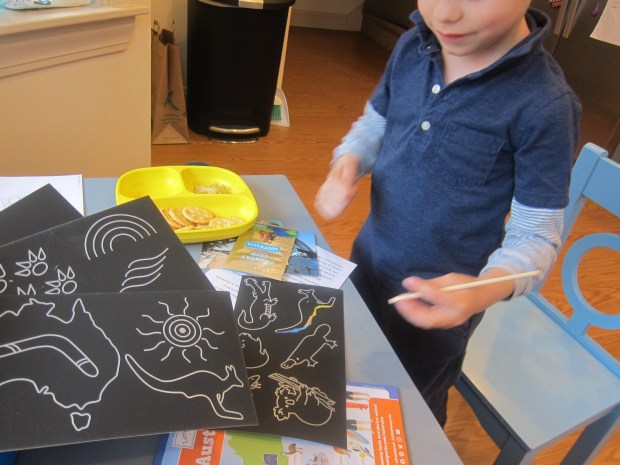
No sooner was the envelope open than Travis was testing out the scratch art kit. The idea is to introduce kids to Aboriginal dreamtime symbols, and Travis loved the rainbow colors that appeared.
LP Australia (1)

He learned a few symbols (“I get it, because a kangaroo jumps up!” he noted, spotting that one), and then designed his own, which had us veering off in a Star Wars direction.

LP Australia (10)

Further Activities:

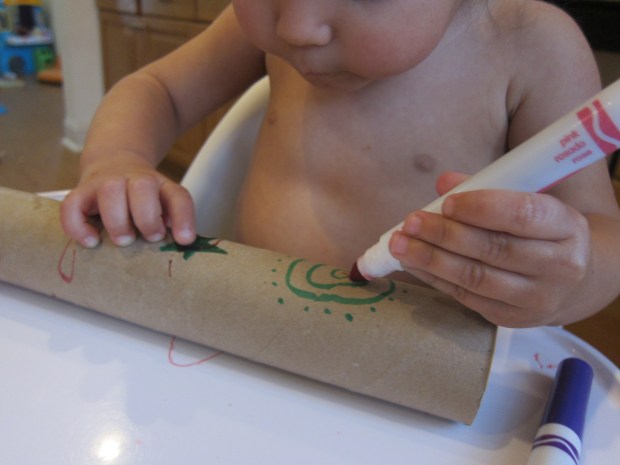
First up was a Didgeridoo Kazoo. Both kids enjoyed decorating an empty paper towel tube with markers.
LP Australia (21)

A lot of it was their own inventive scribbles, but we worked in some dreamtime symbols, too.

LP Australia (20)

As they colored, I read about how the didgeridoo dates back thousands of years. Place a square of wax paper over one end of the tube, and secure with a rubber band.

LP Australia (19)

Hum down into it for a deep, warbling sound. We put on some didgeridoo music to play along too!

LP Australia (18)

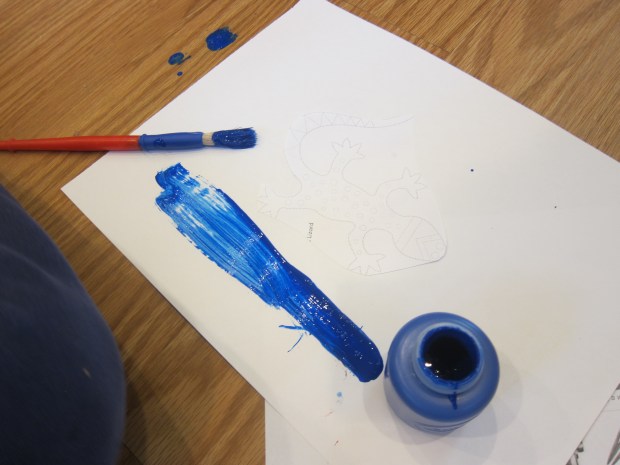
Next up was Animal Art. This project aimed to show the way indigenous Australian art shares stories about animals and nature. First, we cut out the provided animal templates and glued these onto thicker art paper. Travis chose the lizard.
LP Australia (12)

I encouraged him to use paints and markers to make a landscape for his animal. First he just painted water, and declared it done, but then he got more into the idea of adding traditional symbols (swirls, dots, stripes), and filling in the background.

LP Australia (22)

You can use cotton swabs for the dots for extra fun!

LP Australia (16)

Little sister wanted in on this project too, although her kangaroo was soon a bit of a mess!

LP Australia (14)

The add-on with this package was to grow a coral reef, similar in science to a crystal tree we made around the holidays. We read about coral reefs and what makes them so important as an ecosystem, and then Travis helped set up the provided absorbent paper in the stands.

LP Australia (4)

Mix the provided powder into warm water, then pour into the bottom of each tray. Whoops! One of corals collapsed right away, although perhaps this was a perfect illustration of how delicate these ecosystems are. Within an hour, we saw the first little crystals forming.

LP Australia (6)

By morning, they were a riotous display of crystal! We almost thought they looked like cauliflower.

LP Australia (8)

As the final touch, Travis colored in the Australian flag and we added it to the growing collection above his world map.

LP Australia (28)

Recipe:

To finish our journey, we baked a popular Australian dessert called Lamingtons, a cake coated in chocolate and coconut. I should note that Little Passport’s recipes aren’t as easy to follow as, say, those from Raddish Kids. As a result, a lot of them become mommy projects after a little help from my sous-chef.

LP Australia (23)

Ingredients:

For the cake:

  • 1 and 1/2 cups flour
  • 1 and 1/2 teaspoons baking powder
  • 1/4 teaspoon salt
  • 1/2 cup Earth Balance butter, softened
  • 3/4 cup sugar
  • 2 Ener-G eggs
  • 1 teaspoon vanilla extract
  • 1/2 cup plain almond milk

For the frosting:

  • 2 tablespoons melted Earth Balance butter
  • 1/2 cup plain almond milk
  • 4 cups powdered sugar
  • 1/3 cup cocoa powder
  • 2 cups shredded coconut
  1. To prepare the cake, sift together the flour, baking powder, and salt into a bowl; set aside.
  2. Beat 1/2 cup butter and the sugar in a stand mixer until creamy. Add the Ener-G eggs and vanilla. Alternate adding the flour mixture and 1/2 cup almond milk, beating until combined.
  3. Pour the batter into a 9×13-inch baking dish lined with foil. Bake at 350 degrees F for 28 minutes; a wooden pick inserted into the center should come out clean. Let cool for 10 minutes in the pan, then lift out the foil and cool the cake completely on a wire rack. Cover with plastic wrap and chill in the fridge.
  4. Once the cake is chilled, make the frosting: whisk together the melted butter and 1/2 cup almond milk in a large bowl. Whisk in the cocoa powder. Add the powdered sugar, stirring until smooth.
  5. Cut the cake into 2-inch squares. Working with one square at a time, dip in the chocolate frosting, then immediately coat in the coconut. Transfer to a wire rack or pan to set.

Because the frosting was thick and the cake was very delicate, I found it easier to work by hand instead of dipping pieces in on a fork. This got messy, but sure was yummy!

LP Australia (26)

Puffy Paint Clouds

Puffy Paint Clouds (8)

With so much attention going to big brother Travis during the school week, it was nice just to pause with Veronika for some messy art today! Shaving cream paint has so many uses, and today we focused on clouds. Veronika has been using lots of weather words like “rain” and “cloud” lately, and I figured I would seize the moment.

To make the paint, mix up about 3/4 cup foamy shaving cream and 1/4 cup white glue. I was entirely inexact about this, just eyeballing it, but you really can’t get it wrong.

Puffy Paint Clouds (1)

We used blue construction paper as the background for a pretty azure sky. Ideally we would have been dipped cotton balls in our “paint”, but I was all out! In a pinch, we wadded up tissue paper to make the clouds “fluffy”.

Puffy Paint Clouds (3)

If your child likes things neat, you can “paint” the shaving cream mixture onto the paper with a paintbrush and then add crumpled tissues on top. If your child likes to be messy, roll the tissue wads right in the gluey mixture, and then press onto the paper.

Puffy Paint Clouds (4)

We sort of did this both ways!

Puffy Paint Clouds (6)

Veronika was fascinated by the glue mixture, dipping her fingers into it often.

Puffy Paint Clouds (2)

I also sang about clouds as we played to make it a little weather lesson. So the project ends up being equal parts art, sensory play, and science for toddlers.

Puffy Paint Clouds (7)

Deep-Sea Discovery Kiwi Crate

Kiwi Deep Sea (4)

Travis’s subscription to Kiwi Crate is more welcome then ever these days, providing doses of science and art to our home school lessons. Travis couldn’t wait to dive into his deep-sea discovery crate.

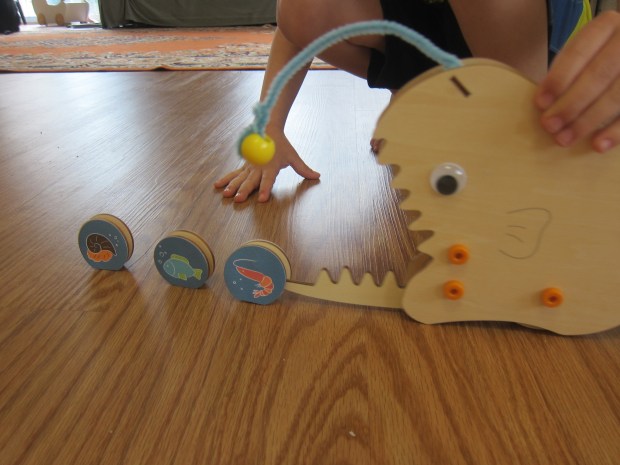
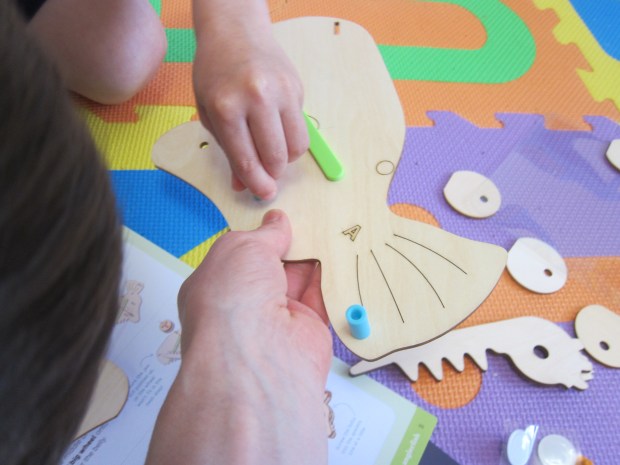
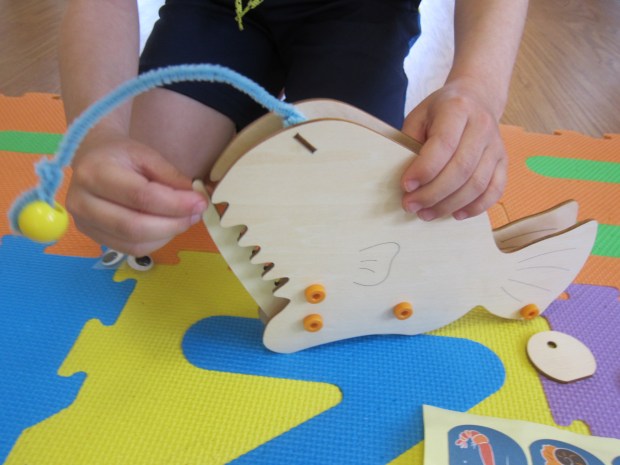
First up was to make the Chomping Anglerfish. Travis has learned about these deep-sea fish before, with their fascinating attached lantern, and this project was big on engineering. He helped work through the steps of assembling a wooden wheel then attaching this to the frame of a wooden fish with bolts and screws.

Kiwi Deep Sea (1)

He felt absolute glee when he realized the jaw could move (thanks to the cogs lining up with those in the wooden wheel), and even more so when he realized this meant the jaw could now eat…

Kiwi Deep Sea (2)

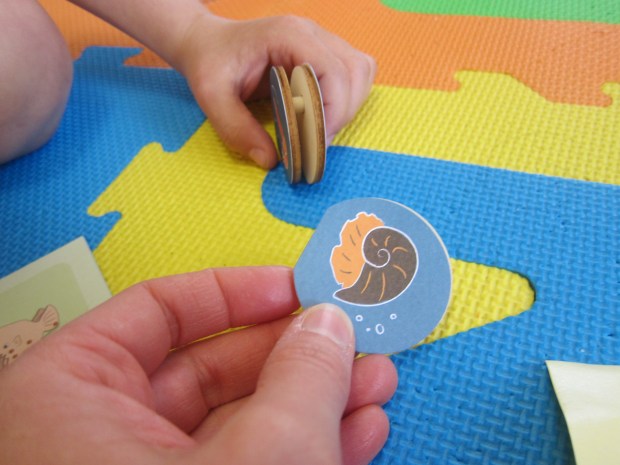
…the prey. Activity number two, to Make the Prey was very simple, just adhering stickers to wooden disks with a peg in between. The wooden jaw hooks onto these pegs so that as the fish scoots along the floor, the jaw lifts up and “swallows” the prey. Just as a cautionary note, the whole apparatus is a bit temperamental and won’t work if the wheel isn’t properly rolling along the floor or if the jaw gets slightly stuck.

Kiwi Deep Sea (3)

But needless to say, it soon turned into a game of chomping up other toys around the house, like Legos!

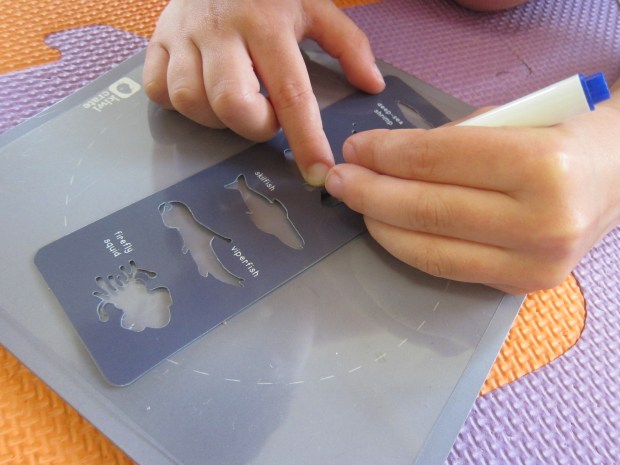
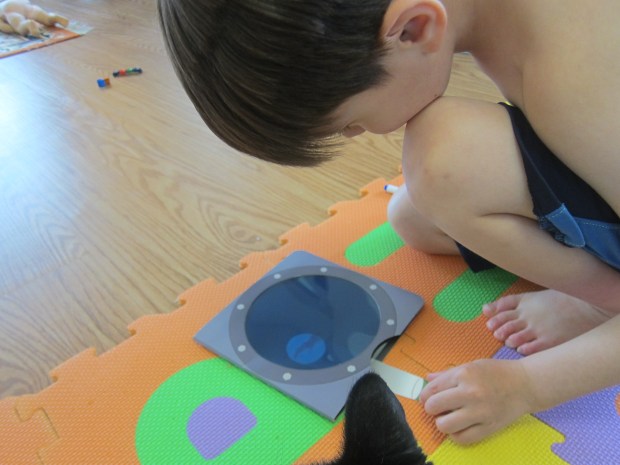
The third project was a Submarine Seek-and-Find. Using the provided stencil, Travis colored in fish shapes onto the provided plastic sheet. A paper “flashlight” then uncovers these creatures lurking behind the dark submarine window.

Kiwi Deep Sea (5)

We had fun “hiding” fish for each other among drawings of bubbles, or making up our own creatures. Travis was so proud surprising me with a giant sea monster. The booklet explains the science of how the finder works, when the white light of the “flashlight” makes your drawings appear even under the dark window.

Kiwi Deep Sea (7)

For some final fun, Travis dressed up as an anglerfish for a game of “hide-and-glow seek”! To make the costume, twist a black pipe cleaner onto a glow stick, and attach to any dark-colored baseball cape with masking tape. Have your child dress in dark clothing and don the cap, and they are ready to be a lurking deep-sea fish!

Hide and Glow Seek (3)

We cracked additional small glow sticks to be the “prey” and took turns hiding these around the house. Travis got quite creative with his hiding places! The goal is to find all the sticks in the dark before the “anglerfish” tags the other player.

Hide and Glow Seek alt

Obviously this game will work best after full dark, as you can see from Travis in the picture above, although we did also play a round before the sun went down.

Hide and Glow Seek (5)

If you want to extend the learning, check out two fun books: How Deep is the Sea from Usborne Books or Super Submarines, by Tony Mitton.

Shadow Chalk Experiment

Shadow Chalk Experiment (5)

Travis has made sundials before, but never before has he used his whole body for the activity! This might be the coolest version we’ve tried yet.

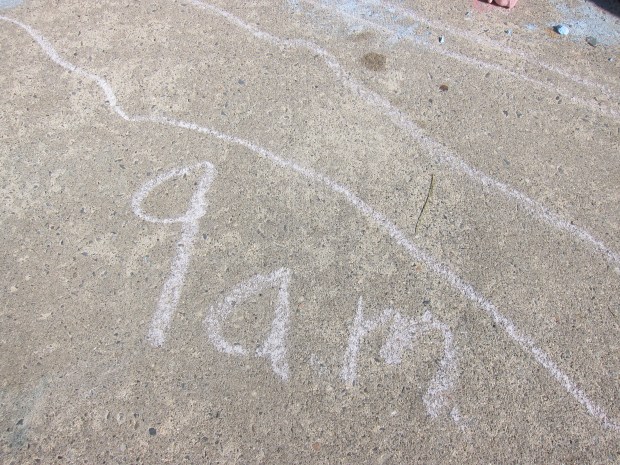
Okay, so it wasn’t as precise as past versions, since the measurement (your body!) is big and you have to remember to pop outside. But at 9 a.m., 1 p.m., and 4 p.m. intervals, Travis stood with his feet in the same spot on our patio. He held a big stick for extra effect and struck a dramatic pose.

Shadow Chalk Experiment (1)

Each time, I traced his outline and marked the time.

Shadow Chalk Experiment (2)

Sure enough, it was long and aimed to the south in the morning, short and stubby at 1 p.m, and long and to the north by late afternoon.

Shadow Chalk Experiment (4)

If your kids want to, have them color in their shape each time with fun patterns or colors! Travis preferred to leave his blank, but we still had a neat record of the sun’s passing by the end of the day.

Shadow Chalk Experiment (6)

Artwork Display

Artwork Display (10)

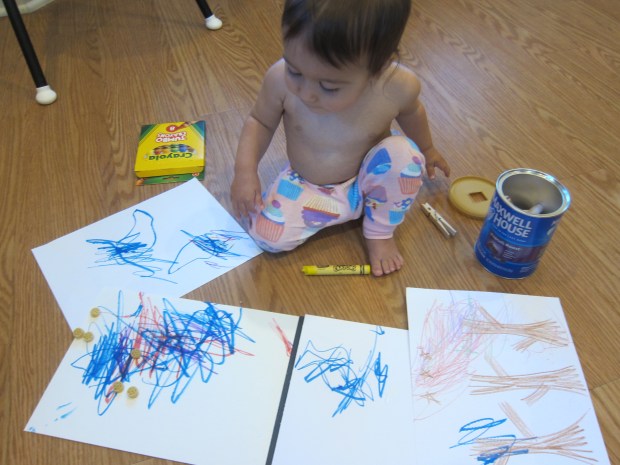
There are many things about my kids that make me sentimental, but I confess their artwork is not one of them. First of all, there is so much of it! And second, it takes up so much space. And let’s be honest: at first you’re amazed by every crayon line, but after a while those crayon scribbles start to look the same.

So here’s a fun way to display your toddler’s art and make them proud, but keep things rotating out the door! Display one piece, but toss it to make room as soon as there is a new one to display.

Artwork Display (1)

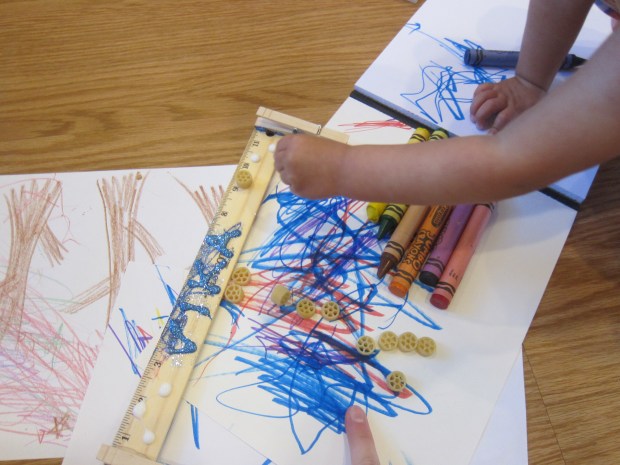
The simplest idea is simply to have a plastic frame on the wall where you can insert one drawing, then swap out for the next. Even easier, I like to hang Veronika’s latest artwork on the fridge. To make it feel special, today I helped her design her own artwork holder!

Hot-glue a magnet or magnetic strip to the back of a 12-inch ruler.

Artwork Display (3)

Next, use hot glue to attach spring-type clothespins to either side.

Artwork Display (2)

Now have fun decorating the ruler before you mount it on the fridge. Veronika glued on dried pasta and added marker scribbles.

Artwork Display (4)

I added her name using glue and glitter.

Artwork Display (6)

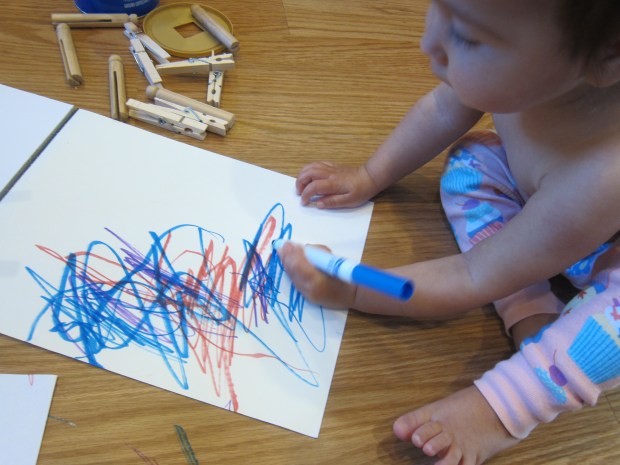
I didn’t have to wait long before she had her very next masterpiece of marker scribbles. Now I had the perfect place to display it, and will swap it out immediately for the next one that comes along.

Artwork Display (8)

A final idea to manage all that toddler art is simply to keep a digital record. I always take a snap of the kids’ art – no matter how grand or small – before tossing it. Consider staging a picture of your toddler surrounded by a few “masterpieces”, and then you won’t feel so bad tossing the real thing.

Artwork Display (9)

As an alternative, turn scribbles on paper into cylinders and make them works of art on a mantel! How do you deal with all the toddler artwork? Please share in the comments.

Artwork Display (5)

Easy Bird Feeders

Easy Bird Feeder (14)

Here are a few easy ways that even a toddler can help make bird feeders! It’s never too early to teach compassion for feathered friends.

I set out a tray with all of our materials: o cereal, sunflower seeds (make sure to buy them unroasted and unsalted), pine cones, a toilet paper tube, pipe cleaners, and yarn.

Easy Bird Feeder (8)

For the first version, show your toddler how to thread the o cereal onto either yarn or a pipe cleaner. The pipe cleaner turned out to be much sturdier for Veronika’s little fingers.

Easy Bird Feeder (2)

Not to mention the o cereal turned out to be more fun as a snack than for threading, which was just fine!

Easy Bird Feeder (1)

To complete this bird feeder, simply loop the pipe cleaner or yarn at the ends, and it’s ready to hang.

Easy Bird Feeder (5)

For the next version, I gave Veronika a plastic spoon to spread peanut butter over the toilet paper tube. Punch two holes near the top to thread a pipe cleaner handle, then roll in the sunflower seeds. (Note: You can also use commercial bird seed, but I liked that sunflower seeds kept the project completely edible for Veronika… just in case!).

Easy Bird Feeder (6)

We used a similar method for the third version, except using pine cones. Smear with peanut butter, and then roll in sunflower seeds.

Easy Bird Feeder (7)

Make sure to use a pine cone with a stem long enough to knot a length of yarn on. Knot the other end of the yarn to a tree branch.

Easy Bird Feeder (13)

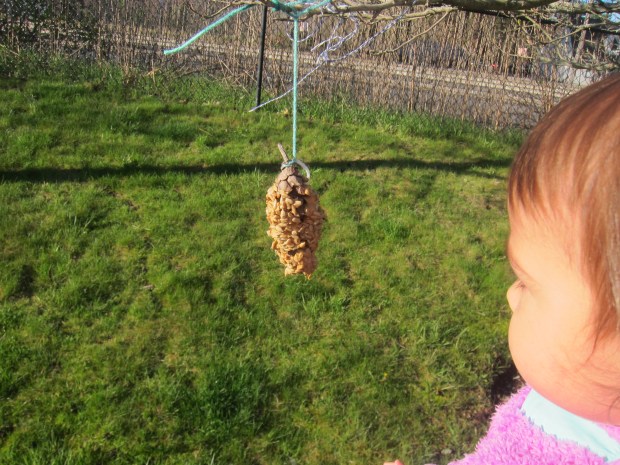
We had so much fun popping outside to hang these in the branches, in early morning sunshine!

Easy Bird Feeder (11)

Sure enough, we had visitors very soon, although one of the pine cones was soon stolen by an adorable and hungry brown squirrel!

Kindergarten Home School Week 7: Friday

Home School 34 f

TGIF! We’re off book from the teacher’s suggestions again, and whoops, maybe had a few too many projects. But it kept Travis (and baby sister!) engaged and happy all day, so I can’t complain.

9-9.30: Letter A/Apples: His summer workbook page focused on the letter A, including coloring in apples marked with “A” and circling words with the short a sound (I asked him to give me a rhyme for each of these, too). Then we carried forward that theme of apples for some silly fun!

Home School 34 c

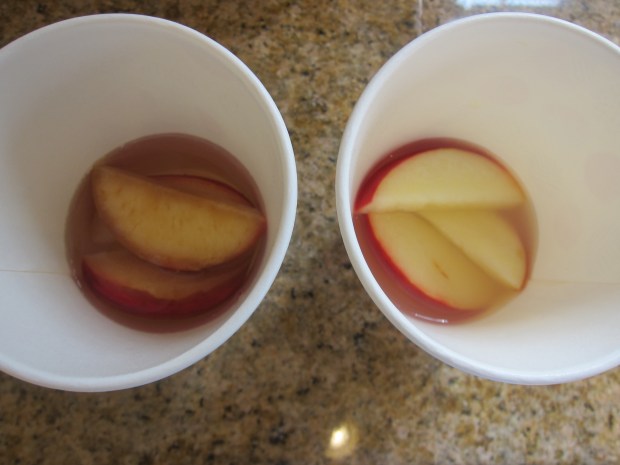
First up was erupting “apples” made from baking soda and vinegar. We then did a simplified version of an old apple experiment to test whether an apple browned faster in lemon juice or vinegar.

Home School 34 j

Late day results revealed that lemon juice had kept the apple white! As a bonus, all of these activities allowed baby sister to happily get involved (when she wasn’t busy with bottles and lids).

Home School 34 a

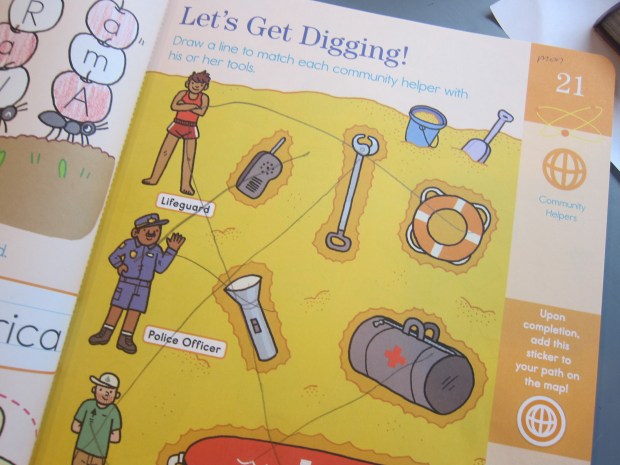
9.30-10: Social studies. The corresponding workbook page was about matching community helpers to their tools. I liked that it featured some unexpected ones like sanitation workers and lifeguards.

Home School 34 e

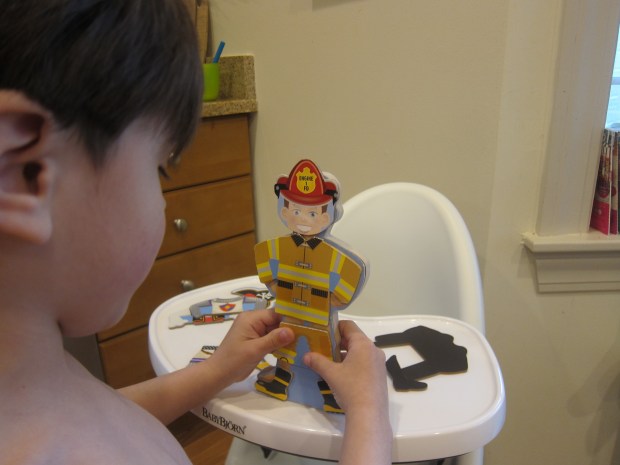
We made the play hands-on with a magnet doll dress-up set, and Travis proudly dressed it as a firefighter, police officer, and more.

Home School 34 b

10-10.30: Snack/recess. Travis wanted to join in some super messy toddler shaving cream fun, perfect for a rainy day pause.

10.30-11: ELA. Travis did about 20 min of Lexia story sequencing.

11-1: Lunch/free play.

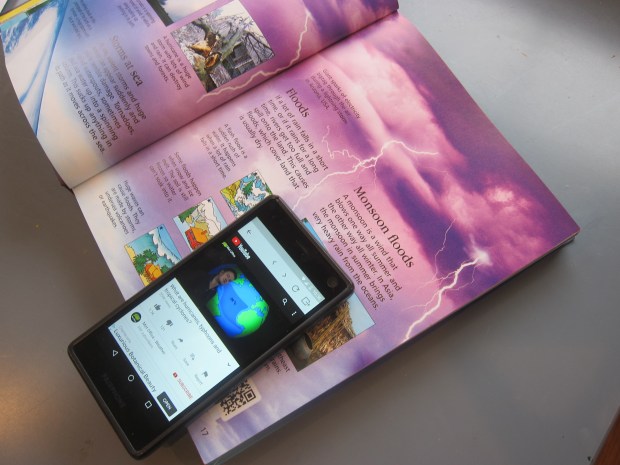
1-2: STEAM. The encyclopedia page today was about storms, expanding upon yesterday’s tamer lesson on the weather in general. Travis watched the QR code video about hurricanes, then we made a “tornado in a jar”, an old experiment that is really just watching glitter swirl through water.

Home School 34 h

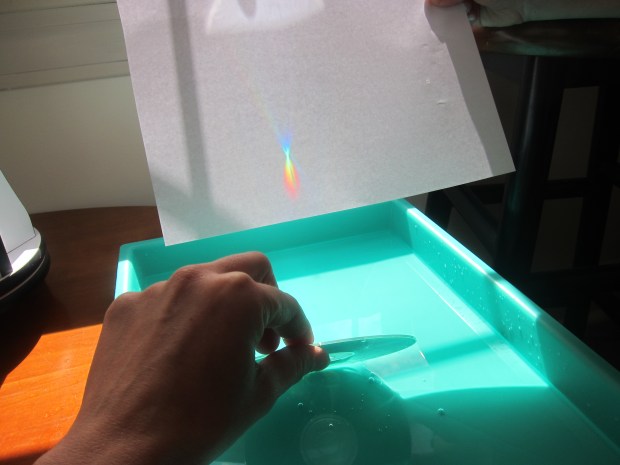
The sun came out from the clouds just in time for us to make a rainbow, too, using a CD tilted in a tray of water, then reflected against a sheet of paper.

Home School 34 i

2-3: Little sister had an online music class, and Travis joined in, making this his music for the week, too!

3-3.30: Outside. I thought we would use a walk for his teacher’s suggested “jump and count” math game, but after a rain storm, it turned into art class instead! That meant we really didn’t do any math today, but there’s always next week…

Pink Milk

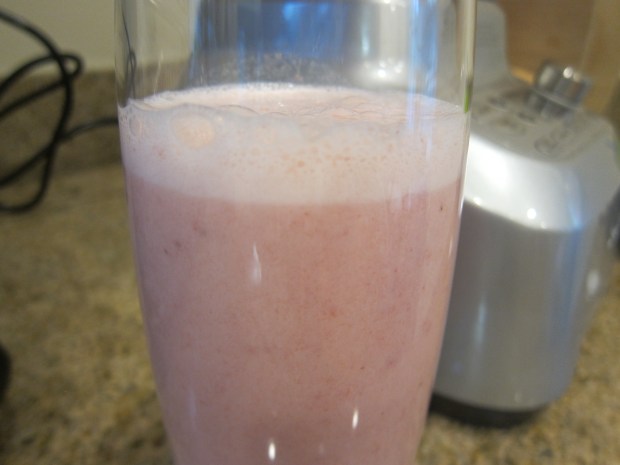
Pink Milk (1)

This pretty-in-pink glass of milk is a fun alternative to a plain glass of your non-dairy favorite. All the sweetness comes from fruit, so there’s no added sugar like as with a store-bought smoothie or juice.

Ingredients:

  • 2 cups vanilla almond milk
  • 3/4 cup strawberries
  1. Combine the ingredients in a blender and process until smooth.

Giant Puddle Paint Brush

Giant Puddle Brush (1)

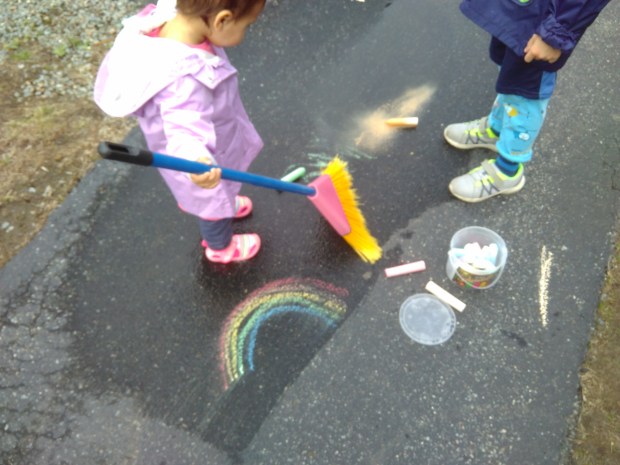
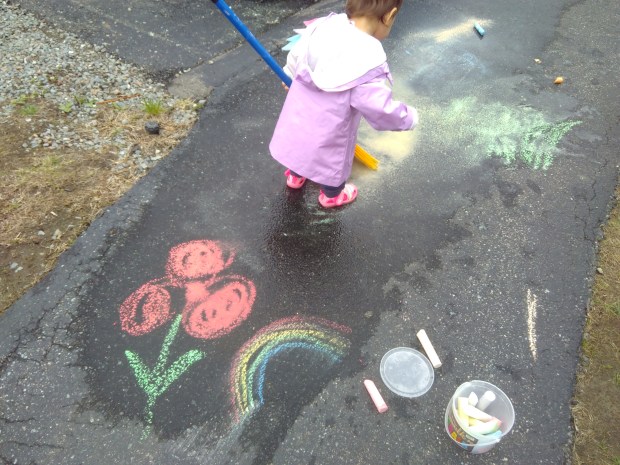
When life gives you rain… go paint with puddles! After two days of gray skies, the sun broke through in the late afternoon, and I hurried the kids into rain coats and out into the sunshine. The rain had stopped, but left behind warm puddles on the sidewalk, making it the perfect moment for puddle stomping… and puddle painting.

A note to parents on this activity: Your kids are going to get wet and you’re just going to have to be okay with that. As a result, you probably want to play during warm rain rather than cold rain, so no one starts shivering. Then just be ready with towels and dry clothes when you head inside.

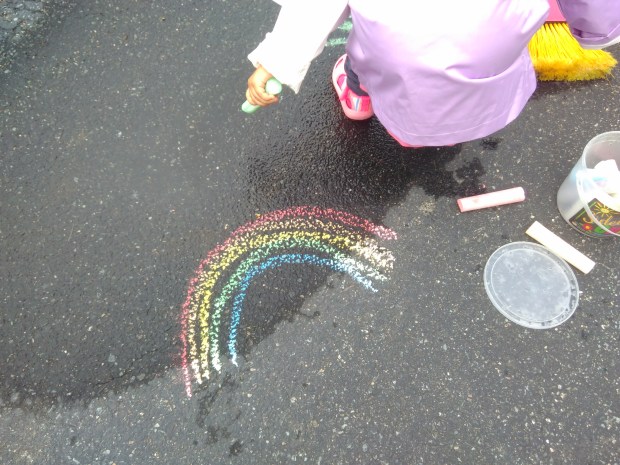
With that preamble aside, the fun outside is gorgeous! I showed the kids how to draw with chalk on the sidewalk right next to puddles. Either dip the chalk in the water to wet it, or draw in a saturated spot of pavement for deep, rich colors.

Giant Puddle Brush (3)

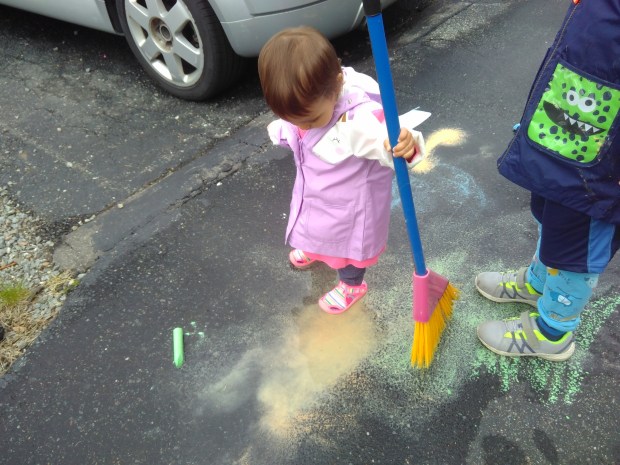
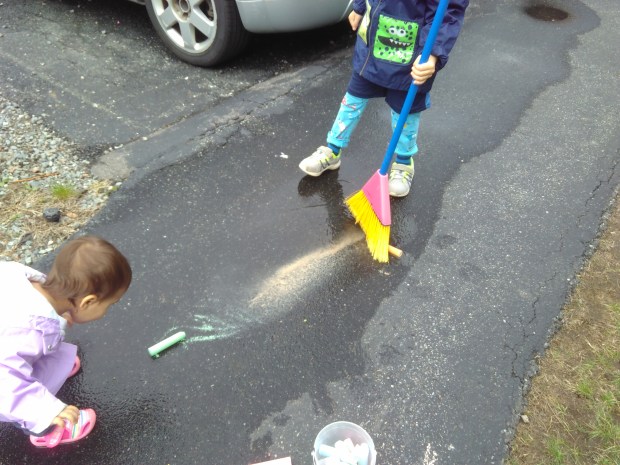
Then we used a child-sized broom as our “paintbrush”. Sweep across the chalk with water from a puddle, and you’ll get a gorgeous smeary effect.

Giant Puddle Brush (2)

Veronika loved sweeping over my drawings, or adding her own.

Giant Puddle Brush (4)

Big brother Travis loved making big swirls of color in the deepest part of the puddles and then sweeping through it (he called these “ghosts”).

Giant Puddle Brush (5)

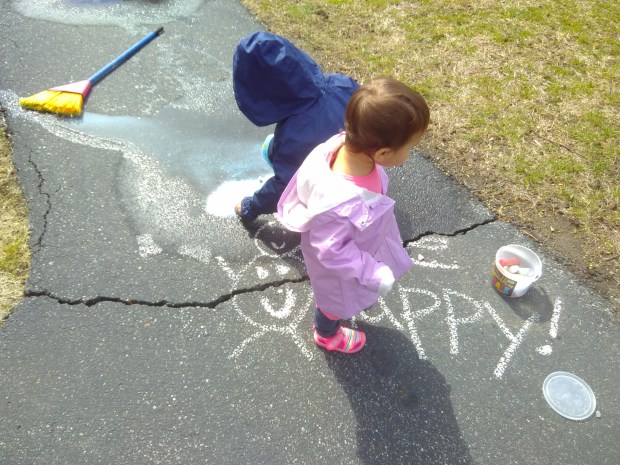
We left positive messages for the neighbors, too, since we’re all social distancing!

Giant Puddle Brush (8)

Older kids might want to get really artistic with this and younger ones will probably just make doodles.

Giant Puddle Brush (7)

Either way, it’s fantastic rainy day fun.

Giant Puddle Brush (6)