Not Your Average Paper Clock

Paper Plate Clock (4)

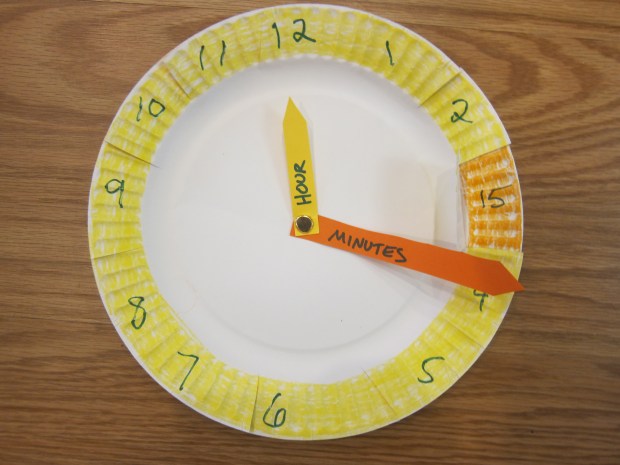
It may be true that analog clocks are gong the way of cursive writing and the dodo bird, but I still hope to teach Travis the valuable skill of telling analog time. This paper plate clock is the best way I’ve found yet to visualize hours and minutes!

Most of the prep is grown-up work. If you have two different colored paper plates, simply use those, one atop the other. I solved the problem of having only white plates by coloring the rims with crayon, yellow for the hours and orange for the minutes.
Paper Plate Clock (1)

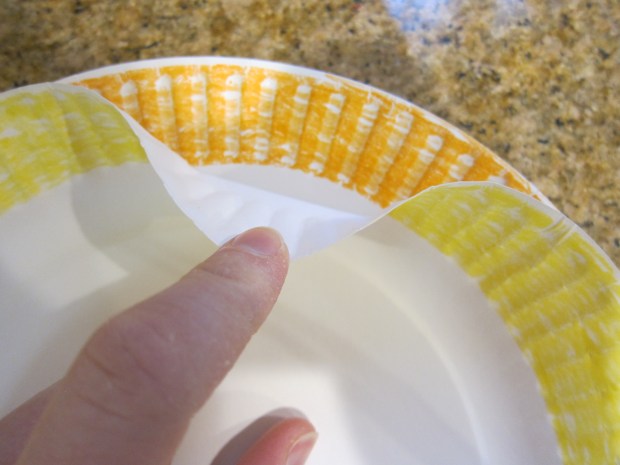
Hot glue the hour plate on top of the minute plate, making sure to glue only the center of the plates, not the rims.

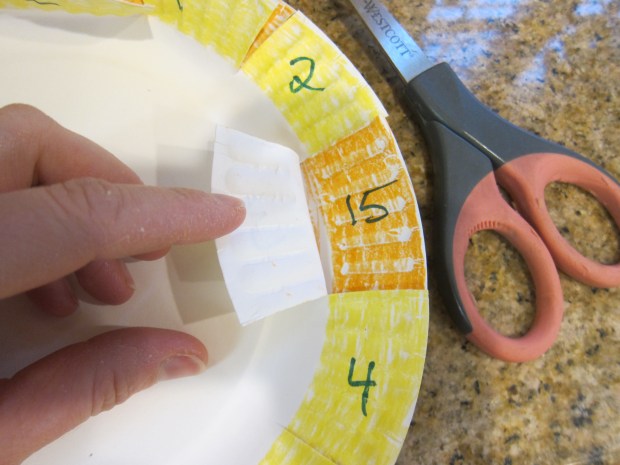
Number the hours, and then cut the rims of the plate so each hour becomes a flap. You might want to make sure you’re numbering at more even intervals than I did in a hurry – whoops!
Paper Plate Clock (2)

Now lift back each hour flap and write the corresponding minute on the bottom plate. I cut out two hands in corresponding colors of cardstock, yellow for the hour and orange for the minute. Insert these into the center of the clock and attach with a brad.

It was time for a time telling lesson!
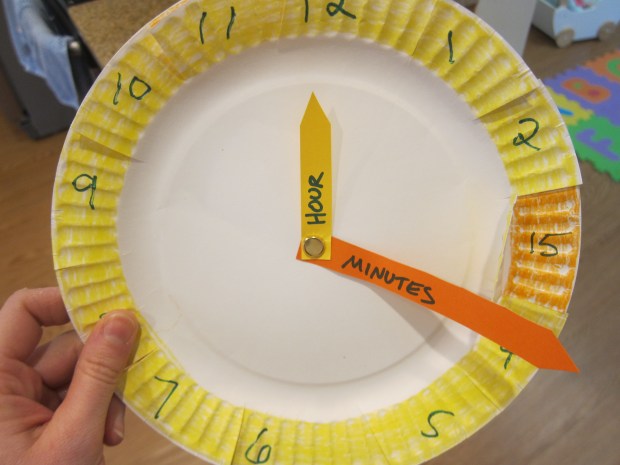
Paper Plate Clock (3)

Travis loved how intuitive this clock was! First we practiced skip counting by fives, just to familiarize him with how the minutes would read around the bottom rim.
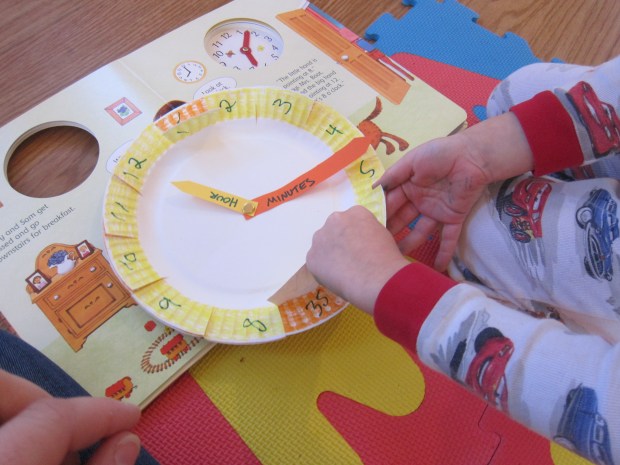
Paper Plate Clock (5)

Then we had a few practice rounds. Once he latched on to how the yellow hand lined up with the yellow plate and orange with orange, he could answer almost any “pop quiz” I gave him.
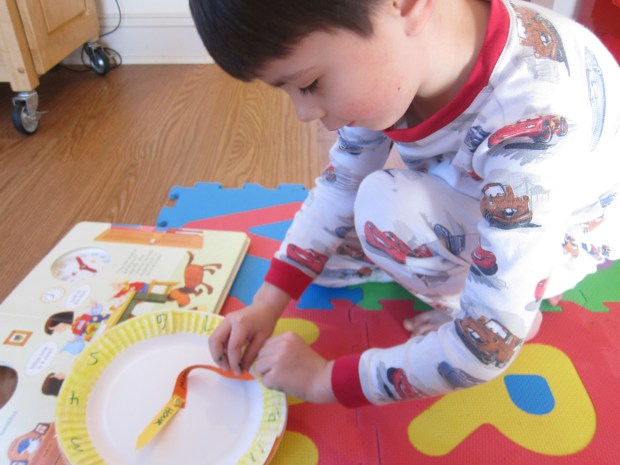
Paper Plate Clock (6)

At various points throughout the day, I asked him to read our analog clock on the wall.
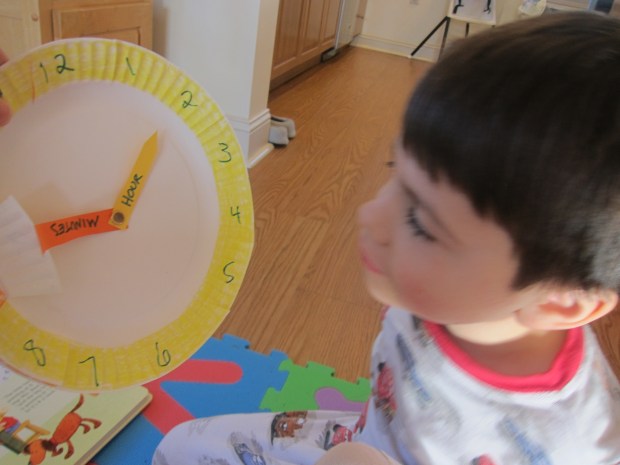
Paper Plate Clock (7)

“1, 10,” he said, but I reminded him: “Lift up the 10 and see what’s underneath!”

Aha! “1:50,” he said proudly. I can see how this will be an incredibly useful teaching tool.
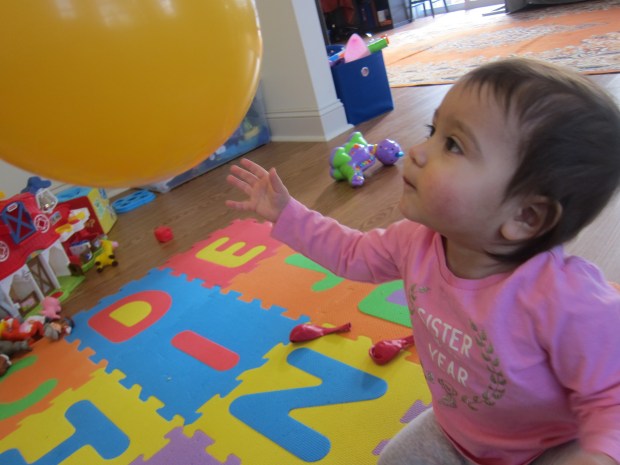
 

Ball in Balloon

Ball in Balloon (3)

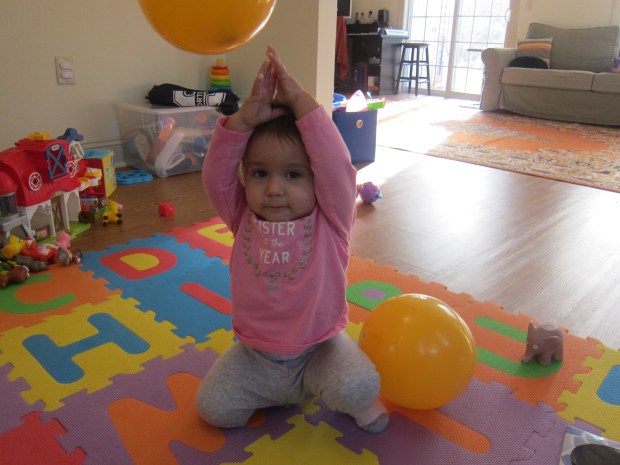
Take your toddler’s balloon play to the next level with one single addition: rubber golf balls! These small bouncy balls will make the balloons move in unexepected ways, delighting your little one with a new surprise at each moment.

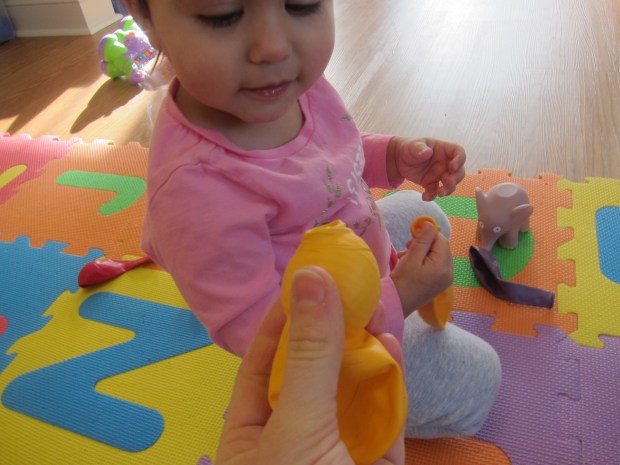
First, I showed Veronika the two materials we needed. I stretched out the balloon necks dramatically (which will help the balls fit inside) and bounced the balls a few times, in order to set up the playful moment.

Ball in Balloon (1)

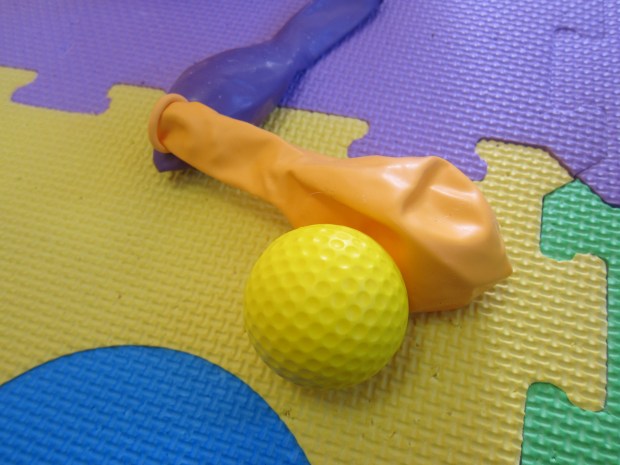
Next, I inserted one ball into each balloon.

Ball in Balloon (2)

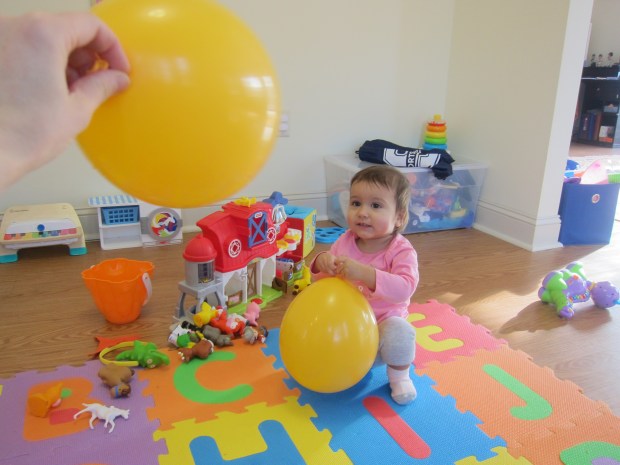
See-through balloons might have had a better effect so she could actually see them rolling around inside, but opaque balloons were still enjoyable! First I shook it, so Veronika could hear the ball inside.

Ball in Balloon (7)

Then I tossed it forward. Instead of floating gently as she might have expected, it wibble-wobbled back and forth and came to the ground quickly.

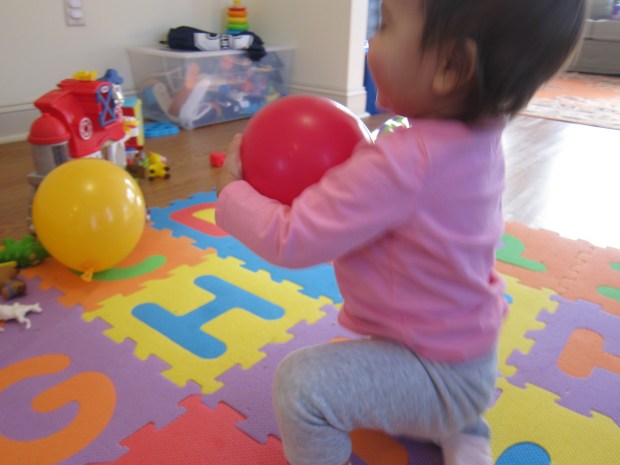
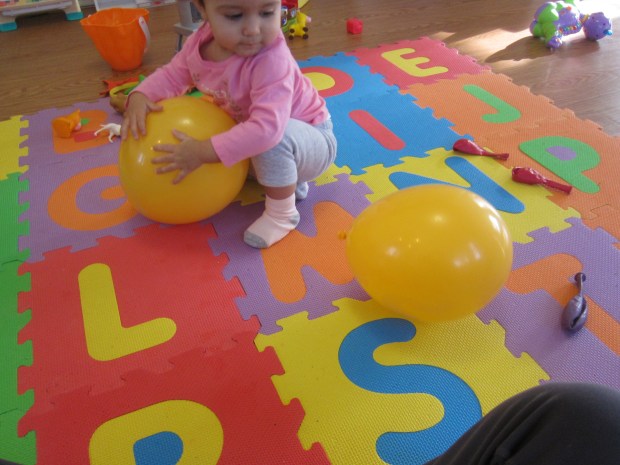
She needed to hug them…

Ball in Balloon (8)

…bounce them…

Ball in Balloon (6)

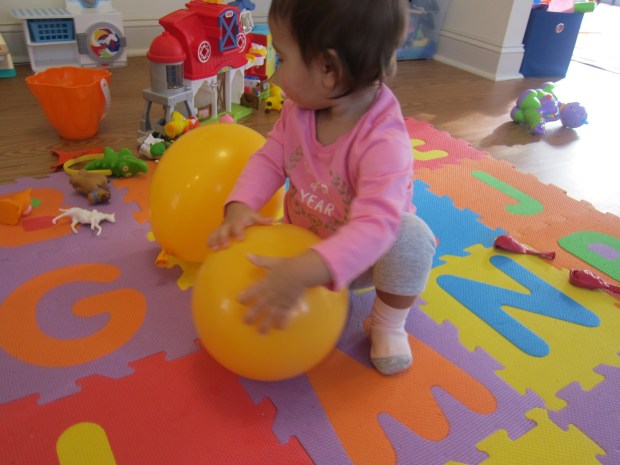
…chase them…

Ball in Balloon (5)

… and hold them by the tied-off knot to shake them. What a great morning of balloon fun!

Ball in Balloon (4)

Vikings

VIkings (3)

A lesson that came with Travis’s Swedish recipes from Raddish Kids aimed to debunk stereotypes about the Vikings, and to help kids understand stereotypes in general. Travis knows next to nothing about the Vikings, so the lesson was a bit lost on him! Still, I tailored the lesson plan for my kindergartner, and here’s what he learned:

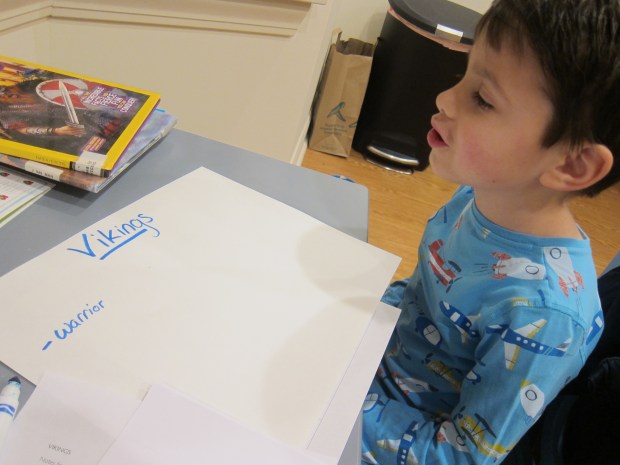
Start out with a question, asking your kids what comes to mind when they think of the Vikings. Your kids might draw this, or write about it, or act it out. Travis listed a few ideas, based solely on his knowledge of Thor in the Avengers cartoons.

VIkings (1)

I praised his observations, but told him that today we were going to look beyond the stereotypes, which we defined as “a fixed belief about a particular group of people”. It was time to find out more!

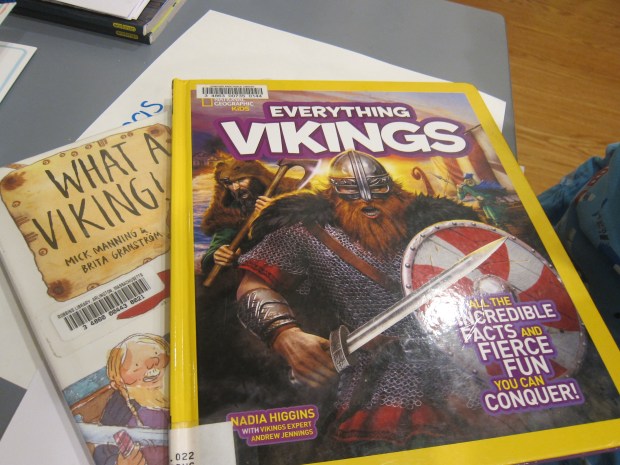
He listened attentively to a few library books, including National Geographic’s Everything Vikings and What a Viking! by Mick Manning. We then watched an informative 10 minute clip with lots of details and a fun quiz.

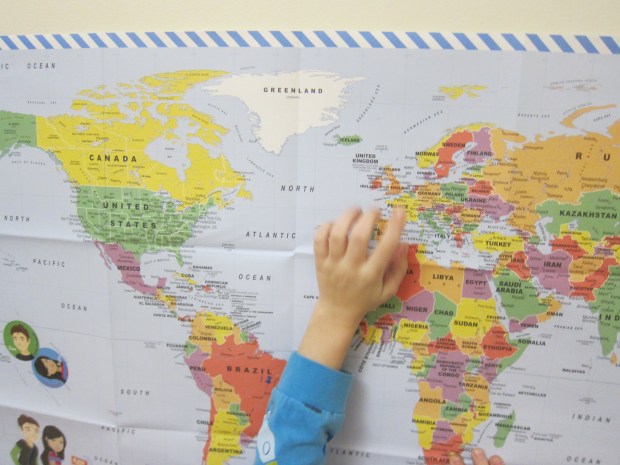
Travis could see now that there was more to the Vikings than the warrior stereotype, though to be fair this was still his favorite aspect of the culture! We looked at a map to trace some of the routes the Vikings took.

VIkings (2)

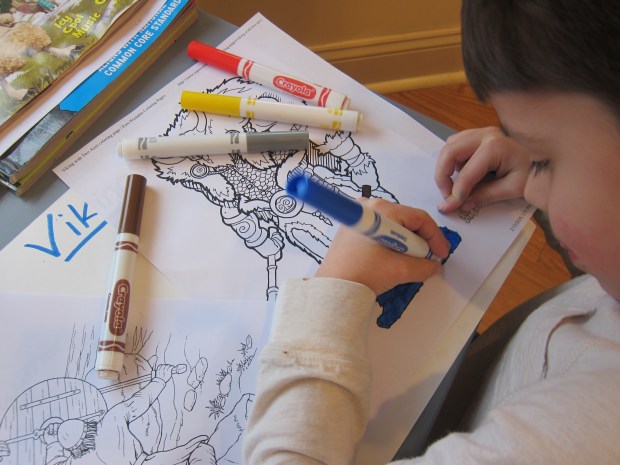
Now it was time to create a Job Positing for a Viking using his new knowledge. Because Travis loves to color, I gave him two computer images and asked him to pinpoint which was the stereotype. He was correct, although this horned-helmeted version was the one he preferred to color for his ad!

VIkings (4)

Still, now his job posting included other aspects, like needing to be a farmer and shipbuilder. There is lots within the lesson plan, too, about the role of women and children, and a provided worksheet for older kids to jot down new vocabulary they have learned. If your kids are into it, continue the lesson further have them research Viking Runes, too!


Mix ‘n’ Squish Heart Sensory Bags

Mix n Squish Heart (2)

Here’s a Valentine’s heart activity that even the youngest toddlers can enjoy without making a mess These hearts get “painted” inside a zip-top bagQ

There’s a little color mixing lesson thrown in, too, and although toddlers won’t yet grasp the difference between primary and secondary colors, kids are never too young to marvel at how yellow and blue make green, red and blue make purple etc.

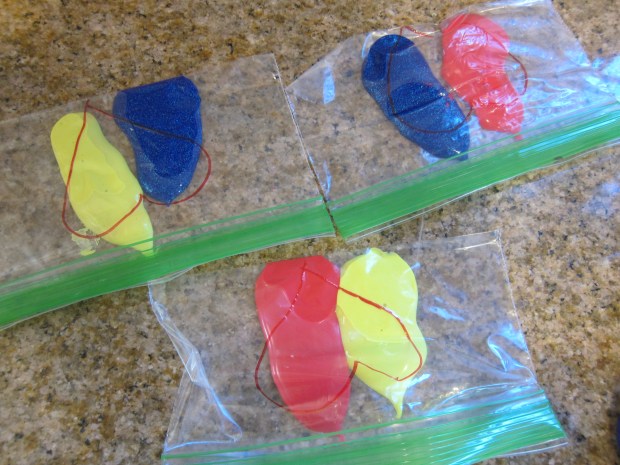
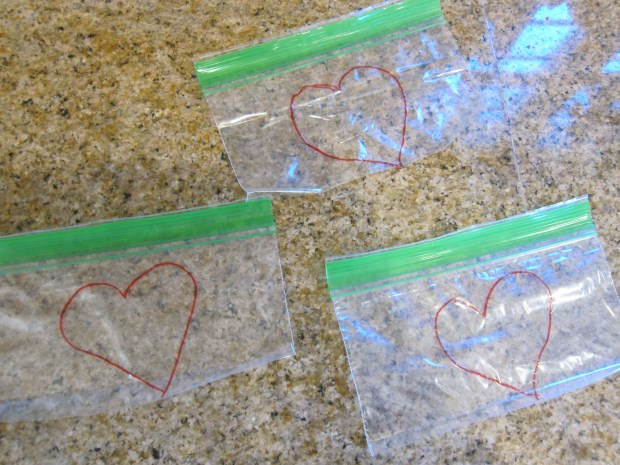
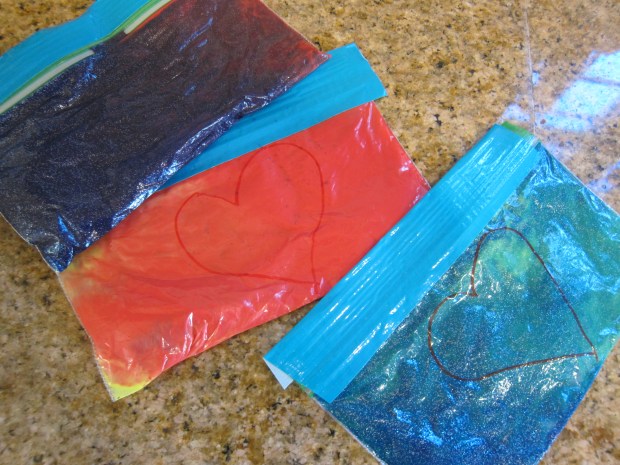
I drew a heart with sharpie on each of three snack-sized zip-top bags. These were the perfect size for little hands, although you could make a large version in gallon-sized zip-top bags.

Mix n Squish Heart (1)

Carefully squeeze two primary colors of paint into each heart. We had one each of the follow:

  • red + yellow
  • yellow+ blue
  • blue + red

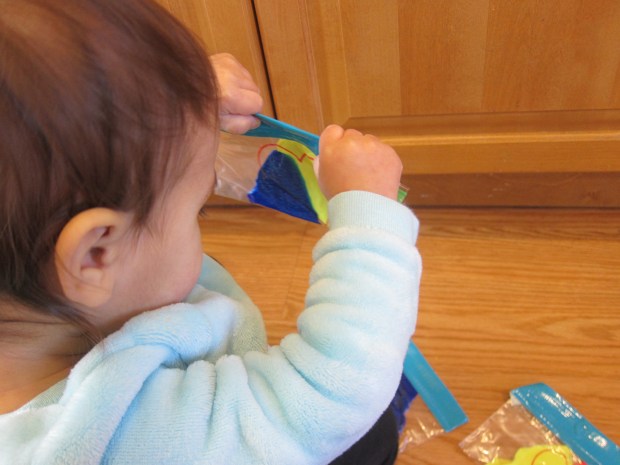
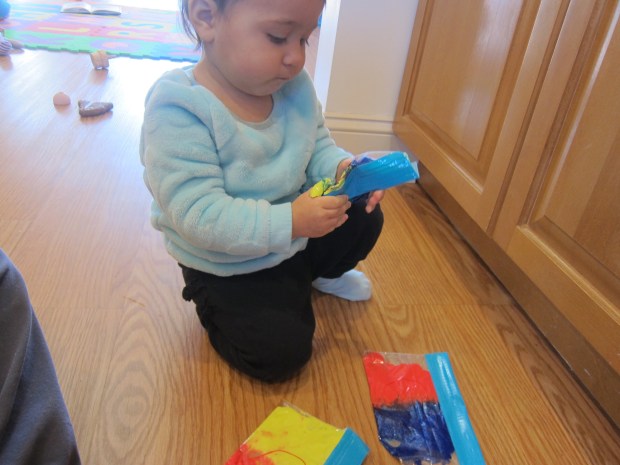
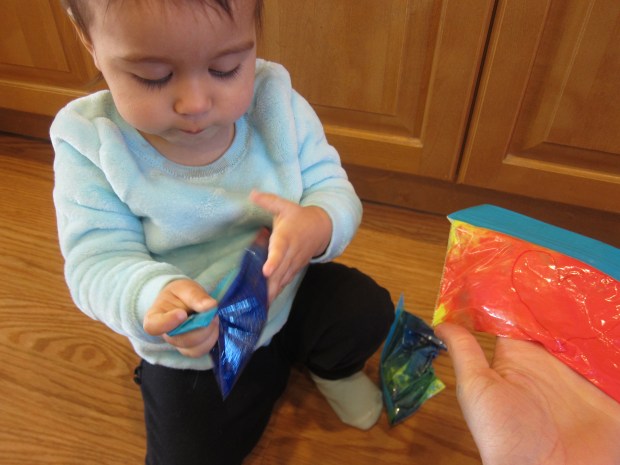
Aim to line these up so that each color fills half the heart. Now it was up to Veronika! She immediately loved squishing the bags in her hands.

Mix n Squish Heart (3)

She most likely didn’t notice the “hearts” she was filling in, but she clearly delighted in the texture and colors.

Mix n Squish Heart (5)

When she tired of the beautiful green she made, it was time to make purple!

Mix n Squish Heart (7)

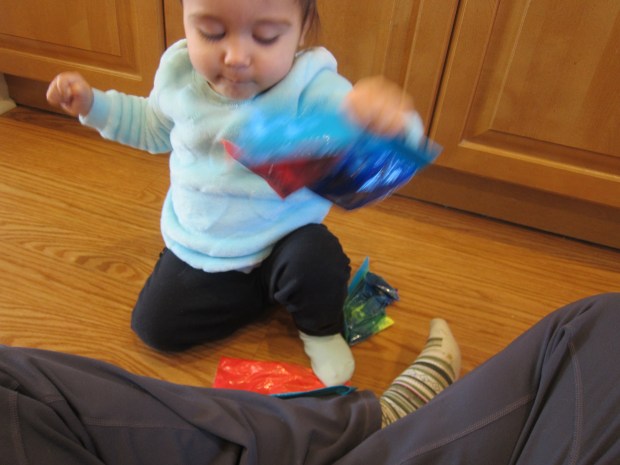
The red and yellow squished together and resulted in a pretty peach for her to see.

Mix n Squish Heart (9)

In sum, it’s safe to say that Veronika loved this little Valentine’s Day activity.

Mix n Squish Heart (10)

Blowing Games

Blowing Games (8)

Teaching your child to blow helps strengthen the lips and tongue which in turn helps with language and speech. Although Veronika was on the young side for the activities we did today, it was nice to lay a foundation for these oral-motor skills.

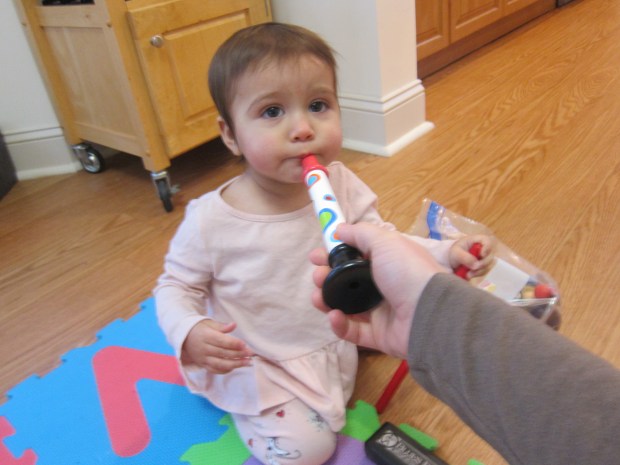
First, I used a toy horn to give a few short toot toots! The immediate response was giggles of course.

Blowing Games (1)

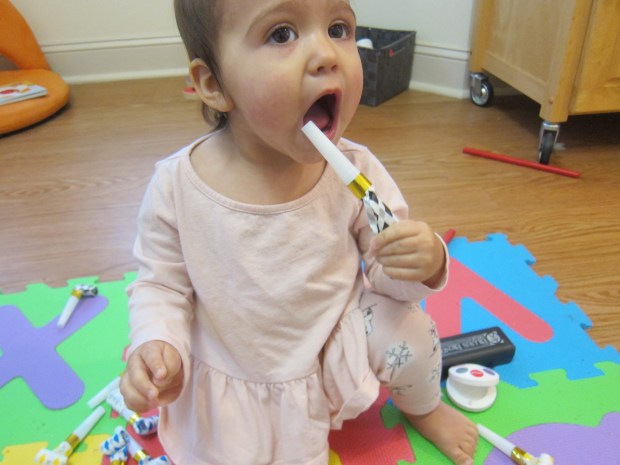
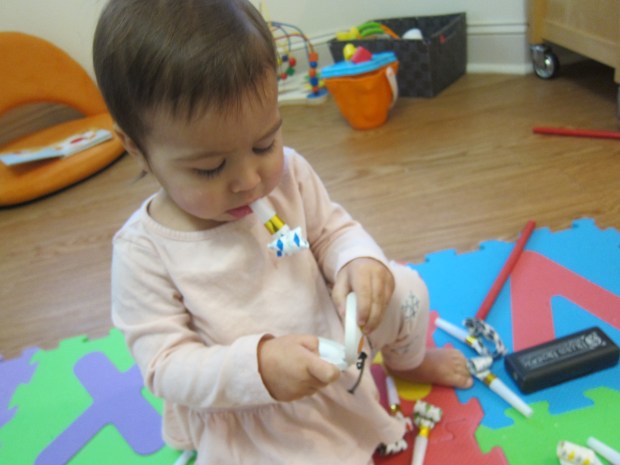
Then it was her turn to try. She lifted the horn to her mouth, and although she couldn’t produce a sound, she gave a little puff of air. She was definitely trying!

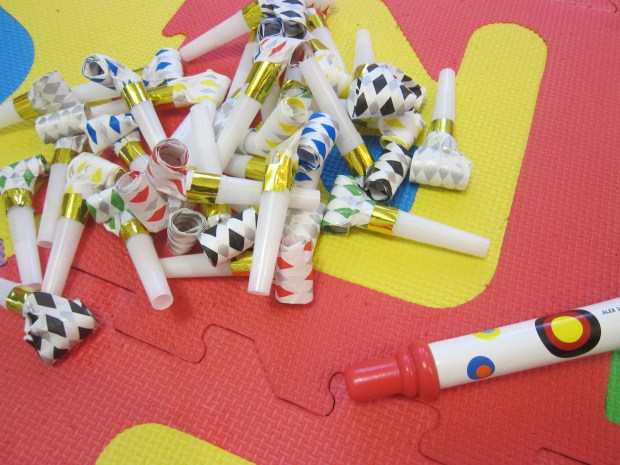
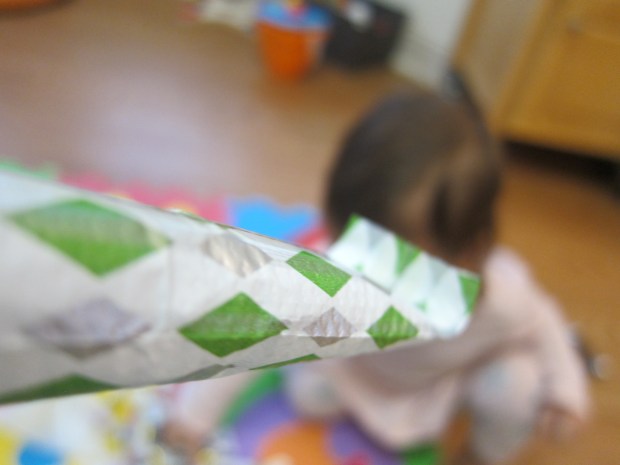
Next up: party blowers! Leftover ones from birthday parties make for fantastic blowing practice.

Blowing Games (2)

I showed her to make one pop open, a delight both visually and audibly. Again, there were lots of little huffs of imitation.

Blowing Games (5)

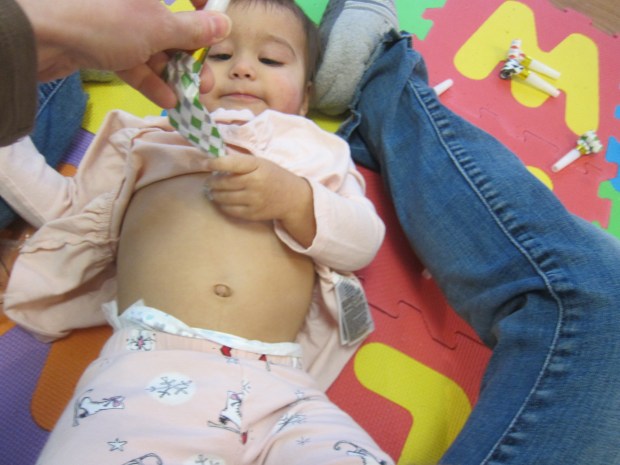
Get silly and blow one against your toddler’s tummy for some ticklish fun.

Blowing Games (4)

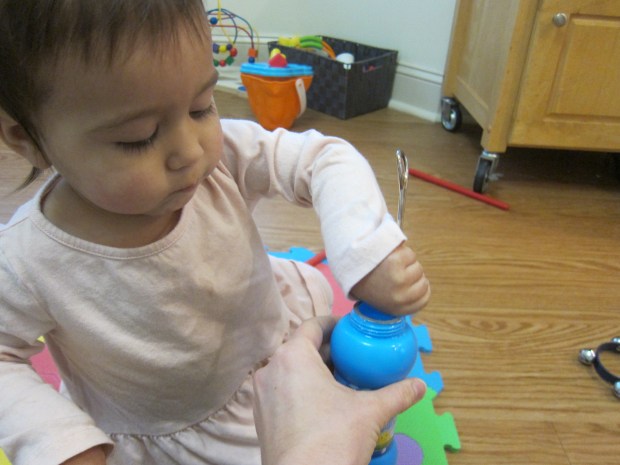
Of course the most classic game of all to teach blowing is just to pull out the bubbles. Instead of blowing them yourself, encourage your toddler to dip the wand and then huff.

Blowing Games (7)

At fifteen months Veronika isn’t quite there yet, but these blowing games were all about exploration.

Blowing Games (6)

When did your child learn to blow a horn or party blower? Please share in the comments!

Broccoli with Meatless Crumbles & Rigatoni

Broccoli Rigatoni a

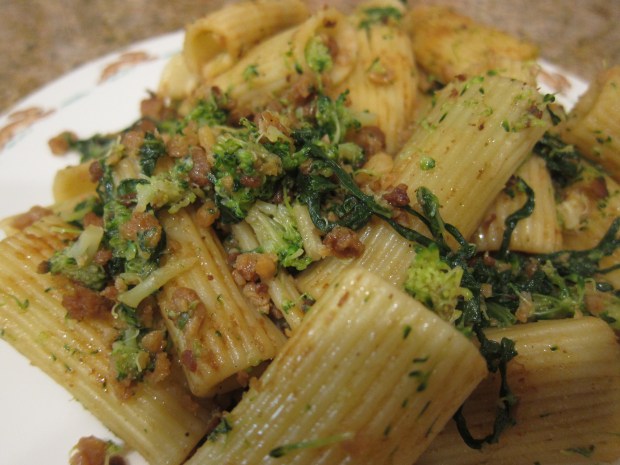
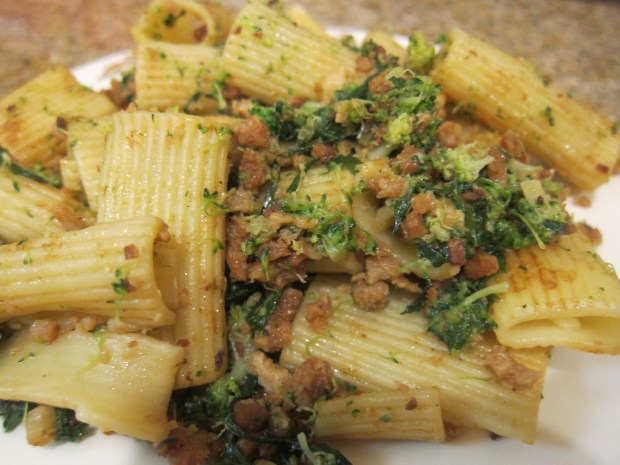
This hearty recipe makes enough for the whole family, one of those rare gems that pleases kids and adults equally.

Ingredients:

  • 1 pound rigatoni pasta
  • 8 ounces meatless crumbles (such as Gardein)
  • 3 tablespoons olive oil
  • 1 tablespoon Earth Balance butter
  • 4 minced garlic cloves
  • 2 cups broccoli florets
  • 1 cup water
  • 1 vegetable bouillon cube
  • 1 cup chopped fresh basil
  • 1/4 cup chopped fresh parsley
  • Non-dairy Parmesan cheese sprinkles
  1. Cook the pasta according to package directions; drain and set aside in a large bowl.
  2. Meanwhile, cook the meatless crumbles in a skillet for about 5 minutes, until browned. Transfer to the bowl with the pasta.
  3. Heat the olive oil and butter in a large skillet over medium heat. Add the garlic and cook for about 3 minutes.
  4. Add the broccoli, water, and bouillon cube; simmer for 8 minutes, or until the broccoli is very tender. In the last minute, stir in the basil and parsley.
  5. Add the broccoli mixture to the pasta mixture, and stir to combine.

We like this topped with the Parmesan shreds from Follow Your Heart!

Broccoli Rigatoni b

Valentine’s Day Popcorn Gift

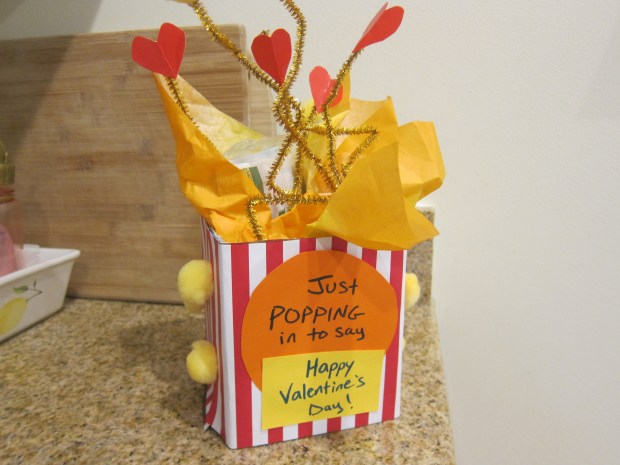
Popcorn Valentine (9)Here’s a novel way for kids to pop in and say they love someone this Valentine’s Day! This rather lengthy project wouldn’t be great for class Valentine’s since it’s big and involved, so save it for someone special like a parent or grandparent.
Popcorn Valentine (1)

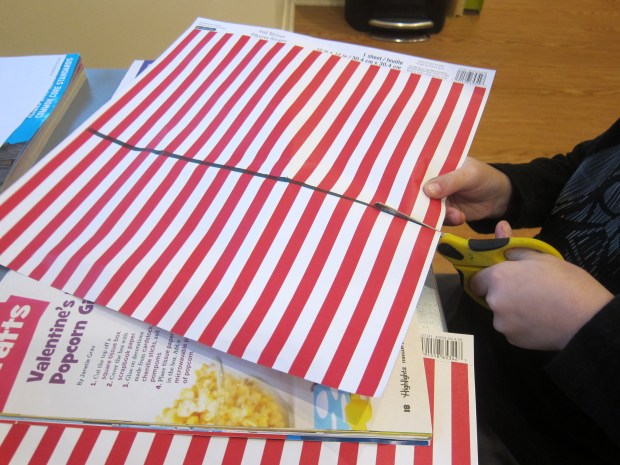
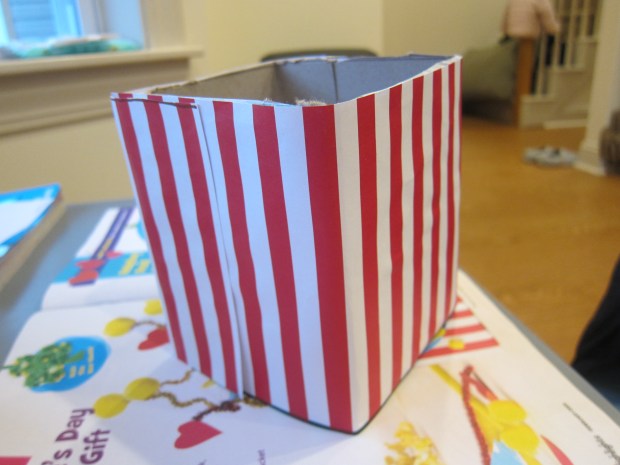
To start, Travis helped cut red and white pinstripe craft paper to fit an empty tissue box. Cut the top off the box and use a glue stick to attach the paper around the sides.

Popcorn Valentine (2)

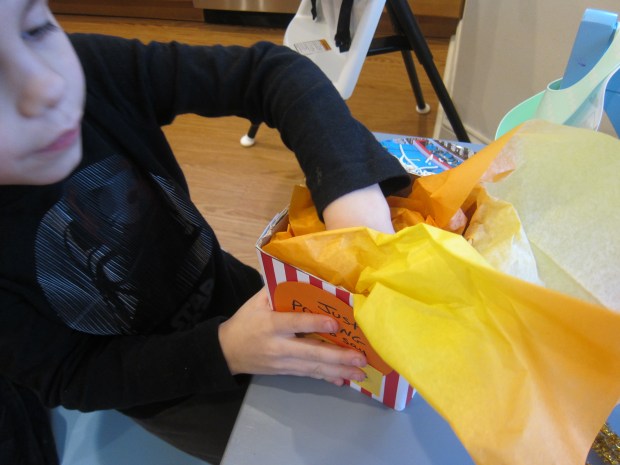
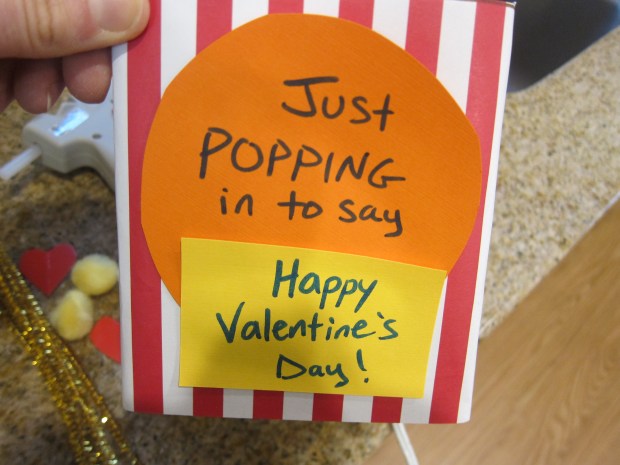
Travis needed grown-up assistance for a few of the decorations. Cut a circle and rectangle from colored cardstock (we chose yellow an dorange), and arrange on the front of the box. We wrote in the message, “Just popping in to say… Happy Valentine’s Day!”

Popcorn Valentine (3)

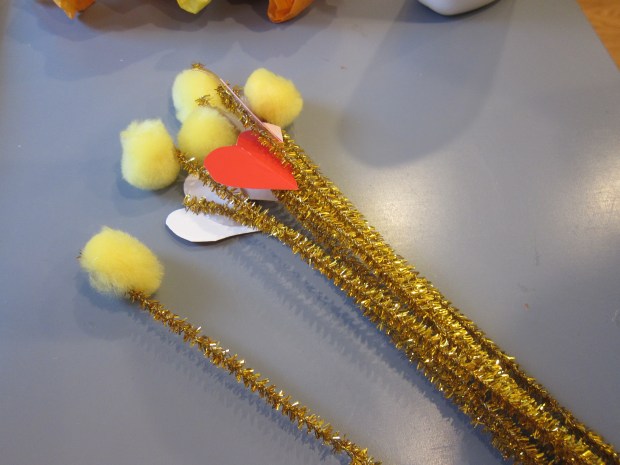
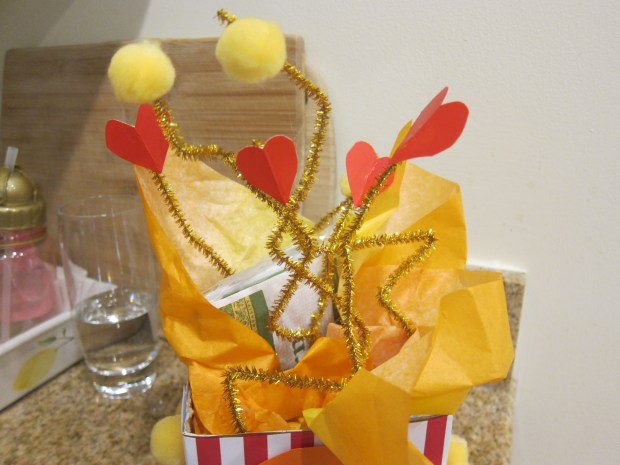
Next we hot-glued pom poms and cardstock hearts to the tips of sparkly gold pipe cleaners. Stuff a little yellow or orange tissue paper into the box.

Popcorn Valentine (4)

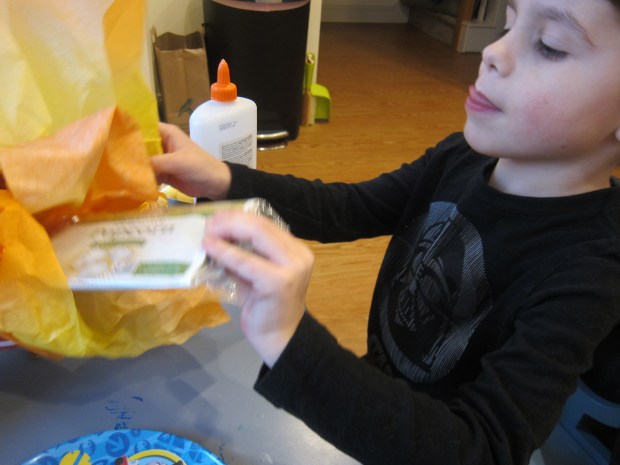
Add a package of microwave popcorn – yum! An I.O.U. for a movie night would be a fun addition!

Popcorn Valentine (5)

Travis helped bend the pipe cleaner decorations and slip them in among the tissue paper.

Popcorn Valentine (6)

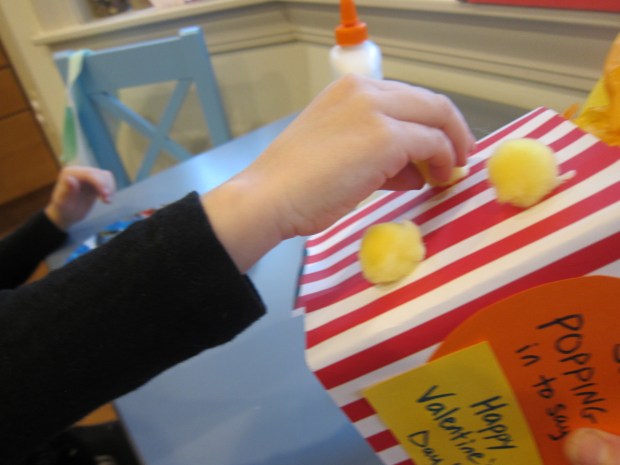
Add a few yellow pom poms to the outside of the box as “kernels”, for the finishing touch.

Popcorn Valentine (7)

He was so proud of this and made sure we hid it from daddy’s eyes until Valentine’s Day!

Popcorn Valentine (8)

Little Passports: Brazil

LP Brazil (9)

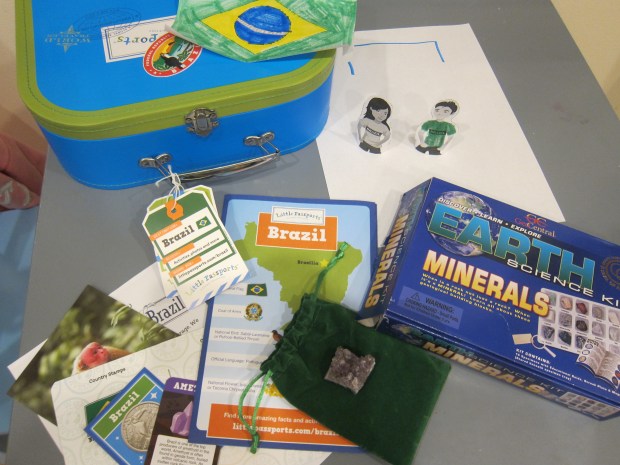
On the heels of his welcome package from Little Passports, Travis was thrilled to receive his first country package in the mail, all about… Brazil!

There was lots of similarity to the format of his Early Explorer’s envelopes, making me glad I started him off with that subscription. But it was immediately evident that now he’s in a higher age bracket (ages 5 to 8), particularly with the booklet activities. The booklet was chock full of interesting facts about Brazil, and the Amazon Rainforest in particular.

LP Brazil (1)

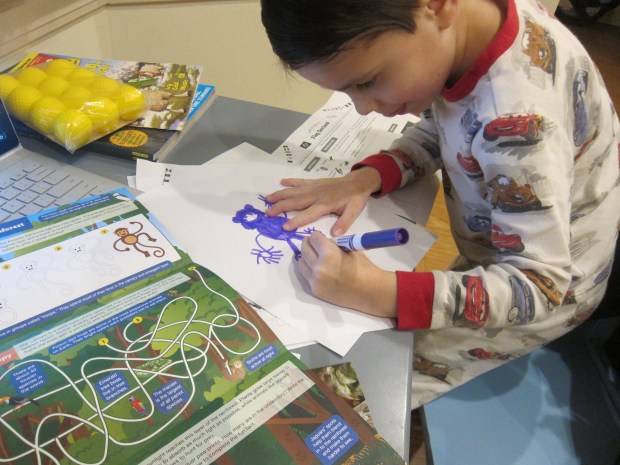
Although he needed some help with the more word-heavy activities (a word scramble, a word find), he gamely wrote all the letters and loved the art activities, including drawing a spider monkey, following mazes, and uncovering hidden animals among blue morpho butterflies.

LP Brazil (5)

There was a new coin to add to his coin chart, a new sticker and luggage tag for his suitcase, a stamp for his passport, and a “push pin” for his world map.

LP Brazil (2)

We were quick to discover that Little Passports has many bonus features online. Travis loved the vibrant photographs of Brazil to scroll through, 3 samples of Brazilian music to hear, and Portuguese words to learn.

Souvenir:

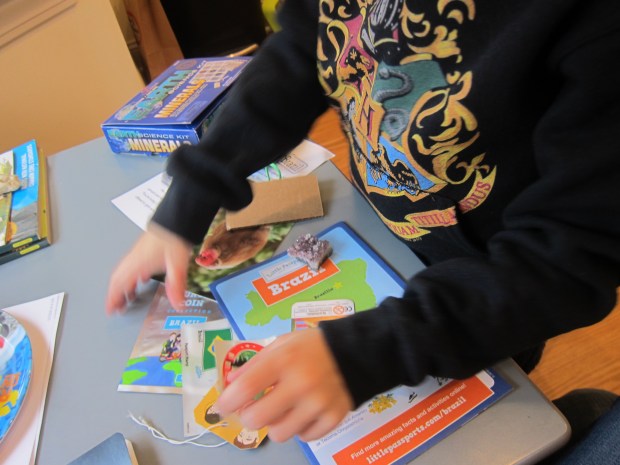
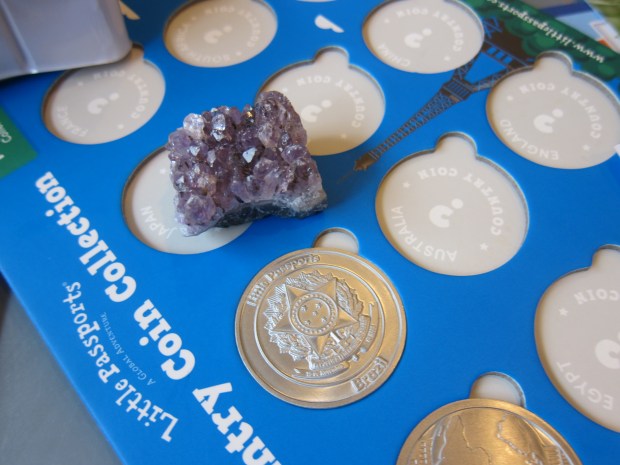
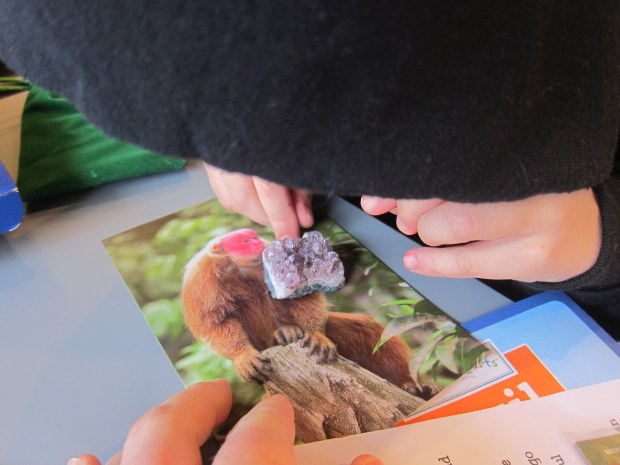
The gift this month was an amethyst, with a card explaining how Brazil is one of the top producing countries for amethyst worldwide. I knew he would love it, and for this reason had opted for a full Mineral Kit add-on. Travis adored peering at all of the minerals with the provided magnifying glass.

LP Brazil (3)

Activities:

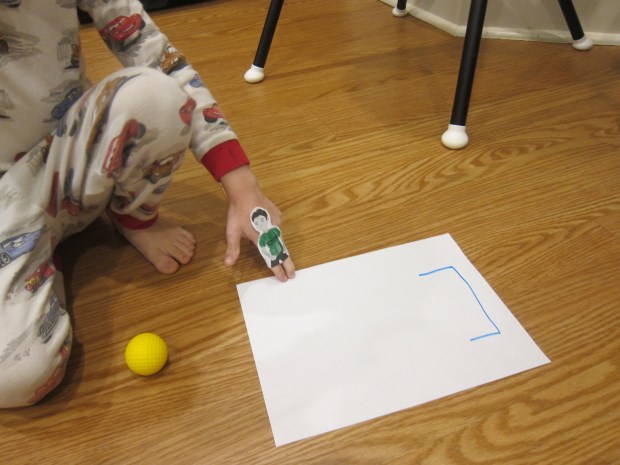
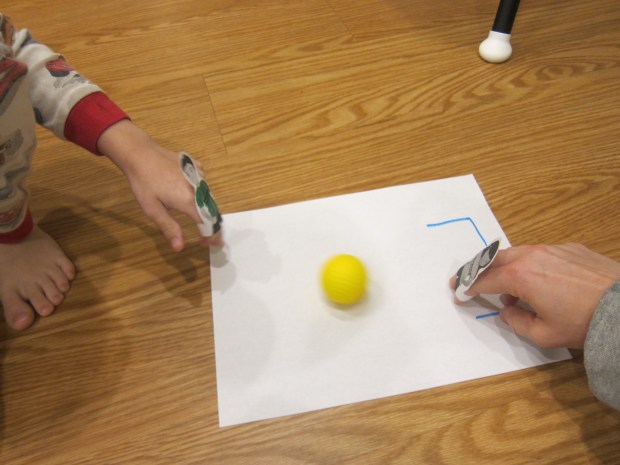
First up, futebol puppets! This adorable game was to highlight the popularity of Brazil’s favorite pastime: soccer. We printed out the template of a boy and girl soccer player. Cut these out and secure the strap with tape. Your pointer finger and middle finger become the legs.

LP Brazil (7)

It was Travis versus mommy for a shoot-out!

LP Brazil (8)

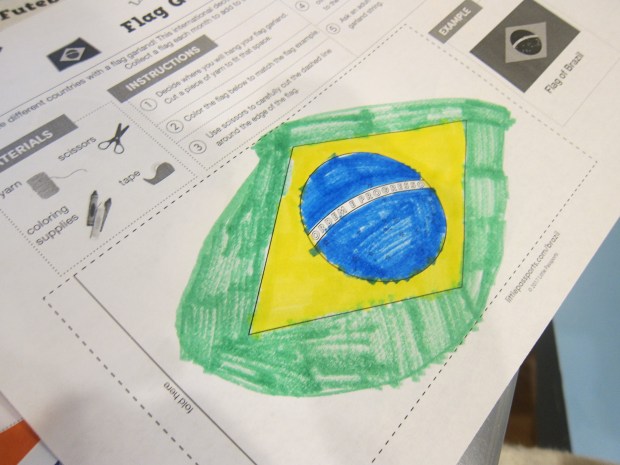
He also loved coloring in a Brazilian flag for a flag garland (we’ll be adding to this in the future with later countries!), very carefully following an image online.

LP Brazil (6)

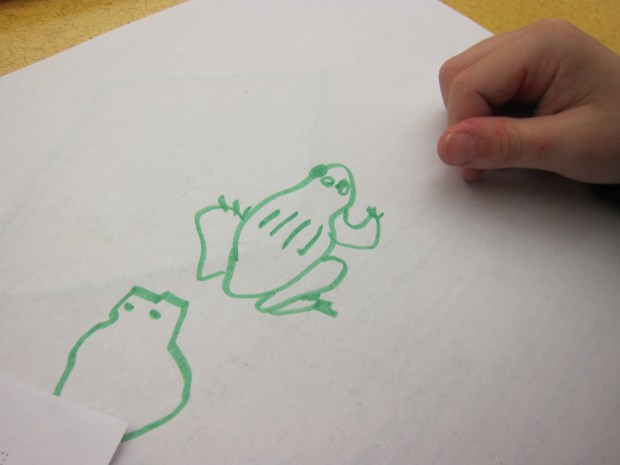
Finally, he followed the online instructions to draw more rainforest creatures. He was so proud of his tree frog!

LP Brazil (4)

Recipe:

A trip to a new country isn’t complete without sampling the food of course. This month’s recipe was for brigadeiros, a Brazilian sweet popular at parties. Both Nature’s Charm and Let’s Do Organic make canned condensed coconut milk; look for it in the baking aisle.

Ingredients:

  • 1 tablespoon Earth Balance butter
  • 1 (11-ounce) can sweetened condensed coconut milk
  • 3 tablespoons cocoa powder
  • Shredded coconut to taste
  • Chocolate sprinkles to taste
  1. Melt the butter in a saucepan over medium heat.LP Brazil (10)
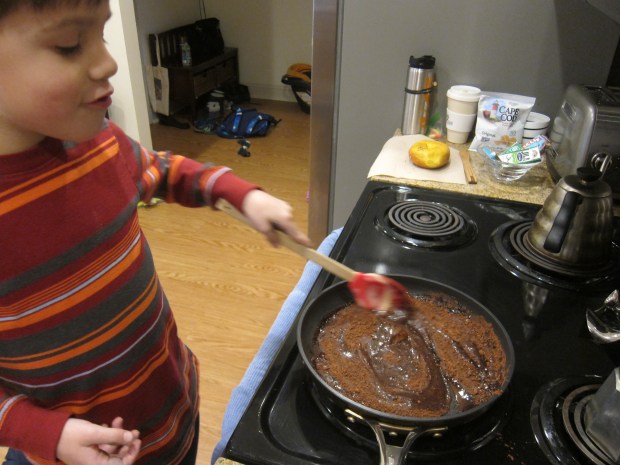
  2. Add the coconut milk and cocoa powder. Cook for 10 to 15 minutes, stirring frequently, until the mixture is thick. If you drag a spoon through it, the mixture should take a moment before it runs together again.
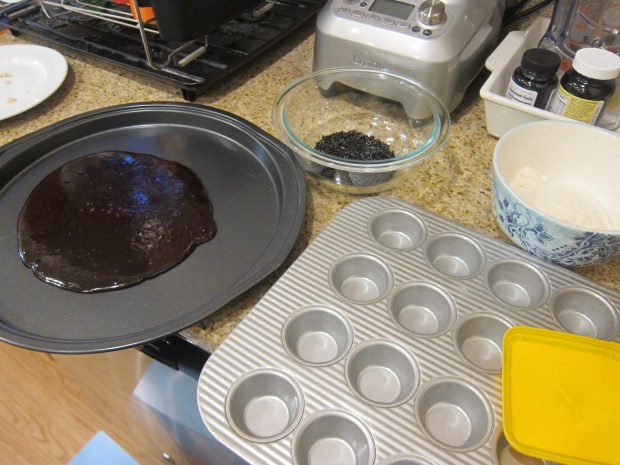
  3. Pour onto a cookie sheet and let cool for about 20 minutes.
  4. Now scoop up the “dough” and roll it into small balls. Having buttered fingers helps! LP Brazil (11)
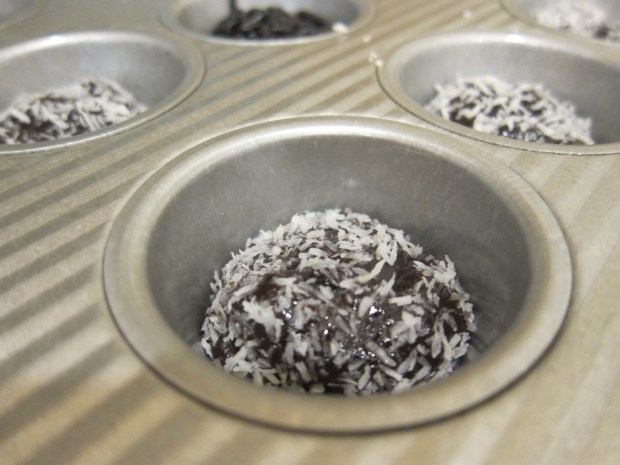
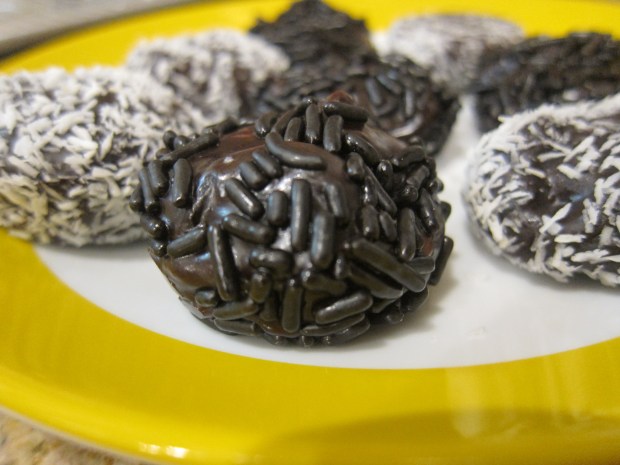
  5. Alternate rolling the balls in the coconut and chocolate sprinkles. Transfer to the cups of a mini muffin tin and chill for at least 15 minutes before serving.

LP Brazil (12)

These were a big hit for dessert. And Travis can now proudly say, “Obrigado“.

LP Brazil (15)

Drum Time

Drum Time (7)

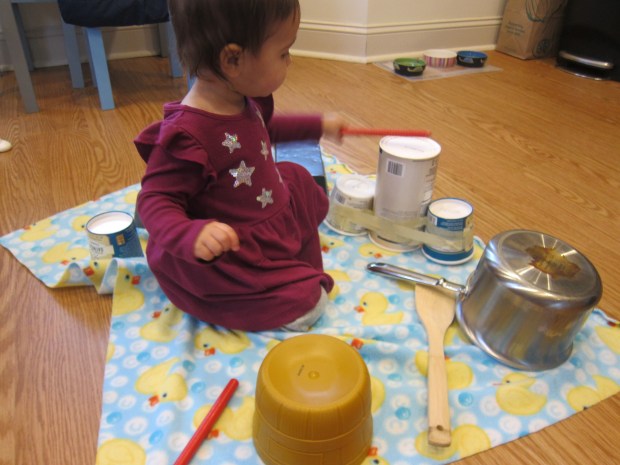
We had a rainy day today, which made it the perfect moment for an impromptu drum session with Veronika!

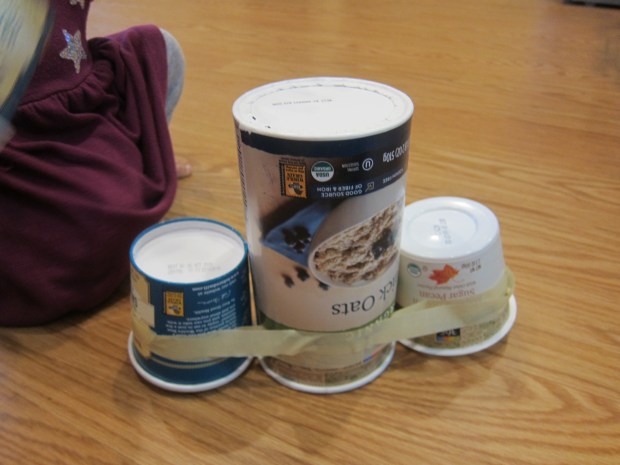
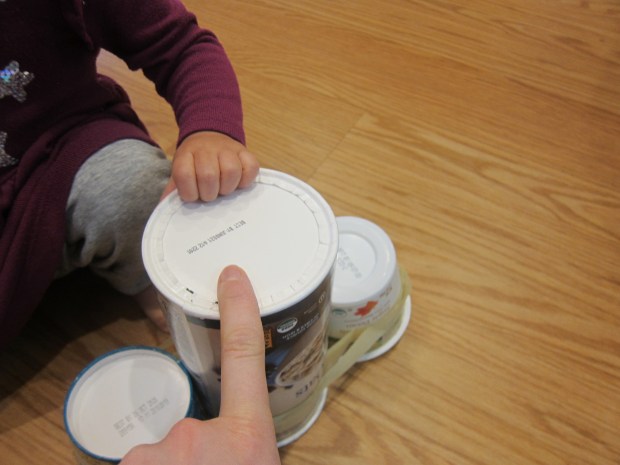
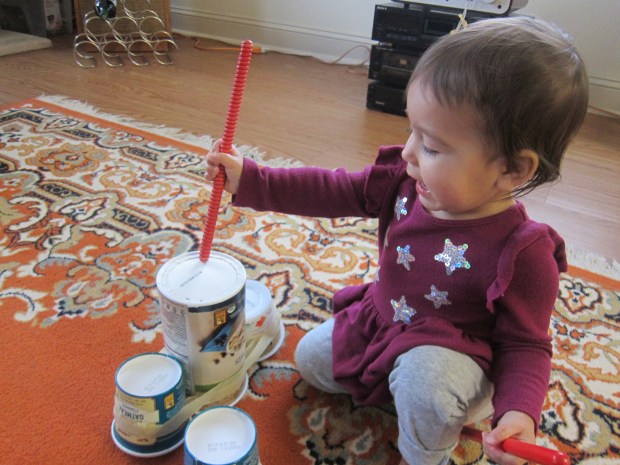
I had three different sized oatmeal containers in the recycle bin, including a full-sized oatmeal canister and two smaller servings of instant oatmeal. So first I made her a set of bongo drums! If you don’t have different sized oatmeal containers, use three that are all the same but cut them to different heights. Use masking tape to secure them together, and voila!

Drum Time (1)

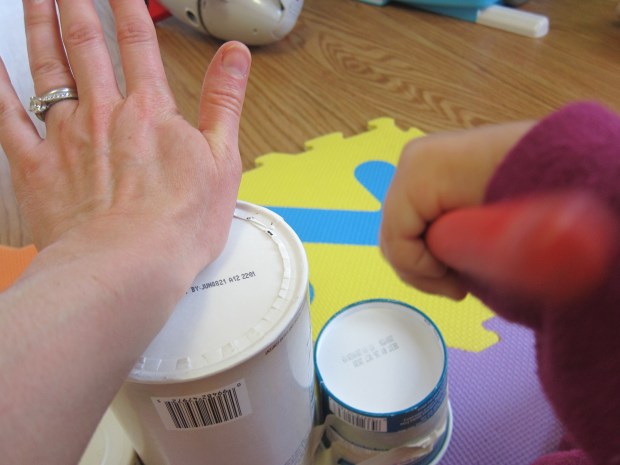
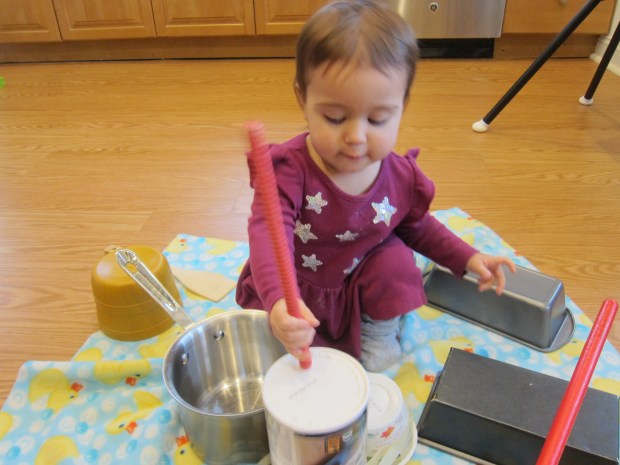
A wooden spoon and a few rhythm sticks were all we needed to start drumming. I also showed her the different ways we could drum with just our hands. We explored with our fingertips, our palms, our knuckles, and more.

Drum Time (2)

This was great for letting her explore all the different ways we can use our hands and fingers.

Drum Time (5)

But she liked the sticks best, and soon was giving lots of proud taps.

Drum Time (3)

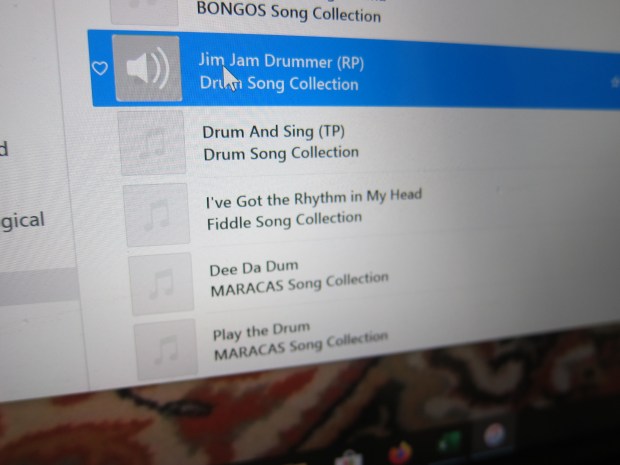
We added a soundtrack of favorite songs (heavy on drum beats of course), and started up a jam session.

Drum Time (4)

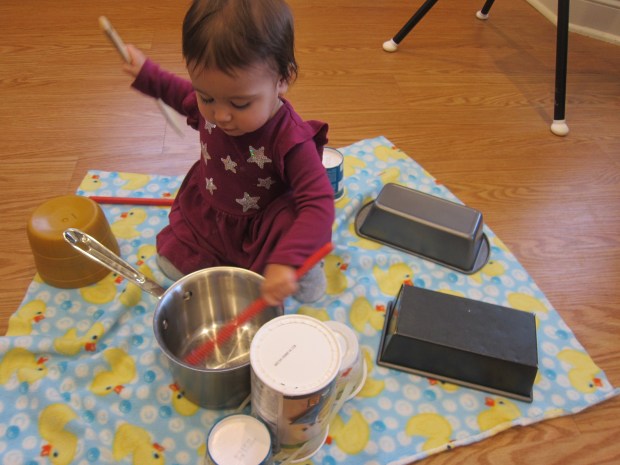
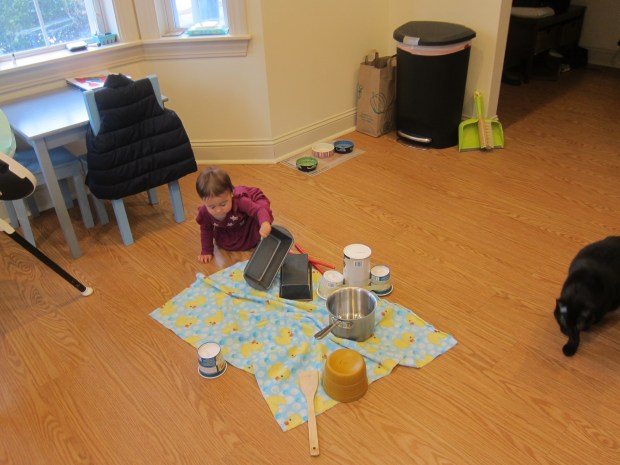
Later in the day, I set up her up with a “drum circle” of bowl and pot drums. On a soft blanket, I arranged a sauce pot, a few loaf pans, a plastic bowl, and another empty oatmeal container. I sat her in the center with her mallets and put the music back on.

Drum Time (6)

Let the drumming begin!

Drum Time (8)

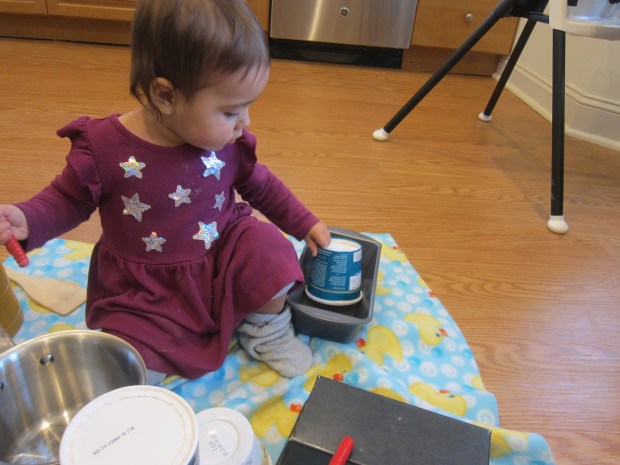
Don’t worry if your toddler drums in unconventional ways. Veronika enjoyed turning the vessels right side up so she could swirl the rhythm sticks around the inside, which made a fun clanging sound.

Drum Time (7)

She also loved piling the “drums” one inside the other, turning it into a stacking game and drum session all in one.

Drum Time (9)

When she discovered that the loaf pan made a spectacularly loud clang on the wooden floor, this had to be repeated several times.

Drum Time (10)

I didn’t reprimand her, since it’s not drum play until it gets a little loud! In sum, this was a fun way to explore volume, dynamics, rhythm, and so much more.

Where Is Your Nose?

Where is Nose (4)

When Veronika was still a baby, I introduced body parts through fun games, sometimes focusing on one body part for a whole day, but not expecting her yet to know what was what!

Here’s an update on that game now that she’s a toddler; today we made it more of a ‘Simon Says’. For each body part, I would first point to the one on my body. “Here are my fingers,” I said, wiggling them. Then I posed the question: “Where are your fingers?”

Where is Nose (1)

Over the course of the game, she proudly wiggled her fingers, pointed out her own toes and knees, touched her shoulders, and tapped her head, following my lead each time.

Where is Nose (2)

Her favorite body part is her belly. “Where is your belly? I asked. She loves to share it, and then she needed to see mine!

Where is Nose (6)

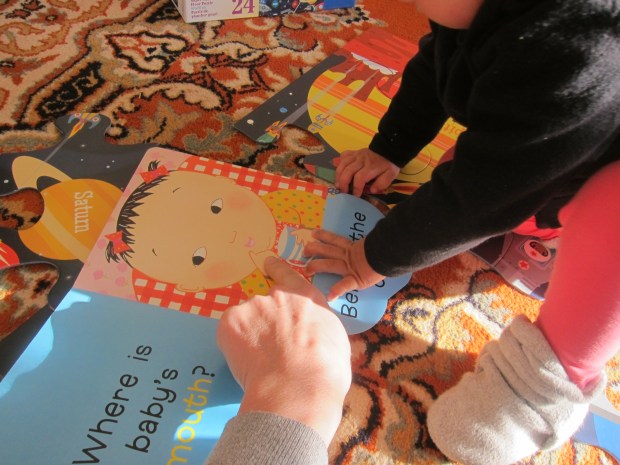
You can reinforce the game with any book that focuses on body parts.

Where is Nose (4)

Although she’s young for it, we read through Head to Toe by Eric Carle, with an action to accompany each body part. She loved seeing Baby act it out!

Where is Nose (9)

It was a delight to see how many of these words she now knows, recognizes, and says.