Make a Sensations Rug

Sensations Rug (6).JPG

This project is great tactile way for your eight-month-old to explore different textures with his or her hands or with the full body, if crawling. I made the project with quite a few hacks, since I’m no seamstress. If you’re skilled with a needle and thread, you’ll want to sew various fabrics onto a larger piece of fabric and present that more elegant version to your baby.

But this mama wields a hot glue gun! I used a pliable piece of craft foam as the backing and firmly hot-glued down: reflective paper, burlap, fluffy fabric, smooth cotton, two corks, an old sock, and a second piece of bumpy craft foam.

Sensations Rug (1)

Veronika couldn’t wait to get her hands all over this! She dug little fingers into the soft and fluffy fabric, and ran fingers over the scratchy burlap.

Sensations Rug (2)

She pulled insistently at the bumpy corks…

Sensations Rug (3)

…and otherwise just had a ball.

Sensations Rug (5)

The reflective material definitely caught her attention.

Sensations Rug (4)

I then put the “rug” down on the floor alongside another tactile blanket that we own, featuring tassels and a nubby fabric. My hope was that this expanded surface might encourage her to crawl across both (note: she’s thisclose to crawling), but she preferred to lie on her tummy and let her fingers get busy.

Sensations Rug (8)

There was flicking, rubbing, and pure enjoyment of all the different elements.

Sensations Rug (9)

In sum, this is a cute riff on board books that feature textured pages, and has a charming homemade quality that you and your baby will love.

“U Pick” U

U Pick (2)

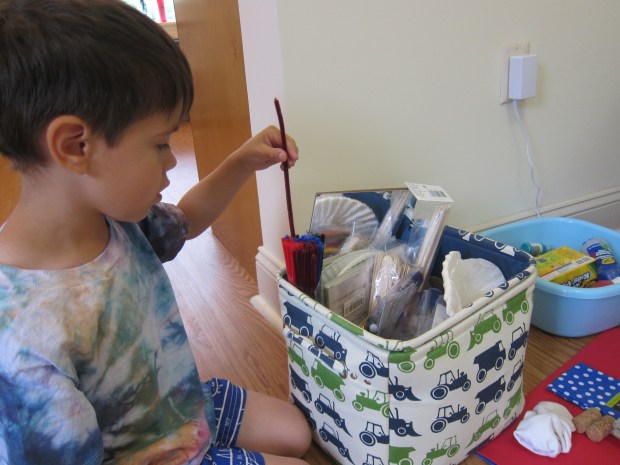
After some easy tracing of letter U, I gave Travis a little spin on making our three-D versions today: “u pick” the material from our craft bin!

U Pick (3)

This led to some excitement, since he feels important whenever he’s allowed to dig through the materials in here. First he fashioned a very straightforward U from yarn.

U Pick (1)Next he decided he wanted to try dowels! I knew these would be too rigid, but wanted him to figure it out for himself. So the package of dowels was opened and fiddled with, but then discarded.

U Pick (4)

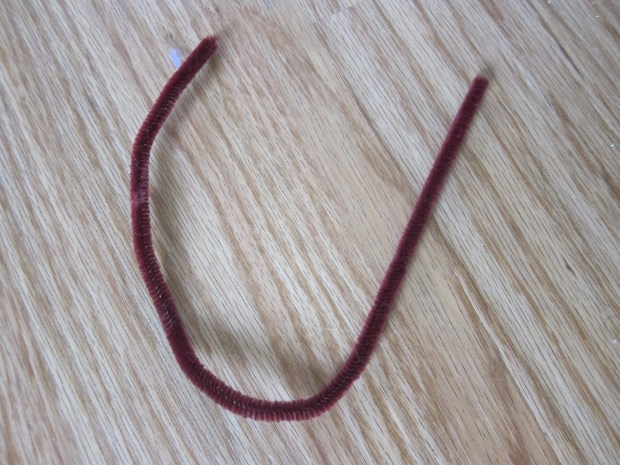
Aha! He discovered that pipe cleaners were a bit bendier. In no time at all, we had lower case u as well.

U Pick (5)

Tie a T

Twig T (3).JPG

Travis loves the letter T; because it’s the first letter of his name, it’s the one he’s most familiar with and gives him no trouble. So he was able to trace it this morning and then was interested to see what we would make it out of.

First we found a two twigs in the yard. I asked him to think which part of the T needed to be the longer twig and which shorter.

“I know,” he announced, and formed the letter in moments.

Twig T (1)

Two ties for lower case t were a bit tougher, only because they had to be folded. But with some folding help, he tackled this one, too.

Twig T (2)

Fun with Idioms

Idioms alt.JPG

Many Raddish lesson plans that accompany their recipes are quite involved, but this one was fairly straightforward. But it got lots of giggles and introduced my kindergartner to a new term and concept.

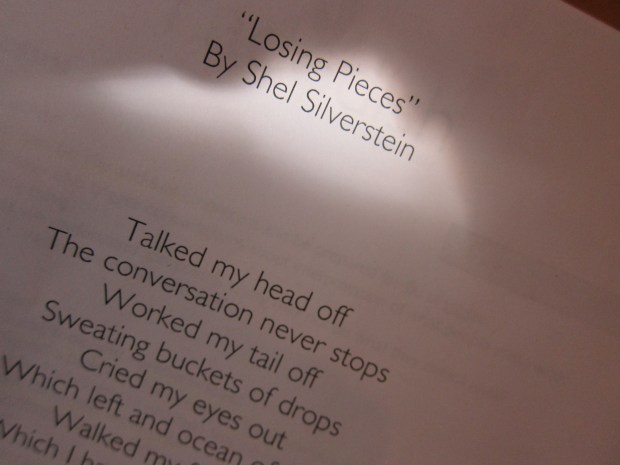
I sat Travis down and read through the silly poem “Losing Pieces” by Shel Silverstein, in which he talks about talking off his head, crying his eyes out, and singing his heart out. It concludes:

There’s really not much

left of me.

Travis giggled at the last line but I asked him what was going on here. Had the author really lost his head? Walked his feet off?

Idioms (1)

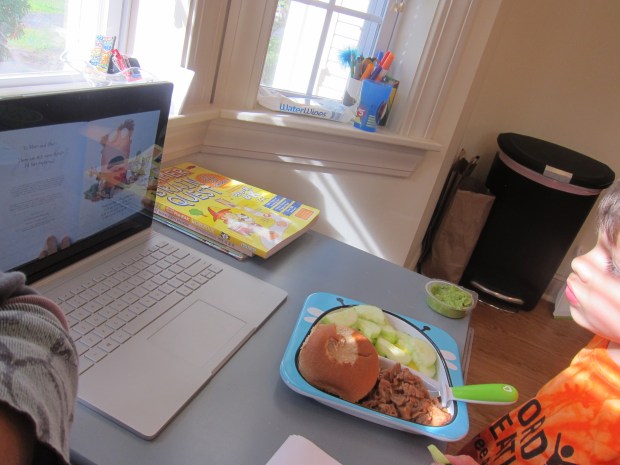
Hmm… We needed more exploration. Travis is familiar with the book Parts by Tedd Arnold, but we hadn’t known there was a More Parts sequel. I showed Travis an online read-through, again producing giggles.

Idioms (2)

Once the read-through was complete, I told Travis he’d been listening to idioms. In other words: a group of words that mean something different from what the words actually say.

Raddish also suggested a great clip with illustrations by children showing the literal meaning of an idiom (like ‘holy cow or ‘cat got your tongue’) and then a child steps in to explain what it really means.

Idioms (3)

So now it was Travis’s turn! Check out the list of idioms here if your child needs help thinking of one to illustrate. Travis laughed when we got to “chip on one’s shoulder” so we stopped there.

Idioms (4)

He drew a person and positioned a little yellow chip right on the shoulder. For fun, show your drawing to friends or family members and see if they can guess which idiom is pictured!

Idioms (5)

Ding-a-Ling

Ding a Ling (3).JPG

Does your baby reach for your smartphone all the time? Curb the move by introducing a far safer baby toy… A telephone in the shape of an old-fashioned rotary version!

Ding a Ling (1)

These toys are a classic for a reason and it hardly matters that little kids don’t even recognize this as a phone anymore. Between dinging noises, twisting dials and a slim receiver to hold, little babies need no prompt to play.

Ding a Ling (4)

But for added fun, today I sat down and made “calls” with Veronika. I pretended to have a conversation with her grandmother, chatting about what we would do that day. Make sure you use big facial expressions and exaggerated voices.

Ding a Ling (2)

When she saw me talking into the receiver, she had to be part of the action of course.

Ding a Ling (5)

She started babbling along and reaching for the mouthpiece to hold up to her own ear. Games like this are fantastic, since you’ll be playing but also teaching your little one about real-life interactions and etiquette.

Ding a Ling (6)

“Cooking” with Flour

Cooking with Flour (10).JPG

Many parents I know resist flour play, saying it’s either too messy or too much of a hassle. But I love this sensory material for babies. First, it’s edible, so no worries if little fingers make it up to little mouths. Second, as long as you cover your surface, clean-up is a breeze. Set down an old shower curtain or plastic table cloth for this one, and you’ll be able to contain the mess.

I stripped Veronika down to just a onesie (go all the way to the diaper for even easier clean-up!), and gave her a few measuring spoons and cups. She was having fun already, and wondering about this interesting bag.

Cooking with Flour (1)

I sprinkled a little pile of flour in front of her. In went the hands right away!

Cooking with Flour (2)

There are so many ways to play with flour and your baby. Demonstrate how to make squiggles in it.

Cooking with Flour (7)

Use the spoons and cups to scoop and pour.

Cooking with Flour (8)

Sprinkle a little light dusting of flour over toes and hands for a tickly sensation.

Cooking with Flour (3)

And just get good and messy!

Cooking with Flour (4)

She loved wiggling her legs through the flour until her thighs were completely coated!

Cooking with Flour (9)

Basically she just had a blast, which gave me time to get a few other things done in the kitchen.

Cooking with Flour (6)

When we were done, I just plopped her right in the bath!

Cooking with Flour (5)

Proportional Pie

Proportion Pie (6)

Much like the magnetic hearts that Travis and I crafted today, this project is a fun way to teach kids about symmetry… With the added bonus that it’s edible!

Unlike linear symmetry, this project shows circular symmetry. You can point out to your child things in nature that show symmetry in a circle like this, including starfish and spider webs.

For the ready-to-eat equivalent, bake a pre-made pie shell according to package directions and let cool. (Note: A convenient vegan go-to is Wholly Wholesome).

Spoon a thick layer of non-dairy yogurt into the pie.

Proportion Pie (1)

Set out plates of berries or other fruits for your child to use as decoration and score the top of the yogurt so the pie is divided into 4 equal portions.

Proportion Pie (2)

(Note: Bigger kids might want to do this with six portions, but four seemed easier for my kindergartner to handle).

I placed a strawberry in one quarter of the pie. How many strawberries should each of the other three sections receive? Travis quickly added 1 strawberry to each.

Proportion Pie (3)

Next I placed two blueberries in one section. At first he placed his blueberries any which way, but I showed him how to place them not just in the right quadrant, but also the same place.

Proportion Pie (7)

“Is it ready to eat?” he wanted to know. Almost!


Proportion Pie (4)

We added just a few more blueberry and strawberry decorations to help him see the symmetry, and then it was time to scoop into the pie. What delicious fun!

Magnetic Hearts

Magnetic Heart (10).JPG

This quick craft not only teaches about the topic of symmetry, but is also a fantastic way to explore the properties of magnets!

To cut out symmetrical hearts, fold cardstock in half and draw half a heart; cut out.

Magnetic Heart (1)

I thought to only have Travis help cut out the accompanying two long rectangles we would need from each color of cardstock, but he insisted on cutting out the heart himself – great practice along curves!

Magnetic Heart (2)

Open up the paper to reveal a symmetrical heart, then cut it in half.

Magnetic Heart (4)

Fold the rectangular strips you’ve cut out accordion style to form 5 pleats.

Magnetic Heart (5)

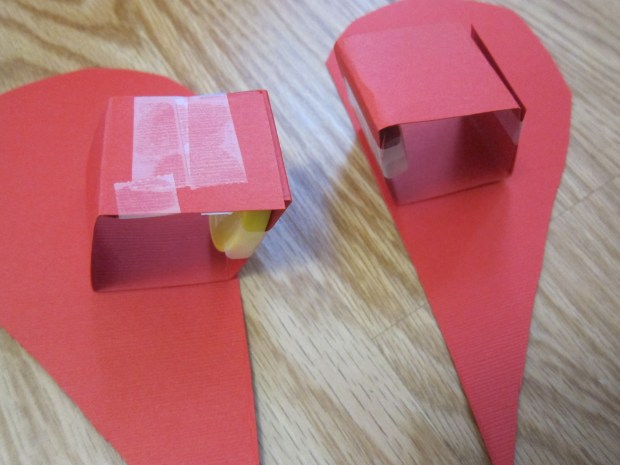
Fold this strip around itself to form a square and use tape or glue to adhere shut.

Magnetic Heart (6)

Tape a magnet to one side of the square, facing towards the center of your heart.

Magnetic Heart (7)

Tape down onto the heart and repeat on the other side.

Magnetic Heart (8)

Now, your two heart halves will snap together!

Magnetic Heart (9)

The other fun way to do this is to deliberately set up the magnets to repel each other. Travis loved chasing halves of hearts around the play room this way!

Magnetic Heart (13)

As you play, have a quick talk about attraction and repulsion in magnets, and you’ll have thrown a little learning into the fun.

Magnetic Heart (12)


This Little Piggy… and Rabbit?

This Piggy (1)

“This Little Piggy” is a favorite and anticipated game around here now for Veronika, especially since she’s at an age where she can anticipate that tickle under the chin. Today, we mixed it up with other animals. First she had piggy toes, of course.

This Piggy (3(

And a big tickle!

This Piggy (5)

But then she had… ducky toes?

This Piggy (6)

And bunny toes!

This Piggy (7).jpg

What other silly versions of “This Little Piggy” do you and your baby play? Please share in the comments!

This Piggy (4).jpg

Puppet Play


Puppet Play (9)

Veronika and I played with puppets today in a few cute ways. Babies adore puppets, likely earning you huge grins no matter how amateur your show. So pull out the puppets or make a few, and have fun!

For a simple homemade version, consider making puppets for whatever song or story your baby currently likes best. Veronika loves Itsy Bitsy Spider, so I made a nice big spider (a purple color, cute top hat and smile ensured that he was a friendly spider, and yes I know that my arachnid is missing a set of legs), and a bright orange sun.

Puppet Play (1)

Tape your puppets to popsicle sticks and you’re ready for the show!

Puppet Play (7)

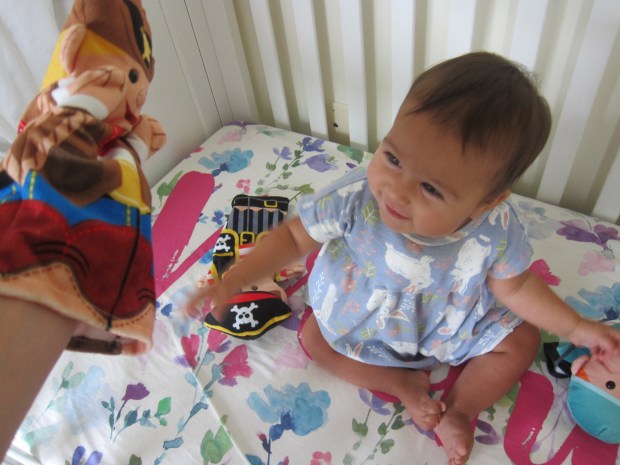
I sat Veronika down in her crib which made the perfect “stage.” As I sang the song, the spider and the sun took turns coming out – much to her delight!

Puppet Play (8)

Next we moved on to hand puppets.

Puppet Play (2)

I regaled her with characters popping up over the crib rail, everything from a doctor to a firefighter to a pirate.

Puppet Play (3)

She loved watching the puppet hands move and getting kisses on the cheek.

Puppet Play (4)

Somebody’s having fun!

Puppet Play (5)

There’s a reason shows like Sesame Street have endured for so many years; puppets can bring comfort down the line, as well as amusement. We like using puppets to search for other toys that have gotten lost, or to help illustrate emotions.

Puppet Play (6)

How do you and your baby play with puppets? Please share in the comments!