Tweezers & Goldfish

Tweezers & Goldfish (9)

I loved this activity the moment I spotted it on Teaching Mama, but one problem prevented us from doing it right away: store-bought goldfish are not vegan, not even the pretzels!

Luckily, I have a fish-shaped cookie cutter from an old project, and could make a batch at home (this time I used the recipe from Nature’s Path, with regular flour and mixing by hand instead of in a food processor. Veronika was so excited seeing the fish crackers in the oven, and couldn’t wait to see what we’d do with them (and to taste them!).

Tweezers & Goldfish (3)

As the fish baked in the oven, I drew six fish bowls with marker on a piece of white poster board, and labeled them 1-6.

Tweezers & Goldfish (2)

Ding! The fish were done. Well of course first we tried them for a snack. Then I set out a bowl of the fish along with a pair of oversize tweezers and the fishbowl chart.

Tweezers & Goldfish (4)

I had Veronika name each number as review; she can recognize numerals up to 10 now. Next, I told her we had to fill each fish bowl with the correct number of fish! I showed her how to pinch up one fish with the tweezers and transfer to the bowl marked 1.

Tweezers & Goldfish (5)

Working together, we pinched and transferred and counted to fill each bowl.

Tweezers & Goldfish (6)

And of course there was lots of happy snacking along the way.

Tweezers & Goldfish (7)

Monster Automaton

Monster Automaton (10)

Here’s a neat way to show kids how the parts work and move in a very simple automaton (e.g. moving machines like cuckoo clocks), with no fancy equipment required!

Monster Automaton (1)

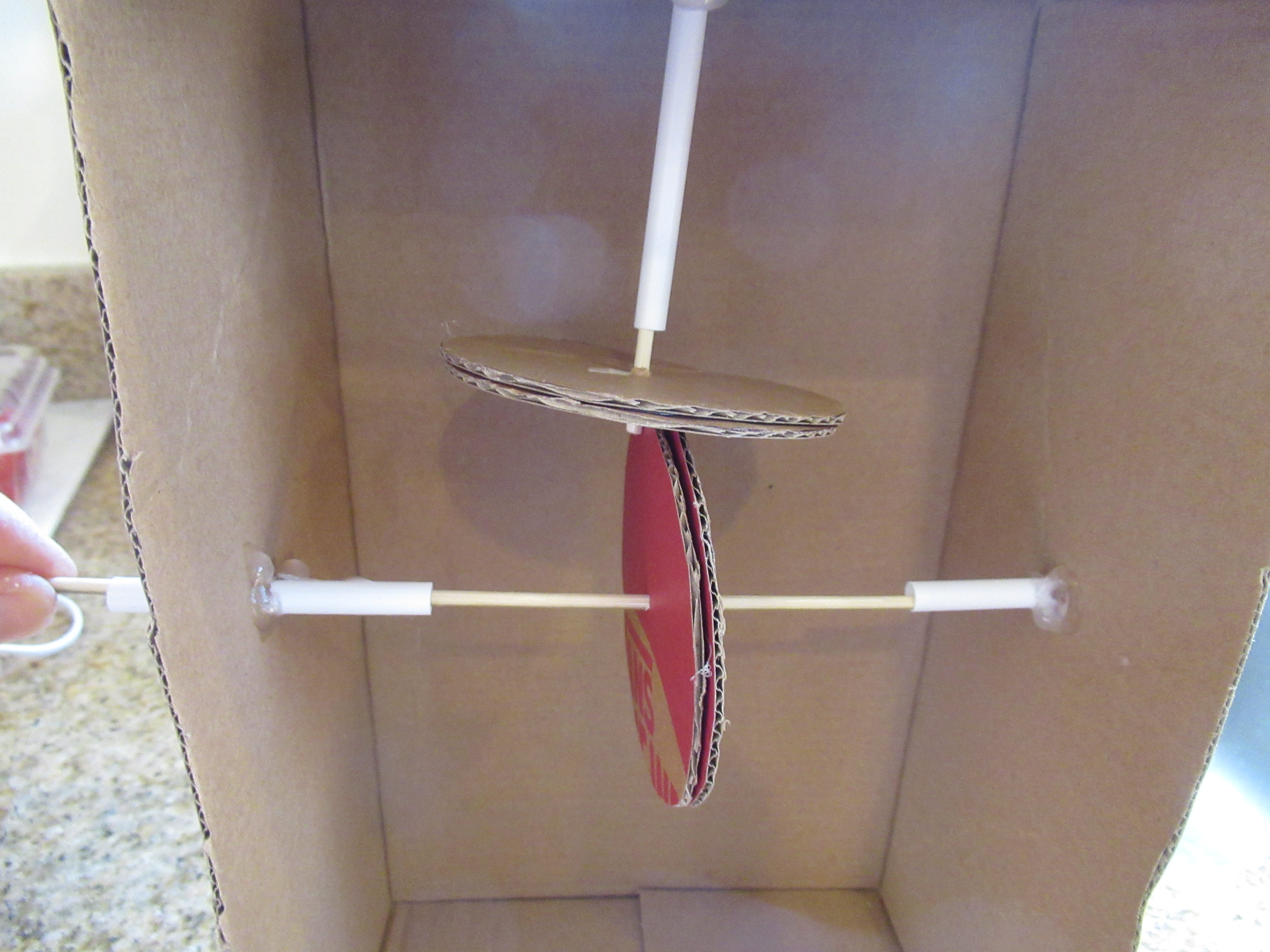
To start, place a plastic cup over cardboard and trace four times to make four circles. Use hot glue to make two stacks of 2 circles, then poke a sewer up through the center of each pair. The cardboard circles are the “cams” and the skewer is the axle.

Monster Automaton (2)

Next, poke a hole in the top of a shoebox, as well as one in each side. Widen the holes so they are big enough for cut pieces of a plastic straw to fit through; use a little hot glue to secure the straw in the holes.

Monster Automaton (3)

Slide the skewers through the straws; they should be able to spin freely.

Monster Automaton (5)

Arrange the cams such that the lower one holds up the top one. When you spin the horizontal bottom skewer, the top cam spins! I only got a few second of video, but it was neat for the kids to see this in motion!

For a little fun, we added a “monster” on top. A little green marker, wiggle eyes, and a jagged mouth turned a simple paper cup into a scary creature.

Monster Automaton (6)

English Muffin Pizzas

English Muffin Pizzas (2)

English muffin pizzas are the perfect alternative to a family-sized pie when everyone has a different favorite topping! Here’s a quick recipe for basic English muffin pizzas and a few of our favorite topping ideas, but these are suggestions only. I recommend setting out bowls with each individual topping ingredient for a make-your-own buffet bar.

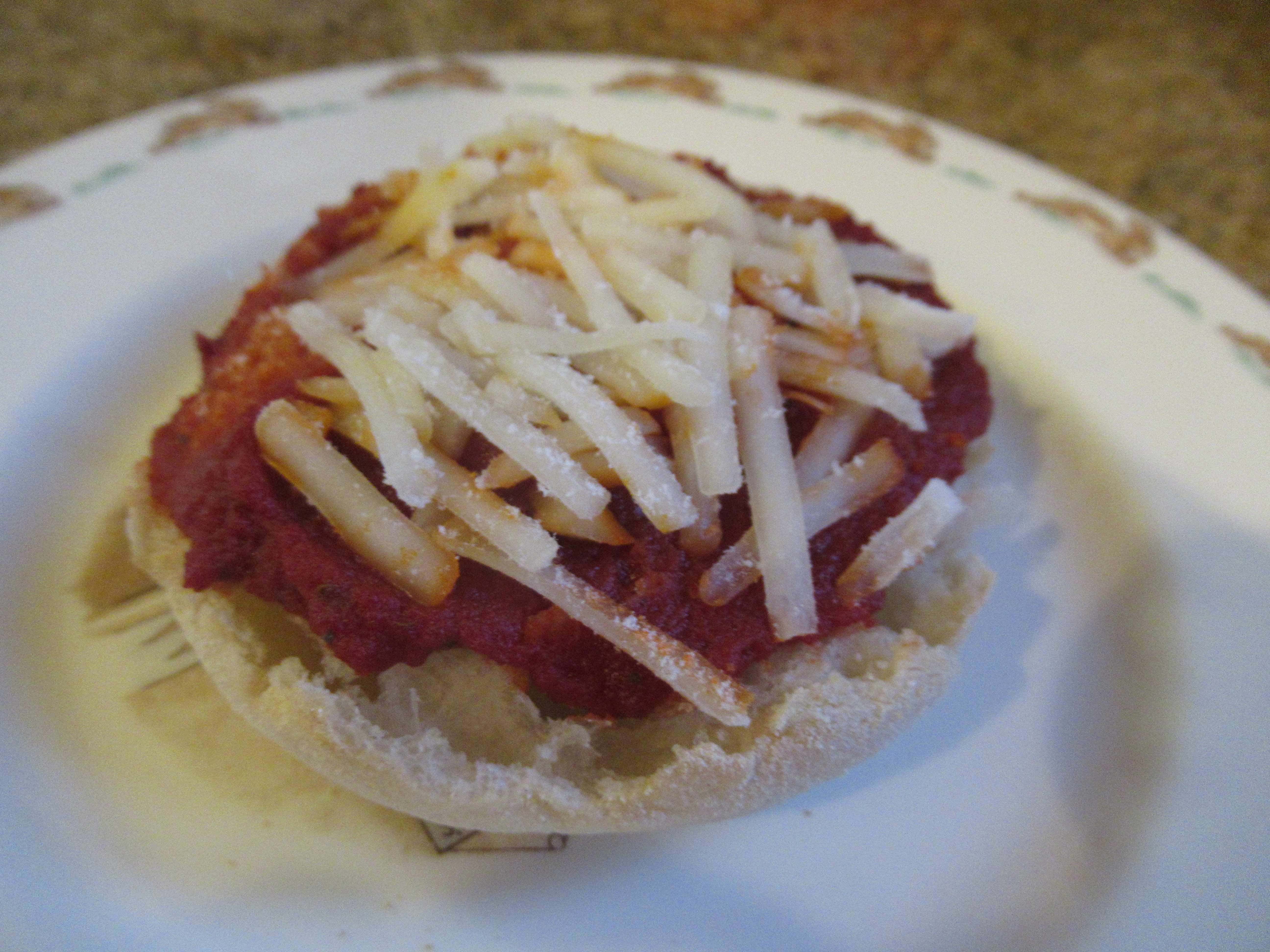
To prepare the pizza sauce, combine the following in a bowl: 1 (8-ounce) can tomato sauce, 1/4 cup carrot puree (or butternut squash puree), 1/2 teaspoon garlic powder. 1/2 teaspoon dried oregano, 1/2 teaspoon dried basil, and 1 teaspoon agave nectar. Split English muffins in half and spread each with about 1/8 cup sauce.

Place the English muffin halves on a baking sheet and sprinkle each with about 1/8 cup shredded vegan mozzarella. Bake at 375 degrees F for 10 minutes.

English Muffin Pizzas (1)

Eat ’em just like this, or try these two variations:

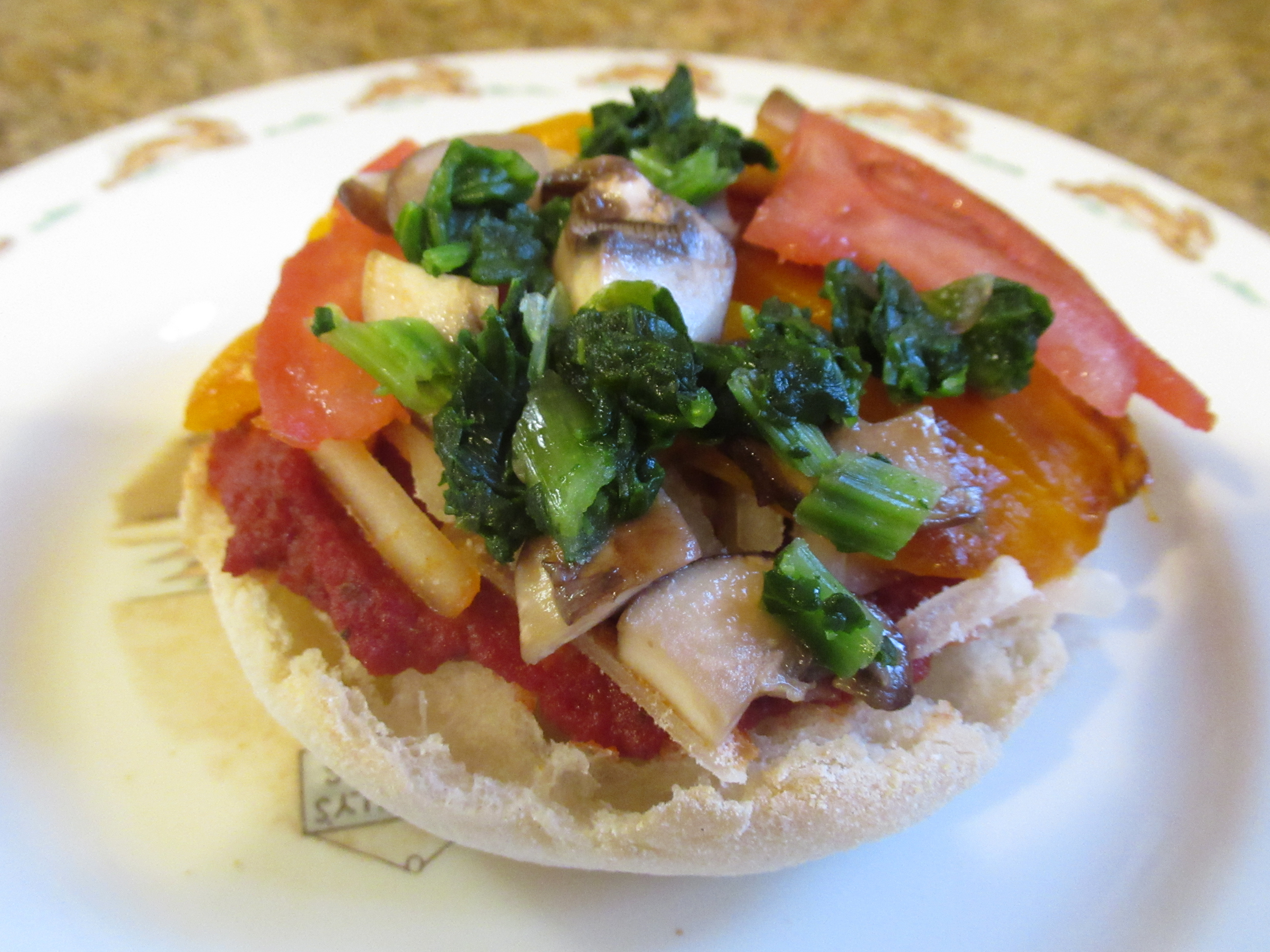
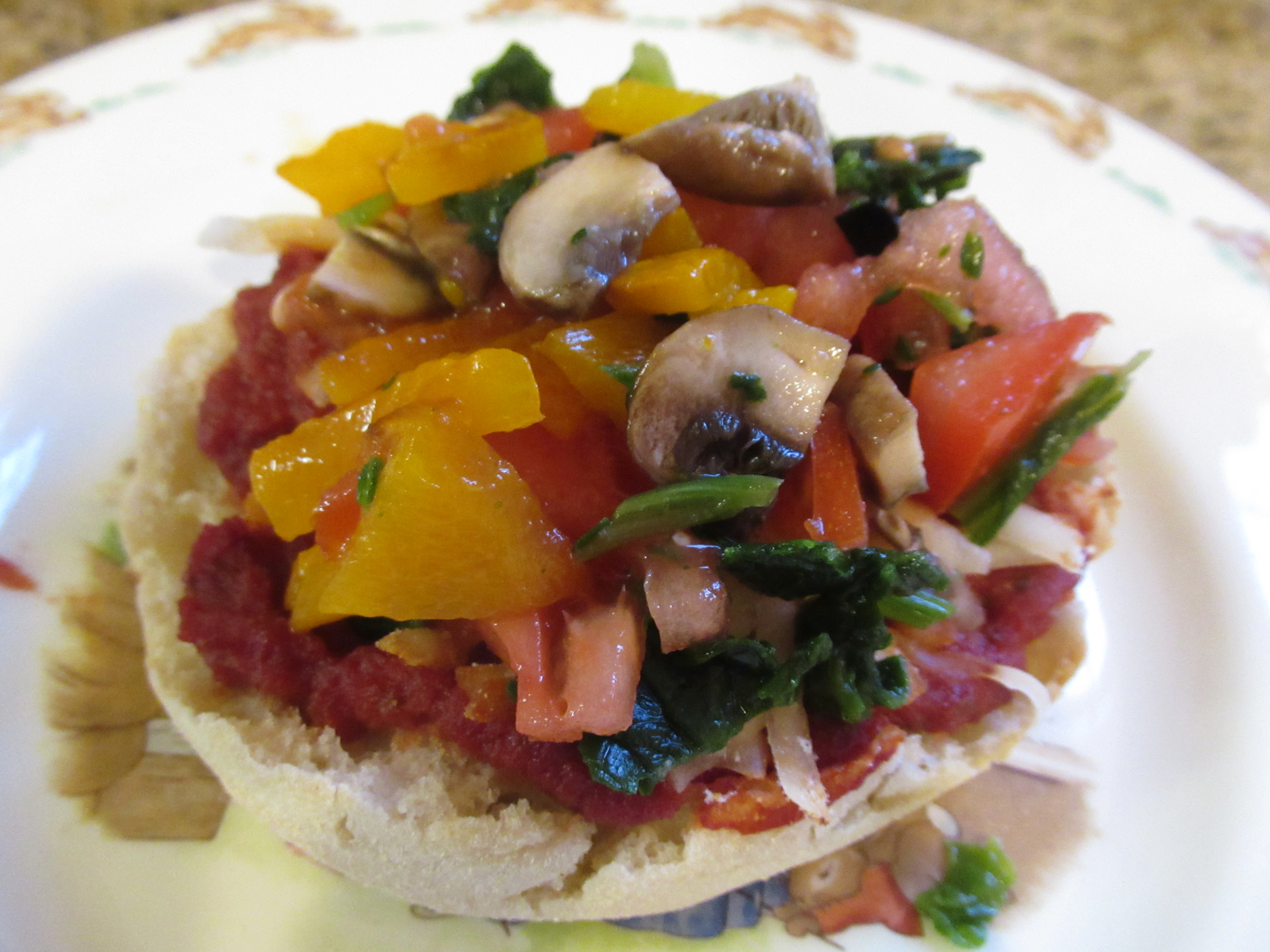
The Veggie-Packed: Top with chopped tomato, roasted bell pepper strips, sauteed spinach, and sauteed mushrooms.

English Muffin Pizzas (3)

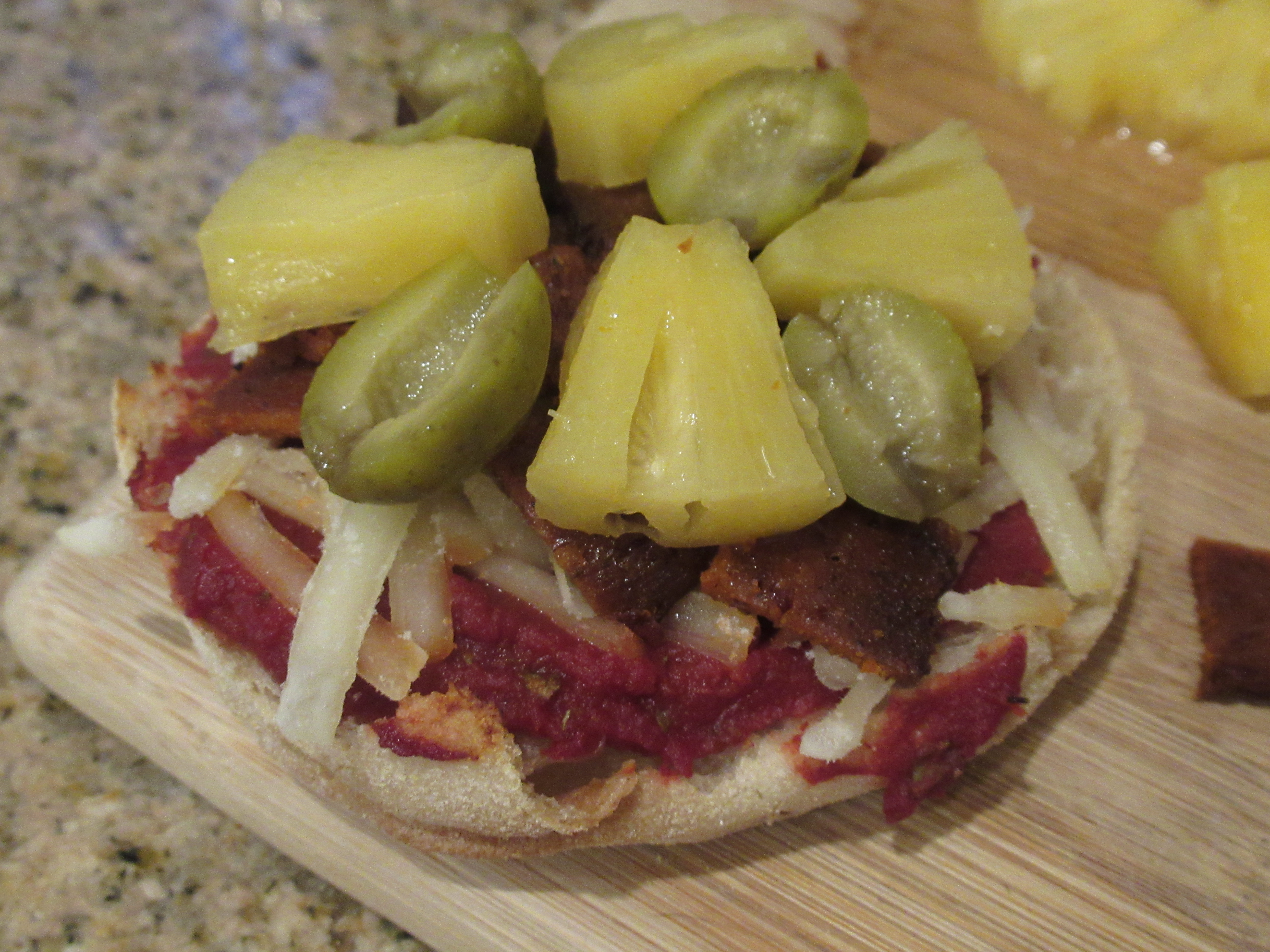
The Hawaiian: Top with chopped pineapple, cooked and chopped vegan bacon, and sliced olives.

English Muffin Pizzas alt

Which version does your family like best? Please share in the comments!

Get Sculpting

Get Sculpting (7)

It’s not often that we test out a whole new material, but thanks to a tip from Parents magazine, I purchased a roll of plaster cloth (available on Amazon), which lets you make the easiest at-home papier-mache crafts ever, no newspaper strips or messy flour mixtures required!

Our first project was very simple so even a toddler could help: a bowl. To set up, I inflated a balloon, cut strips of the plaster cloth, and filled a tray with a little water.

Get Sculpting (1)

The method is simple, although be prepared for a little mess! Veronika first tried to dip the balloon right in the water, which made it pop! I quickly inflated a second, and this time she realized she needed to dip in the plaster cloth strips instead. I let her have a few to swirl and play with in the water.

Get Sculpting (2)

For the strips that you’ll actually adhere to the balloon, you only want to dip in the water for about 3 seconds and then scrape off any excess liquid. Press onto the balloon and cover halfway until you’ve made a bowl shape. Expect fingers to turn white and messy, making this the best kind of hands-on sensory art.

I set the balloon aside in the sink, which seemed the safest place for it; the plaster cloth only takes about 30 minutes to dry. Next, I popped the balloon, leaving the bowl behind.

Get Sculpting (4)

Time to decorate! First Veronika wanted to add stickers, but these wouldn’t adhere to the slightly damp plaster.

Get Sculpting (5)

We used markers instead, which took on a faded watercolor effect on the plaster. The result was really quite beautiful! Since the bowl is fragile, this particular craft is better suited for display and not storage.

Get Sculpting (6)

There’s plenty of plaster cloth left over on our roll, so we’ll have to think of another project soon!

Get Sculpting (8)

Origami Fidget Spinner

Origami Fidget Spinner (9)

Travis can have a hard time concentrating during school Zoom sessions, and we’ve tested out a few kinds of fidget spinner as a solution. There’s more behind these spinners than just a fad; they really can help kids focus by keeping fingers busy. Here’s a way to make a beautiful fidget spinner at home that rivals any store-bought version!

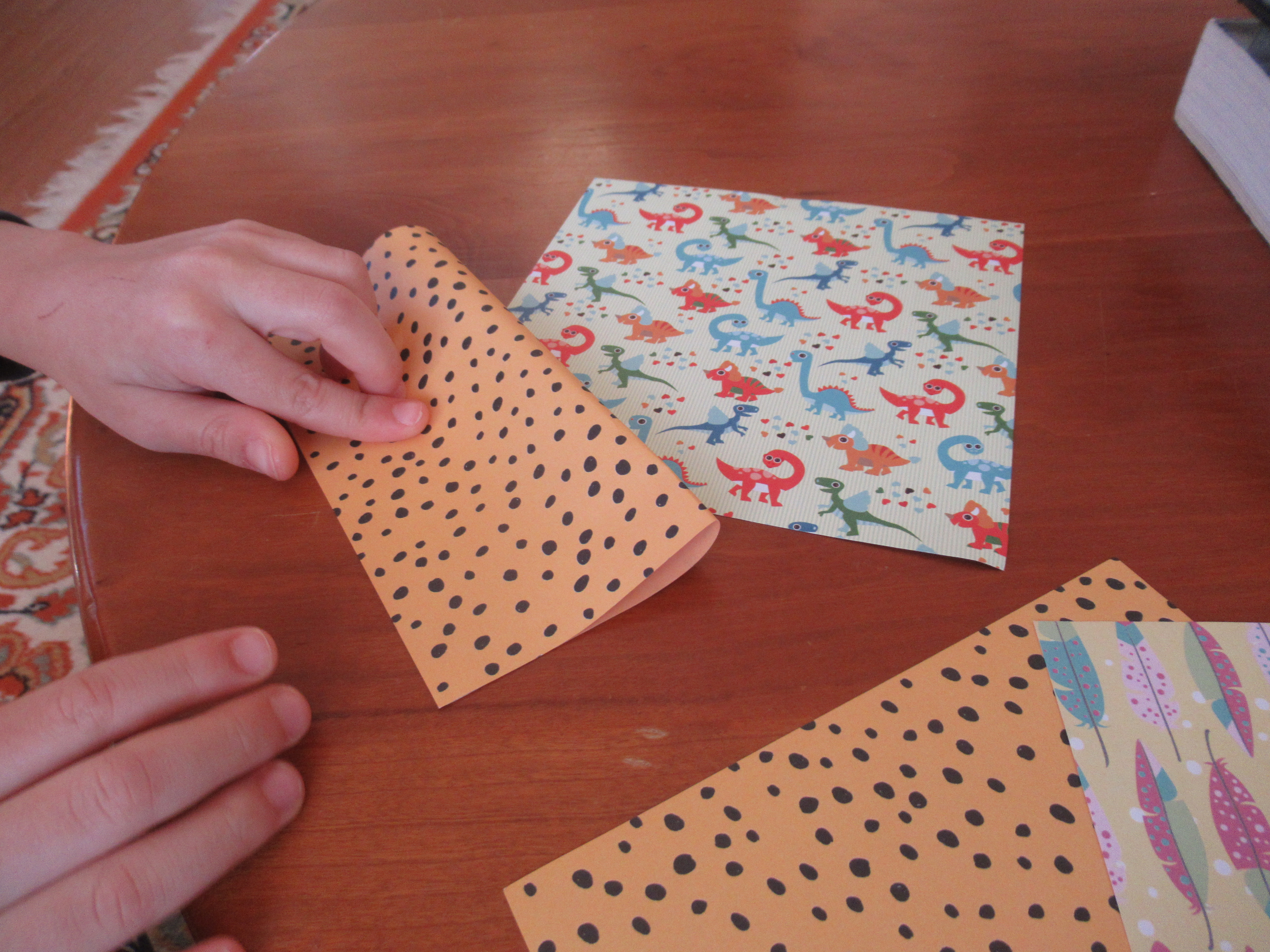
To start, Travis selected two patterns from our pack of origami paper. Fold in half, then open up and tear each sheet in half (so you now have 4 pieces of paper). Set aside two of these and work with the remaining two.

Origami Fidget Spinner (1)

I loved how focused Travis was as we went through the first few steps together. Fold the pieces of paper in half again, so you have two skinny rectangles. Next bend down at the tops and bottoms so they look almost like Zs. From here, the fingerwork grew too tricky for Travis, and I took over.

Origami Fidget Spinner (2)

Rather than reinvent the wheel, check out the full instructions from Kiwi Co, where the steps for folding are described far better than I can. At the end, you’ll have one finished side of your fidget spinner, which looks like this:

Origami Fidget Spinner (4)

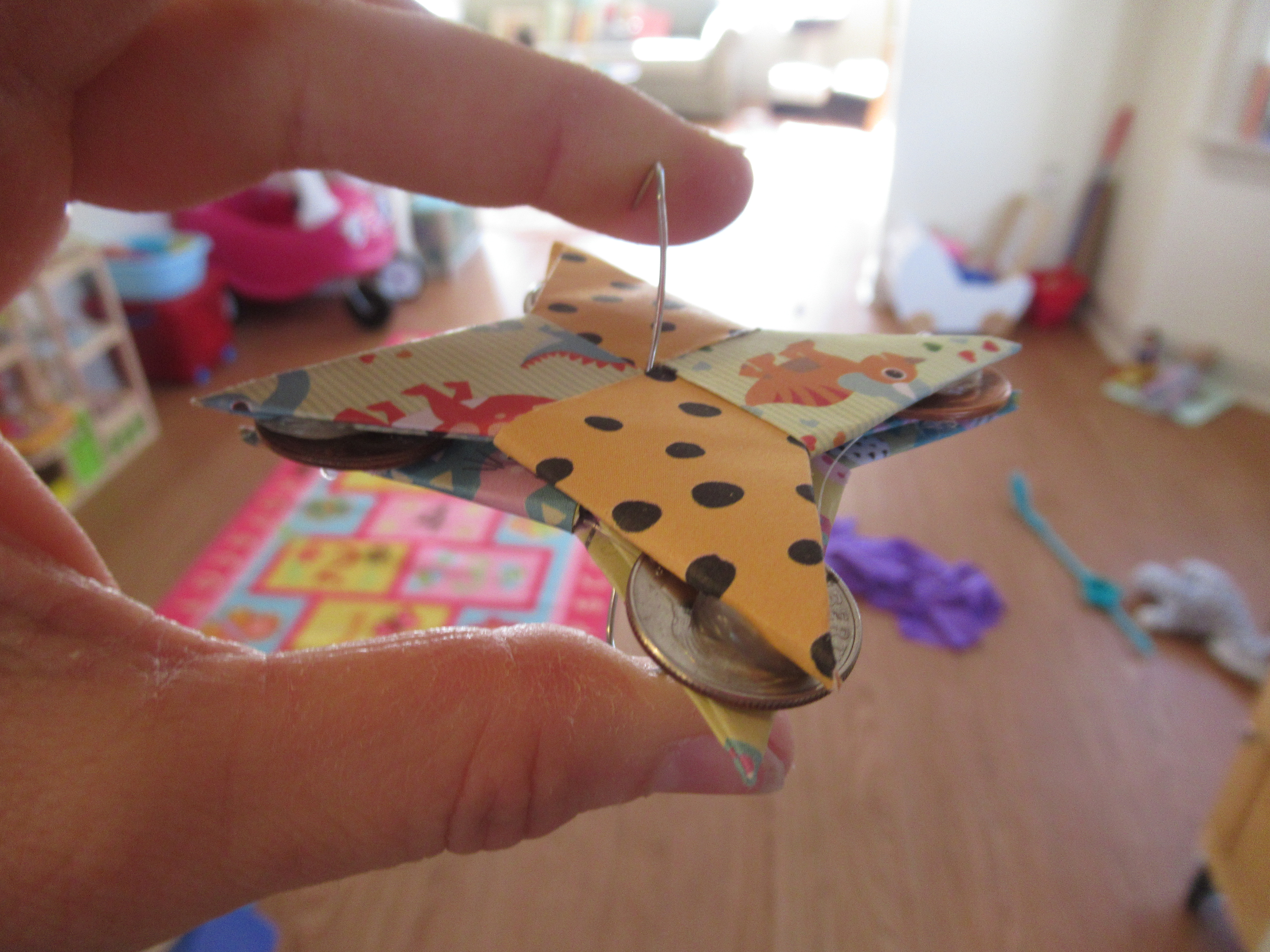
Repeat the folding steps with the two sheets of paper you set aside at the beginning, and both sides of the fidget spinner are now complete. Next, poke a push pin down through the center of each side. Using hot glue, add a small coin (like a dime or penny) to each of the four arms on one side of your spinner.

Origami Fidget Spinner (5)

Hot glue the second half of the spinner over the coins.

Origami Fidget Spinner (6)

Finally, straighten a paper clip and push through the holes you’ve made in the middle, then bend the ends so they provide finger holds.

Origami Fidget Spinner (7)

Give that fidget spinner a whirl! Thanks to the colorful origami paper, these look so beautiful as they spin.

Origami Fidget Spinner (8)

Hammering Tees into a Box

Hammering Tees in Box (7)

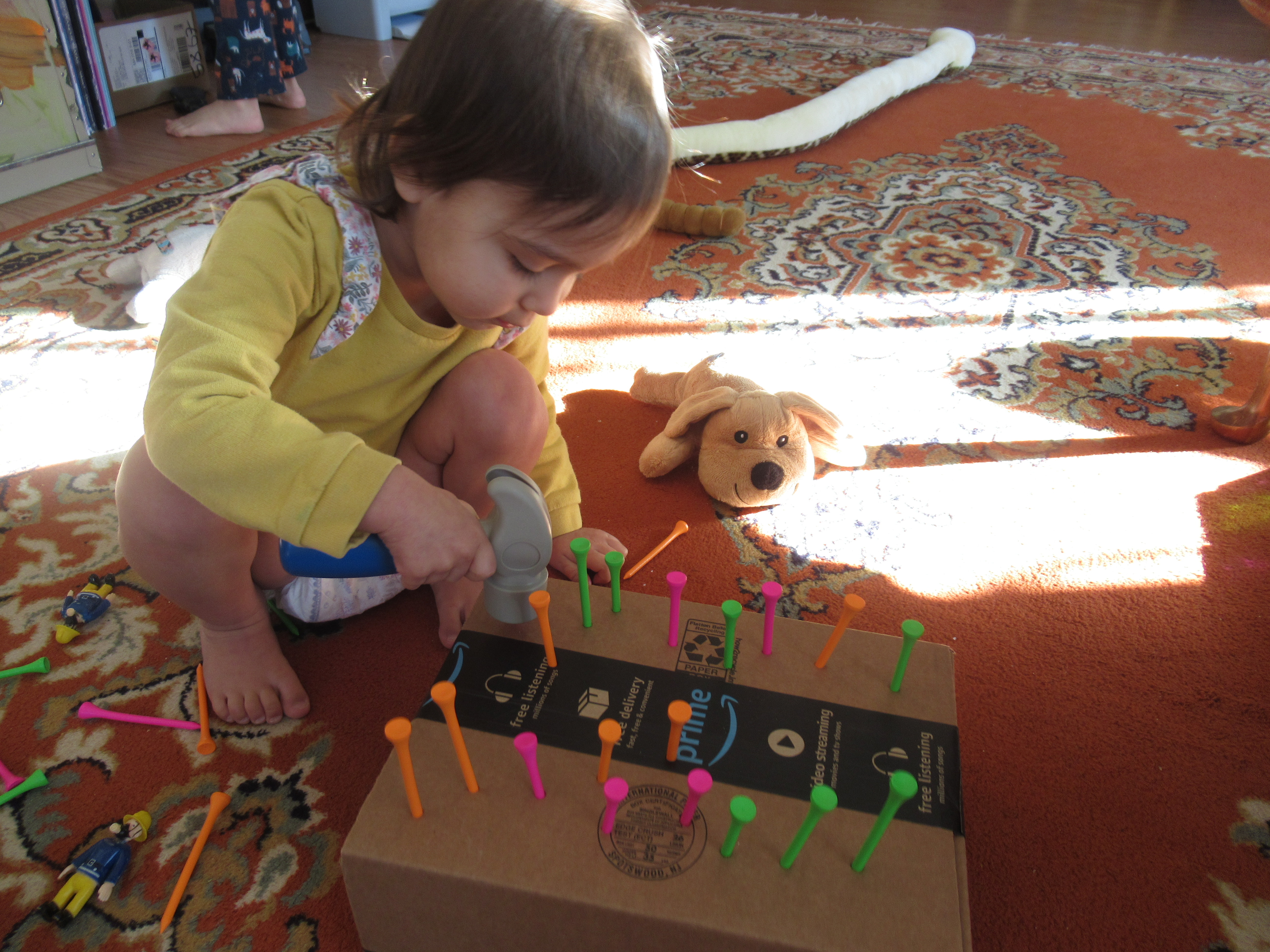
Here’s a riff on an activity that Veronika recently enjoyed, hammering golf tees into a large block of Styrofoam. She wanted a repeat, but because I didn’t have any Styrofoam on hand we tested out hammering the tees into a regular old cardboard box!

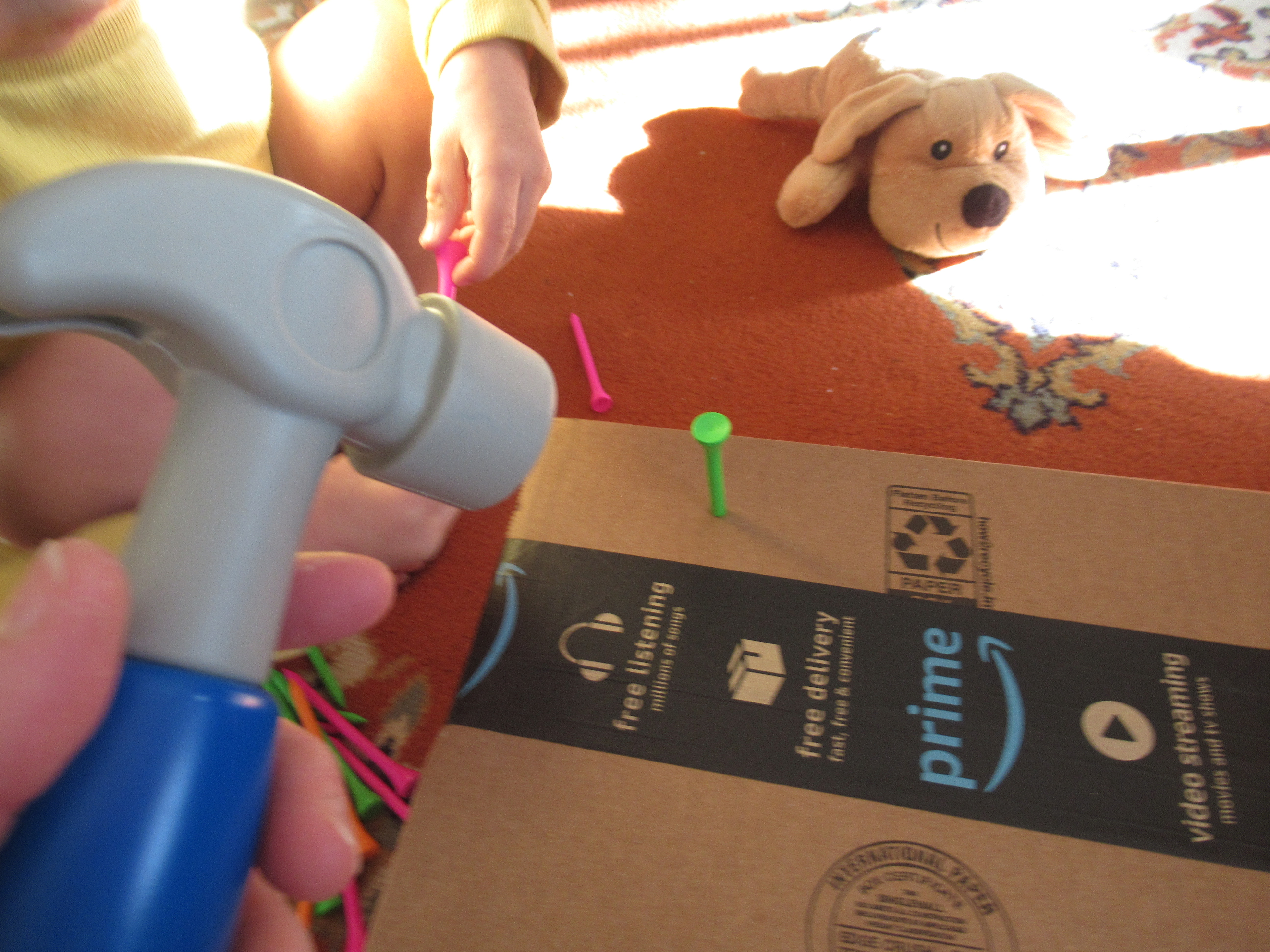
I had to make the first hole for each tee, since initially getting through the cardboard takes a bit of muscle, especially with only a toy hammer.

Hammering Tees in Box (1)

Veronika loved watching as I added the bright pink, orange, and green tees, and immediately wanted to help out with a few whacks.

Hammering Tees in Box (3)

Once you’ve created each hole, your toddler can take over. Veronika could pull the tees from the holes…

Hammering Tees in Box (2)

…and then insert them again, which is excellent for fine motor skills! She would either hammer them down or sometimes just pop them down with a thumb.

Hammering Tees in Box (4)

Overall, this was a simple but nice way to keep a toddler busy.

Hammering Tees in Box (5)

Apple Smiles

Apple Smiles (1)

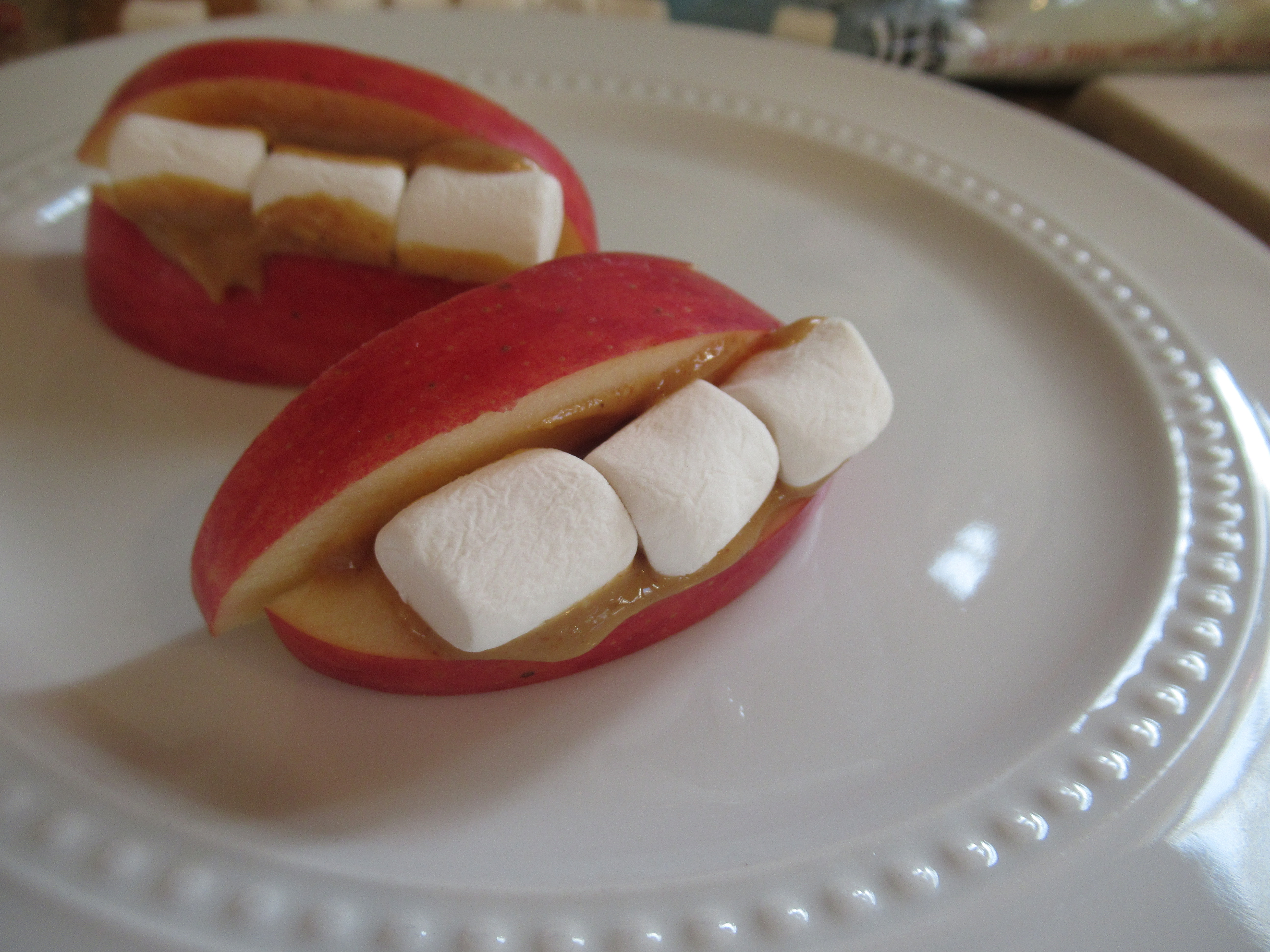
This is a cute snack to make either before or after a visit to the dentist; it helps make things silly and not scary for toddlers!

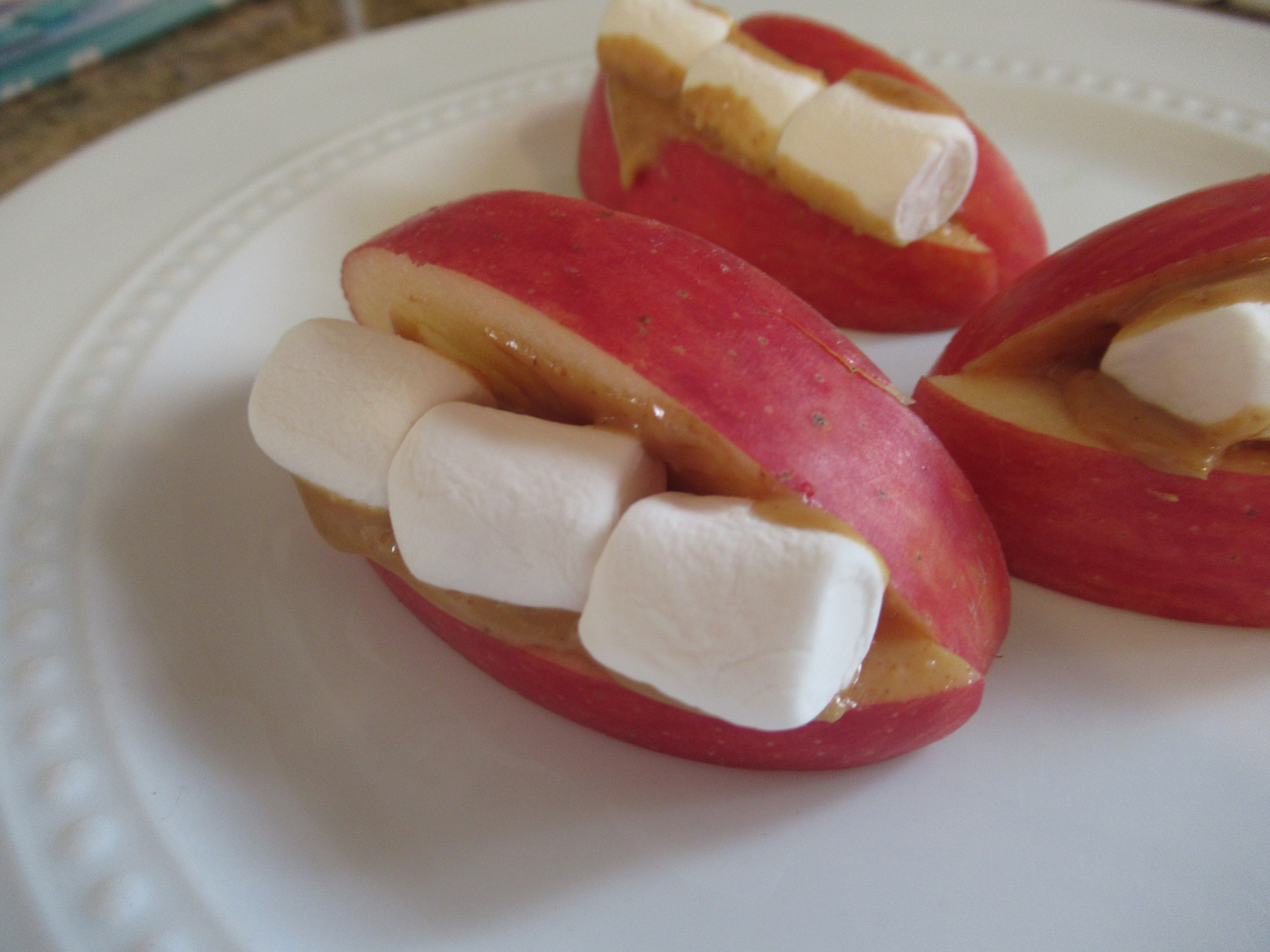
To prepare the apple smiles, spread a wedge of unpeeled red apple with a little peanut butter. Add 3 mini Dandies marshmallows, then spread a second wedge of apple with peanut butter and place on top.

Apple Smiles (2)

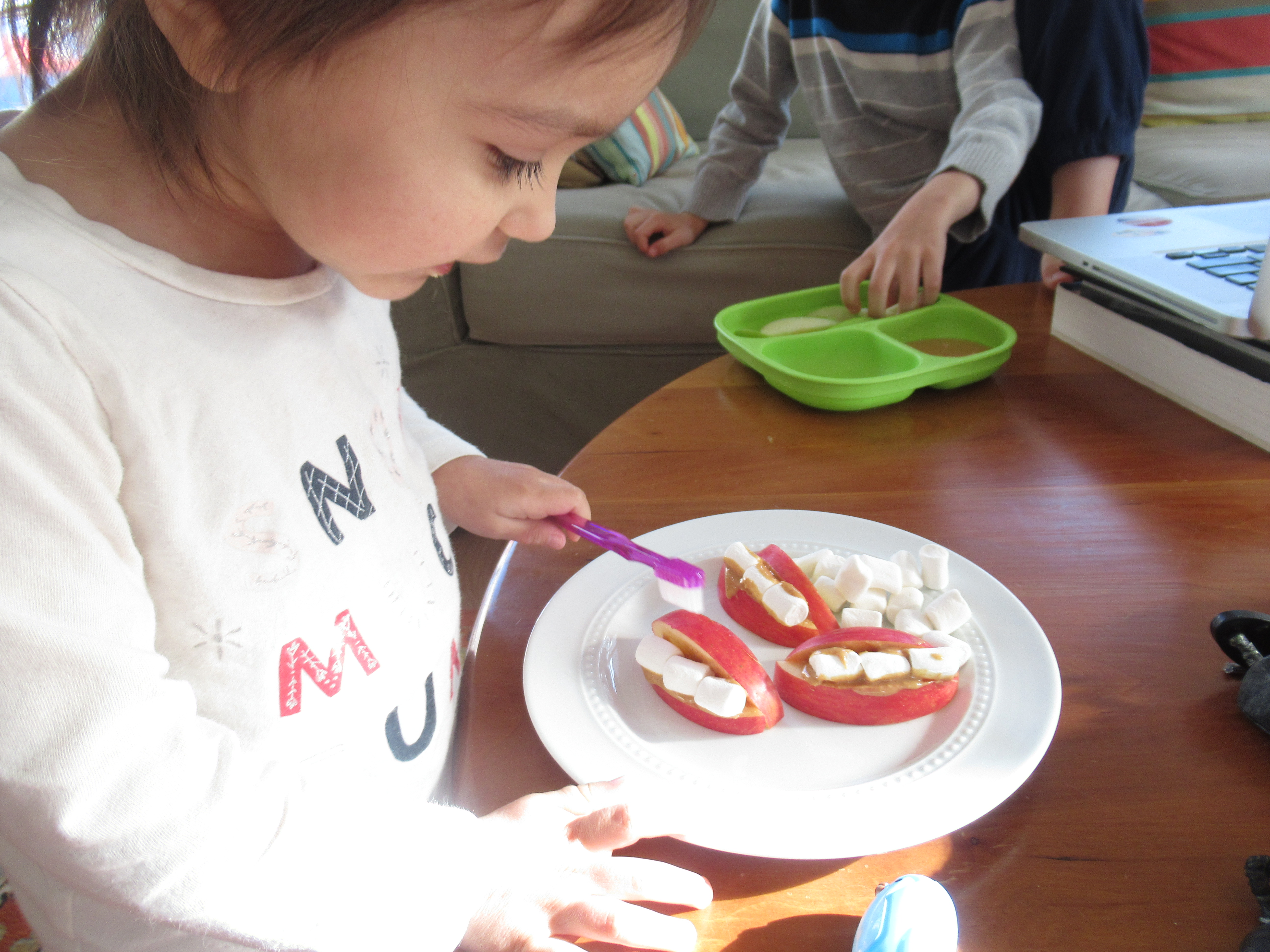
Not only do these make a tasty snack and a chance to point out those shiny white teeth, but you can do more with it than that! We had an extra toothbrush and Veronika loved “brushing” the apple smiles to help them get clean. The peanut butter really will make the marshmallows a bit mucky and stained, adding a touch of verisimilitude. “Let’s brush off all that peanut butter,” she said so proudly, helping the apple smile get clean and bright.

Apple Smiles (3)

So a snack plus a quick lesson! Just make sure you brush real teeth after eating those sugary marshmallows.

Apple Smiles (4)

Pretend Play Vet Clinic

Pretend Vet (5)

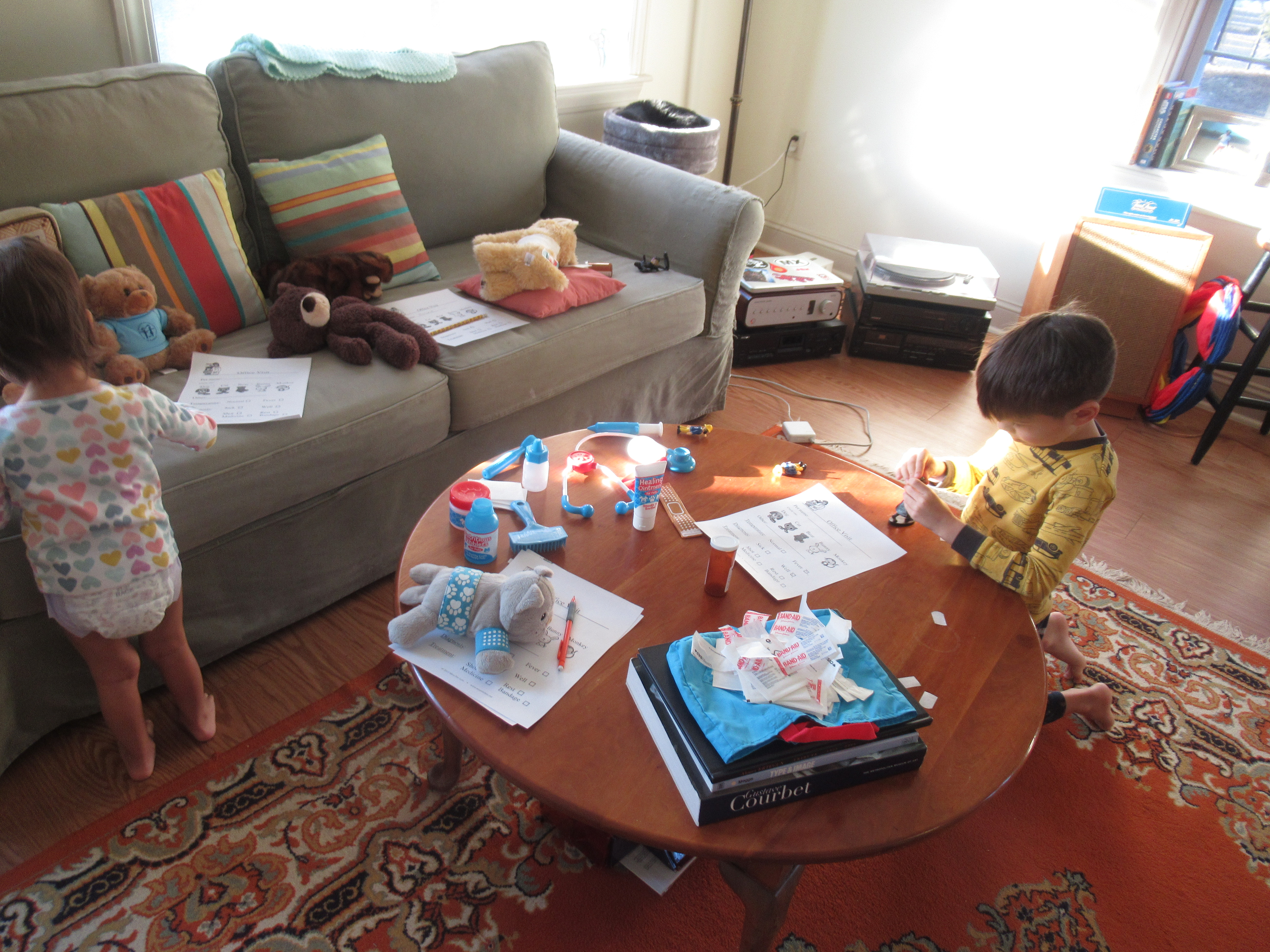
The kids have enjoyed several different scenarios of imaginative play lately, which I love not just because it gets them playing together so well, but also that it breaks them out of playing with the same old toys. So today we tested a third pretend game: a vet clinic!

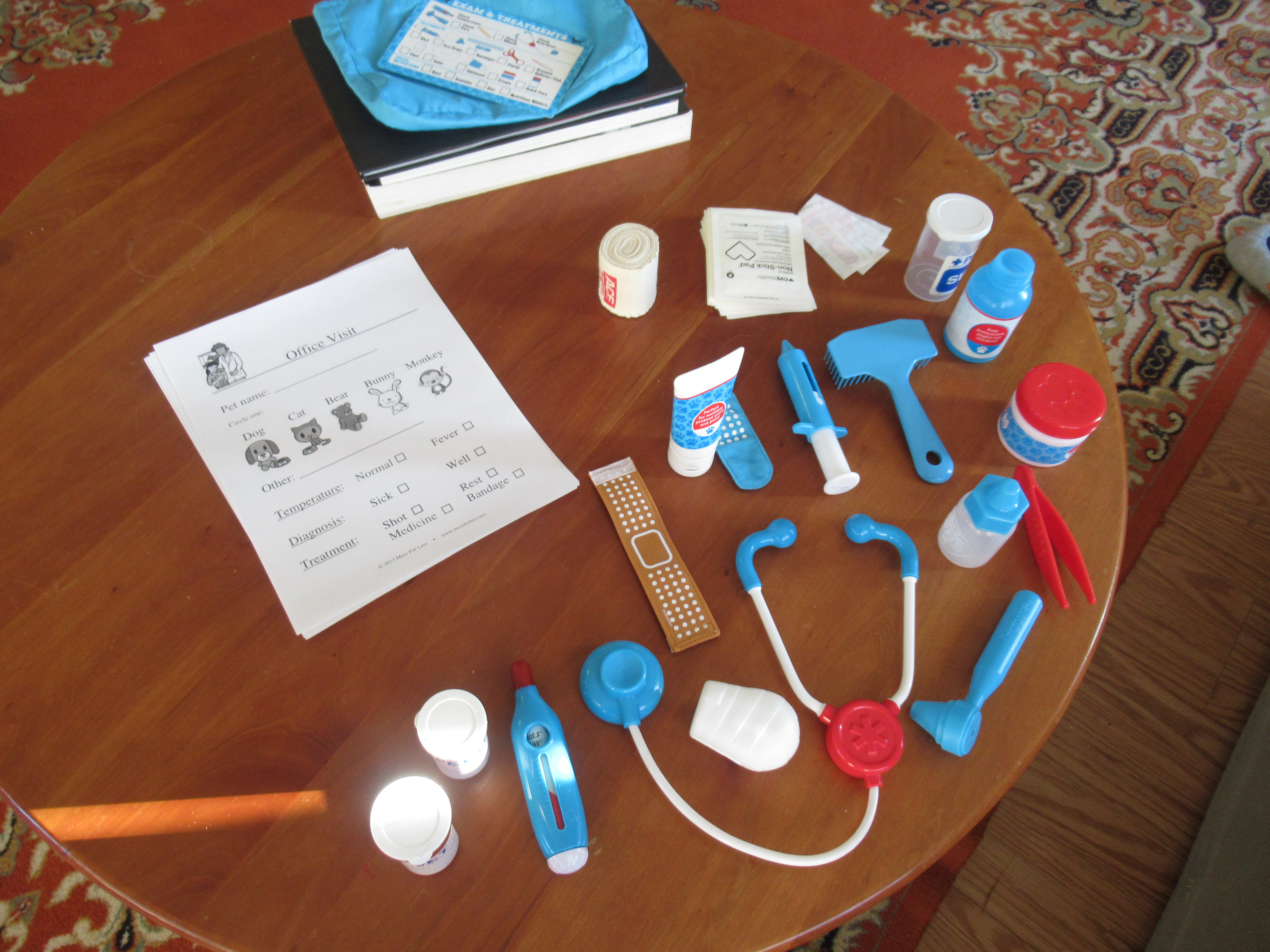
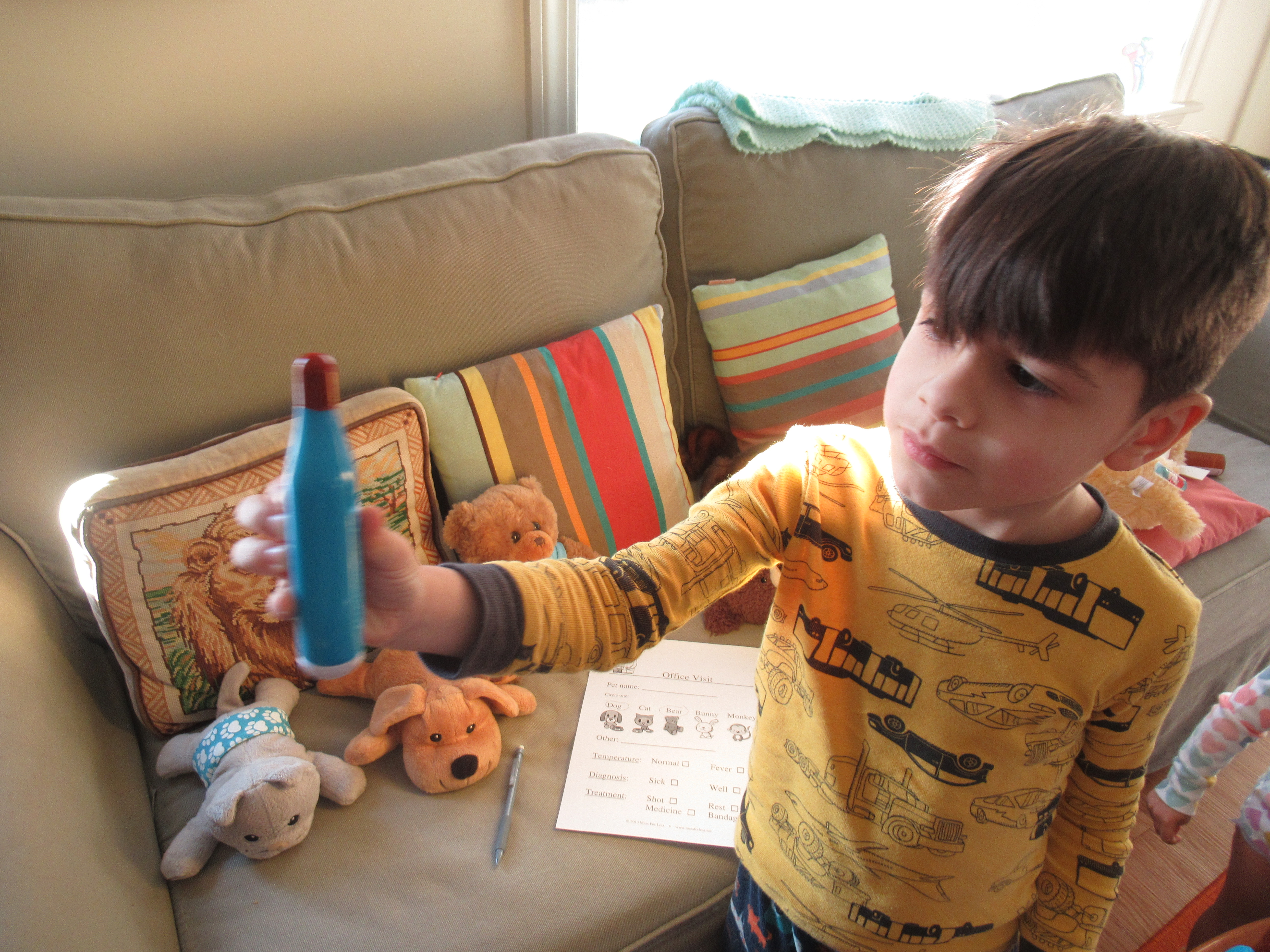
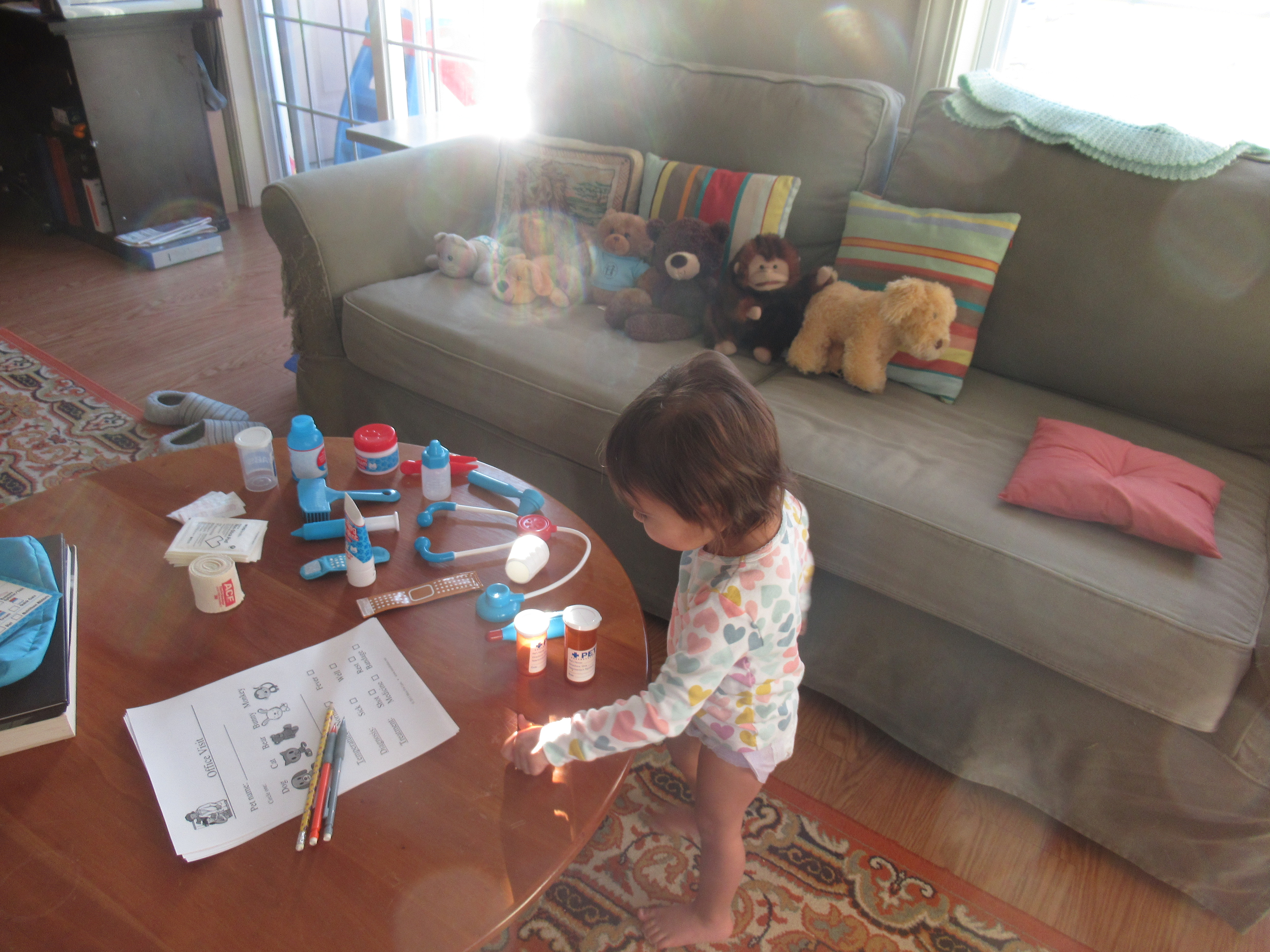
I set out the various pieces of a toy vet set on the table, including thermometers, stethoscopes, creams, and medicines. But to up the fun factor, Travis and Veronika got some real medical supplies today too, including gauze pads, an ace bandage, and band-aids.

Pretend Vet (2)

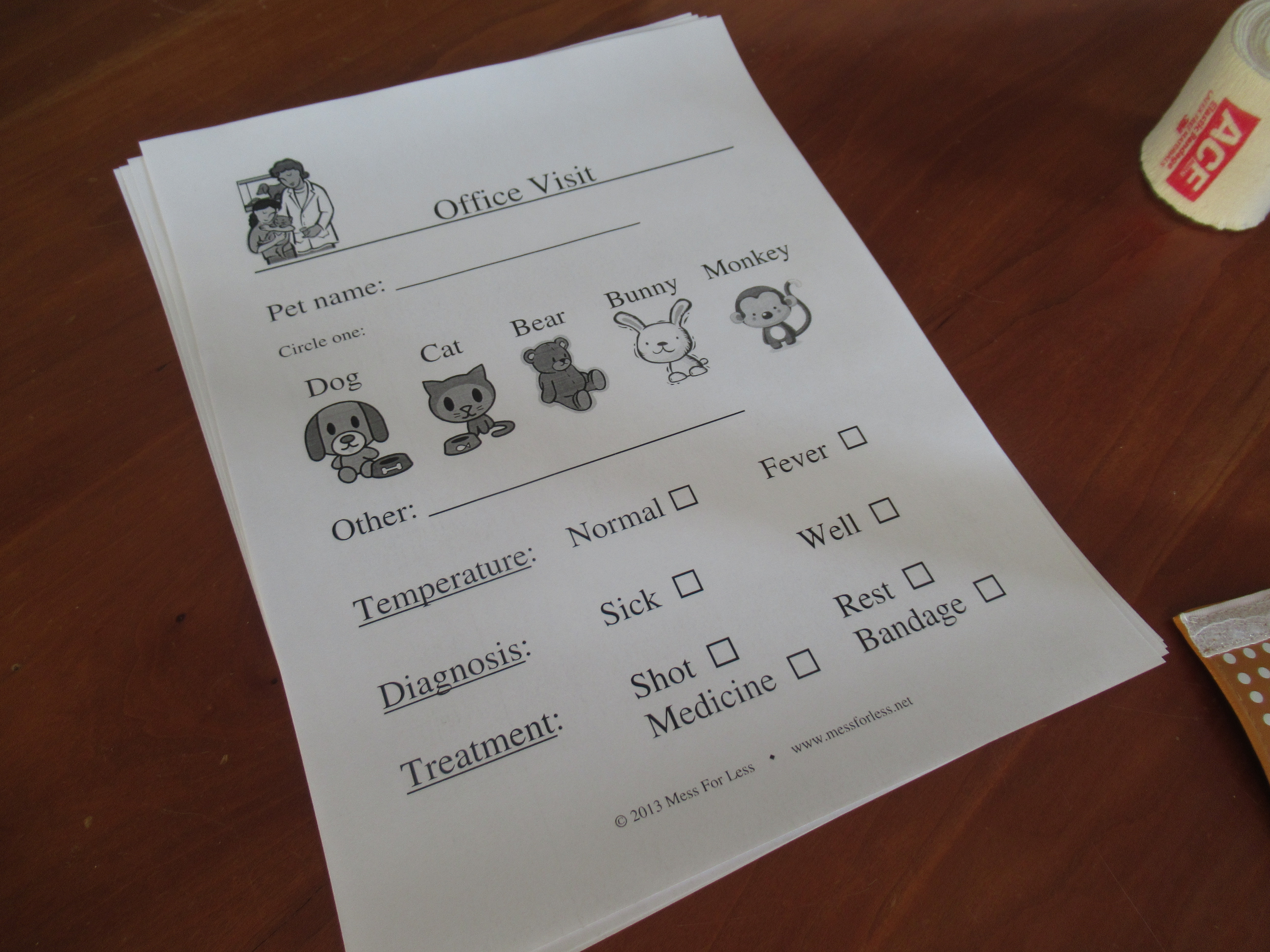
As the final touch, I printed out a patient checklist from Mess for Less, so the kids could register each animal that came to the clinic. Now we just needed patients! I lined up several of their stuffed animals along the couch as the “waiting room”. You could even use a small chair for each separate animal if you have several in your home!

Pretend Vet (4)

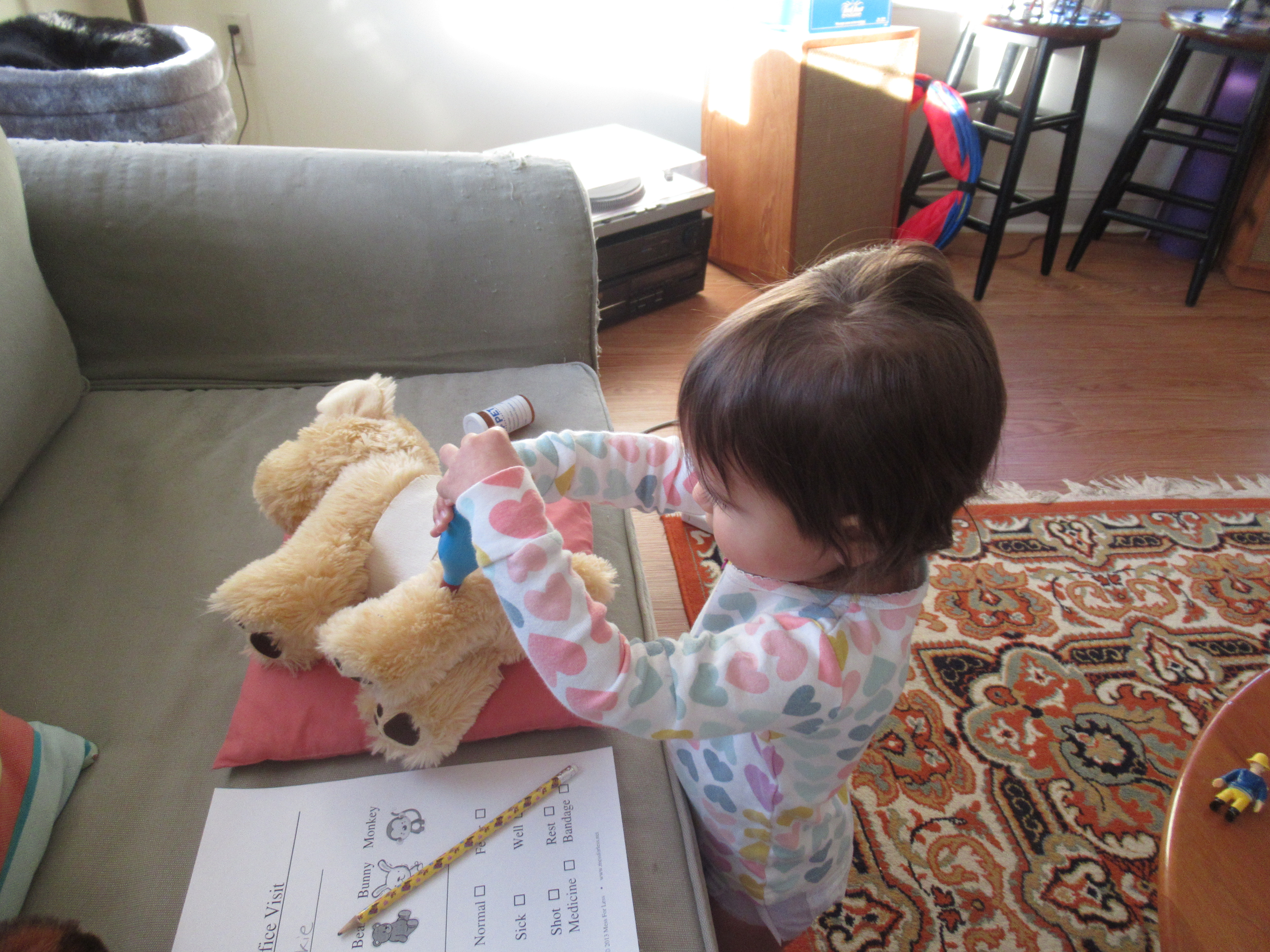
Brother and sister both rushed over to see what was going on. Veronika immediately took to the task quite seriously. She loved administering shots and testing out the thermometer.

Pretend Vet (8)

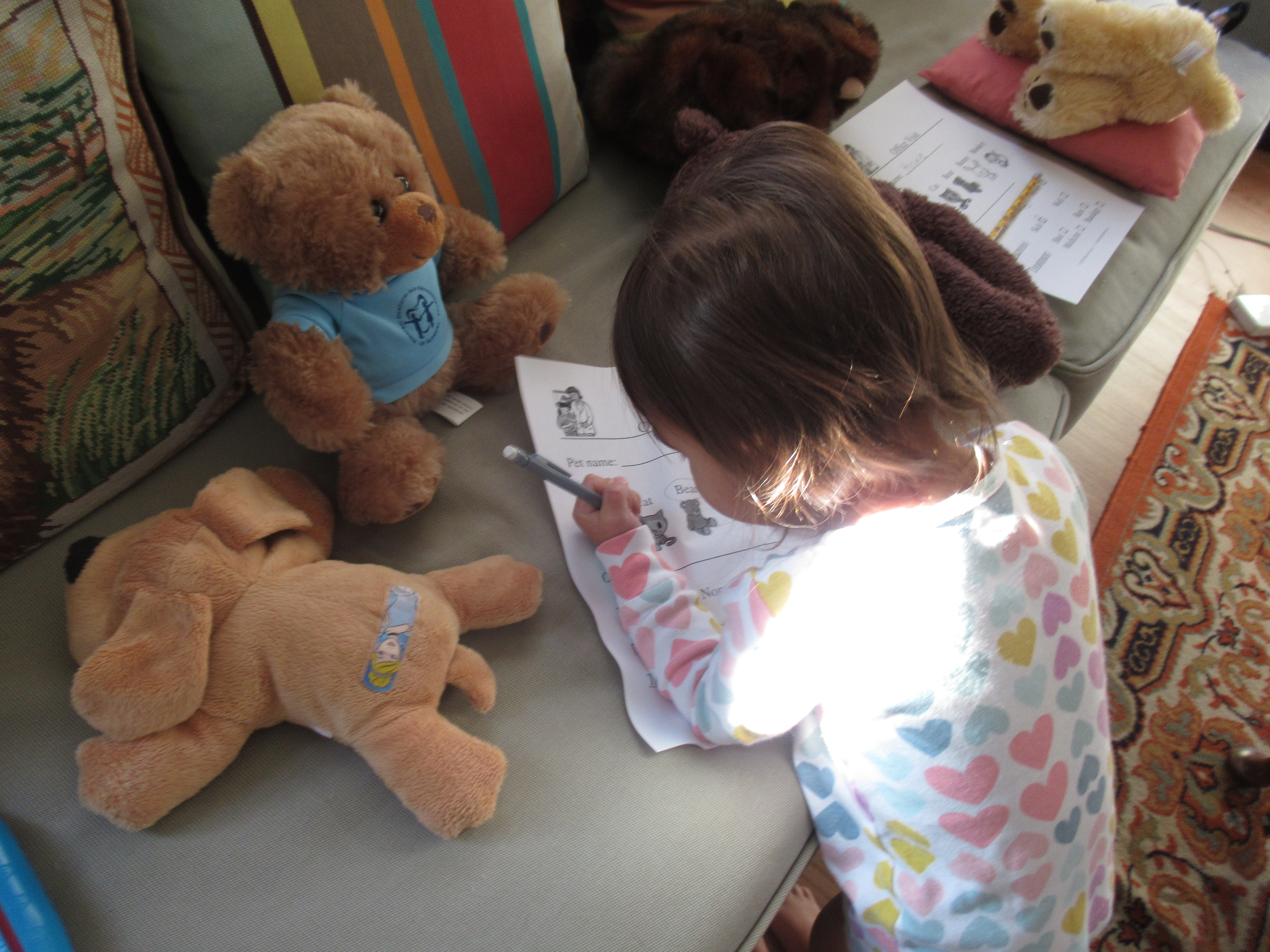
She also thought it was so fun to “fill out” the forms, circling the animal species and scribbling notes. (Hey, she already has doctor handwriting!).

Pretend Vet (11)

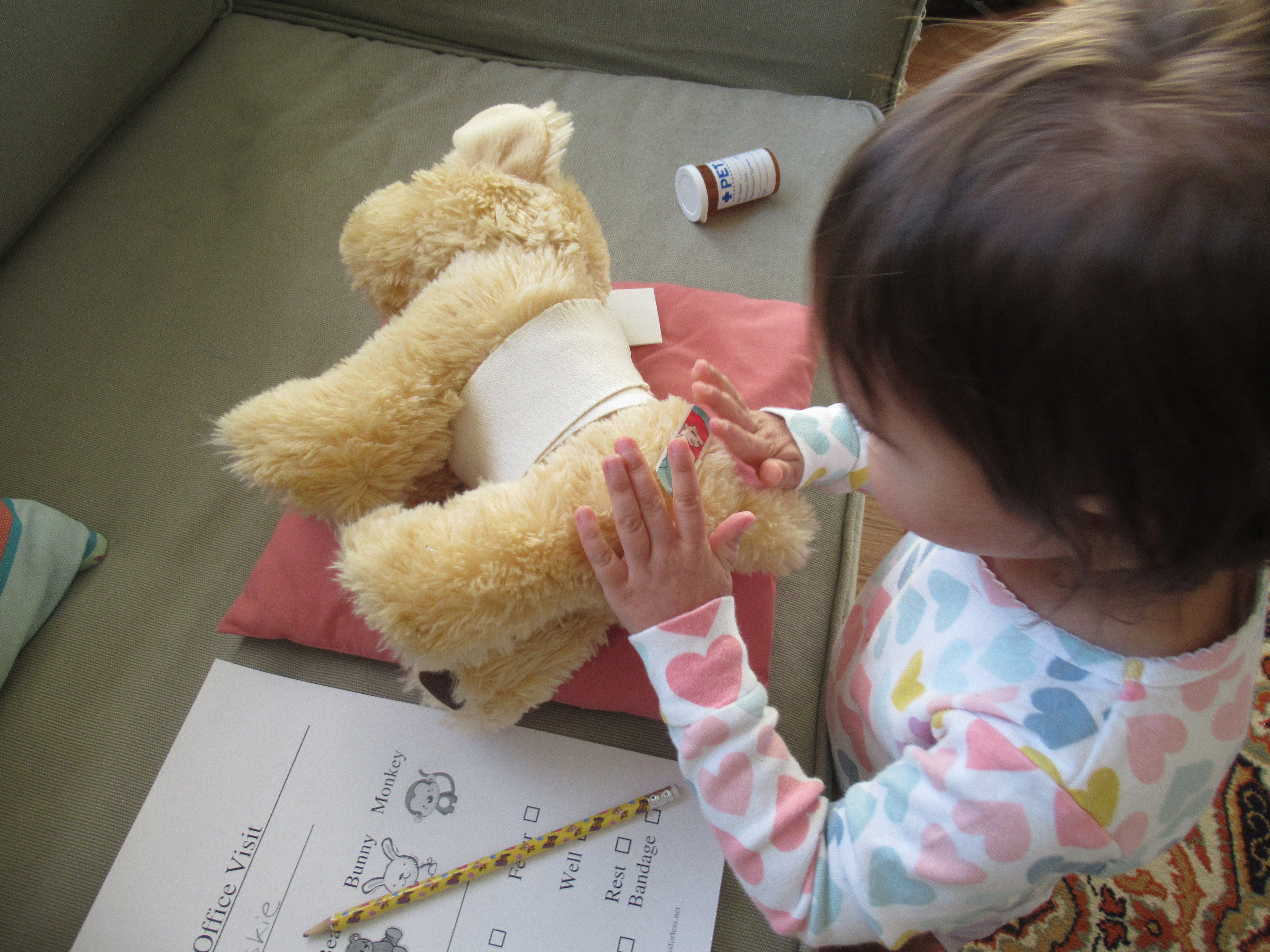
Her favorite, though, was the real band-aids, and she was soon covering boo-boos and wiping animals with the gauze with such care.

Pretend Vet (7)

Travis, meanwhile, was very into the forms and particularly liked recording high temperatures for all his sick patients.

Pretend Vet (10)

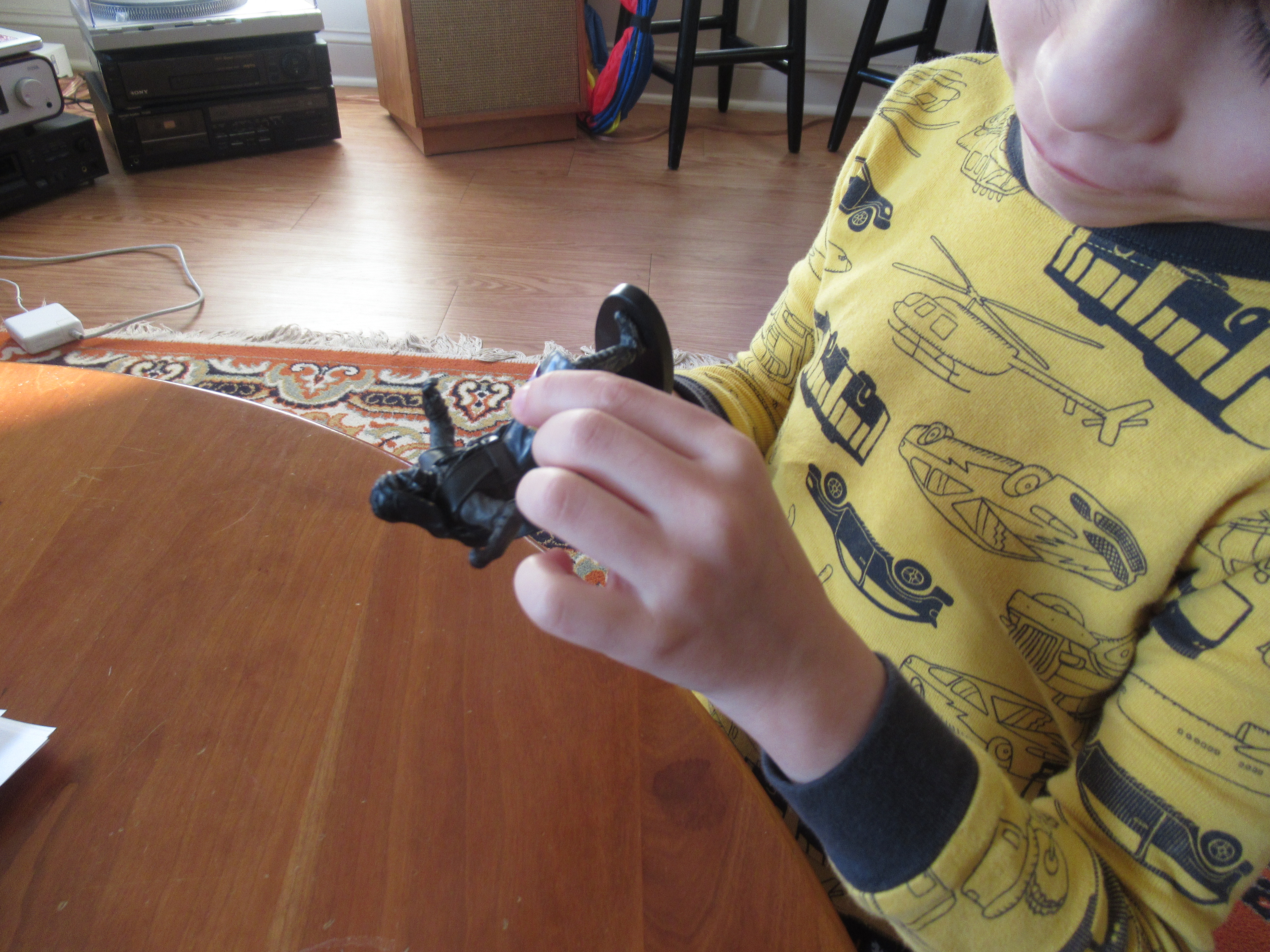
Pretty soon, he took the game in a whole different direction: it turns out action figures need band-aids, too!

Pretend Vet (9)

This had them imagining and playing together so well, making it a big win for a cold winter morning.

Pretend Vet (12)

Swimming Letters Sensory Bag

Swimming Fish (7)

Here’s a fun way for toddlers to practice tracing as they starting out in letter recognition. Bonus points: the activity doubles as a sensory bag!

To set up, fill a large zip-top plastic bag with liquid. I made two versions of this, although neither was quite right. The first one had corn syrup and a little blue glitter, but this was a touch too thick. The second one I filled water with a little blue glitter glue, but this was too… watery. I think hair gel would be the perfect in-between solution, and I’ll aim for that next time! Regardless, once you’ve added your liquid and glitter, you’ll need to add the best part: drop in a plastic fish toy.

Swimming Fish (2)

Seal the bag tightly and secure with duct tape. Next, write letters of the alphabet on pieces of construction paper, ideally with a blue background, although I only had purple. Once I had colored the letters in with green marker, they sort of looked like waving seaweed!

Swimming Fish (3)

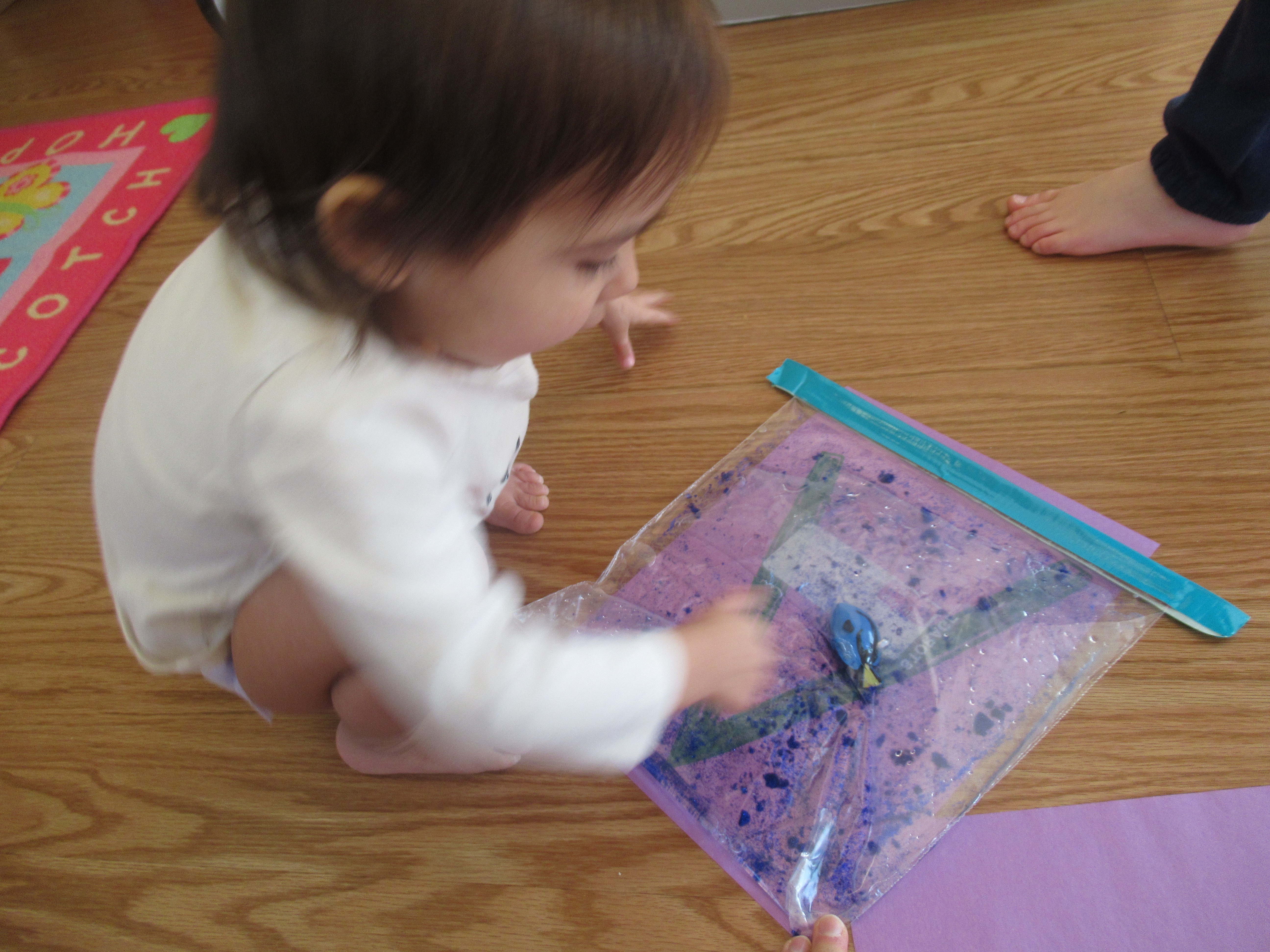
If you want to, you could go through all 26 letters for your child. Today, I focused on two letters: V for Veronika and T for big brother Travis. Place the fish sensory bag over one letter at a time and show your toddler how to “swim” the fish along the lines to trace it.

Swimming Fish (4)

It’s hard to tell if Veronika really picked up on the learning, or whether she just loved the activity because she was enamored with the fish. She loved making it swim so wasn’t necessarily following the lines, but she could tell me whether she was looking at a V or T.

Swimming Fish (9)

Overall, I loved the idea behind this activity and may return to it when she’s a little older!

Swimming Fish (6)

Glowing Lava Lamp Sensory Bags

Glowing Colors Bag (7)

We’ve played with plenty of sensory bags in daylight, but this one is meant for after dark!

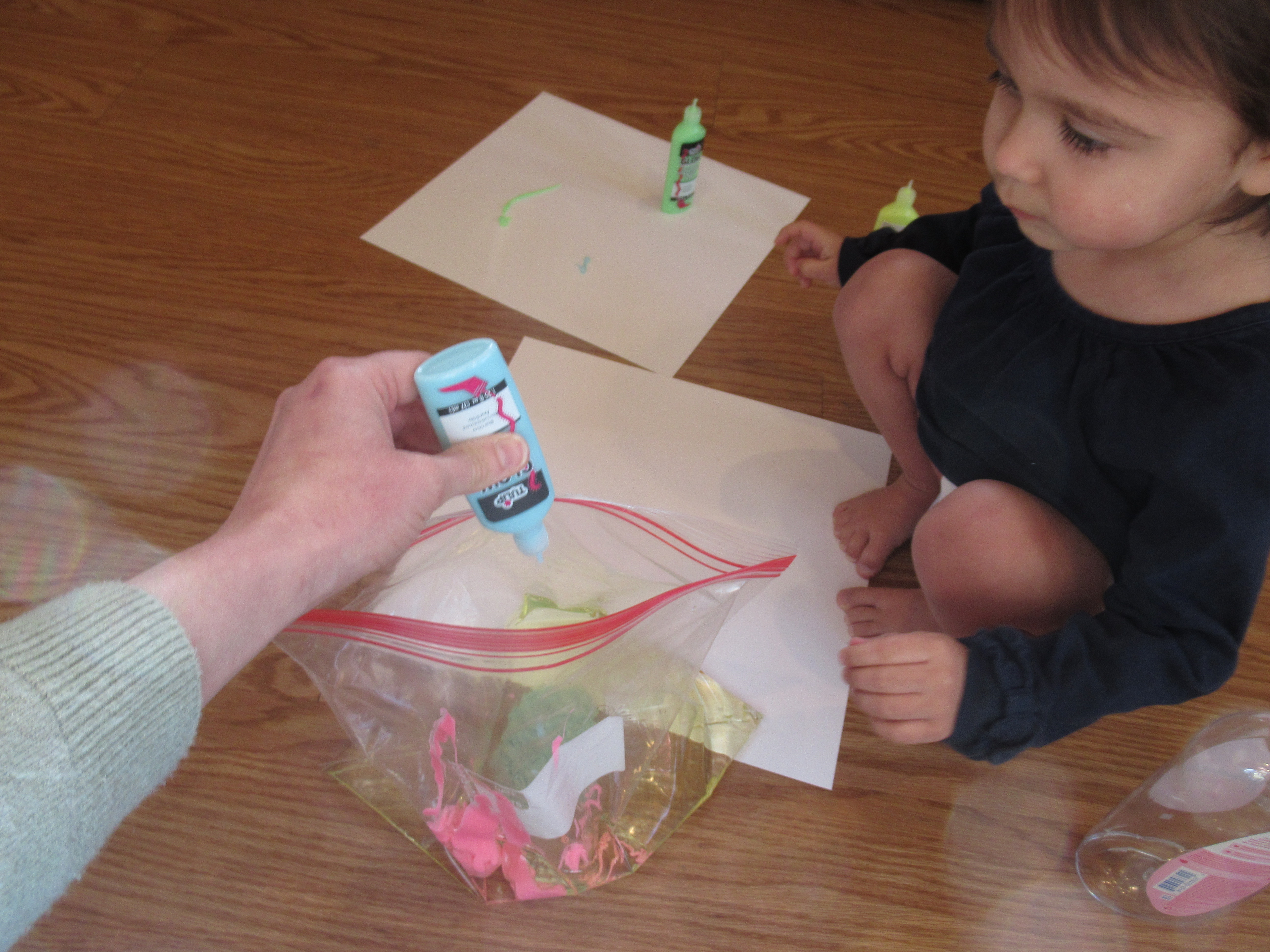
To set up, I poured a generous amount of baby oil into a large zip-top bag. Since we wanted to make two bags and I was out of baby oil, cooking oil worked in a pinch for the second bag. Squirt some glow-in-the-dark paint into each bag. Ideally I would have used watercolor paints, but even glow-in-the-dark fabric paint worked for this. Veronika absolutely loved the bright neon colors, even as we set this up during the day.
Glowing Colors Bag (1)

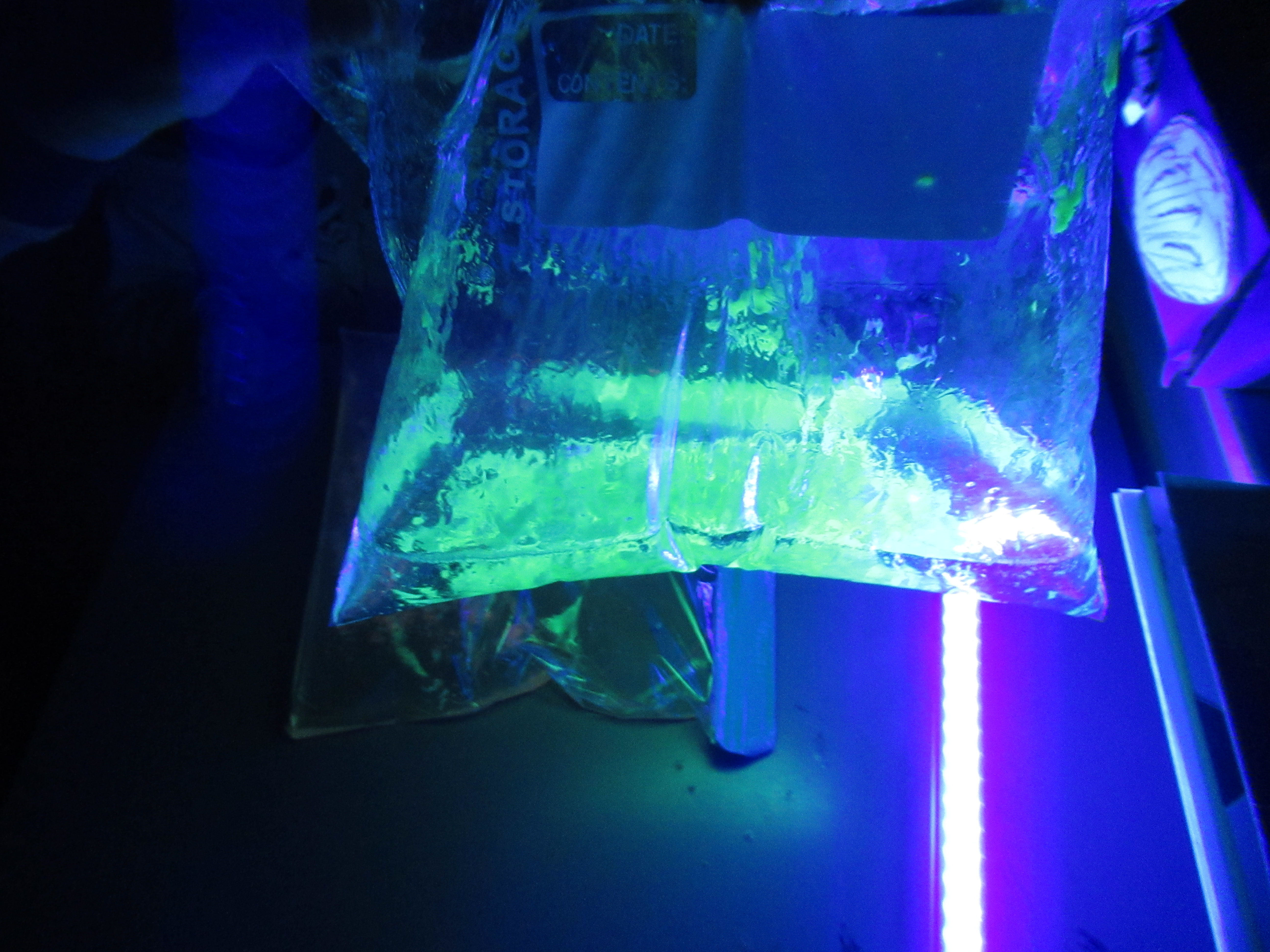
But the real fun came once the sun went down. You can simply look at the bags in the dark, but for added effect, I recommend switching on a black light. The kids were immediately squealing with delight at how the colors looked, so bright and glowing.
Glowing Colors Bag (4)

Encourage your kids to squish, squash, and watch how the bubbles of color move through the oil (a little bit like a lava lamp). If you have more than one color in each bag, as we did with a pink-and-blue version, see if the colors can mix together.

Glowing Colors Bag (6)

For sensory bag gets high marks for novelty.