Carbon Footprint Pledge

Carbon Footprint (10)

To go with our Farmer’s Flatbread and focus more keenly on why families might choose to eat food from a local farmers’ market, the paired lesson from Raddish Kids was about carbon footprints. I’ve long wanted to explore the idea of global warming with my kindergartner and this lesson plan made it so approachable for him.

First, I set out four items for Travis to gather, simply telling him they were needed for a “project”. But here was the catch: as he walked between each item and picked it up, he had to mark his trail with dried beans.

Carbon Footprint (1)

Well he just loved this!

Carbon Footprint (3)

Between the final two items, he exclaimed, “Oh no, Mom, some spilled!” What a teachable moment this was, akin to an “oil spill.” “That’s a really interesting accident,” I told him, and promised to explain why later. Even better, he decided he could use the beans from his spill, spread them out, and reach the final item. He cleaned up his own oil spill before I’d even imparted the lesson!

Carbon Footprint (4)

He carried the four items over and I broke the secret. We weren’t really making anything (with yarn, glue, straws, and newspaper); we were noticing the impact and trail we’d left behind. I explained how it represented the way that everything we use leaves an impact, or a carbon footprint.

Next up we watched a video clip of a Magic Bus and the Climate Challenge read-aloud. This video was 14 minutes long, but Travis was captivated… and full of questions. Would our home be under water some day? (I answered honestly – quite possibly, but while we have the ability to move, many people in the world didn’t have that choice). Did being vegan lower our carbon footprint? For this one, I could happily report yes!

After what I worried might seem a scary concept, the key to the lesson plan was to have kids walk away empowered, so it was time to talk about what we could do.

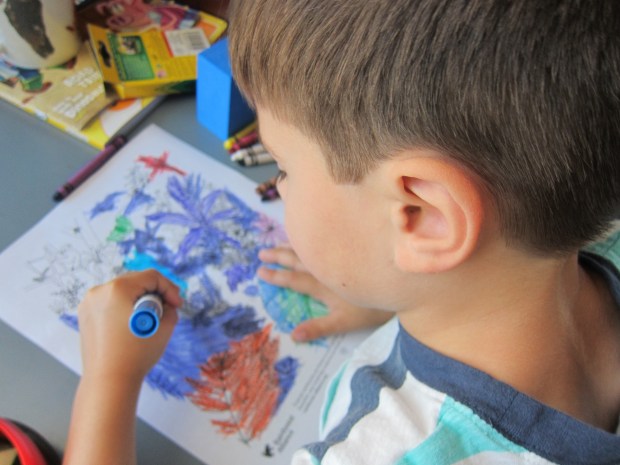
We checked out the Rainforest Alliance and their list of 10 things kids can do to help the rainforest. This led to coloring in a picture of rainforest animals, which Travis took so seriously, and reading a few online profiles of children who live near the rainforest.

Carbon Footprint (9)

He made me promise to buy only ethically sourced coffee beans and bananas, which luckily we already do!

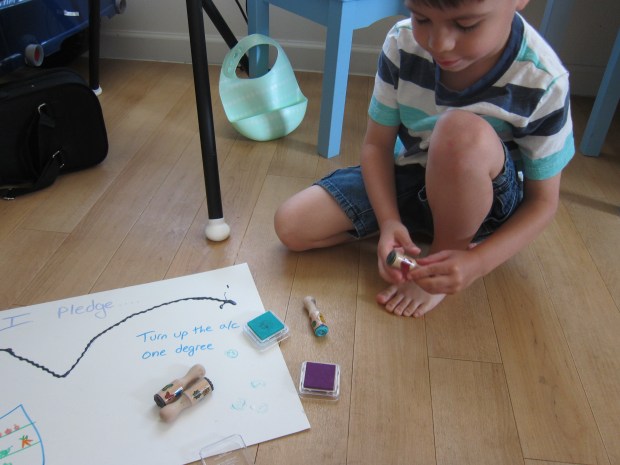
Of all the suggested activities from Raddish for extension, the easiest for kindergartners is to make a pledge and spread the word to friends and family. Travis immediately wanted our poster to be about not leaving the fridge open and turning the a/c up one degree. The poster required stamps and glitter (of course!).

Carbon Footprint (6)

It was his project, and other than writing the words, I loved watching him decide what the poster needed.

Carbon Footprint (7)

There’s a lot more here for bigger kids: writing to congress members; planting trees; and a fantastic booklet of activities from PBS Kids that I want to explore when Travis is older. I’m thankful to Raddish for giving me the words to begin this important conversation with my son. Hopefully it’s the big beginning of our family making a small footprint.

Carbon Footprint (8)

Nose Day

Nose Day (4)

As a quick follow-up to other body part days Veronika and I have explored, today we had a nose day.

First, we sang about noses. Need ideas? Don’t forget ‘Head, Shoulders, Knees, and Toes’ features it near the end!

Then we walked around the house to find family photos with noses.

And of course, talk about what your nose does best – smell! I lined up spice jars and held each in front of Veronika’s nose.

Nose Day (3).JPG

Some earned a smile and some received a very confused look.

Nose Day (2)

The point is, you can have a day like this for just about any given body part. What will you choose next? Knees? Belly buttons? Please share in the comments!

Nose Day (1)

Wooden Block Towers

Wooden Blocks (2)

Veronika has played with foam blocks in the past; she loves their texture and shape, and I love that I don’t have to worry about injuries with such a soft toy. But a 7-month-old baby can play with wooden blocks, too; you just need to use a little more caution and care.

Because of their sharp edges, I don’t recommend letting your baby have unsupervised play with wooden blocks at this age. Instead, pick a time for this activity and make sure you are sitting right next to baby the whole time.

Wooden Blocks (1)

Veronika received a beautiful set of painted blocks as a gift at birth, and this was the first time I presented them to her.

Wooden Blocks (6)

First she simply enjoyed reaching for them in the box.

Wooden Blocks (8)

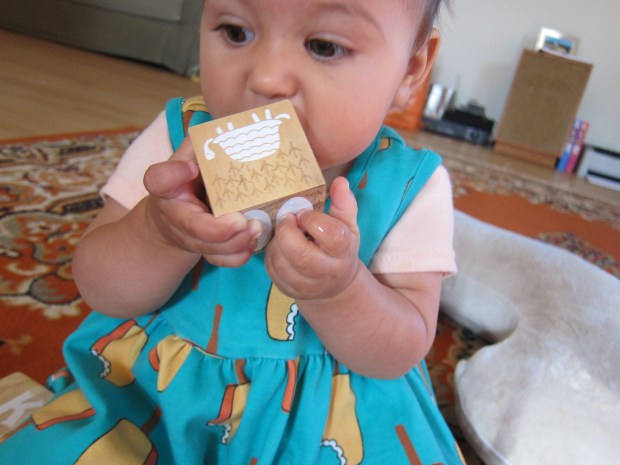
Next, I set them out for her. The blocks immediately felt good in her hands.

Wooden Blocks (7)

And make excellent teethers.

Wooden Blocks (5)

Then came the real fun: knocking down towers!

Wooden Blocks (3)

As with soft block towers, Veronika can’t resist knocking them over as soon as she sees them. The difference is that I kept the height lower and made sure they were angled away from her so no sharp edges came tumbling her way.

Wooden Blocks (4)

She loves it every time they go boom – and even started a motion that I think might count as her first clap! Block towers are such a simple but effective way to teach a baby about cause-and-effect, and it was a delight to watch her play.

When we were done, I packed the wooden blocks away until next time.

Straws and Yarn

Straws and Yarn (8).JPG

This project is fantastic for keeping motor skills sharp in the summer break between preschool and kindergarten… and the final product easily becomes a gift for someone special, whether a graduation or a birthday!

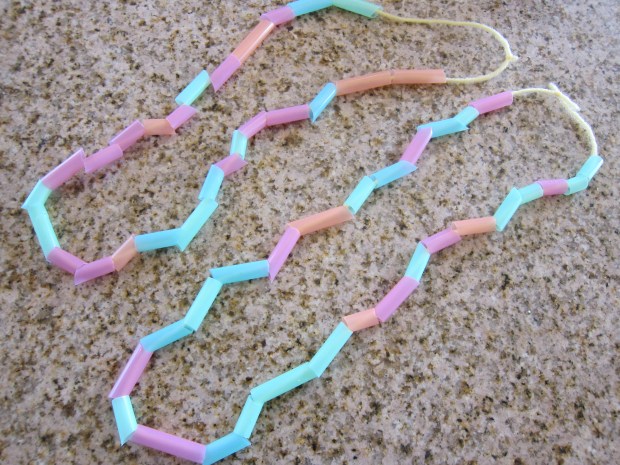
Tie a piece of yarn to a drinking straw with a tight knot; set aside. Help your child snip straws into pieces of varying size. We used wide pastel-colored milkshake straws, and discovered that the smaller we snipped them, the more they were ilke “beads” for our necklace.

Straws and Yarn (1)

The straws could be a bit tough to snip, and Travis loved when pieces went flying!

Straws and Yarn (2)

Have your child begin threading them on to the yarn.

Straws and Yarn (5)

Travis tried a few tactics, including pushing a straw “bead” onto the yarn, or pulling the yarn up through.

Straws and Yarn (3)

I loved his patience and concentration as he worked!

Straws and Yarn (4)

Once long enough for a necklace, tie the two ends of the yarn into a secure knot.

Straws and Yarn (6)

Travis enjoyed the project so much that he insisted we make two; he didn’t want either grandmother to feel left out, so we’ll be gifting two of these!

Straws and Yarn (7)

Baby Led Weaning: 7 months

I mentioned previously that Veronika has no interest in purees; this girl wants finger foods, or at the very least, to hold her own spoon! I’m more than happy to let her develop these fine motor skills and important life skills, so I’ve delved into Baby Led Weaning. I’m no expert, so please consult elsewhere for detailed advice on this method of feeding your baby, but here are a few fun meals she’s dined on in the past month.

Banana-Pumpkin-Sunflower Toast

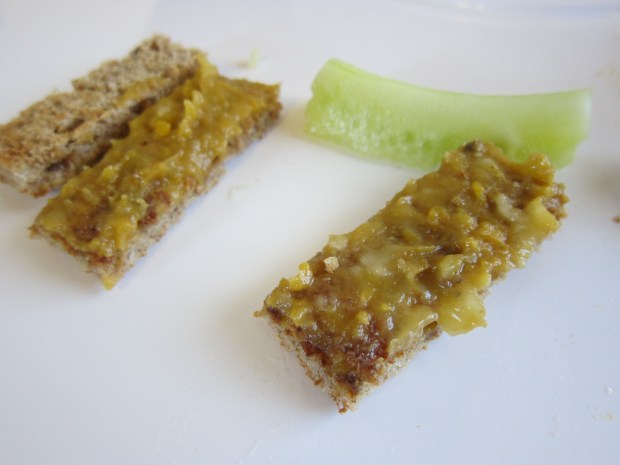
In a bowl, combine 2 tablespoons mashed banana and 2 tablespoons canned pumpkin. Stir in 1 teaspoon sunflower butter.

banana toast

Spread thinly on one slice of toasted bread, and cut into strips.
banana toast alt.JPG

Baked Pears

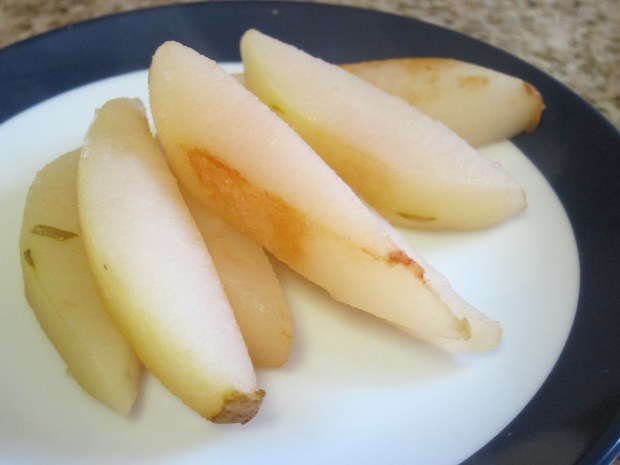
Peel 2 pears and cut into strips. Place on a baking pan and cover with foil. Bake at 350 degrees F for 50 minutes, until very tender.
Baked Pears

Note: this works equally well with apples, or with a combo of the two!

Baked Apple & Pear.JPG

Brown Rice

In a saucepan, combine 1 cup brown rice and 2 cups water. Bring to a boil, then cover, reduce heat to low, and simmer for 40 minutes. Let stand for 5 minutes, then spoon into bowls and cool to room temperature. Put it in clumps on baby’s tray; Veronika loves to pick up handfuls of the sticky rice!

Brown Rice.JPG

Black Bean Mash

Heat 1 tablespoon olive oil in a saucepan over medium heat. Drain and rinse 1 (15-ounce) can of black beans and add to the pot; cook for 1 to 2 minutes, until warm. Transfer to a bowl and mash until smooth.

Black Bean Mash.JPG

Just set out little blobs on the tray…

Black Bean Mash alt

And watch your little one go to town!

Basic Barley

For this one, I highly recommend quick-cooking barley, which cuts the wait time by almost a third when you’re getting dinner ready for everyone in a hurry!

Combine 1 cup quick-cooking barley and 2 cups water in a pan. Bring to a boil, then cover, reduce heat to low, and simmer for 12 minutes ,until the water is absorbed.

Basic Barley.JPG

Roasted Apple, Sweet Potato & Cinnamon

This dish introduced Veronika to a little spice! In a baking dish coated with cooking spray, combine 1 peeled and sliced apple, 1 peeled and sliced sweet potato and 1/4 teaspoon cinnamon, tossing to coat. Cover and bake at 400 degrees F for 25 minutes.

Apple Sweet Potato Cinnamon

Quinoa

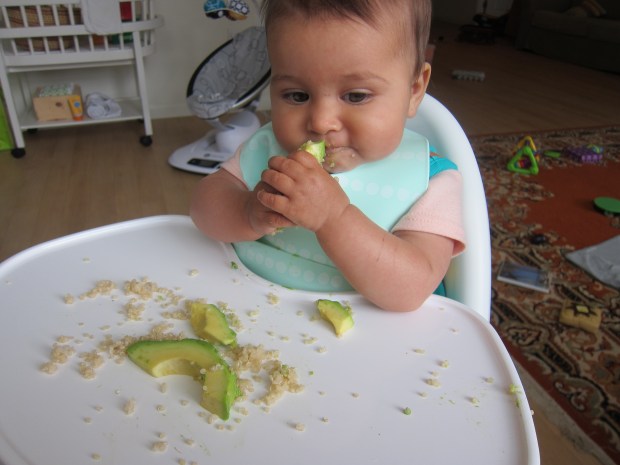
You can cook your own quinoa (buy it in bulk and cook according to package directions), or buy it prepared in microwavable containers. Because quinoa is so crumbly, I find it easiest to serve by coating avocado wedges in it!
Quinoa.JPG

Refried Pinto Beans

Heat 1 tablespoon olive oil in a saucepan over medium heat. Add 1/2 of a chopped onion and 1 minced garlic clove; cook for 3 minutes. Add 1 (15-ounce) rinsed and drained can pinto beans and 1 teaspoon cumin. Cook for a final minute, until heated through. Transfer to a bowl and mash until smooth.

Refried Pinto Beans

You can also mix in 2 tablespoons of rice for every 2 tablespoons pinto beans – baby’s first rice and beans!

Pinto Bean Rice (1).JPG

To make it smoother, mix with 2 tablespoons prepared barley cereal and 2 tablespoons applesauce:

Pinto Bean Apple.JPG

Oatmeal

Graduate from watery infant oatmeal to the real deal with this recipe! In a saucepan, combine 2 cups water and 1 cup quick-cooking oats. Bring to a boil; continue to cook for 1 minute, until thickened. Let cool before serving.

Oatmeal

Homemade Applesauce

Chunkier than an apple puree, this is a great “next step” towards one day eating the apple right off the core. Peel and chop 3 sweet apples. Place in a saucepan and cover with water. Bring to a boil, then reduce heat and simmer for 30 minutes, until very tender. Transfer to a bowl and mash with a potato masher. Stir in 1/8 teaspoon cinnamon.

Homemade Applesauce

Banana-Blueberry “Fruit Salad”

Okay, maybe it’s just pieces of fruit on a plate, but this mix of foods on her tray is so intriguing to Veronika! Be sure to cut blueberries into safe pieces to avoid a choking hazard.

Banana Blueberry Salad

Zucchini Sticks with Oatmeal:

Cut the ends from 1 zucchini, and cut into 2-inch sticks. Steam for 6 minutes, until tender. Dip into prepared iron-fortified infant oatmeal cereal and serve!

Zucchini Oatmeal.JPG

Butternut Squash and Corn Mash

In a saucepan, combine 1/2 cup water, 1/2 cup peeled and cubed butternut squash, and 1/4 cup frozen corn. Bring to a boil; reduce heat and simmer for 8 minutes. Drain and transfer to a bowl; mash with a potato masher. Veronika eats fistfuls of this off her tray!

Butternut Corn Mash

Basic Grits

To mix it up for breakfast, prepare grits instead of oatmeal! In a saucepan, combine 1 cup water and 1/4 cup corn grits. Bring to a boil, then reduce heat, cover, and simmer on low for 5 minutes. Let cool before serving.

Basic Grits

I still occasionally try to serve Veronika a puree, as well, venturing into “big girl” flavor combos. A few she has enjoyed:

Apricot, Pear, and Barley Cereal

Stir together 2 tablespoons prepared infant multigrain cereal with 2 tablespoons apricot puree and 2 tablespoons pear puree (you can make your own, or use canned organic baby food in a pinch).

Apricot Pear Barley

Apricot & Banana Mash

This one is chunkier now that Veronika is older. Combine 2 tablespoons pureed dried apricots and 2 tablespoons mashed banana.

Apricot Banana Mash

Fall Harvest Puree

Stir together 2 tablespoons apple puree, 2 tablespoons sweet potato puree, and 2 tablespoons canned pumpkin. Veronika also likes this with a little quinoa stirred in!

Fall Harvest Puree

Apple & Banana Oatmeal

Combine 2 tablespoons apple puree, 2 tablespoons mashed banana, and 2 tablespoons iron-fortified infant oatmeal.

Apple Banana Oatmeal.JPG

Mango & Banana Mash

Stir together 2 tablespoons mango puree and 2 tablespoons mashed banana. A taste of the tropics!

Mango Banana

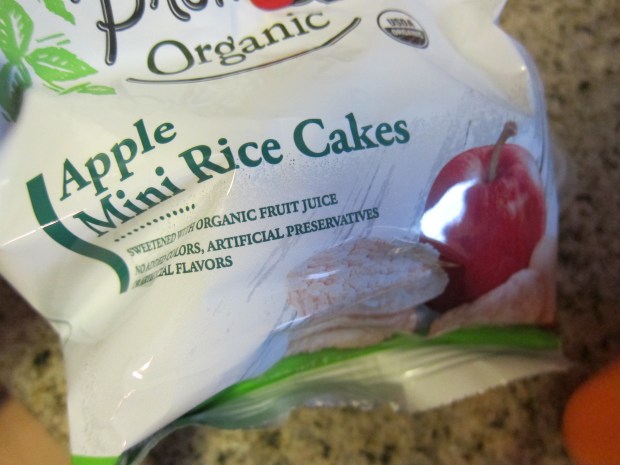
To end this post, let’s talk about snacks! It’s time for me to start thinking about an emergency snack stash in my purse not just for my big kid, but for my baby, too! At just shy of 8 months old, I’ve begun carrying mini rice cakes in my purse for her.
Emergency Snacks (1)

If she gets cranky (or if big brother starts eating a snack and she wants to join in!), I’m at the ready.

Emergency Snacks (4)

She looked so delighted the first time she got a snack on-the-go that it was priceless!

Emergency Snacks (3)

Other good options at this age include safely cut pieces of fruit, puff cereals, or squeeze pouches.

Emergency Snacks (2)

One note of caution: Be sure you don’t give your baby a snack in the back of the car until you’re sure they can safely chew and swallow. Otherwise, an “emergency snack” becomes an emergency snack in a whole other sense of the word.

Postcard Journal

Postcard Journal (6)

Acting on a suggestion from Highlights magazine, Travis is beginning a summer-long postcard journal. We have no grand trips planned, but there’s no reason that should stop us (or you) from the activity; we plan to pick up a postcard at every place we go in the next two months, whether or local or further afield!

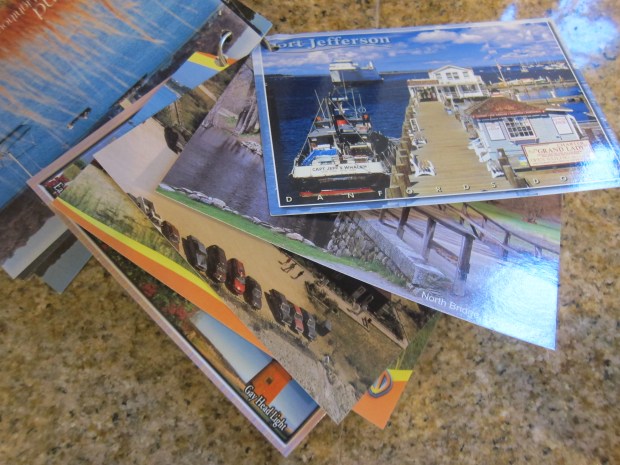
This is a neat way to introduce kids to postcards, which may seem like a throwback to another era in this age of vacation posts on Instagram and Facebook. Travis thought it was neat when we headed to the local bookstore and picked out a postcard just of our home town, our first summer location.

We also checked out one of the sights in town and made sure to scoop up a postcard there.

Postcard Journal (3)

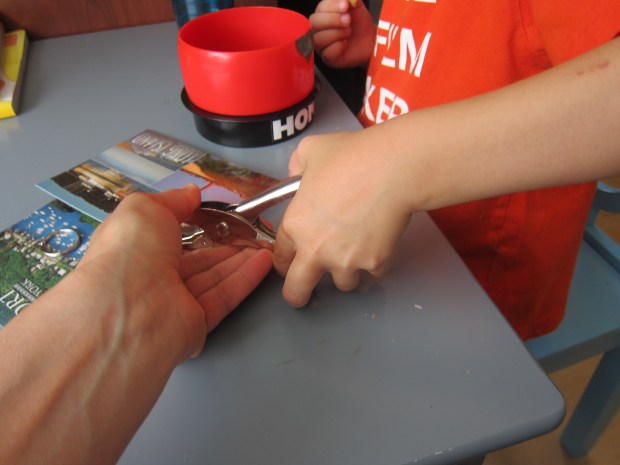
Punch a hole in each postcard after the visit, and loop them together on a key ring (or thread them together on a piece of yarn.

Postcard Journal (2)

For each place we visit, we jot down the date and some memories on the back. These memories can be grand or ho-hum, but the key is to capture a few details.

Postcard Journal (5)

And to remember your summer on one easy key ring. As with Travis’s Summer Memory Jar, we’ll be updating this all summer long, so stay tuned for an update!

Postcard Journal alt

Update: Travis loved collecting postcards at each stop along our summer, whether local attractions or vacation visits. This is definitely an activity we’ll continue in years to come.

Postcard Journal var.JPG


Ears Day

Ears Day (6)

In the past, Veronika and I have focused on a single body part for the day, like hands and feet. Today was all about ears!

Rather than just pointing out ears, we focused a lot on what ears can do – hear! That meant pulling out all her toys that prominently feature sounds. We listened to doorbells and animal sounds:

Ears Day (9)

Squeaky suns:

Ears Day (1)

And musical instruments:

Ears Day (4)

Find things around the house with a strong sound (like running shower water), and for each one, say “I hear with my little ear…”

Ears Day (2)

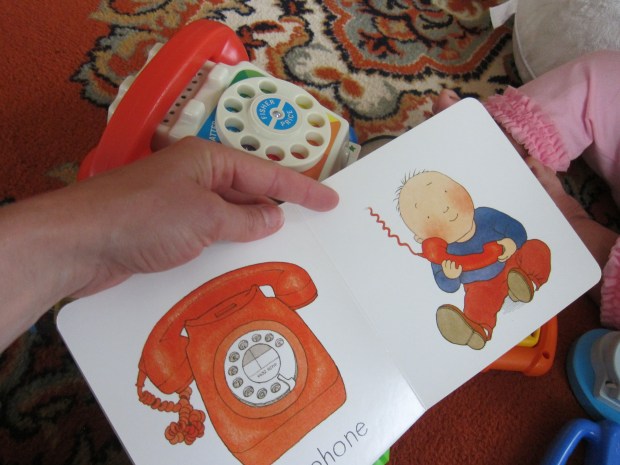
I also read a book from the library called I Hear, and made sounds alongside the pages.

Ears Day (5)

“I hear with my little ear… rain!”

Ears Day (7)

“I hear with my little ear… the telephone!”

Ears Day (8)

We also walked around the house looking for ears in family photos and paintings.

Ears Day (10)

What body part should we explore next? Stay tuned!

Ears Day (3)

Early Explorers Landmarks

LP Landmark (22).JPG

Well my goodness, Travis has now received all 24 Early Explorers packages from “Max and Mia”. This final one was fantastic, (though with some overlap from a recent landmark unit we did with a Raddish Kids recipe). But reinforcement never hurts!

First we went through the booklet, learning about spots around the world like the Leaning Tower of Pisa, the Eiffel Tower, and the Great Wall of China. Travis is a pro now at every type of activity in these books.

LP Landmark (7)

Landmarks Craft:

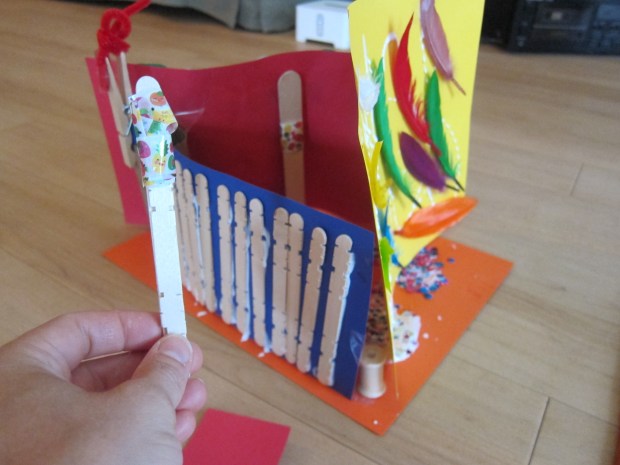
The booklet’s suggestion was to make a landmark out of blocks or craft supplies. I simply set Travis loose with everything-but-the-kitchen sink in our craft bin, and he loved it!

LP Landmark (19)

Undirected projects like these are fantastic for the imagination. Rather than copy an existing landmark, Travis preferred to create his own.

LP Landmark (21)

Soon we had a fence made of craft sticks, and walls covered in feathers and pom poms.

LP Landmark (20)

Landmarks Science:

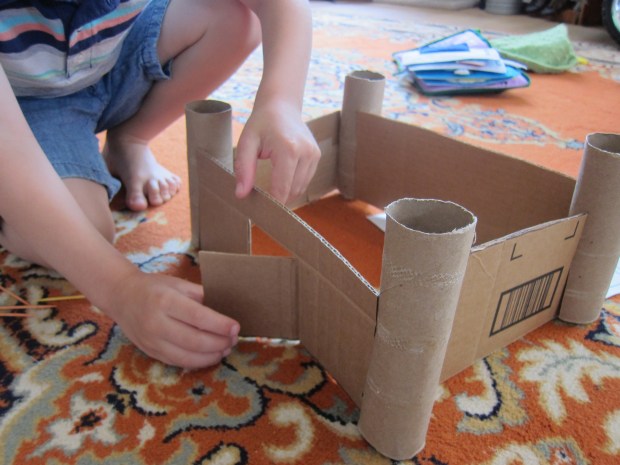
Okay, our “science” in this unit was more architecture and engineering, with the challenge to build a landmark from cardboard, but hey that fits loosely under the STEM heading!

Cut two paper towel tubes in half. Cut 4 pieces of cardboard so you have two long rectangles and 2 short ones.

LP Landmark (12)

Cut 2, 2-inch slits in the bottom of each tube, about 1 inch apart.

LP Landmark (13)

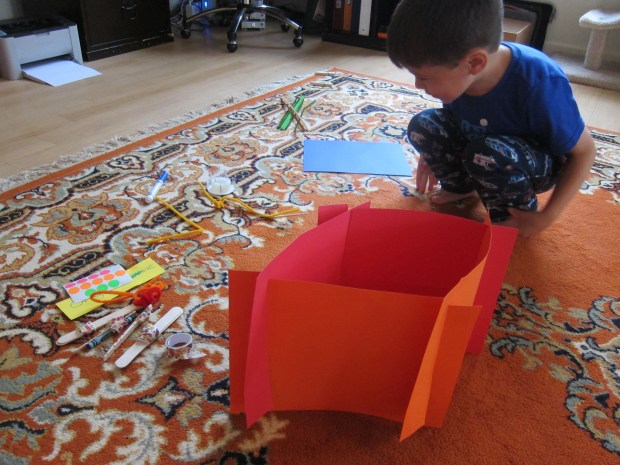
Cut a 2-inch slit into each corner of the cardboard. Now your castle can slot together!

LP Landmark (15)

Travis wasn’t satisfied until I also cut out a door he could open and close.

LP Landmark (14)

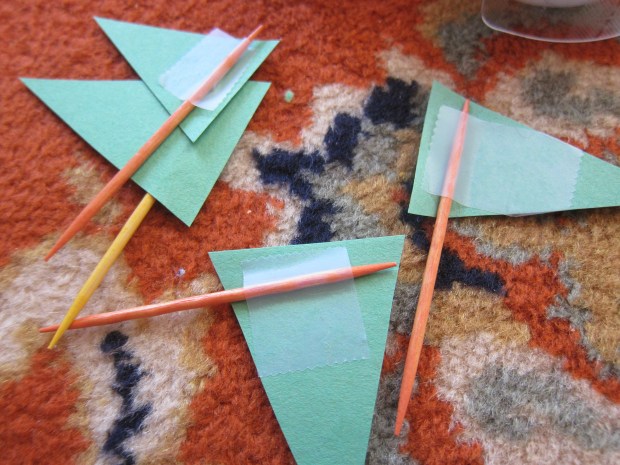
We taped construction paper to toothpicks for little pennant flags, which we then taped into the towers.

LP Landmark (16)

(Note: You could also glue these on, but Travis was impatient and preferred the quick tape fix). He loved playing with this “landmark”!

LP Landmark (17)

Landmarks Keepsake:

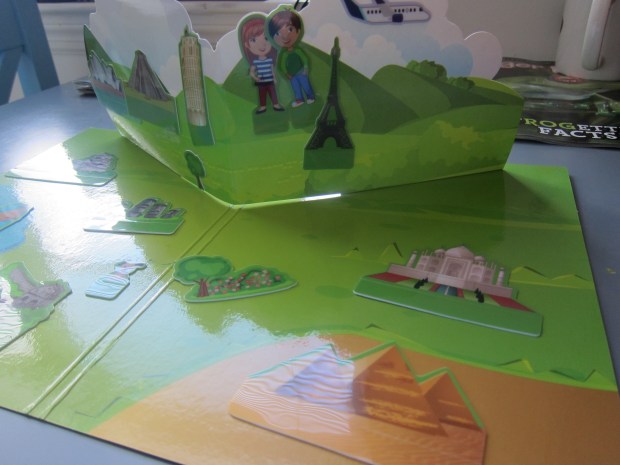
Travis wanted to know right away what he had received: a sticker book. He was thrilled to learn they were the puffy reusable stickers he likes best.

LP Landmark (2)

Even better, the board to place them on featured a pop-up 3-D element, which made arranging the landmarks tons of fun.

Landmarks Field Trip:

Of course we had to visit a landmark, and decided to check out an iconic structure in our town that we’ve never seen in two years of living here: the local lighthouse. Unfortunately, the day we went to peek at it was so rainy and foggy I could barely snap a picture! But at least we had a fun adventure.

LP Landmark

Landmarks Further Activities:

The booklet suggested talking further about everything we’d learned: what were our favorite landmarks and where would we most like to visit. It turns out Travis is into the tall landmarks, and wants to visit the Empire State Building. We’re close enough that hopefully we can make that happen soon. We followed up by exploring some pictures of the Empire State Building online.

I also found a neat Montessori-inspired activity to go along with this package, matching miniatures to a map.

LP Landmark (8)

This sounded like the perfect hands-on way to bring the lesson to life. I purchased a simple tube of landmarks from Amazon and set them out for Travis.

LP Landmark (9)

Some of them he now knew from the booklet, and a few others I had to help him with. It was great review not only for where each country was, but also for a chance to understand some of the landmarks better in three dimensions.

LP Landmark (10)

He was so delighted with the little miniatures that they soon became involved in all his games!

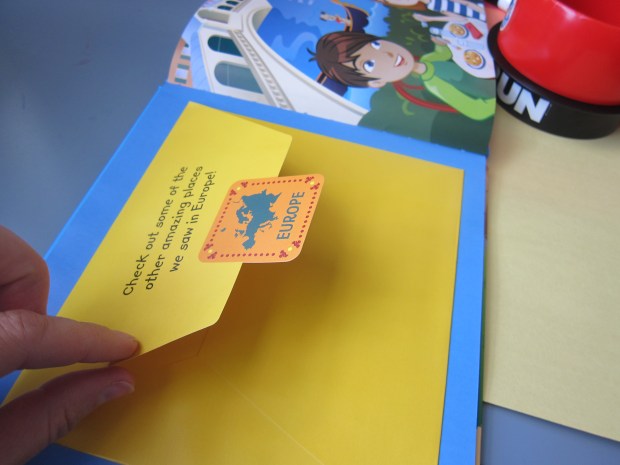
Finally, I opted for the add-on to the package, a delightful book from Max and Mia, featuring “mail” for the reader from each continent.

LP Landmark (4)

The pages were so innovative and clever, including a puzzle from the African section, “photos” from Australia, a “train ticket” from Asia, and more!

LP Landmark (5)

Incidentally, this book is great for car trips – perhaps on the way to see a landmark?

LP Landmark (1)

So wow, thank you for 2 years of fun, Early Explorers!

LP FInale

Green G


Grape G (6).JPG

Today’s letter for tracing was G. Travis has a hard time with both the upper and lower case of this letter, so I made sure to sit us down when he was well-rested and focused.

He made great progress, and was delighted with the materials I pulled out to make our 3-D versions of the letter.

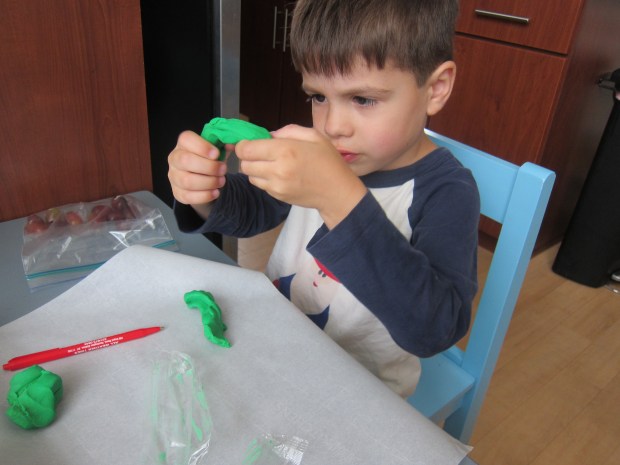
First up: green clay. “How can this be a G?” he asked, looking at a short blob of clay.

Grape G (1)

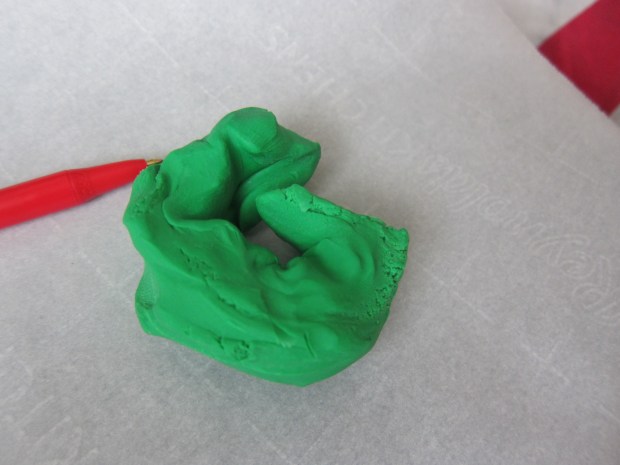
“Look, a G” he said a moment later, inadvertently making as smooshed one.

Grape G (2)

To be more precise, we rolled out long coils of clay.

Grape G (3)

With this, we could first loop it into a C and then add the line inwards for a G. Tada!

Grape G (5)

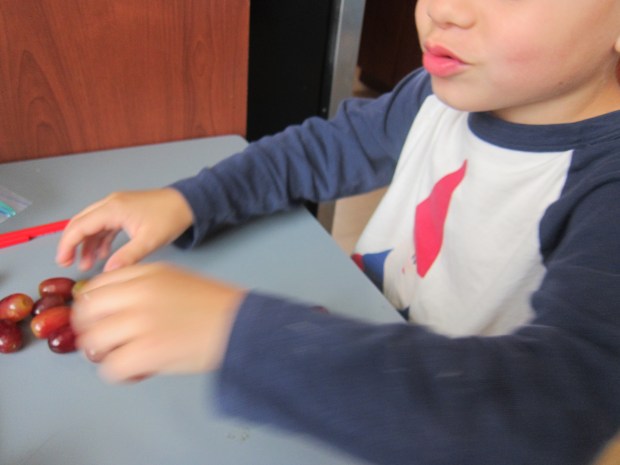
Next up: grapes! (If only they had been green grapes, but red worked in a pinch).

Grape G (7)

Travis worked carefully to form the circle of lower case g, but then needed a little help understanding how to make the rest of the grapes march down in a line for the final flourish.

Grape G (8)

After that, the g got gobbled up too quickly for me to snap a picture!

Fishy F

Fishy F alt

Today Travis and I focused on the letter F, tracing it first and then making it 3-D in two ways.

For the first, we raided daddy’s non-vegan pantry of snack foods, and used fish (goldfish crackers, that is). I drew lower case f on construction paper, and Travis loved making a big line of glue and sticking on the fishy friends.

Fishy F (1)

We used blue paper and I encouraged him to color in an ocean scene behind the fish, but he decided he didn’t want to.

Fishy F (2)

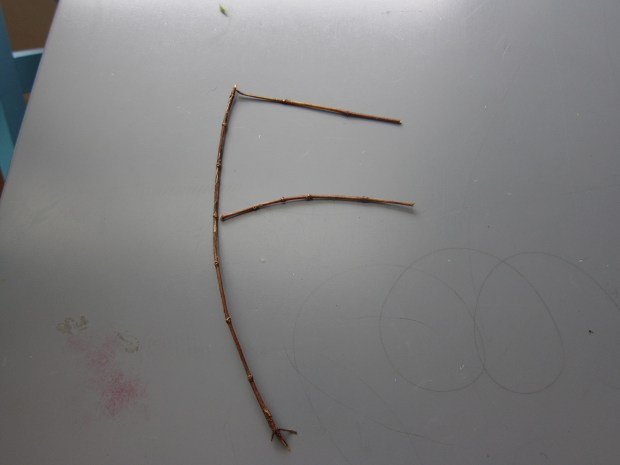
For upper case F, we used a few forest finds from a walk. Once we were home, I laid out two short sticks and one long.

Fishy F (3)

“I can do this!” he declared with confidence, and in no time had formed an F.

Fishy F (4)See you soon for G!