Spin Art

Spin Art (6)

Warning: This project is a messy one! After playing with lots of spinning tops recently thanks to his latest Kiwi Crate, Travis helped test out this homemade way to make spin art. We thought it was way cooler (if a lot messier!) than a spin art machine from the store.

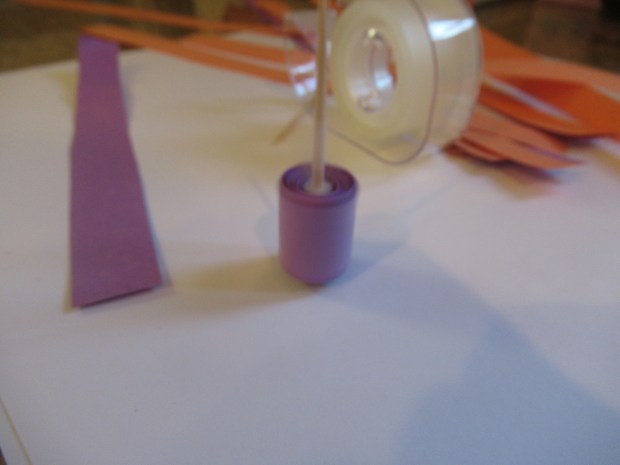
To make a spinning top “paintbrush”, cut several 1/2-inch wide strips of construction paper. We used about 5 strips for each top we made, but you can make them thicker (up to 10 strips) if desired.

Spin Art (1)

Tape one end of a paper strip to a toothpick and begin winding up tightly. As you reach the end of each strip, tape down and then tape on the beginning of the next strip. As mentioned, we only used 5 strips, mostly because my fingers started to cramp up. Here’s an image of it in motion, hence why it is so blurry. These made fun toys in their own right!

Spin Art (2)

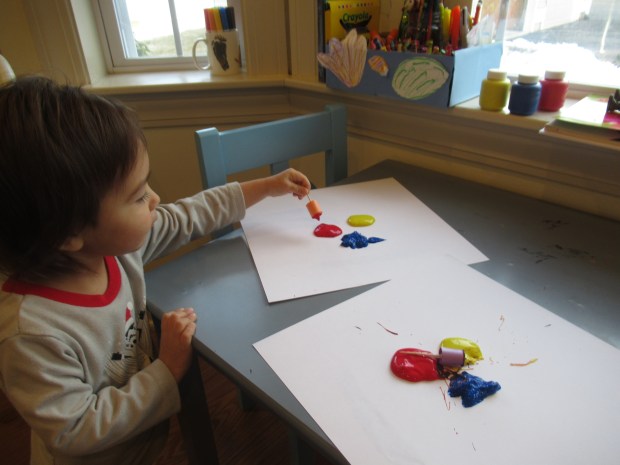
Next, we set down white cardstock and added three blobs of color near the center of each, in the primary colors of red, yellow, and blue.

Spin Art (3)

Give your spinning top a whirl!

Spin Art (4)

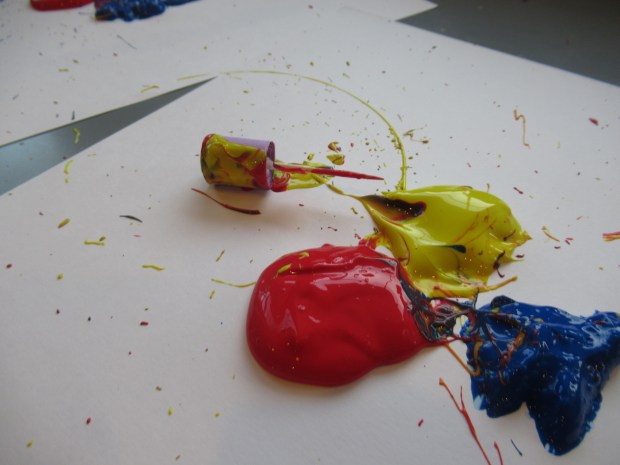
Through trial and error, we found that this worked best when the paint blobs were very small, otherwise the top just got stuck. Since I had already dolloped on rather thick paint, ours made the best art when we set it spinning near the edges.

Spin Art (5)

The resulting spray and splatter was so fun for the kids to watch!

Sticky Sheep

Sticky Sheep (5)

In like a lion, out like a lamb, or so the saying goes, and this adage of March has certainly been true this year. Needless to say we’re looking forward to the docile lamb weather to come. While we wait, Veronika and I decided to make our own woolly lamb inside! This activity combines farm animal play with tactile play in a very cute way. First, I printed out the face and leg templates for a sheep found at No Time for Flash Cards.

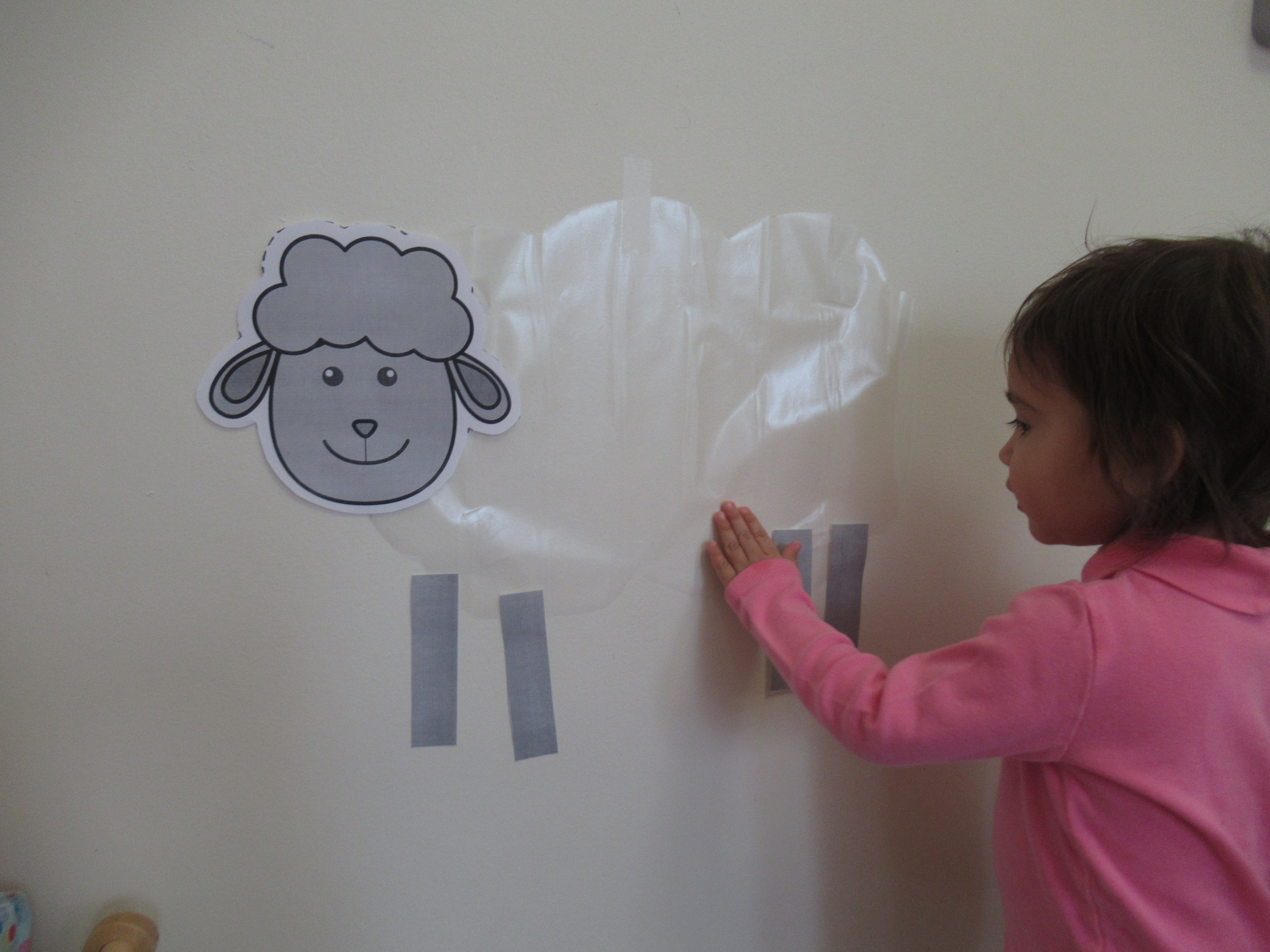
Next, I cut out almost a cloud shape from a large piece of contact paper, then attached this to the wall with clear tape and peeled off the backing. If you have white paper that is large enough, you could place the contact paper on the white paper such that you’re left with a white rim.

Sticky Sheep (1)

Attach the head and legs, and your sheep is ready. I brought Veronika over and immediately she said “baa baa” to the sheep. I invited her to touch the contact paper, so she would realize it was sticky.

Sticky Sheep (2)

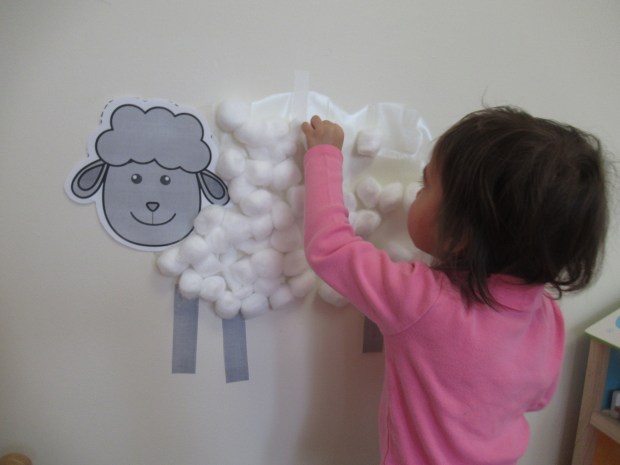
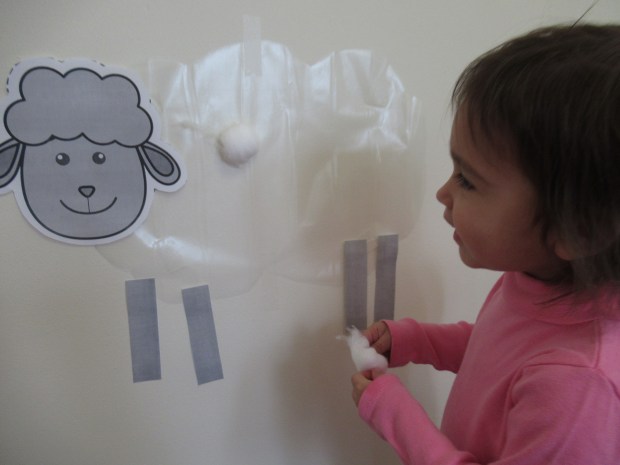
Now, I told her that the sheep was cold and we needed to help him find his wool! I set out a tray of cotton balls, and she immediately got to work. She was so proud that she could help the sheep: “We’re making him so woolly!” she exclaimed.

Sticky Sheep (3)

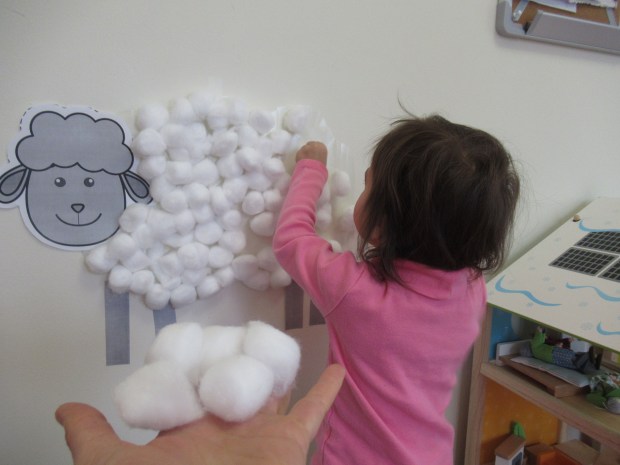
Once or twice she tried to stick a cotton ball on the wall where there was no contact paper and was so surprised when the cotton fell to the floor. This was a very teachable moment, and she realized she needed to stay within the lines of the contact paper.

Sticky Sheep (4)

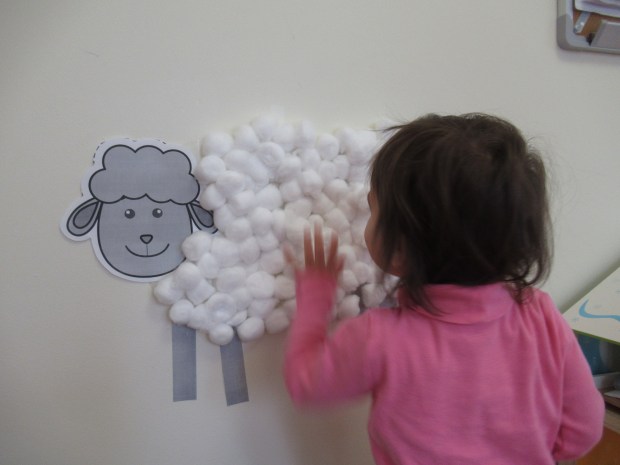
She proved remarkably adept at finding even tiny holes that needed to be filled with cotton until we had one very woolly sheep. “It’s like stickers!” she said with delight at the way that the cotton balls stayed on.

Sticky Sheep (6)

When your toddler is done, you’ll have an adorable (and tactile!) piece of artwork on the wall. We plan to keep this up until March goes out like a lamb.

Sticky Sheep (9)

Breakfast Tortilla Pizza

Breakfast Pizza (2)

This breakfast feels special enough for weekend mornings, but is quick enough to throw together even on a school day! Kids get to take charge of decorating the “pizzas” with their own choice of fruit topping.

Ingredients:

  • 2 whole wheat tortillas
  • 1 teaspoon Earth Balance
  • 2 teaspoons sugar
  • 1/2 teaspoon cinnamon
  • 1/3 cup non-dairy cream cheese
  • 2 teaspoons agave nectar
  • Mixed fruit, for serving
  1. To prepare the tortillas, place on a baking sheet lined with foil and spread evenly with the butter. Mix together the sugar and cinnamon in a small bowl, then sprinkle evenly over the tortillas. Bake at 400 degrees F for 3 minutes.
  2. Meanwhile, mix together the cream cheese and agave in a bowl with a fork.
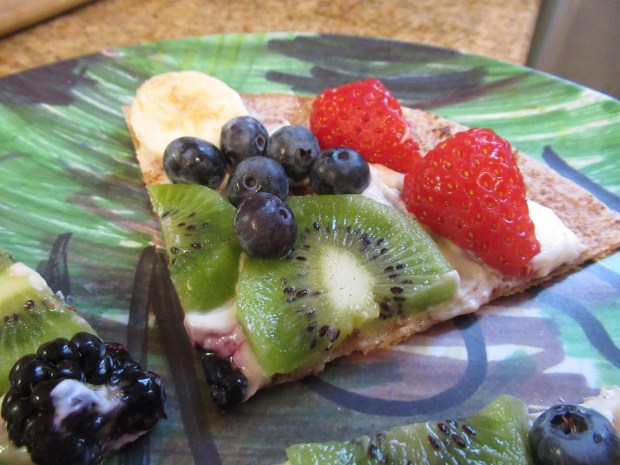
  3. Spread the tortillas evenly with the cream cheese mixture, then invite kids to top their “pizzas”! We used a mix of bananas, strawberries, blueberries, kiwi, and blackberries.

Breakfast Pizza (1)

Play Dough Boredom Busters

Play Dough Boredom (3)

We’re getting a touch of cabin fever around here as cold weather lingers, and lately play dough seems to be Veronika’s favorite indoor toy to bust the boredom. So today we played with it in a few novel ways!

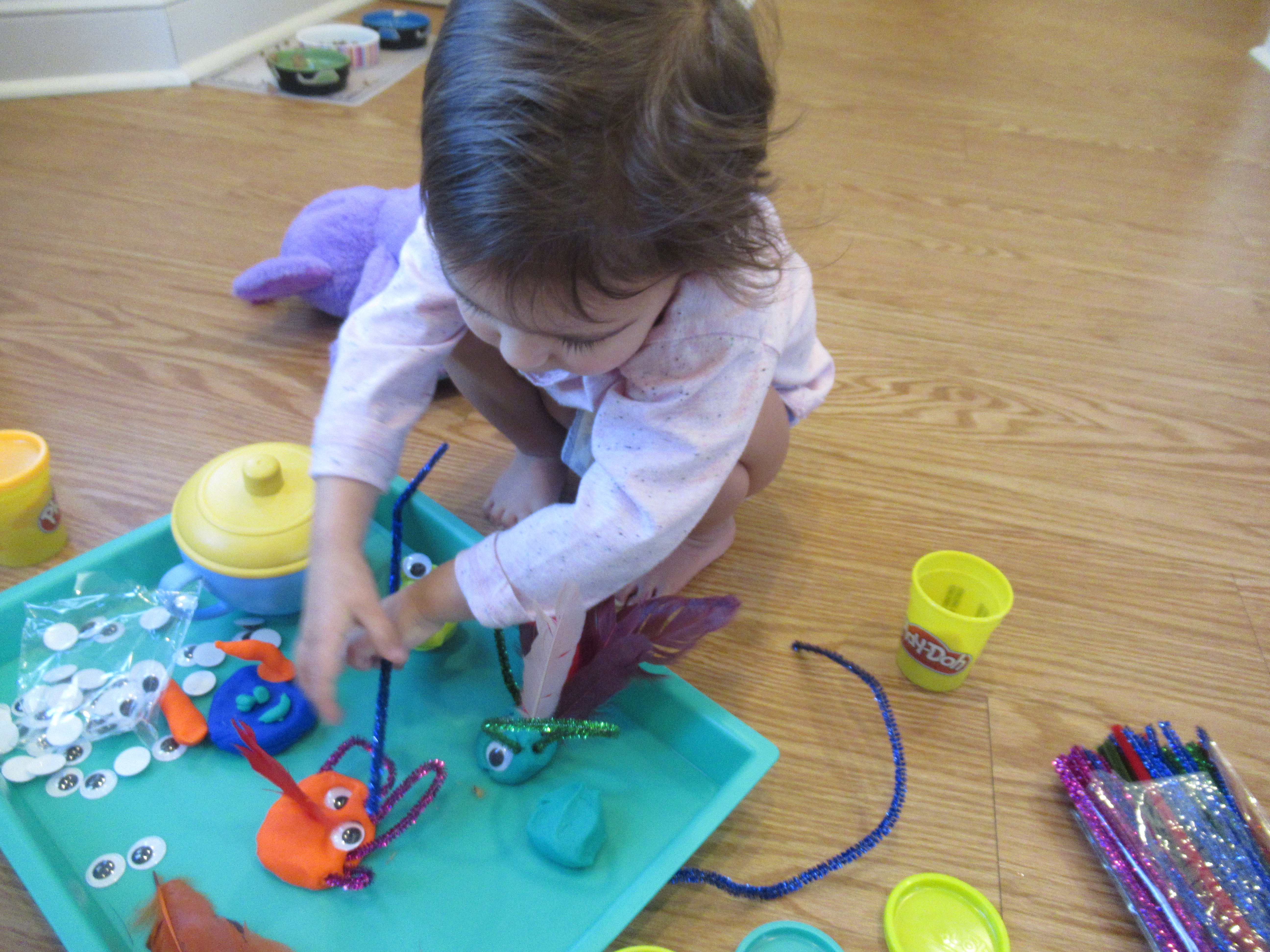
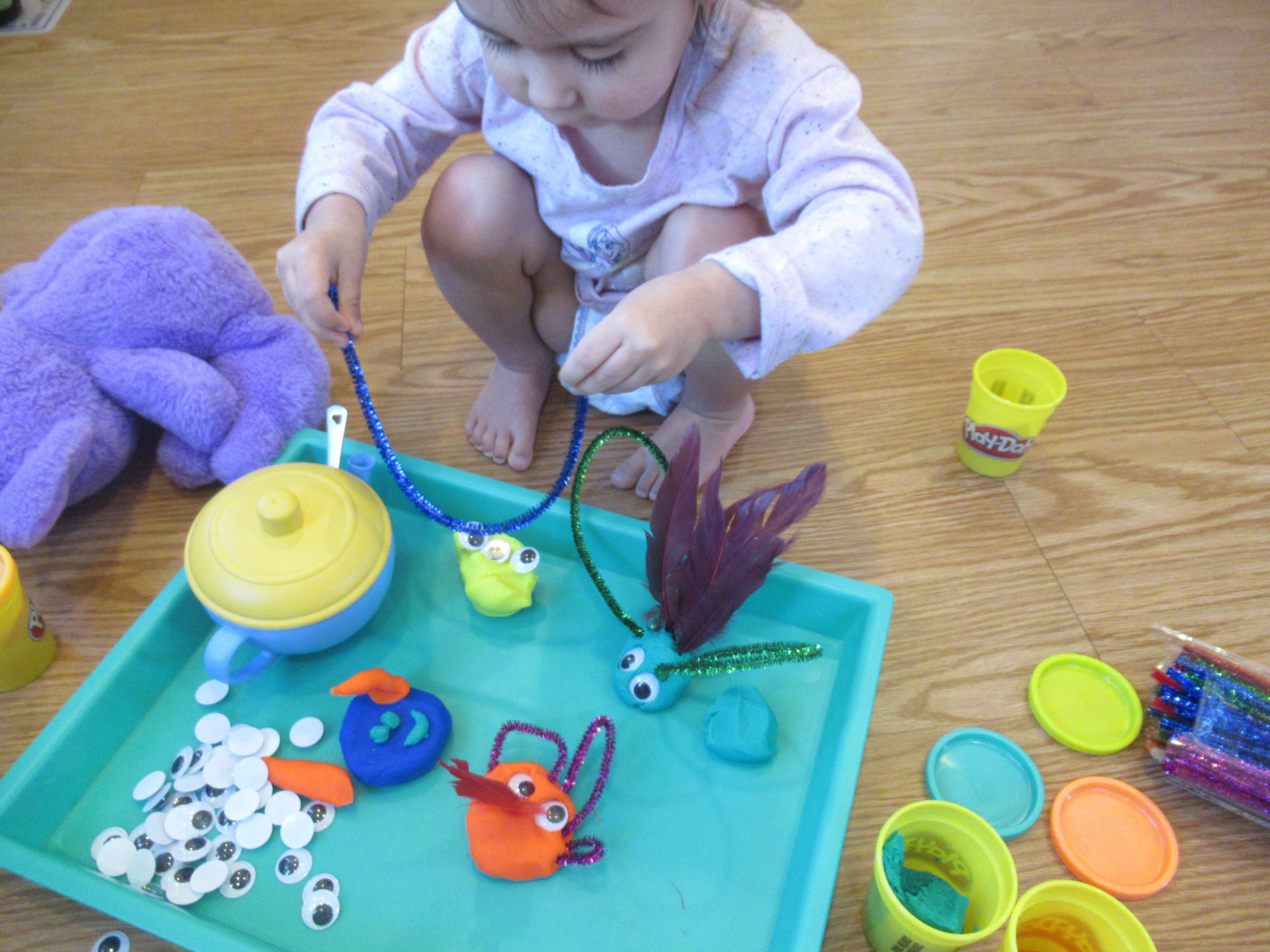
First up, since she was playing with an alien stuffed animal, we decided to make play dough aliens! These could be monsters, aliens, or just funny faces, whichever version your child wants to create. To help her imagination, I set out items from the craft bin like large wiggle eyes, feathers, and pipe cleaners, and showed her a few examples for how the creations could look.

Play Dough Boredom (1)

Pipe cleaners proved to be much easier for her if I snipped them into small pieces first, although she tested out big pieces, too!

Play Dough Boredom (2)

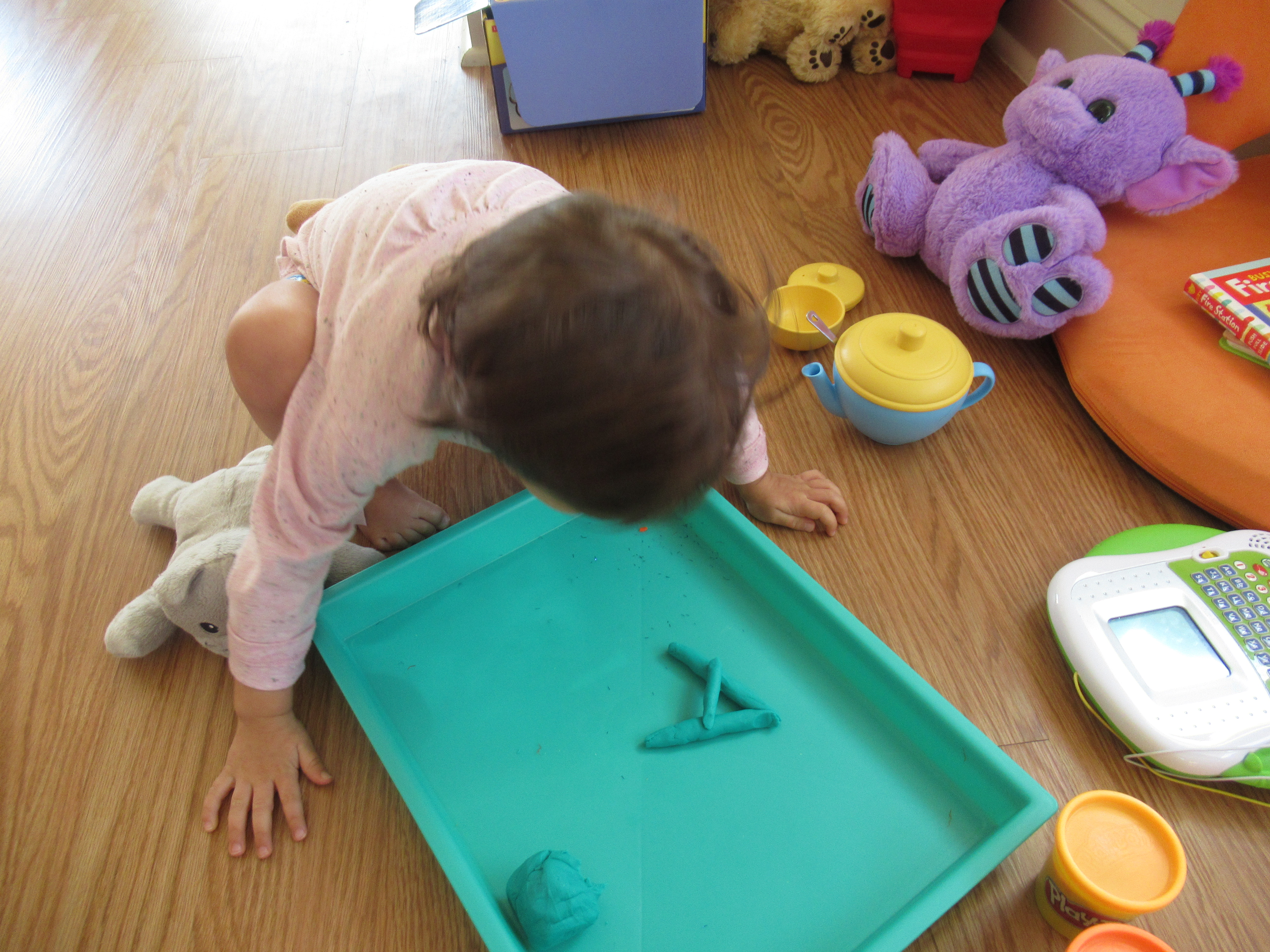
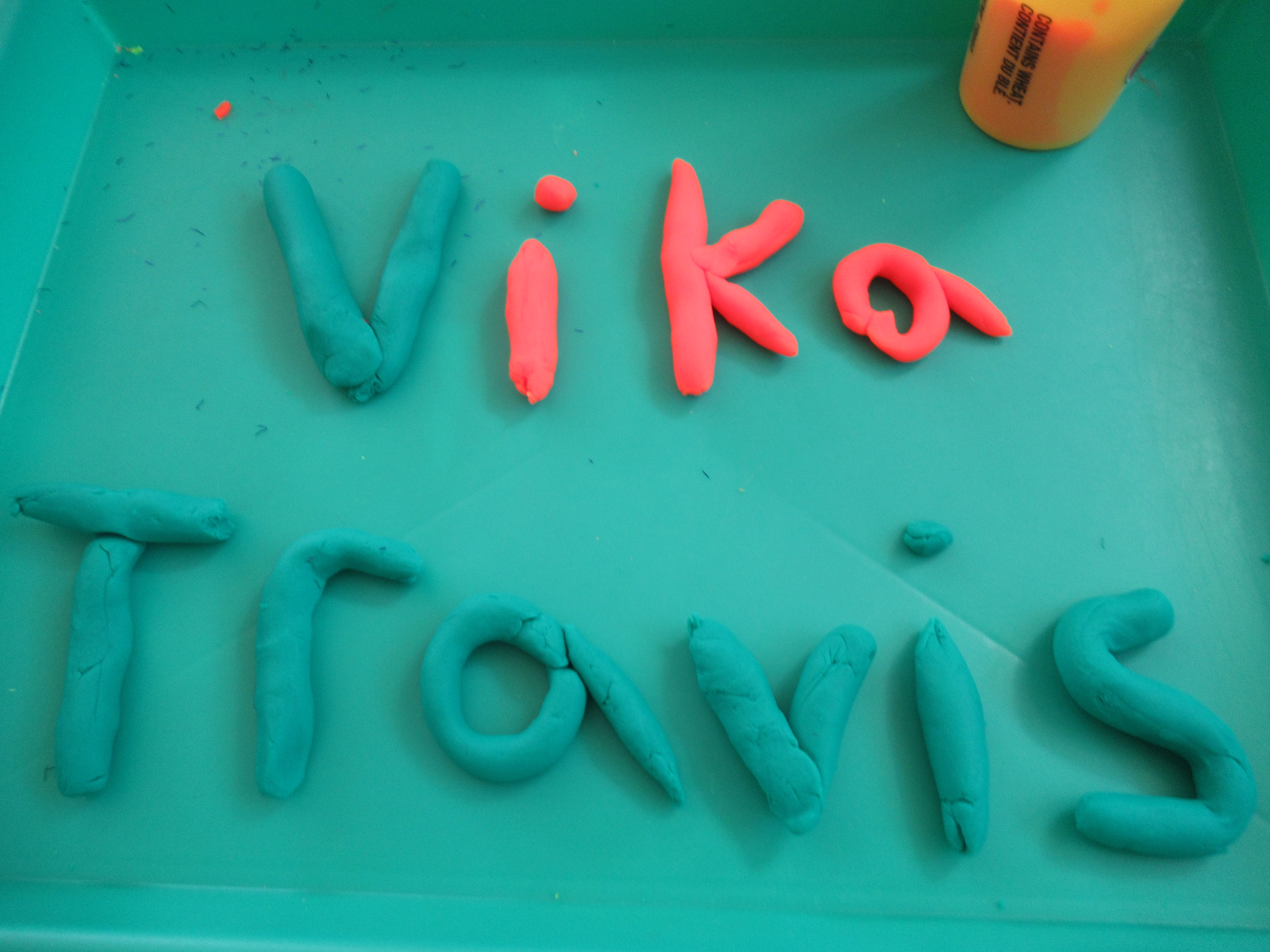
Next we added in a little learning with play dough letters! You can use cookie cutters in letter shapes if you have them, but I simply rolled these by hand for her. Preschoolers and kindergartners will benefit from shaping each letter by themselves.

Play Dough Boredom (5)

For Veronika, it was more about shape recognition. I was thrilled when I asked her what letter we needed for Veronika, and she immediately knew it was a V. Before I could even ask she said, “Mom, can you make a T for Travis?” Happy to oblige!

Play Dough Boredom (7)

Next up, we put on our engineering caps and tried to build towers. I showed her how to use playdough as a base to stick in toothpicks, and then we tried to build the structure as high as three layers.

Play Dough Boredom (10)

When our 3-D towers toppled down, she enjoyed connecting two toothpicks together with a sticky ball of play dough as “glue”. This was a great method to make flat shapes like squares and triangles. She kept the play going long after I stepped away to get some work done. I overheard her talking about making “drums” and adding “ears” and all sorts of other imaginative games with just a ball of orange play dough and leftover toothpicks. “And then he lost his ears!” she exclaimed.

Play Dough Boredom (9)

Squishy Button Sorting Bag

Color Sort Buttons (3)

This cute twist on a regular squishy sensory bag adds the concept of sorting into the mix! Squishing buttons through the hair gel inside will be an absolute delight for toddlers and preschoolers alike.

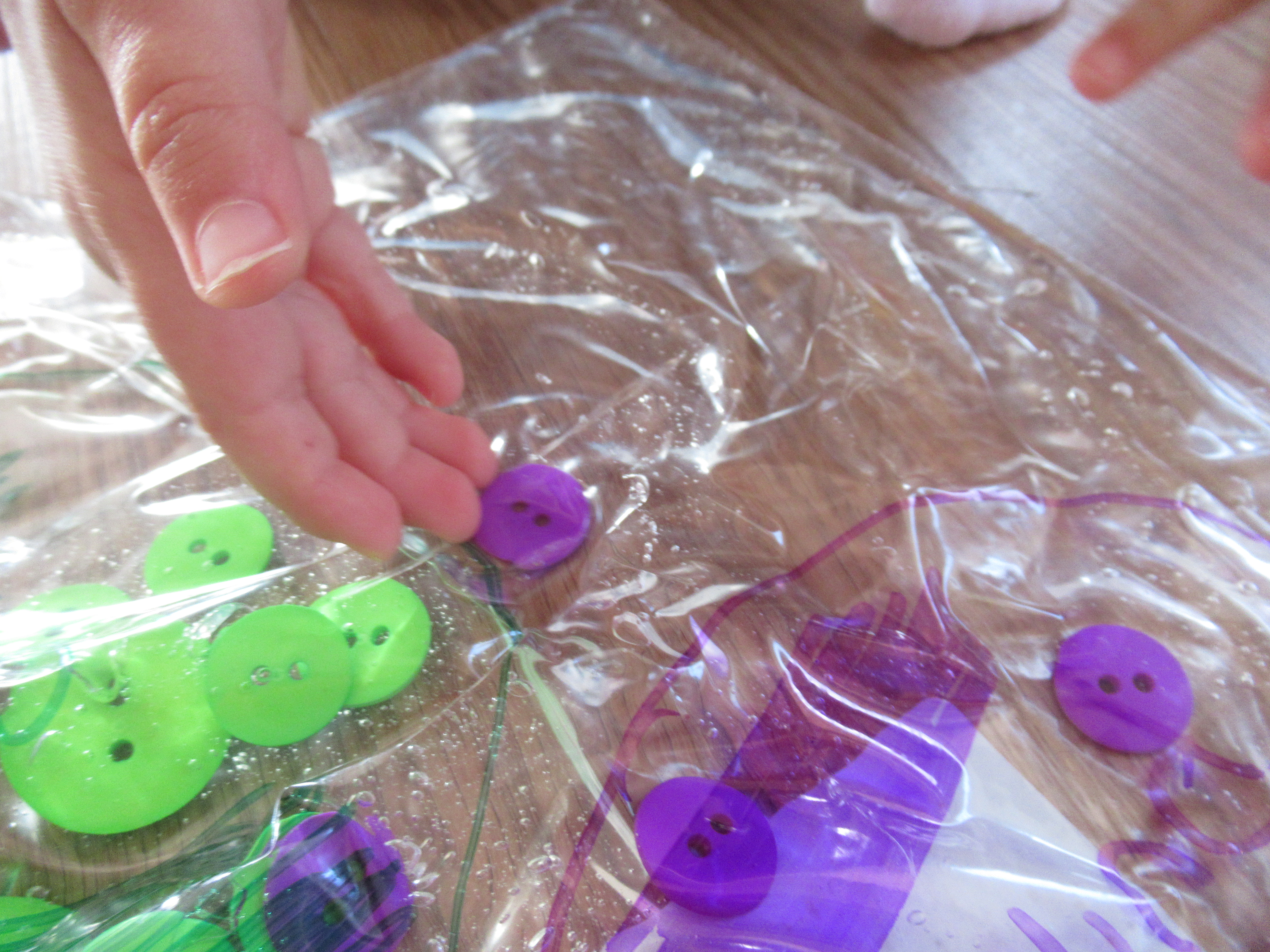
To set up, I drew two circles on a large zip-top plastic bag with sharpies, using colors that corresponded to buttons in our craft bin. Next, squirt in a generous amount of hair gel, then add buttons in at least two colors. (Note: You can make this harder for preschoolers with additional colors). Seal tightly, adding duct tape to the seal if you worry your child might want to open the bag.

Color Sort Buttons (2)

First I just let Veronika experiment with how the bag felt. She loved squishing the buttons through the gooey insides of the bag…

Color Sort Buttons (4)

…or pressing her hands down firmly on top of it.

Color Sort Buttons (6)

Once she’d had time to explore, I showed her that she could nudge the buttons deliberately, each one toward the correctly colored circle. She picked up on the idea right away, although occasionally I had to help her with the fine motor skills needed to scoot a button in the right direction.

Color Sort Buttons (5)

To mix up the activity, I then showed her how the bag looked with the buttons completely sorted. Then it was up to her to scatter them! In sum, this was a nice variation on an idea that never gets old.

Color Sort Buttons (7)

Tropical Celery Boats

Carribean Dream Boats

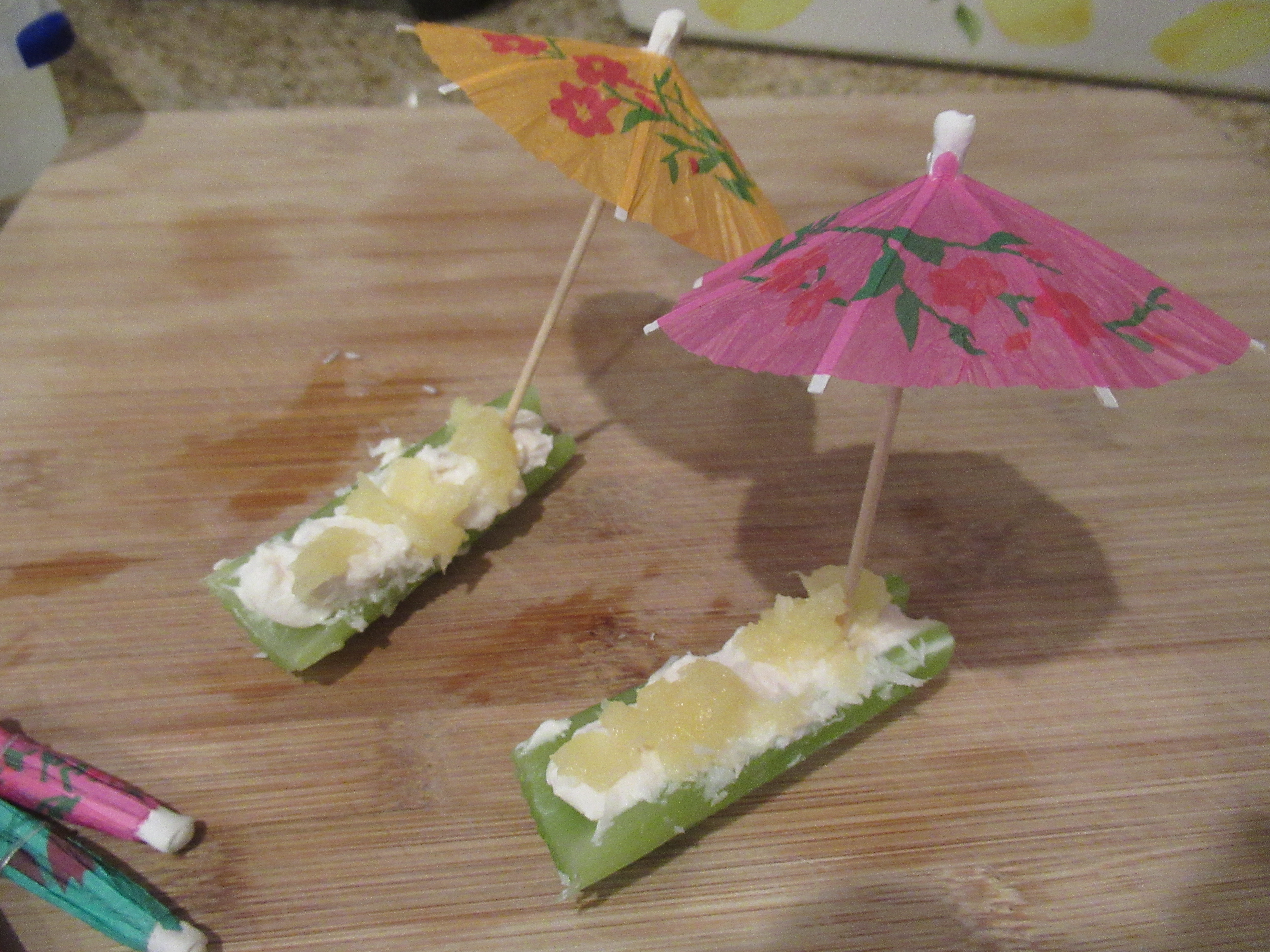
This fun snack actually encourages kids to play with their food! The bright colors and touch of whimsy from small drink umbrellas turn ho-hum celery into a little Caribbean “boat”. Serve this snack in the winter if you’re dreaming of warmer days, or save it for an actual summer day, where it would be perfect poolside.

To start, I like to steam the celery stalks for just a minute or two to make them easier for toddlers to chew, but you can also leave the celery crunchy. Spread the insides of the celery pieces with your favorite non-dairy cream cheese, then sprinkle with shredded coconut to taste. Spoon a little crushed pineapple over the top of each piece.

Add a drink umbrella as the “garnish”, and your boats are ready to set sail.

Spinning Science Kiwi Crate

Kiwi Spinning (24)

Here’s our unboxing of Travis’s latest arrival from Kiwi Crate, with projects devoted to angular momentum (otherwise known as spinning!). We give this one high marks for science and art, both.

First we needed to assemble a few Stacking Tops from the provided plastic pins and wooden discs.

Kiwi Spinning (2)

These were neat since Travis could mix and match the sizes of discs (labeled 1 through 4 from smallest to largest) and see how this affected the way they would spin. Little sister Veronika wanted to try her hand at building a top, too!

Kiwi Spinning (1)

The different pegs spin differently, for added experimentation. Blue ones spin in place, whereas the green ones could skitter across a table, making for lots of squeals of delight.

Kiwi Spinning (6)

Once the tops are made, you can move on to Spinning Top Games. Travis helped assemble a launcher, which is a wooden arm fastened to a weighted cup.

Kiwi Spinning (7)

The tops slot up into the arm, and when you pull the felt release, should ideally spin well when they hit the ground. Unfortunately, we found the mechanism to be a bit faulty and had better luck just spinning by hand!

Kiwi Spinning (9)

Travis then made a frame for the games from wooden pieces that slot together like a jigsaw puzzle. The first game was called Point Walk: Spin the top and score a point for every time it “walks” across the colored dots on the game board. Travis’s high score was 8!

Kiwi Spinning (8)

The second game was Pom-Pom Knockdown, for which we placed the provided small pom-poms in piles. Launch the top, then see if you can make the pom-poms fly off the frame. Travis thought it was so funny every time a pom-pom went skittering.

Kiwi Spinning (11)

We set aside the games and turned to a very STEM-based Top Experiment. If Travis attached the blue peg to a provided disc and then added various wooden weights, he could record differences in how long the top could spin.

Kiwi Spinning (12)

Kids can use a stopwatch and pencil to record results, making this feel like a real “lab” experiment. Quite honestly, everyone was wowed when the version with the most balanced weights spun a full 31 seconds, whereas our other attempts averaged about 8 seconds.

Kiwi Spinning (13)

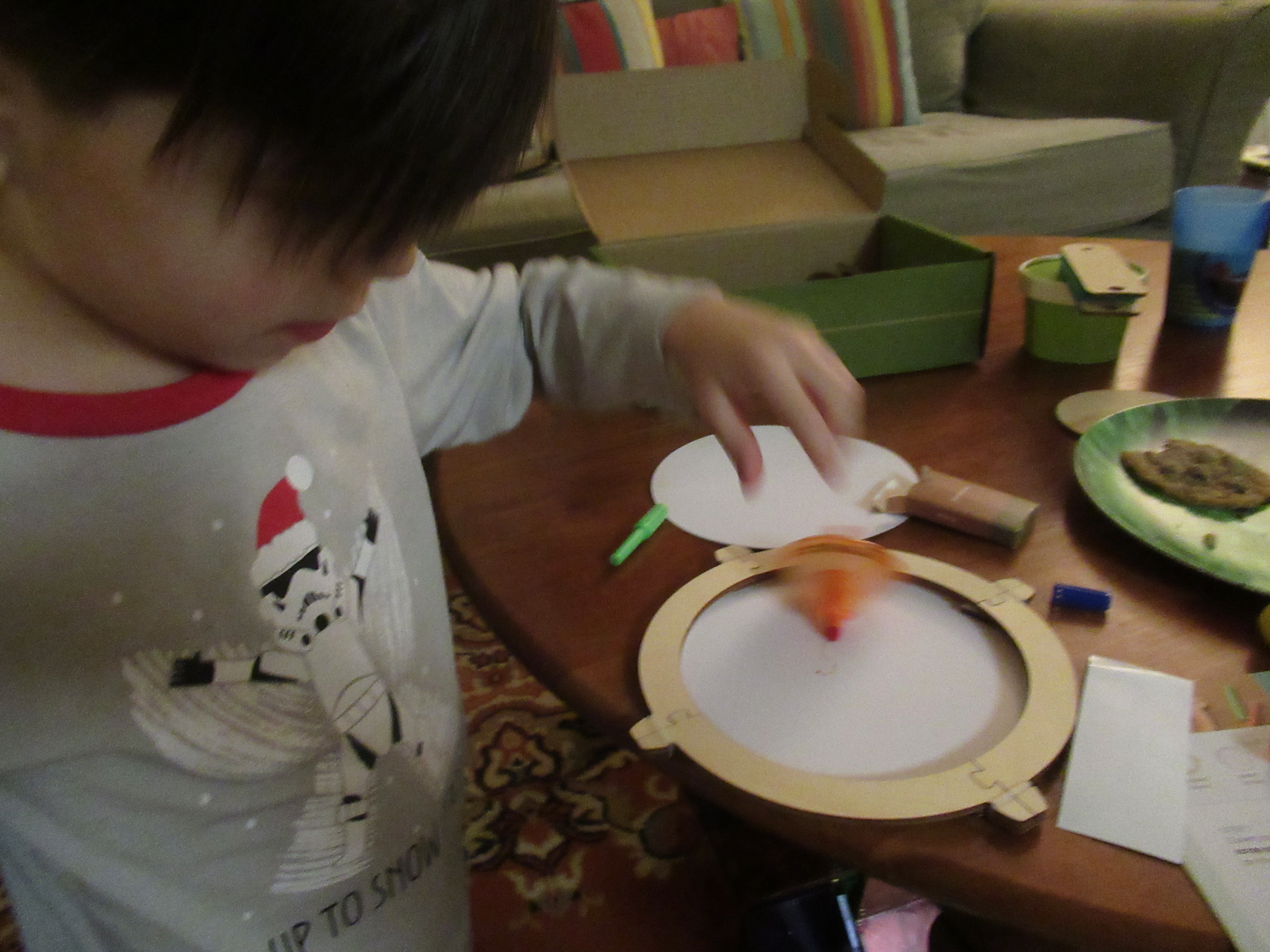
For some art in all this, the final project was to use a plastic top as a Doodle Top. The provided mini markers fit right into this plastic spinner, and we placed a piece of provided circular paper under the wooden game frame. Give it a spin and make some swirly art!

Kiwi Spinning (15)

Unfortunately we never got this top to spin for long (I’m not sure if that was due to a faulty top or the fault of our spinning abilities), resulting only one time in what could be called a doodle, and mostly getting scratchy scribbles.

Kiwi Spinning (16)

However, Travis liked the suggestion to see if he could turn the doodle into something recognizable. I loved watching him trace the lines and then tell me this was a Person, a Sun Pig, and a Dancing Flower.

Kiwi Spinning (18)

Kiwi almost always provides a suggestion to upcycle the crate that all these fantastic materials come in, and this month was no different. Travis traced circles onto the lid of the cardboard box, and I cut them out. Kids can get as artistic as they want decorating the resulting circles, although Travis was more interested in the next step.

Kiwi Spinning (21)

Poke a hole in the center, then wedge in a coin (quarters work best). Give this Box Top Coin Top a twirl!

Kiwi Spinning (23)

Explore magazine had lots of great info on the science behind spinning, as well as a quick Toppling Coin Top experiment: Simply place on a coin on a surface and let go; of course it plops down immediately. But if Travis gave it a spin first… angular momentum keeps it up!

Kiwi Spinning (19)

We couldn’t end the fun without edible tops, of course, namely Apple-Top Tops. Use a tablespoon to carve little semi-circles from an apple, then insert lollipop sticks into the skin side of each piece. The kids loved these little fruit “lollipops”, as well as testing out their spin-ability!

Apple Pop Tops (1)

Overall, an excellent crate from Kiwi Co that we highly recommend. Cheers!

Apple Pop Tops (3)

Look with Me Panda Crate

Panda Look alt

Veronika’s latest box from Panda Crate was about the way toddlers learn hand-eye coordination, as well as visual tracking skills, visual discrimination, and more. In other words, there are so many ways to learn to use our eyes! I would recommend this crate for toddlers aged 22 months and up.

One: Wood Rainbow

The first item was a beautiful 3-D puzzle of three interlocking pieces that formed a rainbow. First, we placed it on the ground and I encouraged her to trace the smooth arced shape. It was easy for her to fit the pieces together lying flat…

Panda Look (1)

…but could she do so once they were upright? She could!

Panda Look (2)

It’s fun to sing any rainbow song you know as your toddler makes it all come together. You can also talk about bigger and smaller, with regards to the various arcs. Veronika invented her own way to play with the pieces, too, building little forts and houses for her toy figures, and I loved seeing her imagination at work!

Panda Look (5)

Finally, there is a wooden ball in the crate and she could bowl this at the rainbow and knock the pieces over for some classic cause-and-effect.

Panda Look (6)

Two: Spin-and-Slide Board

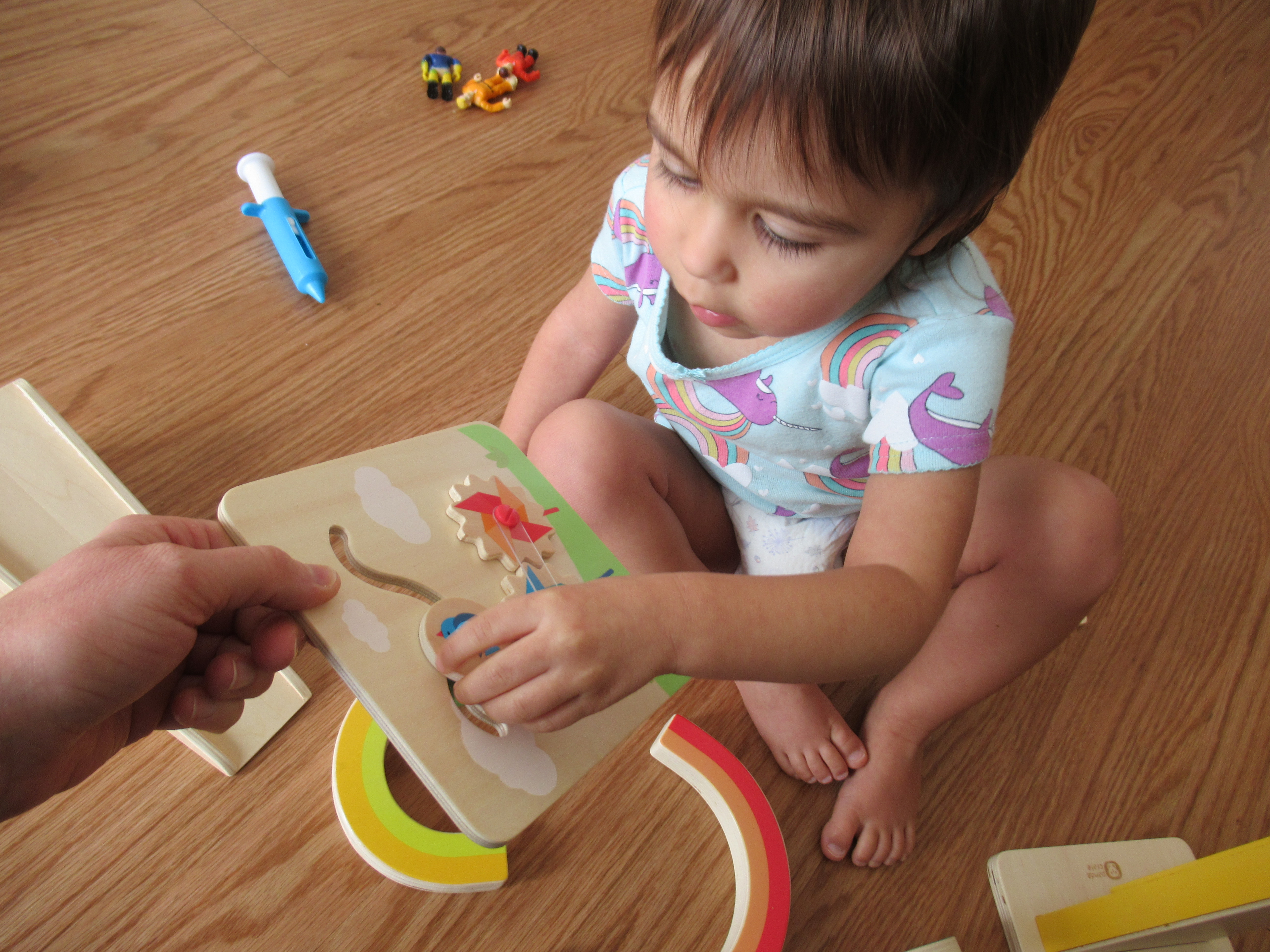
This was a busy board in miniature, and let me first say that it is perfect for car rides and I give Panda huge props for it! One side features a scene with a bird and pinwheels, and the reverse had a caterpillar and ladybug, all with gears that spin and knobs that slide.
Panda Look (13)

Veronika was enamored with the images, which were great for counting (1 bird but 2 pinwheels) or playing “I spy”. This is going to be in the diaper bag for car trips from now on!

Panda Look (15)

Three: Ramp Racer

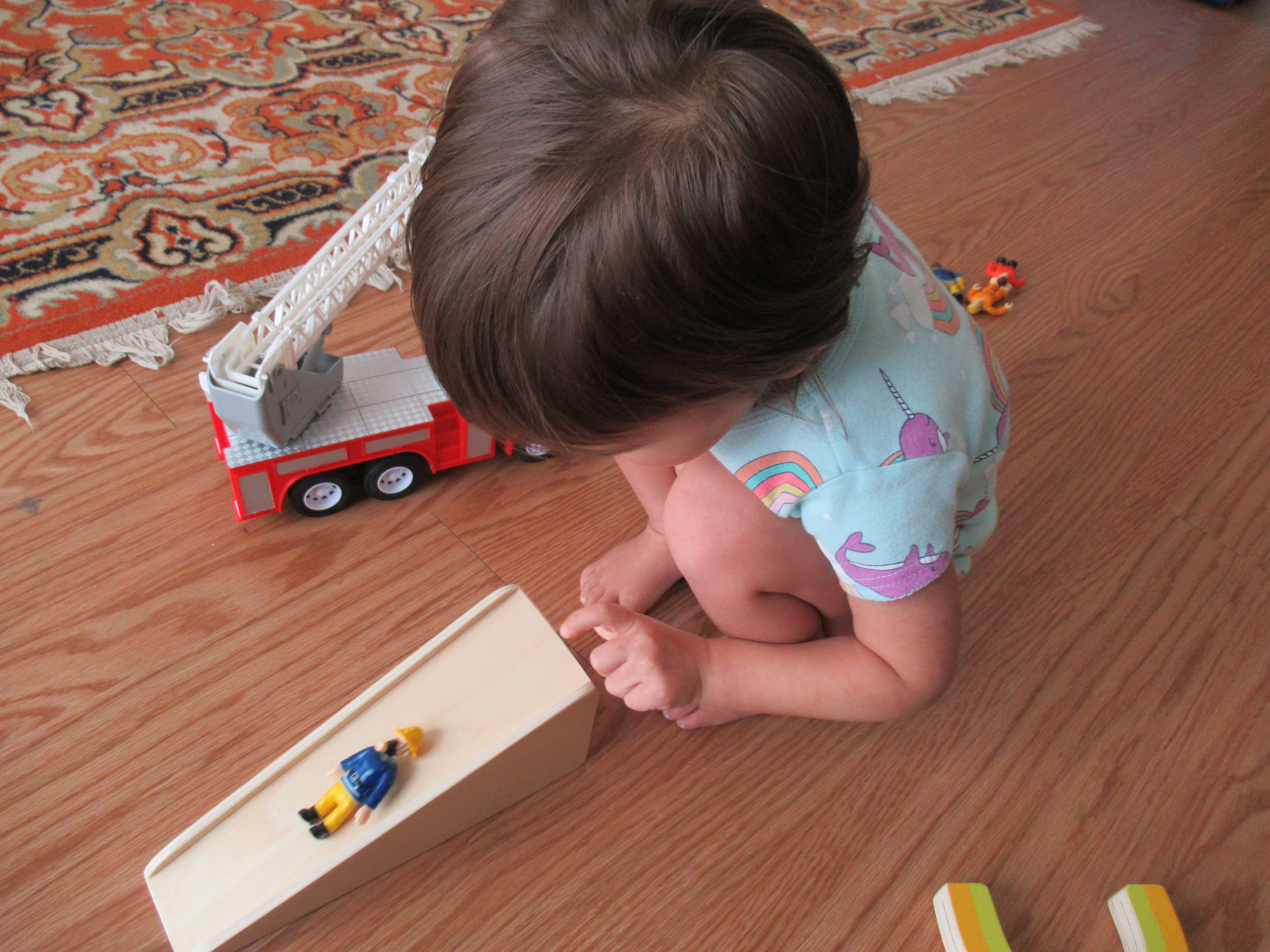
Back to that wooden ball; it also paired with a wooden ramp in the crate. Your toddler can simply have fun rolling the ball down, or aim it at a tunnel made of the rainbow puzzle pieces. Next, Veronika practiced rolling the ball up, or rolling it on different surfaces (rug vs. smooth floor) for an early lesson on big concepts like friction.

Panda Look (11)

She loved using it as a playground “slide” for toy figures, too!
Panda Look (14)

Four: Butterfly Drop

This item was a fast favorite, and I was so glad to see it included because it was a mini at-home version of an activity she loves at our local children’s museum.

Panda Look (7)

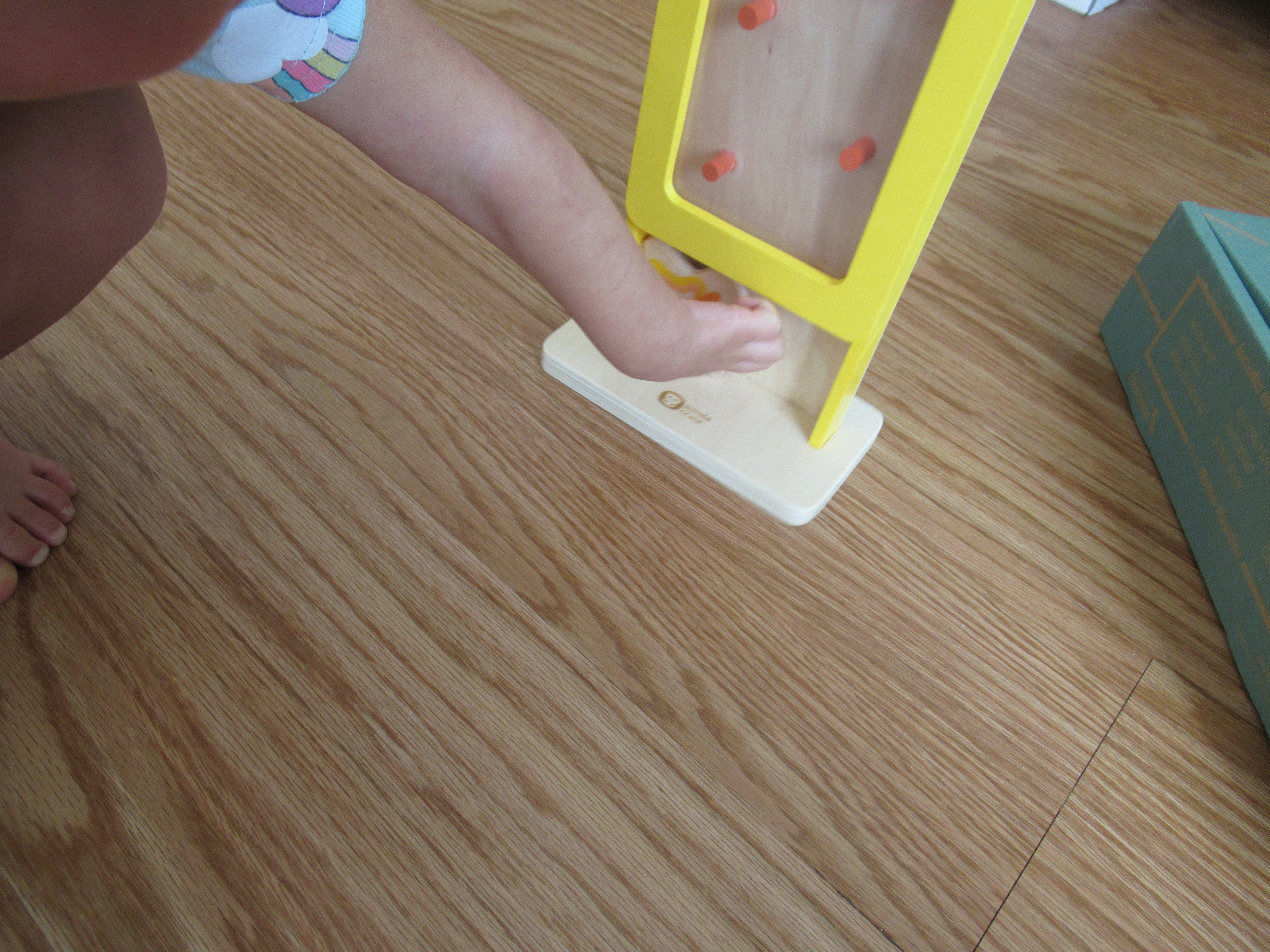
Toddlers drop the provided wooden butterfly into the frame and watch it bounce down on the pegs. Of course those toddler eyes are honing their visual tracking skills, while mesmerized! I challenged her to catch the butterfly at the bottom, to insert it right side up or upside down, and more.
Panda Look (8)

Plus we talked about the great noise it made on the pegs: plunk plunk plunk!

Panda Look (9)

Five: Board Book

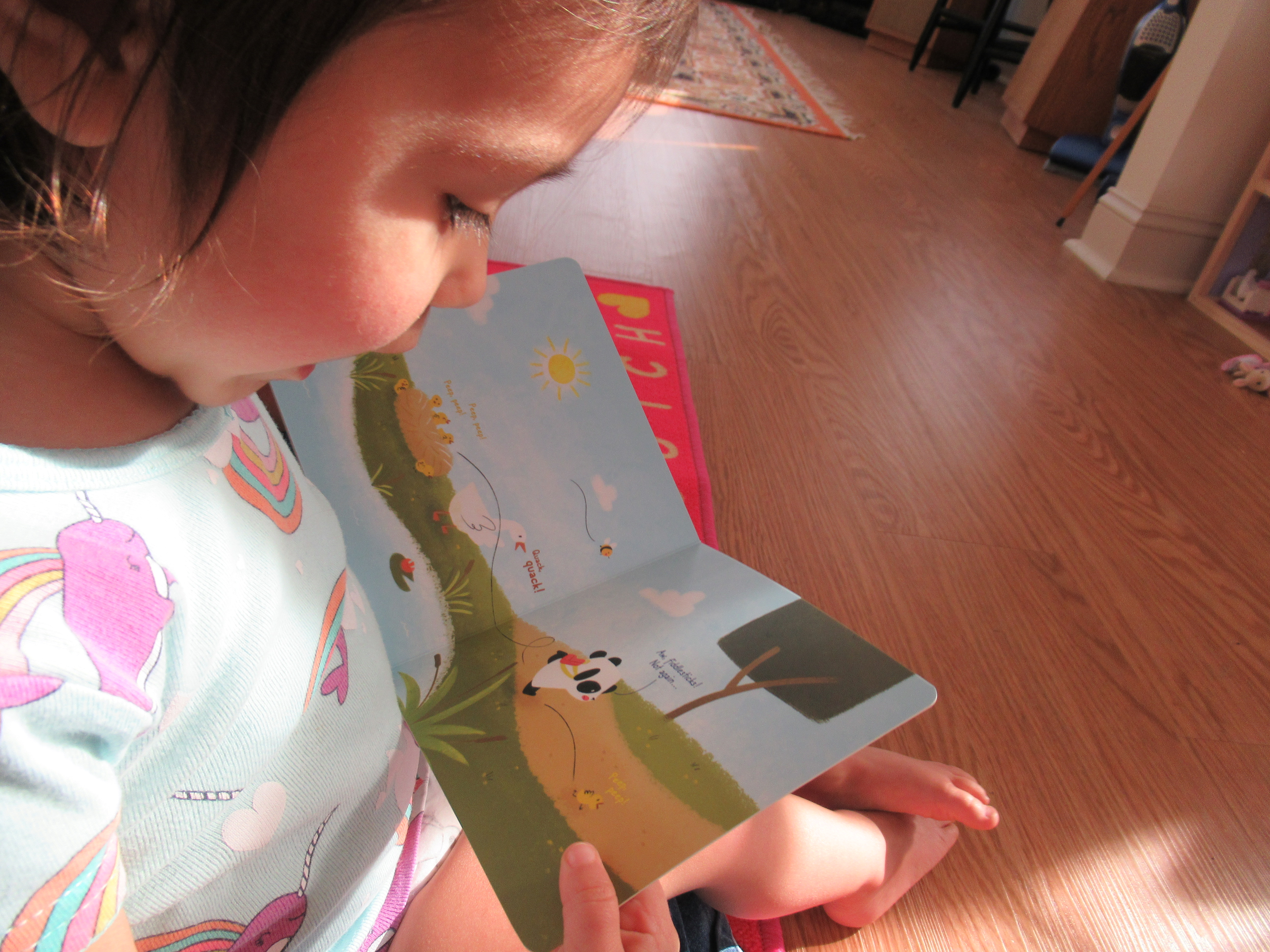
The book this month featured Poppy Panda giving chase to a duckling. Veronika loved the story, demanding many reads and reading it solo, so I can’t complain!
Panda Look (17)

The Wonder booklet featured lots of helpful parental info, like playful ways to hone visual tracking (think: trains on tracks, ramps, balloons, and threading), and pediatric advice on children and glasses.

We followed up with a few Beyond the Crate activities:

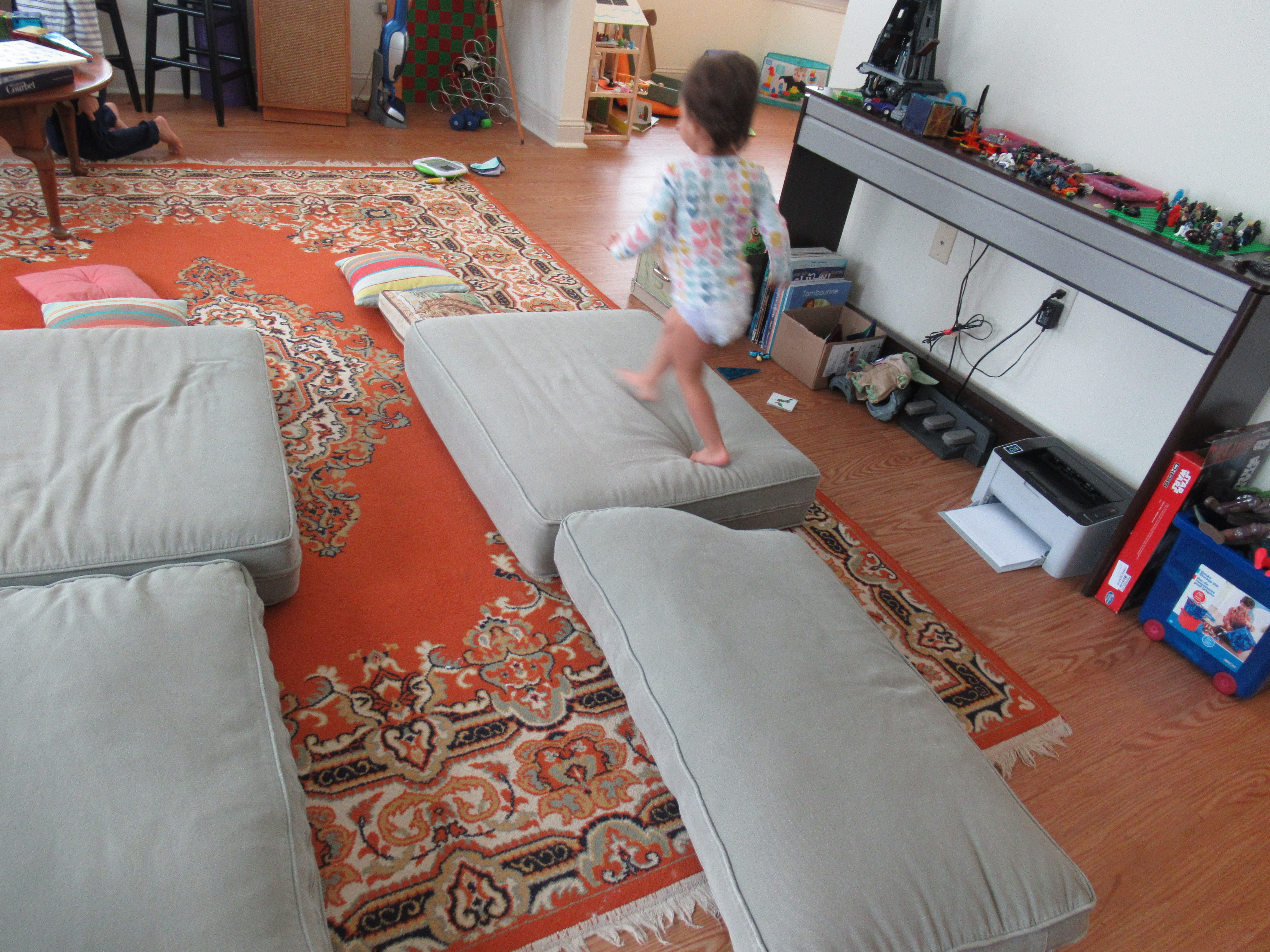
Pillow Path: This classic way to build a toddler’s gross motor skills and spatial awareness never gets old. I lined up our couch pillows in two lines with an empty “corridor” between and held her hand as she ran through.

Panda Look (21)

For more of a challenge, next she walked on top of the pillow bumpers! Of course then she wanted to play on the pillows and roll around for quite a while.
Panda Look (23)

Bubble Burster: Bubbles also never grow old!

Panda Look (19)

To tie in with the Look theme of the crate, this time we focused on tracking the bubbles with our eyes and popping them with fingers.

Panda Look (20)

On a Roll: This suggestion was exactly like a recent rolling game Veronika and I played; we made a diamond with our feet and rolled a ball back and forth.

Panda Look (18)

The sing along this month was a shortened version of Five Little Ducks, an old favorite. Act it out and pretend to be ducks: your toddler is the duckling and you give chase, or vice versa!

Feel with Me var

To round out the fun with books all about looking and noticing, we read:

Busy Firehouse by Rebecca Flynn

I Spy Little Book by Jean Morzollo

I Can Play by Betsy Snyder

Short and Tall Tubes

Short and Tall (5)

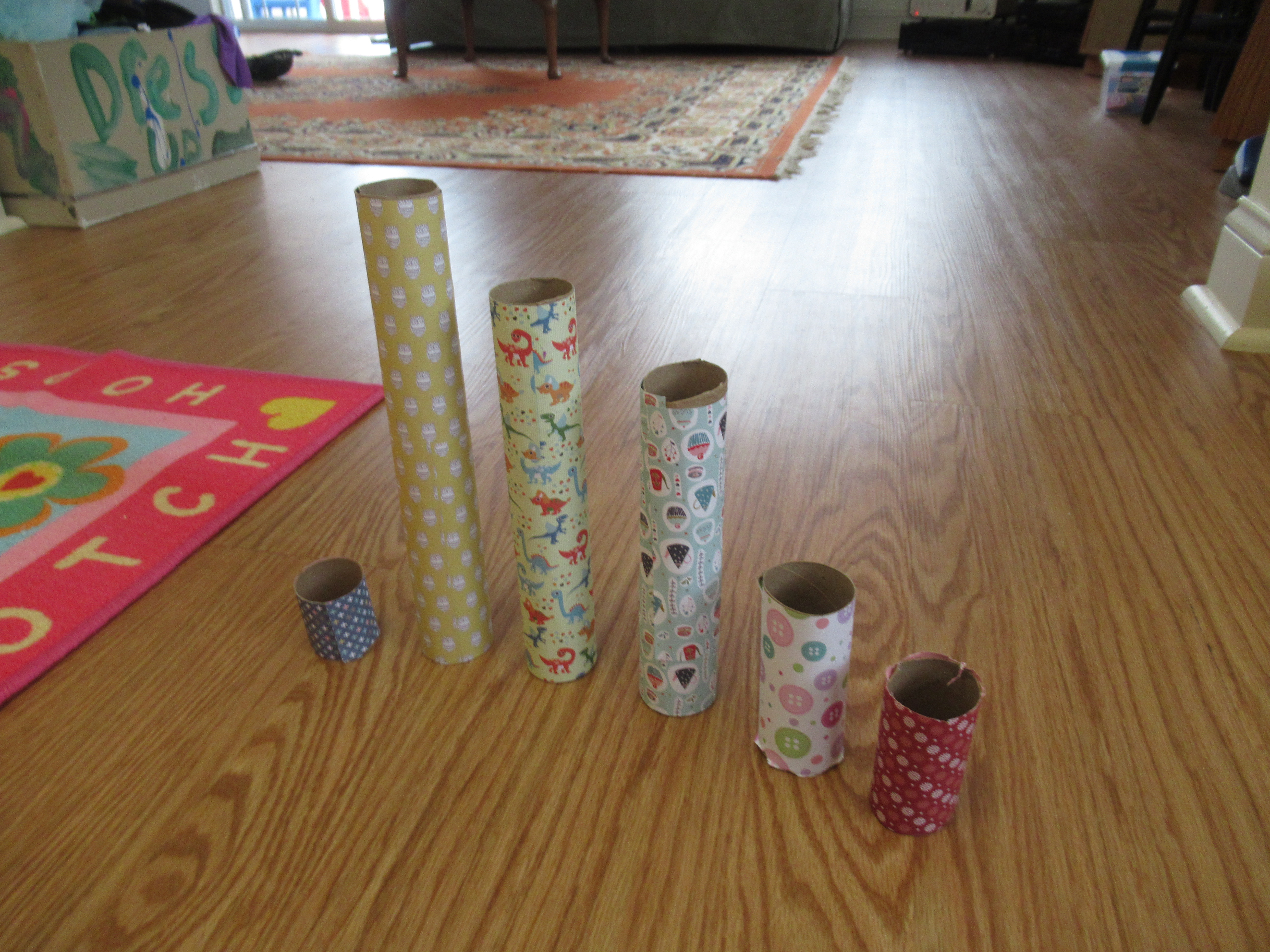
Here’s an easy hands-on way for toddlers to hone their concept of short and tall! I saved up toilet paper tubes and paper towel tubes for about a week, then cut the collection into varying lengths so we had six sizes ranging from shortest to tallest. You can invite your toddler to decorate these with markers, or do as I did and cover in pretty patterned paper.
Short and Tall (1)

First, I simply set out the tubes for Veronika to observe and play with. When I asked her to find me the shortest…

Short and Tall (3)

…she could! Likewise for the tallest.

Short and Tall (2)

For added fun, we read a favorite book about height (Usborne Book’s Taller and Shorter), which compares the heights of animals. Veronika and I pretended each tube was an animal and lined them up in a row as the story went on!

Short and Tall (8)

When I asked her if she could sort all six tubes from shortest to tallest, the concept was clearly too advanced for her, so much so that she sort of tuned out the question.

Short and Tall (7)

That said, she was able to tell the comparative size between two tubes easily (which was shorter, which was taller), and we’ll work up to the next step eventually!

Short and Tall (6)

Rope Games

Rope Games (6)

Over the summer, we used a long rope simply as a boredom buster, and games with it filled almost an entire morning. Today I tailored rope play specifically to my toddler while big brother was in school. Any jump rope will work for this activity, or even just a long piece of regular rope.

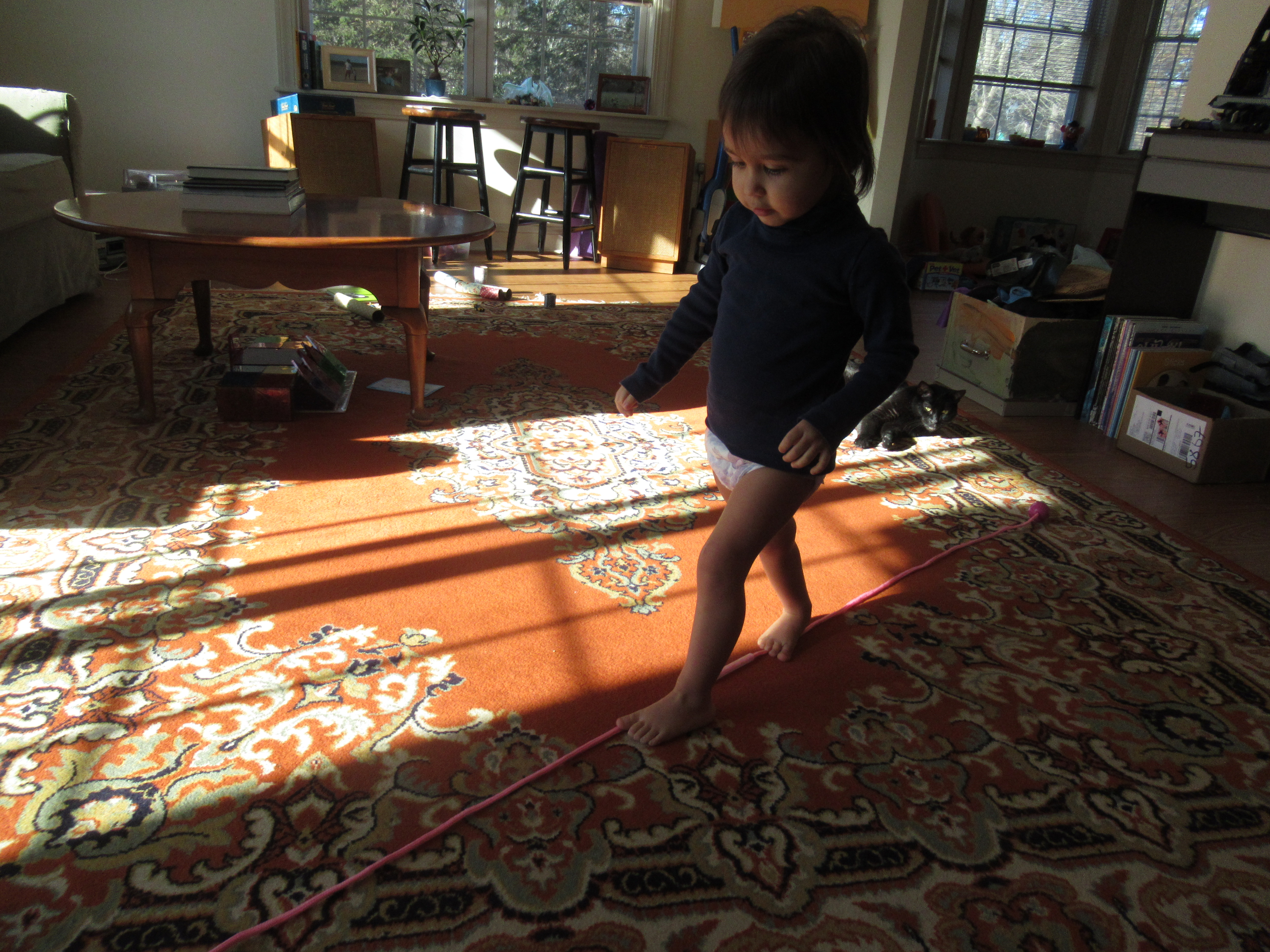
First, I wanted to see if it she could walk across it like a balance beam. Easy-peasy!

Rope Games (2)

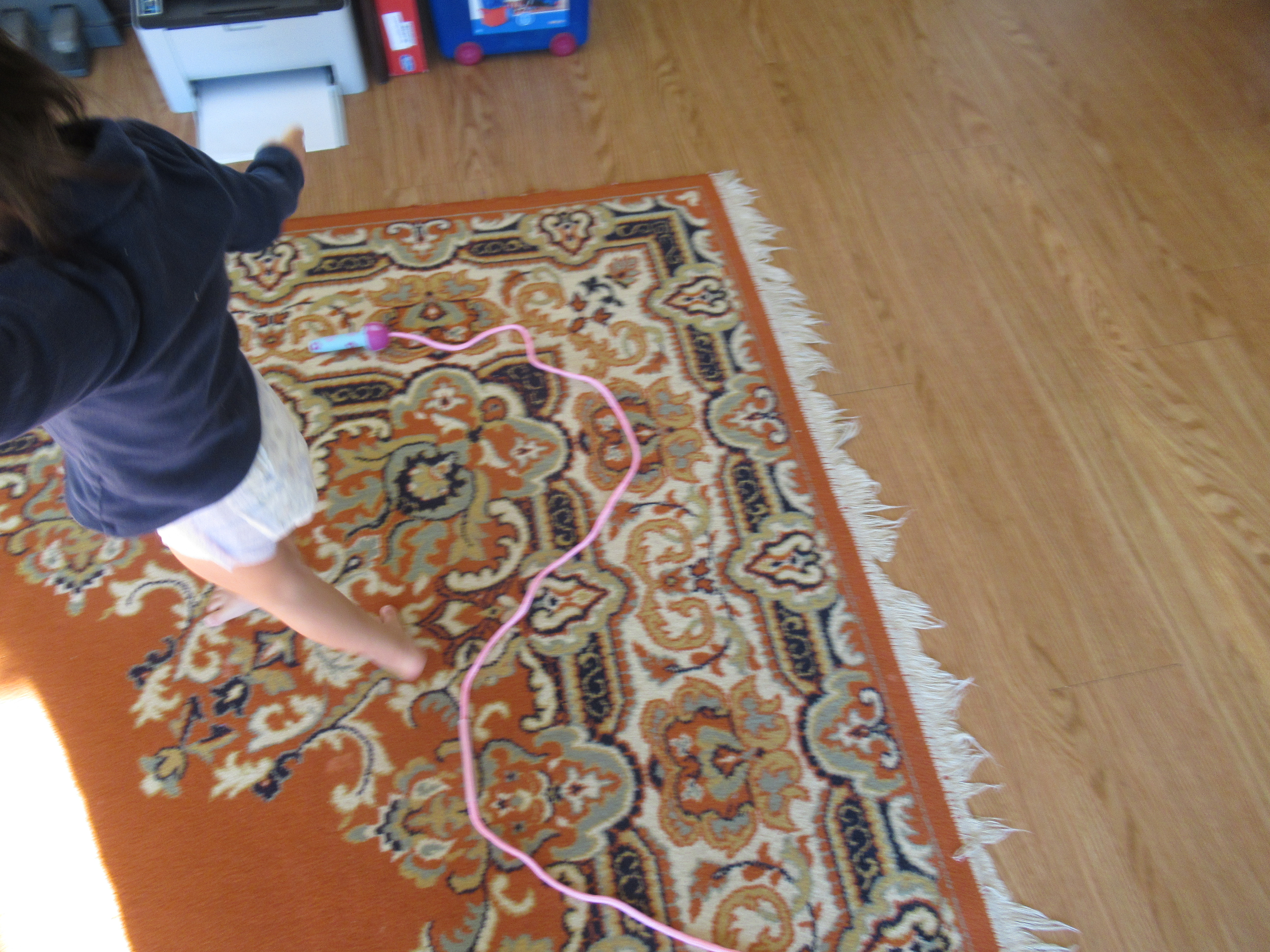
But could she follow the rope if we made it zigzag? This was definitely more of a challenge, but Veronika worked hard to get one foot in front of the other along the twists.

Rope Games (3)

Next, I challenged her to cross the rope using her body in different ways. She could hop over it, step across it, or even crawl on it.

Rope Games (1)

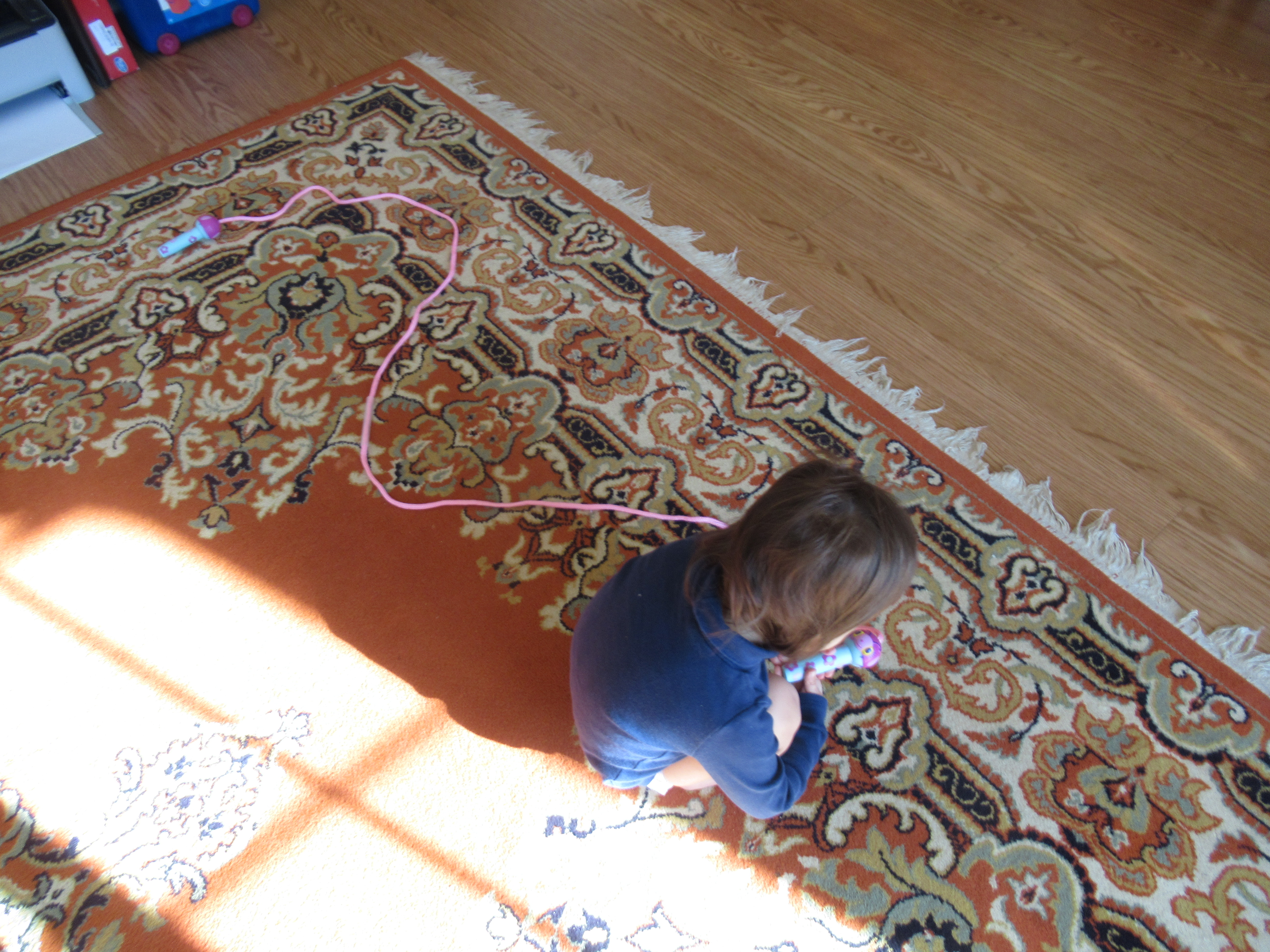
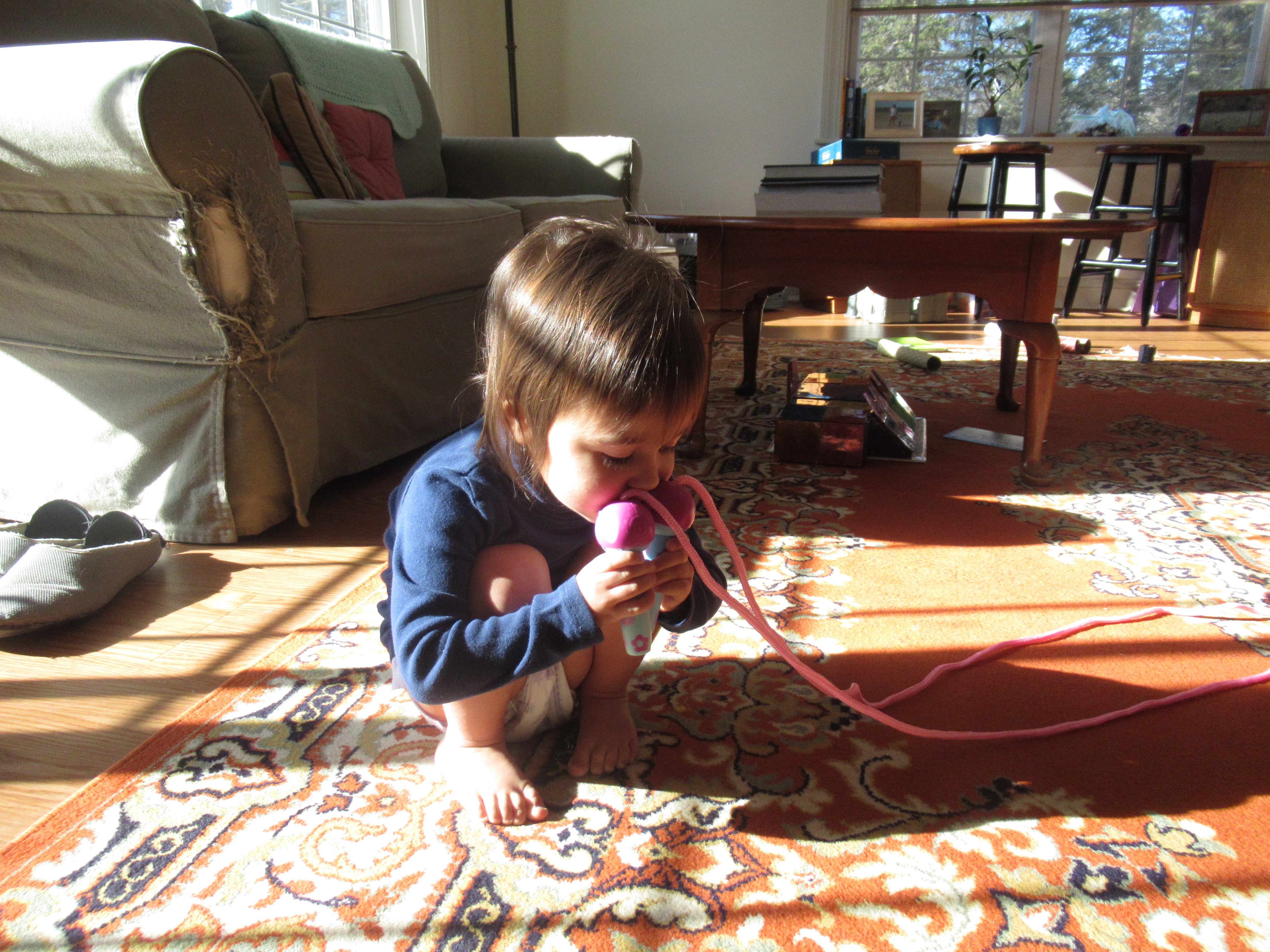
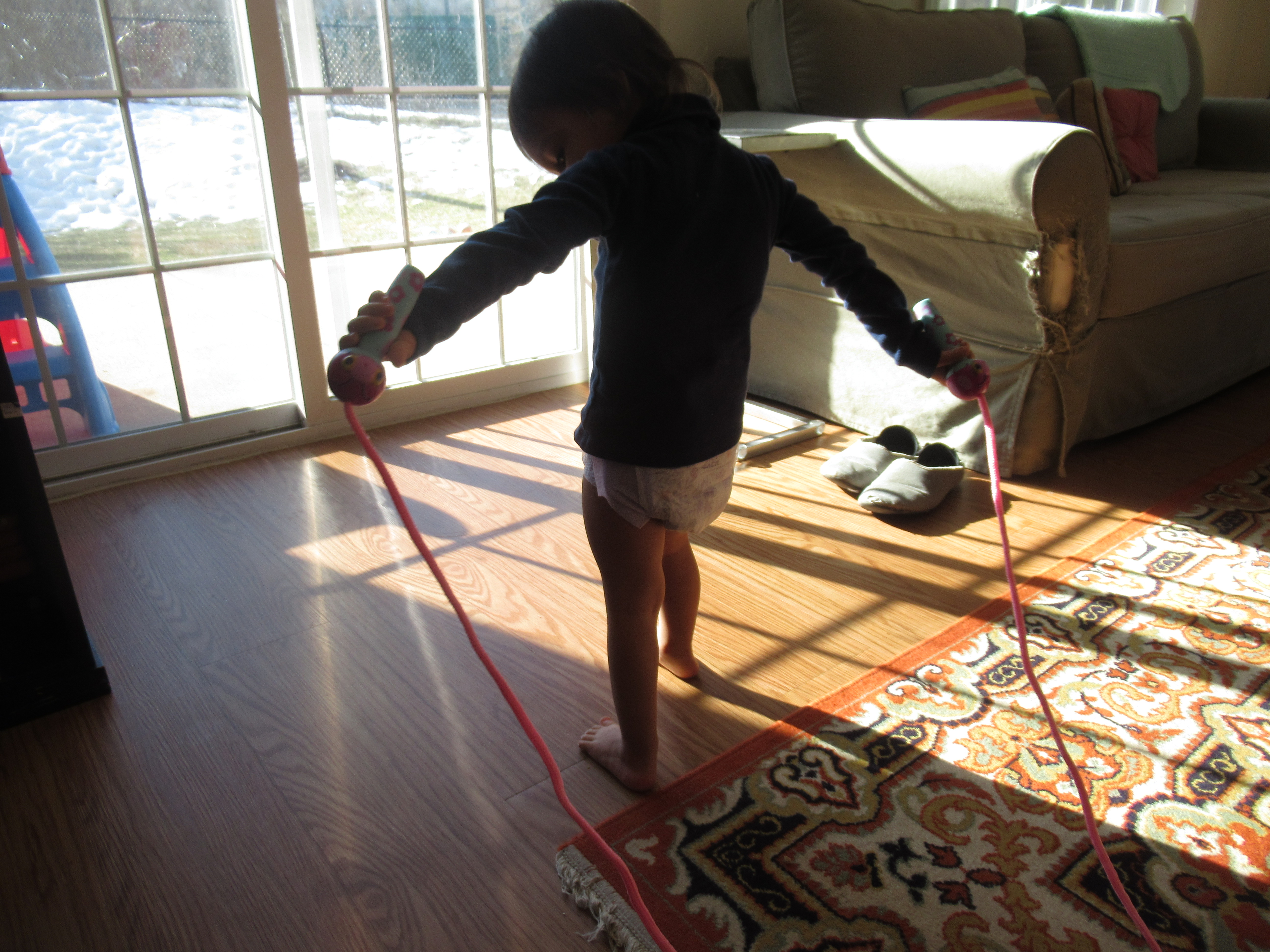
From here, she found her own ways to play with the rope. She thought the handles looked like microphones and wanted to sing into them.

Rope Games (5)

Then she began dragging the rope around like a snake or a puppy leash. When it tangled at her feet, she gave a jump over it, almost a precursor to jumping rope!

Rope Games (8)

She also loved holding both ends and pretending she was a butterfly, fluttering the strands in each hand.

Rope Games (9)

I loved that she came up with her own gross motor ways to use a rope, including some I never imagined!